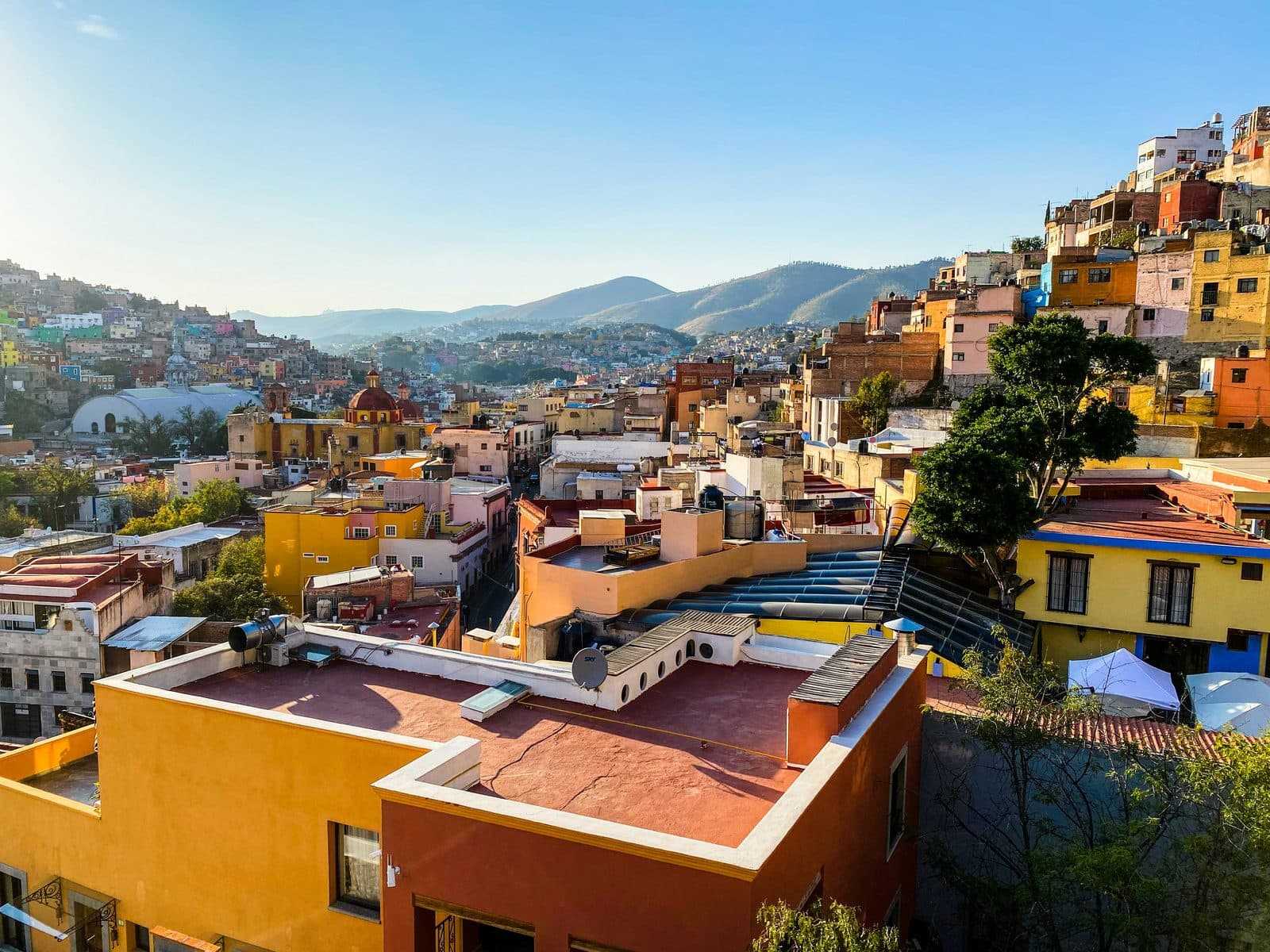
In September 1810, the silver town of Guanajuato became the first place in Mexico where the Spanish Empire lost a battle. The tour you have just walked treats that fact as a paradox, the silver that built the empire also funded the revolution that ended it. The paradox is real. It is also, on inspection, not a paradox at all. The silver economy did not just happen to produce the conditions for revolt. The mechanism that pulled silver out of these hills was the same mechanism that produced the workers, the resentment, and the rural Creole grievance that took the empire down.
This article is the history the tour does not have time to walk. How the silver got there. How the labor was assembled. Why the revolution started in this canyon and not somewhere else. And what happened to the silver economy after the granary burned.
The mineralogy and the founding
The hills around Guanajuato hold the Veta Madre, the Mother Vein, a fault running roughly twenty-five kilometers from southeast to northwest with branches and parallel veins along its length. The vein carries silver, gold, lead, and zinc in a mineral matrix that early Spanish prospectors recognized as ore. Indigenous Chichimeca peoples in the region had not worked these minerals. Their economy ran on obsidian, agriculture, and seasonal hunting. The Spanish, recently in possession of Mexico after the fall of Tenochtitlan in 1521, were specifically looking for silver. They had crossed an ocean for it.
Prospectors located workable ore in the canyon in the early 1540s. The settlement that became Guanajuato was founded in 1554. Within a generation, the canyon held a working mining town, a parish church, and the first generation of the labor force that would extract the silver for the next two and a half centuries.
The mines went deep early. The La Valenciana mine, which would later become the richest of all, was first worked in the late 1550s and was already producing significant silver by the early 1600s. By the late seventeen hundreds it had been deepened past five hundred meters, with shafts and galleries running through hundreds of kilometers of underground passages. Other major mines, the Rayas, the Cata, the Mellado, the Sirena, ran similar depths nearby. The canyon had become a vertical industrial city.
The labor system
Hear a stop from this walk
Alhóndiga de Granaditas
Spanish colonial mining ran on three overlapping labor systems. The earliest was the encomienda, a grant of indigenous labor to a Spanish landholder. The encomienda was effectively forced labor and was the dominant system in central Mexico in the sixteenth century. By the seventeenth century it had been partially replaced by the repartimiento, a draft system in which indigenous communities supplied a rotating share of their adult men to colonial enterprises for set periods. The repartimiento was less brutal than the encomienda on paper. In a place like Guanajuato, where the work was mining at depth, the difference on the ground was small.
By the eighteenth century, a third system had grown alongside the first two: wage labor. Free workers, drawn from indigenous, mestizo, and African-descended populations, came to the mines because there was no other paying work in the region at scale. Enslaved Africans were brought in for the smelting and refining work, which was the most chemically toxic. The total labor force in Guanajuato's mines at peak was around fifteen thousand men. The Conde de la Valenciana's mine alone employed over three thousand at any given time.
The work was brutal. Miners climbed ladders down half a kilometer of vertical shaft, carrying torches that burned the oxygen out of the air. They worked in temperatures that reached forty degrees Celsius at depth. The ore was hauled out on their backs in leather sacks, on the same ladders. Mercury, which was used in the refining process called patio amalgamation, poisoned the men who handled it. Silicosis from rock dust killed many of them in their thirties. Cave-ins killed them at any age. Wages were paid partly in cash and partly in the right to keep a share of the ore the miner himself dug, a system called the partido, which mine owners hated and tried repeatedly to abolish.
The wealth flowed up. By the late seventeen hundreds the mine owners of Guanajuato were among the richest men in the Spanish Empire. Antonio de Obregón, the first Conde de la Valenciana, built the Templo de San Cayetano directly above his mine, a Churrigueresque baroque church so densely ornamented that it remains one of the most extravagant single buildings of colonial Mexico. The Rul family, who owned several mines, commissioned a neoclassical palace on the main plaza from the same architect who built Mexico City's Royal School of Mines. When the German scientist Alexander von Humboldt visited in 1803, he wrote that the wealth of the mine owners rivaled the aristocracy of Europe, and that the poverty surrounding it was as severe as anything he had seen in his travels.
That gap was the powder.
The Creole grievance
The match was a different layer of the colonial class structure. By the eighteenth century, the Spanish Empire in the Americas had developed a sharp distinction between peninsulares, Spaniards born in Spain, and criollos, Spaniards born in the Americas. Peninsulares held the senior administrative, military, and ecclesiastical posts. Criollos, no matter how wealthy, were effectively shut out of the top of the colonial hierarchy. The Bourbon reforms of the late eighteenth century tightened that exclusion. Spanish-born administrators replaced Creole officeholders. Trade restrictions tightened. Taxes on colonial enterprise increased.
In Mexico, the Creole class included most of the wealthy mine owners, ranchers, lawyers, and lower clergy. They had wealth and education but no political ceiling. By the early 1800s, the combination of Bourbon centralization, the collapse of the Spanish state under Napoleonic invasion in 1808, and the rising influence of Enlightenment thought in Creole intellectual circles produced a generation of educated, frustrated, and dangerous men.
Miguel Hidalgo y Costilla was one of them. A parish priest in the town of Dolores, forty kilometers from Guanajuato, educated at the Jesuit colegio in Valladolid (today's Morelia), Hidalgo had read European Enlightenment writers, kept a small library, and ran agricultural experiments on parish land. He was a Creole. He was also, by 1810, deeply involved with a small conspiracy of Creole army officers and civilians planning a rising against Spanish rule.
When the conspiracy was betrayed in early September 1810, Hidalgo improvised. On the morning of September 16, in the parish church of Dolores, he gave a speech now known as the Grito de Dolores, calling for an end to bad government and Spanish dominance. Within hours he had assembled an army. Within days that army was marching on Guanajuato.
The Alhóndiga, September 28, 1810
The army that reached Guanajuato on September 28 was not the disciplined force Creole conspirators had imagined. It was perhaps twenty thousand strong, made up of indigenous workers, miners, and peasants from the towns along the route. It carried machetes, sticks, slings, and a handful of muskets. Its leaders were a parish priest, a few army officers including Ignacio Allende and Juan Aldama, and a Creole commander named Mariano Jiménez.
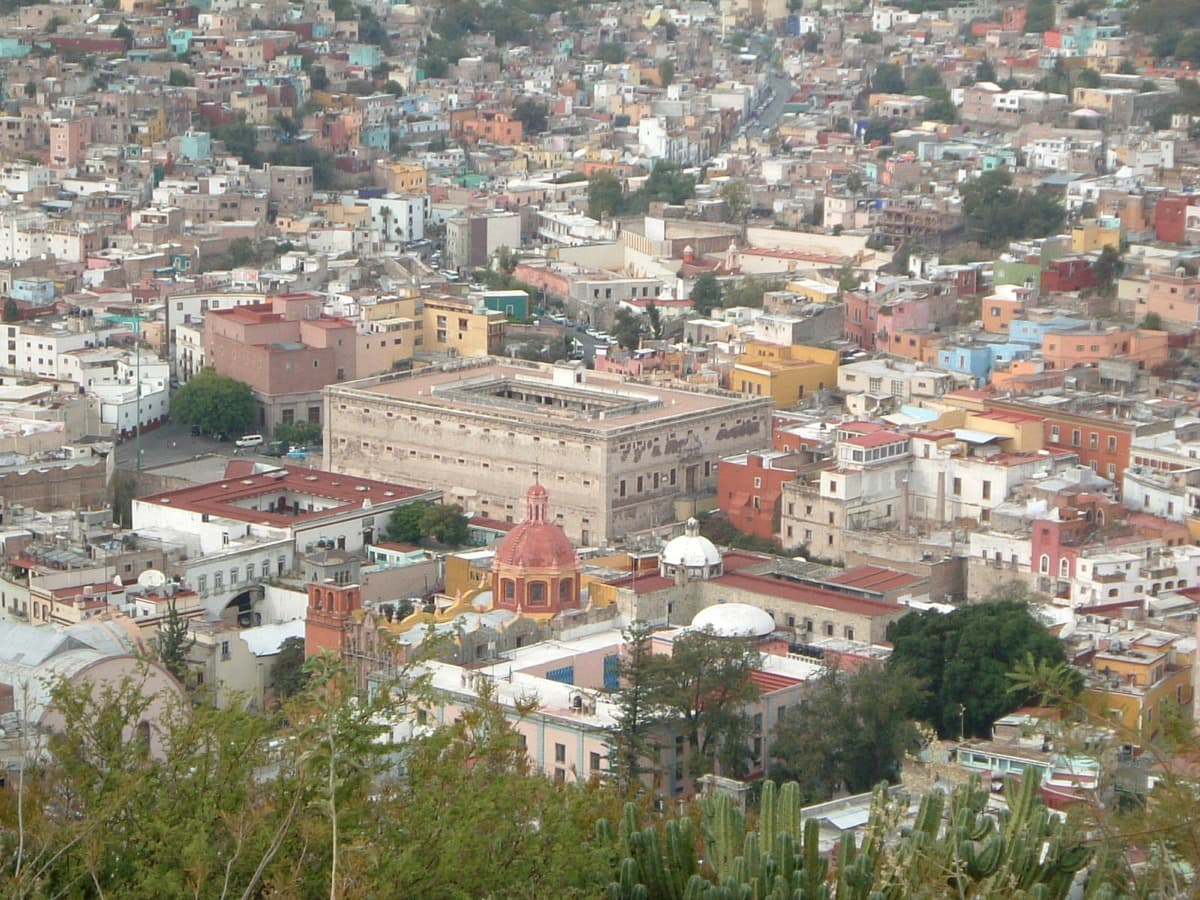
The Spanish intendant of Guanajuato, Juan Antonio de Riaño, had spent the days before the army's arrival fortifying the Alhóndiga de Granaditas, a massive stone granary built between 1798 and 1809 on the city's main square. The walls were a meter thick. Riaño moved the city's silver reserves, the Crown's treasury, and a garrison of Spanish soldiers into the building, along with the families of the wealthy peninsulares and Creoles loyal to the colonial government. They sealed the doors and prepared to wait.
The siege lasted less than a day. The rebel army surrounded the granary in the morning. Riaño was killed by a musket shot in the first hour. The Spanish defenders held the doors with disciplined fire from the upper windows. By midday, the rebels had taken heavy casualties and were unable to break through.
What changed the outcome was a single act by a young miner from the local pits whose nickname was El Pípila. His real name was Juan José de los Reyes Martínez, and the details of his life are sparse outside what the legend has preserved. He strapped a flat slab of stone to his back as a shield against musket fire, crawled across the open ground to the wooden door of the Alhóndiga with a torch dipped in pine resin, and set the door on fire. When the door burned through, the rebel army poured in.
What followed was a massacre. Over five hundred people inside were killed. Spanish soldiers, the loyalist Creoles, women, children. The rebels looted the silver, the grain, and the building itself. Some of the looting was the disciplined seizure of state assets. Much of it was not. Hidalgo's army had been told that the wealthy of the empire were the enemy, and the wealthy of Guanajuato were sealed inside that building.
The Spanish response was swift and equally brutal. Within months, Hidalgo, Allende, Aldama, and Jiménez had been captured in the north of Mexico and executed by firing squad. Their heads were preserved in salt, transported back to Guanajuato over six hundred kilometers, and hung in iron cages at the four corners of the Alhóndiga as a warning. They stayed there for ten years, from 1811 until Mexico finally achieved independence in 1821. The iron hooks that held the cages are still bolted to the corners of the building.
After the granary
The war that began in Guanajuato in September 1810 lasted eleven years. Hidalgo was dead within a year. The leadership passed to José María Morelos, another priest, and after Morelos was executed in 1815, to Vicente Guerrero and Agustín de Iturbide. The conflict drained Mexico. Mines flooded. Refineries shut down. The skilled labor force scattered. By the time independence was achieved in 1821, the silver economy that had financed half of Europe was in collapse.
The nineteenth century in Guanajuato was a long contraction. Civil wars between liberals and conservatives, the French Intervention of the 1860s, and the long instability before the Porfirio Díaz dictatorship of the 1870s drained capital and labor from the mines. British investors arrived in the 1820s and reopened some of the major shafts, including La Valenciana, but never restored colonial-era output. By the late nineteenth century the city's population had stalled at a fraction of its eighteenth-century peak.
The granary itself was repurposed. In 1864 it became a state prison. In 1958 it was converted into the Museo Regional de Guanajuato Alhóndiga de Granaditas, the regional history museum it remains today. The walls are still nearly a meter thick. The iron hooks are still in place.
Why the paradox is mechanism
The tour calls it a paradox: the silver that built the empire also funded the revolution that ended it. The word is useful for narrative. The underlying relationship is direct. The mining economy concentrated wealth in a tiny peninsular and Creole elite. It assembled a large, exploited, mostly indigenous and mestizo workforce within walking distance of that elite. It produced an educated Creole class with money but no political voice. And it provided, at the moment of revolt, a single building stuffed with silver and Spanish loyalists at the heart of the city.
Hidalgo did not start his revolution in Guanajuato because he was sentimental about silver. He marched on the city because that was where the wealth was, where the colonial state was concentrated, and where a victory would mean something. The granary was both the symbol and the bank.
The silver economy created the world in which it could be overthrown. Walk the tour again with that frame and the contradictions stop fighting each other. The opulent baroque churches, the white staircase of the university, the plaza named for peace, the granary where the war began, the viewpoint above the city where the man who burned the door is now a national monument, and finally the mine itself, where it all started. These are not separate stories. They are the same story, read from different points along the canyon.
Mexico eSIM· 10% off with ROAMER10
Ready to experience it?
Silver, Blood & Independence
100 min · 3.2 km · moderate
More from Guanajuato
Explore more at your own pace.
Best Self-Guided Walking Tours in Guanajuato (2026)
Guanajuato Travel Guide: How Many Days, Getting Around, When to Go (2026)
One Day in Guanajuato: A Walkable Canyon Itinerary (2026)
What to Eat in Guanajuato: A Food Guide (2026)
The Alhóndiga de Granaditas: Where Mexico's War for Independence Began