The Nahuatl name tells you what the place is for. Tlaquepaque means "place above clay land." The Tonalteca people who inhabited the area before the Spanish arrived in the 1530s were making ceramics from the clay beneath their feet. They were doing it for the Aztec empire. They were doing it on the same ground where, six hundred years later, master potters still work in studios off Calle Independencia. The tradition has not paused.
That is the unusual fact about this village. Most pre-Hispanic crafts in Mexico were broken by the conquest, either suppressed by missionaries or replaced by European techniques. The Tlaquepaque ceramic tradition was not. The Spanish brought tin glazing from Talavera de la Reina in the sixteenth century, and the local potters absorbed the glaze without abandoning their older methods. Pre-Columbian techniques, barro bruñido in particular, the burnishing of clay to a mirror finish without any glaze, have continued in active commercial use for at least a thousand years.
The geography of the tradition
Tlaquepaque is now part of the Guadalajara metropolitan area. It sits about seven kilometres southeast of the historic centre, and the boundary between the two municipalities is invisible on the ground. In the colonial period, the village was a separate settlement, far enough from the city to feel rural but close enough for a carriage ride. Wealthy Guadalajara families built summer homes here in the nineteenth century, thick-walled adobe mansions with interior courtyards. Many of those mansions are now galleries and restaurants. The conversion preserved the architecture even as the function changed.
The clay itself comes from the surrounding soil. The colour, a warm reddish-brown when fired without glaze, is the visual signature of pottery from this region. The clay has a specific mineral profile, high in iron, that allows it to be fired at relatively low temperatures and still produce a watertight vessel. Spanish chroniclers in the sixteenth century commented on the quality of the local ware. The reason Tlaquepaque became a ceramic town and Tonalá, three kilometres away, became another, while neighbouring villages did not, is the geology under the ground.
The techniques that survived the conquest
Hear a stop from this walk
El Parián
Three techniques carry the pre-Hispanic continuity, all visible in the regional ceramic museum and in studios along the walk.
Barro bruñido is the oldest. The potter shapes a vessel by coiling ropes of clay and smoothing them by hand, then burnishes the surface with a polished stone, often a piece of quartz, before firing. The resulting finish has the gloss of glazed pottery but no glaze. The technique requires no kiln in the European sense; pit firing in the earth, the way the Tonalteca did it, works fine. Master potters in Tlaquepaque and Tonalá still produce barro bruñido in the same way.
Barro canelo is a related technique, the same burnishing process applied to clay with a specific cinnamon colour from a particular vein of local earth. The colour cannot be produced from clay anywhere else. The technique is endemic to this region.
Petatillo is post-Hispanic, a fine-grid decorative style developed in the colonial period under Spanish influence, but the underlying drawing technique uses brushes made from human hair, a material consistent with pre-Hispanic mark-making. Petatillo pieces are extraordinarily labour-intensive, with a single small vessel sometimes taking weeks of painted lines.
All three techniques are practised today by working artisans whose families have produced ceramics for multiple generations. The continuity is not a re-enactment. It is the same craft, passing through.
The institutional anchors
The walking tour places three institutional landmarks against the studio district.
The Parroquia de San Pedro is the parish church, Franciscan-founded in the sixteenth century, with the current structure dating mostly from the eighteenth. The architecture is a layered puzzle of styles, Romanesque arches, Byzantine dome proportions, baroque decorative elements, because each generation of builders added what they understood. The church's exterior walls hold embedded ceramic tiles, a small acknowledgement that even the sacred architecture acknowledges the clay.
The Museo Regional de la Cerámica, a free museum housed in a restored colonial mansion, traces the technical history of Jalisco pottery from pre-Hispanic pieces through colonial-fusion ware to contemporary work. The pre-Hispanic rooms hold vessels that are between a thousand and fifteen hundred years old. The colonial-fusion rooms show how the European wheel and the European glaze combined with indigenous shapes and finishes. The contemporary rooms display recent winners of the Premio Nacional de la Cerámica Pantaleón Panduro, a national prize awarded in Tlaquepaque each year. The progression in the museum is the progression in the village itself.
The Centro Cultural El Refugio is the converted convent, originally Franciscan, repurposed after the Reform Laws of the 1850s stripped the Catholic Church of its property. The building is now a cultural centre with multiple galleries, including the Museo del Premio Nacional de la Cerámica Pantaleón Panduro. Underneath the building, a network of tunnels reportedly connects to the Parroquia and other religious sites in the village. The tunnels were used by clergy moving between buildings without being seen, practical in colonial times and essential during the Cristero War of 1926 to 1929, when the Mexican government suppressed Catholic worship.
Sergio Bustamante and the contemporary moment
The arrival of Sergio Bustamante in the 1970s shifted the village's identity without breaking the tradition. Bustamante was born in Culiacán, Sinaloa in 1943 and trained as an architect. He moved to Tlaquepaque in the early 1970s, drawn by the artisan tradition and the availability of skilled craftspeople. His sculptures, fantastical creatures, human-animal hybrids, suns with faces, eggs that open to interior worlds, are surrealist in the dream-and-myth sense. His flagship gallery sits on Calle Independencia in a colonial mansion. The gallery employs dozens of local artisans to execute the pieces.
What Bustamante demonstrated was that the village's craft tradition could fuel contemporary fine art at international price points. His pieces now sell in galleries from New York to Tokyo. Other contemporary artists followed him, and Tlaquepaque became a serious art destination layered on top of its traditional craft market. The two scenes coexist on the same street.
El Parián and the mariachi turn
The walk includes El Parián, the covered plaza of cantinas built in 1878. The structure is a single roof over a courtyard ringed by eighteen bar-restaurants that share the central space. The Tagalog name, "Parián" means marketplace in Tagalog, arrived in Mexico through the Manila Galleon trade route that connected the Philippines to Acapulco from 1565 to 1815. A small reminder that the village's history reaches beyond Mexico.
The reason El Parián matters to Mexican music history is 1927. That year, mariachi musicians began performing regularly at El Parián for tips and drinks, which turned the folk tradition into a paid profession. The practice spread from here to Plaza de los Mariachis in Guadalajara, then to Plaza Garibaldi in Mexico City, then to film and to the world. El Parián is, in the strict sense, the place where mariachi became a job.
How to walk the laboratory
The tour is about two and a half kilometres on flat, mostly car-free streets. The route starts at the parish church, runs north along Calle Independencia past the ceramic museum and the Bustamante gallery, reaches the Centro Cultural El Refugio, then El Parián and the village garden, and ends at the Santuario de la Soledad. The studios along the route are working. Many sell directly. Most are family businesses. Prices reflect the technique and the time, which is to say barro bruñido and petatillo cost what they should cost for objects made by hand over weeks.
What you are walking through is not a museum. It is a working laboratory of an ancient craft that happens to also be a commercial market and an active village. The tradition is older than the country and has continued without a pause through everything the country has done. The studios are still firing. The clay is still under the ground.
Mexico eSIM· 10% off with ROAMER10
Ready to experience it?
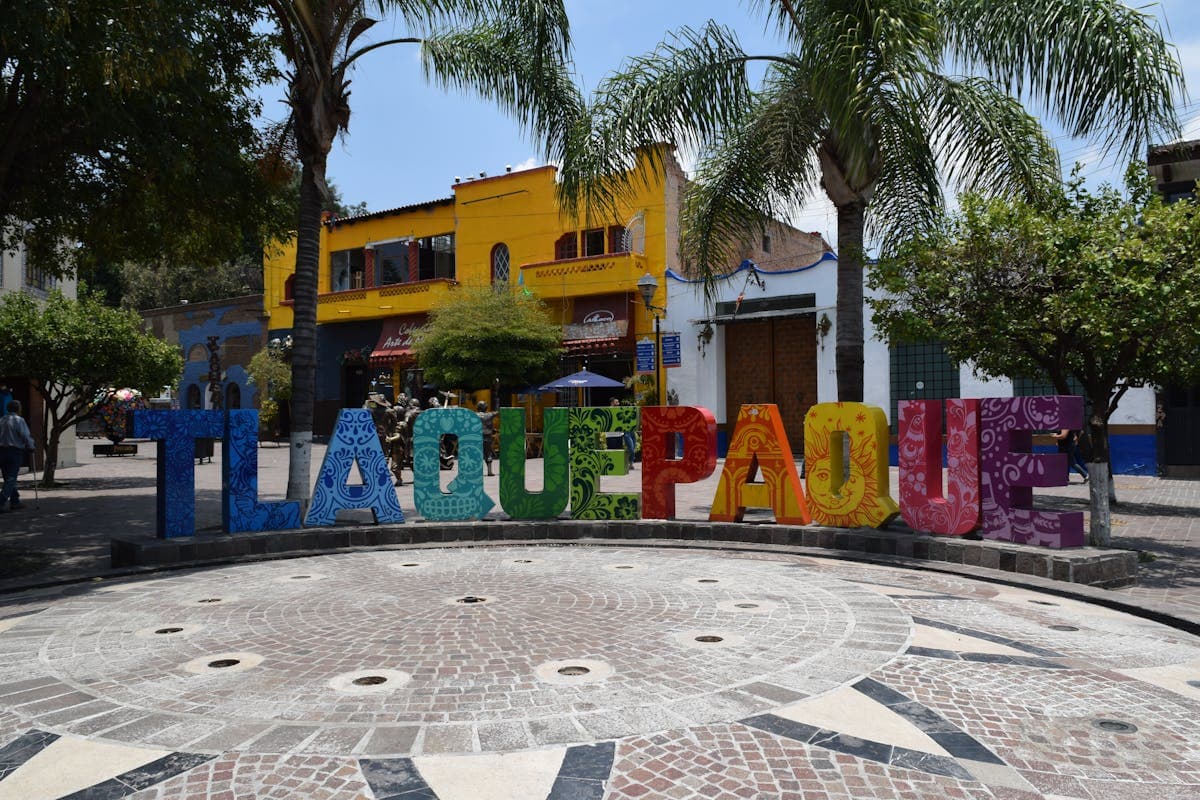
Tlaquepaque: 600 Years of Mexican Ceramic Art
95 min · 2.5 km · easy
More from Guadalajara
Explore more at your own pace.
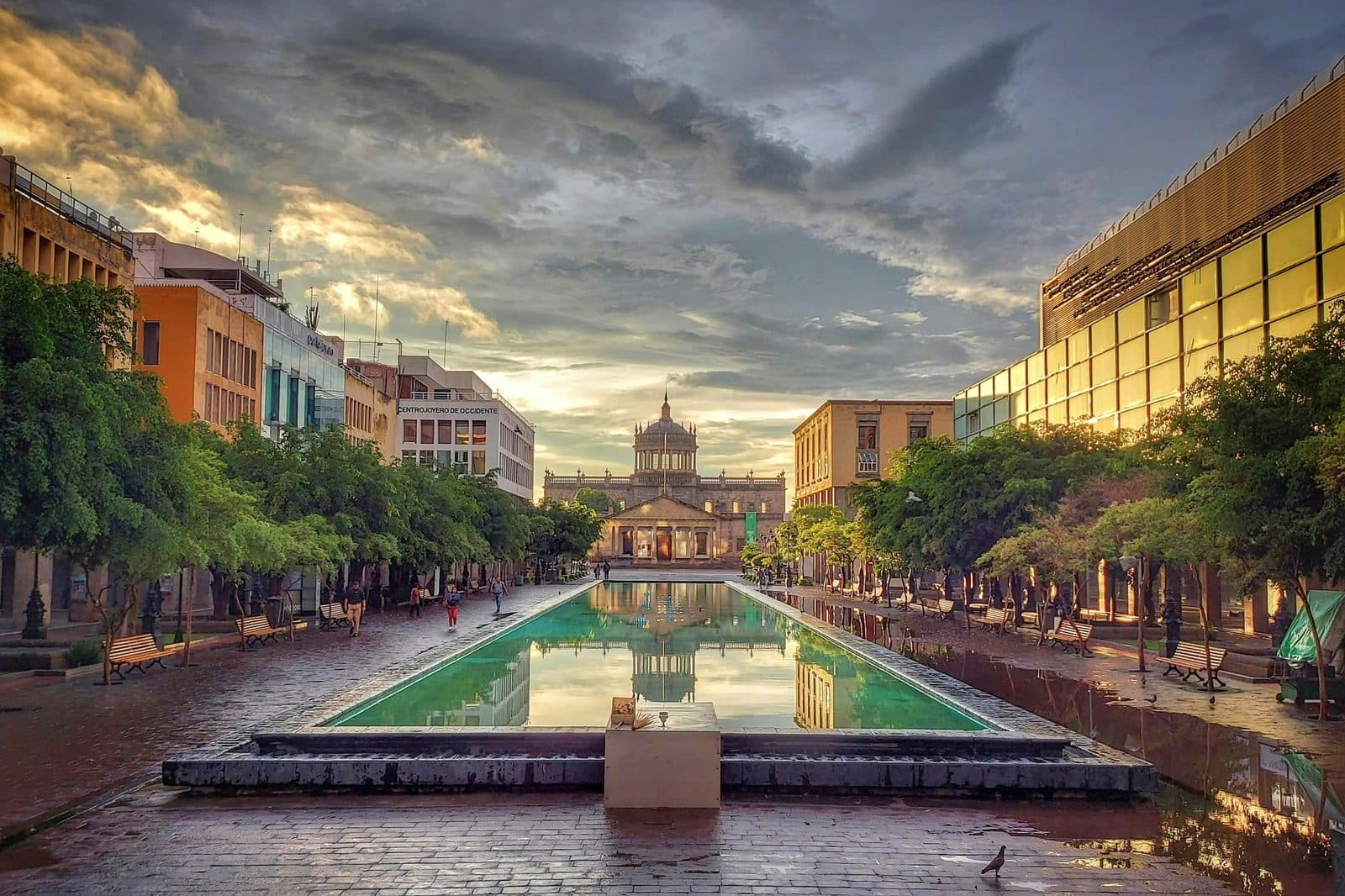
Best Self-Guided Walking Tours in Guadalajara (2026)
Guadalajara Travel Guide: How Many Days, Getting Around, When to Go (2026)
One Day in Guadalajara: A Walkable Centro-to-Tlaquepaque Itinerary (2026)
What to Eat in Guadalajara: A Jalisco Food Guide (2026)
The City That Built Its Plaza Four Times