Guadalajara: A City Designed as a Cross
100 min · 3 km · easy
Ask a person outside Mexico to name the things that feel most Mexican, and the answer comes back in a small cluster. Mariachi. Tequila. The wide-brimmed charro hat. The leather rodeo. The red, white, and green flag. All of those things were either invented in Jalisco or commercialised here. Guadalajara is the capital of the state. The city is, in a real sense, the place Mexico exports itself from.
That is the thesis to hold while walking it. Mexico City is the political capital. Guadalajara is the cultural inventory list.
The cross instead of the square
Every Mexican colonial city was built around one central plaza, the Zócalo, with the cathedral on one side and the government palace on another. That is the template the Laws of the Indies imposed across the Spanish empire in the sixteenth century. Mexico City has one. Puebla has one. Oaxaca has one. Mérida has one.
Guadalajara has four.
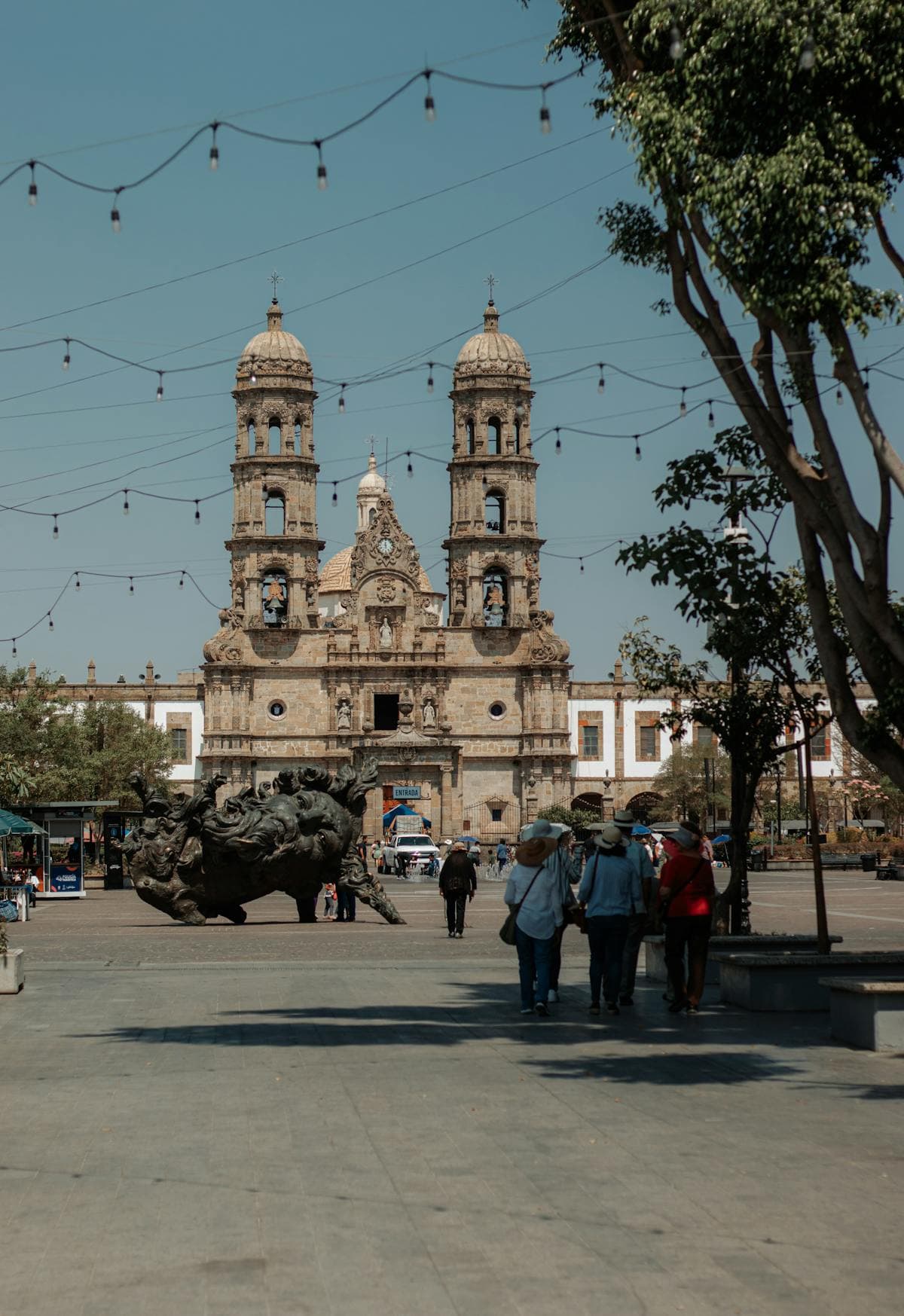
The cathedral sits at the centre, and a plaza opens off each of its four sides. Plaza de Armas to the south, with the bandstand the French gave the city in the early nineteen hundreds and the Palacio de Gobierno on its east edge. Plaza Guadalajara to the west. Plaza de la Liberación to the east, with the Teatro Degollado at its far end. The Rotonda de los Jaliscienses Ilustres to the north, the rotunda holding the bones of ninety-eight of Jalisco's most distinguished citizens beneath seventeen Doric columns. Walk all four plazas and you have walked around the cathedral on every side.
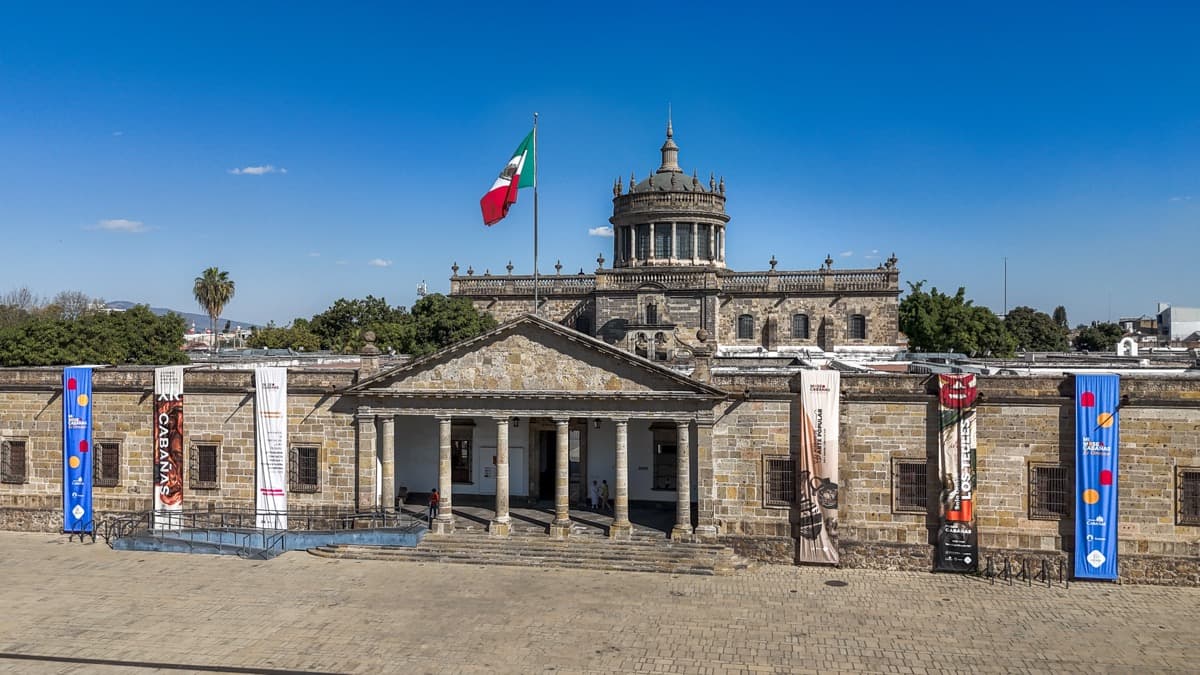
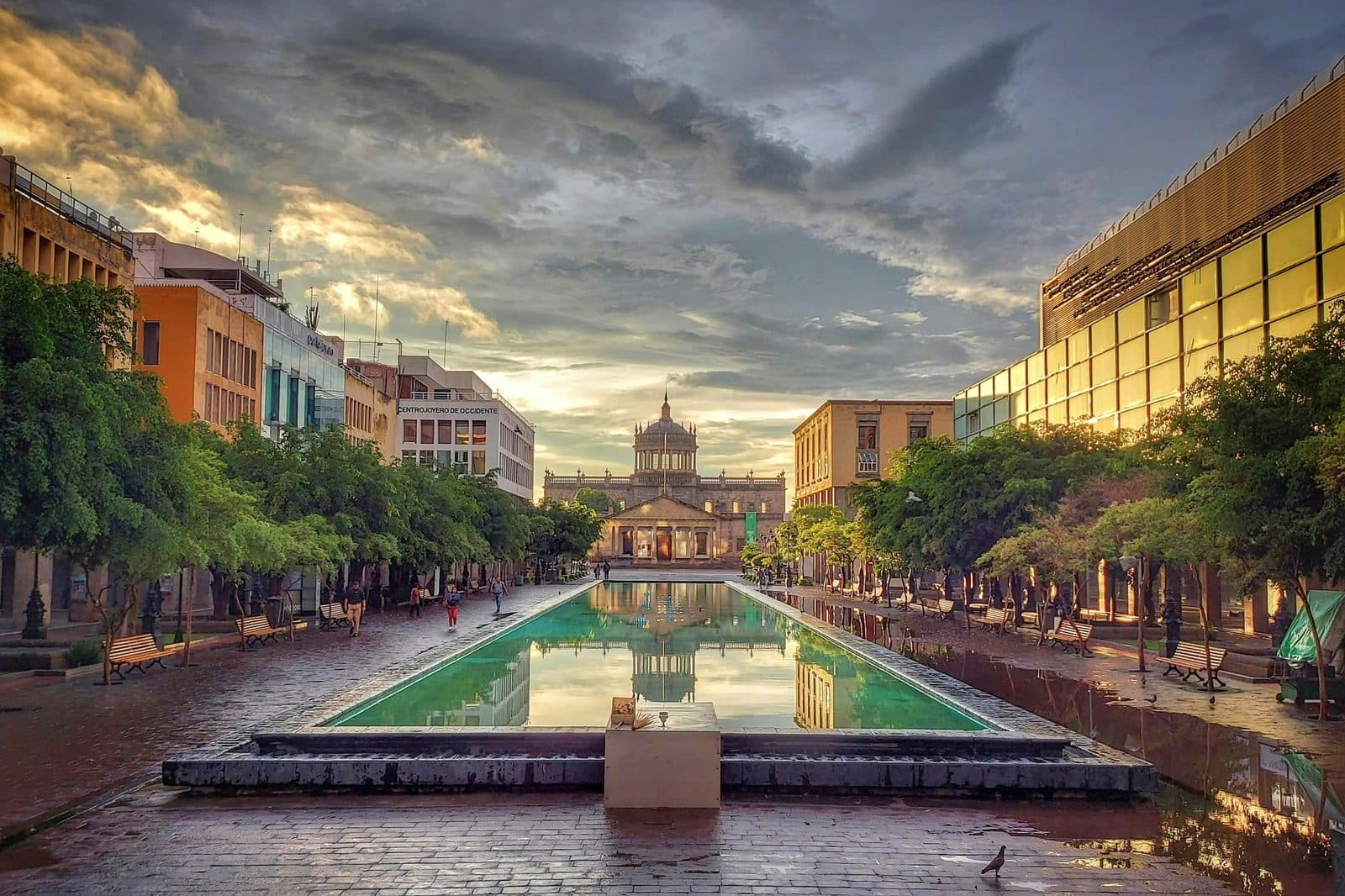
The cross was not original. It was made. In the 1950s, the state government demolished a block of colonial buildings to open Plaza de la Liberación, the eastern arm, between the cathedral and the theatre. In the early 1980s, another governor demolished thirteen more blocks east of the theatre to extend the cross outward into Plaza Tapatía, a five-hundred-metre pedestrian esplanade that runs to the Hospicio Cabañas. Both demolitions were violent in their own way. Hundreds of residents were displaced. Colonial buildings were lost. The resulting space is the largest pedestrian core of any Mexican city centre, and it is undeniably grand, but the price was real.
That is the contradiction Guadalajara is comfortable with. The city repeatedly chose monumental gesture over preservation. The cross of plazas is the most legible expression of that choice.
Mariachi as a profession
Hear a stop from this walk
Hospicio Cabañas (UNESCO World Heritage Site)
Mariachi music is older than the form it now takes. Stringed ensembles playing in rural Jalisco, often at weddings and religious feasts, were documented in the nineteenth century. The town of Cocula, about an hour south of Guadalajara, is one of several places that claim the music's origin. The instrumentation we now recognise, two trumpets, several violins, a vihuela, a guitarrón, and a guitar, comes from later in the twentieth century.
What happened in Guadalajara is that the music became a paid job.
In 1927, musicians began playing regularly at El Parián in Tlaquepaque, a covered plaza of cantinas about seven kilometres southeast of the centre. The cantina owners realised that live mariachi groups drew crowds, and the crowds bought drinks, and a virtuous cycle started. Within a generation the practice had spread to the Plaza de los Mariachis in Guadalajara, then to Plaza Garibaldi in Mexico City, then to weddings and quinceañeras across the country, then to Hollywood. By the 1950s, mariachi was the music that signalled Mexico in international film.
The annual Encuentro Internacional del Mariachi y la Charrería, held in Guadalajara each August or September, treats the music as a museum-grade tradition. Hundreds of groups from across the world perform across multiple venues, and a youth competition runs the future of the tradition through it. You can still hear it most authentically by walking into El Parián on a Saturday afternoon, requesting a song, and paying for it.
Tequila as a place
Tequila is a town. Drive sixty-five kilometres west of Guadalajara along Highway 15 and you arrive there, in a landscape of blue agave fields that, since 2006, has been a UNESCO World Heritage Site. The fields extend to the horizon. Each agave plant takes seven to ten years to mature before its heart, the piña, is harvested and roasted, fermented, and distilled.
The denomination of origin is geographical. Mexican law restricts the name "tequila" to spirit made from blue agave grown in specific municipalities, almost all of them in Jalisco, with smaller zones in four neighbouring states. The state has the legal monopoly. This is why you can buy mezcal made anywhere in Mexico but tequila only from this region.
The major distilleries, José Cuervo (operating since 1758), Sauza, Herradura, are tourist destinations now. The Tequila Express train runs from Guadalajara on weekends. The denomination of origin made the town an economic monoculture, and the monoculture made the town legible to visitors.
Orozco as the answer
The mural cycle in the chapel of the Hospicio Cabañas, painted by José Clemente Orozco between 1938 and 1939, is the cultural centrepiece that justifies the cross of plazas pointing east. The fifty-seven frescoes are a history of Mexico from the pre-Hispanic world through the conquest to the industrial twentieth century, and they are painted with a fury that distinguishes them from the more lyrical work of his contemporary Diego Rivera. On the dome, El Hombre de Fuego, the Man of Fire, a human figure engulfed in flames, spirals upward when you stand directly beneath it and look straight up.
Orozco is from Jalisco. He lost his left hand to a chemical accident as a child and painted these murals with his right hand alone. Stand under that dome and the entire city's argument crystallises. Guadalajara claims a particular role in Mexican history: the place where Father Hidalgo, in this same building's stairwell across town at the Palacio de Gobierno, signed the abolition of slavery in 1810. Not Mexico City. Here. Orozco's mural is the city reminding the country of that fact.
Charrería and the leather
The other piece of the inventory list is charrería, the Mexican rodeo, which originated on Jalisco's haciendas in the colonial period and was codified as a national sport in 1933. Each event, the cala de caballo, the piales en lienzo, the manganas a pie, descends from working ranch practices. The wide-brimmed charro hat that has become a national costume is the working hat of these riders. The leather trade that produced the saddles and boots is still alive in the workshops of Tlaquepaque and around the Mercado San Juan de Dios, the indoor market on the eastern arm of the cross of plazas. The market holds about three thousand stalls and is the largest indoor market in Latin America. Walk it and you understand that the leather and the music and the spirit are part of the same economic ecosystem, all anchored in this state.
How to walk it
Two tours fit the city. The Cross of Plazas tour traces the deliberate civic geometry of downtown, eight stops including the cathedral, the rotunda, the Palacio de Gobierno with its second Orozco mural, the Teatro Degollado, the Plaza Tapatía, the Hospicio Cabañas, and the market. The Tlaquepaque tour walks the village seven kilometres southeast, where the ceramic tradition that has continued unbroken for at least six hundred years is still being made by hand in working studios on a car-free pedestrian street. Both tours are about two to three kilometres on flat ground at roughly 1,560 metres altitude.
The honest order is to walk the cross first, then take a taxi to Tlaquepaque for the afternoon, finishing at El Parián with a tequila and whatever song the mariachis are willing to play for you. The route is the city's own argument, in walking pace. The argument is that Mexico's most exportable culture, the music, the spirit, the leather, the murals, the rodeo, the food, comes from this place, and the place is happy to tell you so.
Frequently asked questions
- How many self-guided walking tours are there in Guadalajara?
- Roamer currently has 2 self-guided audio walking tours in Guadalajara. Every tour is free to start: the introduction and first stop play in full, and every later stop plays a short preview before you decide to buy.
- How much does a self-guided walking tour in Guadalajara cost?
- Each tour is free to preview and $4.99 for lifetime access. If you want more than one, a 7-day pass is $12.99 and a 30-day pass covering every tour is $19.99, which works out to well under a dollar a day.
- Can I do the Guadalajara tours offline?
- Yes. Tours can be downloaded in advance in the Roamer app and played with no signal, which is useful when you are travelling without mobile data.
- How long are the Guadalajara walking tours?
- They run about 95 to 100 minutes, covering 2.5 to 3.0 km on foot, with up to 8 stops on the longest route. You set the pace and can pause any time.
Mexico eSIM· 10% off with ROAMER10
Ready to experience it?
Guadalajara: A City Designed as a Cross
100 min · 3 km · easy
More from Guadalajara
Explore more at your own pace.
Best Self-Guided Walking Tours in Guadalajara (2026)
Guadalajara Travel Guide: How Many Days, Getting Around, When to Go (2026)
One Day in Guadalajara: A Walkable Centro-to-Tlaquepaque Itinerary (2026)
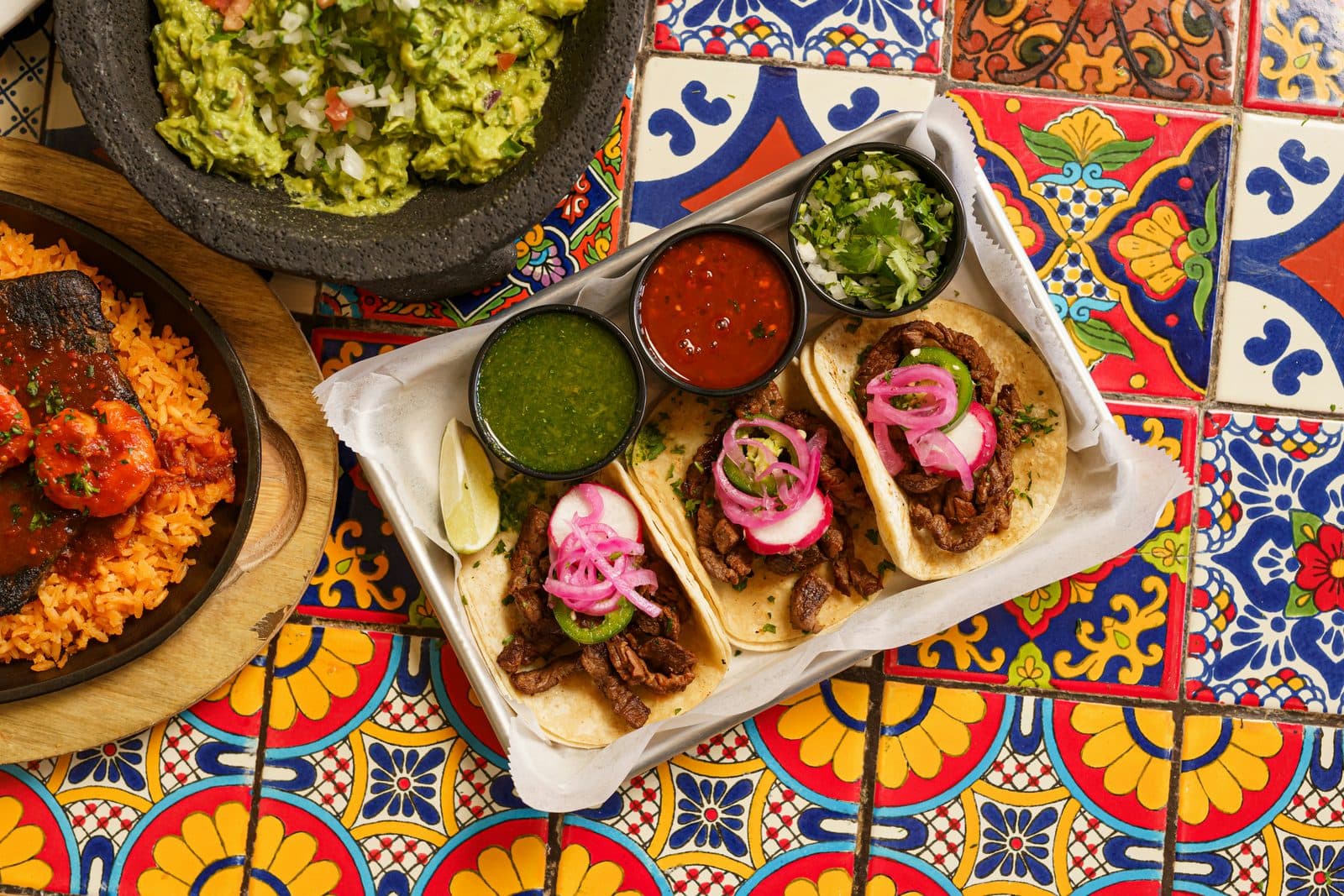
What to Eat in Guadalajara: A Jalisco Food Guide (2026)
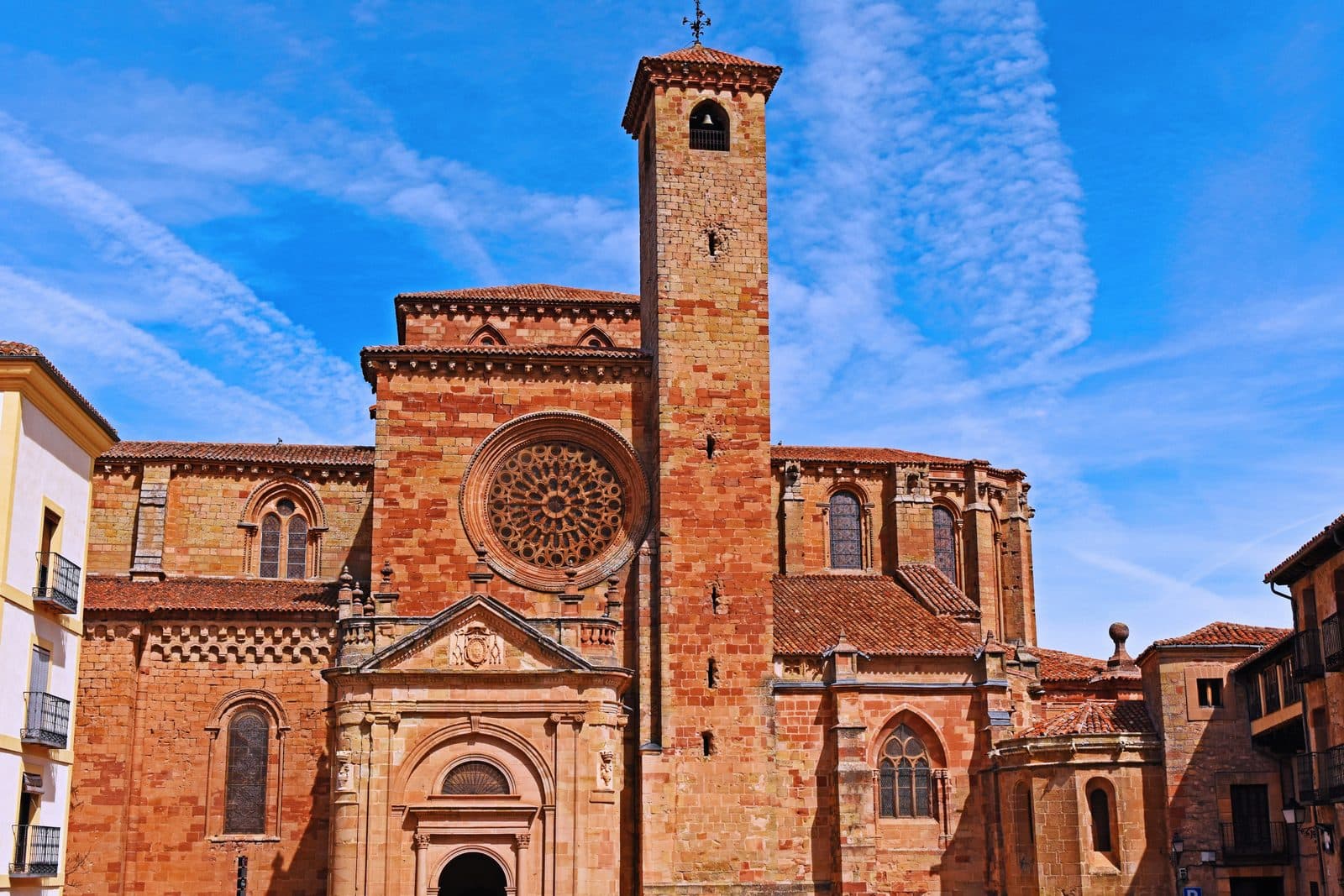
The City That Built Its Plaza Four Times