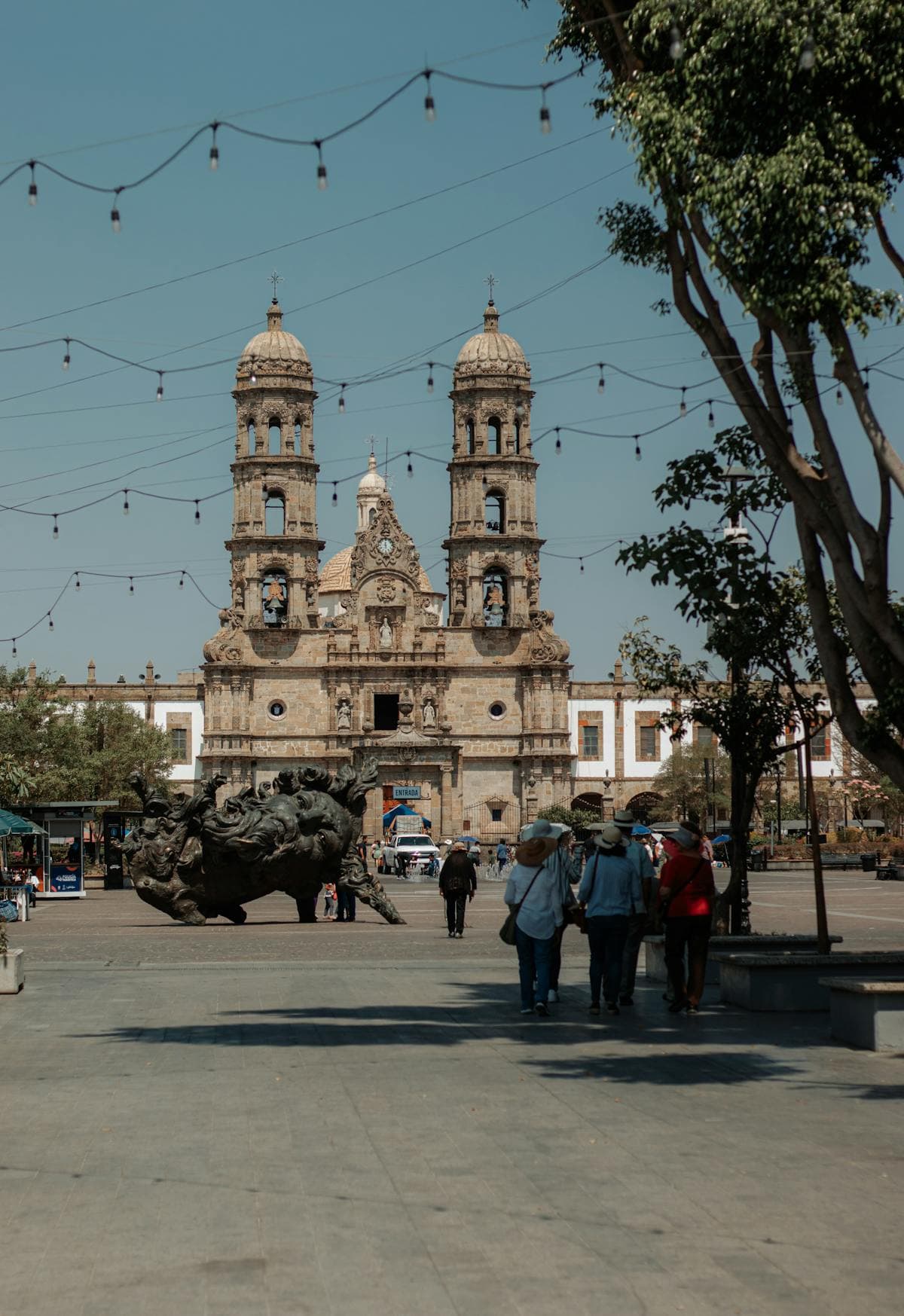
Walk the great cross of plazas that radiates from Guadalajara's Cathedral — from a monument to Jalisco's greatest minds to Orozco's fire-crowned masterpiece and Latin America's largest indoor market.
Start · Rotonda de los Jaliscienses Ilustres
DirectionsStops
- 1
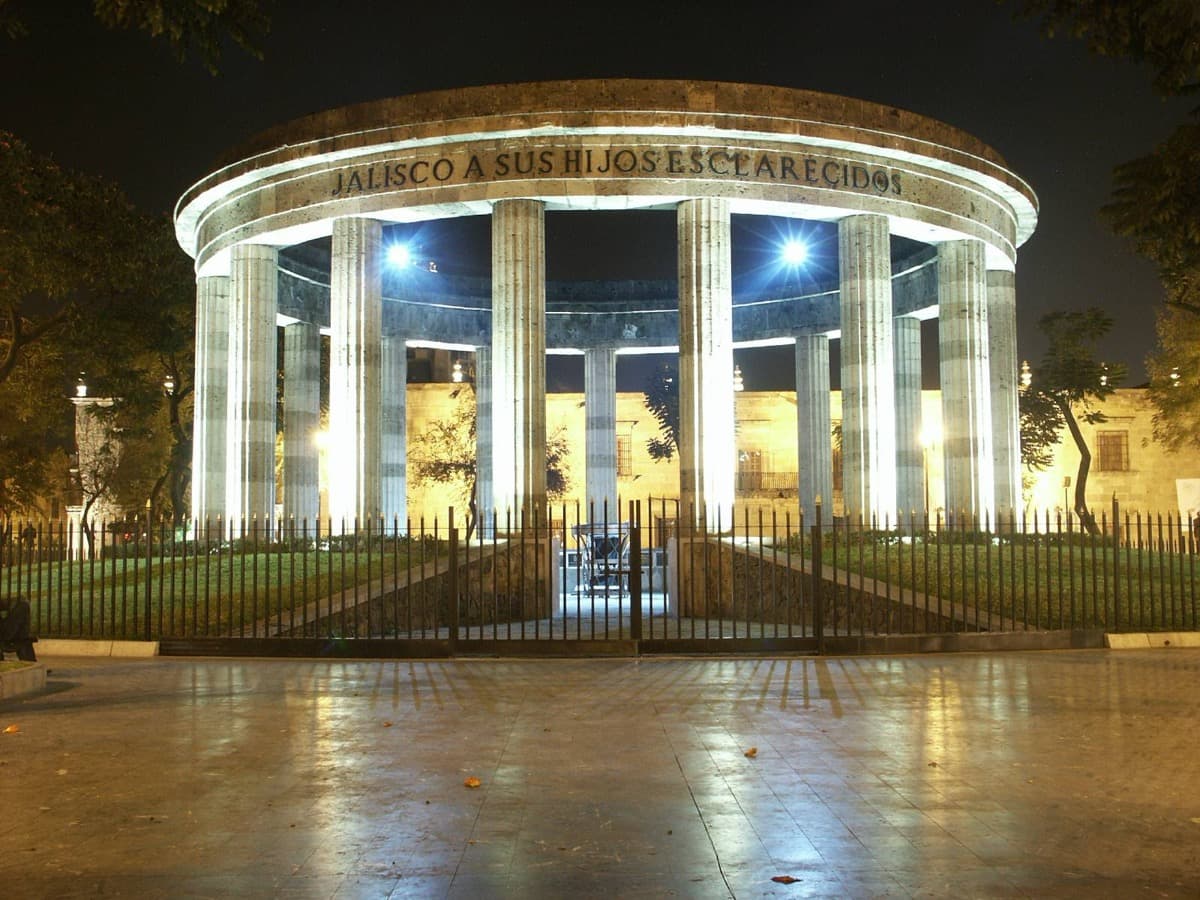
Rotonda de los Jaliscienses Ilustres
A circular neoclassical monument honoring Jalisco's most distinguished citizens, surrounded by seventeen bronze statues in a serene garden north of the Cathedral.
- 2
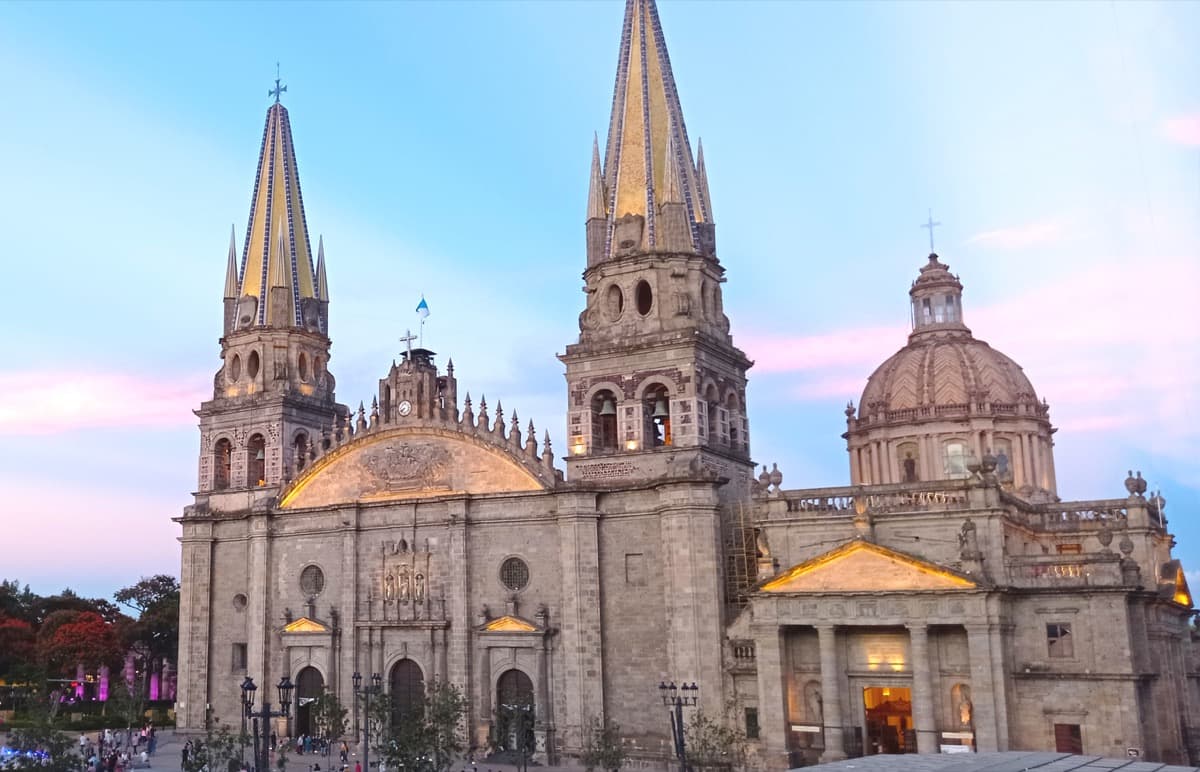
Guadalajara Cathedral
Guadalajara's iconic twin-towered cathedral, a blend of Gothic, Baroque, and neoclassical styles rebuilt over four centuries.
- 3
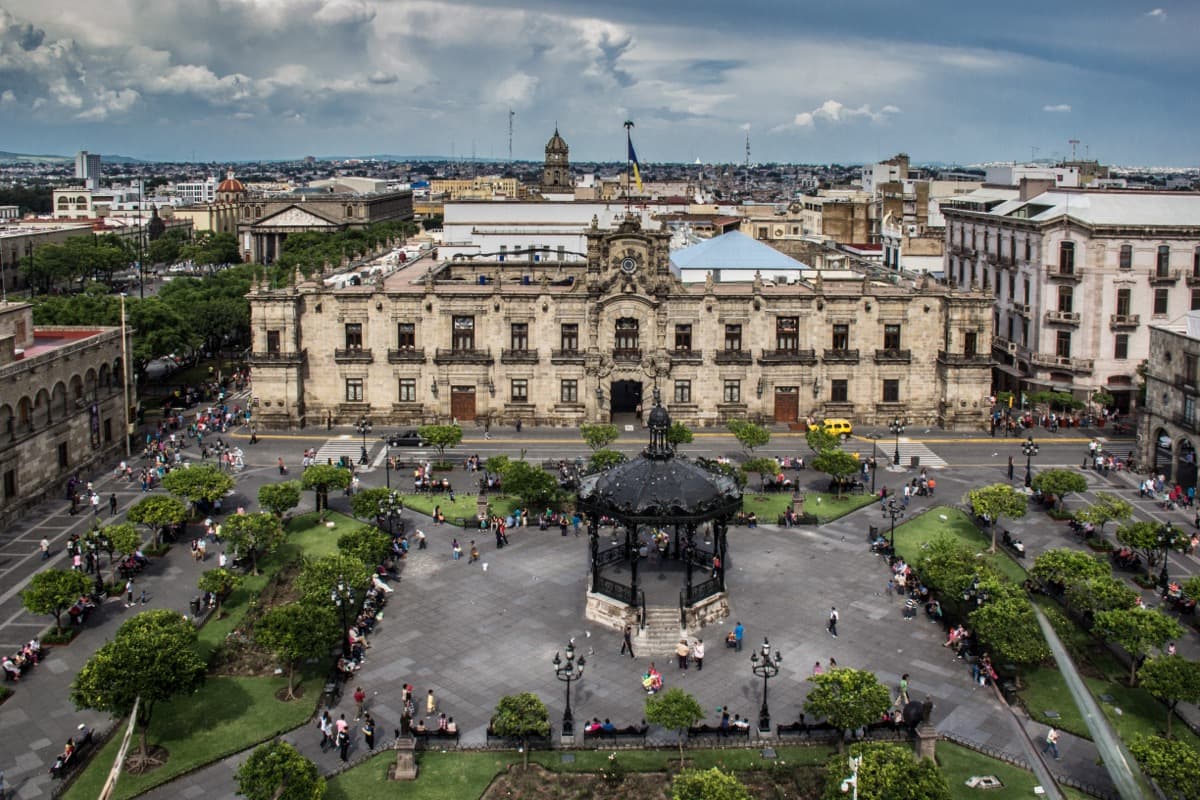
Plaza de Armas & Palacio de Gobierno
The elegant Plaza de Armas with its art nouveau bandstand, flanked by the Palacio de Gobierno where Orozco's monumental Hidalgo mural covers an entire stairwell.
- 4
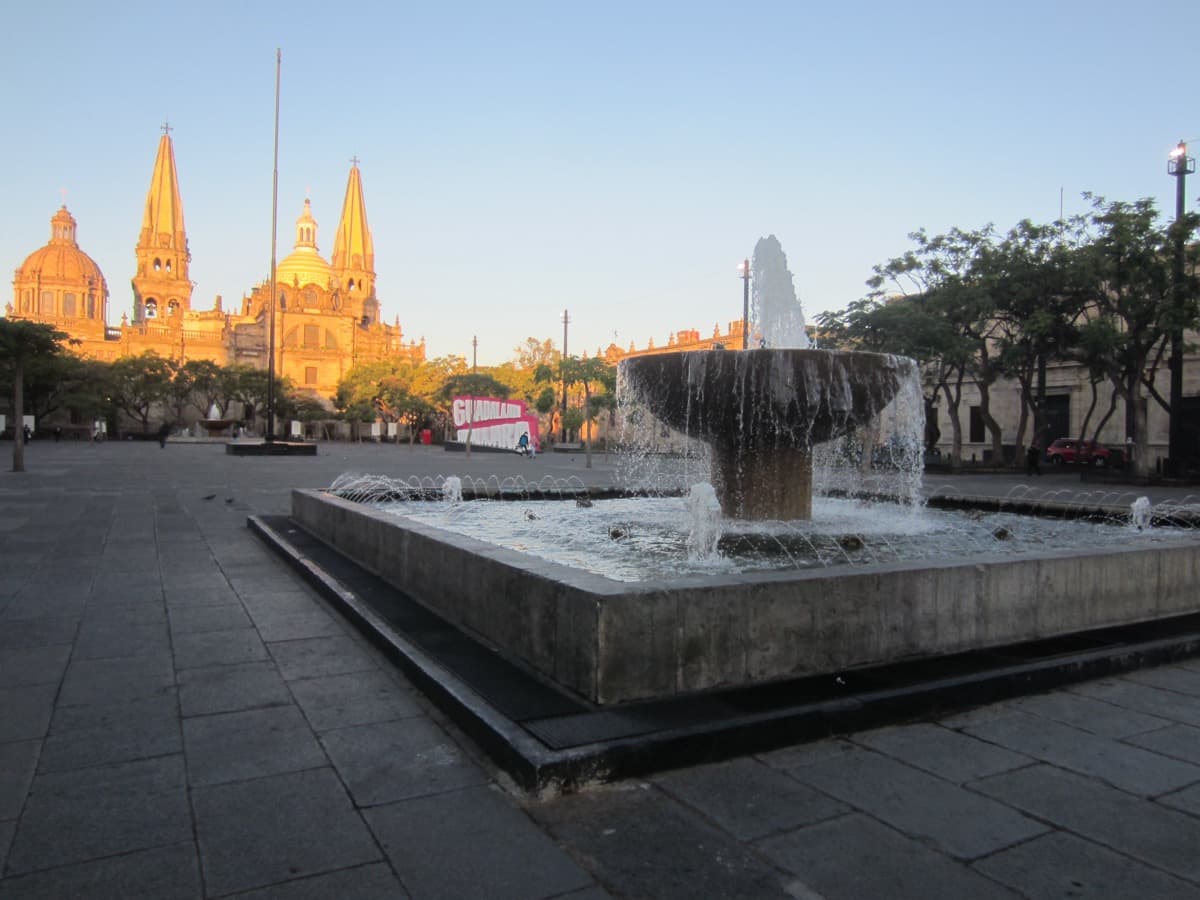
Plaza de la Liberación
A grand open plaza stretching east from the Cathedral to the Teatro Degollado, framed by fountains and the powerful statue of Father Hidalgo breaking chains.
- 5
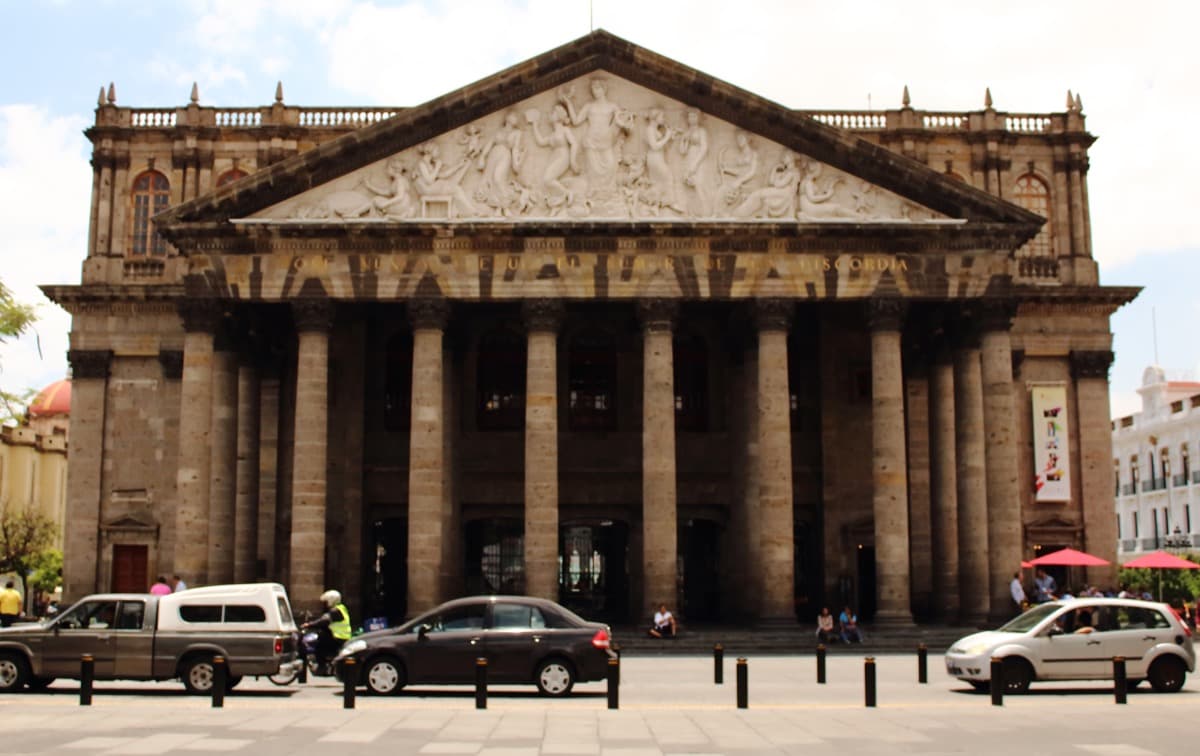
Teatro Degollado
A neoclassical masterpiece inaugurated in 1866, crowned by a marble relief of Apollo and the Nine Muses — one of the finest theaters in Mexico.
- 6
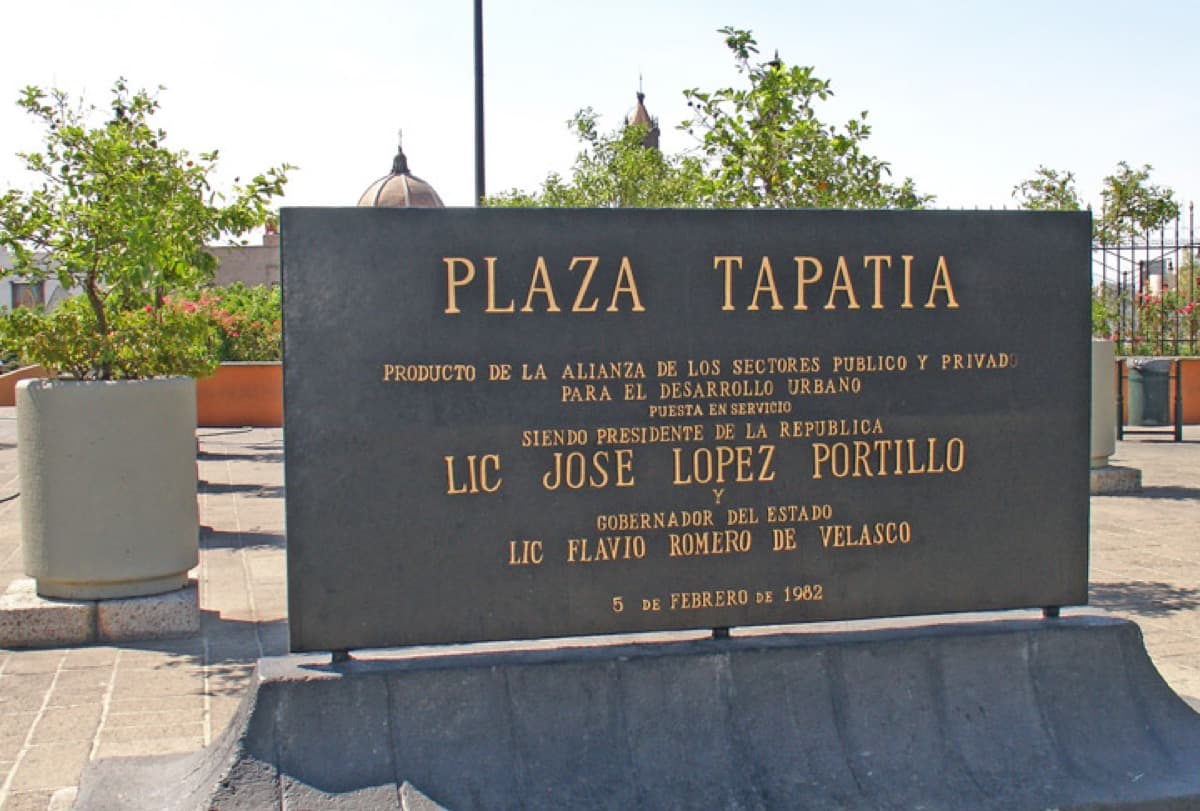
Plaza Tapatía
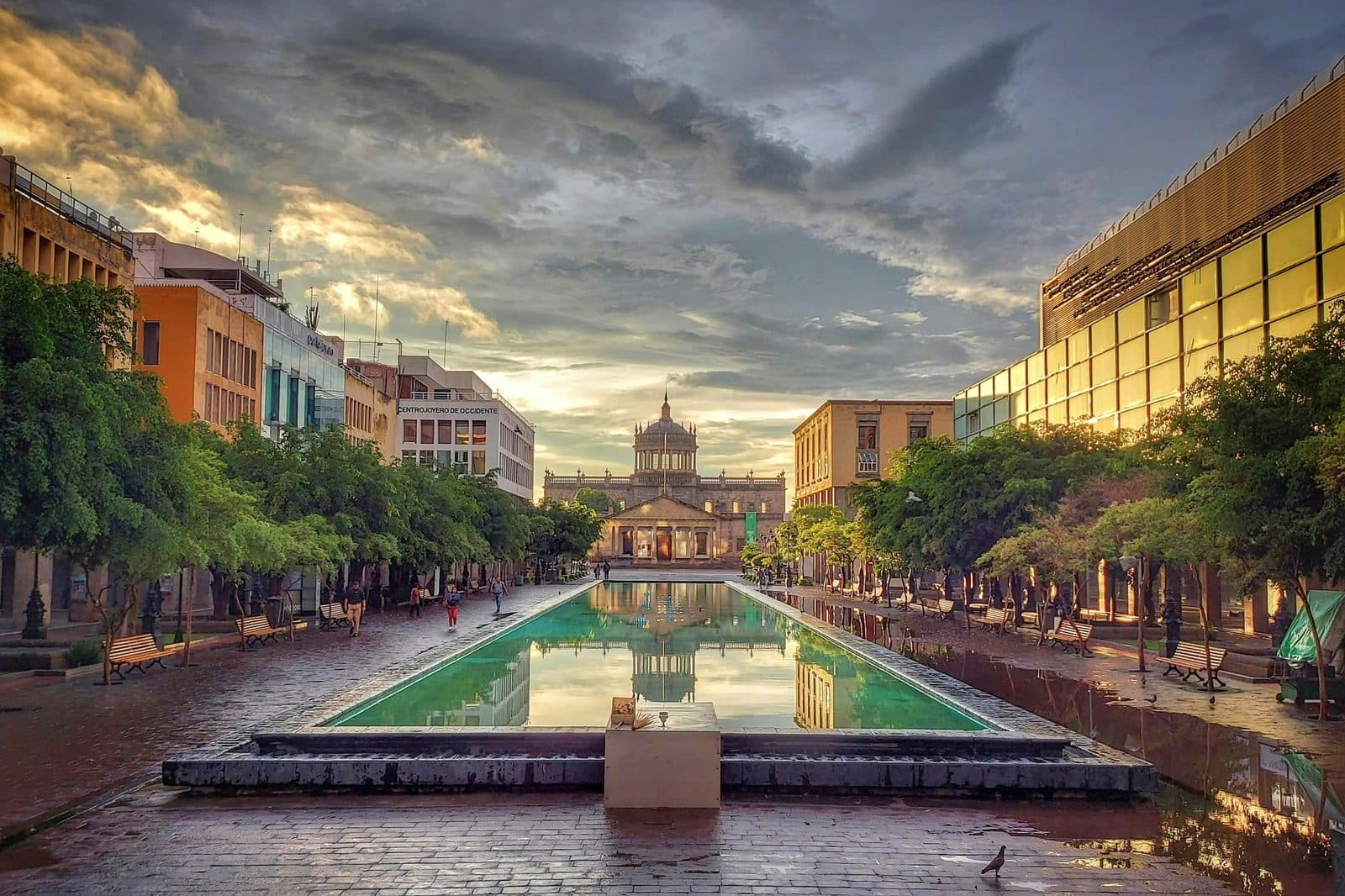
A five-hundred-meter pedestrian esplanade stretching east from Teatro Degollado toward the Hospicio Cabañas, lined with fountains, sculptures, and commercial arcades.
- 7
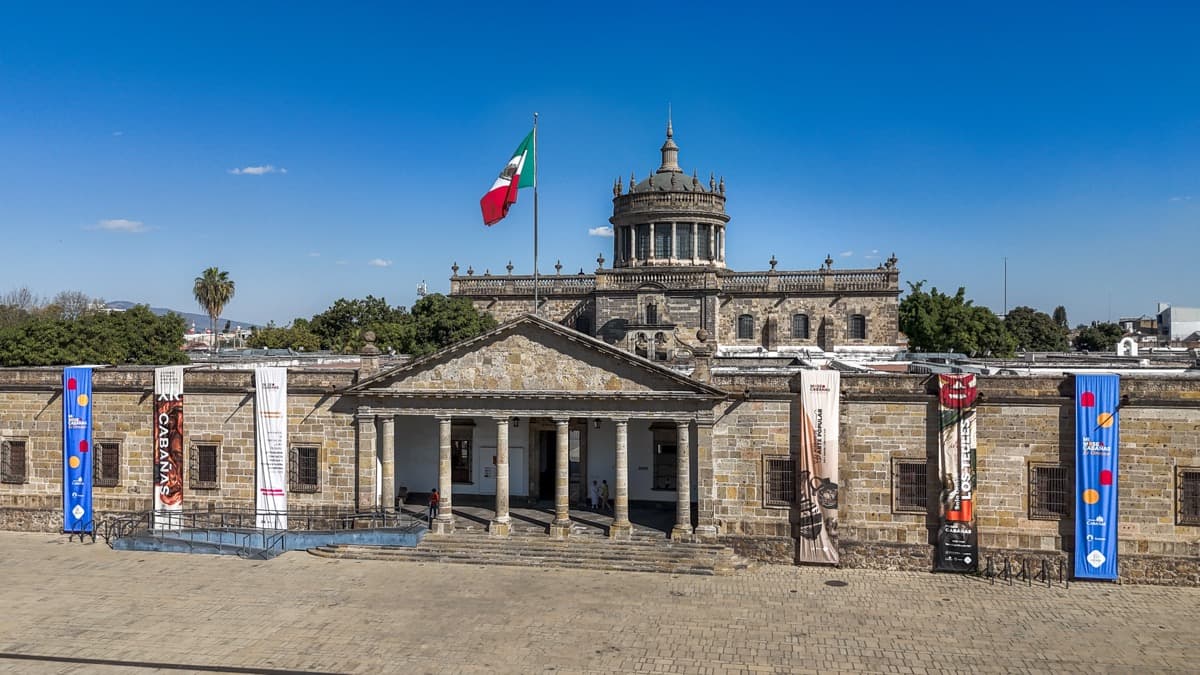
Hospicio Cabañas (UNESCO World Heritage Site)
A monumental neoclassical complex housing 57 Orozco frescoes, including the iconic 'El Hombre de Fuego' dome — a UNESCO World Heritage Site since 1997.
- 8
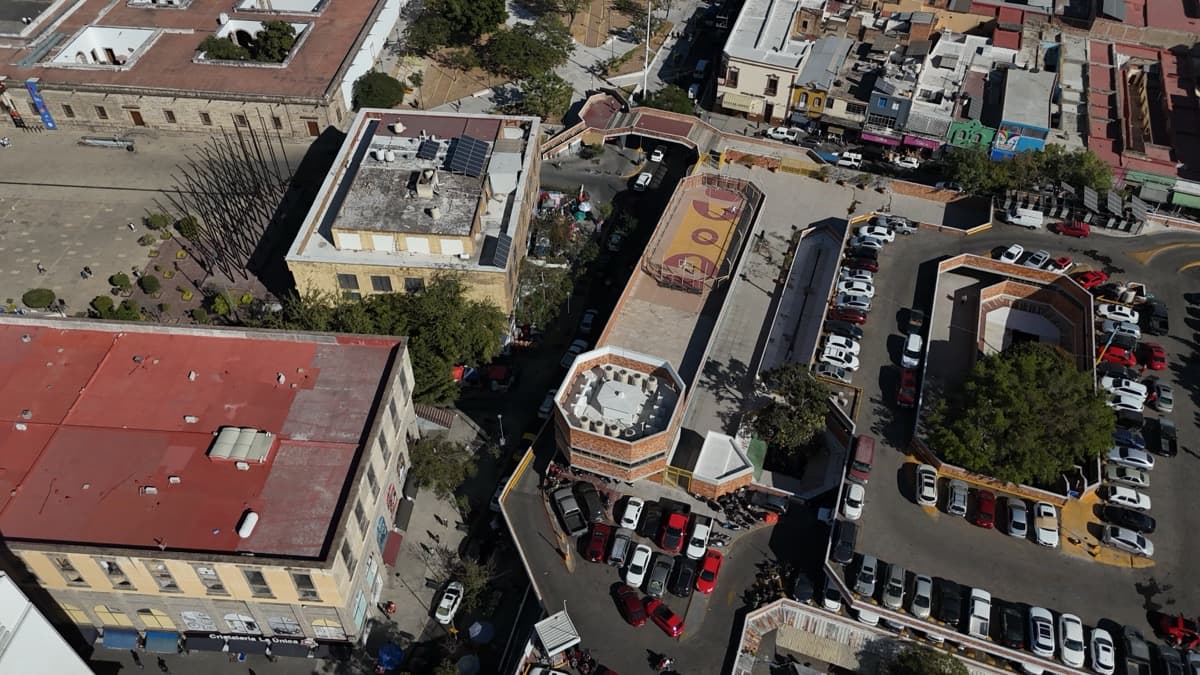
Mercado San Juan de Dios
Latin America's largest indoor market — over forty thousand square meters housing three thousand stalls across three floors of food, crafts, folk medicine, and the legendary tortas ahogadas.
Details
Best Time to Visit
Weekday mornings between 9:00 and 11:00 AM are ideal — the plazas are lively but not yet packed, the Palacio de Gobierno and Cabanas are uncrowded, and you avoid the midday heat. The Mercado San Juan de Dios is best before the lunch rush at 1:00 PM. Sundays are pleasant for the plazas but museums and the Cabanas can be crowded.
Pro Tips
- •Visit the Palacio de Gobierno first thing in the morning — the Orozco mural stairwell gets crowded by midday and the morning light through the windows illuminates the fresco beautifully.
- •Try a torta ahogada at the Mercado San Juan de Dios — ask for 'media' (medium spice) if you're unsure about heat levels. The stalls on the ground floor near the main entrance are the most established.
- •The Hospicio Cabanas charges a small admission fee but it's worth every peso — stand directly under the Man of Fire dome and look straight up for the full optical effect.
- •Buy tejuino from the vendors along Plaza Tapatia — this cold fermented corn drink with lime sorbet is unique to Guadalajara and perfect for the walk.
- •The Cathedral is free to enter but dress modestly — shoulders covered, no shorts above the knee.
- •Download an offline map before starting — the plaza names can be confusing since they flow into each other without obvious boundaries.
Safety & Precautions
- •The Mercado San Juan de Dios is extremely crowded. Keep your belongings secure and use a cross-body bag. Pickpocketing can occur in the tightest aisles.
- •Guadalajara's sun is intense at 1,600 meters elevation. Wear sunscreen and a hat, especially on the exposed Plaza Tapatia esplanade.
- •Stay hydrated. The walk is flat but long, and the dry climate can dehydrate you faster than you expect.
- •At the market, avoid unlicensed money changers and be cautious of vendors who aggressively steer you toward specific stalls. Trust your instincts and explore freely.
Travel advisory: Exercise Increased Caution (Level 2).
Gallery
Related Reading
Go deeper on what you'll see, hear, and walk through.
Read the walk
The full story of Guadalajara: A City Designed as a Cross, in words. Prefer to listen? Play it narrated, from home or on location.
Introduction
What does it mean to design a city as a cross of four plazas instead of one?
Guadalajara's historic centre is the only major Mexican colonial city designed this way. Most colonial cities have a single Zócalo, the central plaza around which the town grew. Guadalajara had that originally. Then in the nineteen thirties, and again in the nineteen eighties, the city executed a deliberate civic project to clear surrounding blocks and create three more plazas, arranged in a cross around the cathedral.
The four plazas are Plaza de Armas, Plaza de la Liberación, Plaza Guadalajara, and the Rotonda de los Jaliscienses Ilustres. To trace all four is to circle the cathedral on every side. The geometry is intentional and political. The city was rejecting the colonial single-plaza pattern, opening its civic heart on every side. Today the cross of plazas is the largest pedestrian core of any Mexican city centre.
The walk is eight stops, about three kilometres and one hundred minutes through the historic centre of Guadalajara, Mexico, at one thousand five hundred and sixty metres altitude on flat colonial-grid streets. The four plazas in sequence, the Cathedral that anchors them, the Teatro Degollado that sits between them, the Plaza Tapatía pedestrian boulevard that extends the cross eastward, the UNESCO-inscribed Hospicio Cabañas with the José Clemente Orozco mural cycle including The Man of Fire, and the Mercado San Juan de Dios where daily life of the city continues at the cross's eastern arm.
When you arrive at the Rotonda de los Jaliscienses Ilustres, begin with stop one.
1. Rotonda de los Jaliscienses Ilustres
Welcome to the Rotonda de los Jaliscienses Ilustres, your first stop on this tour. You're standing at the Rotonda de los Jaliscienses Ilustres, the Rotunda of Jalisco's Illustrious Ones, and this is where the state honors its greatest citizens. The monument you see is a circle of seventeen Doric columns, each standing over seven meters tall, topped by a ring that appears to float without a dome. That open sky above the columns is intentional, it symbolizes that there is no ceiling on human achievement.
The rotunda was built in 1952 by architect Vicente Mendiola, and around its perimeter you'll find bronze statues of the men and women who shaped Jalisco, writers, artists, revolutionaries, scientists. Look for Jose Clemente Orozco, the muralist whose work we'll encounter later at the Cabanas. Look for Valentín Gómez Farías, who served as Mexico's president and pushed for the separation of church and state. And look for Irene Robledo Garcia, one of Jalisco's pioneering educators.
Beneath your feet, under the rotunda's floor, lie the actual remains of ninety-eight illustrious jaliscienses. This isn't just a monument, it's a mausoleum. Every few years, the state government votes to exhume the remains of another notable figure and inter them here. The most recent additions have included musicians, poets, and civil rights leaders.
The gardens around the rotunda are some of the most peaceful in the city center. Ancient laurel trees provide deep shade, and on weekday mornings you'll find retired tapatios reading newspapers on the benches, completely unbothered by the history beneath them. Take a moment to walk the circle before we head south to the Cathedral.
2. Guadalajara Cathedral
Welcome to the Guadalajara Cathedral. Look up at the twin towers of the Guadalajara Cathedral and you'll notice something unusual, they're covered in bright yellow and blue tiles, a pattern that looks more like Portuguese azulejos than anything you'd expect on a Mexican cathedral. Those towers are actually the third version. The originals were destroyed by an earthquake in 1818, and when they were rebuilt in the 1850s, the architect chose a neo-Gothic style with ceramic tile that has since become the most recognizable silhouette in the city.
The cathedral was consecrated in 1618 after nearly sixty years of construction, beginning in 1561. But like most colonial churches in earthquake country, it has been rebuilt, modified, and patched so many times that the building is a living catalog of architectural styles. The main body is Spanish Renaissance. The facade has baroque and neoclassical elements. The towers are neo-Gothic. And somehow, it all works, the mixture gives the building a personality that no single style could achieve.
Step inside if you can. The interior is surprisingly restrained compared to the exuberant colonial churches you'll find elsewhere in Mexico. Look for the painting attributed to the Spanish master Bartolomé Esteban Murillo, the Assumption of the Virgin, which hangs in the sacristy. Whether it's a genuine Murillo or a colonial-era copy remains a matter of polite scholarly debate.
The cathedral sits at the exact center of the Cruz de Plazas. From here, plazas extend in all four cardinal directions, north to the Rotonda you just visited, south to the Plaza de Armas, east to the Plaza de la Liberación, and west to the Parque Revolución. It's one of the most elegant pieces of urban planning in Mexico, and you're standing at its heart.
3. Plaza de Armas & Palacio de Gobierno
Welcome to Plaza de Armas and the Palacio de Gobierno. You've walked south from the Cathedral into the Plaza de Armas, and the first thing you should notice is the bandstand in the center, a delicate art nouveau kiosk made of wrought iron, donated to the city by France in the early nineteen hundreds. On Thursday and Sunday evenings, the state band still performs here, and the plaza fills with families, couples, and elderly men arguing about football. It's one of the most reliably charming scenes in Guadalajara.
Now turn your attention to the building on the east side, the Palacio de Gobierno. This churrigueresque and neoclassical building was completed in 1774, and its stone facade is handsome but restrained. What's inside, however, is anything but restrained.
Walk through the main entrance and look up the central stairwell. Covering the entire wall above you is one of Jose Clemente Orozco's most powerful murals, a massive depiction of Father Miguel Hidalgo, the priest who launched Mexico's war of independence in 1810. Hidalgo is shown as a titan, torch in hand, bursting forward with an expression of pure revolutionary fury. Below him, chains shatter and oppressed figures rise. The mural covers roughly four hundred square meters, and it is ferocious.
Orozco painted this in 1937, and it tells you everything about how Jalisco sees its role in Mexican history. Hidalgo signed the abolition of slavery right here in this building on December 6th, 1810, making Guadalajara the place where the first concrete act of Mexican liberation occurred. Not Mexico City. Here. The mural is Orozco reminding the nation of that fact.
You'll encounter Orozco again at the Cabanas later, but this stairwell is where you feel his anger most directly.
4. Plaza de la Liberación
Welcome to Plaza de la Liberación. You're now standing in the Plaza de la Liberación, sometimes called the Plaza de las Dos Copas, the Plaza of the Two Cups, because of the pair of large fountains that anchor its east and west ends. This is the eastern arm of the Cross of…
Full narration for this stop unlocks with the tour.
5. Teatro Degollado
Welcome to the Teatro Degollado. You're facing the Teatro Degollado, and the first thing to absorb is the portico, eight Corinthian columns supporting a triangular pediment filled with a marble relief of Apollo and the Nine Muses. It looks like it was airlifted from ancient…
Full narration for this stop unlocks with the tour.
6. Plaza Tapatía
Welcome to Plaza Tapatía. You've stepped onto the Plaza Tapatía, and what stretches before you is one of the most ambitious pedestrian projects in Mexican urban history, a five-hundred-meter esplanade that was carved through the city center in the early 1980s by demolishing…
Full narration for this stop unlocks with the tour.
7. Hospicio Cabañas (UNESCO World Heritage Site)
Welcome to Hospicio Cabañas. You've arrived at the Hospicio Cabanas, and what you're looking at is one of the most important buildings in the Americas. This vast neoclassical complex, the largest of its kind in the Spanish colonial world, was built between 1805 and 1845 as an…
Full narration for this stop unlocks with the tour.
8. Mercado San Juan de Dios
Welcome to the Mercado San Juan de Dios, your final stop on this tour. Your final stop is the Mercado San Juan de Dios, also called the Mercado Libertad, and there is nothing quite like it in Latin America. This is the largest indoor market on the continent, covering over forty…
Full narration for this stop unlocks with the tour.