Historic Center: The City Built on Inca Walls
90 min · 2.4 km · moderate
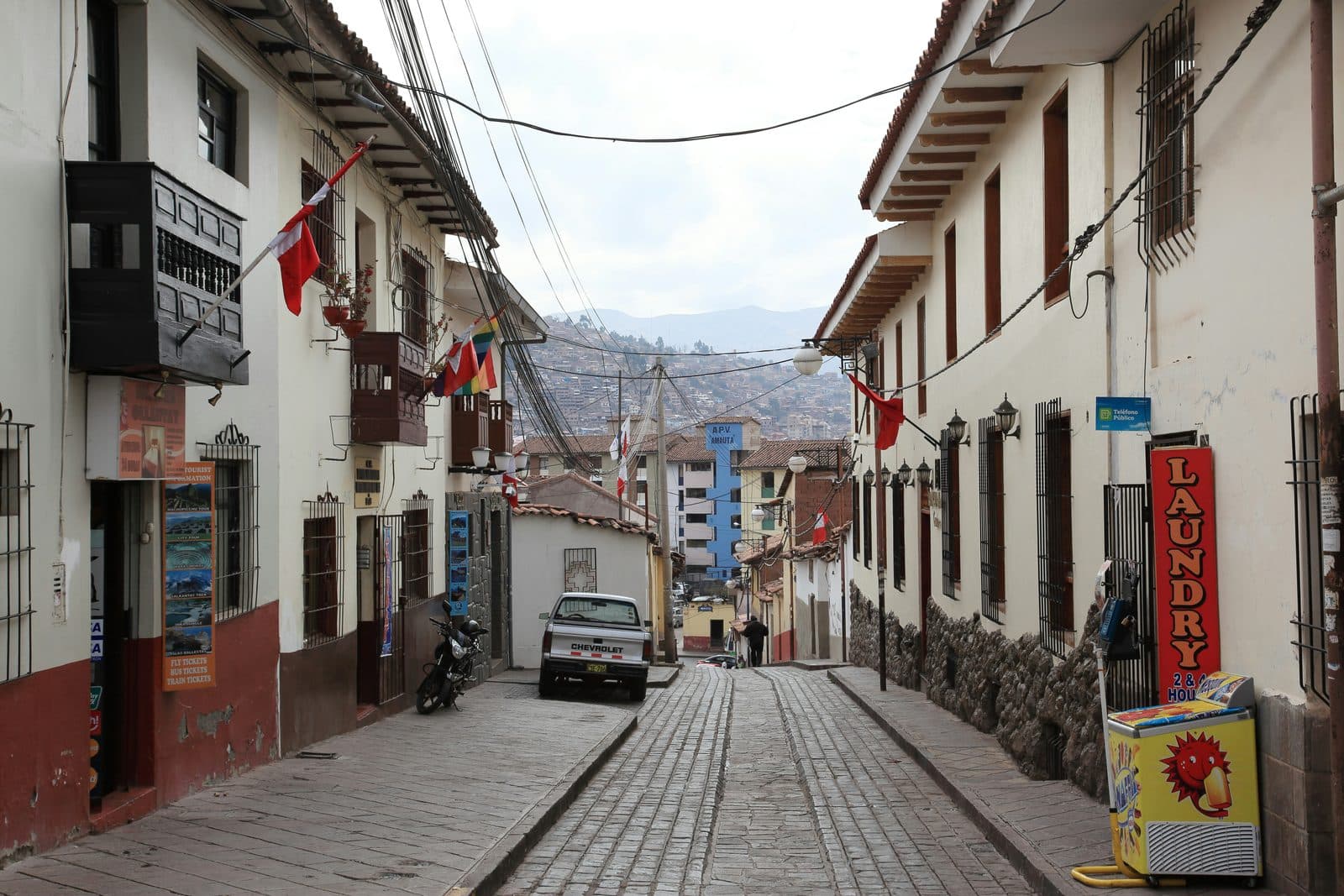
There is a narrow street in central Cusco called Calle Loreto. It runs in one unbroken stretch of about 220 meters from the Plaza de Armas, and it is only 4.10 meters wide at the plaza end and 3.35 meters at the other. It passes between two Inca compounds: Amarucancha, the palace of Huayna Capac, and the Acllahuasi, the house of the Chosen Women, whose long wall of fine coursed Inca stone still stands without mortar in the twenty-first century. Above the Inca courses sit colonial buildings. Walking in from the plaza, a convent on the left. A church on the right. The line where one civilization ends and the other begins is visible and continuous.
That line is the single most important thing about Cusco.
Why the line exists
When Hernán Cortés's men took the Aztec capital of Tenochtitlan in 1521, they destroyed the Templo Mayor and built their cathedral on the Aztec sacred precinct. Tearing down and building over was a common conquest pattern in the Spanish Americas, and the political symbolism was useful.
In Cusco, the walls stayed.
The Inca walls were too good to waste. Fine Inca masonry, of the kind at Qorikancha, along Calle Loreto and at Sacsayhuaman, is not simply stacked. It is interlocked. The blocks fit against their neighbours so precisely that a knife blade cannot be inserted into the joint. To take a wall like this apart you cannot simply push it over. And it holds in earthquakes: engineering studies credit its inward lean, its interlocking blocks, the weight above and the even friction across its joints, which let it behave as one body. When the earthquake of 1950 struck, a government survey found the Inca walls of the city standing, cracked in only one place, at Santo Domingo over Qorikancha, while church towers and adobe houses gave way and the church and convent there were left partly in ruins. Tough is not untouchable: a 2022 study catalogued thousands of displaced blocks and fractures in Inca walls, partly from an earthquake in Inca times, and for the earthquake of 1650 no source says the Inca walls stood while the Spanish ones fell.
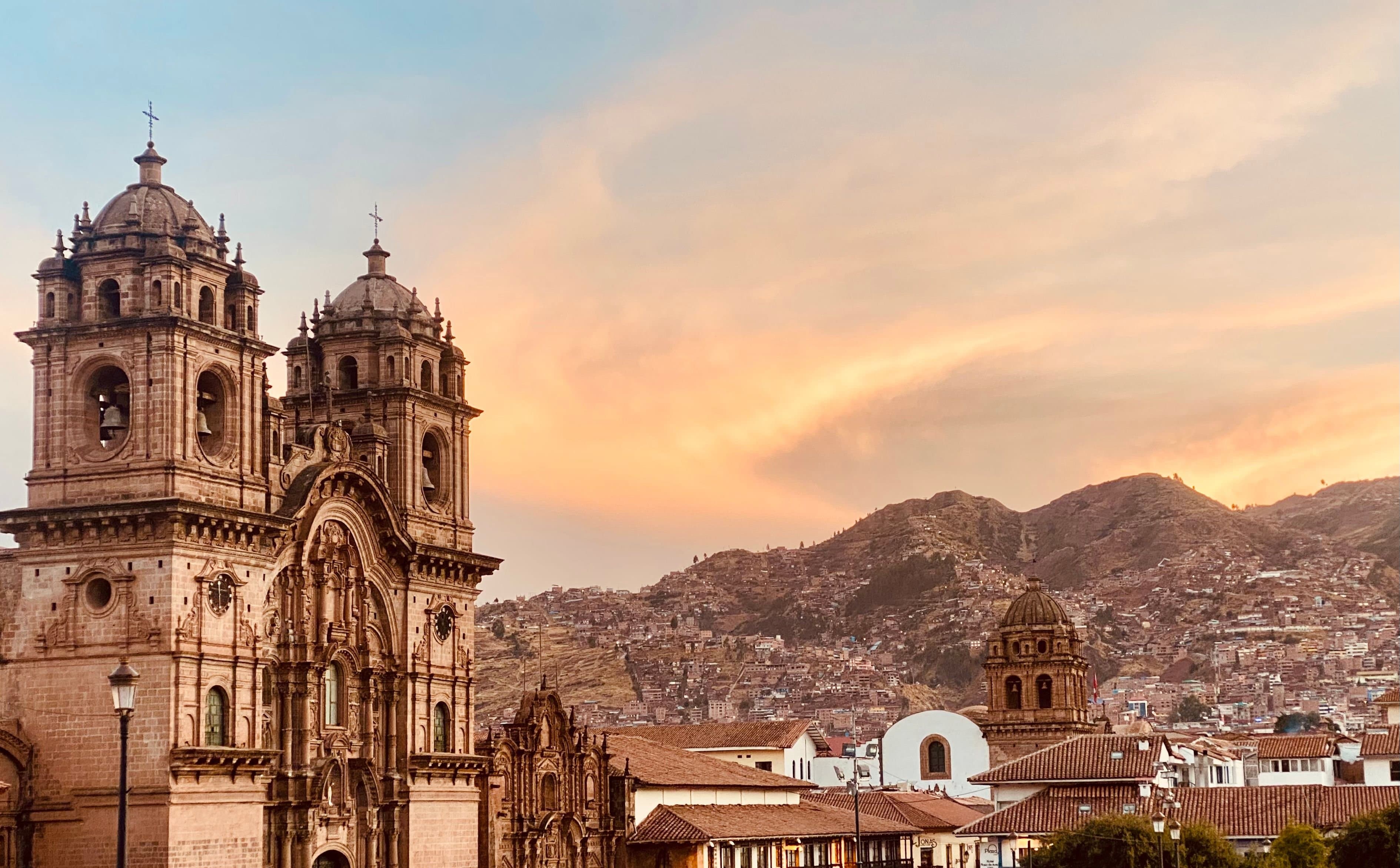
So in Cusco the conquerors, who did demolish a great deal, kept the Inca foundations and built on top. The Cathedral on the Palace of Viracocha. La Compañía on Amarucancha, the palace of Huayna Capac. Santo Domingo on Qorikancha, the most important temple in the empire. The Convent of Santa Catalina on the Acllahuasi, the house of the Chosen Women. The colonial city is literally riding on the Inca one. Once you know where to look for the seam, you cannot stop seeing it.
What the line teaches
Hear a stop from this walk
Plaza Regocijo: The Other Half of the Inca Square
A stratified city is read differently from a layered museum. The lower stratum was never decommissioned, just covered. The upper stratum is structurally dependent on the lower. The two are in continuous physical contact, separated only by the line where colonial masonry meets Inca stone.
The cultural reading mirrors the physical one. Marcos Zapata's Last Supper in the Cathedral puts a roasted cuy, the Andean guinea pig, at the centre of the table. The painting is European in form and Andean in content. The same logic runs, in a modern key, through the long-necked saints of the twentieth-century San Blas image-maker Hilario Mendívil, and through the festival of Inti Raymi, which was banned under Viceroy Francisco de Toledo in 1572, revived in the 1940s, and is staged again every June 24th.
The pattern is not syncretism in the soft sense of cultures blending. It is overlay. The Andean substrate continues underneath, structurally intact. The European surface is what catches the eye. The interesting reading is always the relationship between the two.
How to walk the three tours
Cusco's three Roamer walks divide the city into the three angles from which the stratification is best seen.
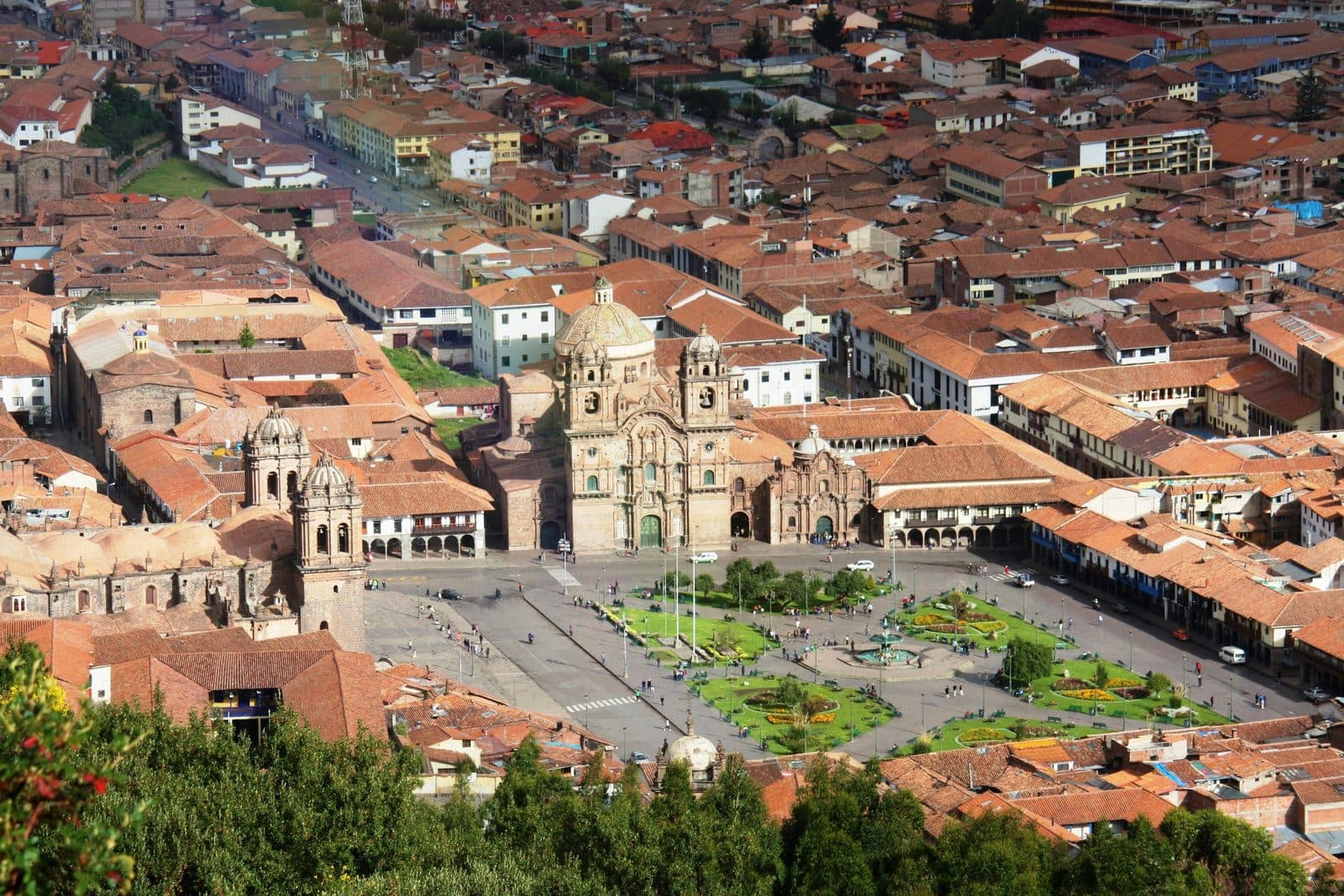
The Historic Center walk, "Historic Center: The City Built on Inca Walls", traces the surface seam: twelve stops on a loop of about 2.4 kilometers, about an hour and a half, from the Plaza de Armas to Plaza Regocijo. The plaza was Huacaypata, the ceremonial and political heart of the Inca state. The Cathedral sits on the Palace of Viracocha. The Twelve-Angle Stone, Cusco's most famous stone, is set into a wall traditionally identified as the palace of Inca Roca. From there the walk takes in the Acllahuasi at Plazoleta Santa Catalina, the royal compound of Kusicancha, Qorikancha and the curved Inca wall under the end of its church, Calle Loreto and La Compañía on Amarucancha, then crosses to the west side of the old city: La Merced, San Francisco on old Inca farm terraces, and Plaza Regocijo, which Garcilaso de la Vega knew as Kusipata, once one great square with the Plaza de Armas over a covered stream. It walks the line.
The Sacsayhuamán walk, "Sacsayhuamán and Cristo Blanco: Down the Hill the Stone Came From", reads the city from above. A short taxi ride takes you up to Cristo Blanco; from there ten stops and about 1.3 kilometers lead nearly all downhill, past the stone-lined channel of the Puqro stream, the Sapantiana arches and the Inca terrace wall with its eleven niches beside the church of San Cristóbal, to the Plaza de Armas. Three optional stops inside Sacsayhuamán's ticketed park, which you tap to play, take in the zigzag walls. The Spaniards called the hill a fortress because they had to fight for it in 1536, when Manco Inca's forces held it against them; the people of Cusco, a chronicler wrote, called it the House of the Sun. Much of its stone went down the hill into the colonial city, which is the way the walk goes.
The San Blas walk, "San Blas: How a Hill Became the Artisans' Quarter", climbs into the artisan quarter on the hill above the center, on an eight-stop loop of about 1.3 km that starts in the Plaza de las Nazarenas and ends a few steps from it, in the lane of Siete Culebras. Here the strata run the other way from the legend. The hill was Inca farm terraces and water channels; after 1559 it became a parish for the native people of the city, whose church the parishioners built themselves and opened in 1564, and whose records name shoemakers and cloth weavers. The famous artisan quarter is the top layer and the youngest: the Mendívil, Olave and Mérida workshops date from the twentieth century, and their founders' children still run them. The cedar pulpit in the church of San Blas, carved around 1690 to 1700, is attributed to the indigenous master Juan Tomás Tuyru Túpac, though scholars dispute it. The back lanes on the way down still sit on the Inca terraces.
The thing not to romanticize
The colonial city was built by extracted labor. The mita system, inherited from the Inca and intensified by the Spanish into a forced rotational labor draft, supplied workers to the silver mines at Potosí and to the construction projects in the colonial capitals. The stone for the Cathedral was hauled down from Sacsayhuaman, a complex raised by Inca builders, to build the church of the people who had conquered them.
The stratification you can read in the walls is also a stratification you can read in the demographics. Quechua is still spoken in the markets, the highlands, and the home. Spanish is the language of the church, the school, and the courthouse. The two languages overlap continuously, code-switch fluently, and remain hierarchically arranged. The painter Marcos Zapata, to whom the cathedral's Last Supper is attributed, put cuy on the table to claim the canvas at all.
A city stratified by labor extraction is not a celebration. It is a record. The honest way to walk Cusco is to read both strata at the same time, ask who built which one, and notice that the answer is sometimes the same person.
What to take with you
You will leave Cusco with the line stuck in your eye. A wall in Lima will look thinner. A wall in Madrid will look weightless. Inca masonry is fitted so closely that a knife blade will not go into its joints. In 1950 a government survey found the Inca walls standing, cracked in only one place, while church towers and adobe houses came down around them. The line holds.
That is the city.
Frequently asked questions
- How many self-guided walking tours are there in Cusco?
- Roamer currently has 3 self-guided audio walking tours in Cusco. Every tour is free to start: the introduction and first stop play in full, and every later stop plays a short preview before you decide to buy.
- How much does a self-guided walking tour in Cusco cost?
- Each tour is free to preview and $4.99 for lifetime access. If you want more than one, a 7-day pass is $12.99 and a 30-day pass covering every tour is $19.99, which works out to well under a dollar a day.
- Can I do the Cusco tours offline?
- Yes. Tours can be downloaded in advance in the Roamer app and played with no signal, which is useful when you are travelling without mobile data.
- How long are the Cusco walking tours?
- The Historic Center walk is 12 stops over about 2.4 km and takes about 90 minutes. The San Blas walk is 8 stops over about 1.3 km, about 75 minutes. The Sacsayhuamán walk starts with a short taxi ride up to Cristo Blanco, then 10 stops and about 1.3 km nearly all downhill, about 75 minutes, or about two hours with its 3 optional stops inside the ticketed park. You set the pace and can pause any time.
Ready to experience it?
Historic Center: The City Built on Inca Walls
90 min · 2.4 km · moderate
More from Cusco
Explore more at your own pace.
Best Self-Guided Walking Tours in Cusco (2026)
Cusco Travel Guide: Altitude, How Many Days, Getting Around, When to Go (2026)
One Day in Cusco: An Altitude-Friendly Walking Itinerary (2026)
Best History Walking Tours in Cusco (2026)
What to Eat in Cusco: An Andean Food Guide (2026)