On the hill above Cusco stand three long walls of fitted grey stone, laid out in zigzags. The Spaniards called the place a fortress. The chronicler Pedro Cieza de León set the two names side by side: this stronghold, he wrote, is the one "the natives call the House of the Sun and we call the fortress". Both names are still in use, and the year that decided which one the world would remember is 1536.
Two names for one hill
Peru's Ministry of Culture, in its master plan for the archaeological park, weighs three readings of Sacsayhuamán: a fortress, a shrine to Illapa, the thunder, or the House of the Sun. The Ministry's Cusco office describes it today as consecrated as "the House of the Sun of Hanan Qosqo", the upper half of the Inca city. The plan argues that the fortress name stuck for one reason. At the moment of the great siege, in its words, Manco Inca turned the House of the Sun into a fortress.
1536
Hear a stop from this walk
Plaza de Armas: Where the Stone Came Down
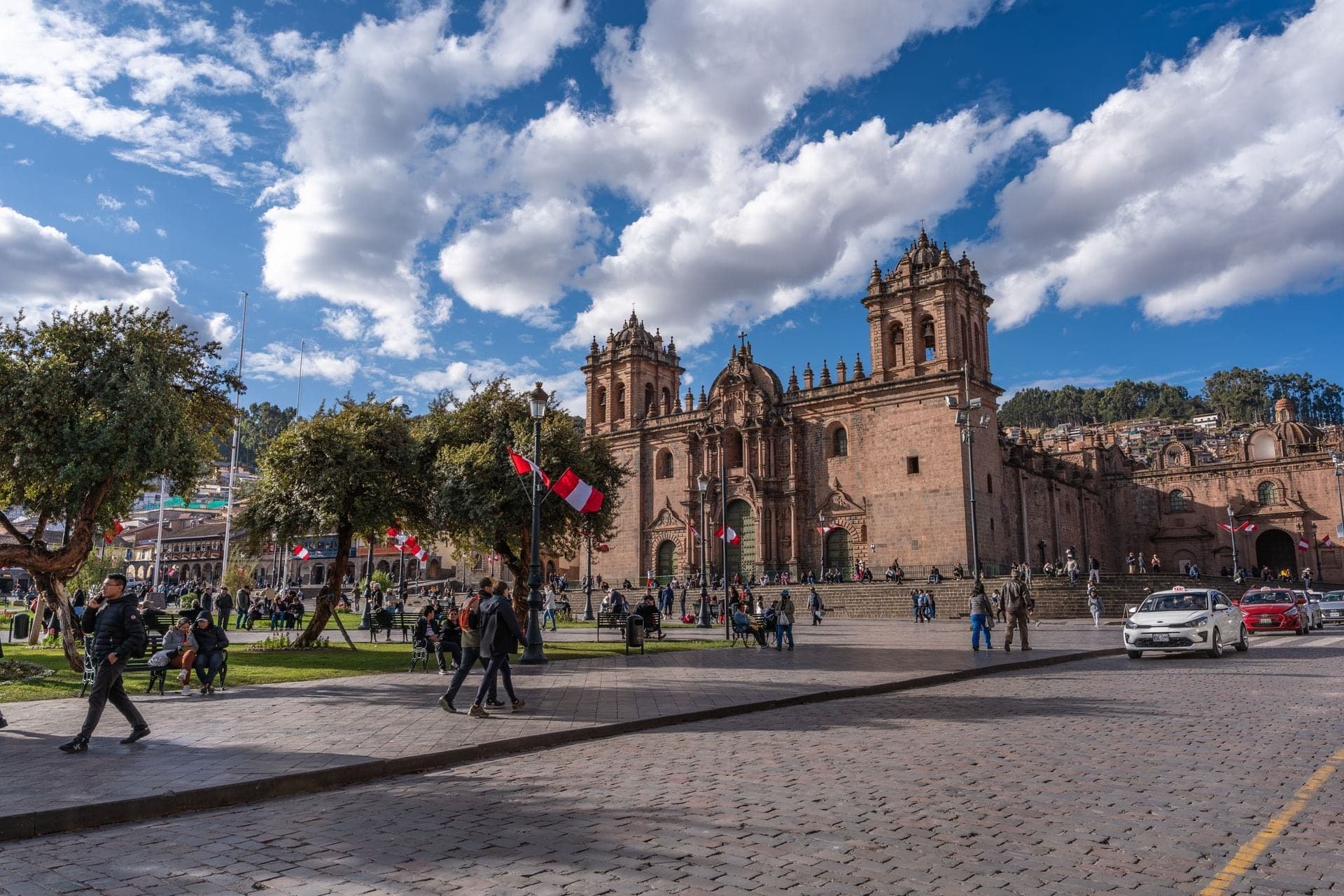
Francisco Pizarro's army entered Cusco on 15 November 1533, together with Manco Inca, a son of Huayna Capac, and native allies. The Spaniards made Manco the Inca. Within three years he had turned against them. In 1536 his forces besieged the Spaniards in Cusco and held Sacsayhuamán above the city, and Juan Pizarro, one of Francisco's brothers, was killed leading the Spanish attack on it.
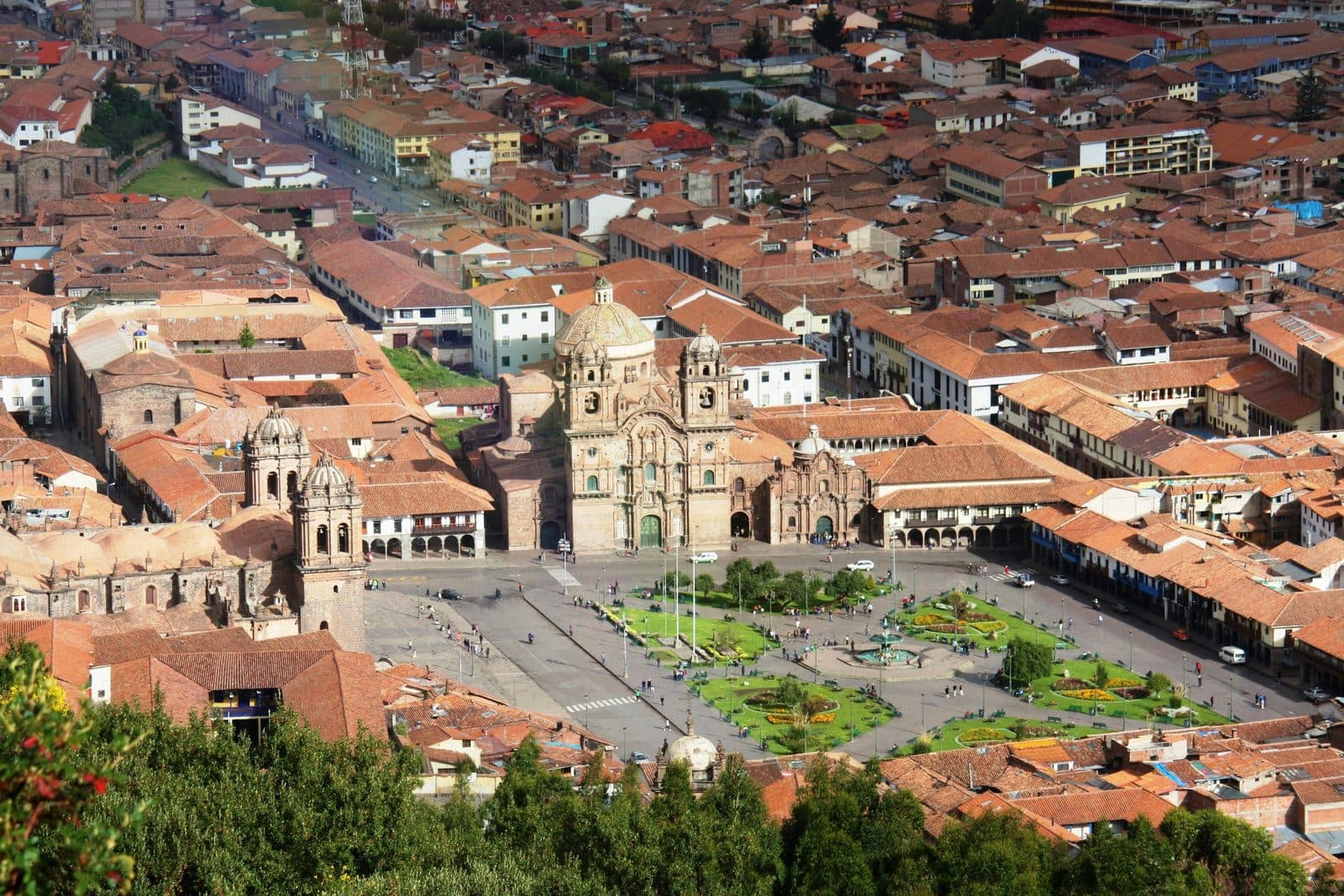
The siege failed. Manco withdrew, and an Inca state held out in the forests of Vilcabamba until 1572, when its last ruler, Túpac Amaru, was executed in the Plaza de Armas below.
The numbers usually told about the siege, of the armies on each side and of how many months it lasted, come from chroniclers who disagree with one another, and none of them is repeated here. What is certain is the hill. The Spaniards had to fight for it, and so they called it a fortress.
What the walls are
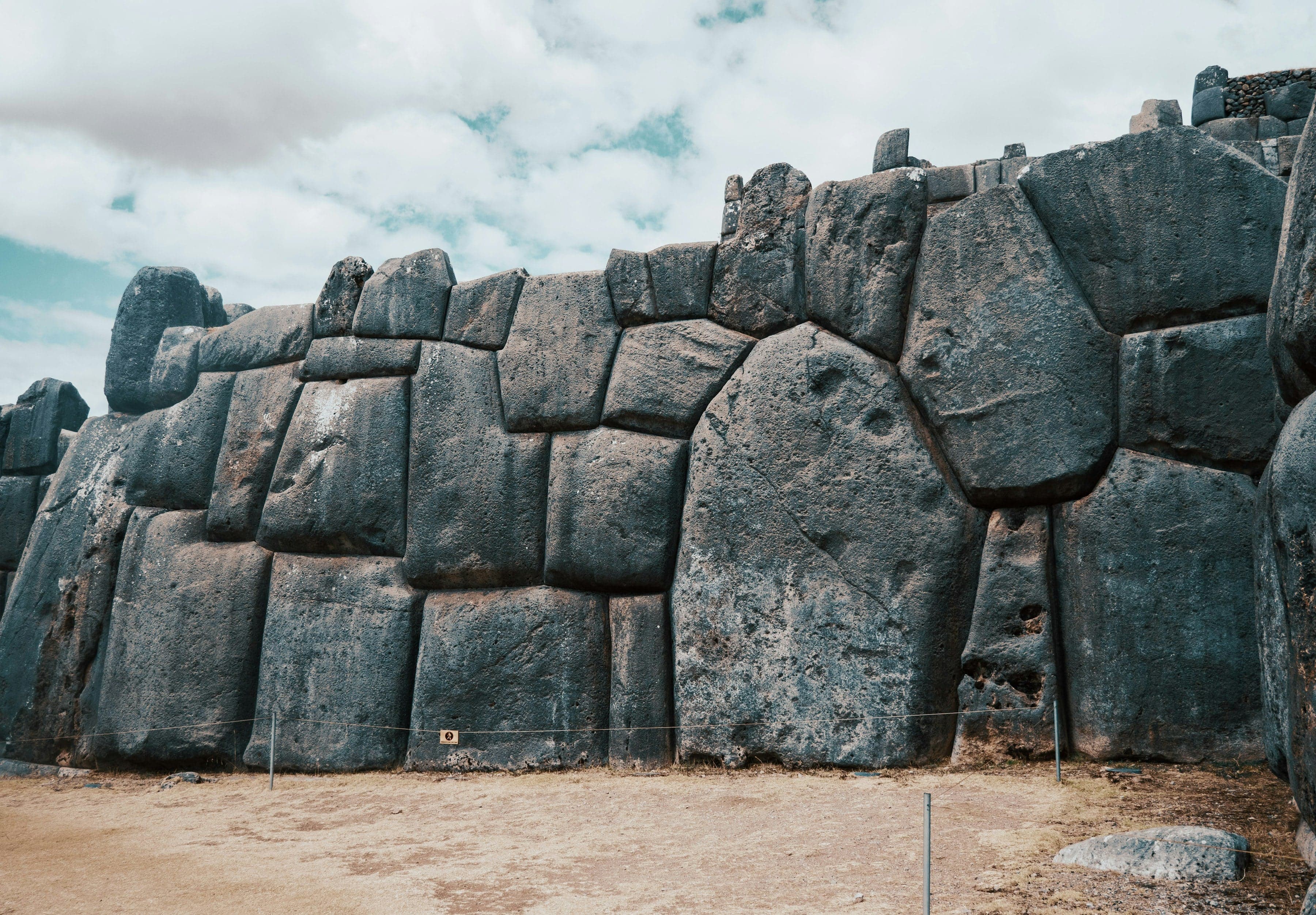
The three walls are retaining walls, laid out, in the Ministry's description, in a zigzag like a bolt of lightning, and three paths once crossed their platforms. The biggest blocks are in the lowest wall: between three and five meters tall, and by the Ministry's estimate they may weigh between 90 and 125 tonnes. Every larger figure in circulation is unsourced.
Cieza wrote that the stones were so large that it tired the mind to think how they had been brought and set, and that you could not slip a coin between them. How such a fit was made has been tested. Experiments reported in Scientific American in 1986 shaped stone the way the evidence suggests the Inca did, pounding it with river-cobble hammerstones, marking the seat of each block on the one below and fitting it by trial and error, and showed that the precision seen across Cusco can be reached this way.
Garcilaso de la Vega, who grew up in Cusco, wrote that each wall had a gateway near its middle. Not everything you see is original: archaeologists put missing pieces back into the second terrace in 1996 and 1997.
What is missing
Beyond the walls, Garcilaso described three towers on the hilltop. The main one, Moyoc Marka, was round, with a fountain of water brought, he wrote, from far away underground; the other two were square. As a boy he climbed the ruins and did not dare go into the vaults beyond where the sunlight reached. Today only foundations remain: a round structure and two rectangular ones, excavated between 1999 and 2008, with traces of people who lived here before the Inca.
Where did the rest go? Down the hill. The Ministry's Cusco office says that in the colonial period part of the site's stones were reused to build the city's churches and great houses, and the Ministry's plan says the Inca buildings served as the city's quarry until after the 1950s. The cathedral's own records name the hill: a contract of 1559 began carting stone from the fortress of Sacsayhuamán, and a notarial contract of 1646 still hires a man to take stones from it.
The puma
You will hear that Cusco was laid out as a puma, with this hill as its head and the zigzag walls as its teeth. It is a tradition. The Ministry's plan itself only infers that Sacsayhuamán would have been the head of the sacred feline. Enjoy it as a story, not a plan you can trace from above.
Walking it
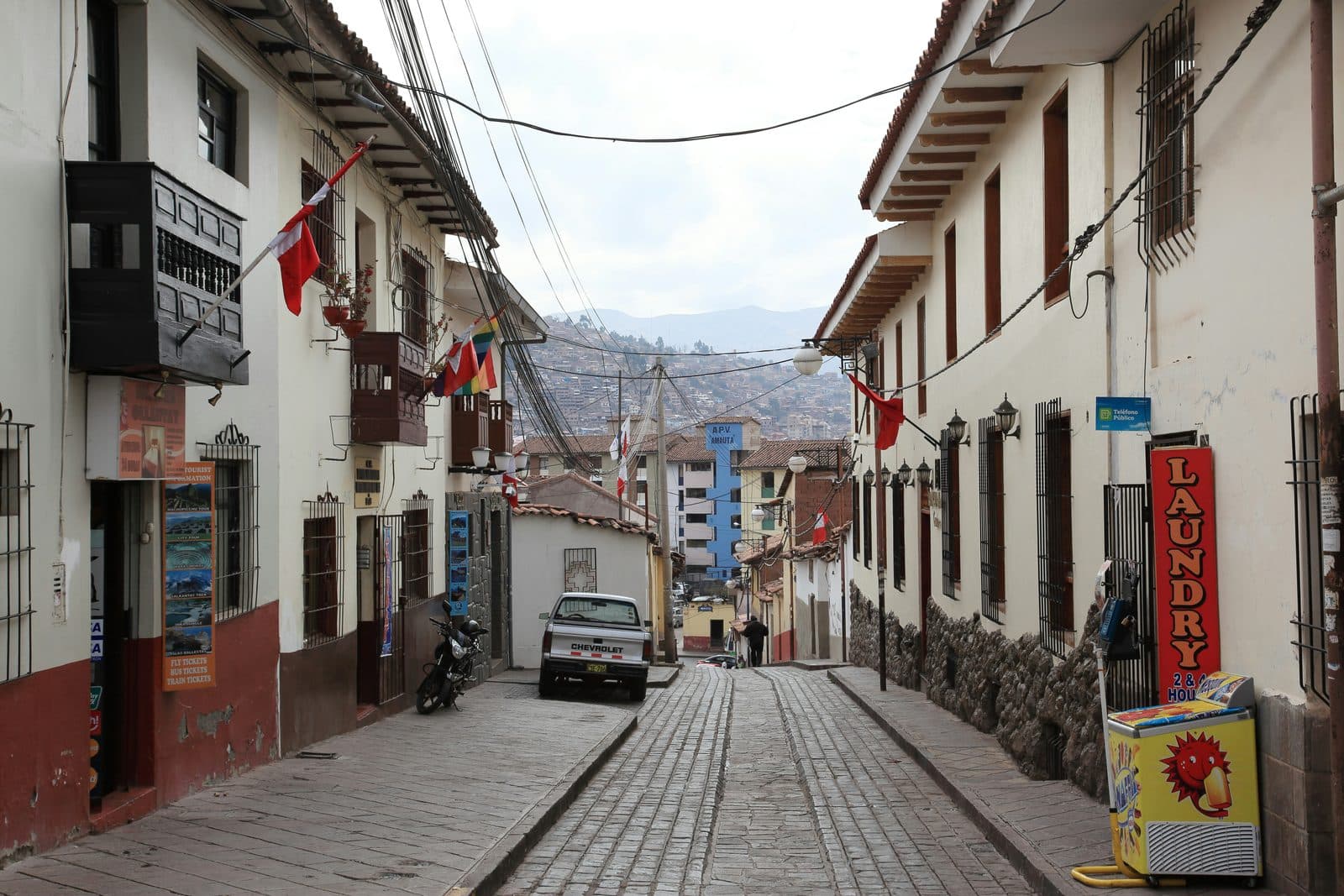
Our walk, "Sacsayhuamán and Cristo Blanco: Down the Hill the Stone Came From", reads the hill both ways. A short taxi ride takes you up to Cristo Blanco, the white Christ above the city; from there ten stops and about 1.3 kilometers lead nearly all downhill, past the stone-lined channel of the Puqro stream, an old road beside it, the Sapantiana arches and the church of San Cristóbal, to the Plaza de Armas: about an hour and a quarter. Three stops are inside Sacsayhuamán's ticketed park: the zigzag walls, the foundations of the round tower, and the Rodadero, a slide of polished rock beside carved seats people call the Inca's throne. Inside, the stops do not start on their own: tap each one, in any order. They add about forty-five minutes, about two hours in all, and they are optional; the rest of the walk works without them.
There is no single-site ticket. The cheapest way in is the Boleto Turístico's partial Circuit I ticket, 70 soles for foreign visitors, valid one day, also covering Q'enqo, Puka Pukara and Tambomachay, sold in person only and checked against your passport or ID. The park is open daily from 07:00 to 17:30, and climbing on the walls is not allowed. Checked 6 October 2026.
Stand on the esplanade, where the Inti Raymi has been staged each 24 June since the 1940s, and look at the lowest wall. It is the same stone whichever name you give the hill. What 1536 changed was the name.
Ready to experience it?
Sacsayhuamán and Cristo Blanco: Down the Hill the Stone Came From
120 min · 1.3 km · hard
More from Cusco
Explore more at your own pace.
Best Self-Guided Walking Tours in Cusco (2026)
Cusco Travel Guide: Altitude, How Many Days, Getting Around, When to Go (2026)
One Day in Cusco: An Altitude-Friendly Walking Itinerary (2026)
Best History Walking Tours in Cusco (2026)
What to Eat in Cusco: An Andean Food Guide (2026)