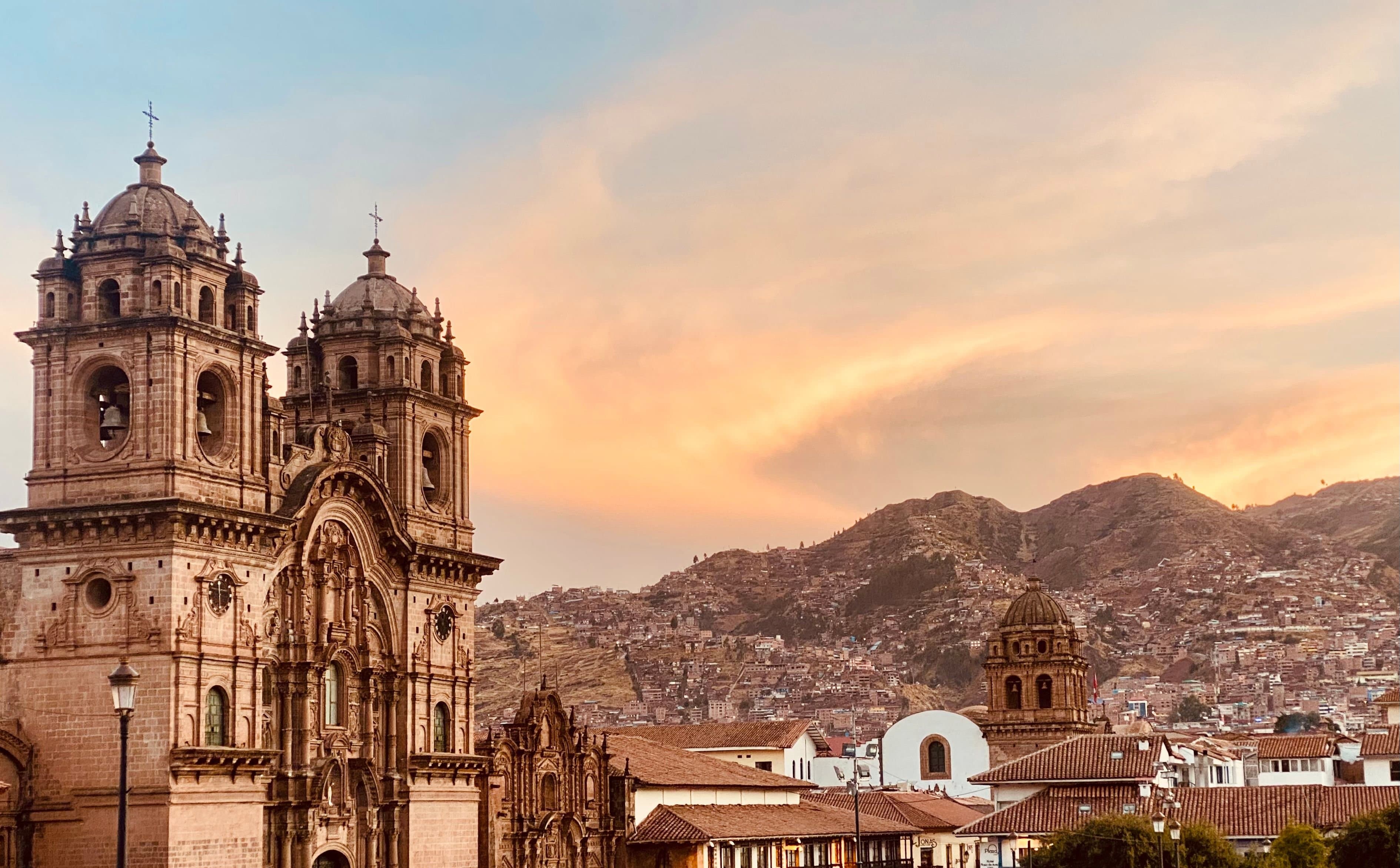
A loop through Cusco's historic core, where the Spanish built on Inca walls: the Plaza de Armas, the cathedral, the Twelve-Angle Stone, the Temple of the Sun, Calle Loreto and the second Inca square.
Start · Plaza de Armas: The Square of Sea Sand
DirectionsStops
- 1
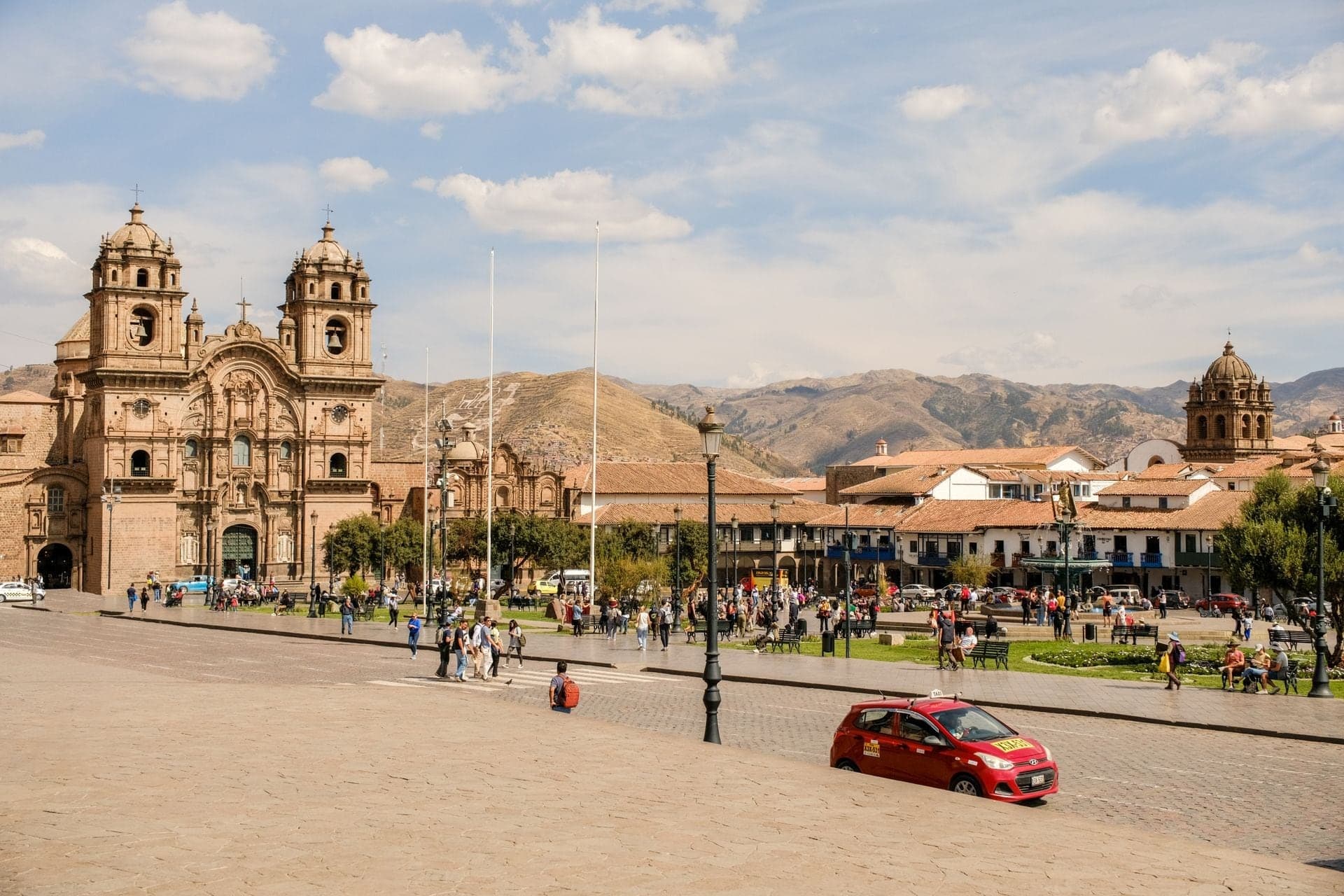
Plaza de Armas: The Square of Sea Sand
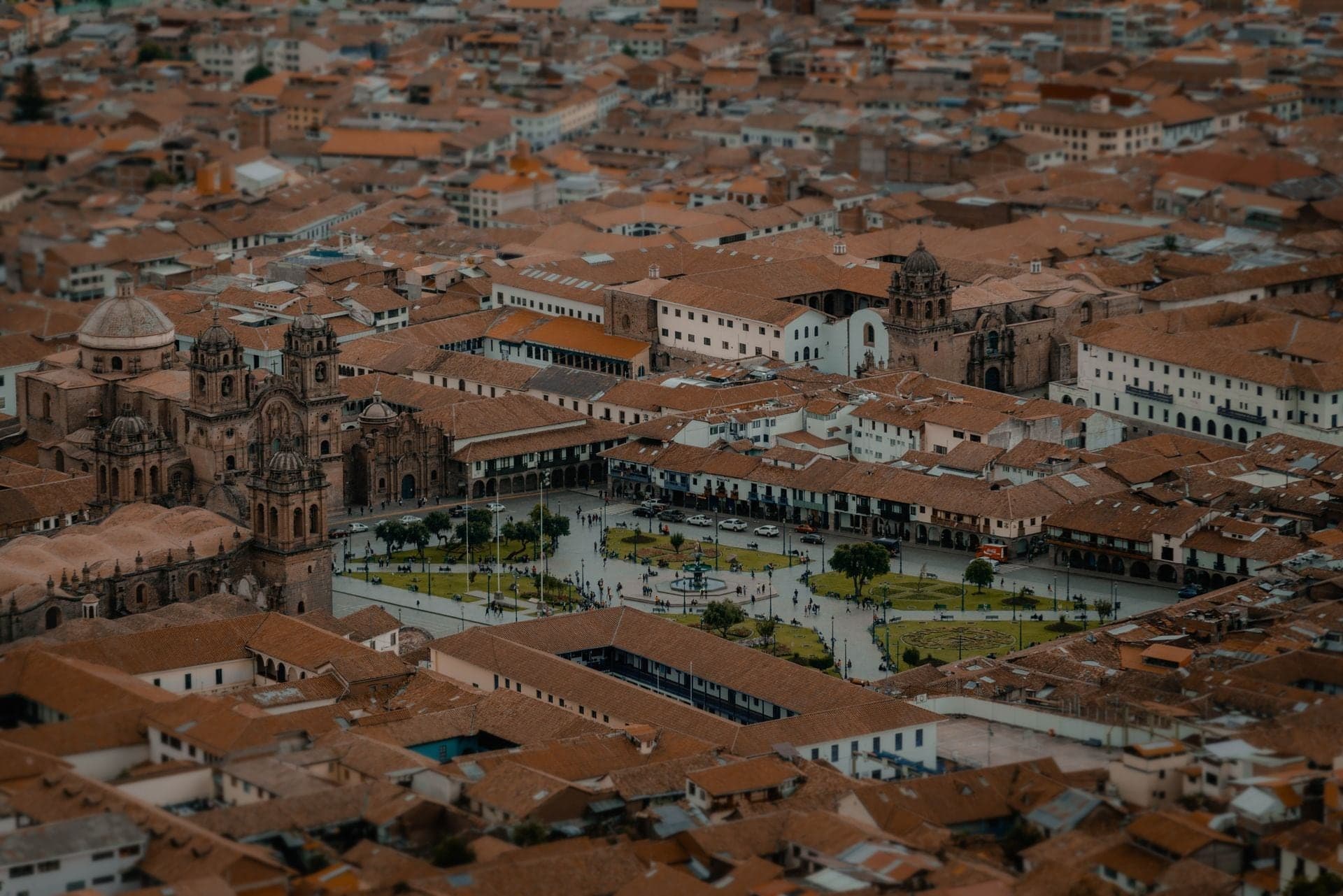
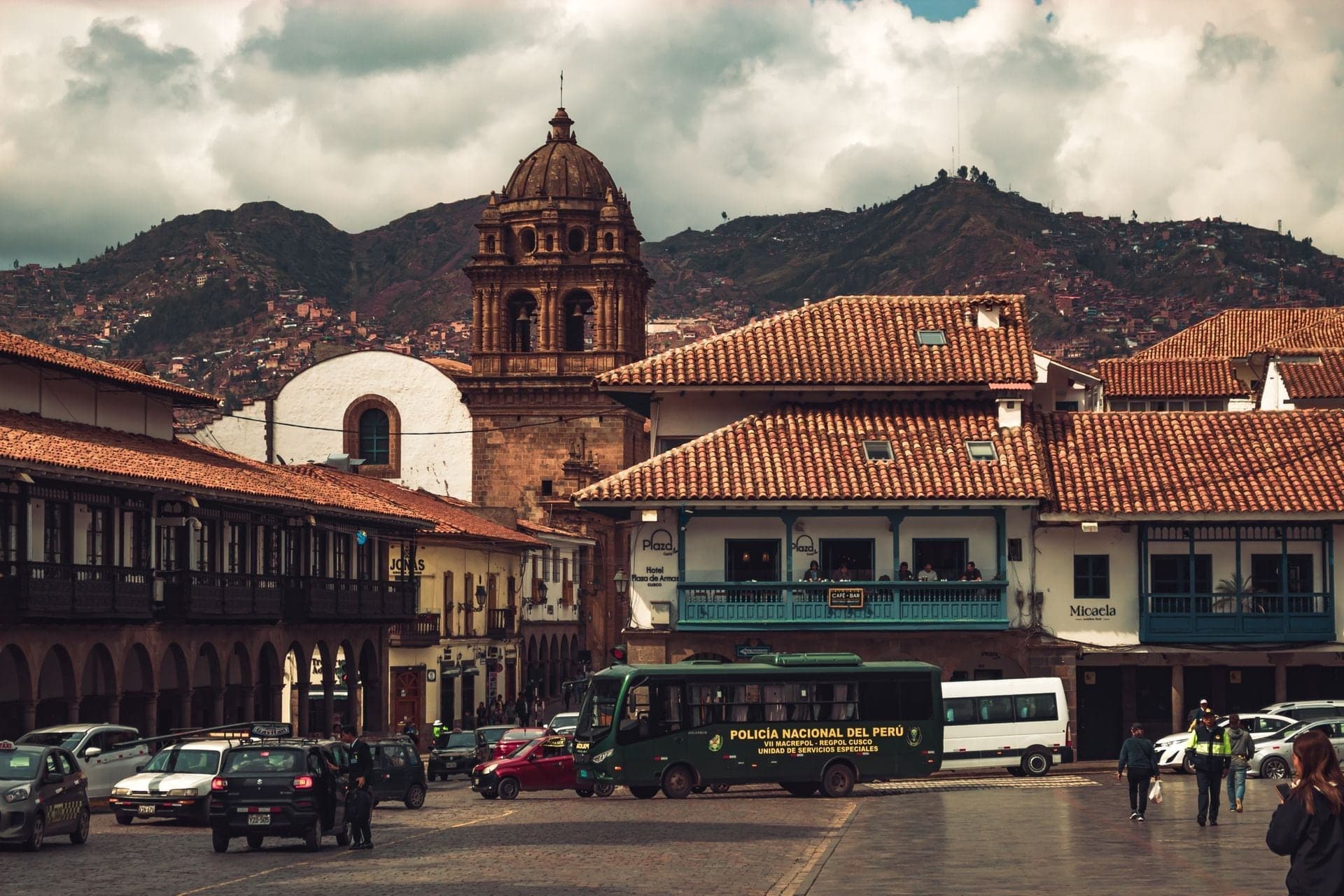
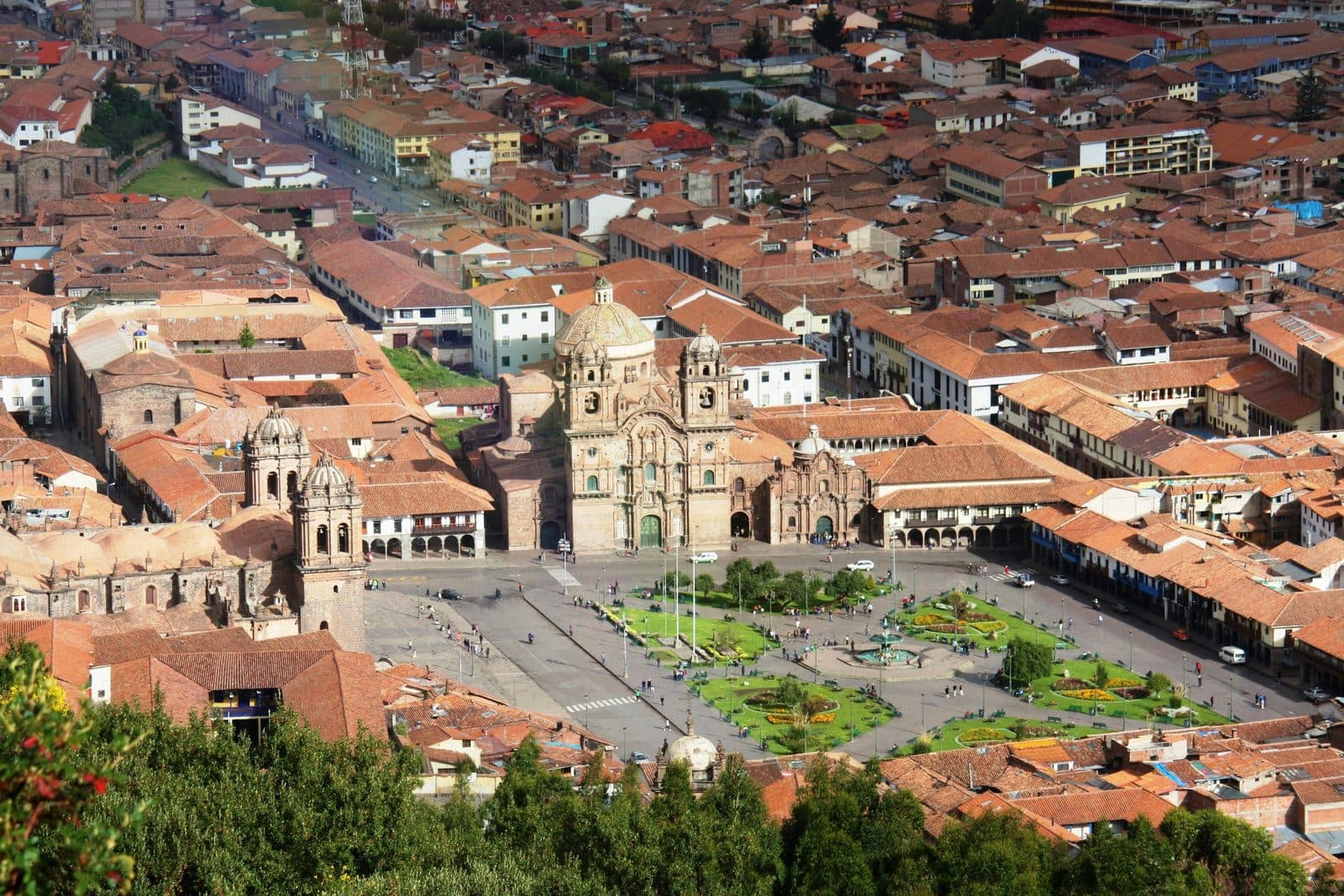
The great Inca square of the founding. The Inca covered it with sand from the coast; the Spanish founded Cusco here in 1534 and executed Túpac Amaru here in 1572.
- 2
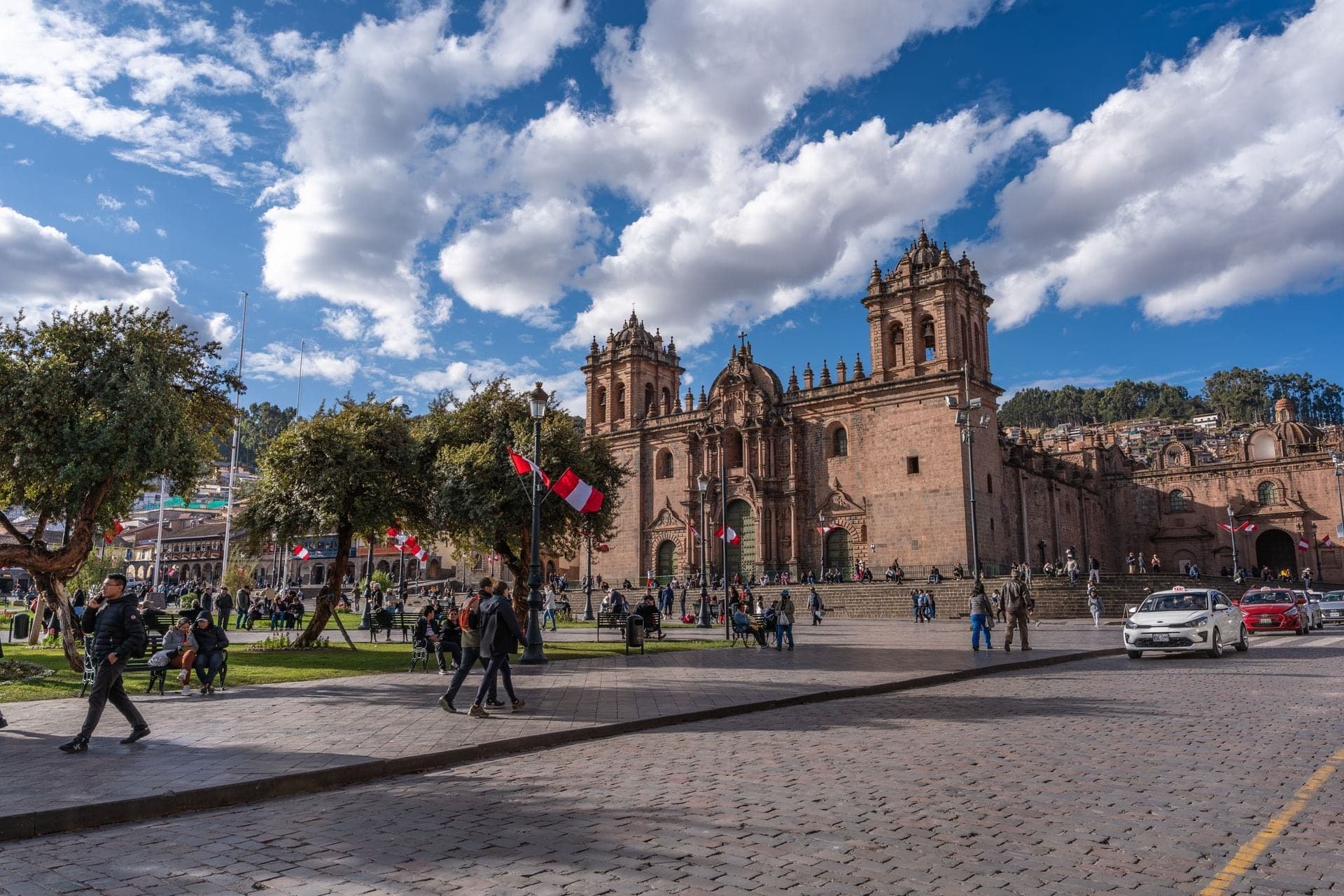
Cusco Cathedral: Built with Inca Stone
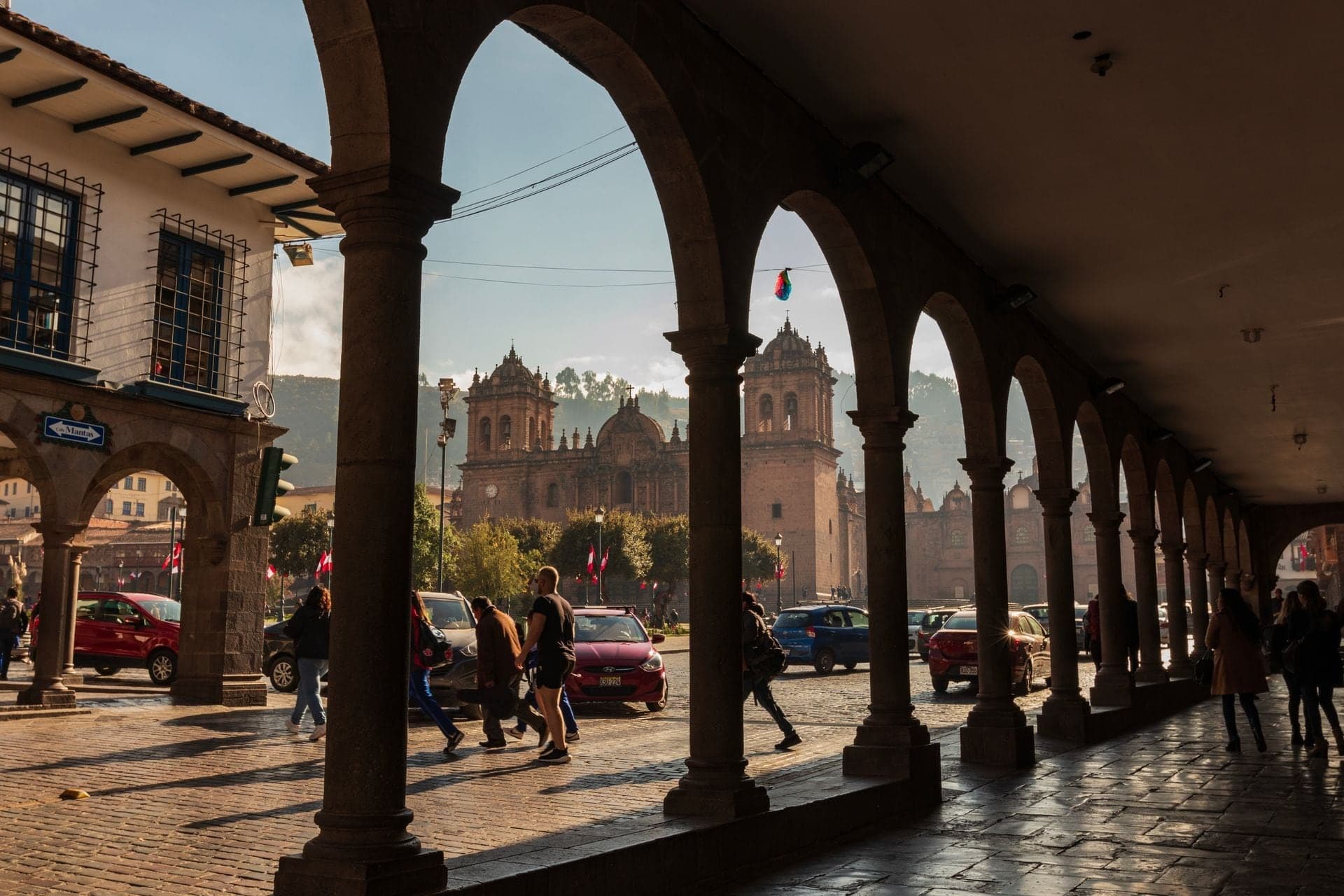
A cathedral built of Sacsayhuamán stone. It stands on the site of an Inca hall, survived the earthquake of 1650 that wrecked most of the city, and gave Cusco its square bell towers.
- 3
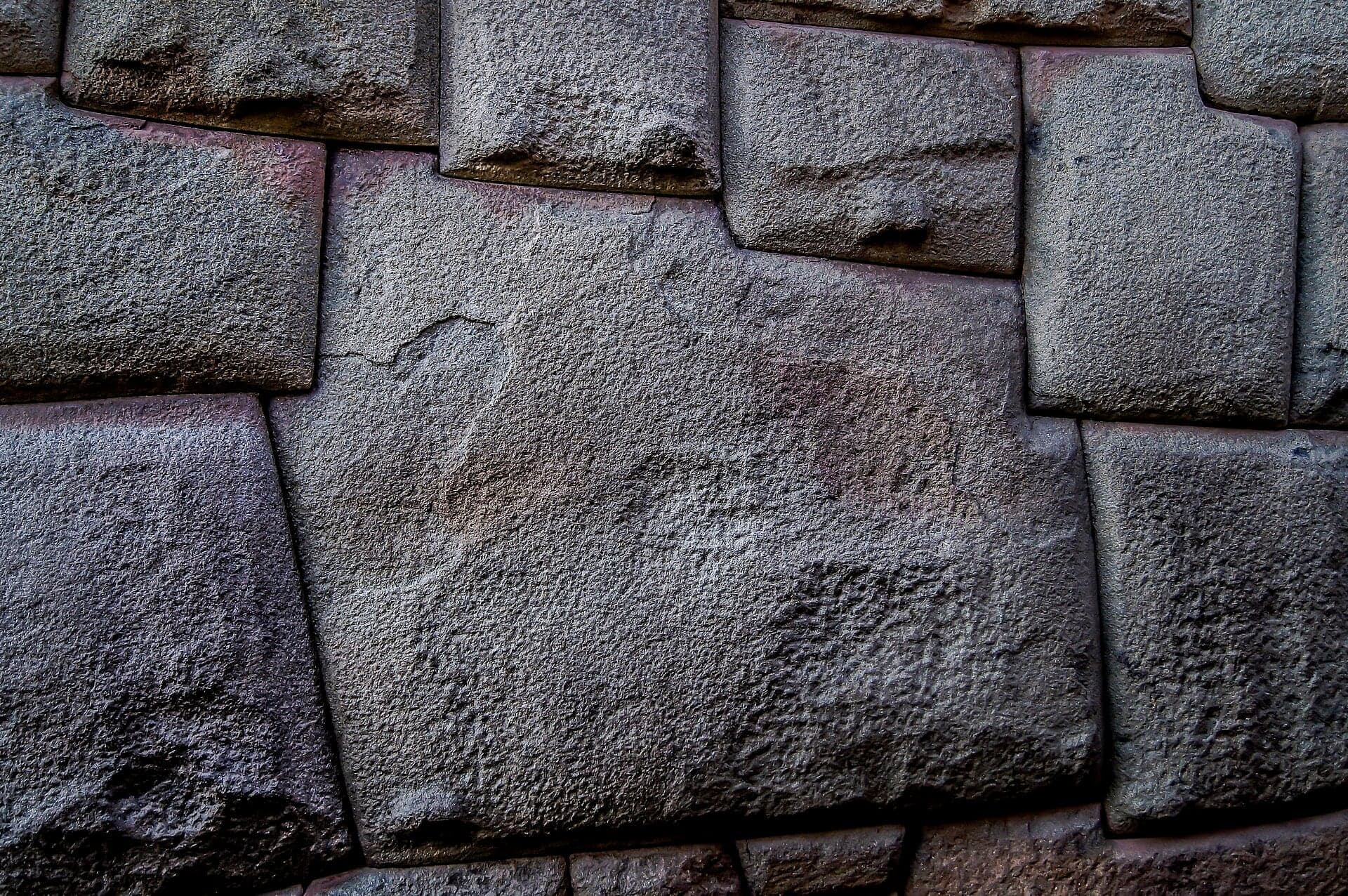
Twelve-Angle Stone: The Wall Every Owner Kept
Twelve angles in an Inca palace wall. Every owner since the conquest built on the wall, and the house above it is now the Archbishop's Palace.
- 4
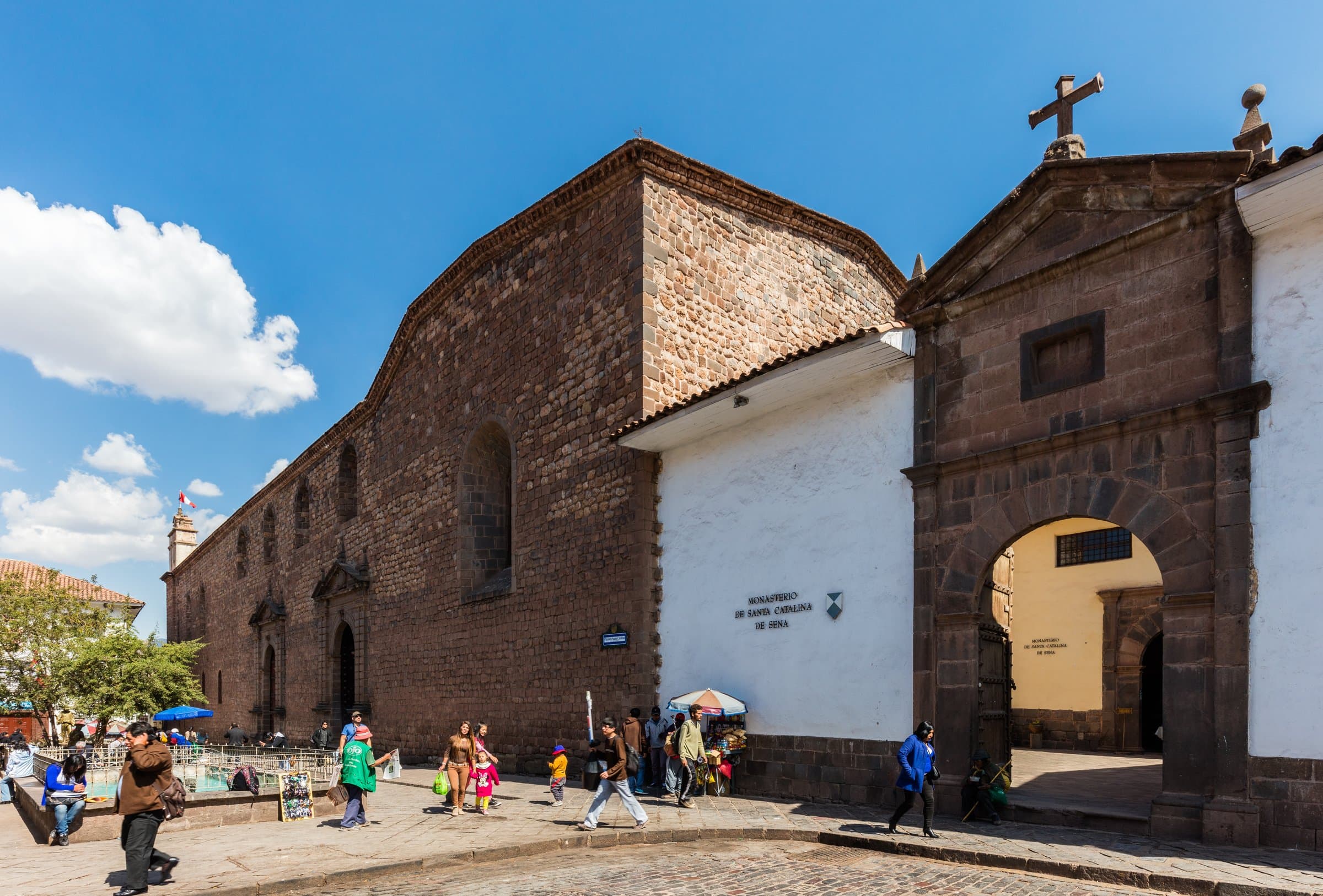
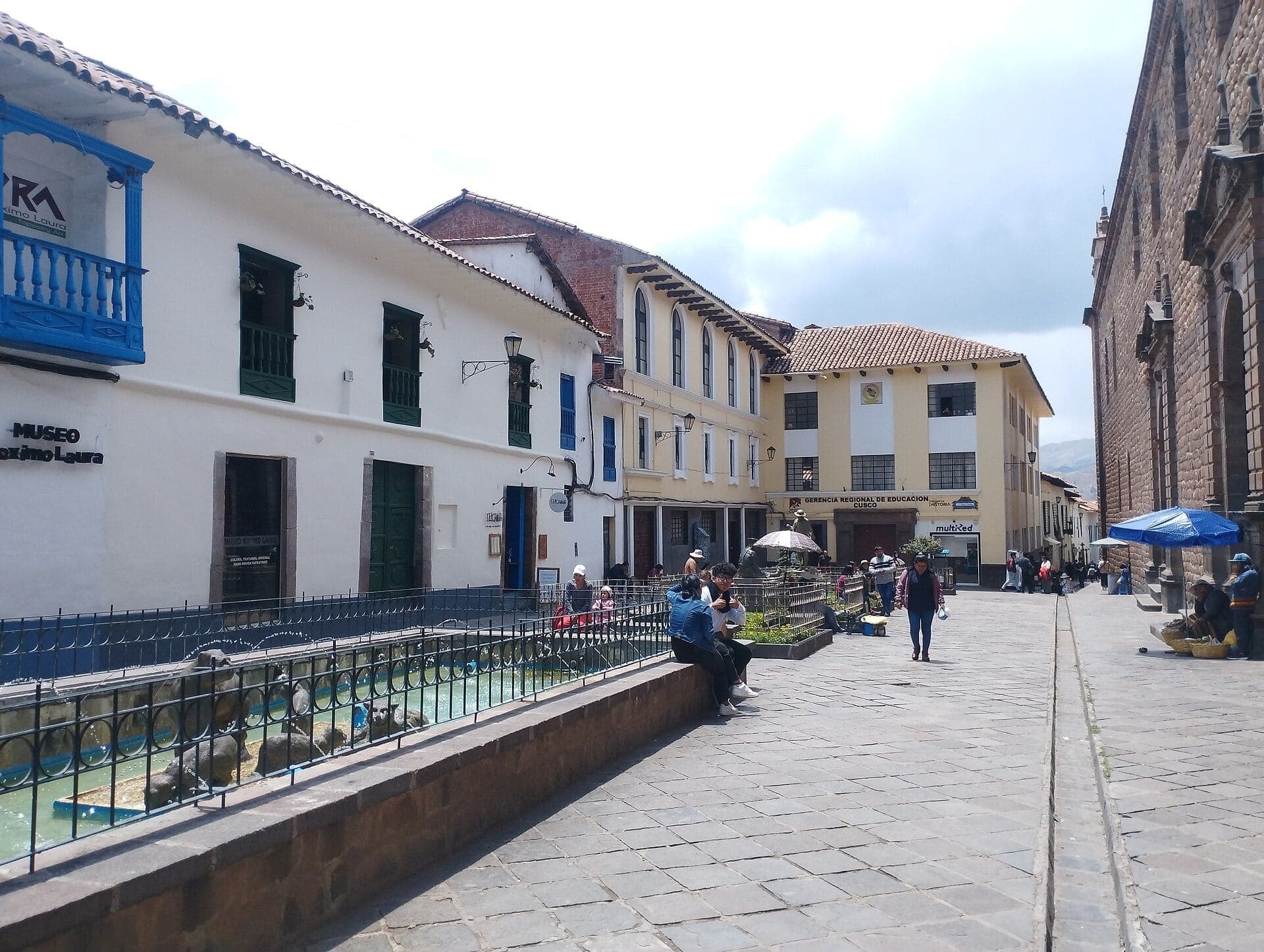
Plazoleta Santa Catalina: Chosen Women to Nuns
From the Sun's chosen women to nuns. Nuns from Arequipa founded Santa Catalina here in 1605 on the walls of the Acllawasi, and Inca stonework still lines the lane beside it.
- 5
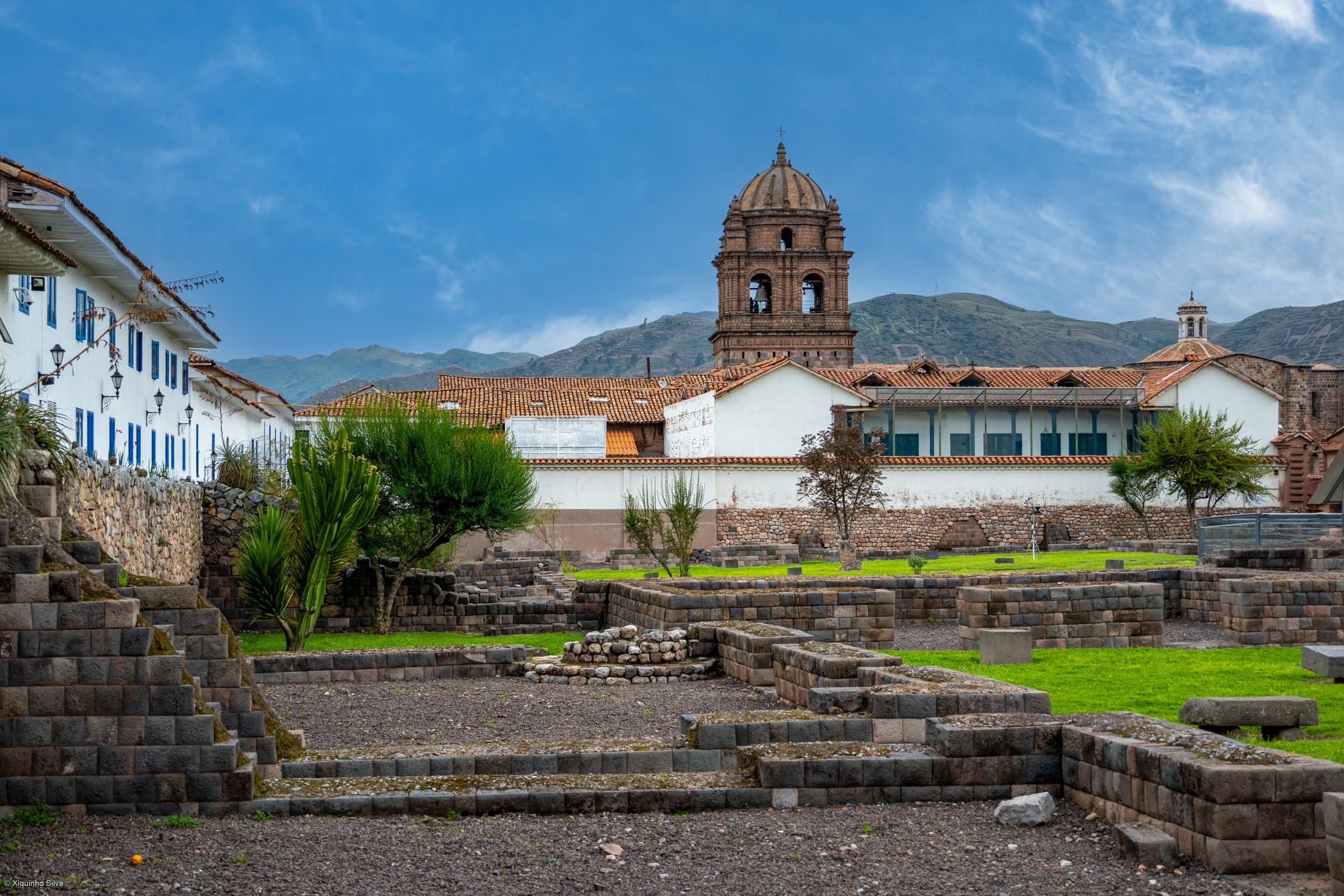
Kusicancha: From Barracks Back to Inca
An Inca compound open to the street, once a barracks. Seen from pedestrian Calle Romeritos, Kusicancha is free to enter and was handed back from the army in 2001.
- 6
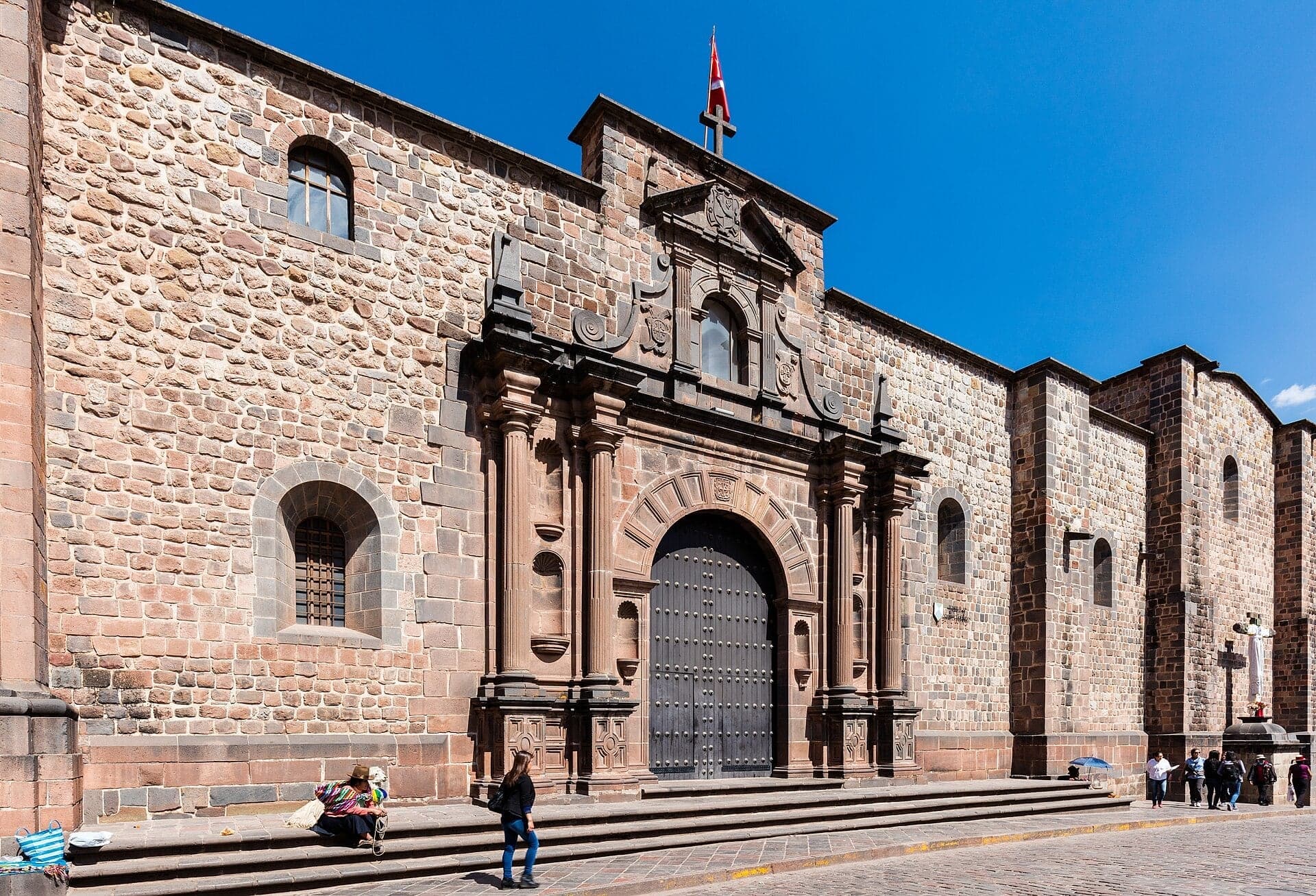
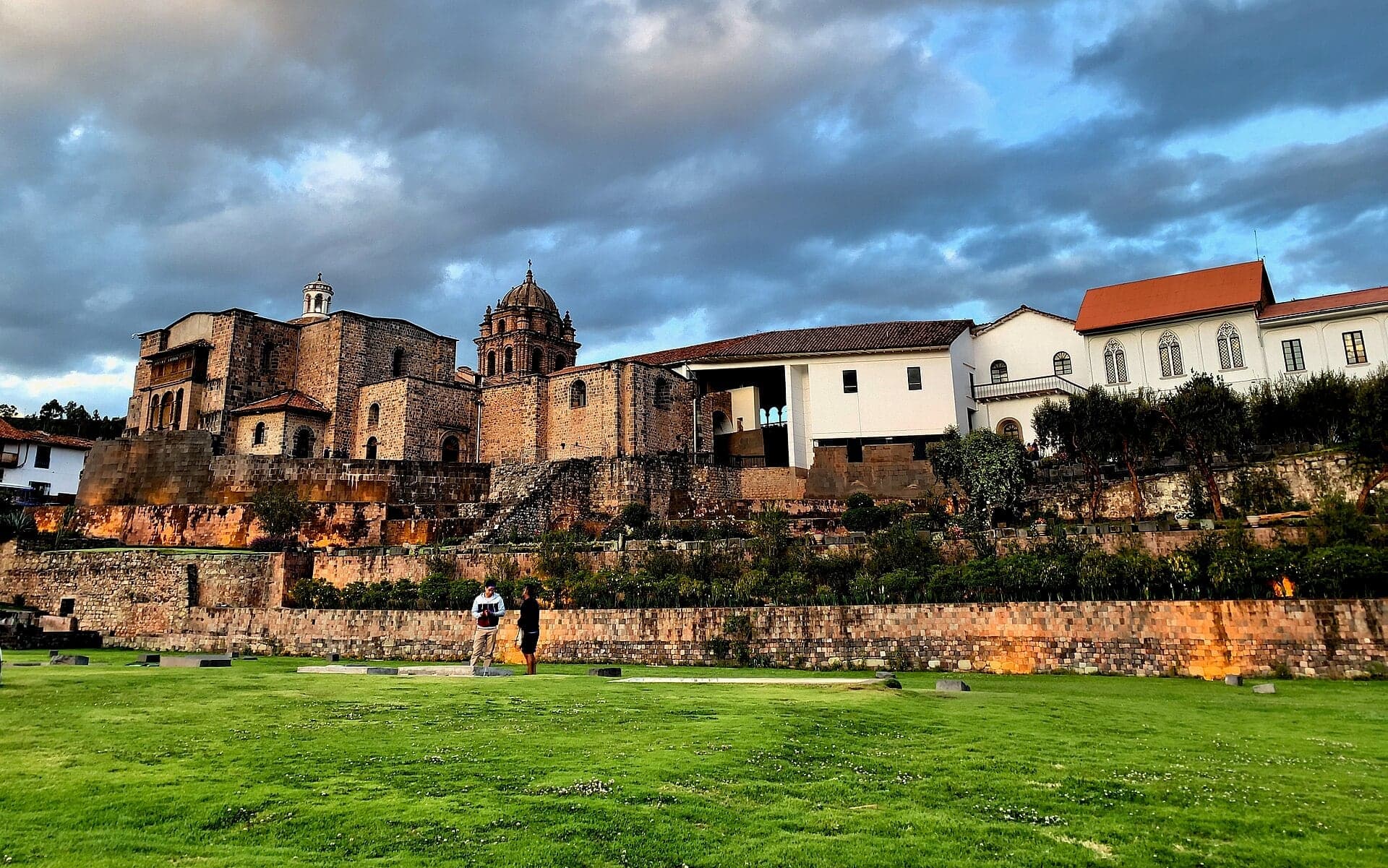
Qorikancha: The Temple of the Sun
The Inca Temple of the Sun underneath. The conquerors stripped its gold, and in 1950 its Inca blocks were the only ones in Cusco the earthquake cracked.
- 7
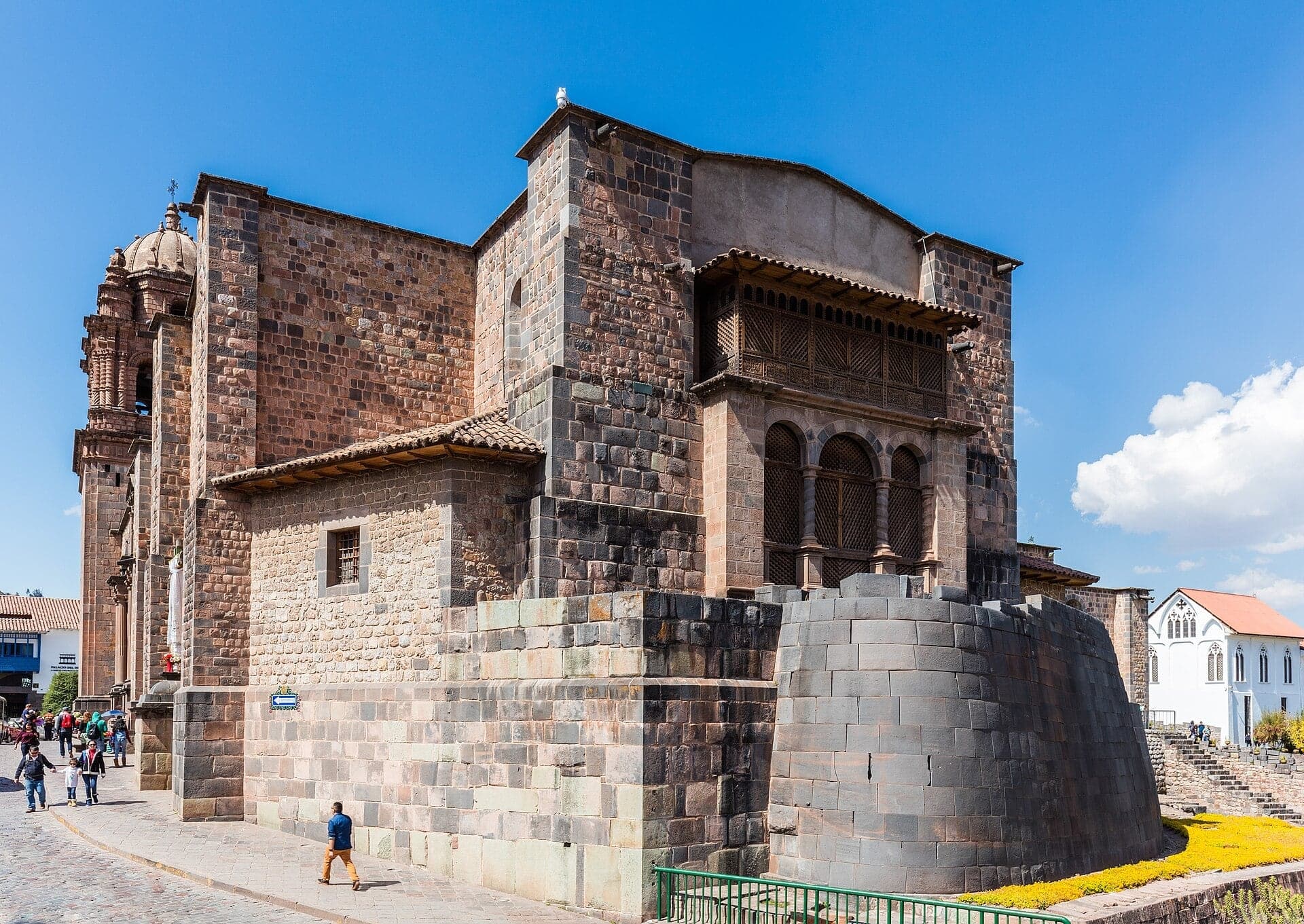
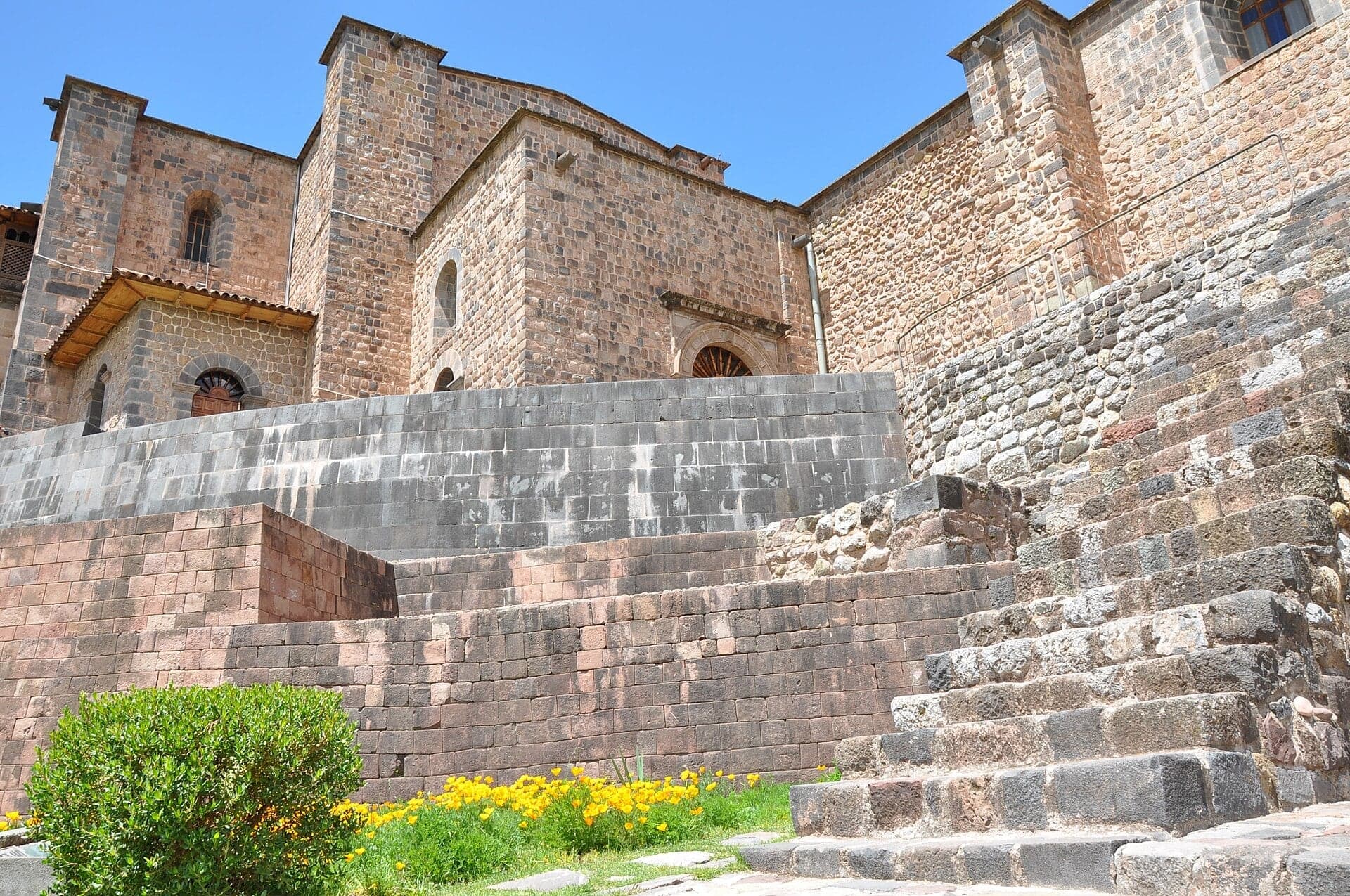
Qorikancha's Curved Wall: The Temple's Rounded End
The temple's curved wall of fitted stone. The Dominicans set their church on it; below it, terraces cleared of earthquake rubble step down to the avenue.
- 8
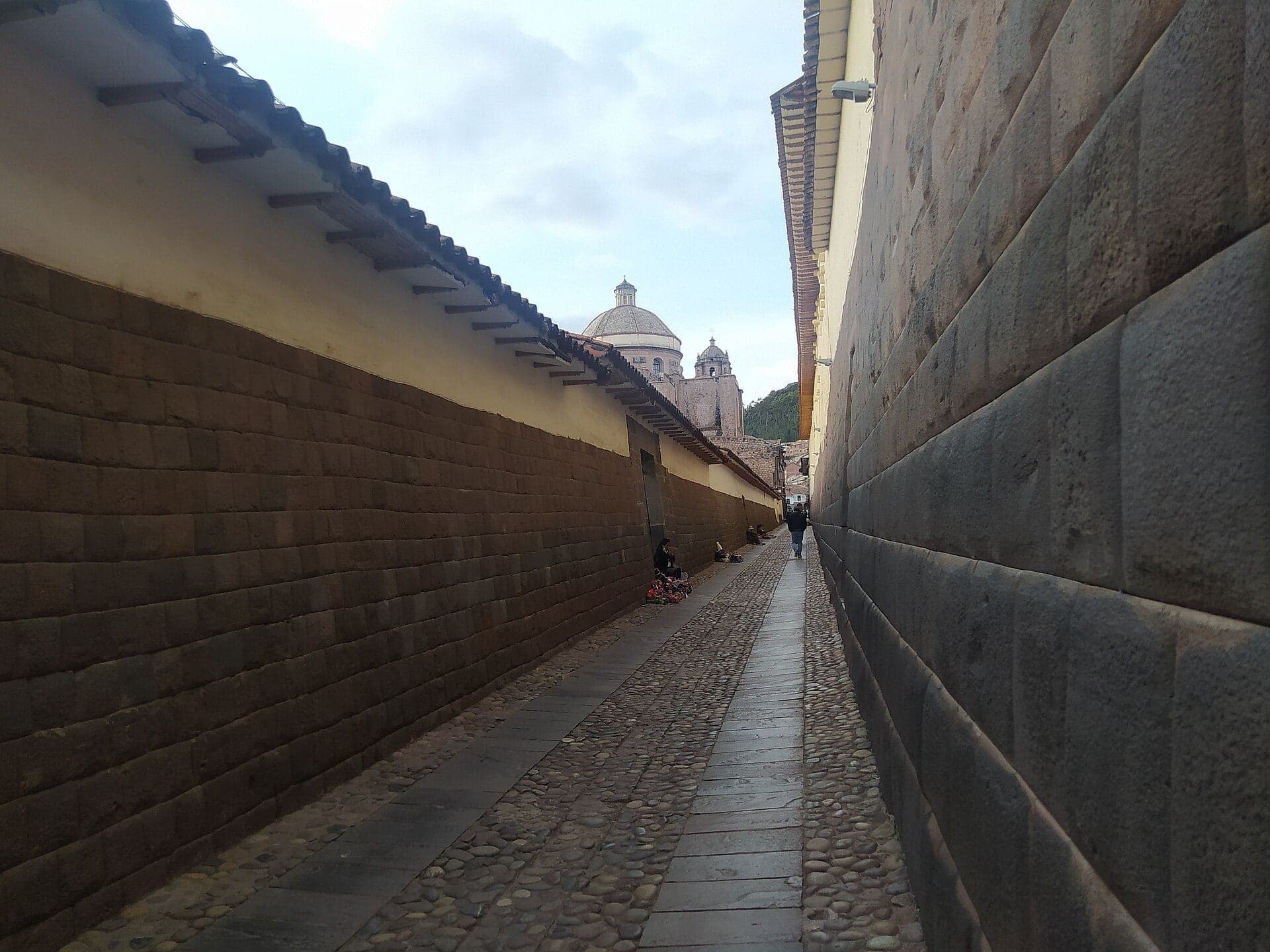
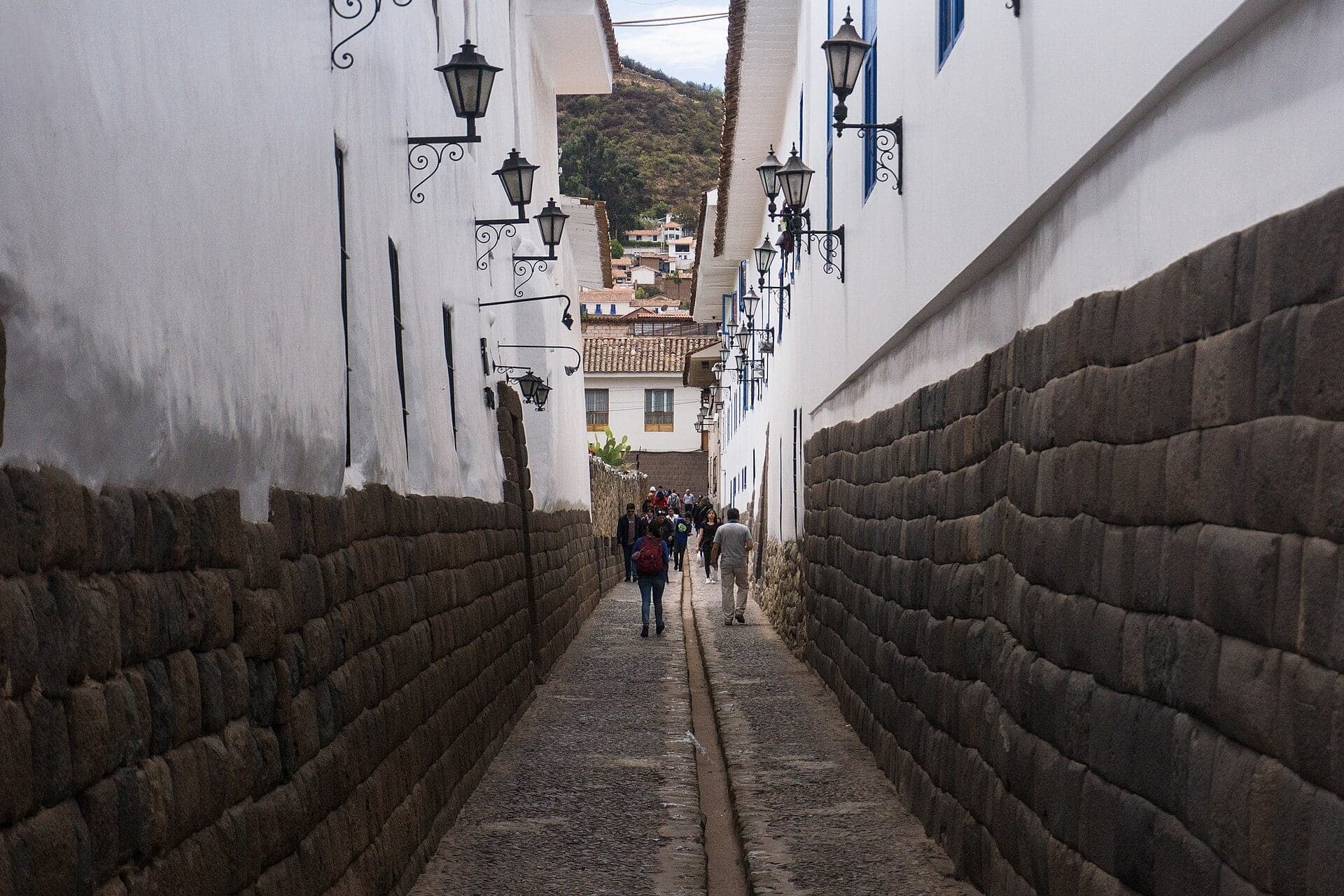
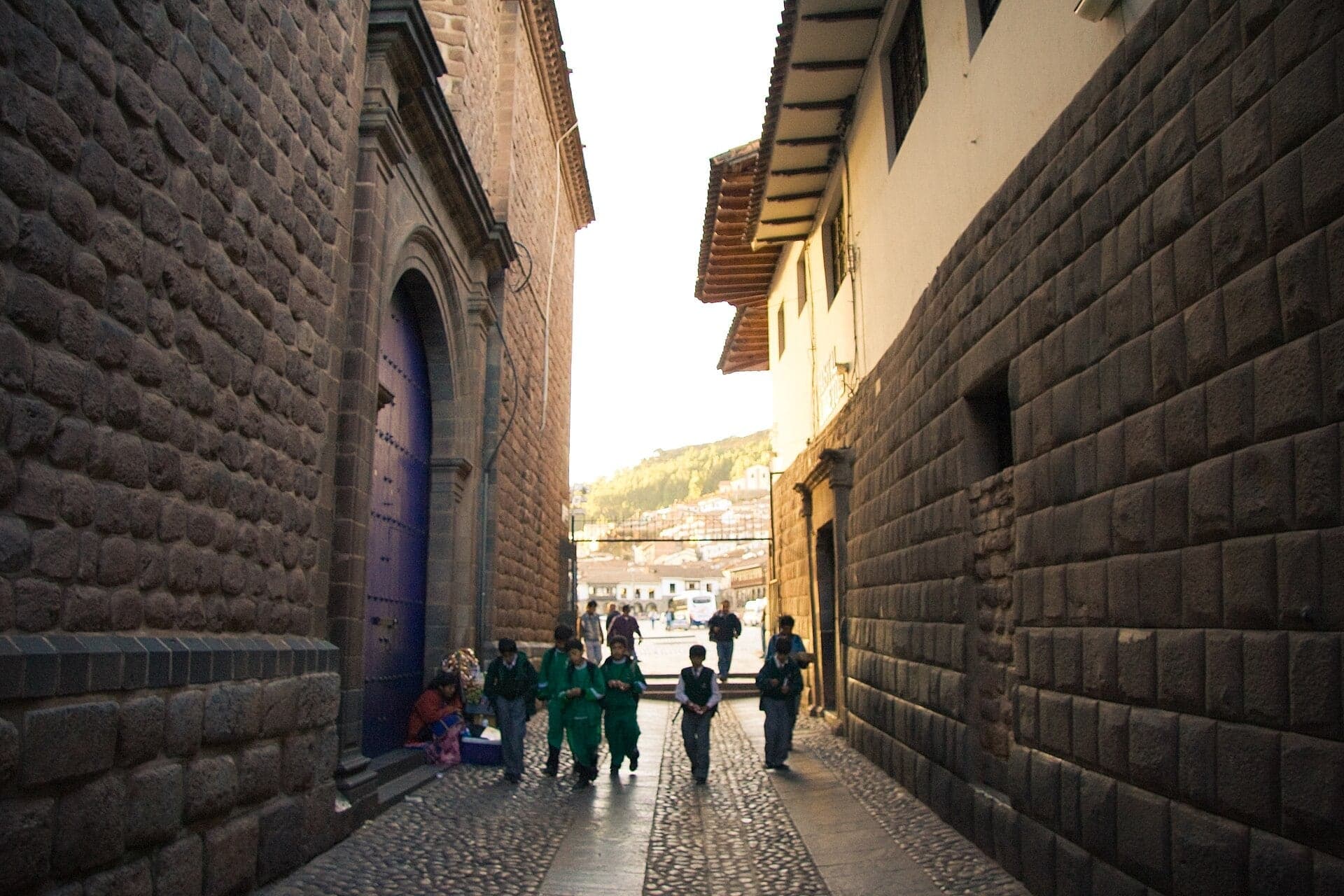
Calle Loreto: The Alley of the Sun
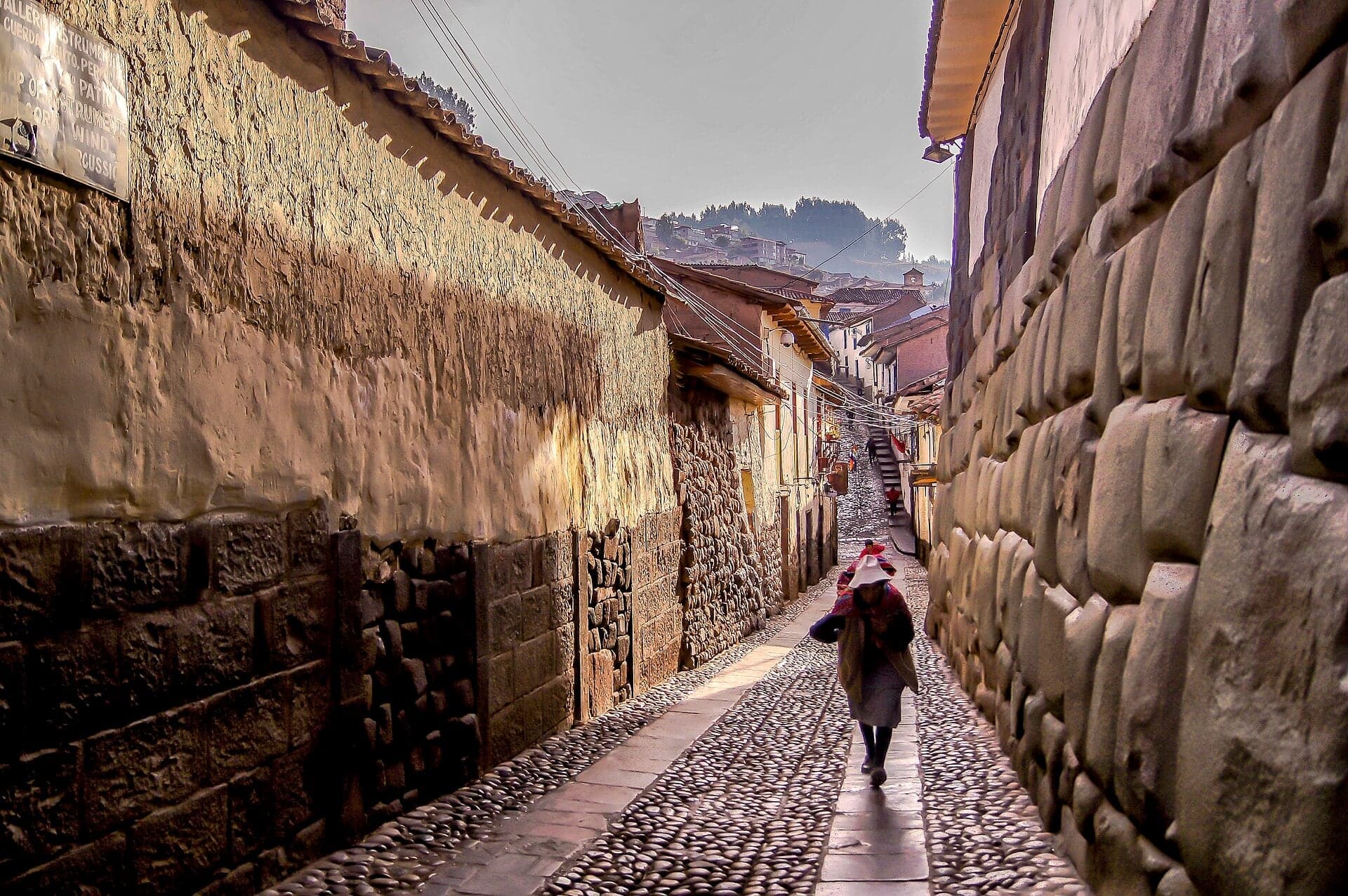
An Inca lane between two Inca walls, closed to traffic. Calle Loreto keeps its Inca line from the Sun temple to the plaza, between the Acllawasi and Huayna Cápac's Amarucancha.
- 9
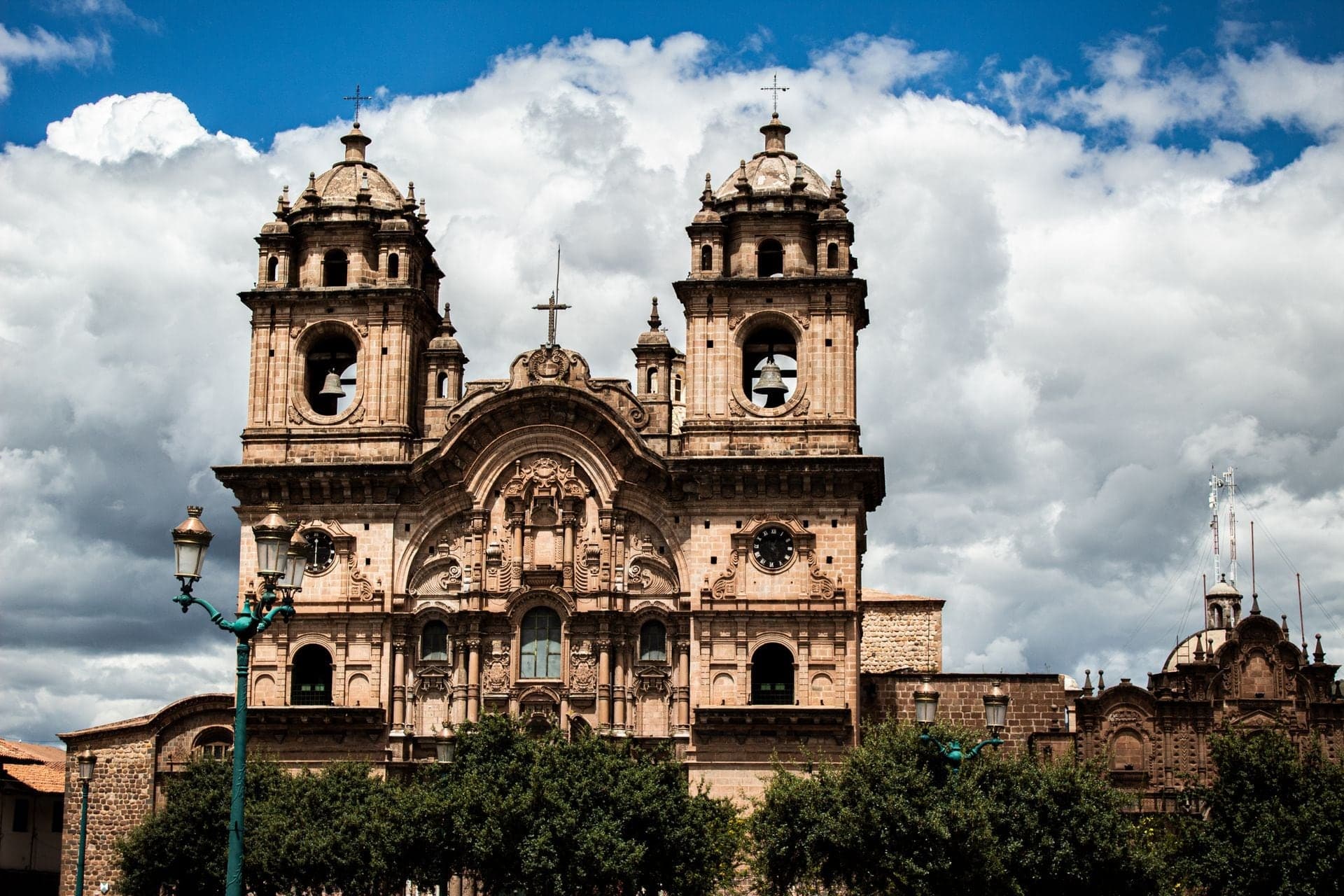
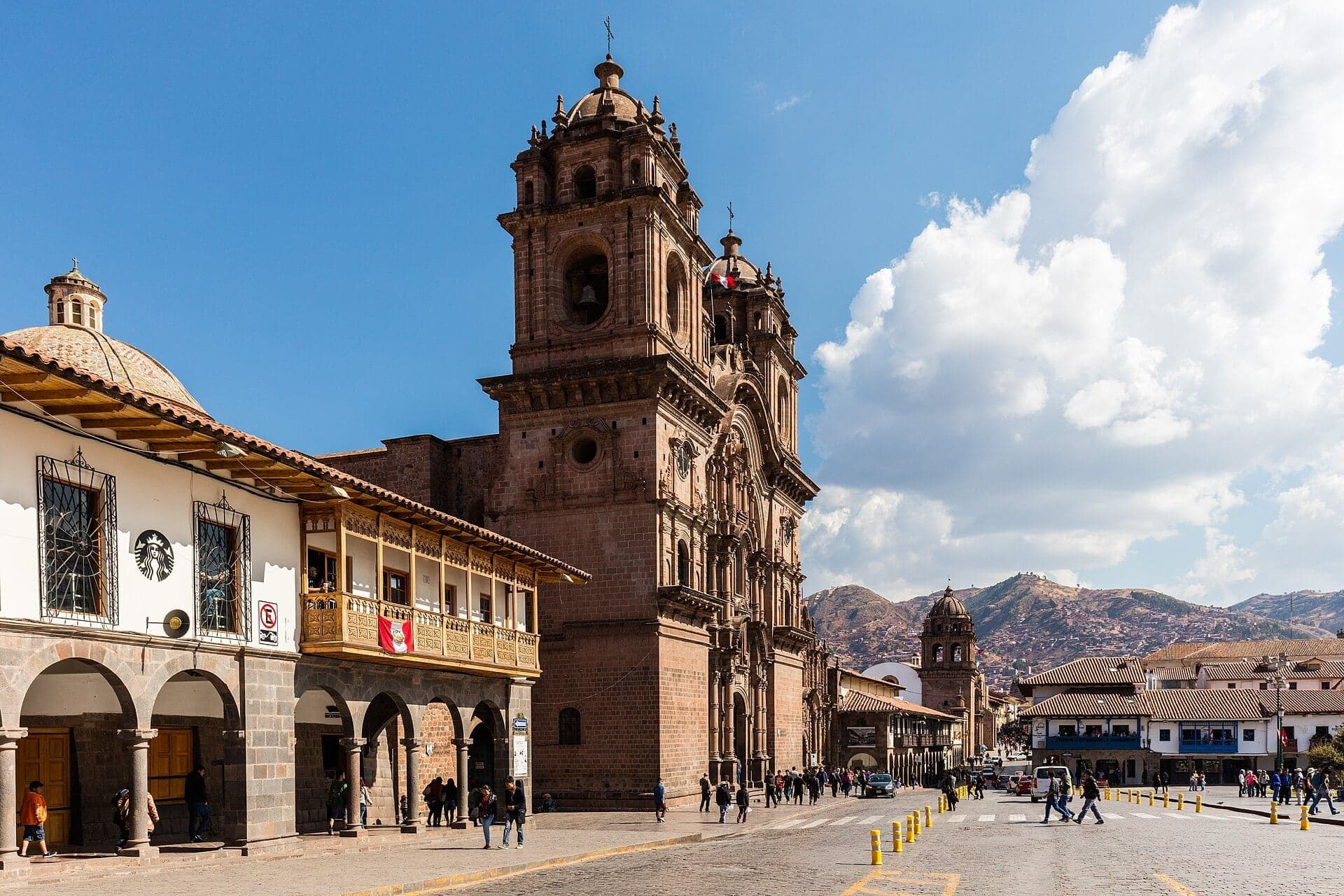
La Compañía: Built to Outshine the Cathedral
A Jesuit church to outshine the cathedral. It stands on Huayna Cápac's Amarucancha, and inside a painting shows an Inca princess marrying a relative of Saint Ignatius.
- 10
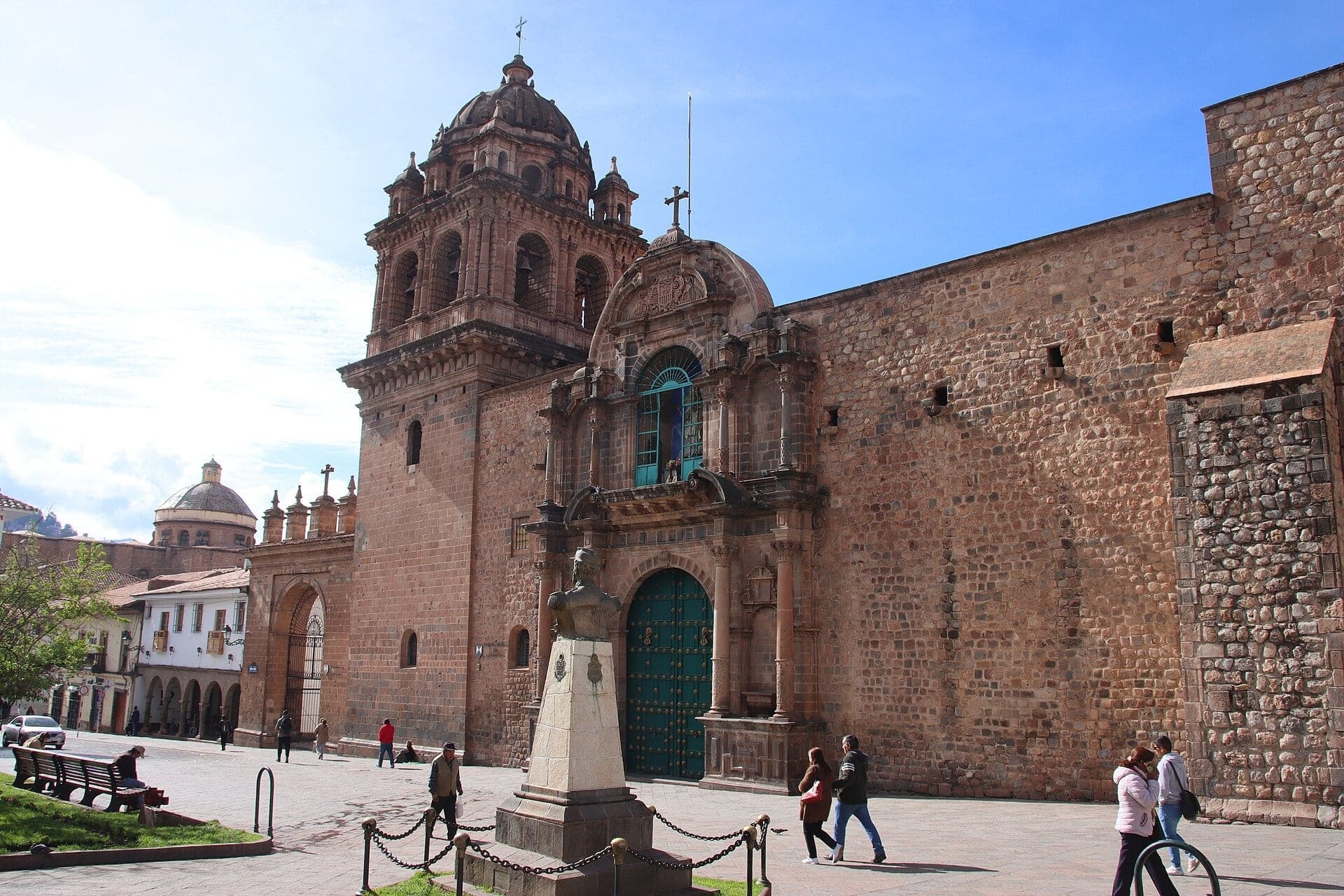
La Merced: An Altar in Stone for the Square
A church front carved like an altarpiece. Its upper tier was an open-air chapel for the crowd in the square, and a colonial mint later shrank that square to the one you see.
- 11
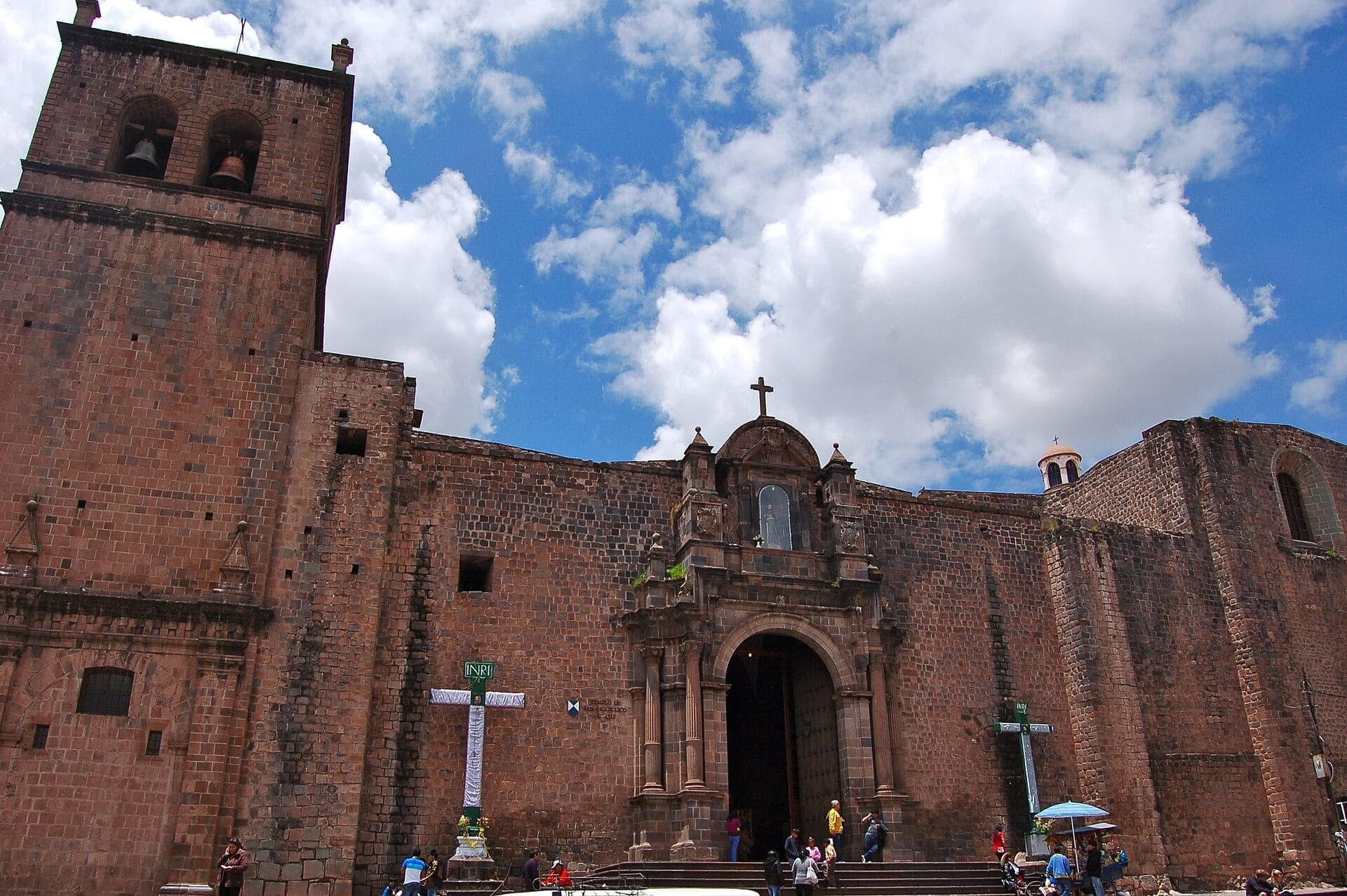
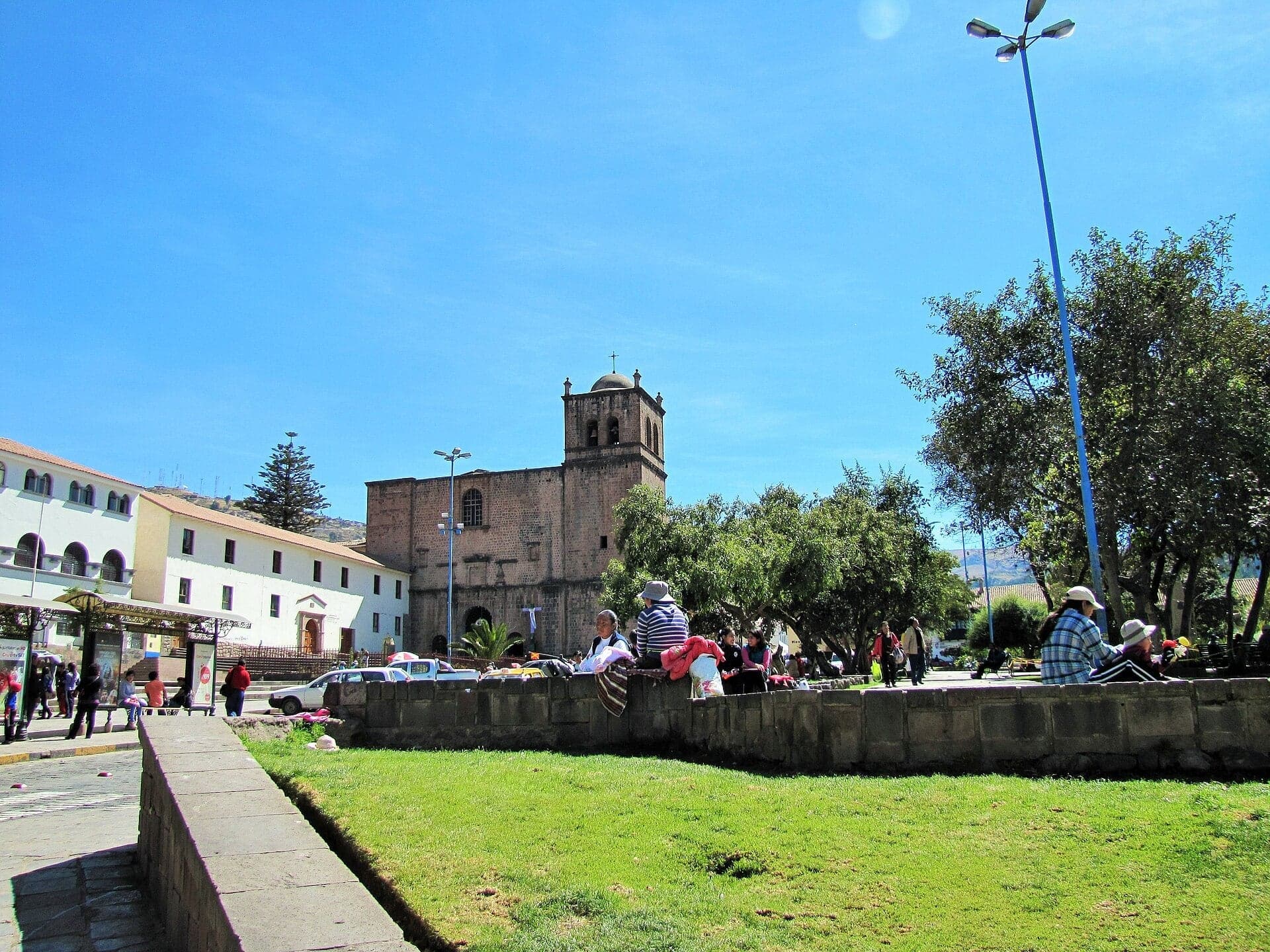
San Francisco: A Church on Inca Farm Terraces
A plain church on Inca farm terraces. The Franciscans settled here on their third site, and for centuries the square was Cusco's Saturday flea market.
- 12
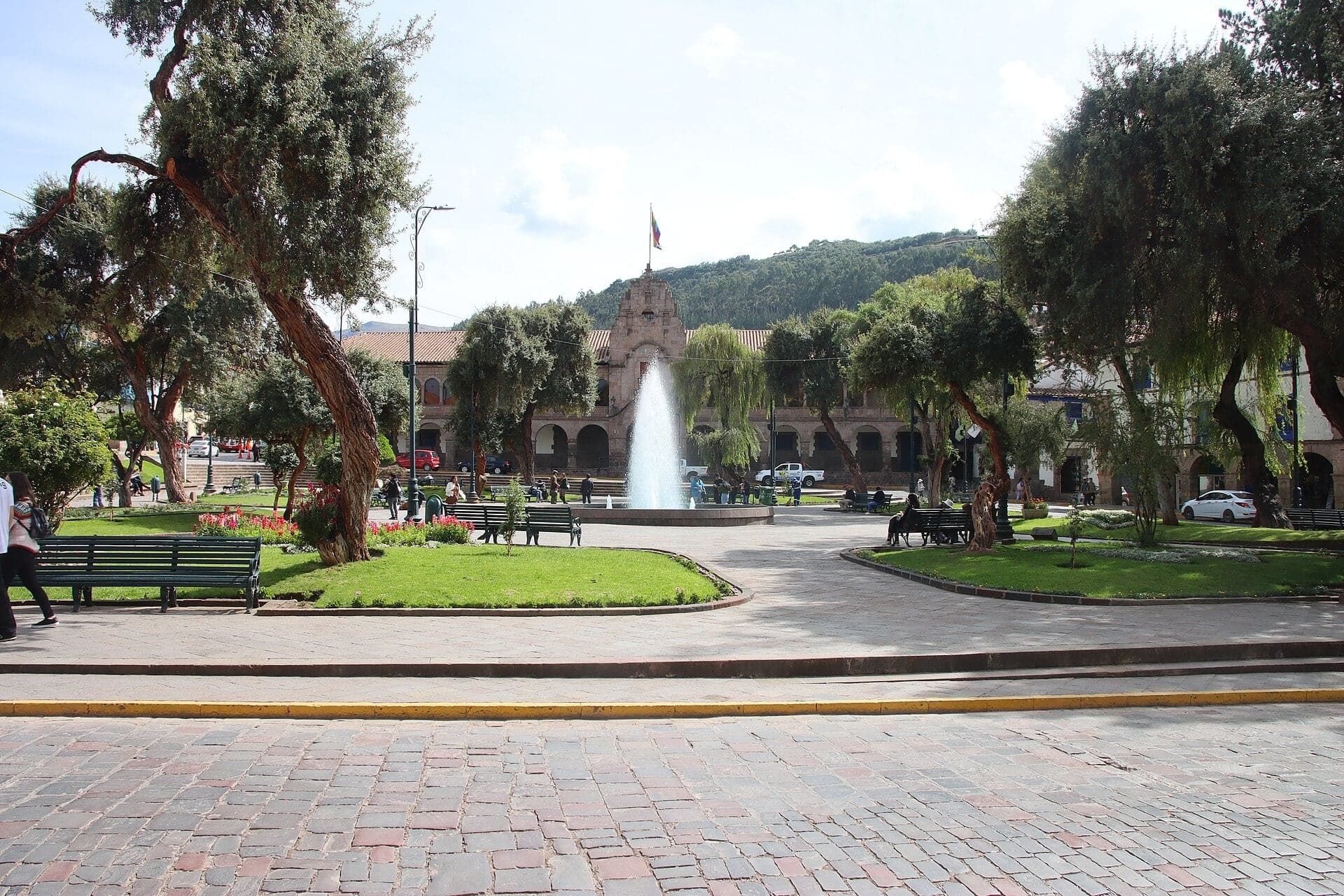
Plaza Regocijo: The Other Half of the Inca Square
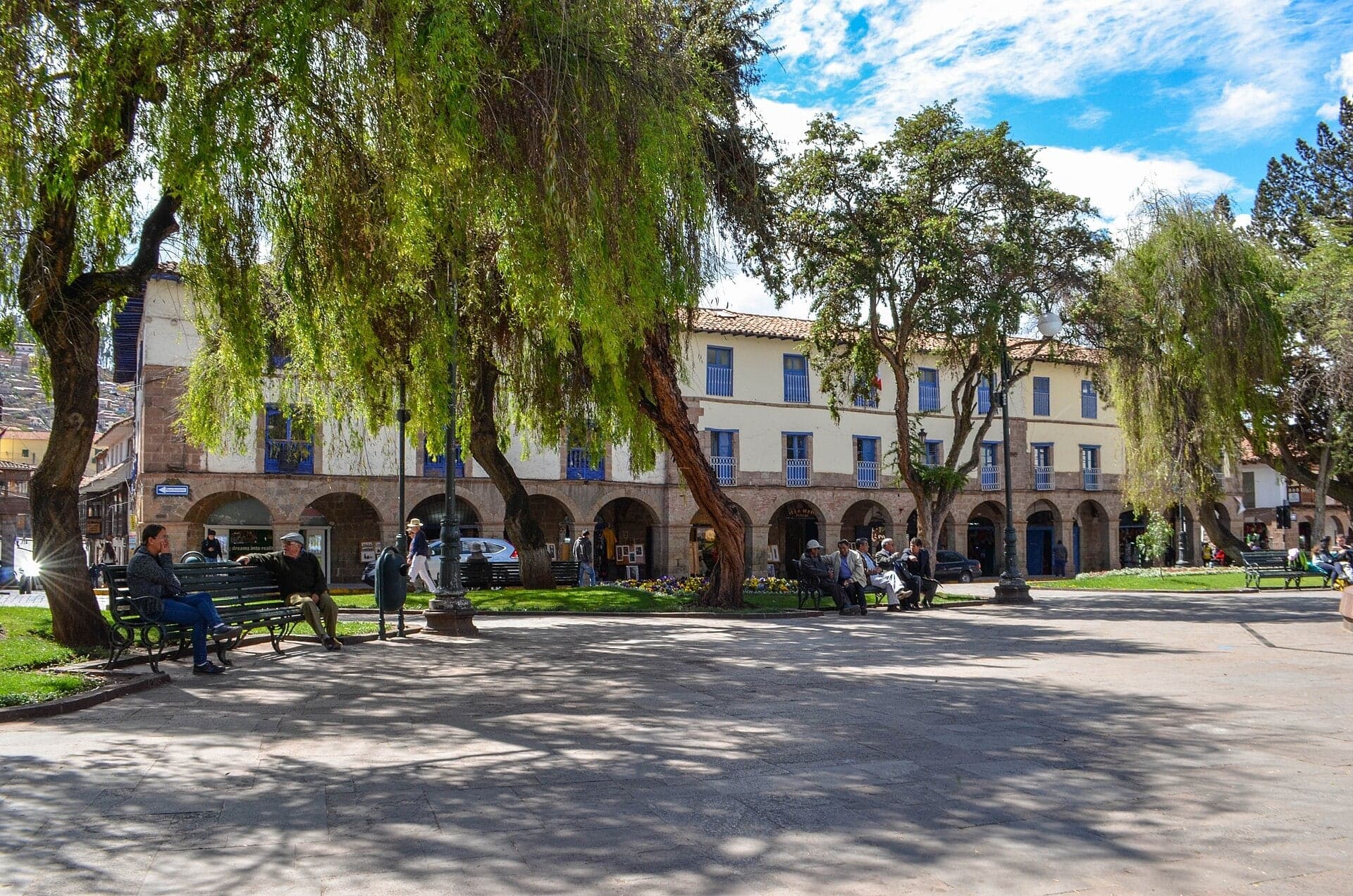
The second half of the great Inca square, Kusipata. Spanish shops and a mint cut it off from the Plaza de Armas, and Garcilaso's father watched bullfights here from his balcony.
Details
Best Time to Visit
A weekday or Saturday morning, starting by about 9:00, so the churches are open when you reach them: La Compañía closes from 11:20 to 13:00, and Qorikancha is reported closed on Sunday mornings. Mid to late afternoon light falls well on the fronts of the cathedral and La Compañía. The rainy season runs from November to May (UK Foreign Office advice, updated 2 October 2026), so carry a rain layer then. On 24 June, the Inti Raymi, the Qorikancha esplanade and the Plaza de Armas are taken over by the festival.
Pro Tips
- •Cusco sits at about 3,400 metres (Peru's tourism board gives over 3,399 m). If you have just flown in, keep to mild exercise for the first two days (CDC advice): walk slowly, drink water and rest on a bench whenever you need to.
- •Getting to the start: use a licensed telephone or app-based taxi rather than hailing one on the street (UK Foreign Office advice, checked 6 October 2026). The walk starts by the fountain in the Plaza de Armas.
- •Entry fees, checked 6 October 2026: La Compañía 12 soles, or 25 soles for the Jesuits' four-church Ruta del Barroco Andino (official site); the cathedral about 40 soles, or about 50 soles on the archdiocese's religious circuit ticket (guides only, no official price list); Qorikancha about 15 to 20 soles (guides only); Kusicancha free. Carry soles in cash.
- •Cusco's tourist ticket (Boleto Turístico) covers the Qorikancha site museum and the Museo Histórico Regional at the last stop: 70 soles for the two-day circuit II, 130 soles for the full ten-day ticket (COSITUC tariff, February 2025; checked 6 October 2026).
- •Kusicancha is free: Monday to Friday 07:00 to 18:00, Saturday and Sunday 08:00 to 18:00 (Ministry of Culture, July 2024; checked 6 October 2026).
- •Please do not touch the Twelve-Angle Stone. It was struck with a hammer in February 2025.
- •The Museo Machu Picchu in Casa Concha, a few steps from stop four on Santa Catalina Ancha, shows the collection Yale returned to Peru. Its official site could not be reached; guides list Monday to Saturday 9:00 to 17:00, closed Sunday (checked 6 October 2026).
- •La Merced's convent museum and San Francisco's convent museum each charge a small entry; no official price or hours are published, so ask at the door (checked 6 October 2026).
- •The walk ends in Plaza Regocijo, a short walk from the Plaza de Armas.
Safety & Precautions
- •Steps: five at the foot of Calle Loreto (no handrail), a short flight up into the garden of Plaza San Francisco and six up into the garden of Plaza Regocijo. For a step-free route at the two squares, stay on the pavement around the garden; the churches and houses are still in view.
- •Calle Maruri, between Calle Arequipa and Calle Romeritos, is busy with traffic and has narrow pavements.
- •At the curved wall the route crosses the mouth of a one-way lane on a zebra crossing without lights, and cars turn in from Avenida El Sol: look before you step out. The route then follows Avenida El Sol's wide pavement and never crosses the avenue mid-block; it crosses only at the lights at the Plaza de Armas end.
- •The garden below Qorikancha is not a public park: keep to the pavement. Since July 2026 the city has been restoring a mural on Avenida El Sol, which may put hoardings on parts of the pavement (reported 3 July 2026).
- •Political protests and strikes in Cusco can close the center at short notice (UK Foreign Office, updated 2 October 2026; US State Department Level 2, 3 September 2026). Avoid demonstrations.
- •Street crime and theft are a problem in Cusco's tourist areas (UK Foreign Office): keep phones and bags close on the plaza and crowded pavements.
- •The cobbles are uneven and slippery when wet; showers are common in the rainy season from November to May.
Travel advisory: Exercise Increased Caution (Level 2).
Gallery
Related Reading
Go deeper on what you'll see, hear, and walk through.
Read the walk
The full story of Historic Center: The City Built on Inca Walls, in words. Prefer to listen? Play it narrated, from home or on location.
Introduction
Cusco, in the Andes of southern Peru, was the capital of the Inca empire, and its historic center is still an Inca city underneath. When the Spanish took it in fifteen thirty-three, they did not start again. They moved in. Their churches stand on Inca walls, their houses fill Inca compounds, and the stone of their cathedral was carried down from an Inca hill. They also cut the great Inca square into pieces, and earthquakes decided, more than once, what had to be built again.
This walk reads those layers. It is twelve stops and just under two and a half kilometres, a mile and a half, on a loop that starts in the Plaza de Armas and ends in Plaza Regocijo, a short walk from where you began. Allow about an hour and a half, longer if you go inside: several of the churches and sites charge their own entry. Cusco sits at about three thousand four hundred metres, so take it slowly and rest on a bench whenever you need to. The walk is mostly level, with three gentle climbs.
Two people come back along the way: Garcilaso de la Vega, the son of a Spanish captain and an Inca noblewoman, who grew up beside the great square and later wrote about it; and Túpac Amaru, the last Inca ruler to hold out against Spain.
When you arrive in the Plaza de Armas, begin with stop one.
1. Plaza de Armas: The Square of Sea Sand
Welcome to the Plaza de Armas of Cusco, and to the first stop on this walk.
Before the Spanish came, this was the great ceremonial square of the Inca capital. Garcilaso de la Vega, who grew up in Cusco, called it Haucaypata, the terrace of festivals, and the main Inca roads to the four quarters of the empire set out from here. A stream ran along one side, covered with heavy beams and great flagstones so that people could stand on top of it, and beyond the stream lay a second square, Kusipata. On the feast of the Sun, Garcilaso wrote, the Inca and his royal kin waited barefoot here for the sunrise, while the provincial lords, who were not of royal blood, stood in the other square. That second square is where this walk ends.
Even the ground was made. A Spanish magistrate of the time wrote that the Inca had covered this square with sand brought up from the Pacific coast, two and a half palms deep, more in places, and buried vessels and small figures of gold and silver in it. When the foundations of the cathedral were dug, he had the sand taken away.
The Spanish founded their own city of Cusco here, in the Inca's square, on the twenty-third of March, fifteen thirty-four. In fifteen seventy-two Túpac Amaru, the last Inca ruler to hold out against Spain, was executed on this ground. Keep his name in mind: he comes back in a painting later on the walk. Two centuries later, in seventeen eighty-one, the rebel who took his name, Túpac Amaru the Second, was executed here too.
Look around: two great stone churches, and arcades with long wooden balconies. If the gilded Inca stands on the fountain, it is recent: it went up in twenty eleven.
Follow the route. Next, the cathedral, the great church at the top of the broad steps.
2. Cusco Cathedral: Built with Inca Stone
Walk on to the foot of the cathedral steps and stop there. The cathedral charges its own entry, and the inside is worth it; the details are on this stop's card.
This is not one church but three: the cathedral in the middle, with El Triunfo and the Sagrada Familia, both finished in the seventeen thirties, on either side.
The ground beneath them was already royal. Garcilaso wrote that this was the site of the houses of the Inca Viracocha, and that in his boyhood only one great hall of them still stood.
Now look at the stone. In fifteen fifty-nine the builders began carting blocks down from Sacsayhuamán, the Inca complex on the hill above the city, and nearly a century later they were still quarrying it. So the cathedral is not only on Inca ground. Much of its stone was cut by the Inca. The first stone was laid in fifteen sixty, and the church was first used in sixteen fifty-four.
Between those two dates came the earthquake. On the thirty-first of March, sixteen fifty, a painting inside records, the ground shook for as long as it takes to say the Creed three times, and brought down churches, convents and houses across almost the whole city. This cathedral, with most of its vaults already closed, was one of the few buildings left standing. Notice the two square towers. Before sixteen fifty, Cusco's churches hung their bells in flat bell walls. After it, they built square towers like these, and you will see that shape again.
The same painting shows a figure of Christ carried in procession before the cathedral. Ever since, he has been the Señor de los Temblores, the Lord of the Earthquakes, made of glued cloth and maguey rather than carved, and carried through the city every Holy Monday.
Follow the route. Next, a single stone in an Inca wall, up a narrow street.
3. Twelve-Angle Stone: The Wall Every Owner Kept
Walk on up the street to the stone and stop beside it. This is Hatun Rumiyoc, the street of the great stone, and there it is in the long Inca wall: a single great block, cut with twelve angles.
Count them along its edges. Every angle meets a neighboring stone, with no mortar between them, and the joints are so tight they look drawn rather than built. This is the finest kind of Inca masonry: each block cut to fit the blocks around it, the wall leaning slightly inward, the whole thing held together by its own weight. Hold on to that. At the Temple of the Sun, later on this walk, you will hear what an earthquake did to walls like this one.
Tradition says this was the palace of the Inca Roca. Now look up, above the Inca stones, at the white walls. After the conquest the house passed from owner to owner, among them the marquises of Rocafuerte, and today it is the Archbishop's Palace, with a museum of religious art inside. For nearly five centuries, every owner kept the Inca wall as the foundation and built on top of it.
The street's name is younger than the wall. In eighteen sixty-two it was simply recorded as the street of the great stone, and only in the early twentieth century did it take its Quechua name.
Please do not touch the stone. In the small hours of the eighteenth of February, twenty twenty-five, a man struck it with a hammer, and a security camera filmed him doing it. He was arrested.
Follow the route back down and on through the narrow streets. Next, a small square with a puma fountain.
4. Plazoleta Santa Catalina: Chosen Women to Nuns
Walk on into the little square and stop by the fountain with its pumas. This is Plazoleta Santa Catalina. The long wall along one side belongs to the church and convent of Santa Catalina of Siena, and behind it lay one of the most remarkable places in Inca Cusco.
This whole block, from the Plaza de Armas down to the street below, was the Acllawasi, the house of the chosen women. Garcilaso called it the house of the maidens dedicated to the Sun. The women lived apart, and their work was to spin and weave the fine cloth worn by the Inca and to prepare the drink served at the great festivals.
After the conquest the compound was divided among Spanish settlers, and Garcilaso noted that the side facing the main square filled with merchants' shops. Then, on the first of February, sixteen oh five, twenty-five nuns arrived from Arequipa, driven out by a run of disasters that included the eruption of the volcano Huaynaputina, and founded the monastery of Santa Catalina here. The earthquake of sixteen fifty destroyed it. A nineteenth-century account says the new building rose on the same Inca walls. A house of women living apart in the service of the Sun became a house of women living apart in the service of the Church.
As you leave by Calle Arequipa, the narrow lane at the far end of the square, look at the lower walls: smooth, fitted courses of Inca stone, the same skill you saw at the twelve-angled stone, here laid in level rows. The convent museum charges its own entry, and so does the Museo Machu Picchu in Casa Concha, back up the street you came down, home since twenty eleven to the Machu Picchu objects Yale University returned to Peru.
Follow the route. Next, a quiet lane beside an Inca compound.
5. Kusicancha: From Barracks Back to Inca
Walk on into Calle Romeritos and stop a little way along it. This quiet pedestrian lane follows the line of an Inca street, and the compound beside it is Kusicancha, an Inca enclosure that faced the Temple of the Sun, our next stop. The site is free to enter; the details are on…
Full narration for this stop unlocks with the tour.
6. Qorikancha: The Temple of the Sun
Walk on into the square in front of the church of Santo Domingo and stop there. The church and convent before you stand on the most sacred place in Inca Cusco: Qorikancha, the golden enclosure, the Temple of the Sun. The convent charges its own entry, and the Inca rooms inside…
Full narration for this stop unlocks with the tour.
7. Qorikancha's Curved Wall: The Temple's Rounded End
Walk on down the lane beside the garden and stop on the pavement. Then turn round, to face back the way you came, toward the church on the rise. Look low, at the end of the church nearest you: its dark stone base bends round in a curve. This is the rounded end of the Temple of…
Full narration for this stop unlocks with the tour.
8. Calle Loreto: The Alley of the Sun
Climb the few steps at the foot of the lane and stop at the top. This is Calle Loreto, an Inca lane that keeps the line the Inca gave it and, the city's catalogue says, its original walls. Its Inca name is Intikijllu, the alley of the Sun. It is the one survivor of those three…
Full narration for this stop unlocks with the tour.
9. La Compañía: Built to Outshine the Cathedral
Walk on to where the lane opens onto the Plaza de Armas and step out onto the square. Then turn to face the church you have been walking beside: two towers, and a carved stone front between them. This is La Compañía de Jesús. It charges a small entry and closes over the middle…
Full narration for this stop unlocks with the tour.
10. La Merced: An Altar in Stone for the Square
Walk on into the little square and stop on its near side. Then turn to face the church across it: the carved stone front, and beside it a single tower. This is La Merced, the church of the Mercedarian friars. The church and its convent museum charge their own entry; ask at the…
Full narration for this stop unlocks with the tour.
11. San Francisco: A Church on Inca Farm Terraces
Walk on into the garden of Plaza San Francisco and stop where the paths meet. Face the long side of the church across the garden: dark stone, plain walls, a single square tower, and big wooden crosses at its atrium. After La Merced's carved front, this is a much sterner church.…
Full narration for this stop unlocks with the tour.
12. Plaza Regocijo: The Other Half of the Inca Square
Walk on into Plaza Regocijo and stop in the garden at its center, near the fountain. This is the last stop. This is the other half of the great Inca square where you began. Its Inca name was Kusipata, and Regocijo is simply the Spanish for it: Garcilaso translated Kusipata as…
Full narration for this stop unlocks with the tour.
- La piedra de los doce ángulos, en calle Hatun Rumiyoc, Cuzco — Rodolfo pimentel, CC BY-SA 4.0 · source
- Calle Cuzco — Rodolfo pimentel, CC BY-SA 4.0 · source
- St Catherine church and convent, Plaza de Armas, Cusco, Peru — Diego Delso, CC BY-SA 4.0 · source
- Fotografía tomada el 27 de octubre del 2023 dentro del proyecto "Registro fotográfico de infraestructura urbana de la ciudad del Cusco, 2023 — Ordzonhyd Rudyard Tarco Palomino, CC BY 4.0 · source
- Cusco, often referred to as the 'navel of the universe' by the Incas, stands as a testament to a rich history that blends Inca foundations w — xiquinhosilva, CC BY 4.0 · source
- Calle Romeritos, Cusco, Peru — Alexey Komarov, CC BY-SA 4.0 · source
- St. Domingo convent, Cusco, Peru — Diego Delso, CC BY-SA 4.0 · source
- The church of Santo Domingo is most famous as the site of Qorikancha, which was Cuzco's major Incan temple. It has twice been destroyed by e — Jorge Láscar from Australia, CC BY 2.0 · source
- Coricancha, Cusco, Peru — Diego Delso, CC BY-SA 4.0 · source
- Jardin Sagrado y Qorikancha y Iglesia De Santo Domingo — F Delventhal from Outside Washington, D.C., US, CC BY 2.0 · source
- This is a photo of a monument in Peru, identified by ID — Ordzonhyd Rudyard Tarco Palomino, CC BY-SA 4.0 · source
- Loreto Street in Cusco — Ricardo Sánchez, CC BY 2.0 · source
- Society of Jesus church, Plaza de Armas, Cusco, Peru — Diego Delso, CC BY-SA 4.0 · source
- Merced church and monastery, Cuzco — Draceane, CC BY-SA 4.0 · source
- Iglesia San Francisco, Cuzco — Manuel Menal, CC BY-SA 2.0 · source
- San Francisco Church and square — Chuck Moravec, CC BY 2.0 · source
- Heladeros Street, Regocijo Square, Cuzco — Draceane, CC BY-SA 4.0 · source
- Plaza Regocijo or Plaza Kusipata, Cusco — Esmée Winnubst, CC BY 2.0 · source
Images may be cropped or resized. Other photos via Unsplash and Pexels.