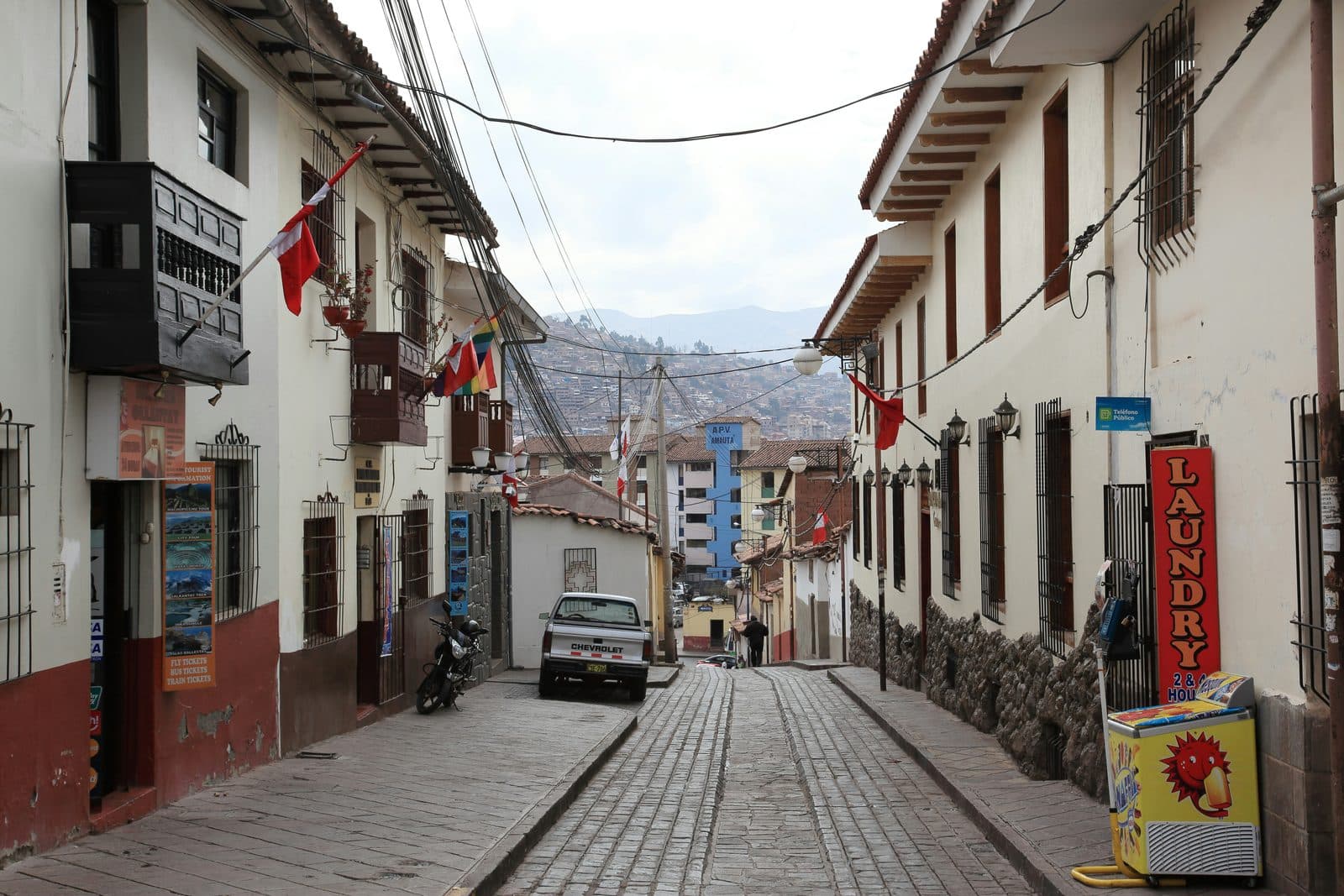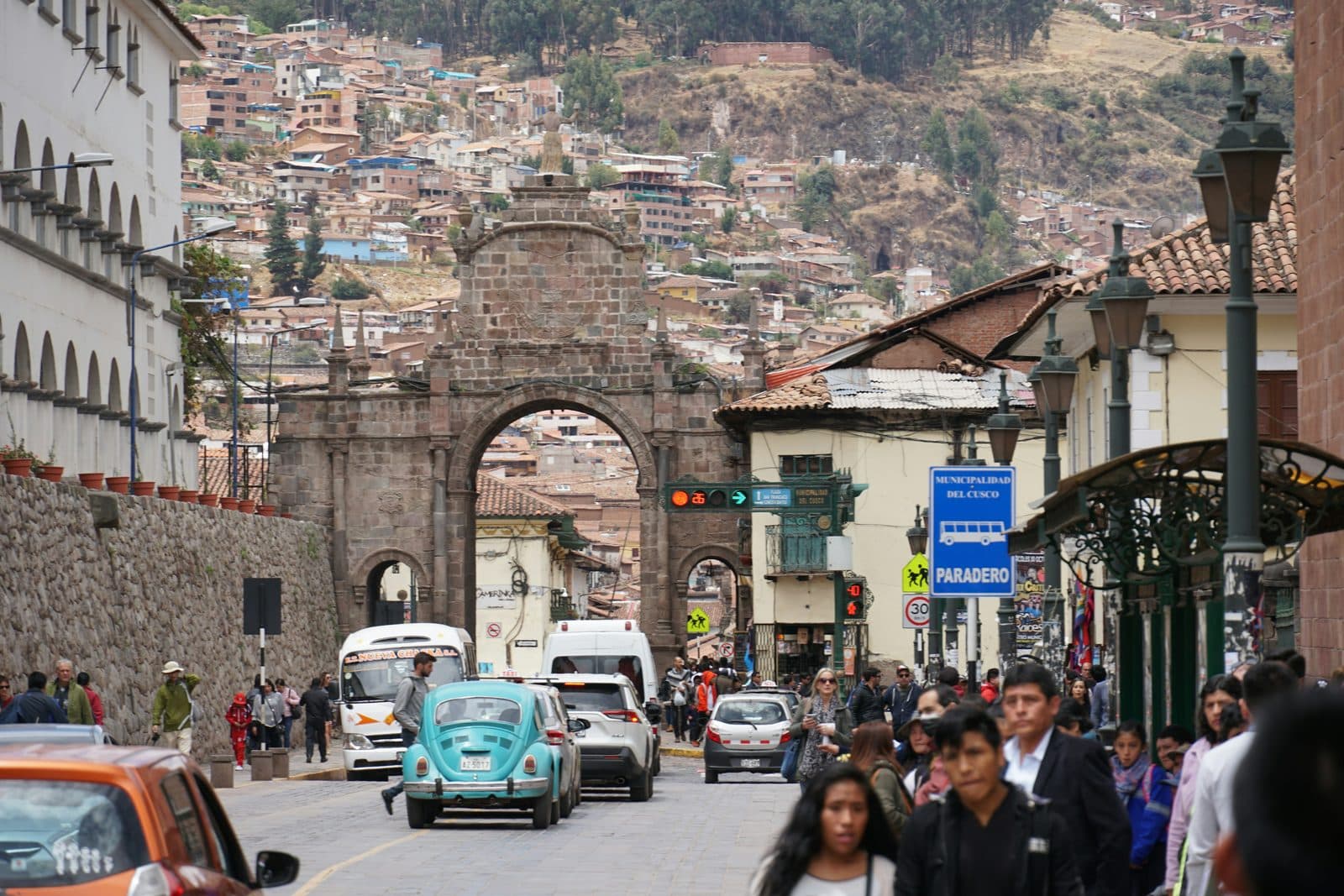
Walk up the Cuesta de San Blas from the bottom of the hill. The climb is steep enough that you will feel the altitude: about sixteen metres of height in a little over a hundred metres of street, narrowing as it goes. At the top the lane opens into the small sloping plaza of San Blas, with the whitewashed parish church on one side. On the plaza, a museum-workshop carries the name of Hilario Mendívil, the image-maker who died in 1977. His youngest daughter, Juana, born in 1960, keeps it going; in 2025 Peru's Ministry of Culture named her a Meritorious Personality of Culture. Nearby in San Blas, the family of Antonio Olave carries on his workshop.
Everyone calls San Blas the barrio of the artisans. For most of its history, it was not. That is the most interesting thing about it.
What the quarter has been
San Blas occupies the hillside northeast of the historic center, climbing from the old Inca road out of the city toward the slopes below Sacsayhuaman. Before the Spanish conquest the area was called T'oqokachi, a name even the chronicler Garcilaso de la Vega could not translate: he knew that toco meant window and cachi meant salt, and admitted he did not know what a salt window was meant to be. The municipal heritage records describe Inca T'oqokachi as irrigated farm terraces cut into the slope beside the royal road to the Antisuyu, the eastern quarter of the empire, with older Killke-period settlement beneath. The chronicler Bernabé Cobo placed a temple of Thunder here. What the documents do not describe is an imperial workshop district.
After the conquest, a viceroy's ordinance of 1559 created parishes for the native people of Cusco. The magistrate Polo de Ondegardo carried out the founding of San Blas in about 1562, and the parishioners built the church themselves, by minka, the Andean practice of shared communal labour. It opened on 3 February 1564, the feast of Saint Blaise. Colonial San Blas was a native barrio, and its records name ordinary working people. In 1582 Angelina Ynquillay, the wife of a shoemaker named Joan Guaman Curi, sold a piece of land in the barrio then called Tococache to a man from the Collao, and every party to the sale is recorded as indigenous. Halfway up the Cuesta, the alley called Tocuyeros is named for residents who wove tocuyo, a plain cotton cloth, on small wooden looms.
The church itself drew craftsmen from across Cusco. Cristóbal de Torres Delgado made the altarpiece of the Virgin of Buen Suceso around 1670 to 1675, and in 1675 a gilder from the parish of San Sebastián, Mateo Tuyrutupa, contracted to gild it for 1,200 pesos. These were skilled trades, and they were real. But nothing in the records marks this hill out as the city's artisan quarter. Shoemakers, weavers, carvers and gilders lived and worked in every parish of colonial Cusco.
The painters of the Cusco School are often placed here too. Their best-known work near this route hangs at the foot of the hill instead, in the Museum of Religious Art on Hatunrumiyoc: twelve of the sixteen known canvases of the Corpus Christi series, painted for the native parish of Santa Ana under Bishop Manuel de Mollinedo.
The artisan quarter that visitors come for is a twentieth-century creation, and the municipal records date it closely. On Hatunrumiyoc, the street that leads up to the Cuesta, two houses began converting into guesthouses in 1934 with municipal loans, and the first craft shops opened in the 1950s and 1960s. By the 1997 heritage catalogue most of the houses on that street had turned over to tourist commerce. In 1992 the city launched a project to promote San Blas, and in 1993 it built the terraced water feature above the plaza, which has been under renewal since May 2026. The best known of the artisans who made the quarter's name worked in the middle decades of the twentieth century.
What "tradition" means here
Hear a stop from this walk
Siete Culebras: The Snakes That Were Mermaids
A common reflex is to treat San Blas as a survival, an ancient art preserved in unbroken form. That framing fits neither the evidence nor how crafts work. Crafts adapt continuously, and the three masters most associated with San Blas show it.
Hilario Mendívil worked in San Blas until shortly before his death in 1977. His saints and Virgins are not carved. He built them up from glued cloth, finished with plaster and pastes made from flour, and then painted them finely. He did not make ceramics. His signature was the proportions: long, curving necks that make a Mendívil figure recognizable anywhere in Cusco. Two stories are told about the necks. One says they were inspired by the llamas, alpacas and vicuñas once traded in the old barrio of San Blas. The other says the necks began as stubbornness toward his grandfather.
Antonio Olave Palomino was born in the district of Pisac. He was an imaginero, a maker of religious images, who learned from his uncle, the Cusco sculptor Fabián Palomino. He was known for figures of the Christ Child, the Niño Manuelito, with almond-shaped glass eyes. He was named a Gran Maestro of Peruvian craft in 1993 and a Living Human Treasure in 2009, and his wife and children worked with him in his San Blas workshop. Edilberto Mérida (1927 to 2009) was a ceramicist, sometimes called the Picasso of the Andes, whose clay figures have enormous hands and feet, swollen and calloused by field work, which he meant as a denunciation of the suffering of the indigenous poor. His daughter María Antonieta carries on his work.
Count the generations. Not ten, and not a line back to the colonial workshops. Three masters of one generation and their children. Some of the families claim older roots: a press profile calls Olave the heir to an old line of Cusco image-makers, and a sponsored piece says the Mendívil tradition goes back more than 150 years. Neither claim is documented beyond that. What is documented is two or three generations.
That makes the work more interesting, not less. A Mendívil saint is not a preserved colonial object. It is a twentieth-century invention, made by an artisan who knew Andean and Catholic imagery deeply.
The cedar pulpit
The most famous single craft object in San Blas is the carved pulpit inside the church. It is often described as cut from a single cedar trunk over ten years, with hundreds of separate pieces, a base of seven monsters for the seven deadly sins, and no known maker. None of that holds up.
The pulpit is cedar and dates from around 1690 to 1700. On 8 June 1696 Bishop Mollinedo wrote to King Carlos II that he had commissioned a pulpit for San Blas, also of cedar, with many sculpted figures. Its columns are twisted Solomonic columns. Saint Blaise stands under the sounding board, and the Virgin of Buen Suceso is on the bowl. At the base, eight carved busts of heresiarchs hold up the preacher, among them Luther, Calvin, Zwingli, Henry VIII and his daughter Elizabeth, the early heretic Arius, the Byzantine patriarch Photius, and Luther's wife, Katharina von Bora. It is Counter-Reformation theology in wood: the church's enemies made to carry its sermon.
The maker is argued over rather than unknown. The municipal heritage record lists the author as anonymous and notes that some scholars attribute the pulpit to the indigenous master carver Juan Tomás Tuyru Túpac, while others favour Esteban Horcasitas, a carver born in Huamanga. The art historian Iván Panduro argues for Tuyru Túpac, comparing it with his documented pulpit in the church of San Pedro. A local oral tradition holds that the skull at the top of the pulpit is Tuyru Túpac's own. But a contract he signed in 1694 asked, as part of his payment for gilding an altarpiece, that he be buried in the church of San Juan de Dios, so his body is probably there. The church, pulpit included, was restored between 2020 and 2023, and the pulpit stands inside the ticketed nave.
That is the efficient summary of colonial San Blas. The records name many of its working people: the altarpiece carver, the gilder, the shoemaker and his wife. The one piece everyone comes to see is the one whose attribution was lost.
What the climb teaches
The Cuesta de San Blas was the Inca way up from Choquechaca to T'oqokachi. It has not stayed the same: it once had steps, removed to let cars up. Today it is part of the procession route that climbs to the plaza.
Above the plaza, the older hill is easier to see. The Mirador de San Blas, officially the Qosqo Qhawarina park, sits between the lanes of Kiskapata and Pasñapakana, above Tandapata. It is laid out on two platforms whose walls follow the lines of Inca terracing, rebuilt from reused stone, and the terrace wall along Kiskapata still shows the remains of water channels. Tandapata, just below, was first called Chacan Canal for the water channel down its middle, then Tandapata because the neighbours took that water in turns. The street sits on an Inca terrace. This is the San Blas of the documents: terraces, water and a parish of working people, with the famous workshops a recent layer on top.
What an artisan barrio preserves
Not a static heritage and not an unbroken lineage, but a working economy of skill. The colonial parish had its shoemakers, weavers, carvers and gilders, whose names survive in notarial records. The twentieth century added three master families and a city that decided San Blas would be its artisan quarter. Two or three generations of real, skilled work is a better story than a legend of ten.
The San Blas: How a Hill Became the Artisans' Quarter audio tour walks both layers. It is an eight-stop loop of about 1.3 km, roughly 75 minutes, that starts in the Plaza de las Nazarenas and ends a few steps from it, in the lane of Siete Culebras. On the way to stop two you pass the great Inca wall of Hatunrumiyoc and its Twelve-Angled Stone, whose story is told on our Historic Center walk. Stop two is the Cuesta, with its colonial shoemakers and weavers and the guesthouses and craft shops of the twentieth century. Stop three is the church and its cedar pulpit. Stop four is the Mendívil workshop on the plaza. The second half climbs to the Mirador and comes back down the back lanes of Tandapata, Atoqsaycuchi and Siete Culebras, where the Inca terraces and water still shape the streets.
A quarter that has been reinvented this recently is not a museum. It is a place where people are at work this afternoon. Check which workshops are open when you pass, look at what is being made, and buy something small if you want to.
Ready to experience it?
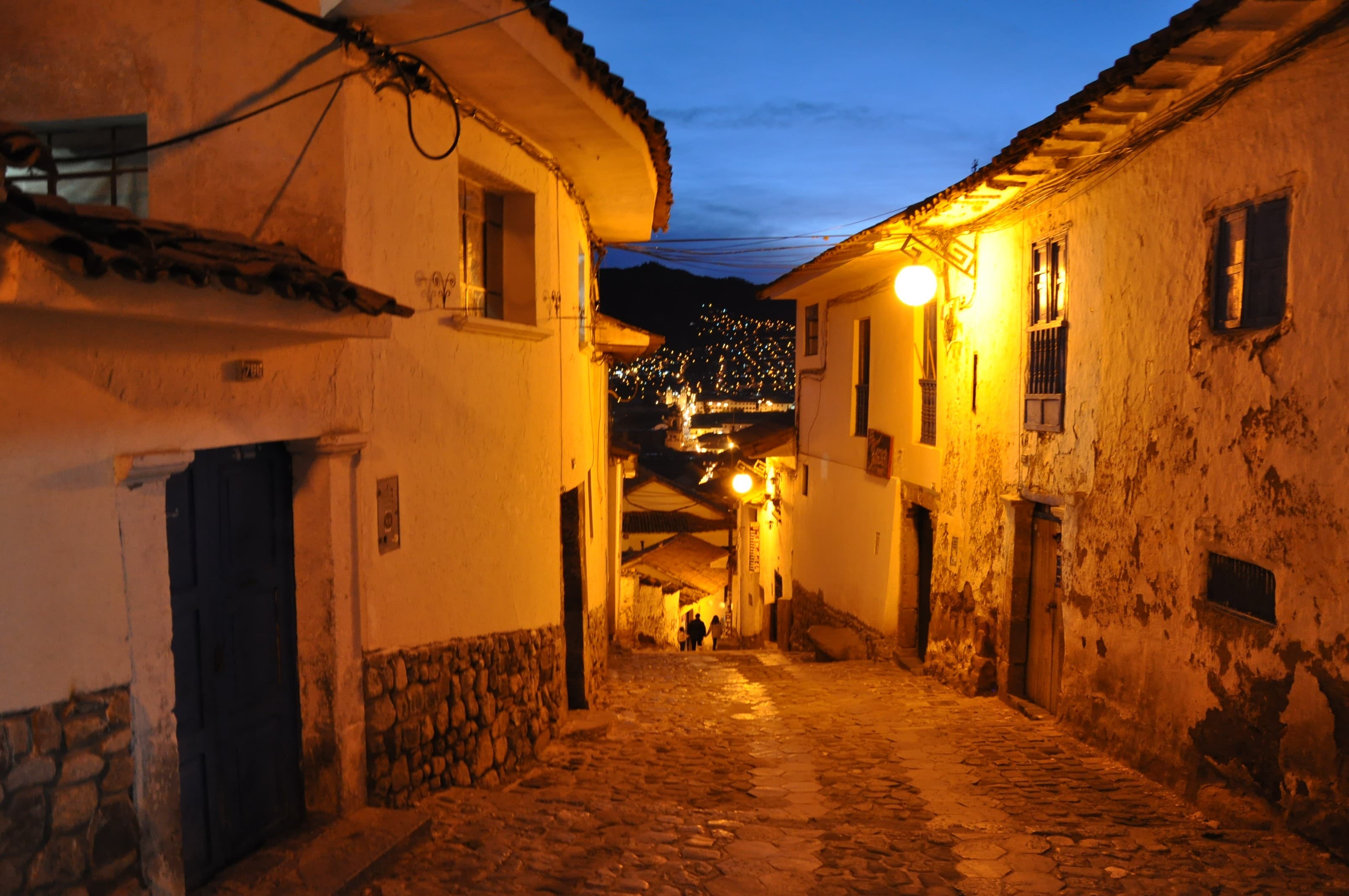
San Blas: How a Hill Became the Artisans' Quarter
75 min · 1.3 km · moderate
More from Cusco
Explore more at your own pace.
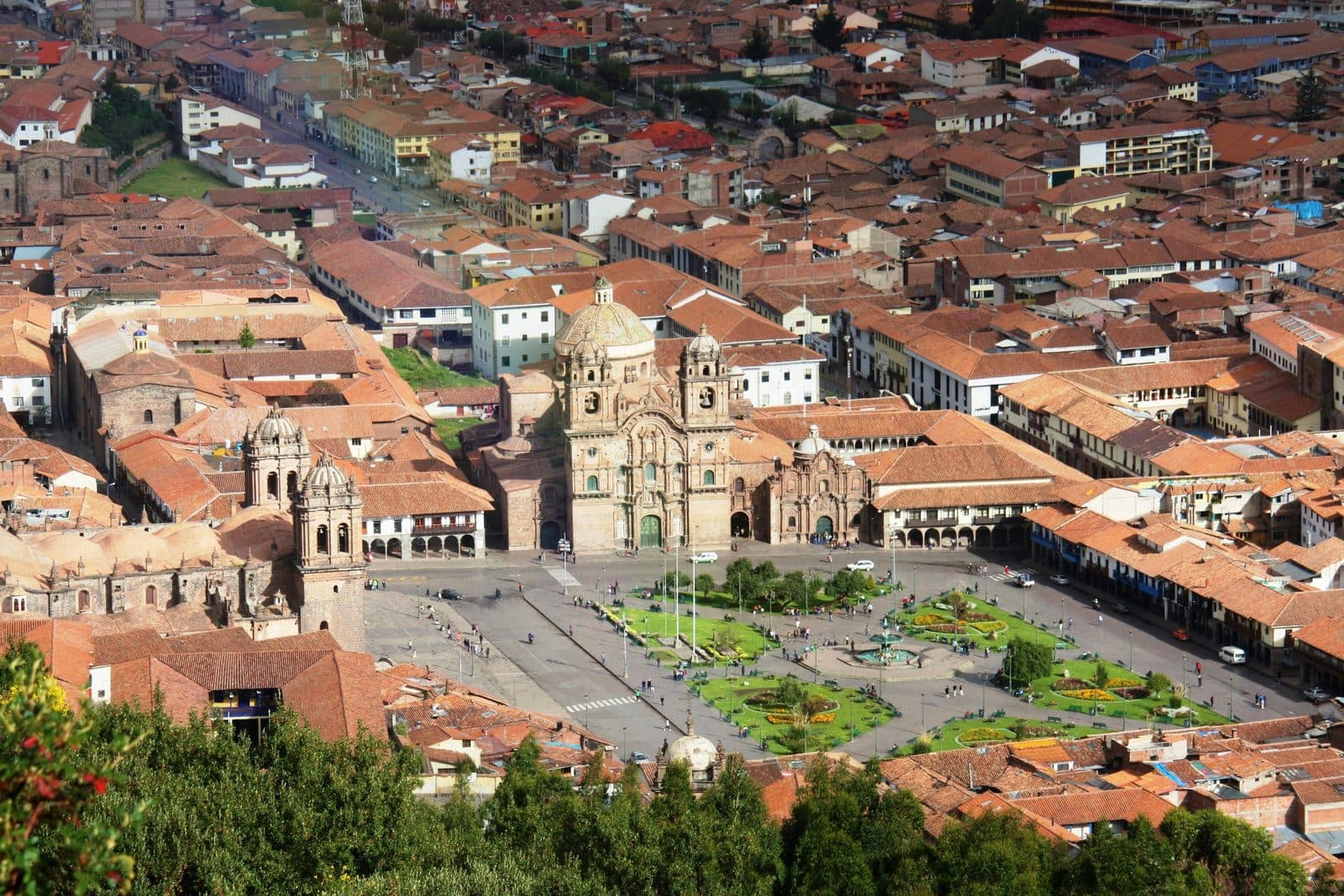
Best Self-Guided Walking Tours in Cusco (2026)
Cusco Travel Guide: Altitude, How Many Days, Getting Around, When to Go (2026)
One Day in Cusco: An Altitude-Friendly Walking Itinerary (2026)
Best History Walking Tours in Cusco (2026)
What to Eat in Cusco: An Andean Food Guide (2026)