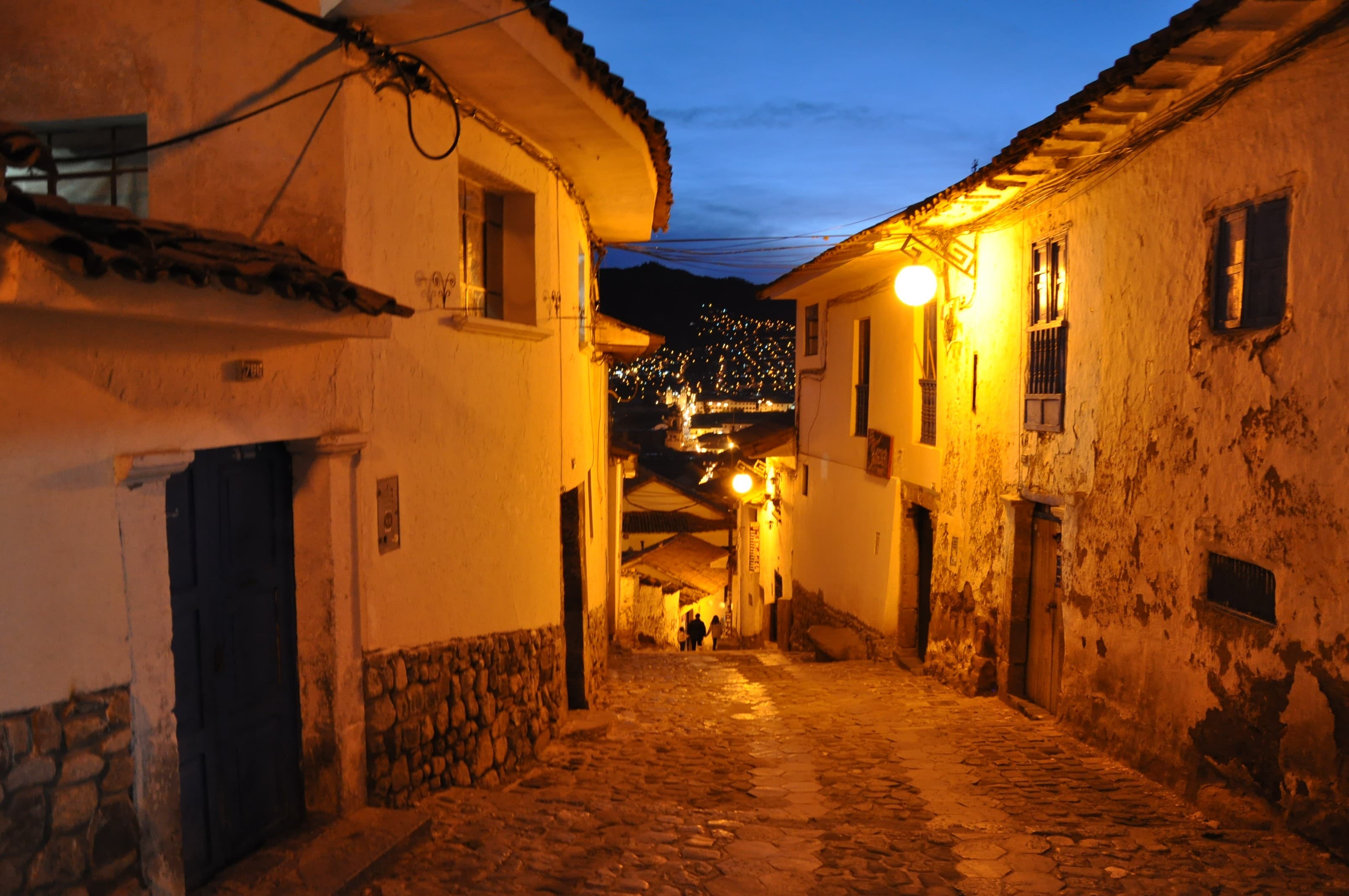
A loop from the Plaza de las Nazarenas up the Cuesta de San Blas to its adobe parish church, the artisans' workshops and a viewpoint over Cusco's roofs, then down lanes laid on Inca terraces.
Start · Plaza de las Nazarenas: The Quarter of the Schools
DirectionsStops
- 1
Plaza de las Nazarenas: The Quarter of the Schools
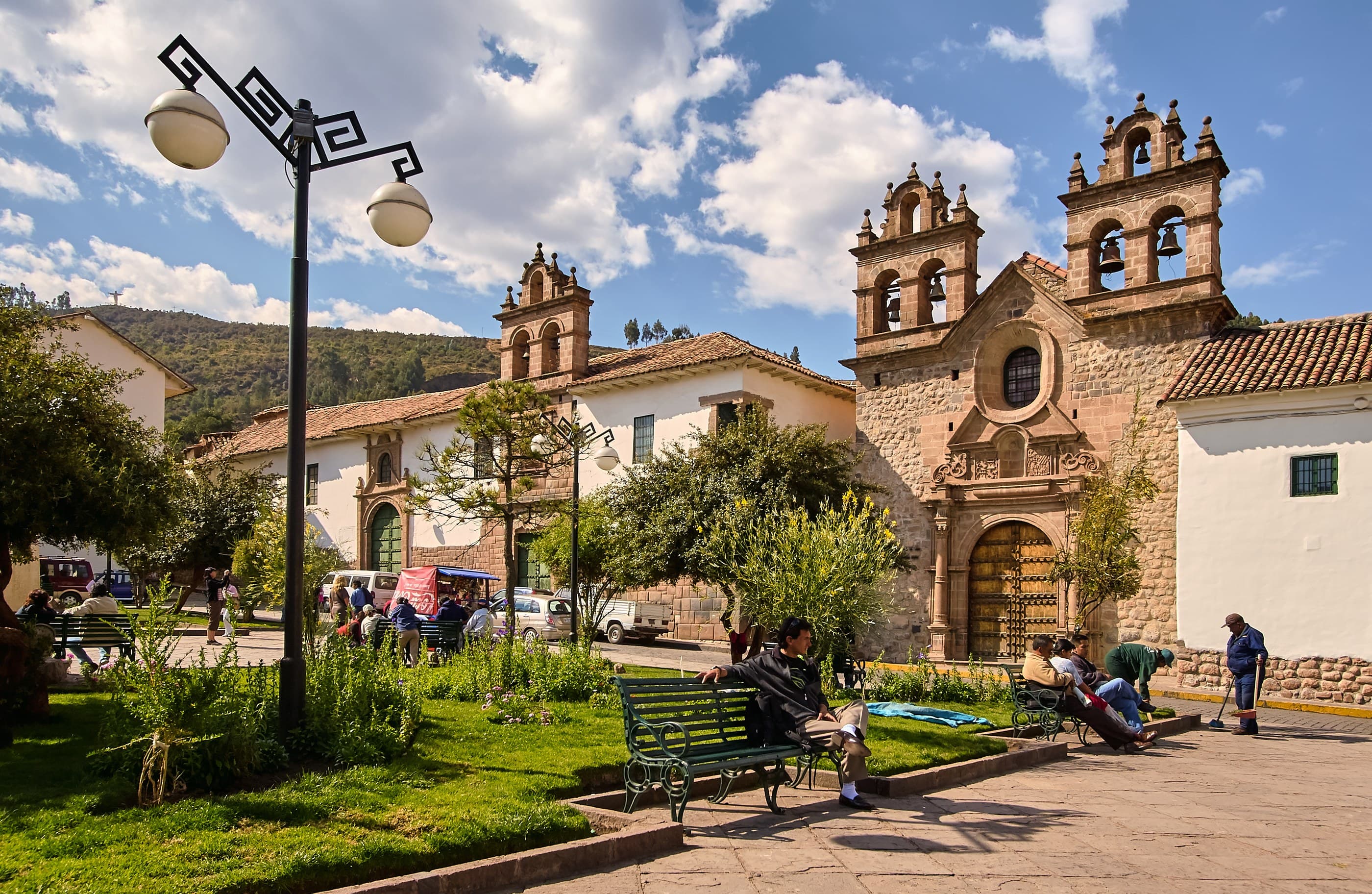
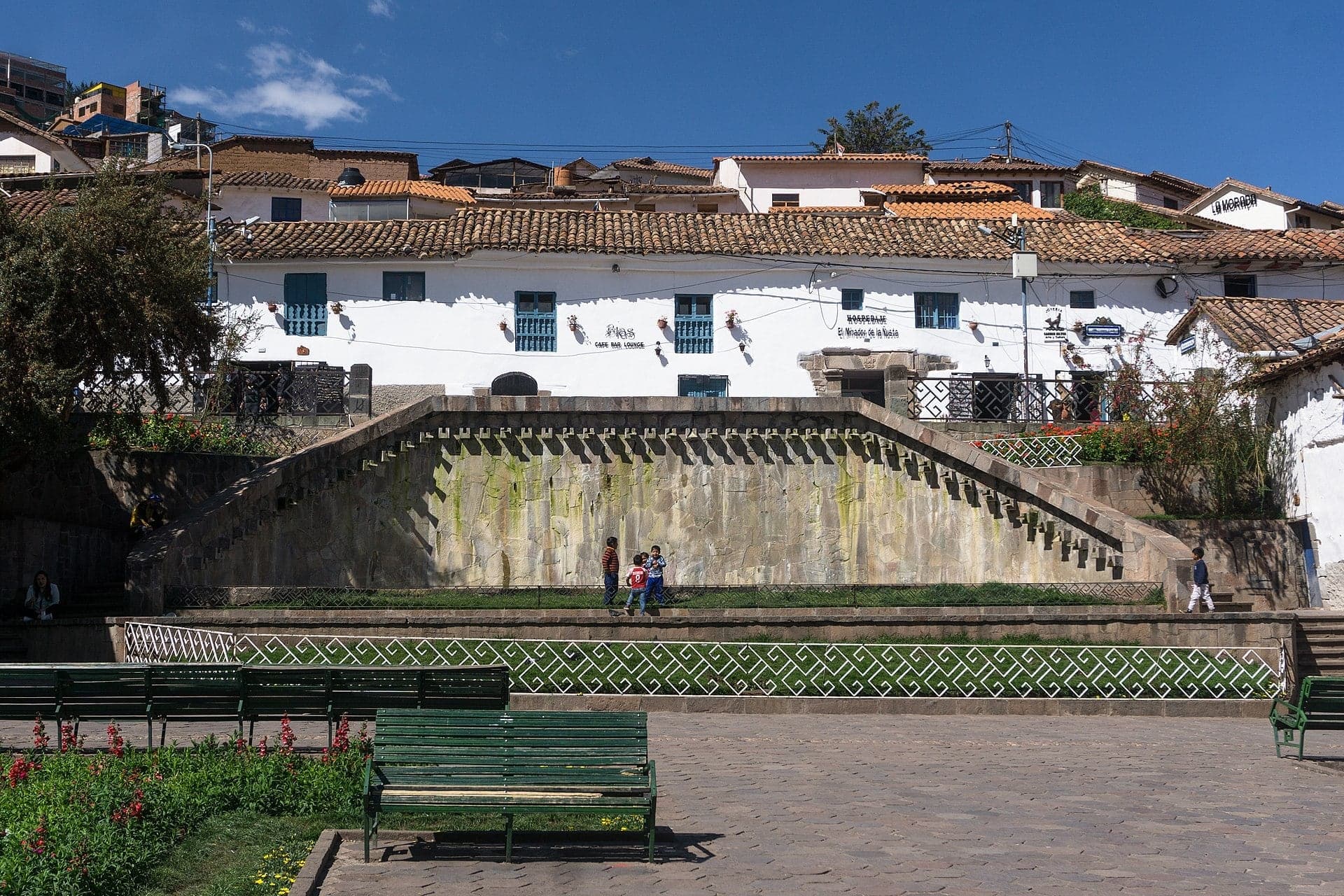
A small garden plaza in what Cusco once called the quarter of the schools. It stayed a place of teaching for centuries, with a seminary, a college and a university.
- 2
Cuesta de San Blas: A Parish of Working People
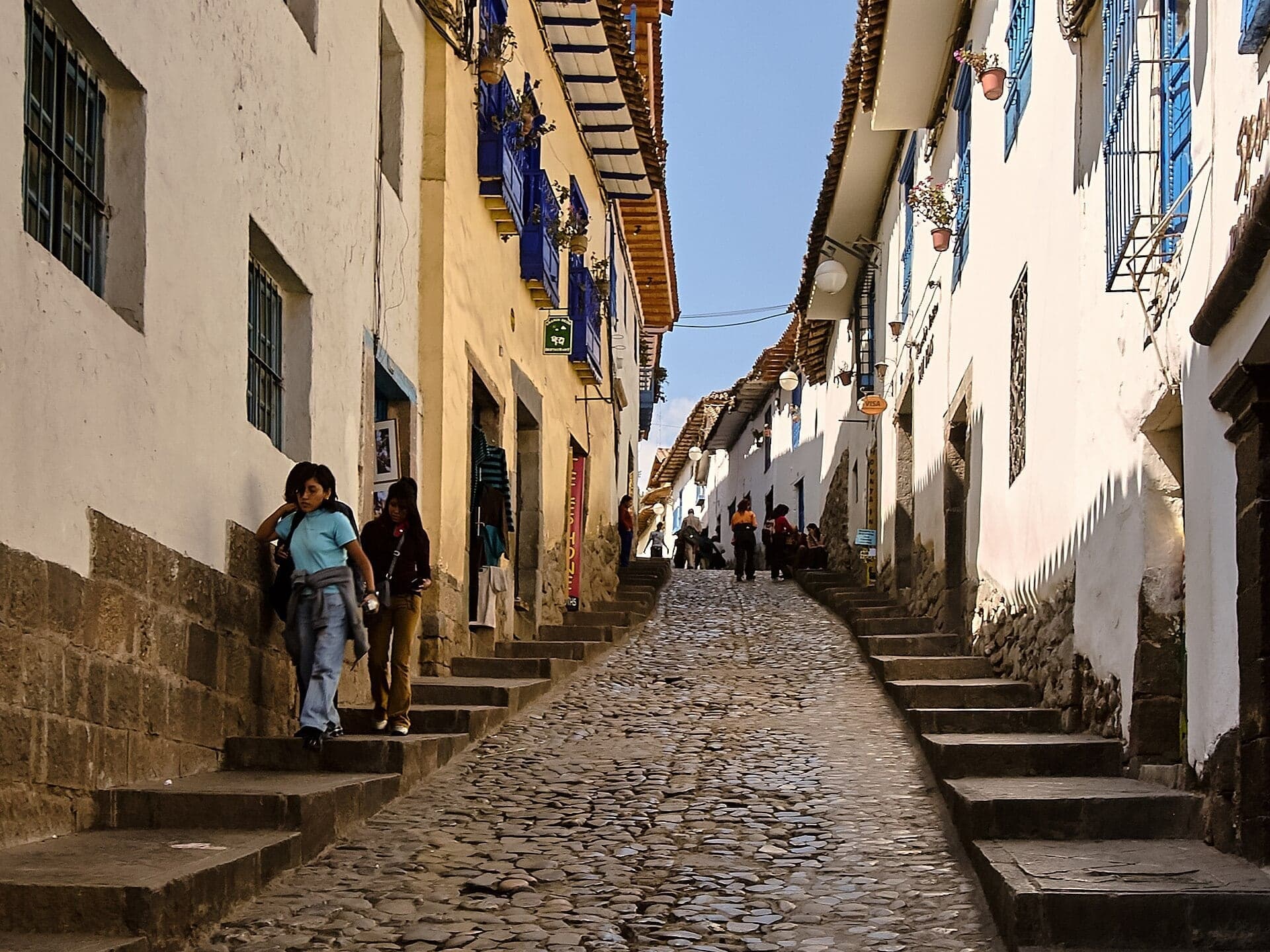
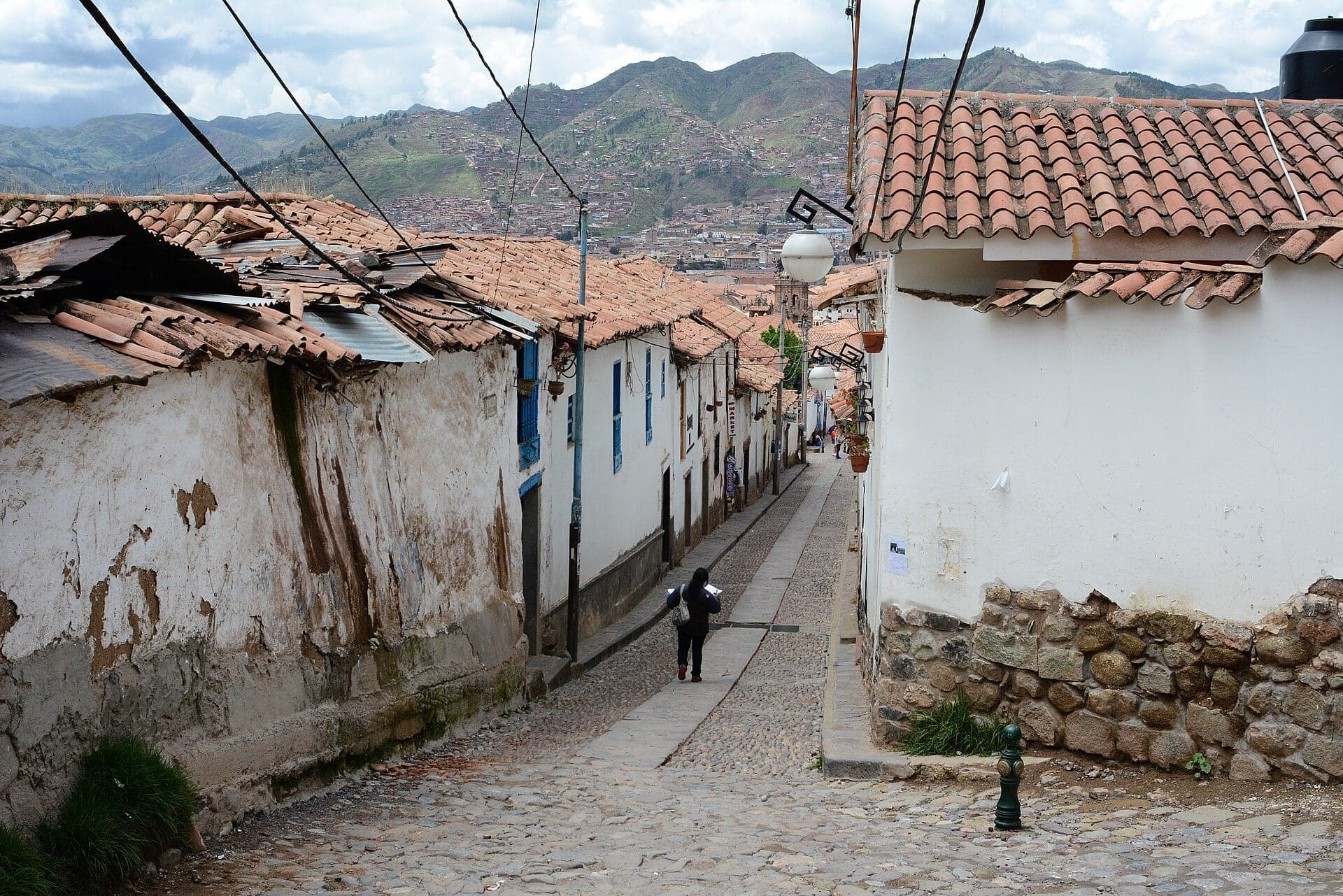
The steep stepped street climbs into the old native parish. A shoemaker and a street of weavers are on record here centuries before the galleries came.
- 3
Church of San Blas: Built by Its Parishioners
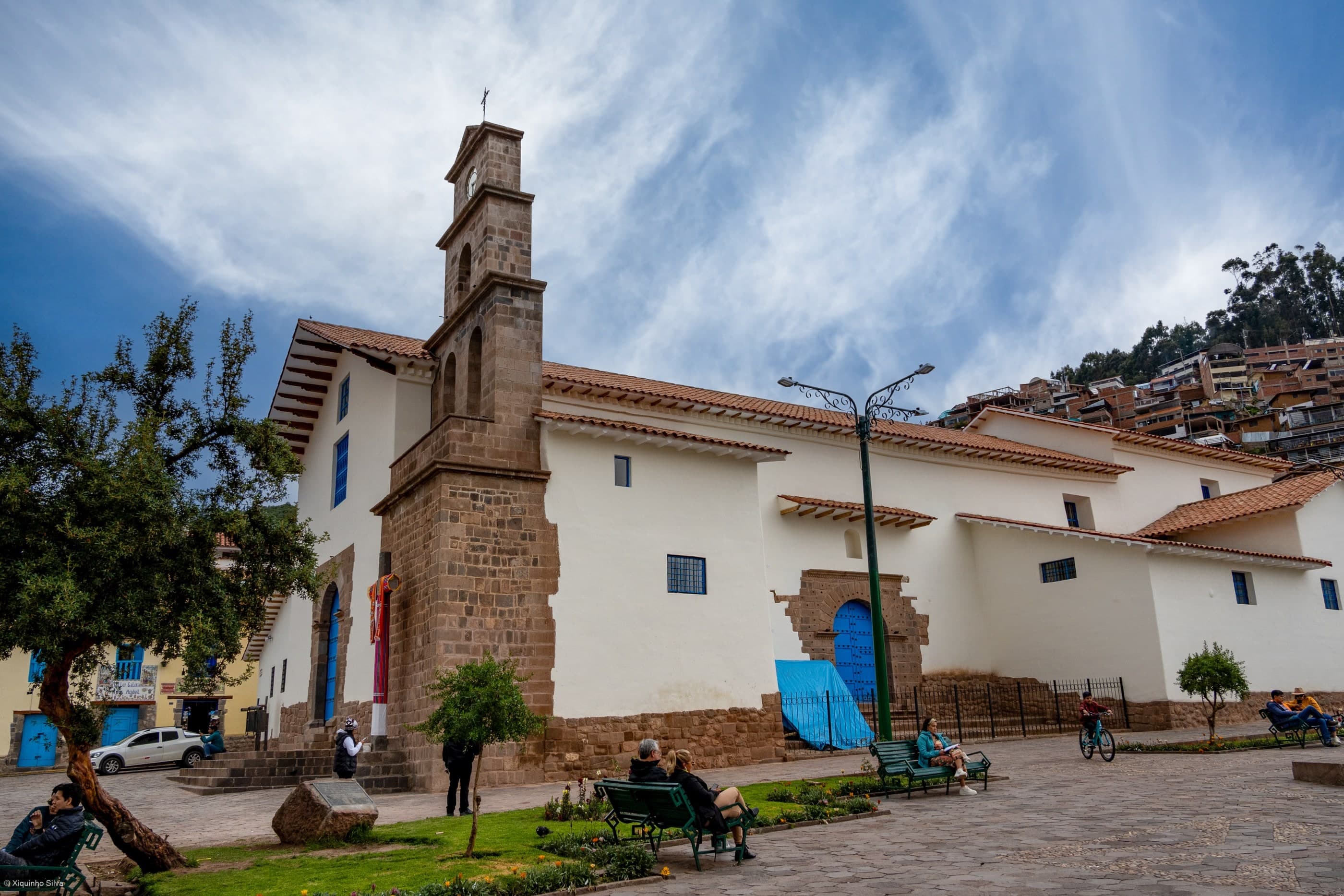
The parish church its own people built in the 1560s. Stone now props its adobe walls, and a famous carved cedar pulpit waits inside.
- 4
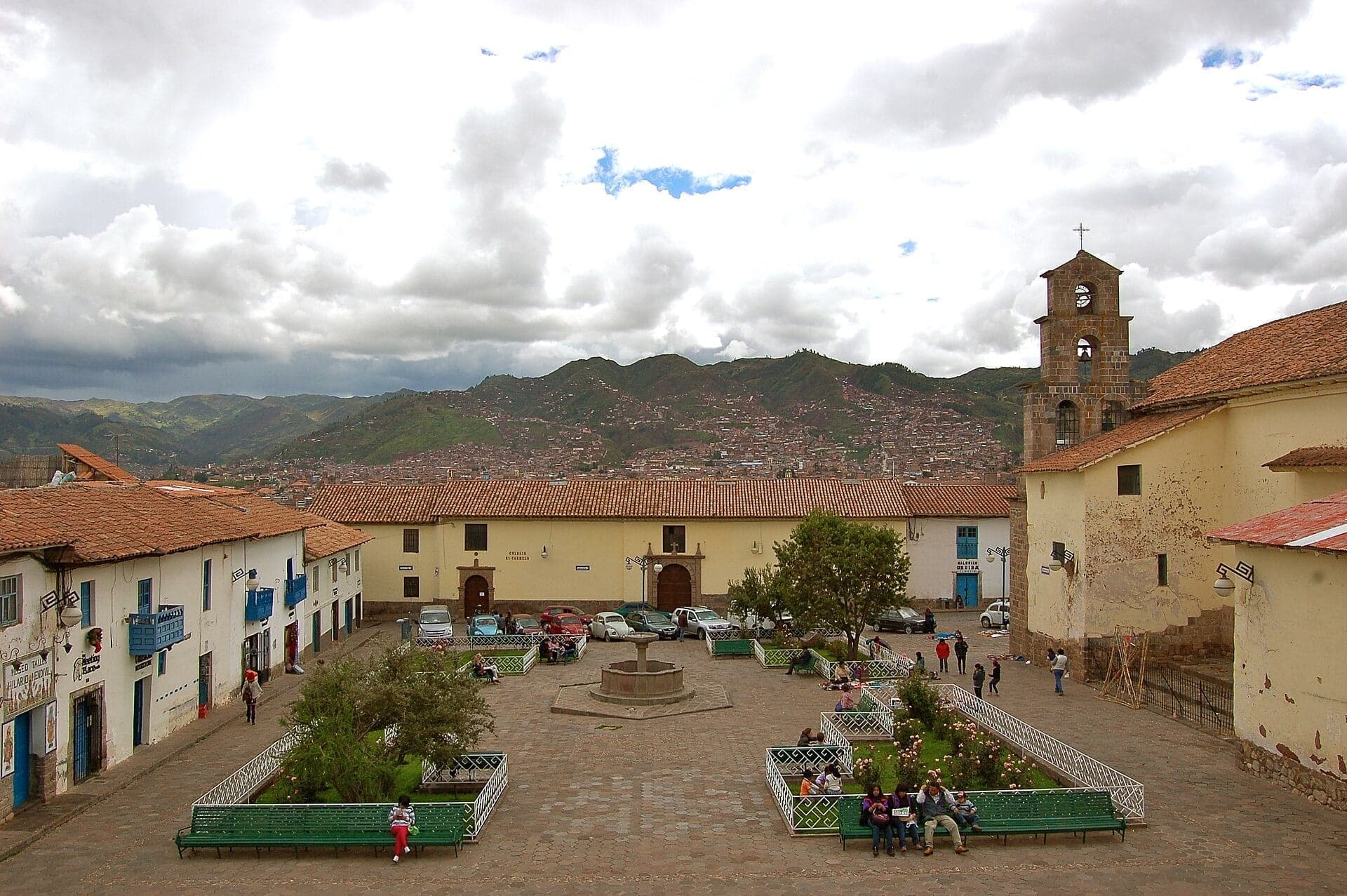
Mendívil Workshop: The Saints with Long Necks
The family workshop where San Blas's long-necked saints are made. Its masters and their neighbors gave the hill its twentieth-century fame.
- 5
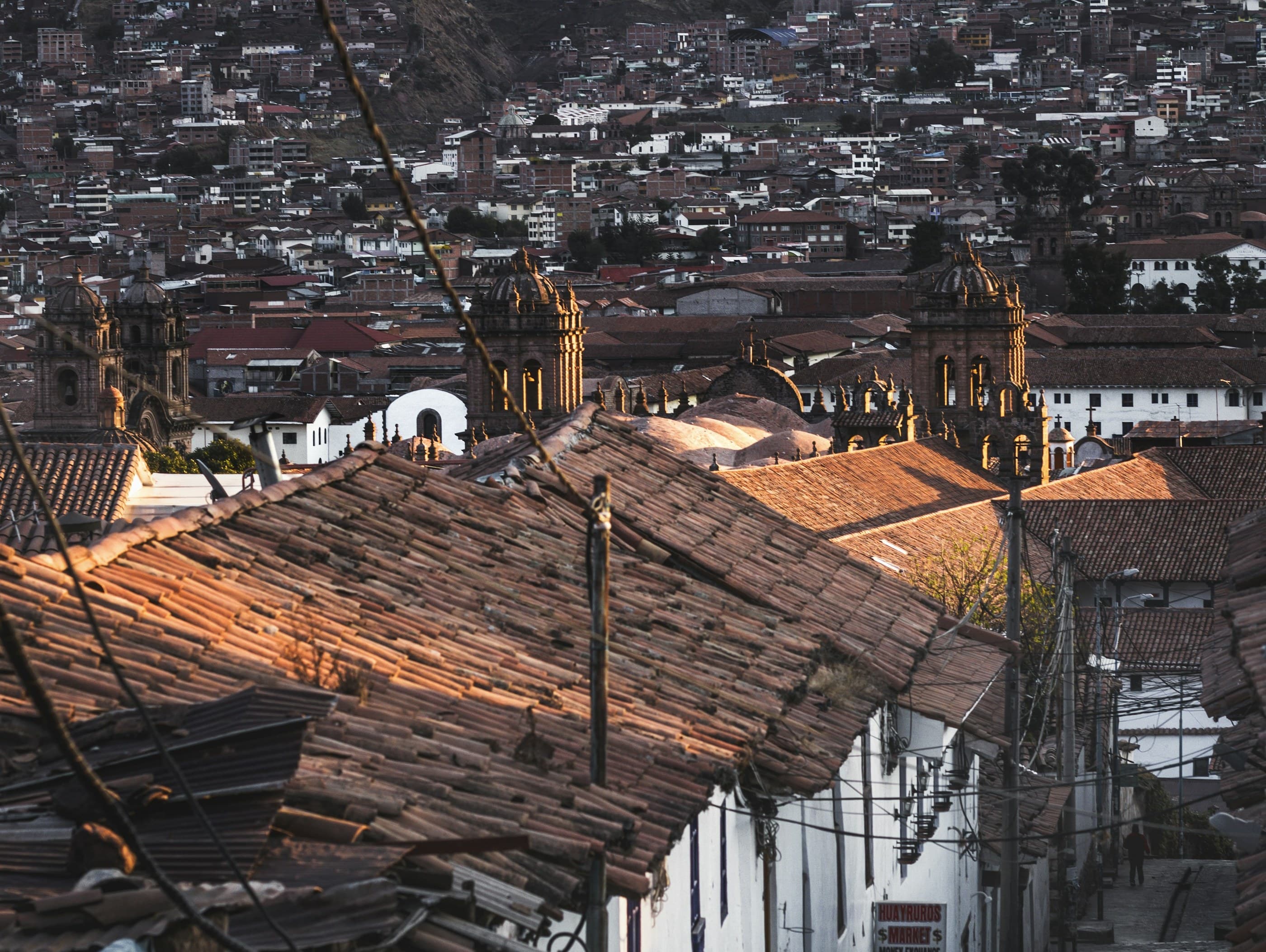
Mirador de San Blas: A Park on Inca Terraces
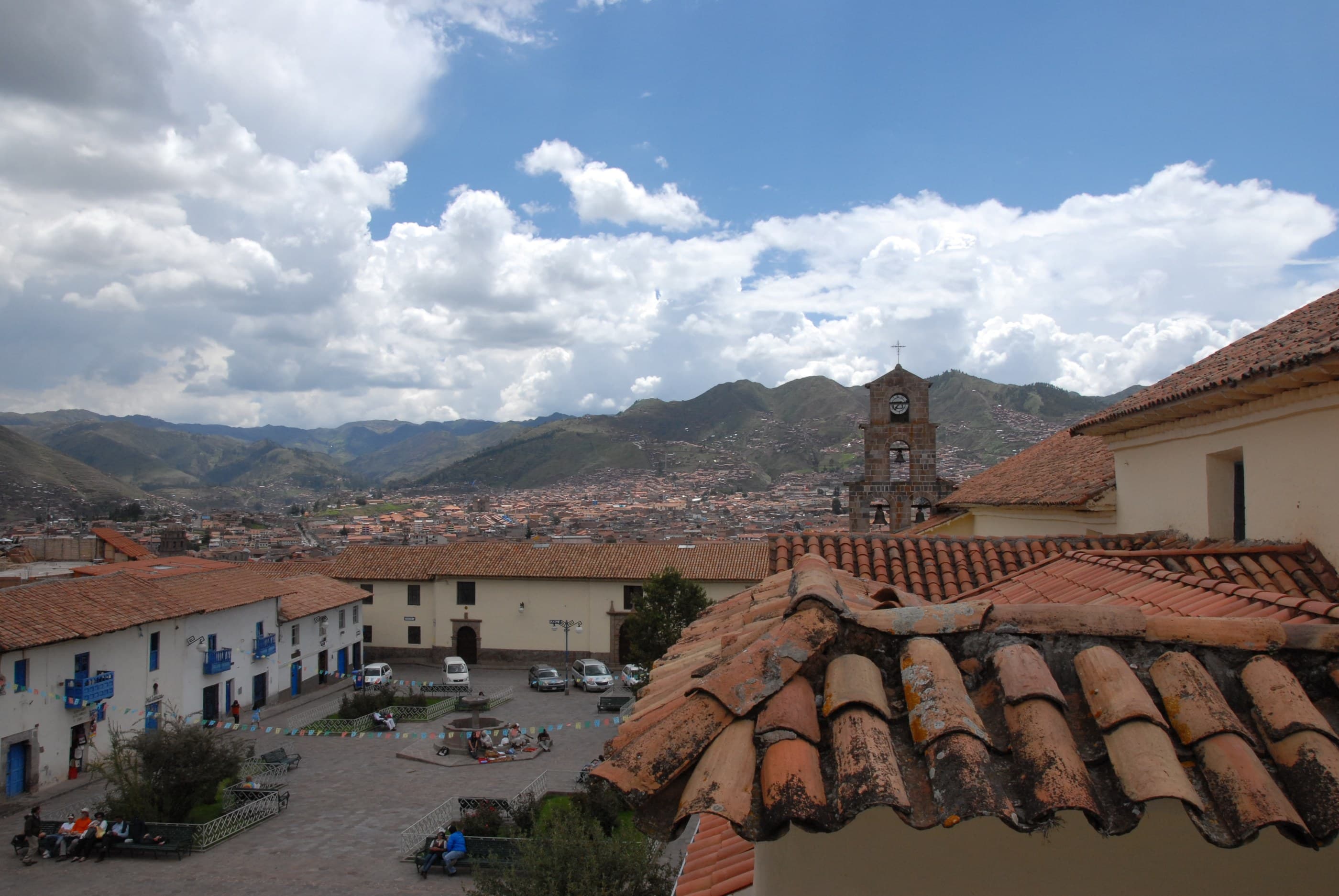
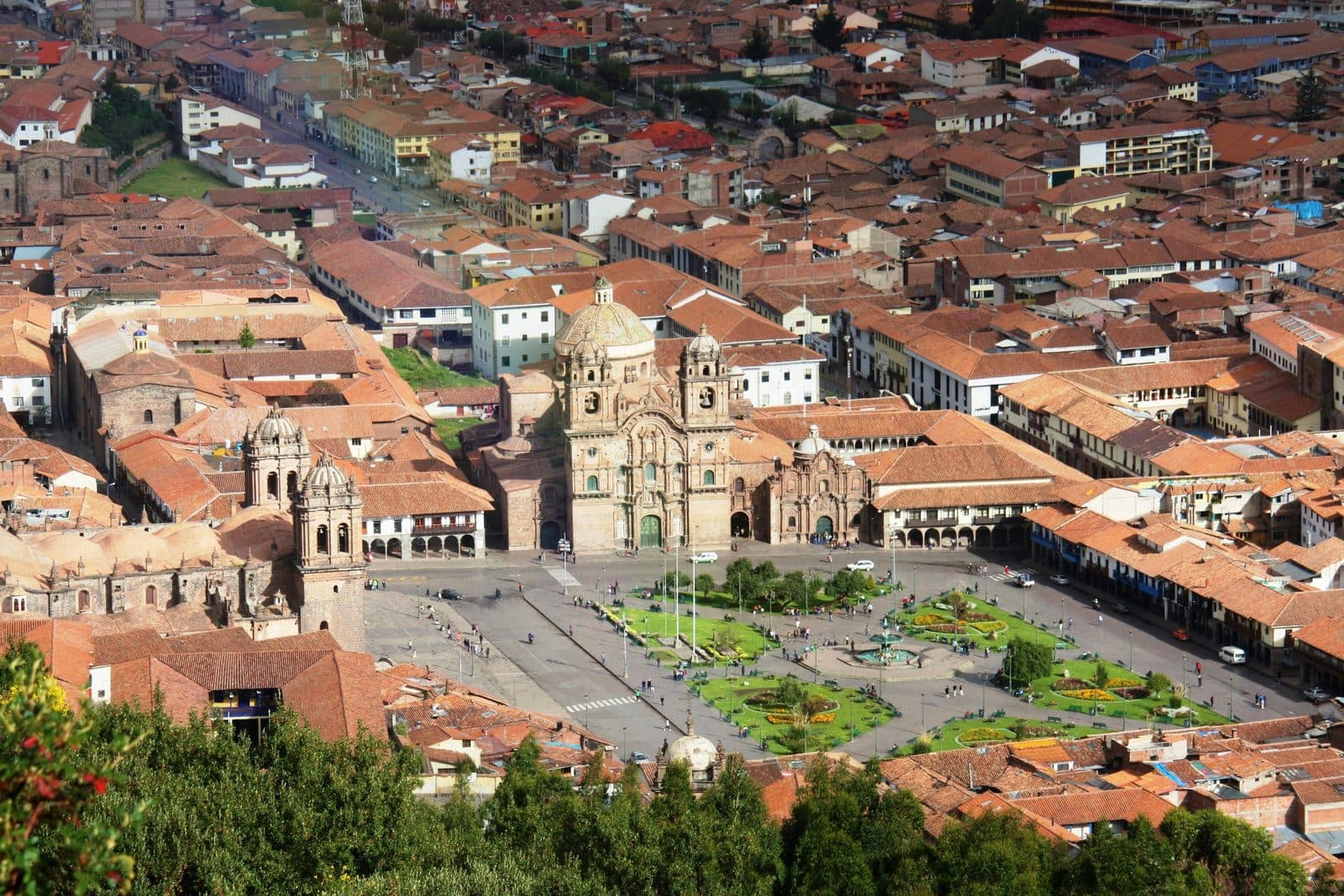
A public park on terraces that follow the Inca lines. Below it, the red tile roofs of Cusco spread out across the valley.
- 6
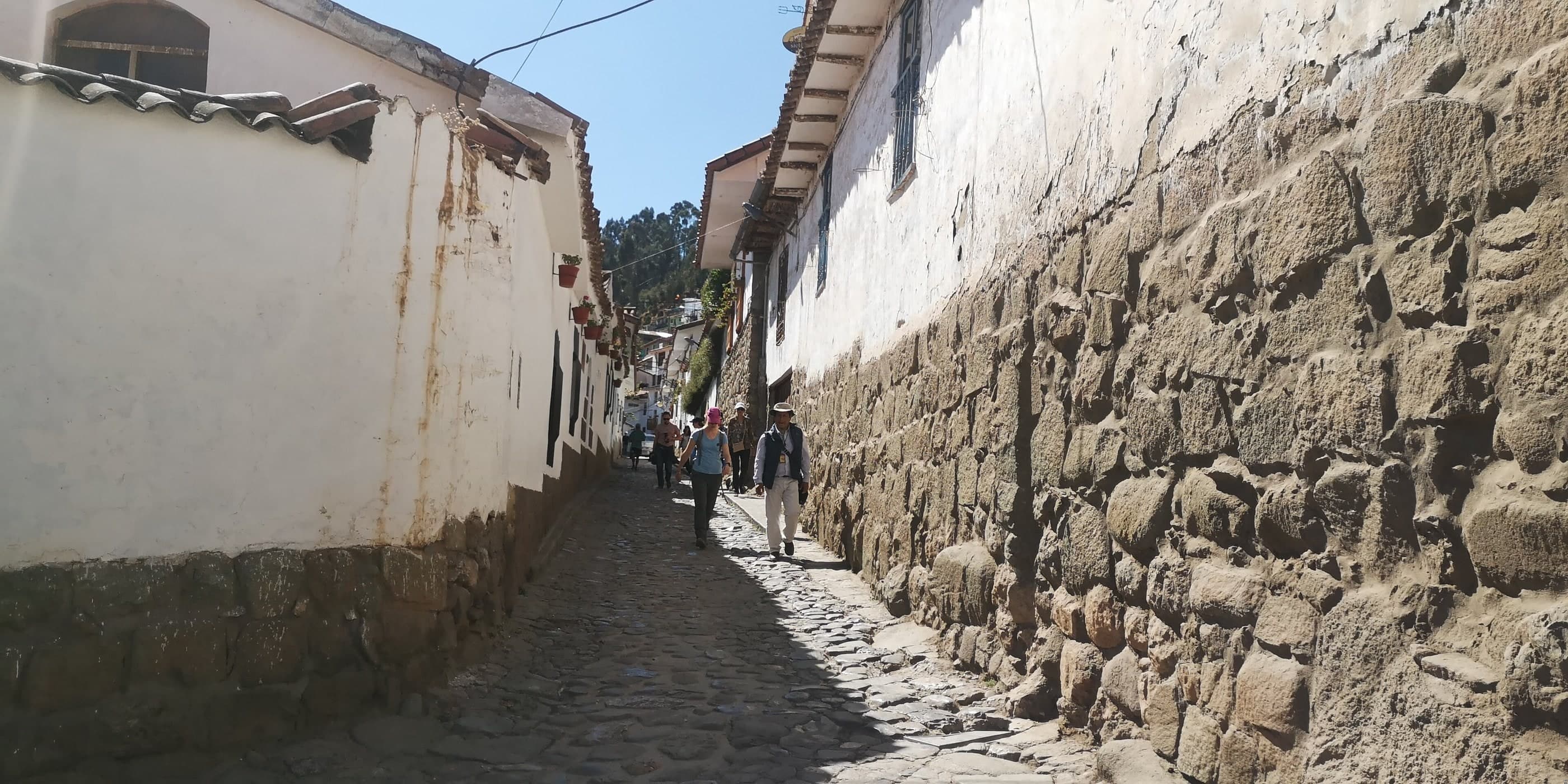
Tandapata: The Street That Shared Its Water
A lane laid along an Inca terrace above the city. Its name recalls neighbors taking the channel's water in turns.
- 7
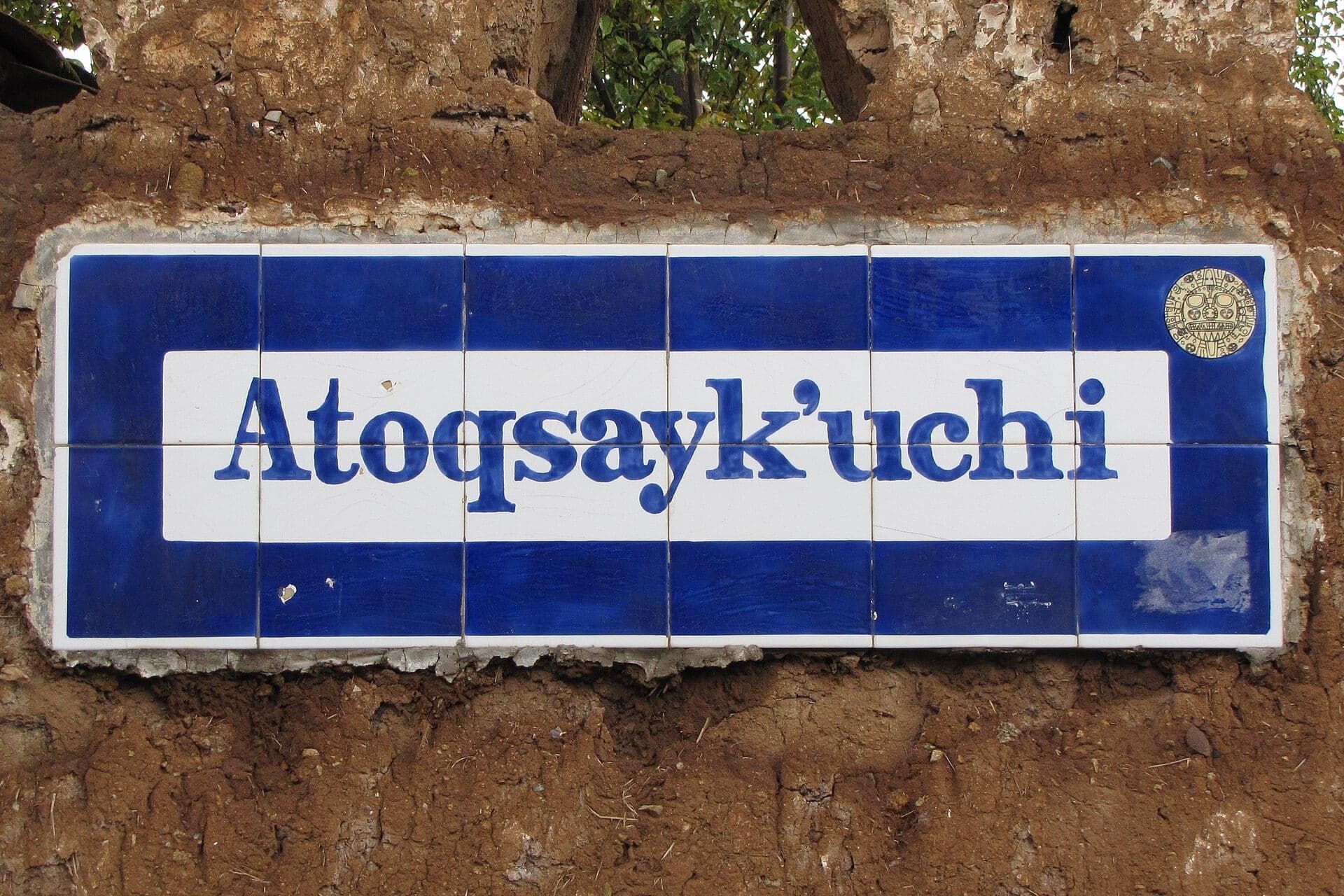
Atoqsaycuchi: The Lane of the Tired Foxes
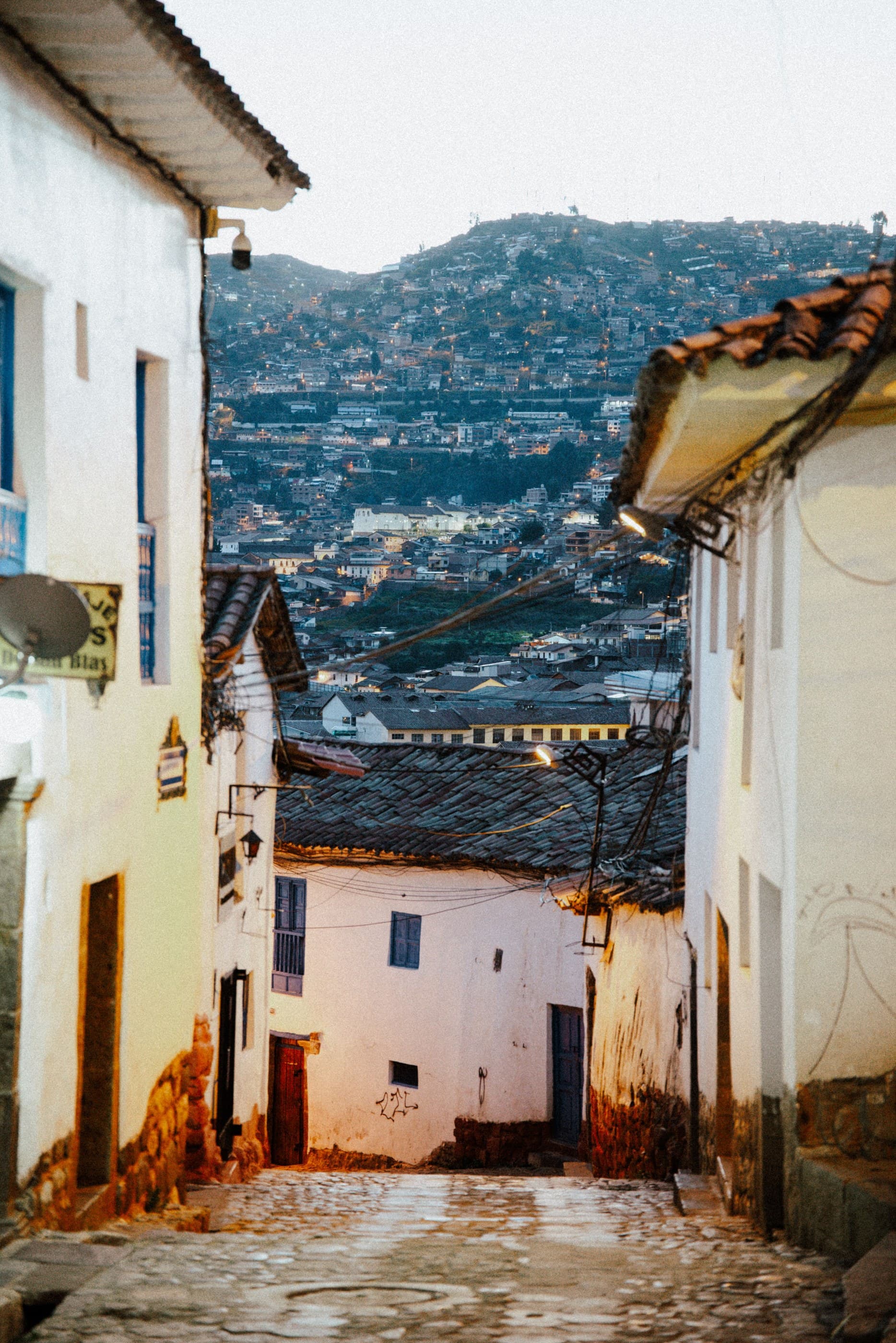
A stepped lane drops steeply from the terraces into the old city. Its name tells of a carved stone of tired foxes.
- 8
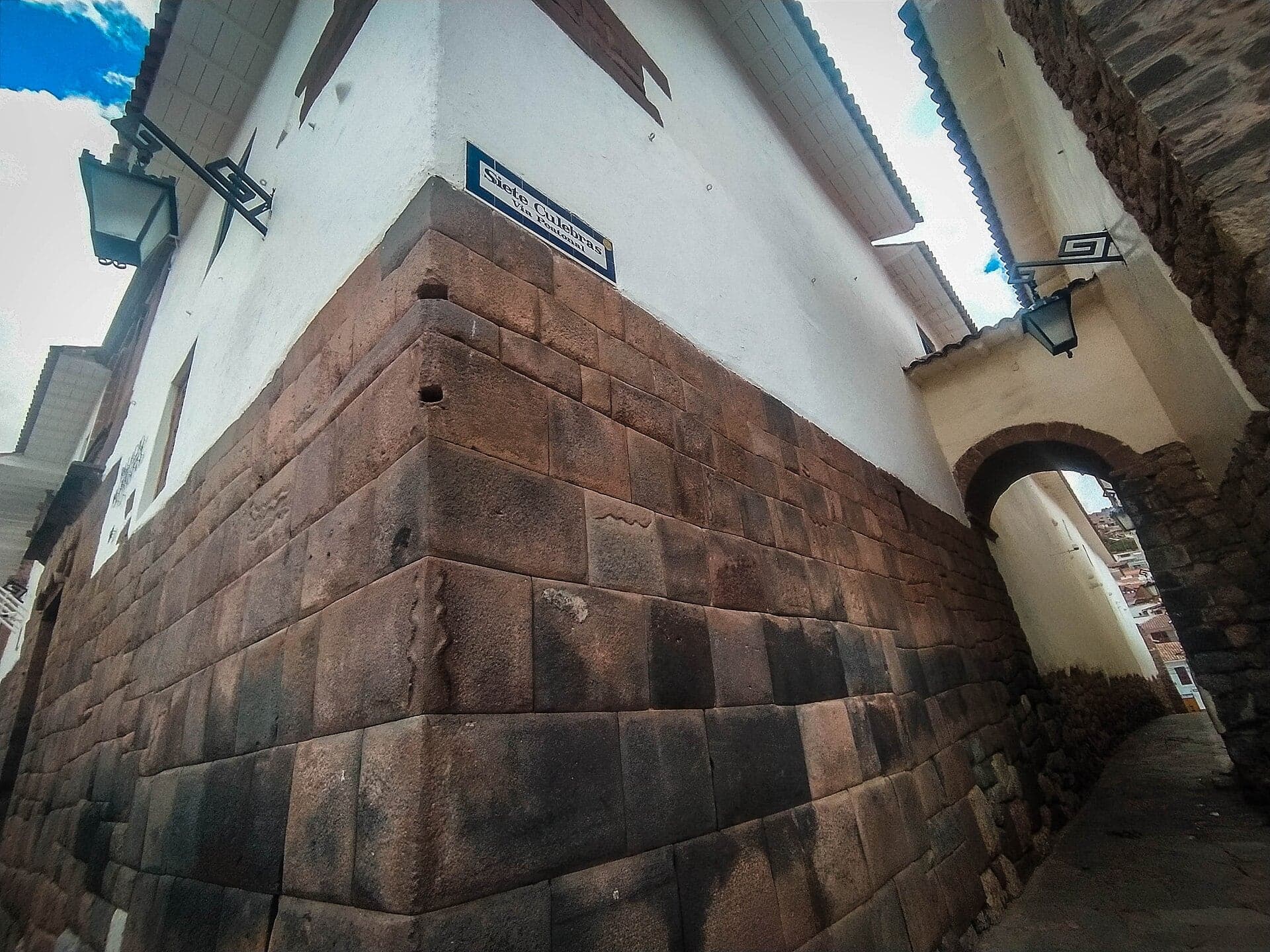
Siete Culebras: The Snakes That Were Mermaids
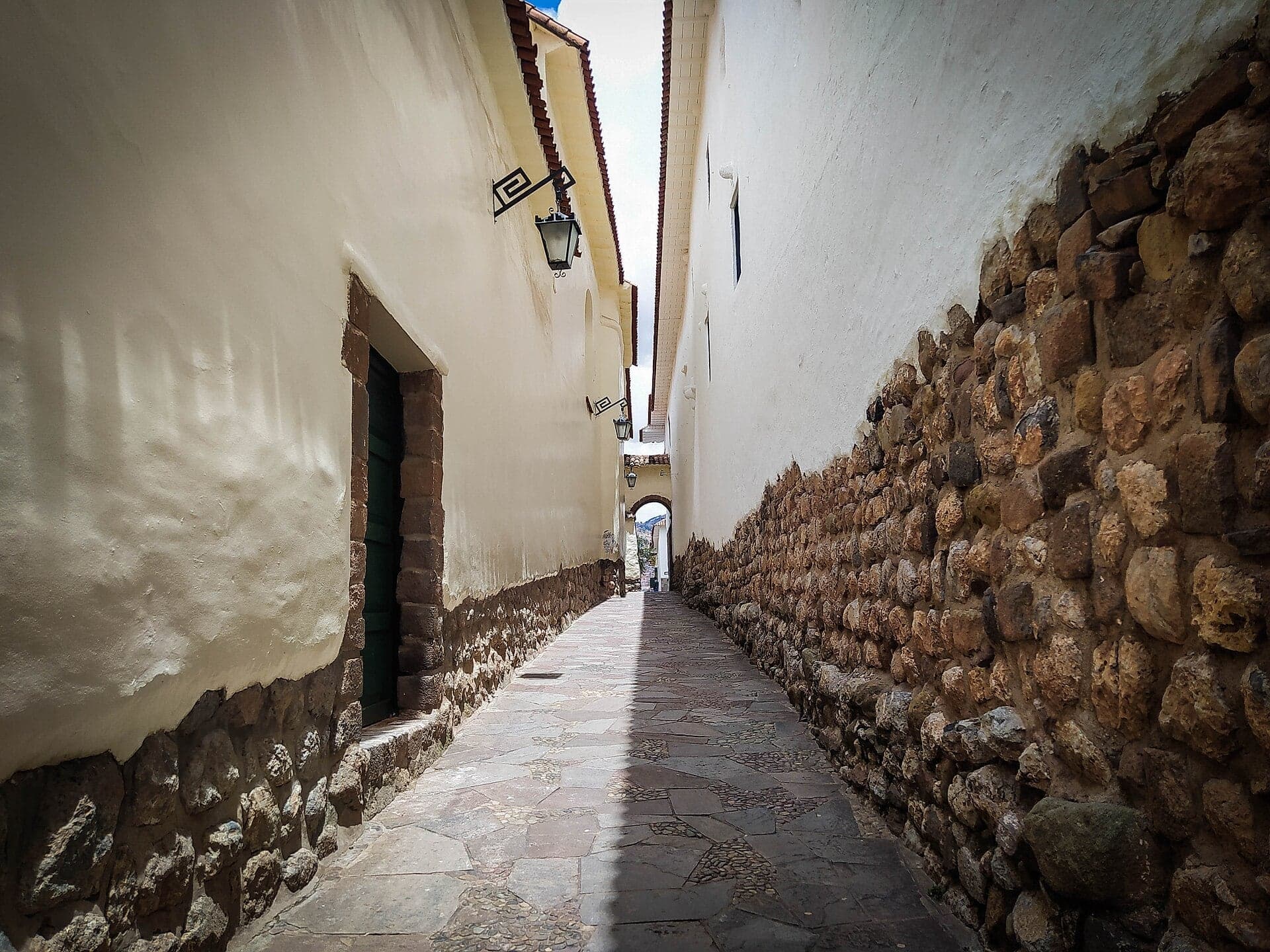
A narrow stone lane leads back to the Plaza de las Nazarenas. At its end, carved mermaids gave the corner its name of serpents.
Details
Best Time to Visit
Morning, in daylight: the climb is cooler, the workshops are opening, and the upper lanes and the viewpoint park are quiet after dark. May to September is usually the dry season, with the clearest views from the viewpoint; from November to March, afternoon showers are common.
Pro Tips
- •Getting to the start: the Plaza de las Nazarenas is a few minutes' walk uphill from the Plaza de Armas, from the corner of the square beyond the cathedral. The streets around it are narrow and steep, so arrive on foot.
- •Cusco sits at about 3,400 metres, where every breath carries roughly a third less oxygen than at sea level. Take both climbs slowly, drink water and rest on the plaza benches.
- •The Church of San Blas charges its own entry. No official price, hours or ticket name could be confirmed online on 6 October 2026: ask at the door.
- •The Museo de Arte Precolombino on the Plaza de las Nazarenas is open every day, holidays included, from 8:00 to 22:00 (official site, checked 6 October 2026). Entry for foreign visitors was S/ 20 when checked in September 2026.
- •To buy from a master's family, look for the Mendívil family workshop on the Plazoleta de San Blas; other family workshops are nearby. Hours vary.
- •The great Inca wall of Hatunrumiyoc and its Twelve-Angled Stone, which you pass on the way to stop 2, are covered on our Historic Center walk.
- •Wear shoes with grip: the walk is stone steps and stepped lanes most of the way.
Safety & Precautions
- •Altitude sickness is a real risk at 3,400 metres. If you have a severe headache, nausea or dizziness, stop, go back down to the lower city and rest.
- •The walk is not step-free: stone stairs and stepped lanes throughout, including the Cuesta's stepped sidewalk, the long Pasñapakana stairway up to the viewpoint, the Siete Angelitos steps and Atoqsaycuchi. Worn stones turn slippery after rain.
- •Calle Palacio, the Cuesta de San Blas, Carmen Bajo, Tandapata and Choquechaca carry cars beside narrow sidewalks. Cross at the traffic lights at the foot of the Cuesta, keep to the side, and take care crossing Choquechaca near the end of the walk.
- •From May 2026 the city was renewing the stepped water feature, paving and gardens of the Plazoleta de San Blas, with areas fenced off; no completion had been reported when checked on 6 October 2026, so parts of the plaza may still be fenced.
- •The lanes above the plaza (Pasñapakana, Kiskapata, Tandapata, Siete Angelitos and Atoqsaycuchi) are quiet and empty after dark, and the viewpoint park may be locked. Walk them in daylight.
- •Keep phones and bags close on the crowded streets and plazas.
Travel advisory: Exercise Increased Caution (Level 2).
Gallery
Related Reading
Go deeper on what you'll see, hear, and walk through.
Read the walk
The full story of San Blas: How a Hill Became the Artisans' Quarter, in words. Prefer to listen? Play it narrated, from home or on location.
Introduction
Cusco, high in the Andes of Peru, was the capital of the Inca empire, and the hill above its main square is San Blas. Ask anyone where the artisans live, and they will point up that hill: galleries, family workshops, painted saints in the doorways. It looks as old as the city. It is not.
Before the Spanish came, the hillside was farmland: stone terraces cut into the slope, with channels to water them. After the conquest it became a parish for the city's native people, who built their own church. The famous workshops came last, in the twentieth century. This walk reads all three layers, in stone, in water and in paint.
Three names come back: Garcilaso de la Vega, who grew up in Cusco and wrote about it; Bishop Manuel de Mollinedo, whose monument marks the start; and Hilario Mendívil, the maker of long-necked saints.
The loop is eight stops and about one point three kilometres, a little under a mile: allow about an hour and a quarter. Cusco sits at about three thousand four hundred metres, so take the two climbs slowly: the steep, stepped street up to the San Blas plaza, then the hardest part, a long stone stairway to the viewpoint. After that it is nearly all downhill, with stone steps most of the way.
In the small Plaza de las Nazarenas, a few minutes uphill from the Plaza de Armas, begin with stop one.
1. Plaza de las Nazarenas: The Quarter of the Schools
Welcome to the Plaza de las Nazarenas, and to the first stop on this walk.
Long before anyone climbed to San Blas for its craftsmen, people came to this plaza for teachers. Garcilaso de la Vega, the son of a Spanish captain and an Inca noblewoman, grew up in Cusco in the fifteen forties and fifties. He wrote of a great quarter whose name he had forgotten, so he called it the quarter of the schools. There, he said, the Inca Roca founded houses of teaching for the amautas, the wise men, and for the poets. The city's heritage records place this plaza in that quarter, and one historian writing in the nineteen fifties believed the old walls along the narrow lane at the plaza's corner belonged to those schools.
And the schools stayed. The building that is now the Monasterio hotel began as the Seminary of San Antonio Abad, founded in fifteen ninety-eight. Its teaching grew into a university from sixteen ninety-six, and Cusco's national university still carries its name. The house at the corner of the lane held a college for the sons of native chiefs, from sixteen forty-four to sixteen seventy-five. The plaza has had at least four names, and the last comes from the Nazarenas, a community of devout women whose rules Bishop Manuel de Mollinedo approved in sixteen ninety-five. His monument stands here in the plaza. You will meet him again at the church of San Blas.
Before you leave, find the corner where a narrow lane comes in, and the carved stone doorway at its mouth. The walk ends there, with a riddle about snakes.
Follow the route downhill and along Hatunrumiyoc, past the great Inca wall and its famous twelve-angled stone, whose story is on our Historic Center walk. At the foot of the Cuesta, the steep street beyond, cross at the lights and climb the stepped sidewalk on the right.
2. Cuesta de San Blas: A Parish of Working People
Climb a few more steps, then move aside by a doorway, out of the way of people climbing, and look up the street. This is the Cuesta de San Blas, and this is about halfway up.
By the city's measure, one side climbs about sixteen metres in about a hundred and sixteen, and the street narrows as it goes, from about four and a half metres wide at the bottom to little more than two at the top. The roadway once had steps too, taken out when cars came. Now look at the houses: white walls, tile roofs, and doors, windows and little balconies painted a deep indigo blue. The city's catalogue counts that blue door after door.
In Inca times this was the way up to a district called T'oqokachi. Garcilaso, who named the quarter of the schools, could not explain it: toco meant window and cachi meant salt, and he admitted he had no idea what a salt window meant. In fifteen fifty-nine a viceroy's order created parishes for the city's native people, and T'oqokachi became the parish of San Blas. The notaries' records name working people: in fifteen eighty-two a shoemaker sold part of his house plot in the barrio, his wife came before the notary to confirm it, and every party to the sale is recorded as indigenous. A little further up, a narrow alley opens on the right: Tocuyeros, named for the neighbors who wove tocuyo, a cotton cloth, on small wooden looms.
The famous San Blas is much younger. The city's records say that from nineteen thirty-four two houses on Hatunrumiyoc, the street of the great wall, began taking in guests, and that the first craft shops there opened only between nineteen fifty and nineteen sixty.
Follow the route on up the stepped sidewalk to the top, where the street opens into the sloping plaza of San Blas. Next, the church.
3. Church of San Blas: Built by Its Parishioners
Walk on into the plaza, then turn until you face the church: the plain whitewashed front with a stepped bell gable, at the plaza's edge. The church charges its own entry; ask at the door. If it is open, it is worth stepping in afterwards.
Before the church, this hill had a temple of its own. A Spanish chronicler wrote that Thunder had a separate temple in this barrio, with a gold statue made by the Inca Pachacutec, who took Thunder as his brother. One historian thinks it probably stood where the church is now.
The parish was founded on this plaza in fifteen sixty-two. The rules split the cost between the Crown, the settlers and the parishioners. Instead the people of the barrio built the church themselves, by minka, the Andean custom of shared work, and it opened on the third of February, fifteen sixty-four, the feast of Saint Blaise.
Now look at the bottom of those walls. The earthquake of sixteen fifty damaged it. Afterwards its adobe walls were reinforced at the base with stone, and you can still see where the stone stops and the adobe begins. Remember that line, stone below and earth above: it comes back up the hill.
Inside is the prize: a pulpit of carved cedar from around sixteen ninety to seventeen hundred. Bishop Mollinedo, whose monument you saw at the start, told the king in sixteen ninety-six that he had commissioned a cedar pulpit full of sculpture, and one historian thinks this is it. Eight carved heretics hold it up, Luther, Calvin and Henry the Eighth among them. It is often credited, though disputed, to the native master carver Juan Tomás Tuyru Túpac, and legend says the skull on top is his own. But a contract he signed in sixteen ninety-four asked for burial in a different church.
Follow the route a few steps on. Next, the workshop of the long-necked saints.
4. Mendívil Workshop: The Saints with Long Necks
Walk on to the Mendívil family's workshop and museum, and stop outside it. If the door is open, you can ask to look in. This is where the famous San Blas comes in. Hilario Mendívil made saints and Virgins with long, curving necks, built up from glued cloth, finished with…
Full narration for this stop unlocks with the tour.
5. Mirador de San Blas: A Park on Inca Terraces
Take a moment to get your breath back. That was the steepest climb of the walk, and from here on it is nearly all downhill. When you are ready, find a spot at the edge of the lane and look out over the park below and the roofs beyond it. This is the Mirador de San Blas. Its…
Full narration for this stop unlocks with the tour.
6. Tandapata: The Street That Shared Its Water
Listen first, and keep your eyes on the steps. The street at the foot of this stairway once had water running down its middle, and its name tells how the neighbors shared it. When you reach the bottom, stop at the corner, where Siete Angelitos crosses Tandapata. This street…
Full narration for this stop unlocks with the tour.
7. Atoqsaycuchi: The Lane of the Tired Foxes
Walk on to the head of the long stone stairway that drops into the old city, and stop at the top. This is Atoqsaycuchi. It falls about seventeen metres in seventy, and the house fronts step down beside it. The city classes it as an entrance street: coming down it, the historic…
Full narration for this stop unlocks with the tour.
8. Siete Culebras: The Snakes That Were Mermaids
This narrow lane is Siete Culebras, Seven Snakes, and it leads back to where you started. Walk slowly toward the plaza. The street you have just left, Choquechaca, is named in the city's records for three stone-slab bridges that two Inca noblemen, the Choque brothers, laid over…
Full narration for this stop unlocks with the tour.
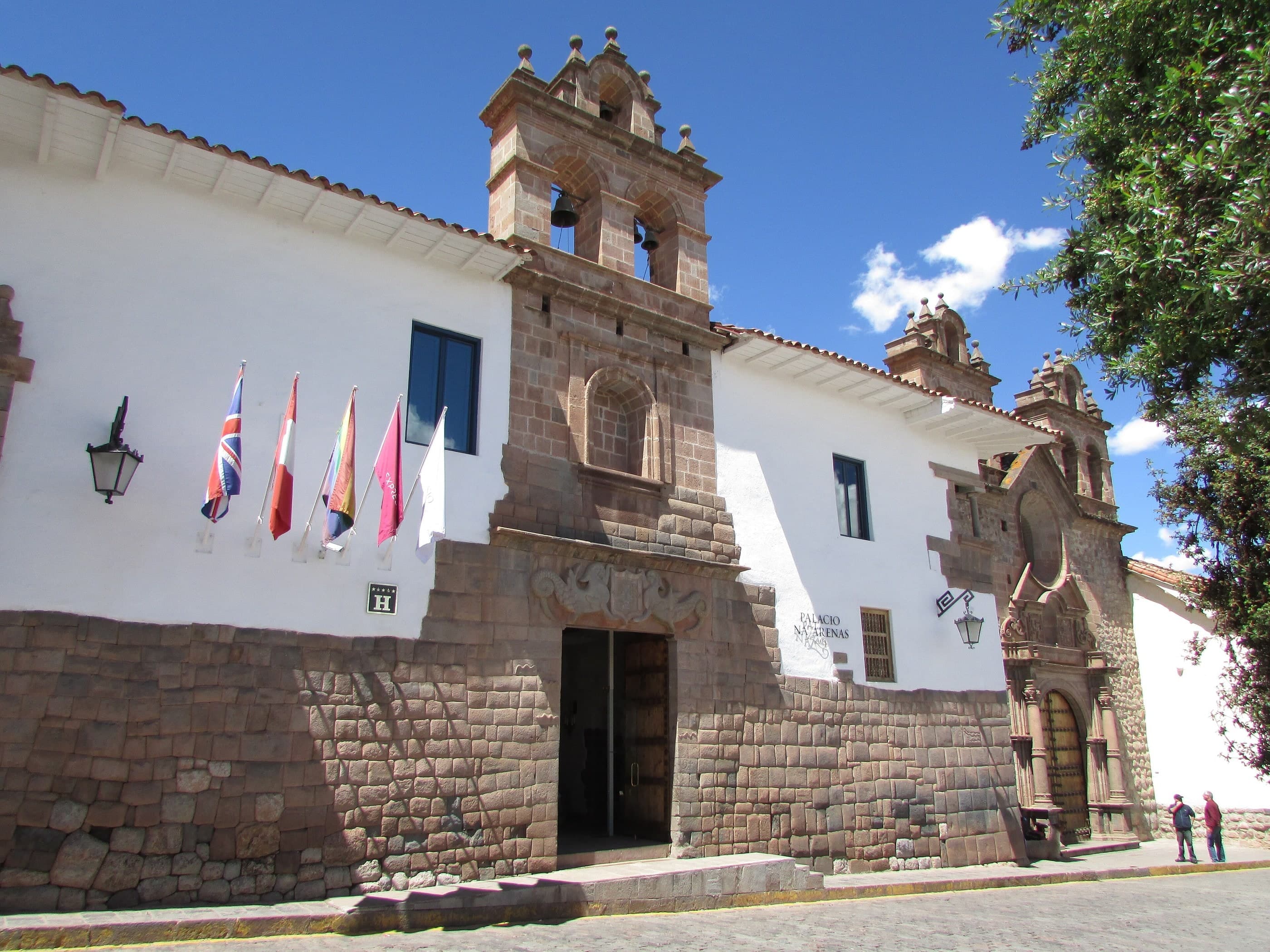
- "Plazoleta de las Nazarenas in Cuzco, Peru" — Pedro Szekely from Los Angeles, USA, CC BY-SA 2.0 · source
- "Monasterio de las Nazarenas, Plaza de las Nazarenas, Cusco, Peru" — VasenkaPhotography, CC BY 2.0 · source
- "Templo de San Blas, located in Cusco, Peru, is a charming colonial church in the bohemian ..." — xiquinhosilva, CC BY 4.0 · source
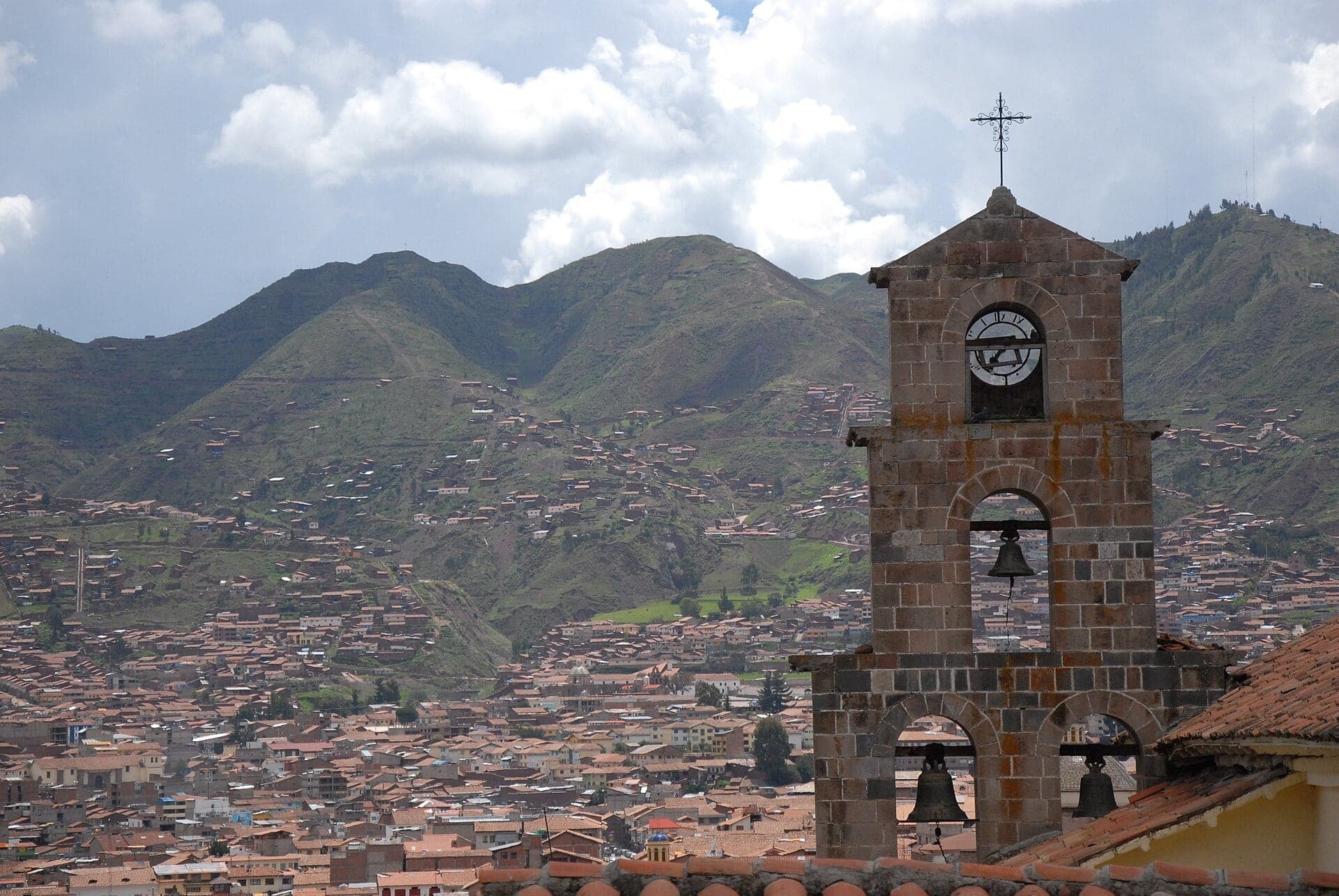
- title "Techos San Blas" ("San Blas roofs") — Ursula Paulina Uriarte Espejo, CC BY-SA 4.0 · source
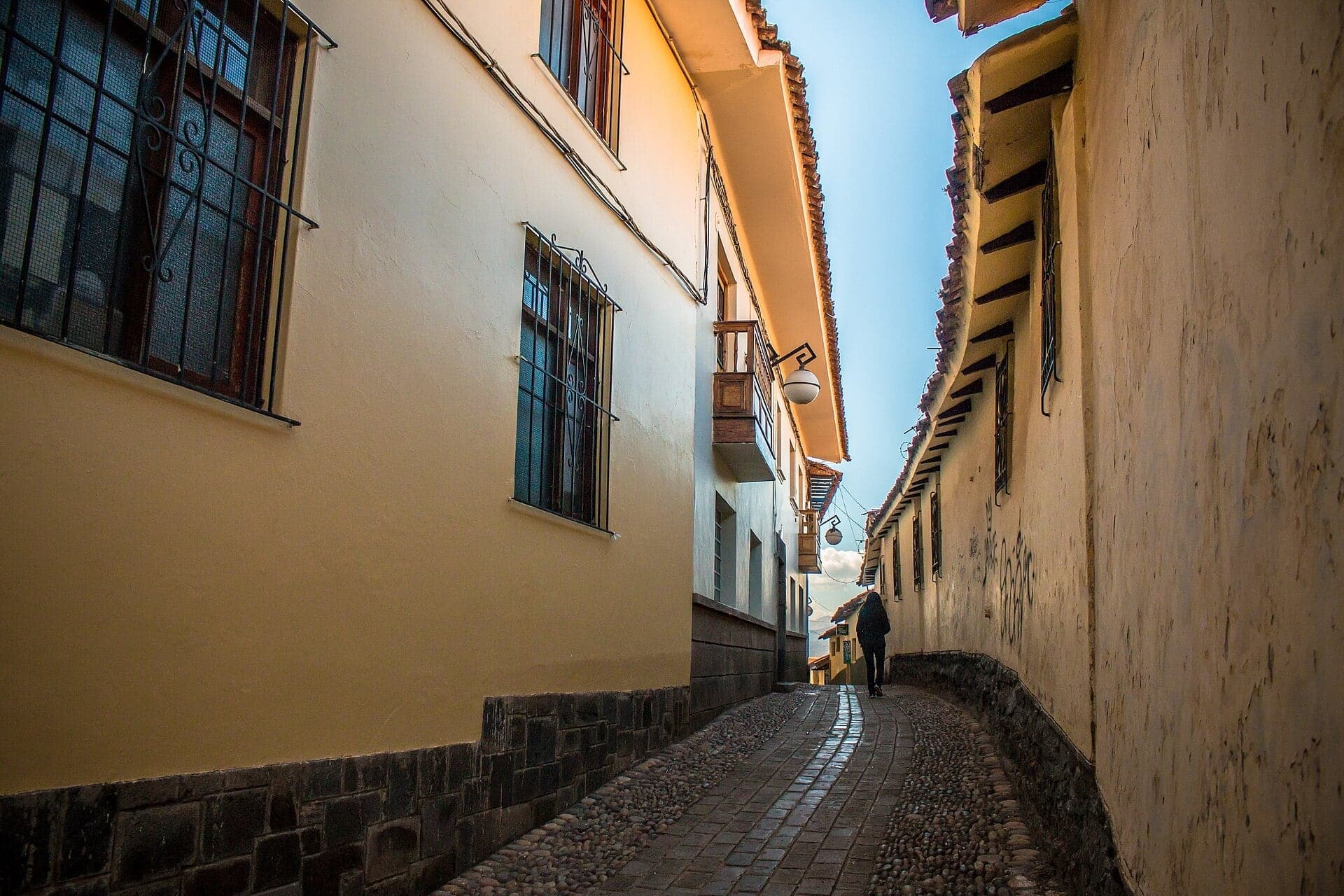
- title "Calle Tandapata" (monument-ID template) — Chalisimo5, CC BY-SA 4.0 · source
Images may be cropped or resized. Other photos via Unsplash and Pexels.