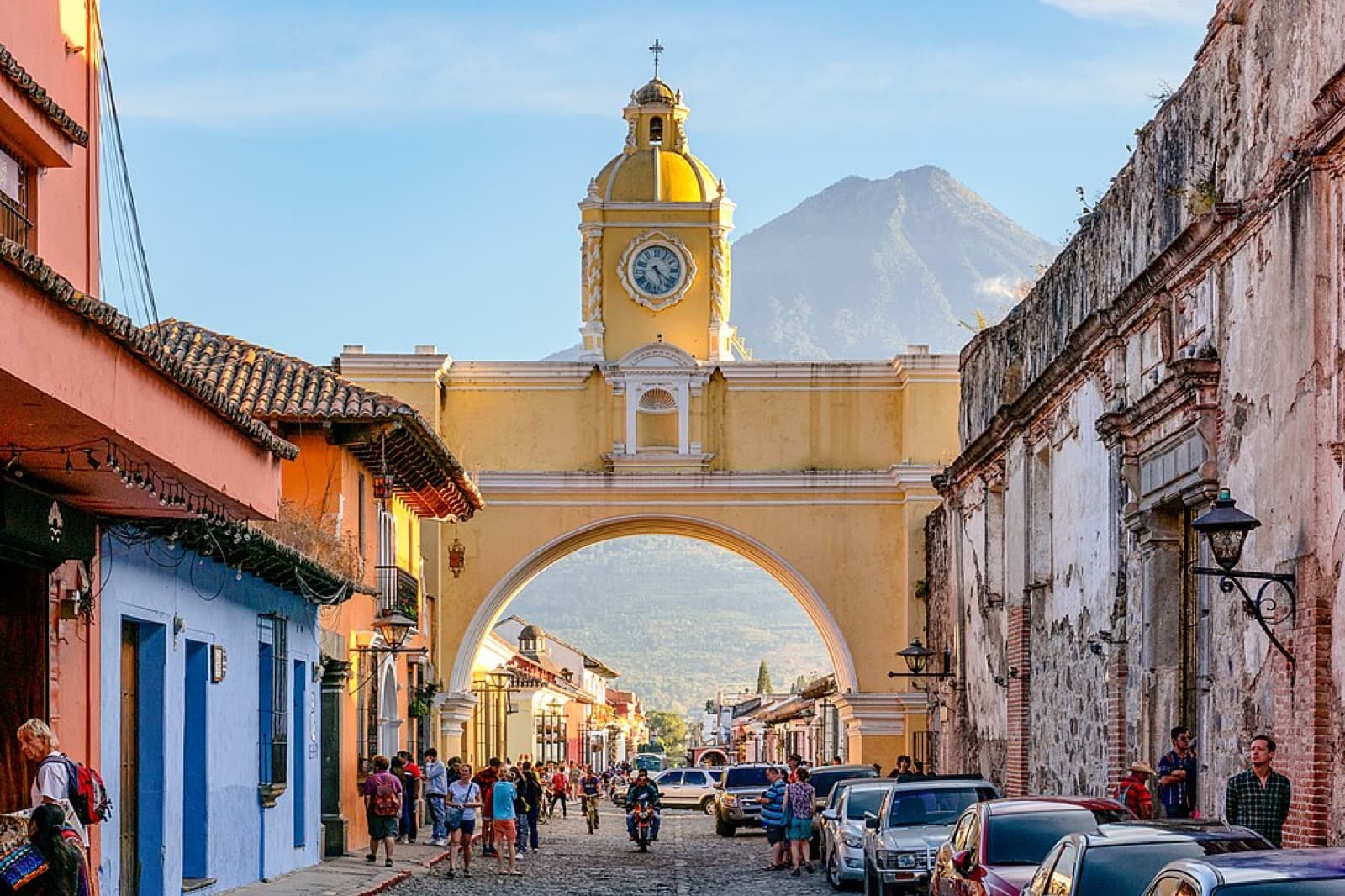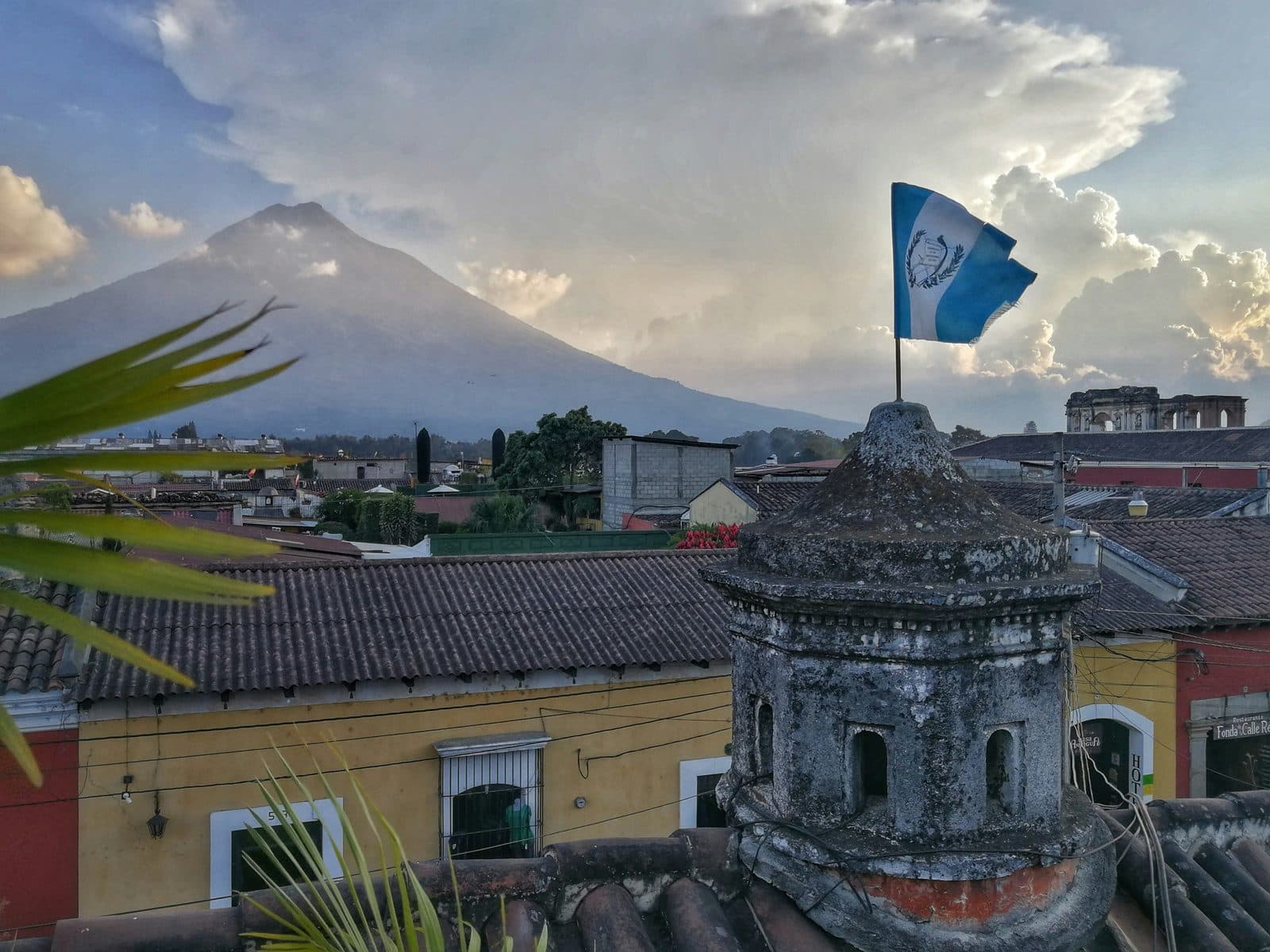
The Historic Center walk hits eight stops along the colonial spine: Parque Central, the cathedral, the Palacio de los Capitanes Generales, the Arch of Santa Catalina, La Merced, Capuchinas, the Hospital de San Pedro, and San Francisco el Grande. The route is roughly a flattened figure-eight, two and a third kilometres, ninety minutes if you stop and look. The audio gives you the headline at each stop. The page you are reading is the part the audio does not have time to be.
The plaza is older than every building on it
The Spanish founded the city on March tenth, 1543, and laid out the plaza on the same day. The Laws of the Indies told them how: cathedral to the east, government palace to the south, city hall to the north, commerce on the fourth side. The four mermaids on the central fountain were carved by Diego de Porres in 1737. They have been pouring water for almost three centuries.
Almost everything around that plaza has been rebuilt. The cathedral on the east side is in its second incarnation; the open-air ruin behind it is what the 1773 earthquake left of the first. The Palacio you stand under at Stop 3 has been rebuilt twice. The grid below your feet is the only piece of urban form continuous from 1543 to today. What you walk on is older than what you walk past.
Hermano Pedro and the line that did not break
Hear a stop from this walk
San Francisco: The Saint at the Tomb
The tour plants Hermano Pedro in the introduction and pays him off at Stops 7 and 8. The audio gives you the dates. Here is the texture.
Pedro de San José de Betancur was born in Tenerife, in the Canary Islands, in 1619. He arrived in Guatemala on February eighteenth, 1651, with nothing. He stood in the Franciscan bread line, a beggar at the door of the same order whose church you reach at Stop 8. He tried to study at the Jesuit seminary at Stop 3 of the Architecture tour and failed at the books. What he did not fail at was looking around.
In 1658, he founded a hospital, a hostel, and a school for the poor. He used his own labour, his own begging, and whatever he could gather. He created the Bethlehemite Order, the first male religious order founded in the Americas. Not imported from Spain. Not mandated by Rome. Built here, from one man's refusal to accept that poverty was someone else's problem.
He died on April twenty-fifth, 1667, at the age of forty-eight. The canonisation process took three hundred and thirty-five years. Pope John Paul the Second declared him a saint on July thirtieth, 2002, in Guatemala City: the first Central American saint in Catholic history.
The thing the tour does not have time to spell out is what survived him. The Obras Sociales del Santo Hermano Pedro, the institutional descendant of the hospital he opened in 1658, is still operating. The building at Stop 7 of the Historic Center walk is still a working hospital. Three hundred and seventy years of unbroken service. The man who chose poverty produced the most durable institution on the tour.
The grandeur and the persistence
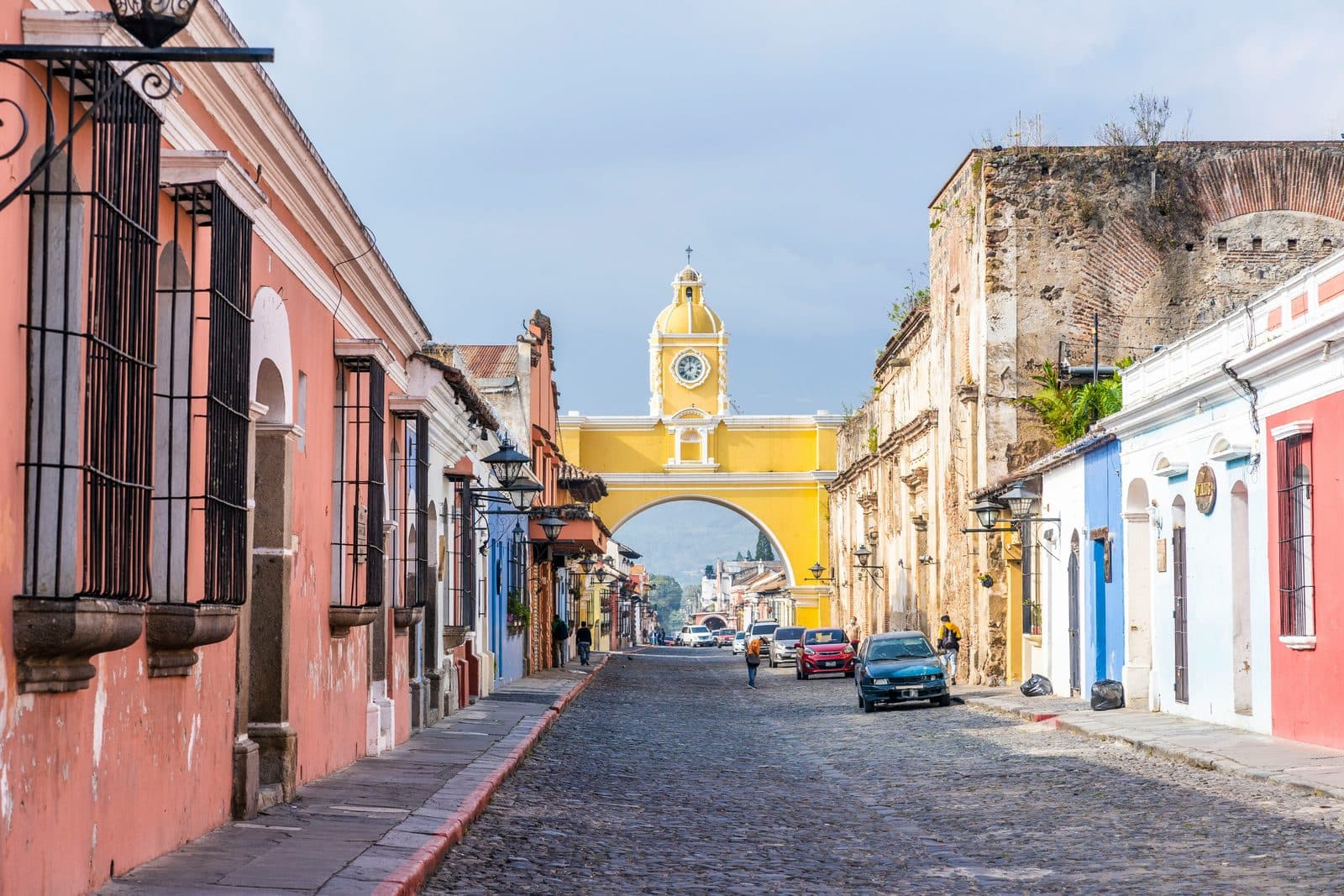
Stops 1 through 6 walk you past what the powerful built. The cathedral was designed to project the wealth of the Church in the New World. The Palacio was the seat of a Captain General whose authority ran from southern Mexico to Costa Rica. La Merced was a mercedarian convent with the largest fountain in the city. Capuchinas was a cloistered order endowed by the wife of a Captain General. The Arch of Santa Catalina was built so cloistered nuns could cross a street unseen by the public. Power, in 1773, looked like all of this.
Then the earthquake happened, the Captain General left, the Archbishop was eventually forced out, and the powerful followed. What stayed was the rest of the city.
The population of Antigua had reached sixty to sixty-five thousand at its peak. After the move, it collapsed. The historian Christopher Lutz spent decades documenting who remained: indigenous families, mestizo artisans, free Africans, the mixed-race majority that by the early 1700s had become the demographic core of the city. Antigua did not reach thirty thousand again until the 1990s. For two centuries, this was a diminished town living among monumental ruins.
Those residents maintained the Semana Santa processions, documented from the very year the city was founded, that have never stopped. They washed clothes at the Tanque de la Unión, the public lavadero added in 1853. They lived in adobe rooms in the corners of patios where Captains General had once held audience. The colonial city you walk today is a museum because the people who lived in it for two centuries did not have the money to update it. Preservation by absence of resources, not by decree.
What the route is built to show you
The tour walks the powerful version of the city in the first six stops, then pivots. Stop 6 (Capuchinas) is the dowry-free convent: a cloistered order that took poor novices, paid for by an early state donor. Stop 7 is Hermano Pedro's hospital, still operating. Stop 8 is the church where his tomb sits, opened to public viewing in March 2025.
The structure of the route is an argument. The first six stops show what the colonial order intended Antigua to be. The last two show what survived. The grandeur is the ruin. The mission is the working hospital.
What to do with the rest of your day
The Architecture tour treats this same spine as a working laboratory of seismic engineering, with Joseph and Diego de Porres as the recurring characters. The Preserved by Catastrophe tour extends the loop to eleven stops and adds Santo Domingo (where a luxury hotel absorbed a colonial ruin) and Tanque de la Unión (the public lavadero, monument to the people who stayed). If the Historic Center walk left you wanting more of one specific thread, those two specialist tours pull it.
Otherwise: walk anywhere. The Renaissance grid is forgiving. Every block carries a working parish on one side and a ruin on another. The cracks in the walls range from 1773 to last month. The city is still negotiating with the earth, and you have already learned how to read its answers.
Ready to experience it?
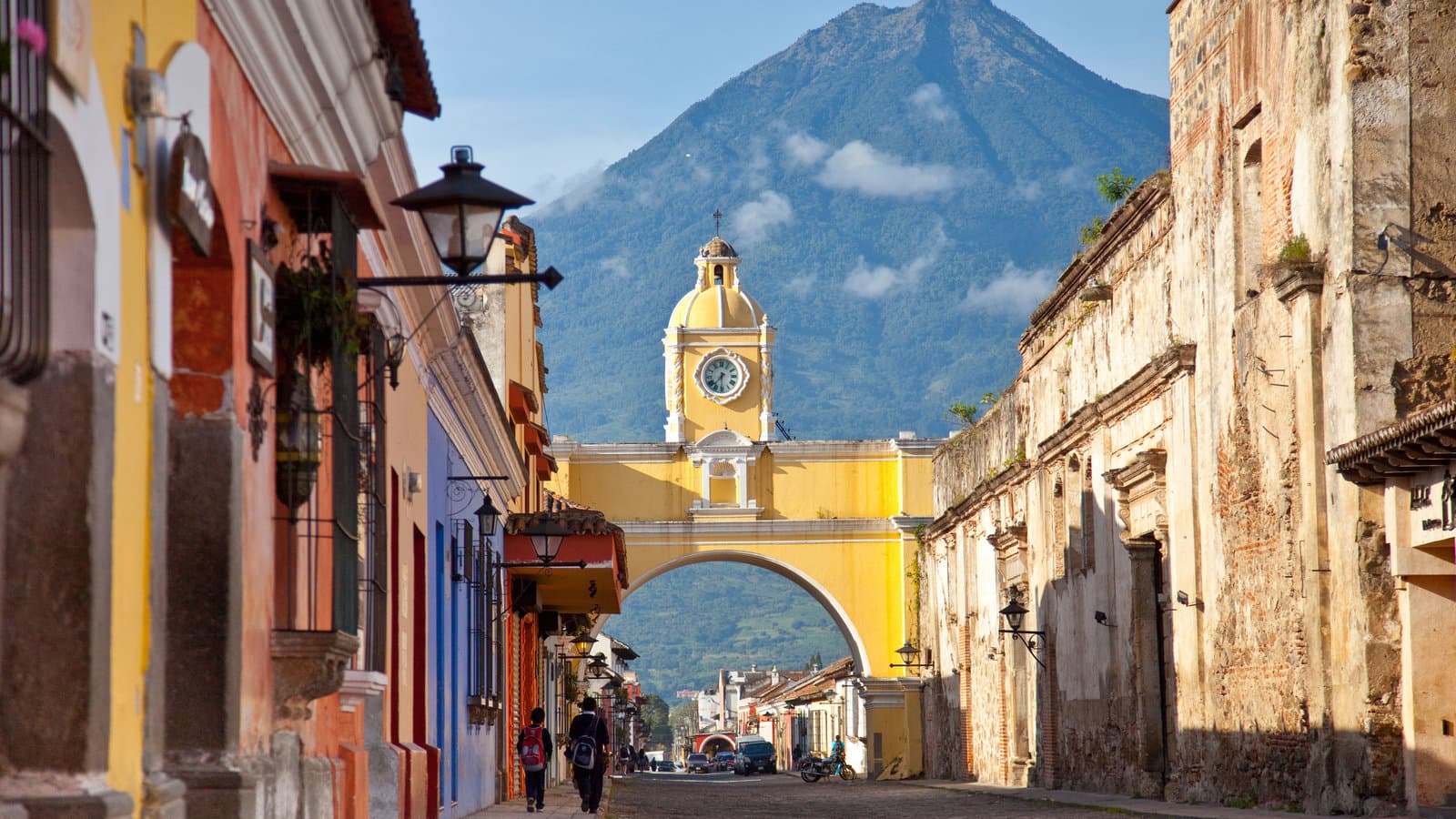
Historic Center: Preserved by Catastrophe
105 min · 3.69 km · easy
More from Antigua
Explore more at your own pace.
Antigua Guatemala Travel Guide: How Many Days, Getting There, When to Go (2026)
Best Self-Guided Walking Tours in Antigua Guatemala (2026)
One Day in Antigua Guatemala: A Walkable Itinerary (2026)
What to Eat in Antigua Guatemala: A Food Guide (2026)
The Porres Dynasty: Three Generations of Earthquake Architecture