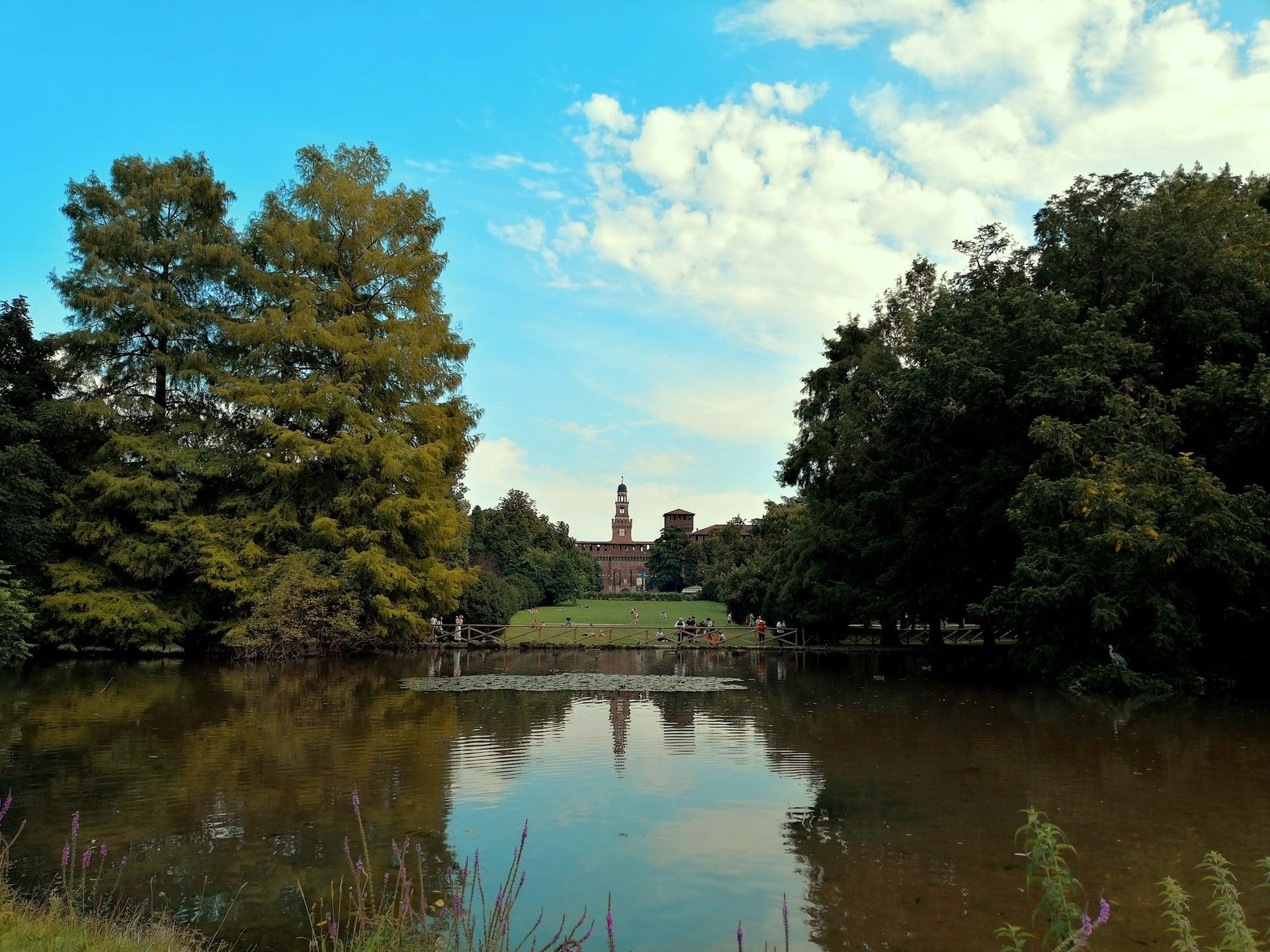
Milan's castle and park from free ground: Napoleon's unbuilt Foro Bonaparte, the rebuilt Torre del Filarete, the castle's three free courtyards, the Porta del Barchio, then Parco Sempione's aquarium, Arena, Napoleon III, the mermaid bridge and the Torre Branca, ending at the Arco della Pace on Corso Sempione.
Start · Foro Buonaparte
DirectionsStops
- 1
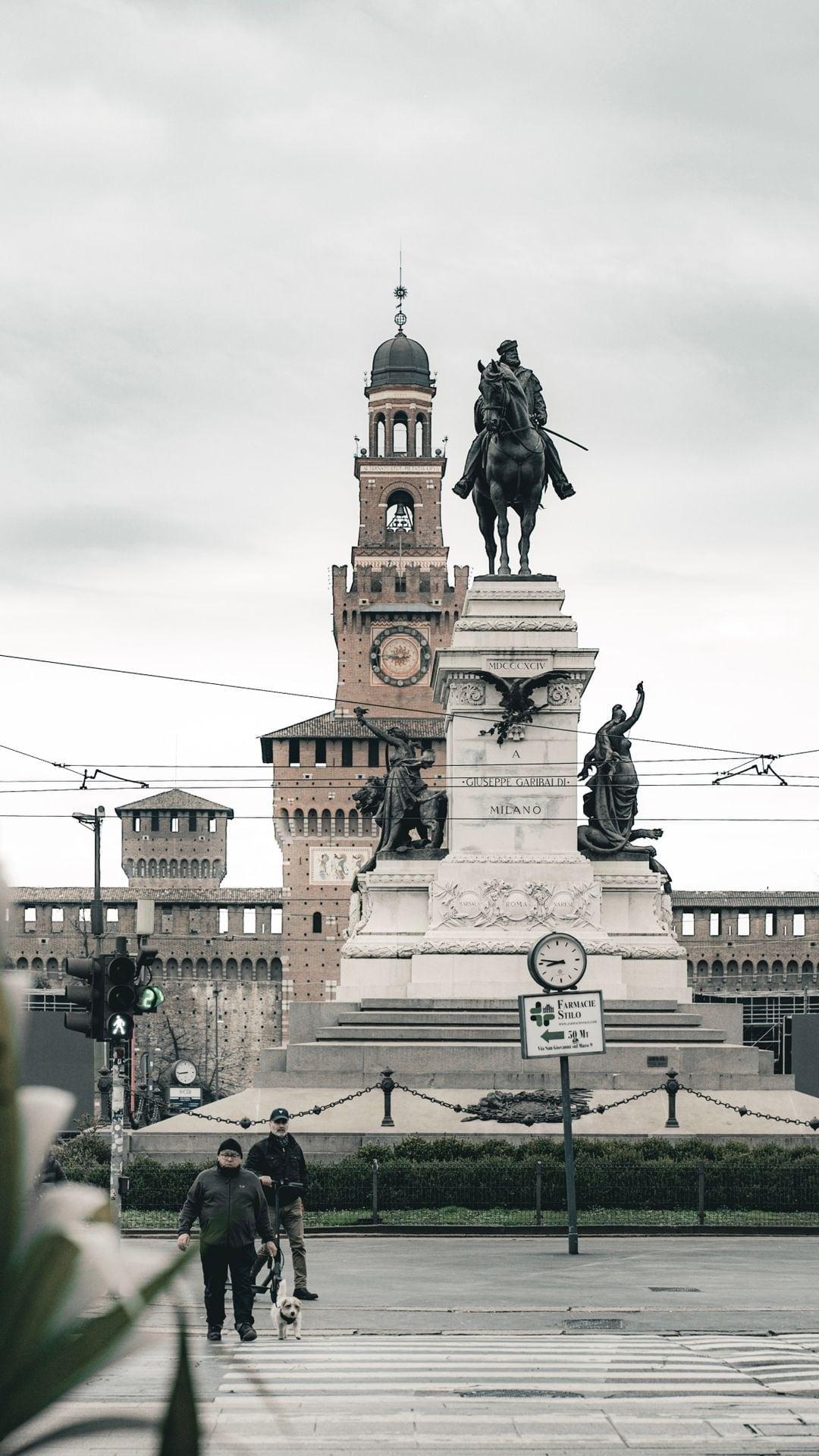
Foro Buonaparte
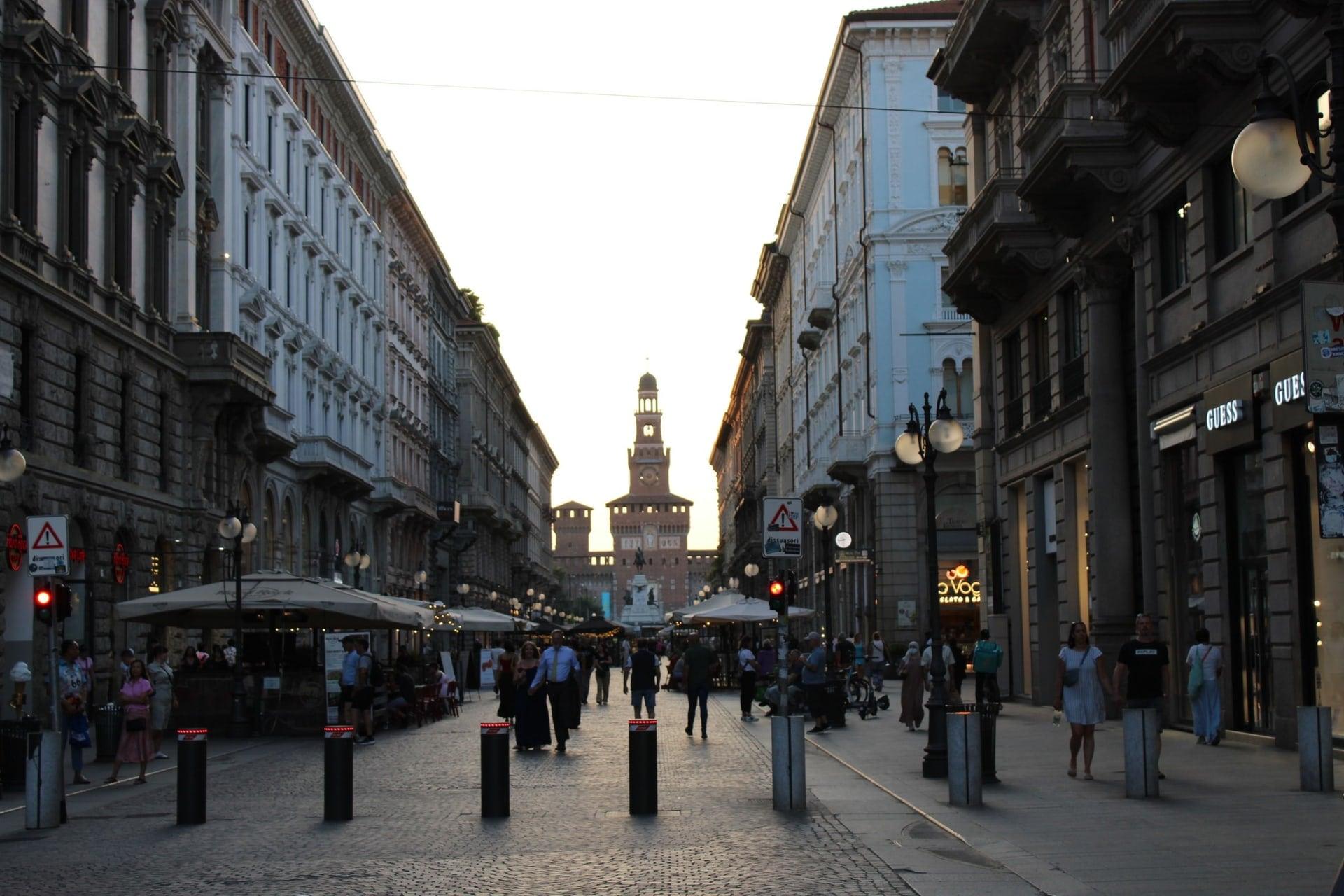
A square that was never built. Via Luca Beltrami at Largo Cairoli, inside the curve of Napoleon's planned Foro Bonaparte, with the Torre del Filarete straight ahead.
- 2
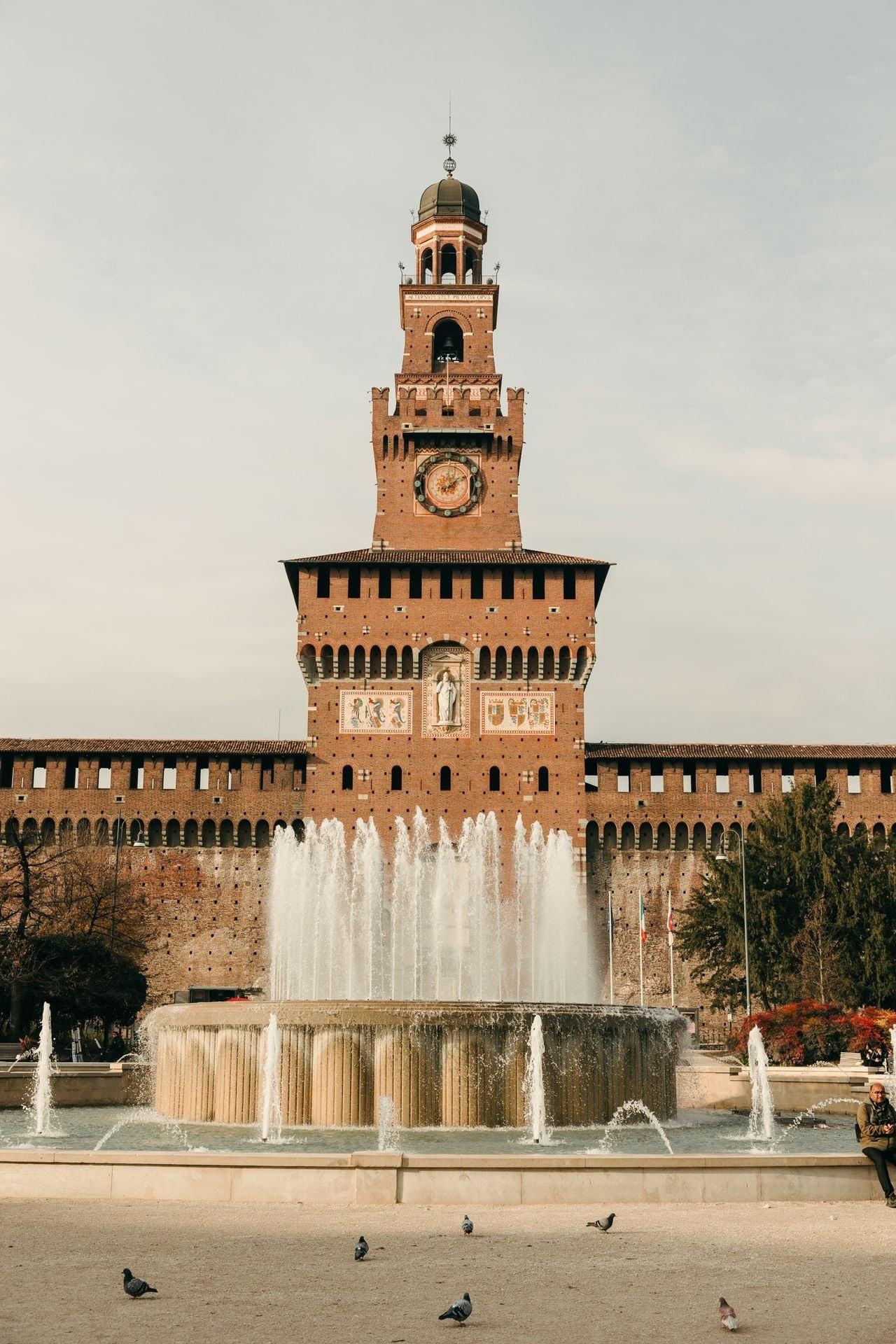
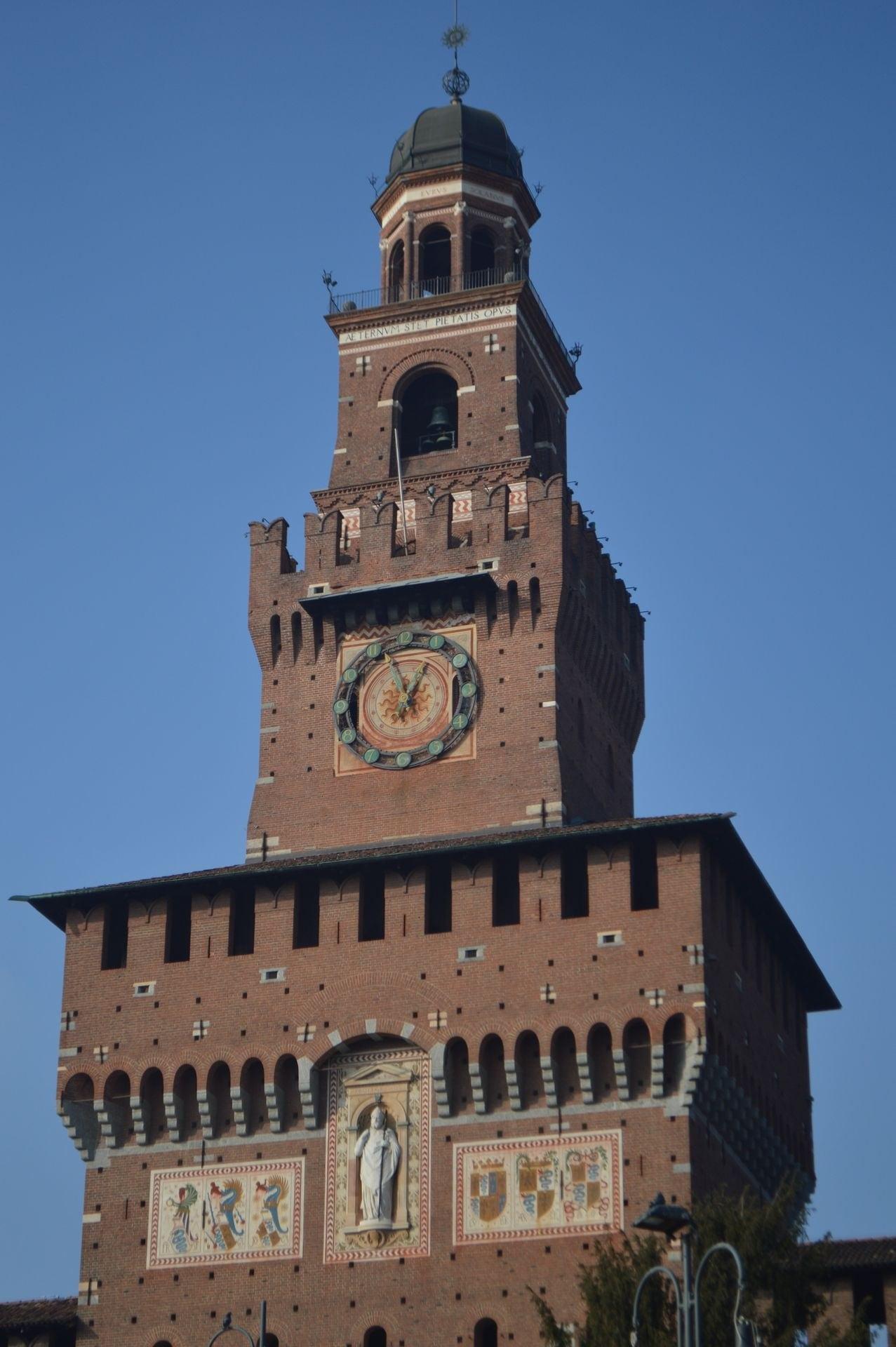
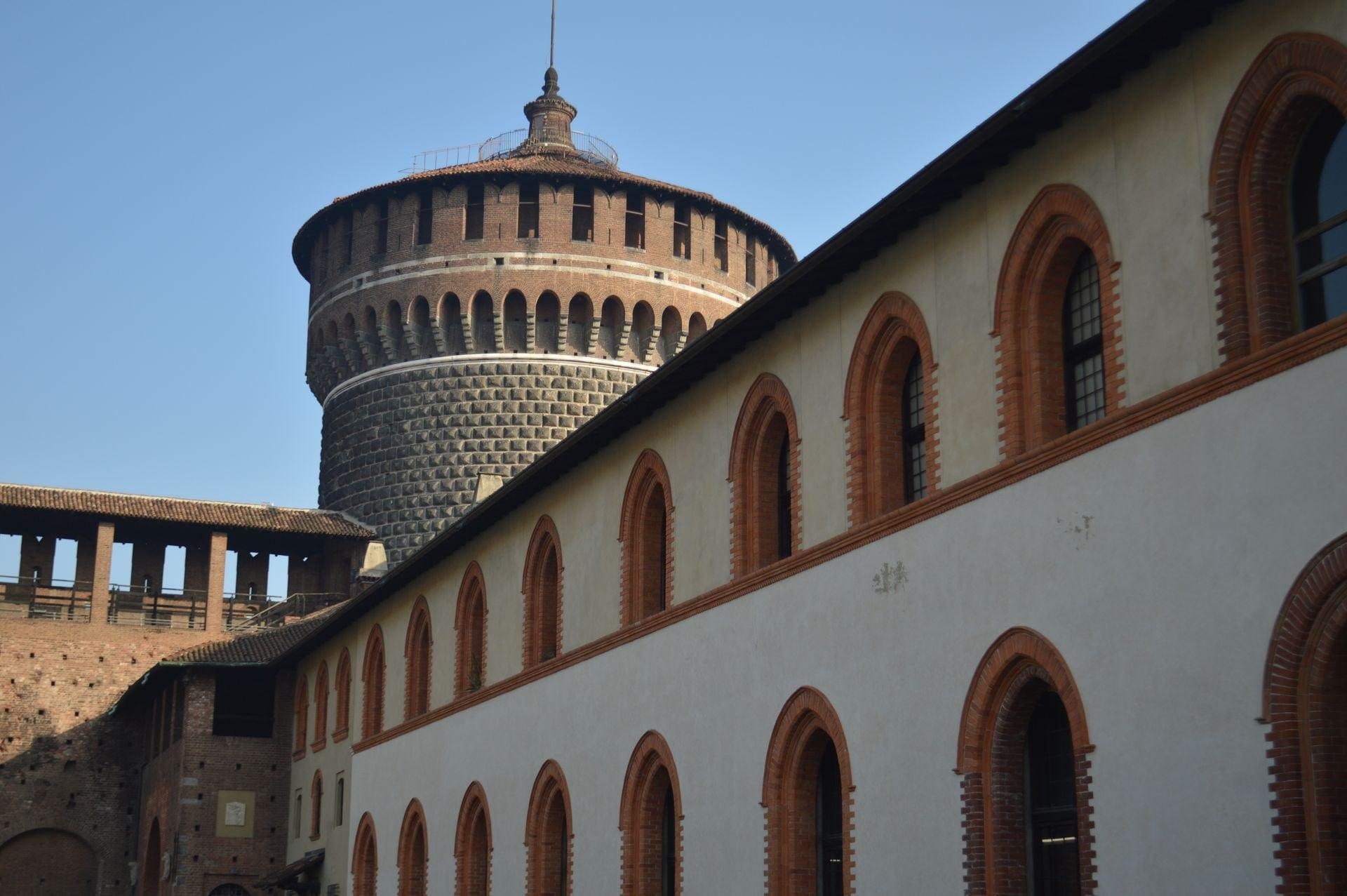
Torre del Filarete
A tower argued back from pictures. The castle's gate tower, designed in 1452, blown up in 1521 and rebuilt from documents and pictures for its opening in 1905.
- 3
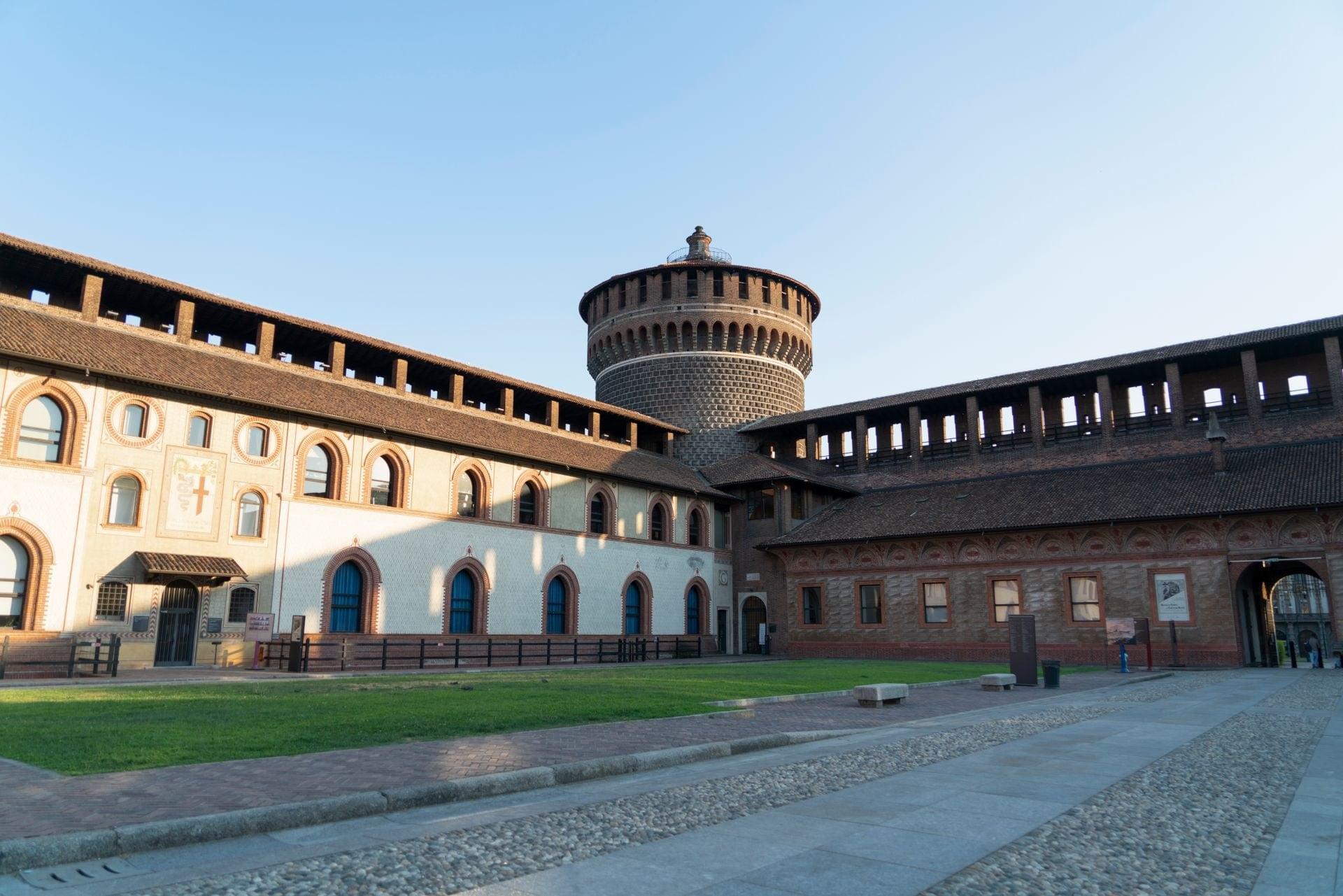
Piazza d'Armi
The old city wall runs through here. The Cortile delle Armi, the free great court, with the dead moat of medieval Milan and the Spanish garrison's hospital.
- 4
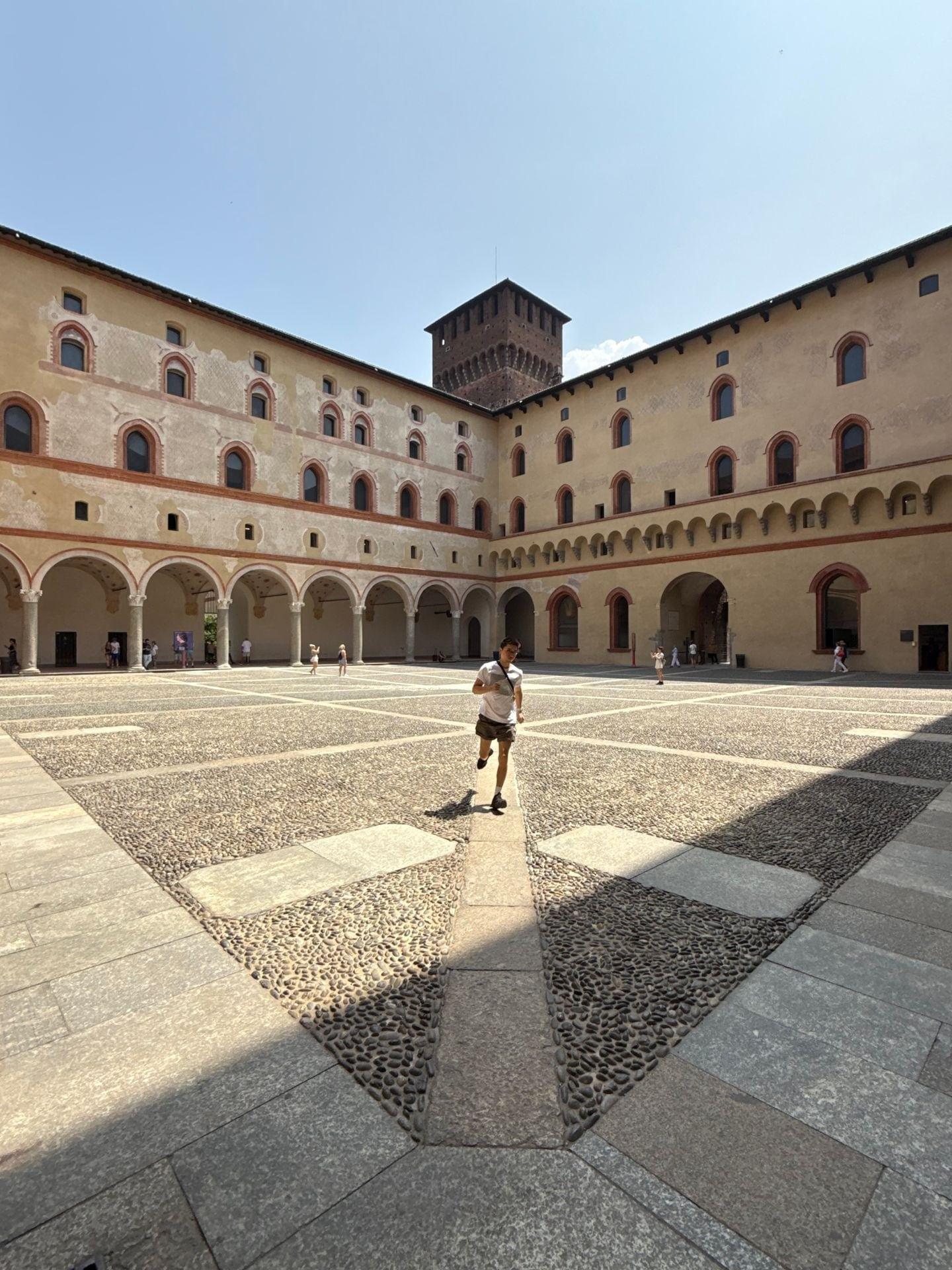
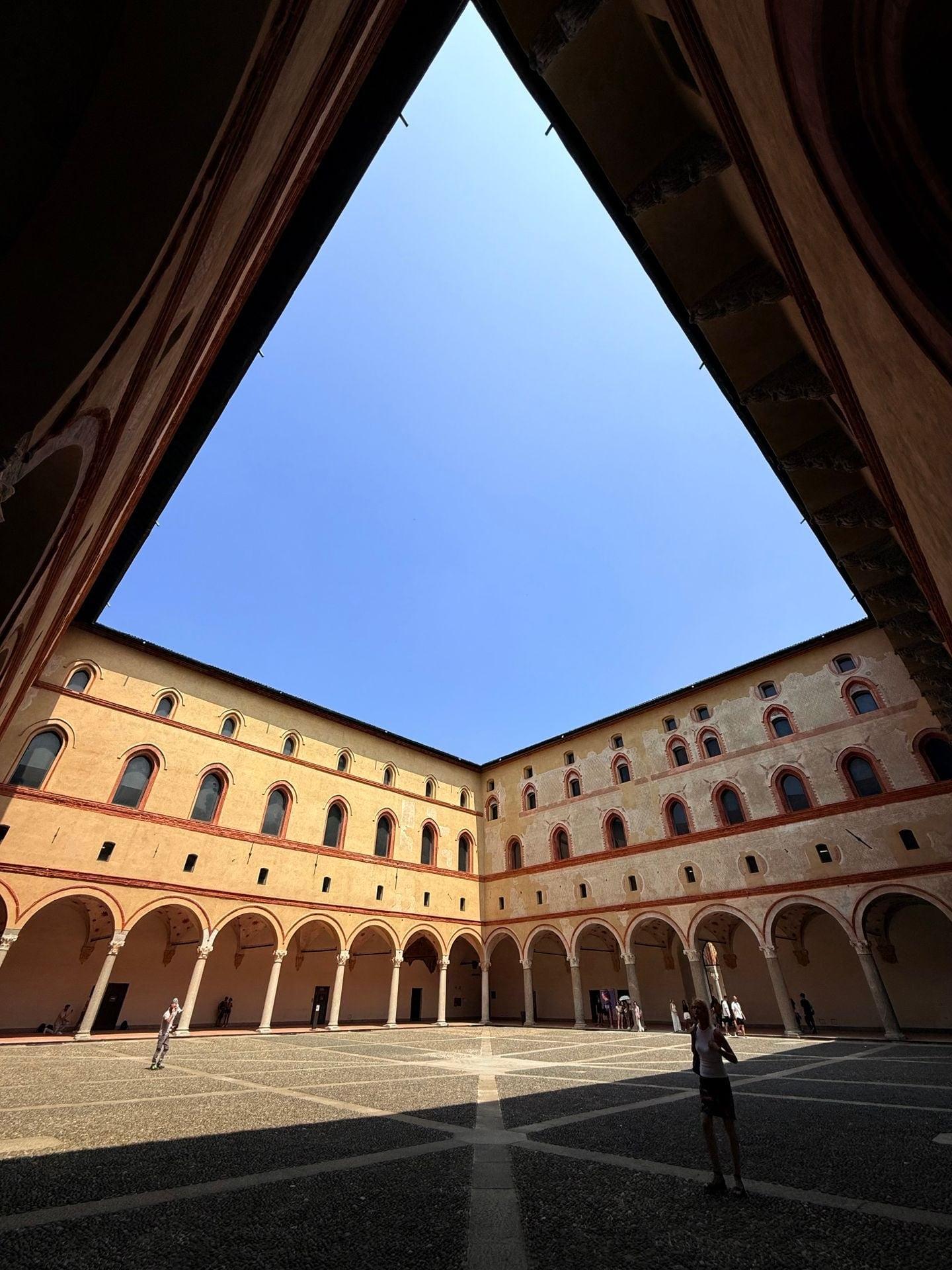
Cortile della Rocchetta
A fortress built against its own court. The Rocchetta, the inner stronghold, and the watchtower a duke's widow raised after his murder in 1476.
- 5
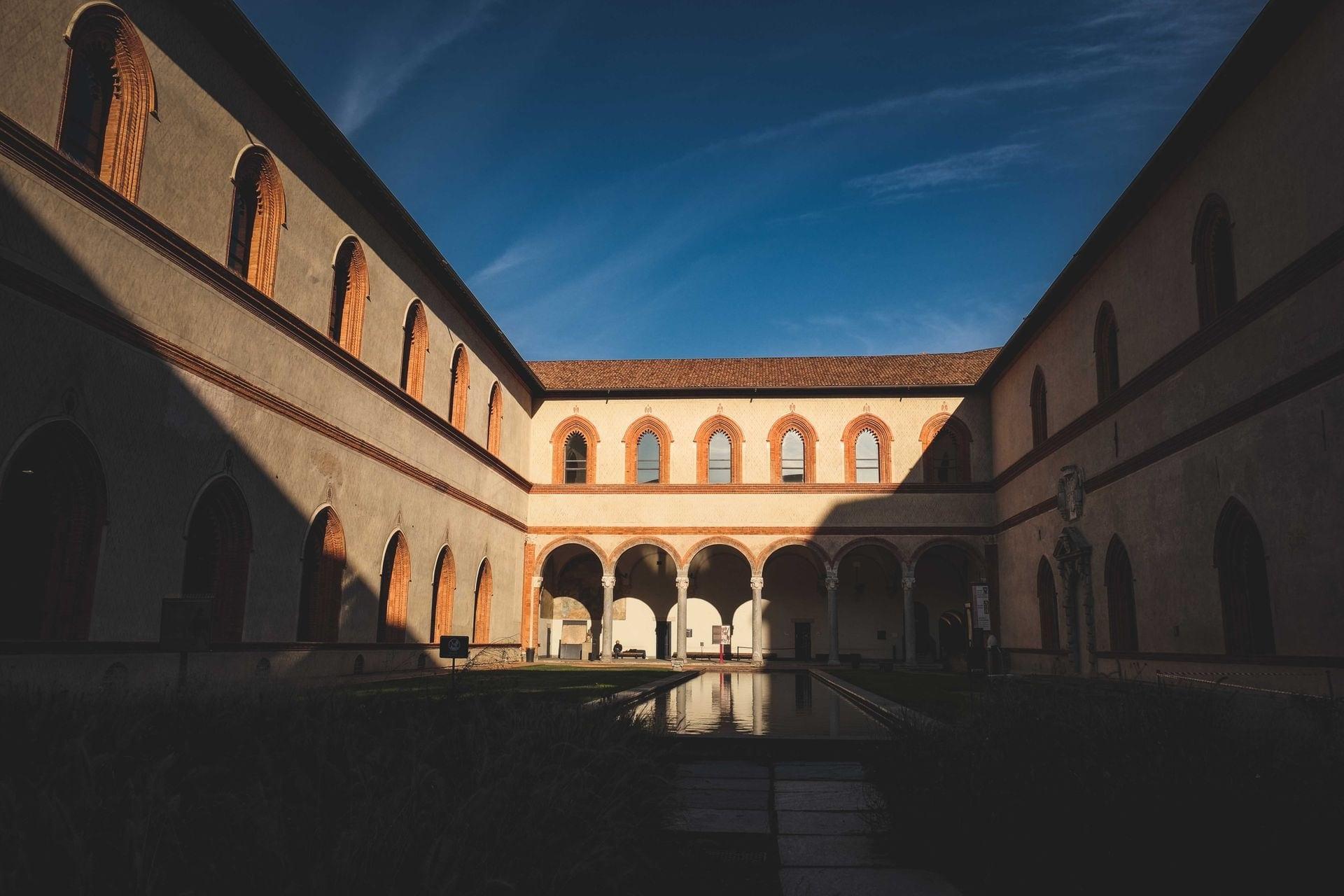
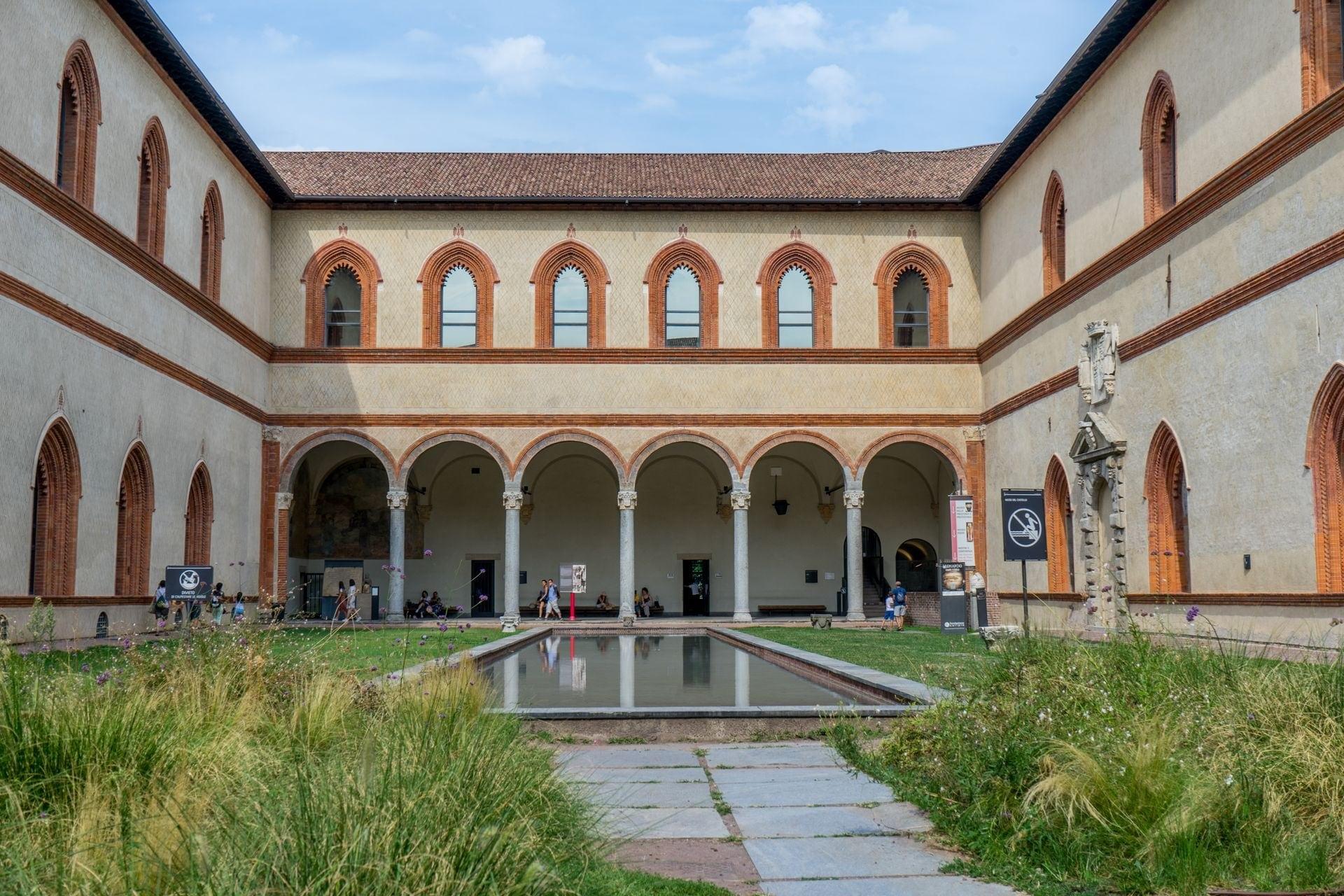
Corte Ducale
Where the fortress became a home. The Corte Ducale, the Sforza residence from the late 1460s, with its lawn, porticoes and a stair a duke could ride up.
- 6
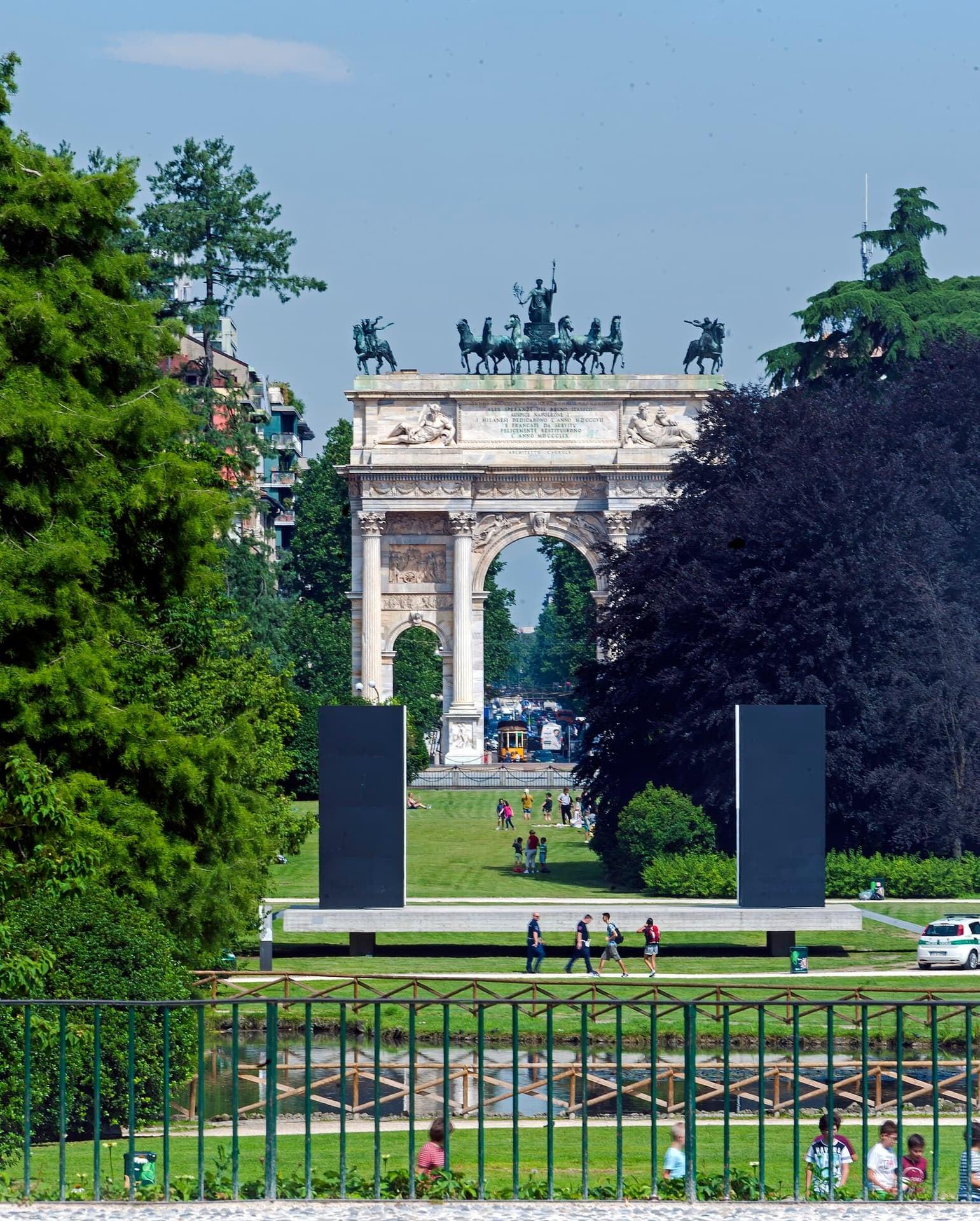
Piazza del Cannone
The dukes' park before the city's. Behind the castle at the Porta del Barchio's path, where the Sforza hunting reserve became a parade ground and then Parco Sempione.
- 7
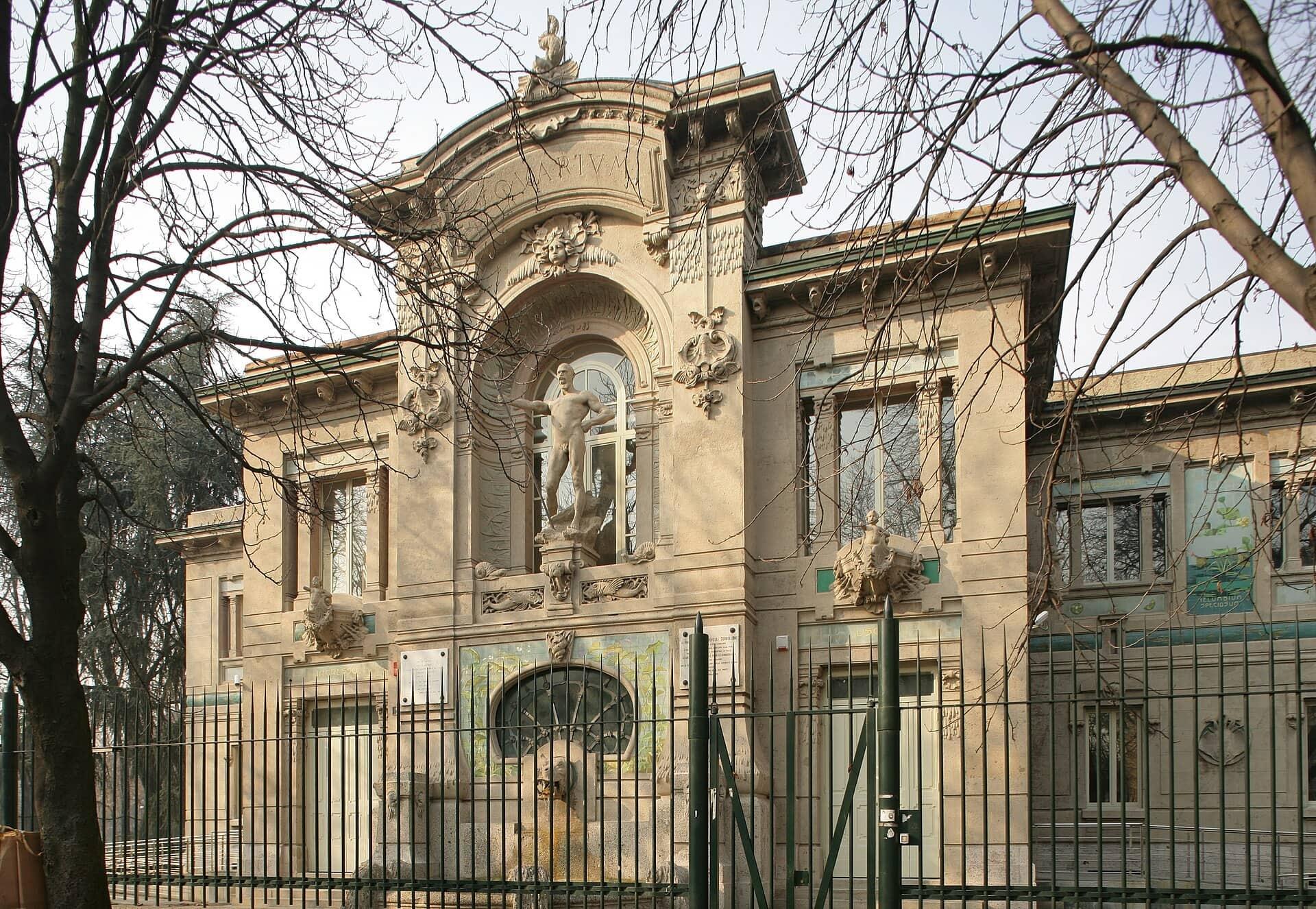
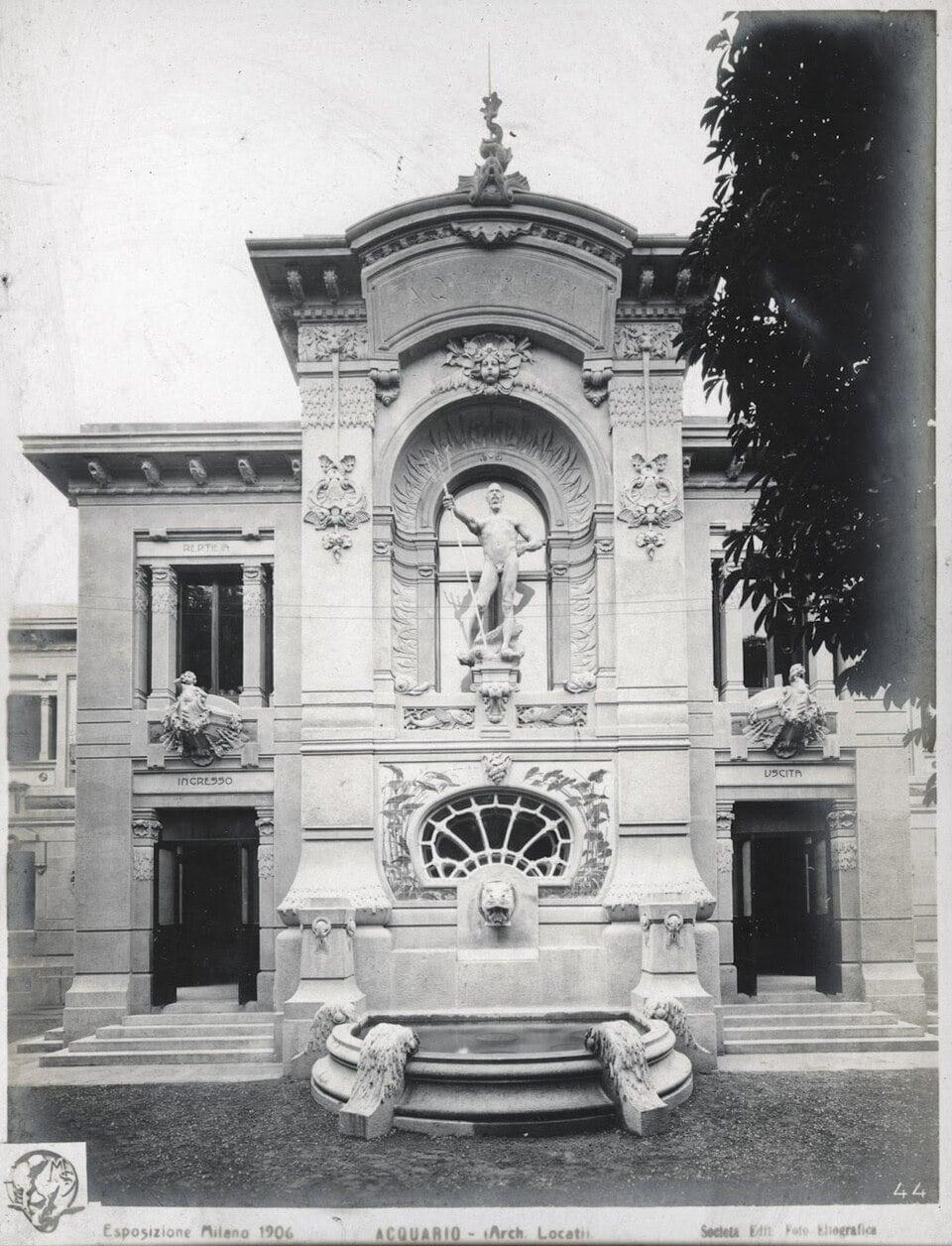
Acquario Civico
What a 1906 world's fair left behind. The Acquario Civico, a 1906 Liberty pavilion and the survivor of the International Exposition held in this park.
- 8
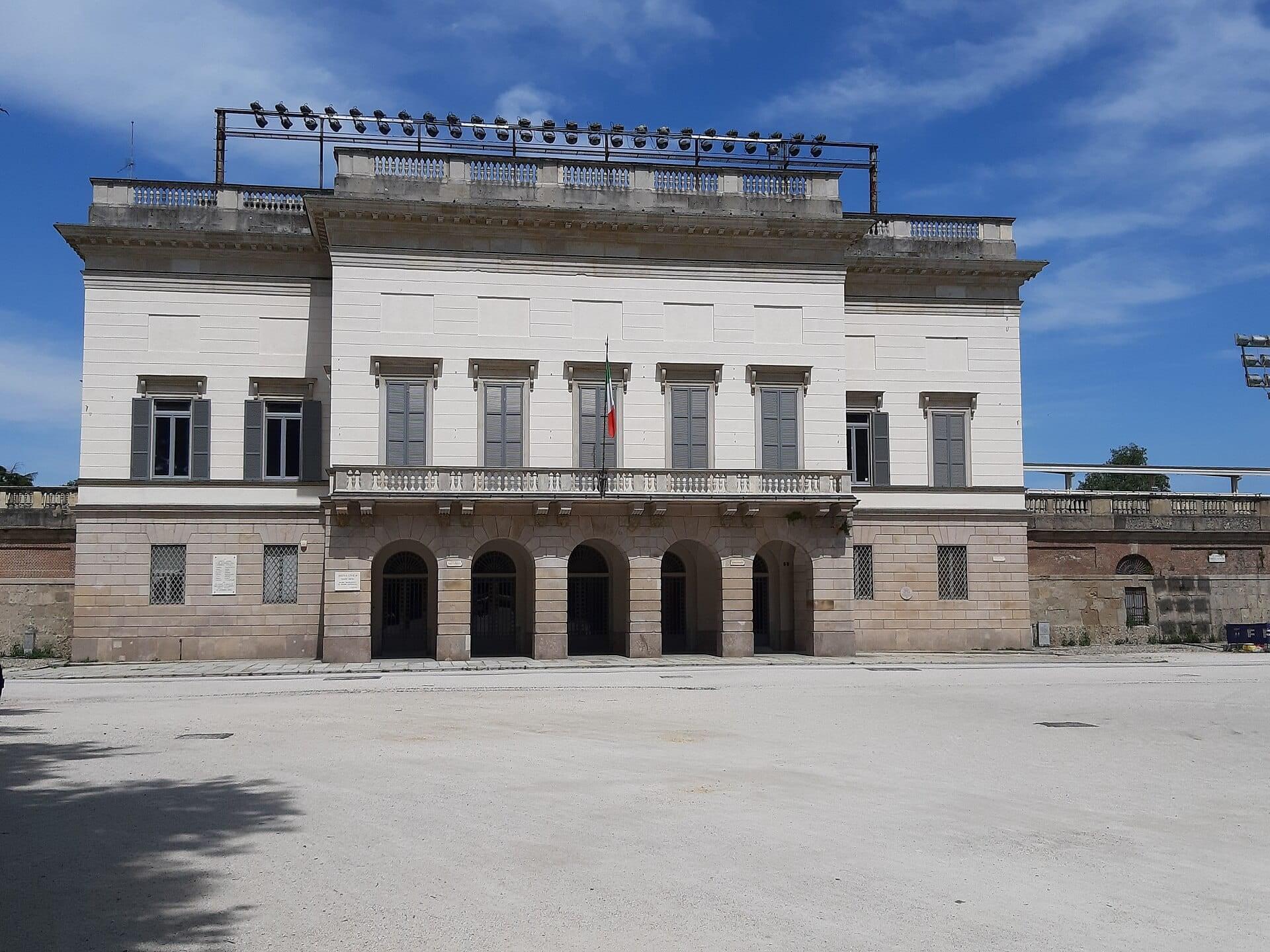
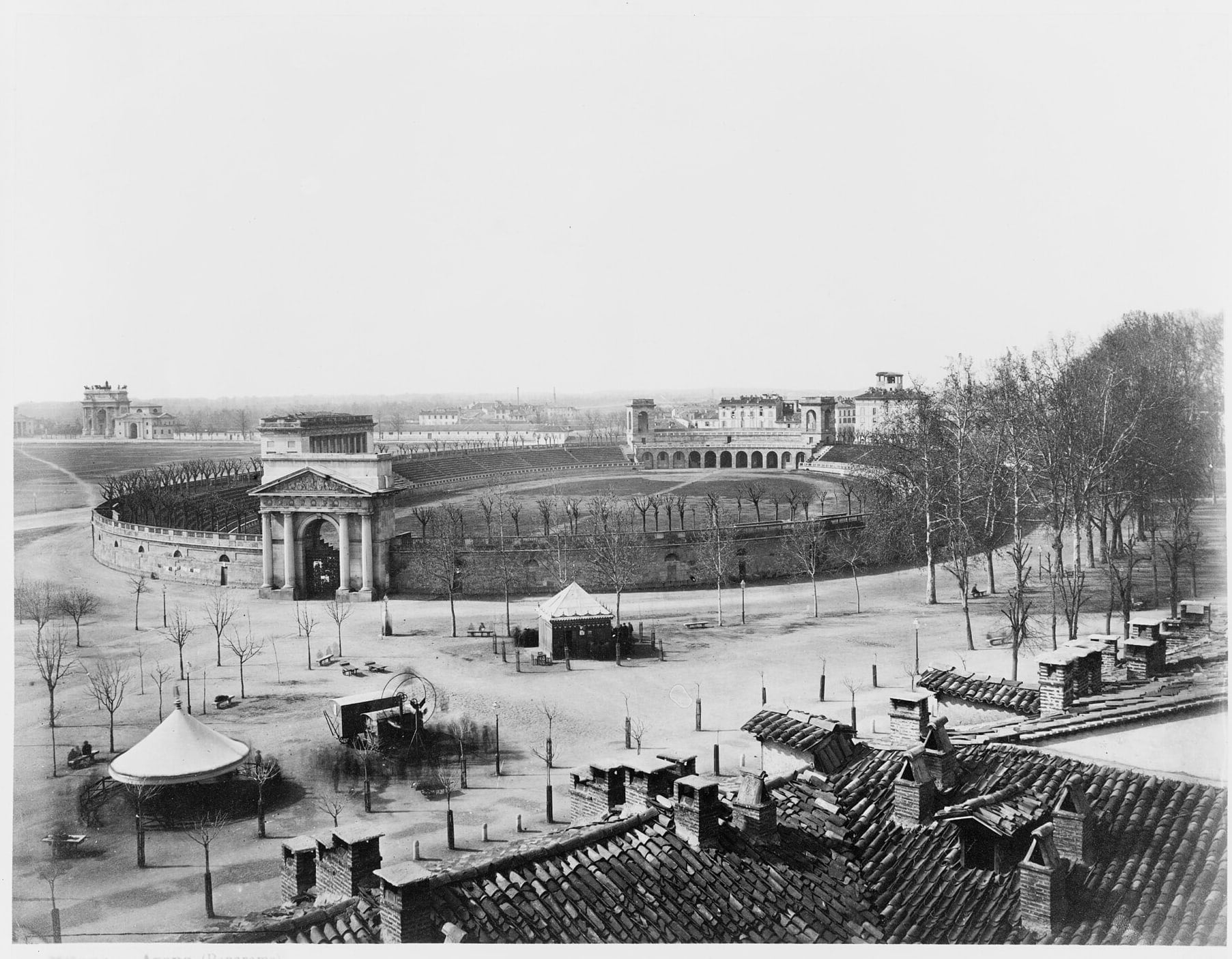
Arena Civica
Napoleon's arena of recycled fortress. The Arena Civica of 1806 to 1807, built from the castle's demolished bastions, with its royal box on Viale Byron.
- 9
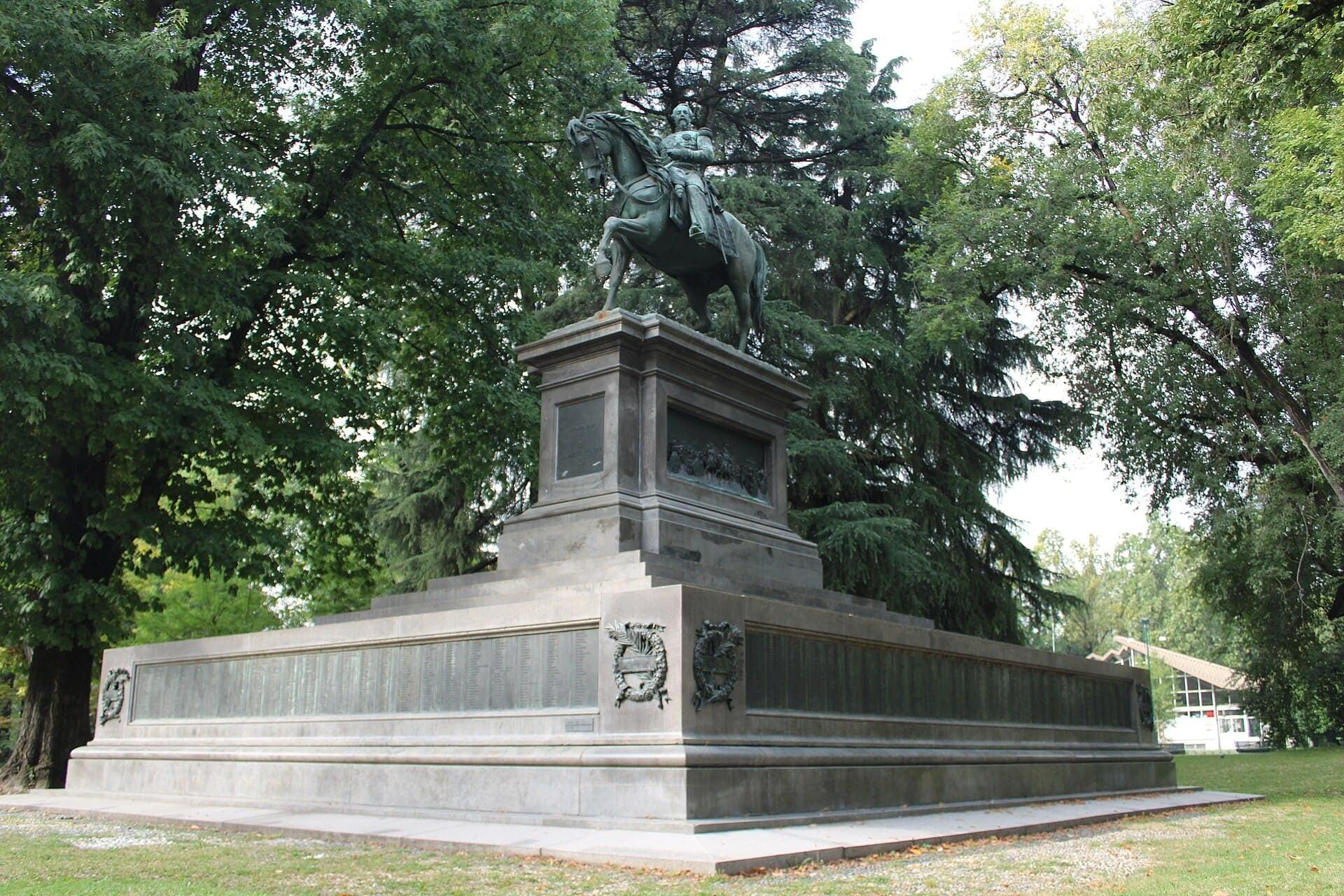
Napoleon III
A French emperor thanked in bronze. The monument to Napoleon III and the French army of 1859, a horseman on the Monte Tordo mound.
- 10
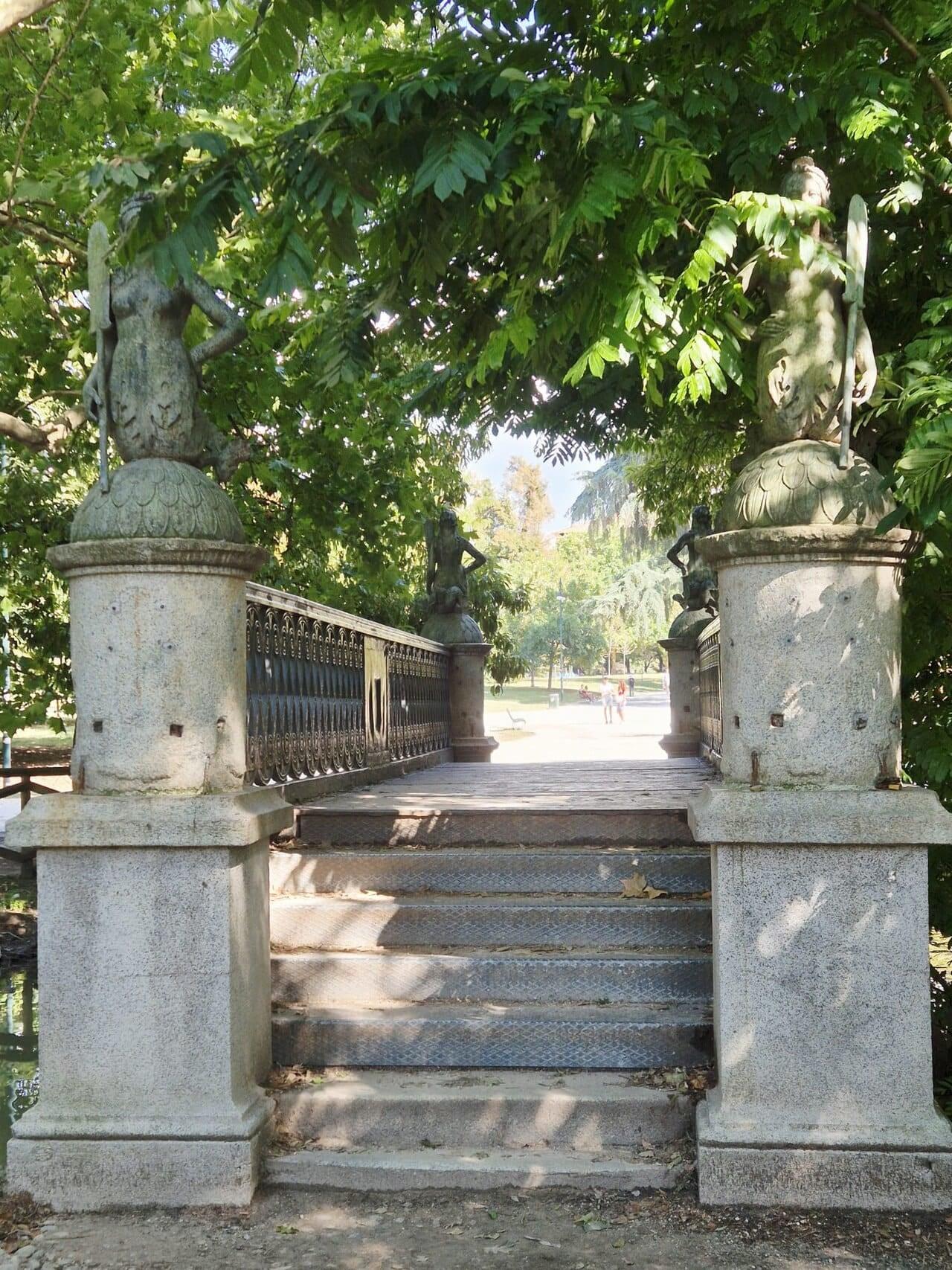
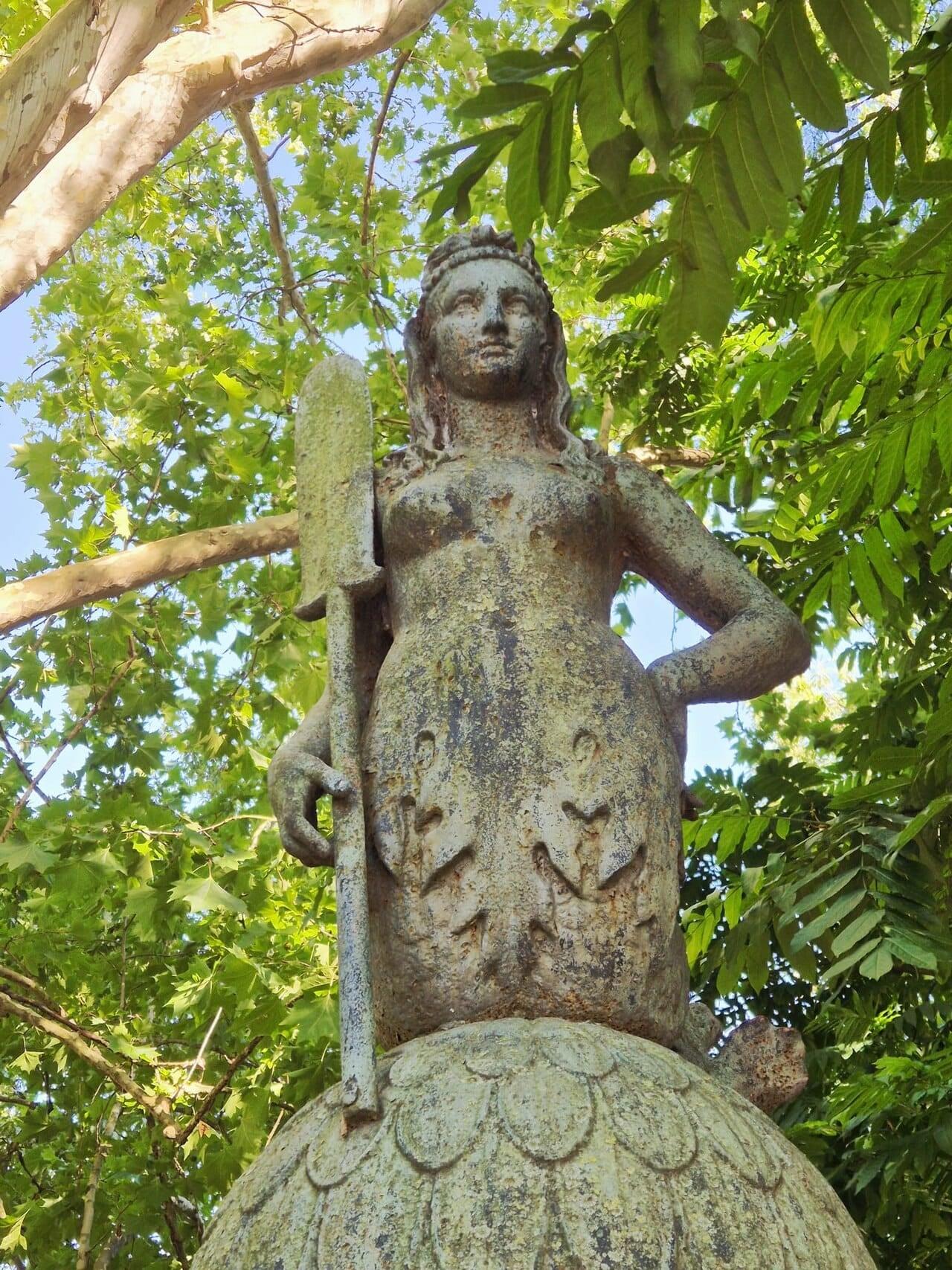
Ponte delle Sirenette
A canal bridge with no canal. The Ponte delle Sirenette of 1842, a cast-iron footbridge moved into the park in 1930 when the inner canal was covered.
- 11
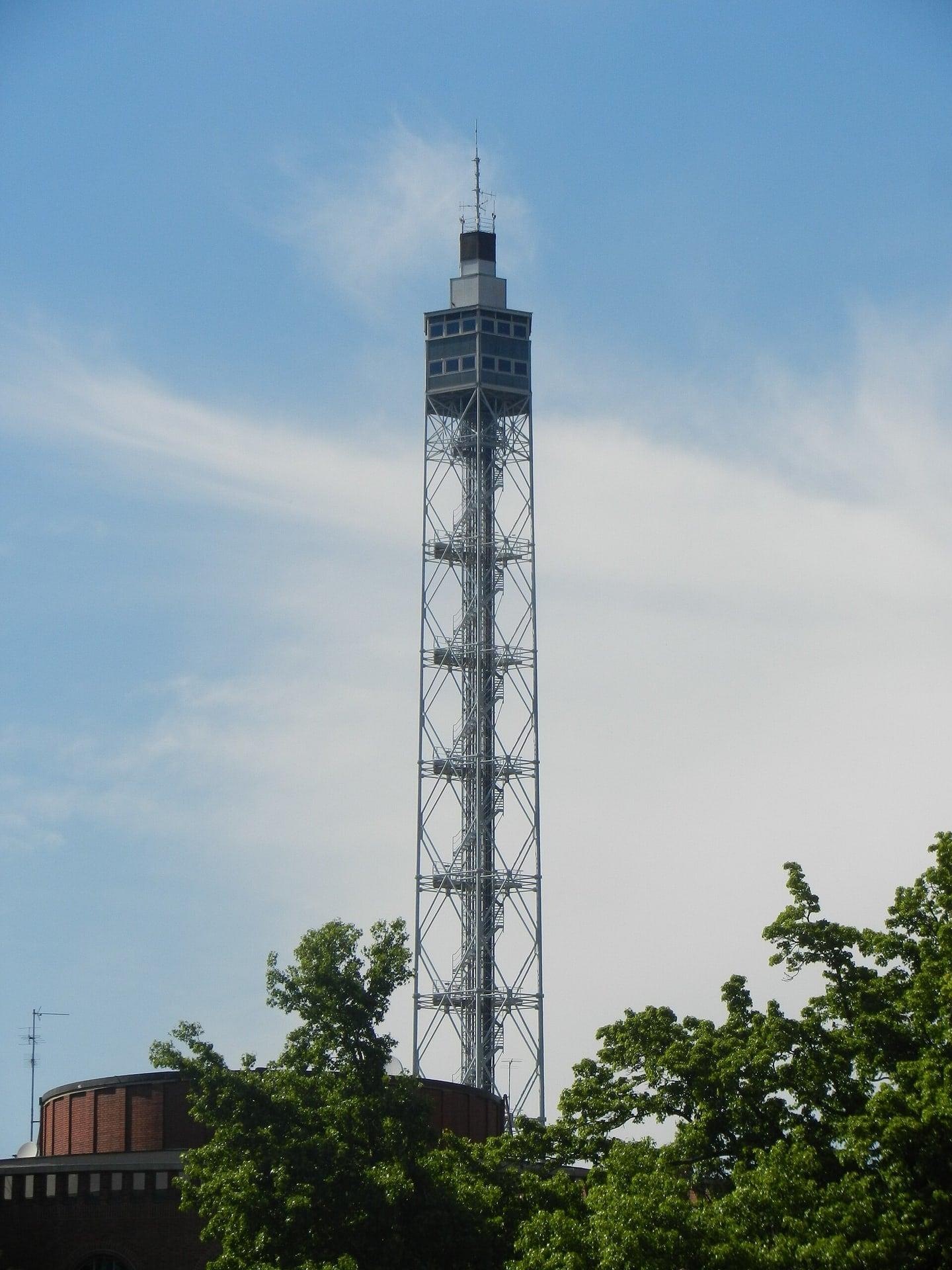
Torre Branca
A steel tower built at speed. The Torre Branca of 1933, put up for the fifth Triennale as the Torre Littoria and renamed for the company that restored it.
- 12
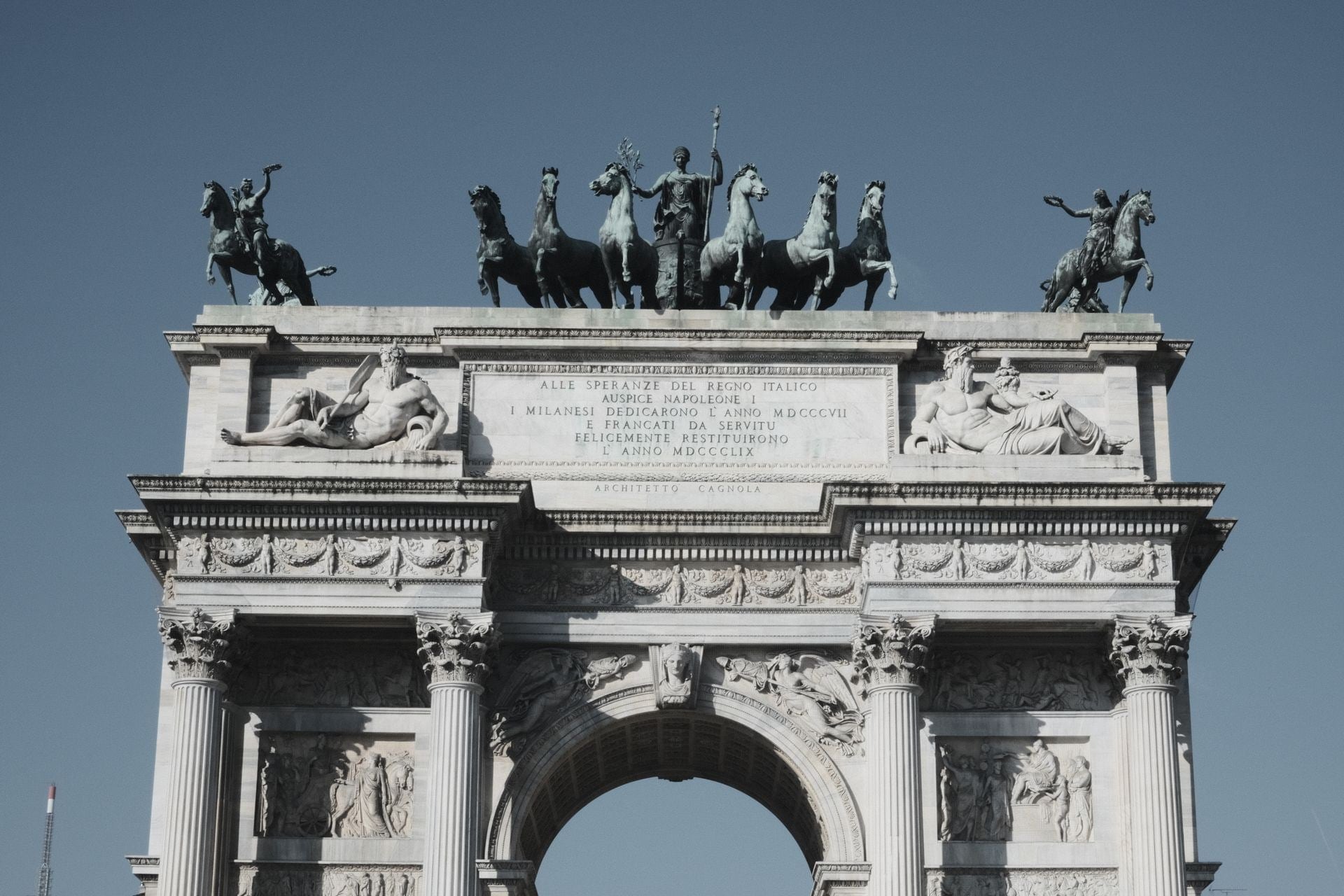
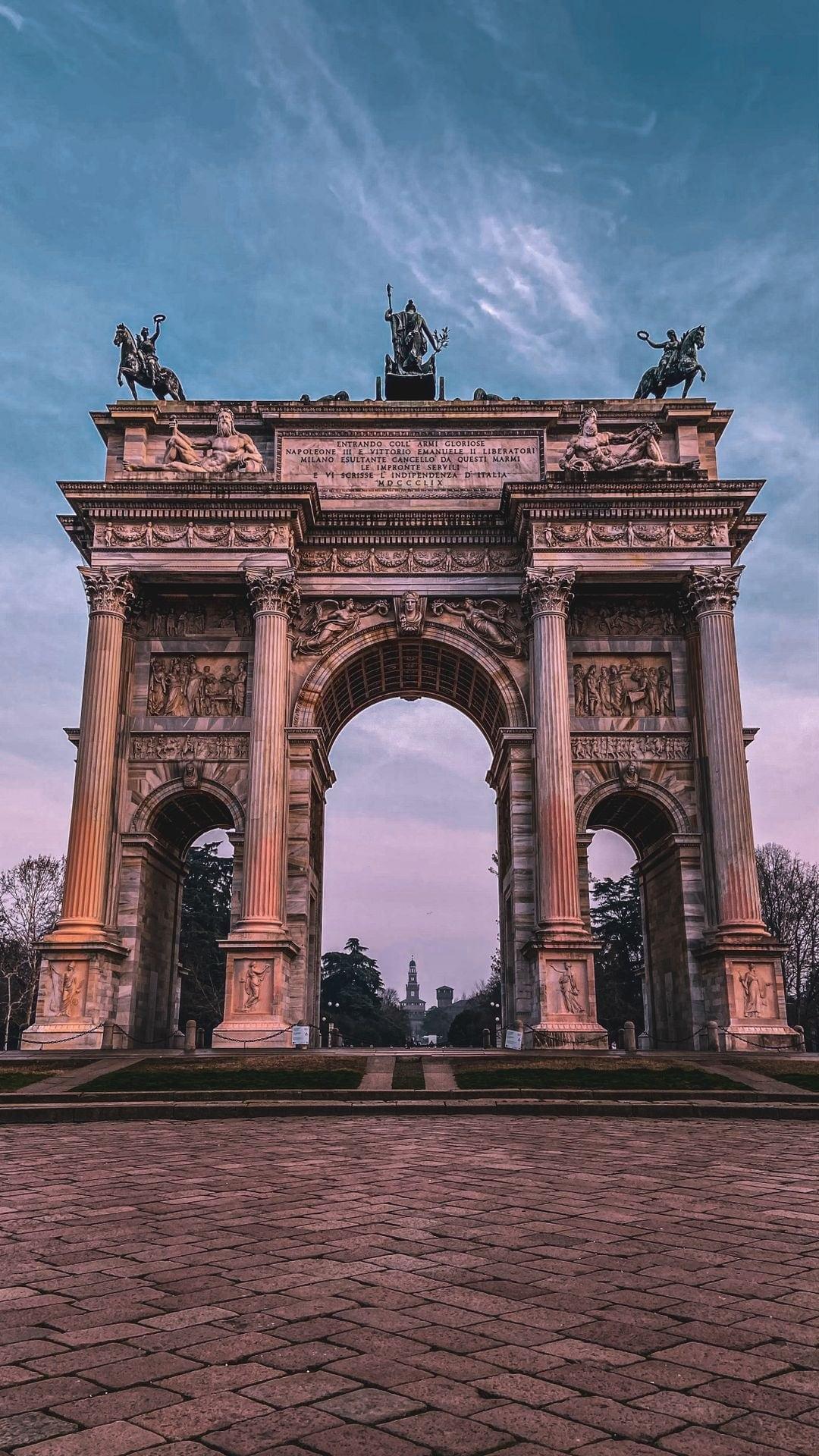
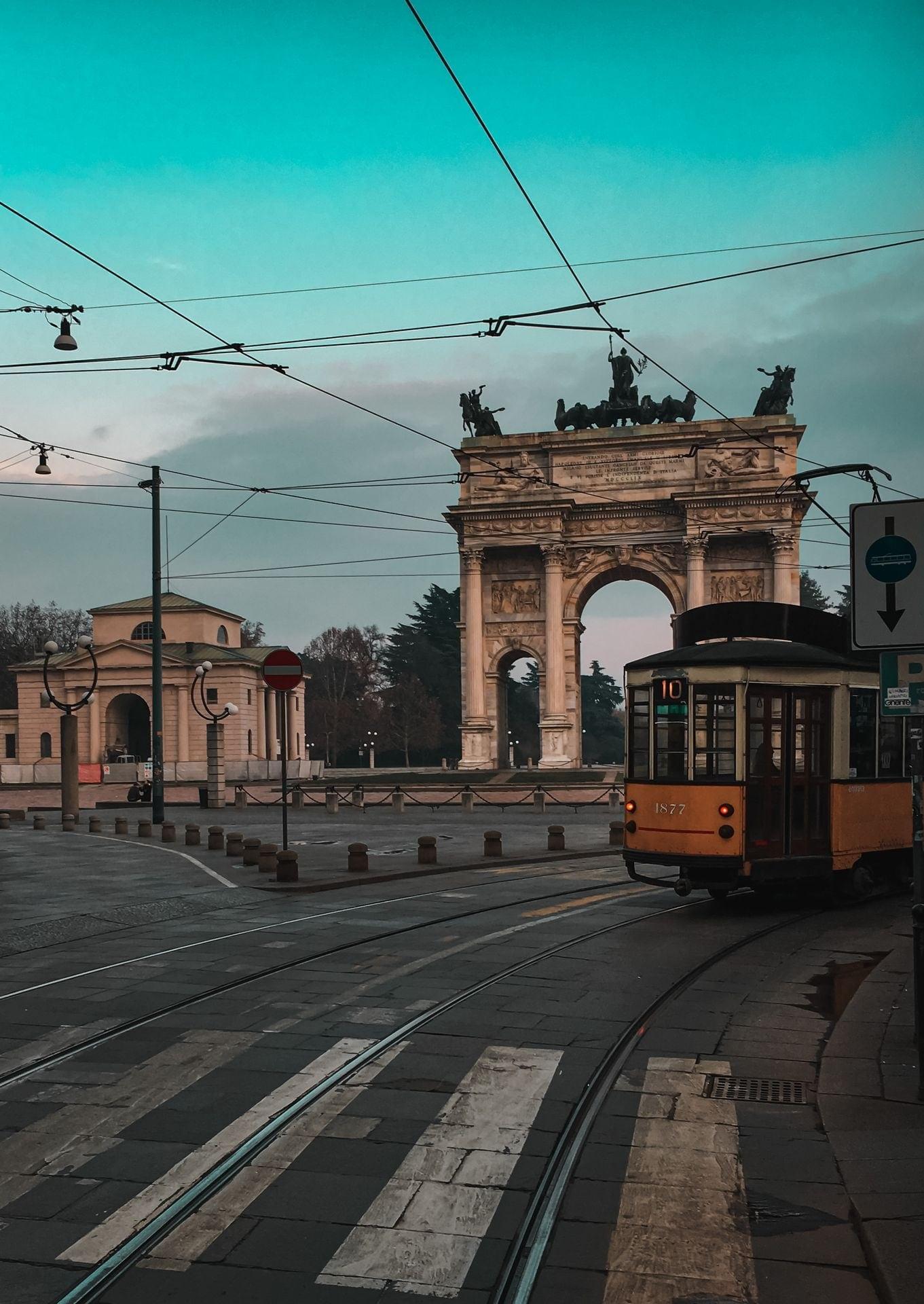
Arco della Pace
One arch for three regimes. The Arco della Pace, begun for Napoleon in 1807, finished for an Austrian emperor in 1838, with its two customs houses.
- 13
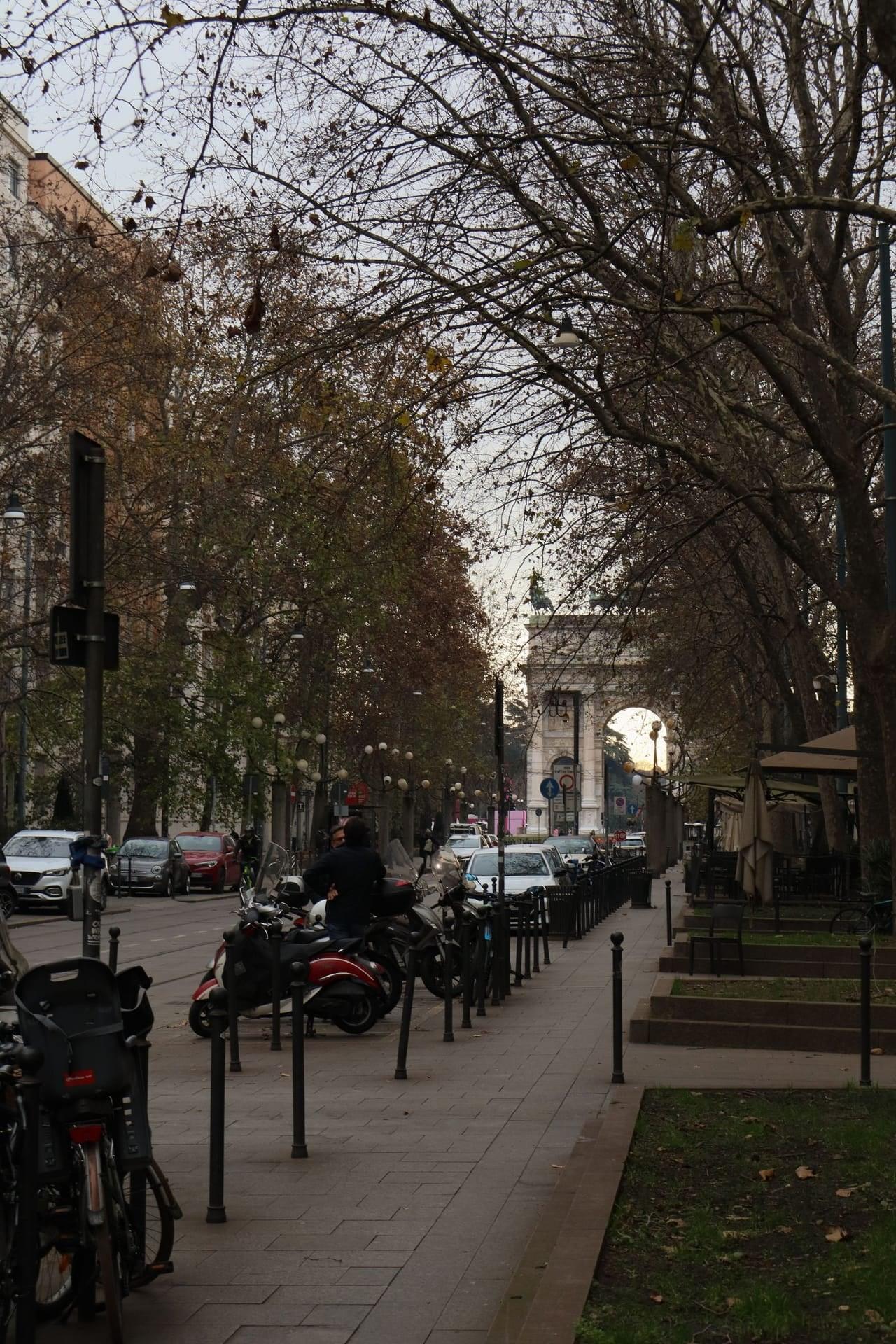
Corso Sempione
The road the arch was built for. Corso Sempione running to the north west, the Simplon road that named the park, and the arch's other face.
Details
Best Time to Visit
Any day from morning to dusk. The castle courtyards (stops 3 to 5) are free and open every day from 07:00 to 19:30 (milanocastello.it, checked 24 November 2026); outside those hours take the way around by the moat. Parco Sempione (stops 6 to 11) is fenced, 06:00 to 22:00 October to March and 06:00 to 24:00 April to September (Comune di Milano). Sunset about 16:40 in December (16:41 on 1 December, 16:42 on 21 December, computed), so start by about 15:00 for daylight at the arch. Winter brings fog, cold and slippery stone. Events: Oh Bej! Oh Bej!, Saint Ambrose's fair, 5 to 8 December 2026 on Piazza Castello, Via Gadio and Piazza del Cannone (stops 2 and 6 and leg 6-7 crowded with stalls; 8:30 to 21:00 per YesMilano via milanoevents.it, 9 to 18 per MilanoToday); Saint Ambrose, Monday 7 December, is Milan's holiday. Castle museums closed Mondays; the courtyards are open every day. Checked 24 November 2026.
Pro Tips
- •Getting to the start: metro M1 to Cairoli and take an exit onto Via Luca Beltrami, the pedestrian street toward the castle; if you come up on the island by the statue in the middle of Largo Cairoli, cross at the lights. From the Historic Center walk, it is about 8 minutes down Via Dante from Cordusio. Checked 24 November 2026.
- •The walk ends on Piazza Sempione by the Arco della Pace tram stops. M1/M2 Cadorna is about 900 m (15 minutes) back through the park while it is open; M2 Lanza and Moscova are about 1 km east.
- •No ticket is needed for any stop. The castle museums (Tuesday to Sunday 10:00 to 17:30), the Torre Branca lift (EUR 9 from January, set days) and the Acquario Civico (Tuesday to Sunday) are separate visits.
- •If the castle courtyards are shut, walk around the castle's north-east side on the moat path (the Passeggiata Umberto Eco) to Viale Gadio, about 530 m, and play stops 3, 4 and 5 by hand.
- •GPS can drift inside the castle's walled courtyards (stops 3 to 5) and under the trees at stops 7 and 10; if a stop has not started, tap it on the map.
- •At the Torre Branca (stop 11), the tower is best seen whole from the park paths on the way there; at its foot the top is almost straight overhead.
Safety & Precautions
- •Leg 1-2 crosses two tram tracks on Piazza Castello at the signalled crossing. Trams are quiet and come from both sides; rails set in the paving are a trip and slip hazard, worst when wet. Traffic keeps right.
- •Via Luca Beltrami is a designated cycle route, and bikes and e-scooters share Viale Gadio, the park avenues and Piazza Sempione. Walk bikes through the castle gates.
- •Leg 6-7 leaves the park fence for about 80 m on the sidewalk beside Viale Gadio's traffic lanes and crosses the aquarium's driveway: no tram here, but cars.
- •Paving setts in the castle courts and on Piazza Sempione are uneven and slippery in rain, fog and frost; the park's gravel paths puddle after rain. Keep to the path at the pond (stop 10); the Sirenette bridge has steps and the route does not cross it.
- •The castle courtyards are open 07:00 to 19:30 every day and the park closes at 22:00 from October to March. Checked 24 November 2026.
- •During Oh Bej! Oh Bej! (5 to 8 December 2026) Piazza Castello, Via Gadio and Piazza del Cannone are crowded with stalls: keep bags closed and stand clear of the stall rows.
Travel advisory: Exercise Increased Caution (Level 2).
Gallery
Related Reading
Go deeper on what you'll see, hear, and walk through.
Overview
Milan Travel Guide: Days, Transport, Timing, Safety, and Cost
7 min
Overview
One Day in Milan: A Walkable Itinerary From Canals to Towers
5 min
Thematic
Milan Works: A City Rebuilt Around Water, Industry, and Ambition
5 min
Companion
Castello Sforzesco and Parco Sempione: A Companion to the Walk From Castle to Arch
5 min
Deep dive
Arena Civica: Napoleon's Amphitheater Built From the Castle's Walls
4 min
Read the walk
The full story of Castello Sforzesco and Parco Sempione: From Castle to Arch, in words. Prefer to listen? Play it narrated, from home or on location.
Introduction
Milan's castle was hated for most of its life. For centuries the Milanese saw it as a symbol of tyranny and foreign rule, and every new master who held it built with the ruins of the last. This walk follows that chain, from a square Napoleon never finished, through the castle's free courtyards and out of its back gate, across the park that was once the dukes' hunting ground, to an arch begun for one emperor and finished for another.
There are thirteen stops over about two point three kilometers, about one and a half miles, and it takes about eighty minutes. It is flat; the only steps are a few shallow ones near the end.
Every stop is on free ground. The castle's museums, the Torre Branca's lift and the aquarium are ticketed, not included, and not needed. The castle courtyards open at seven in the morning and close in the evening, possibly as early as six in winter: in December, start by three in the afternoon to cross them in time and reach the arch before dark. If the courts are shut, walk around the moat and play stops three, four and five by hand. The park is fenced and closes at ten at night from October to March.
On the first leg you cross two tram tracks at the lights. Trams are quiet, the rails in the paving are slippery when wet, and bikes and scooters use the castle street and the park avenues. In winter, expect fog and cold, and watch your footing on wet stone and on the rails.
To reach the start, take metro line one to Cairoli and come up on Via Luca Beltrami, the street that runs to the castle. If you surface by the statue in the middle of the square, cross at the lights.
When you arrive at Foro Buonaparte, begin with stop one.
1. Foro Buonaparte
Straight up this pedestrian street, at the far end, stands the castle's gate tower. Now look to either side. The fronts of Foro Buonaparte sweep away to your left and to your right in a long curve, as if they were wrapped around something. They are. They follow the outline of a square that was never built.
Until eighteen oh one the castle sat inside a Spanish fortress shaped like a star with twelve points. That year Napoleon's government in Milan began to knock the star down, and the demolition left a huge empty space around the castle. An architect proposed to fill it with an immense half circle of a square, lined with public buildings in classical style, and named it the Foro Bonaparte, after Napoleon. The first stone was laid in April eighteen oh one. The castle's own history says the work stopped at once. Later in the century the city built its streets along the curve of that plan, and you are standing inside it.
That is the pattern of this walk. Every power here built with the ruins of the one before, and the Milanese took a long time to love the result. The castle's own pages put it plainly: for centuries the Milanese saw the castle as the emblem of tyranny and foreign rule, and only after the unification of Italy, when it became a center of culture, did it become dear to them, and a symbol of the city.
Follow the route up Via Luca Beltrami toward the tower. Halfway you cross two tram tracks at the lights: trams are quiet, the rails are slippery when wet, and bikes ride this street too.
2. Torre del Filarete
The tower ahead, above the castle's main gate, looks like the oldest thing in sight. It is one of the youngest.
In fourteen fifty Francesco Sforza, a soldier who had married into the ruling Visconti family, was acclaimed lord of Milan and set about rebuilding their castle. In fourteen fifty two he hired the architect this tower is named for, Filarete, to design the city front with a tall central gate tower. The two fat round towers at the corners came next, faced in stone cut into diamond points; round towers, the castle's history says, were better suited to resist the new artillery.
In June fifteen twenty one the gate tower, which was being used to store gunpowder, blew up. What you see now is not that tower.
What you see is the work of the architect Luca Beltrami, who restored the castle at the end of the eighteen hundreds. He rebuilt the tower from evidence: old documents, an old painting that showed it, a drawing scratched on a farmhouse wall, and the towers of two other Lombard castles as models. In eighteen ninety five he put up a full size wooden model of it, to test the design in place. The finished tower was inaugurated on the twenty fourth of September, nineteen oh five, and dedicated to the king of Italy who had been murdered at Monza in nineteen hundred. The clock carries a radiant sun, one of the Sforza emblems, and the niche below holds a statue of the city's patron saint, too small to make out from here.
Follow the route to the gate. The courtyards behind it are free; walk your bike through.
3. Piazza d'Armi
You are in the castle's great courtyard, the Cortile delle Armi, the court of arms. Ahead, across the open ground, a tall square tower rises over a dry ditch. On your left is a long building that was the Spanish garrison's hospital. On your right, set out as if in an open air museum, are late Roman stone coffins and two Renaissance house fronts brought here from streets in the center.
The dry ditch ahead has a plain name, the fossato morto, the dead moat, and an old job. It is the moat of medieval Milan's own city wall. The first castle here, the Visconti fortress, was built straddling that wall, with one foot inside the city and one outside. Walking toward it, you are crossing the line of the old city.
In the fifteen hundreds Spain took Milan, and this court belonged to a garrison town. The Spanish fortress held a pharmacy, a hospital, shops, a bakery, two ovens, an inn, an ice store and two churches. The castle's own history adds the detail that matters: the works and the garrison's upkeep were paid for by the Milanese. The city paid for the soldiers who kept it down. Luca Beltrami restored much of this court in his campaign.
The castle's museums open off these courtyards, and the old hospital now holds the museum of a single sculpture, the Rondanini Pieta. They are ticketed and not part of this walk. The courtyards are free, open from seven in the morning into the evening; the castle's page gives half past seven, but check the time at the gate in winter.
Follow the route to the far left corner of the court and over the little bridge across the moat.
4. Cortile della Rocchetta
As you come out of the passage, you are inside the Rocchetta, the little fortress. Its walls on the side you came from are high and almost windowless. Inside, porticoes run around the court, and the column capitals carry the arms of the two families who built this castle, the Visconti and the Sforza.
The castle's own name for this place is a fortress inside the fortress. The question is who it was defending against.
On the twenty sixth of December, fourteen seventy six, the reigning Sforza duke was stabbed to death in a conspiracy. His widow moved in here, into the strongest corner of the castle, and fortified it with a tall tower. Look up over your right shoulder: that is it, the square tower over the corner where two wings meet. It still carries her name, the Torre di Bona, Bona's tower. It was placed so that it could watch the whole building. It also served as a prison, with a cell that had a spyhole. The danger here did not come over the walls. It came from inside the court.
Her refuge was brief: another member of the family soon took power. The tower's battlements are later: Luca Beltrami raised the tower and gave it its merlons when he restored the castle. Restorations finished in twenty thirteen brought back the painted decoration he had designed in the Sforza style.
Follow the route through the passage at the far corner into the larger ducal courtyard.
5. Corte Ducale
The court opening ahead of you, with its lawn, was the dukes' home. Where the Rocchetta is a strongroom, this was the residence: from the late fourteen sixties the Sforza duke lived around this court, on the ground floor and the floor above. The rooms were joined by a stair…
Full narration for this stop unlocks with the tour.
6. Piazza del Cannone
The castle's back gate, the Porta del Barchio, is behind you now; if the courts were shut and you came around by the moat, it is the arch in the castle wall back there. Ahead, the park opens in a long straight line to the north west, with the open square of Piazza del Cannone…
Full narration for this stop unlocks with the tour.
7. Acquario Civico
The building on your right, with its rounded end, is Milan's civic aquarium, the Acquario Civico. It was built for a world's fair. In nineteen oh six this park held Milan's International Exposition, and its grounds filled with pavilions. The city's own page puts the rest in one…
Full narration for this stop unlocks with the tour.
8. Arena Civica
On your right, the building with the columns is the royal box of the Arena Civica, the Loggia Reale. Behind it, the Arena's long, low wall curves away out of sight. This is where the Spanish fortress went. When Napoleon's government knocked down the star shaped bastions around…
Full narration for this stop unlocks with the tour.
9. Napoleon III
Ahead and to your right, on top of the small wooded mound, a bronze horseman looks out over the park. This is the monument to Napoleon the Third, a later French emperor of the same name as the first, and to the French army that came with him. The castle's guide gives the reason…
Full narration for this stop unlocks with the tour.
10. Ponte delle Sirenette
On your left, a small humped iron bridge crosses the end of the pond, and four cast iron mermaids sit along its rails. This is the Ponte delle Sirenette, the bridge of the little mermaids, and it was not built for a pond. It was built over a canal in the middle of Milan, the…
Full narration for this stop unlocks with the tour.
11. Torre Branca
On your left rises the steel lattice tower you have been seeing over the trees. Tip your head right back to find the top: it is a little over one hundred eight meters up. It went up in nineteen thirty three for the fifth Triennale, the design exhibition held in the brick palace…
Full narration for this stop unlocks with the tour.
12. Arco della Pace
Turn to your left to face the great arch across the square. This is the Arco della Pace, the Arch of Peace, with a bronze chariot drawn by six horses on top and a smaller building on either side. It was begun for Napoleon. By eighteen oh seven it already stood as a volume faced…
Full narration for this stop unlocks with the tour.
13. Corso Sempione
The arch is on your left now, and on your right the long straight avenue of Corso Sempione runs away to the north west. This road is the arch's real subject. It is the road to the Simplon Pass over the Alps, and the city says the park takes its name, Sempione, from lying on the…
Full narration for this stop unlocks with the tour.
- File:Arco della Pace through Parc Sempione from Piazza del Cannone, Milan.jpg | Arco della Pace seen from Piazza del Cannone through Parco S — Daniel Case, CC BY-SA 3.0 · source
- File:Monumento a Napoleone III parco Sempione.jpg | monumento a Napoleone III — Alex Battagin, CC BY-SA 4.0 · source
Images may be cropped or resized. Other photos via Unsplash and Pexels.