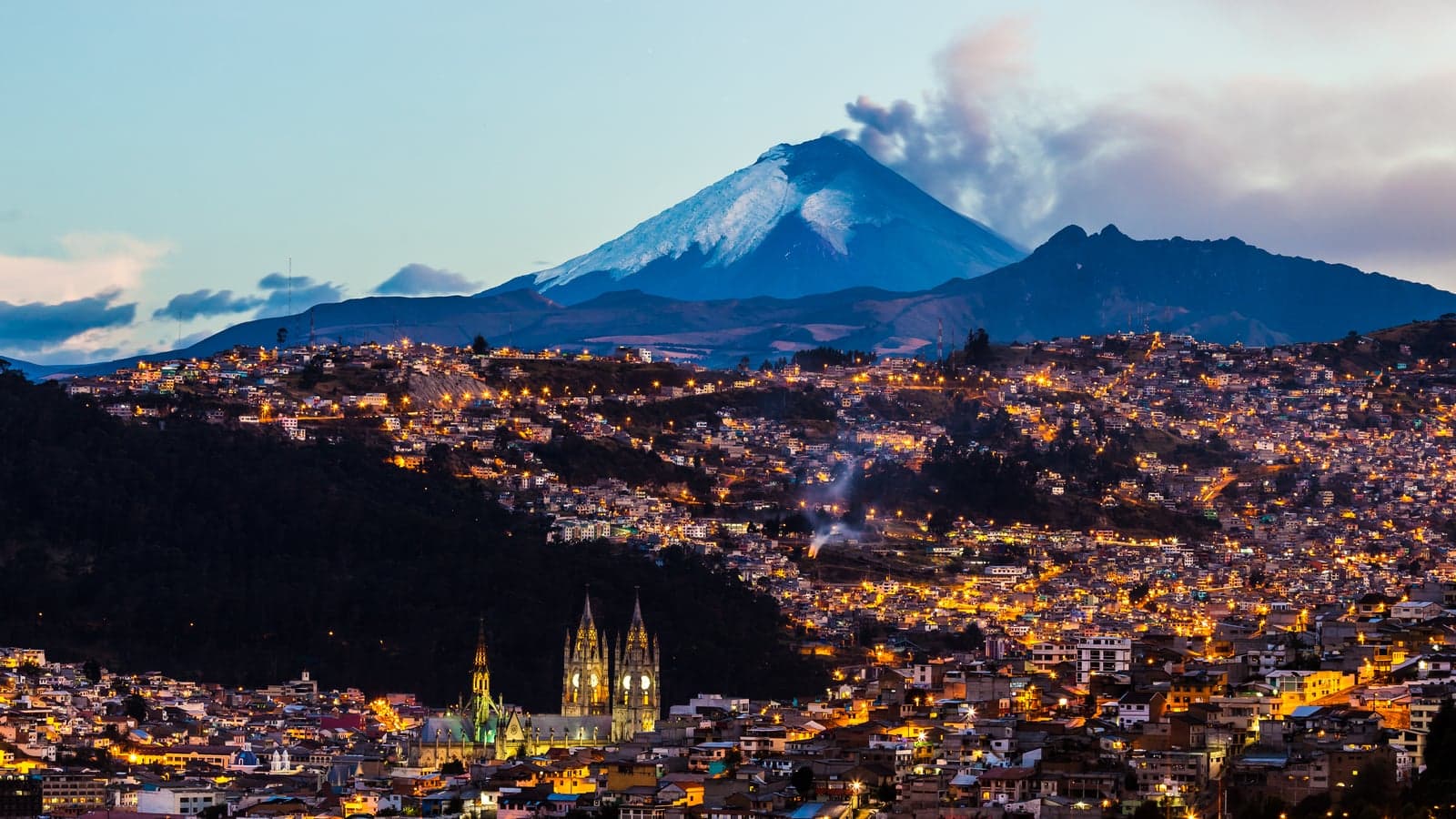
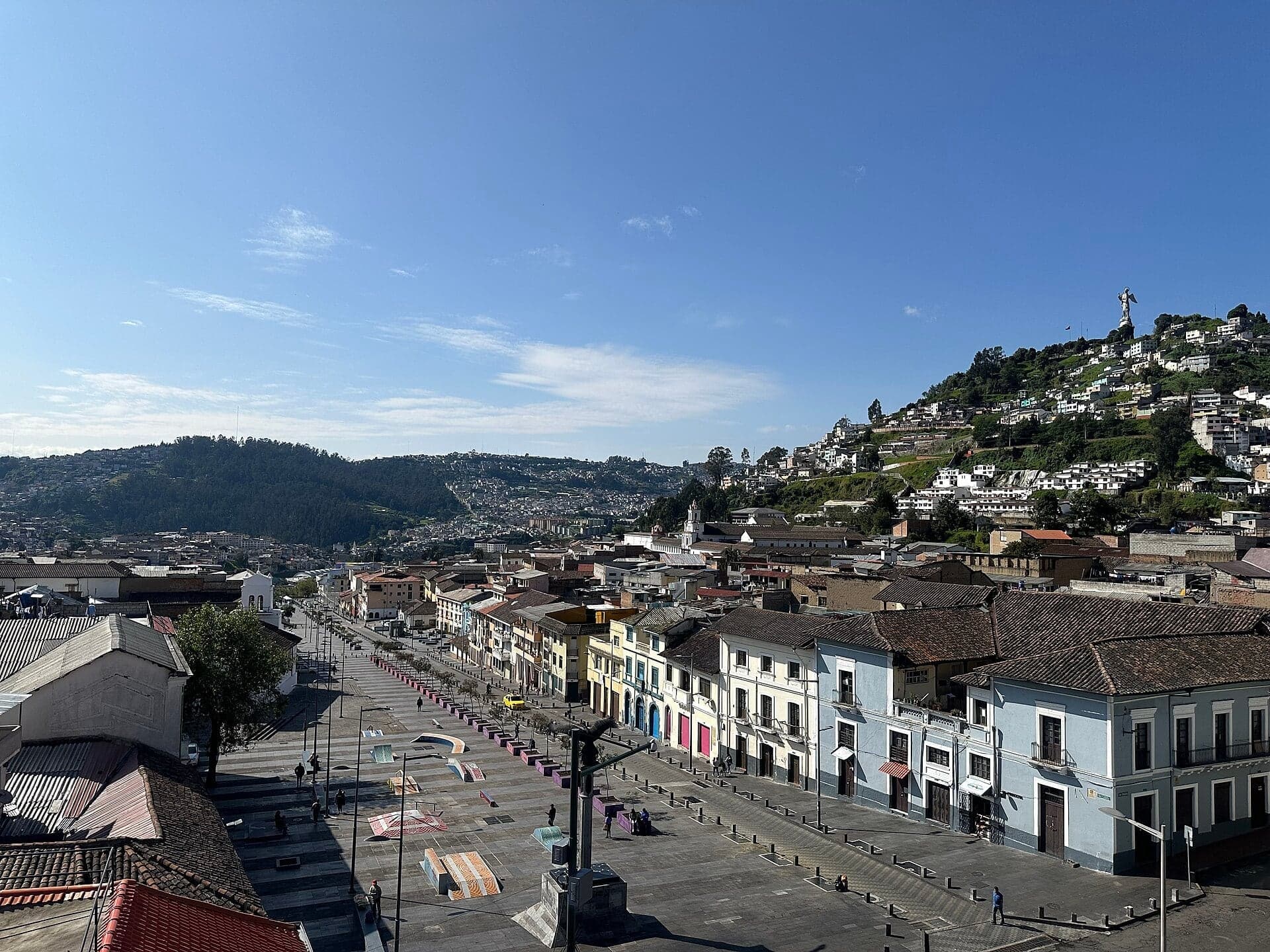
Quito's old town from the Basilica's towers at the top, through the Plaza Grande, La Compañía's gold and San Francisco's plaza to the filled ravine, La Ronda and Santo Domingo.
Start · Basílica del Voto Nacional: The Top of the Hill
DirectionsStops
- 1
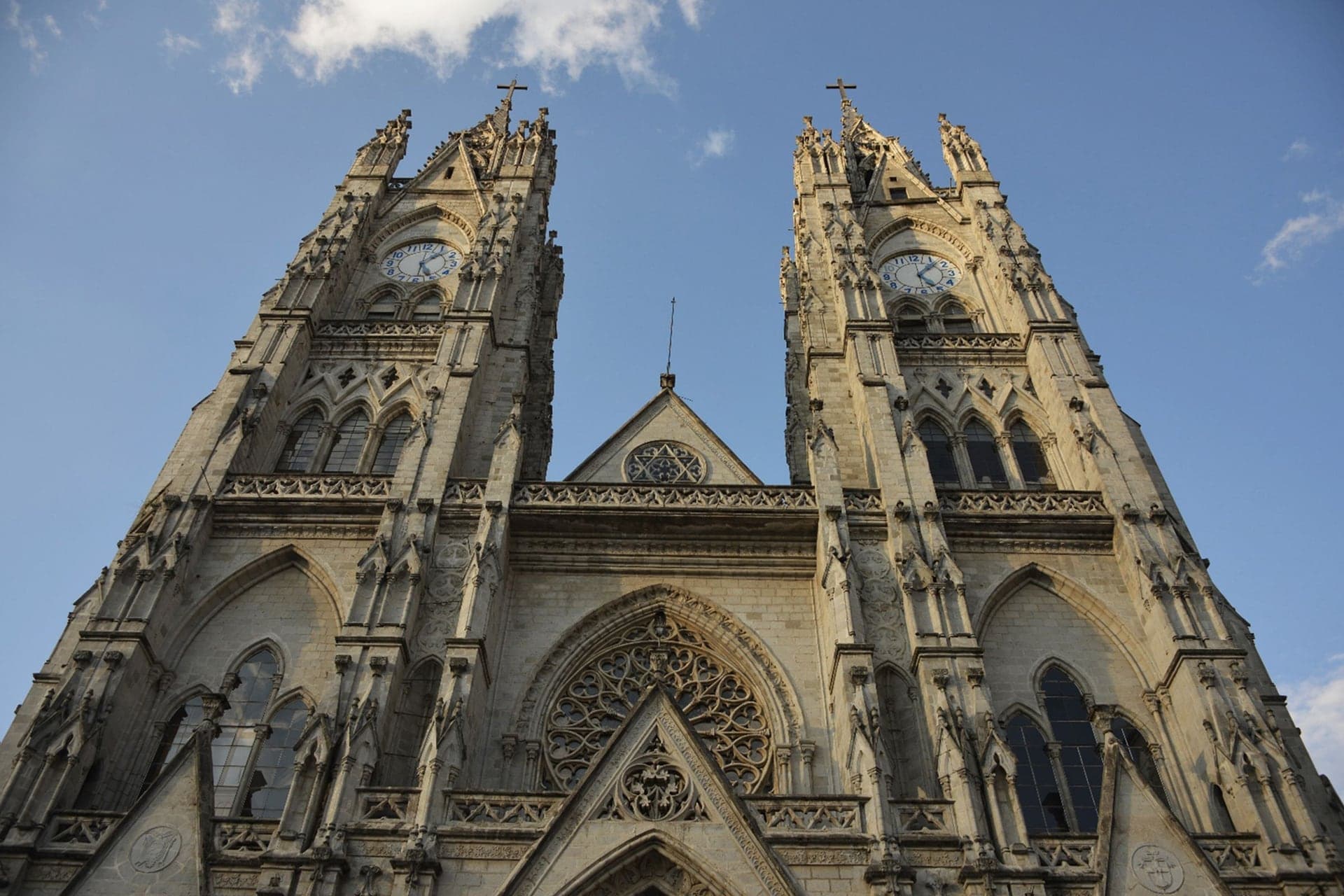
Basílica del Voto Nacional: The Top of the Hill
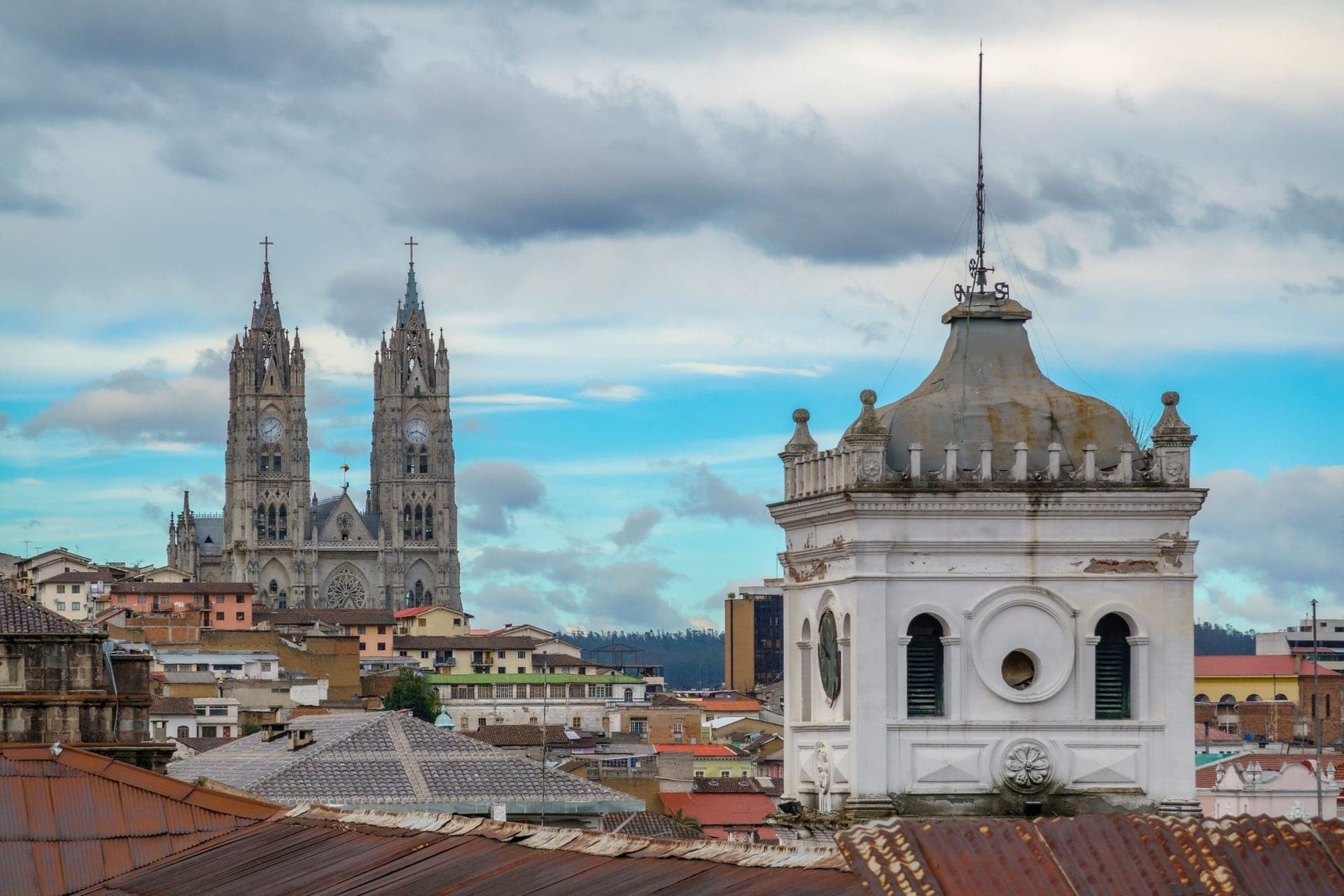
Neo-Gothic towers over the old town, begun in the 1890s and inaugurated in 1988, with Ecuador's animals among its gargoyles.
- 2
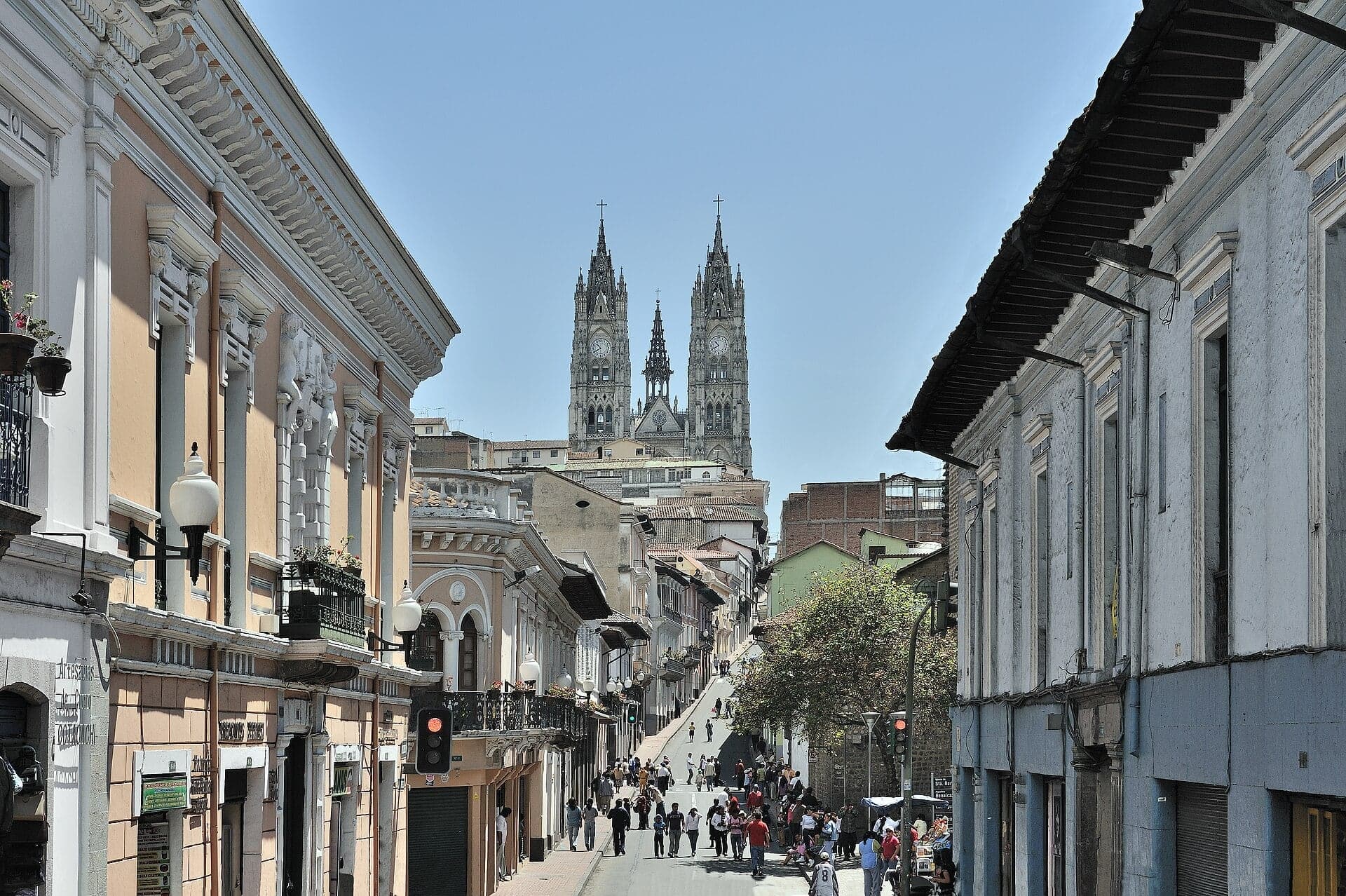
Calle Venezuela: A Grid on a Mountain
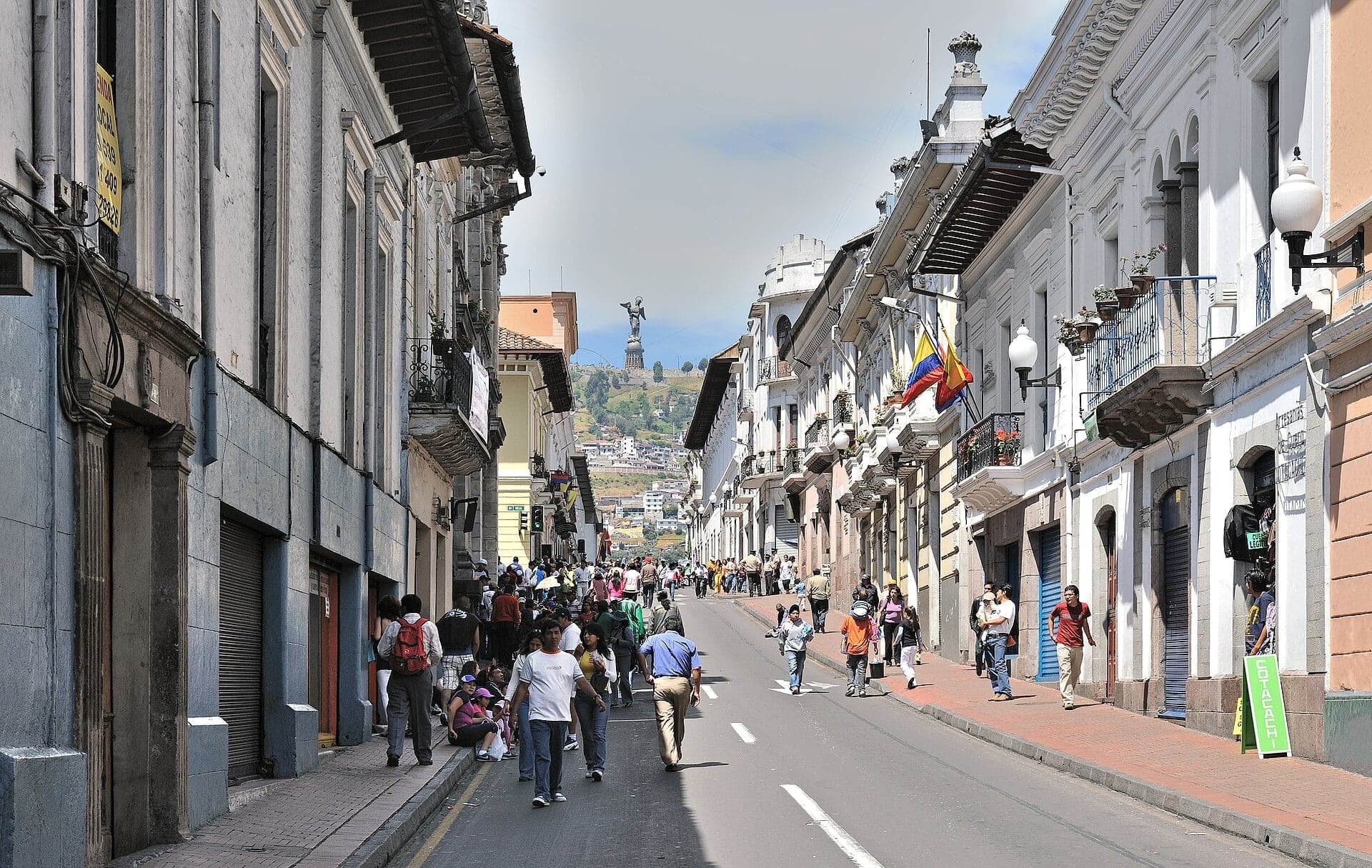
A straight street down the hill, lined with the old town's houses of earth under whitewash and red clay tile.
- 3
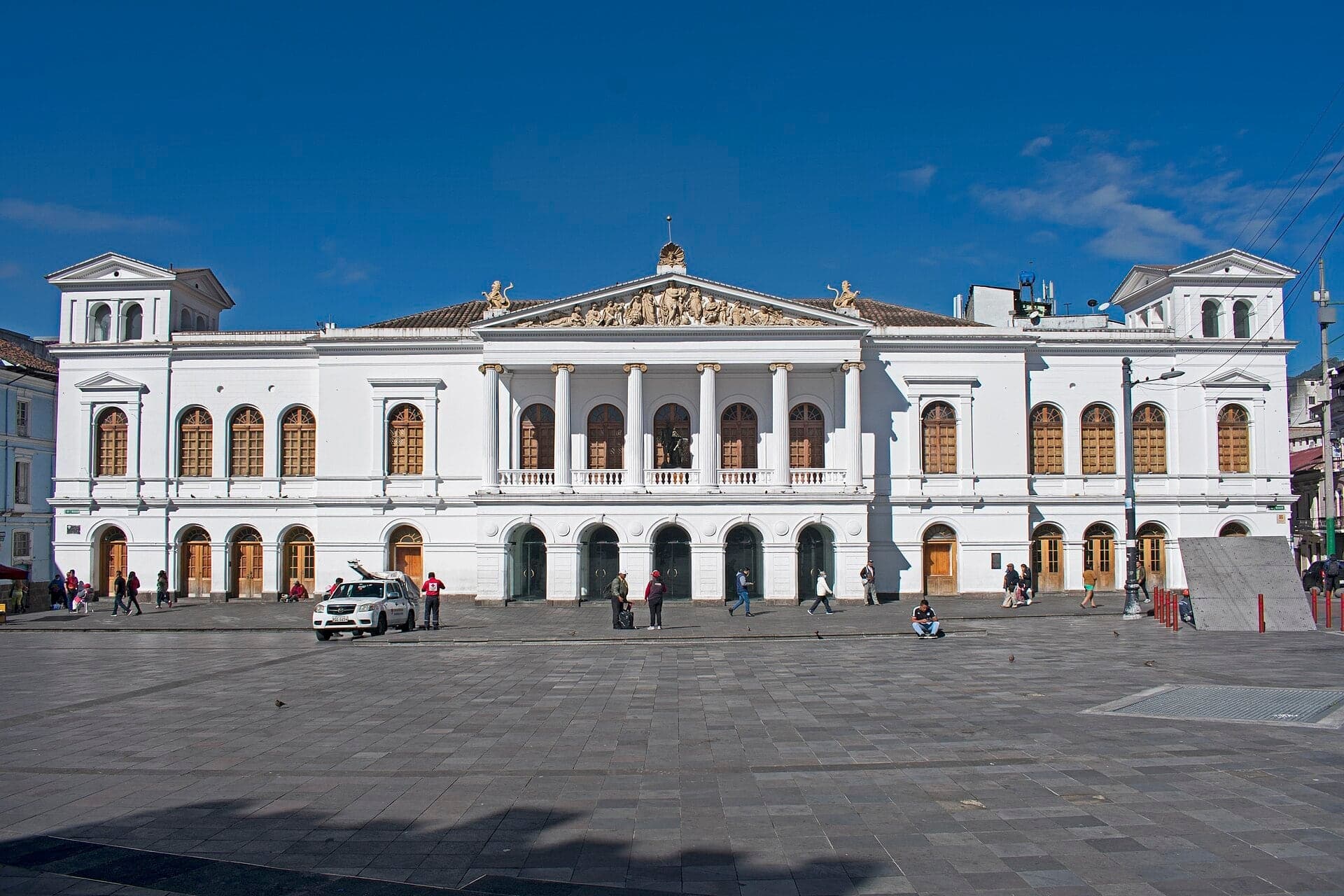
Plaza del Teatro: Meat Market to Theater
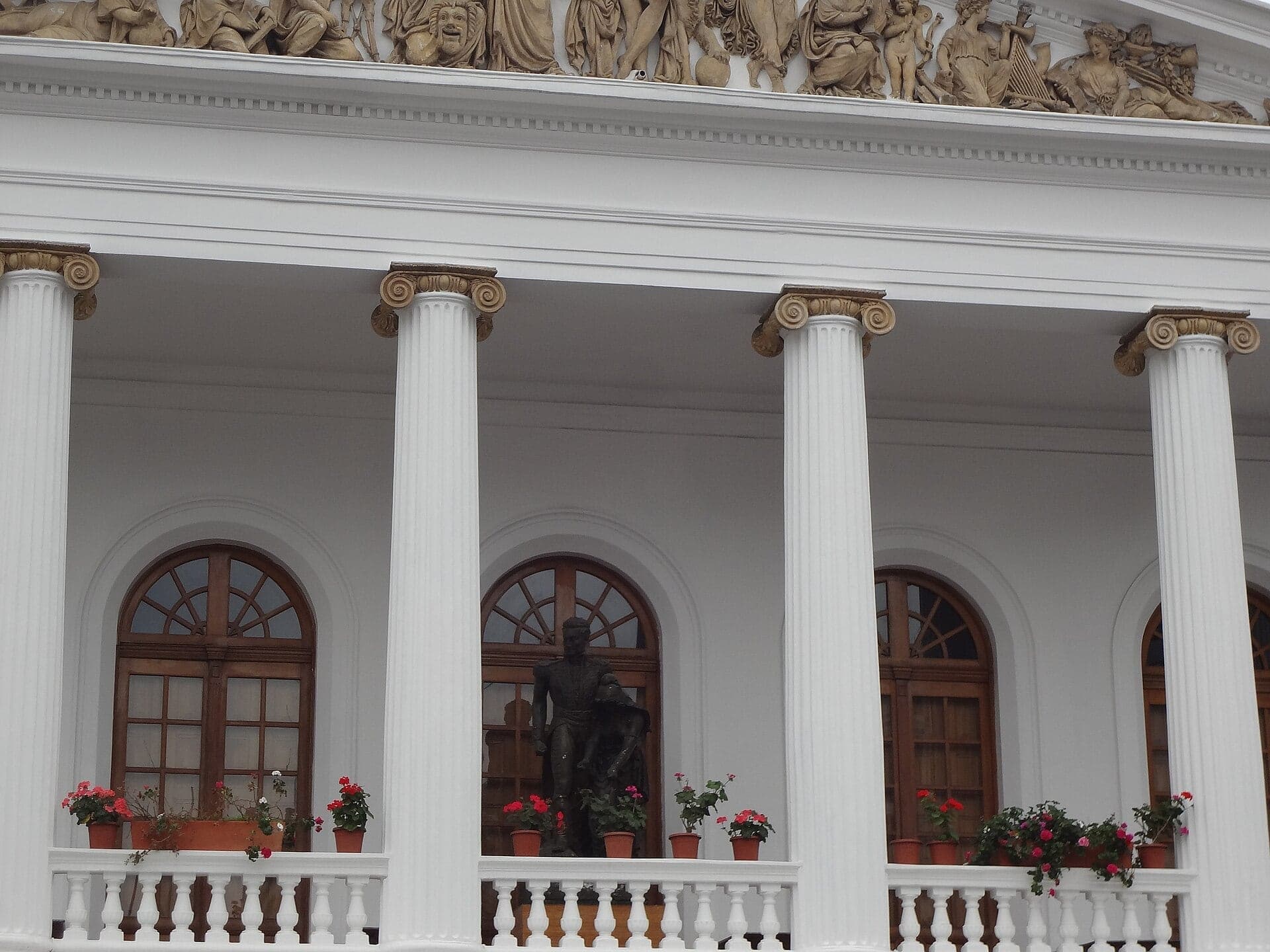
A meat market became a theater, now fronted by the white neoclassical Teatro Sucre of 1886.
- 4
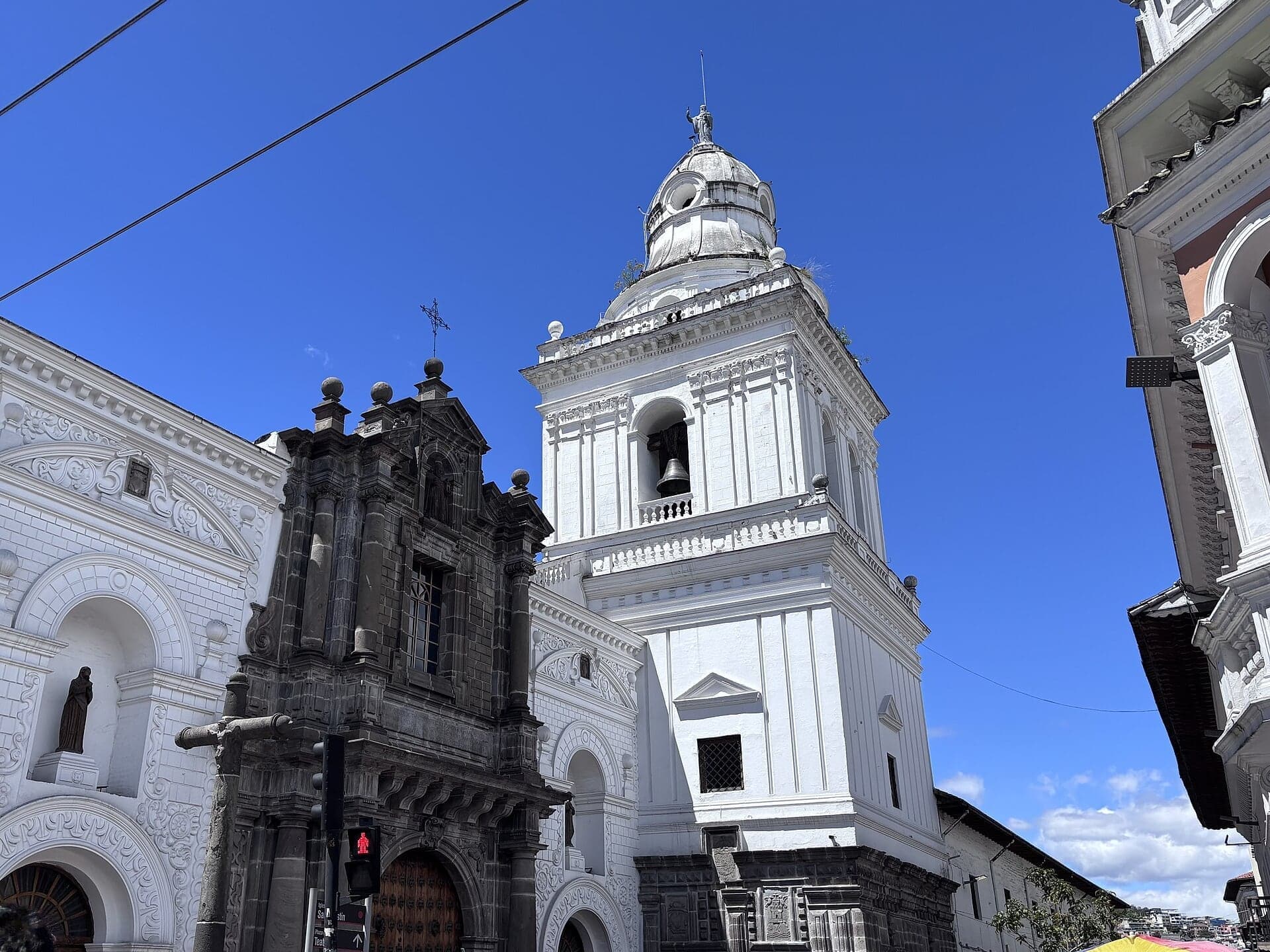
San Agustín: Rebuilt After Earthquakes
Where the 1809 act was signed, its tower and roofs brought down by earthquakes and rebuilt.
- 5
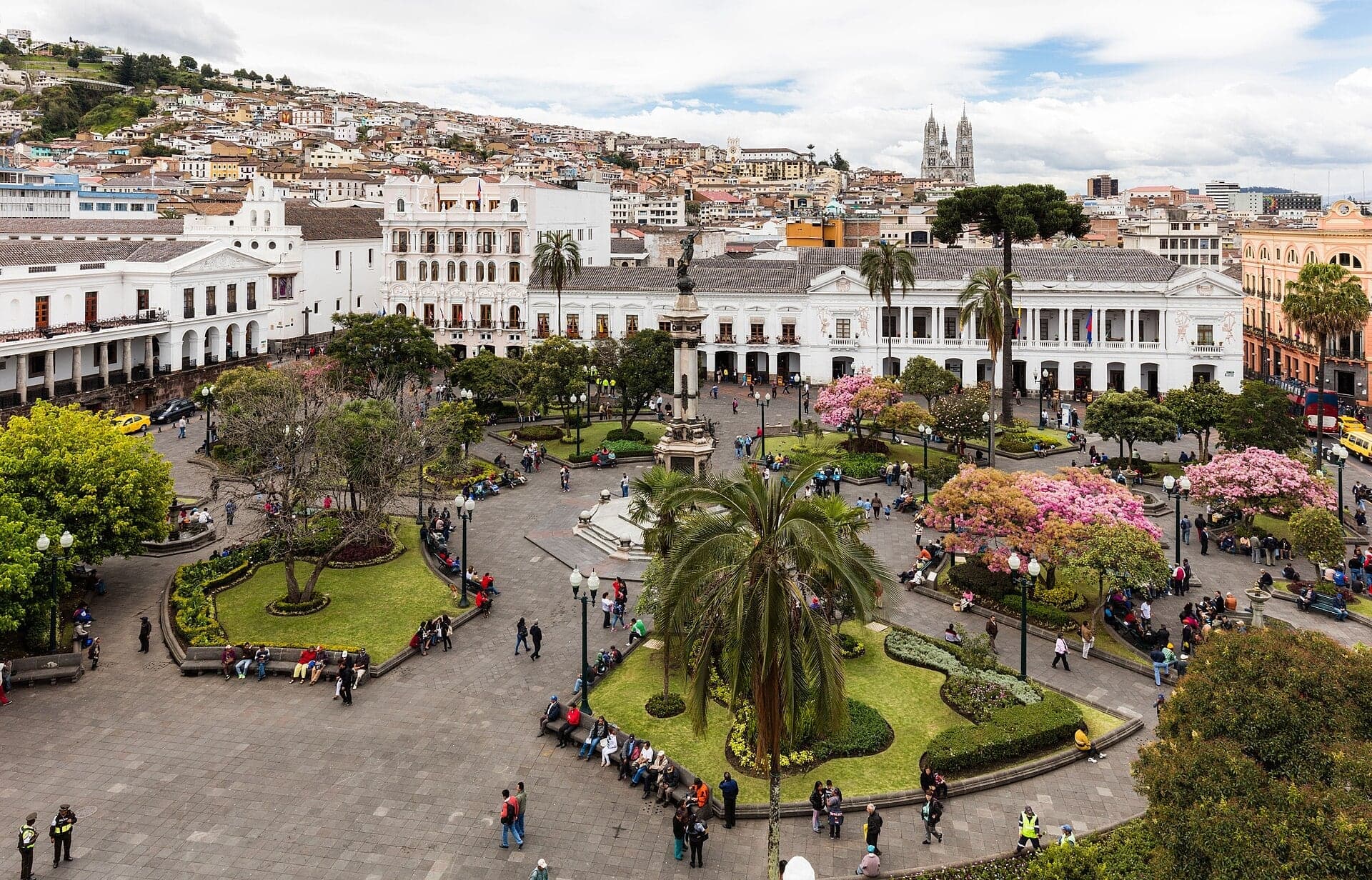
Plaza Grande: One Power on Each Side
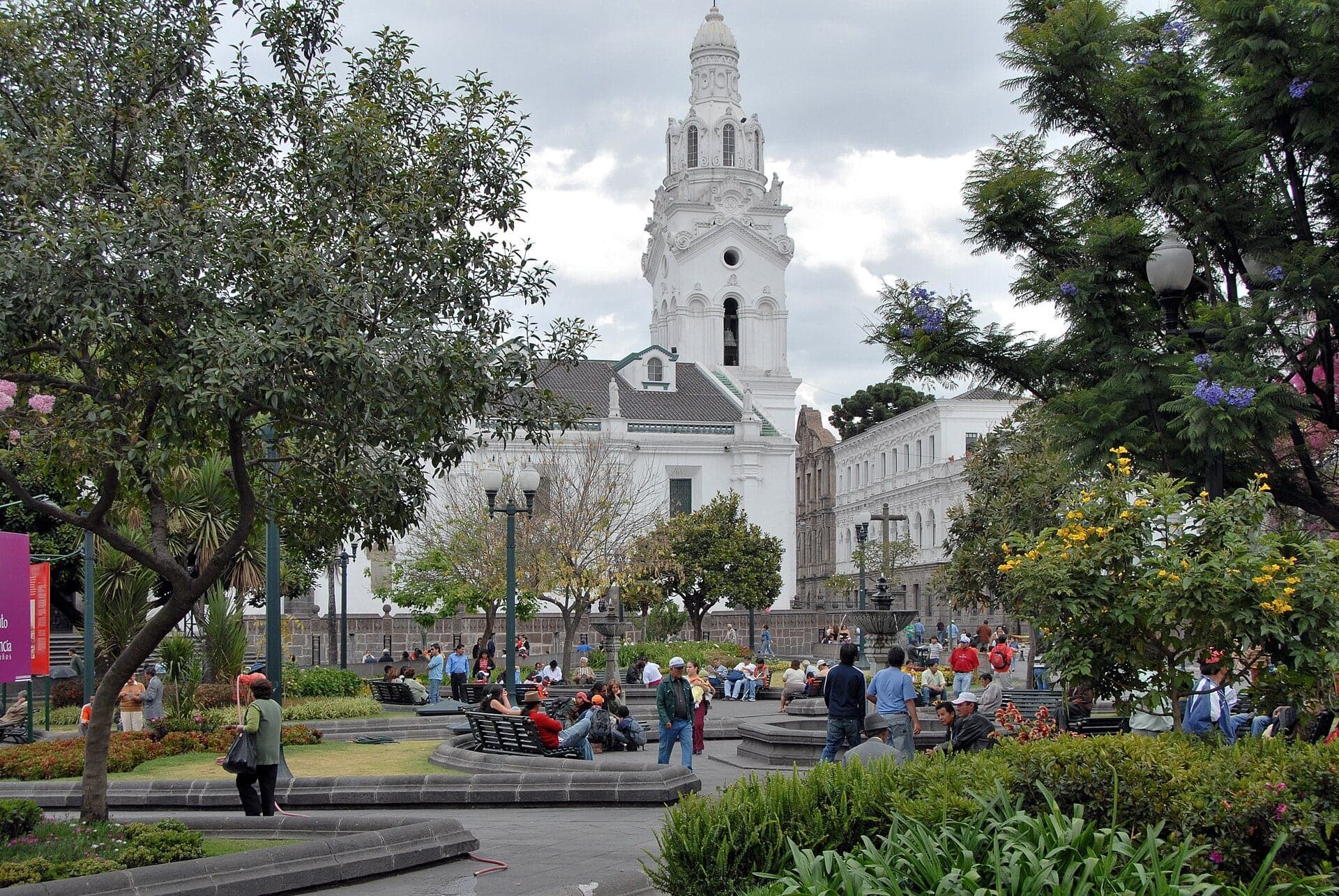
The founding square of Quito, with one power on each side: palace, cathedral, archbishop and city hall around a column of 1906.
- 6
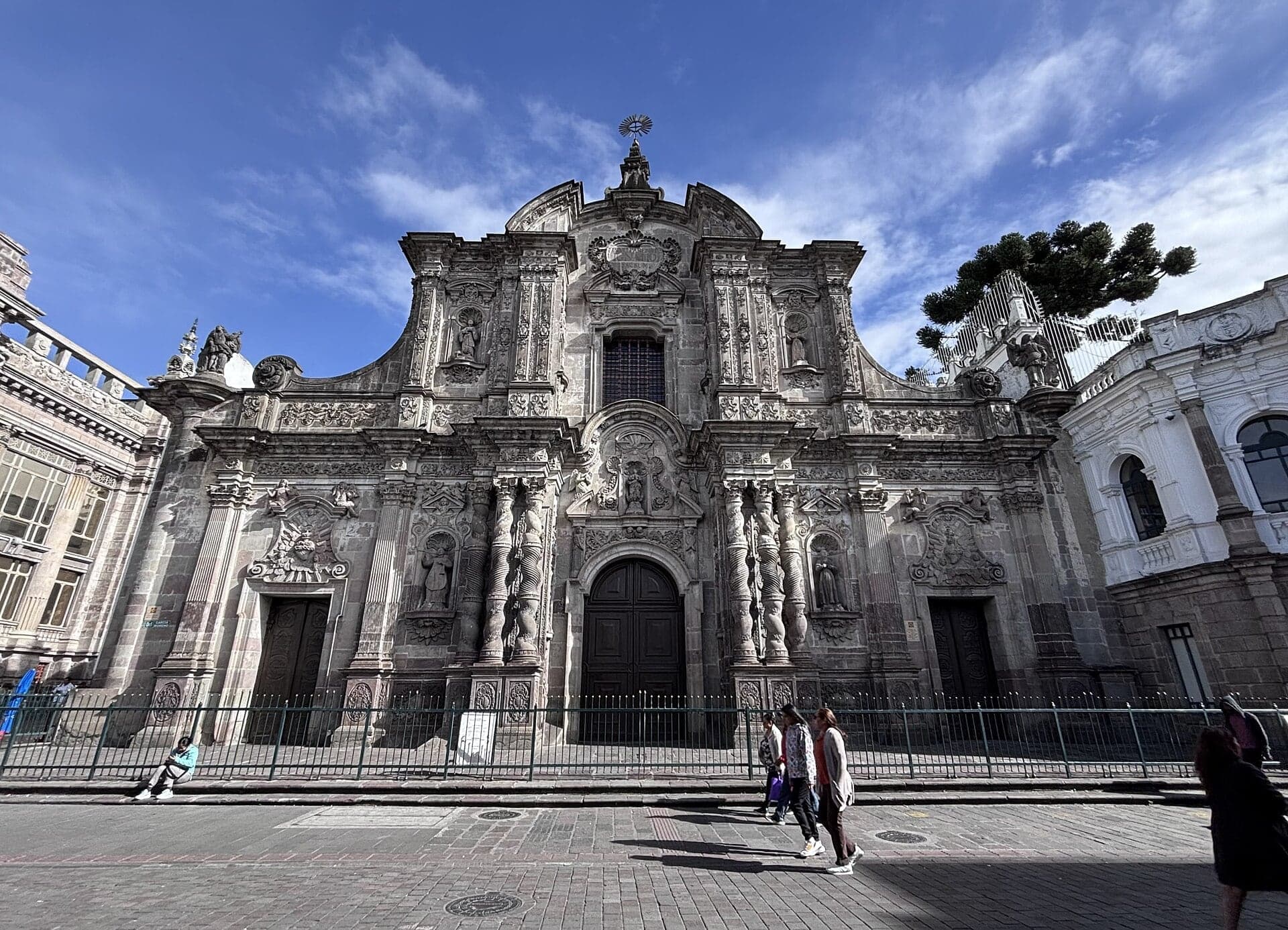
La Compañía and El Sagrario: Stone and Gold
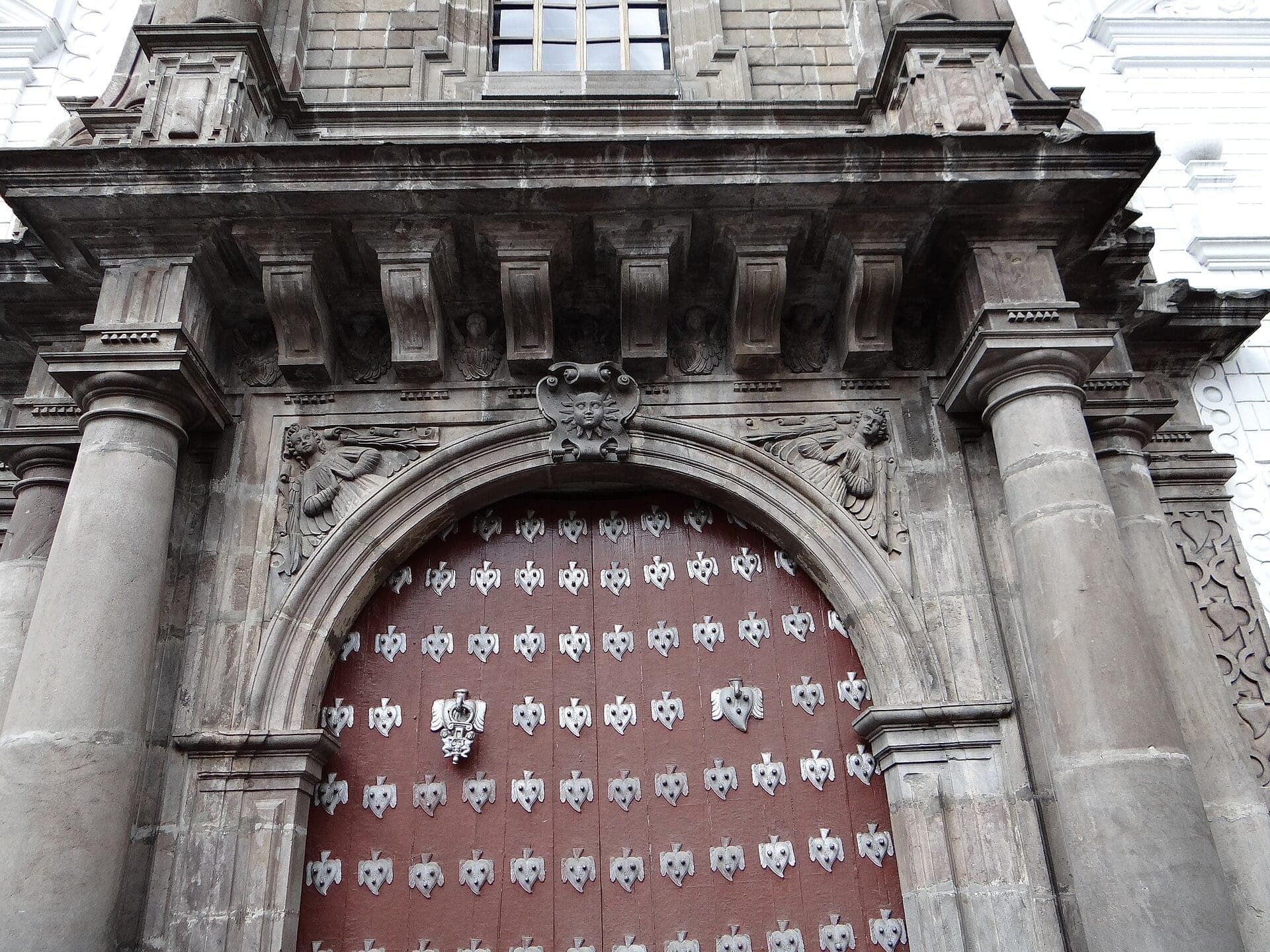
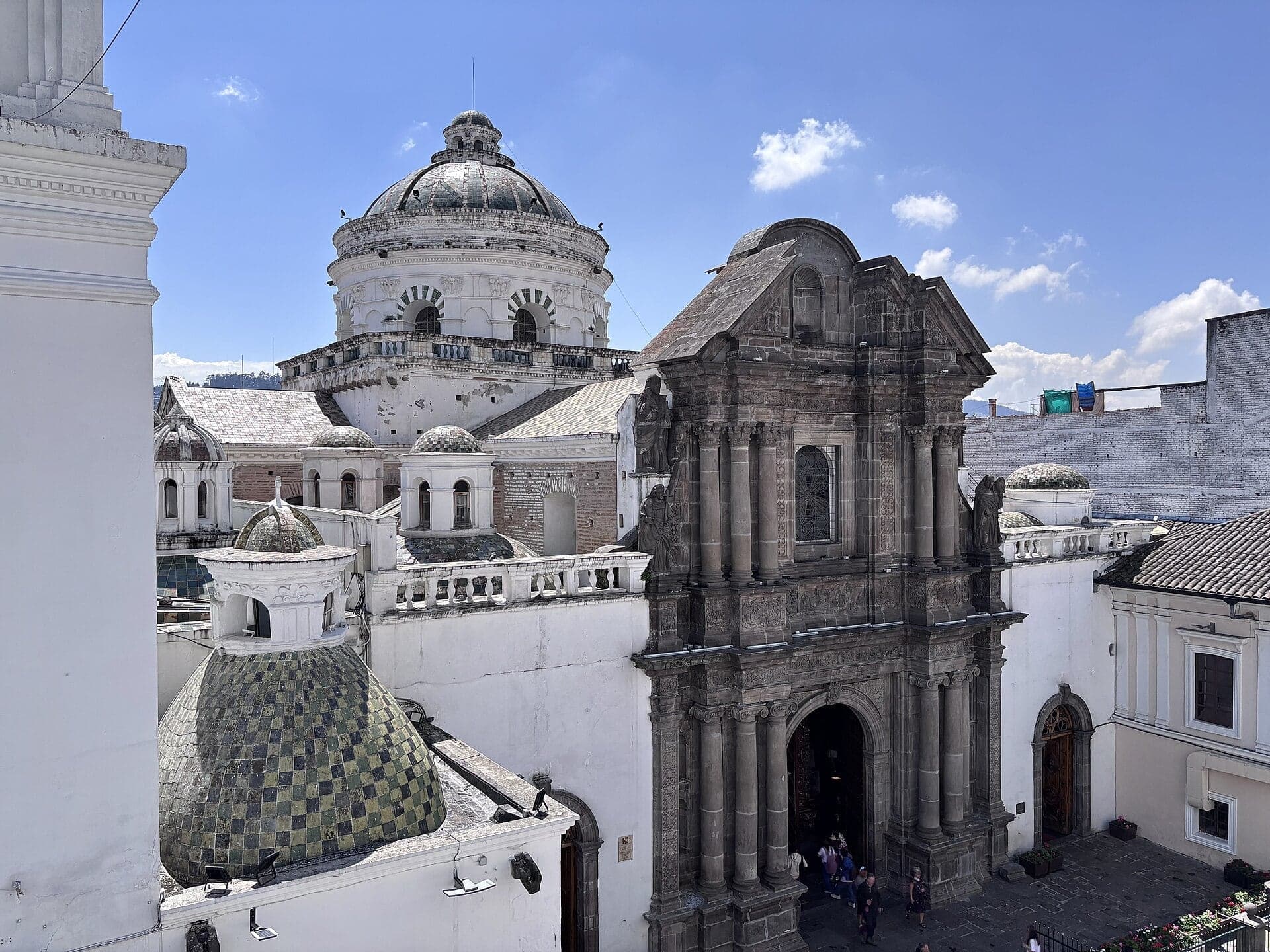
Stone front with gold leaf inside. A Jesuit church of carved grey volcanic stone, gilded with 23-carat gold leaf over 160 years.
- 7
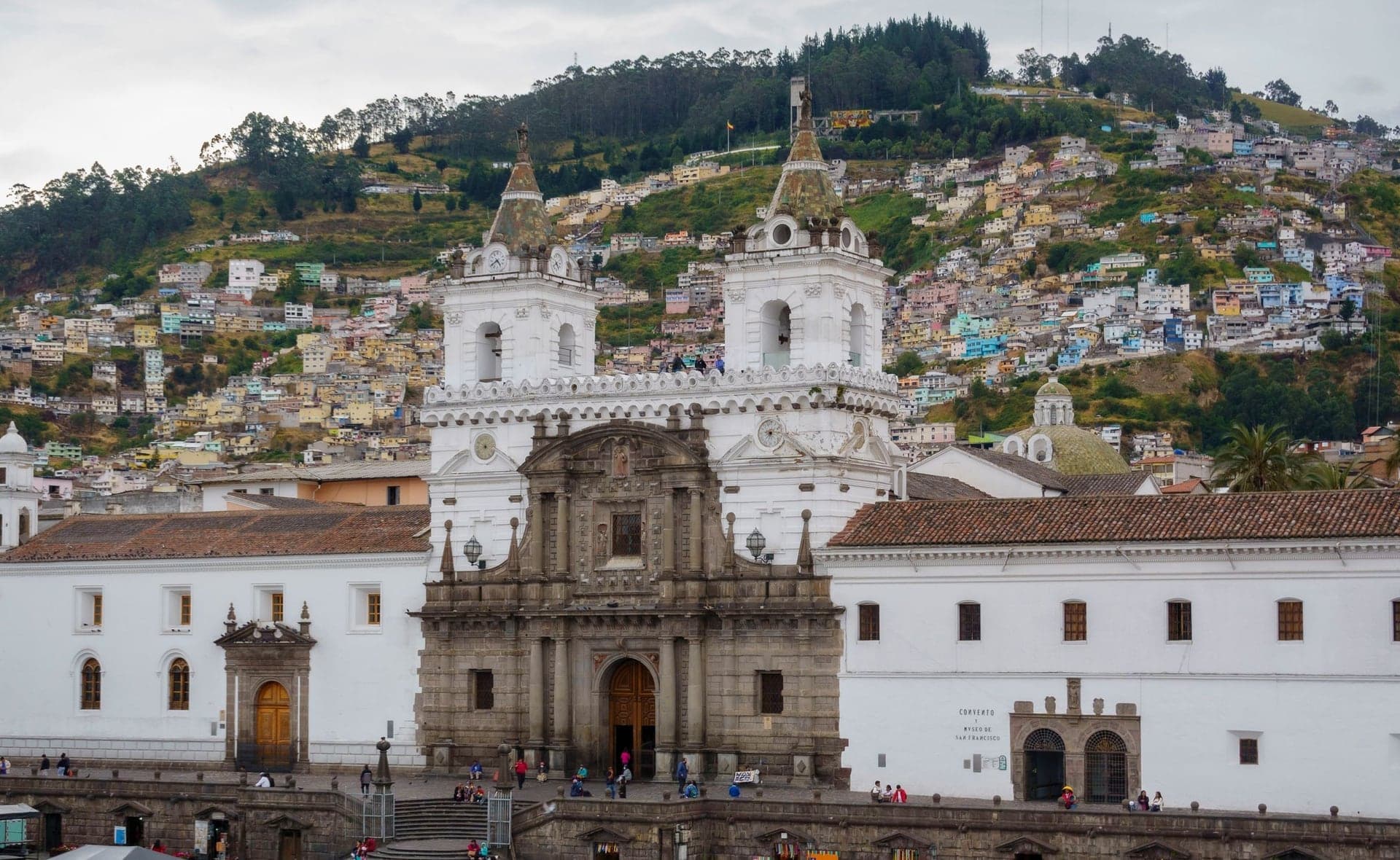
Plaza de San Francisco: A Stair from a Book
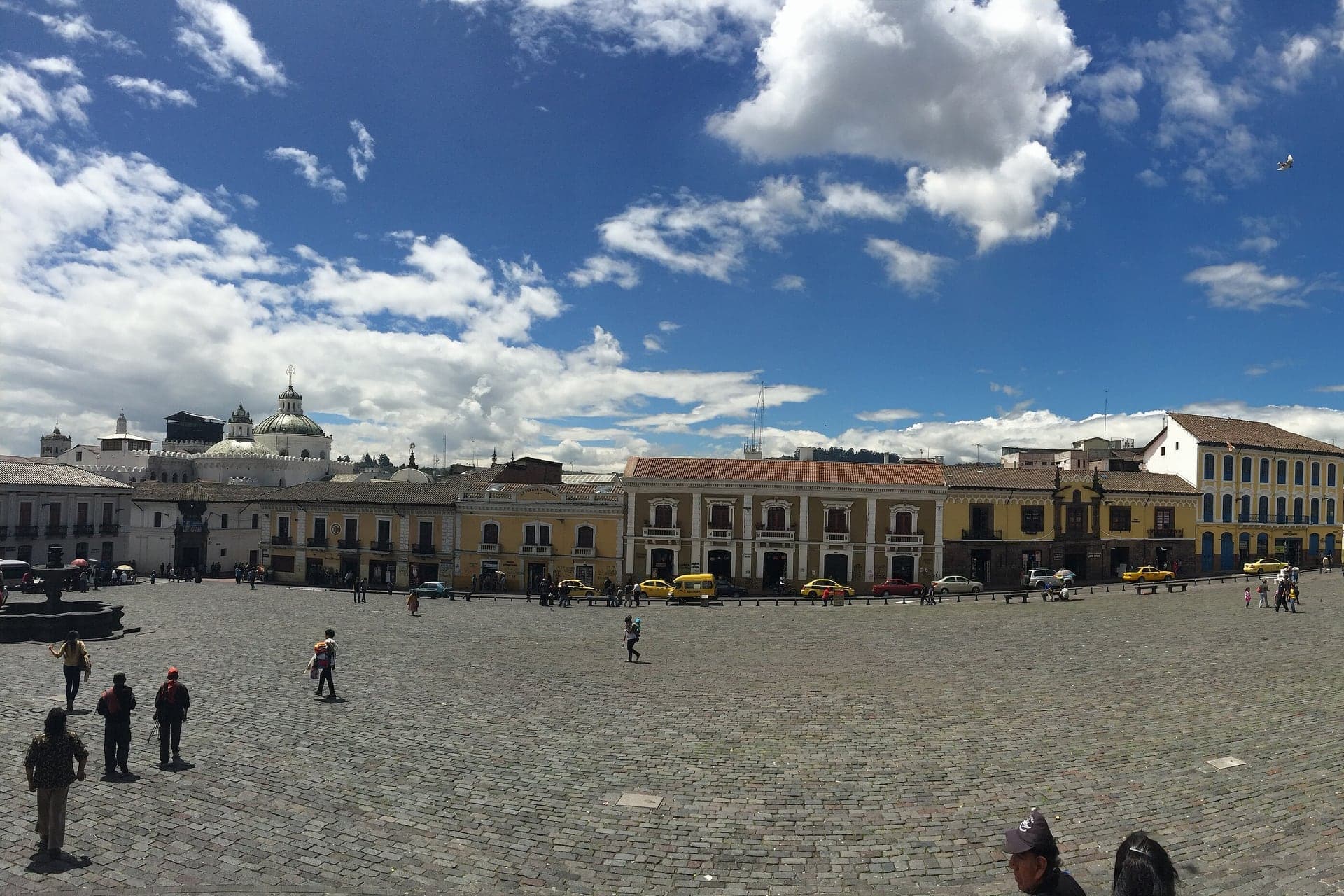
The first great convent of Quito, founded in 1535, behind a vast stone plaza and a round stair copied from a printed drawing.
- 8
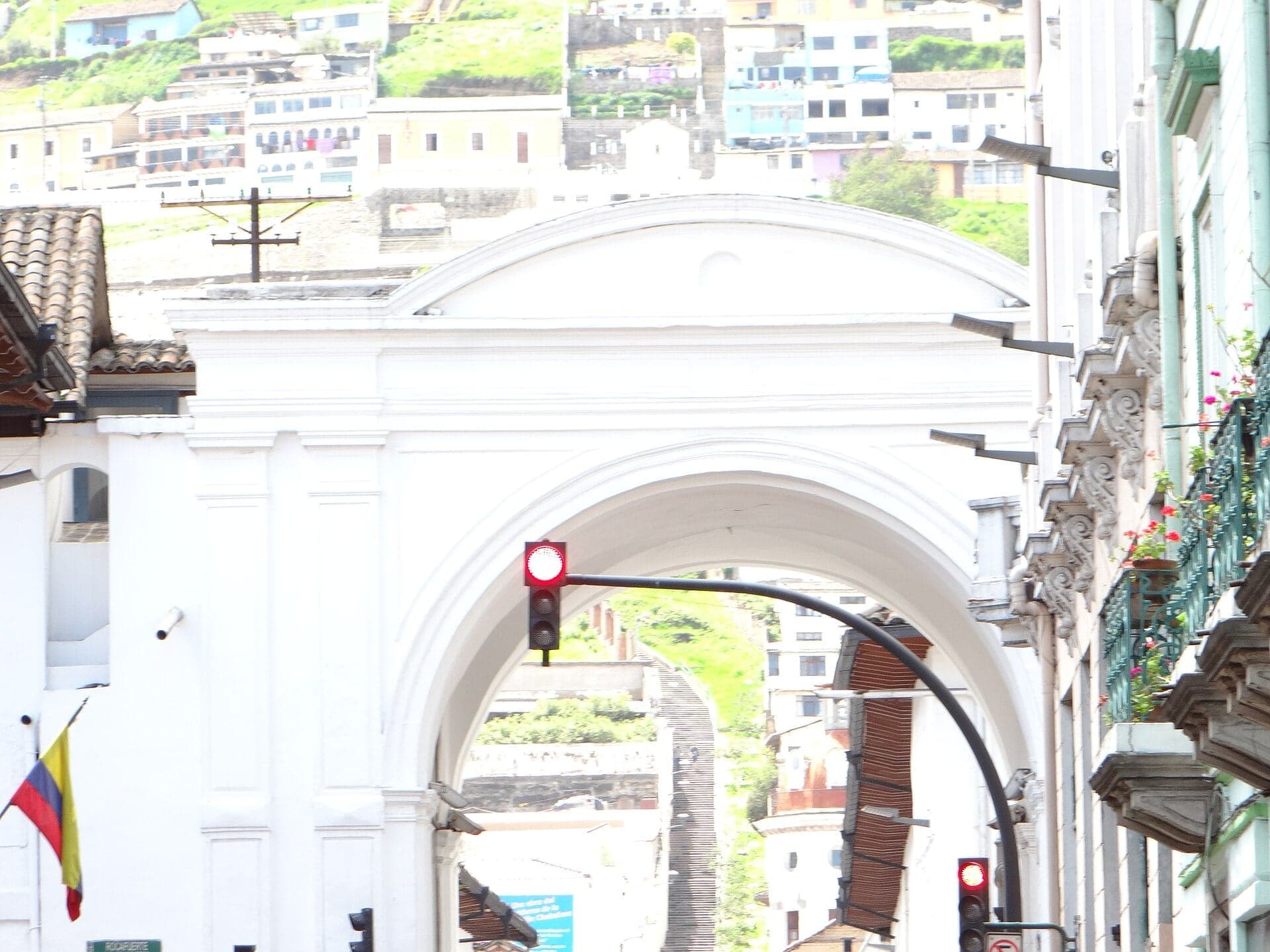
Arco de la Reina: The Linking Arch
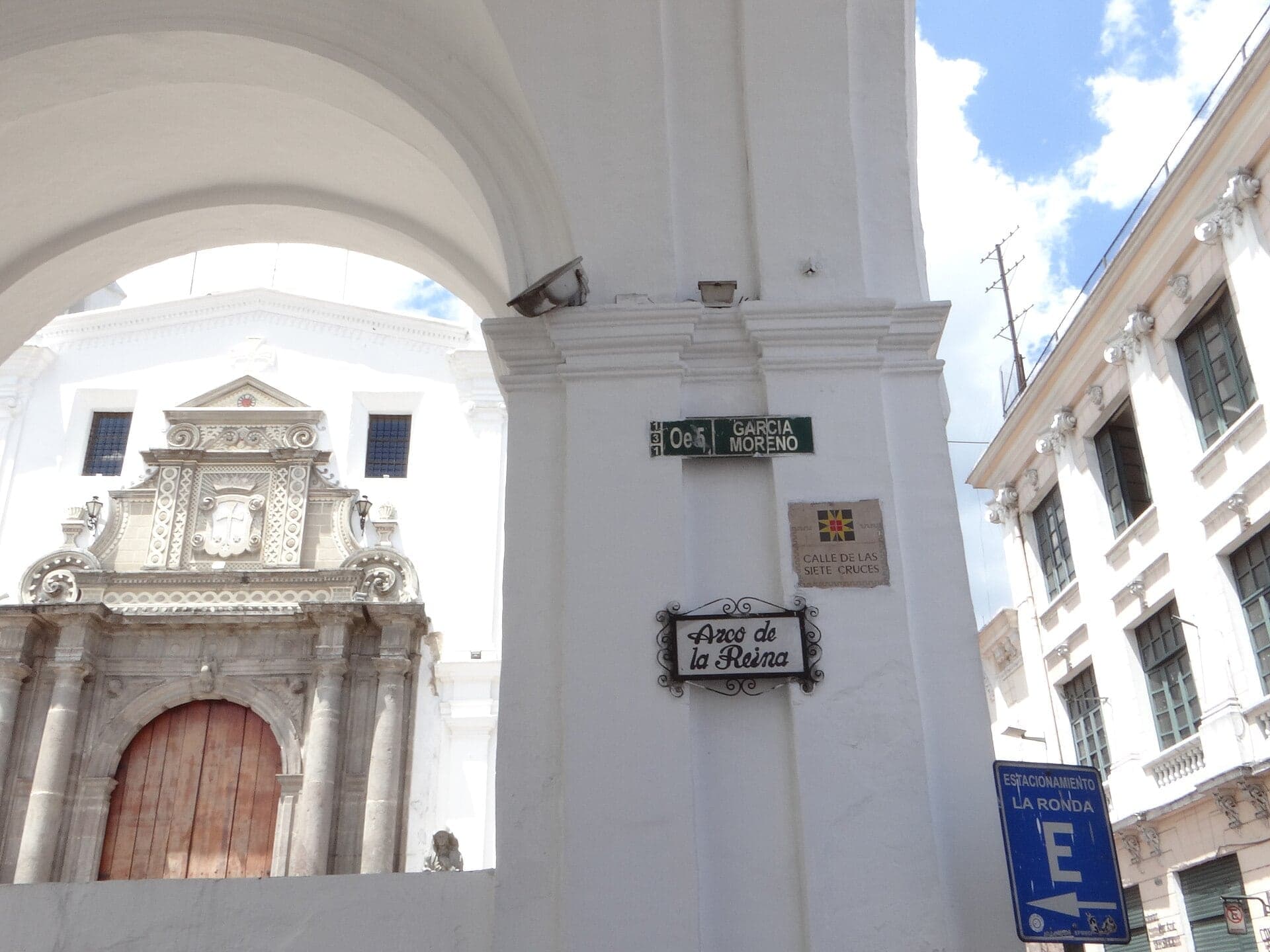
A 1726 arch over the street, beside the convent of Saint Mariana de Jesús.
- 9
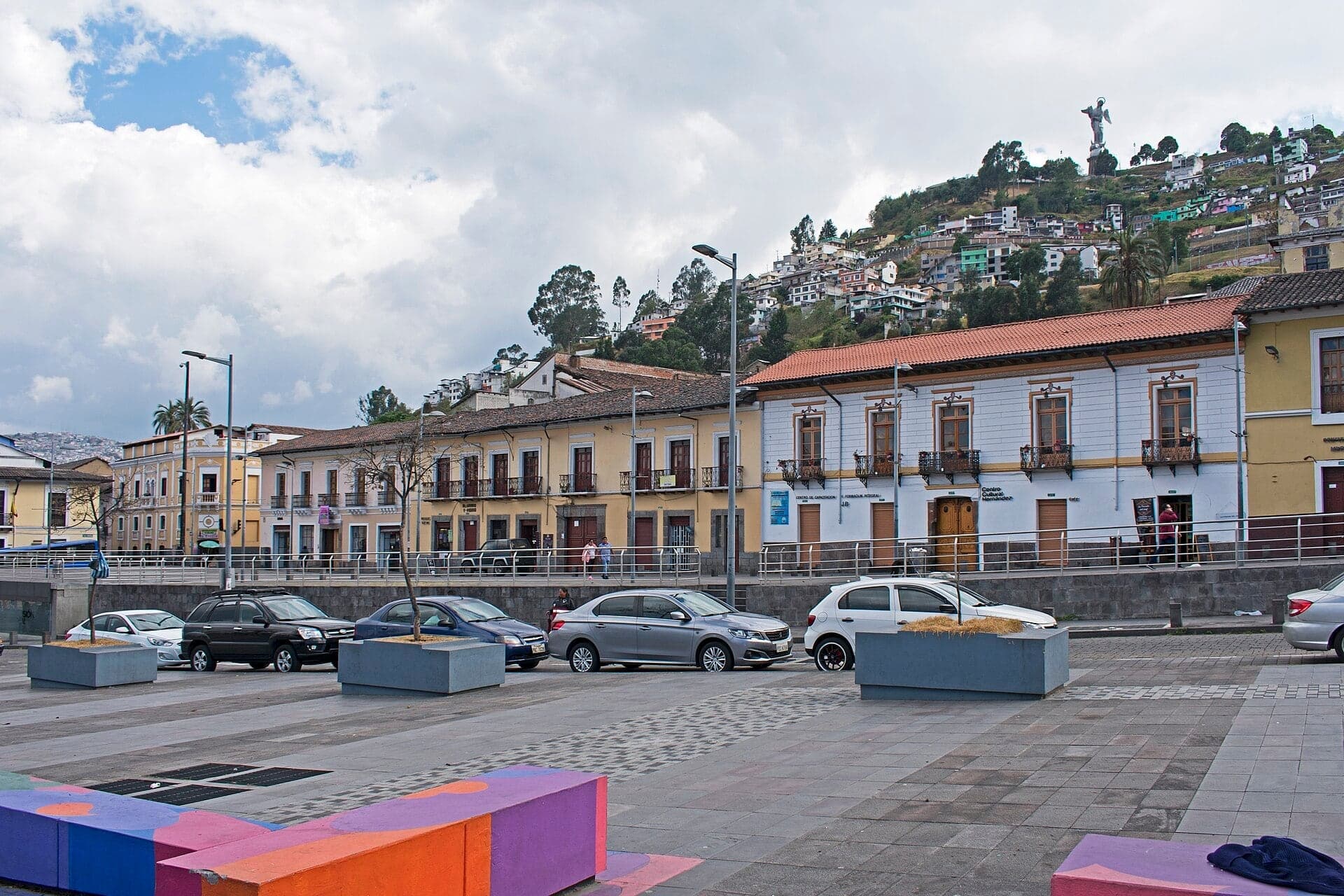
Bulevar 24 de Mayo: The Buried Ravine
A boulevard over a filled ravine, with the best view of the winged Virgin on El Panecillo.
- 10
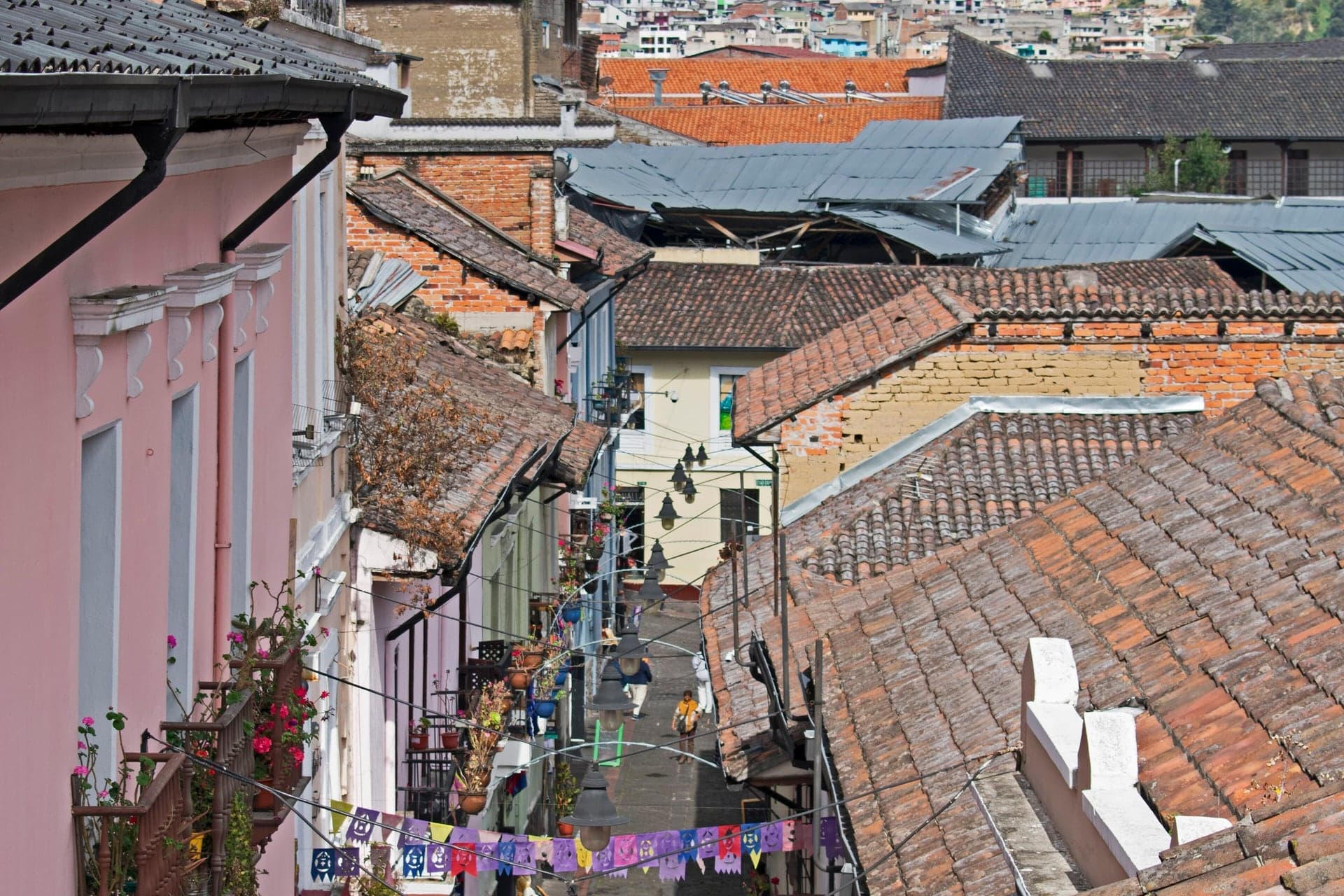
La Ronda: The Lane on the Ravine's Edge
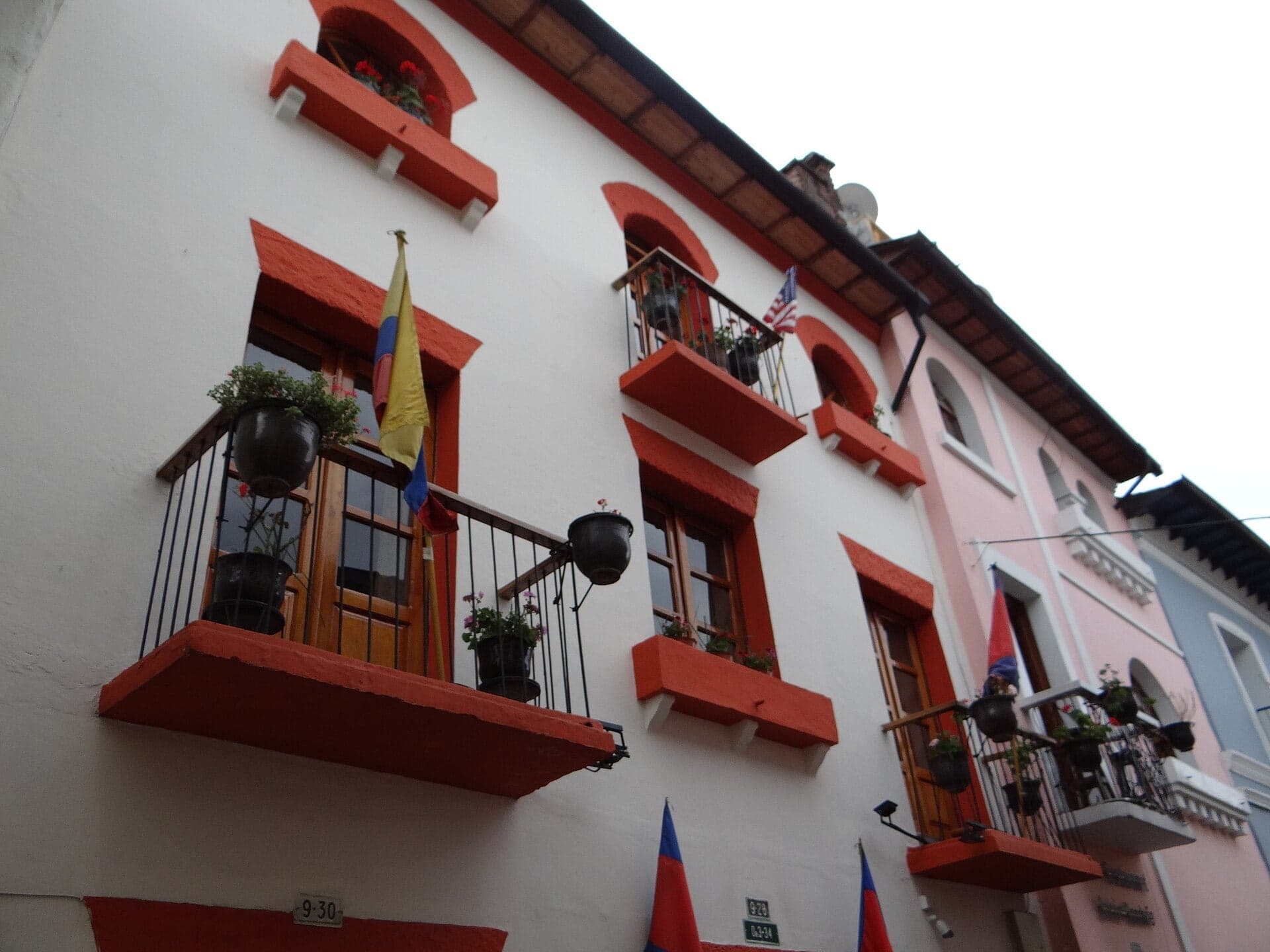
Balconies on the old ravine's edge, quiet by day and full of music at night.
- 11
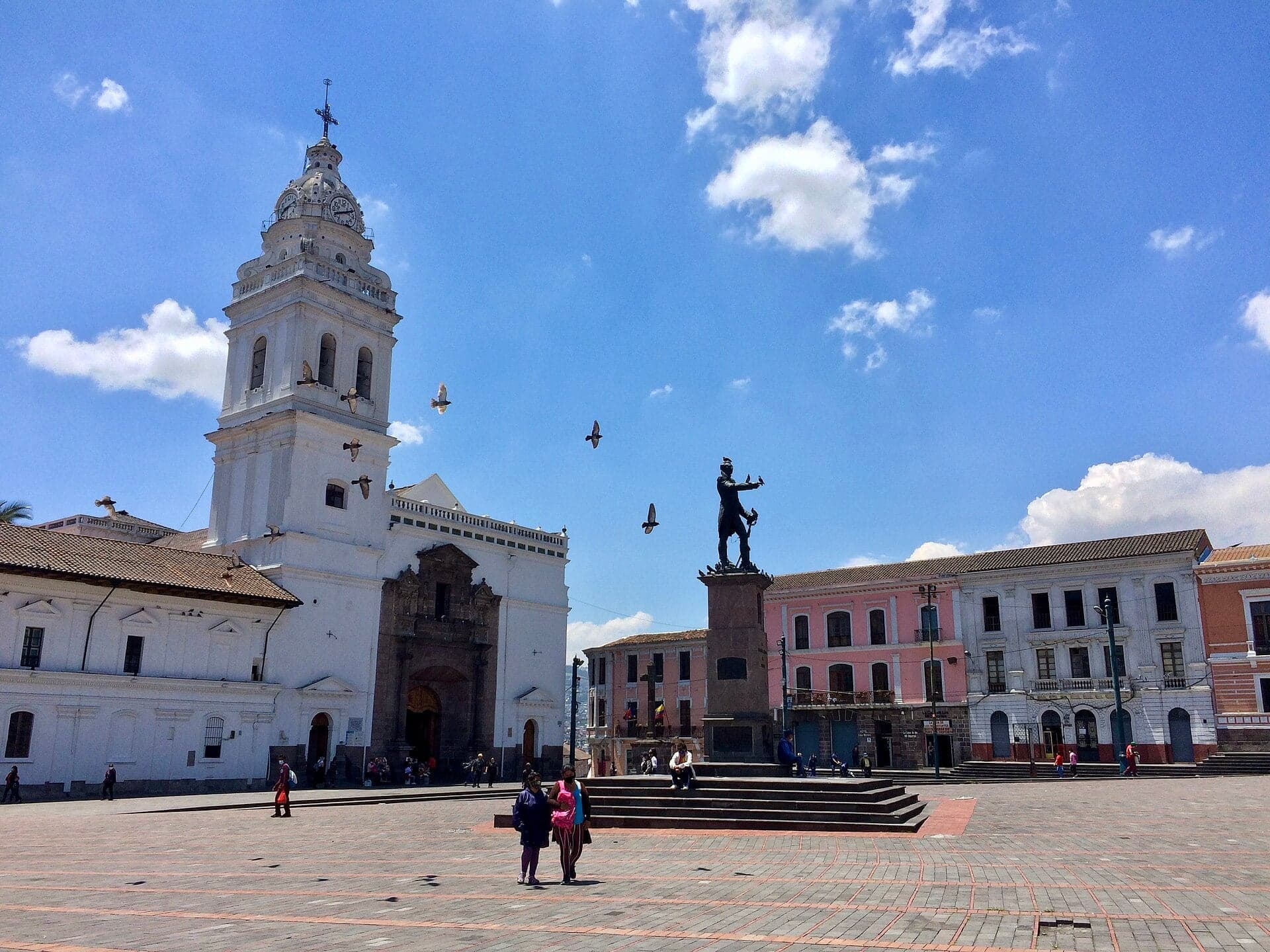
Plaza de Santo Domingo: Sucre's Square
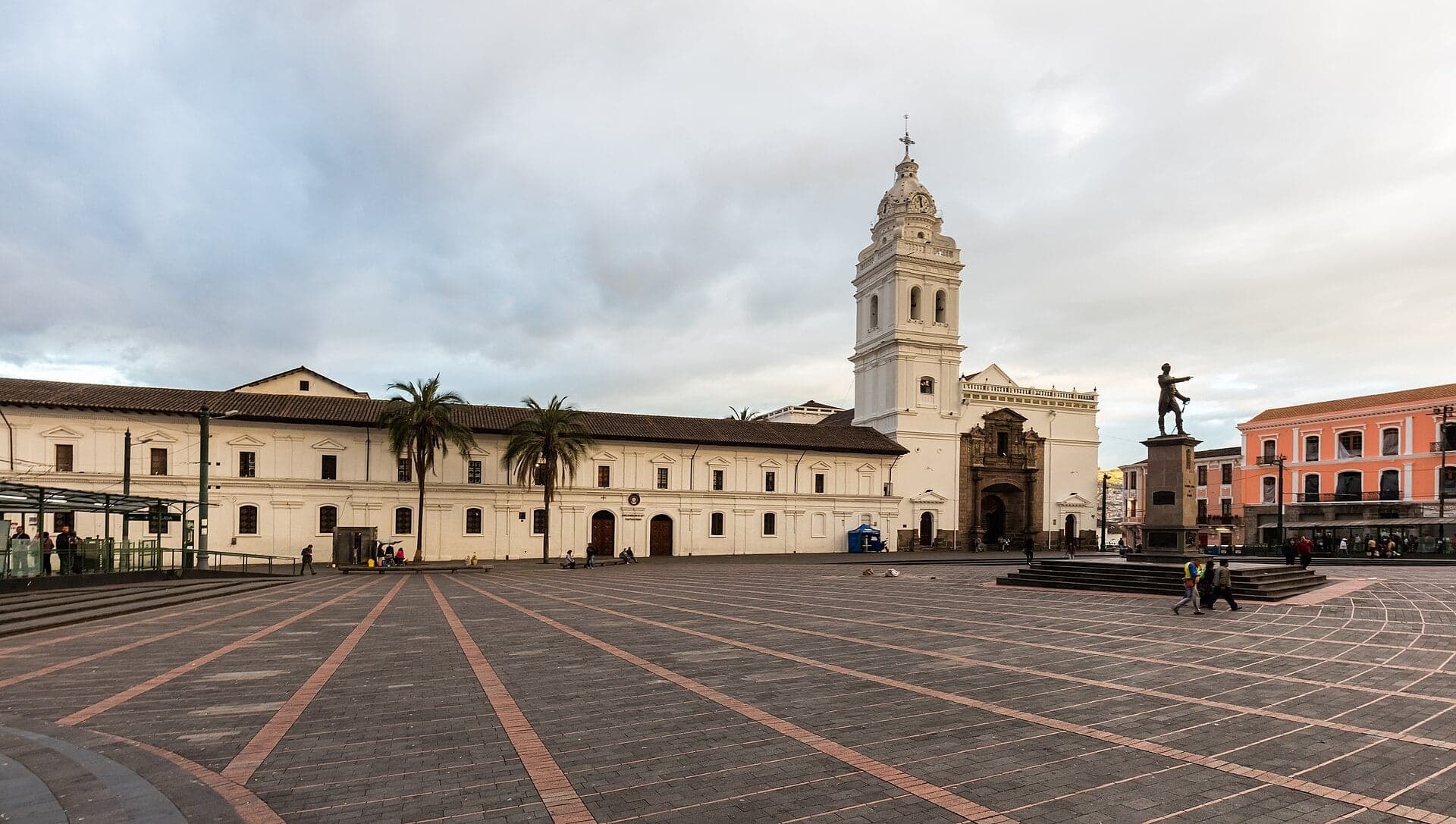
Sucre's statue and a chapel arch. Sucre's Paris-made bronze was unveiled in this plaza in 1892. Beside it, a Dominican church and a chapel built over a street.
Details
Best Time to Visit
Tuesday to Saturday, starting mid-morning and no later than about 15:00, so the whole walk is in daylight. On Mondays the Museo de la Ciudad, Carmen Alto, the Museo Camilo Egas, the Centro Cultural Metropolitano and the Santo Domingo convent tours are closed (La Compañía and the San Francisco museum open every day). On Sundays La Compañía opens only 12:00 to 16:00 and the San Francisco museum 09:00 to 13:00. La Ronda is liveliest in the evening: come back by taxi for that. Checked 5 October 2026.
Pro Tips
- •Getting to the start: take a taxi to Calle Venezuela and Carchi, just below the Basilica's west front. Quito Turismo advises the yellow taxis with a registration number on the door and the meter on; the UK and Canadian governments advise booking through your hotel or a radio taxi rather than hailing one. The Metro's nearest station, La Alameda, is about a kilometre away. Checked 5 October 2026.
- •Getting back: the Trolebús stops in the Plaza de Santo Domingo, where the walk ends (USD 0.35 a ride), and the Metro de Quito's San Francisco station is under the plaza at stop 7 (USD 0.45 a single trip, paper QR ticket from the station machines; Monday to Friday 05:30 to 23:00, Saturday 07:00 to 23:00, Sundays and holidays 07:00 to 22:00). Checked 5 October 2026.
- •La Compañía (stop 6): foreign adults USD 6, students USD 3; domes and crypts USD 3 each extra. Monday to Friday 09:30 to 18:00, Saturday 10:00 to 16:00, Sunday 12:00 to 16:00. Checked 5 October 2026.
- •San Francisco museum (stop 7): foreign visitors USD 6, including the church choir and bell tower. Monday to Saturday 09:00 to 17:00, Sunday 09:00 to 13:00. Checked 5 October 2026.
- •Carondelet palace (stop 5): free guided visits by appointment, Monday to Friday 09:00 to 16:00. Book by phone on 02 382 7000 extension 7428 or by email to ucultural@presidencia.gob.ec, bring your passport and arrive five minutes early. Visits have been restricted at times for security. Checked 5 October 2026.
- •The Basilica (stop 1) sells separate tickets for the church and the tower climb; there is no official website, and hours shift around Mass, so check at the door. Checked 5 October 2026.
- •The Museo Camilo Egas (stop 2) is free: Tuesday to Friday 09:00 to 17:00, Saturday and holidays 10:00 to 16:00. The Centro Cultural Metropolitano, across from La Compañía, is free: Wednesday to Sunday 09:30 to 16:30. Checked 5 October 2026.
- •Carmen Alto's nuns sell their sweets from a small shop beside the museum entrance at stop 8; its days and hours are not published.
- •El Panecillo: most visitors go up by taxi from the old town. The statue charged USD 1 in the 2025 Christmas season (Monday to Wednesday 09:00 to 17:00, Thursday to Sunday 09:00 to 21:00); check before you go. Checked 5 October 2026.
- •Tourist police: an office on the Plaza Grande, in the Casa de los Alcaldes on Calle Chile (phone 02 295 5785), and a post on La Ronda, open late on Fridays and Saturdays. Checked 5 October 2026.
Safety & Precautions
- •Altitude: the old town is about 2,850 metres up. Quito Turismo notes that mountain sickness can appear 6 to 12 hours after arriving above 2,500 metres and advises no alcohol on the first day. The walk drops down Calle Venezuela, climbs steeply for one block on Calle Flores, rises gently from the Plaza Grande to the Arco de la Reina, and then drops to La Ronda; take it slowly.
- •Not step-free: cobbles and setts, a steep stretch of Calle Venezuela at the start and raised kerbs at several corners. There are no stairs on the route.
- •The UK Foreign Office (updated 2 October 2026) says mugging and pickpocketing are common and advises care in Quito's old town and at transport hubs, and avoiding quiet areas or walking alone at night. Keep bags closed and in front of you on Calle Guayaquil and Calle Flores, in the Plaza Grande, at the San Francisco Metro exit and in the Plaza de Santo Domingo. Walk in daylight.
- •A fence surrounds the Carondelet palace block on García Moreno, Chile and Espejo, and the arcade shops under the palace are closed. Follow whichever pavement is open. The police can close the Plaza Grande on protest or state days; if it is shut, go round by Calle Venezuela and Calle Espejo. Checked 5 October 2026.
- •The trolleybus runs on Calle Guayaquil and Calle Flores: keep to the pavement and cross at the lights. The crossing of Sebastián de Benalcázar into the Plaza de San Francisco is a zebra with no lights: wait for a gap.
- •The walk ends at the Plaza de Santo Domingo. Do not walk on west along the Bulevar 24 de Mayo or up the slopes and stairs toward El Panecillo: take a taxi.
- •Churches may close at lunchtime and during Mass. If you step inside one, keep quiet during services.
Travel advisory: Exercise Increased Caution (Level 2).
Gallery
Read the walk
The full story of Old Town: The Way the Water Runs, in words. Prefer to listen? Play it narrated, from home or on location.
Introduction
Quito, the capital of Ecuador, is built on a mountainside. Its old center lies on the slopes of the Pichincha volcano, which fall to the ravines that cut them, and the Spanish who founded it in fifteen thirty-four laid their grid square across that slope anyway. So the streets here do not wind. They fall. In nineteen seventy-eight Quito was one of the first twelve places on the World Heritage List, and, with Krakow, one of the first two historic cities.
The walk ends at one of those ravines, which the city filled in. Over eleven stops and a little over two kilometres, about a mile and a half, it drops from the Basilica, climbs back about thirty metres through the main squares, steeply for one block, and then falls to the ravine. Allow about an hour and forty minutes, longer if you go inside. The old town is about two thousand eight hundred metres up, so take the climb slowly.
Watch the materials: houses of earth under whitewash, church fronts of carved grey volcanic stone, and gold inside.
Three people come back along the way. Antonio José de Sucre, the general who won the Battle of Pichincha in eighteen twenty-two. Mariana de Jesús, a young woman of seventeenth-century Quito and later a saint. And Bernardo de Legarda, a sculptor and gilder of the seventeen hundreds, whose work you will meet in gold leaf and, much larger, on a hill.
1. Basílica del Voto Nacional: The Top of the Hill
Welcome to Quito's old town, and to the Basílica del Voto Nacional. Stop on the pavement of Calle Venezuela, a little below the church, with its two square towers and their clock faces at the head of the street. The church and the tower climb have separate tickets, and the climb is worth it if you have the breath for it at this height. Hours shift around Mass.
This is the newest of the great churches on this walk, and its highest point. In eighteen seventy-four Ecuador was consecrated to the Sacred Heart, and in the eighteen eighties a great church was vowed as its monument. Voto Nacional means national vow. A French architect drew the plans on the model of French Gothic cathedrals. Building began in the eighteen nineties and, for lack of money, went on for nearly a century. Pope John Paul the Second said Mass here in nineteen eighty-five, and the church was inaugurated in nineteen eighty-eight. The church is a hundred and forty metres long.
Gothic cathedrals in Europe carry gargoyles shaped as monsters. Here, along the sides of the church, up at the roof line, many of the carvings are Ecuador's own animals, among them, it is said, tortoises, iguanas and armadillos, mixed in with the usual grotesques. They are high and along the flanks, so a phone zoom helps. A local legend says the world will end on the day this church is finished.
Now turn round and face down the street. Calle Venezuela runs dead straight downhill, and at its far end, on top of a hill, stands a winged figure of the Virgin. She stands beyond the bottom of this walk, and you will see her again, much closer.
Follow the route down Calle Venezuela. Next, a look back at where you started.
2. Calle Venezuela: A Grid on a Mountain
Walk on down Venezuela almost to the next corner, and stop beside the last whitewashed house before it, the Museo Camilo Egas. Then turn round and look back up the street.
There is the Basilica, its whole front and both towers, closing the top of the street. That view is the grid at work. The Spanish laid Quito out as a checkerboard lined up with the points of the compass, and they did it on a mountainside, in what Unesco calls a very complex terrain. So the streets do not bend round the slope. They run straight and simply fall, and from all over the old town a street frames a view up or down the hill. A plan of the city drawn in seventeen thirty-four shows these streets where they still are today.
Now the house beside you. It was built in about the eighteenth century, and it is the classic house of old Quito: two storeys, thick walls rendered and whitewashed, a low base of dressed stone at the corner, and red clay tiles on timber rafters. Behind a street door like this one, a house of this kind opens onto a patio. Now look at the house just uphill. Where its render has fallen away, at least in photographs from twenty twenty-three, the wall underneath shows through: earth and rubble. Unesco describes the old houses here as usually built of earth bricks under a coat of plaster. Stone was kept for the corners, the doorways and, above all, the church fronts.
The house is a small museum now, for the painter Camilo Egas, and it is free to visit. It is closed on Sundays and Mondays.
Follow the route on down the street and across the trolleybus street at the lights. Next, a square that has had four lives.
3. Plaza del Teatro: Meat Market to Theater
Walk on into the open square and stop in the middle of it. The brilliant white building with the columns is the Teatro Sucre, and this is the Plaza del Teatro.
This square has had four lives. For two hundred years, from fifteen sixty-five to seventeen sixty-five, it was the Plazuela de las Carnicerías, the meat market square, where the butchers had their stalls. For a few years from sixteen seventy it held bullfights every Saturday, and from seventeen eighty-six there was a bullring here, until Congress banned bullfights in eighteen sixty-seven. Then came the theater. In eighteen seventy-seven the government granted the site to a private society to build one. A German architect designed it, and a Quito builder put it up. It opened on twenty-five November eighteen eighty-six with a piano concert, and the square took its name from the building.
Look at the front. It is neoclassical, the style the theater's own history calls the official architecture of liberalism: a portico of six columns under a balustraded balcony, a sculpted relief of Orpheus and the nine Muses, and gilded figures along the roof. Between the columns of the main entrance stands a statue of Antonio José de Sucre, the general who won the Battle of Pichincha, and the theater carries his name. Behind that front, the building was strengthened with iron and concrete in nineteen twenty-two, and a long restoration was finished in two thousand three.
Set it beside the house on Venezuela: earth and whitewash for living in, a classical temple front for the new republic's stage, slotted into a colonial square.
There are no regular tours of the theater. The way inside is a ticket to a show.
Follow the route out past the side of the theater, and keep to the pavement: the trolleybus uses that street too. From here the walk climbs, steeply for one block, so take it slowly.
4. San Agustín: Rebuilt After Earthquakes
Walk on up Calle Chile, the pedestrian street, and stop across from the church of San Agustín and find its white bell tower.
The Augustinian friars founded their convent here in fifteen seventy-three, the church was designed in fifteen eighty-one, and its front was finished by sixteen seventeen. That much is old. Much of the rest is the work of earthquakes.
Look at the tower. It stands a little apart from the church, over what was the convent's porter's lodge, and only its lower part is colonial. It used to be much taller. Its upper part fell in sixteen forty-five, in seventeen fifty-five and in seventeen ninety-seven. In eighteen fifty-nine an earthquake brought down the dome and part of the tower again. Then the earthquake of eighteen sixty-eight, known by the name of Ibarra, a city to the north, brought down every roof of the church. It was rebuilt from eighteen seventy-one and reopened in eighteen eighty. So the vaults inside are nineteenth century, behind a front more than two centuries older.
Behind these walls is a room that matters to Ecuador. On ten August eighteen-oh-nine, conspirators deposed the president of the Audiencia, the colonial court that governed here, with a written notice at dawn. They had planned it the night before in a rented room nearby. Six days later, on sixteen August, an open council met in the chapter hall of this convent and signed the act of that rising. Patriots are buried in the crypt below. The convent museum, with the chapter hall, opens on weekdays with a lunch break; ask at the door.
Follow the route on along the street and across two streets at the lights, into the main square.
5. Plaza Grande: One Power on Each Side
Walk on into the square, the Plaza Grande, and stop on the path that rings the monument in the middle, with the column just ahead. This is the grid's founding square, with a different power on each side. Find each one by its looks, through the trees. The long white colonnade…
Full narration for this stop unlocks with the tour.
6. La Compañía and El Sagrario: Stone and Gold
Walk on along the street and stop on the pavement as the dark grey carved front of La Compañía comes into view just ahead, across the street. La Compañía is ticketed and open every day, and it is the one interior on this walk not to miss. The details are on this stop's…
Full narration for this stop unlocks with the tour.
7. Plaza de San Francisco: A Stair from a Book
Walk on into the plaza and stop a few steps in from the street. Across the wide stone square, above a long raised platform, stands the white twin-towered front of San Francisco. Its museum is ticketed, open every day, with short hours on Sunday, and the visit takes you up into…
Full narration for this stop unlocks with the tour.
8. Arco de la Reina: The Linking Arch
Walk on along the street and stop a short way before the arch that spans the street ahead. This is the Arco de la Reina, with two ticketed museums beside it, both closed on Mondays; the details are on this stop's card. On the corner before it, up stone steps behind a white…
Full narration for this stop unlocks with the tour.
9. Bulevar 24 de Mayo: The Buried Ravine
Walk on down to where the street meets a wide paved boulevard, and stop at its edge, just before the narrow lane that turns off this corner. Look ahead, across the boulevard. Beyond it the ground falls away, and a steep hillside rises on the far side, packed with brightly…
Full narration for this stop unlocks with the tour.
10. La Ronda: The Lane on the Ravine's Edge
Walk on into La Ronda and stop about halfway along, among the balconies. Its official name is Calle Morales, but everyone calls it La Ronda. This lane bordered the ravine you just saw filled in, and it still keeps that line, bending and dropping as it goes. Quito's tourism…
Full narration for this stop unlocks with the tour.
11. Plaza de Santo Domingo: Sucre's Square
Walk on into the Plaza de Santo Domingo and stop beside the bronze statue on its tall polished pedestal. This is Antonio José de Sucre, and the last time you will meet him on this walk. The general who won the Battle of Pichincha stands with his arm held forward. The statue was…
Full narration for this stop unlocks with the tour.
- Ecuador, Quito, Venezuela street: view towards the Basilica del Voto Nacional. — Cayambe, CC BY-SA 3.0 · source
- Ecuador, Quito, Venezuela street: view towards El Panecillo with the statue of the madonna. — Cayambe, CC BY-SA 3.0 · source
- Teatro Nacional Sucre seen upfront, Quito, Pichincha, Ecuador — Ymblanter, CC BY-SA 4.0 · source
- (Centro Histórico Quito) Teatro Nacional Sucre, Quito Photography by David Adam Kess — David Adam Kess, CC BY-SA 4.0 · source
- Iglesia del Convento de San Agustín, Quito. — Ranoutofusername, CC BY-SA 4.0 · source
- Iglesia de San Agustín (Quito) — David Adam Kess, CC BY-SA 4.0 · source
- Plaza Grande, Quito, Ecuador — Diego Delso, CC BY-SA 4.0 · source
- Quito, Ecuador: Independence Square in the historic centre of the city. In the background: the Cathedral of Quito — Cayambe, CC BY-SA 3.0 · source
- Compañía de Jesús, Quito — Ranoutofusername, CC BY-SA 4.0 · source
- Iglesia del Sagrario, Quito. — Ranoutofusername, CC BY-SA 4.0 · source
- Plaza de San Francisco - Quito, Equador — Paulo JC Nogueira, CC BY-SA 3.0 · source
- UNESCO World Cultural Heritage Site — David Adam Kess, CC BY-SA 4.0 · source
- Arco de la Reina is located on — David Adam Kess, CC BY-SA 4.0 · source
- Avenida 24 de Mayo and El Panecillo seen from Calle Morales, Quito, Pichincha, Ecuador — Ymblanter, CC BY-SA 4.0 · source
- Calle Morales seen from Calle Venezuela to the southeast, Quito, Pichincha, Ecuador — Ymblanter, CC BY-SA 4.0 · source
- UNESCO World Heritage Sites, Quito Colonial Center — David Adam Kess, CC BY-SA 4.0 · source
- Santo Domingo square, Quito. — Ranoutofusername, CC BY-SA 4.0 · source
- Church of Santo Domingo, Quito, Ecuador — Diego Delso, CC BY-SA 4.0 · source
Images may be cropped or resized. Other photos via Unsplash and Pexels.