The Class of 1978
When UNESCO created its World Heritage List in 1978, it needed to pick the first sites, the places so culturally significant they deserved protection as treasures belonging to all humanity. Quito's historic center was in that inaugural class of twelve, alongside the Galapagos Islands, Krakow, and nine other sites worldwide. Quito and Krakow were the two historic cities among them. The committee added that the order of entry should by no means be read as a ranking, so Quito was one of the first, not the first.
It wasn't a sentimental choice. UNESCO describes Quito as having one of the most extensive and best-preserved historic centres of Spanish America, and calls it the least modified historic centre of all Latin America.
What Makes Quito's Center Special
Hear a stop from this walk
Plaza de Santo Domingo: Sucre's Square
The inscribed property covers about 70 hectares, inside a buffer zone of about 375. The density is extraordinary. Within a few blocks, you'll pass Renaissance, Baroque, Moorish-influenced, and Neoclassical structures, sometimes all combined in a single building.
Scale and Survival
Other Latin American colonial cities have impressive historic cores, such as Cartagena, Cusco, and Oaxaca. But Quito's stands apart for its sheer scale and continuity. While many cities demolished colonial neighborhoods during twentieth-century modernization drives, Quito's modern city grew mostly to the north, and the old center kept its street plan: UNESCO says the plan drawn in 1734 by Dionisio de Alcedo y Herrera is the one you can see today.
The result is a place where you can walk for an hour and never leave the colonial grid. Churches, convents, plazas, and residential blocks form a continuous urban fabric that reads like a textbook of Spanish colonial urbanism.
The Churches
Quito's colonial churches are the crown jewels. The city was a center of the Quito School of art, a distinctive tradition that blended European Baroque techniques with Indigenous artistic sensibilities. The results are unlike anything in Europe or elsewhere in the Americas.
La Compania de Jesus. The Jesuits built and gilded this church over a hundred and sixty years, from 1605 to 1765. Its front is carved grey volcanic stone; inside, the walls, vaults and altars shine with twenty-three carat gold leaf. No source gives the weight of that gold, whatever guides say.
San Francisco. Founded in January 1535, a few weeks after the city. Its convent spreads over about three and a half hectares behind a vast stone plaza, and the round stair up to its atrium follows a printed drawing of Bramante's stair in the Vatican.
La Merced. Home to Quito's oldest clock and a tower that offers sweeping views over the red-tile rooftops.
The Quito School
Between the sixteenth and eighteenth centuries, Quito developed one of the most important artistic traditions in the Americas. The Quito School (Escuela Quiteña) trained Indigenous and mestizo artists in European painting and sculpture techniques, but the results were distinctly local.
Quiteño sculptors became famous for their realistic polychrome statues, carved wood figures painted with such lifelike detail that they seem ready to step off their altars. These works were exported throughout the Spanish Empire, and examples can still be found in churches from Mexico to Argentina.
Walking the Grid
Quito's colonial streets follow a standard Spanish grid centered on the Plaza Grande (Plaza de la Independencia). The Presidential Palace, the Cathedral, the Archbishop's Palace, and the city hall all face this central square; the city hall, built from 1956 to 1976, stands on the lot of the first council house of 1537.
From Plaza Grande, the checkerboard runs out past lesser plazas, each anchored by a church or convent. Because it was laid square across the slope of the Pichincha volcano, its streets fall rather than wind; the Old Town: The Way the Water Runs walk follows them from the Basilica at the top of the old town to the Plaza de Santo Domingo, eleven stops in about 2.3 kilometres. This hierarchical layout (central plaza, secondary plazas, neighborhood chapels) was a template the Spanish applied across the Americas, but nowhere does it survive as completely as in Quito.
The Restoration Effort
UNESCO designation brought international attention but not instant preservation. Through the 1980s and 90s, the historic center struggled with neglect and overcrowding. A turning point came after the 1987 earthquake damaged several colonial churches and helped spur a comprehensive restoration program.
Today, the centro histórico is one of the most actively maintained colonial districts in Latin America. Buildings are restored to their original color palettes, streets are kept clean, and a dedicated metropolitan police force patrols the area.
Why It Matters Now
Quito's historic center isn't a museum. It's a living neighborhood. Street vendors sell fresh juice on the same corners where colonial merchants once traded. Families attend mass in churches that have held services continuously for nearly 500 years. The layers of history are visible, walkable, and still accumulating.
That's what makes it worth the UNESCO designation, and worth exploring on foot.
Frequently asked questions
- Why was Quito's historic center among the first UNESCO World Heritage Sites?
- UNESCO describes Quito as having one of the most extensive and best-preserved historic centres of Spanish America, and the least modified historic centre of all Latin America. In 1978 it was one of the first twelve places on the World Heritage List and, with Krakow, one of the first two historic cities.
- What is the Quito School of art?
- The Quito School was a distinctive tradition that blended European Baroque techniques with Indigenous artistic sensibilities.
- What makes La Compania de Jesus church notable?
- The Jesuits built and gilded it over a hundred and sixty years, from 1605 to 1765. Its front is carved grey volcanic stone, and inside the walls, vaults and altars shine with twenty-three carat gold leaf.
Ready to experience it?
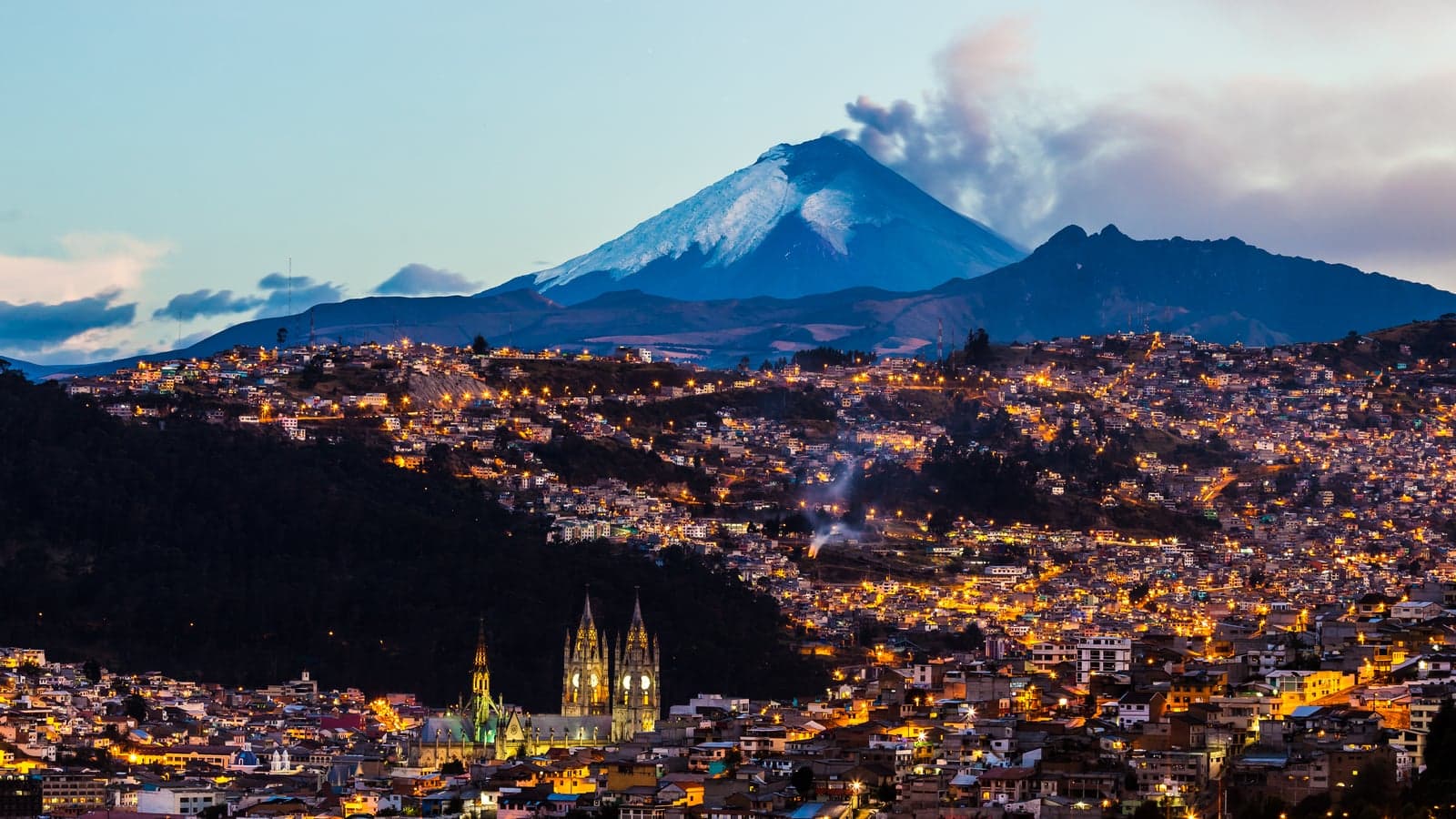
Old Town: The Way the Water Runs
100 min · 2.3 km · moderate
More from Quito
Explore more at your own pace.
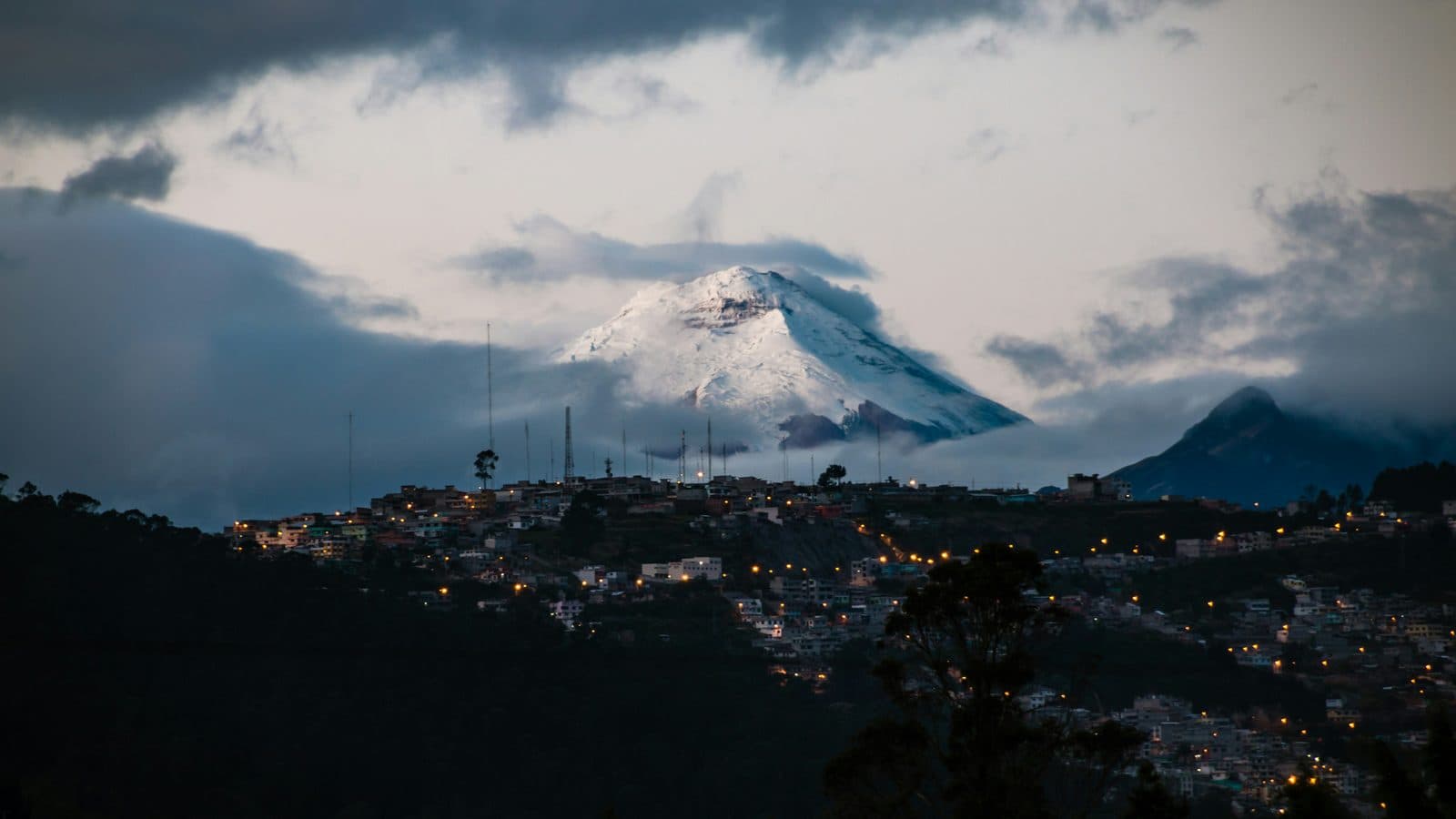
Best Self-Guided Walking Tours in Quito (2026)
How Quito's Old Town Kept Its Shape: A Grid Laid on a Mountain
One Day in Quito: A Walkable Old-Town Itinerary (2026)
Quito Travel Guide: Altitude, How Many Days, Getting Around, Safety (2026)
What to Eat in Quito: An Ecuadorian Highland Food Guide (2026)