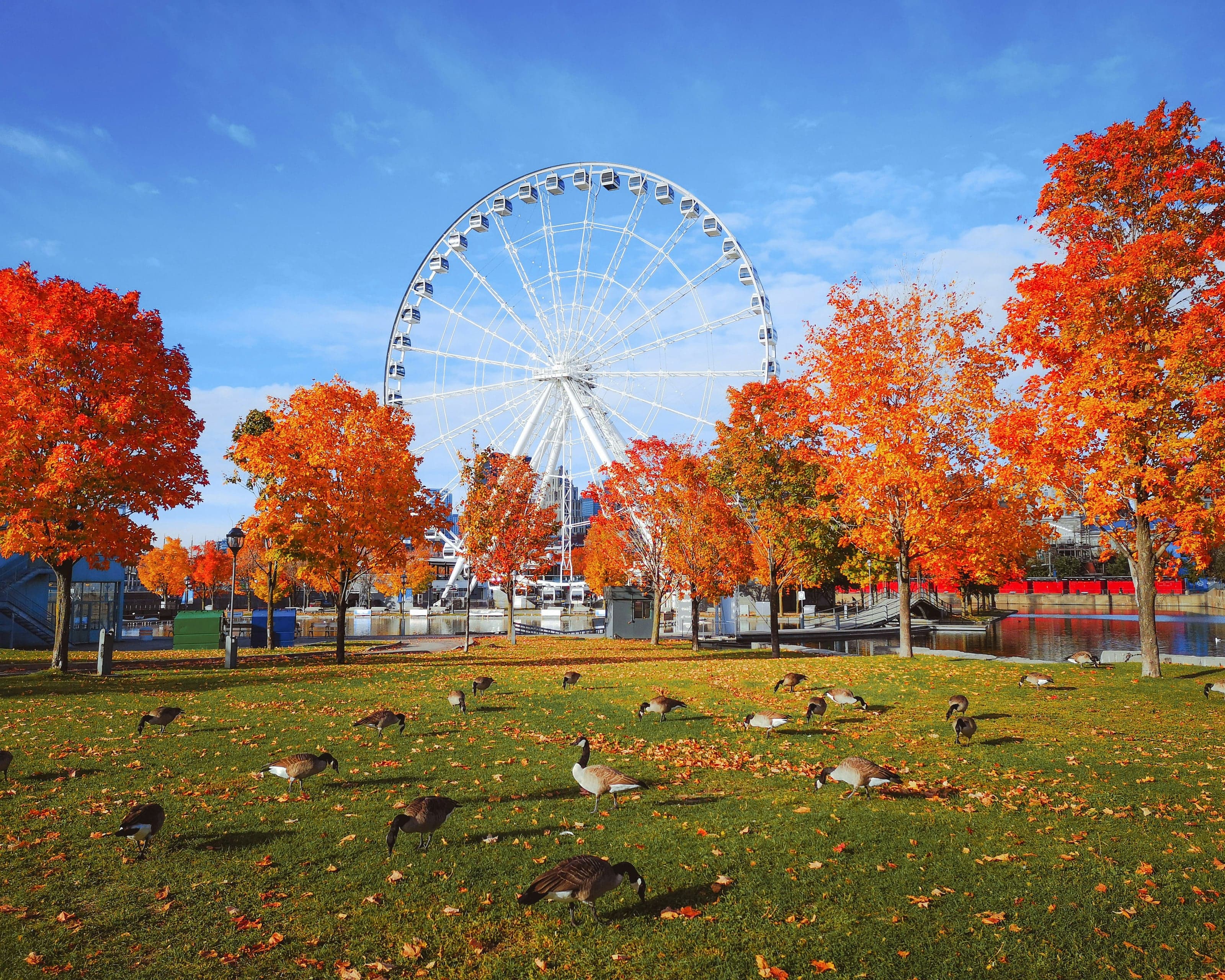
Walk Old Montreal from the grand banks of Rue Saint-Jacques and Notre-Dame Basilica to the founding site, the Old Port, City Hall and the old city walls.
Start · Rue Saint-Jacques: A Bank Built Like a Cathedral
DirectionsStops
- 1
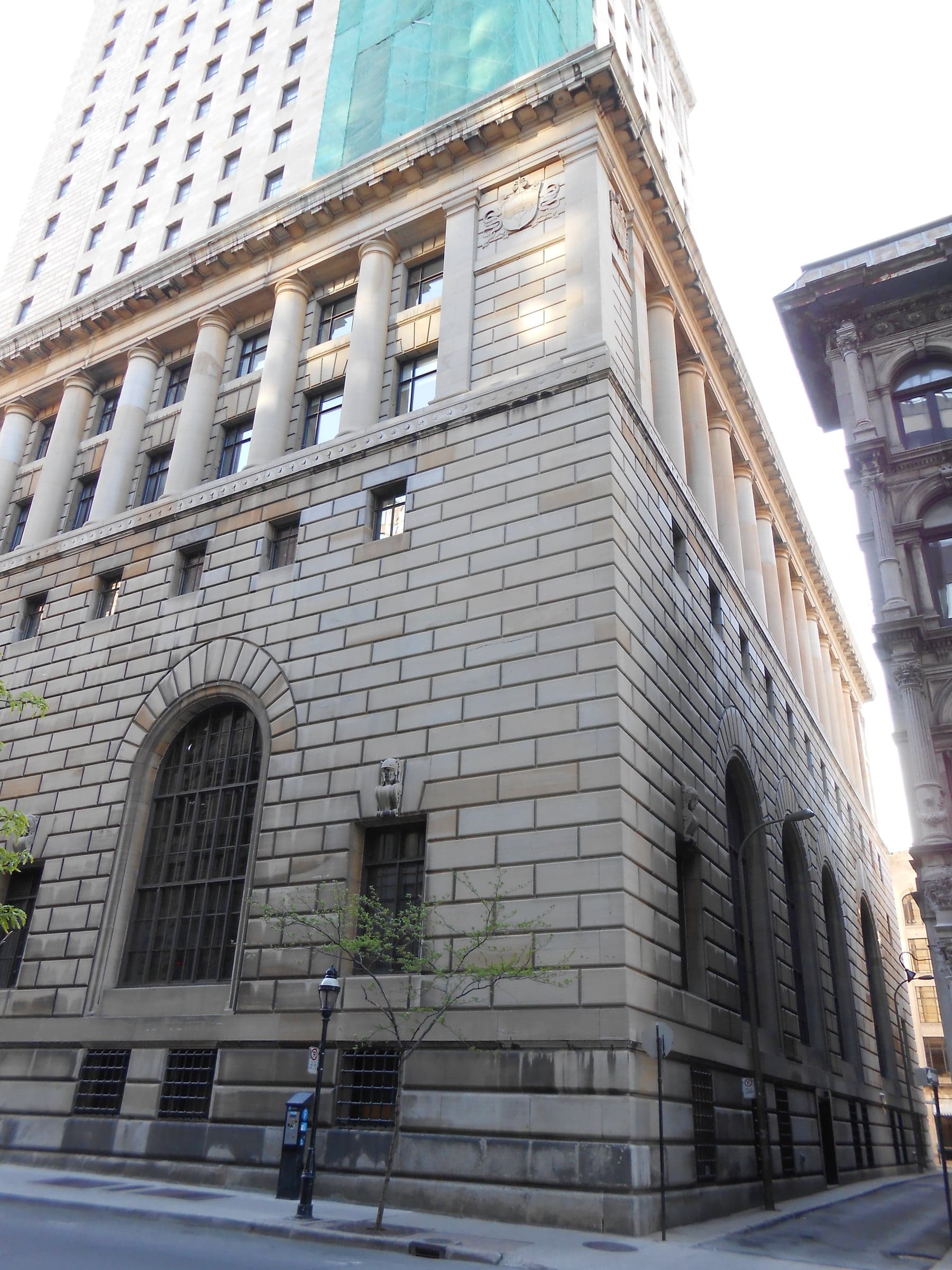
Rue Saint-Jacques: A Bank Built Like a Cathedral
In 1928 this was the British Empire's tallest building. Its gilded banking hall is now a café you can walk into.
- 2
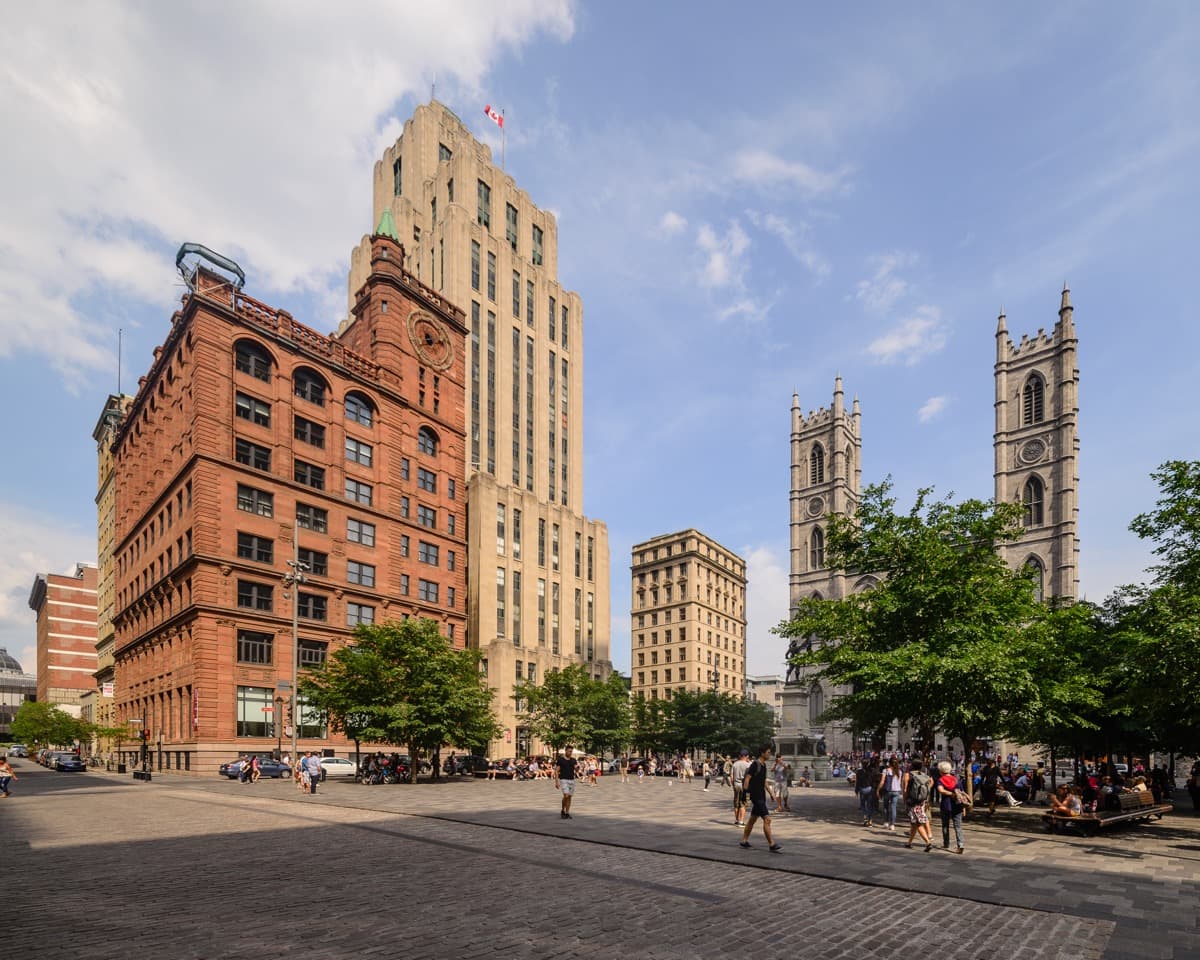
Place d'Armes: Temple Front and First Skyscraper
A bank built as a Roman temple. Montreal's first skyscraper and an Art Deco tower ring the square, around a founder whose face is imagined.
- 3
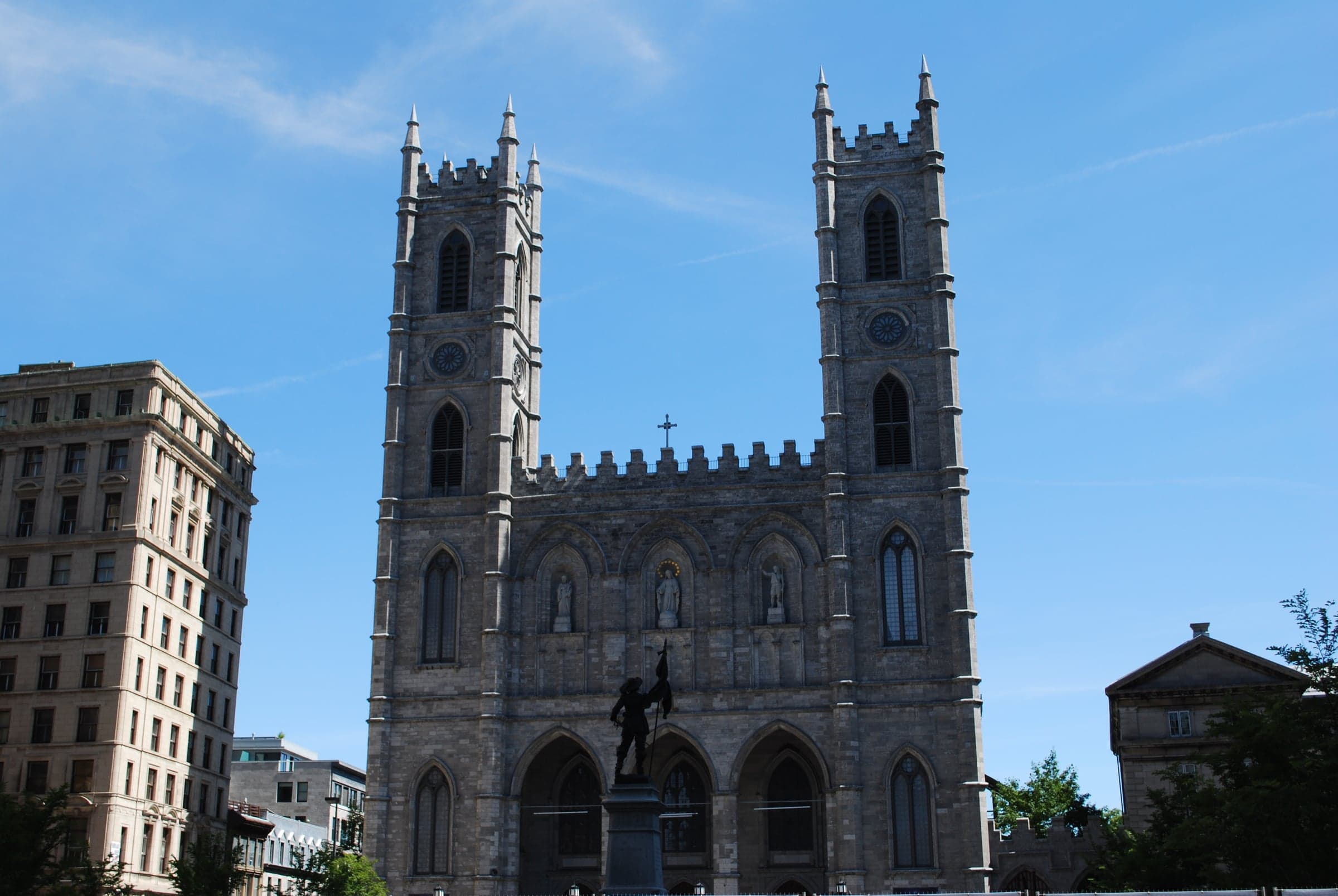
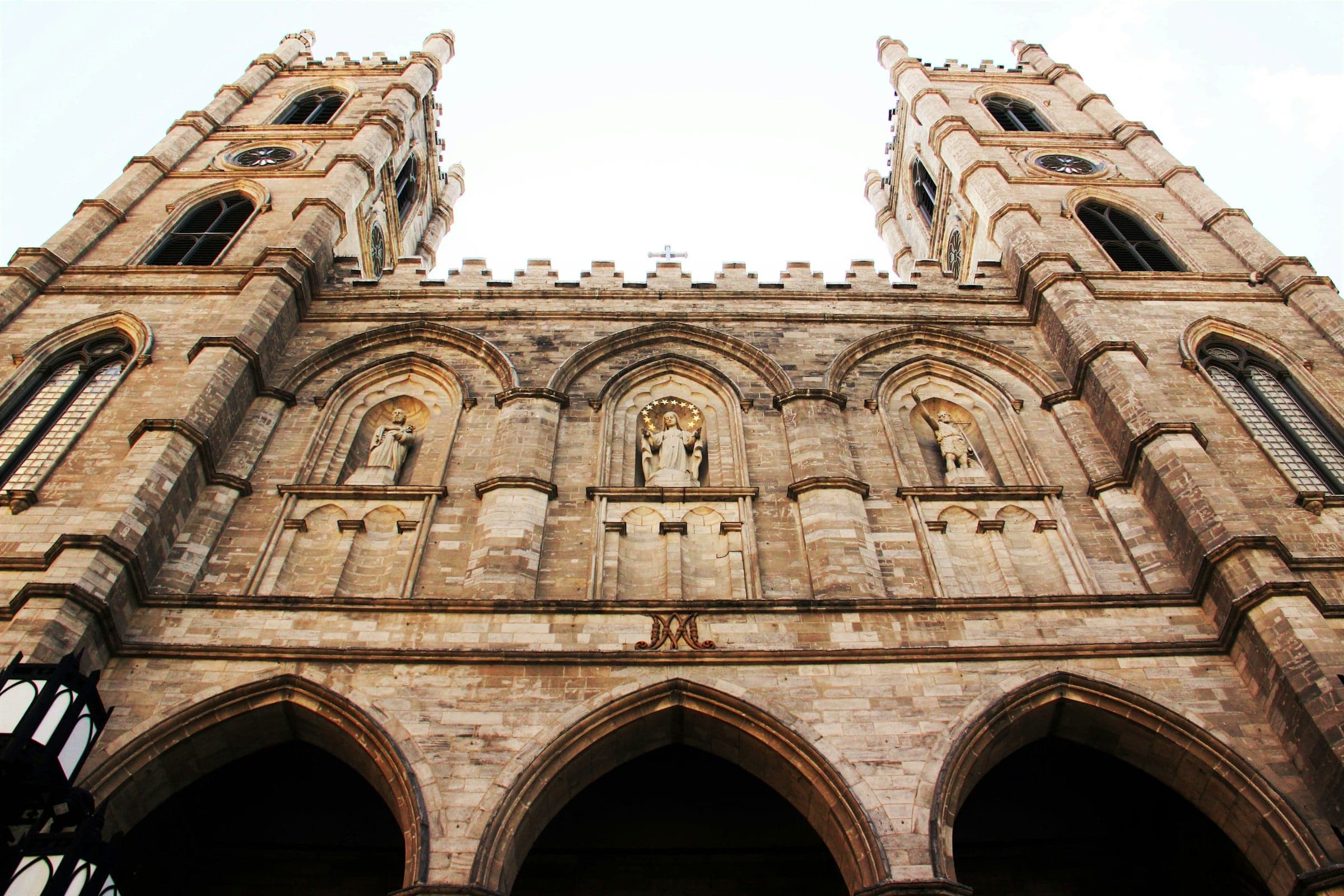
Notre-Dame Basilica: Twin Towers and a Famous Blue
A New York Protestant designed this church. Montreal's mother church has a star-studded blue interior that is ticketed and worth it.
- 4
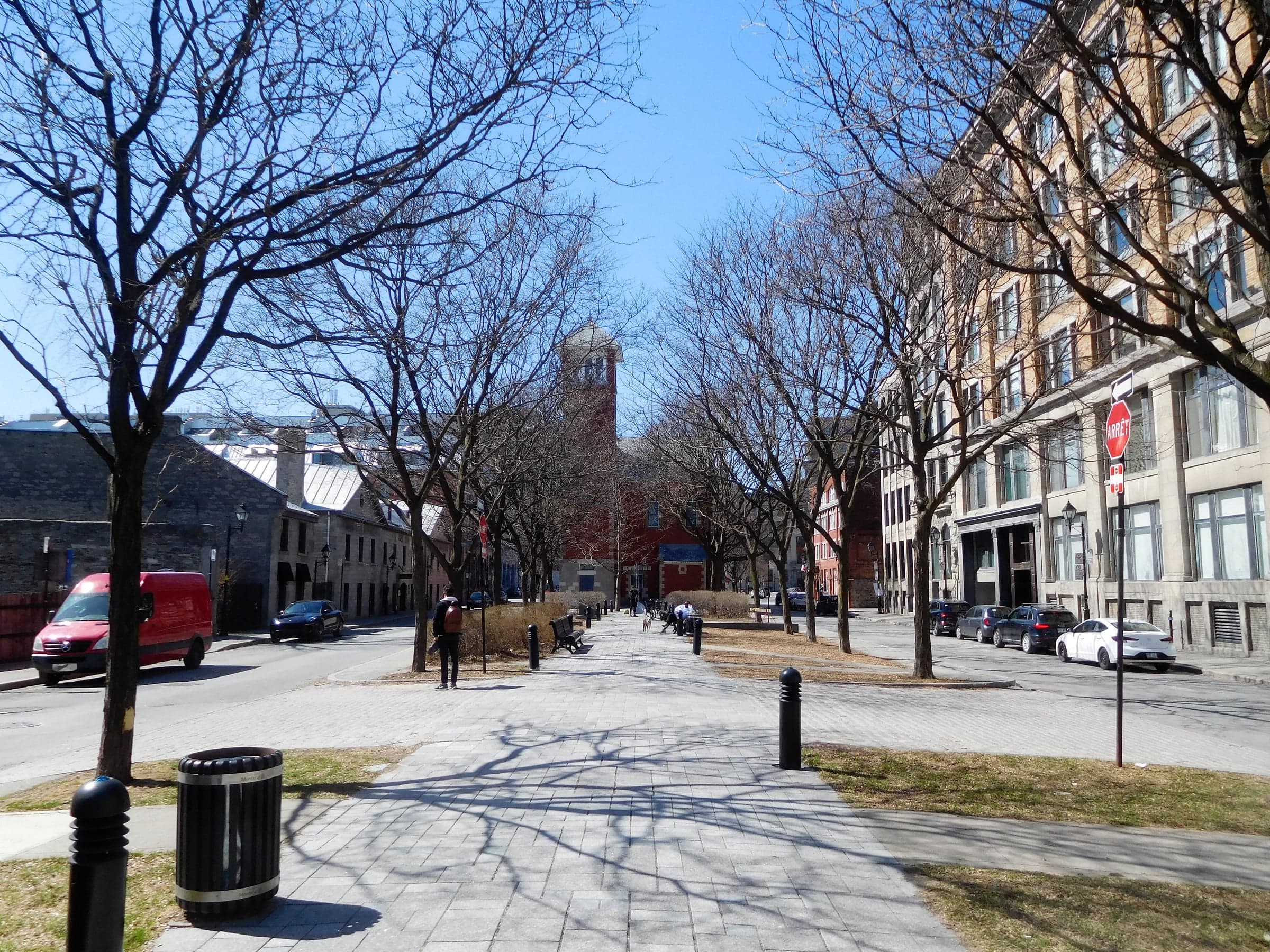
Place d'Youville: Where a Parliament Burned
A mob burned the parliament here in 1849. This long, narrow square is built over a buried river, and its empty lot held the Province of Canada's parliament.
- 5
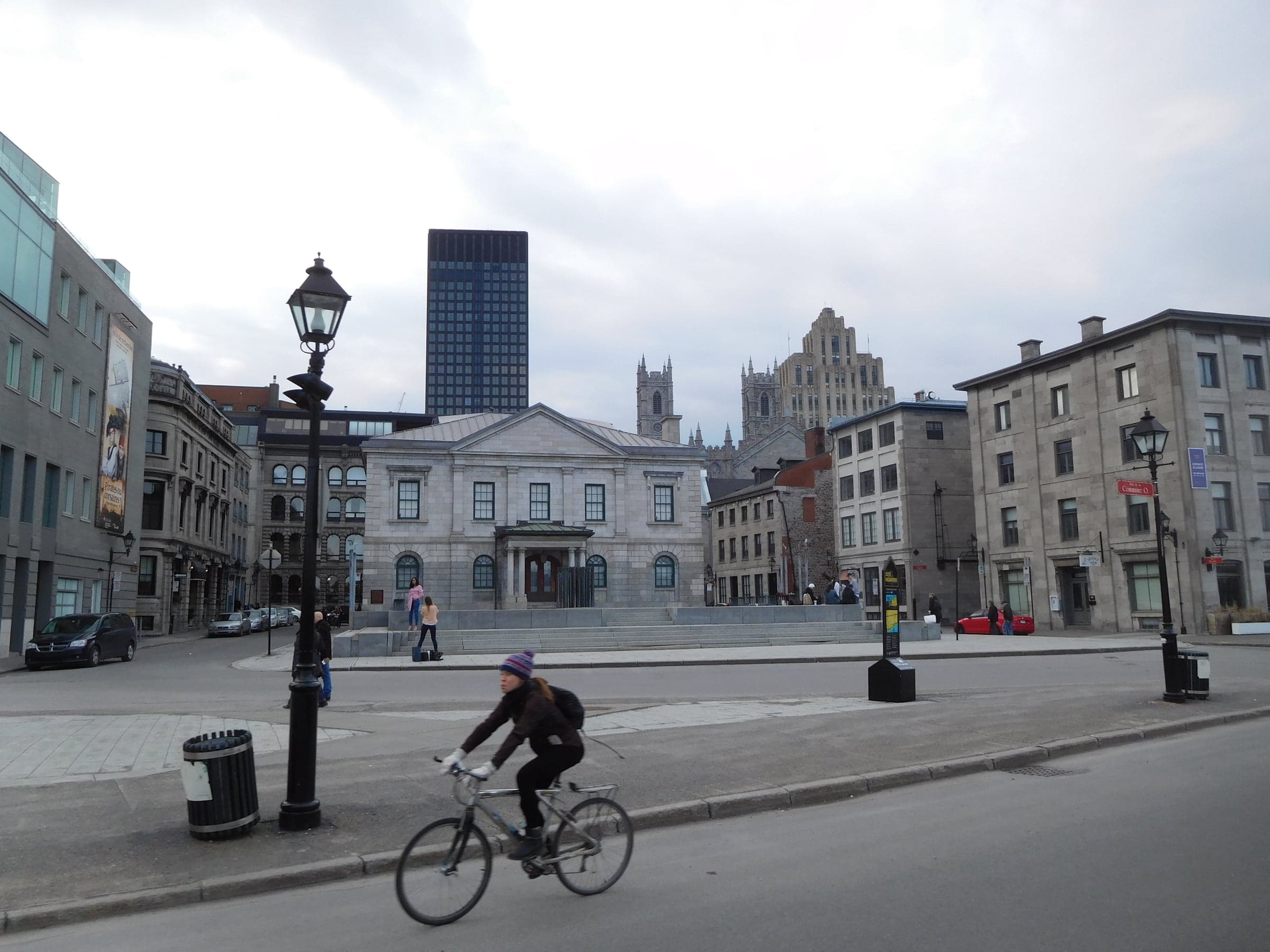
Place Royale: Where Montreal Began
The 1642 fort stood just toward the river. Pointe-à-Callière museum shows its remains, and it is ticketed.
- 6
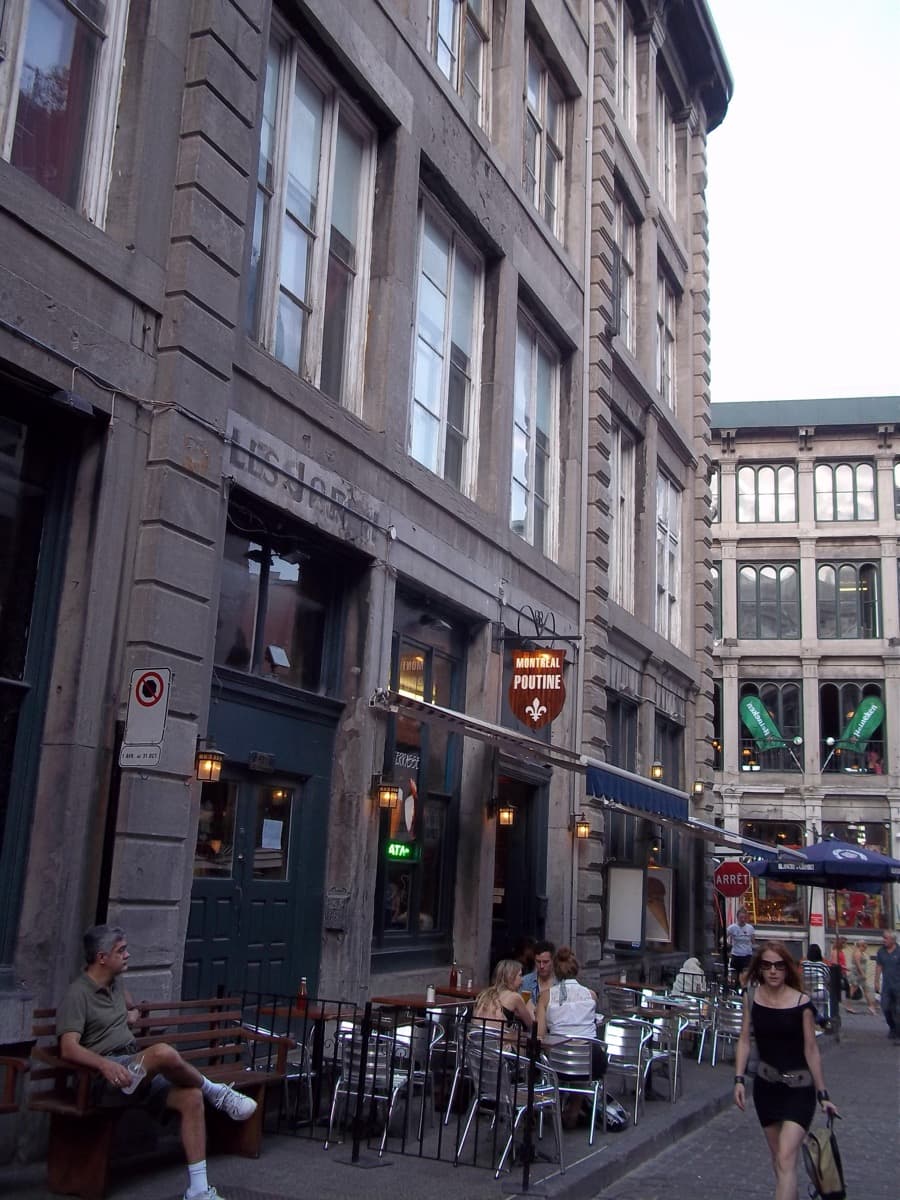
Rue Saint-Paul: The Street That Bends
This street follows the settlers' footpath. It curves for that reason, and Jeanne Mance's hospital stood here from 1645 to 1860.
- 7
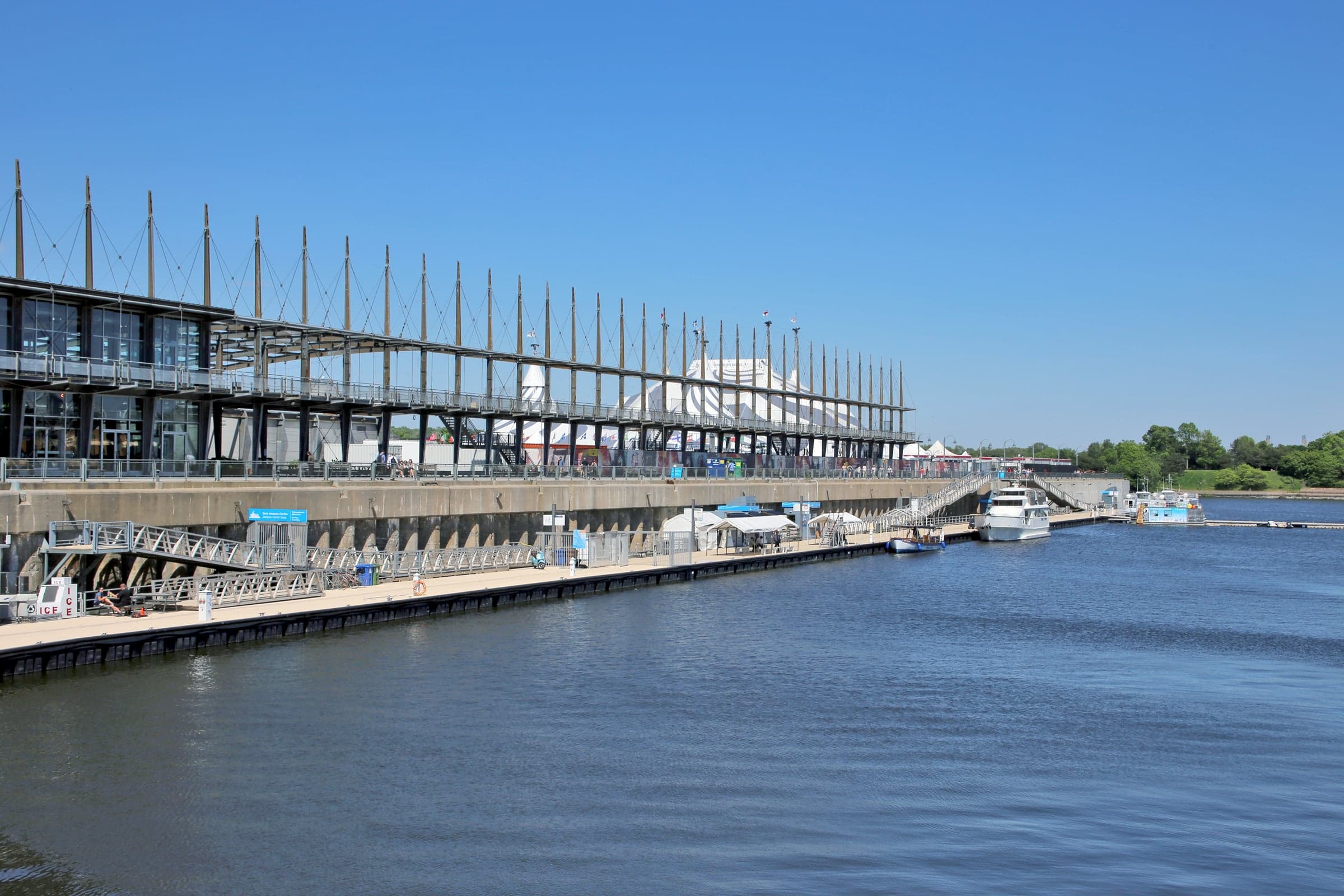
Old Port: Giving the City Back Its River
A grain elevator once blocked this view. It came down in the late 1970s, and the 1922 Clock Tower still guards the harbour.
- 8
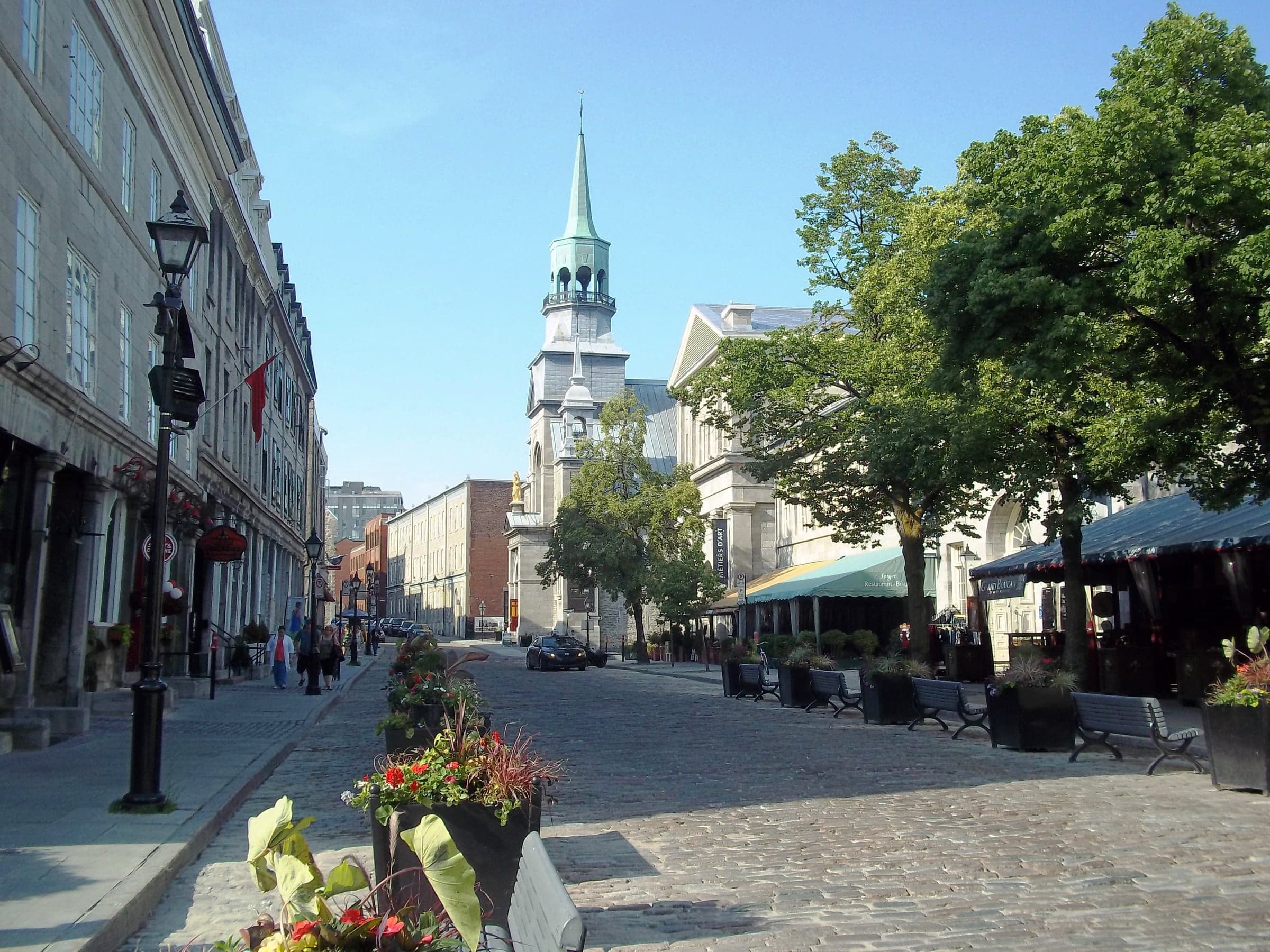
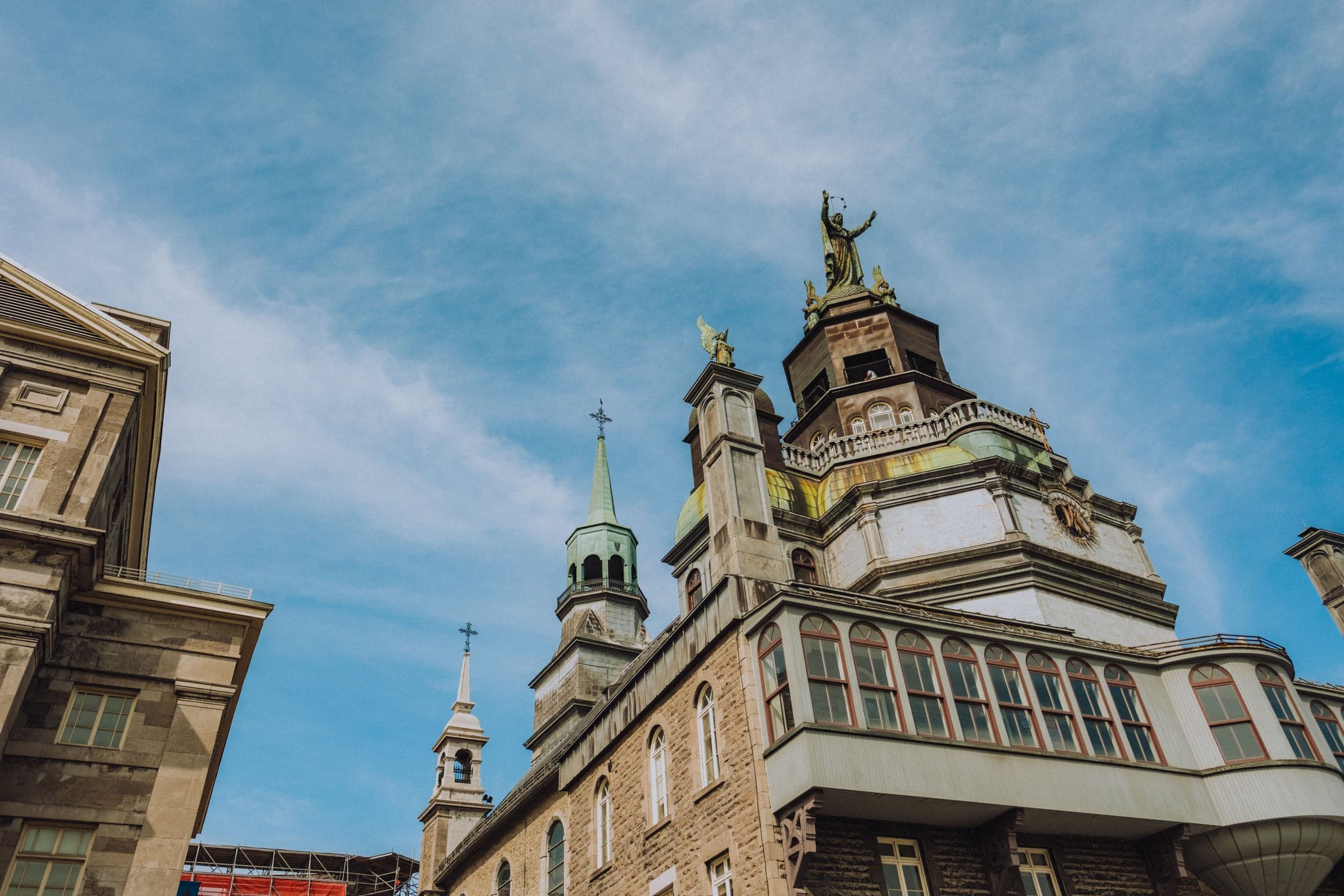
Bonsecours Market and Chapel: The Sailors' Church
Model ships hang inside this chapel. They are gifts from sailors who made it home, and next door stands a domed market that was briefly a parliament.
- 9
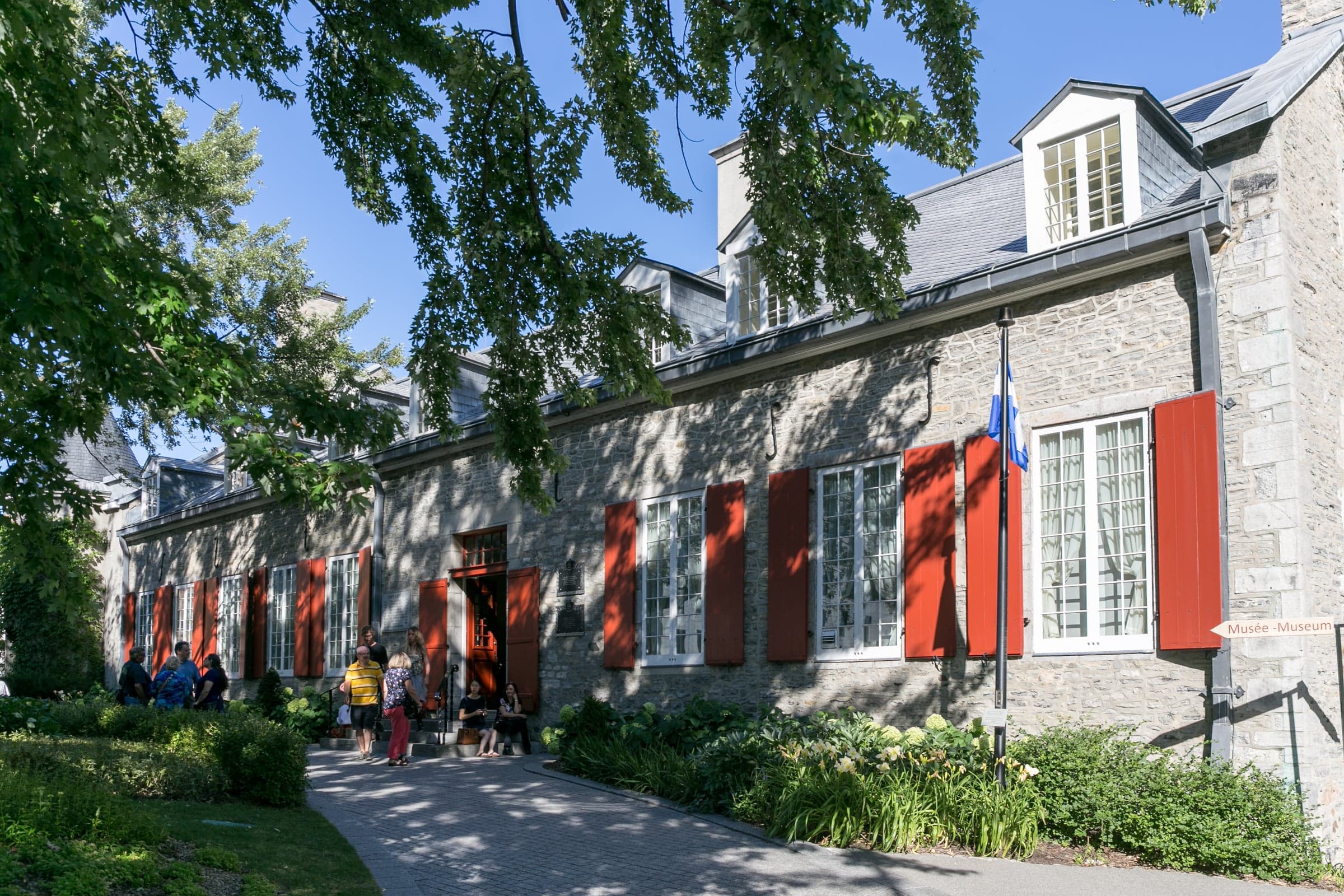
Château Ramezay: The Governor's Stone House
The governor built this stone house in 1705. He called it the most beautiful in Canada, and it is now a ticketed museum with a free garden.
- 10
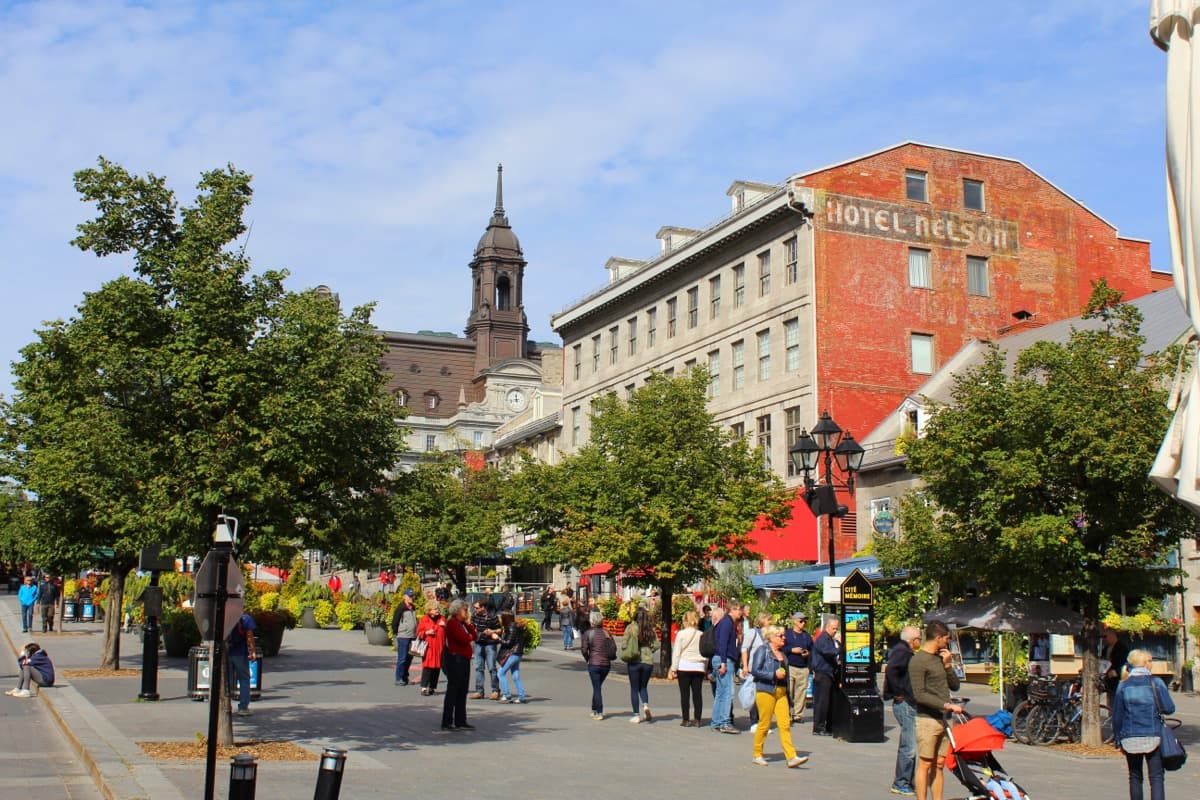
Place Jacques-Cartier: Nelson, City Hall and the Balcony
Nelson stands with his back to the river. Across the street is the City Hall balcony where de Gaulle spoke in 1967.
- 11
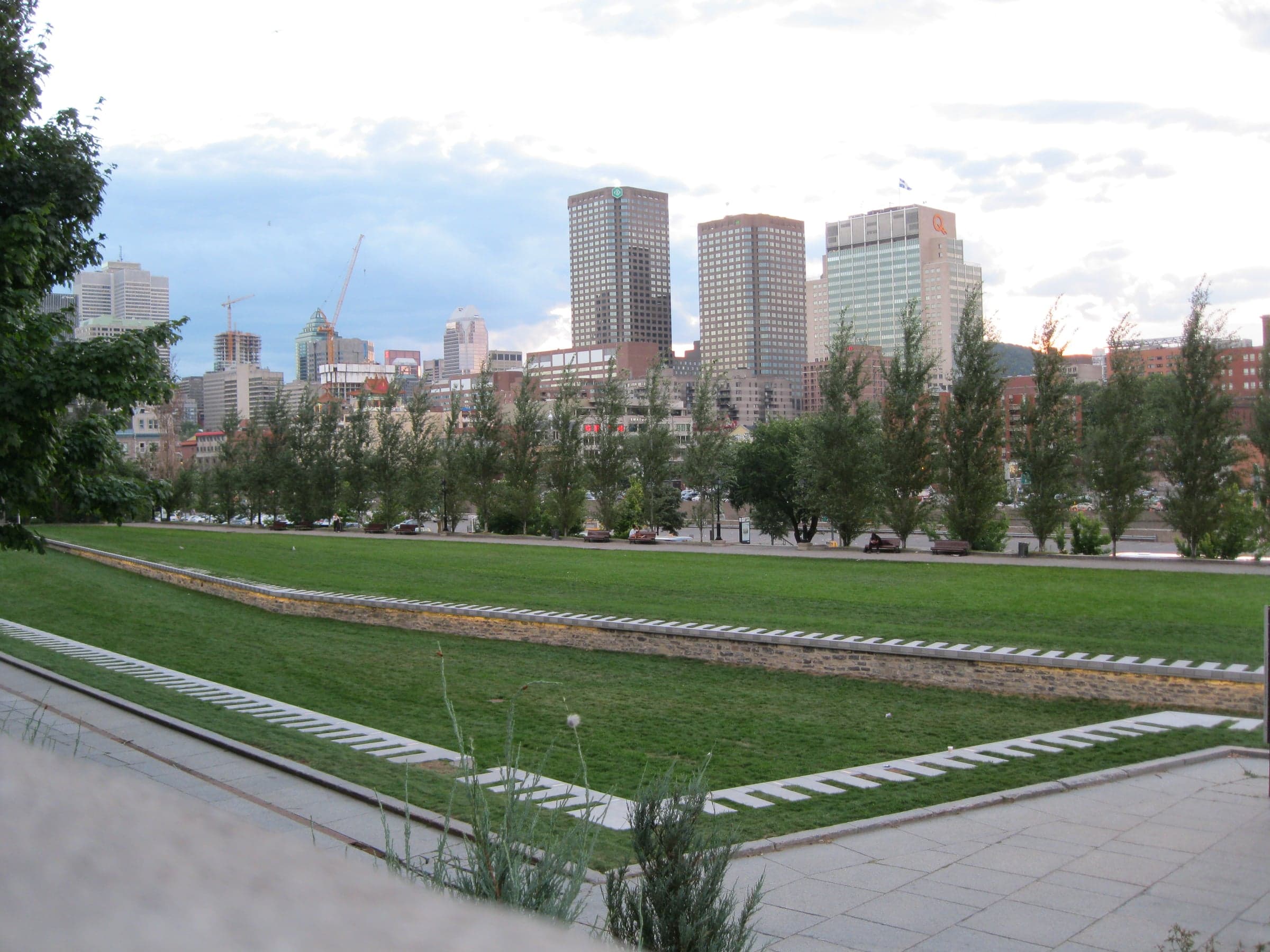
Champ-de-Mars: The Old City Walls
Two low walls mark the old fortifications. They ringed the town until they were ordered down in 1801, and were dug back up in the 1980s.
Details
Best Time to Visit
A weekday morning is calmest, before the basilica and Rue Saint-Paul fill up. Tuesday to Friday lets you add Pointe-à-Callière, which is closed on Mondays, and City Hall is open on weekdays only. Late spring to early autumn is best for the Old Port and the Governor's Garden.
Pro Tips
- •The Notre-Dame Basilica day visit closes at 4 p.m. and is closed to visitors during French masses, so plan to be there before mid-afternoon if you want to go in.
- •Choose one or two ticketed stops (the basilica, Pointe-à-Callière, the Marguerite-Bourgeoys Museum or Château Ramezay) rather than all four.
- •If the Royal Bank hall at 360 Saint-Jacques is open, step in: it is a working café, free to enter.
- •The walk ends a few minutes from Champ-de-Mars metro station, on the orange line: cross the footbridge over the walls, go down the steps to Rue Saint-Antoine, cross at the lights and follow the path up through Place des Montréalaises.
Safety & Precautions
- •Several streets, including Rue Saint-Paul and Place Jacques-Cartier, are cobbled and uneven, so wear flat shoes with grip.
- •Rue de la Commune and Rue Notre-Dame carry traffic; cross at the marked crossings (the two on Rue de la Commune have no lights), and watch for cyclists along the Old Port.
- •In 2026 expect scaffolding on the basilica's east tower and side.
- •From beside City Hall the route goes down a flight of 22 steps with a handrail (no ramp) into the Champ-de-Mars; there is no step-free way to the walls on the route.
- •The steps from the Champ-de-Mars down to Rue Saint-Antoine, on the way to the metro, are a summer path and may be closed in winter. If they are, go back up to Rue Notre-Dame, walk past the front of City Hall and go down Rue Gosford to Rue Saint-Antoine and the metro.
- •In 2026 the city announced work on the City Hall balcony (a glass guard behind the old balustrade), so it may be under scaffolding.
Travel advisory: Exercise Normal Precautions (Level 1).
Gallery
Related Reading
Go deeper on what you'll see, hear, and walk through.
Overview
Best Self-Guided Walking Tours in Montreal (2026)
3 min
Overview
Montreal Travel Guide: How Many Days, Getting Around, When to Go (2026)
5 min
Overview
One Day in Montreal: A Walkable Itinerary (2026)
5 min
Thematic
Best History Walking Tours in Montreal (2026)
2 min
Thematic
Two Cities on One Island: How to Read Montreal Along the Main
5 min
Companion
The City That Was Founded Three Times: A Companion to the Old Montreal Walk
5 min
Deep dive
Notre-Dame Basilica: One Church, Two Architects, Fifty Years Apart
5 min
Deep dive
Place Ville Marie: The Basement That Grew a City
4 min
Read the walk
The full story of Old Montreal: From the Founding Fort to the Old Port, in words. Prefer to listen? Play it narrated, from home or on location.
Introduction
Montreal grew up on an island in the Saint Lawrence River, in Quebec, Canada, and its oldest quarter sits right on the water. Old Montreal packs nearly four centuries into a few dozen streets: a French mission town, a walled colonial city, a busy river port, and a street of banks built for a young country.
Over eleven stops and about three kilometres, this walk starts among the grand banks of Rue Saint-Jacques, crosses Place d'Armes to Notre-Dame Basilica, drops down to the point where the city was founded, follows a street that still bends along the settlers' old footpath, and comes out on the river. Then it climbs past the Sailors' Church and City Hall to the remains of the old city walls. It takes about an hour and a half at an easy pace, longer if you go inside the basilica or one of the museums. Those are ticketed, so pick one or two. The walk ends a few minutes from Champ-de-Mars metro station, so there is no need to walk back.
As you go, keep an eye on the ground as well as the buildings. This city has a habit of marking what it lost right in the pavement: the outline of a church, the footprint of a house, a river under a square. Once you start noticing, you will find them everywhere.
1. Rue Saint-Jacques: A Bank Built Like a Cathedral
Welcome to Old Montreal, and to Rue Saint-Jacques. People once called this street Canada's Wall Street, and the tall building at number three sixty is why. Cross to the far sidewalk to see all of it.
Read it from the bottom up. First a heavy base of pale stone, five storeys high, with big arched openings and a deep cornice, like a palace in Florence. Then, set back above it, the tower, more than twenty storeys. When it was finished in nineteen twenty-eight, it was the tallest building in the British Empire.
The Royal Bank had moved its head office here from Halifax in nineteen oh seven. In the nineteen twenties it bought this whole block and cleared it, a ten-storey skyscraper included.
Now the part you can walk into. The base held the banking hall, and it was built to feel like a church for money. If the doors are open, climb the marble staircase and look up: a coffered ceiling, painted and gilded, about fourteen metres over your head. Underfoot, a marble mosaic crowned by the bank's bronze coat of arms. Around the walls, the arms of the provinces, plus Newfoundland, which was not yet part of Canada, and the cities of Halifax and Montreal. The bank drew a map of its country on the walls.
The bank's last branch left in twenty twelve, and since twenty sixteen the hall has been a café: anyone can buy a coffee at the old counter. People work at the tables, so keep your voice down.
Before you go, find the carved building just across Rue Saint-Pierre, toward the square, with its steep mansard roof. That is the old Molson's Bank of eighteen sixty-six, and its architect signed his name on one of its stones, a rare thing in this city. If you crossed over, come back at the lights at Rue Saint-Pierre.
Follow the route along Rue Saint-Jacques. Next, a square ringed with bank fronts and early skyscrapers.
2. Place d'Armes: Temple Front and First Skyscraper
Walk on into Place d'Armes, the square that opens up off Rue Saint-Jacques, and stop between the fountain with the tall bronze statue and the bank with the columns.
Start with the building with the columns and the dome, on the Saint-Jacques side. That is the Bank of Montreal, here since eighteen forty-seven. Its front is a Roman temple: six giant columns and a triangular pediment. Look into that triangle. It is packed with carved figures: the bank's arms in the middle, two Indigenous figures, a sailor and a settler, for commerce and farming. The group was carved in Scotland, shipped over in pieces, and put up in eighteen sixty-seven. The dome has a story too. The first one sagged and came off in eighteen fifty-nine. The one you see went up in the early nineteen hundreds, tile on a steel frame.
Now find the tall red stone building with the clock tower. Eight storeys of Scottish red sandstone, opened in eighteen eighty-nine: Montreal's first skyscraper. Right beside it, the pale Art Deco tower that steps back as it rises is the Aldred Building. Work began in July nineteen twenty-nine, a few months before the stock market crash, and it was finished on schedule anyway, in nineteen thirty-one.
The statue in the middle is Maisonneuve, who led the founding of Montreal in sixteen forty-two. No authentic portrait of him exists, so the face is imagined. Walk round the base. At one corner, a woman bandages a child's hand. That is Jeanne Mance, who came with the first settlers and ran the town's hospital. In twenty twelve the city council recognized her as a founder of Montreal, equal to Maisonneuve. You will meet her again further down the hill. At another corner, a soldier holds his dog in the crook of his arm, the detail everyone looks for.
Follow the route round the square, past the red stone tower and the Art Deco one. Next, the basilica.
3. Notre-Dame Basilica: Twin Towers and a Famous Blue
Walk on toward the twin grey towers of Notre-Dame Basilica, Montreal's mother church, and stop on the pedestrian street in front. The inside is ticketed, about sixteen dollars for an adult, and well worth it. Price and hours are on this stop's card.
First, look down. Lines in the paving around here trace the first stone church, which stood right in the line of the street from sixteen eighty-three. By eighteen nineteen it held three thousand of the parish's fifteen thousand people, and the rest heard Sunday mass from outside. So the parish hired James O'Donnell, a Protestant architect from New York, born in Ireland, to build big. The church went up from eighteen twenty-four to eighteen twenty-nine. The parish says it stayed the largest place of worship in North America for half a century.
Now the front. Three statues in niches: Mary in the centre, John the Baptist and Joseph at either side. The towers were finished in the early eighteen forties, after O'Donnell's time. The tower on the side of the low grey stone building next door is called Perseverance, and holds a bell of nearly eleven thousand kilos. The other tower is Temperance, with ten bells. At the time of writing, that one is under scaffolding.
In his last months O'Donnell became a Catholic, probably, his biography says, under pressure from the priests of the seminary next door. He lies in the crypt beneath the church.
If you go in, look up. His first interior had a big window behind the altar that dazzled the congregation. In the eighteen seventies it was remade after the Sainte-Chapelle in Paris: gold, colour, and a vault of stars on deep blue.
That seminary is the low grey stone building beside the church, with a clock over its gate. Begun in sixteen eighty-four, it is the only seventeenth-century building left in Old Montreal.
Follow the route along Rue Notre-Dame, then downhill. Next, the square where a parliament burned.
4. Place d'Youville: Where a Parliament Burned
Walk on to the long, narrow square where Rue Saint-Pierre crosses it, and find the red brick and pale stone fire station standing alone in the middle, with its square tower. With the fire station close by, look along the square, across Rue Saint-Pierre, to the open lot edged by low brick walls and trees.
That empty ground held a parliament.
First, the shape of the square. It is long and thin because it follows a river. A small river, the Saint-Pierre, ran along this line to the Saint Lawrence. In the eighteen thirties it was vaulted over in stone and turned into a sewer, and a market hall was built on top, its cellars cooled by the buried water.
In eighteen forty-three, Montreal was chosen as capital of the Province of Canada, and the market hall was refitted as its parliament, a building about a hundred metres long. Here, in eighteen forty-eight, the Province of Canada got its first government that answered to the elected assembly.
Then, on the twenty-fifth of April eighteen forty-nine, the governor gave his assent to a law that compensated people who had lost property in the rebellions of eighteen thirty-seven and thirty-eight. A protest turned into a riot, and a Tory mob set the building on fire. Both libraries burned, more than twenty-four thousand documents with them. The next year the seat of government moved to Toronto, and Montreal never got it back.
In twenty thirteen, archaeologists digging here found about a dozen charred parliamentary books. One of the archaeologists said: we never expected to find books.
The fire station came later, in nineteen oh three and nineteen oh four, built for horses and steam pumps, in a Flemish style that is rare in this city.
On the way along the square you pass a tall stone obelisk, put up in eighteen ninety-three for the city's pioneers.
Follow the route along the square. Next, the spot where Montreal began.
5. Place Royale: Where Montreal Began
Walk on into the small sloping square with a grey stone building standing in its middle. This is Place Royale. Toward the river rises a sharp, triangular modern building with a lookout tower: Pointe-à-Callière, the city's museum of archaeology and history. It is ticketed, about…
Full narration for this stop unlocks with the tour.
6. Rue Saint-Paul: The Street That Bends
Walk on along Rue Saint-Paul to the little square where three rounded bronze women sit deep in conversation. Stop there and look along the street both ways. Notice that it bends. In sixteen seventy-two the priests of the seminary laid out the town's first streets, and drew them…
Full narration for this stop unlocks with the tour.
7. Old Port: Giving the City Back Its River
Walk on to the fence at the head of the long pier, and face the water, with Place Jacques-Cartier climbing uphill behind you. This is the Old Port, free and open all year. Straight out in front runs Jacques Cartier Pier, built in the late eighteen nineties. Toward the big steel…
Full narration for this stop unlocks with the tour.
8. Bonsecours Market and Chapel: The Sailors' Church
Walk on up beside the chapel to Rue Saint-Paul, cross it, and turn round to face the grey stone front of the chapel with the slim tower. This is Notre-Dame-de-Bon-Secours Chapel, Our Lady of Good Help. The chapel is free. The museum beside it, with the old foundations and a…
Full narration for this stop unlocks with the tour.
9. Château Ramezay: The Governor's Stone House
Walk on along Rue Notre-Dame to the long, low stone house set back from the street, with a round tower at one end. This is Château Ramezay, built for the governor of Montreal in seventeen oh five. It is a museum now, ticketed at about fifteen dollars, and the garden behind it is…
Full narration for this stop unlocks with the tour.
10. Place Jacques-Cartier: Nelson, City Hall and the Balcony
Walk on to the top of Place Jacques-Cartier, by the tall stone column, and turn so the square falls away to the river behind you and City Hall faces you across Rue Notre-Dame. Start with the column. This is Nelson's Column, raised in eighteen oh nine by Montreal merchants, the…
Full narration for this stop unlocks with the tour.
11. Champ-de-Mars: The Old City Walls
Walk on down the steps to the open lawn behind City Hall, and stop at the bottom, by the two long, low stone walls running across the grass. These are the base of the town's fortifications. The nearer wall was the inner face, then comes the space where the ditch was, then the…
Full narration for this stop unlocks with the tour.