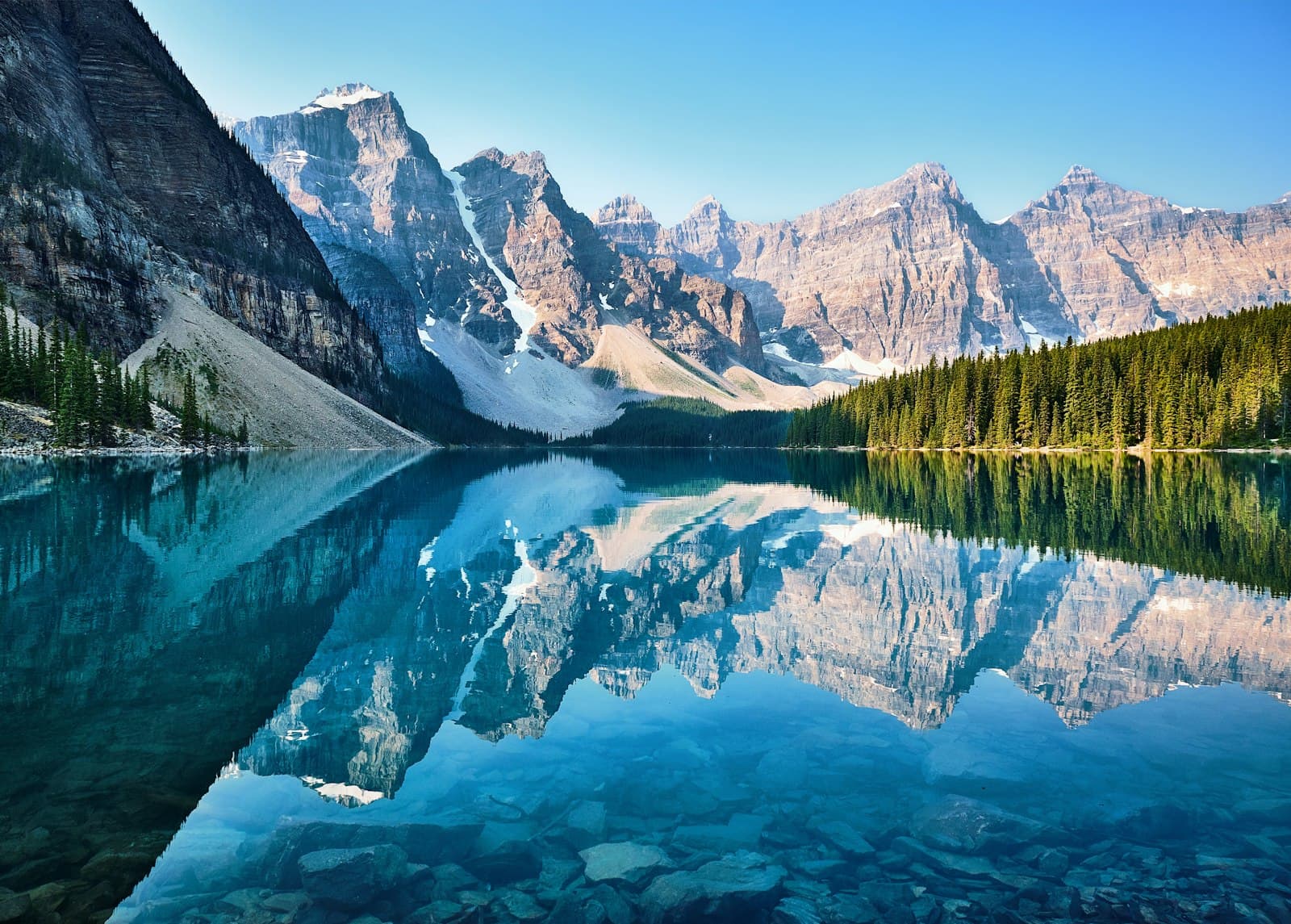
Banff looks like an ordinary mountain resort town, but you must legally prove you need to live here, the land is leased not owned, and the boundary and population are frozen by federal law. Is it a town, or a very convincing exhibit of one?
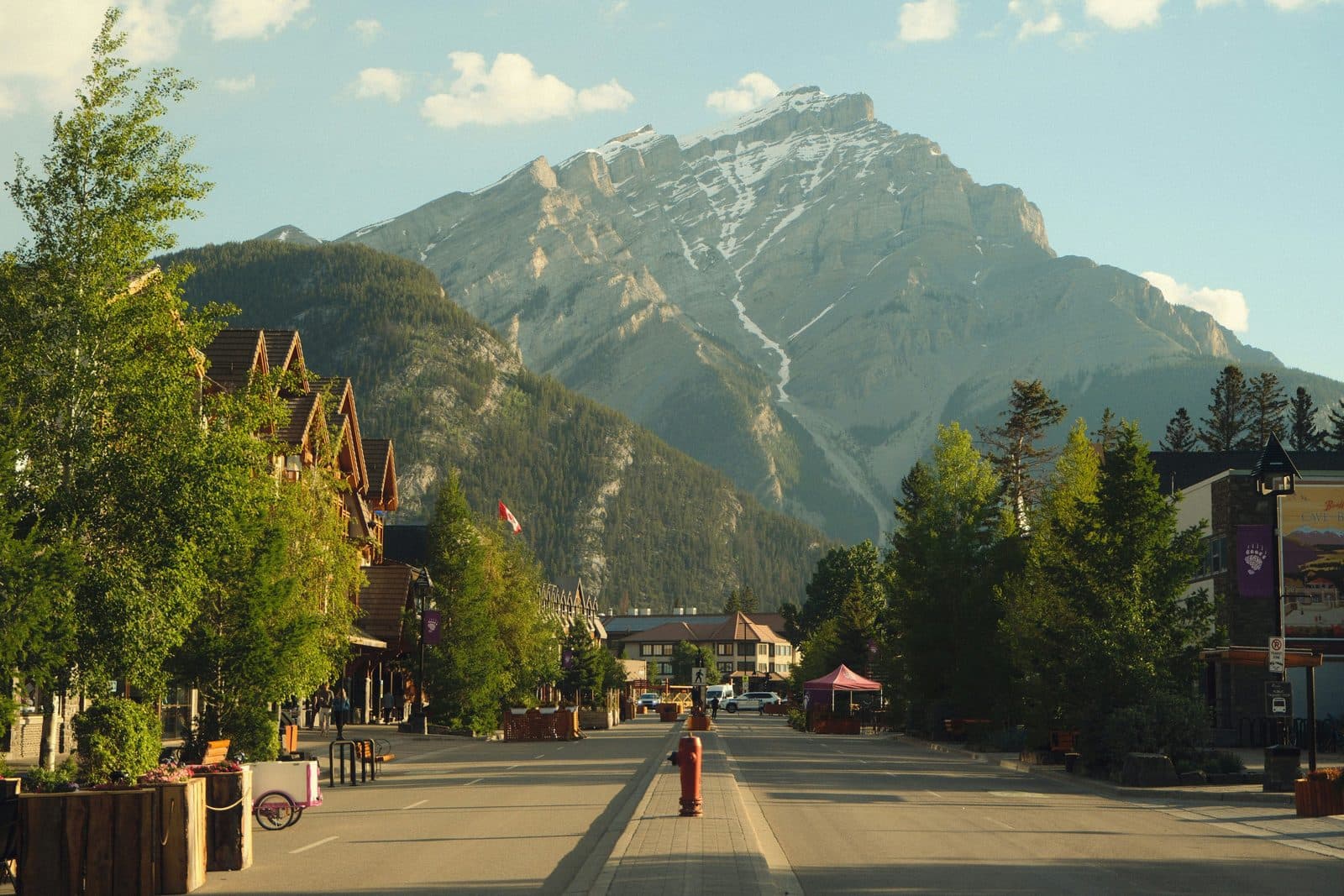
Start · North Banff Avenue: The Cascade Axis
DirectionsStops
- 1
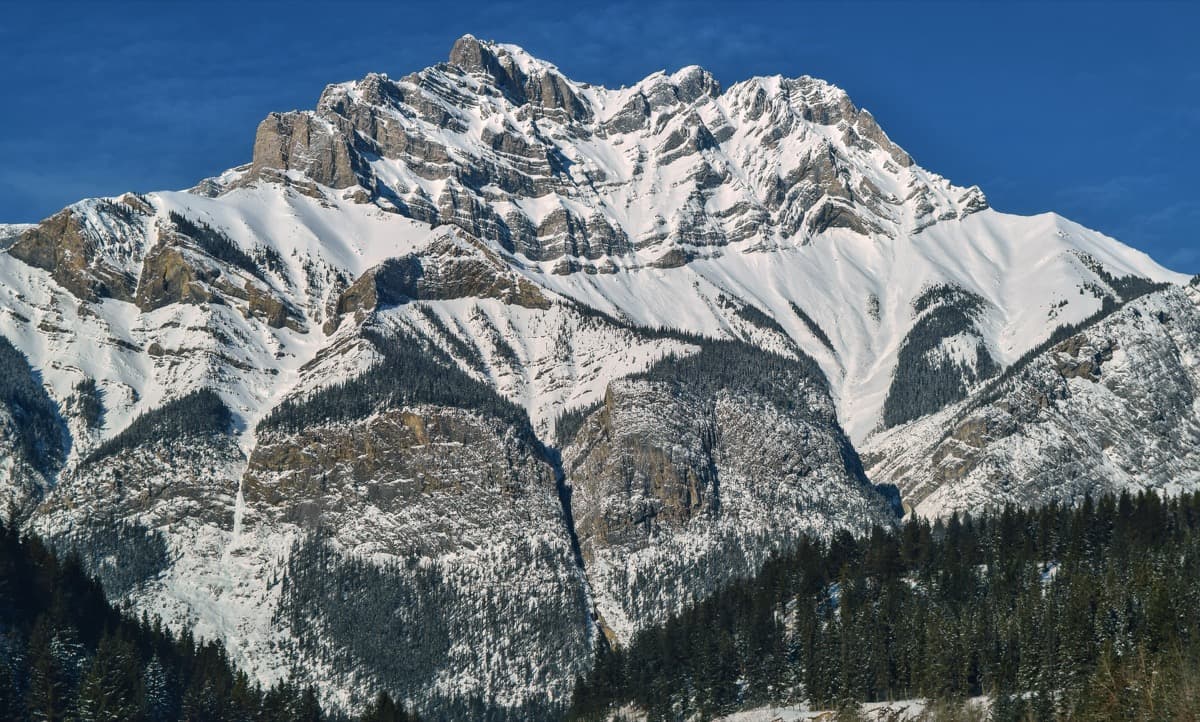
North Banff Avenue: The Cascade Axis
The postcard top of Banff Avenue, Cascade Mountain closing the view, and the rule you would have to meet to live on this street.
- 2
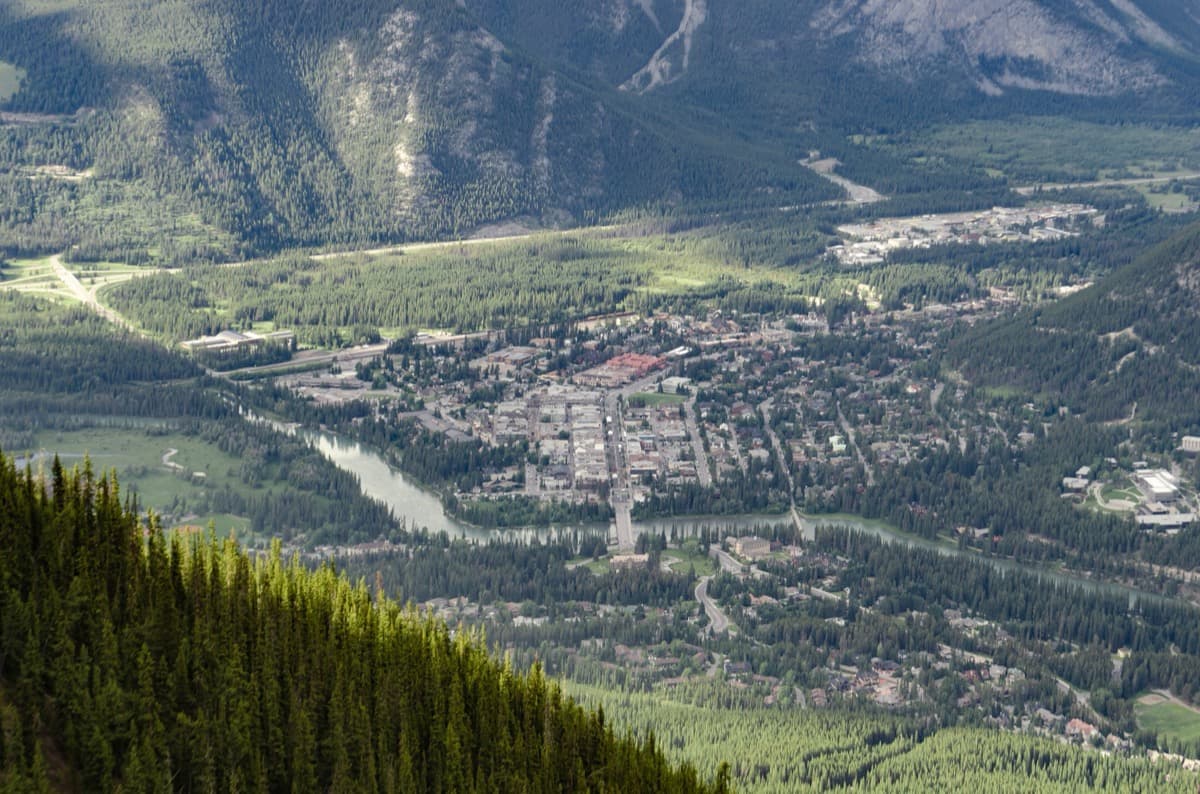
Banff Avenue: A National Park's Shopping Street
The main shopping street of the Rockies, built on leased federal land with its commercial floor space capped.
- 3
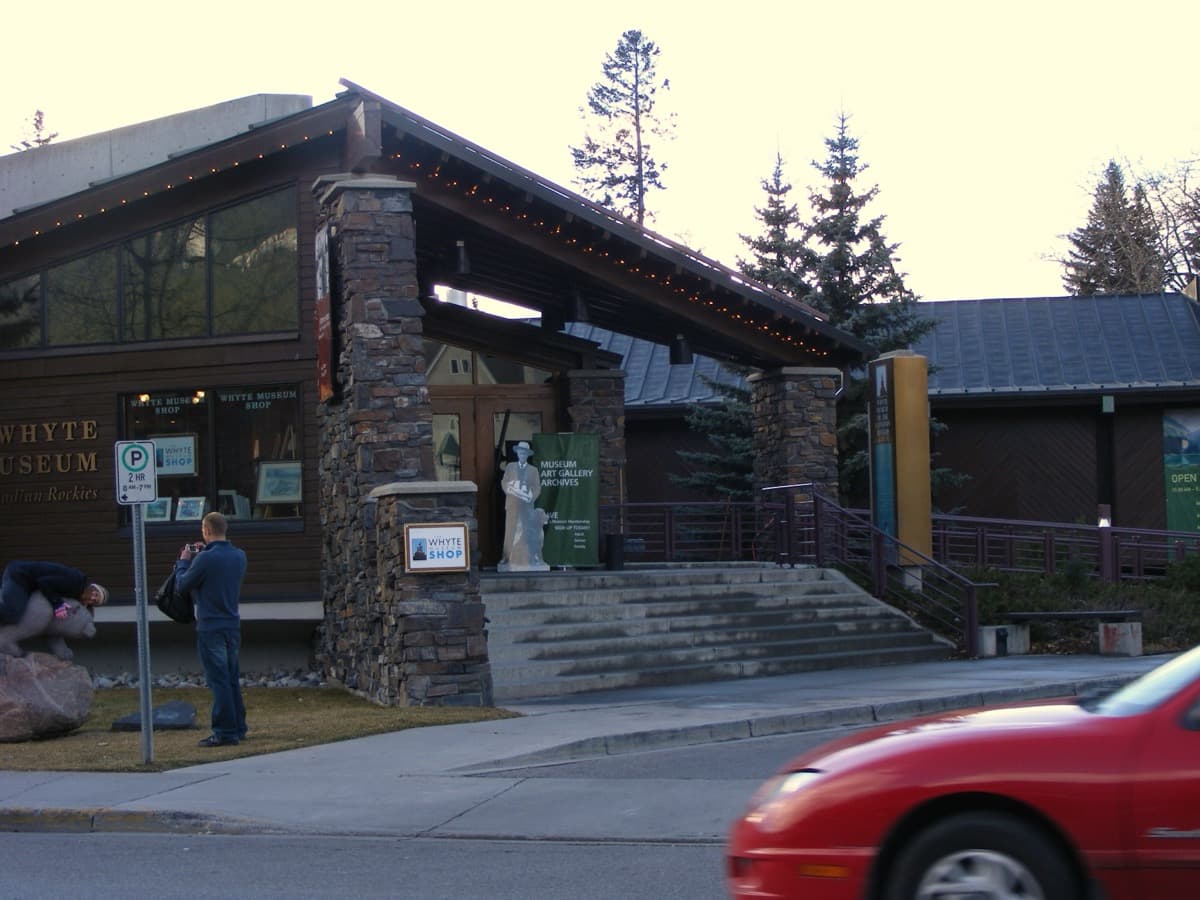
Whyte Museum of the Canadian Rockies
The town's memory of itself, founded by Banff artists Peter and Catharine Whyte, in a place that now legislates who may live in it.
- 4
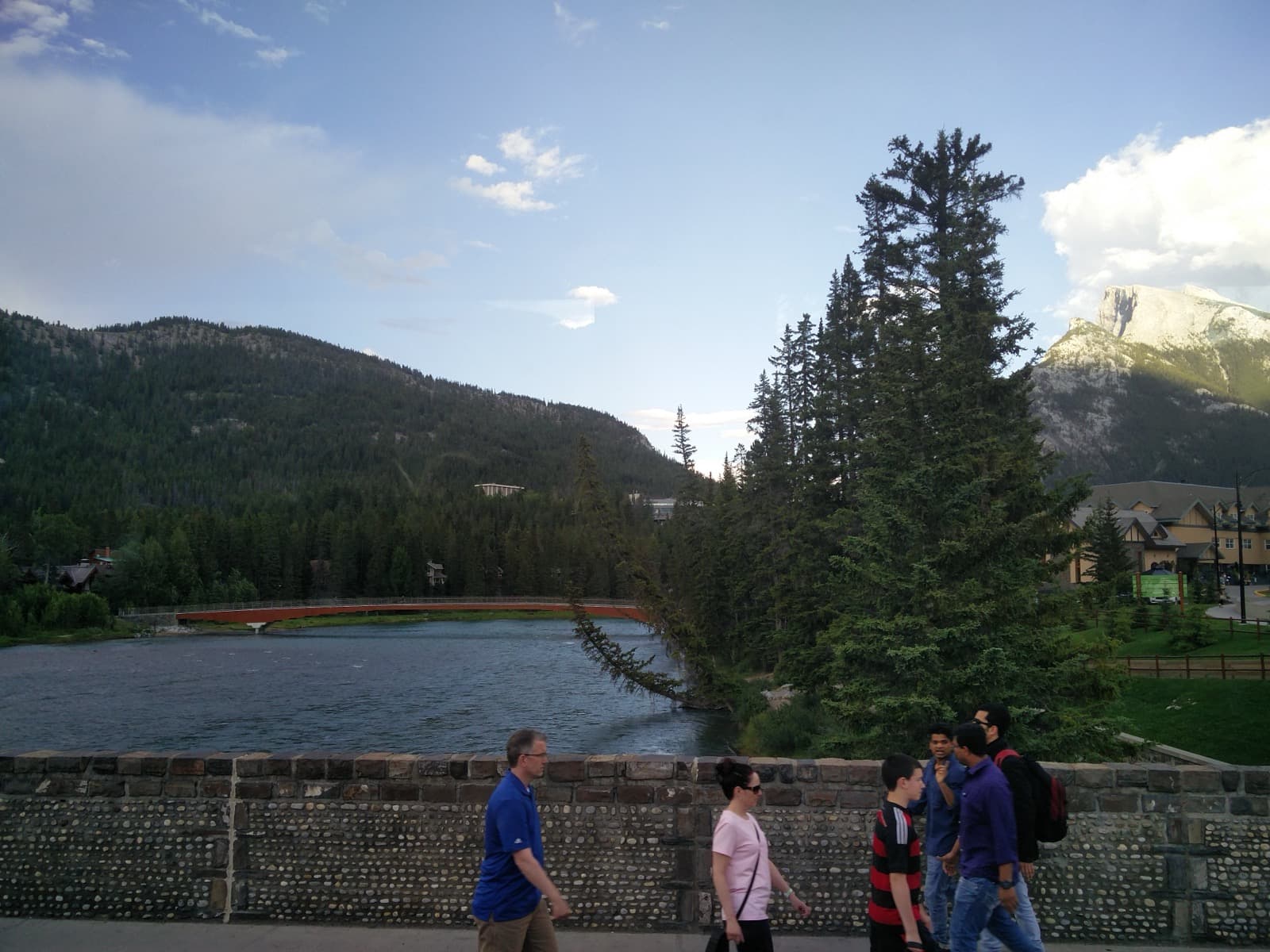
Central Park on the Bow
A riverside green full of picnics and children, and the federal population ceiling the town is already leaning against.
- 5
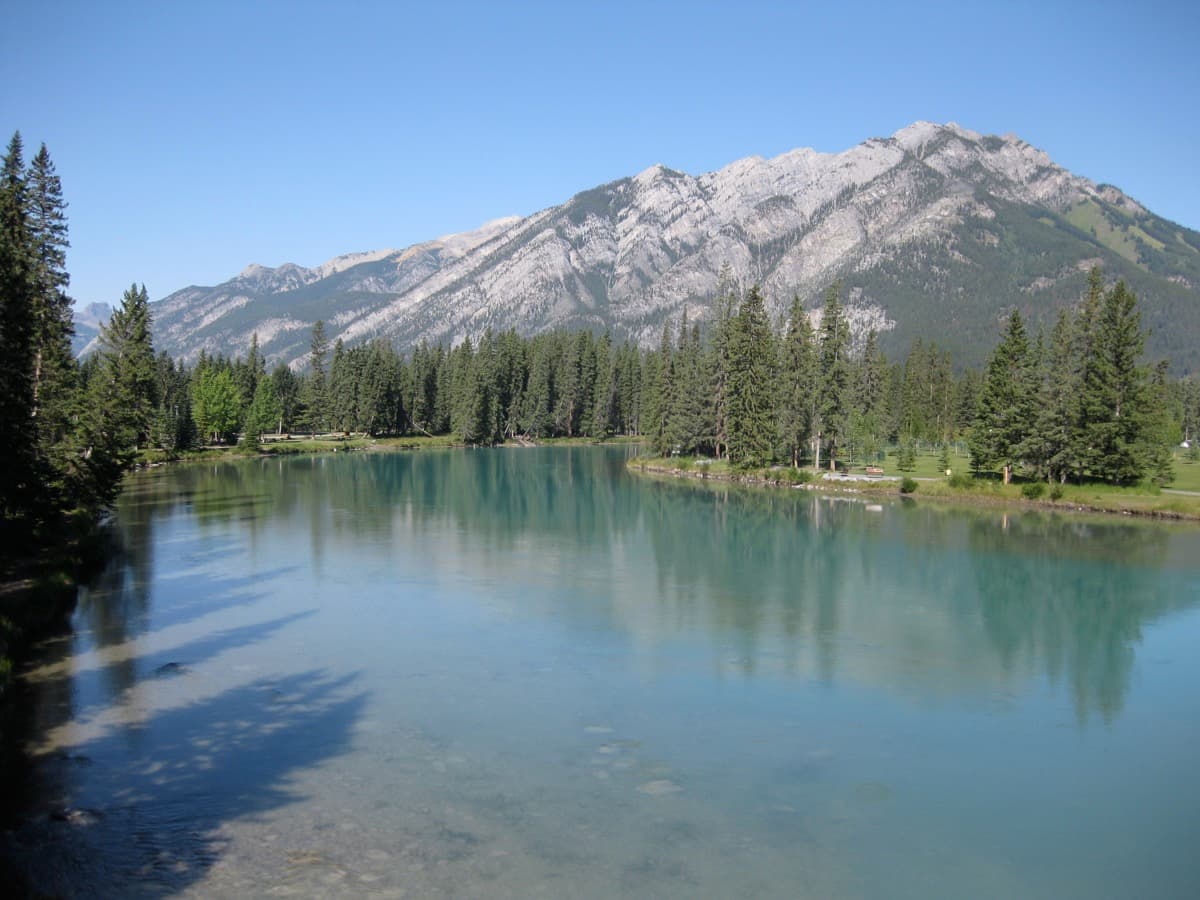
Nancy Pauw Bridge: The Frozen Edge
A brand new footbridge inside a boundary frozen by law at 3.93 square kilometres.
- 6
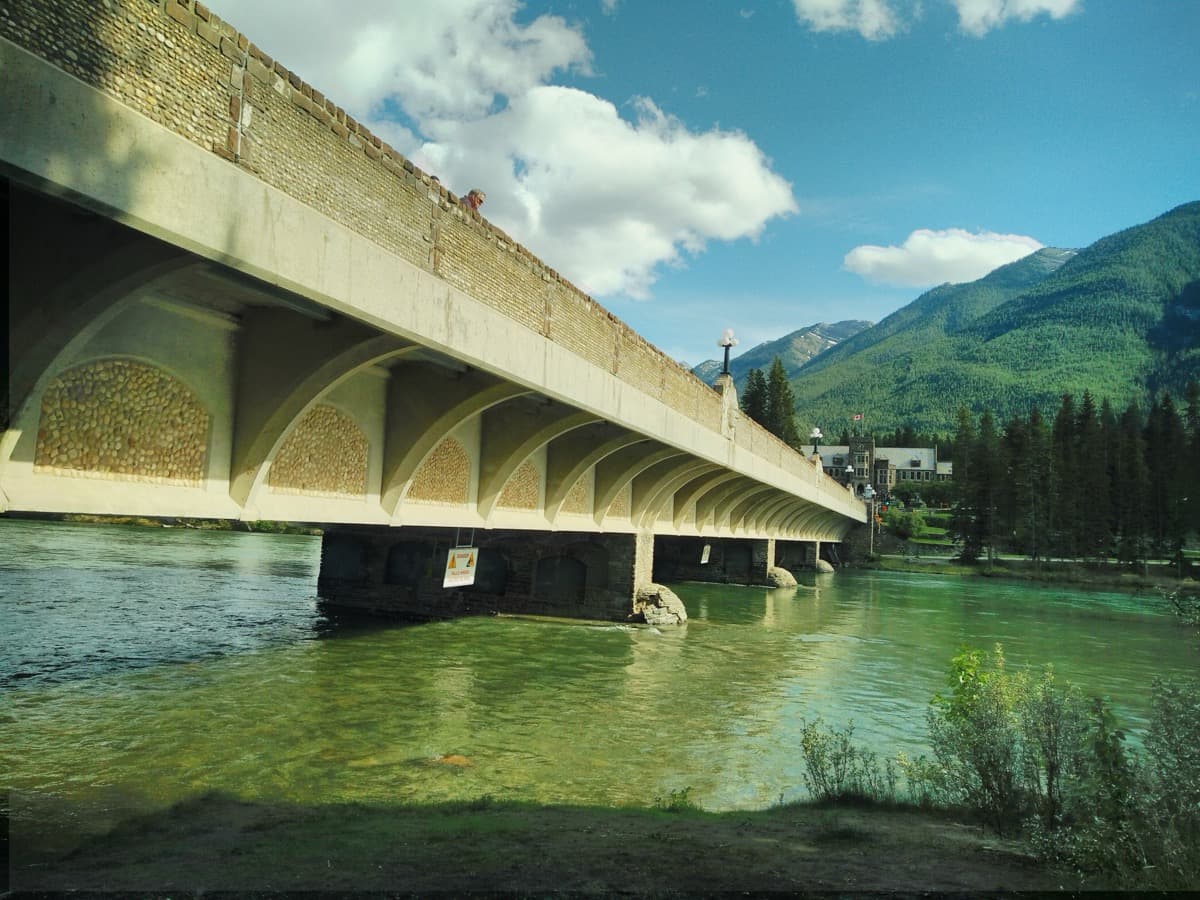
The Bow River Bridge
A much loved 1920s bridge that turns out to be a designed set piece from a planned townsite.
- 7
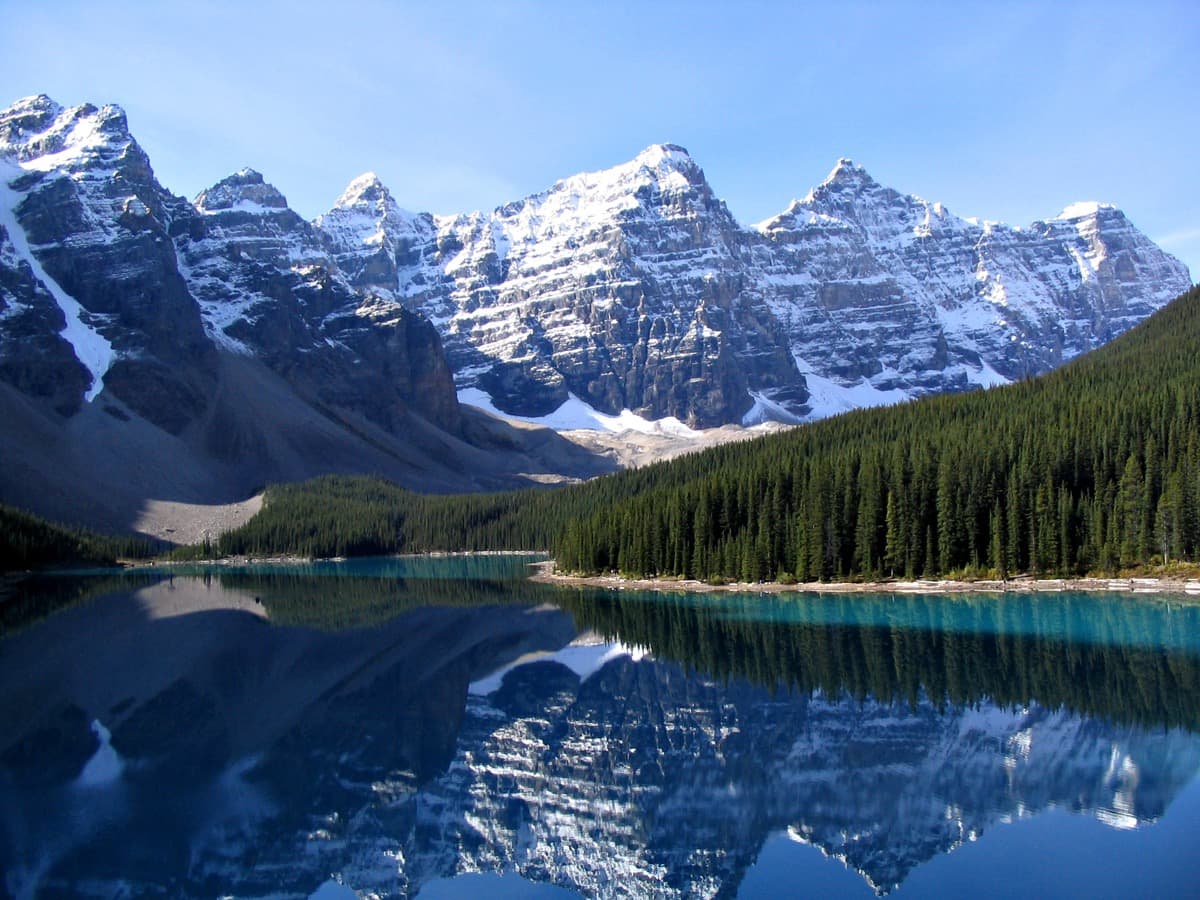
Park Administration Building & Cascade of Time Gardens
The reveal: the federal administration building at the head of Banff Avenue, with the town arranged below it like grounds.
- 8
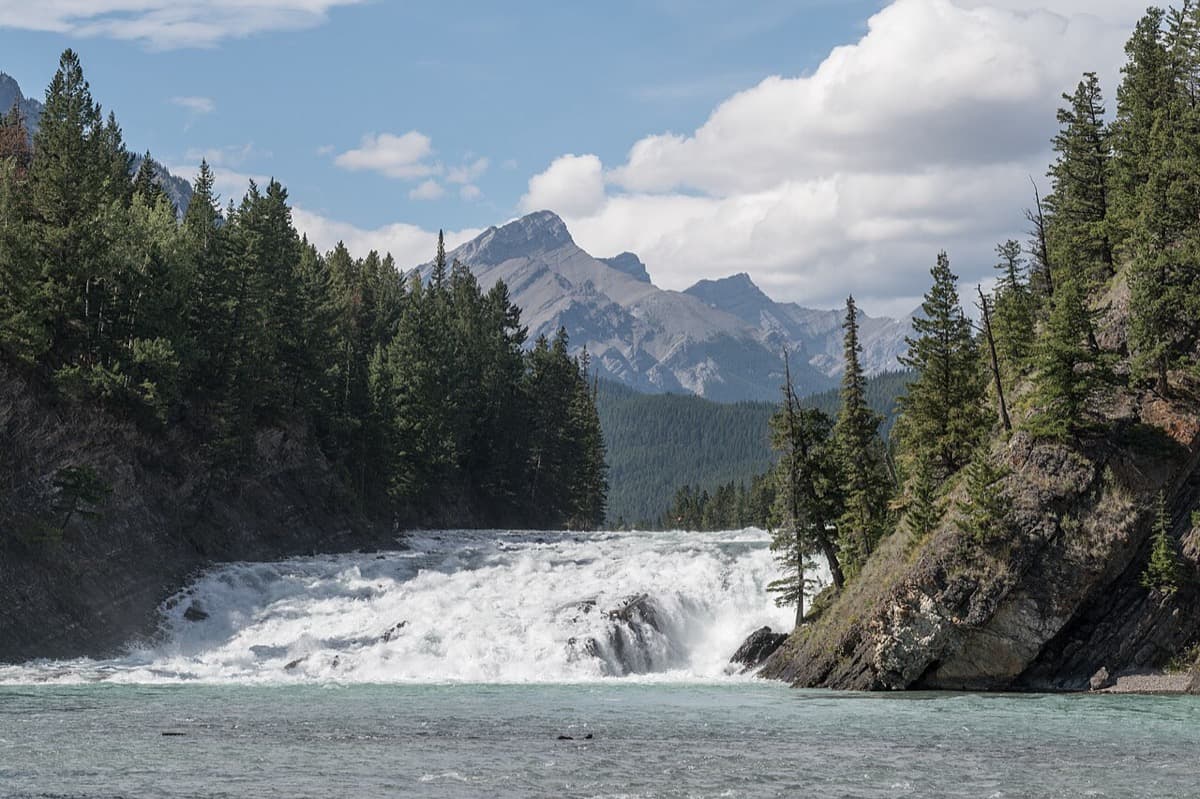
Bow Falls: Where the Town Stops
Where the town visibly stops against rock and river, and the question refuses to resolve.
Details
Best Time to Visit
Late spring through early autumn, in the morning. Banff Avenue is busiest at midday in July and August, when the sidewalks fill and the Cascade Mountain view up the street competes with tour buses. An early start gives you the postcard axis in soft light and a quieter shopping core. The riverside stops at Central Park, the Nancy Pauw Bridge, and Bow Falls are loveliest in daylight, and the Cascade of Time Gardens are in flower from June into September. Winter walking is possible and beautiful, but paths near Bow Falls can be icy and the light is short, so plan a midday window if you visit between November and March.
Pro Tips
- •The Cascade Mountain sightline up Banff Avenue reads best from the north end of the street in the morning, before the midday crowds and buses. Stand near the top of the avenue for the full postcard axis the tour opens on.
- •This is a real national park, not a themed one. Keep a respectful distance from elk, which are common along the river and in Central Park, especially in spring and autumn. Never get between an elk and its calf.
- •The Cascade of Time Gardens at Stop 7 are a public garden below the Park Administration Building. They are freely open in daylight and are at their best from June through September. The stop works from the terraces without going inside any building.
- •The whole route is paved or hard-surfaced and mostly flat, but the final approach to Bow Falls involves a gentle descent toward the river. Flat, closed shoes are enough. Allow a few extra minutes for the last stretch out to the falls.
- •The tour is written to be walked in order, north to south, from the top of Banff Avenue down to Bow Falls. The two research anchors, the frozen boundary and the population ceiling, land hardest at Stops 4 and 5, so do not skip the riverside middle.
Safety & Precautions
- •Banff is inside an active national park with resident wildlife. Elk, deer, and occasionally bears use the same riverbanks and trails as visitors. Keep your distance, do not feed anything, and give animals a wide, calm berth.
- •Banff Avenue carries real vehicle traffic, and the crossings at Caribou, Buffalo, and the Bow River Bridge approach get busy. Cross at marked crossings and watch for turning vehicles and cyclists.
- •The riverside paths near the Nancy Pauw Bridge and Bow Falls can be wet, uneven, or icy depending on the season. Wear flat, closed shoes and take the descent to the falls slowly.
- •Mountain weather changes quickly and the elevation is roughly fourteen hundred metres, so afternoons can turn cold or wet without much warning. Carry a layer and water, and walk the outdoor stops in daylight.
Travel advisory: Exercise Normal Precautions (Level 1).
Gallery
Related Reading
Go deeper on what you'll see, hear, and walk through.
Overview
Banff Travel Guide: How Many Days, Getting Around, the Park Pass, When to Go (2026)
6 min
Overview
Best Self-Guided Walking Tours in Banff (2026)
4 min
Overview
One Day in Banff: A Walkable National-Park Town Itinerary (2026)
6 min
Thematic
The Town That Lives Inside a Park: How Banff Was Reserved Before It Was Founded
6 min
Thematic
What to Eat in Banff: A Rocky Mountain Food Guide (2026)
4 min
Companion
A National Park's Shopping Street: Walking the Town That Can't Grow
4 min
Read the walk
The full story of Banff Avenue: The Town That Isn't Allowed to Grow, in words. Prefer to listen? Play it narrated, from home or on location.
Introduction
You are standing on what looks like an ordinary resort main street. Souvenir shops, ice cream, a mountain closing the far end of the road like a postcard. That mountain is Cascade, almost three thousand metres of it. And here is a question to carry the whole way down this street. Could you move here? Not visit. Live here. The honest answer is probably not, and it would have nothing to do with money. To occupy a home in this town you must legally prove that you need to reside here. Your work is in the park, or you run a business the park requires, or you have retired from one of those, or you study at an institution inside the park boundary. You can buy a house in Banff without qualifying. You just cannot live in it. Someone who qualifies has to.
This is the only incorporated town inside a Canadian national park. It became a municipality on the first of January, nineteen ninety, under an agreement with the federal government. Everything you will see for the next hour and a half sits on land the town does not own, inside a boundary the town cannot move, under a population ceiling the town is not allowed to cross. The research behind this walk comes from the Town of Banff's own incorporation record, Parks Canada's residency rules, and the Whyte Museum's history of the valley.
Eight stops, a little over four kilometres. Every one of them will offer you evidence that this is a real town, and then, quietly, evidence that it is something else. By the end you may not be sure which. When you are ready, at the top of Banff Avenue with Cascade ahead of you, begin with stop one.
1. North Banff Avenue: The Cascade Axis
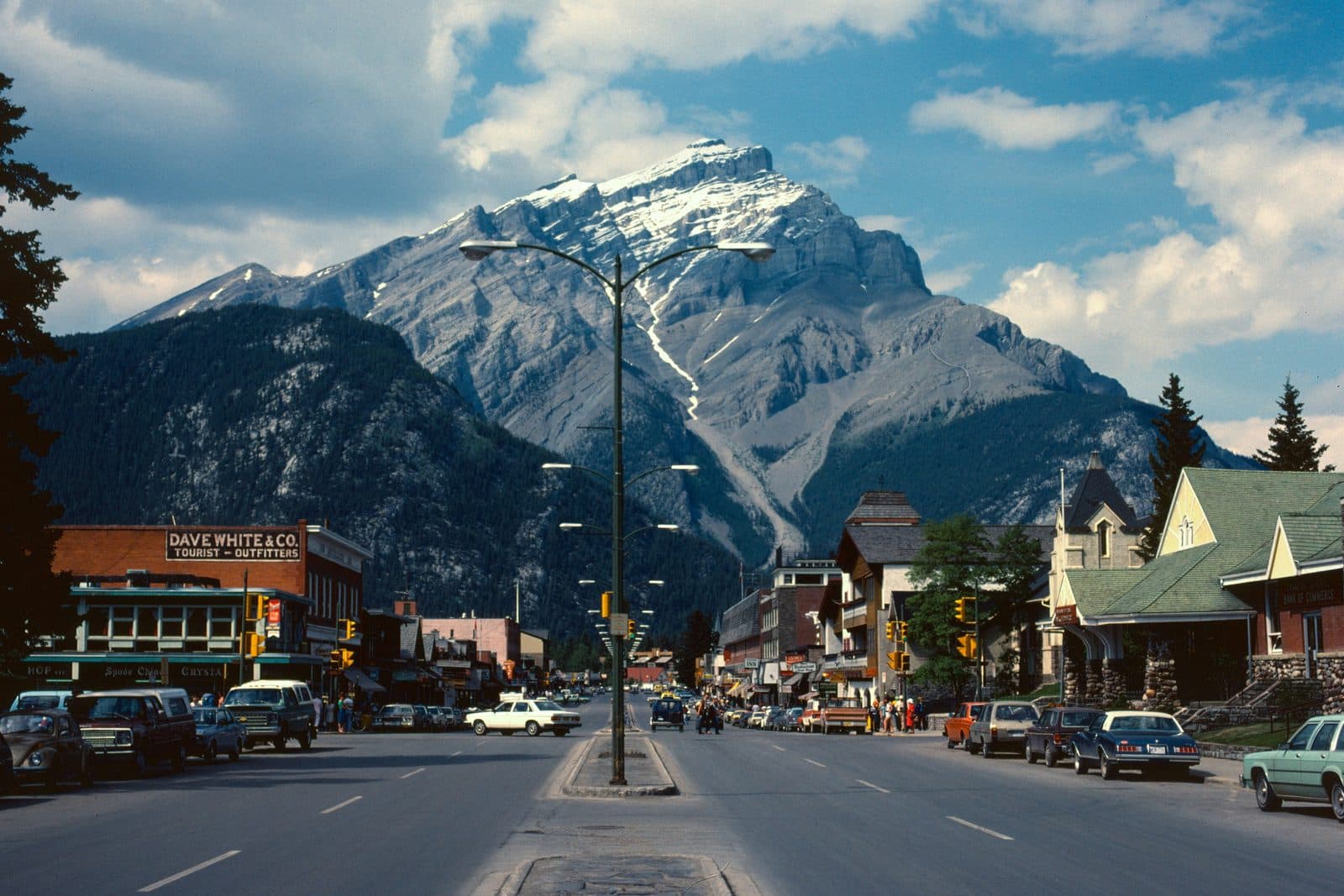
Look north, up the street. Cascade Mountain fills the end of Banff Avenue like a backdrop someone hung there on purpose. Two thousand nine hundred and ninety-eight metres, standing right against the edge of town. This is the postcard, and for a minute let it be exactly that. A resort main street. Shops selling maple candy and fleece. Families with ice cream. A mountain at the end of the road. Nothing here looks unusual. It could be any mountain town in the country.
That is the point. Hold the ordinariness in your mind, because the tour is going to spend eight stops taking it apart.
Start with the thing I mentioned before you set off. You could not simply decide to live on this street. Parks Canada calls it eligible residency. To occupy a home in Banff, your main employment has to be inside the park, or you have to operate a business whose day-to-day presence the park needs, or you are a qualifying retiree from one of those, or you are a full-time student at an institution in the park. If none of that describes you, you may still buy a house here. You are simply not allowed to live in it. It has to be occupied by somebody who meets the test. Holding a Banff home as a weekend place is against the rules.
Every other resort town in the Rockies lets you move in if you can afford it. This one asks you to prove you need to be here. So look up the street again. Is that a town, or is that the front entrance of something larger? Keep the question. Now walk south, down Banff Avenue, into the shops.
2. Banff Avenue: A National Park's Shopping Street
You are in the commercial heart of Banff now. On both sides of you, a dense, busy shopping street. Outdoor gear, restaurants, a candy shop with a lineup, a whisky bar. The ordinary commerce of a town that clearly works for a living. This is as much a real town as anything gets.
Now look at what is underneath it. Almost none of these shops sit on land their owners hold. In Banff there is essentially no freehold. The lots are Crown land, federal land, leased from the government on long terms, usually around forty-two years. The shopkeeper rents the ground from Ottawa. When a lease runs down, it is renegotiated with the landlord, and the landlord is the country.
There is a second rule, quieter and stranger. The amount of commercial floor space in the townsite is capped. The town's own development rules describe it plainly. There is no room left for new commercial supply inside the townsite. Read that slowly. The shops you are looking at are not the current version of a street that keeps growing. They may be close to all the shops there will ever be. A store cannot simply be added. Something has to give up its floor space first.
Think about what that means for a main street. Most shopping districts are a snapshot of a place still changing. This one is closer to a fixed set. A national park's shopping street, leased not owned, with the total sealed. And yet people are buying fudge and arguing about hiking boots exactly as they would anywhere. Is this commerce, or is it the concession stand of a very large attraction? Carry that. Turn off Banff Avenue toward Bear Street, and the Whyte Museum.
3. Whyte Museum of the Canadian Rockies
This is the Whyte Museum of the Canadian Rockies, and it is the strongest evidence yet that Banff is a real place with a real past. It was built by two people who chose this valley. Peter Whyte, born nineteen oh five, and Catharine Whyte, born Catharine Robb in nineteen oh six. They met at art school in Boston, at the School of the Museum of Fine Arts, married in nineteen thirty, and came back here to paint the mountains and the people who lived among them. They endowed a foundation in nineteen fifty-eight, and this museum opened its doors on the sixteenth of June, nineteen sixty-eight.
Inside are the letters, photographs, and paintings of a working mountain community. Guides and outfitters, climbers, shopkeepers, the families who wintered in the valley. A town that took the trouble to remember itself in this much detail is not a stage set. Real people lived real lives here, and someone cared enough to keep the record. That is what a museum is for, and it may be the most town-like thing you will see all day.
Hold that beside the rule from the top of the street. This is a town that carefully preserves the story of who its people were, and, at the same time, legally decides who is allowed to become one of them. The Whytes could settle here on the strength of wanting to. Today you arrive through an eligibility test.
So which is it. A community with a long memory, or a place that curates its own population the way this museum curates its collection. Peter and Catharine Whyte would recognize the mountains. I am not sure they would recognize the paperwork. Keep the question. Now walk down toward the river, to the wide green opening called Central Park.
4. Central Park on the Bow
Central Park, on the north bank of the Bow River. This is the most convincing town moment on the whole walk. Kids on the grass. Families with picnic blankets. A bandshell, a playground, benches in the shade. If you wanted one image to prove that Banff is simply a town where…
Full narration for this stop unlocks with the tour.
5. Nancy Pauw Bridge: The Frozen Edge
This is the Nancy Pauw Bridge, a timber-arch footbridge across the Bow that opened in September of twenty twenty-two. On its face it is the most normal municipal thing imaginable. A growing town needed another way across its river, so it built one, connecting Central Park to the…
Full narration for this stop unlocks with the tour.
6. The Bow River Bridge
The Bow River Bridge. Built in nineteen twenty to nineteen twenty-one, and a much loved piece of engineering in town. Look at the six carved heads set into the concrete, the work of the sculptor James L. Thomson. This is the kind of civic landmark every proud town has. A…
Full narration for this stop unlocks with the tour.
7. Park Administration Building & Cascade of Time Gardens
You have arrived at the Cascade of Time Gardens, terraced flower beds and stone paths that locals stroll through and couples pose in for wedding photos. As a public garden it is lovely and completely ordinary. Every town of any pride has a formal green like this. Now lift your…
Full narration for this stop unlocks with the tour.
8. Bow Falls: Where the Town Stops
Bow Falls, where the Bow River drops and turns below the town. Stand where you can see the water and, beyond it, the peaks closing the valley. Tunnel Mountain close on the town side, a long wall of grey rock across the valley, the river cutting between them. From here you can…
Full narration for this stop unlocks with the tour.