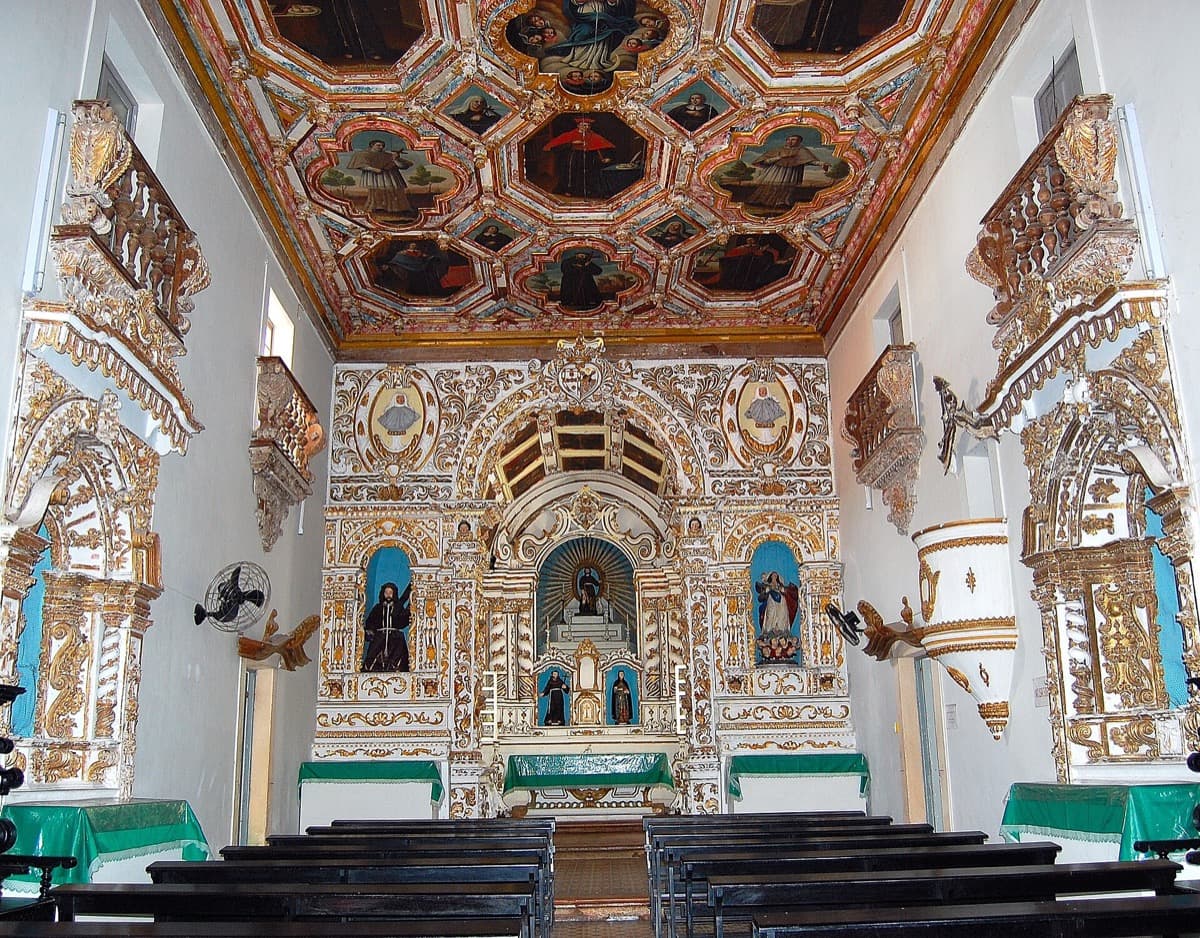
A south-to-north climb up Olinda's serene garden hill of gilded convents, where every calm baroque church is a survivor of fire, a rebuild in gold over ashes, and where a school of the Church became a seedbed of revolt.
Start · Mosteiro de Sao Bento: The Gilded Altar of the Sugar Coast
DirectionsStops
- 1
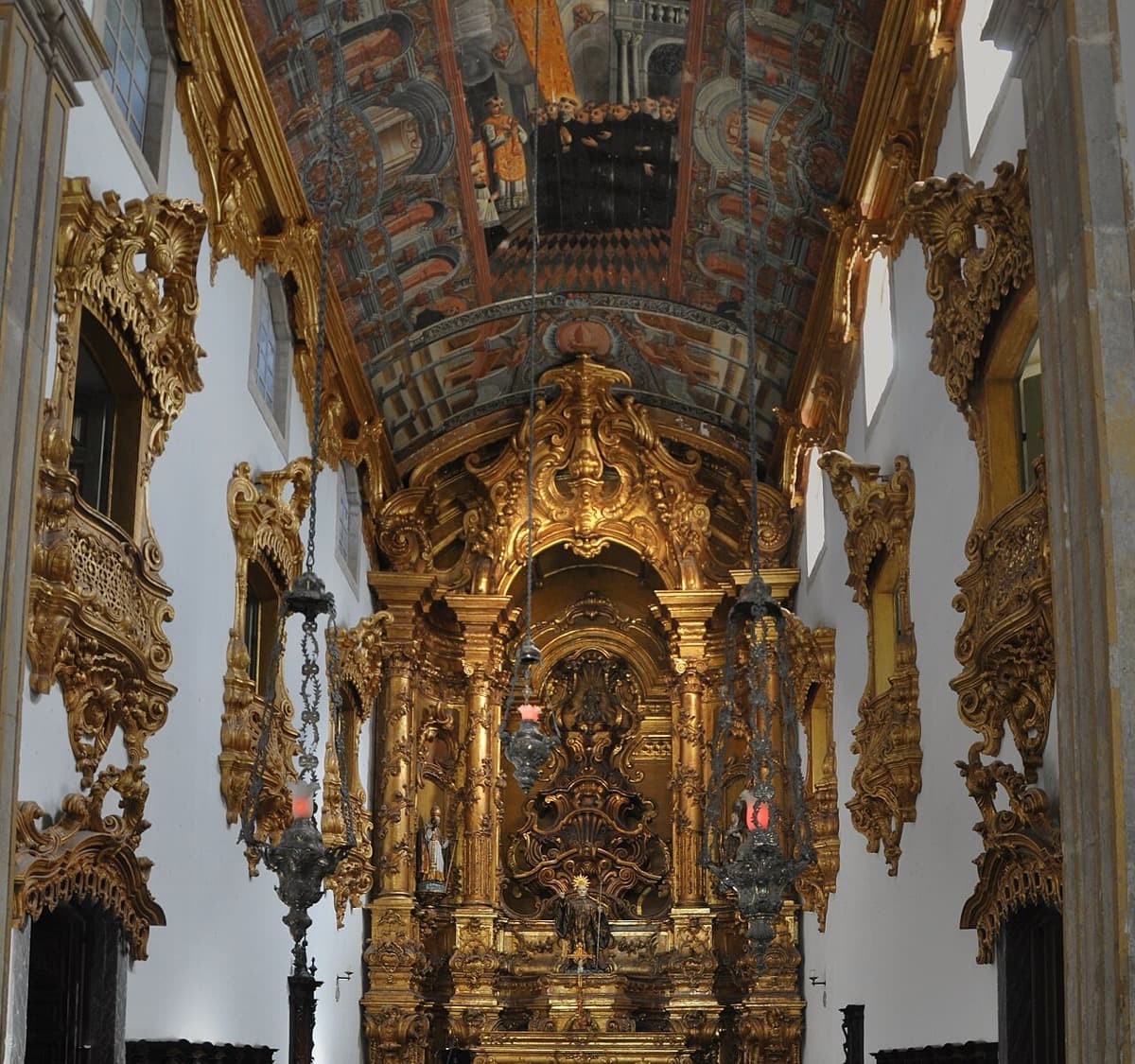
Mosteiro de Sao Bento: The Gilded Altar of the Sugar Coast
The lowest, oldest starting point of the ascent, a Benedictine monastery whose gilded high altar turned sugar wealth into one of colonial Brazil's most celebrated carvings.
- 2
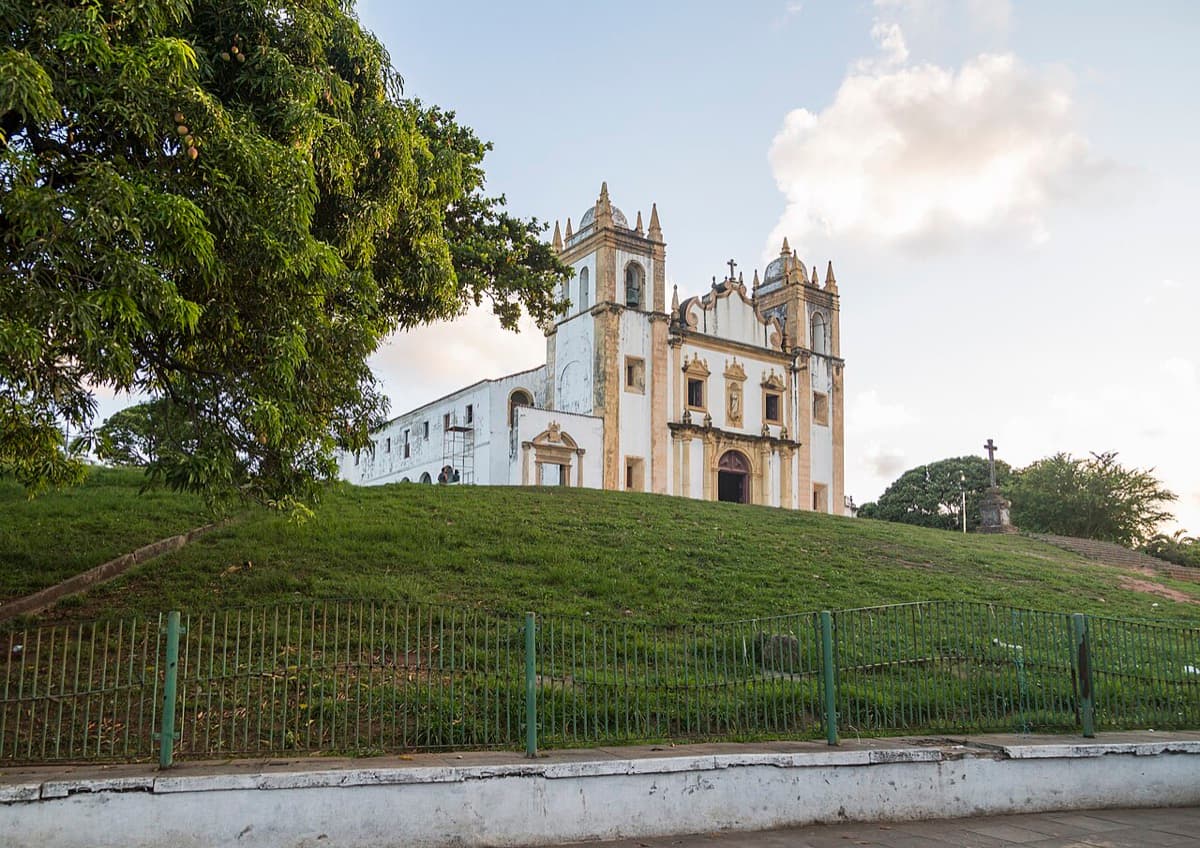
Igreja do Carmo: The Gateway of the Carmelites
The lower gateway church of the historic center, widely cited as the oldest Carmelite temple in the Americas, and the classic arrival point from the Recife road.
- 3
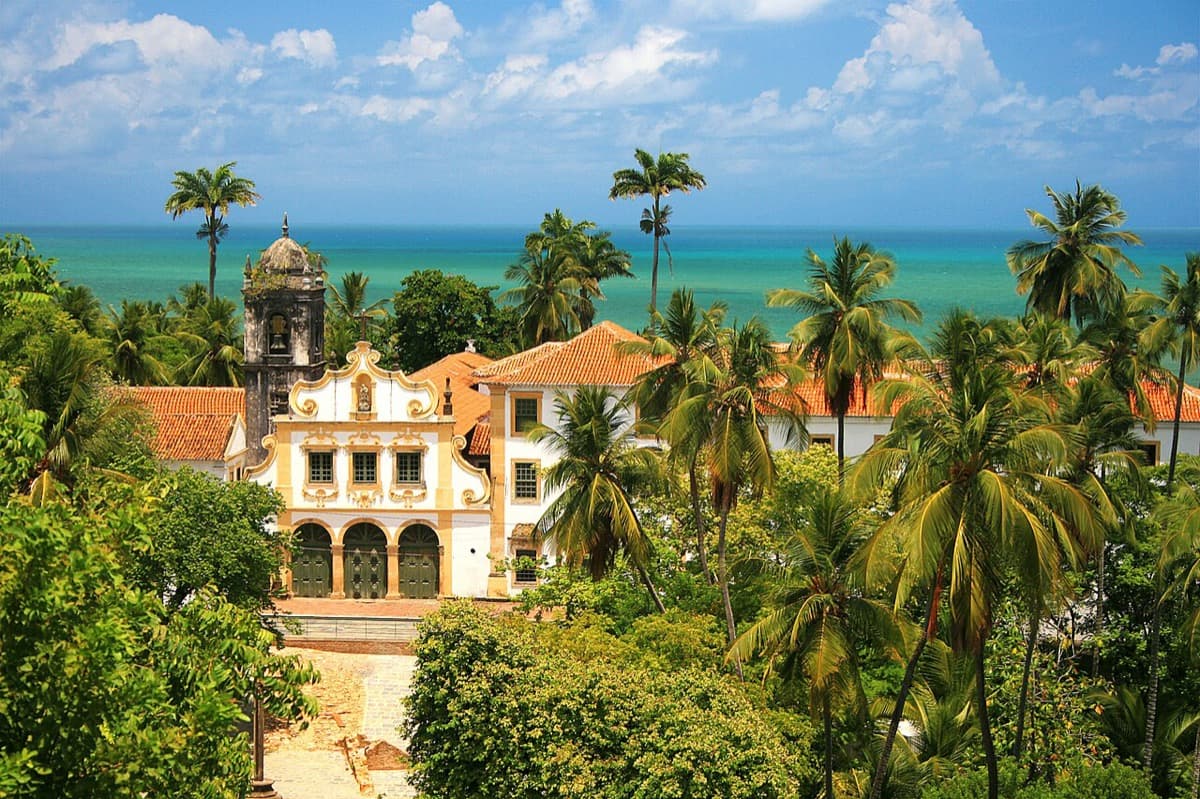
Convento de Sao Francisco: The First Franciscan Convent in Brazil
The oldest Franciscan convent in the country and the thesis at the heart of the hill, famed for its Portuguese blue-and-white azulejo cycles and gilded carving.
- 4
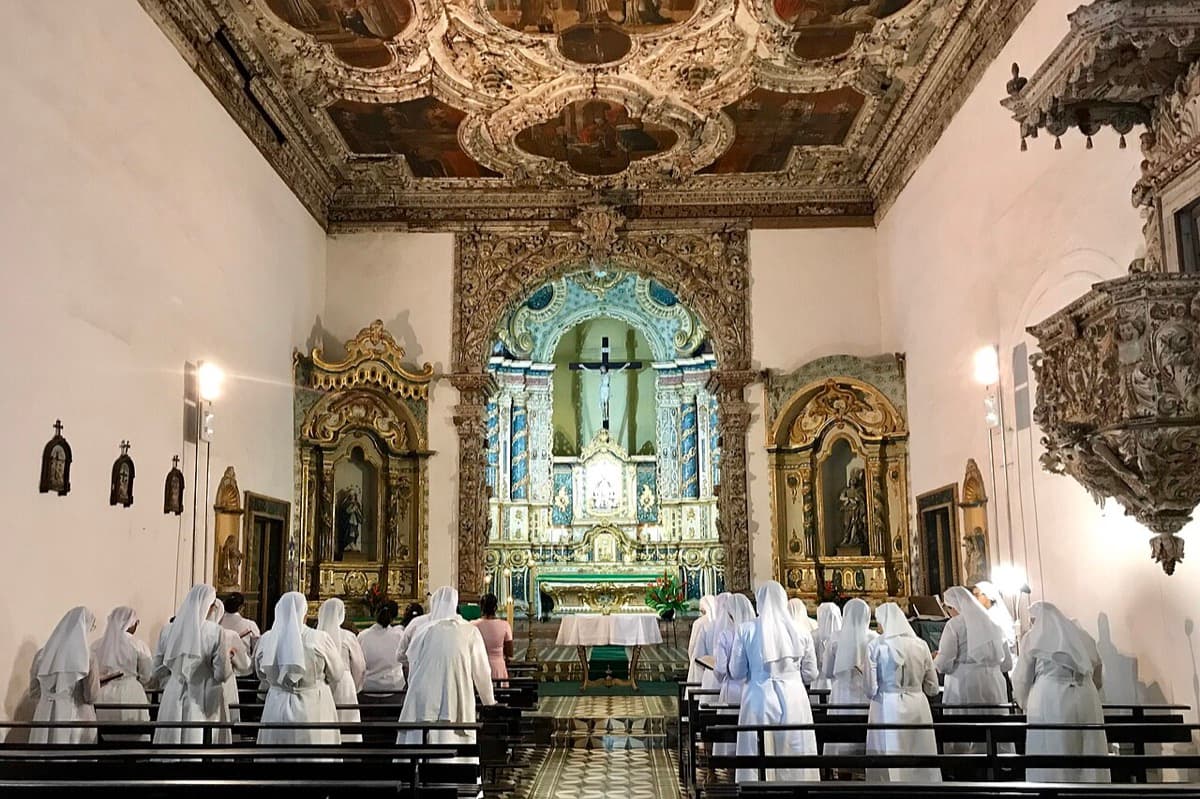
Igreja da Misericordia: Charity at the Top of the Ridge
A small, richly gilded church at the highest point of the ridge, built by order of the Crown to serve a charity hospital, its pulpit bearing the insignia of the House of Austria.
- 5
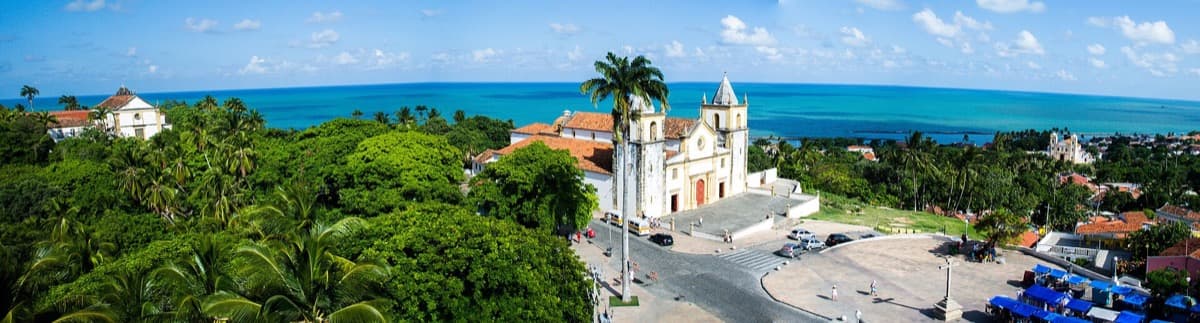
Catedral da Se: The Cathedral Crowning the Sea View
The cathedral at the Alto da Se, begun as a rammed-earth chapel in the fifteen hundreds, gutted by the Dutch, and now crowning the classic panoramic view over Olinda and Recife.
- 6
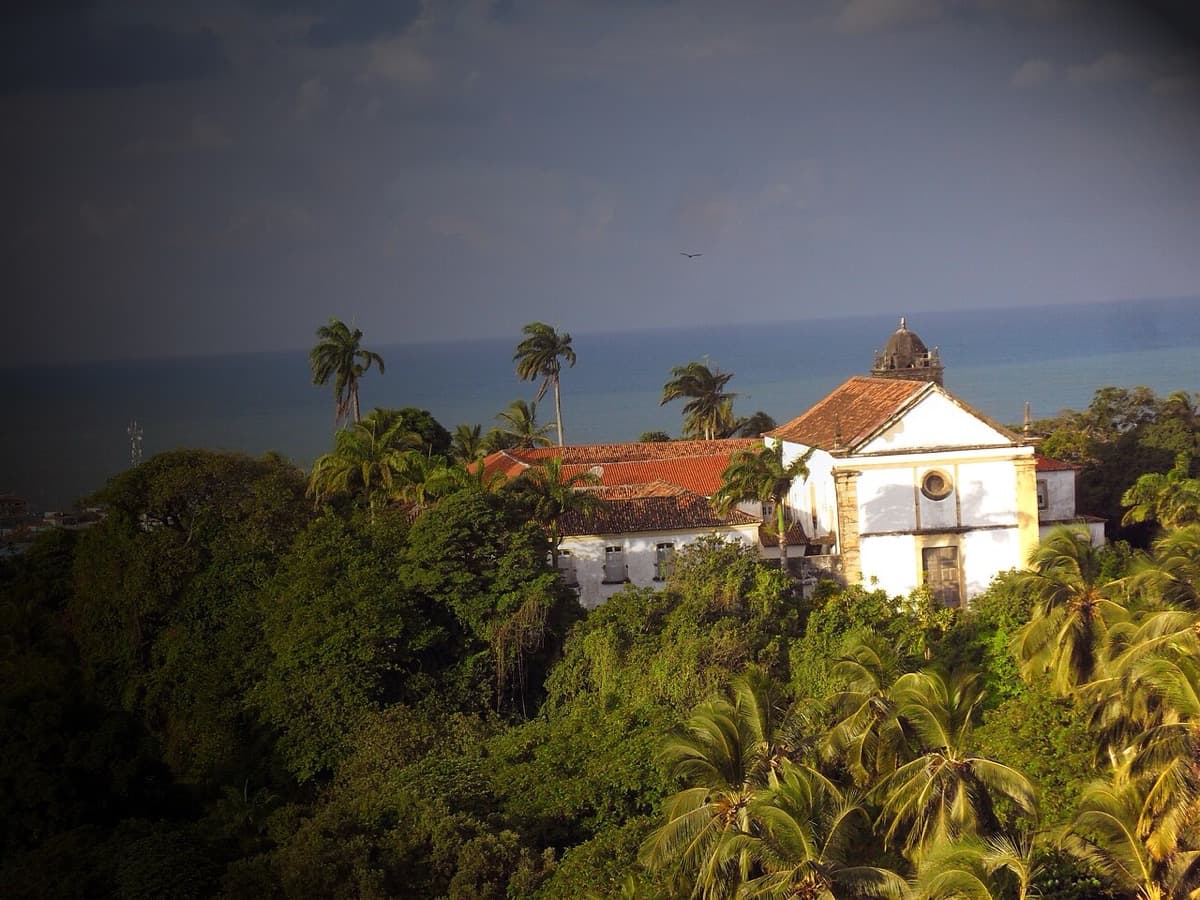
Seminario de Olinda e Igreja de Nossa Senhora da Graca: Reason and Rebellion
The Enlightenment coda at the summit, a Jesuit church turned Episcopal seminary whose curriculum of natural sciences is historically tied to the republican revolution of eighteen seventeen.
Details
Best Time to Visit
Come in the early morning, ideally between eight and ten, when the churches that keep short hours are most likely to be open, the cobbled climb is still cool, and the light on the Alto da Se is soft over the coast. Sunday morning adds the Gregorian chant Mass at the Mosteiro de Sao Bento. Late afternoon rewards the cathedral terrace with golden light over Olinda and Recife, though several churches close by then.
Pro Tips
- •Walk it low to high, from the Mosteiro de Sao Bento up to the Seminario, so the route reads as a timeline and every climb earns a wider view.
- •Church hours are short and irregular here. Several sites, especially the Igreja da Misericordia, often open only in the mornings or for Mass, so start early and treat any open door as a gift.
- •Carry small change or a few notes. The Convento de Sao Francisco typically asks a modest entry fee or donation for the church, cloister, and sacristy.
- •Save real time for the cathedral terrace at the Alto da Se. The panoramic view over Olinda's roofs to Recife and the sea is the payoff of the whole climb.
- •Pause inside for the details, not just the buildings: the gilded talha dourada altars, the blue-and-white azulejo cycles, and the painted ceilings reward slow looking.
- •Pair the walk with a rest stop at the top. The ridge around the cathedral and seminary is a natural place to sit, take in the view, and let the paradox of the hill settle before you head back down.
Safety & Precautions
- •Olinda is hot and the northeastern sun is strong. Bring water, a hat, and sun protection, and take the cobbled climb at your own unhurried pace to avoid overheating.
- •Sudden tropical rain can make the steep, uneven cobblestones and church steps slippery. Wear comfortable shoes with real grip and step carefully on the ladeiras when wet.
- •These are active places of worship and living heritage. Dress modestly inside the churches, keep your voice low during Mass, and always ask before photographing people or any sacred ceremony, including Afro-Brazilian religious practice.
- •Stay street-smart in the historic centre as you would in any tourist area. Keep valuables out of sight, be extra aware on quieter lanes and during large festivals, and stick to well-populated routes after dark.
Travel advisory: Exercise Increased Caution (Level 2).
Gallery
Related Reading
Go deeper on what you'll see, hear, and walk through.
Overview
Best Self-Guided Walking Tours in Olinda (2026)
3 min
Overview
Olinda Travel Guide: How Many Days, Getting Around, When to Go (2026)
5 min
Overview
One Day in Olinda: A Walkable Hilltop Itinerary (2026)
6 min
Deep dive
The Convento de São Francisco: Brazil's Oldest Franciscan Convent, in Blue and Gold
6 min
Read the walk
The full story of Historic Center: Convents of the Coast, in words. Prefer to listen? Play it narrated, from home or on location.
Introduction
This walk climbs one small hill in Olinda, in northeastern Brazil, and that hill is quietly one of the strangest stories in the country. From below it looks like the most serene place imaginable, a compact garden of gilded convents strung above the sea. That serenity is the paradox. This was engineered as a command post. The religious orders that headquartered here were sent to convert the indigenous northeast and to hold a sugar colony for the Portuguese Crown and Church. Then in the sixteen thirties the Dutch burned nearly all of it, so almost everything you touch is the rebuilt second act, gold laid back over ashes by many hands, including the enslaved. And the walk does not end in obedience. It ends at an Enlightenment seminary whose priests were tied to a republican revolt against the very Crown these convents were built to serve. There are six stops across roughly two and a quarter kilometres, and if you linger the way this hill deserves, give it about two hours. You set your own pace, sit when a view holds you, skip a stop that does not. UNESCO inscribed this historic centre on its World Heritage List in nineteen eighty-two, and the citation reads the whole ridge as one layered monument. We start low, where the sugar wealth was carved into a single dazzling altar, and we climb, stop by stop, through founding, through the burning, up to reason and rebellion at the summit. When you arrive at the Mosteiro de Sao Bento, begin with stop one.
1. Mosteiro de Sao Bento: The Gilded Altar of the Sugar Coast
Begin at the bottom of the hill, which is the right place to begin, because this is where the money was. The Benedictine order reached Pernambuco in fifteen ninety-two, and their monastery here was completed in fifteen ninety-nine. Then came the paradox that will follow you all the way up. This church was burned during the Dutch invasion. What stands now is the rebuild, the present church raised across the late seventeenth and eighteenth centuries. Step inside and let your eyes adjust, because the whole room pulls toward one thing: the high altar, a mountain of carved and gilded wood, executed in the seventeen eighties. This is talha dourada, gilded carving, and it is among the most admired in all of colonial Brazil. Think about what that gold really is. It is the sugar coast made visible, the wealth of the plantations turned into worship, and it was raised by many hands across that economy, including enslaved and free Afro-Brazilian labor. Do not rush this one. Sit in a pew. Notice how the gilding catches whatever light is in the room and throws it back at you. If your schedule lets you land here on a Sunday morning, the Mass is still sung in Gregorian chant, a living thread back through all those centuries. Pope John Paul the Second raised this church to the rank of minor basilica in nineteen ninety-eight. From here the hill only climbs, and every church above you shares this same buried biography: built, burned, and rebuilt in gold. This first altar is your key to reading all of them.
2. Igreja do Carmo: The Gateway of the Carmelites
Climb a little and you reach Praca do Carmo, the square that has always been the gateway into this historic center, the point where travelers arrived from the Recife road. Standing over it is the Carmelite church, and it carries a remarkable claim. It is widely cited as the oldest Carmelite temple in the Americas. The Carmelite order was established in Olinda around fifteen eighty, when four friars, among them Frei Domingos Freire from Portugal, arrived in Pernambuco and founded here. So this is early, one of the first foundations of its kind in the whole hemisphere. And then, of course, the hill's recurring wound. When the Dutch destroyed the city in sixteen thirty-one, this church was damaged with the rest of it. The friars returned after the Dutch were expelled in sixteen fifty-four and rebuilt. Interior work began in seventeen oh four, and the south tower was completed in seventeen twenty-six. That is the rhythm you are learning to read as you climb: a sixteenth-century founding, a burning, a patient baroque rebuild stretching across generations. Take a moment here in the square before you go higher. This is the threshold of the whole ascent, the place where the road up truly begins, and it is worth feeling that. Notice the church's position, low and welcoming, almost a greeting to anyone coming up from the coast. Everything above this point was built to hold a colony for the Crown and the Church. Keep that in mind, because by the time you reach the top of this hill, that same alliance will have produced its own undoing.
3. Convento de Sao Francisco: The First Franciscan Convent in Brazil
This is the stop that anchors the whole idea of the hill. The Convento de Sao Francisco is the oldest Franciscan convent in Brazil. Its construction began in fifteen eighty-five, to a design by the friar Francisco dos Santos. Sit with that for a moment. The very first Franciscan…
Full narration for this stop unlocks with the tour.
4. Igreja da Misericordia: Charity at the Top of the Ridge
You have reached the top of the ridge now, and this small church sits at the very highest point of it, higher even than the cathedral you will see next. It began in fifteen forty, built by order of the Portuguese Crown as the church of the hospital of the Santa Casa da…
Full narration for this stop unlocks with the tour.
5. Catedral da Se: The Cathedral Crowning the Sea View
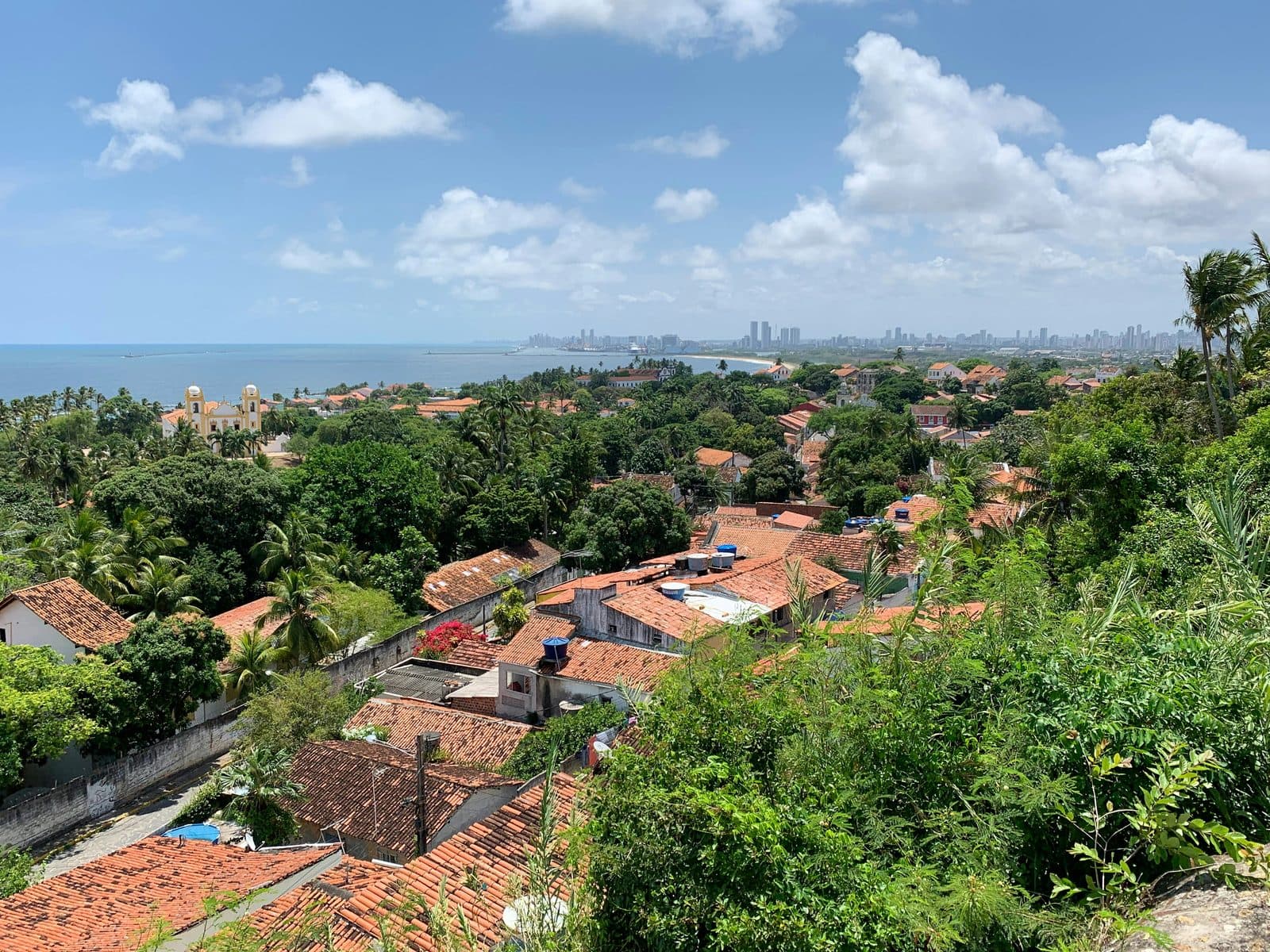
Now you stand at the Alto da Se, the height of the see, where the cathedral crowns the ridge and the whole coast opens below you. This is the view people climb for: the terracotta roofs of Olinda tumbling downhill, and beyond them the towers of Recife and the sea. Take the view…
Full narration for this stop unlocks with the tour.
6. Seminario de Olinda e Igreja de Nossa Senhora da Graca: Reason and Rebellion
This is the top, and the twist. The church of Nossa Senhora da Graca began as a rammed-earth oratory in fifteen fifty-one, raised by order of Duarte Coelho and given to the Jesuits for the catechization of indigenous people. It is considered the greatest surviving testimony of…
Full narration for this stop unlocks with the tour.