The Cycle, Read Closely: Why Queen West Eats Itself
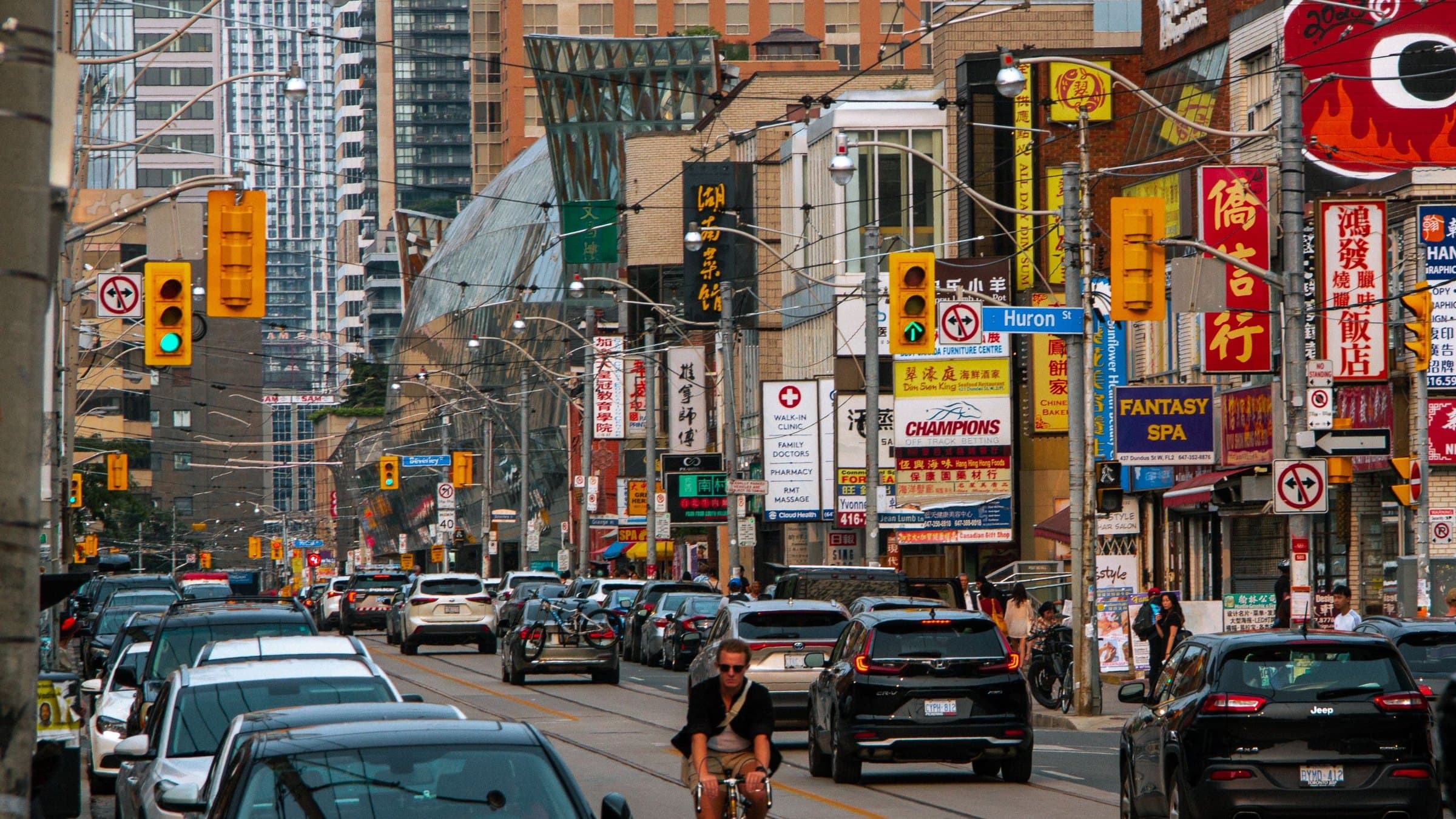
The art-to-condo cycle is mechanical. Sixty years of academic urbanism literature have named the mechanism, Queen West has run it twice in thirty years, and the third cycle is running in Parkdale now. The phrase "the second coolest neighbourhood in the world" appeared in Vogue in September 2014, in a list ranking global creative neighbourhoods. The neighbourhood was Queen West, specifically the West Queen West stretch between Bathurst and Dovercourt. The list was widely mocked at the time, particularly by Torontonians who pointed out that the cool of West Queen West had already largely arrived by 2014 and was, on the Vogue timeline, already pricing itself out. The mockery turned out to be correct on the substance. By 2017 the West Queen West Triangle had been rezoned for residential intensification, the Drake Hotel had spawned a clutch of imitators, and the cycle that had brought artists to the corridor in 1988 had finished its second iteration and was preparing to roll west into Parkdale.
This is the article that names the cycle. It is not a moral story. It is a sixty-year academic finding. The reason it matters to walk Queen West with the mechanism in mind is that the cycle is currently running in Parkdale and in dozens of other North American neighbourhoods at the same time, and once you can name the four stages and point to a building for each one, you can read which phase any street you walk through is in.
The mechanism, in four stages
Ruth Glass, a British sociologist, coined the word "gentrification" in 1964 in a book called London: Aspects of Change (MacGibbon and Kee). She used it to describe what was happening in Islington, where middle-class buyers were displacing working-class tenants from Georgian terraces. The word was new but the pattern was already old; what Glass added was a name and a frame.
Sharon Zukin's Loft Living: Culture and Capital in Urban Change (Johns Hopkins University Press, 1982) added the art-displacement variant of the mechanism. Zukin's study of SoHo in lower Manhattan, the cast-iron industrial district that artists had colonized in the 1960s and 1970s, named the four stages: artists move into industrial space because it is cheap; their presence raises the cultural premium of the district; the district becomes legible to capital as a desirable consumption environment; capital moves in, rents rise, and the artists are priced out. The cycle takes ten to twenty years to run once. The mechanism is not driven by malice, it is driven by the rent gap.
Neil Smith named the rent gap in The New Urban Frontier: Gentrification and the Revanchist City (Routledge, 1996). The rent gap is the difference between the rent a property currently produces under low-investment use and the rent the property could produce if redeveloped at its highest and best use. When the gap is wide enough to repay the redevelopment cost plus return, capital flows. The rent gap is a calculation, not a sentiment. The cycle runs because the math runs. The artists' role in the cycle, the part that feels human, is to be the cultural premium that widens the rent gap enough to make the math work. The artists do not choose this role; they choose cheap space and the cycle uses them.
Richard Florida is the figure who turned the cycle into an explicit economic-development strategy. The Rise of the Creative Class (Basic Books, 2002), written when Florida was at Carnegie Mellon, argued that cities should attract artists and creative-class workers because their clustering produced agglomeration effects that drove urban prosperity. The book was widely adopted by city governments as a policy framework. Florida moved to the University of Toronto's Rotman School in 2007. By 2017, in The New Urban Crisis (Basic Books, 2017), Florida was writing that his earlier thesis had been weaponized, that creative-class neighbourhoods had become exclusion zones, and that Toronto was the case study for what had gone wrong. The self-revision is one of the cleaner public reversals in contemporary urban economics. The cycle Florida had helped accelerate had eaten the cities he had cited as exemplars.
Cycle one on Queen West
The Queen West corridor between University and Bathurst had been a working commercial strip through the postwar period, with low rents and a stock of two- and three-storey Victorian commercial buildings. It survived the 1970s urban renewal pressure because John Sewell, Toronto mayor from 1978 to 1980, had blocked the high-rise rezonings that the David Crombie council (1972 to 1978) had begun to authorize and that the post-Sewell councils continued to threaten. The Victorian stock survived; the rents stayed low; the cultural premium accrued through the 1980s.
The institutions that accrued the premium are still legible on the street. The Cameron House at 408 Queen West opened in its current artist-led form in 1981. The Horseshoe Tavern at 370 Queen West had reinvented itself as a punk venue in the late 1970s under the booking of Gary Topp and Gary Cormier. The Rivoli at 332 Queen West opened in 1982 as a music and performance venue. The Bovine Sex Club at 542 Queen West opened in 1991. Mercer Union, an artist-run gallery, was founded in 1979 and operated on Queen through the early 1990s. YYZ Artists' Outlet followed a parallel path. The corridor between Spadina and Bathurst became, by the mid-1990s, the densest concentration of independent music venues and artist-run galleries in the country.
Rents tripled. The artists who arrived in 1988 could not afford 1998. Most moved west, to the cheaper Queen Street blocks beyond Bathurst. Cycle one had finished its run by approximately 2000, on Zukin's standard fifteen-year timeline.
Cycle two: the Drake and the trigger event
Cycle two ran from 2000 to 2015 and had a single trigger event that is the most-cited gentrification artifact in Canadian urbanism. In 2001 Jeff Stober, then a thirty-something Toronto entrepreneur, bought the Drake Hotel at 1150 Queen West for a price commonly reported as under two million dollars. The Drake had been a single-room-occupancy hotel housing low-income tenants. The acquisition included relocating those tenants. (The contemporary literature on cycle two consistently notes that the displaced SRO residents' subsequent housing situations are not documented in any public source; the gap is part of the cycle's record.)
The reopening of the Drake in February 2004 was the canonical Toronto trigger event. The hotel reopened as a boutique hotel with twenty-two rooms, an art gallery, a basement music venue (the Drake Underground), and a restaurant. The pitch was that creative-class workers would pay urban-luxury rates to stay in a building with art-cool credentials in a neighbourhood with art-cool history. The pitch worked. Toronto Life's 2014 retrospective "How the Drake Hotel Changed Toronto" frames the 2004 reopening as the moment cycle two began.
The Drake worked because it solved cycle two's first problem: it gave capital a legible artifact to point to. Cycle two needs a single building that says "this neighbourhood is now legible to investment." The Drake was that building. Within eighteen months the Gladstone Hotel at 1214 Queen West, also a former SRO, was being heritage-converted by ERA Architects (the conversion completed in 2005). The Gladstone validated the model: the Drake worked, so the Gladstone followed. Then the model became the default. By 2010 Ossington Avenue, two blocks east of the Drake, had transformed from a strip of auto-body shops and Portuguese social clubs into the densest restaurant row in the country. The West Queen West Triangle (Queen, Dufferin, and Gladstone) was rezoned by the City of Toronto Official Plan Amendment of 2006 for residential intensification. The condos that arrived through the 2010s, visible from the corner of Queen and Gladstone, are the cycle-two product.
Cycle one took fifteen years. Cycle two took ten. The compression is not Toronto-specific; it is a feature of the post-2000 financialized cycle, where capital has sharper tools for capturing cultural premium earlier. Artists in cycle two had less time to build institutions before rents priced them out.
What makes Toronto's cycle distinct
The version of the cycle that runs in Bushwick, Wicker Park, the Mission District, or East London is recognizably the same mechanism. What distinguishes the Toronto version is the regulatory frame. Three pieces of the frame are load-bearing.
The first is rent control. The Ontario Residential Tenancies Act covers units first occupied before 15 November 2018 with annual rent-increase guidelines that have averaged around 1.5 to 2 percent over the past decade. Rent control does not stop displacement (landlords can renovict, can refuse to renew leases, can convert to condo), but it slows the pace at which existing tenants can be priced out and gives organizing communities more time to respond.
The second is the heritage regime. The West Queen West Triangle has been moving toward Heritage Conservation District designation under the Ontario Heritage Act. The designation, if locked in, would limit demolition and require facade-preservation on new development. The Drake and the Gladstone are both heritage-conserved buildings. The heritage regime in Ontario is far more restrictive than the equivalent in most American comparators, and it slows the cycle by preserving the Victorian commercial stock that made the corridor attractive to artists in the first place.
The third is the counter-mechanism. The Parkdale Neighbourhood Land Trust was founded in 2014. It is a community-controlled non-profit that acquires rental housing and rooming-house stock and holds it permanently out of the speculative market. PNLT acquired its first rooming house at 22 Maynard Avenue in 2019. The trust's 2018 report No Room for Unkept Promises documented the loss of more than two hundred rooming-house units in Parkdale to short-term rentals and condo conversions in the preceding three years. The PNLT model is the most ambitious structural response to cycle-three displacement in any Canadian city, and it is being studied as an export model by other cities.
The Parkdale rent strike of August 2017 is the other piece of the counter-mechanism. Three hundred tenants in MetCap-owned buildings struck for three months. It is the largest rent strike in Canadian history. The strike ended in a partial settlement that included rent rollbacks. Parkdale Community Legal Services documented the strike; the documentation is the primary-source record. The strike did not stop cycle three. It did establish that Parkdale tenants would organize as a class, which is the structural condition the PNLT acquisitions are built on.
Cycle three, running now
The cycle that started in Parkdale in roughly 2018 is the third iteration. The signs are the same: rent gap widening as cycle-two artists are priced out of West Queen West and migrate west across Dufferin; cultural premium accruing through new restaurants, galleries, and venues; capital arriving in the form of new condo projects and condo conversions of rental stock; tenant displacement.
What is different in Parkdale is the structural counter-mechanism. The PNLT now holds multiple properties. The Parkdale People's Economy, a sister organization, launched a non-extractive economic development model. The legal-aid clinic at Parkdale Community Legal Services has built a tenant-organizing apparatus that has slowed conversion of rental stock. None of these mechanisms have stopped cycle three. They have made it the slowest-moving cycle three in any major North American city, and they have produced the strongest documentary record of a community's structural response.
David Hulchanski's The Three Cities Within Toronto (University of Toronto Cities Centre, 2010) is the broader frame: Toronto contains converging-poverty and converging-wealth neighbourhoods at the same time, and the same city government has presided over both. Queen West and Parkdale are the corridor where the convergence is most visible. The cycle is running and the line is moving west, but the line is moving more slowly than it would have under the American comparators, and the documentation is more public.
What the corridor adds up to
Walk the eight stops of the Queen West tour and the cycle is visible at every block. The Cameron House at Stop 1 is the surviving cycle-one institution. Trinity Bellwoods at Stop 2 is the fixed public amenity that the rent gap was calculated against. Ossington Avenue is cycle two distilled into one block. The Drake Hotel is the cycle-two trigger event. The Gladstone is the validation. The West Queen West Triangle is where cycle two became cycle three. Dufferin and Queen is the cycle line between cycle-two terrain to the east and cycle-three terrain to the west. The Parkdale rooming house at 22 Maynard is the counter-mechanism made concrete.
The thesis is mechanical. The art-to-condo cycle is the most reliable engine in North American urbanism. Queen West ran it twice in thirty years. The third cycle is happening on the block you are standing on right now. The reason it matters that you can name it is that the next cool neighbourhood you visit, anywhere in North America, will be running the same cycle, and you will know which phase you are standing in. Once you can read the cycle, the question changes from "is this neighbourhood good or bad" to "which phase is this neighbourhood in and what structural mechanism has it organized in response." The first question is a feeling. The second question is the city.
Explore Toronto with Roamer
Take these audio tours to experience the stories mentioned in this guide