If you walk Greenwich Village expecting to see the bohemian neighbourhood, you will find it, and you may miss what it actually was. The Village's reputation is romantic. Underneath the romance is a pattern. Again and again, in these crooked streets, people the wider city dismissed as eccentric found each other, and what they made together became, a generation later, part of ordinary American life.
The pattern starts in the 1850s. Walt Whitman was a regular at Pfaff's, a beer cellar on Broadway, around 1859 to 1862, among a crowd of writers and performers often described as New York's first bohemia. The word "bohemian", borrowed from Paris, was new in English. The practice was simple: sit in a cellar, talk all night, and ignore what respectable people thought you should be doing.
The middle century
By the early twentieth century the Village was the country's best-known bohemia. The sociologist Caroline Ware studied it in Greenwich Village, 1920-1930, published in 1935. The streets had filled with painters, anarchists, suffragists and writers, alongside the Italian American families whose tenements ran south from Bleecker Street. The Provincetown Players, who had come from Cape Cod to MacDougal Street, staged Eugene O'Neill's early plays.
The Beats picked up the thread after the Second World War. The city's landmarks report on the South Village names the San Remo Café at 93 MacDougal Street and the Minetta Tavern on the corner of Minetta Lane as hangouts of Jack Kerouac, William Burroughs, Allen Ginsberg and Gregory Corso. The Kettle of Fish was a few doors up MacDougal. Howl went on trial for obscenity in 1957, the year On the Road came out.
The folk revival ran on the same block. Cafe Wha?, at 115 MacDougal in a former stable, says it was founded in 1959, and that on the twenty-fourth of January, 1961, a nineteen-year-old Bob Dylan, just arrived in the city, played its hootenanny night. The Gaslight was across the street at 116, and the Bitter End opened on Bleecker Street in 1961. The political songs of those years, about civil rights and war, carried some of the same questions the Beats had asked a decade earlier to a much bigger audience.
The corner that produced an institution
Hear a stop from this walk
Little Singer Building: Flagg's Front of Glass
The pattern reached its sharpest point on Christopher Street. Numbers 51 and 53 began as two stables of the 1840s, joined behind one front in 1930, and from late 1934 held the Stonewall Inn restaurant. That closed early in 1966. In March 1967 the space reopened as a Mafia-run gay club with blacked-out windows, which the Landmarks Preservation Commission notes were typical of LGBT bars of the period.
At about 1:20 a.m. on Saturday the twenty-eighth of June, 1969, police raided it. Raids were routine. This time the crowd outside fought back, and protests ran on and off until almost midnight on Wednesday the second of July. The commission adds a detail you can still see: the rioters used the Village's tangled street pattern to turn a quick corner and reassemble behind the police lines.
Who was there, and who did what, is less certain than the legend. The historian David Carter, author of the standard book on the uprising, wrote in 2019 that there is no credible evidence that Sylvia Rivera was there on the first night, and that Stormé DeLarverie could not have been the lesbian whose resistance to the police helped set off the uprising. Marsha P. Johnson herself said she arrived around two in the morning, after it had begun. The honest answer is that the uprising was made by a crowd, not a single hero.
What it produced is much easier to trace. The Gay Liberation Front formed within weeks, followed by the Gay Activists Alliance, Radicalesbians and STAR, founded by Rivera and Johnson. On the twenty-eighth of June, 1970, the first Christopher Street Liberation Day march went from Greenwich Village to Central Park, the model for every Pride march since. In 2000 the Stonewall Inn, Christopher Park and nearby streets became a National Historic Landmark. On the twenty-fourth of June, 2016, President Obama proclaimed the Stonewall National Monument, whose federal land is the tiny triangle of Christopher Park, about an eighth of an acre, with George Segal's white figures of two standing men and two seated women. A visitor centre opened next door to the bar, at 51 Christopher Street, in 2024.
What the pattern means
The Village is the place where people the wider city had not yet accepted could see each other, and where the writing, songs and politics that came out of that eventually became things the rest of the country takes for granted. The romance is real. So was the risk: the same visibility that let people find each other let the police find them too.
Walking it
The Greenwich Village and SoHo walk follows the buildings rather than the legends: ten stops and a little under three kilometres, about an hour and a half. It starts at Jefferson Market Library, a courthouse saved by neighbours led by Margot Gayle, passes the Stonewall Inn and Christopher Park, Washington Mews and the Washington Square Arch, then the old coffeehouse blocks of MacDougal and Bleecker Streets, before crossing Houston Street into cast-iron SoHo. Almost every building on it was made for one job and now does another. For the SoHo half, read how to read SoHo's cast iron.
Ready to experience it?
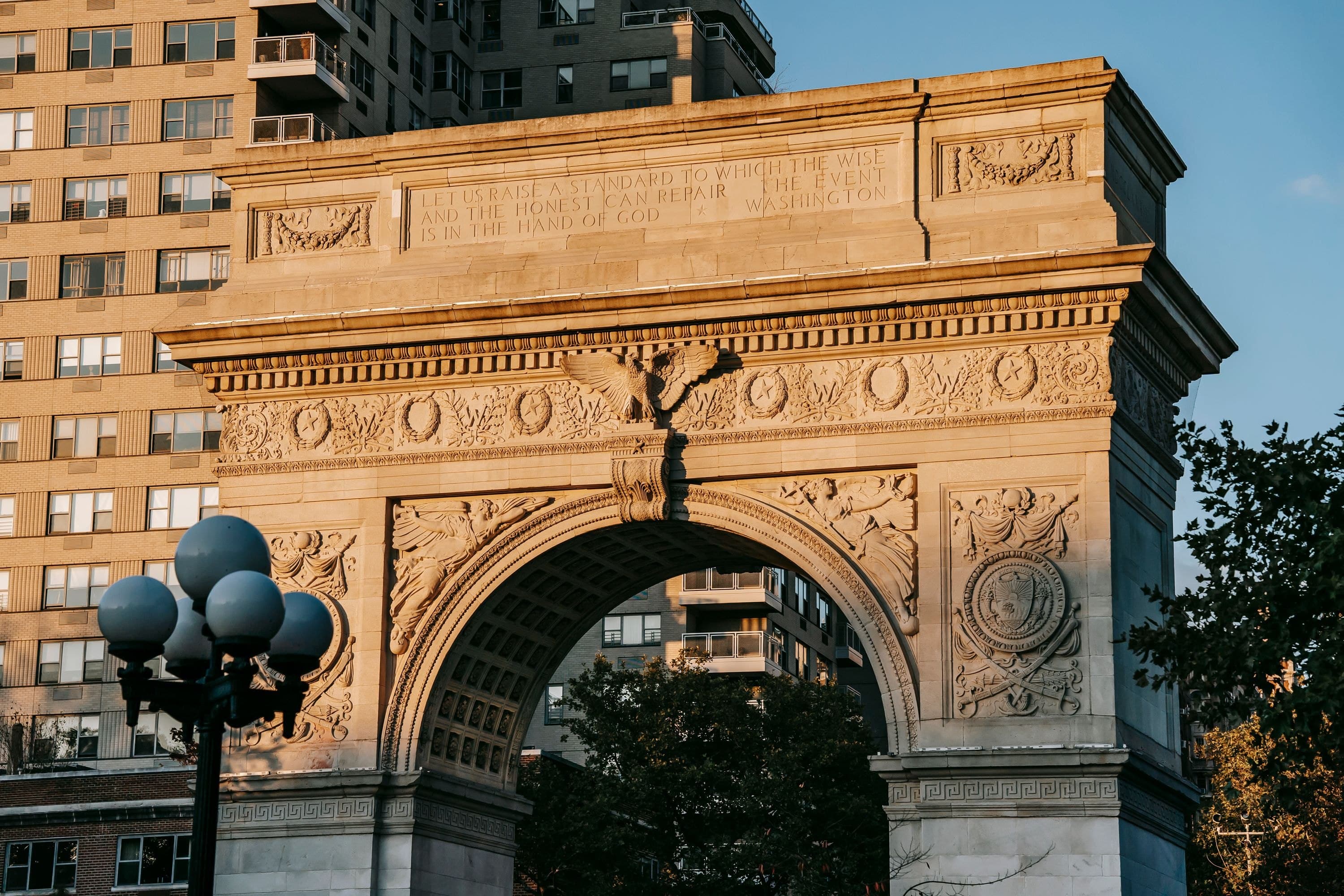
Greenwich Village and SoHo: Second Lives, from Courthouse to Cast Iron
90 min · 2.9 km · easy
More from New York
Explore more at your own pace.
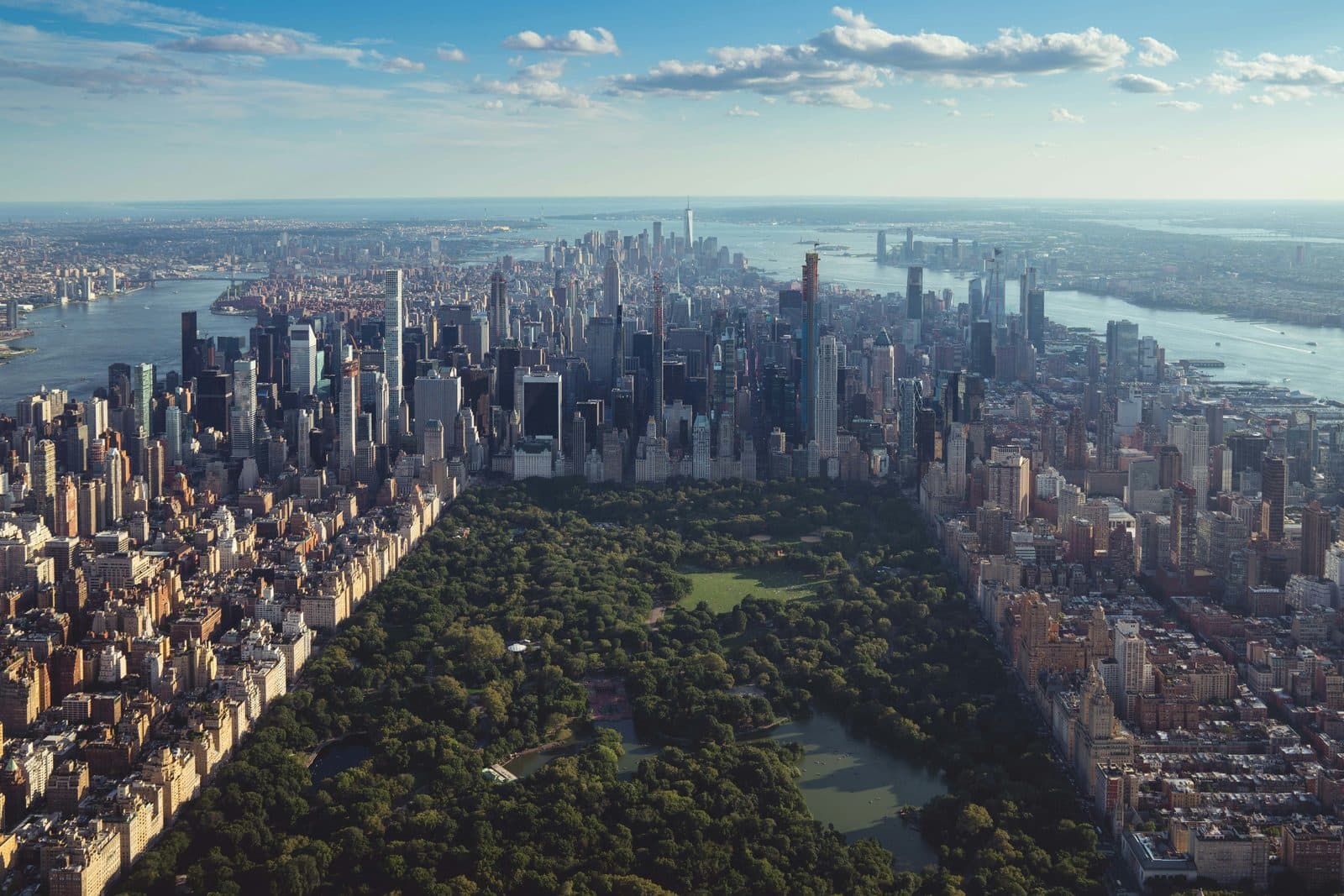
New York Travel Guide: How Many Days, Getting Around, When to Go
One Day in New York: A Walkable Itinerary That Actually Works
MoMA: What to See, Floor by Floor, and Where the Famous Paintings Hang

Monet's Water Lilies at MoMA: The Room, the Fire and the Pond
The Starry Night at MoMA: Where It Hangs and What to Look For