Centro Histórico: Three Civilizations Deep
90 min · 2 km · easy
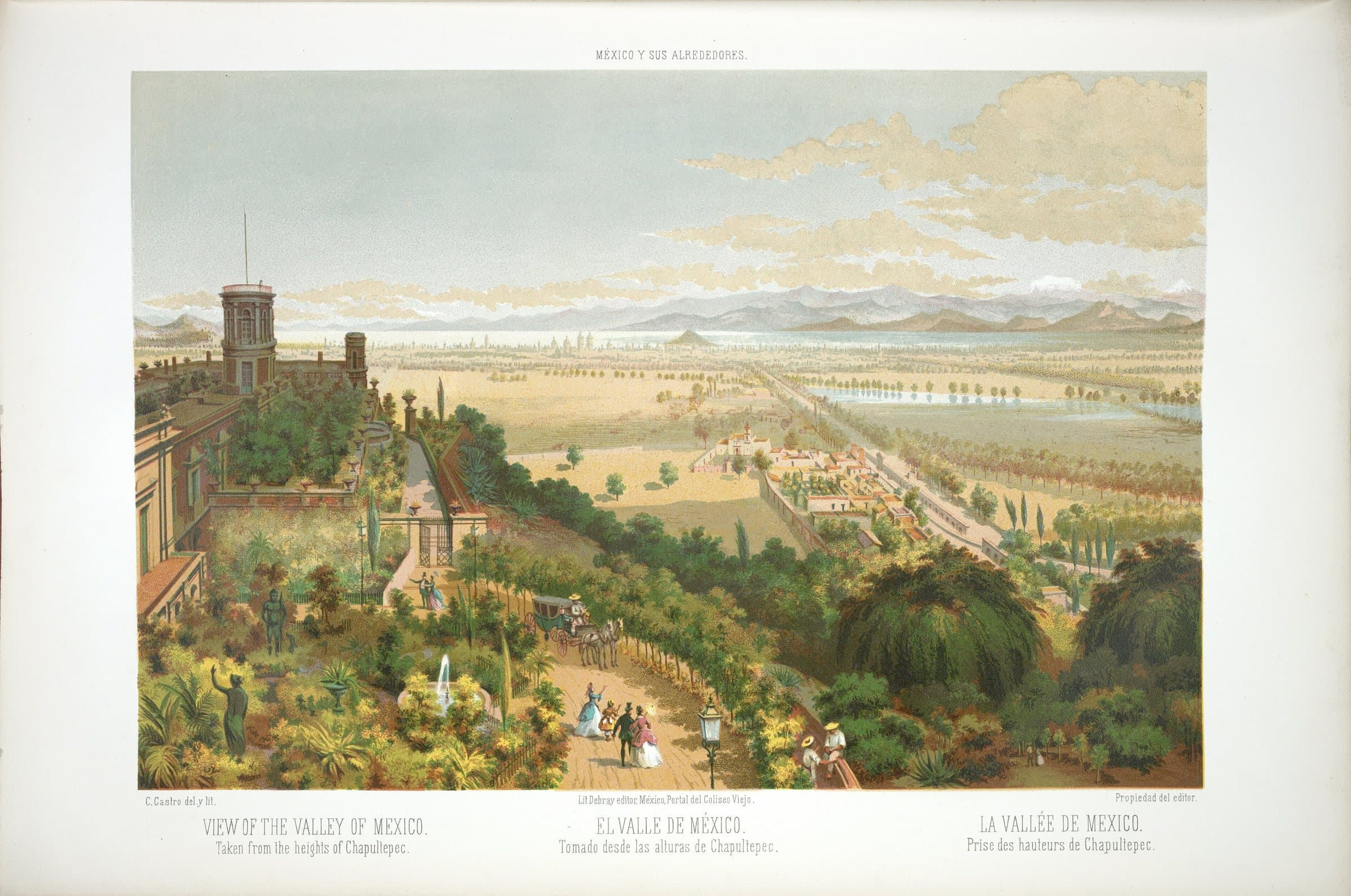
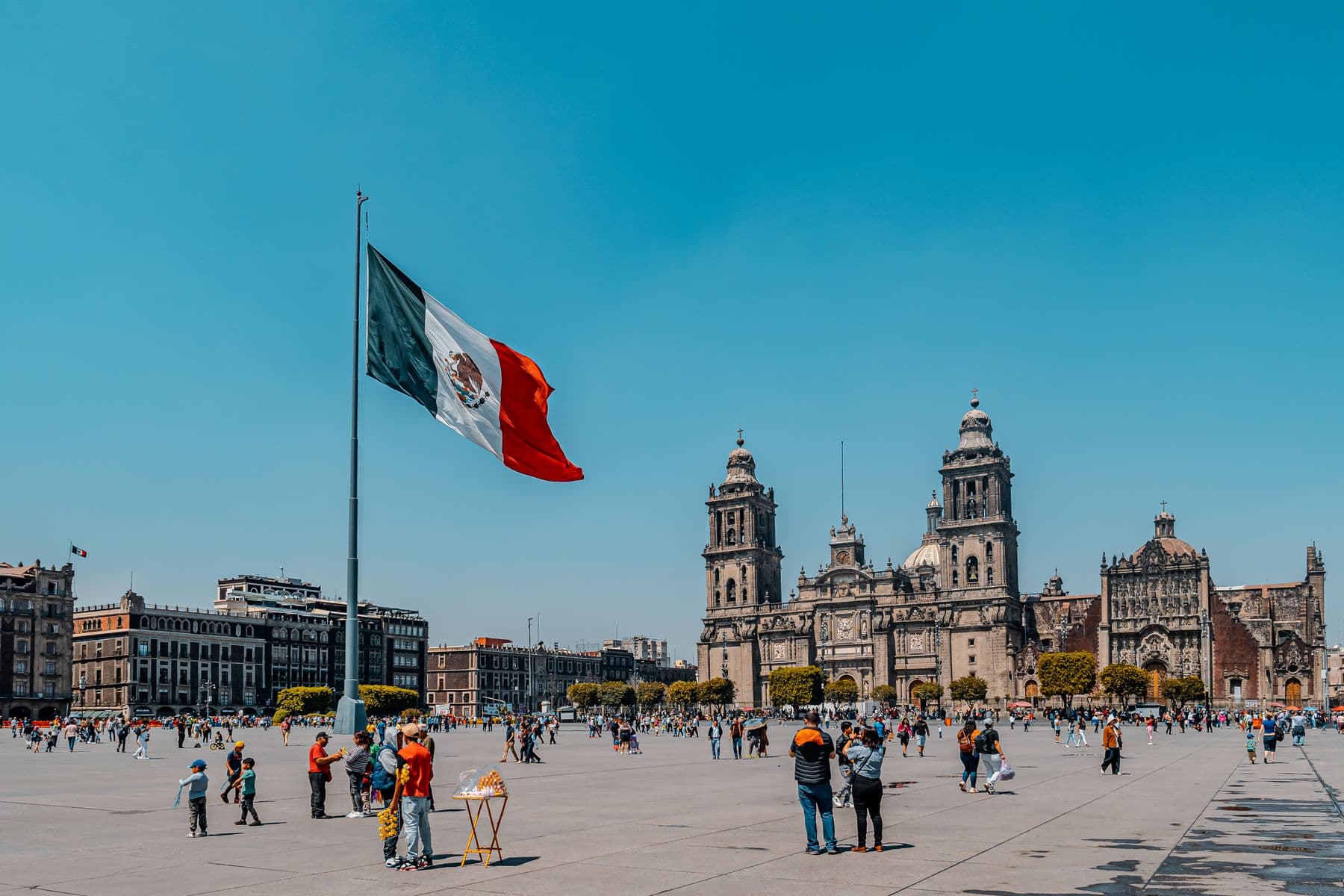
Most capital cities have a foundation. Mexico City has a soak. The ground under the Zócalo, under the National Palace, under the Metropolitan Cathedral, is the clay floor of a former lake the Spanish drained in the sixteenth century. The city is sinking into that clay at roughly thirty centimetres a year in the historic centre. Buildings tilt in slow motion. The cathedral has dropped nearly three metres since the conquest. Calle Madero, which used to be an Aztec causeway, sits a metre lower than it did in 1850. To see Mexico City clearly, the first thing to accept is that the ground is moving.
Every Roamer tour in the capital is a chapter of the same long experiment in lakebed urbanism.
The Aztec layer
In 1325 a wandering people the Spanish would later call the Aztecs founded Tenochtitlán on an island in Lake Texcoco. By 1500 the city held between two hundred thousand and four hundred thousand people, served by aqueducts from Chapultepec, fed by chinampa gardens engineered into the shallows, and protected from floods by a sixteen-kilometre dike built under the engineer-king Nezahualcóyotl. When Bernal Díaz del Castillo saw it in November 1519, he wrote that some of his soldiers wondered if they were dreaming.
The Aztec city did not survive the 1521 siege, but its grid did. The four roads that radiated from the ceremonial precinct became the four avenues of colonial Mexico. The Templo Mayor, buried under colonial buildings for four centuries, was rediscovered in 1978 when electrical workers laying cable struck a three-and-a-quarter metre carved disc of the goddess Coyolxauhqui. The Centro Histórico tour walks directly across that excavation. The Aztec layer is not a memory. It is two metres below your feet, and every time the city builds a new metro line, more of it comes up.
The colonial layer
Hear a stop from this walk
Palacio Nacional: Three Layers of Power
After the conquest, Cortés built his private mansion on the rubble of Moctezuma's palace, using the same stones. The Spanish drained Lake Texcoco. The colonial Plaza Mayor replaced the Aztec ceremonial precinct. The Metropolitan Cathedral, begun in 1573 and finished in 1813, was built from the masonry of the temples it replaced, an act the colonial chronicler Manuel Rivera Cambas described as a way to "lay claim to the land and the people." The cathedral's two hundred and fifty year construction window means it contains four distinct European styles, Gothic next to Baroque next to Churrigueresque next to Neoclassical, fossilised in one façade.
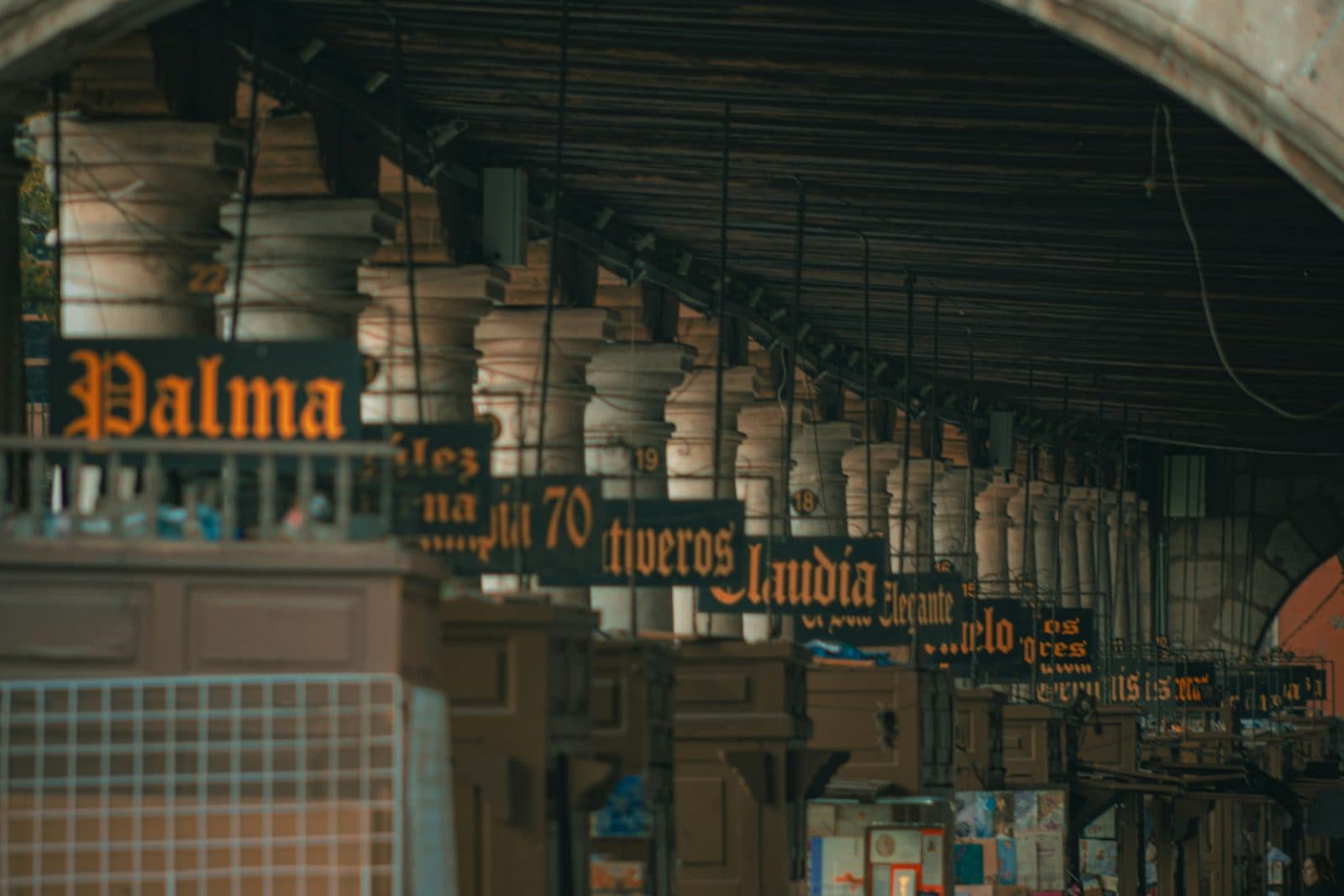
The colonial layer is concentrated in the eight blocks west of the Zócalo. Calle Madero runs along an old Aztec causeway. Plaza Santo Domingo holds the Inquisition's old courtyard. The Murals and Masterpieces tour uses this colonial fabric as its canvas, because the murals Diego Rivera and José Clemente Orozco painted in the 1920s were painted onto colonial walls. Government buildings became public art surfaces. The decision was deliberate. In a country where ninety percent of the population could not read, José Vasconcelos as Minister of Public Education said, paint the walls.
The Porfirian and revolutionary layers
By 1900 Porfirio Díaz had been president, on and off, for twenty-three years. He pulled the wealthy out of the colonial centre and built two new neighbourhoods west and south of it, Roma and Condesa, on land that had been racetracks and country estates. Roma was laid out by a circus owner named Edward Walter Orrin, who imagined the city's Brazilian-themed plaza as a stage. Condesa was built around an oval avenue, Amsterdam, that traces the exact outline of a horse track. The Roma–Condesa tour walks both. The point is that the Porfirian elite did not preserve the colonial centre. They left it.
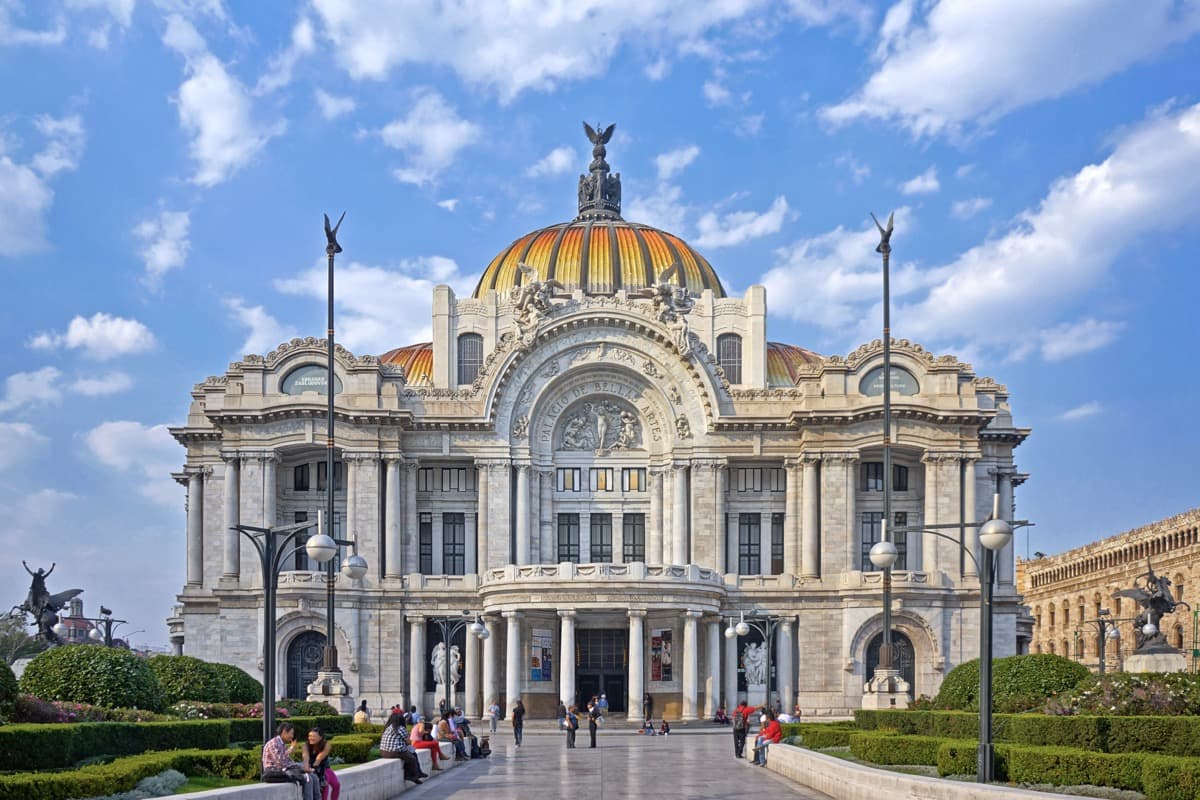
The 1910 revolution stopped that retreat. By 1921 a new generation of Mexican intellectuals was arguing for an indigenous, anti-clerical, modernist national identity, and the mural movement was its instrument. The Murals and Masterpieces tour traces that argument across the San Ildefonso school, the Ministry of Public Education, the Palace of Fine Arts, and the Diego Rivera Mural Museum. What the United States built in private museums, Mexico built on the walls of its government buildings.
The Coyoacán layer
South of the centre, Coyoacán is older than the colonial city. Cortés set up his first headquarters here in 1521 while Tenochtitlán burned. La Conchita, the small church on the small plaza, sits on a pre-Hispanic altar. Three centuries later the village became the home of Frida Kahlo, Diego Rivera, Leon Trotsky, Salvador Novo, and a generation of intellectuals fleeing the centre. The Coyoacán tour treats it as a character study, three houses three blocks apart, all of them museums now.
The 1985 layer
At 7:19 on the morning of September 19, 1985, an 8.1 earthquake hit Mexico City. Seventy seconds. Three hundred and seventy-three buildings in Roma and Condesa collapsed or were condemned. Six hundred and fifty thousand people went homeless. The city government effectively ceased to function for four days, and the rescue effort was led by ordinary residents who organised themselves into brigades. The Roma–Condesa tour walks the survivor map, the buildings that survived because of how they were built, and the buildings that came back differently after.
How to use this lens
A first-time visitor in Mexico City defaults to the colonial centre and the museums. A second visit should add the Aztec under the colonial and the revolutionary on top of it. A third visit should go south to Coyoacán and west to Roma. Four tours, in roughly four days, will give you the city in cross section. The Centro Histórico walks the deepest stratigraphy. Murals and Masterpieces traces the argument that emerged when the buried Aztec layer became politically useful again. Roma–Condesa is the Porfirian retreat and its 1985 reckoning. Coyoacán is the human portrait.
Walk slowly. The ground is moving under all four.
Frequently asked questions
- How many self-guided walking tours are there in Mexico City?
- Roamer currently has 4 self-guided audio walking tours in Mexico City. Every tour is free to start: the introduction and first stop play in full, and every later stop plays a short preview before you decide to buy.
- How much does a self-guided walking tour in Mexico City cost?
- Each tour is free to preview and $4.99 for lifetime access. If you want more than one, a 7-day pass is $12.99 and a 30-day pass covering every tour is $19.99, which works out to well under a dollar a day.
- Can I do the Mexico City tours offline?
- Yes. Tours can be downloaded in advance in the Roamer app and played with no signal, which is useful when you are travelling without mobile data.
- How long are the Mexico City walking tours?
- They run about 75 to 90 minutes, covering 2.3 to 2.9 km on foot, with up to 8 stops on the longest route. You set the pace and can pause any time.
Mexico eSIM· 10% off with ROAMER10
Ready to experience it?
Centro Histórico: Three Civilizations Deep
90 min · 2 km · easy
More from Mexico City
Explore more at your own pace.
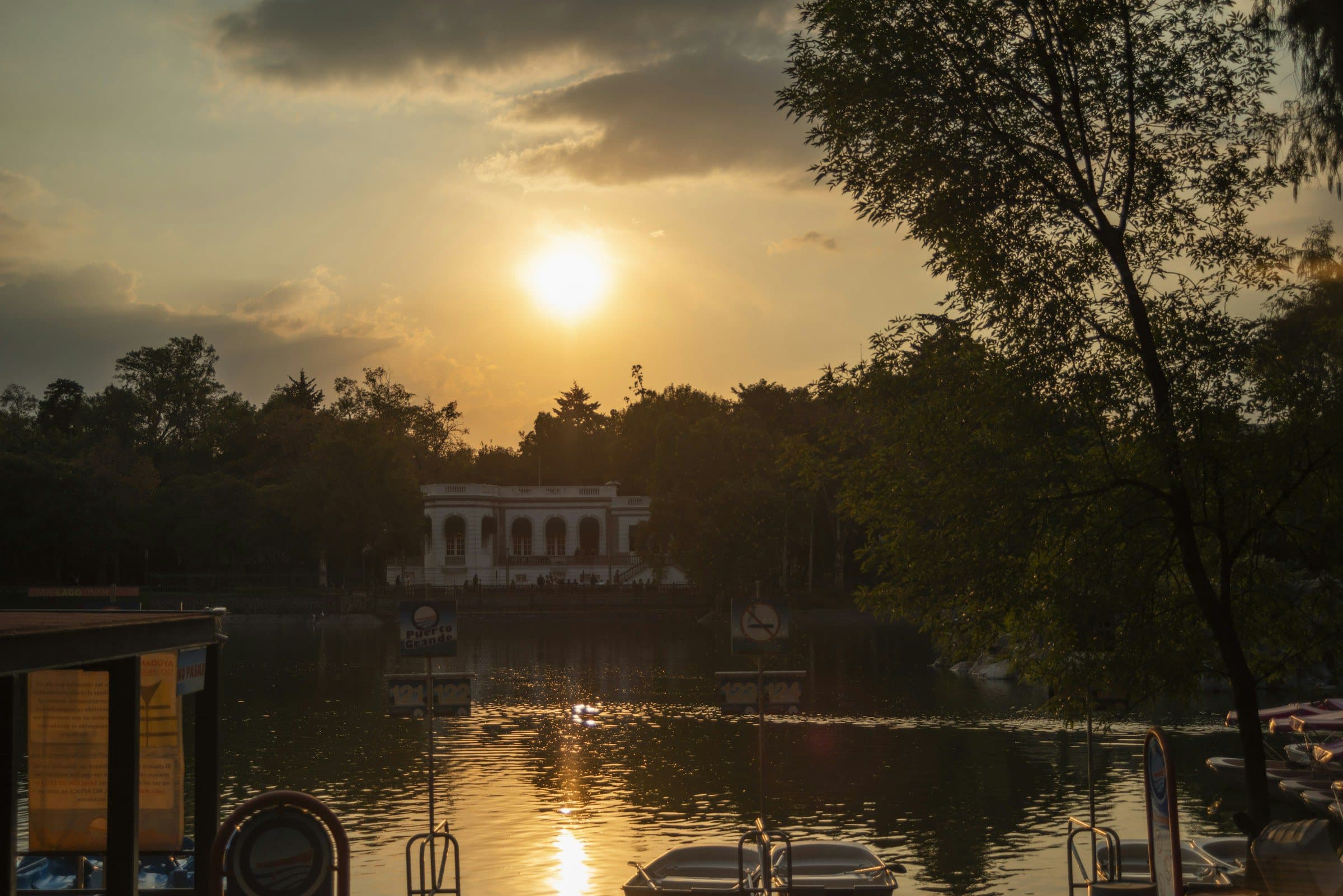
Chapultepec Park Guide: Hill, Lakes and Museum Row
Coatlicue: The Statue That Was Buried Twice
El Sargento: The Dead Ahuehuete Tree of Chapultepec
The Baños de Moctezuma: The Bath That Was Never Moctezuma's
The Tlaloc Monolith: The Stone That Crossed Mexico City in 1964