Reading a 14th-Century Walled City
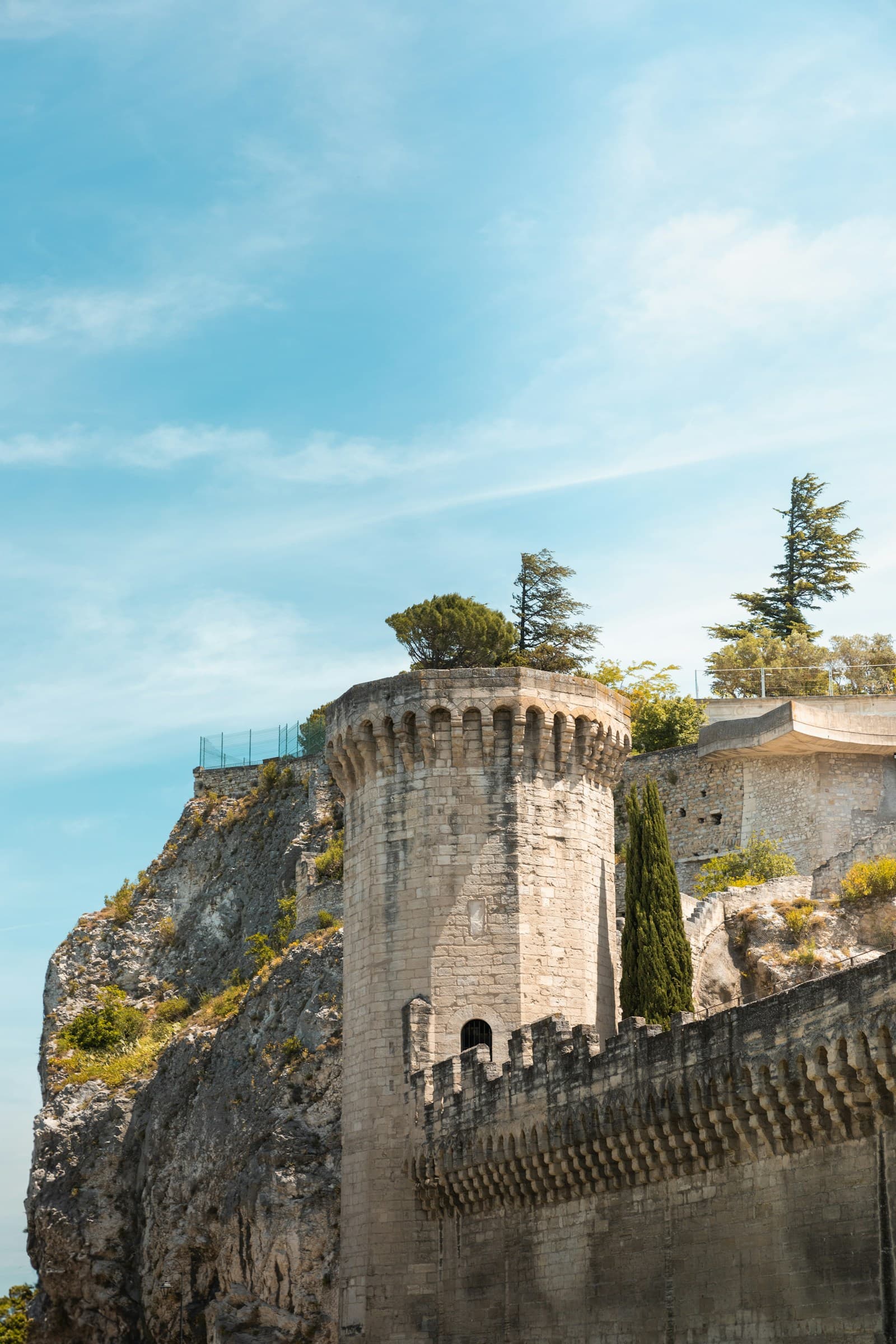
Seven specimens. About two and a half kilometres of the four point three kilometre circuit. The alphabet of late-medieval French urban defence, written between thirteen fifty-five and thirteen seventy under Pope Innocent VI and his successor Urban V, against the mercenary bands the Hundred Years' War had unmoored across France.
4.58|90 minutes|2.4 km|7 Stops
Start
Porte Saint-Roch: The Gate-Tower Typology

1
Porte Saint-Roch: The Gate-Tower Typology
Boulevard Saint-Roch, southwestern wall. One of the seven gates retained after the fourteen seventy-nine to fourteen eighty-eight modifications, walled up in fifteen sixty-one during the French Wars of Religion, reopened after sixteen sixty-one, and rebuilt in eighteen sixty-five as part of the nineteenth-century restoration of the circuit.

2
Western Wall Curtain: Merlon, Crenel, Machicolation, Chemin de Ronde
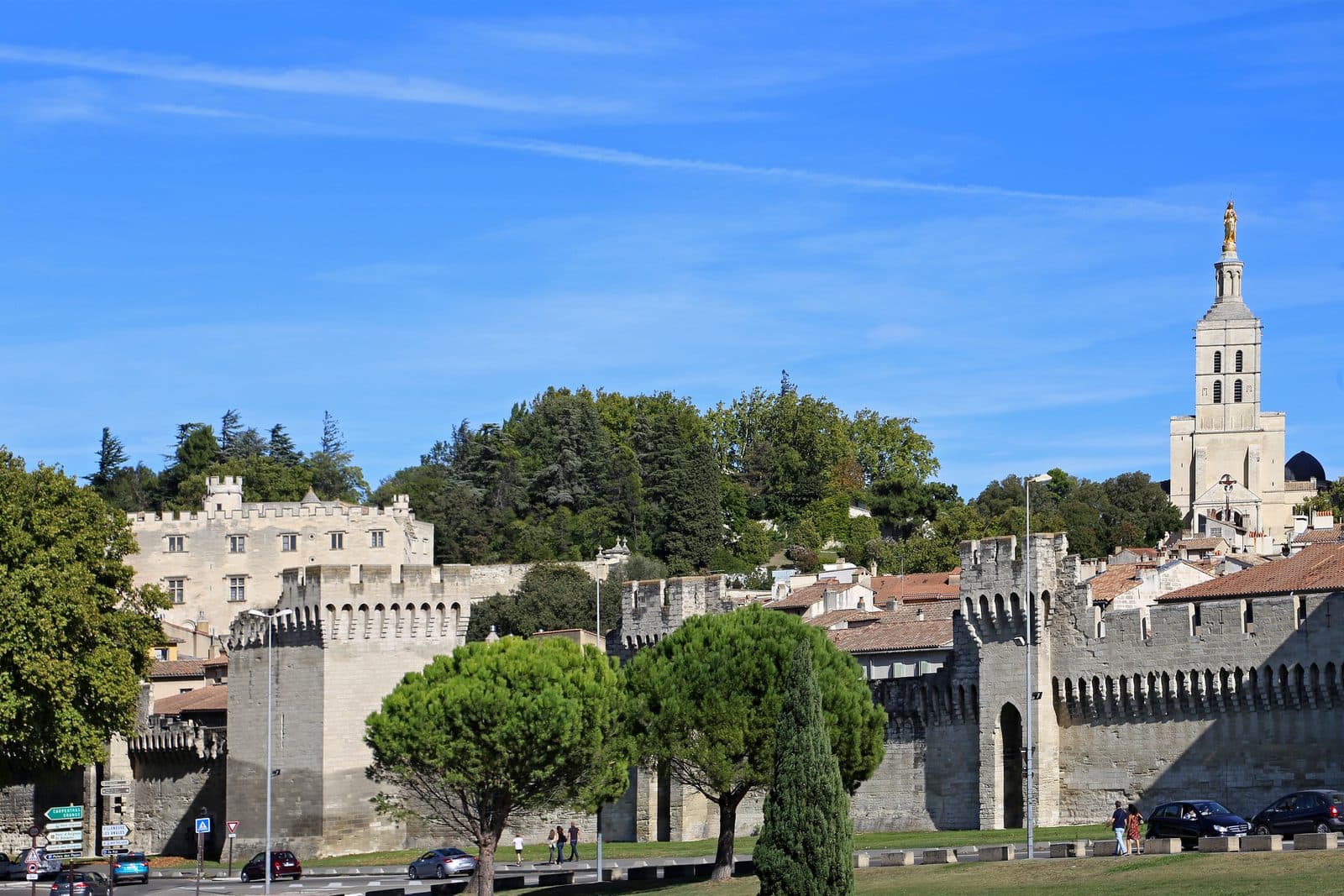
Western stretch along Boulevard Saint-Roch toward Boulevard Raspail. The canonical specimen of the fourteenth-century curtain wall with intermediate quadrangular tower, machicolated parapet, and putlog holes for the wooden hoarding.

3
Porte de l'Oulle: The Exception, the Vanished Gate
Place Crillon area, western corner toward the Rhône. One of the twelve original fourteenth-century gates, demolished in nineteen hundred during the same nineteenth and early twentieth century modernization that filled the original moat.

4
Porte du Rhône and the Châtelet: The Comparison-Pair
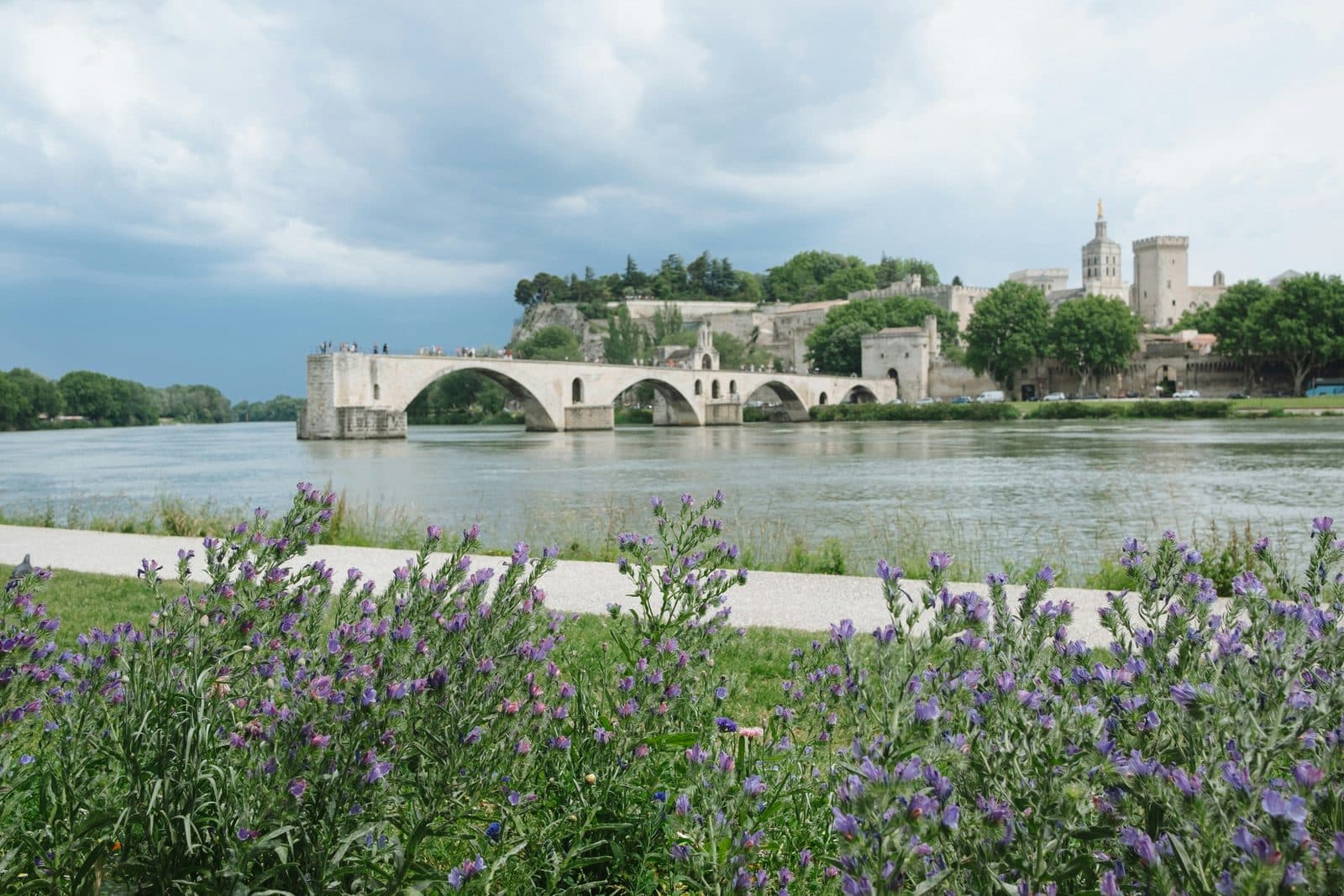
Porte du Rhône and the Châtelet bridge-tower at the Pont Saint-Bénézet. Round versus square tower typology read in one frame, where the river itself functioned as the moat.

5
Tour des Chiens at the Rocher des Doms: The Three-Layer Synthesis
Northern stretch where the wall ascends the Rocher des Doms, the natural rock outcrop on which the Palais des Papes sits. The fourteenth-century curtain meets the late-fifteenth-century polygonal tower and the gunpowder-era loophole retrofits of the sixteenth century.

6
Northeastern Postern: The Small-Door Specimen
Northeastern stretch between the Rocher des Doms and Porte Saint-Lazare. A surviving postern, set into the curtain wall as a single-person secondary door, used for discrete entry and as a sally-port for counter-sorties.

7
Porte Saint-Lazare: The Literacy Completes
Boulevard Saint-Lazare, northeastern wall. The principal medieval entrance to the city, destroyed by the thirteen fifty-eight Durance flood and rebuilt under Urban V around thirteen sixty-four; a fortified avant-corps added in fourteen eighty-eight; restoration layer from the eighteen sixties.
Best Time to Visit
Mid-morning to mid-afternoon on a weekday, ideally Tuesday through Friday outside peak July and August. The cut limestone of the western curtain reads best in raked side-light, so ten in the morning or three in the afternoon both work. The walk runs alongside busy boulevards, and weekend tourist traffic around the Pont Saint-Bénézet and the Palais des Papes peaks between eleven and three; starting at nine or walking after four lets the audio anchor the sightlines without crowd interference. Avoid right after rain on the Rocher des Doms approach, where the path can be slick.
Pro Tips
- •Start at the Porte Saint-Roch on the Boulevard Saint-Roch, not at the Palais des Papes. Most visitors approach the walls from the palace side, which puts them on the inside of the curtain and misses the gate-tower typology the tour anchors on. The southwestern start gives you the canonical opening read.
- •The whole walk is on the outside of the curtain, on public sidewalks, with no entry tickets required. You can follow the full seven-stop route for free; nothing on this tour is gated by a ticketed interior.
- •Between stop three at the Porte de l'Oulle and stop four at the Châtelet, the route crosses the Boulevard Saint-Dominique and the busy traffic of the Allées de l'Oulle. Use the marked crosswalks; the cars come fast.
- •The Pont Saint-Bénézet visitor entrance at stop four is a separate ticketed attraction stewarded by Avignon Tourisme. The audio anchors on the Châtelet bridge-tower from the public street and does not require entry, but if you want to walk the surviving four arches of the bridge itself, the ticket is sold at the Palais des Papes ticket office.
- •Stop five, at the Tour des Chiens and the Rocher des Doms, is the climb on the route. The path rises about thirty metres above the river. There is a public garden at the top of the Rocher des Doms with shade and benches; a five-minute pause there resets the legs before the long northeastern stretch.
- •The specific postern at stop six varies by which side of the eastern wall is accessible on the day. The Poterne des Teinturiers, also called La Pyramide, is the most documented and is the default; if the immediate sightline is blocked by construction or street works, walk another hundred metres until a postern is in view.
- •Porte Saint-Lazare at stop seven sits at a major boulevard junction. After closing the tour, walk back into the walled city through the gate itself; the inner face of the fifteenth-century barbican is visible only from inside the wall.
- •The full seven-stop walk is about two and a half kilometres and runs eighty to one hundred minutes including stop dwell. If you only have an hour, the canonical reading completes at stop five on the Rocher des Doms; the postern and the principal gate at stops six and seven extend the literacy but the structural climax is the synthesis at stop five.
Safety & Precautions
- The route runs alongside the Boulevards Saint-Roch, Raspail, Saint-Lazare, and the Allées de l'Oulle, which carry city traffic at twenty-five to fifty kilometres per hour. Stay on the sidewalk and use marked crosswalks; some sections lack pedestrian signals.
- The walk is mostly flat with one moderate climb at the Rocher des Doms approach between stops four and five, about thirty metres of elevation gain over two hundred metres of path. The surface is uneven cut stone and gravel. Wear closed shoes with grip.
- Pickpocketing is documented around the Palais des Papes, the Place du Palais, and the Pont Saint-Bénézet visitor area, all of which are within fifty metres of stop five. Keep wallets and phones in front pockets or zipped bags when stopping to read the wall.
- Avignon summers run hot, with afternoon highs over thirty-five degrees Celsius in July and August. The walk has limited shade between stops three and four along the river-facing curtain. Carry at least half a litre of water per person and consider an early-morning or late-afternoon start in high summer.
- The Mistral, the strong northwesterly wind that comes down the Rhône valley, can gust above sixty kilometres per hour on the river-facing northern wall at stops four and five. Hold onto hats, watch for wind-blown debris, and if the gusts are severe, postpone the river-facing section.
- After heavy rain the path along the foot of the Rocher des Doms between stops four and five can be slick. Take the slightly longer route up through the public garden if footing is doubtful.
- The tour does not enter any building. If you want to combine the walls with the Palais des Papes, the Pont Saint-Bénézet, or the Petit Palais museum on the Place du Palais, plan those as separate ticketed visits before or after the rampart walk.
Gallery
Related Reading
Go deeper on what you'll see, hear, and walk through.
Overview
Avignon Travel Guide: How Many Days, Getting Around, When to Go (2026)
5 min
Overview
Best Self-Guided Walking Tours in Avignon (2026)
4 min
Overview
One Day in Avignon: A Walkable Walled-City Itinerary (2026)
6 min
Thematic
How a Provincial Town Became the Capital of Christendom: The Avignon Papacy
6 min
Companion
The Alphabet of a Medieval Wall: How to Read Avignon's Ramparts
5 min