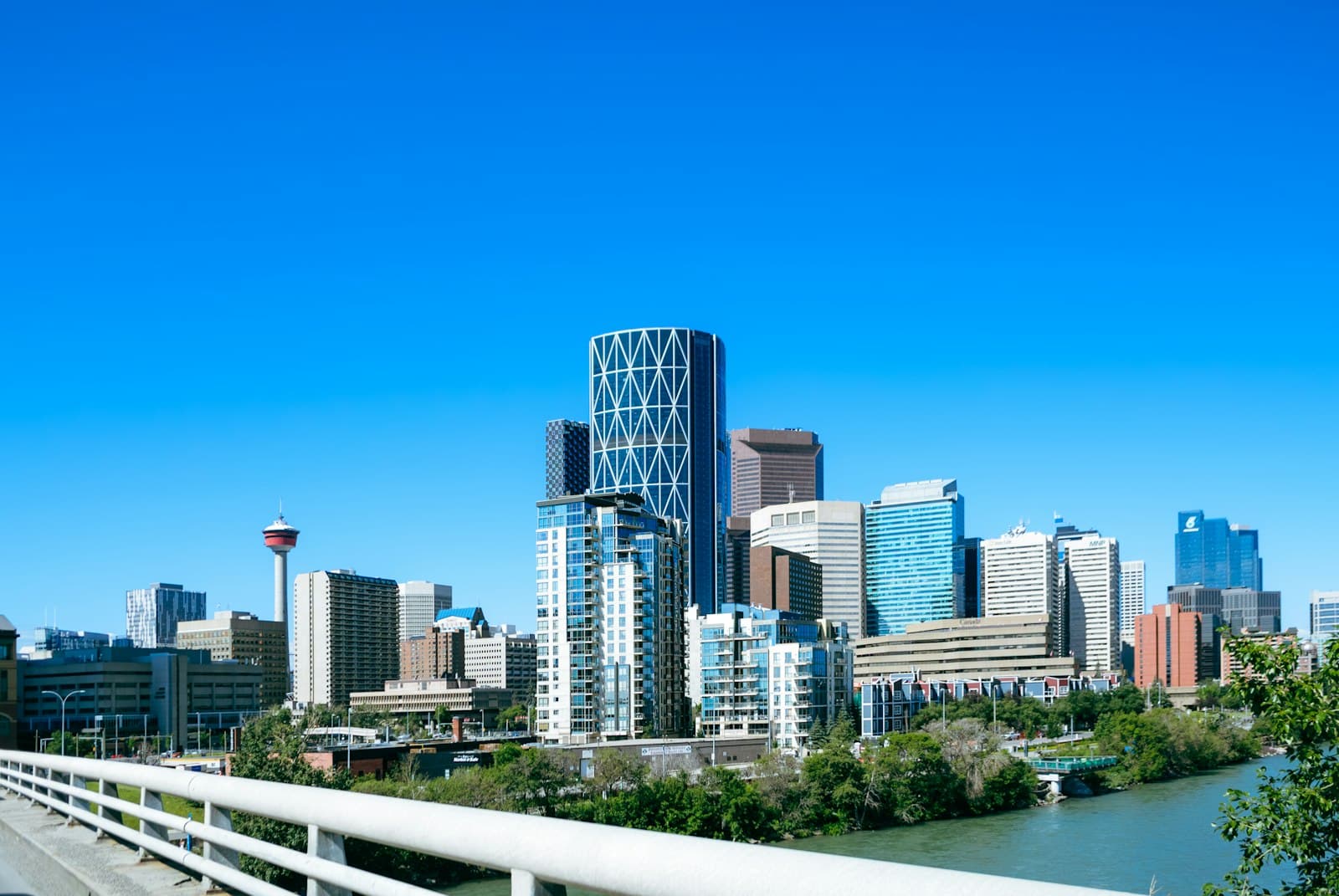
To beat the winter, Calgary built the world's most extensive enclosed skywalk fifteen feet above its own sidewalks, and quietly moved its downtown up a level. This walk climbs into that second city and comes back down to the ground that never surrendered.
Start · Stephen Avenue Mall
DirectionsStops
- 1
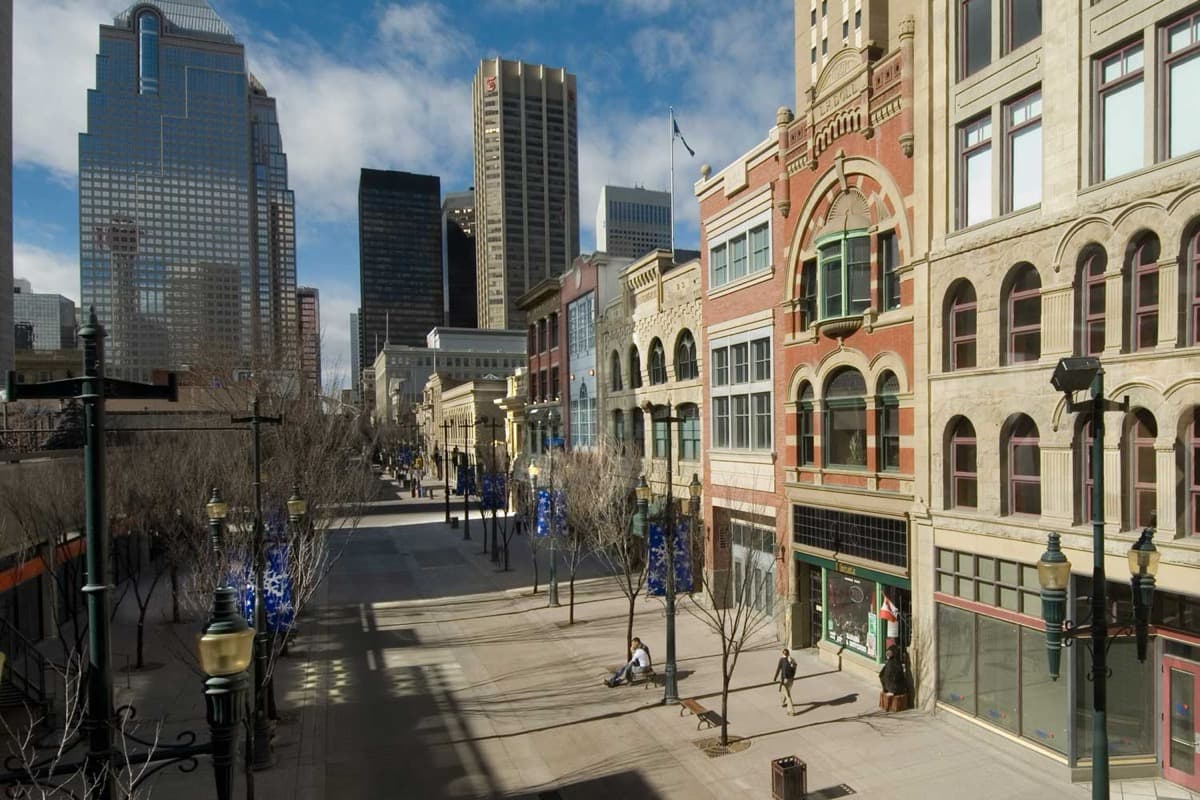
Stephen Avenue Mall
A sandstone-lined pedestrian street turned car-free in 1970, the same year the +15 opened one floor above it.
- 2
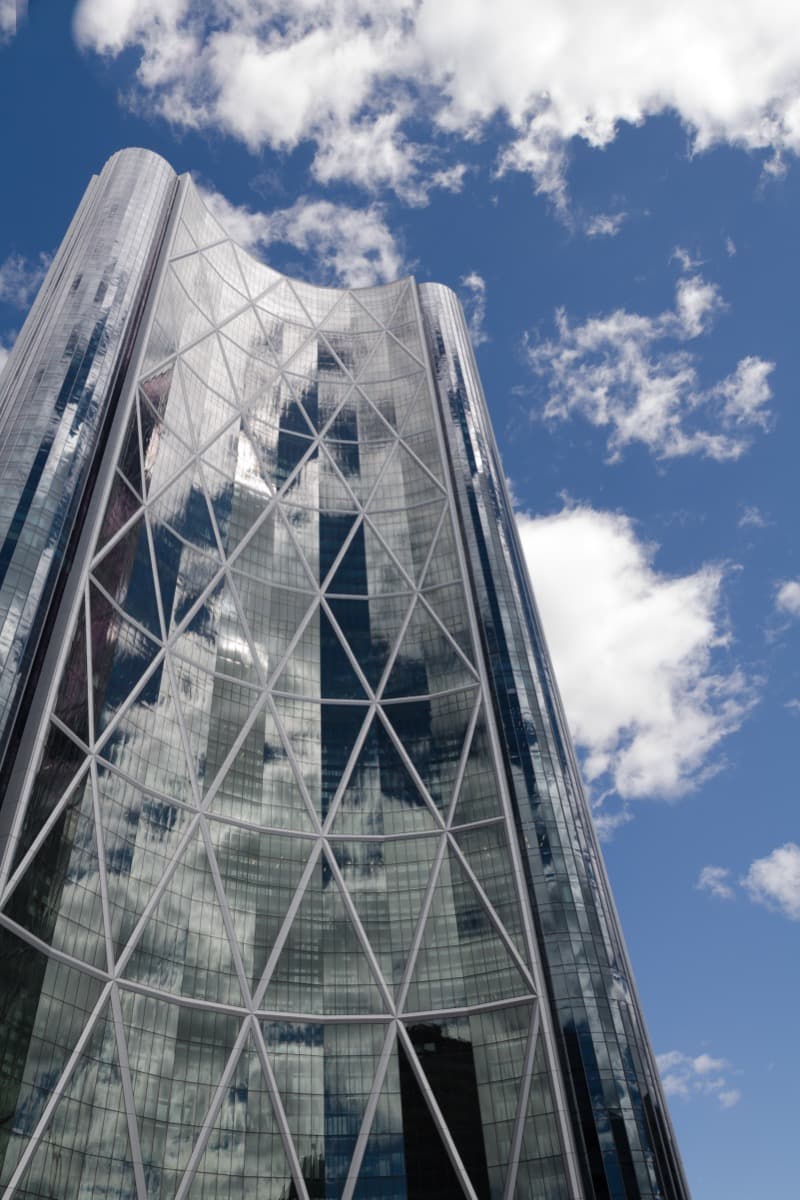
The Bow
A 236-metre crescent tower completed in 2012, a major anchor of the +15 network and the pull upward made visible.
- 3
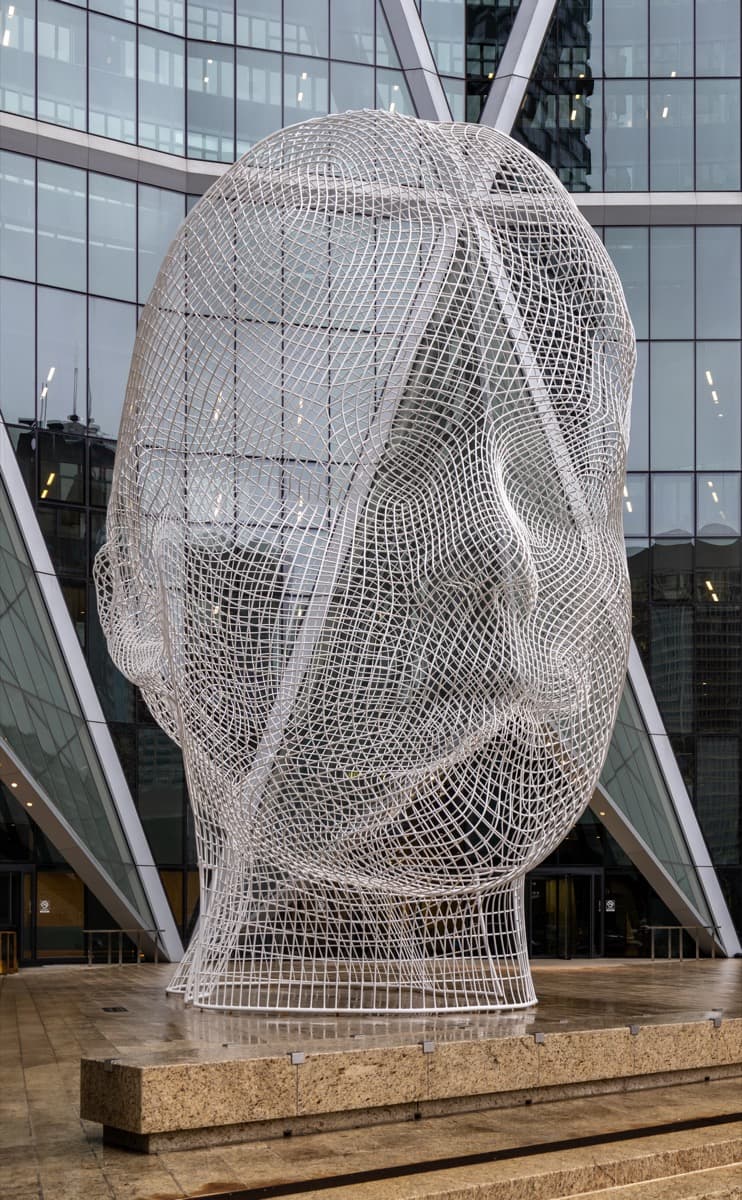
Wonderland
Jaume Plensa's 12-metre wire-mesh head, unveiled in 2013 on The Bow's plaza, a sculpture you walk inside.
- 4
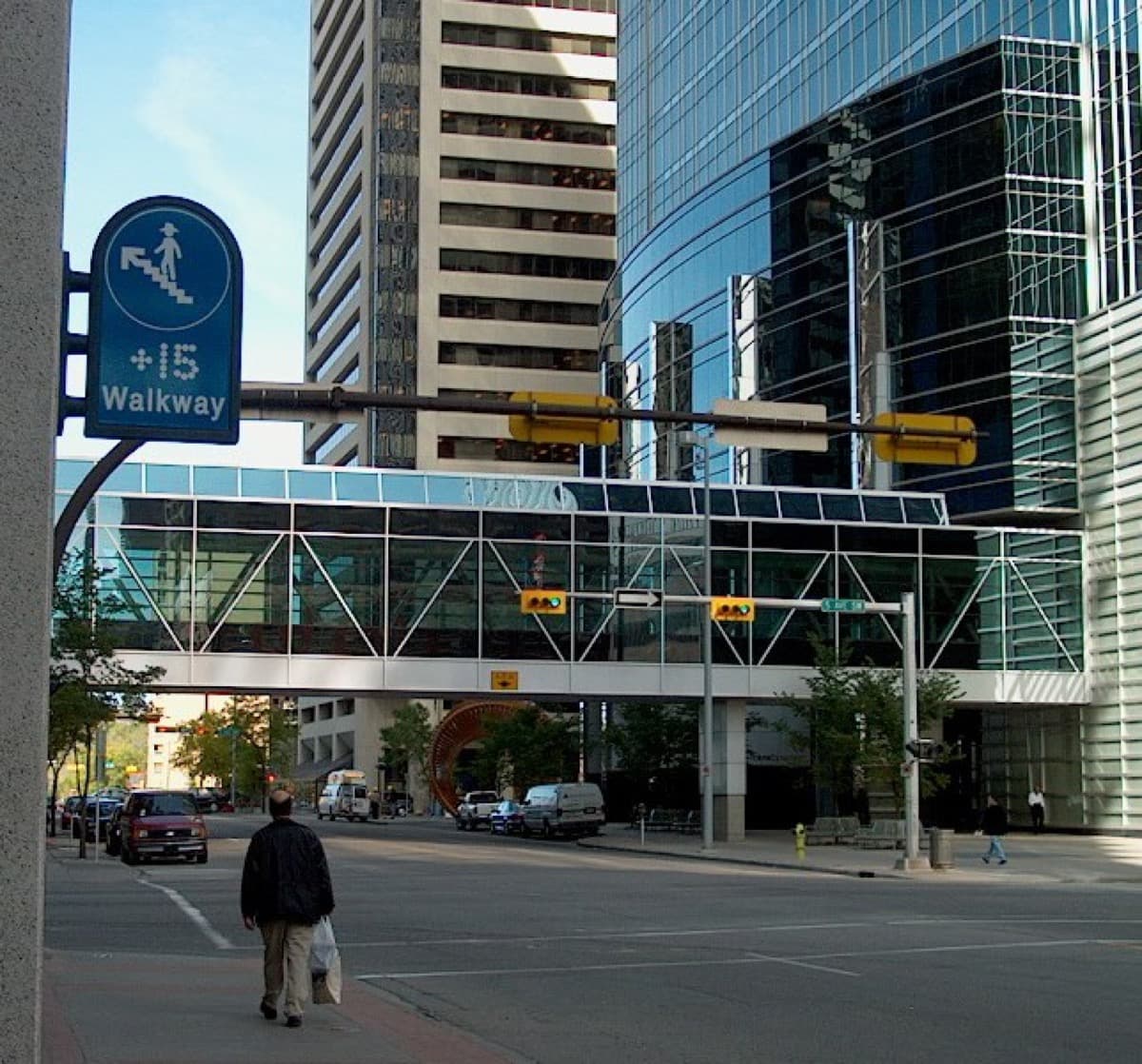
The +15 Skywalk
The reveal: the world's most extensive pedestrian skywalk, designed by Harold Hanen and opened in 1970.
- 5
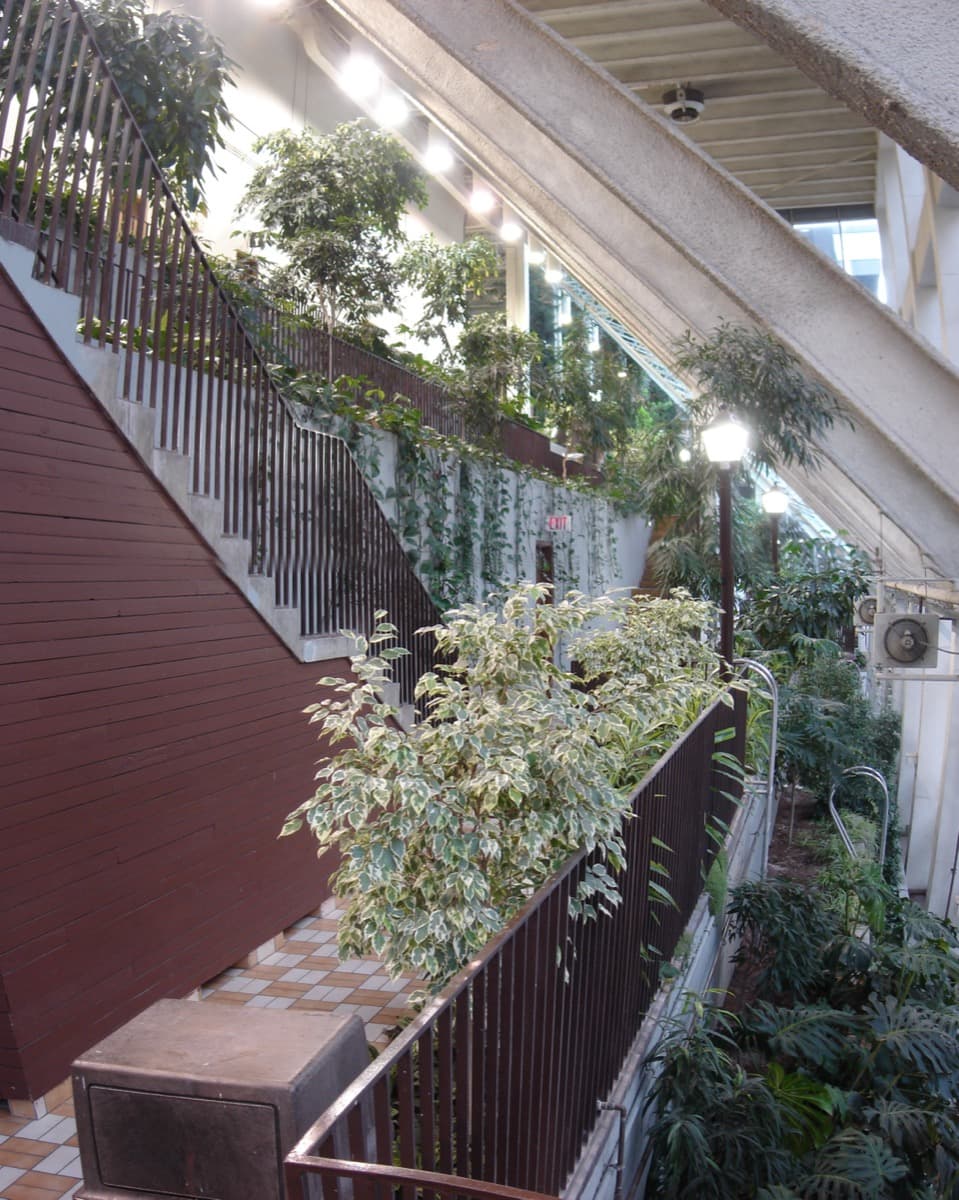
Devonian Gardens
A 2.5-acre indoor park with over 550 trees, sealed under glass on the top floor of a shopping mall since 1977.
- 6
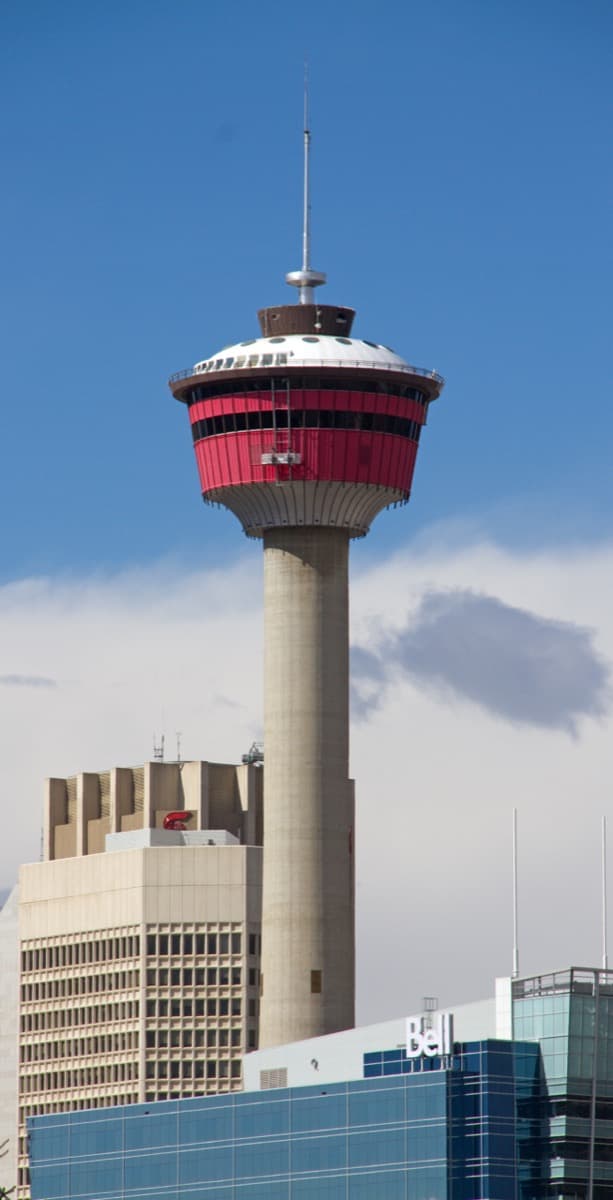
Calgary Tower
Opened in 1968 as the Husky Tower, the city's first great move upward, and later home to the 1988 Olympic cauldron.
- 7
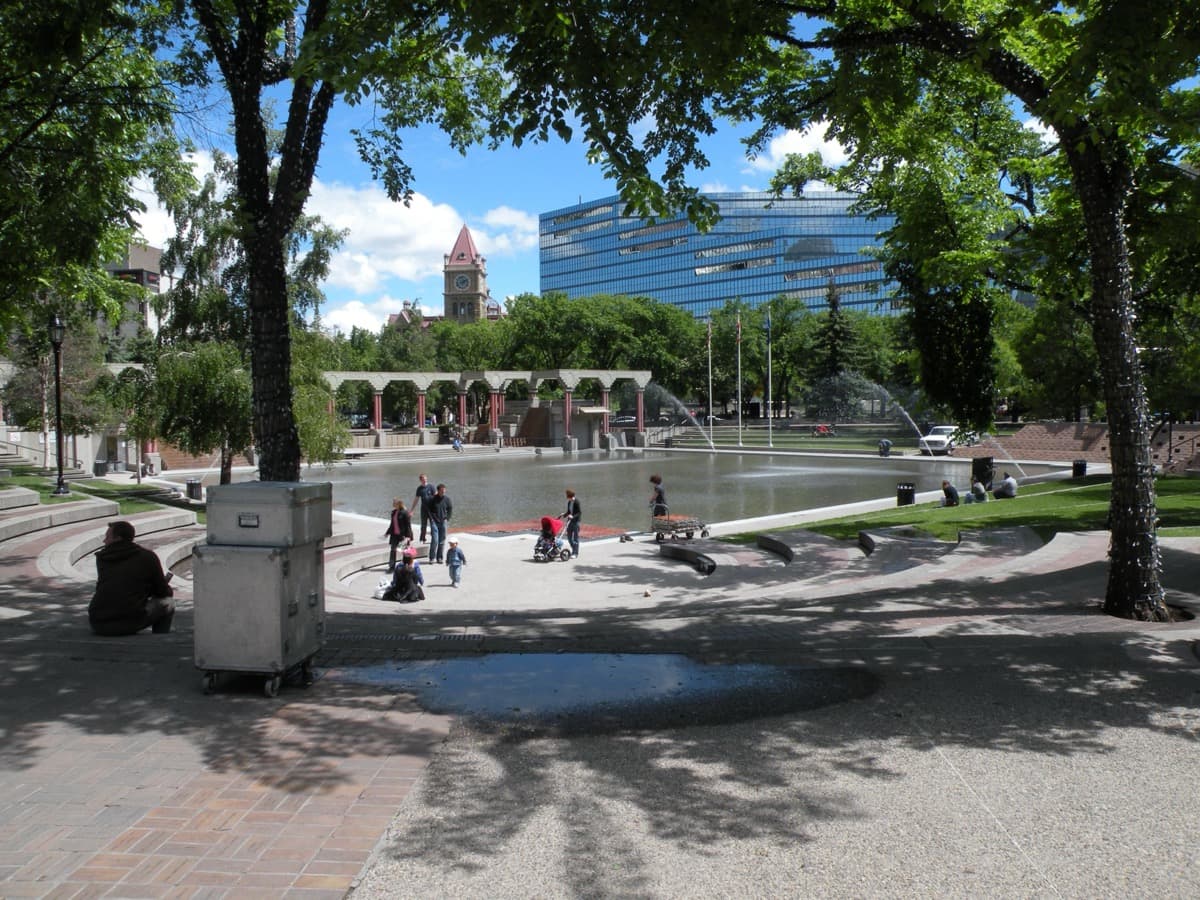
Olympic Plaza
Built for the 1988 Winter Olympics medal ceremonies, and still flooded each winter as a public skating rink.
- 8
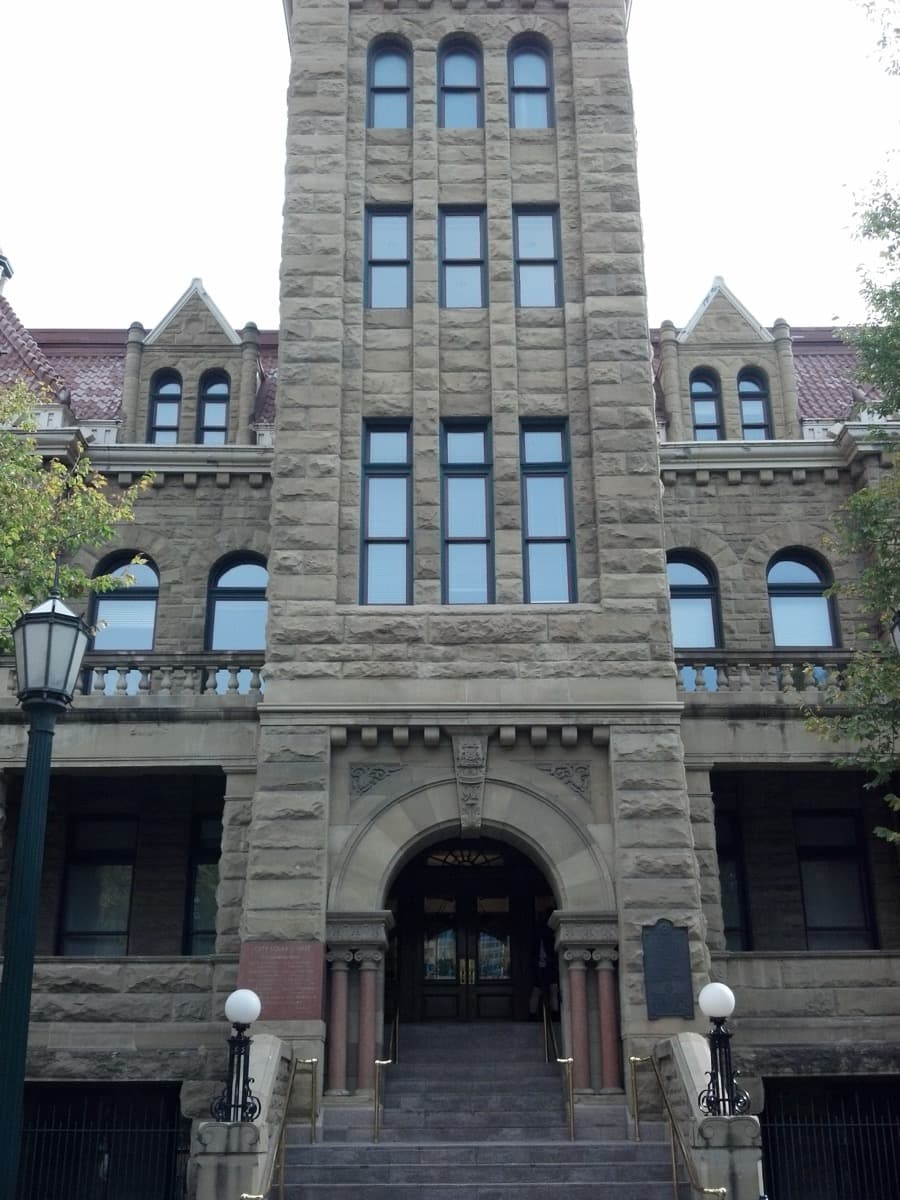
Old City Hall
The 1911 sandstone Richardsonian Romanesque city hall by William M. Dodd, still standing where the city started.
Details
Best Time to Visit
Weekdays between about ten in the morning and three in the afternoon, when the +15 is unlocked, busy, and doing its job. The contrast the tour is built on is loudest on a cold or grey day, when the street thins out and the bridges fill up. Most +15 links close in the evening and stay quieter on weekends, so a Tuesday through Thursday visit shows you the reversal at full strength.
Pro Tips
- •The +15 is free and open to the public during business hours, but individual bridges and building lobbies keep their own hours. If a door is locked, drop back to street level and rejoin the network at the next building. The route is designed to work from the ground as well.
- •Devonian Gardens sits on the top floor of The Core Shopping Centre and is reached through the mall or the +15, not from the street. Ride up and give yourself ten minutes inside; it is the climax of the walk and the fullest proof of the thesis.
- •For the view that makes the whole reversal visible at once, buy a ticket up the Calgary Tower observation deck. From there you can see the open streets and the enclosed bridges in the same glance.
- •Stephen Avenue is busiest and most alive at weekday lunch, roughly eleven thirty to one thirty, when the street briefly wins back its crowd. Time Stop 1 for then if you want to feel both cities full.
- •Olympic Plaza is under redevelopment through the late 2020s, so expect hoarding or changed access. The winter skating rink and medal-ceremony history are the point of the stop even if the surface is fenced.
Safety & Precautions
- •This walk moves between street level and the +15 one floor up, using stairs, escalators, and elevators inside buildings. Every stop can be reached at ground level if you would rather not go up, but the full experience involves indoor level changes.
- •Downtown crossings at Centre Street, Macleod Trail, and the numbered avenues carry live traffic. Cross at signals, especially around The Bow and near Olympic Plaza.
- •Calgary winters are genuinely cold, which is the reason the +15 exists. Dress for it if you are walking the outdoor stretches, and use the network to warm up between stops.
- •Olympic Plaza construction may reroute the final approach to Old City Hall. Follow posted pedestrian detours around the site.
Travel advisory: Exercise Normal Precautions (Level 1).
Gallery
Related Reading
Go deeper on what you'll see, hear, and walk through.
Overview
Best Self-Guided Walking Tours in Calgary (2026)
4 min
Overview
Calgary Travel Guide: How Many Days, Getting Around, When to Go (2026)
5 min
Overview
One Day in Calgary: A Walkable Downtown Itinerary (2026)
6 min
Thematic
Best Architecture Walking Tours in Calgary (2026)
2 min
Thematic
Calgary: The City the Oil Price Built and Rebuilt
5 min
Companion
The +15: How Calgary Built a Second City Fifteen Feet Up
4 min
Deep dive
The Bow and Wonderland: A Boom-Era Tower and the Head You Walk Inside
3 min
Read the walk
The full story of The +15: A City That Moved Indoors, in words. Prefer to listen? Play it narrated, from home or on location.
Introduction
You are standing on Stephen Avenue, and the trick is to look up. Somewhere over your head, a glass tube crosses the street, carpeted and warm, with people walking through it. Count them if you can, then count the people down here on the pavement. On a January Tuesday, the tube wins. The busiest of these bridges carries over twenty thousand crossings a day.
Here is the coincidence that holds this walk together. In nineteen seventy, Calgary opened two downtowns in the same year. It turned this street into a car-free pedestrian mall. And one floor up, it opened the +15, an enclosed skywalk fifteen feet above the sidewalk. Two pedestrian cities, born the same year, stacked one on the other. Then winter chose between them, and the one in the sky won the working day.
That is the reversal this tour keeps flipping. You assume a downtown lives on its streets. For much of the year, Calgary's real heart is one level up, indoors, invisible from the pavement. The system grew into the most extensive pedestrian skywalk network in the world, eighty-six bridges linking a hundred and thirty buildings.
Over eight stops and about two and a half kilometres, roughly sixty-six minutes of walking, we climb into that second city and come back down. When you reach Stephen Avenue near First Street, begin with stop one, the street you think is the city.
1. Stephen Avenue Mall
You are standing on Stephen Avenue, along Eighth Avenue near First Street. Look around at street level first. Sandstone facades, low and dignified, run down both sides. Storefronts, patios in summer, buskers, the flow of a proper downtown street. This is a National Historic Site of Canada, designated in two thousand and two, and for good reason. It is one of the best surviving stretches of Victorian sandstone commercial architecture in the country.
The stone has a story. After a fire in eighteen eighty-six, Calgary rebuilt in local Paskapoo sandstone, quarried nearby, because it does not burn. That is why the street reads as solid and permanent. It was built to outlast fire, and it has.
Now the date that matters most. In nineteen seventy, the city closed this stretch of Eighth Avenue to cars and made it a pedestrian mall. Stand here and it feels like the obvious heart of Calgary, exactly the downtown you came to see. Hold that feeling, because the tour is about to complicate it.
The same year the city gave you this street, it opened another pedestrian route one floor up. Look for the enclosed glass bridges crossing overhead between buildings. That is the +15, and for much of the working year it carries more foot traffic than the pavement you are standing on. Two pedestrian downtowns, opened in the same twelve months, and then the Calgary winter quietly picked a favourite.
So here is the question the whole walk turns on. Where is the city right now? On the street, where you would expect it, or up in the warm, glassed-in level you can barely see from down here? Keep looking up as we walk. Head north and east toward the curved glass tower that dominates the skyline. It gathers the sky-city to itself, and it is where we go next.
2. The Bow
Look up at the tower in front of you. The Bow curves like a drawn crescent, a wall of glass bending back on itself, two hundred and thirty-six metres and fifty-eight storeys. It was completed in twenty twelve by Foster and Partners with Zeidler Partnership Architects, and it stands at Five Hundred Centre Street. For a while it was the tallest office building in Canada outside Toronto. Up close, the curve is the whole idea. The building leans its glass face toward the sun to gather warmth, a shape that makes sense the moment you remember how cold this city gets.
But scale is only half of why we stopped here. The Bow is a major anchor of the +15 network. It is not just a tower you walk past on the sidewalk. It is a tower you walk into, and once inside you can move through the downtown without ever coming back down. This is the moment the city stops being a street and becomes something else: a stacked, connected interior you enter rather than pass by.
Stand back and feel the pull upward. On Stephen Avenue the city spread out horizontally, storefront after storefront at eye level. Here it turns vertical. The activity, the offices, the lunch crowds, the foot traffic, all of it climbs off the pavement and into the tower and the bridges that link it to its neighbours.
The reversal is gathering force. The obvious downtown was the street. The real downtown, for a working Tuesday in February, is increasingly this: warm interiors linked fifteen feet up, with the ground left as the space between entrances. Before we climb into that network, look just south of the tower. There is a giant white head sitting on the plaza, and you are meant to walk inside it. That is our next stop.
3. Wonderland
In front of you, on the south plaza of The Bow, sits a giant white head. It is the sculpture Wonderland, by the Spanish artist Jaume Plensa, unveiled here in January twenty thirteen. It rises about twelve metres, close to forty feet, and it is made of white steel wire mesh, the head of a young girl rendered as an open lattice you can see straight through. Walk up to it and the strangeness lands. It looks solid from a distance and turns to lace up close.
Now do the thing it was built for. There are two entrances at the base. Step inside. You are standing within a human head, looking out at the city through a web of white wire. The sculpture is not something you look at. It is something you inhabit. You go indoors, into an interior, to experience it.
Stop and notice how well that rhymes with everything around you. In this downtown, you do not stand on the sidewalk and admire things from outside. You step in. You go into the tower, into the bridges, into the garden we are heading toward, into the head. The whole city has been quietly teaching you the same verb, and here an artist has made it literal in white wire.
And there is a second point, easy to miss. Wonderland was placed here on purpose, at ground level, on an open plaza, out in the weather. In a downtown that spent decades moving its life up and indoors, this is a deliberate piece of public life left down on the street, free and open to the sky. Hold that tension. The city keeps pulling upward, and every so often it plants something at your feet to remind you the ground is still here. Now we climb. Find the nearest entrance into the +15 and step up into the second city.
4. The +15 Skywalk
You have climbed the stairs, and now you are fifteen feet up, inside the +15. Feel the change. Carpet or polished floor underfoot, warm still air, glass walls, and a bridge that carries you over the street you were standing on a minute ago. Look down through the glass at the…
Full narration for this stop unlocks with the tour.
5. Devonian Gardens
Follow the +15 into The Core Shopping Centre and ride up to the top floor. When the doors open, you step into a park. Not a lobby with a few potted plants. A park. Devonian Gardens spreads across two and a half acres, ten thousand square metres, sealed under glass on the roof of…
Full narration for this stop unlocks with the tour.
6. Calgary Tower
Look up at the Calgary Tower, the slim concrete shaft with the flared observation deck near the top. Before the +15, before the bridges and the indoor garden, this was the city's first great move upward. It opened on the thirtieth of June, nineteen sixty-eight, under a different…
Full narration for this stop unlocks with the tour.
7. Olympic Plaza
You have arrived at Olympic Plaza, and this is the counter-argument to everything you just walked through. Stand in the open space and feel that it is exactly that: open. No glass roof. No warm interior. Sky overhead, weather on your face. After a downtown that spent two decades…
Full narration for this stop unlocks with the tour.
8. Old City Hall
Here at the end, look at Old City Hall. Four storeys of heavy sandstone, round arches, a stout clock tower, the deliberate weight of a building that means to stay. This is the nineteen eleven Calgary City Hall, designed by the architect William M. Dodd and built between nineteen…
Full narration for this stop unlocks with the tour.