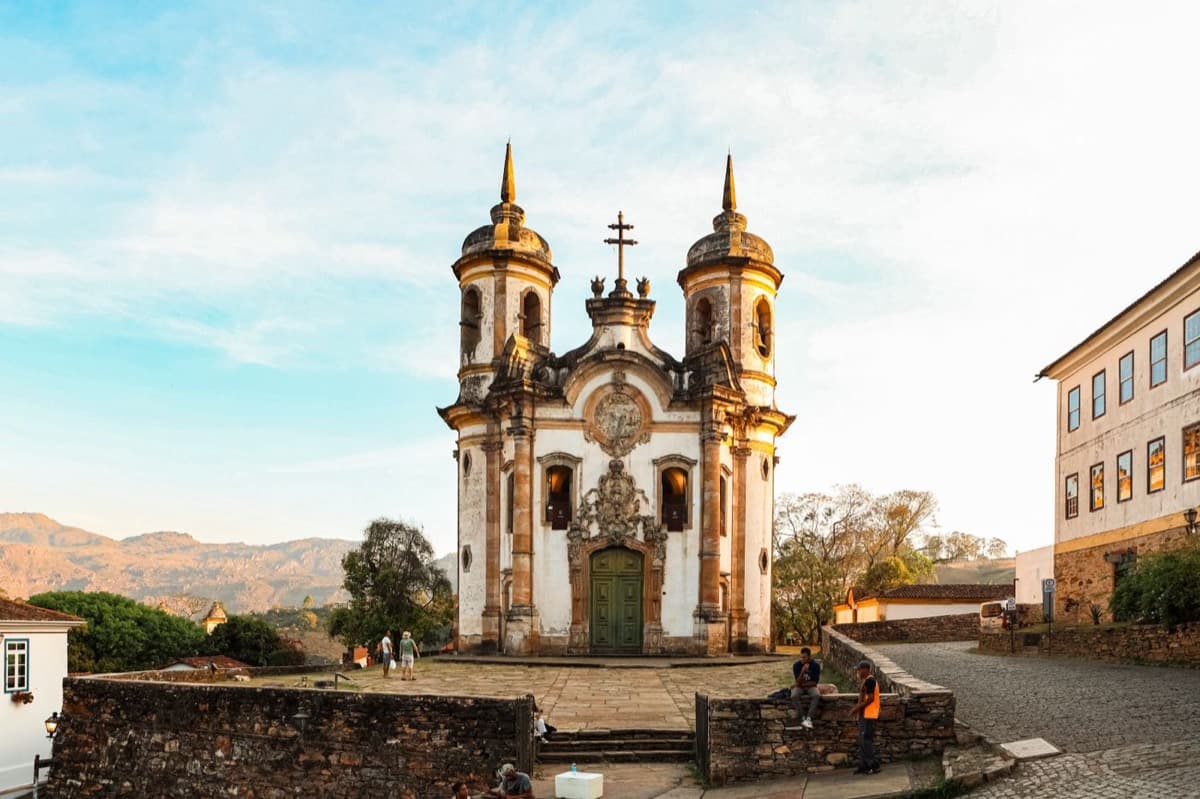
Read an entire colonial town as one artist's life work. This west-to-east ridge walk traces Aleijadinho, the celebrated and half-legendary sculptor of colonial Brazil, across the gilded churches of Ouro Preto, from the gold that funded them to the church where he lies buried.
Start · Basílica de Nossa Senhora do Pilar: The Gilded World He Was Born Into
DirectionsStops
- 1
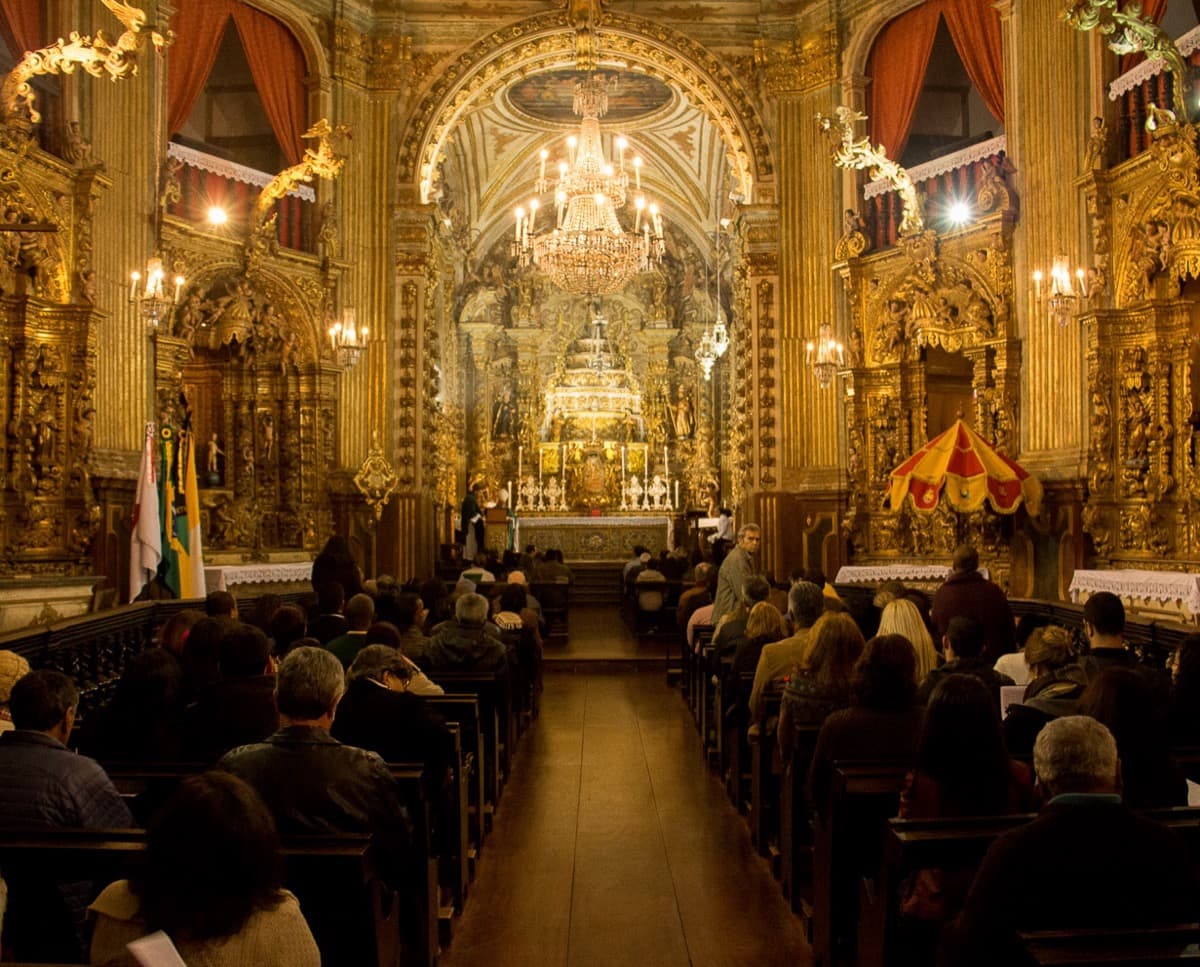
Basílica de Nossa Senhora do Pilar: The Gilded World He Was Born Into
The town's most dazzling gold interior, carved a generation before Aleijadinho, sets the scale for everything the walk will show.
- 2
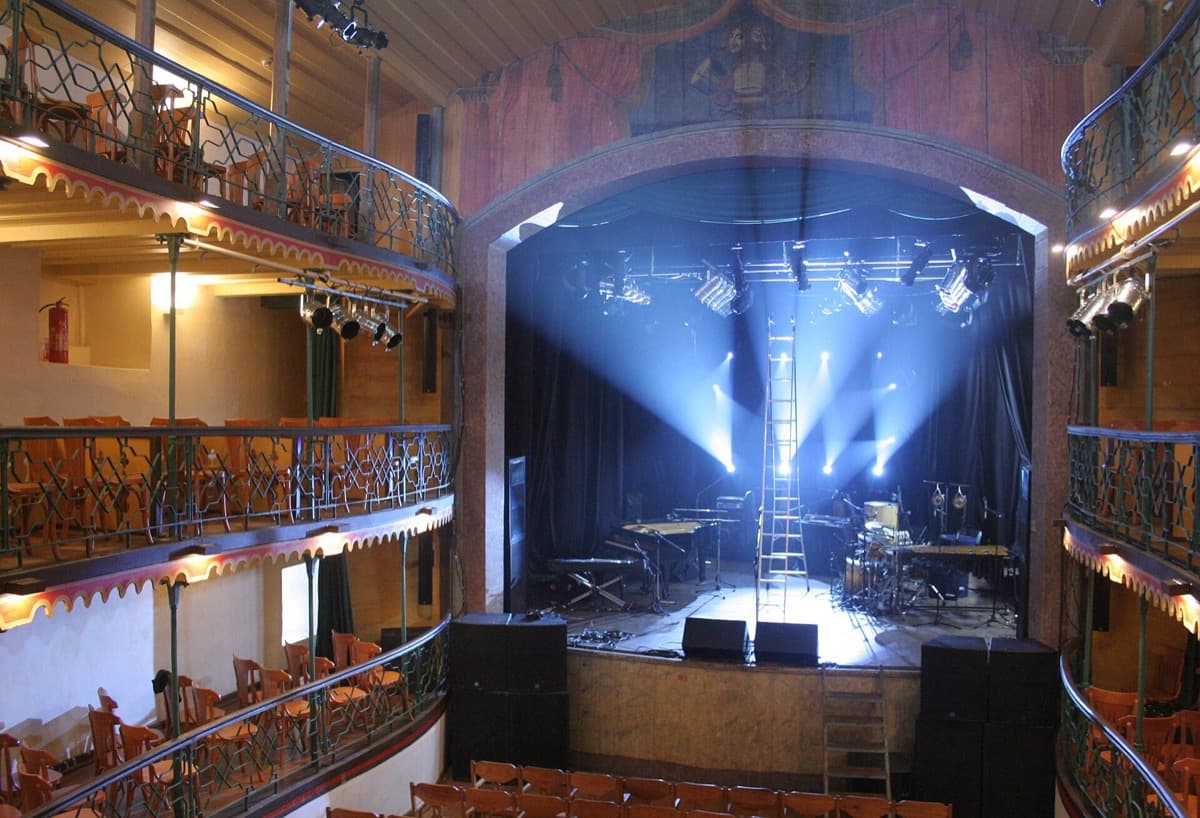
Casa da Ópera: The Stage Gold Also Built
A working court theatre from seventeen sixty-nine shows the worldly, ambitious Vila Rica that Aleijadinho carved in.
- 3
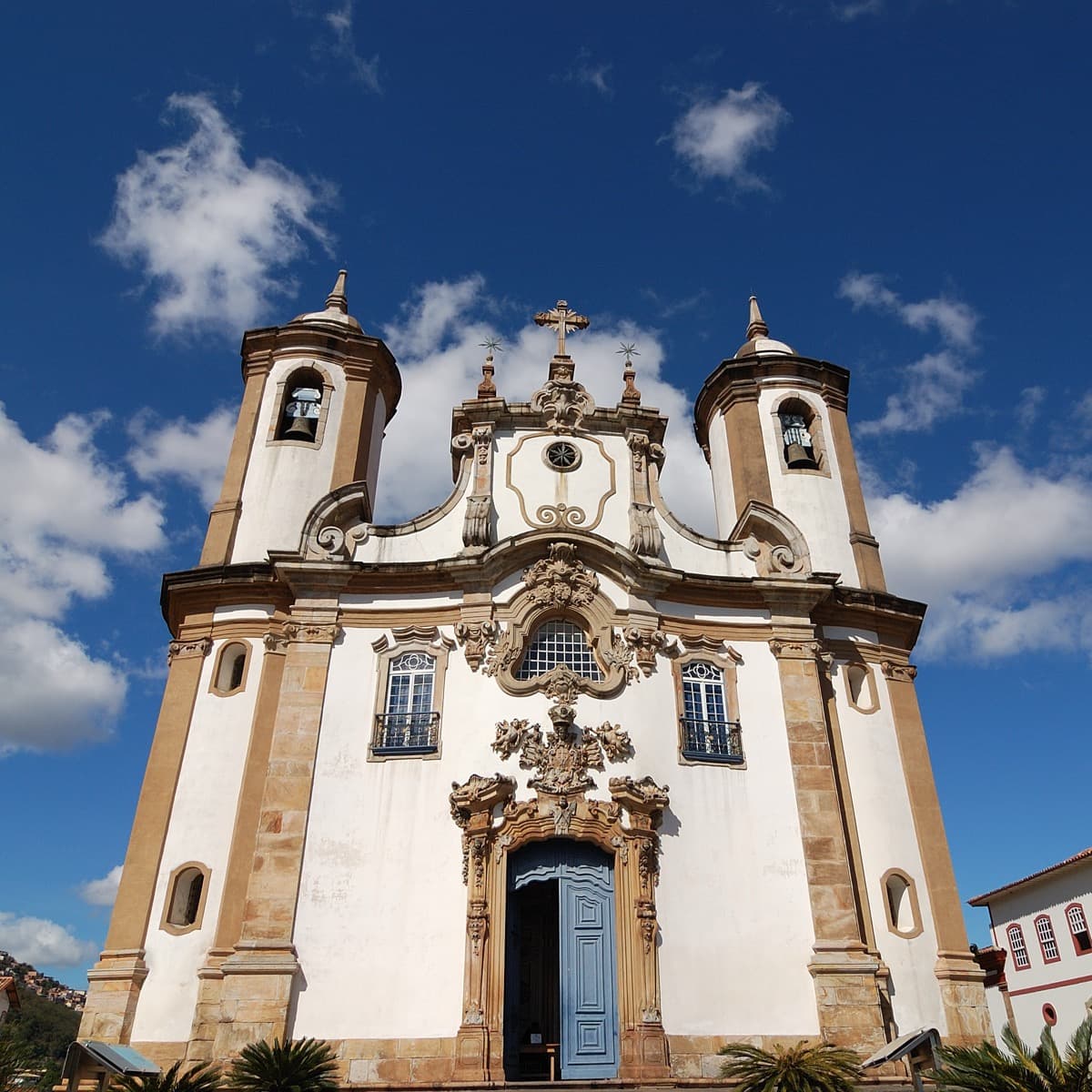
Igreja de Nossa Senhora do Carmo: Father's Last Design, Son's Chisel
The father designed this church as his final work, and a soapstone portico traditionally attributed to the son marks the inheritance passing hand to hand.
- 4
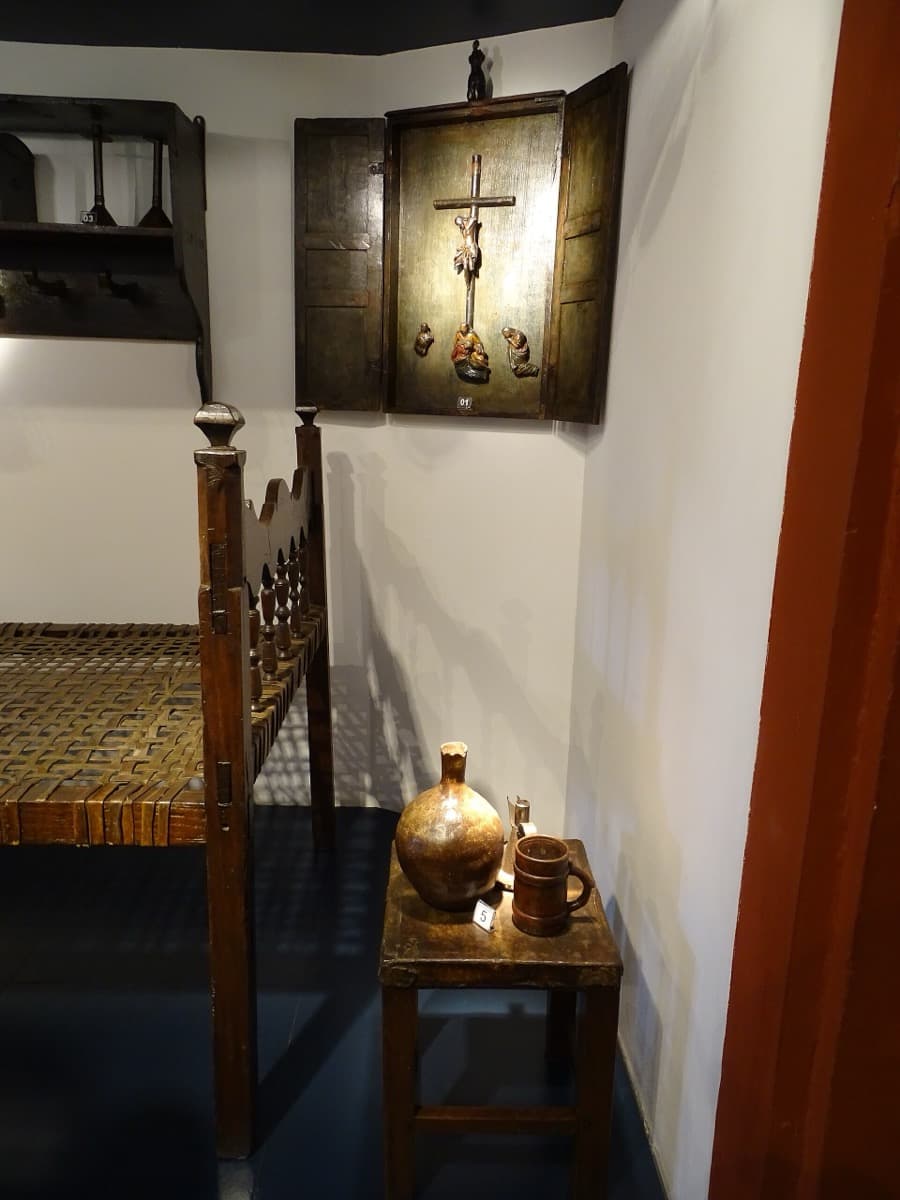
Museu do Oratório: Faith You Could Carry
In the Carmo churchyard, a former novices' house holds hundreds of home altars and, by tradition, once lodged the working master himself.
- 5
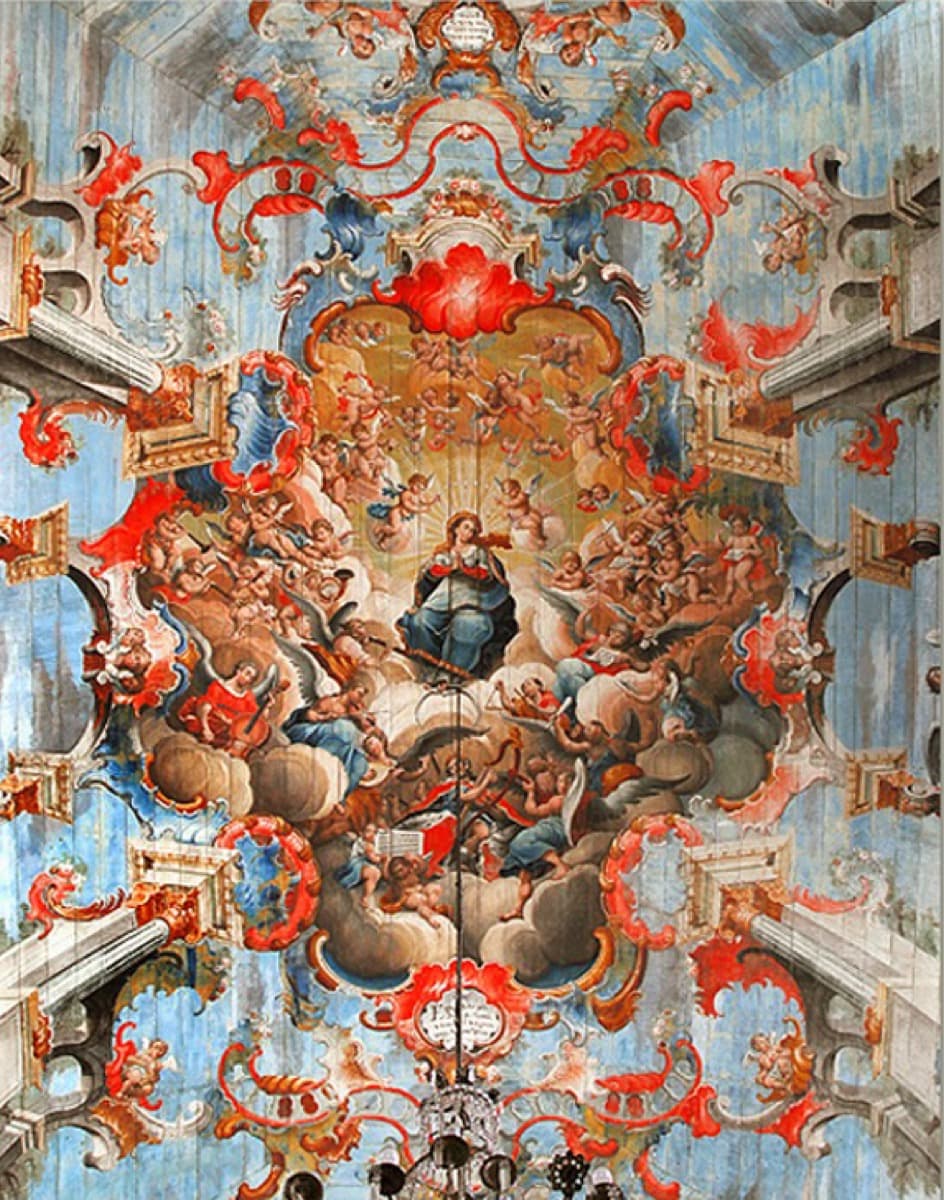
Igreja de São Francisco de Assis: The Masterpiece
Aleijadinho designed and carved this church, his acknowledged masterwork, crowned by Mestre Ataíde's painted ceiling.
- 6
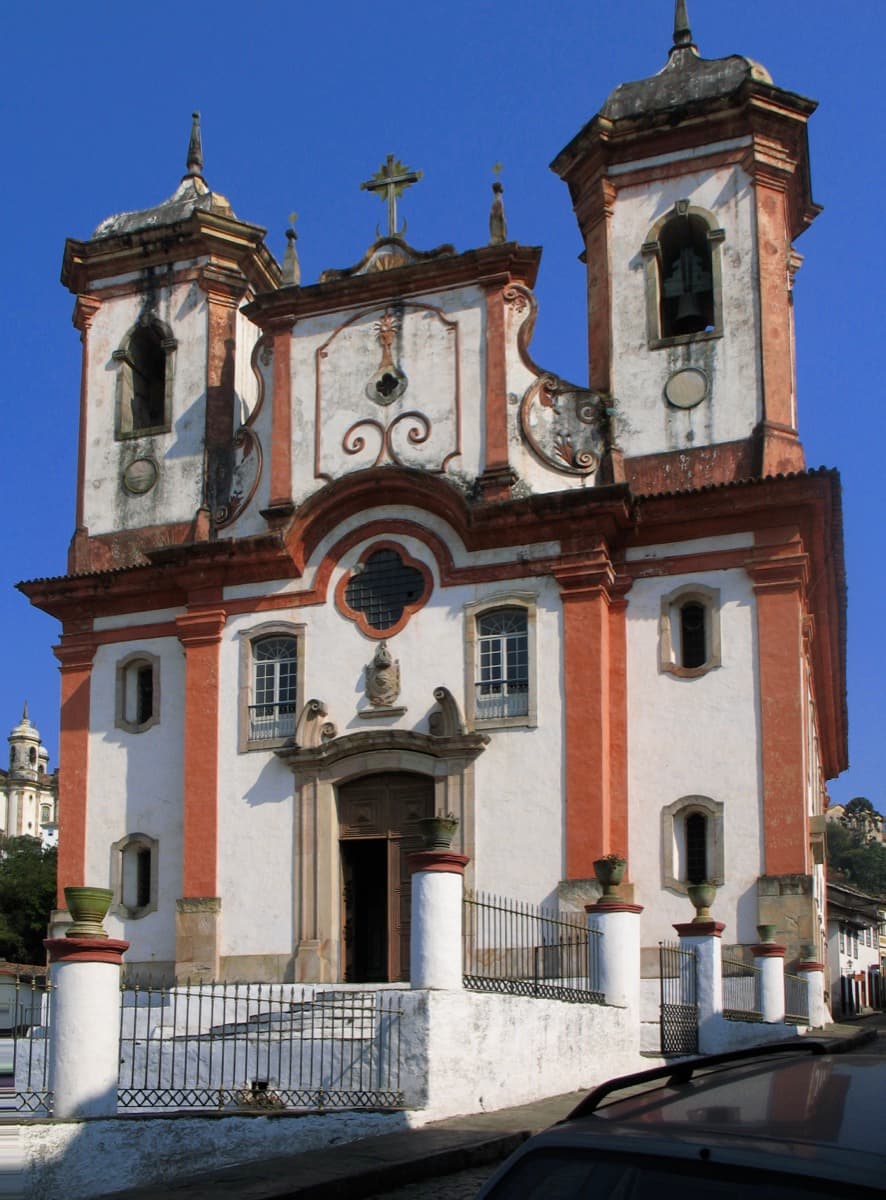
Igreja de Nossa Senhora da Conceição de Antônio Dias: Where the Hand Rests
The father's church and Aleijadinho's burial place close the portrait on rest rather than triumph.
Details
Best Time to Visit
Morning is ideal, soon after the churches open around nine, when the low sun lights the soapstone facades and the steep cobblestone climbs are still cool. Weekdays are calmer than weekends. Try to avoid the mid-afternoon heat and the frequent afternoon rain of the summer months, roughly December to March.
Pro Tips
- •Buy church entry tickets at each door as you go; most keep a small fee and paying in cash reais is the safest bet.
- •Photography inside the churches is often restricted or prohibited to protect the gilding and paintings; look for signs and ask before shooting.
- •Wear real walking shoes with grip, because the historic centre is steep and paved in uneven eighteenth-century cobblestone.
- •Confirm opening hours in advance: churches close for Mass and lunch, and the Museu Aleijadinho at the final stop may be shut for restoration.
- •Carry water and start early, since there is little shade on the exposed climbs between the church hills.
- •Move at your own pace and skip any interior you like; the exteriors and the paired-church views are free and reward a slow, unhurried wander.
Safety & Precautions
- •These are active places of worship. Dress modestly, keep your voice low, and pause your visit during Mass out of respect.
- •The cobblestones are steep, uneven, and slick when wet, so take the descents slowly and watch your footing throughout.
- •The Minas Gerais sun is strong at altitude and summer afternoons often bring sudden storms; bring sun protection, water, and a light rain layer.
- •Keep valuables discreet and stay aware of your surroundings in quieter lanes and after dark, as you would in any historic town centre.
Travel advisory: Exercise Increased Caution (Level 2).
Gallery
Related Reading
Go deeper on what you'll see, hear, and walk through.
Overview
Best Self-Guided Walking Tours in Ouro Preto (2026)
3 min
Overview
One Day in Ouro Preto: A Walkable Baroque Itinerary (2026)
5 min
Overview
Ouro Preto Travel Guide: How Many Days, Getting There, When to Go (2026)
5 min
Thematic
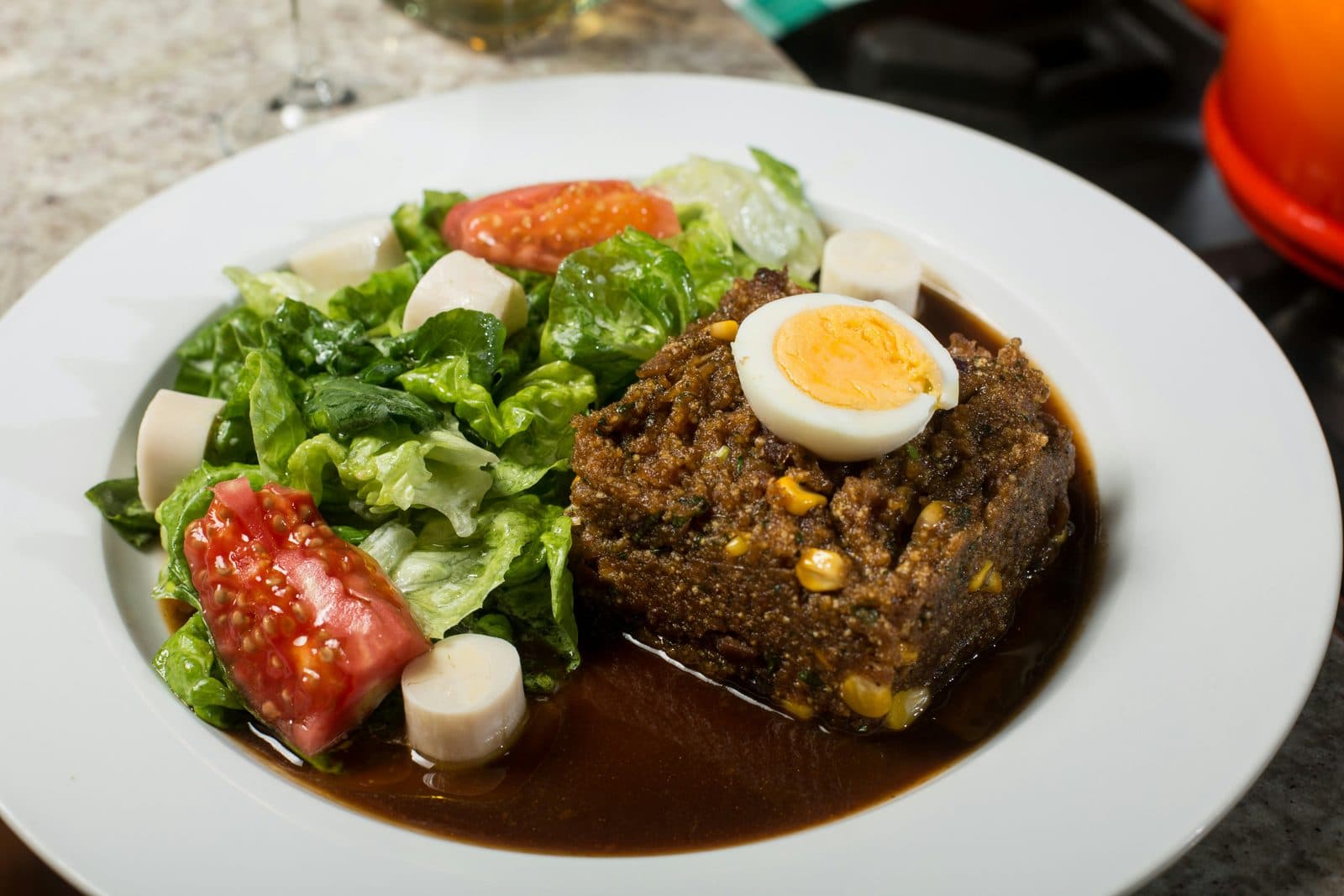
What to Eat in Ouro Preto: A Minas Gerais Food Guide (2026)
4 min
Deep dive
Basilica do Pilar: The Gold-Drenched Church at the Heart of Ouro Preto
5 min
Deep dive
São Francisco de Assis in Ouro Preto: The Church a Dying Sculptor Designed and Carved
6 min
Read the walk
The full story of Historic Center: Aleijadinho's Ouro Preto, in words. Prefer to listen? Play it narrated, from home or on location.
Introduction
Ouro Preto sits in the mountains of Minas Gerais, in Brazil, and for much of the seventeen hundreds it was called Vila Rica, the rich town, because the hills around it were full of gold. This walk reads the whole town as the collected works of a single hand. Antonio Francisco Lisboa, remembered as Aleijadinho, born about seventeen thirty-eight to a Portuguese master builder and an enslaved African woman, became the defining sculptor and architect of colonial Brazil. He did this even as an illness no one has ever agreed on slowly deformed his body and cost him fingers and toes, until assistants tied his tools to his hands so he could keep carving. Over six stops and just over one kilometre, you will follow his soapstone and gold across the church hills, from the gilded wealth that funded it all to the church where he lies buried. Plan for about two to two and a half hours if you step inside, less if you admire the exteriors and move on. The route runs west to east along the ridge, so it climbs and dips over steep cobblestones the whole way. Two honest threads run under everything you will see. One is the gap between the man and the myth, since much of what we call Aleijadinho is attributed by tradition rather than proven. The other is that the gold in these walls was pulled from mines worked by enslaved Africans, the same people his mother belonged to. Hold the beauty and that truth together. When you arrive at the Basílica de Nossa Senhora do Pilar, begin with stop one.
1. Basílica de Nossa Senhora do Pilar: The Gilded World He Was Born Into
You are standing in the world Aleijadinho was born into. Construction of this church ran roughly from sixteen ninety-six to seventeen twelve, and the decoration that makes people gasp came later, beginning around seventeen twenty-eight and taking more than twenty years. The Instituto Estrada Real cites about four hundred thirty-four kilograms of gold leaf inside, though the true figure is only an estimate, because many of the building's records were lost. Other sources round it up to roughly four hundred fifty. Either way, this is often called the second-richest church in gold in all of Brazil, after the Church of São Francisco in Salvador. Notice the word leaf. This is not solid gold. It is gold hammered impossibly thin and laid over carved wood, which is exactly why it can cover so much surface and seem to breathe with the candlelight. And here is the fact the shimmer can hide: that gold came out of mines worked by enslaved Africans. The wealth and the slavery are one story, not two. The finest carving here is not Aleijadinho's. The chancel, the great gilded stage around the altar, was carved by a Portuguese artist named Francisco Xavier de Brito, from seventeen forty-six until his death in seventeen fifty-one, with the work still unfinished when he died. Antonio Francisco Pombal worked here too. This is the earlier Portuguese Baroque style, the language Aleijadinho would later inherit and then transform. If you step into the sacristy, a Museum of Sacred Art gathers thousands of pieces from across the centuries. Let this room set the scale. Everything after this is a response to it.
2. Casa da Ópera: The Stage Gold Also Built
After all that gold, a stage. Gold did not only build altars in Vila Rica. It built a theatre. This one went up in seventeen sixty-nine, paid for by a wealthy contractor named João de Souza Lisboa, and it opened on June sixth, seventeen seventy, a date chosen because it was the birthday of King Dom José the First. It is often cited as the oldest theatre still in operation anywhere in the Americas, a claim repeated so widely it is worth saying carefully: often cited, hard to prove absolutely, but a genuine candidate for the title. Step back and picture the town this served. Vila Rica was not only priests and miners. It was a place with money and leisure, an audience that wanted opera and drama on a Saturday night. Inside, three tiers of boxes and galleries wrap around roughly three hundred seats, the intimate horseshoe shape of an old court theatre. It reopened after a careful restoration at the end of two thousand twenty-three, so it is still a working stage, not a relic behind glass. This matters for the portrait we are walking through. Aleijadinho did not carve in a monastery cut off from the world. He worked in a lively, worldly, ambitious town, and this building is the proof. The same boom that let brotherhoods compete to out-gild each other also let a contractor build a place for actors and singers. When you stand out front, you are between two appetites of the same era: the sacred one across the way at the Carmo church, and the secular one right here. Both were funded by the same hills.
3. Igreja de Nossa Senhora do Carmo: Father's Last Design, Son's Chisel
This is the emotional center of the whole walk, because here a father and a son meet in stone. The Carmo church was commissioned to Manuel Francisco Lisboa, Aleijadinho's father, a member of the Carmelite brotherhood, and it was the last design of his life. Work began in…
Full narration for this stop unlocks with the tour.
4. Museu do Oratório: Faith You Could Carry
A few steps from the Carmo church, in its churchyard, stands a modest eighteenth-century building that once housed Carmelite novices. It was called the Casa dos Noviços do Carmo, and today it holds the Museu do Oratório, a museum of oratories, the small portable altars that…
Full narration for this stop unlocks with the tour.
5. Igreja de São Francisco de Assis: The Masterpiece
This is the masterpiece, and by the time it rose, Aleijadinho was already ill. He designed this church, and he carved its decoration. Look at the facade: a soapstone frontispiece under a carved relief of Saint Francis receiving the stigmata, framed by circular bell towers and a…
Full narration for this stop unlocks with the tour.
6. Igreja de Nossa Senhora da Conceição de Antônio Dias: Where the Hand Rests
The walk ends where the hand came to rest. This is the church of Nossa Senhora da Conceição de Antônio Dias, and its definitive reconstruction was begun in seventeen twenty-seven under Manuel Francisco Lisboa, Aleijadinho's father, who is credited with much of its project and…
Full narration for this stop unlocks with the tour.