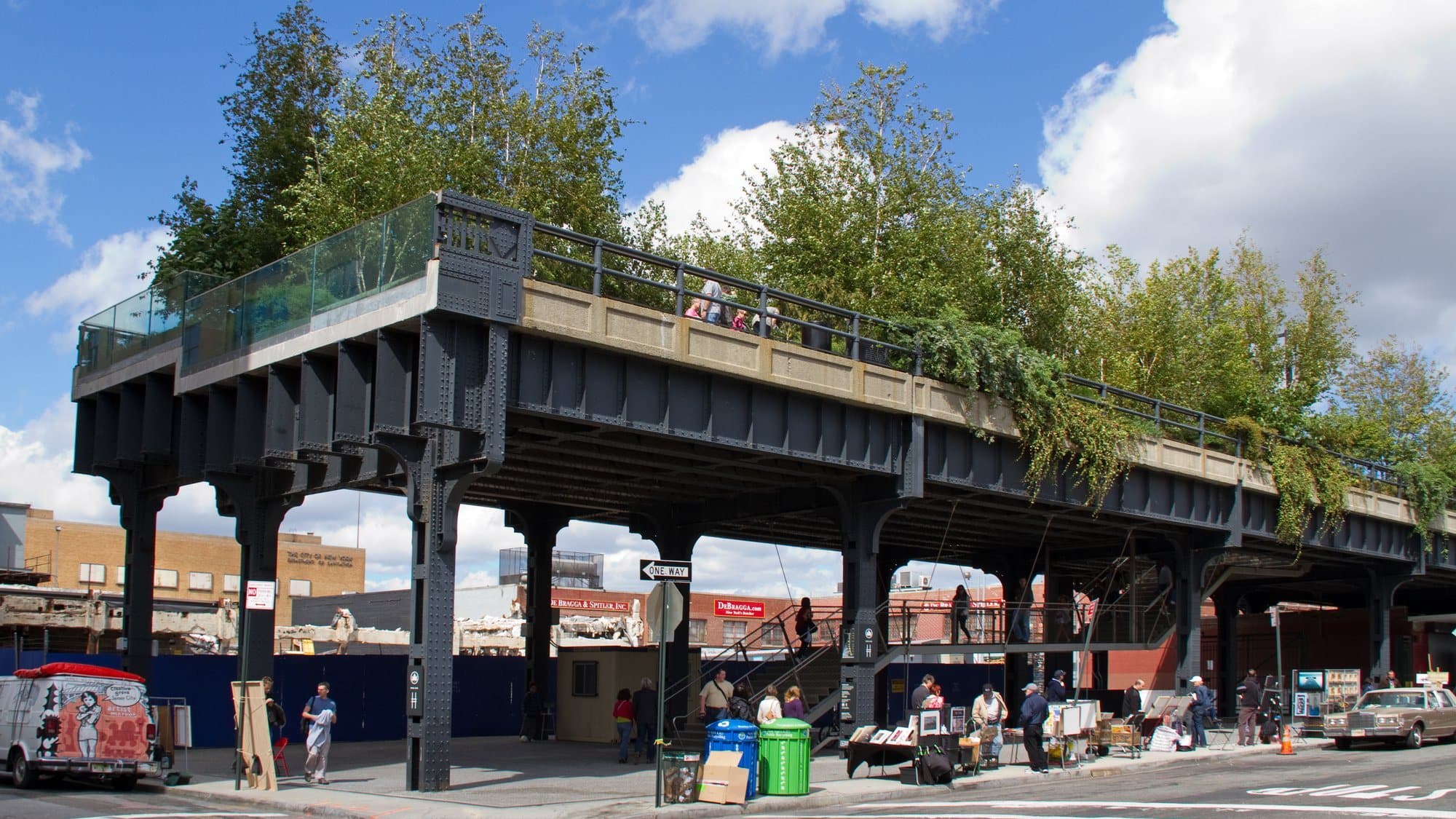
Walk from Little Island and the old meat market streets up onto the High Line, through Chelsea past the Nabisco factory, the rails and the only lawn, to the Spur and the Vessel at Hudson Yards.
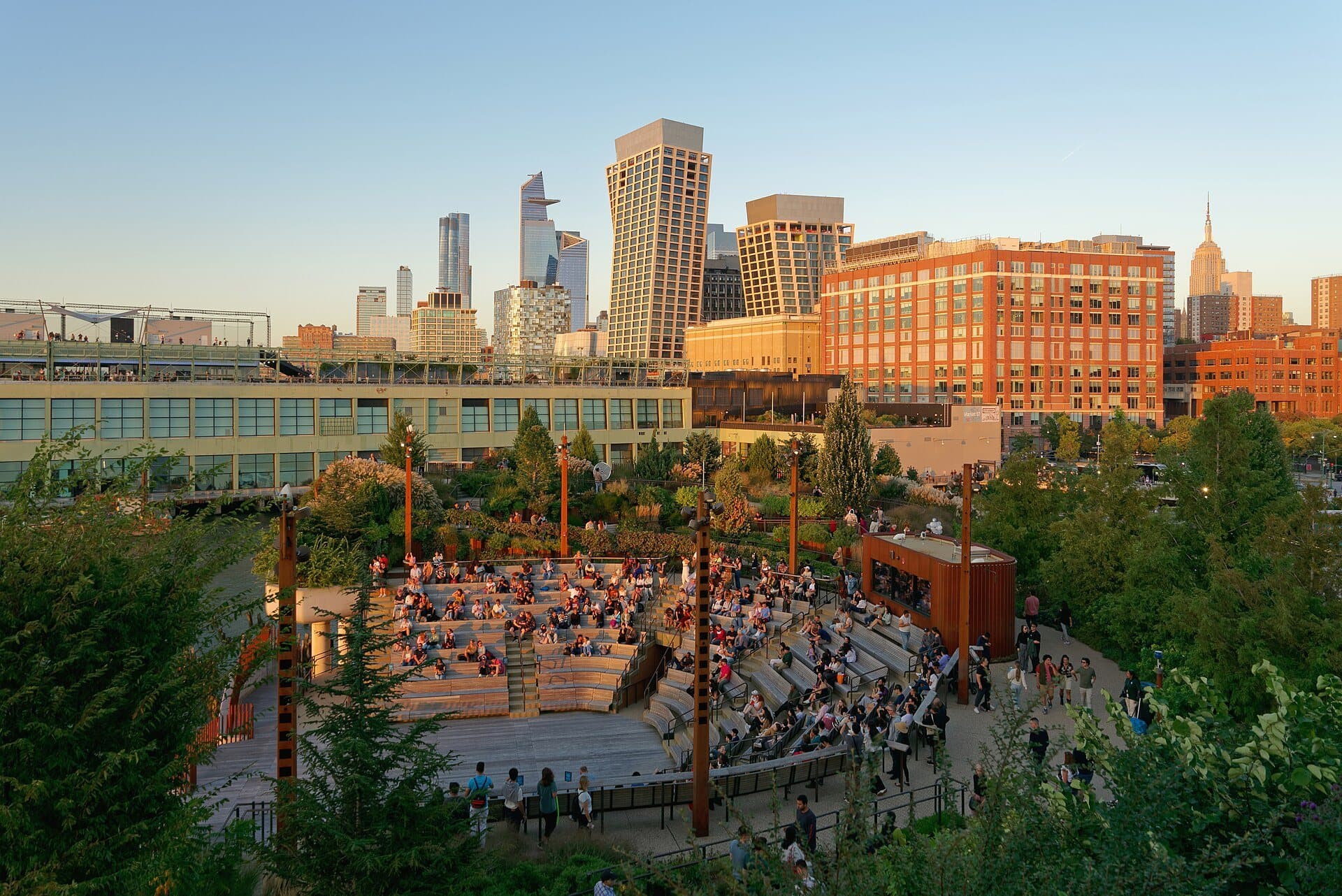
Start · Little Island: A Park on Old Pier Stumps
DirectionsStops
- 1
Little Island: A Park on Old Pier Stumps
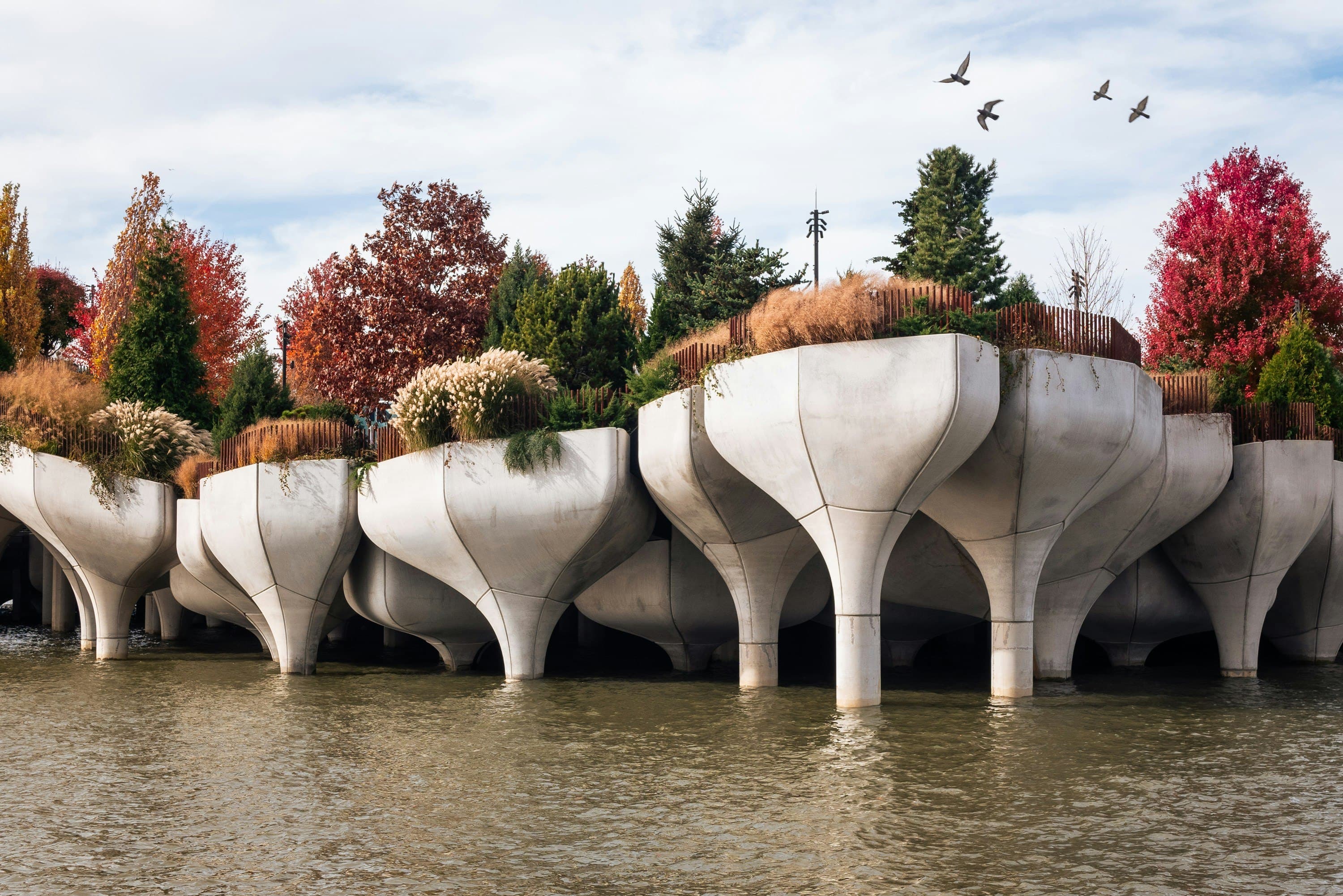
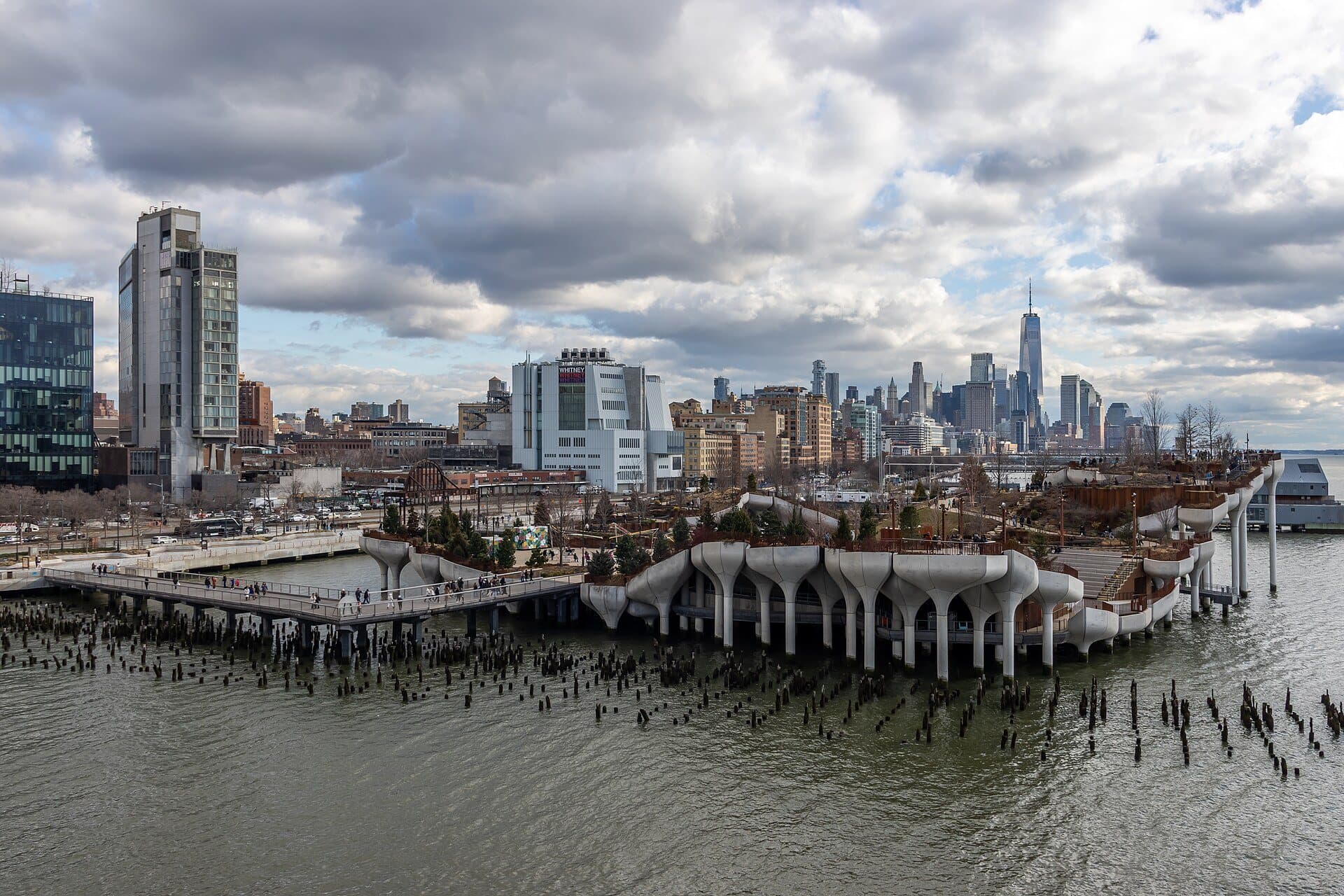
The park stands on concrete pots that grew from old pier stumps. Beside it, survivors of the Titanic came ashore at the Cunard pier in 1912.
- 2
Gansevoort Street: Where the Line Was Cut
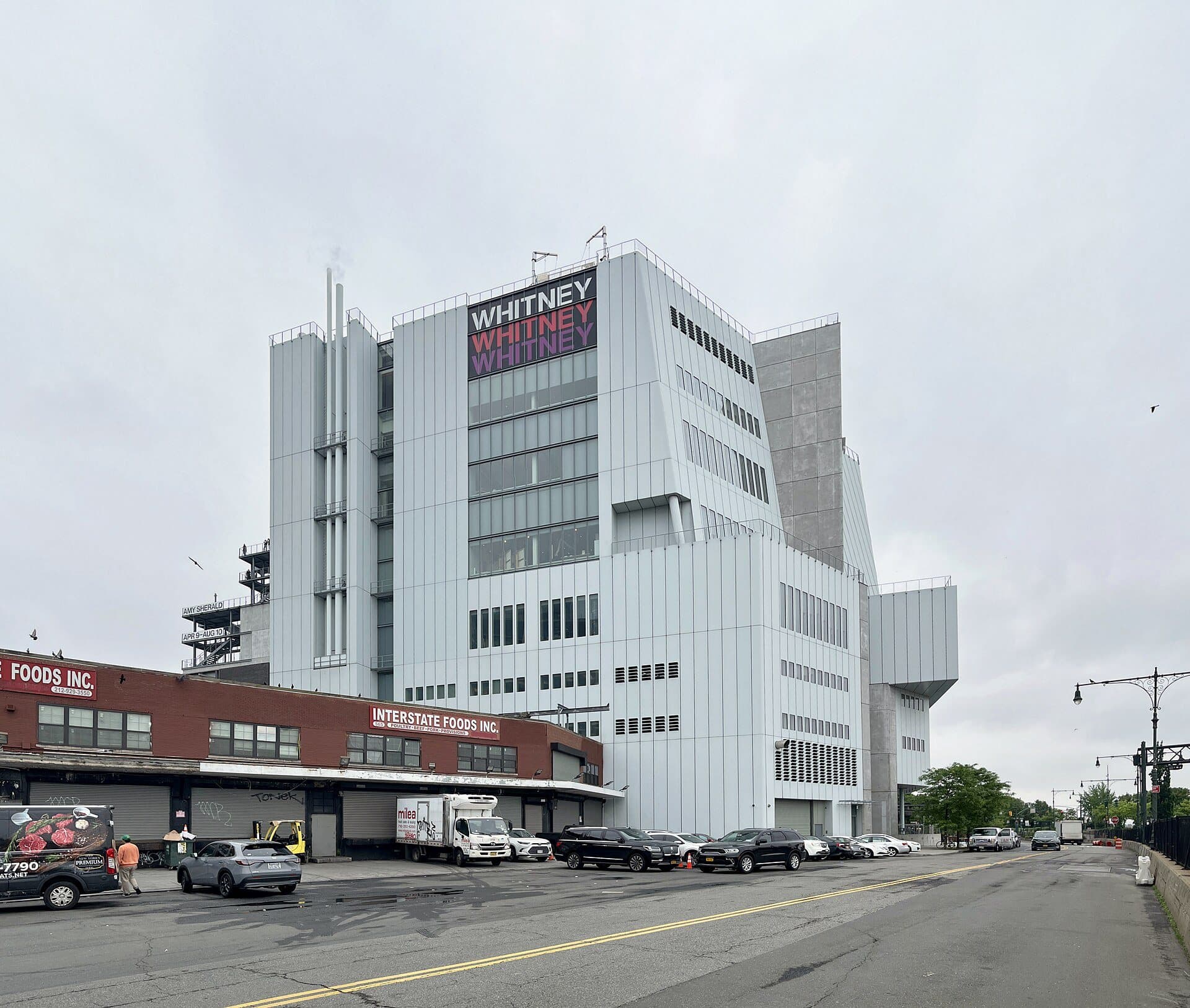
Meat market streets meet the Whitney where the railway was cut short. The Whitney Museum is ticketed and worth it; its lobby and ground-floor gallery are free.
- 3
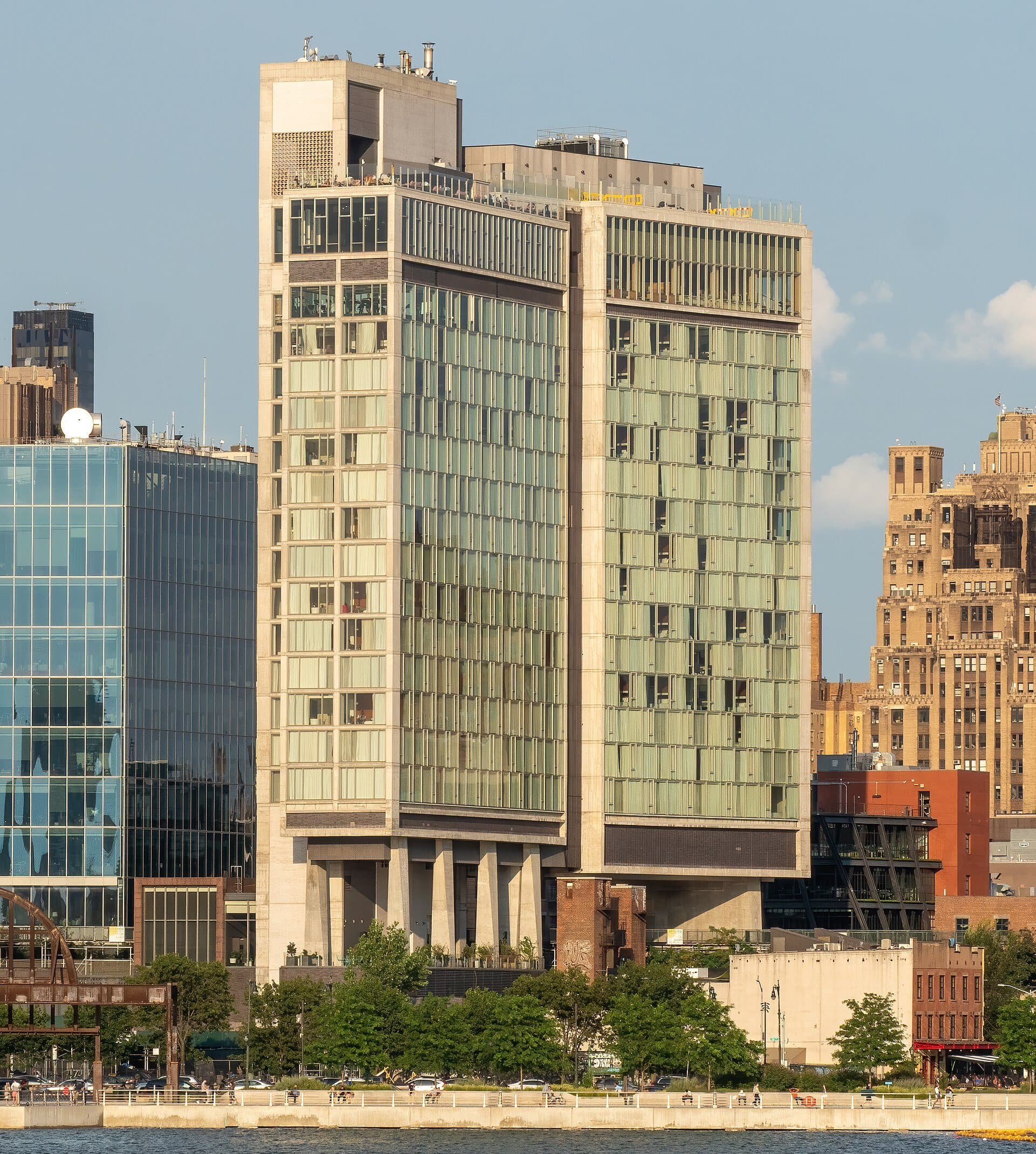
Fourteenth Street Sundeck: A Hotel on Legs
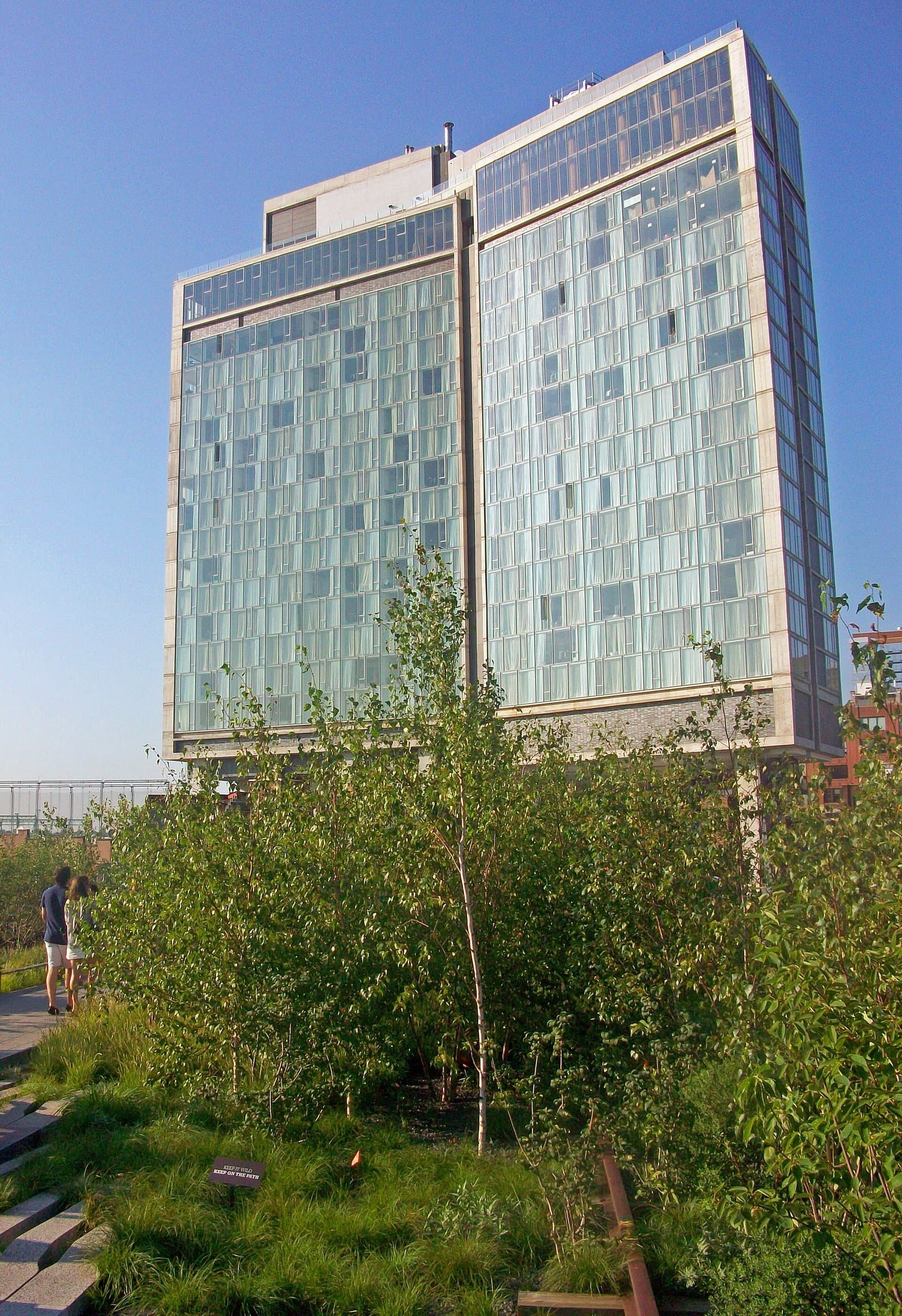
Loungers face the river where rain once pooled on the empty track. Just south, a hotel on giant concrete legs straddles the old railway.
- 4
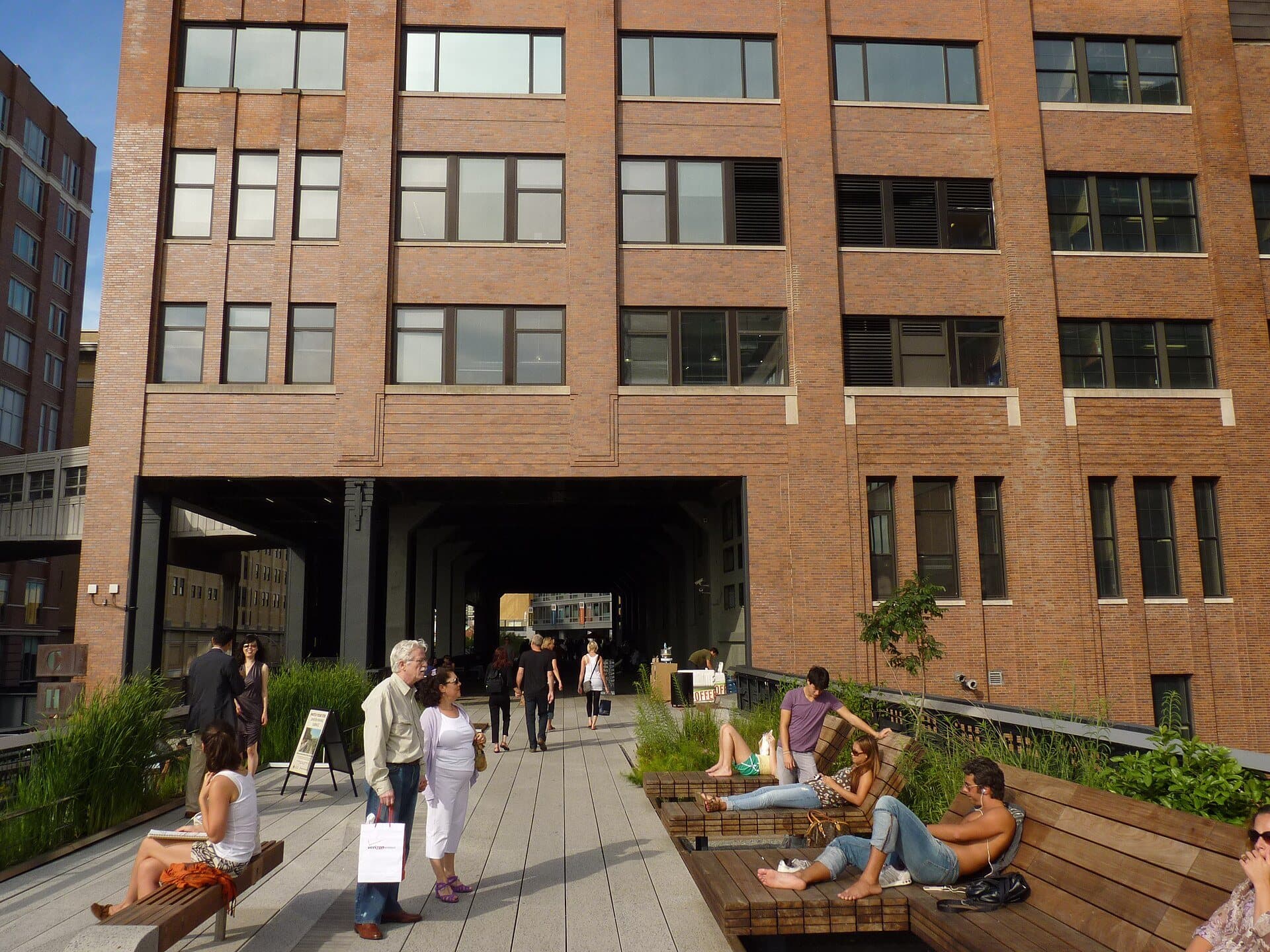
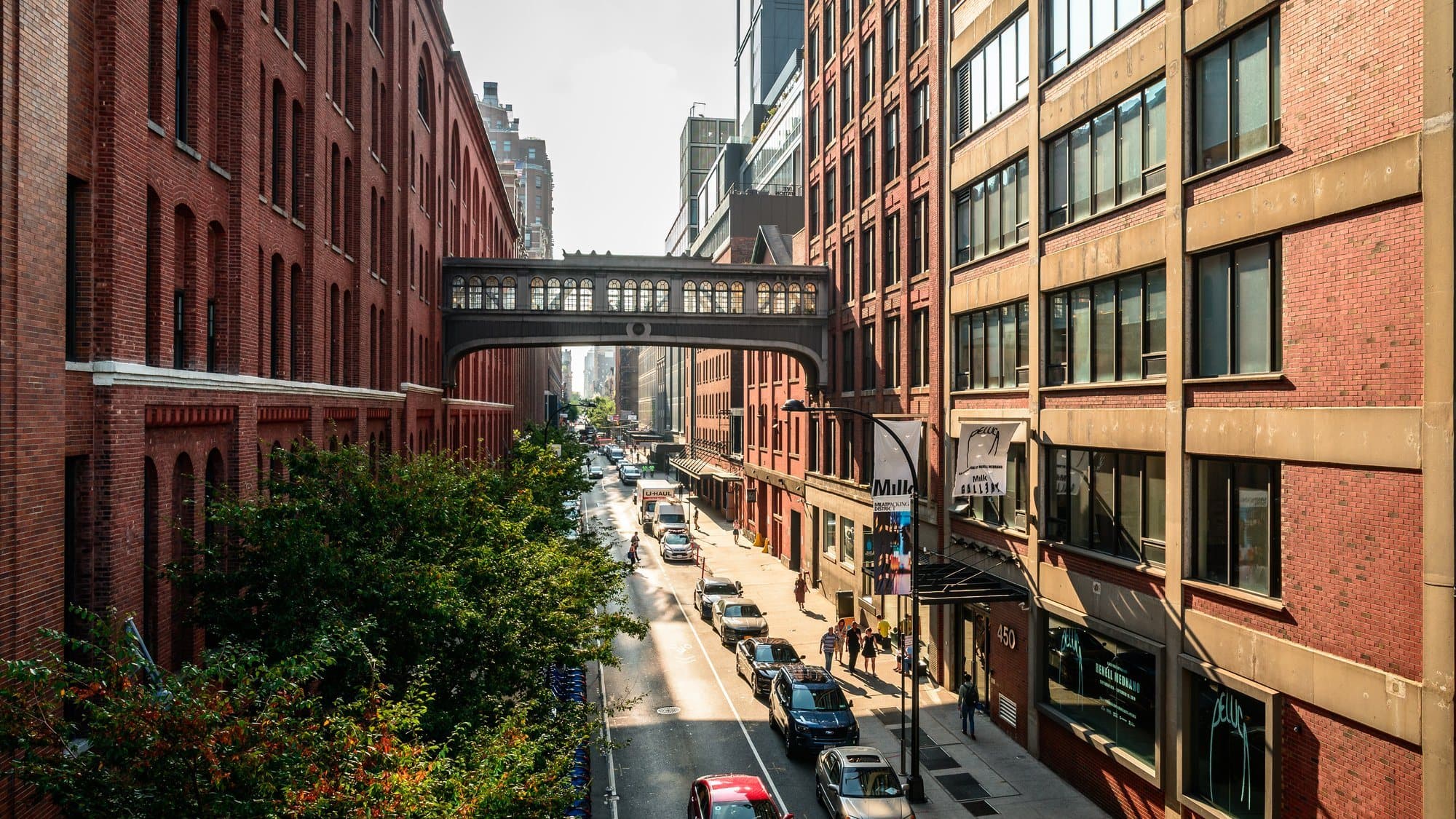
Chelsea Market Passage: Through the Biscuit Factory
The railway runs straight through the old Nabisco biscuit factory. The first Oreo cookies were made in the Nabisco bakery complex on these blocks in 1912.
- 5
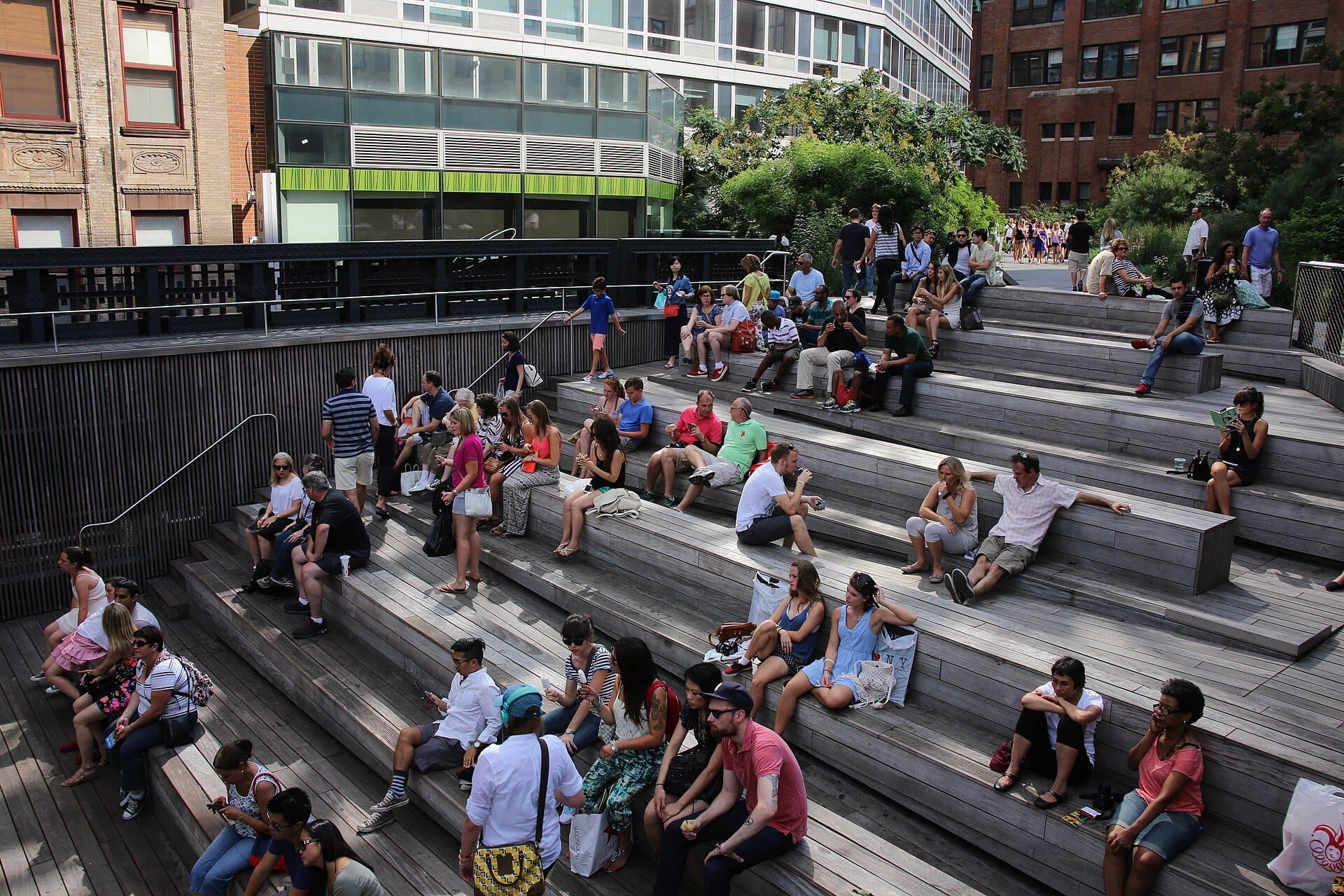
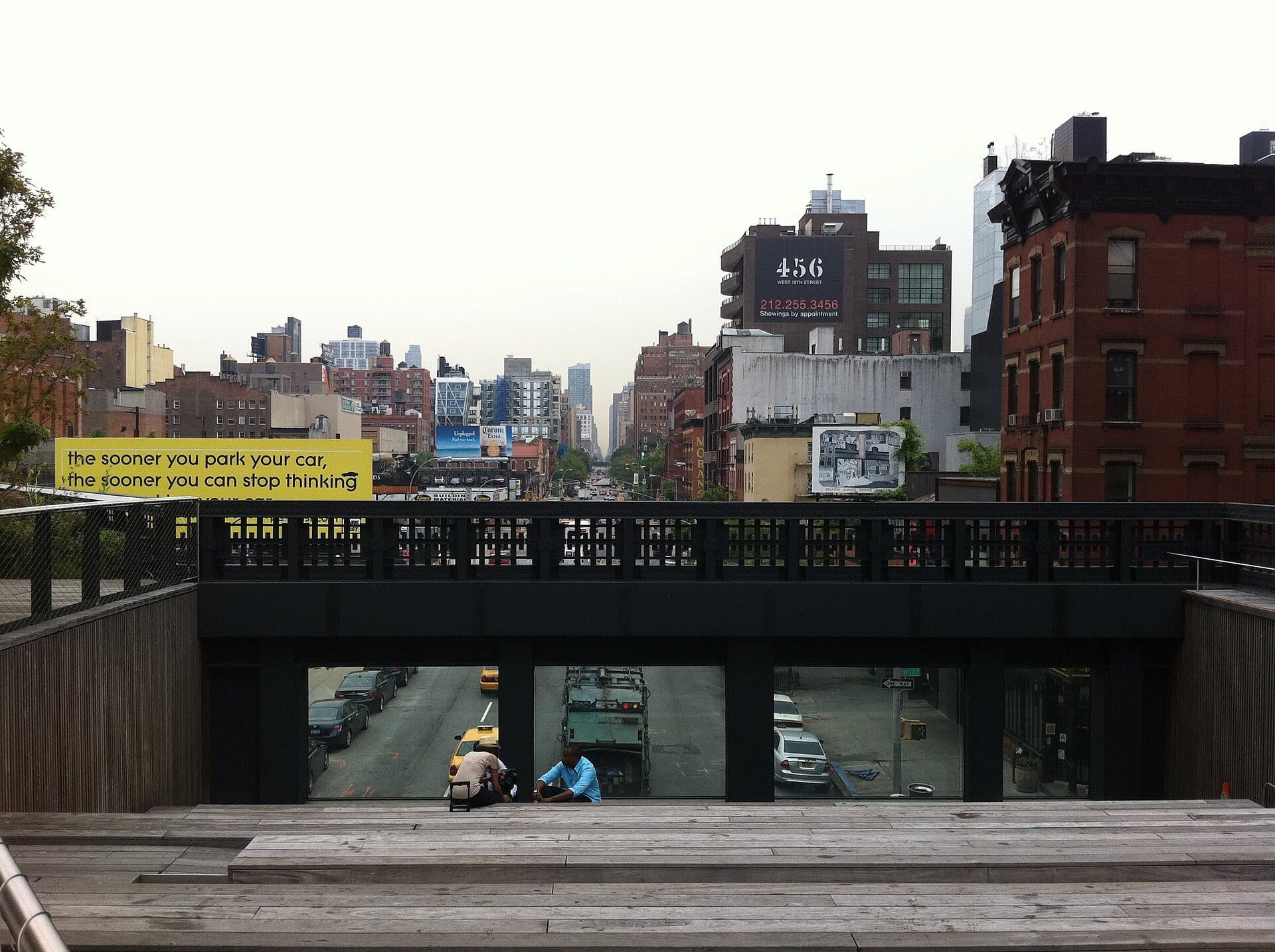
Tenth Avenue Square: A Window Cut in the Steel
A window cut in the steel looks down on Tenth Avenue. Friends of the High Line says the avenue was once called Death Avenue.
- 6
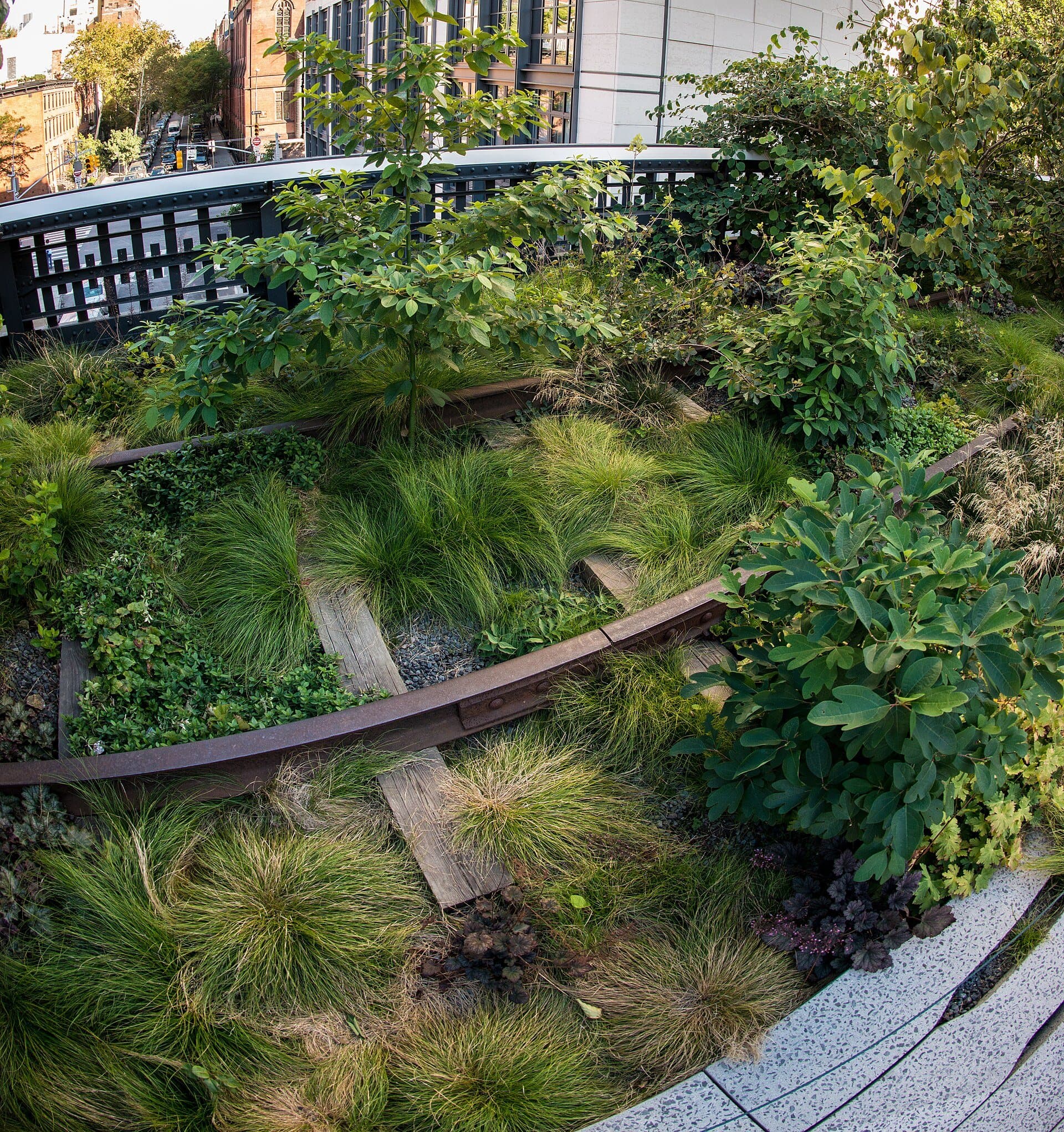
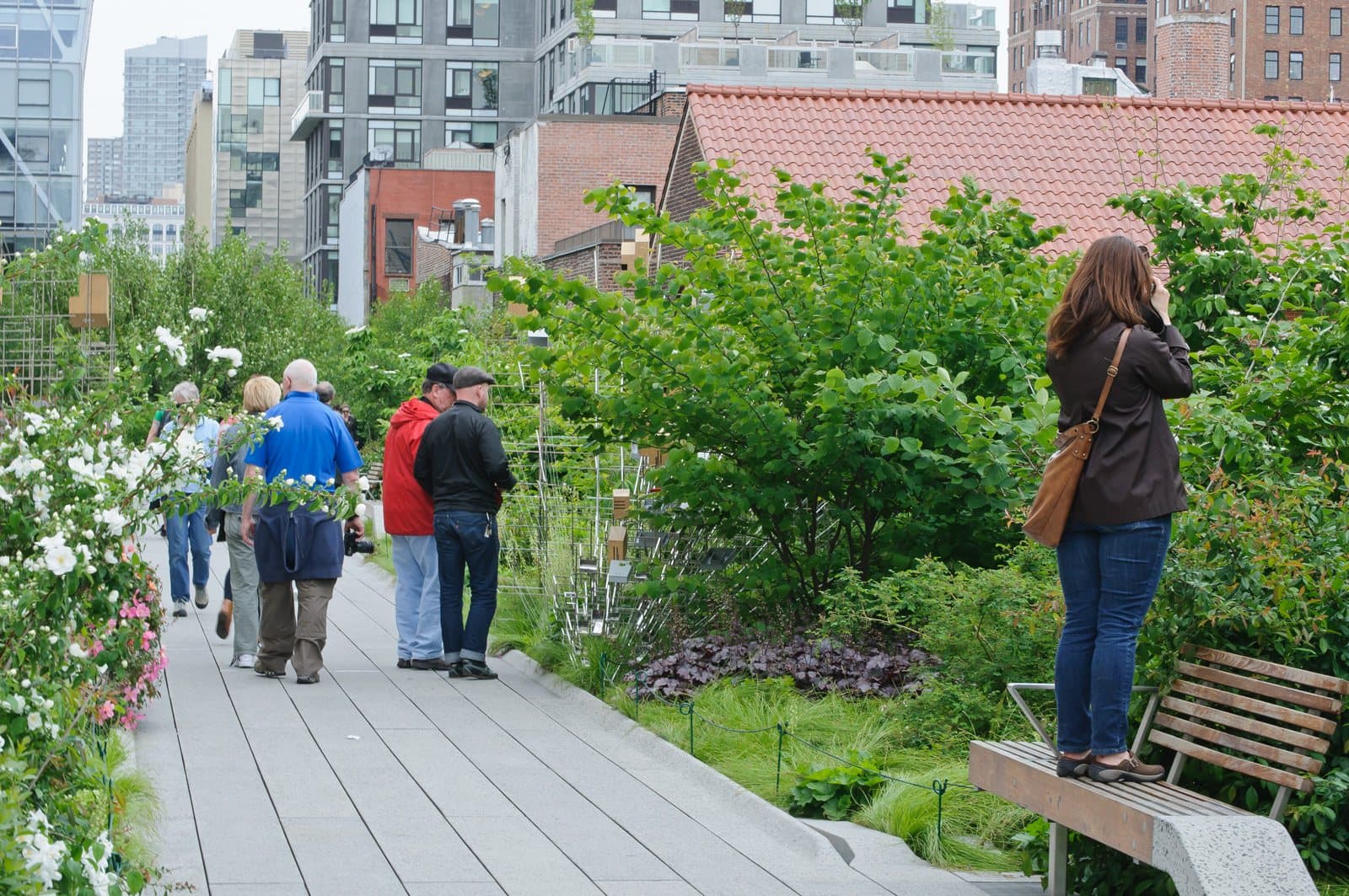
Chelsea Thicket: Walking on the Old Rails
Original rails run through a miniature forest of shrubs and trees. The planting copies what grew wild on the abandoned line after 1980.
- 7
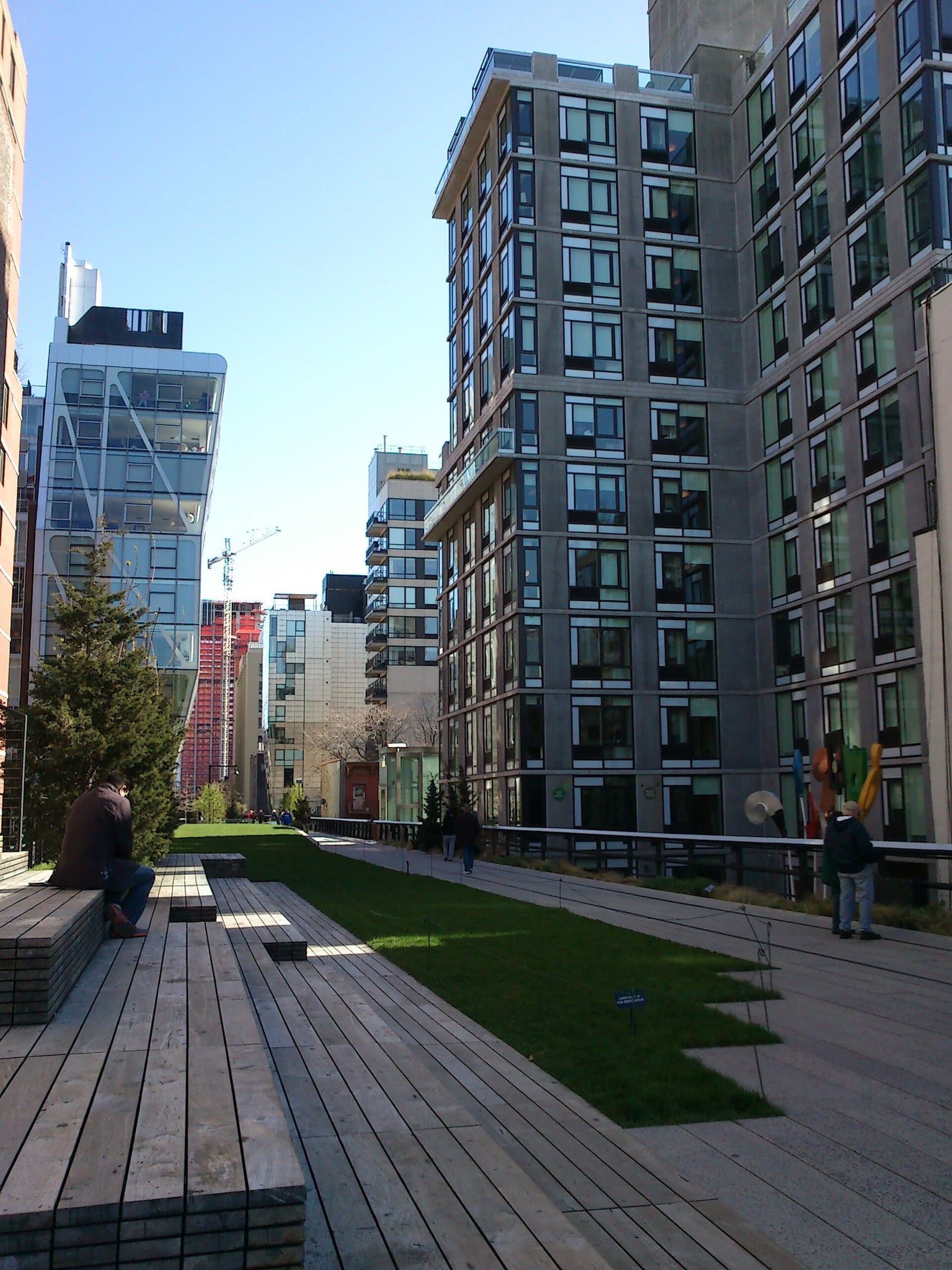
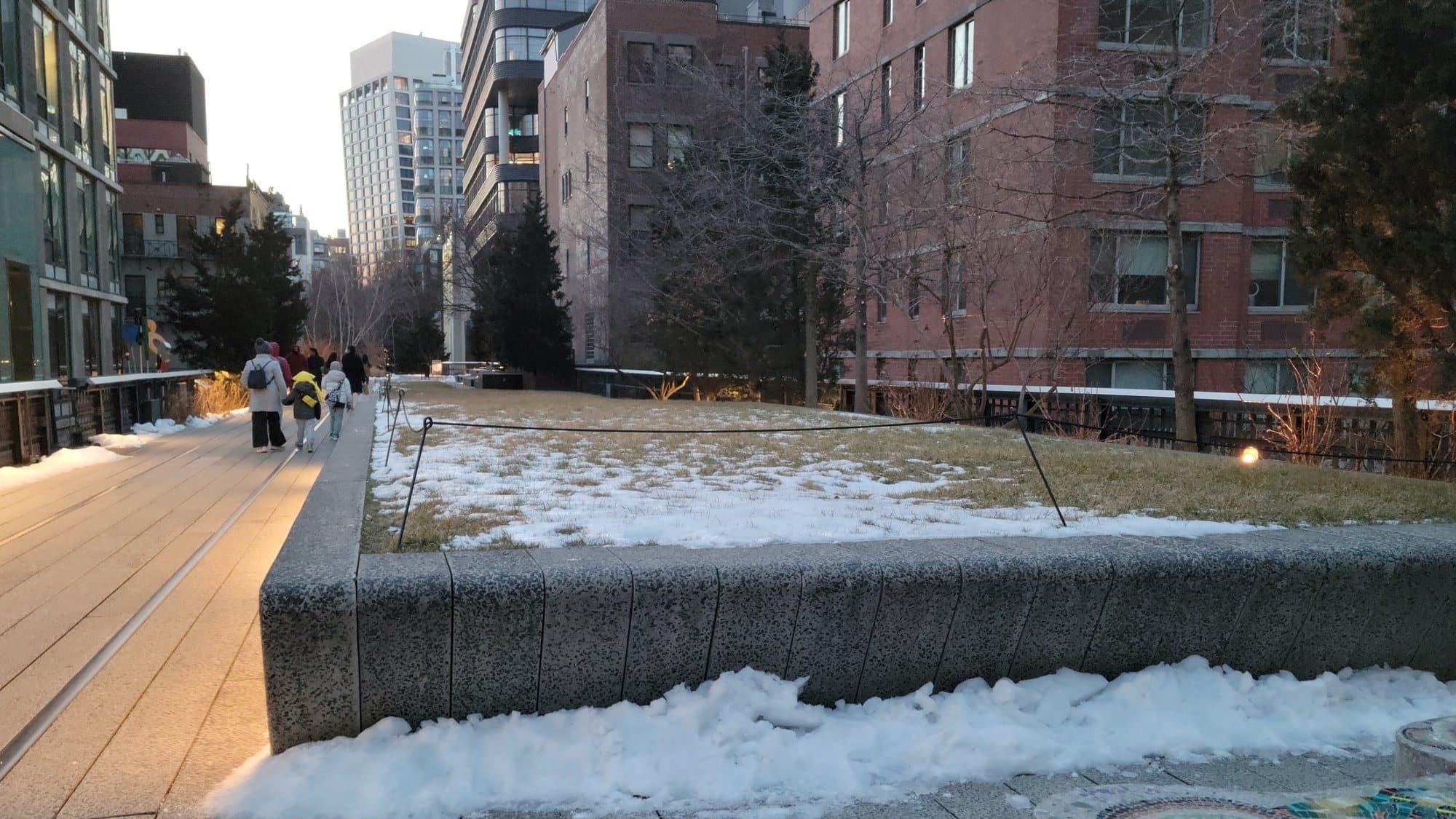
23rd Street Lawn: The Deck Peels Up
The High Line's only lawn peels up off the deck. A whole block of grass sits beside wide steps of reclaimed teak.
- 8
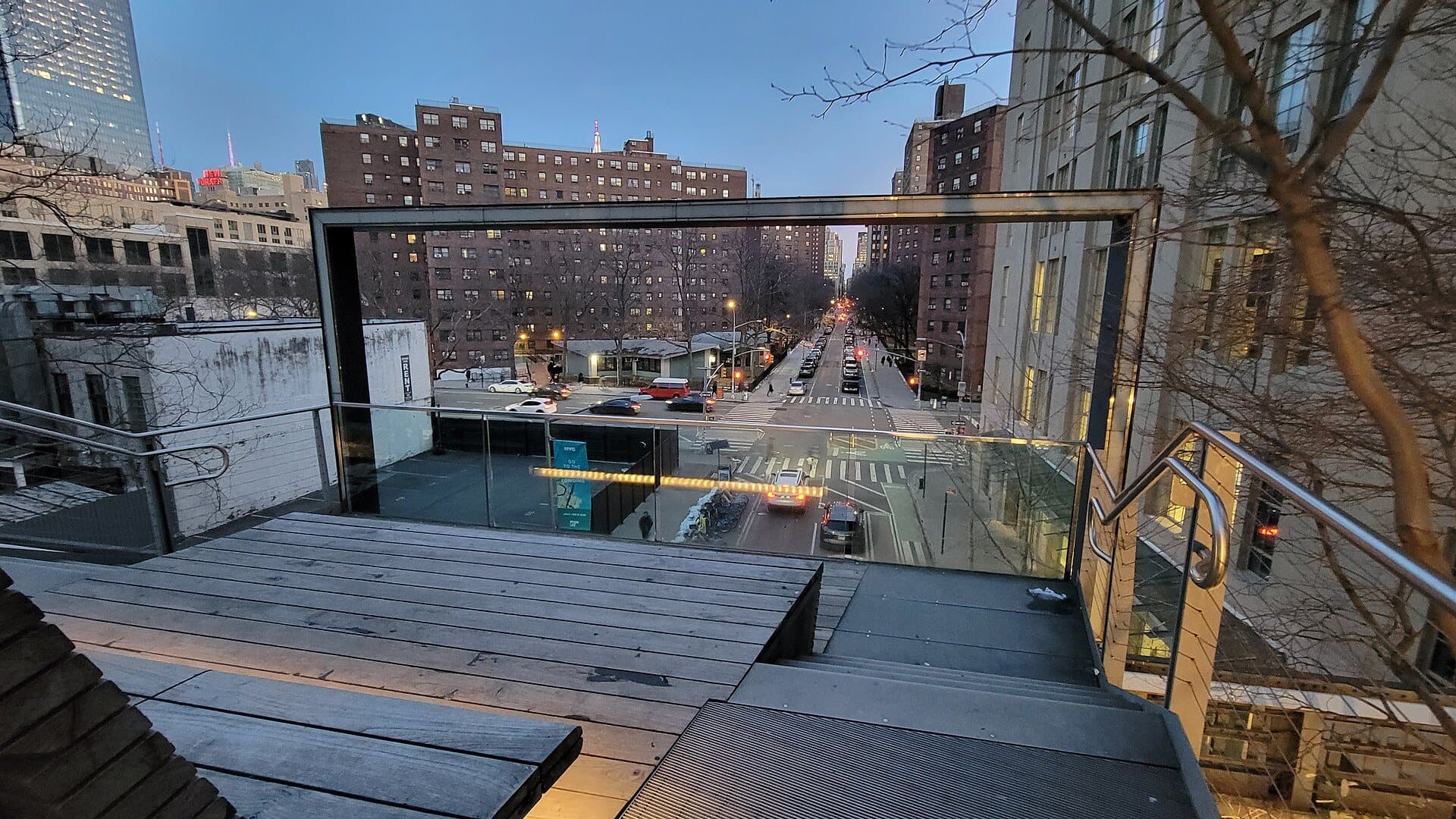
26th Street Viewing Spur: A Frame With Nothing in It
An empty steel frame turns a cross street into the view. Beside the line stands the warehouse that took the High Line's first carload of freight.
- 9
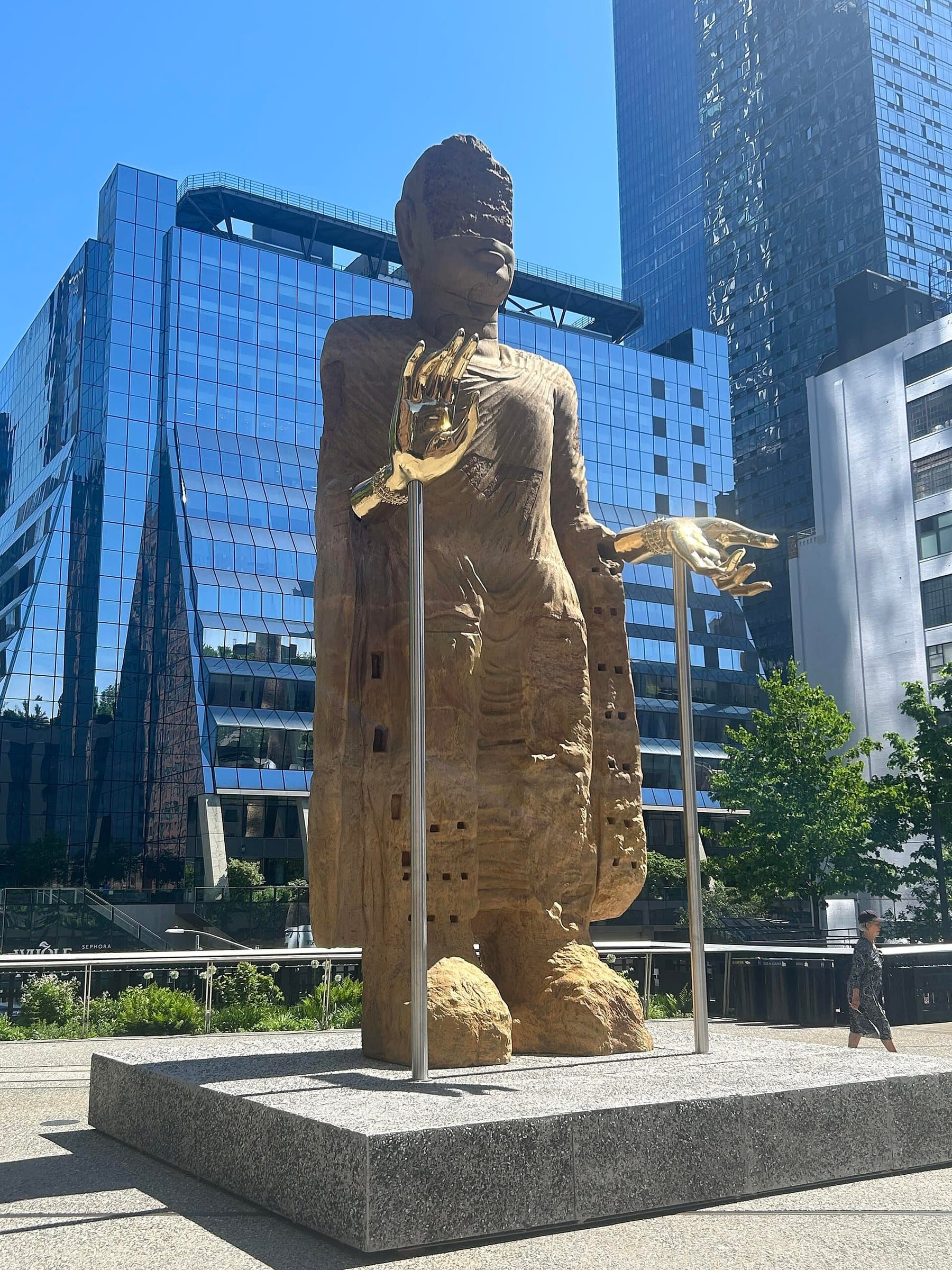
The Spur and the Plinth: Mail Line and Brass Hands
A railway branch that once carried mail now ends at a sculpture. Back at its start, the main line turns west along the rail yards.
- 10
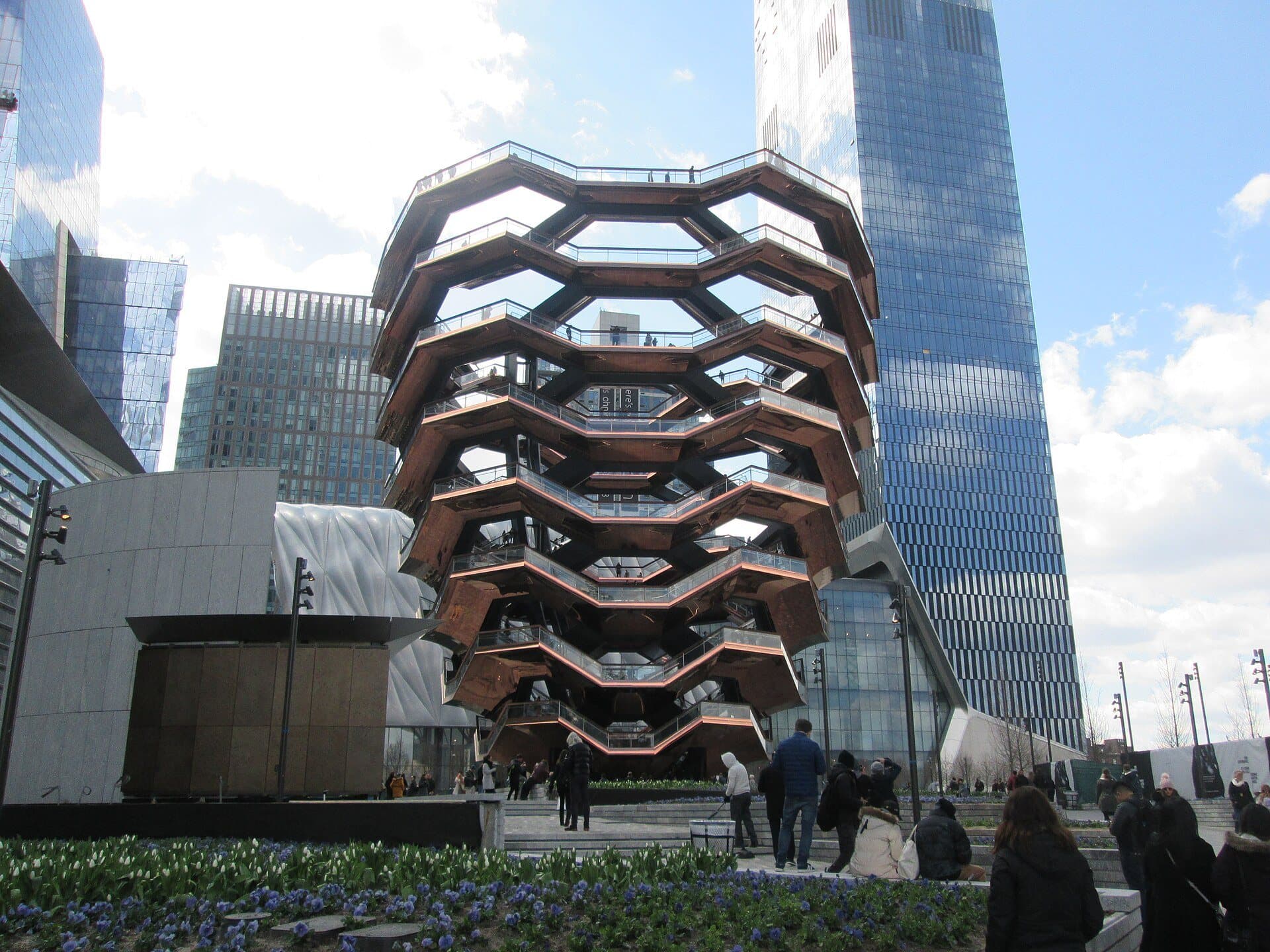
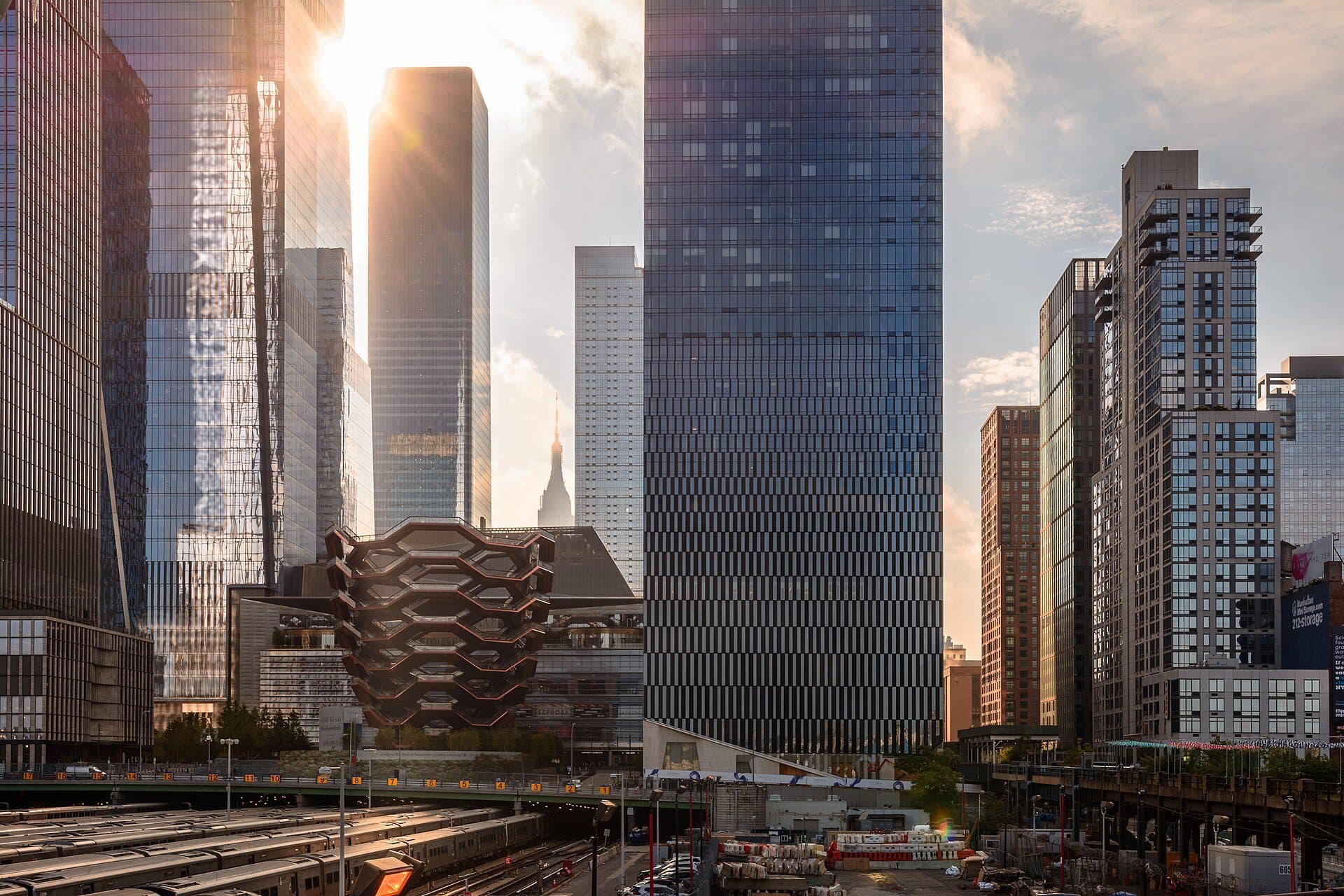
Hudson Yards and the Vessel: A City on a Lid
A copper honeycomb of stairs stands on a lid over trains. The plaza is free; climbing the Vessel is ticketed.
Details
Best Time to Visit
A weekday morning soon after the High Line opens at 7 am is calmest; by midday and at weekends the narrow stretches get crowded. Late afternoon light over the Hudson is lovely from Little Island and the sundeck. Spring to autumn is best for the planting.
Pro Tips
- •The High Line is free. Hours (checked 30 September 2026): 1 April to 30 November, 7 am to 10 pm; 1 December to 31 March, 7 am to 8 pm.
- •Little Island is free (only performances in the amphitheatre are ticketed). From 8 September to 31 October it is open 6 am to 11 pm (checked 30 September 2026); hours change by season.
- •Lifts onto the High Line: Gansevoort and Washington Streets, 14th Street, 23rd Street and 30th Street at Tenth Avenue. They close for maintenance at times; Friends of the High Line posts their status online.
- •The Whitney is free on Friday nights from 5 to 10 pm and on the second Sunday of every month, and is closed on Tuesdays (checked 30 September 2026).
- •Vessel tickets are timed and start at $10 plus fees; New York City residents climb free on Thursdays if they book online (checked 30 September 2026).
- •There are restrooms on Little Island near The Glade, and on the Spur. Food stalls run in the Chelsea Market Passage in the warmer months (Friends of the High Line gives April or May to October).
- •The 7 train's 34 St-Hudson Yards station has entrances a short block north of the Vessel, in Hudson Park between 33rd and 34th Streets (one with an elevator), so there is no need to walk back.
Safety & Precautions
- •Little Island to Gansevoort Street crosses the West Side Highway, a fast, wide road: the walk crosses it at the 13th Street lights. Watch for fast cyclists on the riverside path, and take care on the unsignalled crossings at the foot of Tenth Avenue.
- •No bikes, scooters or skateboards on the High Line, and no dogs except service dogs. Stay off the planting beds and the exposed rail tracks in them.
- •The narrow stretches of the High Line get crowded at weekends and midday; keep to the right and step aside to stop.
- •As of 30 September 2026 the Interim Walkway at the Western Rail Yards (30th to 34th Street) is temporarily closed. The walk does not use it.
- •The Chelsea Market Passage and the Spur's seating steps have uneven levels; the paving can be slippery when wet.
- •The 23rd Street Lawn is sometimes roped off to rest, and the sundeck's water feature runs only in warm months.
Travel advisory: Exercise Normal Precautions (Level 1).
Gallery
Related Reading
Go deeper on what you'll see, hear, and walk through.
Overview
Best Self-Guided Walking Tours in New York (2026)
4 min
Overview
How to See New York: A City Built in Layers
7 min
Overview
New York Travel Guide: How Many Days, Getting Around, When to Go
6 min
Overview
One Day in New York: A Walkable Itinerary That Actually Works
6 min
Thematic
Best History Walking Tours in New York (2026)
2 min
Companion
The High Line: A Question Disguised as a Park
5 min
Read the walk
The full story of High Line and Hudson Yards: The Freight Railway That Became a Park, in words. Prefer to listen? Play it narrated, from home or on location.
Introduction
New York, in the United States, has a habit of turning old machinery into parks, and this walk follows one of them, the High Line. It is a freight railway, lifted about thirty feet above the streets of the West Side in the early nineteen thirties. Trains carried meat, farm goods and mail along it until nineteen eighty. Then it stood empty, and grass and shrubs seeded themselves between the rails.
Three names will come back as you go. Joshua David and Robert Hammond, two local residents, met in nineteen ninety-nine and set out to save the old track. And Thomas Heatherwick's studio designed both ends of this walk.
Over ten stops and about two and a half kilometres, the walk starts on Little Island, a park on the Hudson River, crosses into the old meat market streets, then climbs onto the High Line and follows it north through Chelsea, past a biscuit factory, a thicket and a lawn, to Hudson Yards and the Vessel. It takes about an hour and twenty minutes at an easy pace. The High Line itself is free, and there are lifts at several streets.
Keep an eye out for the old structure showing through the new: rails in the paving, riveted steel, stumps in the river. Much of it was kept on purpose.
1. Little Island: A Park on Old Pier Stumps
Welcome to Little Island, on the Hudson River, and to the start of the walk. Before the railway and before the park, there was the river, and this stretch of it was lined with piers.
Look at the river beside the bridge. Old timber stumps poke up out of the river in rows. They are what is left of Pier Fifty-four. Heatherwick's studio and its landscape architects took those stumps as their starting point. Instead of building a new flat pier, they carried the concrete piles the park needed up out of the water, and spread each one at the top into a big planter, like a pot on a stem. A hundred and thirty-two of these concrete pots, at different heights, hold up the whole rolling hill. Lifting the park up lets sunlight reach the water underneath, for the life in the river. More than four hundred kinds of plant grow on top, and there is an open-air amphitheatre for about seven hundred people. Little Island opened in May twenty twenty-one, and it is free.
Beside you, at the foot of the south bridge, stands a steel archway. It survives from the Cunard pier building. On an April night in nineteen twelve, the rescue ship Carpathia brought survivors of the Titanic to safety at Pier Fifty-four. Three years later, on the first of May nineteen fifteen, the Lusitania sailed from the same pier, on the voyage on which she was torpedoed.
So the old stumps stayed in plain sight, and the new park grew out of them. Look for that again and again on the High Line.
Follow the route away from the river, across the cycle path with care, then across the highway at the lights. Next, the old market streets where the High Line begins.
2. Gansevoort Street: Where the Line Was Cut
Walk on to the corner of Gansevoort and Washington Streets, at the foot of the High Line's southern stairs, and stop there.
The big building clad in steel panels is the Whitney Museum of American Art. It is ticketed and worth it, and its lobby and ground-floor gallery are free. The details are on this stop's card.
Low brick buildings, and over their sidewalks, flat metal canopies. This was a market district. An open-air farmers' market set up at this corner in eighteen seventy-nine, and in nineteen fifty-nine the New York Times called the area the largest meat and poultry receiving market in the world. Meat was moved to trucks on hooks that ran along the sidewalks, under those canopies. Where it shows, the paving is old stone block. The canopies and the paving helped make this a historic district in two thousand three.
The museum opened in May twenty fifteen. It lifts over its plaza in a deep overhang, a covered public space outside the door. On the High Line side, the upper floors step back in terraces that face the old line.
Look up at where the steel ends. The railway did not stop here: it once ran on south as far as Spring Street. Friends of the High Line says the last five blocks, from Bank Street to here, went in nineteen ninety-one, for an apartment conversion. The same nineteen twenty-eight program that built this railway also built an elevated highway along the river. It closed in nineteen seventy-four and came down in the nineteen eighties. One was torn down; the other became a park.
On the river side of the museum, a free, open steel artwork called Day's End traces the exact outline of a vanished pier shed.
Follow the route up the stairs onto the High Line; there is also a lift a few steps away. Next, a hotel that stands over the tracks.
3. Fourteenth Street Sundeck: A Hotel on Legs
Walk on along the deck to the sundeck, where rows of wooden loungers face the river, and stop there.
First, look back the way you came. The tall hotel of concrete and glass rising over the line is the Standard, which you walked underneath a few minutes ago. Its two long slabs are angled against each other, hinged, as its architects put it, so that they turn away from the street grid. The legs lift the building fifty-seven feet off the street, and the old railway runs straight through underneath. It was finished in two thousand nine, long after the last train, and it was built around the line rather than with it.
Closer, the covered stretch you came through runs inside an older building: a cold store of the Cudahy meatpacking company, where goods were kept chilled until they were ready to go out. So the line runs through two buildings here, one from the meat trade and one from the hotel trade, built decades apart.
Now the deck. When this was still an empty track, rainwater collected on this spot by itself. The designers kept the puddle. In the warm months a shallow water feature runs across part of the deck, and children, and plenty of adults, take off their shoes to dip their toes. In the raised steel planters along the path grow wetland plants, cattails, rose mallow and swamp milkweed, the kind that like wet feet.
Follow the route. Next, the path runs into an old biscuit factory.
4. Chelsea Market Passage: Through the Biscuit Factory
Walk on into the covered passage, where the path runs under and between old brick buildings, and stop there. Look up at the riveted steel and the brick. The railway was built straight through buildings. On its way south it passed through some thirty of them, which gave…
Full narration for this stop unlocks with the tour.
5. Tenth Avenue Square: A Window Cut in the Steel
Walk on to where rows of seating steps drop down inside the structure toward a big window over the avenue, and stop there. That window was made by cutting out the steel beams of the old structure. Below it runs Tenth Avenue, the traffic passing under the deck, and the steps…
Full narration for this stop unlocks with the tour.
6. Chelsea Thicket: Walking on the Old Rails
Walk on into the thicket, where the path narrows between dense shrubs and small trees, and stop there. Look down. Two steel rails run along the path, set into the paving. They are original railroad track. When the park was built, the rails were lifted out, tagged, surveyed and…
Full narration for this stop unlocks with the tour.
7. 23rd Street Lawn: The Deck Peels Up
Walk on to the lawn, a strip of grass that fills the deck for a whole block, and stop beside it. This is the High Line's only lawn. Look along it to the end where it rises: the grass peels up off the deck like the corner of a page, and lifts people above the walkway. That peel…
Full narration for this stop unlocks with the tour.
8. 26th Street Viewing Spur: A Frame With Nothing in It
Walk on to the short platform that juts out over Twenty-sixth Street, with a big steel rectangle at its edge, and stop there. The rectangle is a frame with nothing in it. The view through it is the exhibit: the cross street below, and the brick towers of the Chelsea Elliott…
Full narration for this stop unlocks with the tour.
9. The Spur and the Plinth: Mail Line and Brass Hands
Walk on out of the tall covered passage, toward a tall pale figure, and stop where the branch opens out. This branch is the Spur. Built in the nineteen thirties, it carried freight trains to the upper-floor loading docks of the Morgan mail building, the post office's huge block…
Full narration for this stop unlocks with the tour.
10. Hudson Yards and the Vessel: A City on a Lid
Walk on into the plaza at Hudson Yards, toward the copper-coloured honeycomb of stairs, and stop there. The plaza is free. Climbing the Vessel is ticketed, from about ten dollars, and the details are on this stop's card. The Vessel comes from Thomas Heatherwick's studio, which…
Full narration for this stop unlocks with the tour.