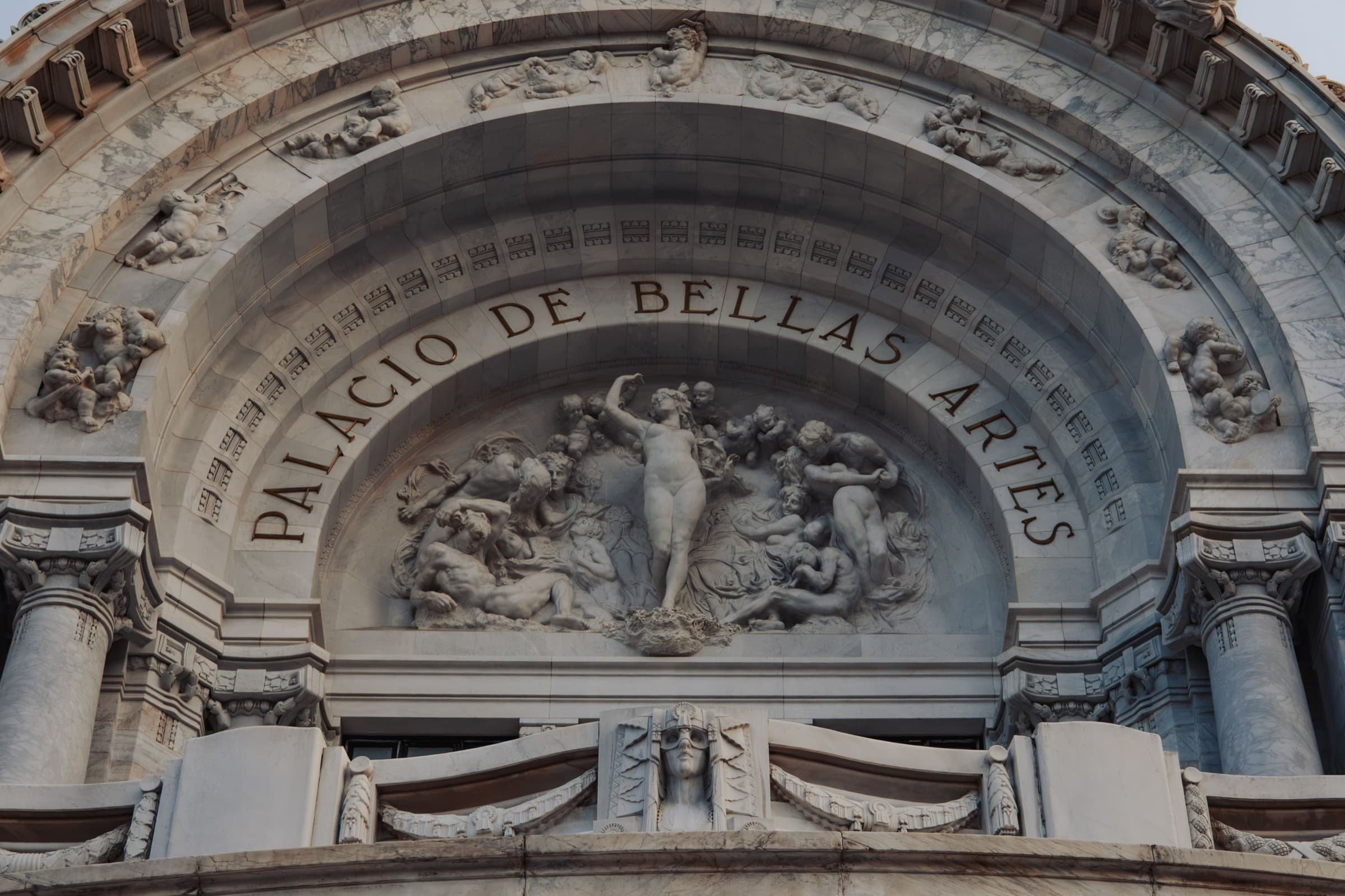
Walk the historic center east to west from a painted market and a Jesuit church to the SEP courtyards, Plaza Santo Domingo, Bellas Artes and the Alameda, ending at Rivera's Dream of a Sunday Afternoon.
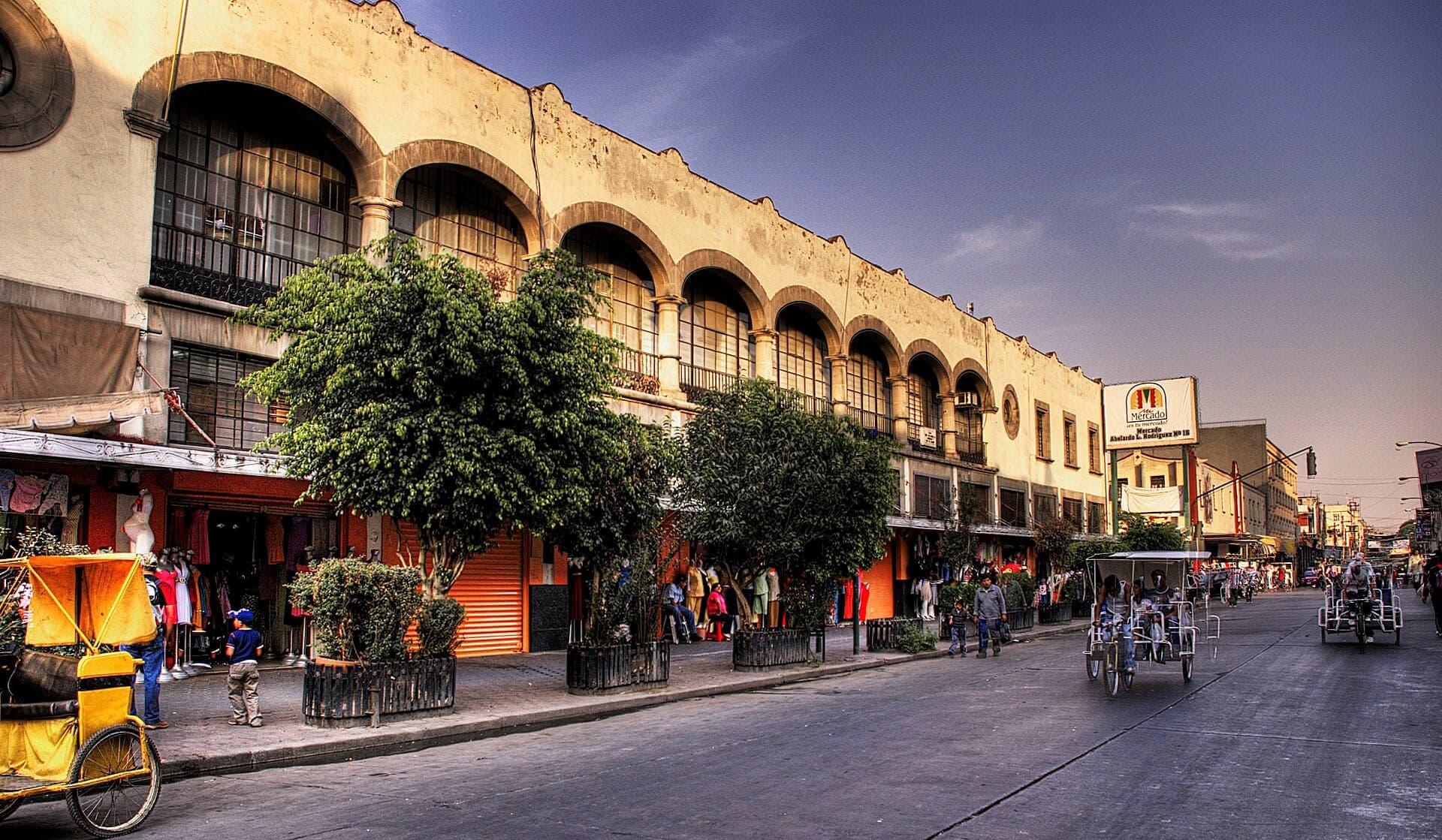
Start · Mercado Abelardo L. Rodríguez: A Market Painted by Rivera's Students
DirectionsStops
- 1
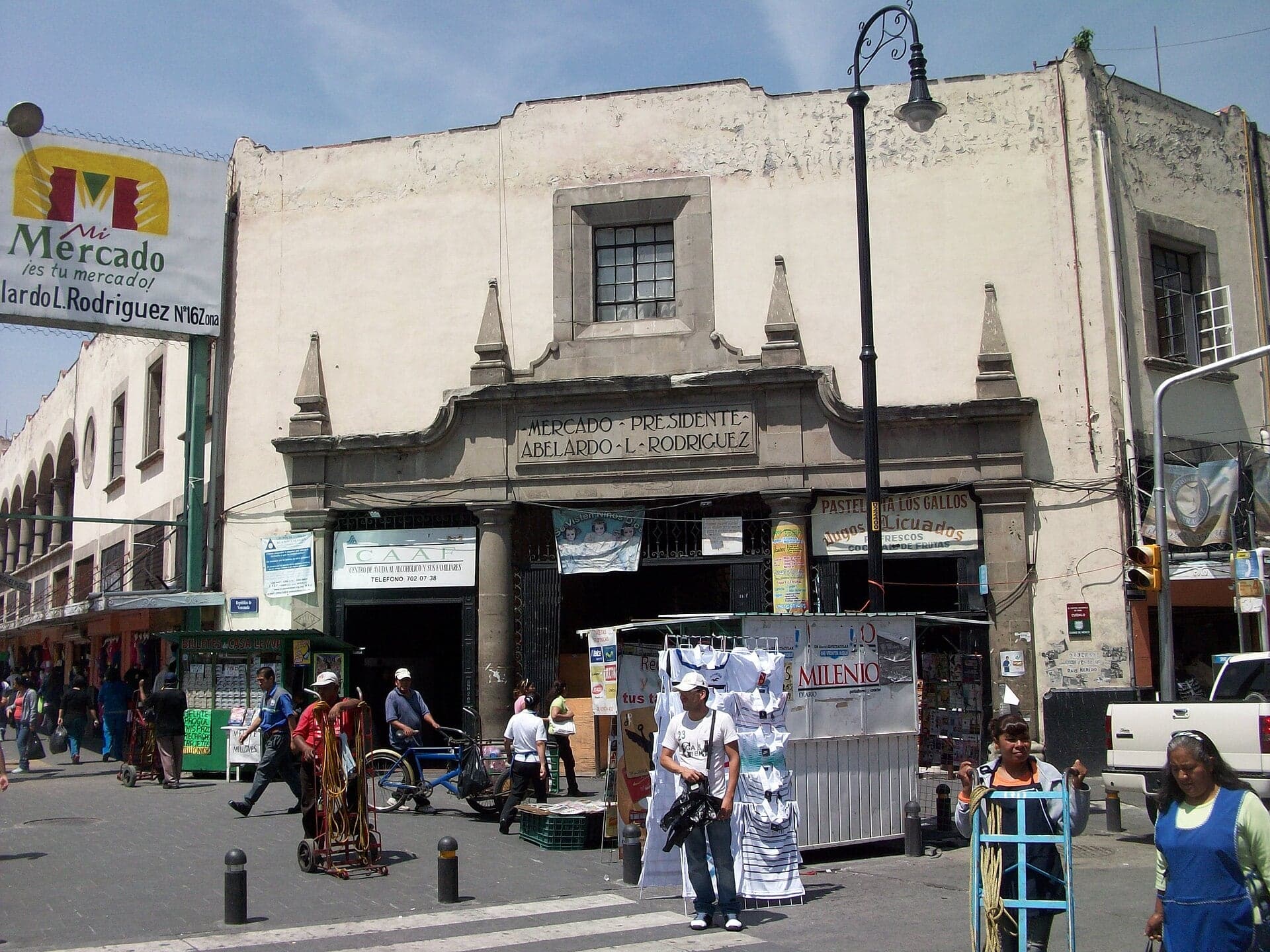
Mercado Abelardo L. Rodríguez: A Market Painted by Rivera's Students
A working market whose corridors Rivera's students painted between 1934 and 1937. Free to enter; the murals are inside, some of them faded.
- 2
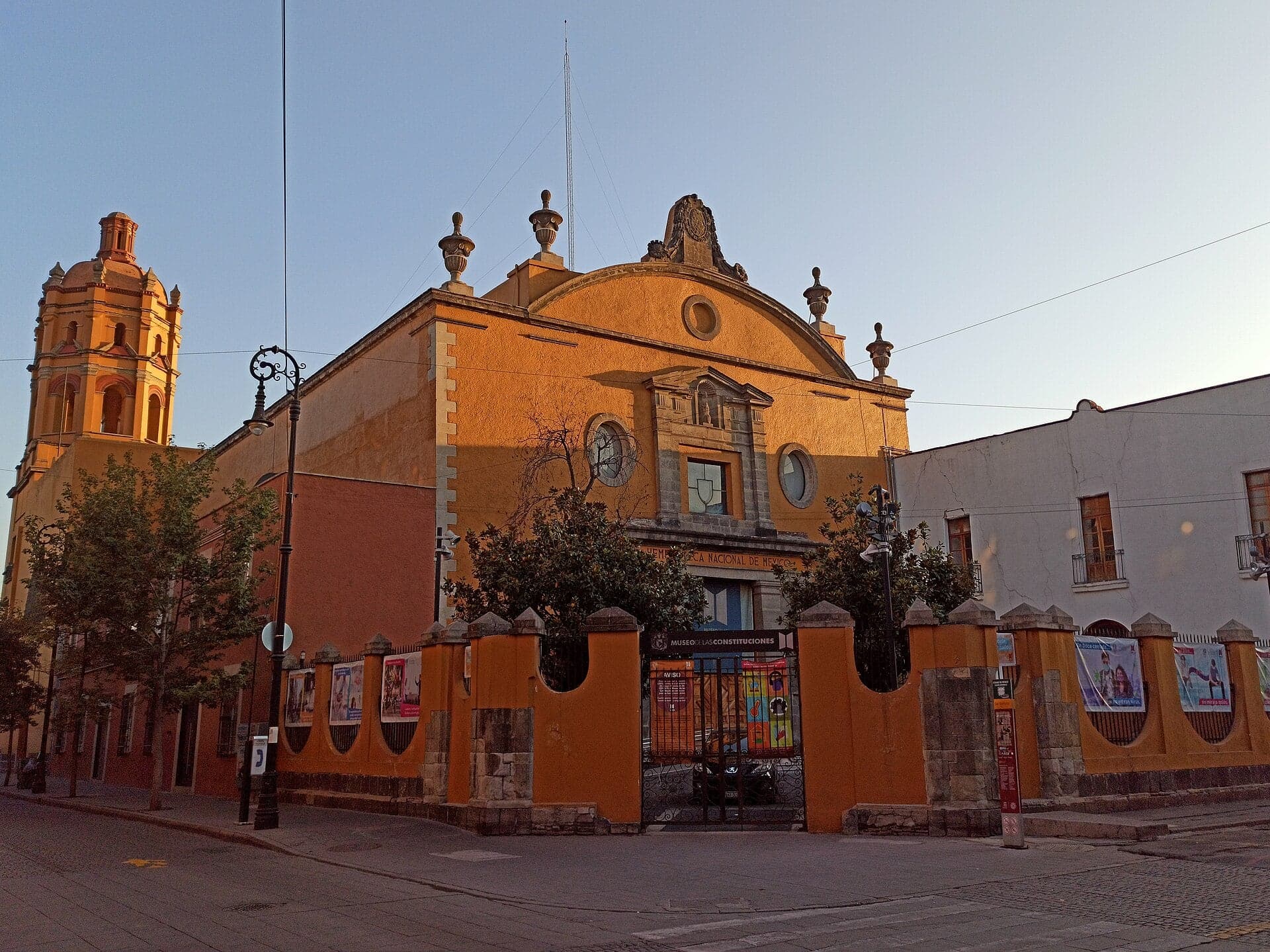
San Pedro y San Pablo: The Tree of Life in a Jesuit Church
A Jesuit church of 1603 where the constitution of 1824 was written. Inside is Montenegro's Tree of Life, often called the first mural of the movement.
- 3
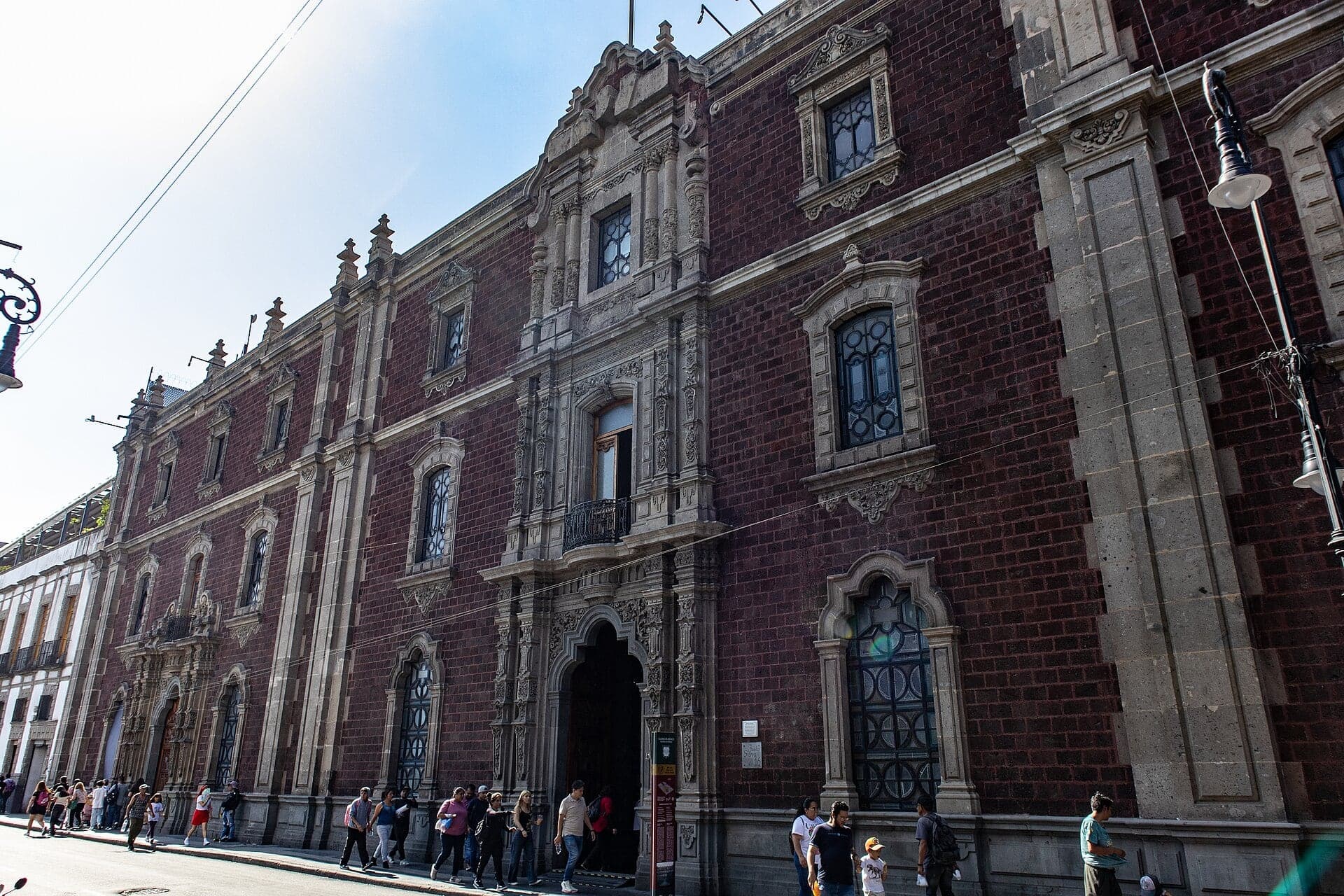
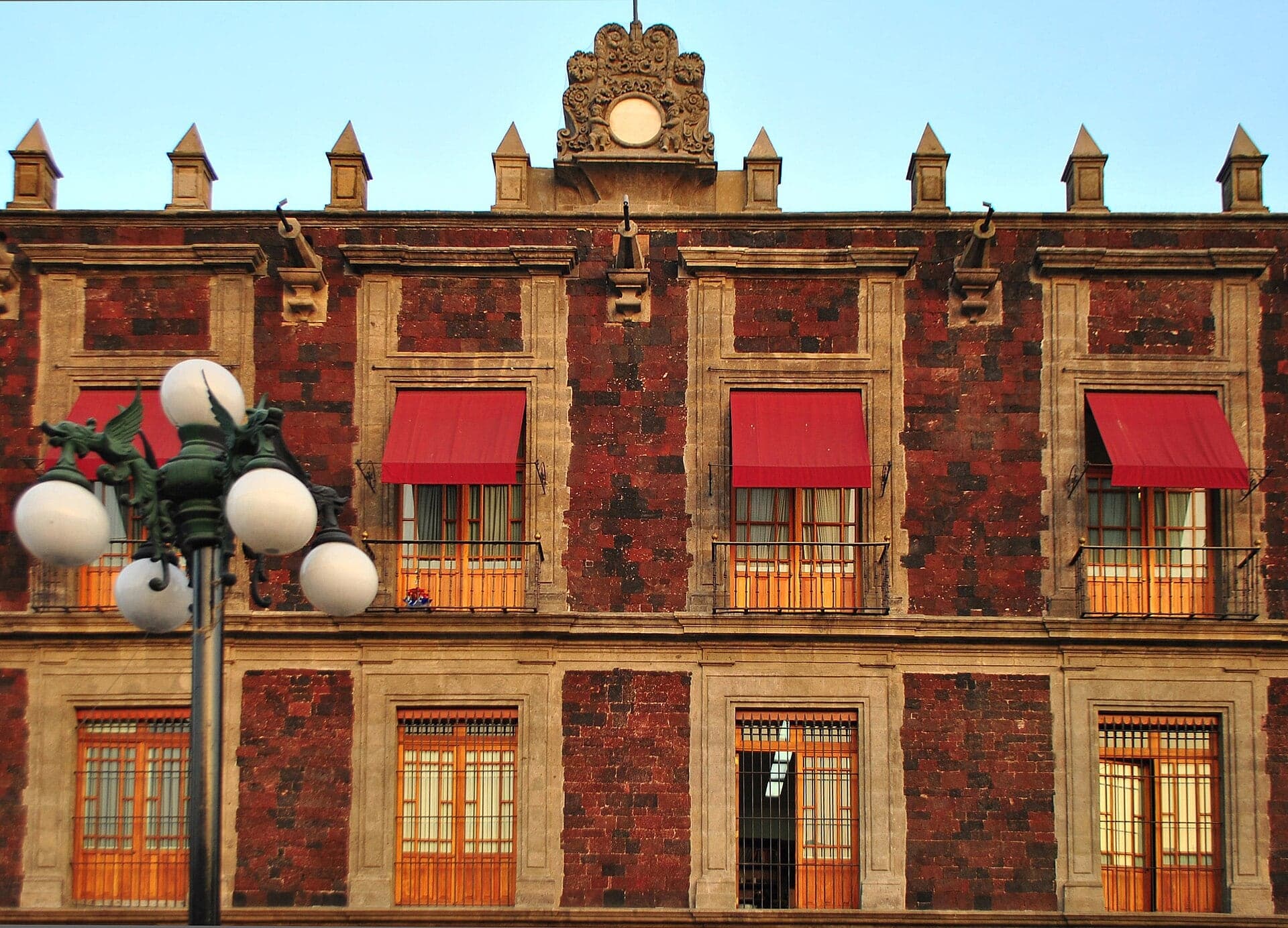
Antiguo Colegio de San Ildefonso: Creation and The Trench
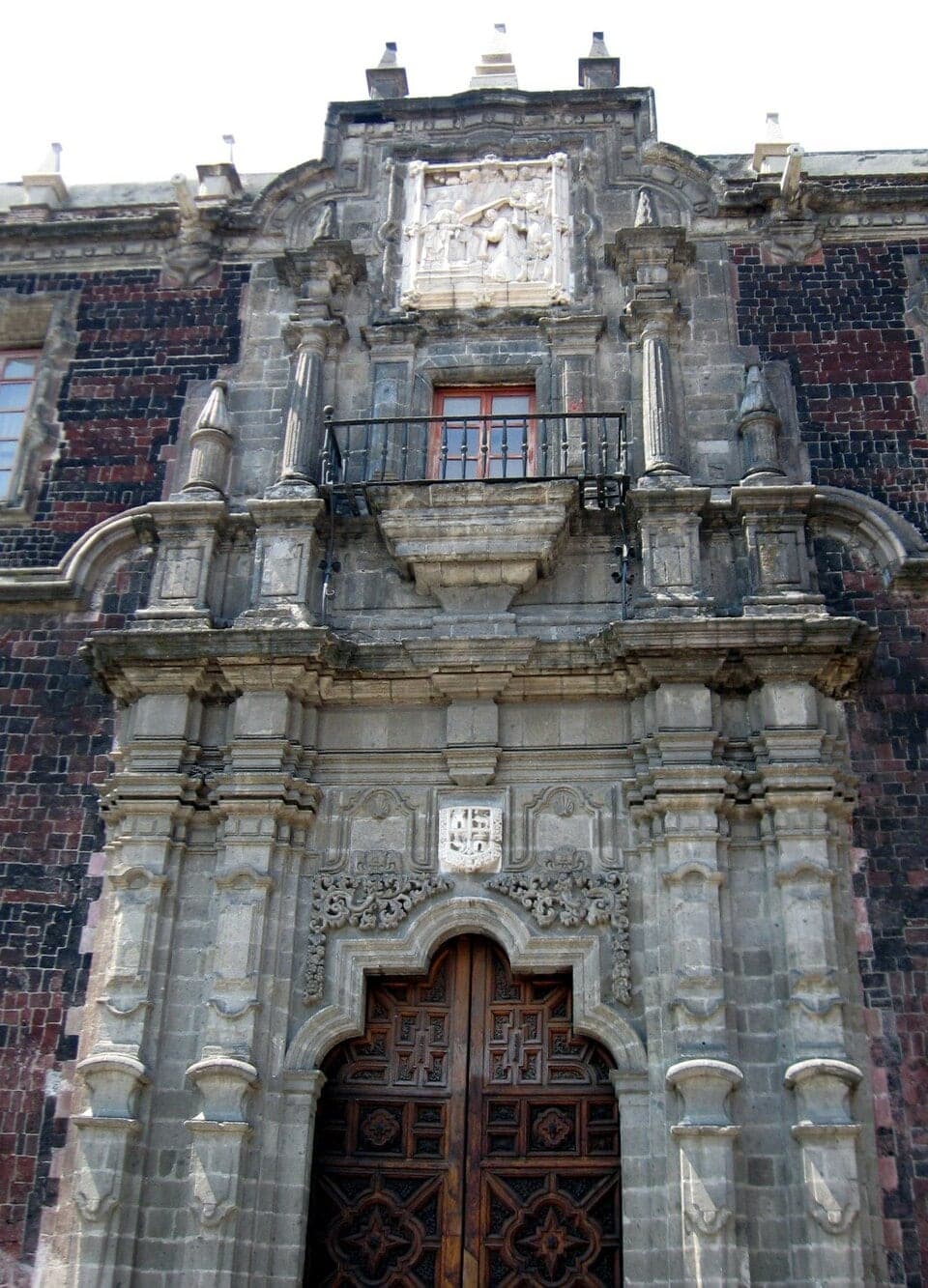
A Jesuit college of 1583 rebuilt in red volcanic stone. Rivera's Creation and Orozco's first big walls are inside, painted between 1922 and 1926.
- 4
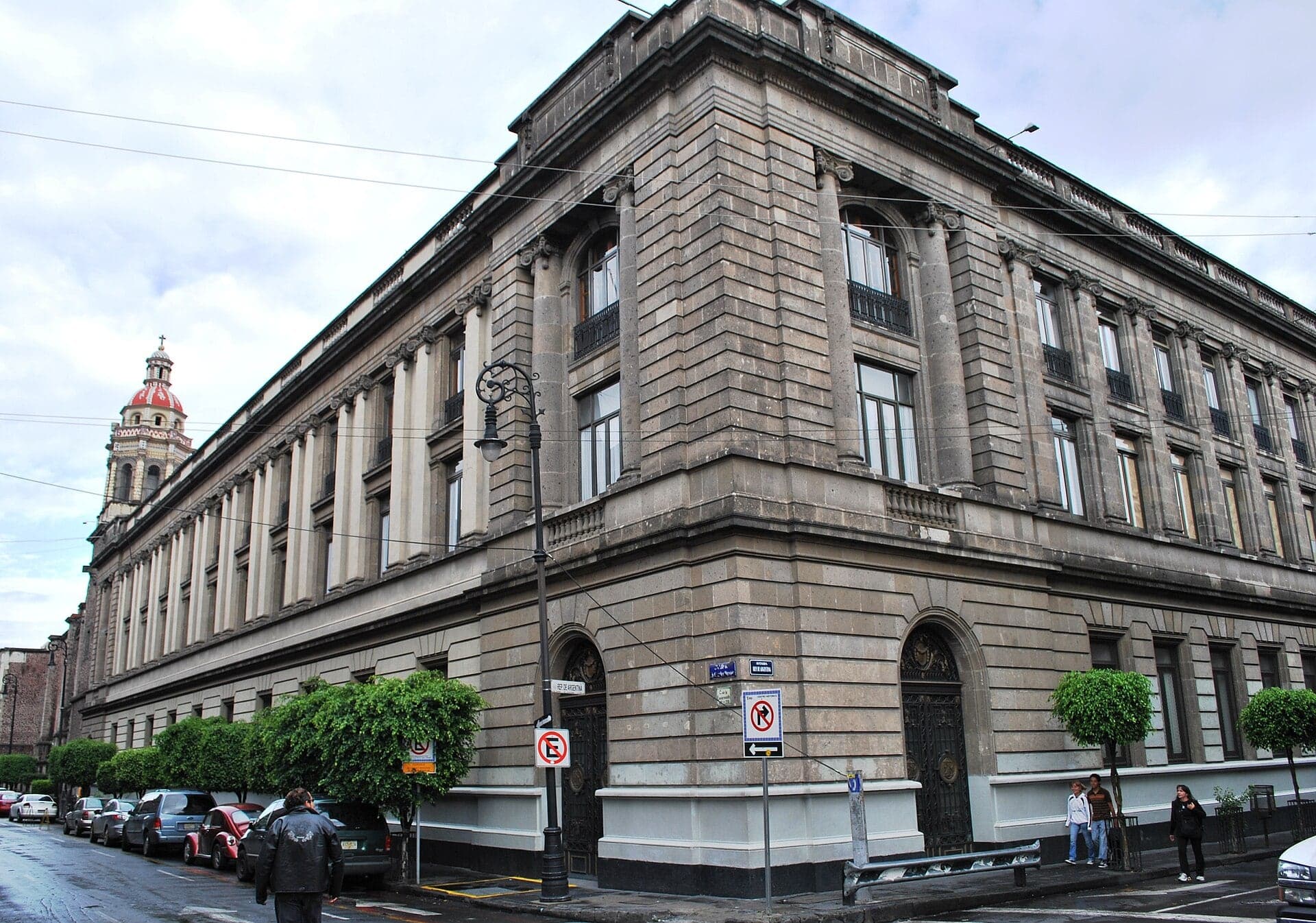
Secretaría de Educación Pública: Rivera's Book of Courtyards
The ministry where Rivera painted two courtyards between 1923 and 1928. Vasconcelos ran it from here; free every day except Tuesday.
- 5
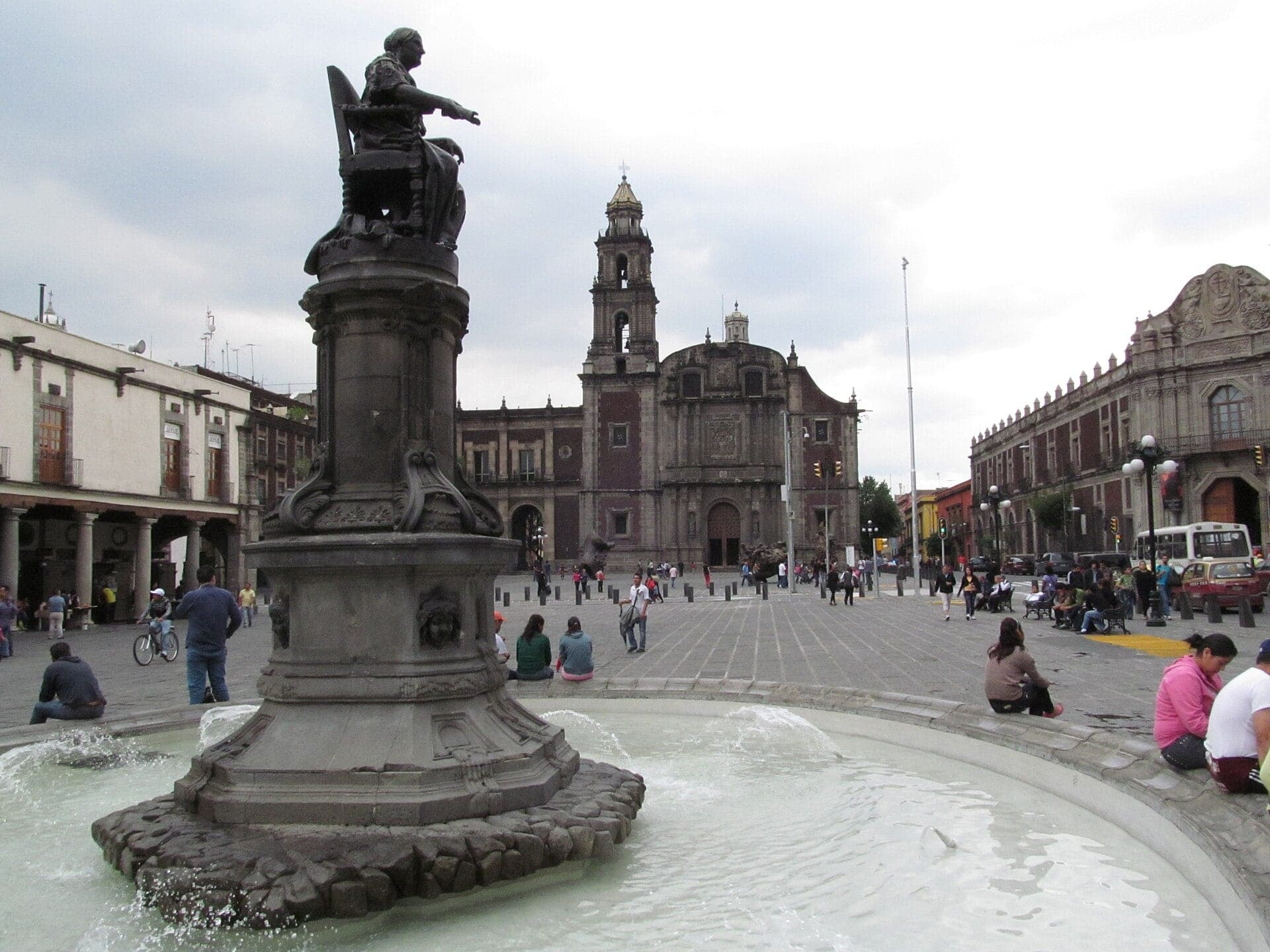
Plaza Santo Domingo: Who Controls the Story
A colonial square where the Inquisition once read out its sentences. Its palace of the 1730s still stands on the corner.
- 6
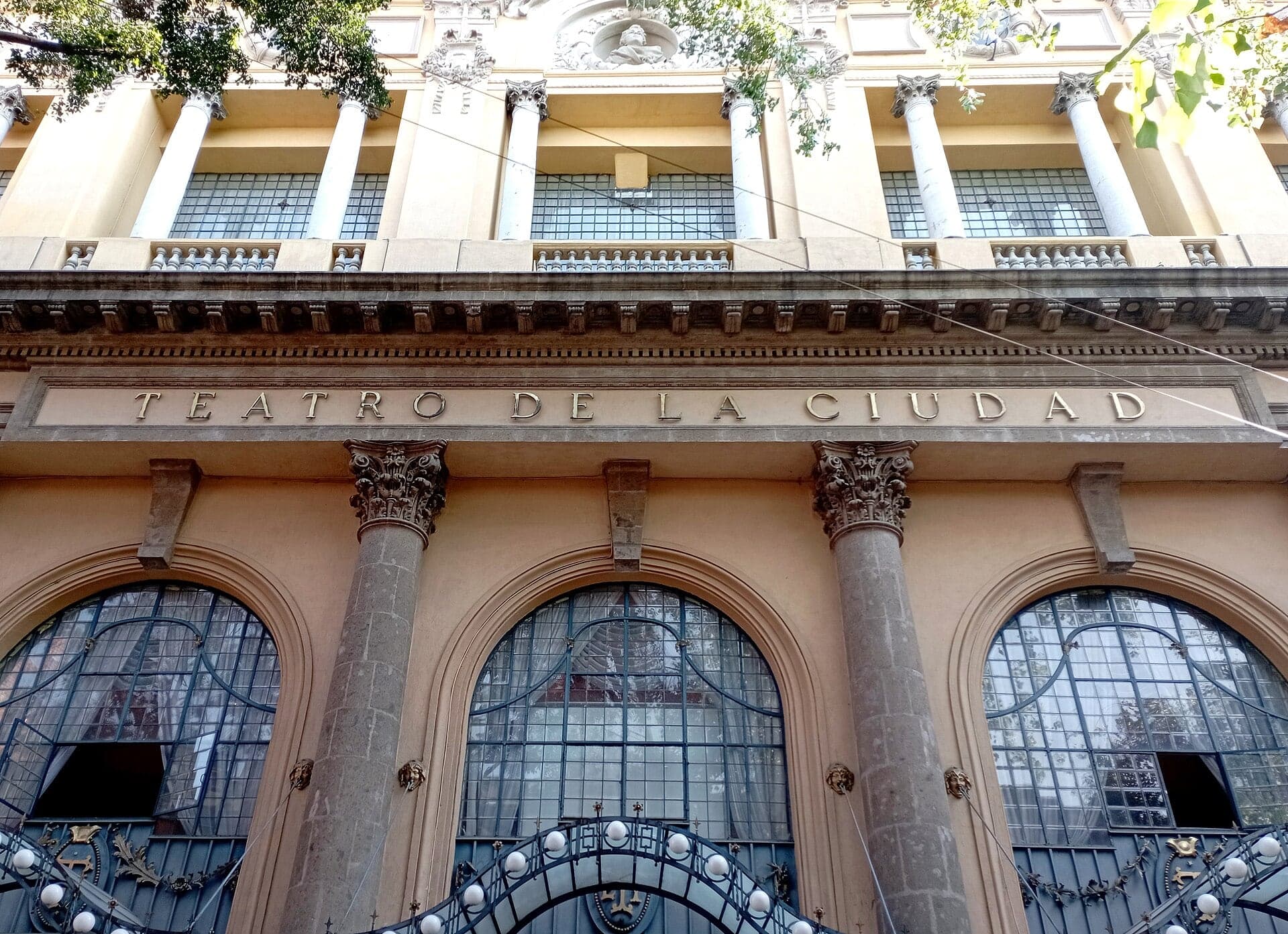
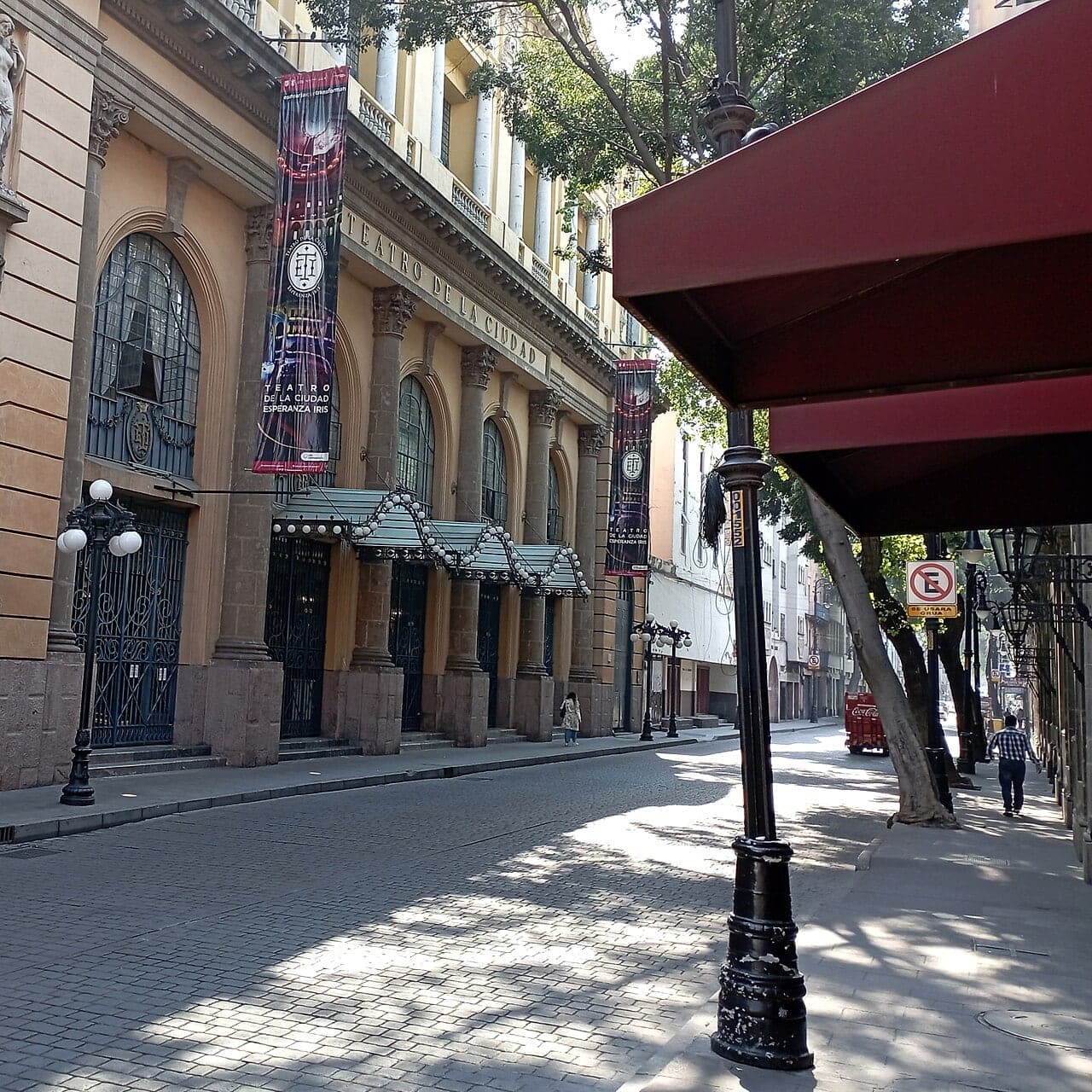
Donceles: An Operetta Star's Theater
A theater opened in 1918 by the operetta star Esperanza Iris. Nearby is the parliament Porfirio Díaz opened in 1911.
- 7
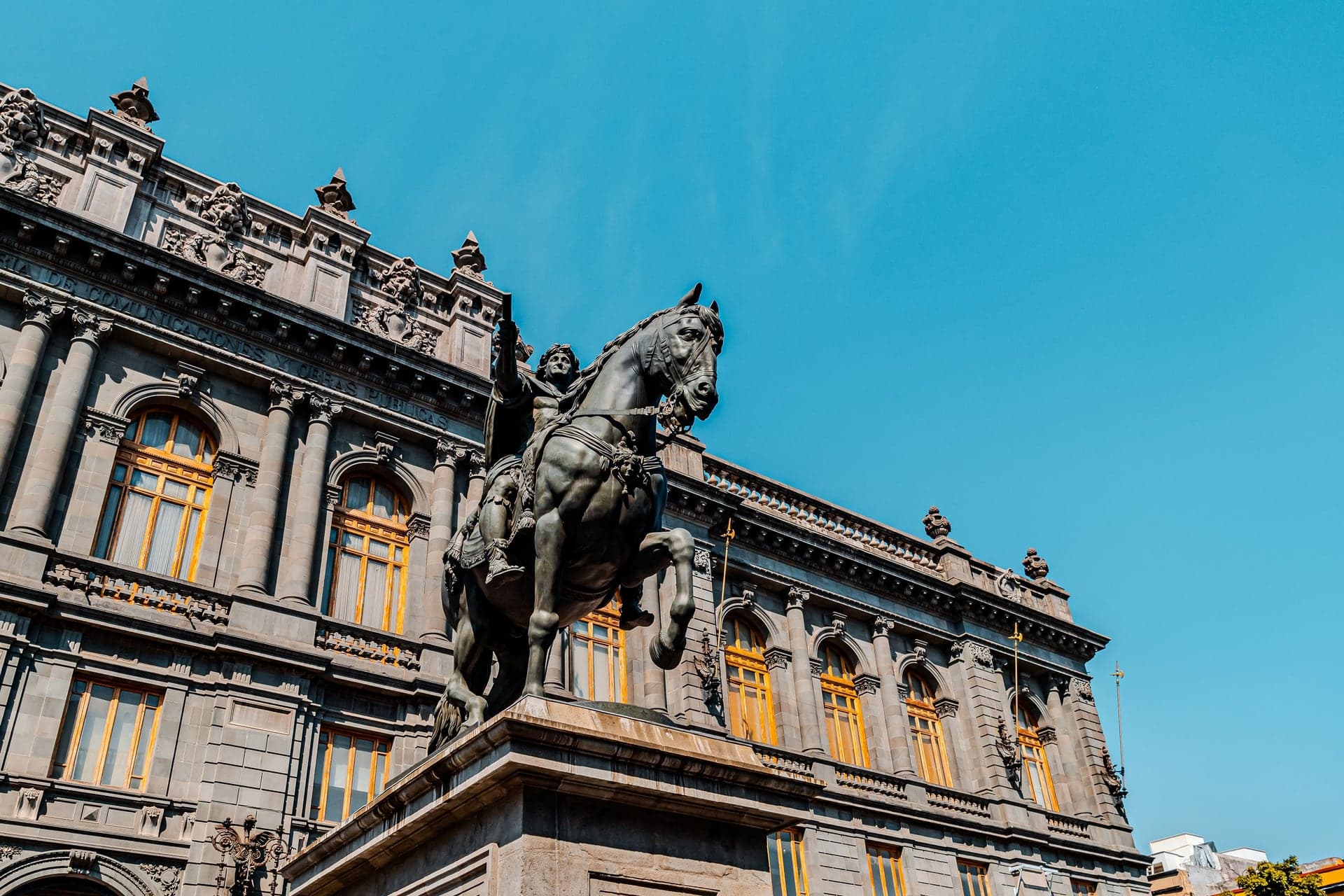
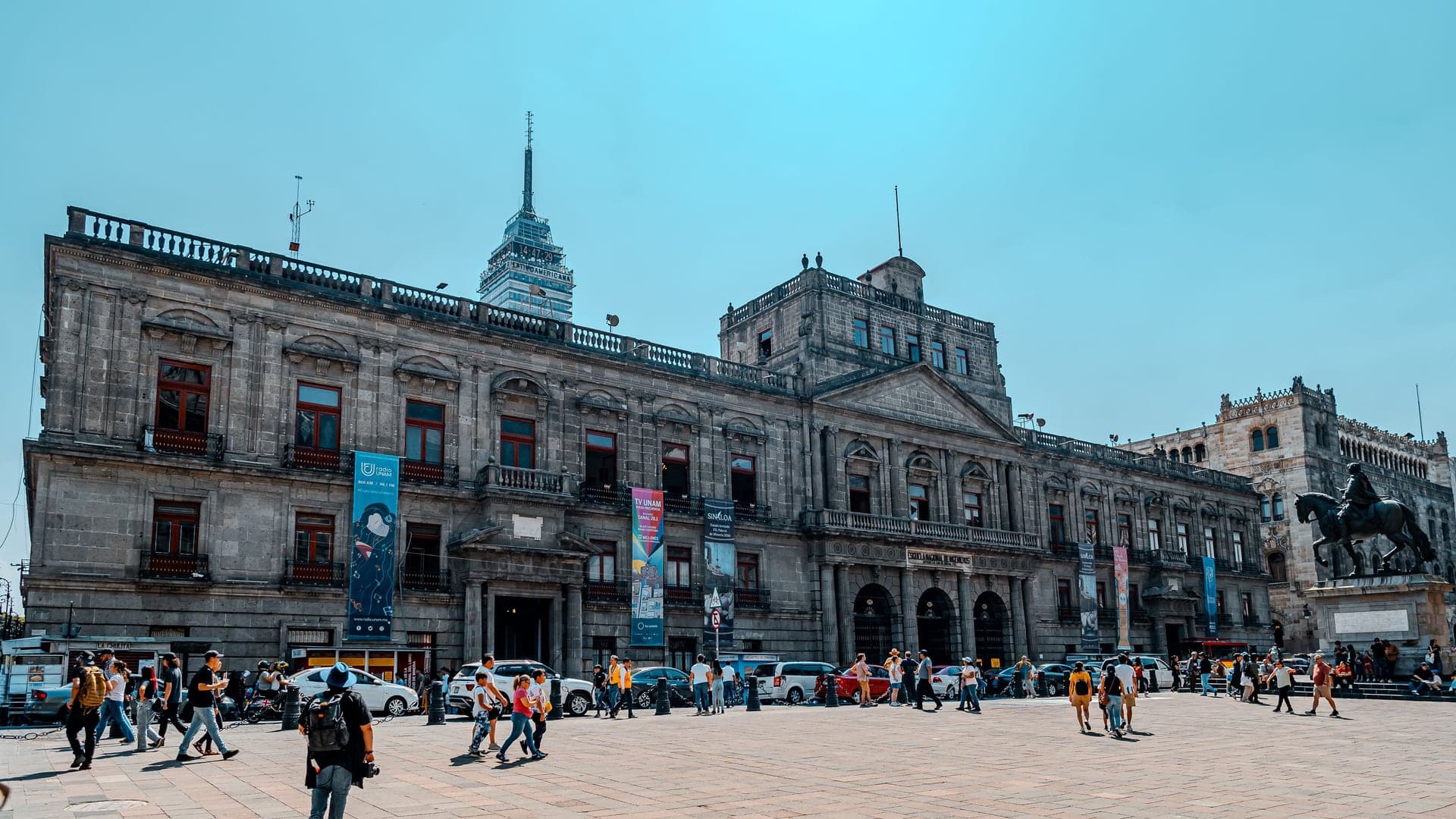
Plaza Manuel Tolsá: Three Ideas of a Capital
A plaza with a Spanish king on horseback, a colonial school of mines and the palace that became MUNAL. Three ideas of what the capital should look like.
- 8
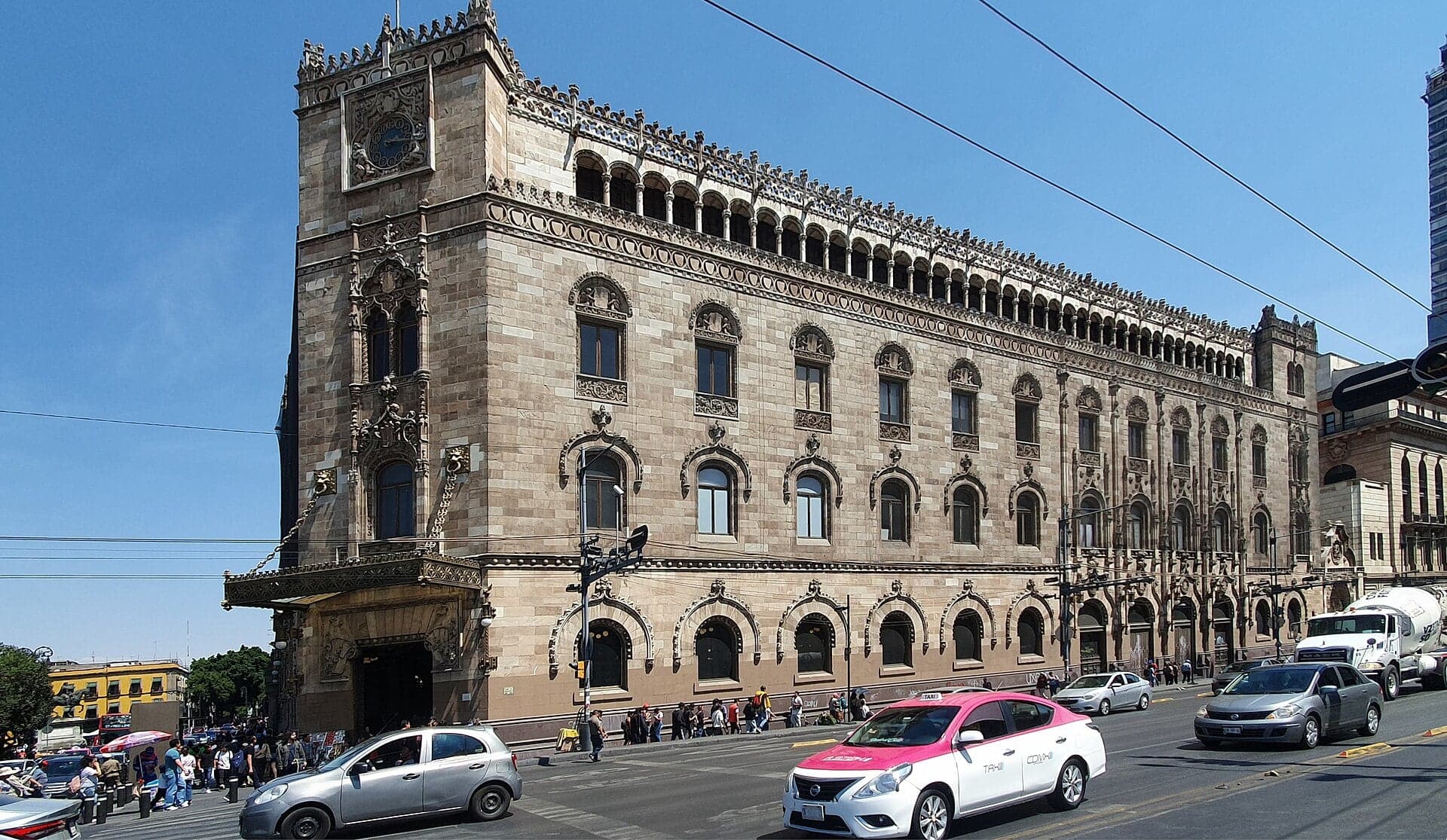
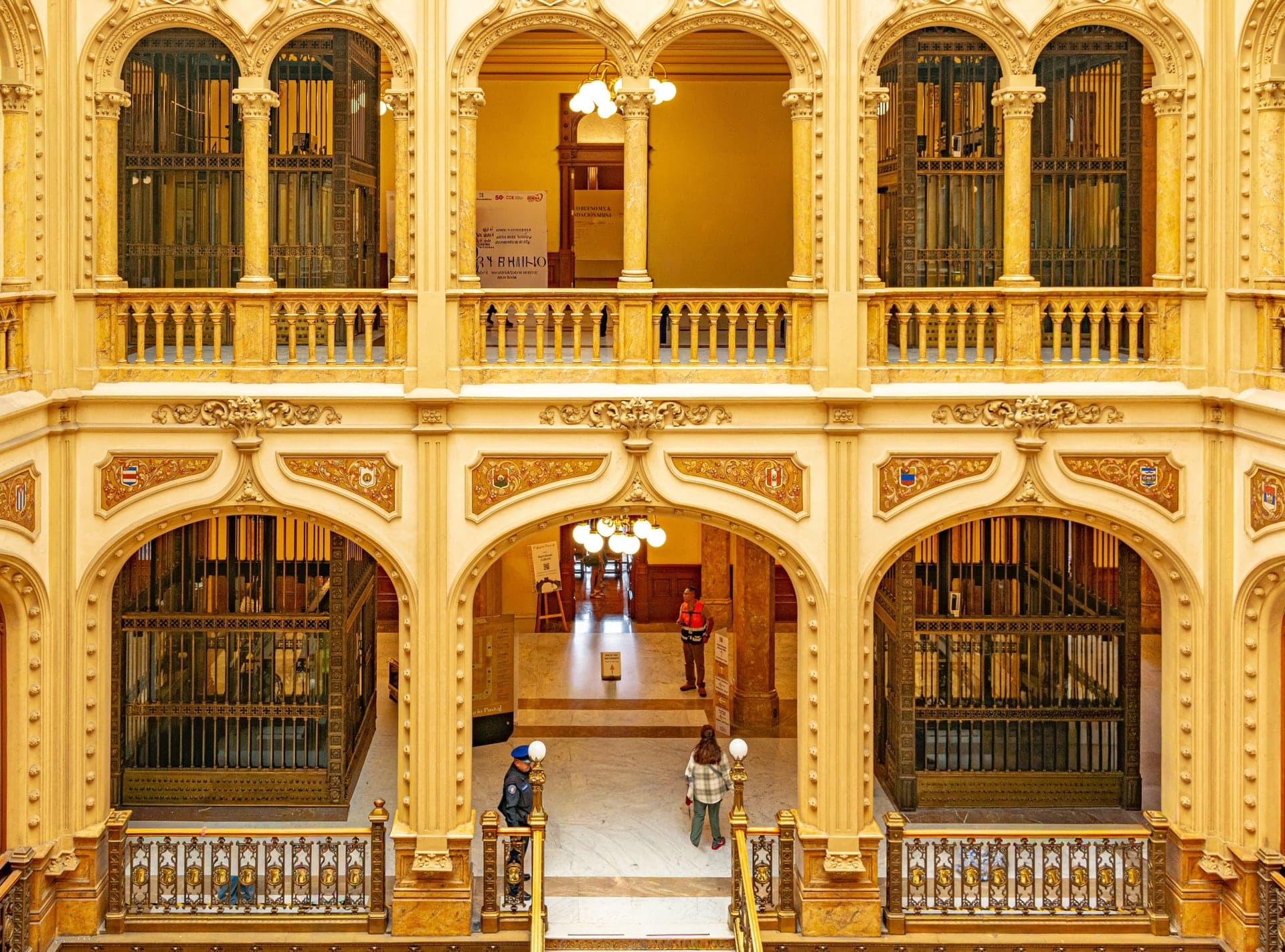
Palacio Postal: Europe's Craft in a Mexican Post Office
Adamo Boari's post office of 1907 still sells stamps under Florentine ironwork. Its stone and marble are Mexican.
- 9
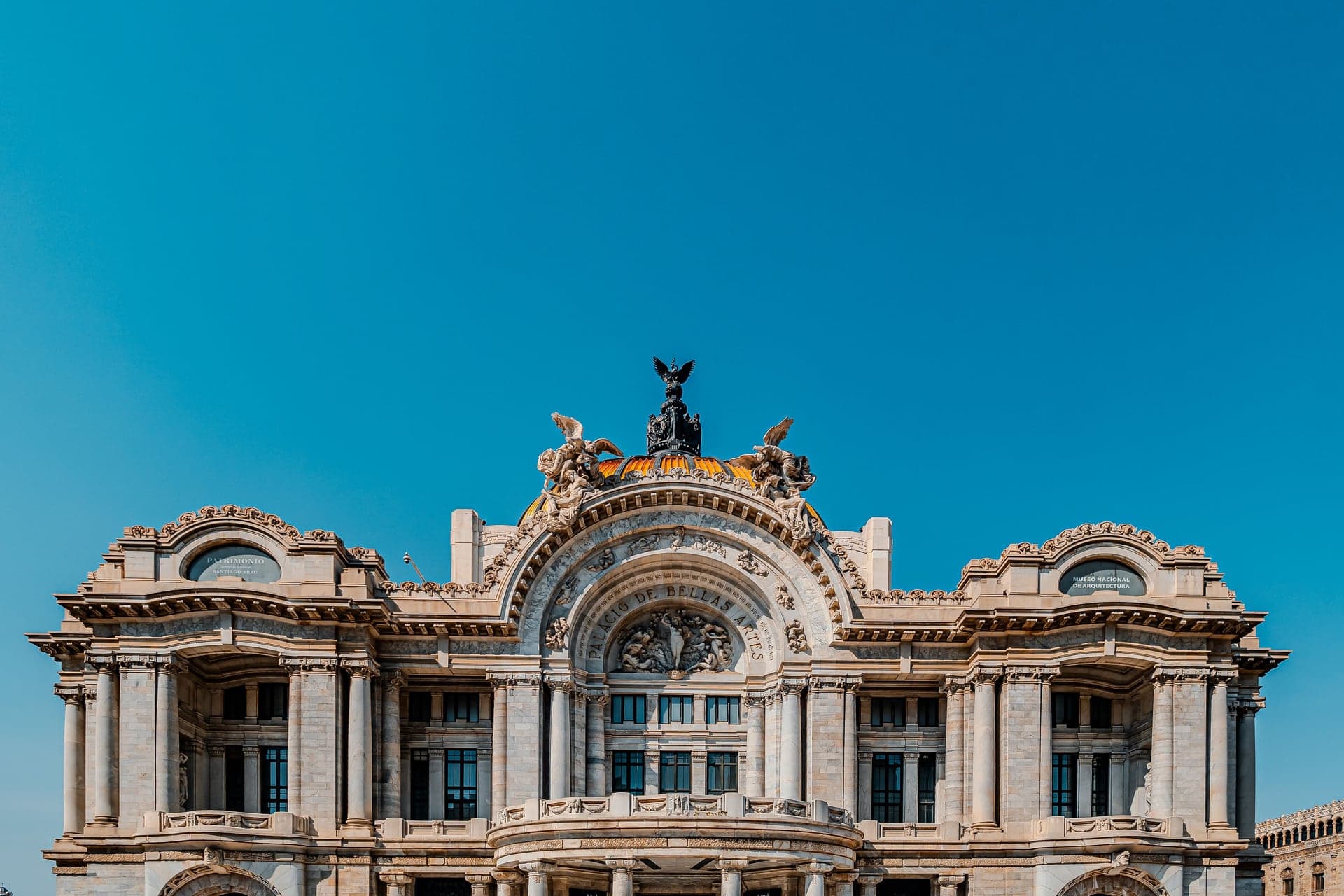
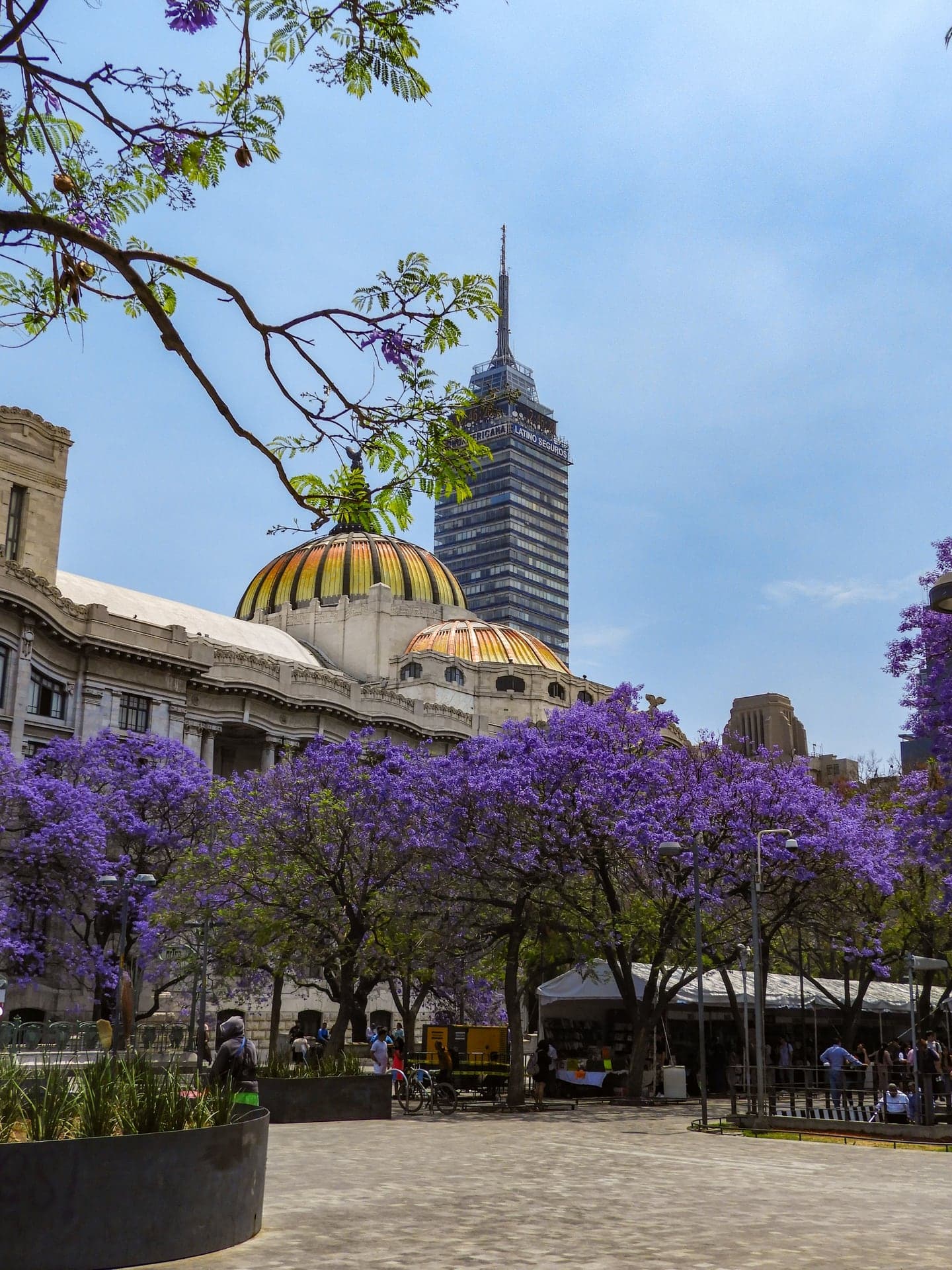
Palacio de Bellas Artes: Marble Outside, Murals Upstairs
A marble palace begun for Porfirio Díaz and opened in 1934. Seventeen murals by seven Mexican painters hang upstairs.
- 10
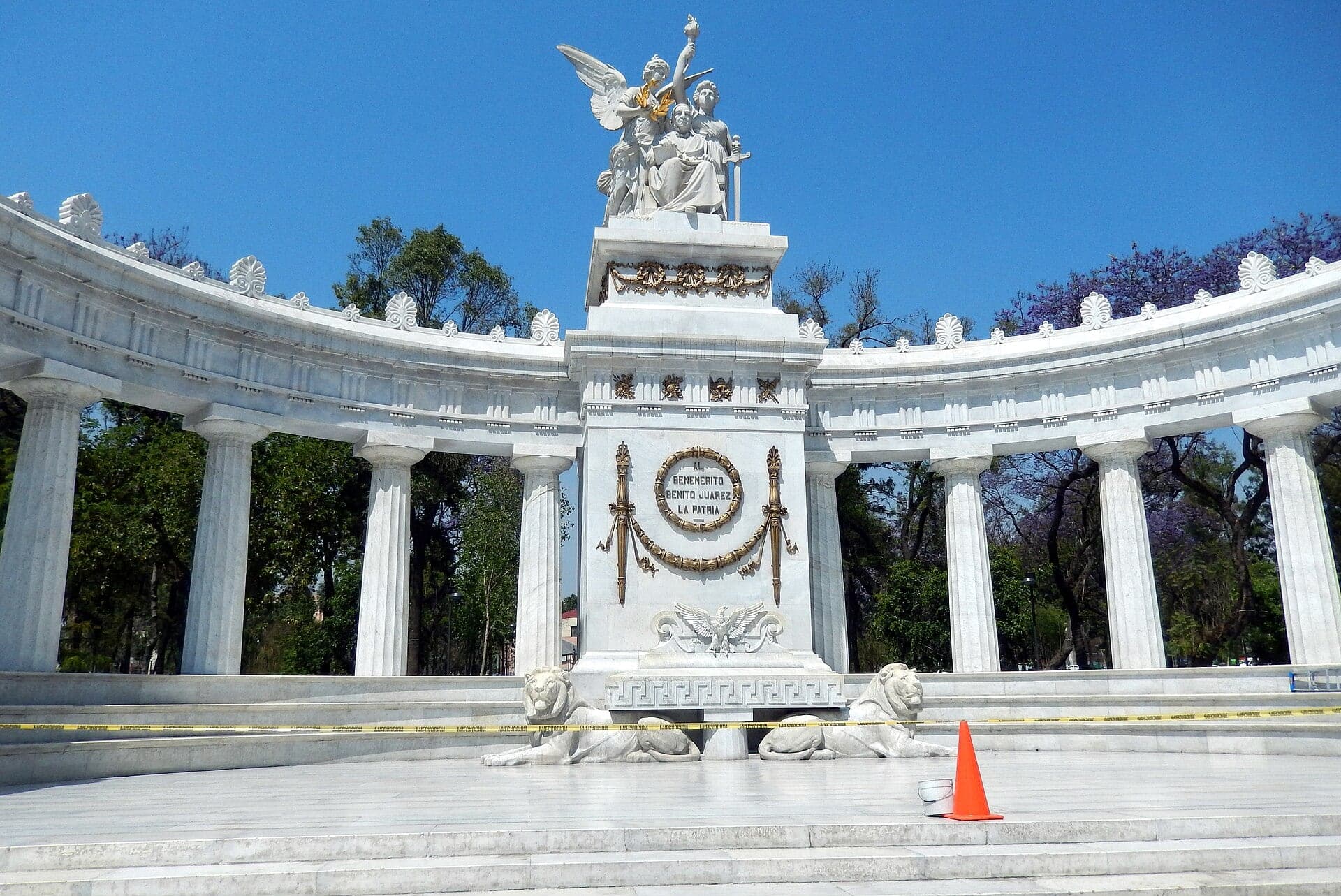
Alameda Central: The Park in the Painting
A public park opened in 1592 and named for its poplars. A viceroy opened it, and its people fill the mural at the next stop.
- 11
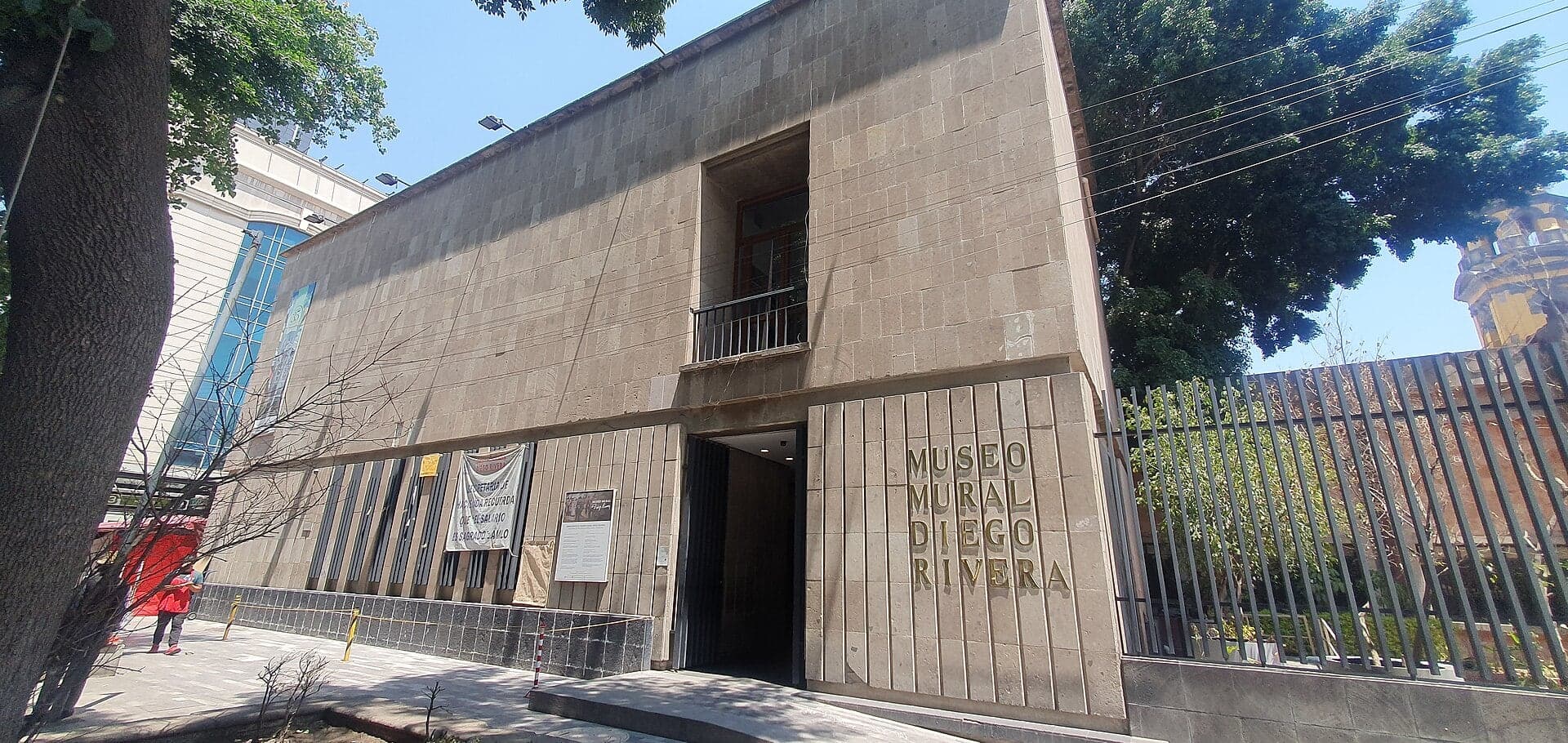
Museo Mural Diego Rivera: Dream of a Sunday Afternoon
A museum built around one fresco of a Sunday in the Alameda. Rivera painted it in 1947; it was defaced, screened, revised and saved after the 1985 earthquakes.
Details
Best Time to Visit
Wednesday to Sunday, starting at the market around 10 am, so you reach San Ildefonso after it opens at 11:00. Every museum on the walk is open Wednesday to Sunday. On Mondays only the SEP courtyards, the market and the post office hall are open; on Tuesdays the SEP and the Museo de las Constituciones are closed. On Sundays San Ildefonso, the Bellas Artes museum and the Museo Mural are free for everyone (MUNAL only for Mexicans and residents), and the Alameda is at its busiest. Checked 15 October 2026.
Pro Tips
- •To reach stop 1, take Metro Line 2 to Zócalo/Tenochtitlan (Allende, one stop west on Line 2, if Zócalo is closed for an event) and walk about 650 m north up República de Argentina and east along República de Venezuela; the Metrobús stop República de Argentina is also close.
- •Going inside every building would fill a day: the SEP alone deserves an hour. Pick two or three interiors, and see the rest from the street.
- •The SEP courtyards (Museo Vivo del Muralismo) are free, Wednesday to Monday 10:00 to 18:00, closed Tuesday and national holidays, entrance at República de Argentina 28. Checked 15 October 2026.
- •San Ildefonso is 50 pesos, Tuesday to Sunday 11:00 to 18:00 (ticket office closes 17:30), free on Sundays; guided visits at 11:30, 13:30 and 16:00, subject to change. Checked 15 October 2026.
- •In the Abelardo L. Rodríguez market, the best-known murals, by Grace and Marion Greenwood, are at the Rodríguez Puebla entrance and up its stair; Isamu Noguchi's cement relief is upstairs in the community room. Some murals are behind stalls: ask the stallholders.
- •The Palacio Postal is a working post office, so you can post a card from its hall. Its published hours disagree; go on a weekday daytime to be sure.
- •Photo permits: 30 pesos for the Bellas Artes museum, 5 pesos at the Museo Mural; MUNAL allows phone photos free. No flash anywhere. Checked 15 October 2026.
- •From the last stop, Metro Hidalgo (Lines 2 and 3) and Metro Juárez (Line 3) are both close.
Safety & Precautions
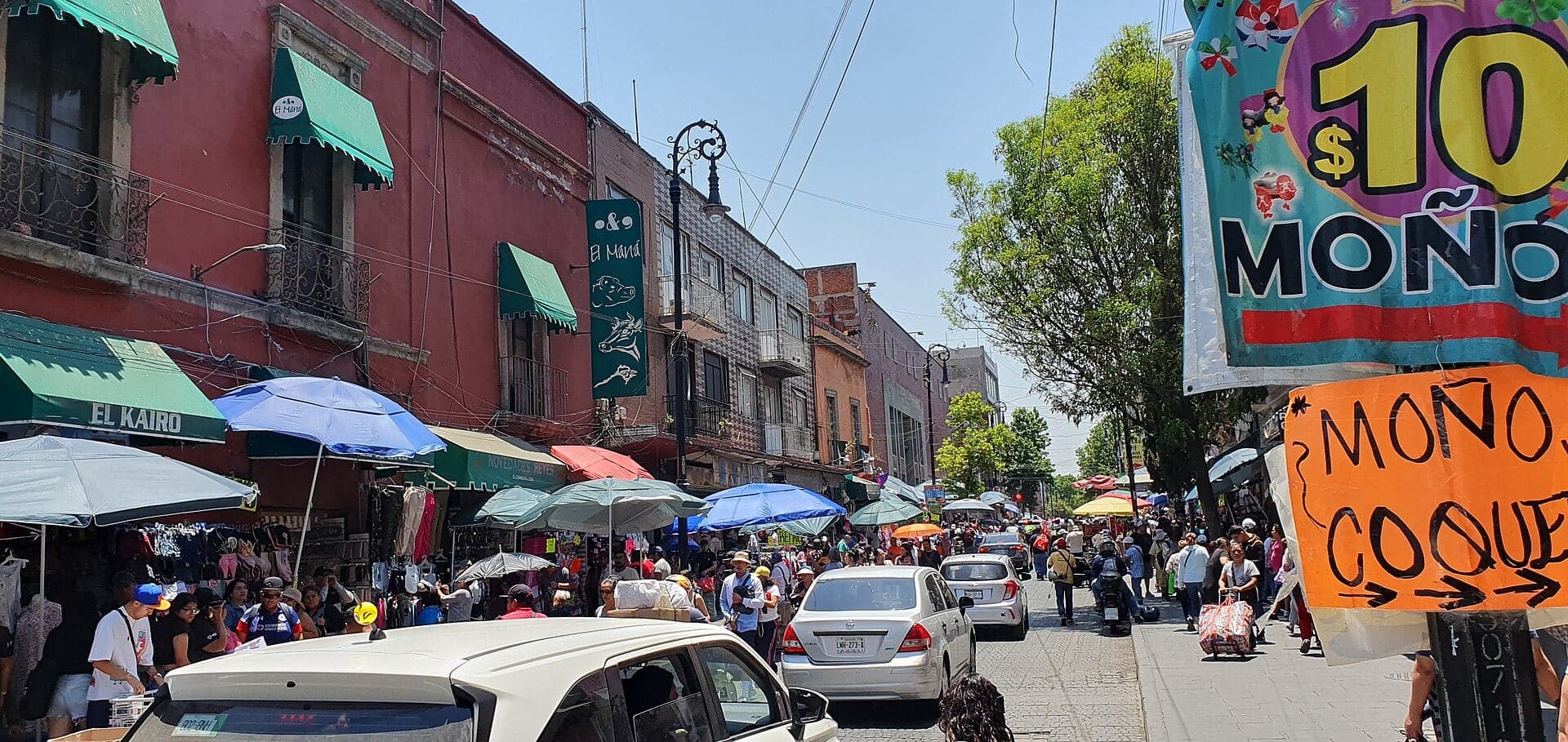
- •The streets round the Abelardo L. Rodríguez market (stops 1 and 2) are crowded market streets: walk them in daylight and keep your phone and wallet out of reach.
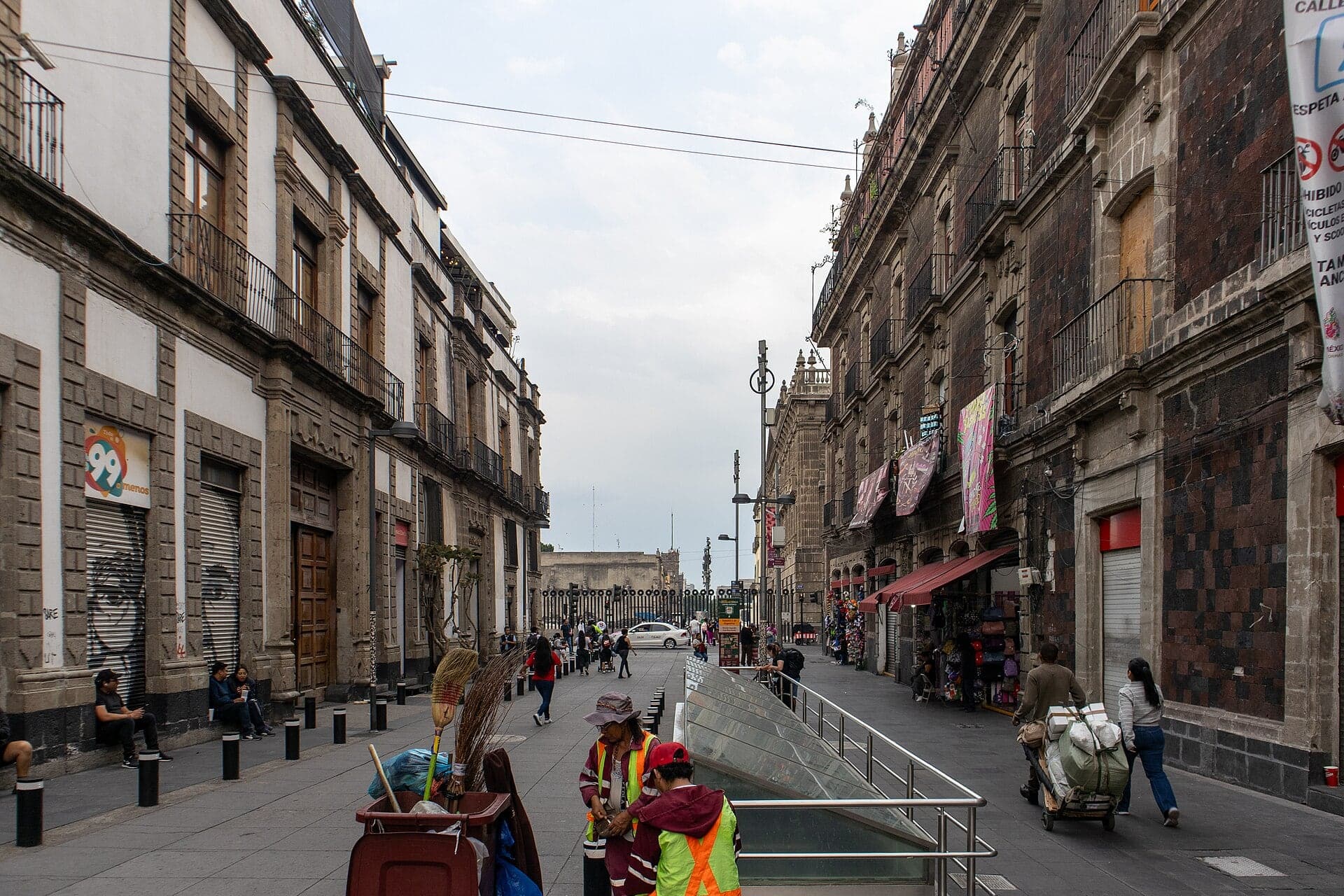
- •República de Cuba, República de Chile and Donceles carry traffic on narrow pavements, and their stone paving is uneven.
- •After stop 8 the route crosses Eje Central, six lanes plus a bus lane running against the traffic. Cross only with the walk signal.
- •The Bellas Artes esplanade and the Alameda are often crowded, and at times hold protest camps or events; keep valuables secure.
- •On Mondays the Constituciones, San Ildefonso, MUNAL, the Bellas Artes museum and the Museo Mural are closed; on Tuesdays the SEP and the Constituciones are. The street stops all work any day.
- •At the SEP, bags larger than 40 x 35 x 40 cm must go to the cloakroom, and flash and tripods are not allowed.
- •Mexico City is about 2,240 m above sea level. On your first day, walk slowly and drink water.
Travel advisory: Exercise Increased Caution (Level 2).
Gallery
Read the walk
The full story of Diego Rivera Murals: The Revolution on the Walls, in words. Prefer to listen? Play it narrated, from home or on location.
Introduction
Mexico City, the capital of Mexico, keeps some of its most famous paintings on the walls of public buildings. In nineteen twenty-one, after ten years of revolution, the new government made José Vasconcelos its minister of public education. He wanted to teach the country through images on public walls, and he hired painters to make them. On the ministry's books, they were decorators.
Three people come back along the way: Vasconcelos, the minister who handed out the walls; José Clemente Orozco, whose walls ask what the fighting cost; and Diego Rivera, whose dream of a Sunday afternoon in the park waits at the end.
The walk is eleven stops, about two point eight kilometers, a little under two miles, and takes about an hour and three quarters, longer if you go inside. It runs east to west across the historic center, from a market painted in the nineteen thirties, back to some of the first walls of all, then on to the old park Rivera painted. One question travels with you: who decides what goes on a public wall?
The route itself is worth watching: colonial red and gray stone, then the marble and iron of the years before the Revolution, then the trees of the Alameda. The city sits about two thousand two hundred and forty meters up, so on a first day it pays to go slowly.
The first stop is outside the Abelardo Rodríguez market.
1. Mercado Abelardo L. Rodríguez: A Market Painted by Rivera's Students
Welcome to the Abelardo Rodríguez market, and to the first stop on this walk. Stop on the pavement beside the market. It is a working market and it is free; the murals are inside, along its corridors and up its stairs, and the details are on this stop's card.
This walk is about painted walls, and it begins with some of the youngest. Between nineteen thirty-four and nineteen thirty-seven, a group of young artists painted the walls of this market. Many of them were students of Diego Rivera, and their sketches needed his approval. Two of them were American sisters, Marion and Grace Greenwood. Their subjects were food, work, miners, industry and, as the decade darkened, the rise of fascism.
The market itself was built as a model for the city's public markets, with a nursery, a library and a theater in the same block, and it carries the name of the president of the day, Abelardo Rodríguez. Keep that name in mind. He comes back at the marble palace near the end of the walk.
Now look at the market from where you stand. From the street, nothing tells you what is painted inside. That will happen again on this walk.
If you go in, several murals are faded or damaged, some are behind stalls, and the best-known pair is by the entrance on Rodríguez Puebla street. Ask the stallholders; they usually let you through.
Why would a government put murals in a market, where people come to buy tomatoes? Hold that thought. These walls came late in the story. One of the places where it began, about a dozen years earlier, is just along the street.
Follow the route to the old church on Calle del Carmen.
2. San Pedro y San Pablo: The Tree of Life in a Jesuit Church
Walk on along Calle del Carmen and stop by the front of the old church of San Pedro y San Pablo. Inside is the Museo de las Constituciones, run by the national university: free, open Wednesday to Sunday, and closed on Mondays and Tuesdays; the details are on this stop's card.
Look at the front. It is plain and classical, with blind oval windows and niches that stand empty.
The Jesuits finished this church in sixteen oh three; the museum says it was the first building in New Spain with masonry domes. In eighteen twenty-two, Mexico's first constituent congress met inside, and the constitution of eighteen twenty-four was written and proclaimed here.
A century later the walls changed purpose again. From nineteen twenty-one, José Vasconcelos, the new minister of education, had the old church remade as a free hall for open debate, and he set painters to decorate it. In the apse, where the main altarpiece once stood, Roberto Montenegro painted a Tree of Life, about fifteen meters by twelve, with armadillos, jaguars, monkeys and corn among its branches. Vasconcelos gave it a motto from Goethe: action overcomes destiny. Painted in nineteen twenty-one and twenty-two, it is often called the first mural of the movement, though historians still argue the point.
Not everyone admired it: critics at the time called the hall a museum of mediocrity.
Then there is the knight. In the mural a knight in armor stands between two women. He did not begin that way. In the first version he was a nude Saint Sebastian, and then he was painted over in armor. Who decided on the change, and why? Keep the question that sits behind it: who decides what a public wall may show? It will come back.
Follow the route to a long front of red stone, on Justo Sierra.
3. Antiguo Colegio de San Ildefonso: Creation and The Trench
Walk on along Justo Sierra and stop by the long front of red stone. This is the Antiguo Colegio de San Ildefonso. Inside it costs fifty pesos, it is free on Sundays and closed on Mondays; the details are on this stop's card.
The Jesuits founded a college here in fifteen eighty-three. The great baroque building behind these walls was rebuilt in the first decades of the seventeen hundreds, its fronts faced in tezontle, the porous red volcanic stone of this city, framed in carved stone. Look at the stone in front of you. Then consider this: in the early twentieth century the college added a new wing, and its front was inspired by the old one. From the street, can you tell which century you are looking at?
From eighteen sixty-seven this was the National Preparatory School, and in the early nineteen twenties its walls were handed to painters. Diego Rivera came first, in the school's amphitheater, with a mural called Creation, painted in nineteen twenty-two and twenty-three in hot wax and gold leaf. A group of younger painters worked here in the same years.
Then, in nineteen twenty-three, José Clemente Orozco began on the walls of the main courtyard, all three floors of them, and kept at it until nineteen twenty-six. These were his first big walls. Listen to the names of his panels: The Trench. The Strike. The Destruction of the Old Order.
A government had just won a revolution, and it gave this painter walls to fill. Why would he call his panels The Trench and The Destruction of the Old Order? What was he counting that others were not? Hold on to that question of cost. It comes back at the next stop, and again near the end.
Follow the route to the Ministry of Public Education, the building Vasconcelos ran.
4. Secretaría de Educación Pública: Rivera's Book of Courtyards
Walk on along República de Argentina and stop by the entrance at number twenty-eight. This is the Secretaría de Educación Pública, Mexico's Ministry of Public Education, and still its headquarters. Its murals are free to see every day except Tuesdays and national holidays; the details are on this stop's card.
José Vasconcelos ran the ministry from here, and his old office has been open to visitors since twenty eighteen. And behind these fronts, a colonial convent, its church, an old customs house and a theater were joined into one, and ten artists painted more than three thousand square meters of their walls.
Most of it is Diego Rivera's. From nineteen twenty-three to nineteen twenty-eight he covered the corridors and stairs of two courtyards, more than two hundred panels by the Museum of Modern Art's count. He gave each courtyard a theme, and each floor a chapter.
In the Court of Labor, the ground floor is work: miners going down into the mine and coming out of it, and a miner being searched at the gate, posed like a man on a cross. There is a rural teacher too. The floors above move to the work of the mind, then to the arts and the nation's heroes.
In the Court of Fiestas, the ground floor is celebration, the Day of the Dead among it. Above are the coats of arms of the states, and at the top runs a long painted ballad of the Revolution.
The walls work like a book you walk through, at eye level, then up two more floors.
Think back to the question of cost at the old college. In the same years, a few blocks away, Rivera painted work, festivals and a country going to school. Is this an answer to Orozco's question, or a different question altogether?
Follow the route around the block, crossing at the lights, to Plaza Santo Domingo.
5. Plaza Santo Domingo: Who Controls the Story
Walk on along the south edge of Plaza Santo Domingo and stop there. Then turn to face the big church at its far end. The square is free and open at any hour. The church is Santo Domingo, and this square in front of it was laid out like a church atrium. Along one side runs a…
Full narration for this stop unlocks with the tour.
6. Donceles: An Operetta Star's Theater
Walk on along Donceles and stop by the front of the theater. This is the Teatro de la Ciudad Esperanza Iris, still a working theater, with tickets sold show by show. This is the city the painters grew up in. Look at the front: it borrows the calm, symmetrical language of…
Full narration for this stop unlocks with the tour.
7. Plaza Manuel Tolsá: Three Ideas of a Capital
Walk on into Plaza Manuel Tolsá and stop facing the bronze horseman. The ornate palace on the plaza is the National Museum of Art, known as the Munal. It is ticketed, ninety-five pesos, and closed on Mondays; on Sundays it is free only for Mexicans and residents. The details are…
Full narration for this stop unlocks with the tour.
8. Palacio Postal: Europe's Craft in a Mexican Post Office
Walk on along Tacuba and stop by the corner of the carved stone palace before the wide avenue. This is the Palacio Postal, the main post office, and it still works. Its hall is free to enter during post office hours; the details are on this stop's card. It was designed by the…
Full narration for this stop unlocks with the tour.
9. Palacio de Bellas Artes: Marble Outside, Murals Upstairs
Walk on round the esplanade and stop where you can take in the whole white marble front of the Palacio de Bellas Artes, the Palace of Fine Arts. Its lobby is free. The murals are upstairs, in its museum: ninety-five pesos, free for everyone on Sundays, and closed on Mondays. The…
Full narration for this stop unlocks with the tour.
10. Alameda Central: The Park in the Painting
Walk on through the Alameda and stop on the path beside the half circle of columns. This is the Alameda Central, a free public park, open at all hours. The viceroy Luis de Velasco opened it in fifteen ninety-two, and it takes its name from the poplars, álamos in Spanish,…
Full narration for this stop unlocks with the tour.
11. Museo Mural Diego Rivera: Dream of a Sunday Afternoon
Walk on to the door of the Museo Mural Diego Rivera, at the corner of Balderas. It is ticketed, forty-five pesos, free for everyone on Sundays and closed on Mondays; the details are on this stop's card. The mural can only be seen inside. This museum was built around one…
Full narration for this stop unlocks with the tour.
- This is a photo of a monument in Mexico, identified by ID — GAED, CC BY-SA 3.0 · source
- Mercado Abelardo Rodriguez — Eneas De Troya from Mexico City, México, CC BY 2.0 · source
- Museo de las Constituciones - Centro Histórico de la CDMX, México. — Juan Carlos Fonseca Mata, CC BY-SA 4.0 · source
- Sabado en Calle del Carmen - Mexico — Jbribeiro1, CC BY-SA 4.0 · source
- Facade of the Old College of San Ildefonso, Historic Center of Mexico City. — ProtoplasmaKid, CC BY 4.0 · source
- Secretariat of Public Education (Mexico) Headquarters building as viewed from corner of Rep Argentina and Luis Gonzalez Obregon Streets. Old — Thelmadatter, CC BY-SA 3.0 · source
- Vista de la Calle República de Argentina hacia el sur, Centro Histórico de la Ciudad de México — ProtoplasmaKid, CC BY 4.0 · source
- This is a photo of a monument in Mexico, identified by ID — Omarem, CC BY-SA 3.0 · source
- This is a photo of a monument in Mexico, identified by ID — Victor Hugo Solano López, CC BY-SA 3.0 · source
- Teatro de la Ciudad Esperanza Iris, Ciudad de México. — Juan Carlos Fonseca Mata, CC BY-SA 4.0 · source
- Teatro de la Ciudad Esperanza Iris, calle de Donceles, Ciudad de México. — Juan Carlos Fonseca Mata, CC BY-SA 4.0 · source
- Palacio Postal - Mexico — José Luiz, CC BY-SA 4.0 · source
- Hemiciclo a Benito Juarez — Bohao Zhao, CC BY 3.0 · source
- Museo Mural Diego Rivera - Mexico — José Luiz, CC BY-SA 4.0 · source
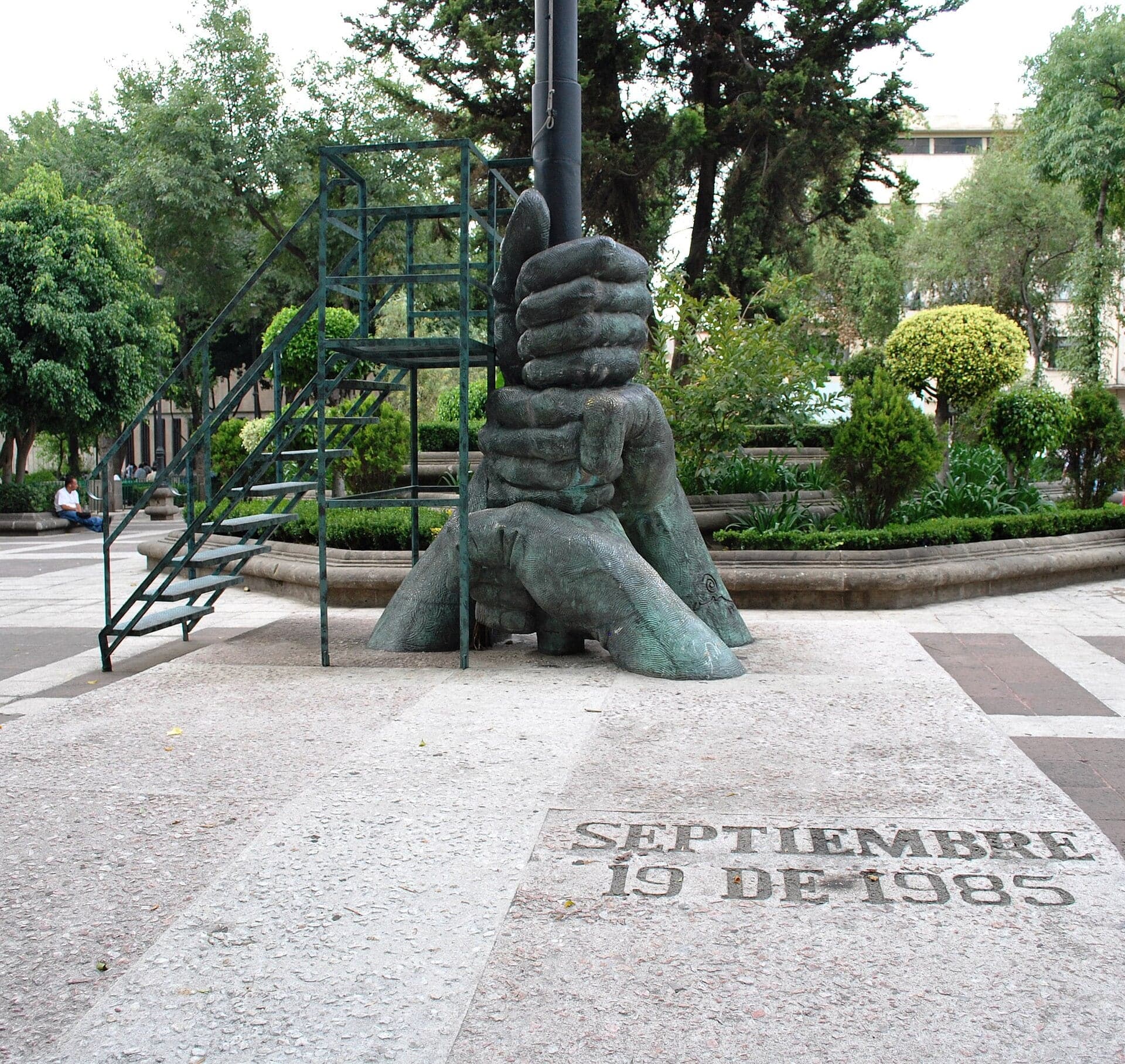
- Monument to the victims of the 19 September 1985 earthquake at the Plaza de la Solidaridad in the historic center of Mexico City — Thelmadatter, CC BY-SA 3.0 · source
Images may be cropped or resized. Other photos via Unsplash and Pexels.