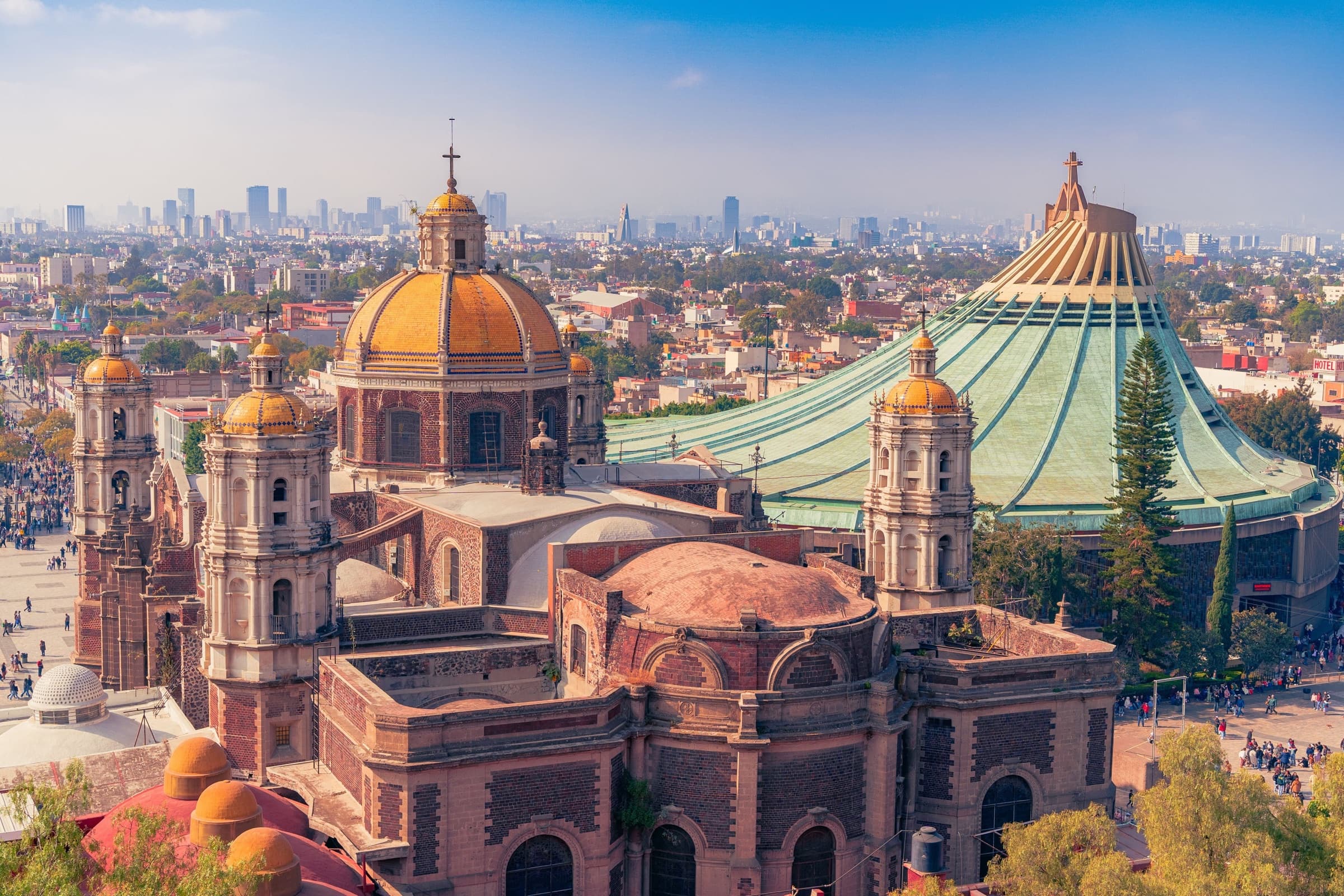
Walk the pilgrims' avenue into the Basilica of Guadalupe, past the round 1976 basilica, the old basilica that sank and Capuchinas, then climb Tepeyac past the tiled Pocito to the summit chapel.
Start · La Villa Station: A Railway Stop Below the Shrine
DirectionsStops
- 1
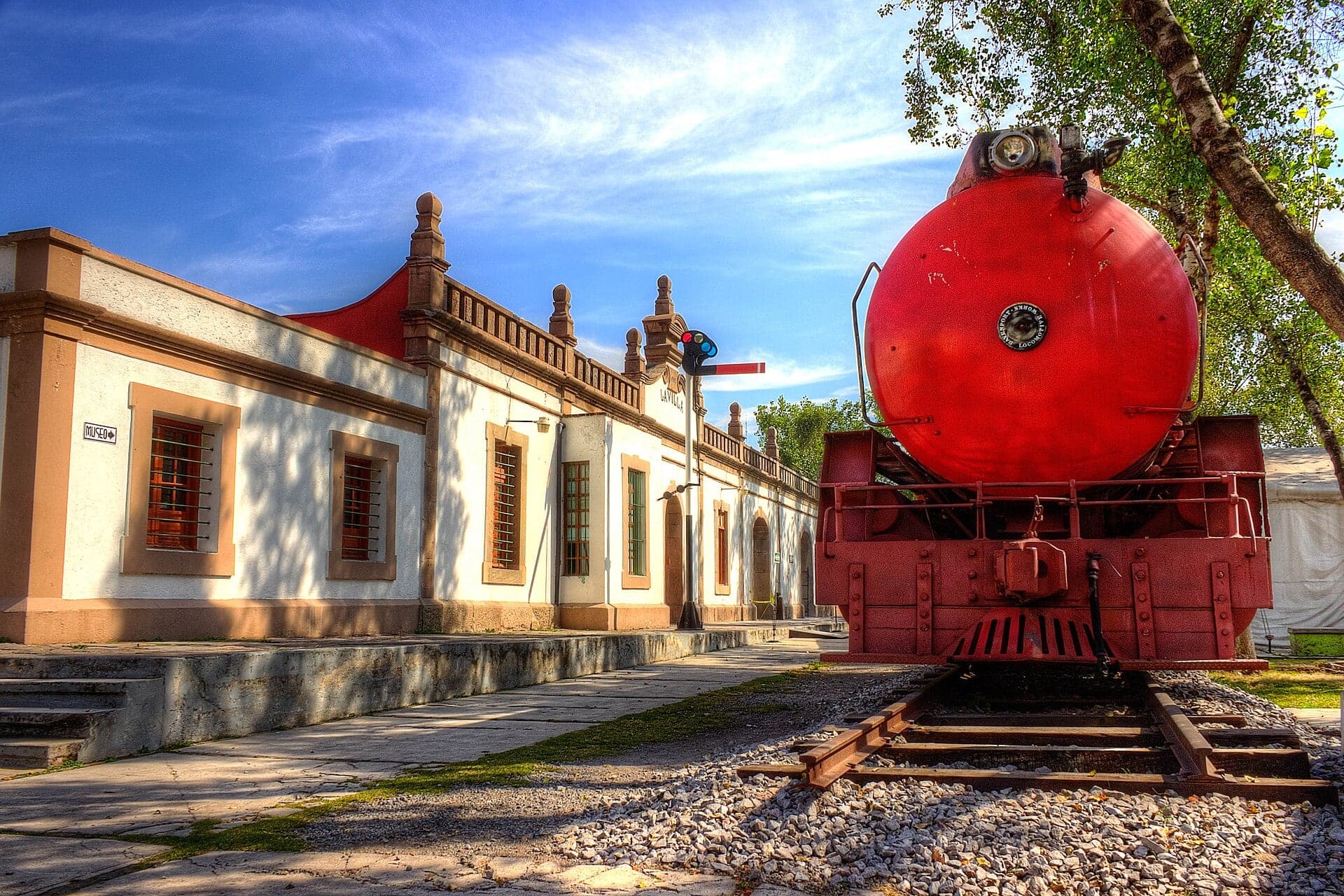
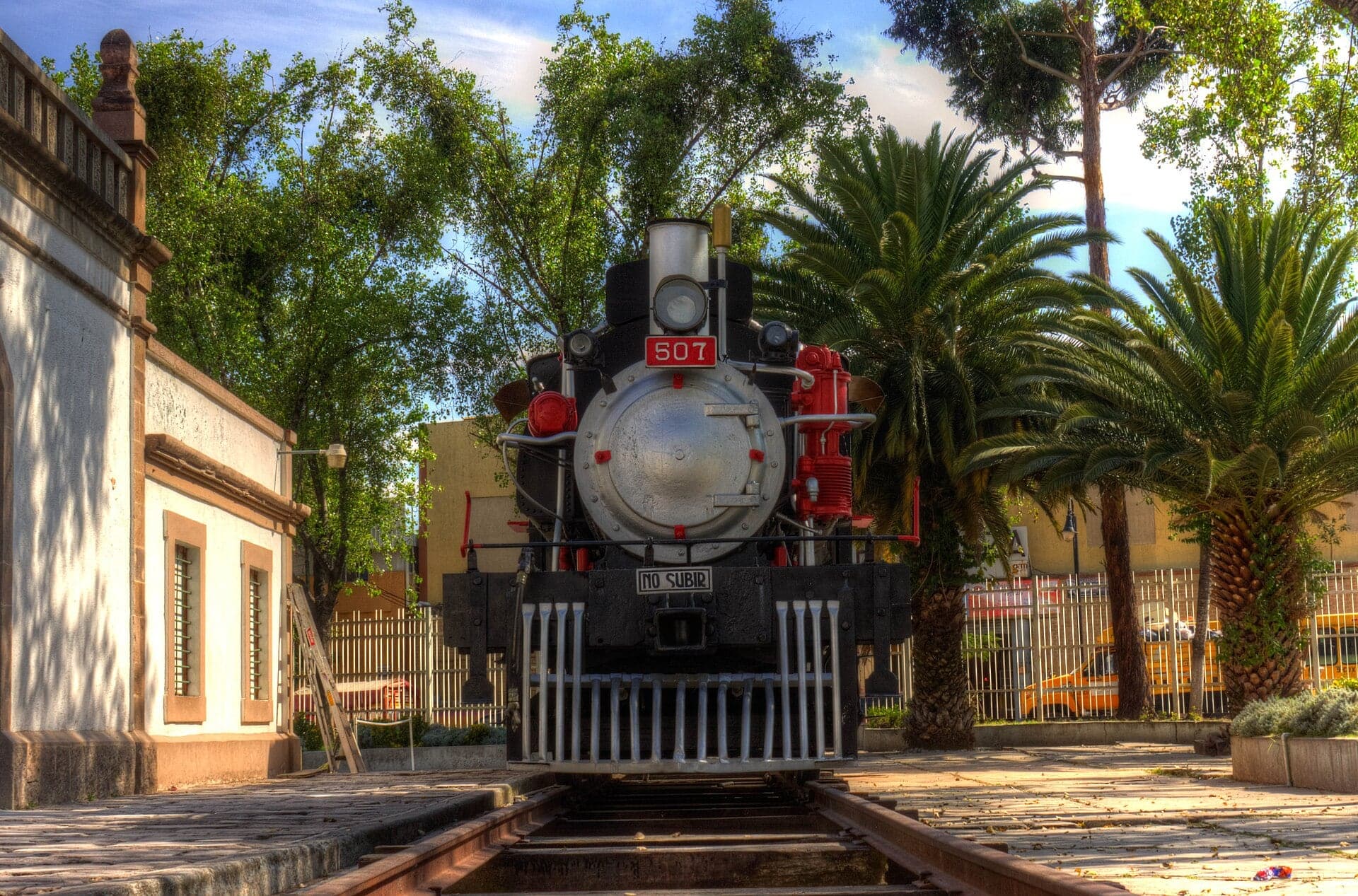
La Villa Station: A Railway Stop Below the Shrine
A small railway station from 1907, now a railway museum. The walk starts here, a few minutes from the shrine.
- 2
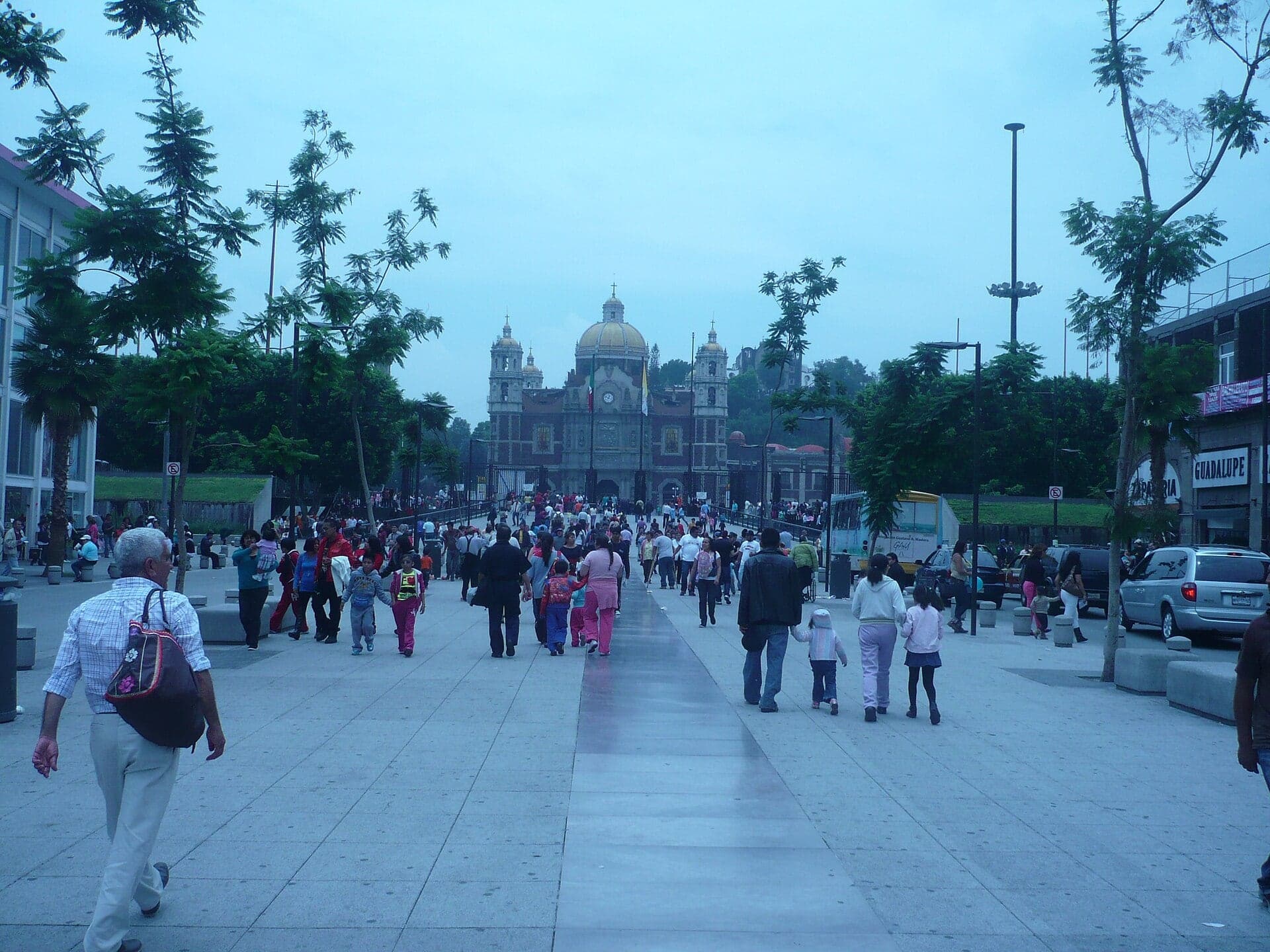
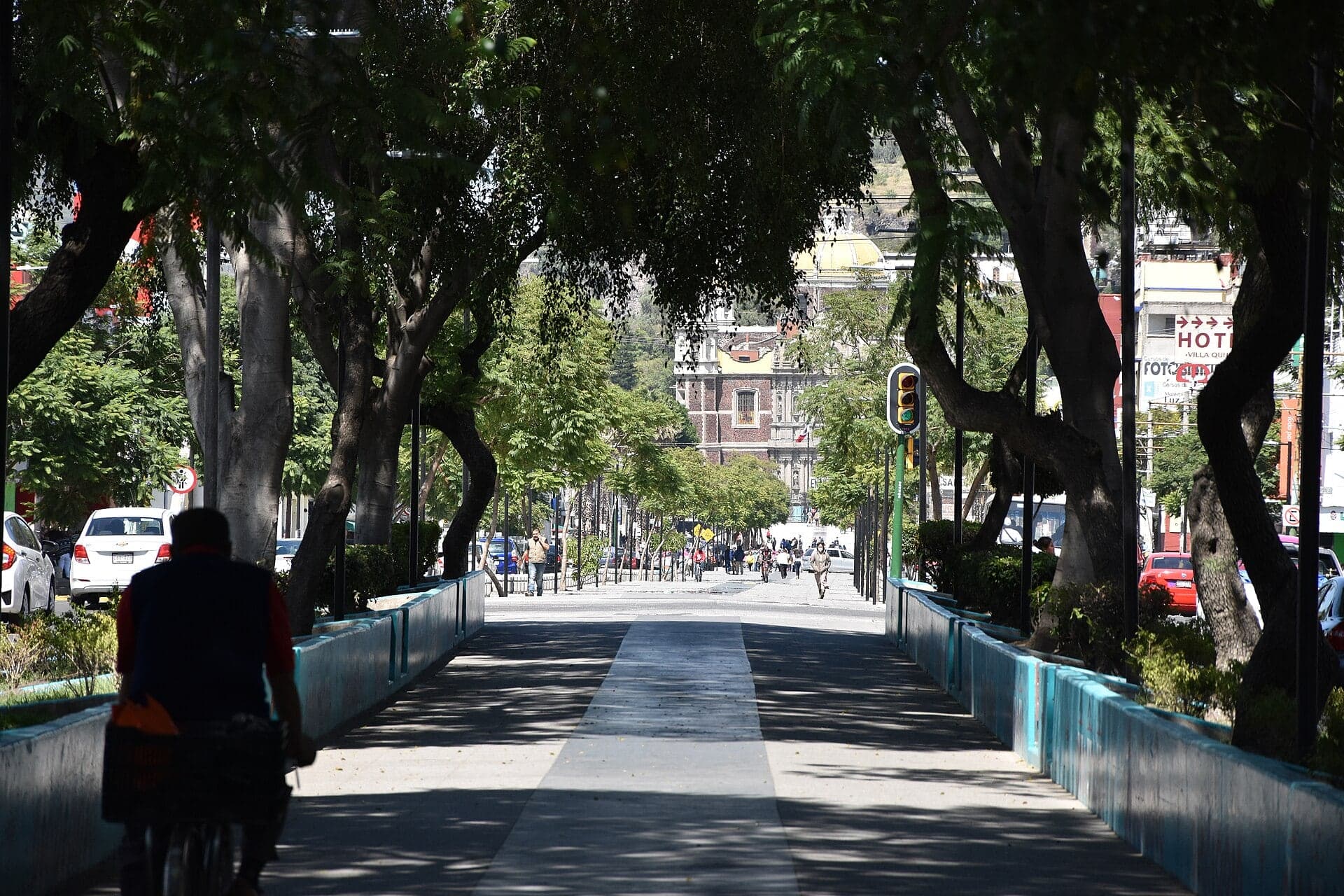
Calzada de Guadalupe: The Pilgrims' Avenue
The pilgrims' avenue to the shrine, laid out in the 1780s. Every December it fills with crowds.
- 3
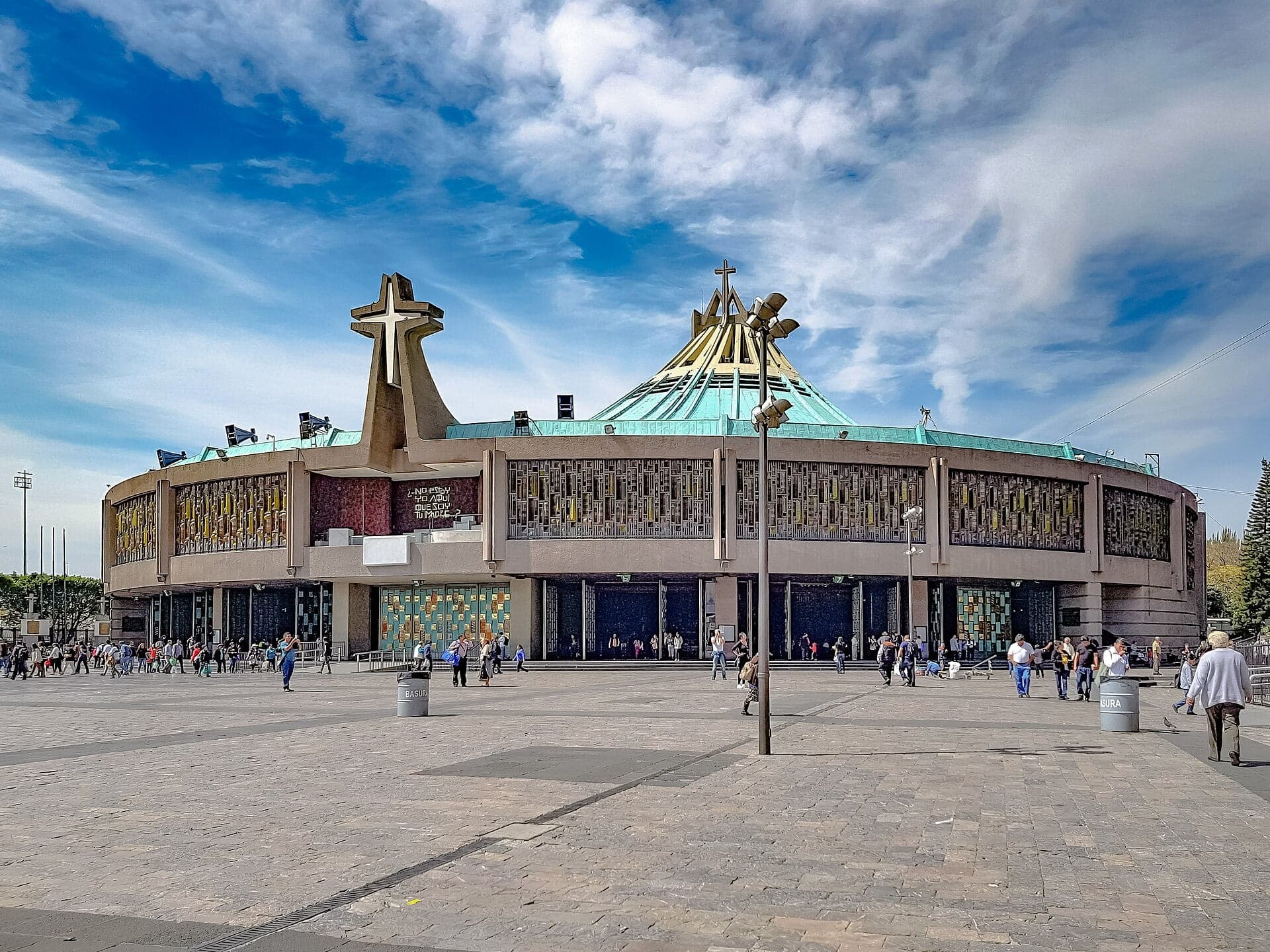
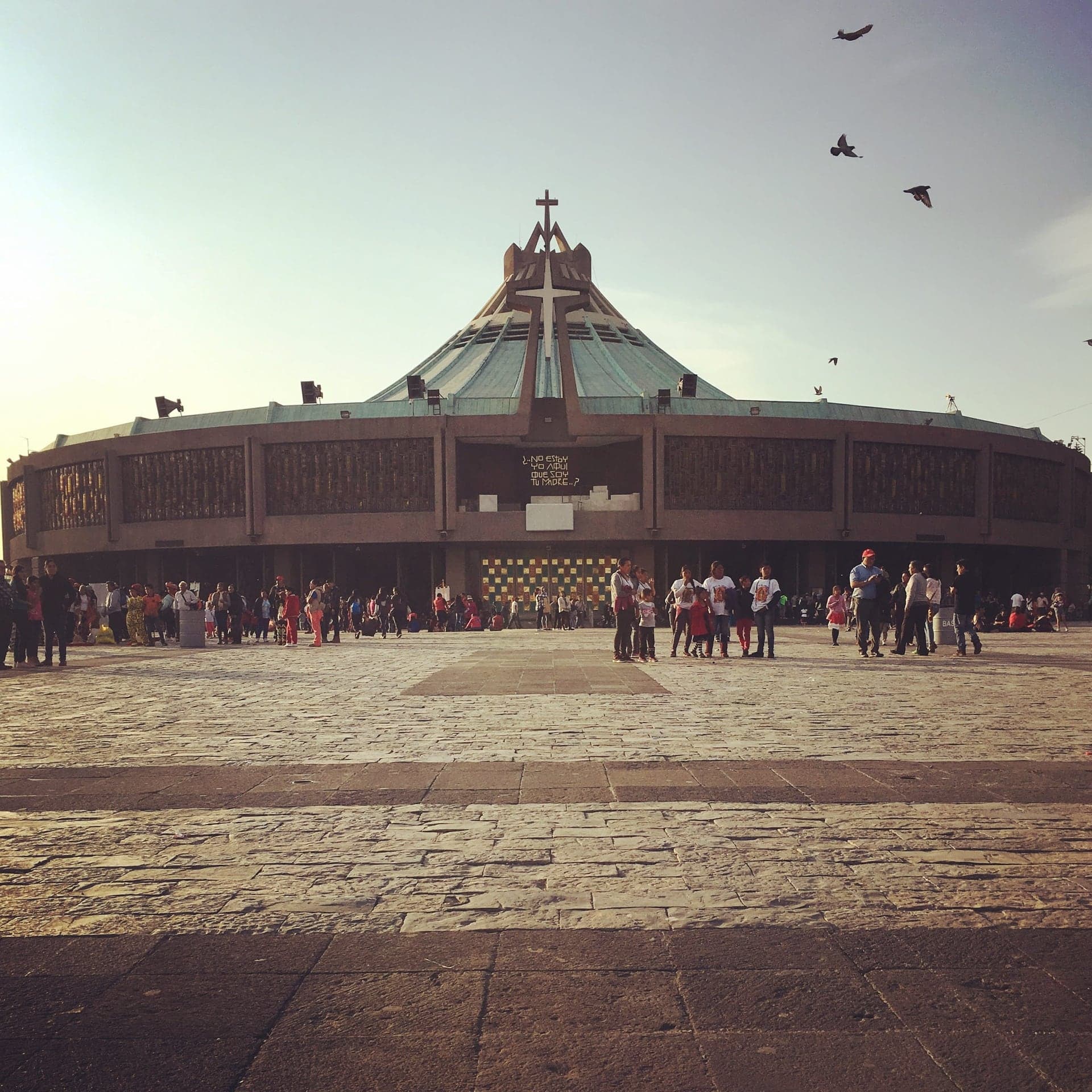
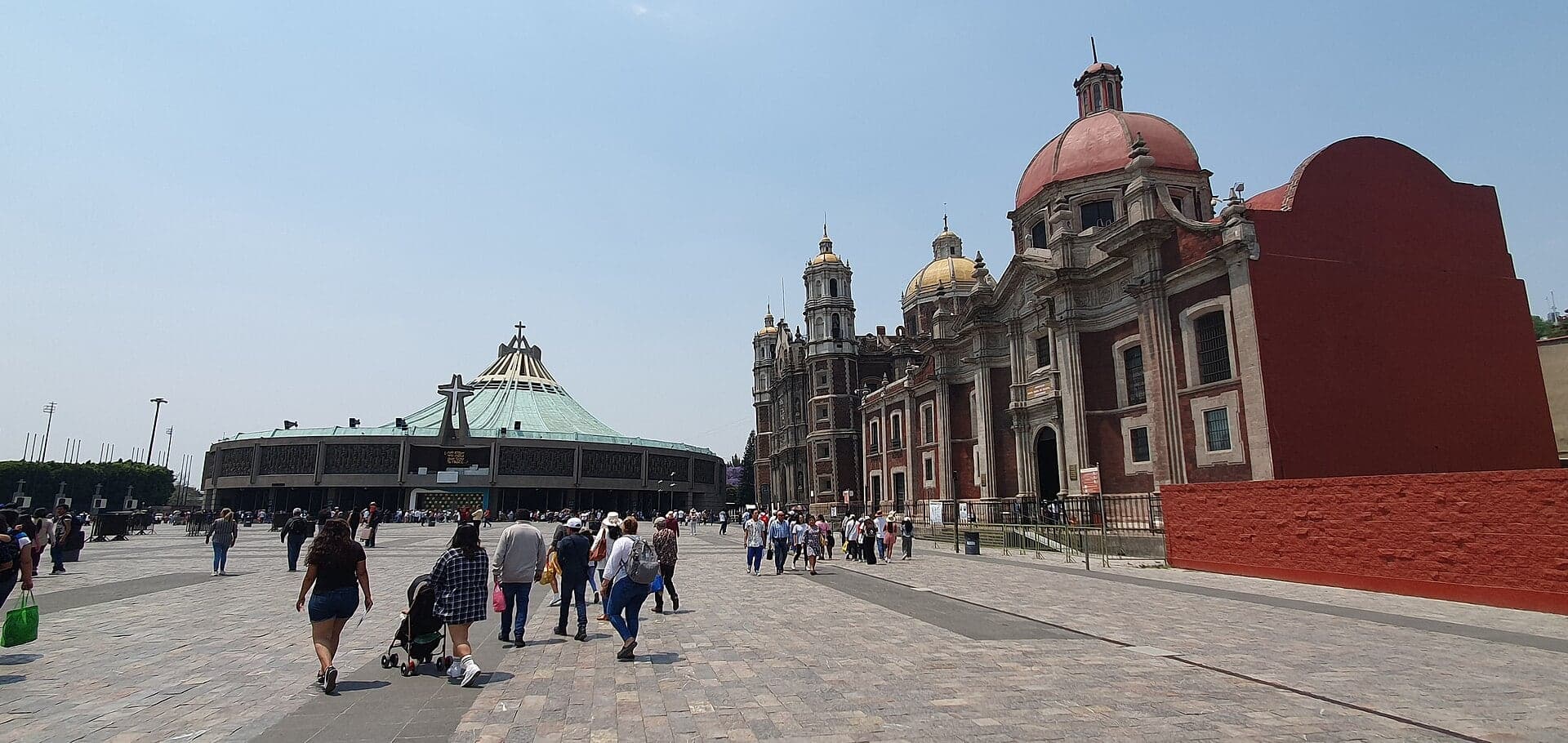
The New Basilica: A Round Room Under a Copper Roof
The round basilica of 1976 under a single green copper roof, built to stand on soft ground. Inside, a moving walkway passes the image.
- 4
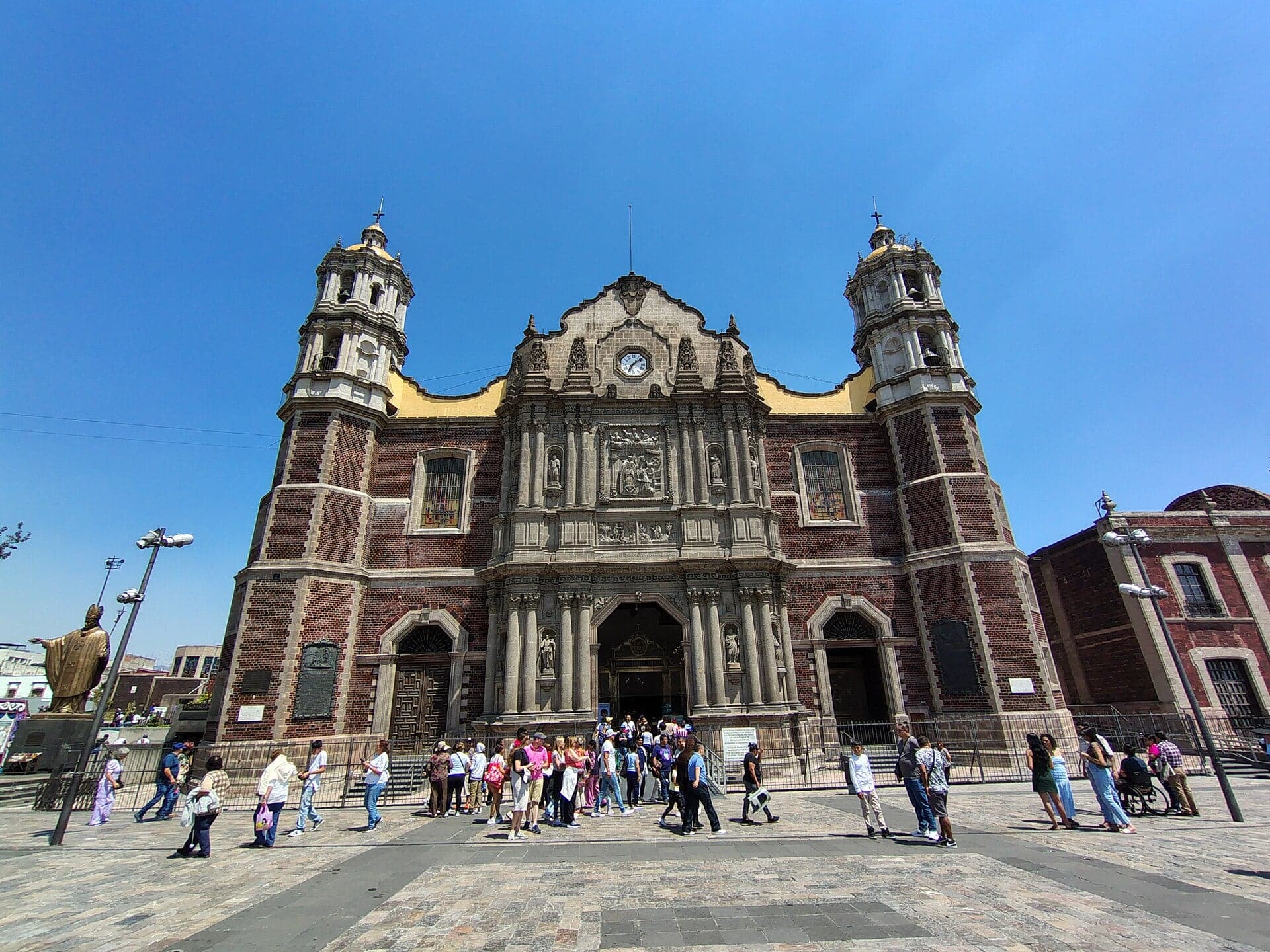
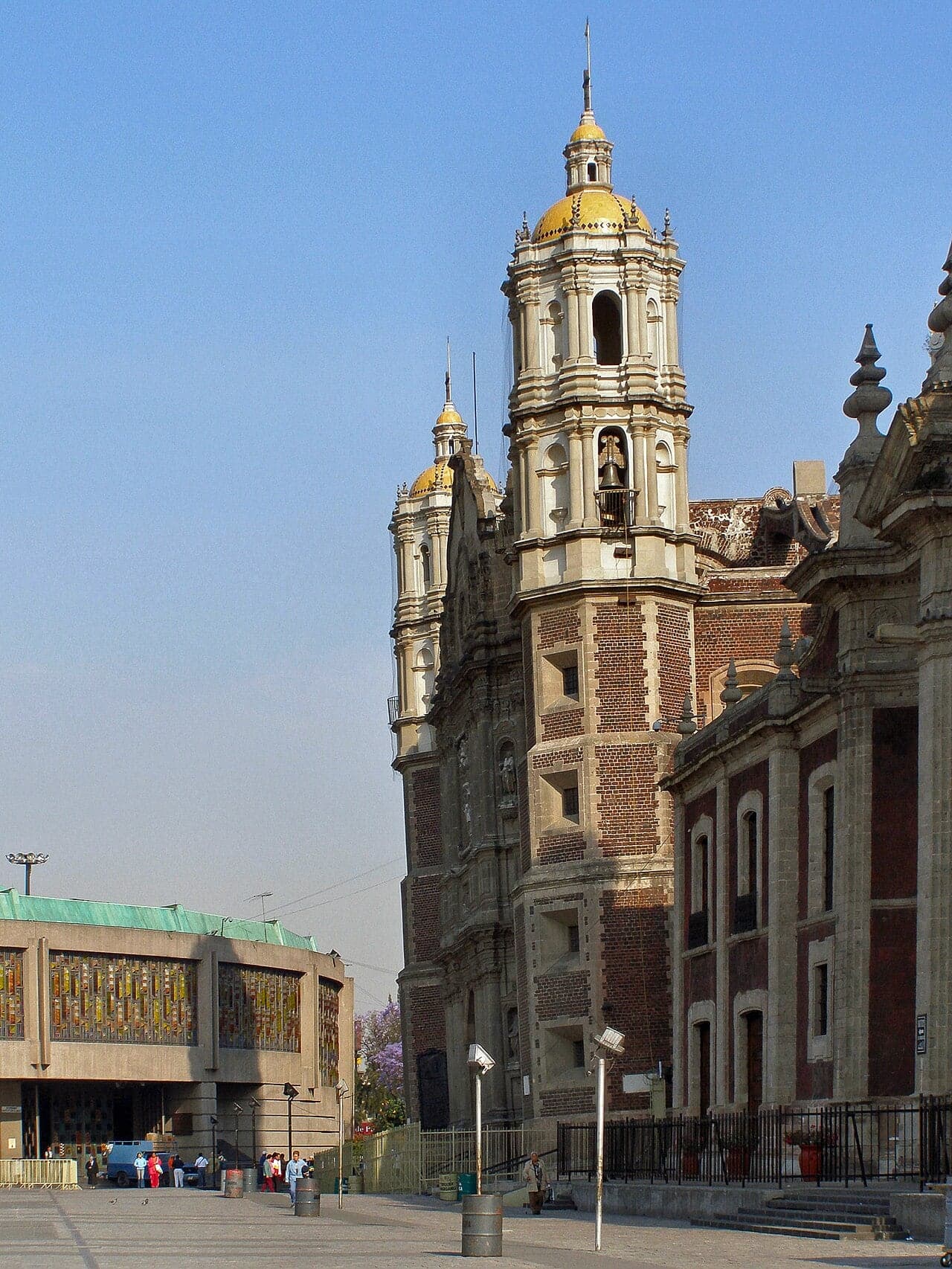
The Old Basilica: A Church Rescued From the Mud
The stone basilica that housed the image from 1709 to 1976. It sank so badly it was closed and re-founded.
- 5
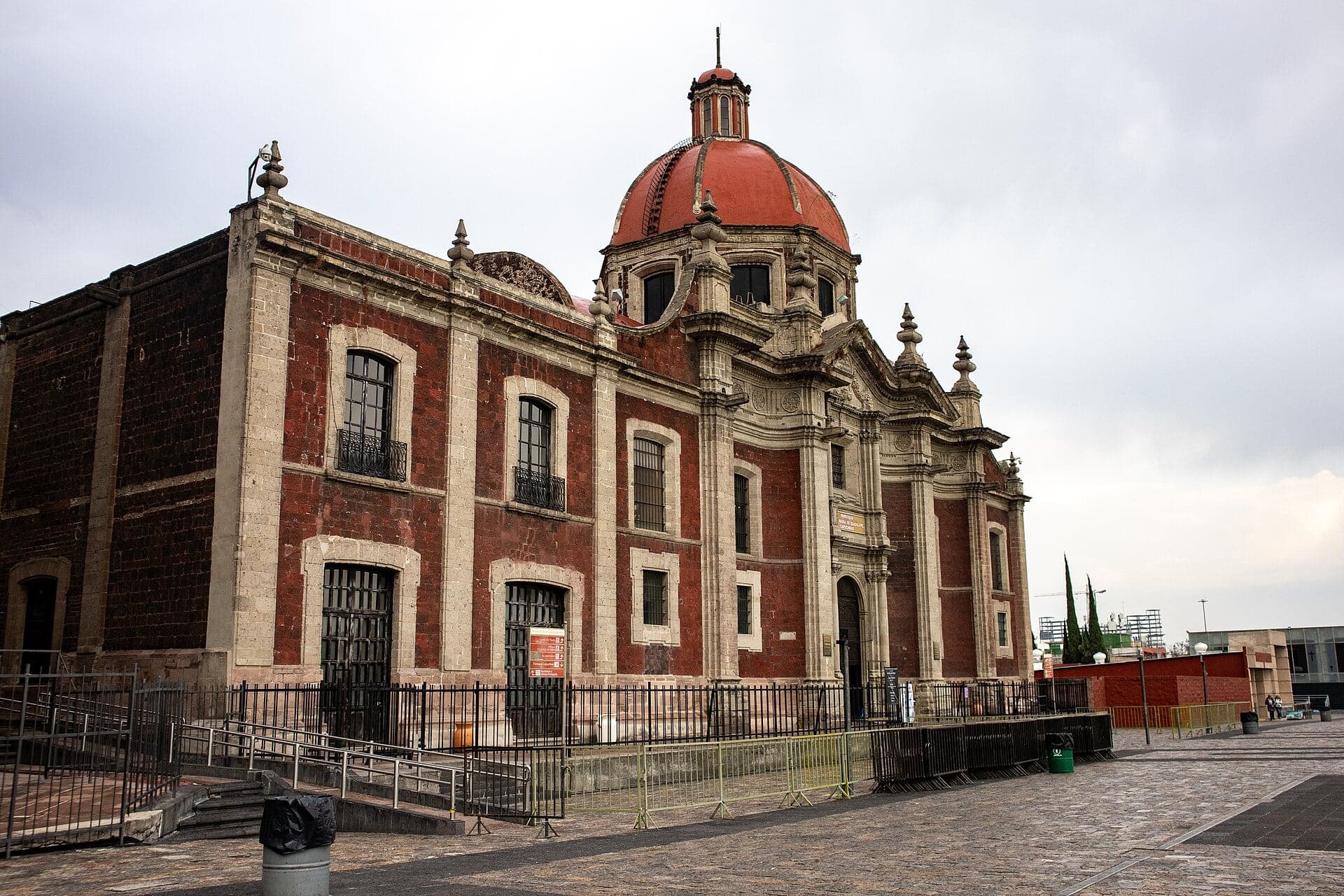
Capuchinas: The Nuns' Church on the Same Soft Ground
A neoclassical church built for Capuchin nuns in 1782 to 1787. It twice sheltered the image and shares the old basilica's sinking ground.
- 6
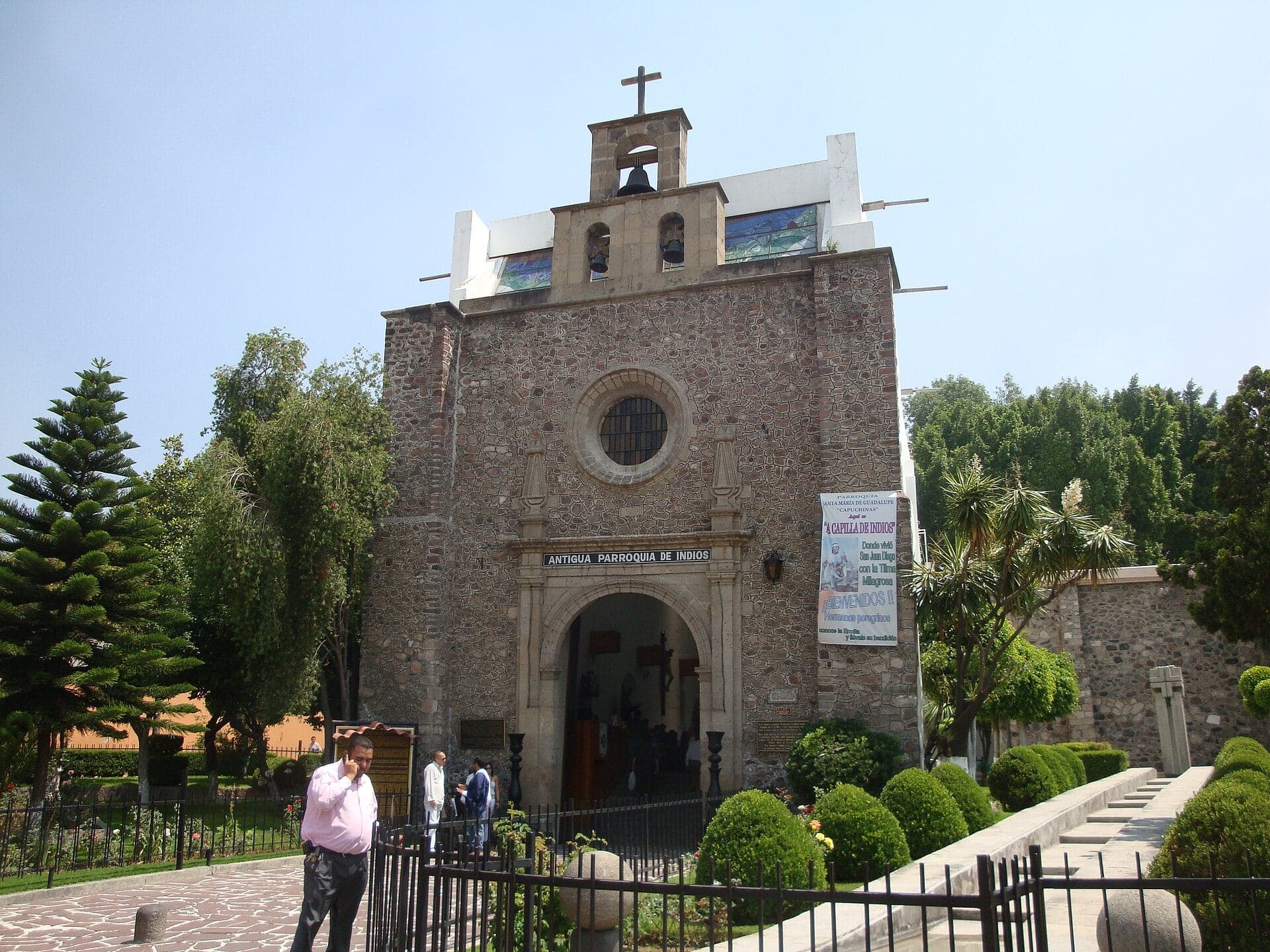
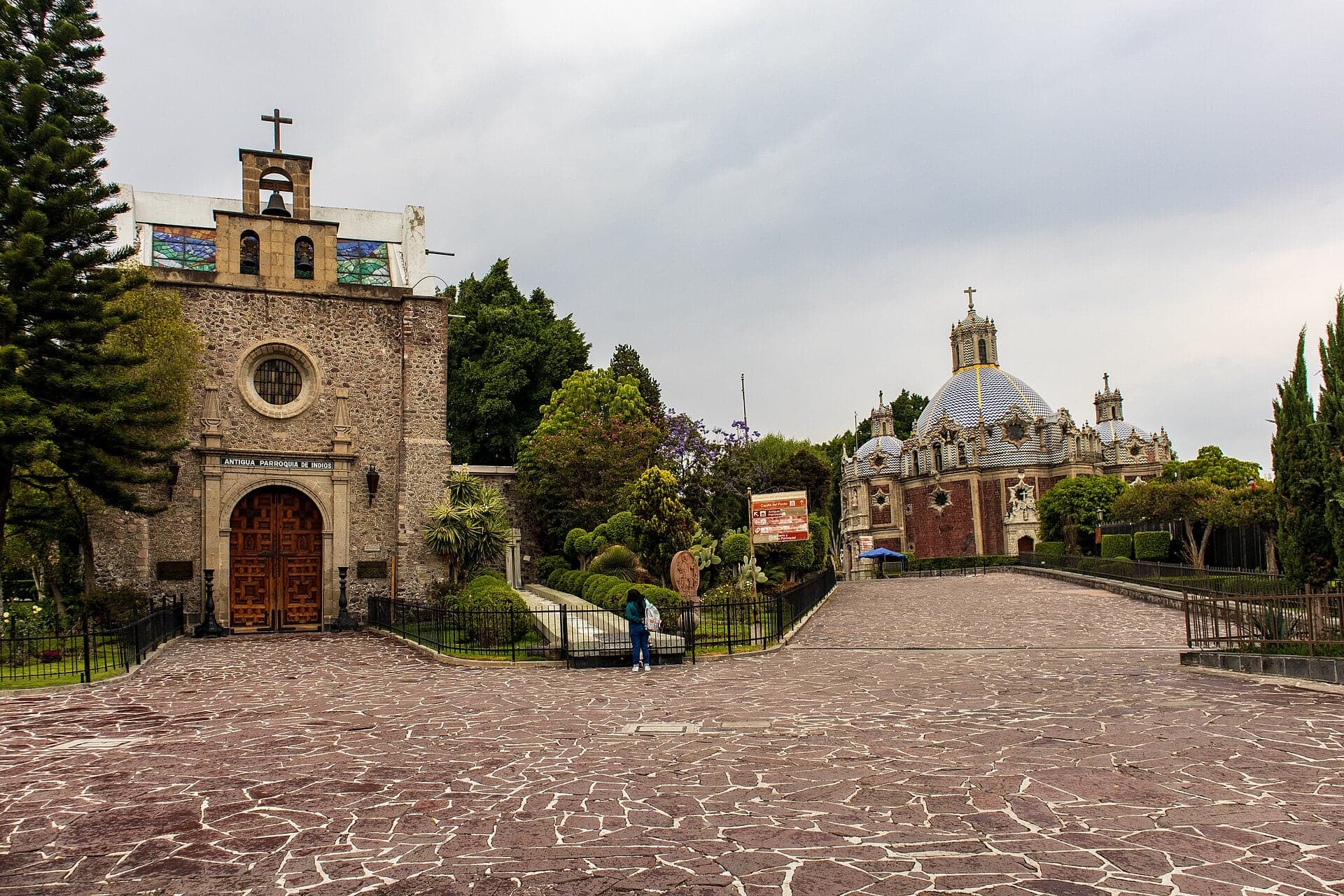
Capilla de Indios: Where the Story's First Chapel Stood
The shrine's oldest church stands where its account puts the first chapel. That chapel, the story says, received the image in 1531.
- 7
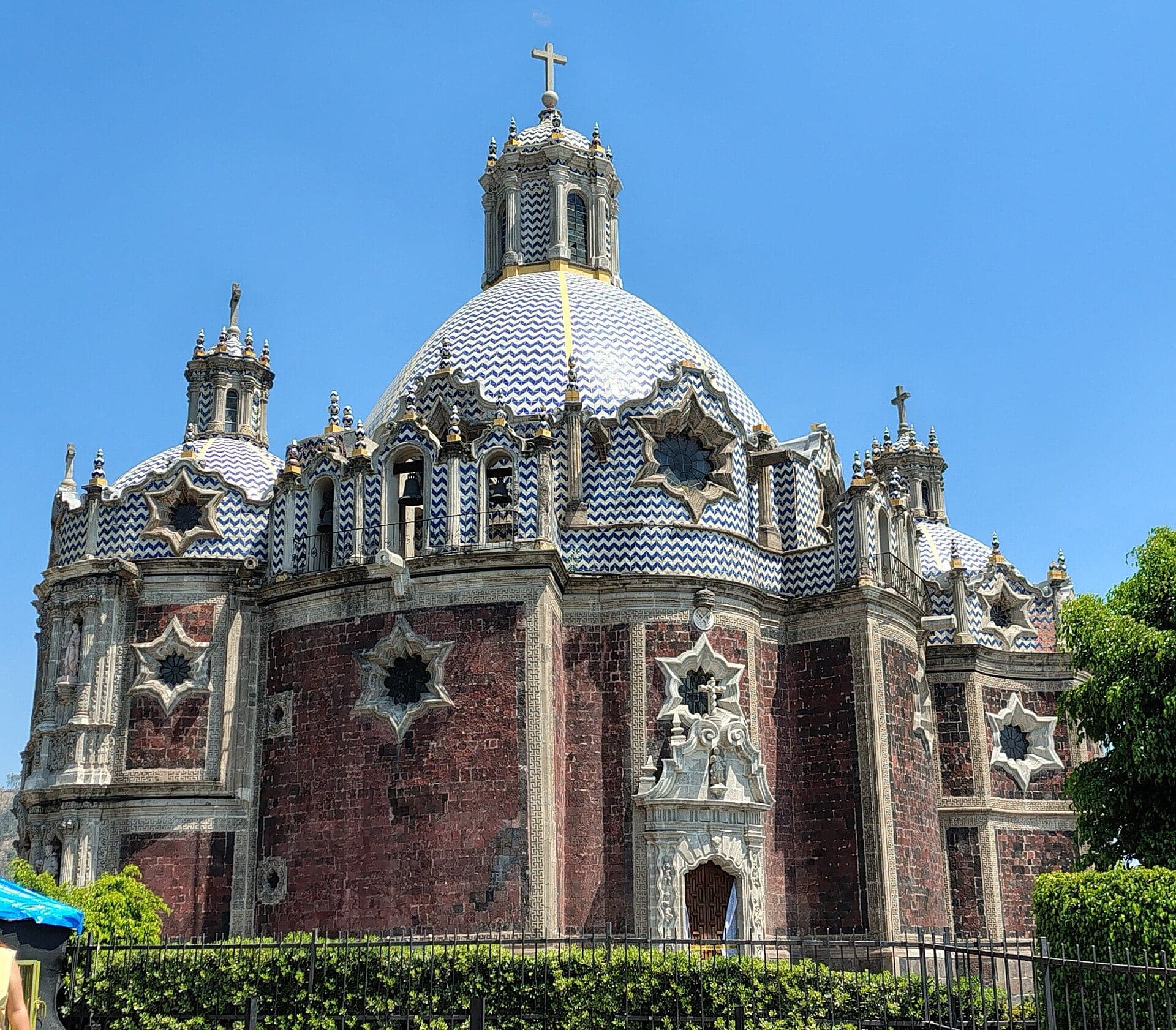
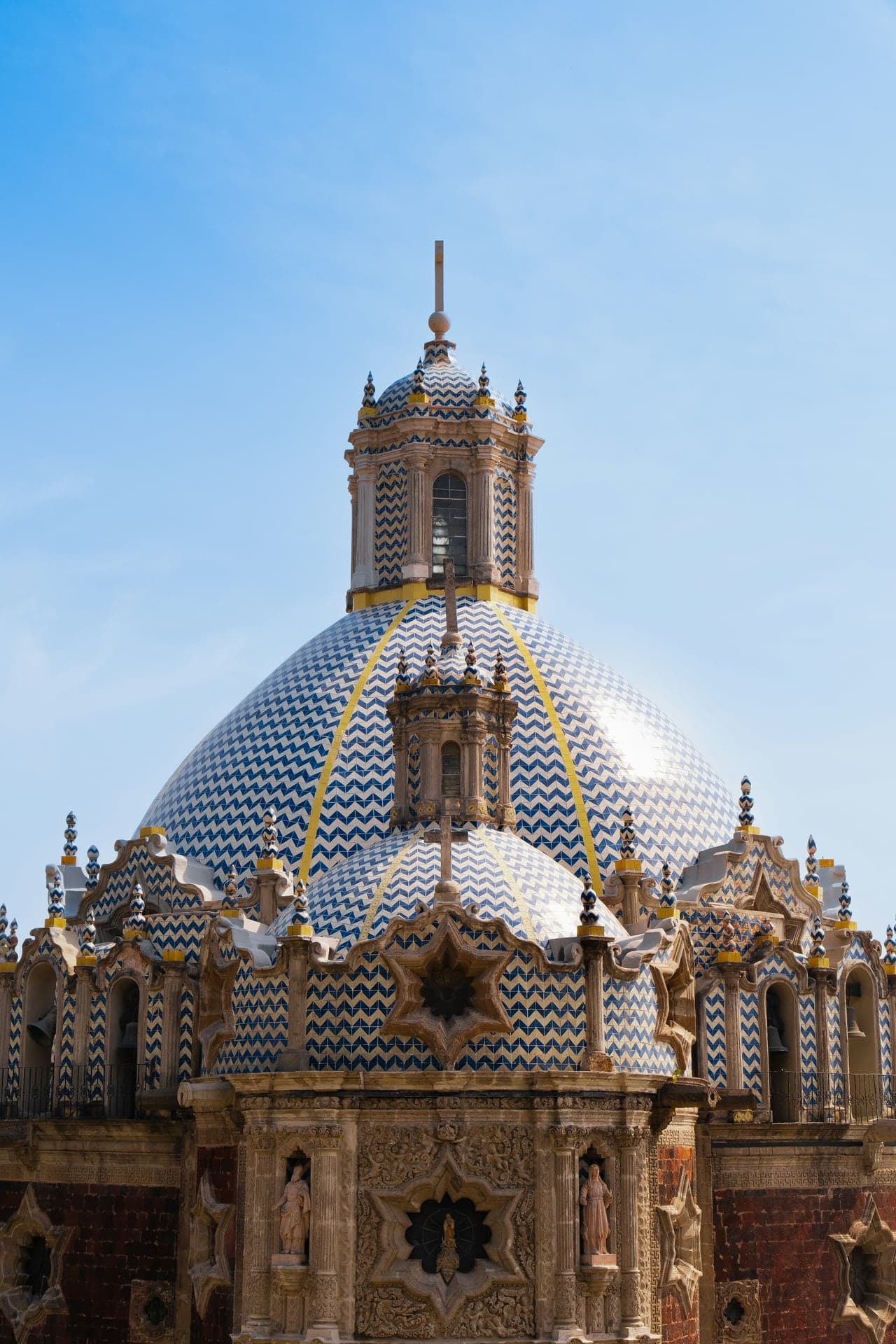
Capilla del Pocito: Red Stone Under Tiled Domes
A red tezontle chapel under blue-and-white tiled domes, built from 1777 to 1791 over a spring.
- 8
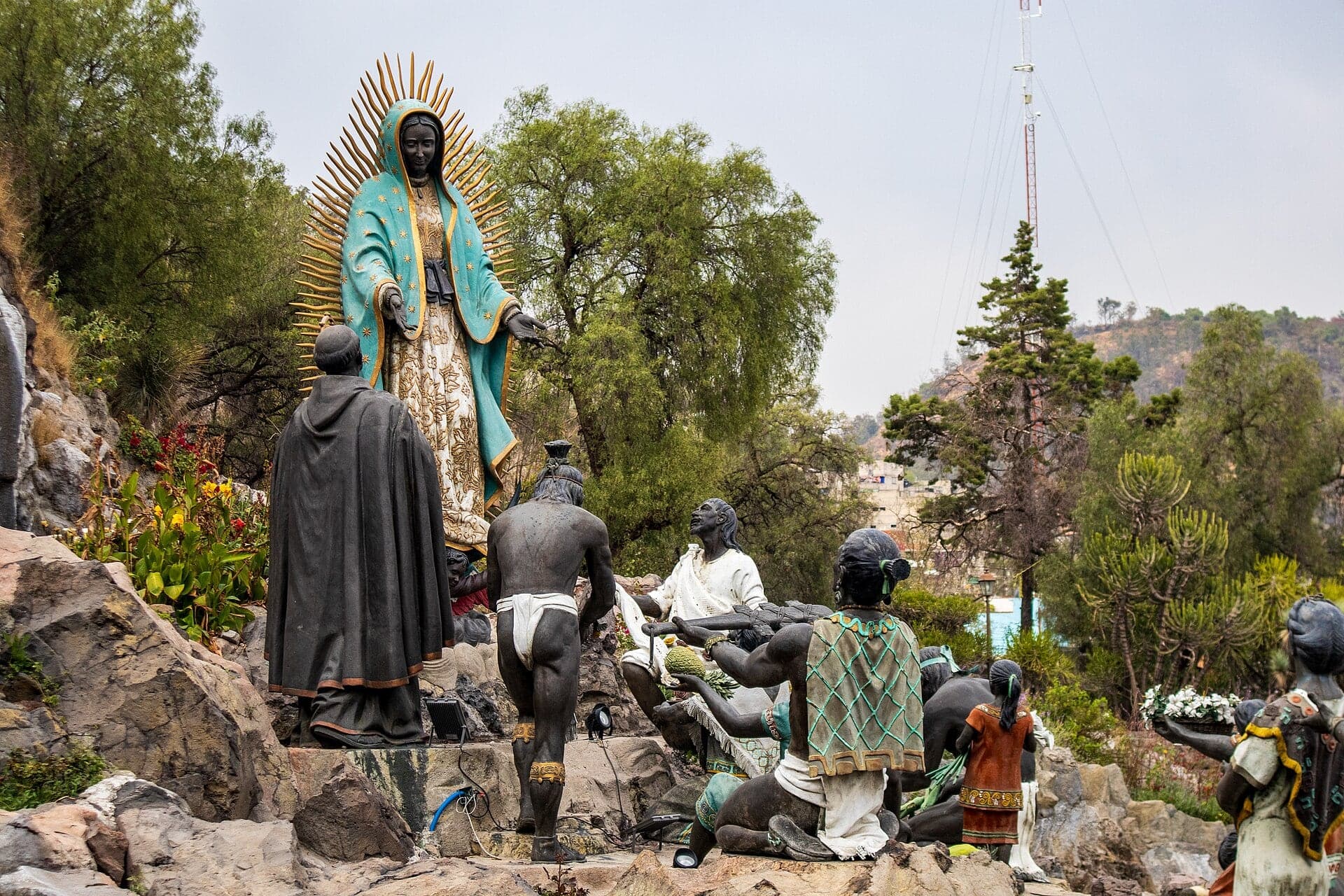
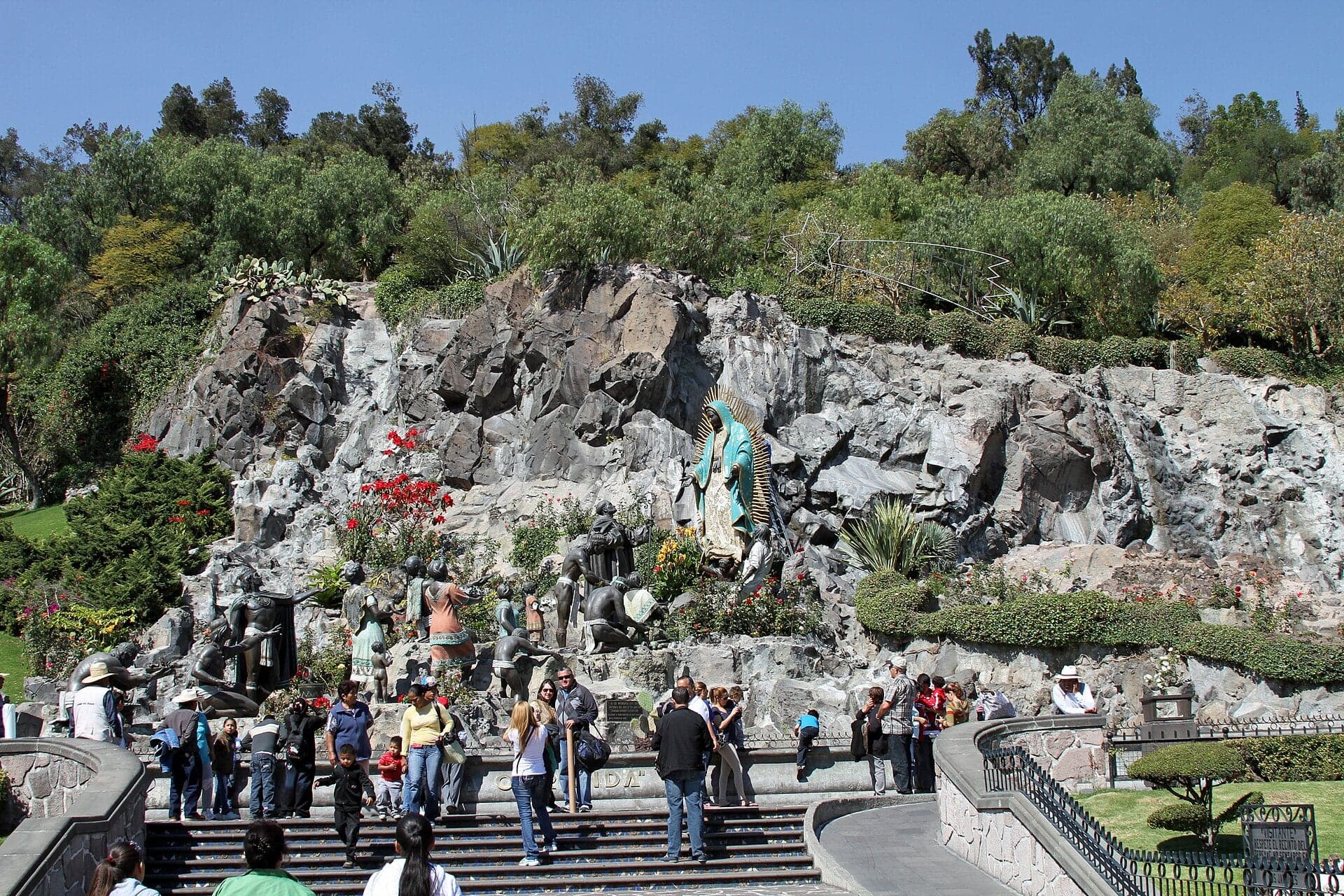
La Ofrenda: Sixteen Bronzes on a Hillside Stage
Sixteen bronze figures commissioned in 1982 from a stage designer, with a garden landscaped as their backdrop.
- 9
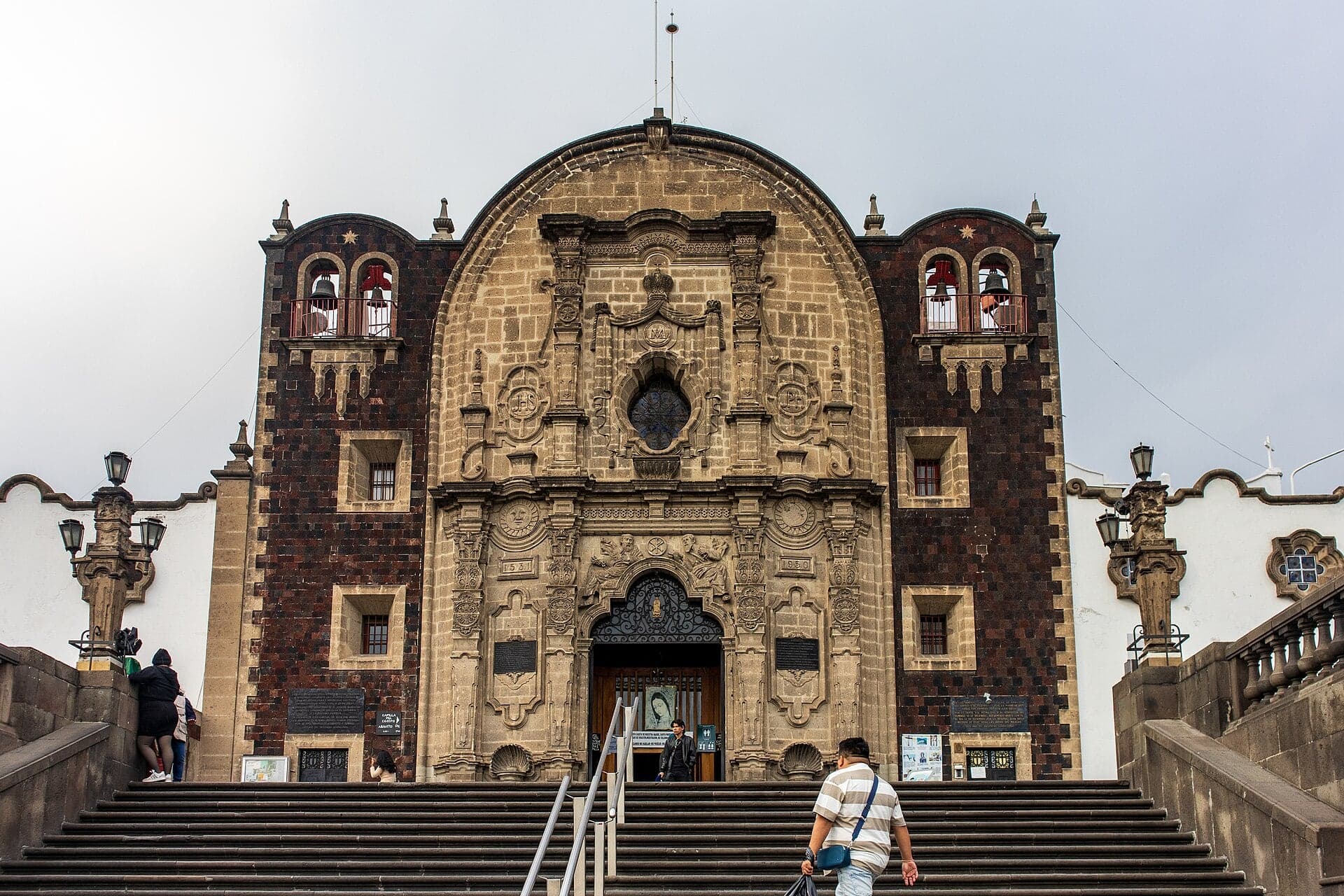
Capilla del Cerrito: The Summit of Tepeyac
The chapel on the summit of Tepeyac, where the Church's account of December 1531 sets the first meetings and the roses.
- 10
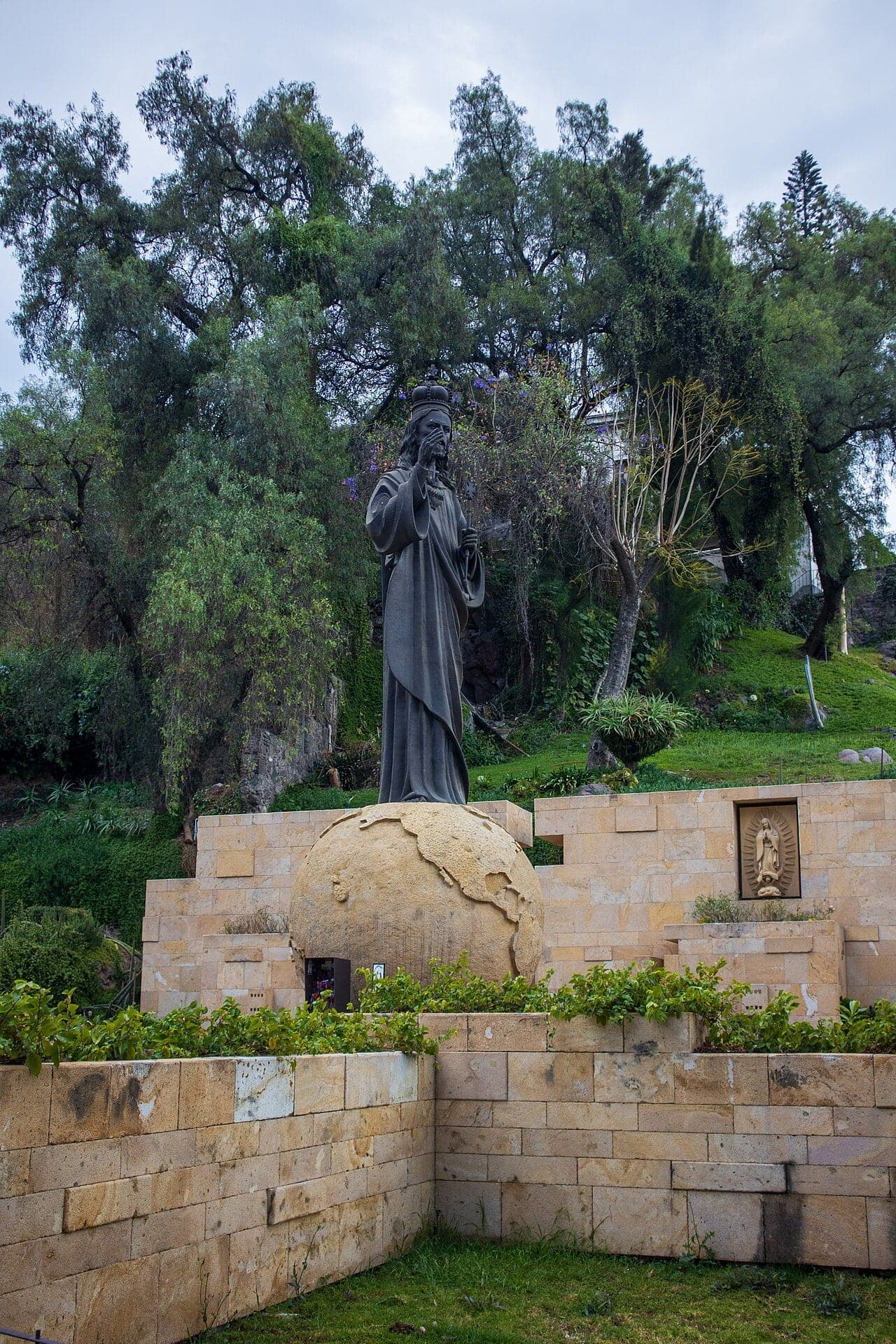
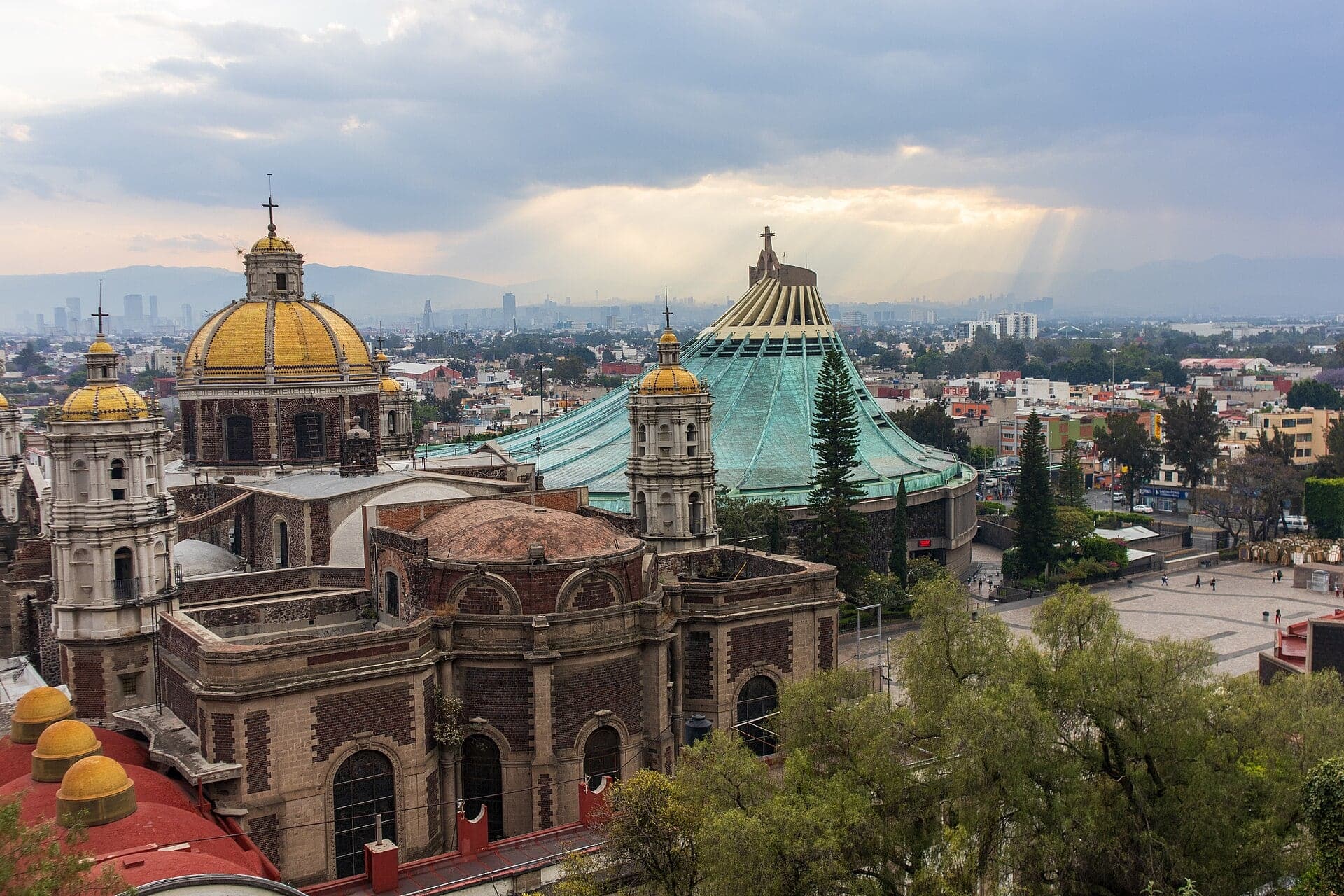
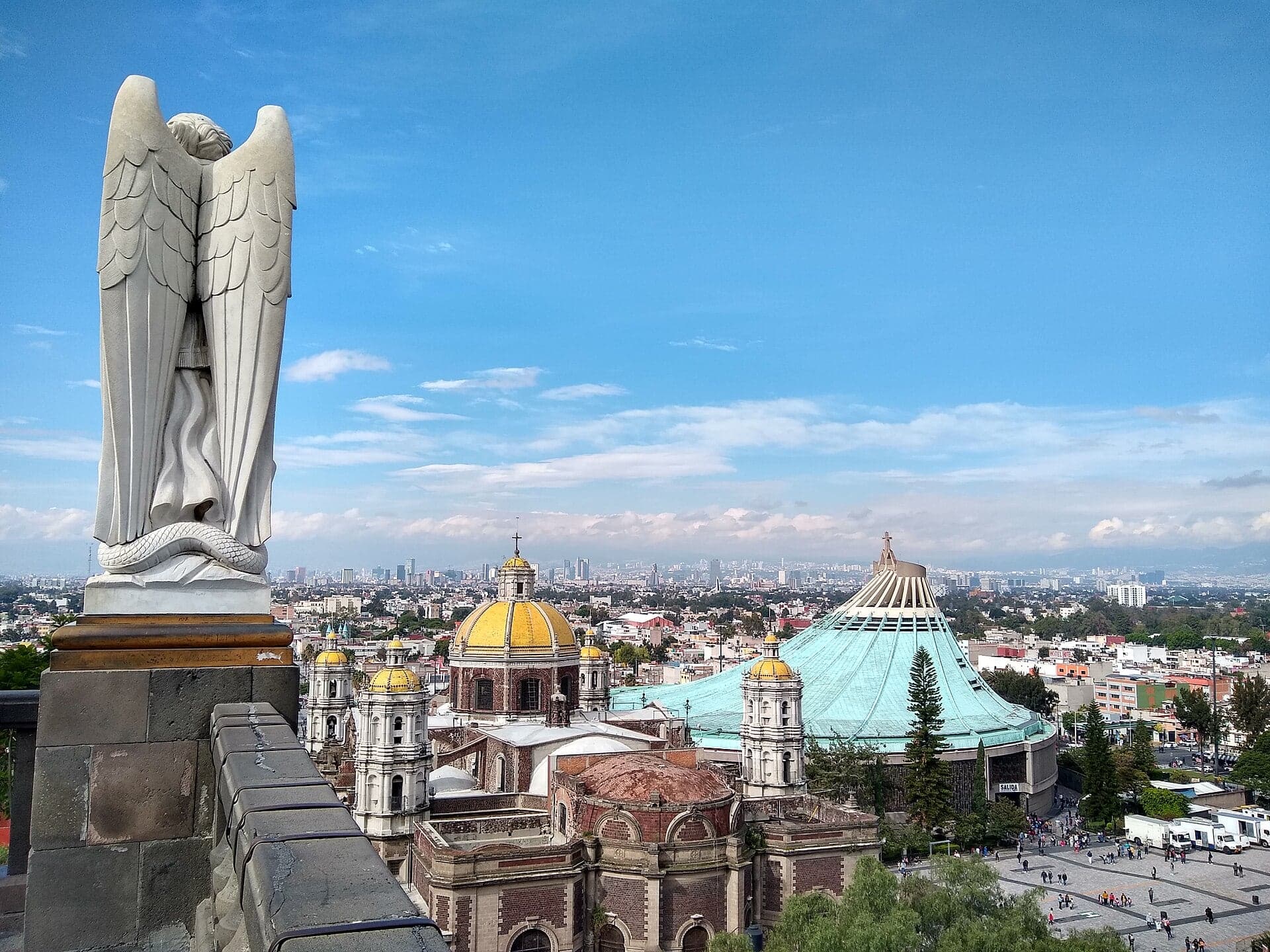
Above the Two Basilicas: Three Answers to Soft Ground
A terrace at the head of the west stair, looking down over the old basilica, the nuns' church and the round basilica.
Details
Best Time to Visit
A weekday morning, between 10 am and noon, when the hill is cooler and the chapels are open (the Capilla del Cerrito 07:00 to 18:00, the Capilla de Indios 10:00 to 17:00, Capuchinas from 10:00; checked 15 October 2026). Walk in daylight: the atrium and hill gates publish no hours. Sundays are busier, and 10 to 13 December, the feast, is no time for this walk. The jubilee year (12 October 2026 to 12 October 2027) brings more organized pilgrimages than usual.
Pro Tips
- •To reach stop 1, take Metro Line 6 to La Villa-Basílica; the start is a short walk from the exit. Metrobús Line 7 runs along the Calzada de Guadalupe, and Line 6 stops at De los Misterios and La Villa.
- •Inside every church, chapel, museum and crypt the shrine's dress code applies: no low-cut tops, crop tops, tank tops, shorts above the knee, miniskirts or caps (Basílica de Santa María de Guadalupe, checked 15 October 2026). A light layer and a hat to take off cover it.
- •The new basilica is open daily 06:00 to 21:00, with masses at the high altar at 06:00, 07:00, 09:00, 10:00, 11:00, 12:00, 15:00, 16:00, 17:00, 19:00 and 20:00. A moving walkway behind the altar passes the image; enter quietly and keep to the back during mass (checked 15 October 2026).
- •The carillon, the basilica's bell and clock tower, stages the apparitions with mechanical figures at 10:00, 12:00, 14:00 and 16:00 (checked 15 October 2026). Time the end of the walk for one of them.
- •The Museo de la Basílica, in the old basilica's sacristy and annexes, is ticketed; guides report Tuesday to Sunday 10:00 to 17:00 (the official page posts no hours or prices; checked 15 October 2026).
- •The shrine runs guided visits Monday to Saturday at 11:00 and 15:00, in Spanish (ask about English), for a donation, by booking (checked 15 October 2026).
- •From the last stop, the west stair leads down into the atrium; Metrobús De los Misterios is a few minutes north-west and Metro La Villa-Basílica a few minutes south.
Safety & Precautions
- •Stops 9 and 10 are reached only by stairs, and the way down from stop 10 is a stair too. Stops 1 to 8 have no steps on the route, though the path up to stop 8 is steep in places; a step-free visit can end at stop 8 and return the same way.
- •This is a working shrine with masses almost every hour. Never walk about during a mass, keep voices low inside, and do not photograph people at prayer.
- •10 to 13 December is the feast of the Virgin of Guadalupe: in 2025 the city government counted about 13 million people at the shrine in those days, and Metro and Metrobús stations near it closed on the 11th and 12th. Do not take this walk then.
- •The jubilee year runs from 12 October 2026 to 12 October 2027, with more organized pilgrimages than usual, so expect crowds on weekends and feast days.
- •Keep phones, bags and wallets secure in the crowds; the shrine itself asks visitors to watch their belongings.
- •Bring water, sun protection and something for the rain: most of the walk is outdoors and the hill has little shade (the shrine's own advice).
- •Mexico City is about 2,240 m above sea level, and the hill adds a steep climb. On your first day, go slowly and drink water.
- •Paving is uneven in places, and floors in the old buildings may slope because of the sinking ground.
- •The atrium and hill gates publish no opening hours. Walk in daylight.
Travel advisory: Exercise Increased Caution (Level 2).
Gallery
Read the walk
The full story of Basilica of Guadalupe: Churches on Soft Ground, a Story on the Hill, in words. Prefer to listen? Play it narrated, from home or on location.
Introduction
In the north of Mexico City, the capital of Mexico, stands a low hill called Tepeyac. At its foot is the Basilica of Guadalupe, Mexico's national shrine. Its round new church turned fifty in October twenty twenty-six. A jubilee year for the anniversary runs to October twenty twenty-seven.
On the plaza, the buildings tell of soft ground: an old lakebed that has pulled church after church out of level. On the hill, the chapels mark the story the Church tells of December fifteen thirty-one, when, in its account, the Virgin appeared to an Indigenous man, Juan Diego, and sent him to the bishop, Fray Juan de Zumárraga.
There are ten stops over about one point three kilometers, under a mile, taking about seventy-five minutes. Stops nine and ten are reached only by stairs. Up to stop eight there are no steps, though the hill path is steep, so a step-free visit can end there. Mexico City is about two thousand two hundred and forty meters up, so the climb is best taken slowly.
This is a working shrine, with masses almost every hour and a dress code inside every church and chapel: no tank tops, crop tops or low-cut tops, no shorts above the knee or miniskirts, and no caps. Between stops, the stone, domes and towers are worth a look too.
The first stop is beside the old La Villa station, a short walk from Metro La Villa-Basílica.
1. La Villa Station: A Railway Stop Below the Shrine
Welcome to the Basilica of Guadalupe, and to the first stop on this walk, beside the old La Villa railway station. The building is now the Museo de los Ferrocarrileros, a museum of the railway and its workers. It is usually closed on Mondays; the details are on this stop's card.
The station was built in nineteen oh seven, on land that had belonged to an old estate, the Hacienda de Santa Ana de Aragón. Trains stopped calling here in nineteen ninety, and in two thousand six the city reopened the building as a museum. Its yards keep old railway machines, and its prize piece is an electric locomotive nicknamed Sin Fuego, without fire. It was built in Iowa and worked for decades at an oil refinery in the city.
Take in the size of the station: a modest building for a neighborhood stop. A few minutes from here is a shrine that draws millions of people every December. Keep that contrast in mind as the buildings grow around you.
One more thing to watch for as you go: the ground. The shrine stands on the soft shore of an old lake, long since drained, and that soft ground is part of the story of almost every building on the plaza ahead.
Follow the route to the Calzada de Guadalupe, the wide avenue to the shrine, crossing at the lights.
2. Calzada de Guadalupe: The Pilgrims' Avenue
Walk on along the Calzada de Guadalupe and stop on its central promenade.
This is the pilgrims' approach, and it was built as one. Ahead, at the end of the avenue, you may already see the shrine: the green roof of the new basilica, and the stone of the old one beside it.
The avenue was laid out in the seventeen eighties and finished in seventeen ninety-one, as a twin to an older road to the shrine, the Calzada de los Misterios, which runs parallel to it, close by. So two roads lead to this one hill. Most of the benches and planters around you are much later, from changes made in the nineteen fifties.
Now picture this promenade in December. The great feast of the Virgin of Guadalupe falls on the twelfth, and in the days around it the avenue fills from side to side. In December twenty twenty-five, the city government counted about thirteen million people in those few days, and the borough kept its own count with cameras along this avenue. What would it be like to walk this road shoulder to shoulder with them?
On an ordinary day it is calmer, though in the jubilee year, which runs to October twenty twenty-seven, more organized pilgrim groups are expected.
Follow the route up the avenue and through the gates into the great atrium.
3. The New Basilica: A Round Room Under a Copper Roof
Walk on into the great atrium and stop where the whole of the new basilica is in view.
The Basilica of Guadalupe is free and usually open every day from six in the morning to nine at night, and masses run almost every hour, so walk in quietly and keep to the back. Inside, a moving walkway carries visitors past the image that brings people here; the details are on this stop's card.
Look at the shape. It is a huge round building under one sweeping roof, clad in copper sheet that has weathered green. There are no columns inside, so the image, which hangs behind the altar under a cross, can be seen from almost anywhere in the room. The round form is said to recall a tent: the one that sheltered the Ark of the Covenant on its journey through the desert.
It was designed by a team led by the architect Pedro Ramírez Vázquez. The first stone went in on the twelfth of December, nineteen seventy-four, and on the twelfth of October, nineteen seventy-six, the image was carried in procession from the old basilica next door. So this building turned fifty in October twenty twenty-six.
Why build a new one at all? Part of the answer is that the old basilica was too small for the crowds. The other part is under your feet. The old building was sinking into the soft ground. So this one was built to cope with it: a circular frame of reinforced concrete is all that holds up the roof, and beneath it stand three hundred and forty-four control piles, foundations meant to keep a building level as the ground settles.
Think of that move: an image that had hung in one church for over two and a half centuries, carried across the atrium to a new home.
Follow the route across the atrium to the old basilica.
4. The Old Basilica: A Church Rescued From the Mud
Walk on to the old basilica and stop in the atrium in front of it. Today it is called the Templo Expiatorio a Cristo Rey, the church of Christ the King. It is free and still a working church, with masses through the day, so step in only quietly; the details are on this stop's…
Full narration for this stop unlocks with the tour.
5. Capuchinas: The Nuns' Church on the Same Soft Ground
Walk on along the edge of the atrium and stop facing the church next to the old basilica. This is the Capuchinas church, built for an order of nuns and today a parish church. It is free, and usually open from ten in the morning; the details are on this stop's card. The first…
Full narration for this stop unlocks with the tour.
6. Capilla de Indios: Where the Story's First Chapel Stood
Walk on to the small chapel and stop in front of it. This is the Capilla de Indios, the old chapel of the Indigenous parish. It is free and usually open every day from ten to five; the details are on this stop's card. The shrine calls it the oldest church in the sanctuary. In…
Full narration for this stop unlocks with the tour.
7. Capilla del Pocito: Red Stone Under Tiled Domes
Walk on along the path and stop where you can see the chapel with tiled domes. This is the Capilla del Pocito, the chapel of the little well. Its outside is what this stop is about, and you can see most of it from the path. Start with the colors. The walls are faced with…
Full narration for this stop unlocks with the tour.
8. La Ofrenda: Sixteen Bronzes on a Hillside Stage
Walk on up the path and stop near the group of bronze figures. This is La Ofrenda, the offering: sixteen bronze figures on the hillside, arranged, in the words of the city's tourism site, in adoration of the Virgin of Guadalupe. The garden is free. The basilica commissioned…
Full narration for this stop unlocks with the tour.
9. Capilla del Cerrito: The Summit of Tepeyac
Walk on up to the chapel at the top of the stair and stop beside it. This is the Capilla del Cerrito, the chapel of the little hill, on the summit of Tepeyac. It is free and usually open every day from seven to six, with a mass at noon; the details are on this stop's…
Full narration for this stop unlocks with the tour.
10. Above the Two Basilicas: Three Answers to Soft Ground
Walk on down to the terrace at the head of the stair and stop to one side of the top step, out of the way of people climbing. Then turn to face the atrium. Below, through the trees, you should be able to pick out the buildings you have walked past, one by one. The stone…
Full narration for this stop unlocks with the tour.
- Museo de los ferrocarrileros 1 — Octavio Alonso Maya …, CC BY-SA 3.0 · source
- Museo de los ferrocarrileros 3 — Octavio Alonso Maya …, CC BY-SA 3.0 · source
- la villa — nikolas jurado cordo…, CC BY 3.0 · source
- Calzada de Guadalupe, Mexico City. — Phyrexian, CC BY-SA 4.0 · source
- La vieille basilique Notre-Dame de Guadaloupe penche dangereusement à cause du sol spongieux sur lequel elle est construite - Mexico-City - — BluesyPete, CC BY-SA 3.0 · source
- Exterior of the Convent of the Capuchinas, Shrine of Our Lady Basilica of Guadalupe, Mexico City, Mexico. — ProtoplasmaKid, CC BY 4.0 · source
- Santuários de Guadalupe - Mexico — José Luiz, CC BY-SA 4.0 · source
- View of the Chapel of the Indians and Chapel of the Little Well, Basilica of Guadalupe, Mexico City. — ProtoplasmaKid, CC BY 4.0 · source
- Sculpture of the Virgin of Guadalupe and indigenous people in the garden of the sacred site of Tepeyac. — ProtoplasmaKid, CC BY 4.0 · source
- Basilica of Our Lady of Guadalupe — Greg Schechter from San Francisco, USA, CC BY 2.0 · source
- Façade of the Capilla del Cerrito, Basilica of Guadalupe, Mexico City. — ProtoplasmaKid, CC BY 4.0 · source
- View of Plaza Mariana from Tepeyac Hill, Basilica of Guadalupe, Mexico CityCerro de Tepeyac — ProtoplasmaKid, CC BY 4.0 · source
- Monument to Christ the King, Basilica of Guadalupe, Mexico City. — ProtoplasmaKid, CC BY 4.0 · source
- Basilica of Our Lady of Guadalupe CDMX- angel overlooking the old and new basilica and Mexico City from Capilla del Cerrito — Thayne Tuason, CC BY 4.0 · source
Images may be cropped or resized. Other photos via Unsplash and Pexels.