When the curtain rises at the Teatro Nacional de Santa Ana, you are watching a performance inside a performance. The building itself, inaugurated on February 27, 1910, is one of the most opulent structures ever built in Central America, a monument to the ambition of a provincial coffee town that believed it deserved a world-class stage.
It was right.
A Theater Built on Coffee
The Teatro Nacional exists because of one crop and the fortunes it generated. By the early 1900s, Santa Ana was the economic engine of El Salvador's coffee industry. The highland planters who controlled the surrounding fincas were wealthy, cosmopolitan, and determined to prove that their city was no backwater.
They set out to build a theater that would rival the opera houses of Europe. The foundation stone was laid in 1902, and the building drew on materials and decorative elements imported from Italy, Spain, Belgium, and beyond, executed by teams that included Italian artists.
The project took eight years and was funded by the wealth of the coffee boom, a reminder that the beauty of the building is inseparable from the labor system that produced the fortune behind it.
The Architecture
Hear a stop from this walk
Iglesia El Carmen
The Facade
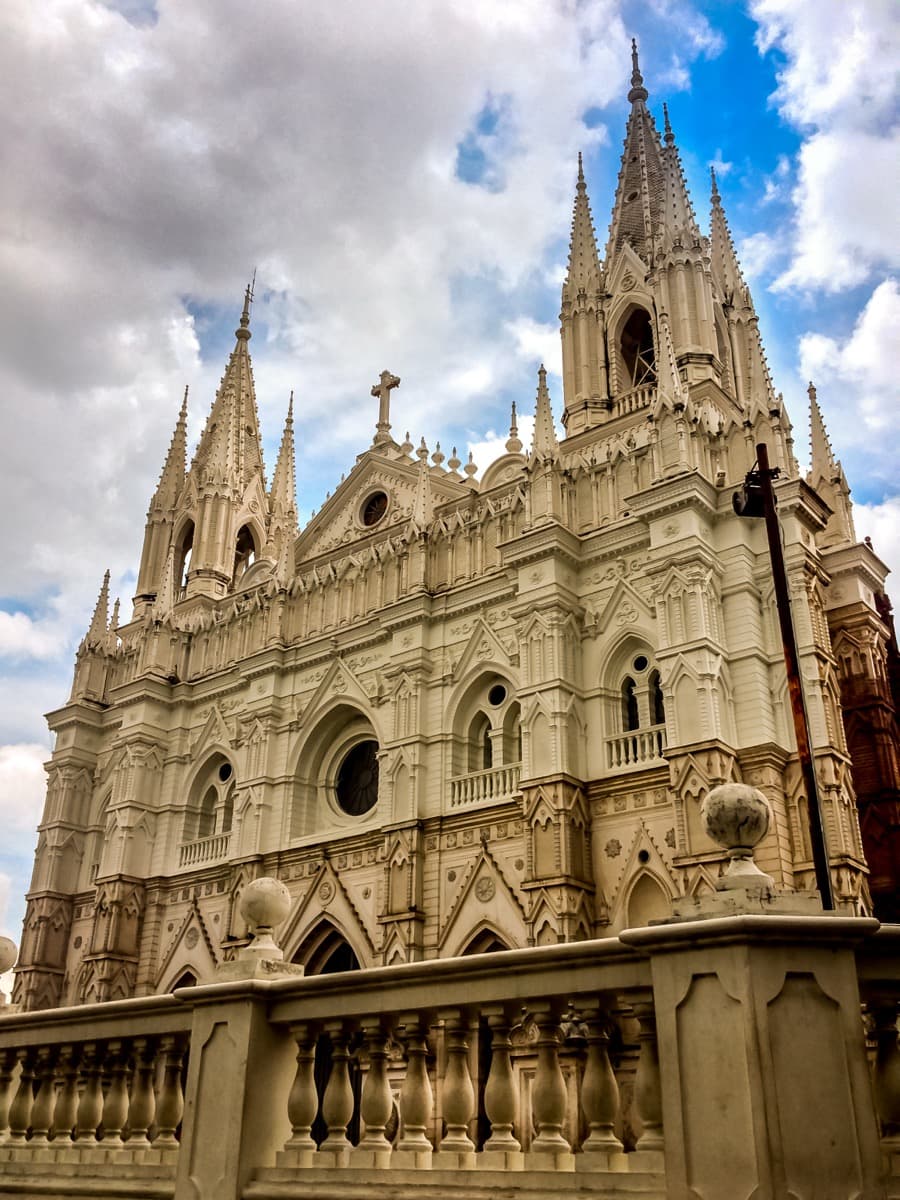
The exterior is Renaissance Revival, with a symmetrical facade organized around a central entrance flanked by columns. Compared to the Gothic drama of the neighboring cathedral, the theater presents a calm, classical face to the plaza. A row of arched windows on the upper level hints at the elegance within.
The Interior
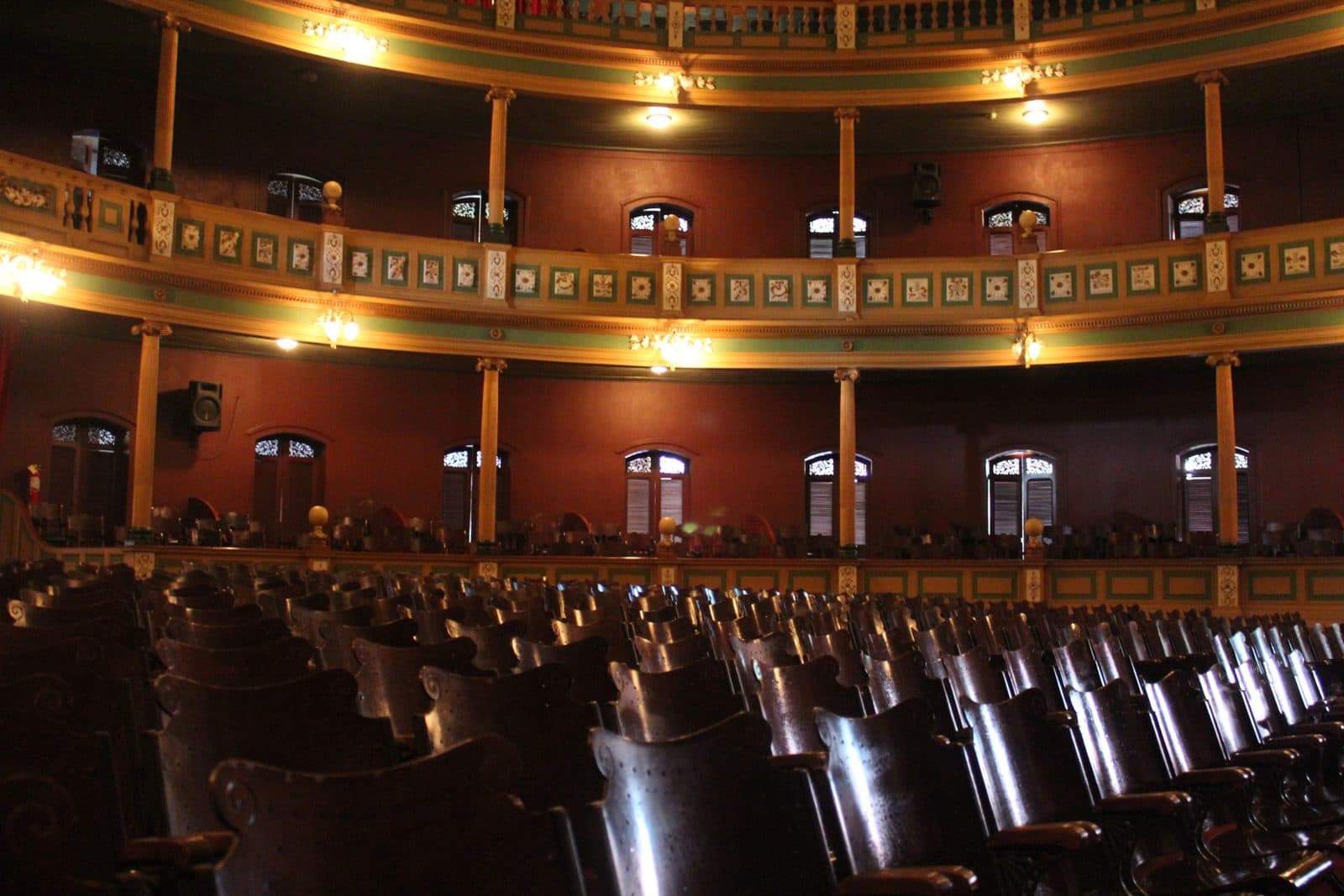
Nothing about the exterior prepares you for the inside. The auditorium is horseshoe-shaped, modeled on European opera house design, with a main floor, balcony, and gallery levels. Every surface is decorated: gilded moldings frame the boxes, carved wooden panels line the walls, and the ceiling features a series of frescoes depicting allegorical figures such as muses, angels, and garlands of flowers.
The centerpiece is the painted ceiling above the auditorium, executed in a style that recalls Italian Renaissance decoration. Cherubs and classical figures float in a heavenly sky, surrounded by ornamental borders in gold and cream. A crystal chandelier hangs from the center, completing the effect.
The Stage
The proscenium arch is framed by elaborate decorative plasterwork, and the original stage machinery, including a system of trapdoors and fly rigging, remains partially intact. The acoustics, designed before electronic amplification existed, are remarkably clear. A singer standing center stage can be heard distinctly in the uppermost gallery.
Survival and Restoration
The Teatro Nacional has survived earthquakes, political upheaval, and decades of neglect. By the mid-20th century, the building had deteriorated significantly. The frescoes faded, plaster crumbled from the ceiling, and the theater was at various points used as a cinema and storage facility.
Declared a national monument in the 1980s, the theater became the focus of a comprehensive restoration that returned the building to something approaching its original glory. Subsequent conservation work has maintained the frescoes, repaired structural damage, and updated the lighting and sound systems while preserving the historic character.
Visiting Today
The Teatro Nacional is an active cultural venue. The schedule includes theater productions, concerts, dance performances, and civic events. Ticket prices are modest, often a few dollars, making this one of the most accessible high-culture experiences in Central America.
Guided Tours
When no performance is scheduled, guided tours of the interior are available and highly recommended. The guides are knowledgeable and enthusiastic, pointing out details you would miss on your own: the hidden faces in the ceiling frescoes, the original gas lamp fixtures converted to electricity, the acoustical quirks of the horseshoe design.
Catching a Show
If your schedule allows, attending a performance is the best way to experience the theater. The space comes alive with an audience: the rustle of programs, the dimming of the chandelier, the moment the curtain parts. It is a direct connection to the experience that Santa Ana's coffee elite created for themselves over a century ago, now open to everyone.
The Teatro Nacional is not just Santa Ana's finest building. It is an argument, made in marble and gold leaf, that art and beauty matter, even in a small city, even in a country often overlooked, even now.
Ready to experience it?
Santa Ana: The Coffee-Built Capital
75 min · 1.8 km · easy
More from Santa Ana
Explore more at your own pace.
How to See Santa Ana: A City the Coffee Money Built and the Coffee Money Left
How to See Santa Ana: Coffee, the Fourteen Families, and the Town Built on a Massacre
One Day in Santa Ana, El Salvador: A Walkable Center Itinerary (2026)
Santa Ana Travel Guide: How Many Days, Getting Around, Is It Safe (2026)

What to Eat in Santa Ana, El Salvador: A Food Guide (2026)