San Salvador does not make most "must-visit" lists. That is precisely what makes its historic center so rewarding. Without the tourist polish of Antigua or the Instagram buzz of Cartagena, the capital of El Salvador offers something increasingly rare: an unfiltered Central American city where you discover things on your own terms.
A City Shaped by Earthquakes
San Salvador has been destroyed and rebuilt more than a dozen times. Earthquakes in 1854, 1873, 1917, 1965, 1986, and 2001 have erased much of its colonial architecture. What remains is a patchwork of ornate 19th-century facades next to brutalist concrete, Art Deco theaters beside improvised market stalls. This is not a flaw. It is the city's character, and it makes every block unpredictable.
The Landmarks That Survived
Hear a stop from this walk
Iglesia El Rosario: The Rainbow in Concrete
The Metropolitan Cathedral
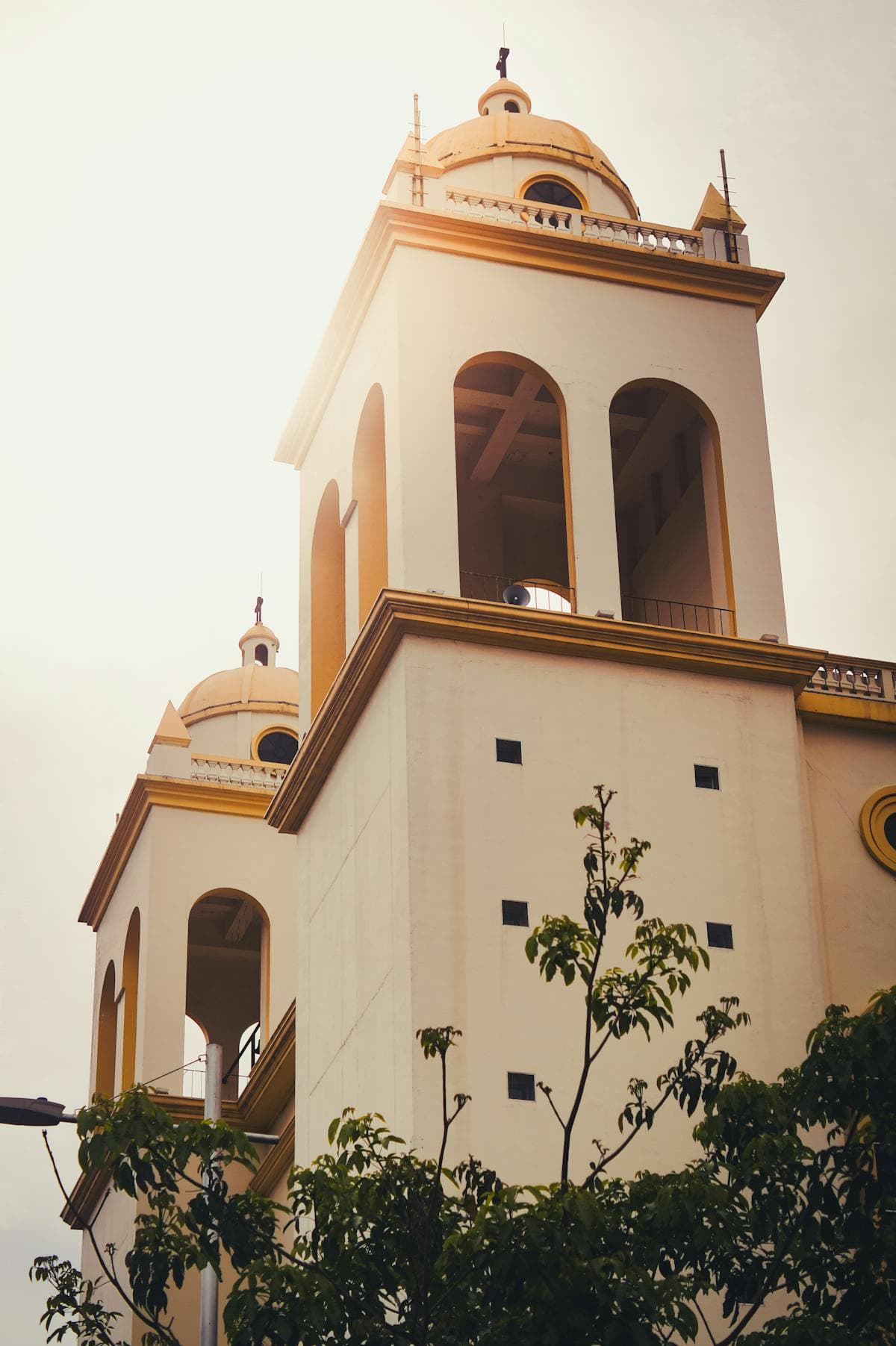
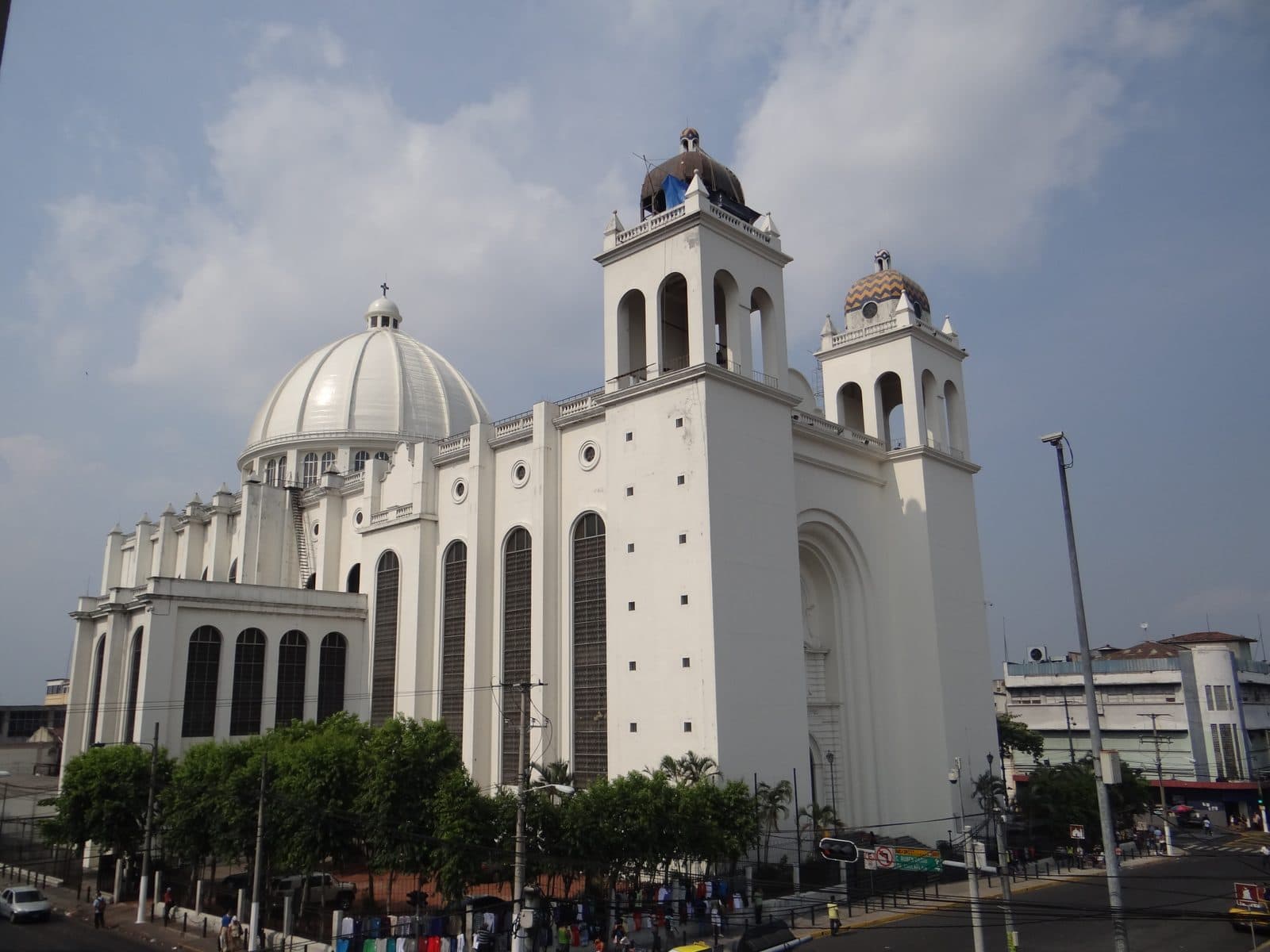
The seat of the Archbishop of San Salvador anchors the Plaza Barrios. The current building, completed in the 1990s, replaced a cathedral gutted by fire in 1951. Its most significant feature is below ground level: the crypt containing the tomb of Saint Óscar Romero, where fresh flowers and handwritten prayers appear daily.
Iglesia El Rosario
A few blocks from the cathedral, this church looks like a concrete warehouse from the outside. Step inside and the space explodes with color. Designed by sculptor Rubén Martínez in the 1960s, El Rosario uses no stained glass in the traditional sense. Instead, fragments of colored glass embedded in the curved concrete walls cast shifting rainbows across the interior as the sun moves. It is unlike any church you have seen before.
The National Palace
Built between 1905 and 1911, the Palacio Nacional is the most architecturally ambitious building in the city. Its four main rooms are known by their colors, the Red, Yellow, Pink, and Blue salons, and much of its material, including its iron roof, was imported from Europe. Now a museum, it offers a quiet counterpoint to the bustling streets outside.
Teatro Nacional
San Salvador's neoclassical theater, inaugurated in 1917, has survived earthquakes that leveled buildings around it. Its Renaissance Revival facade and intimate interior make it one of the finest performance venues in the region.
The Market Experience
The Mercado Central and surrounding market streets are not sanitized for visitors. They are working markets where Salvadorans buy everything from mangoes to machetes. The experience is intense, with narrow corridors, competing music, and the smell of fresh pupusas layered over diesel fumes, but it is authentic in a way that purpose-built markets never manage.
For a slightly calmer introduction, the Mercado Ex-Cuartel offers handicrafts and textiles in a more organized setting, making it a good starting point before diving into the sensory overload of the central blocks.
Street Art and Public Memory
San Salvador's center has become an open-air gallery. Murals cover walls throughout the downtown area, ranging from political commentary to celebrations of indigenous heritage. Unlike cities where street art is curated and sanctioned, much of San Salvador's work is raw, unpolished, and deeply personal. Portraits of Romero appear everywhere, on church walls, shop shutters, and highway overpasses.
Practical Tips
Timing matters. The historic center is busiest, and most alive, on weekday mornings. Markets wind down by early afternoon, and the area quiets significantly after dark. Saturday mornings offer a good balance of energy and comfort.
Stay aware. San Salvador has improved dramatically in recent years, but the center remains a working urban district. Keep valuables out of sight, stick to main streets, and trust your instincts.
Eat downtown. The pupuserías around the Mercado Central are some of the best in the country. Look for the ones with lines of locals. That is all the review you need.
The beauty of San Salvador's center is that it asks nothing of you except attention. There are no entrance fees, no velvet ropes, no audio guides telling you where to stand. Just a city revealing itself one block at a time.
Frequently asked questions
- What is special about Iglesia El Rosario in San Salvador?
- Designed by sculptor Ruben Martinez in the 1960s, El Rosario uses fragments of colored glass embedded in curved concrete walls to cast shifting rainbows across the interior as the sun moves.
- Whose tomb is in the Metropolitan Cathedral of San Salvador?
- The crypt below the Metropolitan Cathedral contains the tomb of Saint Oscar Romero, where fresh flowers and handwritten prayers appear daily.
- When is the best time to visit San Salvador's historic center?
- The historic center is busiest and most alive on weekday mornings, since markets wind down by early afternoon and the area quiets significantly after dark.
Ready to experience it?
Historic Center: The City That Keeps Coming Back
65 min · 1.1 km · easy
More from San Salvador
Explore more at your own pace.
Best Self-Guided Walking Tours in San Salvador (2026)
How to See San Salvador: A Capital That Aspired to Be a Capital
One Day in San Salvador: A Walkable Historic-Center Itinerary (2026)
San Salvador Travel Guide: How Many Days, Getting Around, Is It Safe (2026)
Best History Walking Tours in San Salvador (2026)