In the 1920s, three painters made a radical decision: art should not live behind velvet ropes. It should cover the walls of public buildings where anyone, literate or not, wealthy or not, could stand before it and feel something. That decision launched Mexican Muralism, the most influential public art movement of the 20th century, and its legacy continues to shape how we think about the relationship between art, politics, and public space.
The Revolution on Walls
Mexican Muralism emerged from a specific moment in history. The Mexican Revolution (1910-1920) had toppled a dictatorship, redistributed land, and promised a new social order. But much of the population could not read. How do you communicate the ideals of a revolution to millions of people who cannot access newspapers or pamphlets?
Jose Vasconcelos, the minister of education under President Alvaro Obregon, had an answer: paint it on the walls. In 1921, he began commissioning artists to cover government buildings, schools, and public spaces with murals depicting Mexican history, indigenous heritage, and the promise of social justice. The program attracted dozens of artists, but three names rose above the rest.
Los Tres Grandes
Hear a stop from this walk
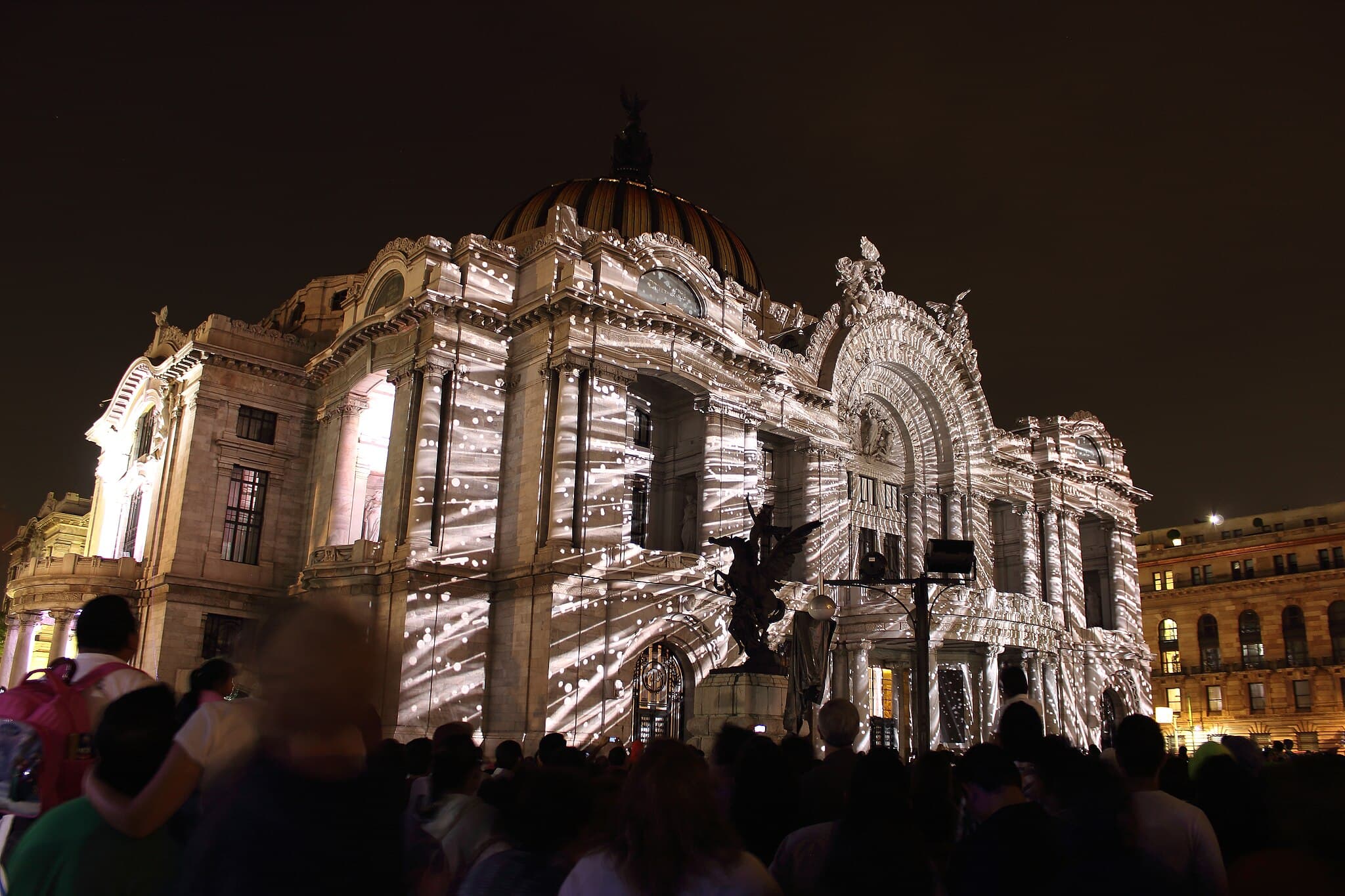
Palacio de Bellas Artes: Four Contradictions Under One Roof
Diego Rivera (1886-1957)
Rivera is the most recognized of the three, partly because of his marriage to Frida Kahlo, but mostly because of the sheer ambition of his work. His style combined Renaissance fresco technique with the flat, bold forms of pre-Columbian art. Rivera's murals at the National Palace trace the entire arc of Mexican history across hundreds of square meters, from the mythic founding of Tenochtitlan to his vision of an industrialized future.
Rivera had studied in Europe, absorbed Cubism, and rejected it. He believed art needed to be immediately legible. His compositions are packed with detail but never confusing. A farmer, a factory worker, and a revolutionary can all find themselves represented in his walls. This democratic impulse was the point.
Jose Clemente Orozco (1883-1949)
Where Rivera was an optimist who painted utopian visions, Orozco was a skeptic who painted suffering. His work is darker, more expressionistic, and often more emotionally devastating. Orozco had lost his left hand in an accident as a young man, and his art carries a visceral awareness of the body's vulnerability.
His murals at the Hospicio Cabanas in Guadalajara are considered among the greatest works of art in the Americas. The central dome painting, "The Man of Fire," depicts a figure engulfed in flames, a metaphor for destruction and rebirth that feels almost unbearably intense when viewed from below. In Mexico City, his work at the Palacio de Bellas Artes and the Supreme Court offers a more accessible but equally powerful introduction.
David Alfaro Siqueiros (1896-1974)
Siqueiros was the most politically radical of the three and the most technically experimental. A committed communist who actually fought in the Spanish Civil War, he brought an activist's urgency to his art. But his real innovation was formal: he pioneered the use of industrial materials (automotive paint, spray guns, synthetic resins) and explored how murals could work on curved and irregular surfaces.
His Polyforum Cultural Siqueiros houses what he called "the world's largest mural," a 360-degree painting that envelops the viewer. Siqueiros wanted his art to be inescapable, immersive, three-dimensional. Where Rivera composed for contemplation, Siqueiros engineered for impact.
Beyond the Big Three
The muralist movement was never just three men. Women like Aurora Reyes, who painted the first mural by a woman in Mexico in 1936, and international artists like the Japanese-Mexican painter Tamiji Kitagawa contributed essential work. The movement also inspired muralism across Latin America and in the United States, where Rivera's Detroit Industry Murals at the Detroit Institute of Arts remain one of the most visited artworks in North America.
The Legacy in Mexico City Today
Walk through Mexico City and muralism is everywhere. The university campus (UNAM) features massive mosaic murals by Juan O'Gorman on the Central Library. The Palacio de Bellas Artes houses major works by all three of Los Tres Grandes under one roof. Government buildings, schools, and markets all bear painted walls that continue the tradition.
But the legacy goes deeper than specific works. Mexican Muralism established the idea that public space is exhibition space, that art can be political without being propaganda, and that beauty is not a luxury but a right. Contemporary street art in Mexico City, from the massive murals in neighborhoods like Coyoacan and Roma to the stencil work in the Centro Historico, draws a direct line back to the 1920s.
Seeing the Murals in Person
Photographs cannot capture the experience of standing before a Rivera mural that stretches across an entire stairwell, or looking up into Orozco's dome of fire. Scale, texture, and the relationship between the art and its architectural setting are essential to the impact. These works were designed for physical presence.
Roamer's Murals & Masterpieces tour maps out the essential murals across Mexico City's historic center and cultural district, with audio context at each stop explaining the history, symbolism, and technique behind what you are seeing. It is a walking education in one of the most important art movements ever created, experienced exactly where the artists intended.
Frequently asked questions
- Why did the Mexican Muralism movement begin?
- After the Mexican Revolution, education minister Jose Vasconcelos began commissioning artists in 1921 to cover government buildings, schools, and public spaces with murals depicting Mexican history, indigenous heritage, and the promise of social justice.
- Was Mexican Muralism only created by three men?
- No. The movement included women like Aurora Reyes, who painted the first mural by a woman in Mexico in 1936, and international artists like the Japanese-Mexican painter Tamiji Kitagawa.
- What did the muralists want their work to do?
- The muralists covered public buildings with murals depicting Mexican history, indigenous heritage, and the promise of social justice, making art that reached a population where many could not read.
Mexico eSIM· 10% off with ROAMER10
Ready to experience it?
Diego Rivera Murals: The Revolution on the Walls
80 min · 2.5 km · easy
More from Mexico City
Explore more at your own pace.
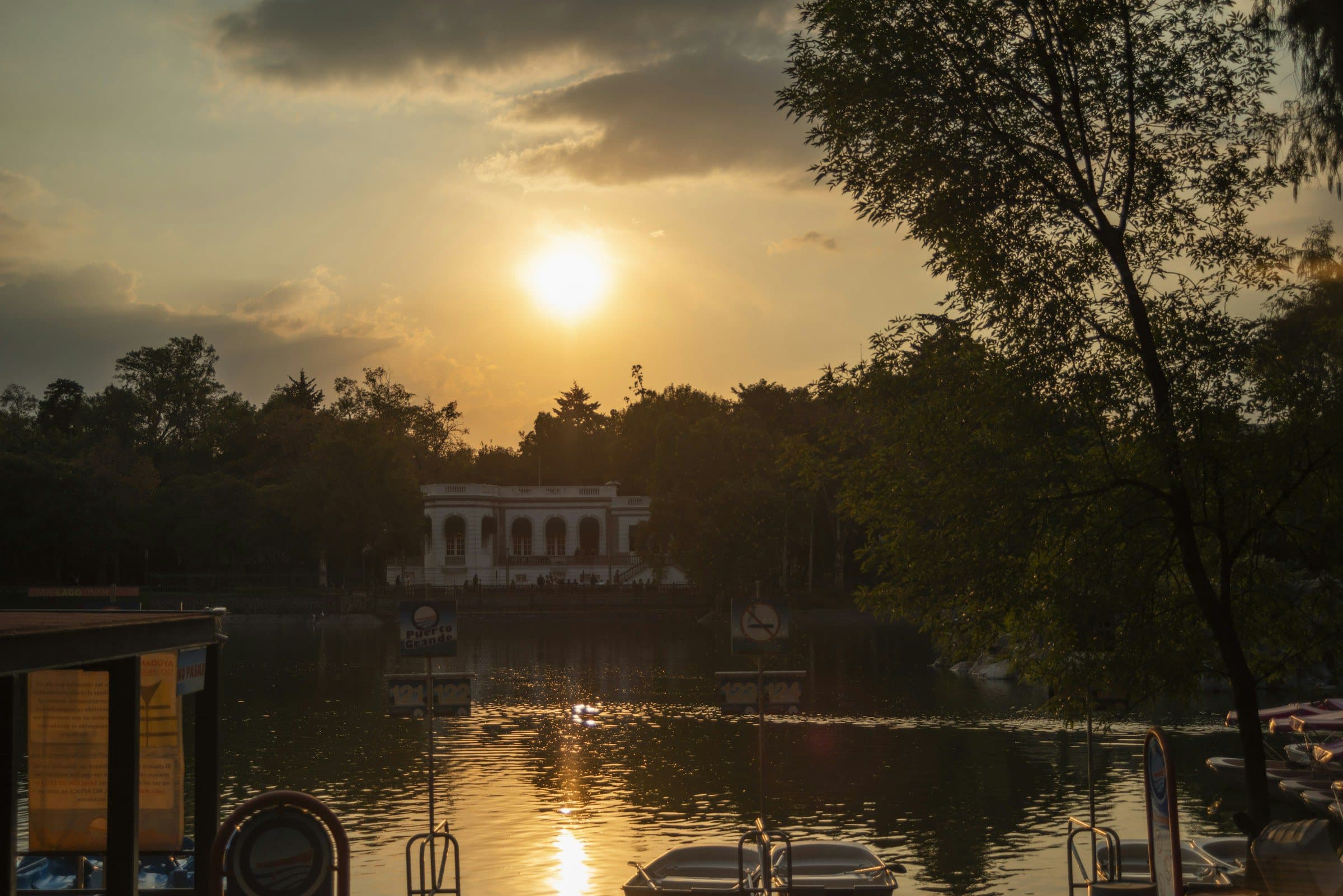
Chapultepec Park Guide: Hill, Lakes and Museum Row
Coatlicue: The Statue That Was Buried Twice
El Sargento: The Dead Ahuehuete Tree of Chapultepec
The Baños de Moctezuma: The Bath That Was Never Moctezuma's
The Tlaloc Monolith: The Stone That Crossed Mexico City in 1964