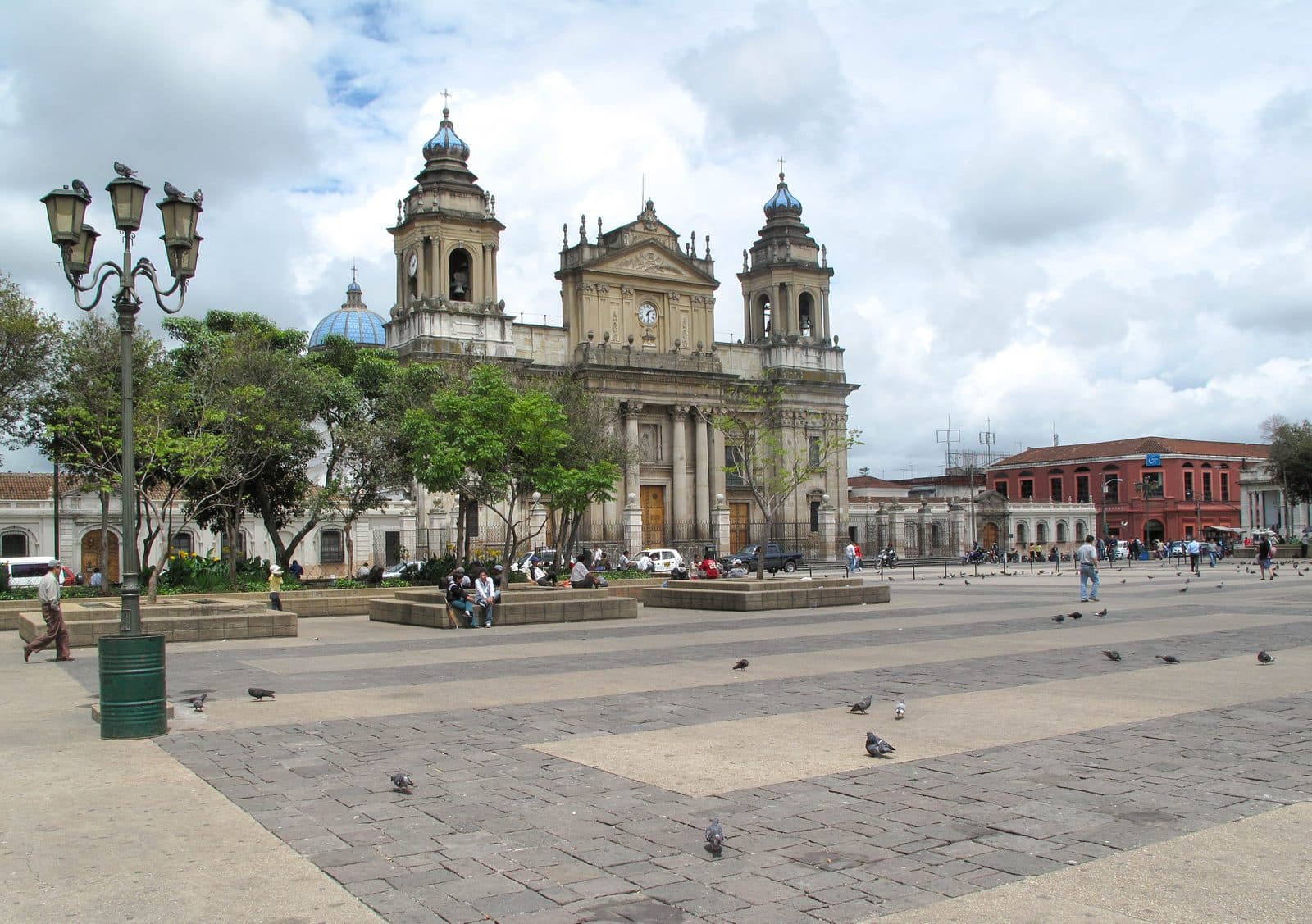
Running through the southern half of Guatemala City, Avenida Las Americas is the kind of boulevard that most visitors drive along without stopping. It's wide, tree-lined, and flanked by monuments to historical figures from across the Western Hemisphere. Most travelers glimpse it through taxi windows en route between the airport and their hotel. But walking this boulevard reveals something unexpected: a physical map of Guatemala's diplomatic ambitions, cultural aspirations, and complicated relationship with the rest of the Americas.
Why This Boulevard Exists
Avenida Las Americas was laid out in the late 19th century as an extension of Avenida La Reforma, then took on its hemispheric identity in 1948, when it was renamed to mark the founding of the Organization of American States in Bogota that April. The boulevard reads as a grand ceremonial axis, a Champs-Elysees for Central America, connecting the city's newer southern zones with the older center. Its width, landscaping, and monument program were meant to signal that Guatemala City was a modern, cosmopolitan capital worthy of its role as the largest city in Central America.
The monuments that line the boulevard were diplomatic gestures. Each one honors a figure from a different American nation, a bronze or stone embodiment of hemispheric friendship installed through agreements between Guatemala and its neighbors. The result is a curated pantheon of national heroes from across the hemisphere, standing in a line along several kilometers of tree-shaded median.
The Monuments: A Hemispheric Who's Who
Hear a stop from this walk
Honduras
Walking the boulevard from south to north, you encounter a parade of historical figures whose selection reveals as much about diplomatic strategy as historical judgment.
The Liberators
Several monuments honor independence leaders: Simon Bolivar (Venezuela/Colombia/Ecuador/Peru/Bolivia), Jose de San Martin (Argentina), and Bernardo O'Higgins (Chile), and a later sculpture of Jose Marti (Cuba). Their placement on Guatemala's most prominent boulevard links Guatemala's own independence narrative to the broader hemispheric liberation movements of the 19th century. It's a visual argument: we belong to this tradition.
Bolivar's monument is particularly prominent, reflecting the pan-American ideal he championed: a united Americas resisting European colonial influence. That ideal, though never fully realized, remains powerful in Latin American political rhetoric, and Bolivar's presence on the boulevard invokes it deliberately.
The Cultural Figures
Other monuments honor cultural and intellectual contributions. Plaza Nicaragua commemorates Ruben Dario, the father of literary modernismo, representing the idea that the Americas produce not just soldiers and politicians but poets and thinkers. Benito Juarez (Mexico), a Zapotec indigenous president who resisted French intervention, embodies the promise of indigenous leadership in nations that have historically marginalized their indigenous populations, a pointed choice for Guatemala.
The Absent
What's missing is as telling as what's present. The monument program reflects mid-20th-century diplomatic priorities, which means some nations are represented more prominently than others. The selection also skews heavily toward male military and political leaders, with minimal representation of women, indigenous leaders (Juarez being the notable exception), or cultural figures beyond the literary canon.
The Boulevard as Public Space
Beyond the monuments, Avenida Las Americas functions as one of Guatemala City's primary green corridors. The wide median, planted with mature trees that form a canopy, serves as an informal park for residents of the surrounding neighborhoods. Early morning and late afternoon bring joggers, dog walkers, and families using the shaded paths.
This dual function, ceremonial boulevard and neighborhood green space, creates interesting juxtapositions. A bronze liberator gazes heroically into the middle distance while a woman sells mangoes from a cart at his feet. Children play tag around the base of a monument to a president they've never heard of. The grand diplomatic gestures of the mid-20th century coexist with the ordinary life of a 21st-century city.
On weekends, sections of the boulevard sometimes host informal markets, fitness groups, and community events. The space that was designed for ceremonial promenading has been claimed for everyday use, a democratic outcome that the boulevard's planners may not have intended but would likely appreciate.
Architecture Along the Avenue
The buildings flanking Avenida Las Americas chart Guatemala City's architectural evolution. Moving from south to north, you transition through layers of development:
Mid-century modern. The earliest buildings along the boulevard reflect the 1950s-60s modernist confidence: clean lines, concrete and glass, horizontal emphasis. Many were designed as embassies, corporate headquarters, or upscale residences, reflecting the boulevard's intended prestige.
Late 20th-century commercial. As the city grew, commercial development filled gaps between the original modernist buildings. Hotels, office towers, and shopping centers added height and density. The architectural quality varies widely: some buildings complement the boulevard's grandeur, others ignore it entirely.
Contemporary mixed-use. The most recent construction includes residential towers and mixed-use developments that acknowledge the boulevard's heritage with setbacks, landscaping, and ground-floor retail. Whether these additions enhance or diminish the original vision is a matter of ongoing debate among architects and urban planners.
Walking the Boulevard
Most of Avenida Las Americas is walkable along the central median path, which is shaded and reasonably well-maintained. The experience is different from walking Guatemala City's commercial streets. The pace is slower, the noise level lower, and the visual focus shifts upward toward monuments and tree canopy rather than forward through crowds.
Practical considerations:
- The boulevard stretches several kilometers; pick a section rather than attempting the entire length
- Morning light (before 10am) is best for photography, with the sun illuminating the eastern-facing monuments
- The median path has some uneven surfaces, so wear sturdy shoes
- Water and snacks are available from vendors along the route, but not continuously; bring your own to be safe
- The boulevard connects to several bus routes and is accessible by Uber
The Story It Tells
Avenida Las Americas is, in the end, a story Guatemala tells about itself. It's a story about belonging: to the hemisphere, to the tradition of liberation, to the community of modern nations. The monuments are diplomatic handshakes cast in bronze, each one affirming a relationship and asserting Guatemala's place in a larger narrative.
Whether that story is triumphant or aspirational depends on your perspective. The boulevard was built during a period of political instability and social inequality that persists today. The grand monuments to liberation and democracy line a boulevard in a city where both have been contested, interrupted, and painfully recovered.
That tension between the ideal and the real, the monumental and the everyday, is exactly what makes walking Avenida Las Americas worthwhile. The Guatemala City Las Americas Tour provides the historical context for each monument and the diplomatic relationships they represent, transforming a scenic stroll into a lesson in hemispheric history.
Walk it in the morning, when the light is soft and the joggers share the median with bronze heroes. The combination of ordinary life and grand ambition is Guatemala City at its most honest.
Ready to experience it?
Boulevard of the Americas: What Survives
120 min · 3.5 km · easy
More from Guatemala City
Explore more at your own pace.
Best Self-Guided Walking Tours in Guatemala City (2026)
Guatemala City Travel Guide: How Many Days, Getting Around, Is It Safe (2026)
One Day in Guatemala City: A Walkable Itinerary (2026)
Best History Walking Tours in Guatemala City (2026)
What to Eat in Guatemala City: A Food Guide (2026)