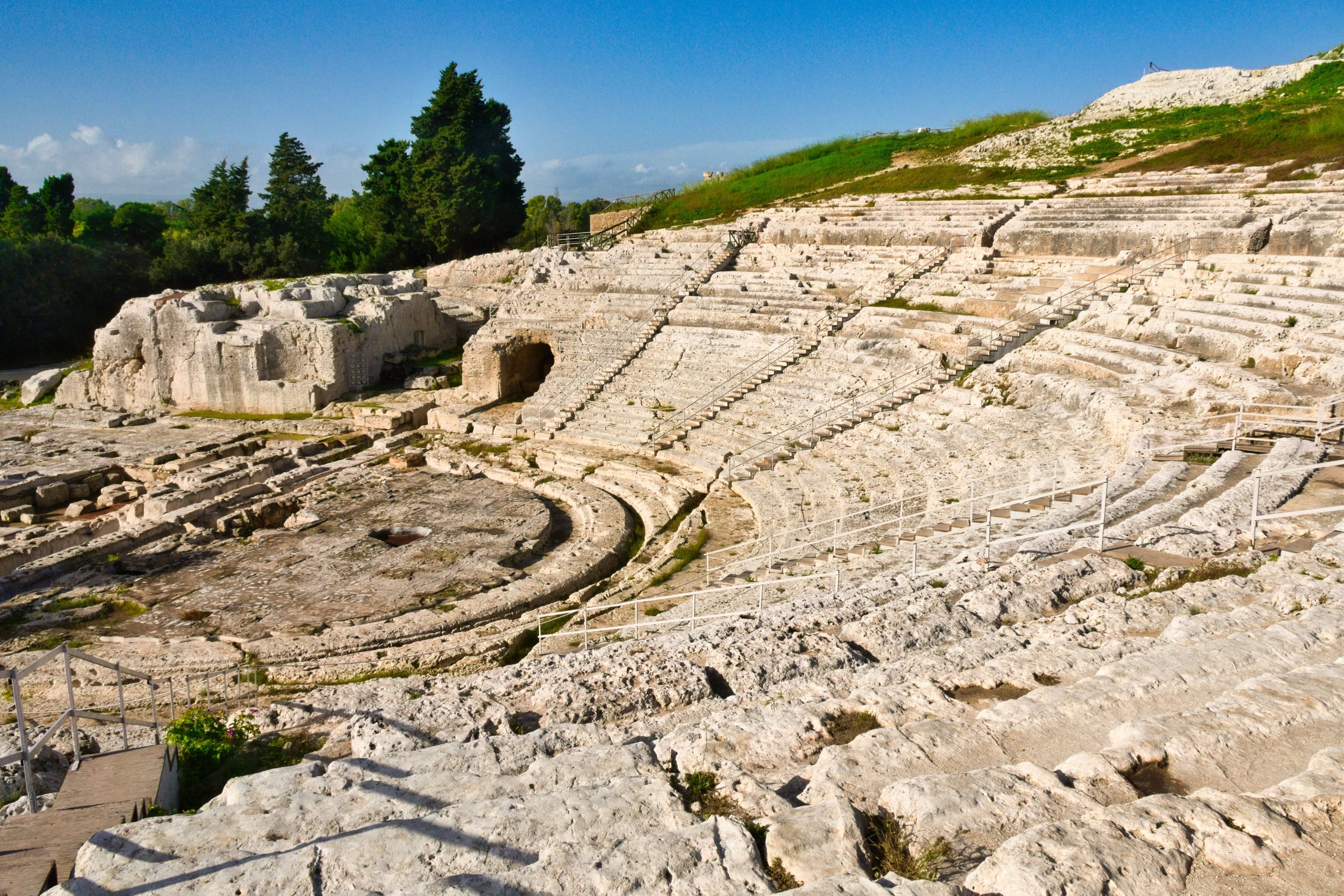
Walk the ticketed Neapolis park in Syracuse: the Roman amphitheatre, Hieron's altar, the Paradise Quarry, the Ear of Dionysius and the Greek theatre, cut from a hill of quarries.
Start · Roman Amphitheatre: A Bowl Cut into the Hill
DirectionsStops
- 1
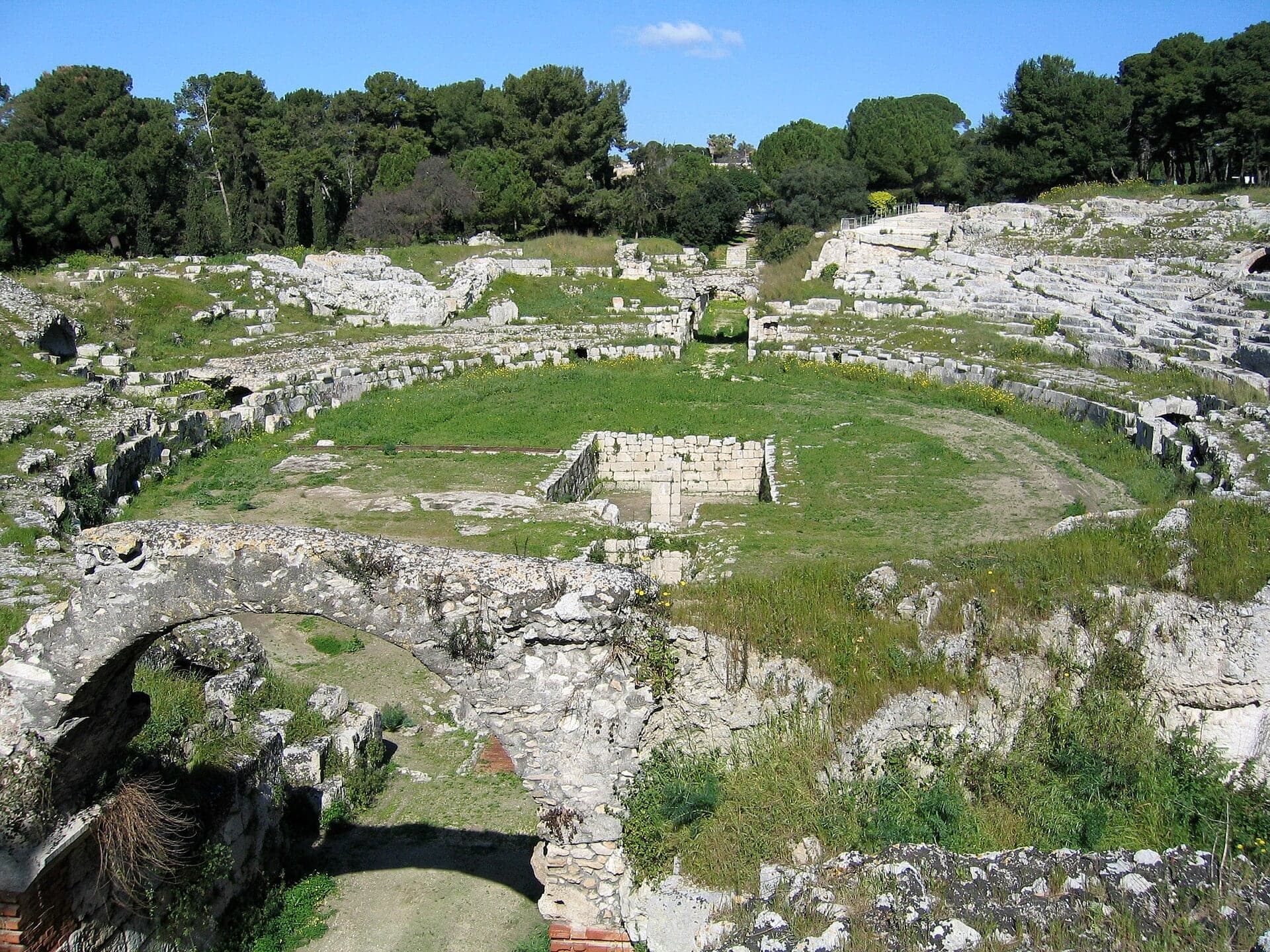
Roman Amphitheatre: A Bowl Cut into the Hill
A Roman arena cut into the hillside, with its upper tiers long gone. Experts still argue about its date. The walk starts here, just inside the ticket gate.
- 2
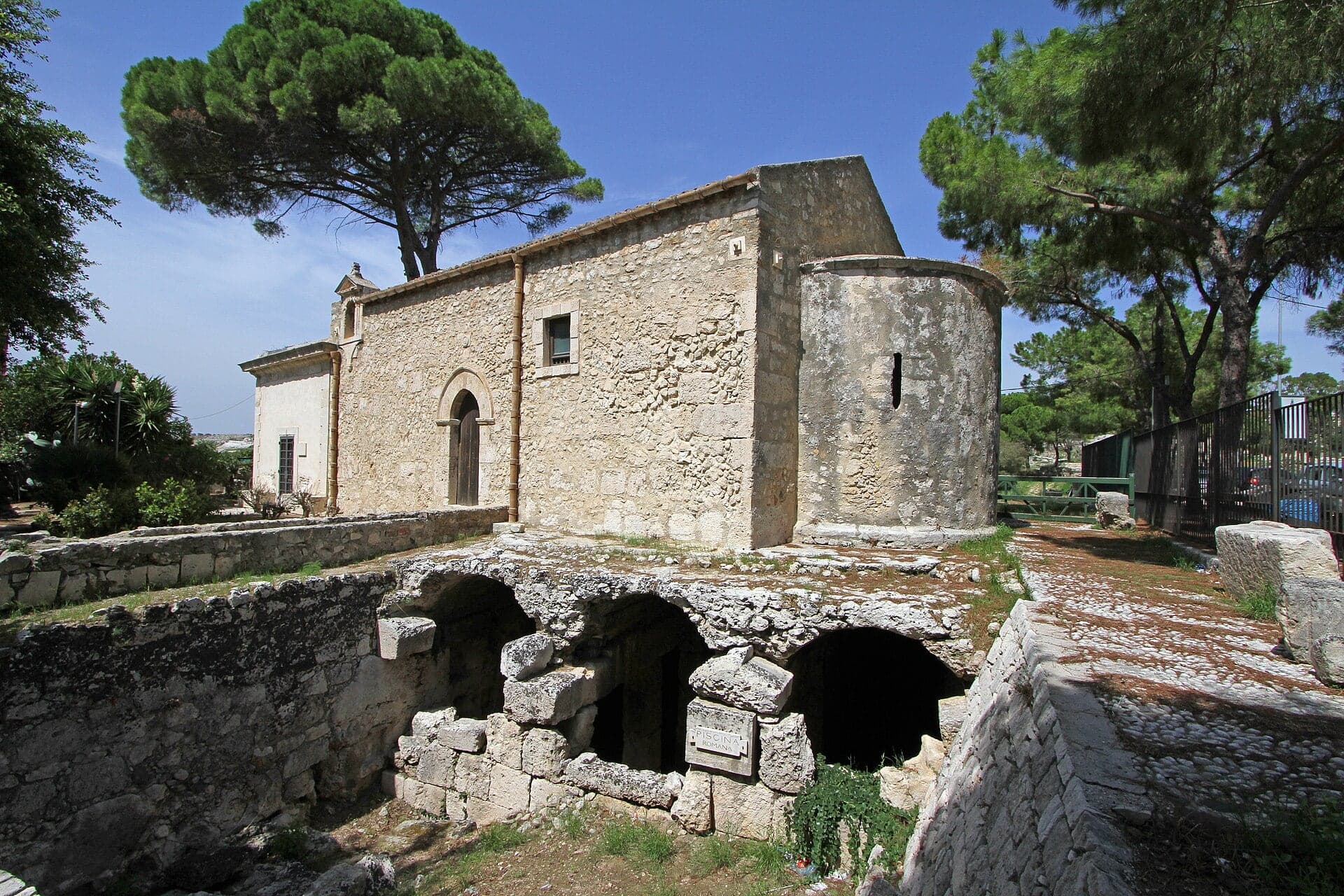
Park Gate and San Nicolò ai Cordari: A Fence Drawn Around the Past
The park street at the gate beside a small stone church. The church once belonged to the rope makers, and the park was laid out in the 1950s.
- 3
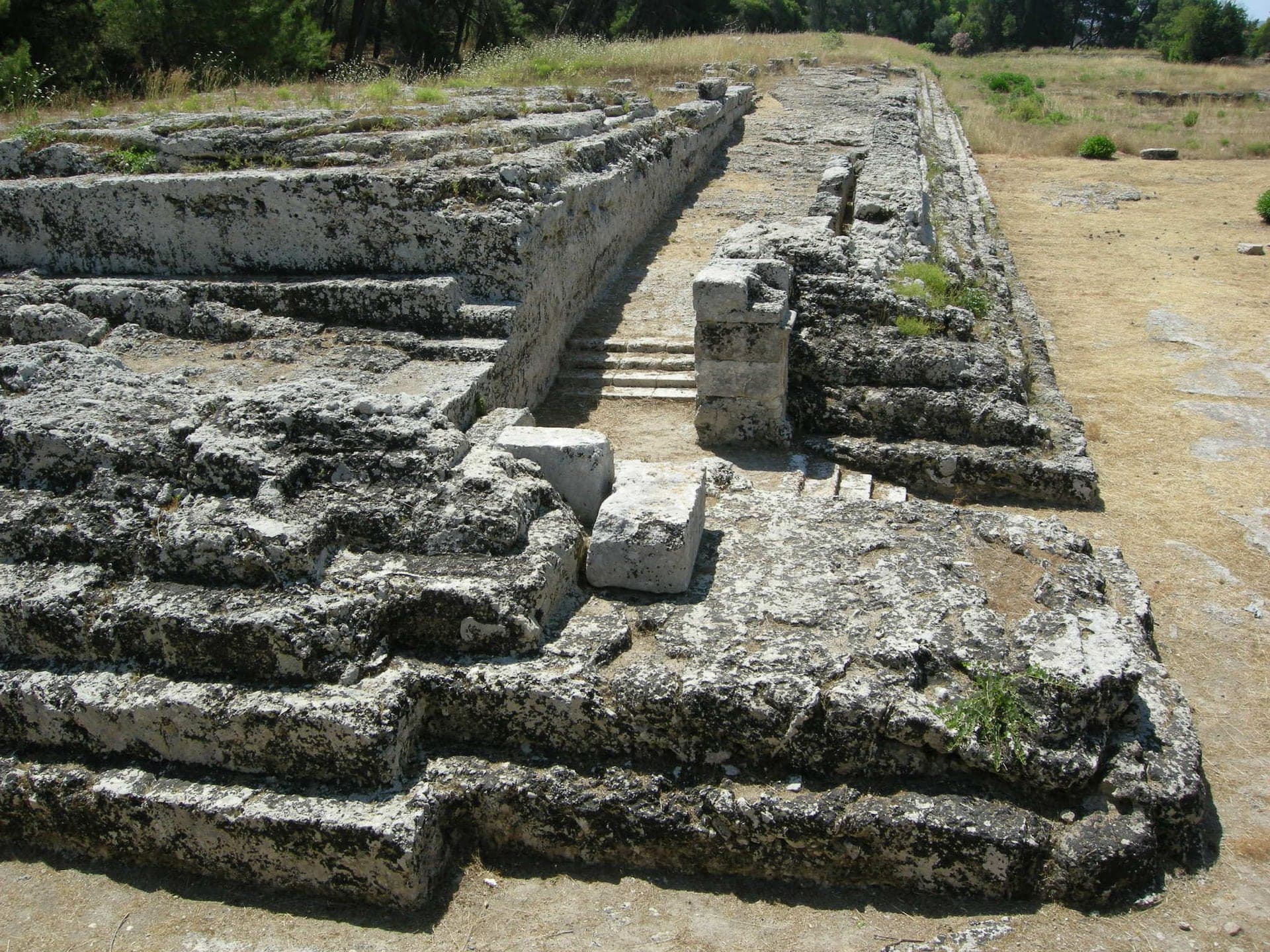
Altar of Hieron II: A Stade of Solid Rock
An altar base nearly two hundred metres long, cut from solid rock. Its tall stone upper part was taken in the 1500s.
- 4
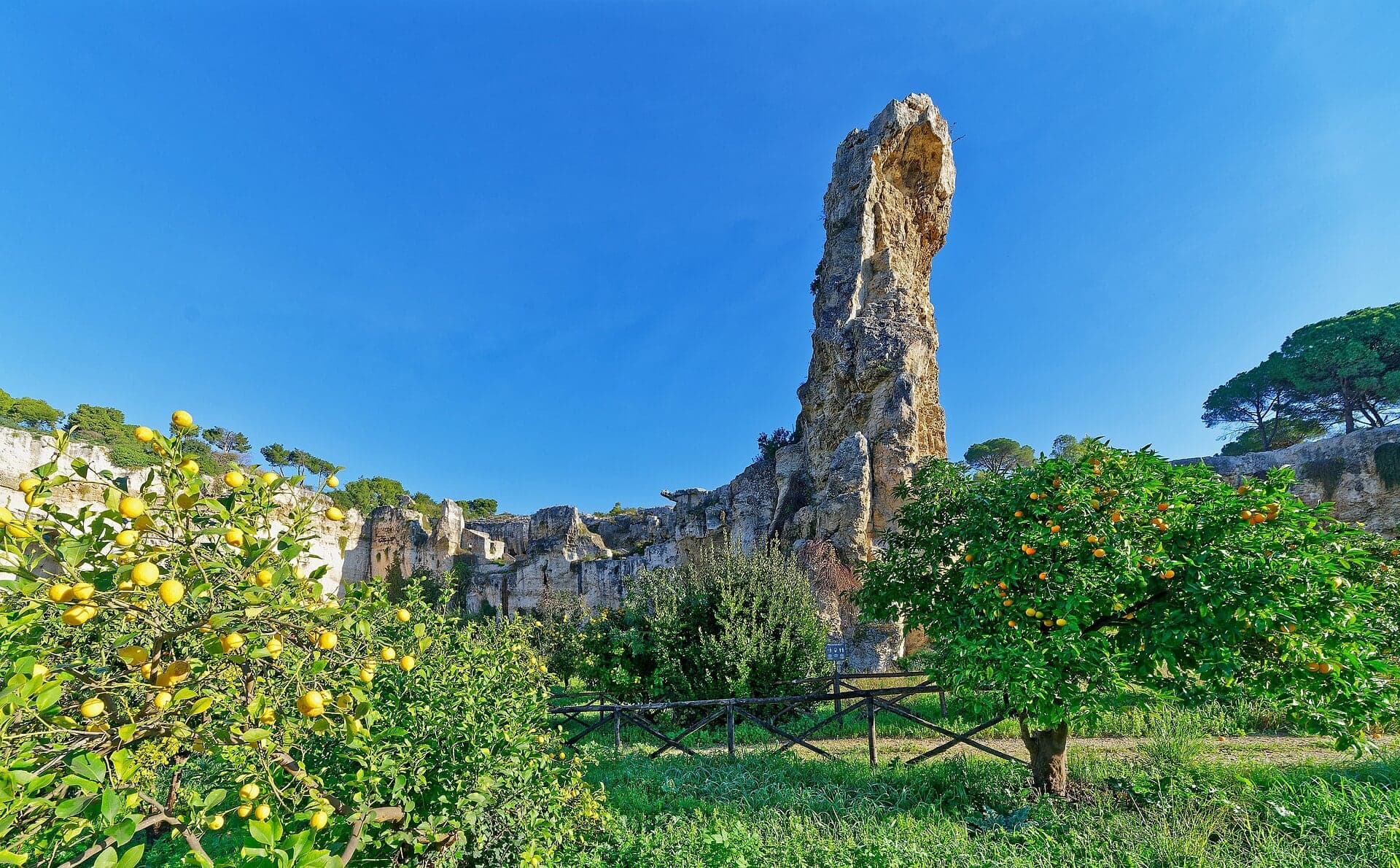
Latomia del Paradiso: The Quarry That Made the City
A quarry garden where the Greek city cut its stone. Thucydides tells what became of the Athenian prisoners.
- 5
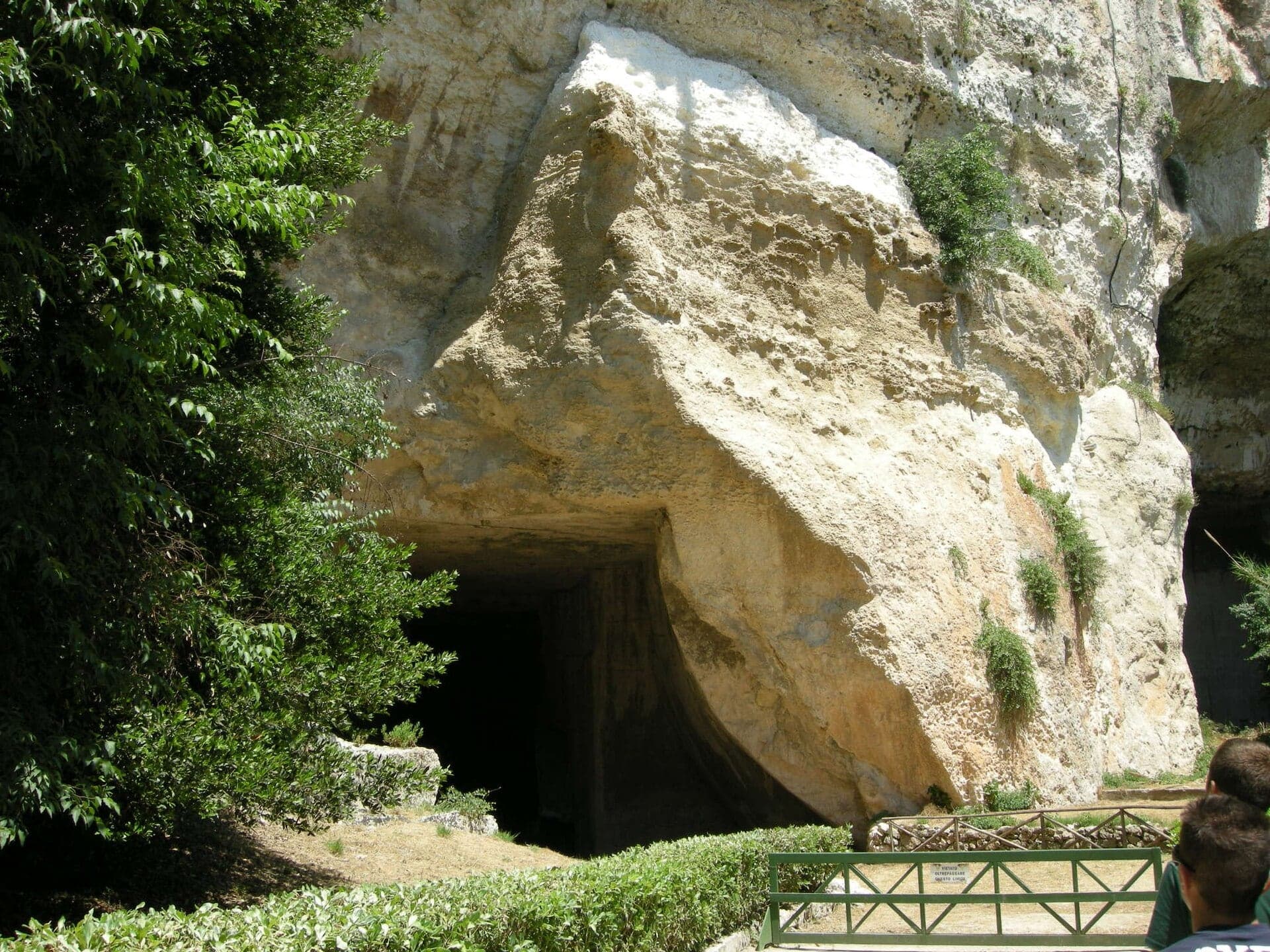
Grotta dei Cordari: A Rope Walk in a Quarry
A quarry cave where rope was twisted by hand until 1983. It reopened to visitors in July 2021.
- 6
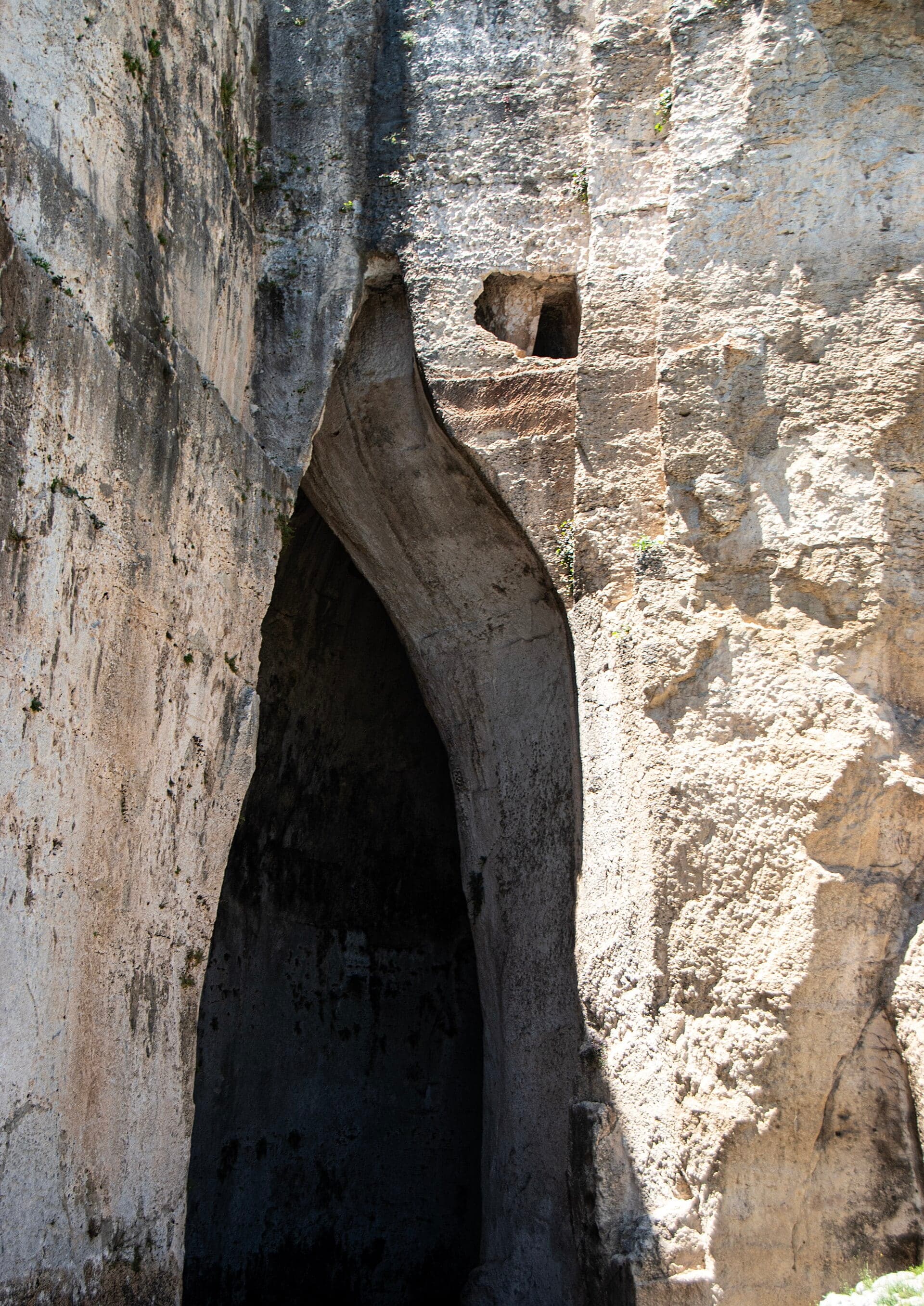
Ear of Dionysius: A Name With a Date
A tall S shaped cave with a famous but doubtful name. The name is a few centuries old.
- 7
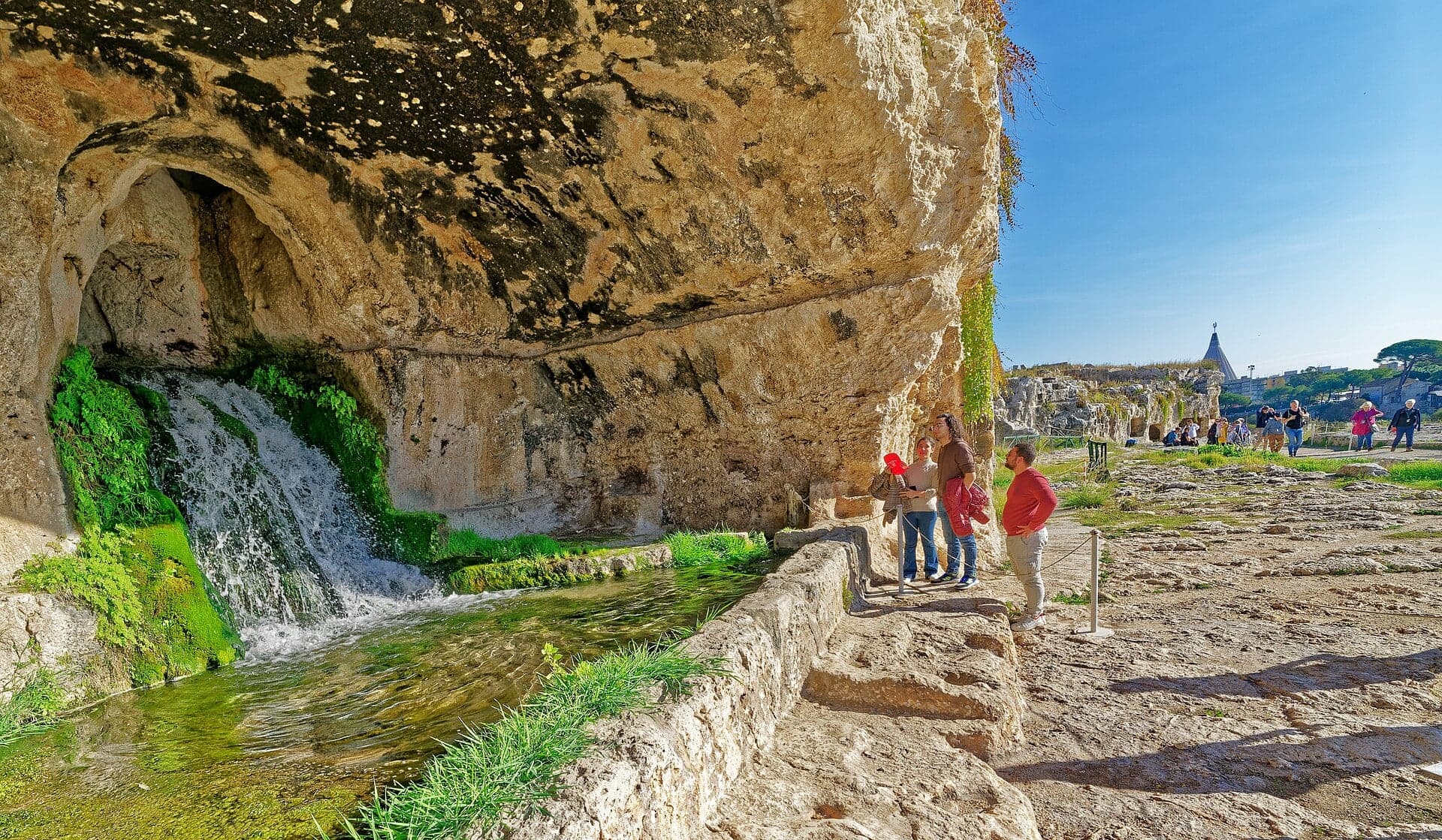
Nymphaeum Terrace: Architecture in the Negative
A rock terrace above the theatre with a water cave. It shows how a quarry became a city.
- 8
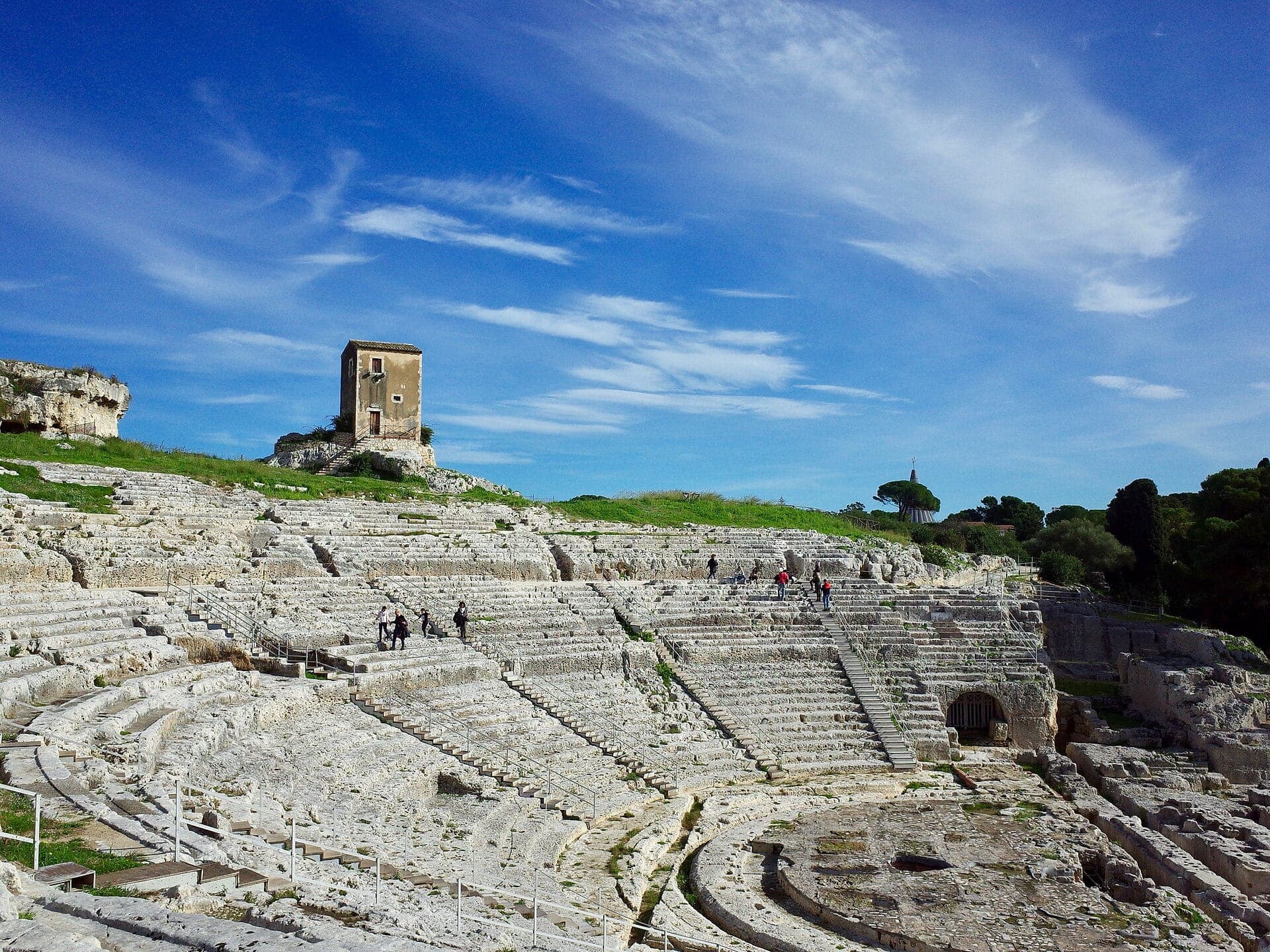
Greek Theatre: A King's Name in the Stone
The Greek theatre cut into the hillside, rebuilt by King Hieron. His family is named in the stone, and the walk ends here.
Details
Best Time to Visit
Early morning or late afternoon, to avoid the heat on the open limestone of the theatre, the altar and the amphitheatre rim; the quarry garden and caves are the cool parts. Autumn to early spring suits the theatre best, because the stone is normally bare after the festival season, which runs from spring into early summer with wooden seating over the stone. Hours change through the year (checked 3 October 2026, see the first stop's card).
Pro Tips
- •Official hours change by season; checked 3 October 2026: 1 to 24 October 8:30 to 18:15, ticket office closing 17:30; 25 to 31 October 8:30 to 17:15, ticket office closing 16:30. November hours were not published on the official page when checked.
- •Entry is free for everyone on the first Sunday of the month according to the regional parks' standing notices (4 October 2026 was one when checked). Expect it to be busy.
- •A combined ticket with the Paolo Orsi archaeological museum was listed at EUR 18 full and EUR 9 reduced (checked 3 October 2026); confirm at the desk.
- •Buy individual tickets at the office by the church at the east end of the park street, in the pedestrian area by the gate, just before where this walk starts; the second office, near the amphitheatre, is tagged on maps for organised groups; confirm at the gate.
- •Bring water, a hat and sun protection; there is little shade outside the quarry garden and the caves.
- •Castello Eurialo has its own ticket and was shown as closed in October 2026 on the official hours page (checked 3 October 2026), so it is not part of this walk.
- •The Santuario della Madonna delle Lacrime, a short walk away, is a working church: dress modestly and keep quiet during services.
Safety & Precautions
- •The ground in the quarry garden and around the caves is uneven, and some paths are steep. Several steps are cut in the rock, and at least one flight up to the terrace has no handrail.
- •Access to the Grotta dei Cordari, the Ear of Dionysius, the amphitheatre arena and the theatre's lower level changes with conditions and festival work. Treat the stops as views from the path, and follow park signs and barriers.
- •The lowest part of the Greek theatre is normally closed from spring to early summer for the festival seating. On performance days the park may close early (not confirmed; check on arrival).
- •The sunken Via dei Sepolcri, the road above the theatre, is mapped as closed to the public.
- •The top of the Ear of Dionysius is not open to visitors.
- •Weather closures have happened at short notice (for example 12 November 2024 and 15 May 2025). Check the park's notices before travelling in bad weather.
- •The park's ticket offices and amphitheatre path may be signed one way; follow the signs if they differ from this walk's order.
Travel advisory: Exercise Increased Caution (Level 2).
Gallery
Related Reading
Go deeper on what you'll see, hear, and walk through.
Read the walk
The full story of Neapolis Archaeological Park: A Theatre Cut from a Quarry Hill, in words. Prefer to listen? Play it narrated, from home or on location.
Introduction
Syracuse, on the island of Sicily in Italy, was in Greek and Roman times a city of several districts joined together. In seventy BC the Roman orator Cicero counted four. The youngest, he says, was called Neapolis, the New Town, with the great theatre on its highest ground. That ground is now an archaeological park, and this walk covers its heart in eight stops and under a kilometre. It takes fifty minutes to an hour.
The park is fenced and ticketed. Inside you will meet a Roman amphitheatre, the base of an altar nearly two hundred metres long, a quarry garden, a cave shaped like an ear and a Greek theatre.
Three names come back. King Hieron the Second, who ruled Syracuse for fifty-four years and built the altar and rebuilt the theatre. Cicero, who describes the city in his own day. And Thucydides, the Athenian historian who tells what became of the prisoners in the quarries.
One idea runs through the walk. This hill was a quarry before it was a city, and the monuments on it were largely cut down into the rock rather than built up from it. Each monument stops where its rock stops, and what stood above is missing. No group, no fixed start: linger, or skip whatever you like. When you are through the ticket gate, take the short steps down to the rim of the amphitheatre, and begin with stop one.
1. Roman Amphitheatre: A Bowl Cut into the Hill
Welcome to the Neapolis Archaeological Park in Syracuse. First, the practical part. The park is ticketed, this walk assumes the ticket, and it is worth it: the theatre, the quarry garden and the caves are all inside the fence. Price and opening hours are on this stop's card, and they change through the year.
Stop at the foot of the short steps, on the path around the amphitheatre, where the seats are in view.
This is the Roman amphitheatre, about a hundred and forty metres long and a hundred and twenty wide, built for gladiator fights and shows with wild animals. Nobody agrees when. The park itself says the date is disputed: some scholars give it to the age of the emperor Augustus, others to the time of the emperor Septimius Severus, around the year two hundred.
Now the thing to look at, here and all along this walk. Find where the seats stop. The amphitheatre was cut partly out of the hill's own rock, and the cut part survives. What stood higher was built, and the city's own guide says Spanish workmen of the fifteen hundreds destroyed it. Cut rock stayed. Built stone left. Keep an eye on the tops as you go.
On the arena floor, if it is in view, look for a long rectangular pit. It was once covered, with a channel leading away from it, and it is thought to have held stage machinery for the shows. If marble blocks survive along the edge of the arena wall, they carry the names of the people who owned the seats, cut in Latin and in Greek.
A Syracusan scholar, Vincenzo Mirabella, wrote in sixteen thirteen that people then called these ruins the Colosseum, and the ground the pit of the pomegranates.
Follow the route back up the steps. Next, the park gate and a small stone church.
2. Park Gate and San Nicolò ai Cordari: A Fence Drawn Around the Past
Walk on up the steps to the car-free park street, by the ticket point, and stop there. The ticket details are on the first stop's card.
Now the park itself. It was laid out between nineteen fifty-two and nineteen fifty-five, around the ancient monuments of the Neapolis district. The archaeologist who saw the project through, Luigi Bernabo Brea, has this street named after him. Its older name, Viale Paradiso, is still on many maps.
A small stone church stands close by, though the pines may hide it from where you are. It is San Nicolo ai Cordari, Saint Nicholas of the Rope Makers. It is described as Norman, and in fifteen seventy-seven it was handed to the rope makers. Later it stored grain. Today it is the park's information point.
Hold on to the idea from the amphitheatre. Much of what you will see here was cut down into the hill, not built up from it. The hill was a stone quarry first, and the city came second.
Follow the route along the park street. Next, an altar nearly two hundred metres long.
3. Altar of Hieron II: A Stade of Solid Rock
Walk on along the park street until a long, low strip of pale rock lies alongside it, and stop there.
You are looking at the foot of an altar, and it is enormous. The rock base measures a hundred and ninety-eight metres by about twenty-three. A Sicilian historian, Diodorus, says that in the time of King Hieron the altar beside the theatre was a stade long. A stade is a Greek running track, a little under two hundred metres. The rock in front of you fits.
King Hieron the Second, who ruled Syracuse until two hundred and fifteen BC, is the king behind this corner of the city: the altar here, and the theatre where this walk ends.
Picture it in use. A ramp rose at each end, and the sacrificial fires burned on a raised middle. At the nearer end, if you can pick them out, look for the stubs of stone feet. They belonged to a telamon, a figure shaped like a man that flanked the entrance.
Now the missing top again, as at the amphitheatre. The tall stone part has gone, and the base is all that is left. The city's records say that under the emperor Charles the Fifth, in the fifteen hundreds, the upper blocks were taken for the new fortifications of Ortigia, the island at the heart of old Syracuse.
Diodorus also tells of something older, more than two centuries before Hieron's time. In four hundred and sixty-six BC the Syracusans voted a yearly festival for Zeus the Liberator, with four hundred and fifty bulls. Nobody can prove this altar ever served it. The city's guide says only that the altar was probably Zeus's.
Follow the route. Next, down a few steps, a sunken quarry garden.
4. Latomia del Paradiso: The Quarry That Made the City
Walk on down the steps into the sunken garden, and stop once the quarry walls rise around you, with the path running on toward the caves. This is the Latomia del Paradiso, the Paradise Quarry. Latomia comes from Greek words for stone cutting, and that is what happened here.…
Full narration for this stop unlocks with the tour.
5. Grotta dei Cordari: A Rope Walk in a Quarry
Walk on along the garden path until a wide, dark opening in the rock wall comes into view, and stop where a side path branches toward it. This is the Grotta dei Cordari, the Rope Makers' Cave. Look at the mouth: the roof rests on square pillars the quarrymen left standing.…
Full narration for this stop unlocks with the tour.
6. Ear of Dionysius: A Name With a Date
Walk on toward the tall, narrow slit in the cliff, and stop a few steps short of the cave mouth. This is the Ear of Dionysius. Look at its shape: a slot more than twenty metres high, narrowing at the top to a pointed arch. Inside, the plan bends like an S, and the cave runs…
Full narration for this stop unlocks with the tour.
7. Nymphaeum Terrace: Architecture in the Negative
Walk on along the top of the theatre to the terrace above the highest seats, and stop there, with the rock wall in front of you. Look at the rock around you. Two open air quarries were cut into this terrace, and in one a block is still half cut, never split free. The faces are…
Full narration for this stop unlocks with the tour.
8. Greek Theatre: A King's Name in the Stone
Walk on across the front of the theatre to the steps at the foot of the great semicircle of seats, and stop there. This is the Greek theatre of Syracuse, the great theatre the Roman orator Cicero meant. The seats were cut almost entirely out of the hill. The semicircle is more…
Full narration for this stop unlocks with the tour.
- The Greek Theatre of Syracuse, bare stone — Jean-Marc Adler, Pexels License · source
- File:Siracusa-Anfiteatro Romano01.JPG — Evan Erickson, Public domain · source
- File:Chiesa di San Nicolò dei Cordari - panoramio (1).jpg — Carlo Pelagalli, CC BY-SA 3.0 · source
- File:Siracusa, neapolis, ara di ierone II 04.JPG — sailko, CC BY 2.5 · source
- File:"Im Parco Archeologico della Neapolis befinden sich Bauwerke der antiken Stadt" 02.jpg — Holger Uwe Schmitt, CC BY-SA 4.0 · source
- File:Siracusa, neapolis, latomia dei cordari 01.JPG — sailko, CC BY 2.5 · source
- File:The Ear of Dionysius.jpg — Julian Lupyan, CC0 · source
- File:"Im Parco Archeologico della Neapolis befinden sich Bauwerke der antiken Stadt" 19.jpg — Holger Uwe Schmitt, CC BY-SA 4.0 · source
- File:Greek theatre Syracuse.jpg — Giles Turnbull from Bradford on Avon, UK, CC BY 2.0 · source
Images may be cropped or resized. Other photos via Unsplash and Pexels.