See it as it was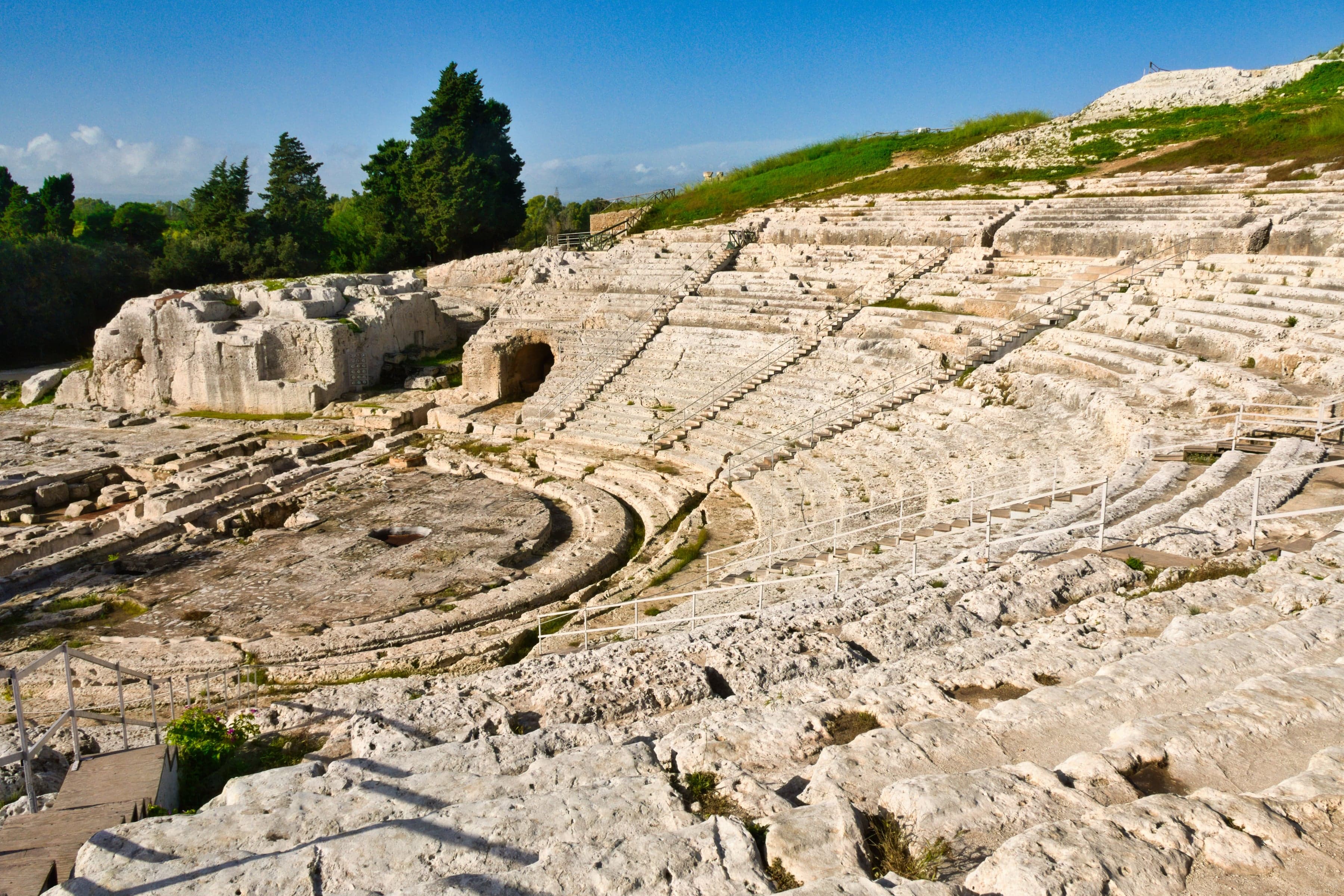
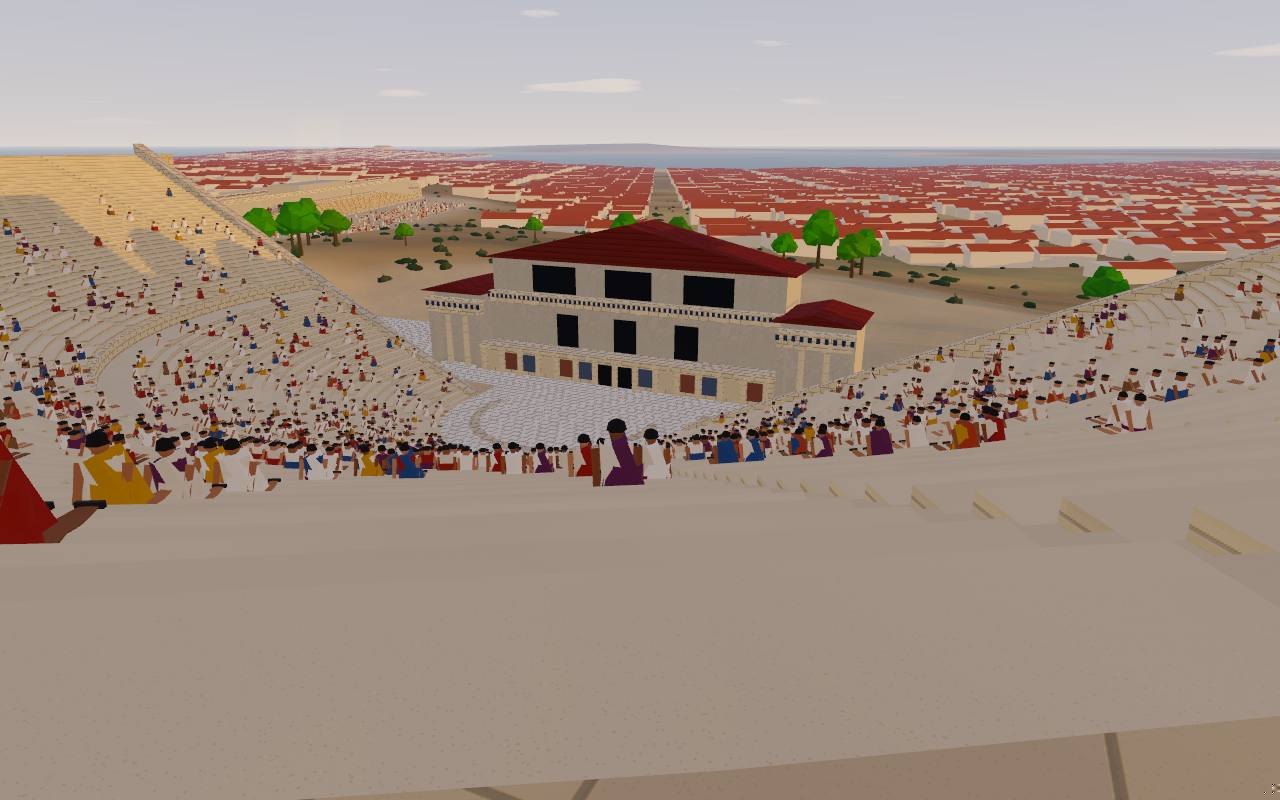
Neapolis as it was, 230 BCE
Stand in Hieron's theatre at its full height, sixty-seven rows filling for a festival, then walk down to the great altar Diodorus calls a stade long and into the quarry where the stone was cut.
Included with this ticket
Neapolis Archaeological Park: A Theatre Cut from a Quarry Hill
The audio walk: 7 stops, about 1 h. Walk it, and see 230 BCE at the stops where the past appears.
How you explore
Walk around. On site, your phone's location moves you through the ancient city as you walk the plaza. Anywhere else, tap the ground to walk there.
Stand at the walk's stops. 2. The Altar of Hieron II, 3. The Latomia del Paradiso, 4. The Ear of Dionysius, 5. The terrace and its portico and 6. The Greek theatre, each numbered as on the walk, plus the Where the photo was taken, Above the theatre, On the diazoma, Facing the stage, The north ramp, Over the theatre, Over the altar and Above Neapolis.
Then and now. Hold your phone up on site and a time wave turns the view in front of you into the city in 230 BCE. Tap a numbered stop or a small dot for what it was, what is there today and how we know.
What is reconstructed
The theatre's rows, radii and stairs are measured, the altar follows its 1899 plan and the quarry its mapped outline. The stage building, the portico, the heights above the ruins, the colours, the city and the people are our reconstruction, not a record of a particular day.
Reconstruction by Roamer from Koldewey and Puchstein (1899), Voza (2008), Sear (2006), OpenStreetMap and the Copernicus DEM; the stage building, the portico's size, every height above the ruins, the city and the festival are interpretive. Today: photo by Carlo Pelagalli (Wikimedia Commons, CC BY-SA 3.0). An independent experience, not affiliated with the Parco Archeologico di Siracusa.