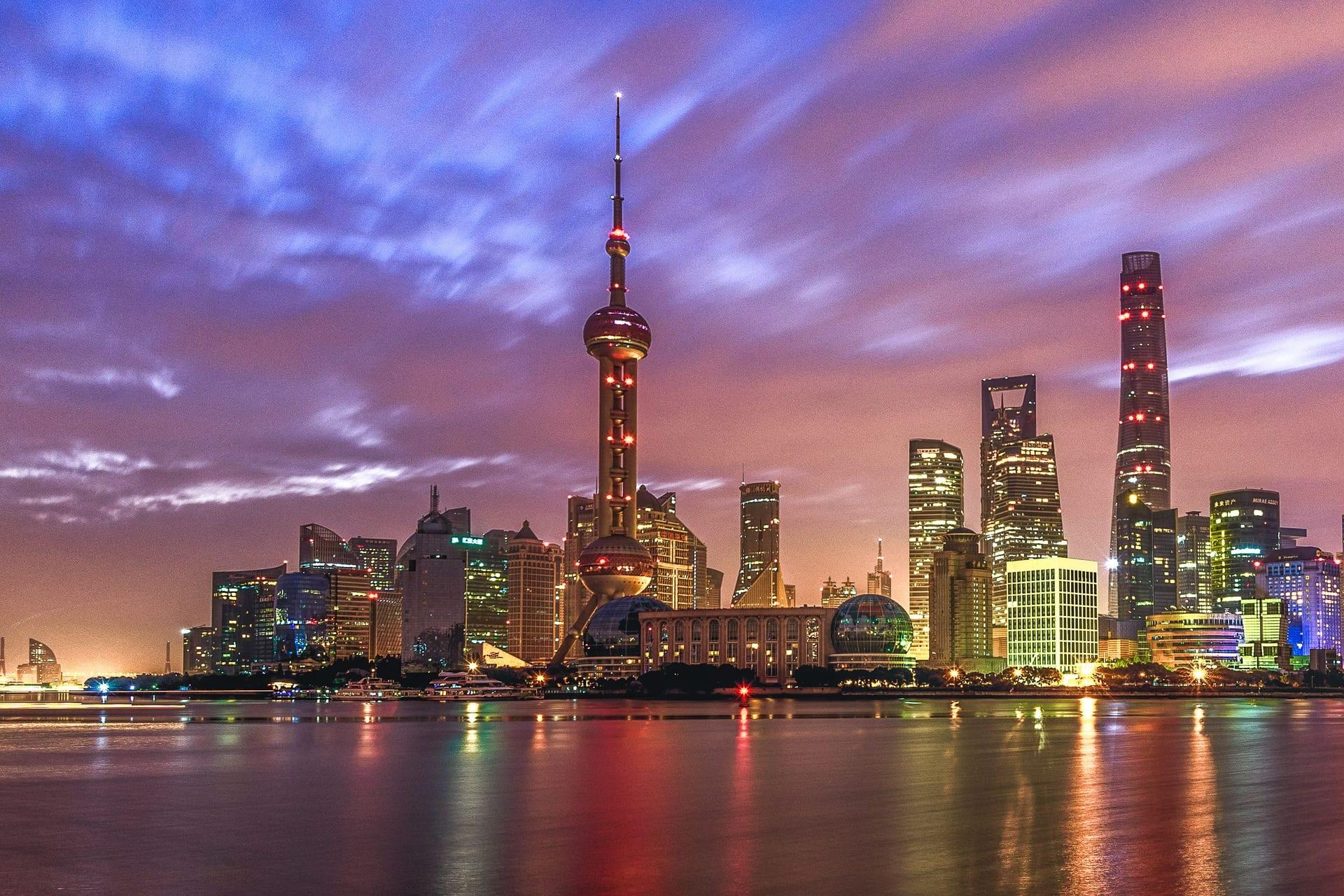
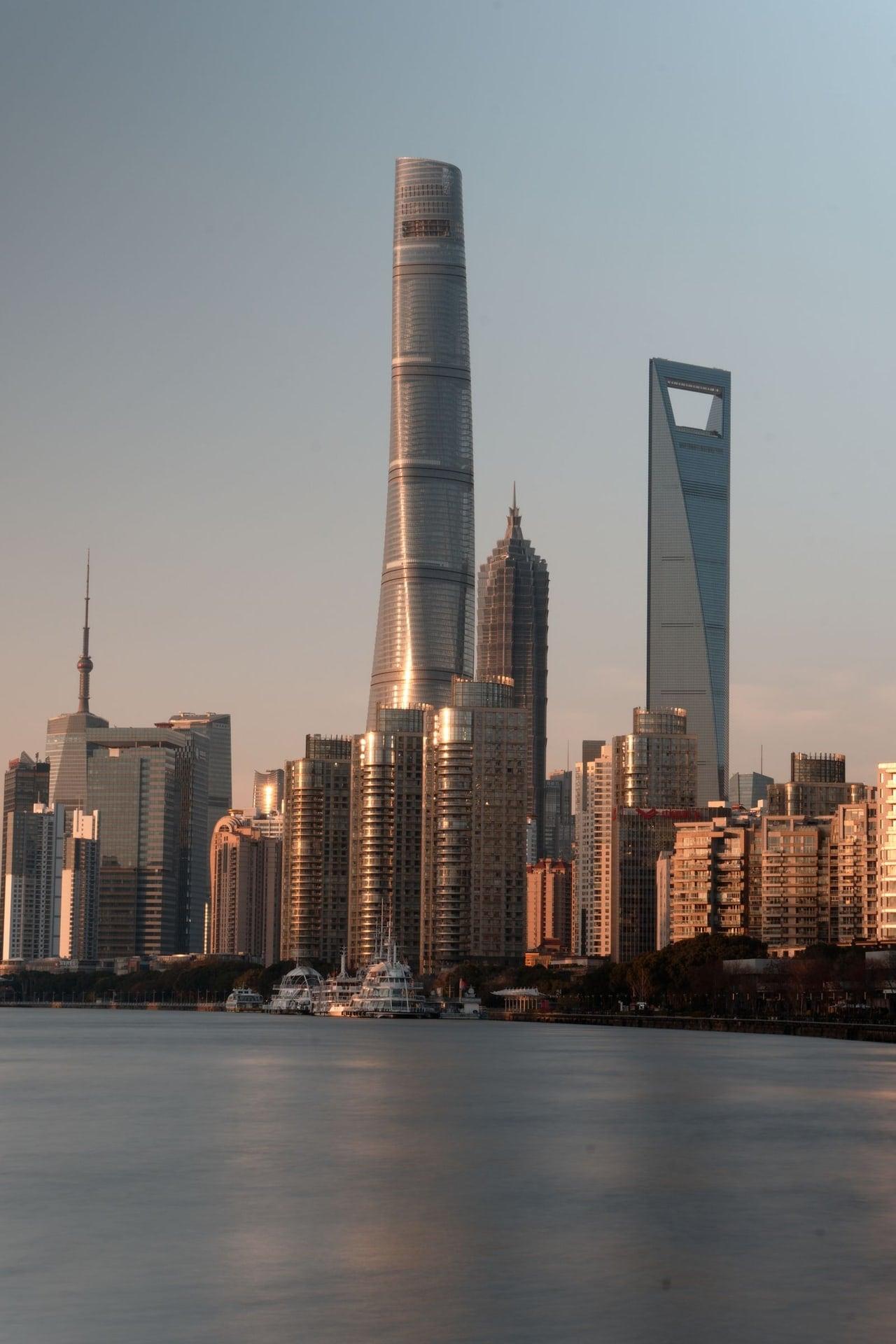
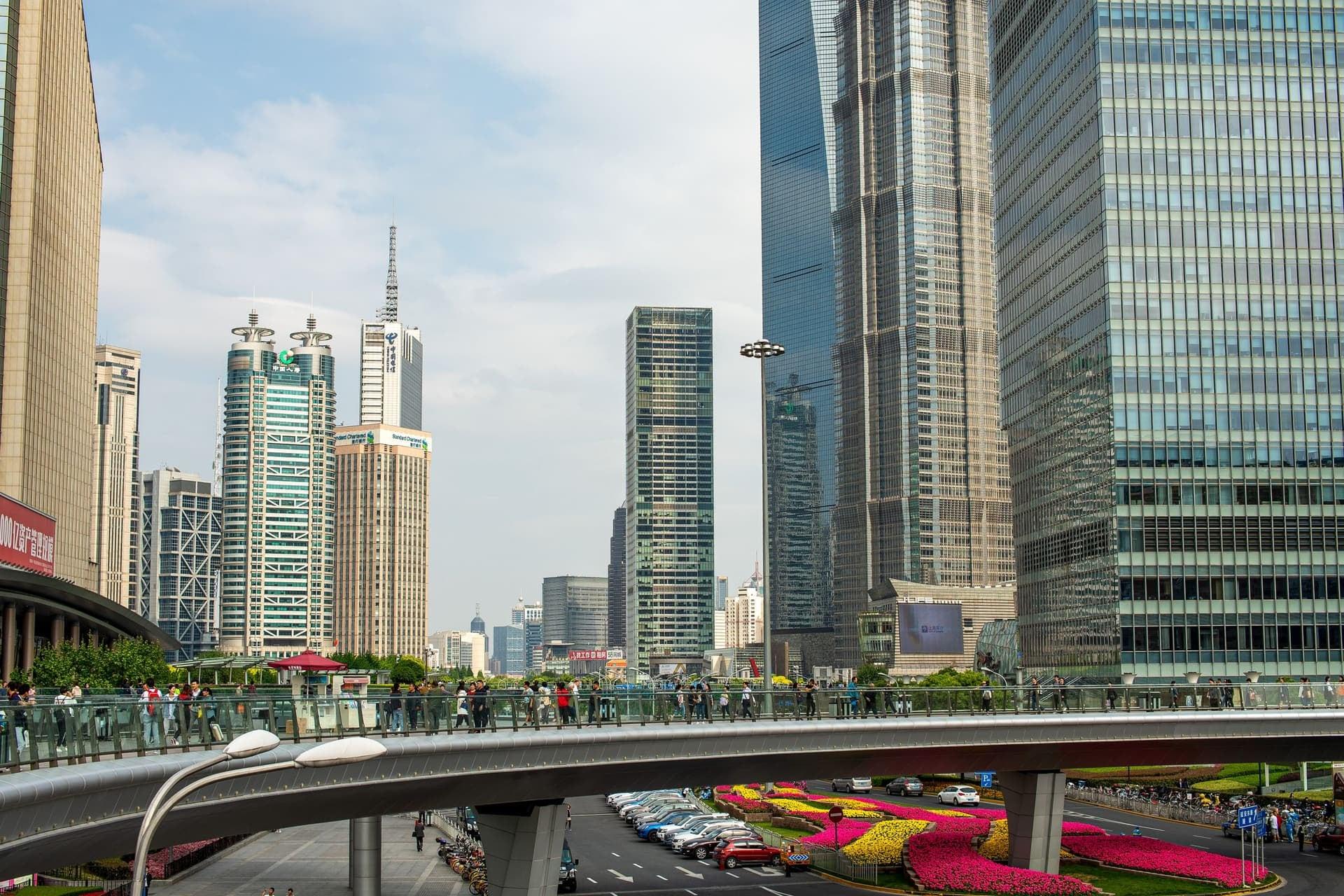
Shanghai's Pudong skyline read as three answers to height and wind: Jin Mao's pagoda setbacks, the World Financial Center's square portal and Shanghai Tower's twist, then the Dongchang Road ferry, the river bend that gave Lujiazui its name, the Oriental Pearl Tower, the round footbridge, the Central Green and one low old house.
Start · Jin Mao Tower (金茂大厦)
DirectionsStops
- 1
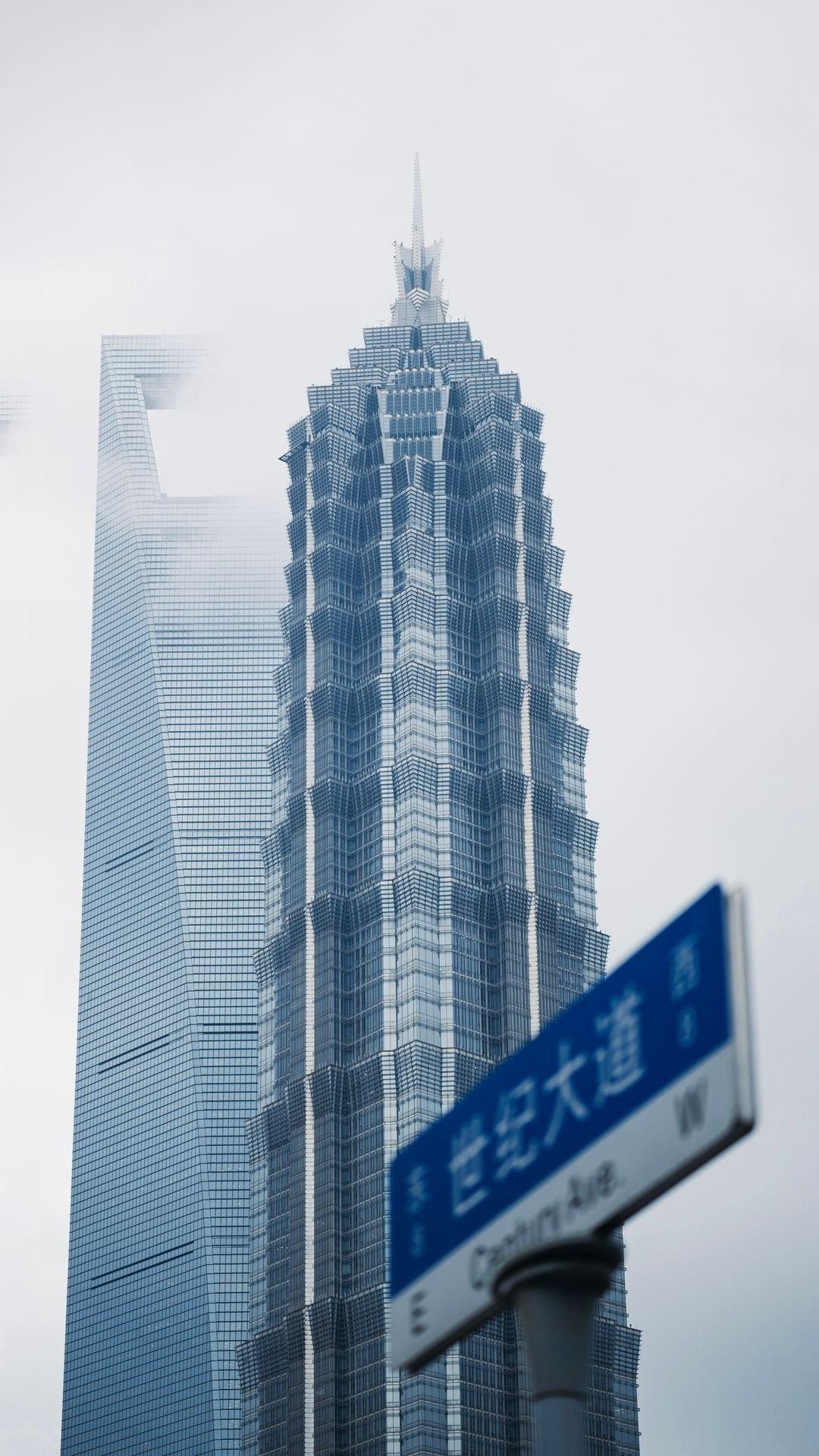
Jin Mao Tower (金茂大厦)
The pagoda as a rule for height. The Jin Mao Tower, finished in 1999: about 420 m and 88 stories, its setbacks recalling pagoda forms, offices below and a hotel above.
- 2
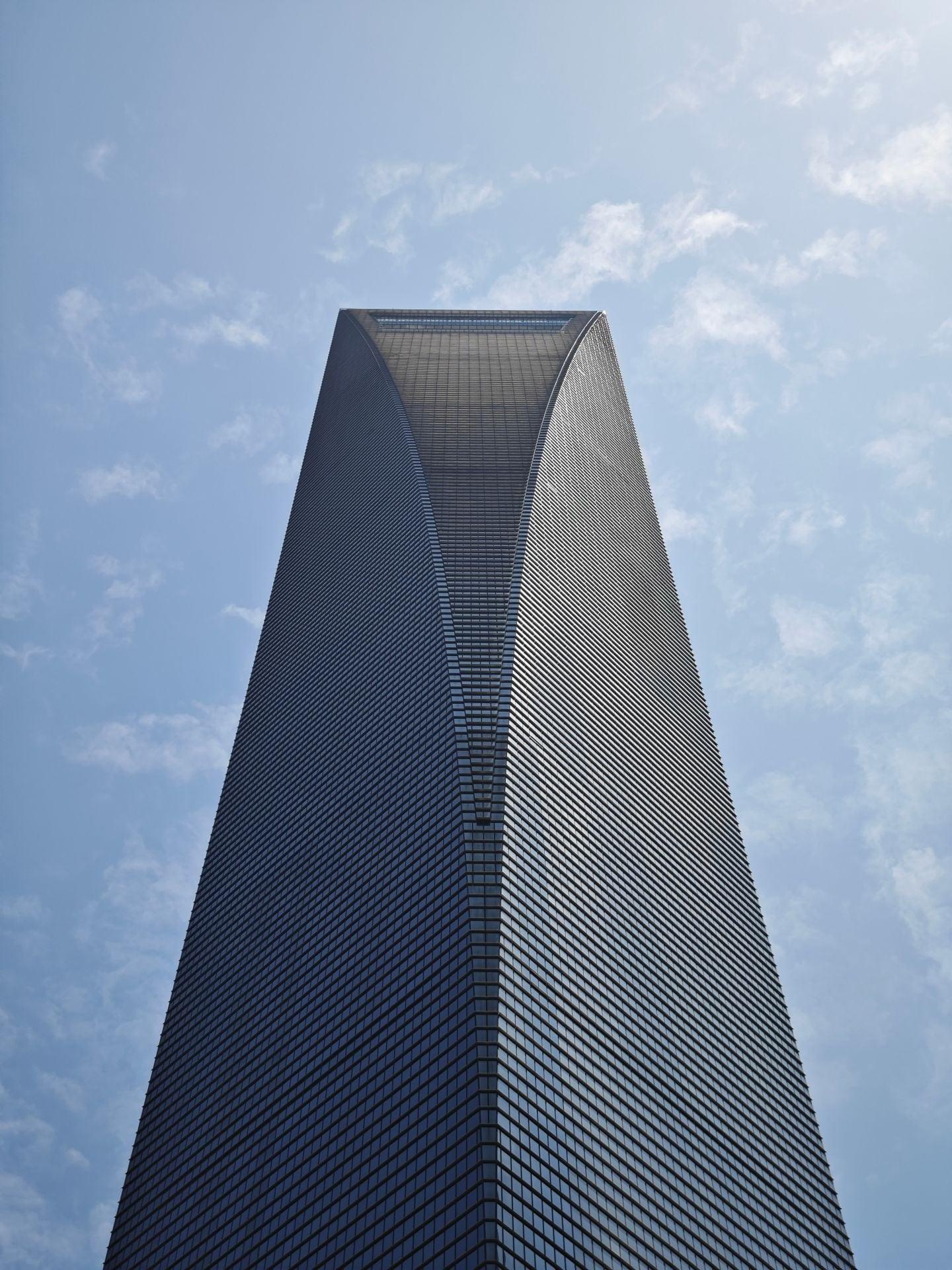
Shanghai World Financial Center (上海环球金融中心)
Geometry first, then the engineering. The Shanghai World Financial Center by KPF, finished in 2008: 492 m, a square cut by two arcs, its braced frame more than a tenth lighter.
- 3
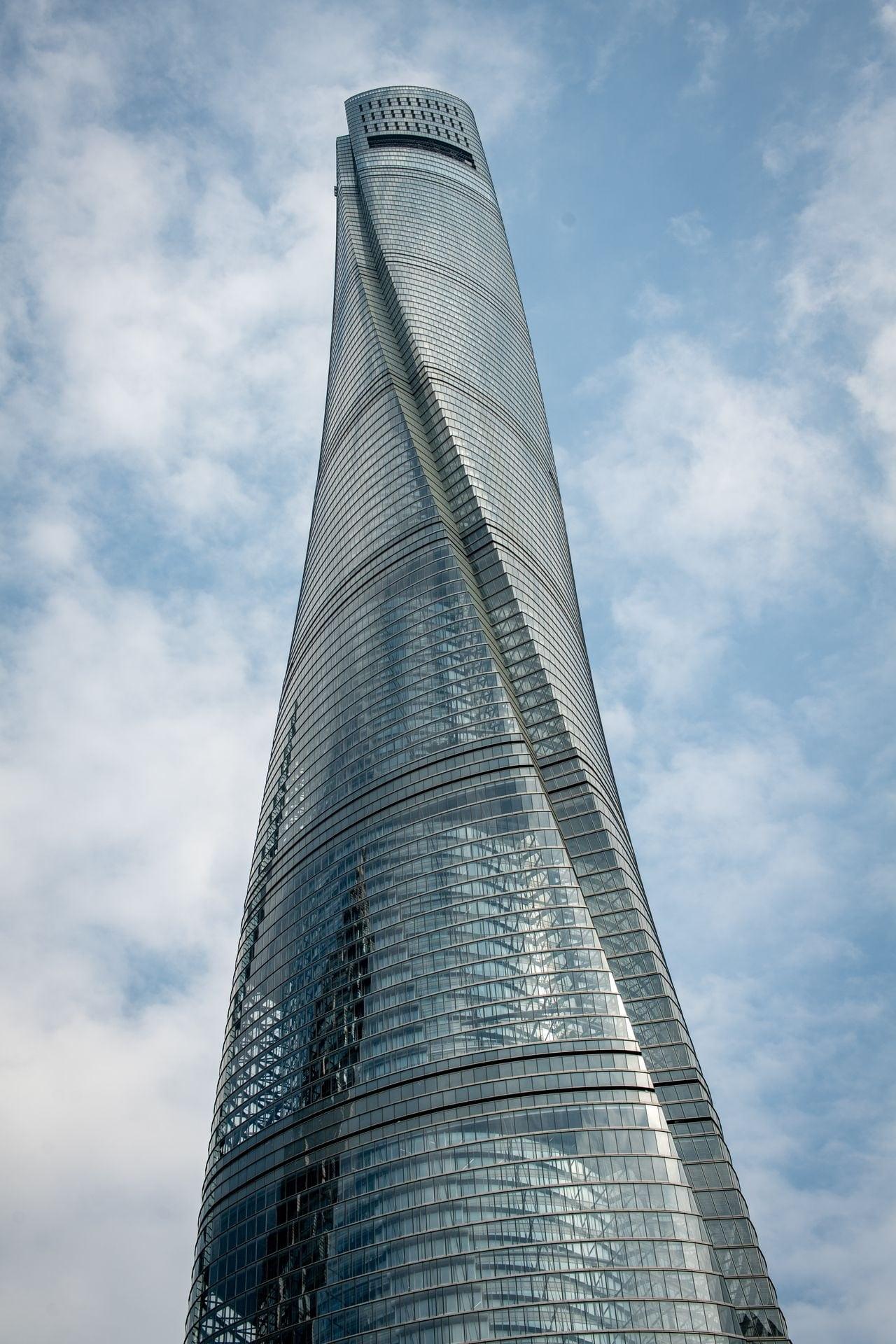
Shanghai Tower (上海中心大厦)
A twist that tames the wind. Shanghai Tower by Gensler, finished in 2015: 632 m and China's tallest, its spiral cutting the wind load and its double skin saving energy.
- 4
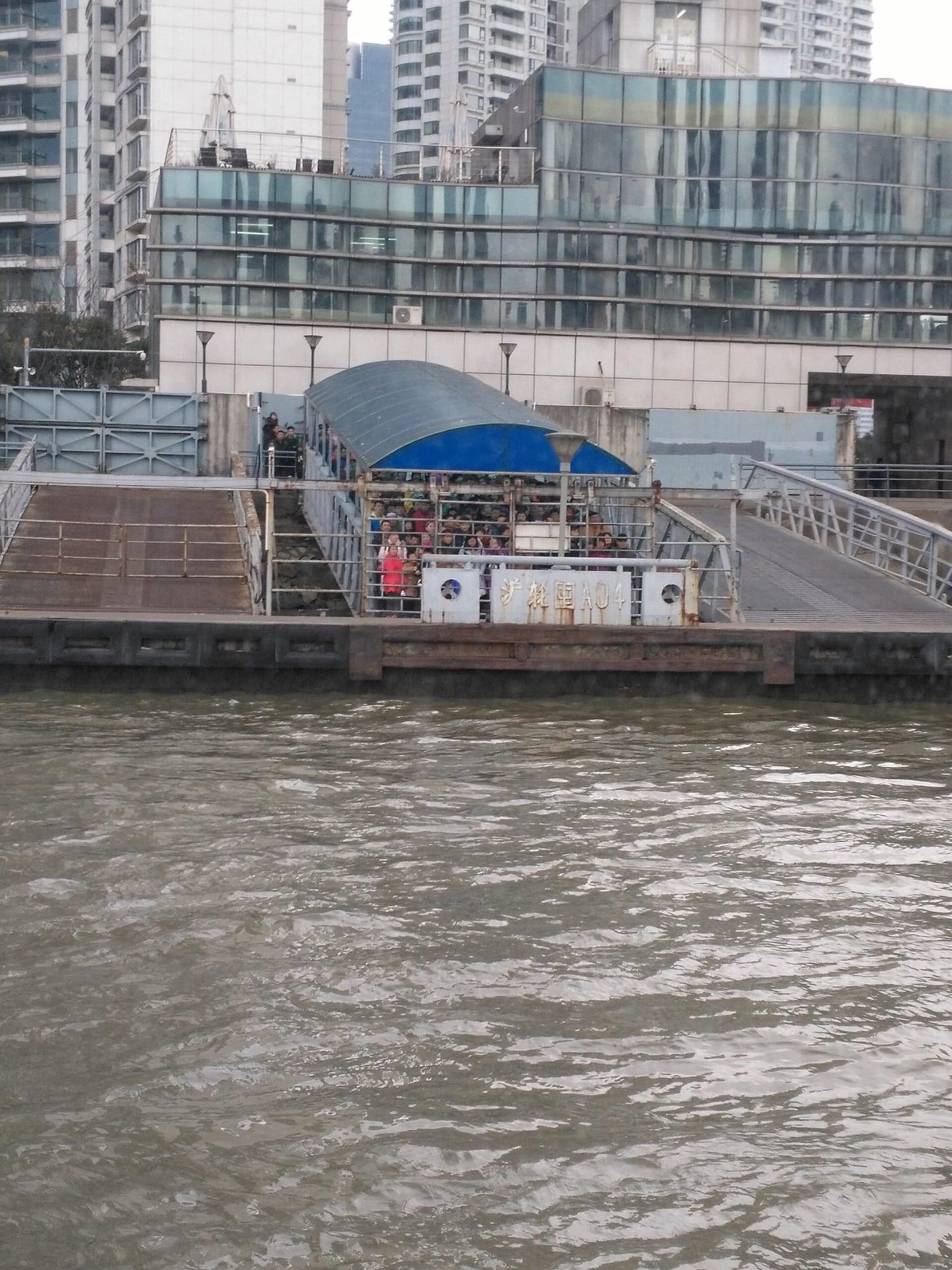
Dongchang Road Ferry (东昌路渡口)
The old way across the river. The Dongchang Road ferry square, where boats still cross the Huangpu to East Jinling Road on the Bund, the way Shanghai people long crossed.
- 5
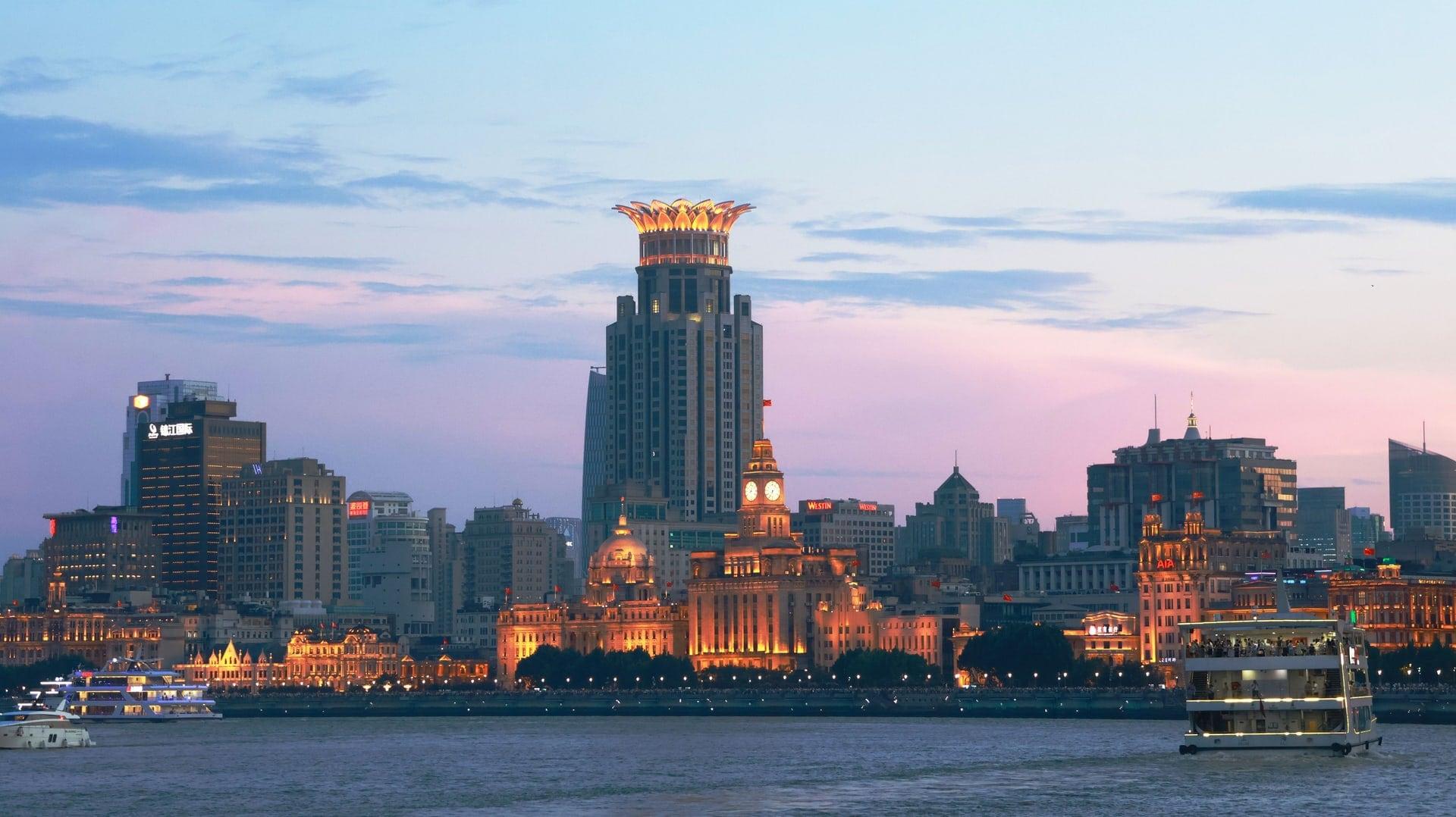
Riverside Promenade (东岸滨江)
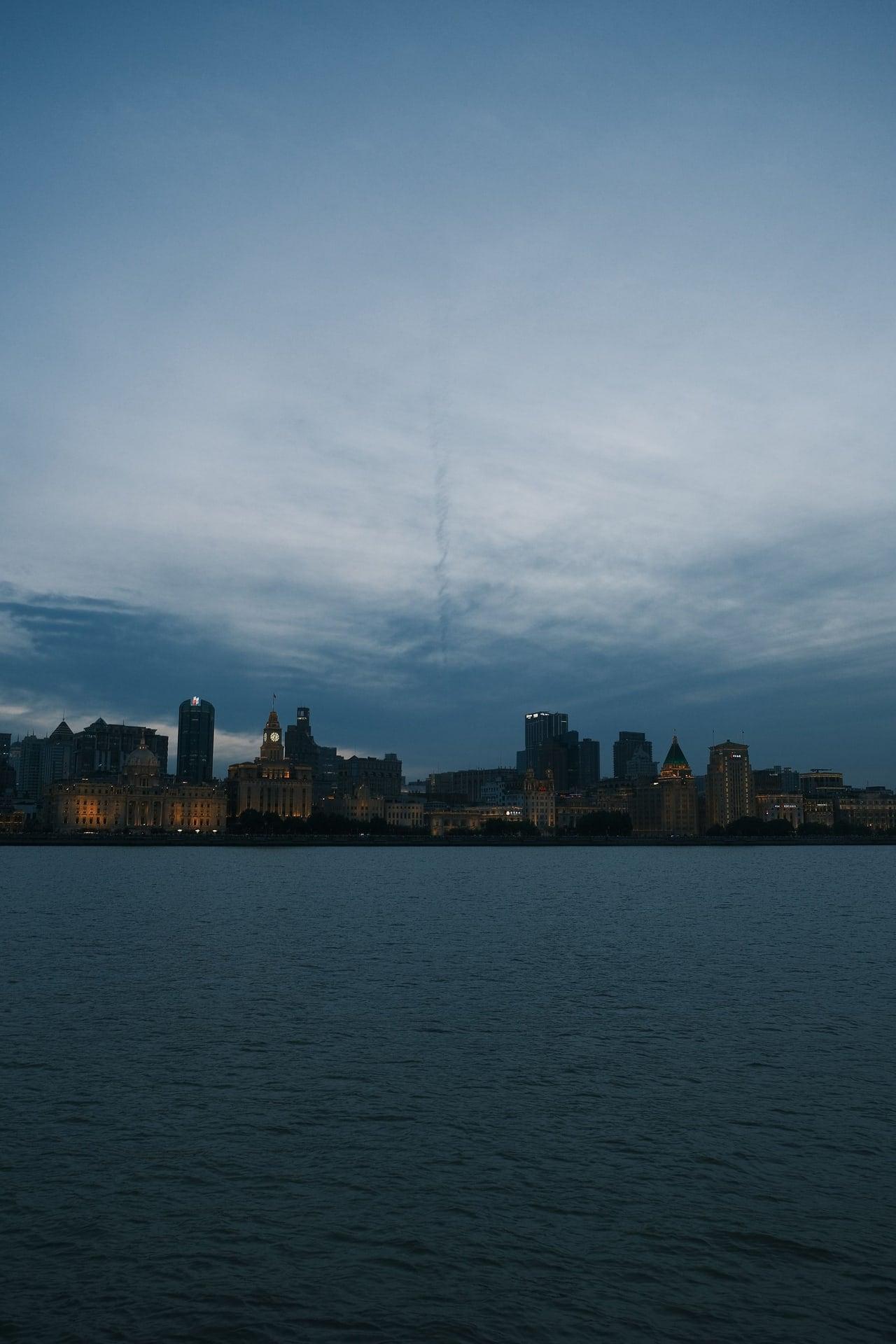
The Bund, from the side it faces. The river-edge promenade on the Pudong bank, with about 400 m of working river between you and the Bund's waterfront row.
- 6
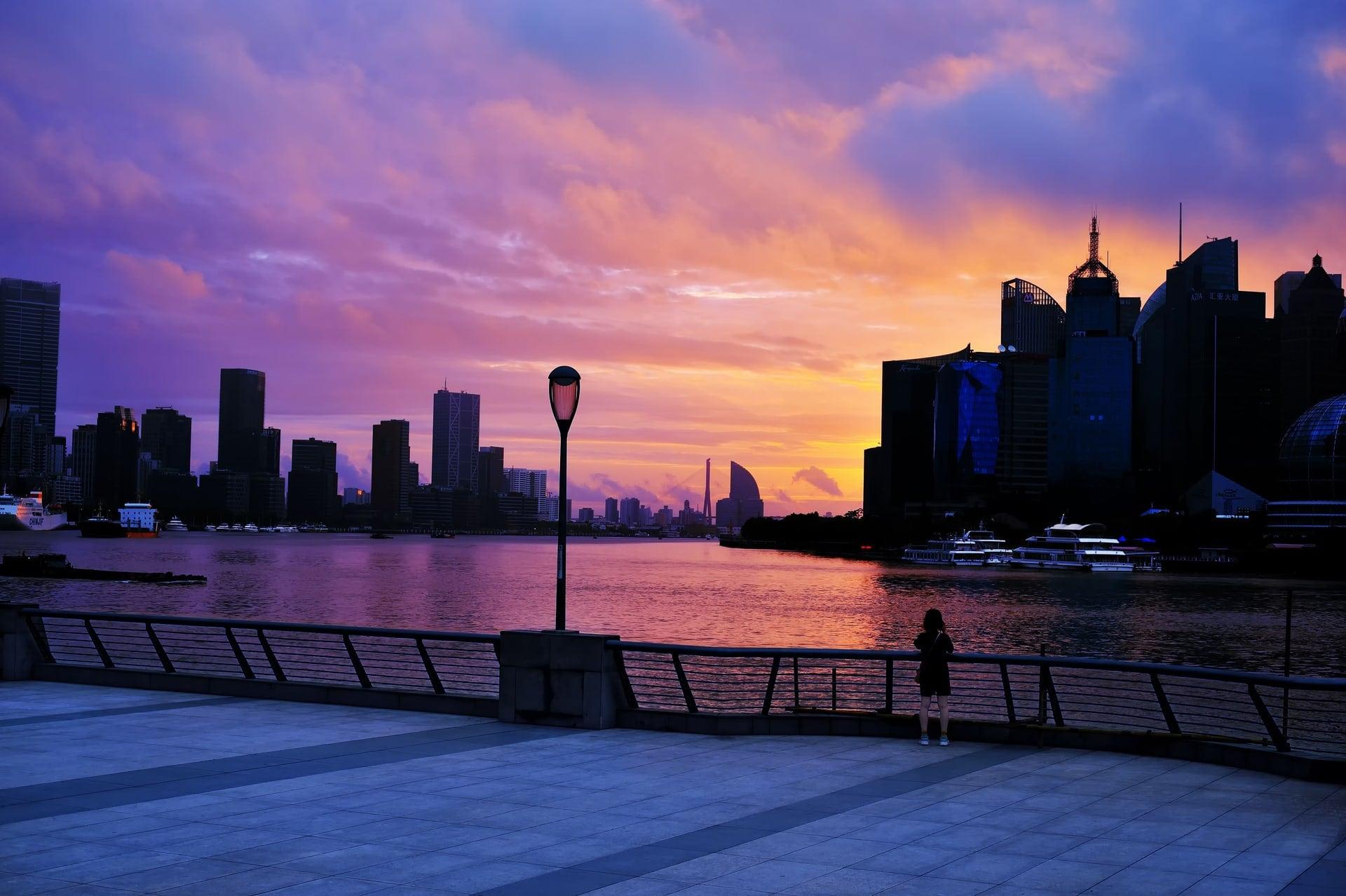
Lujiazui Bend (陆家嘴)
A place name that is a map. The tip of the bend where the Huangpu turns from north to east: the spit of land that gave Lujiazui its name, after the Lu family and the Ming scholar Lu Shen.
- 7
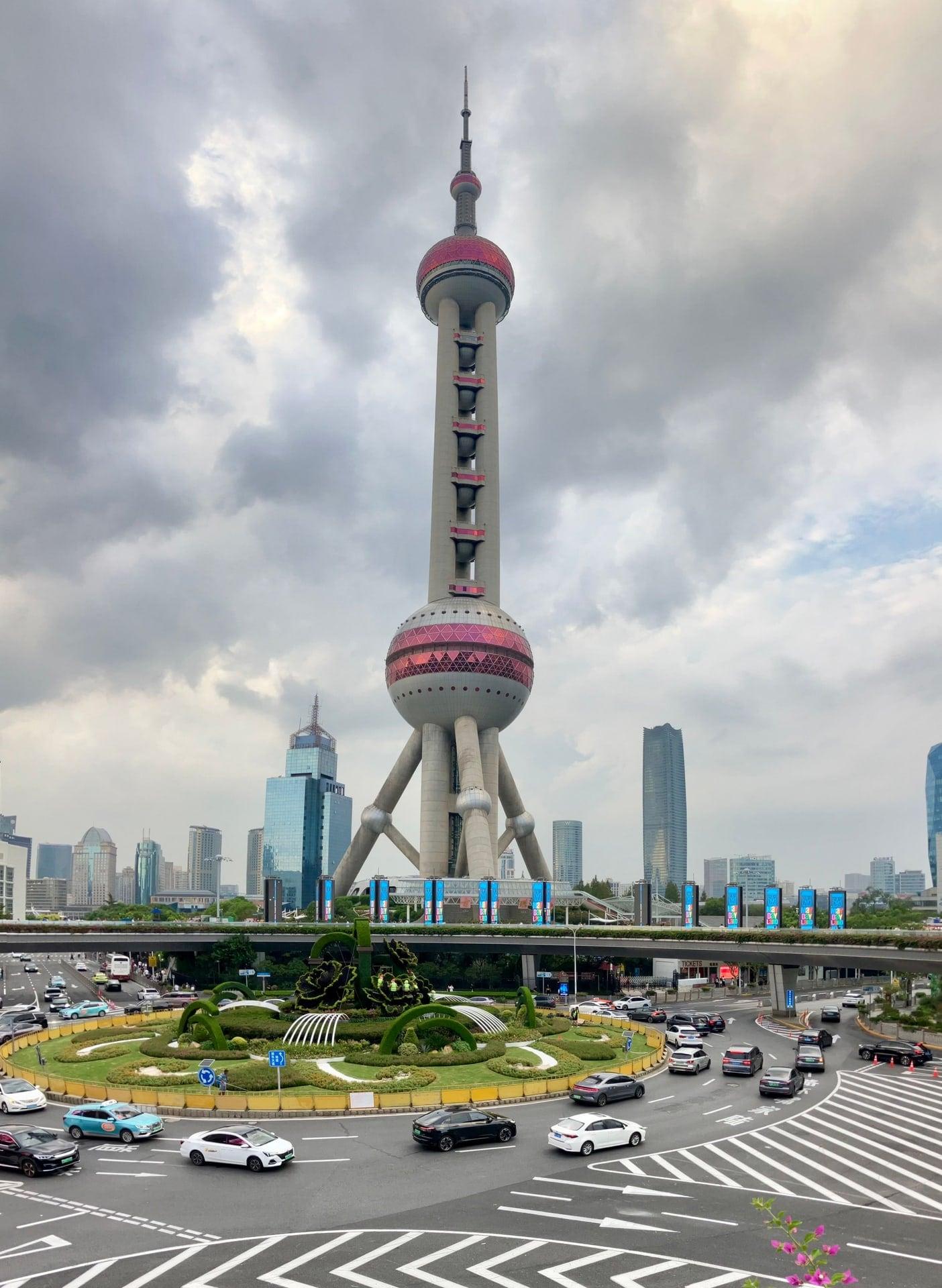
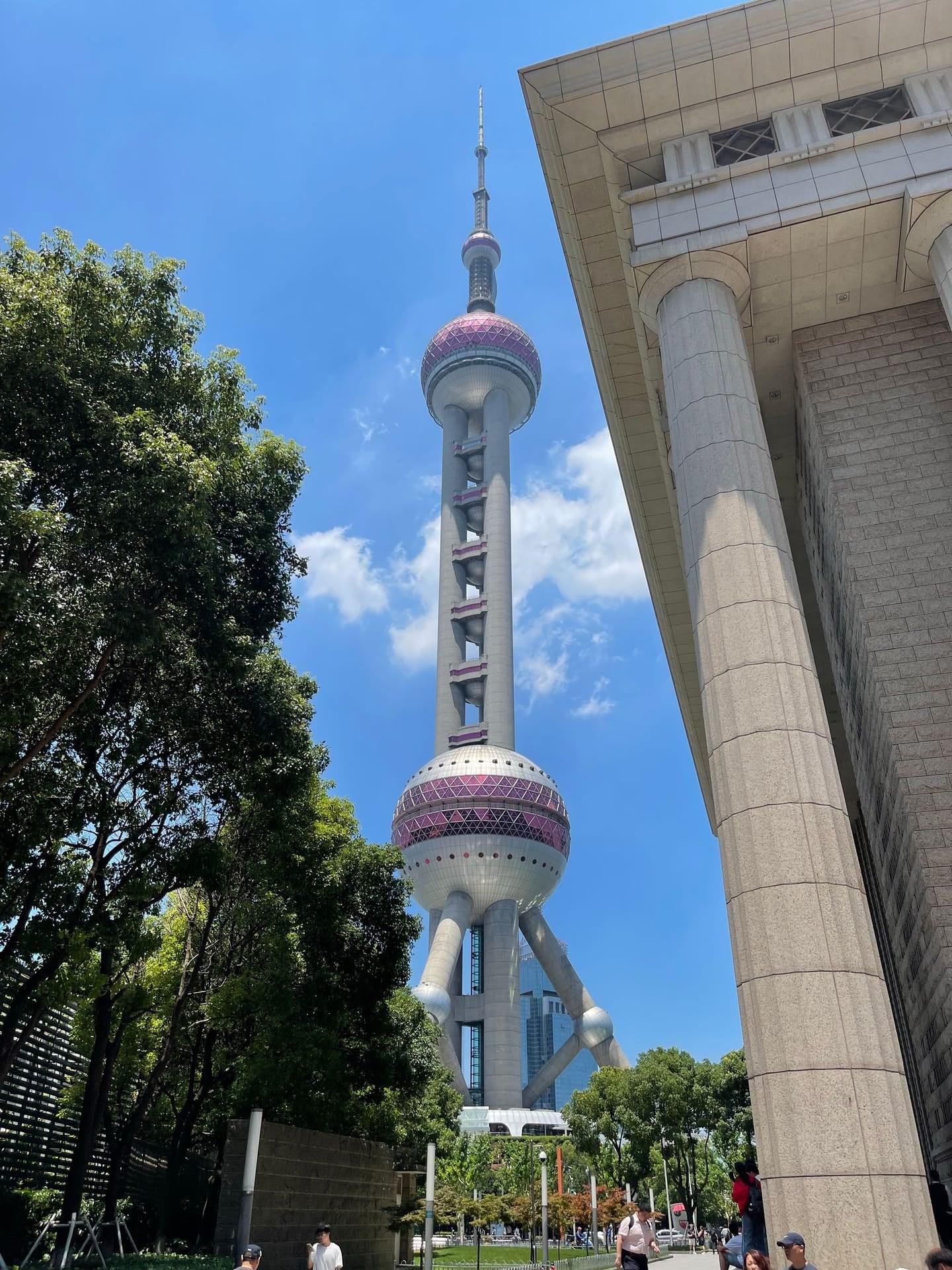
Oriental Pearl Tower (东方明珠)
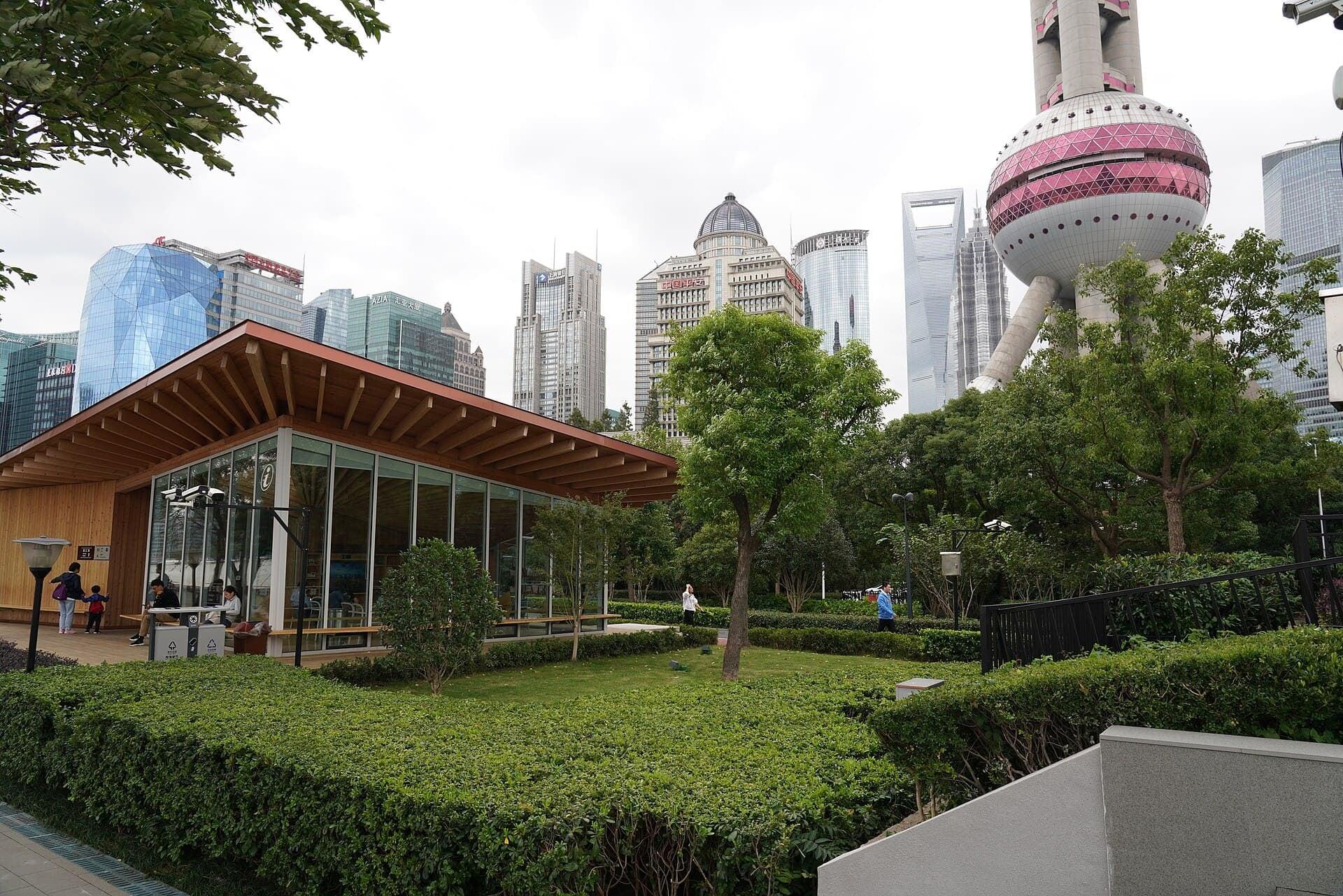
The tower that came first. The Oriental Pearl Tower, a 468 m concrete TV tower finished in the mid-1990s before any supertall, and the round footbridge over the roundabout.
- 8
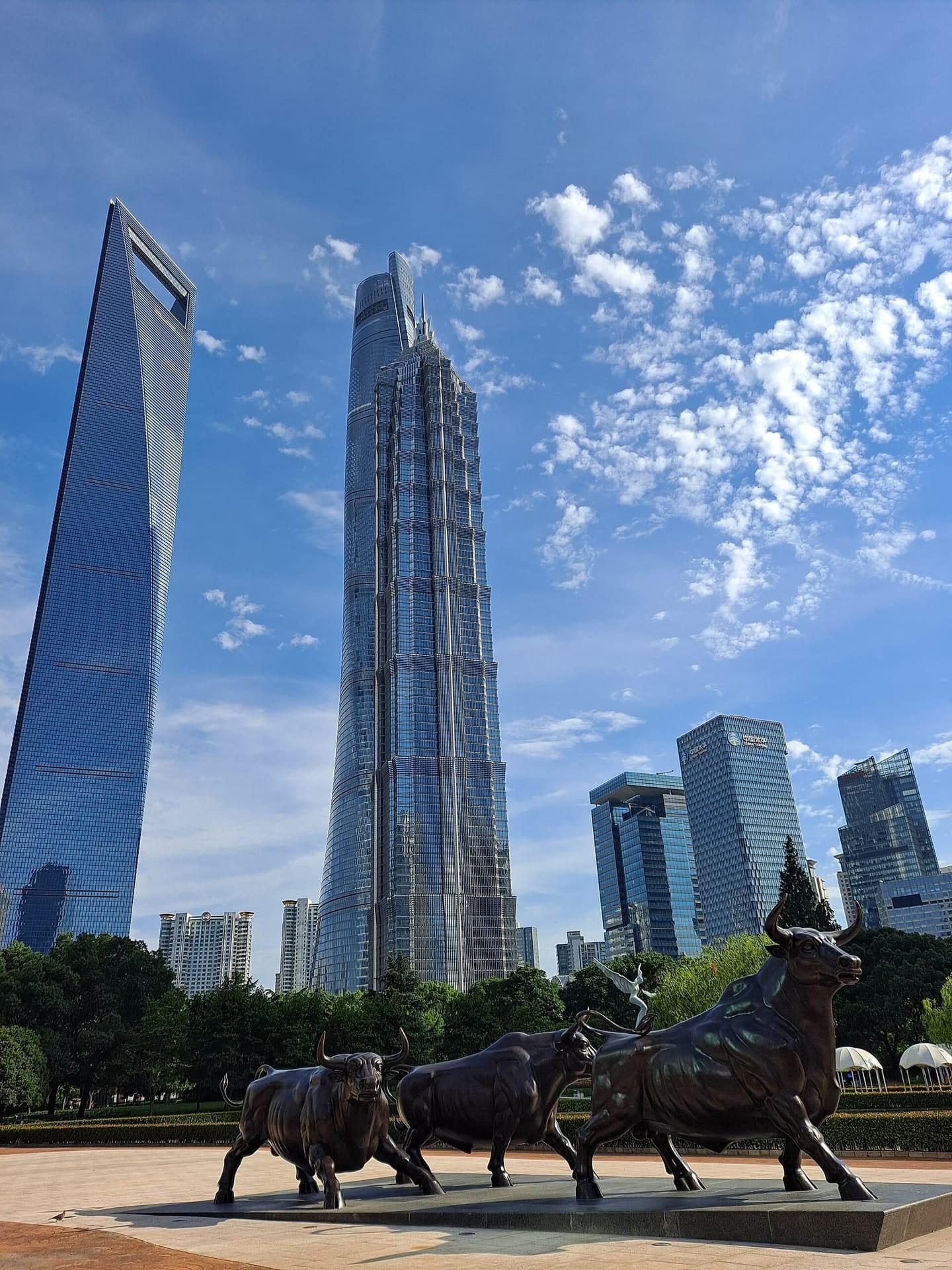
Lujiazui Central Green (陆家嘴中心绿地)
Now two towers read clear. Lujiazui Central Green at the foot of the walkway, where Jin Mao's stepped outline and the World Financial Center's square portal stand clear.
- 9
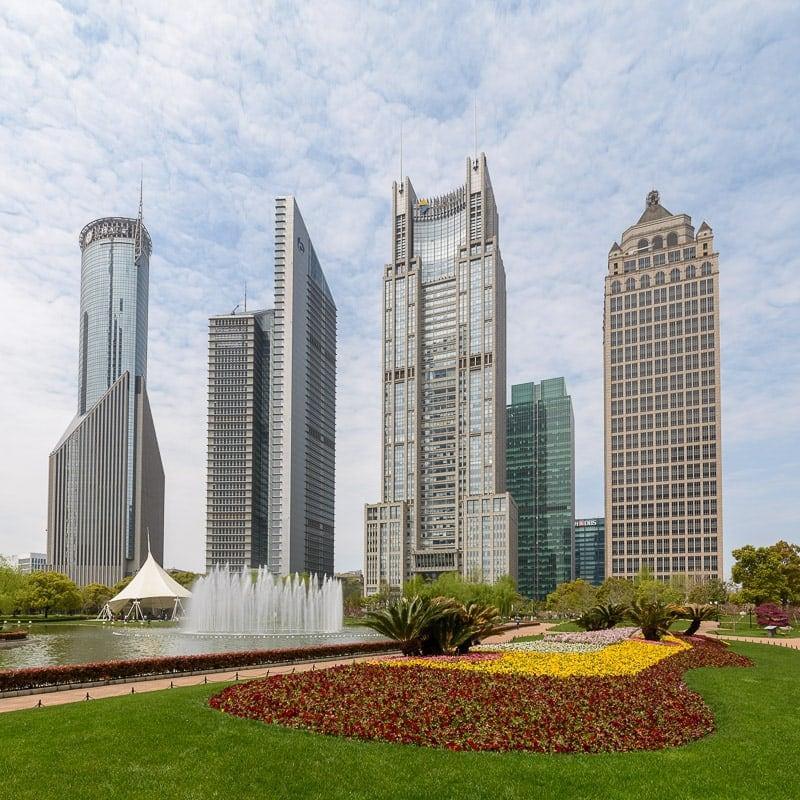
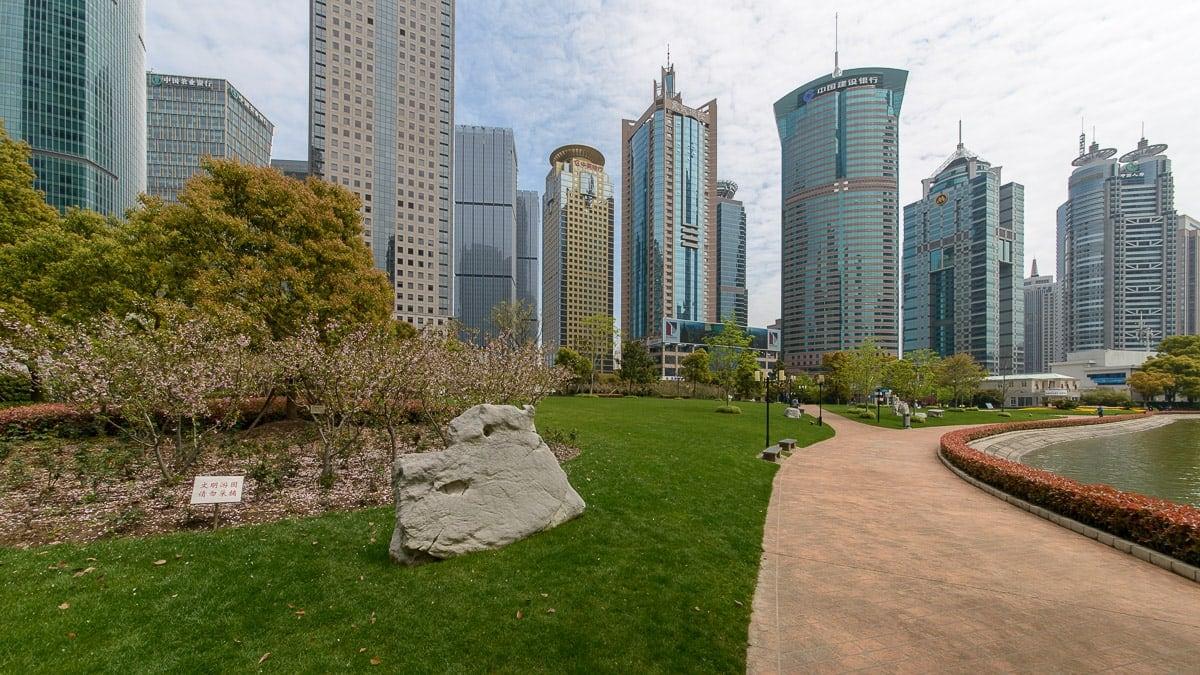
Central Green Lake (陆家嘴中心绿地)
Open ground among the towers. The lake in Lujiazui Central Green, lawns, trees and water at the foot of the skyline.
- 10
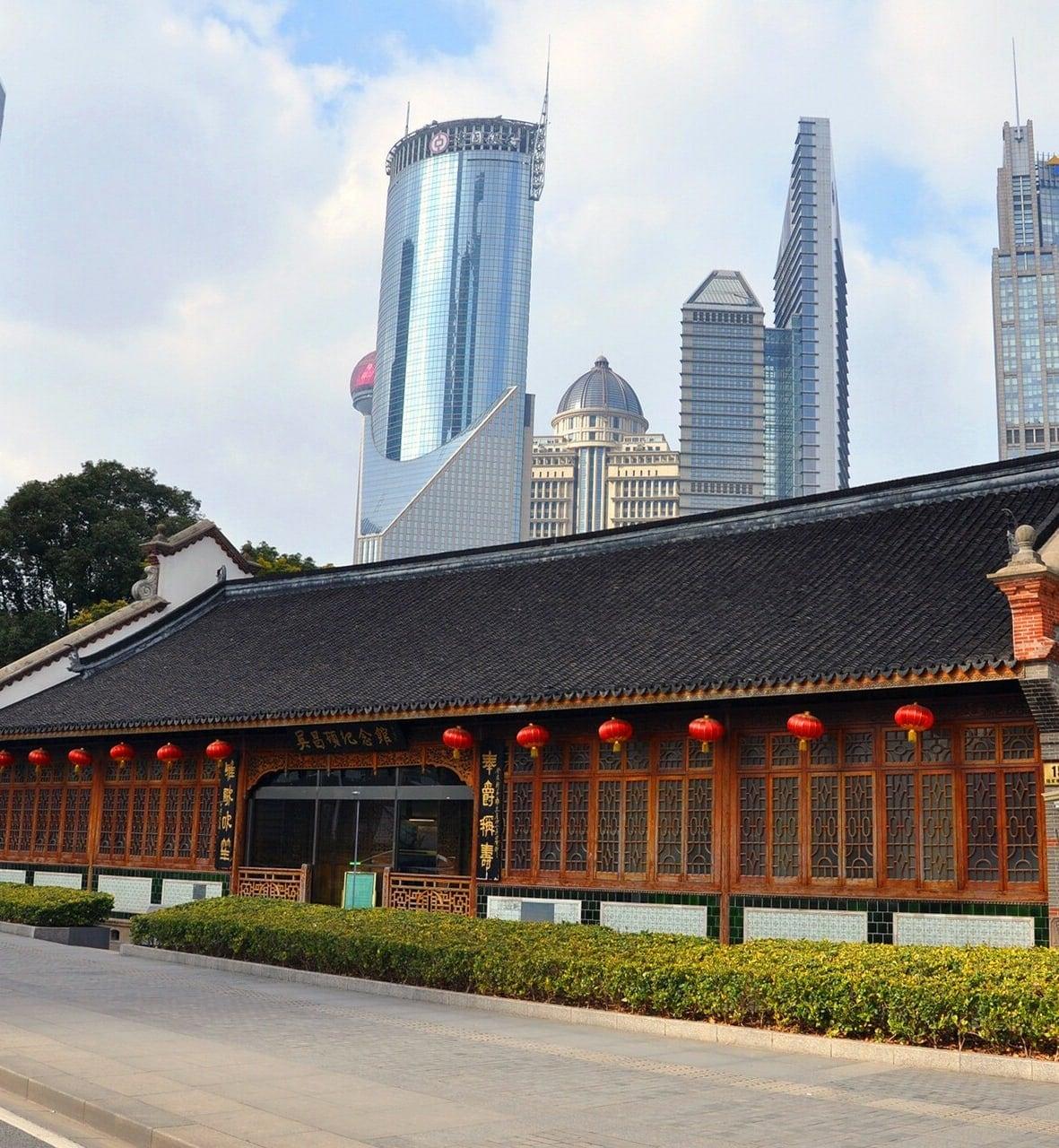
Chen Guichun House (陈桂春旧居)
A low house under the towers. The Chen Guichun House, an old courtyard house with dark tiled roofs at the park's edge, now the Wu Changshuo Memorial Hall, free to enter.
Details
Best Time to Visit
Any day; about an hour and three quarters. The towers read best in clear daylight; the riverside is at its best late in the afternoon and at dusk, when the Bund and Lujiazui are lit (to about 22:00 on ordinary nights, later on holidays). Sunset is about 16:51 on 1 December and 17:00 on 31 December. Avoid the evening of 31 December and the evenings of public holidays, when the riverside is packed and the ferry may be suspended: New Year 1 to 3 January 2027, Spring Festival 5 to 13 February 2027 (Chinese New Year's Day is 6 February), and National Day week, 1 to 7 October. Winter afternoons average about 11 °C (52 °F), nights about 2 °C; June brings the plum rains; July and August average highs about 31 °C (88 °F). The Wu Changshuo Memorial Hall (stop 10, optional) is free and closed on Mondays. Checked 25 November 2026.
Pro Tips
- •Getting to the start: metro lines 2 and 14 to Lujiazui station. Come up on the south side of Century Avenue and walk east to the forecourt on the north side of the Jin Mao Tower: about 250 m, 5 minutes. Follow the station signs for the south side of Century Avenue. Checked 25 November 2026.
- •Carry your passport, and set up Alipay or Weixin Pay with your own card before you travel; carry some cash as well. Have mobile data that works in mainland China and download this tour before you set out.
- •If Lujiazui Central Green (stops 8 to 10) is shut, stay on the raised walkway after the round footbridge to its east end, take the stairs down to Century Avenue's north sidewalk and walk on east to the Chen Guichun House on East Lujiazui Road (about 960 m from stop 7). Play stops 8 and 9 from the walkway, and start stop 10 by hand at the house.
- •The Dongchang Road ferry (stop 4) crosses to East Jinling Road on the Bund, and a second line runs to East Fuxing Road. Check the fare and the last boat at the pier. The ferry is suspended on some holiday days (it stopped from midday on 25 to 27 September 2026 for the Mid-Autumn crowds). Metro line 2 is the alternative. Checked 25 November 2026.
- •The observation floors of the Jin Mao Tower, the Shanghai World Financial Center and Shanghai Tower, and the Oriental Pearl Tower, are all ticketed and not part of this walk. Check prices and booking on their own sites, and carry your passport.
- •The walk ends at the Chen Guichun House. Lujiazui station is about 400 m west along Century Avenue, or back over the round footbridge.
Safety & Precautions
- •Mainland China drives on the right. At the two zebras without lights on Dongtai Road (after stops 1 and 2) look left first, then right. On Dongtai Road's east side the traffic comes toward you; on Lujiazui Ring Road it comes from behind. At the lights at Middle Yincheng Road and Lujiazui Ring Road, cars turning right do not stop for walkers on green.
- •Silent electric scooters and e-bikes ride on sidewalks and against the traffic, especially on Century Avenue's sidewalk, Shibu Street and Fucheng Road. The riverside has a separate cycle lane: keep to the walking side.
- •Shibu Street and Fucheng Road (leg 3 to 4) are narrow two-way streets: keep to the sidewalk and watch for cars and scooters from both directions. Where the route meets the end of Binjiang Avenue (after stop 6), cars turn from more than one side.
- •The round footbridge is reached by a flight of steps, about a story high; stone and steps are slippery in rain.
- •On the riverside keep to the promenade, not the very edge of the water. The riverside, the footbridge and the tower forecourts are crowded at dusk and on holidays: keep bags closed.
- •If a friendly stranger invites you to a tea house or a bar, decline politely: these invitations can end in a very large bill.
Gallery
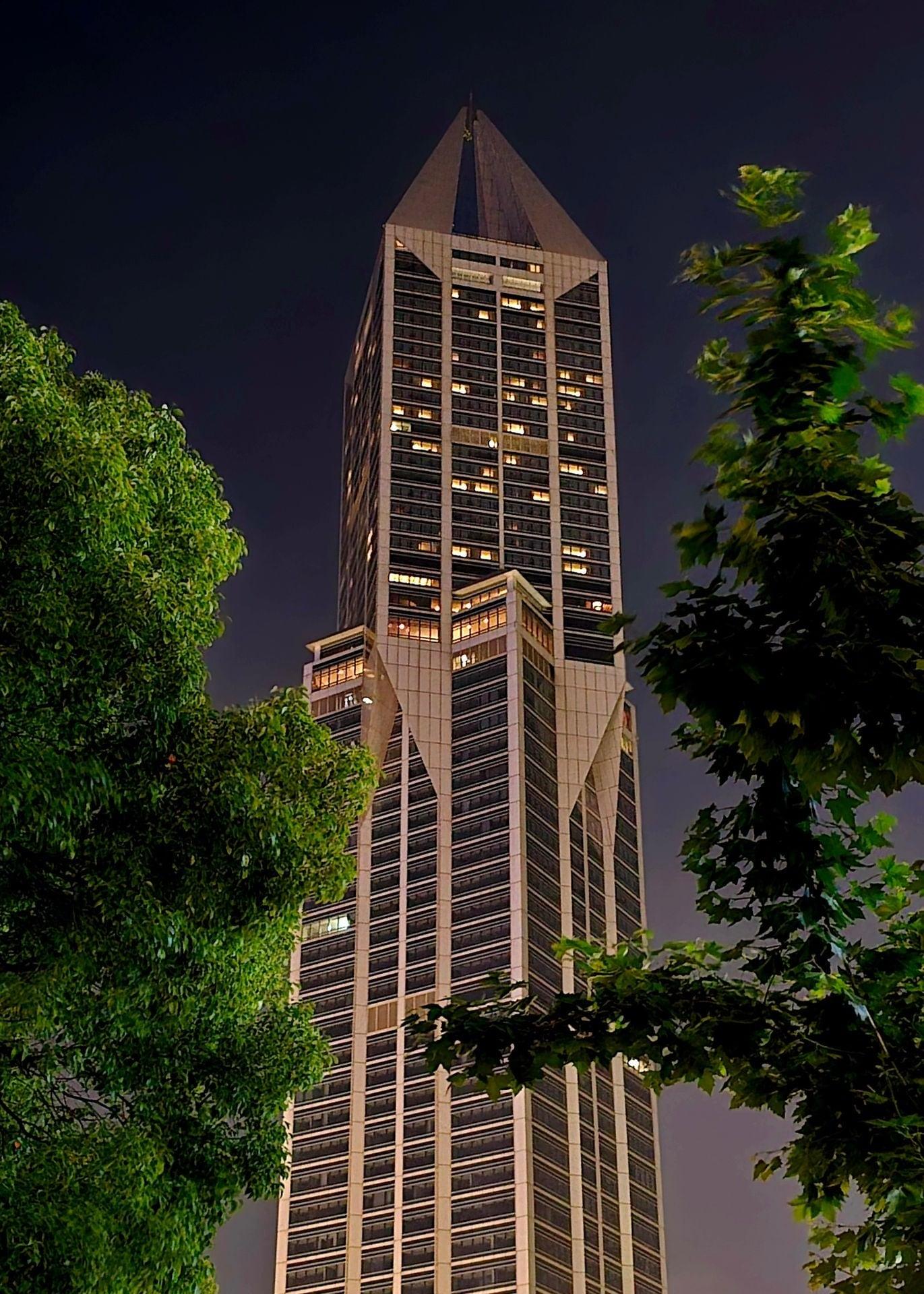
Read the walk
The full story of Lujiazui: Three Towers, Three Answers to the Wind, in words. Prefer to listen? Play it narrated, from home or on location.
Introduction
Lujiazui is the cluster of towers on the east bank of the Huangpu River in Shanghai, across the water from the Bund. Its name describes a piece of land: a spit where the river bends, named for the family who once had a garden on it. Between nineteen ninety nine and two thousand fifteen three supertall towers rose here, each a different answer to the same problem of height and wind: setbacks, a cut opening, and a twist. This walk stands under all three, follows the river to the bend that gave the place its name, and returns over a round footbridge to the park.
There are ten stops over about three point eight kilometers, about two point four miles, and it takes about an hour and three quarters. It is flat, with one flight of steps up onto the footbridge.
In mainland China traffic keeps to the right, so at a crossing without lights look left first, and watch for cars turning right on green, which do not stop for walkers. Silent electric scooters ride on sidewalks and in side streets, sometimes against the traffic.
No ticket is needed for any stop. The towers' observation floors and the Oriental Pearl Tower are ticketed and are not part of the walk. Carry your passport, as you should everywhere in mainland China. Have mobile data that works in mainland China, and download this tour before you set out.
The riverside is best late in the afternoon and at dusk, when the Bund lights up. Winter afternoons are about eleven degrees Celsius, fifty two Fahrenheit; summers are hot and humid.
The walk starts at the Jin Mao Tower, about five minutes on foot from Lujiazui station on metro lines two and fourteen: come up on the south side of Century Avenue and walk east. When you arrive at the Jin Mao Tower, begin with stop one.
1. Jin Mao Tower (金茂大厦)
The tower in front of you, rising above its podium in a stack of steps, is the Jin Mao Tower. Look up: as it climbs it keeps stepping in, each band a little narrower than the one below, until it ends in a spire.
Its architects, the firm S O M, say the design recalls historic pagoda forms, with setbacks that create a rhythmic pattern. A pagoda's tiers grow smaller as they rise. Here the same idea carries a tower of about four hundred and twenty meters.
The design was finished in nineteen ninety six and the tower in nineteen ninety nine, and by its architects' account it was the tallest building in China when it was completed. It has eighty eight stories. Offices fill the lower fifty floors, and a Grand Hyatt hotel takes the top thirty eight. That split fits the shape: big floors near the ground for offices, smaller floors near the top for hotel rooms. The six story podium between you and the tower holds a conference center, a cinema and shops.
This is the first of three generations of supertall in Lujiazui. Each one answers the same questions, how to go higher and how to stand up to the wind, in its own way. Here the answer is the oldest one: get narrower as you climb.
From this close the top is hard to read. Later, from the park, you will see the stepped outline at once. There is an observation floor near the top; it is ticketed and not part of this walk.
Follow the route east along Century Avenue. At the crossing without lights look left first, and watch for scooters on the sidewalk. Next is the tower with the opening at the top.
2. Shanghai World Financial Center (上海环球金融中心)
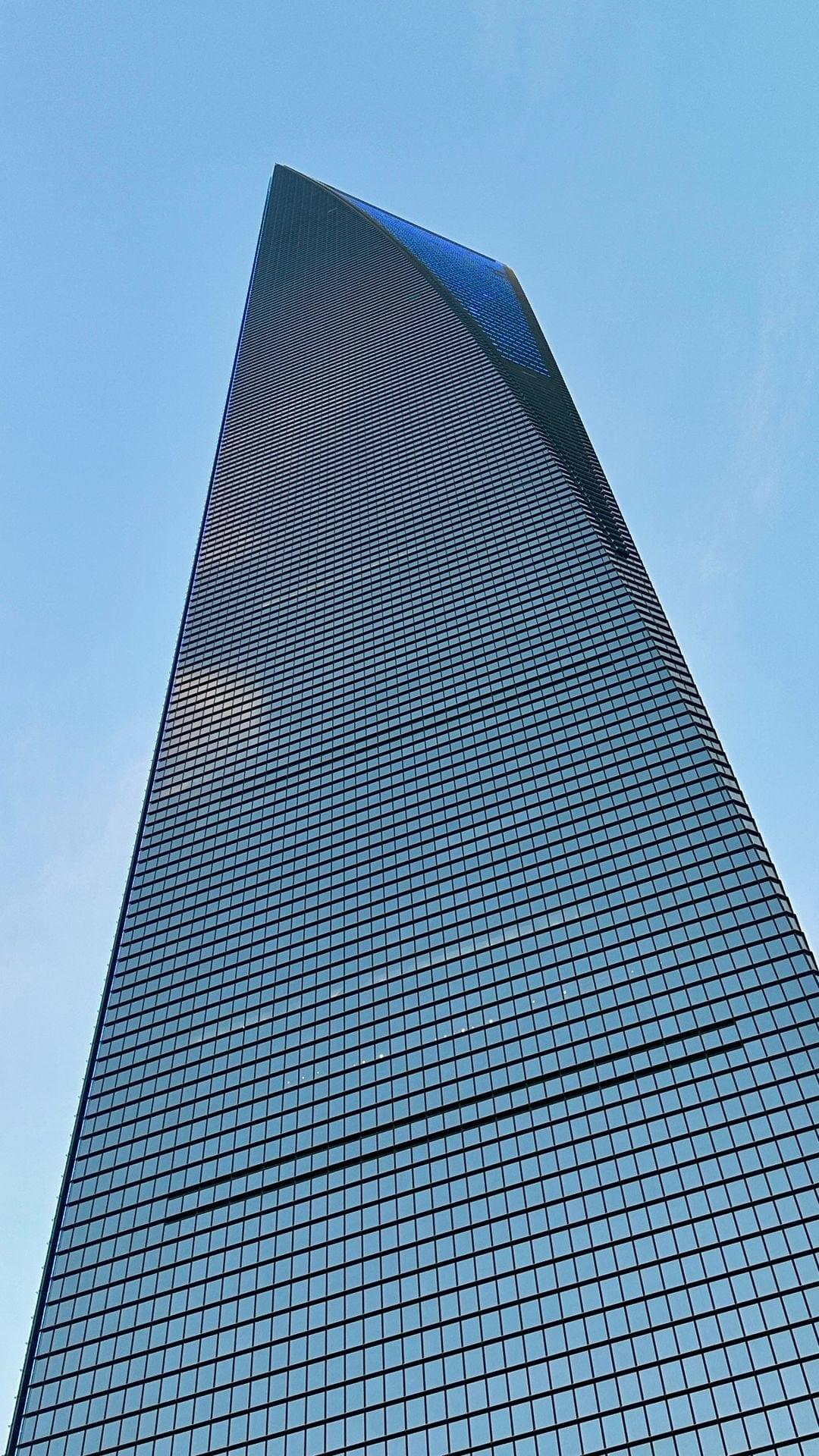
The tower on your left rises almost straight overhead: stand back and look up. This is the Shanghai World Financial Center, finished in two thousand eight, four hundred and ninety two meters tall, with one hundred and one floors. From its foot the top is almost overhead, and the thin bright slot you may just make out up there is an opening right through the building.
Its architects, K P F, describe the form as geometry. A square, the symbol the ancient Chinese used for the earth, is cut by two great arcs standing for the heavens as the tower rises. Where the arcs meet at the top, they carve what the architects call a square sky portal. So the base is a full square, and the tower slims to a blade as the curves close in.
The engineering came second, and it changed the building. Working with the structural engineers, the team gave up the original concrete frame for a frame of diagonal braces, with great trusses reaching out to the giant columns of its outer frame. That took more than a tenth off the weight of the building.
High up, the Park Hyatt hotel fills the seventy ninth to ninety third floors. Above it, its architects list a world record from two thousand nine for the highest observation deck. They are ticketed, and not part of this walk.
Many people call this tower the bottle opener. From the park, later on, you will see the whole shape and why.
Follow the route south along this side of the road, where the traffic comes toward you. At the corner you cross on a zebra without lights: look left first. Next is the tallest of the three.
3. Shanghai Tower (上海中心大厦)
Look back over your right shoulder. The tower that seems to turn as it rises is Shanghai Tower, finished in two thousand fifteen. At six hundred and thirty two meters, with one hundred and twenty eight floors, it is China's tallest building and, by its architects' count, the third tallest in the world.
Follow one edge of the glass upward. Instead of rising straight, the tower rotates and narrows as it climbs, and a notch runs up its side with the turn. That twist is wind engineering you can see. The architects, Gensler, say the spiral minimizes wind load, and wind tunnel tests reported by the Council on Tall Buildings and Urban Habitat put it at about a quarter less than for a rectangular tower of the same height.
The glass you are looking at is only the outer layer. A second, transparent skin wraps the building, and the space between the two holds atriums that act as a buffer against heat and cold. The architects also describe sky gardens up its height, and two hundred and seventy wind turbines.
Now you have stood under all three. Jin Mao narrows in steps. The World Financial Center is cut by arcs and lightened by its frame. This one twists. Three answers, over sixteen years, to the same question of how to stand tall in the wind.
Its observation floor, about five hundred and sixty meters up and well below the crown, is ticketed and not part of this walk.
Follow the route west along the ring road, toward the river. The traffic on this side runs the way you are walking, so it comes from behind. Next is the ferry.
4. Dongchang Road Ferry (东昌路渡口)
Behind you, at the far end of this square, is the pier building of the Dongchang Road ferry. The river just to your left is the Huangpu, and across the water is the Bund. For a long time, a Shanghai news site writes, people here crossed the Huangpu mainly by ferry. The tunnels…
Full narration for this stop unlocks with the tour.
5. Riverside Promenade (东岸滨江)
Here the walk comes out at the river's edge. Turn left to face the water. The Huangpu is about four hundred meters wide here, and it is a working river: watch for barges, ferries and tour boats moving through. On the far side is the Bund, Shanghai's old waterfront row of banks,…
Full narration for this stop unlocks with the tour.
6. Lujiazui Bend (陆家嘴)
This is the point where the river turns. Face the Bund: upstream, to your left, the Huangpu comes north past the old waterfront, and here it swings around to your right and heads away east. You are standing on the tip of the land it bends around. That shape is the name.…
Full narration for this stop unlocks with the tour.
7. Oriental Pearl Tower (东方明珠)
Across the roundabout, the tower of spheres held up on three columns is the Oriental Pearl Tower, four hundred and sixty eight meters to the tip. It is a television tower, built in concrete from nineteen ninety and finished in the mid nineteen nineties, and it came first: it was…
Full narration for this stop unlocks with the tour.
8. Lujiazui Central Green (陆家嘴中心绿地)
The walkway brings you down into Lujiazui Central Green, the big park in the middle of the district. Look back south, across Century Avenue. The nearest supertall is Jin Mao, where the walk began. Up close, its top was too steep to read. From here its outline reads at last:…
Full narration for this stop unlocks with the tour.
9. Central Green Lake (陆家嘴中心绿地)
This is the lake at the heart of Lujiazui Central Green. With the water in front of you, the towers you walked under are behind you, over the trees to the south. In a district of tower plots, this park is open ground, and it changes how the place feels: lawns, trees and water…
Full narration for this stop unlocks with the tour.
10. Chen Guichun House (陈桂春旧居)
Ahead, at the park's southern edge, is a low courtyard house with dark tiled roofs. Its name means the Chen Guichun residence. Look from the house to the towers beyond it, and back. This is a house built at the scale of a family, low walls around open courts. Everything around…
Full narration for this stop unlocks with the tour.
- File:东昌路渡口趸船.jpg | 东昌路渡口趸船 — WQL, CC BY-SA 4.0 · source
- File:DSC00389黄浦江边休息屋.jpg | There are shops, rest rooms and toilets in the rest room for the convenience of tourists. — Ding Kezhong, CC BY-SA 4.0 · source
- File:Lujiazui Central Green Space 3.jpg | Lujiazui Central Green Space — 钉钉, CC BY-SA 4.0 · source
- File:Shanghai (26384898132).jpg | Shanghai, Pudong, Lujiazui — Stefan Wagener, CC BY 2.0 · source
- File:Shanghai (26384903362).jpg | Shanghai, Pudong, Lujiazui — Stefan Wagener, CC BY 2.0 · source
- File:Chenguichun Zhuzhai.JPG | 陈桂春住宅 陆家嘴东路15号 1917年 — Fayhoo, CC BY-SA 3.0 · source
Images may be cropped or resized. Other photos via Unsplash and Pexels.