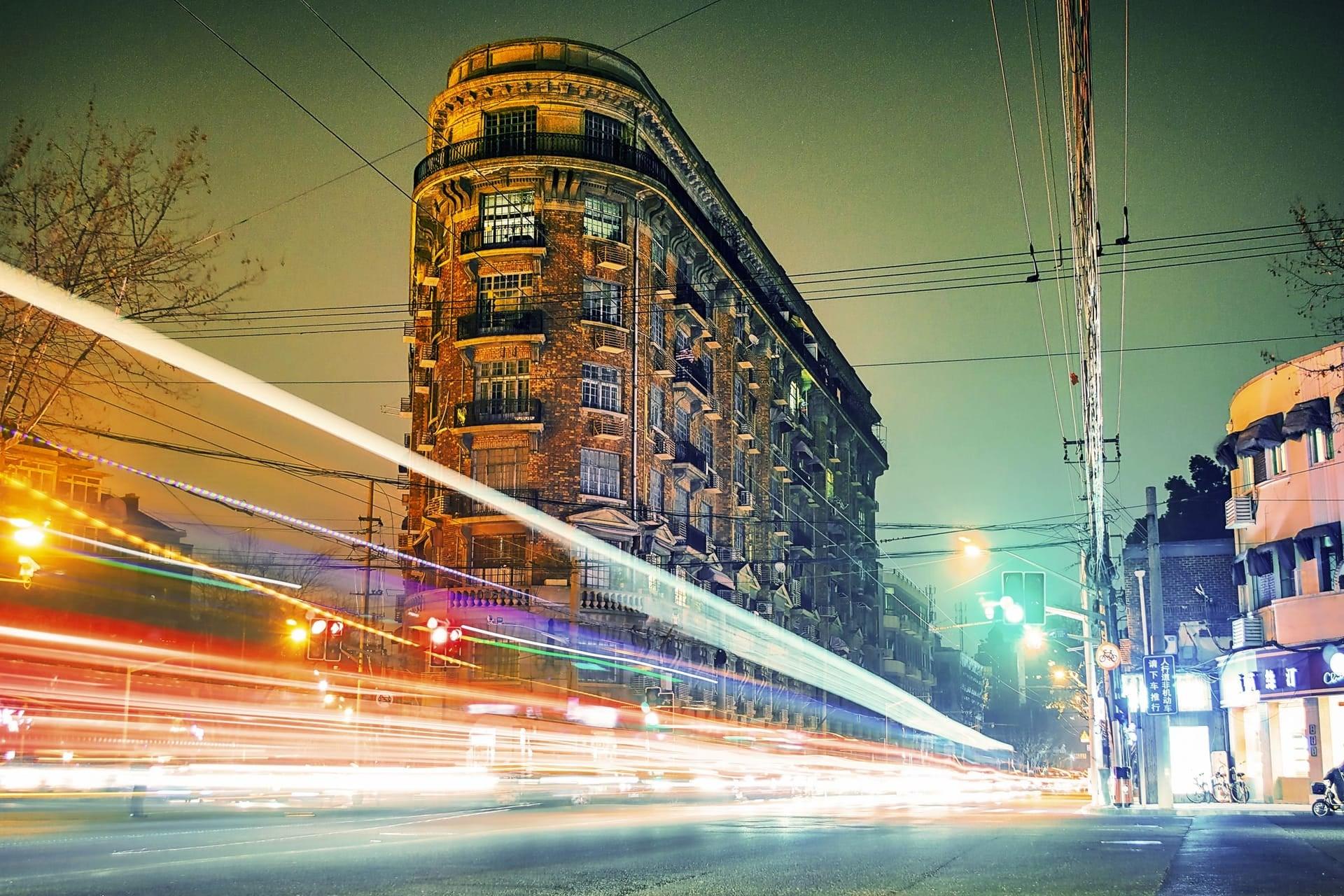
Shanghai's former French Concession on foot: Wukang Mansion, the whole of Wukang Road under its plane trees, Ferguson Lane, the Hunan Road corner apartments, Ba Jin's former residence, Ding Xiang Garden, the 1914 boundary on Huashan Road and West Fuxing Road to the Hengfu Exhibition Hall.
Start · Wukang Mansion (武康大楼)
DirectionsStops
- 1
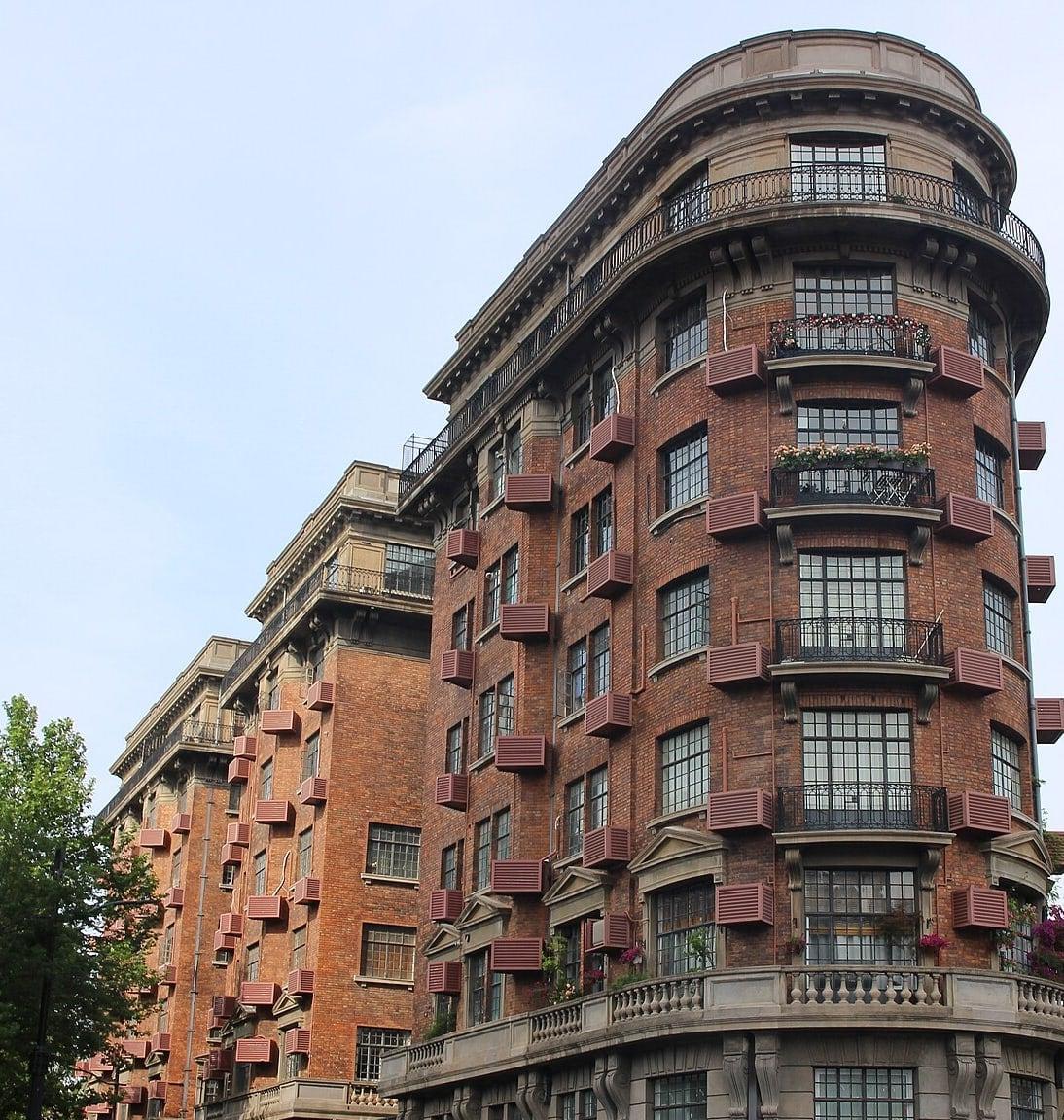
Wukang Mansion (武康大楼)
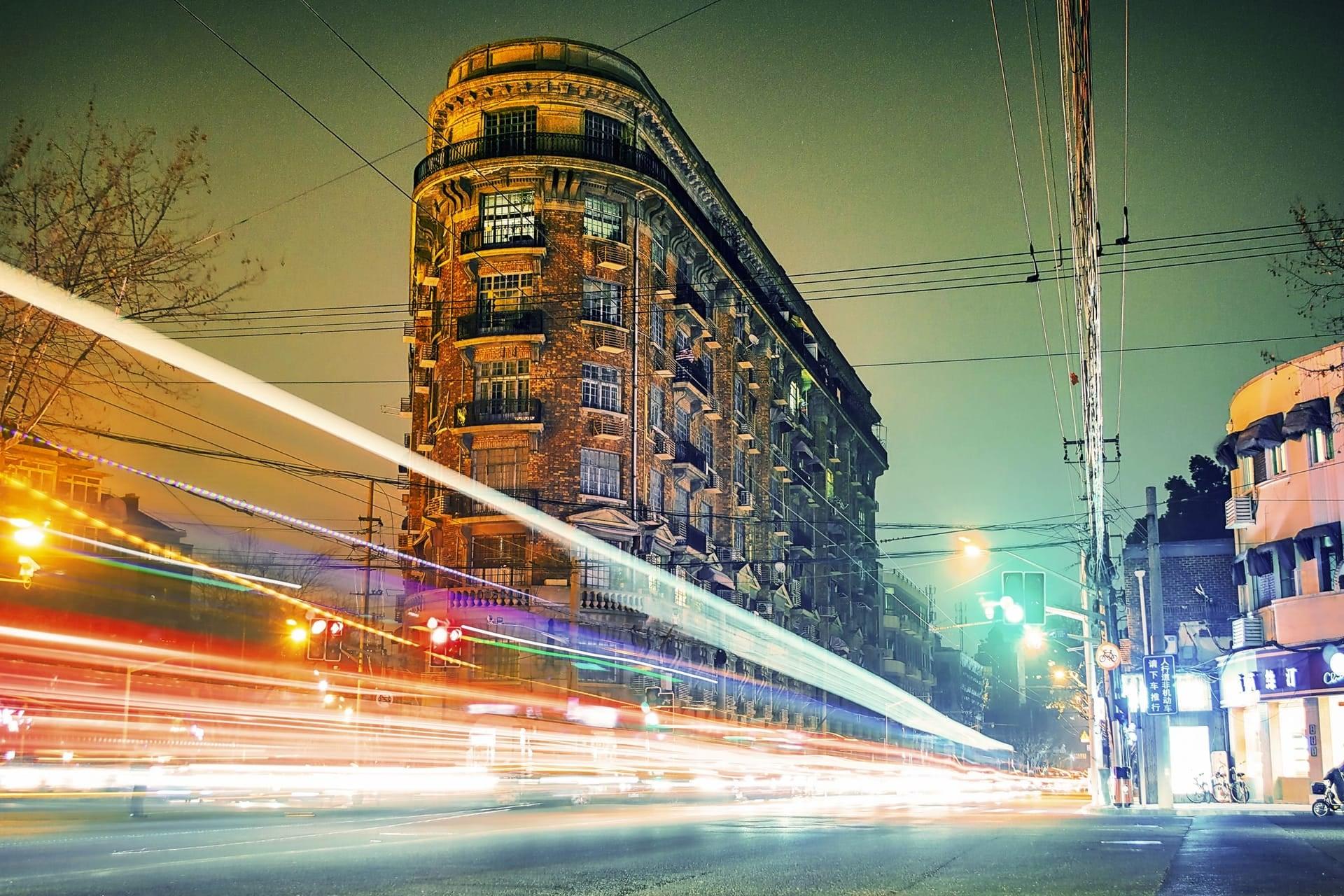
A building cut to fit its corner. Wukang Mansion, László Hudec's eight-story apartment house of 1924, built out to the edges of a wedge-shaped plot at a busy junction, with an arcade under its rounded bow.
- 2
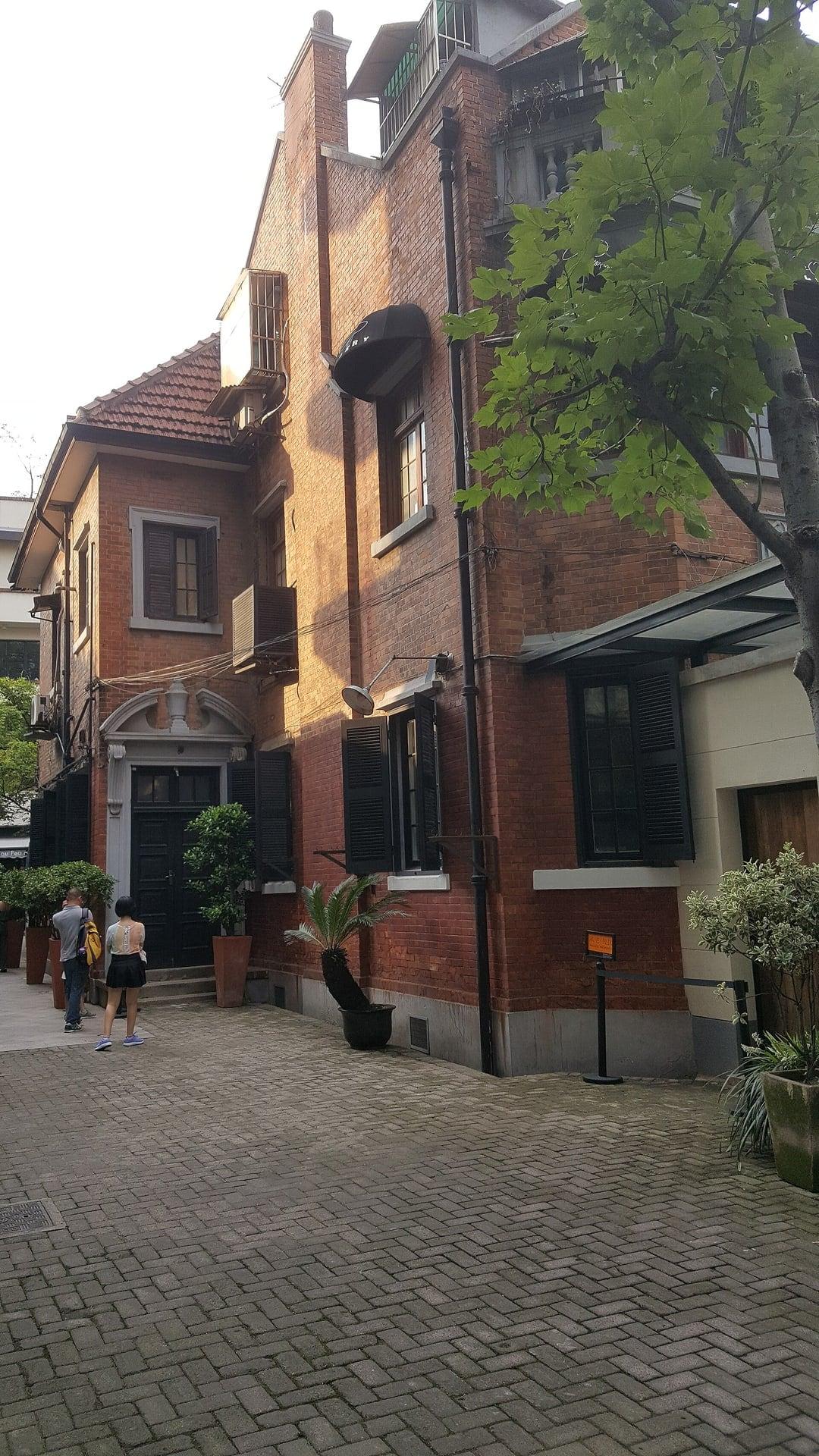
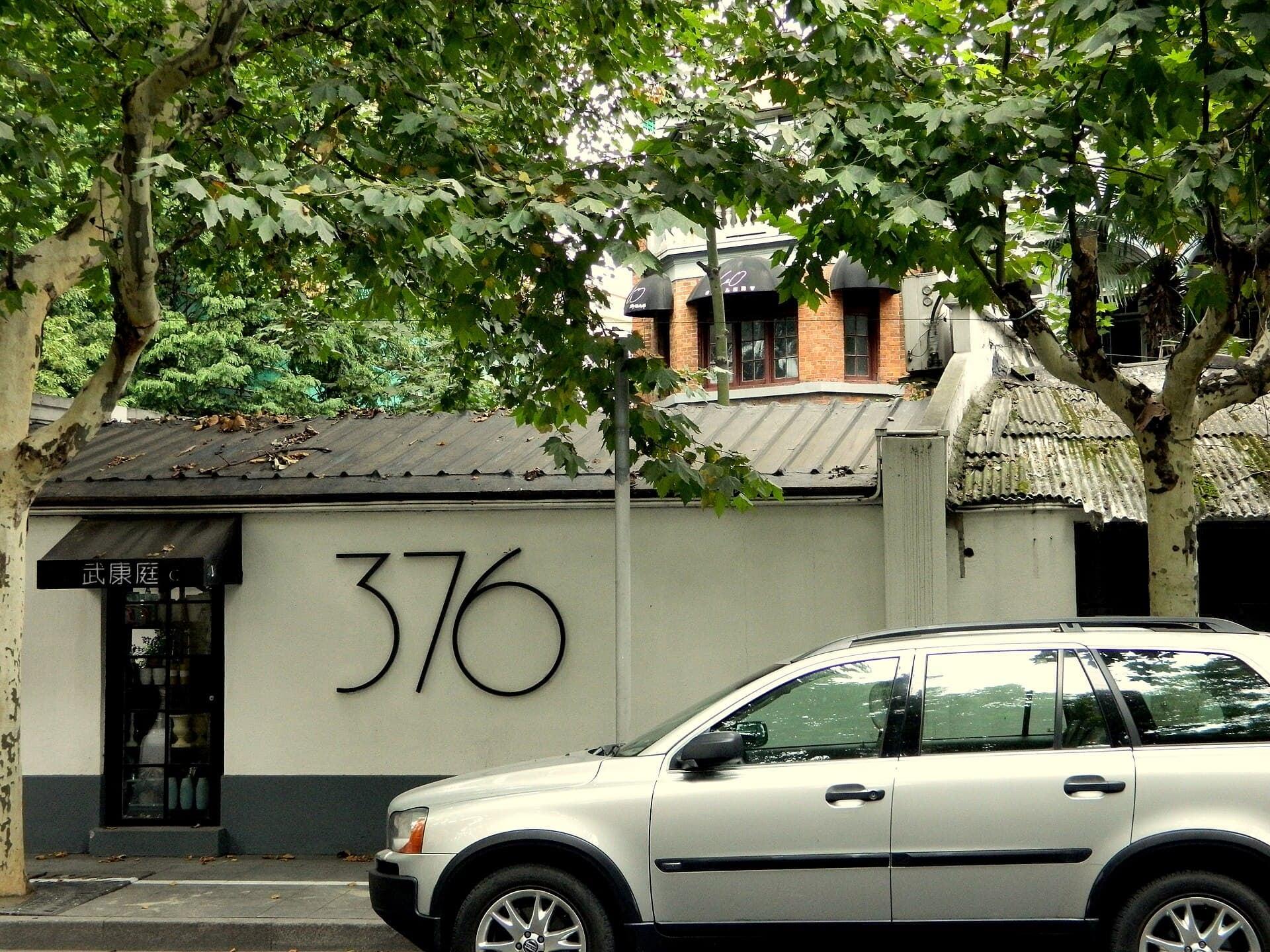
Ferguson Lane (武康庭)
A road one man paid for. Wukang Road began as John Ferguson's road to his school, built in 1907. Ferguson Lane's 1928 house, its best known, is now half homes, half shops.
- 3
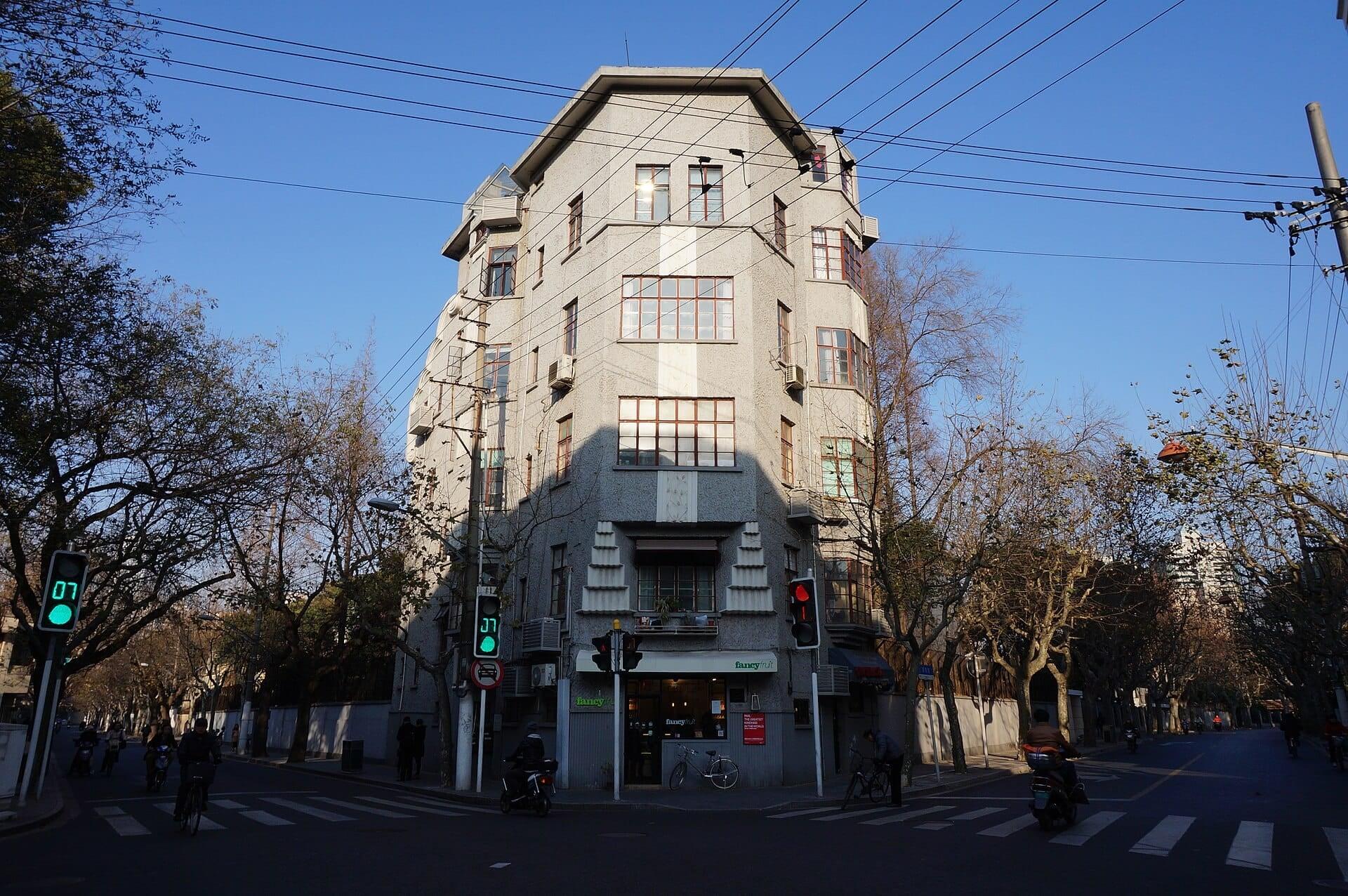
Hunan Road Corner (武康路湖南路口)
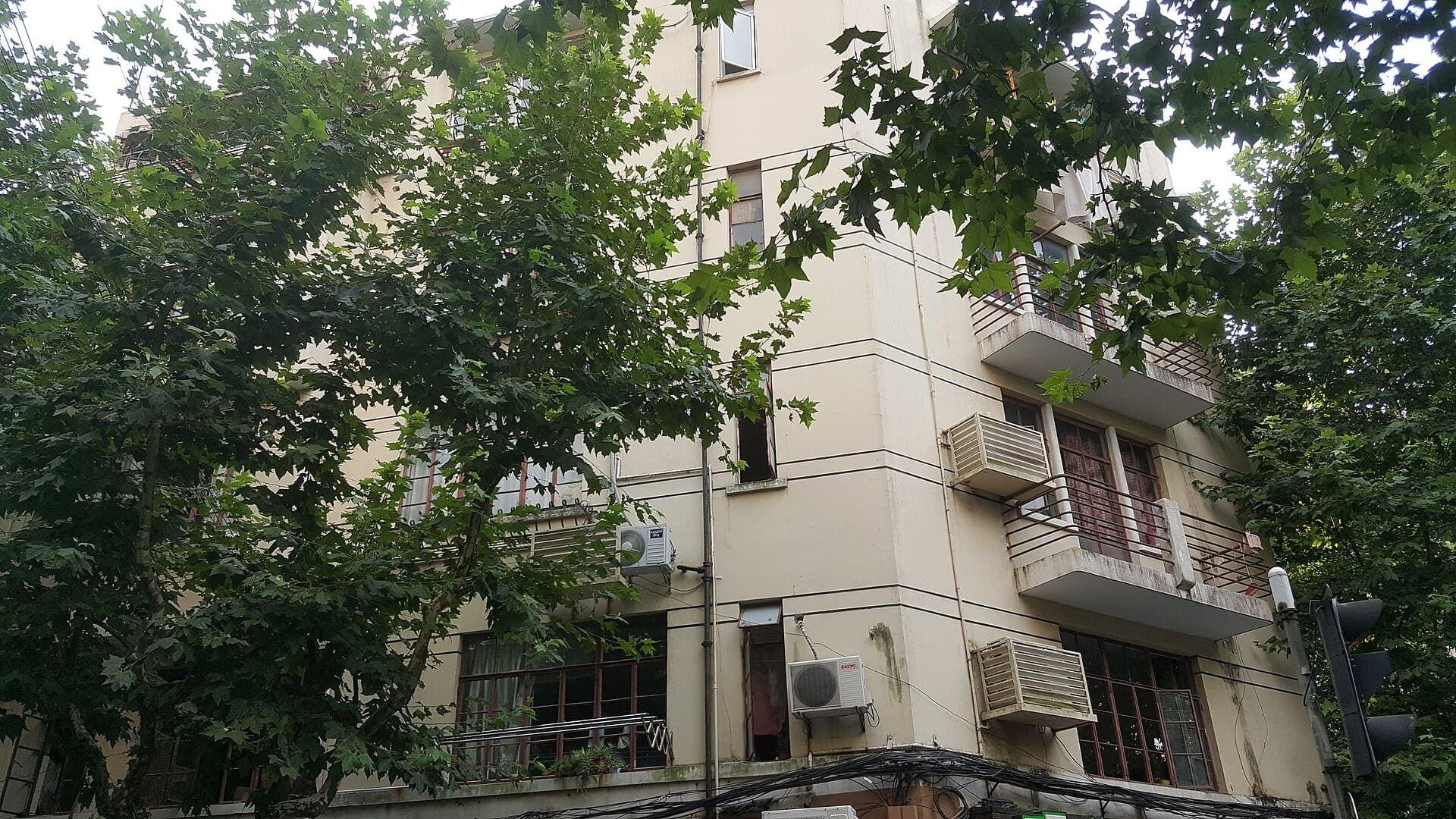
Two corners, five years apart. Midan Apartments of 1931 and Guofumen Apartments of 1936 hold the corners where Hunan Road crosses Wukang Road, each built to the odd-shaped plot the crossing left.
- 4
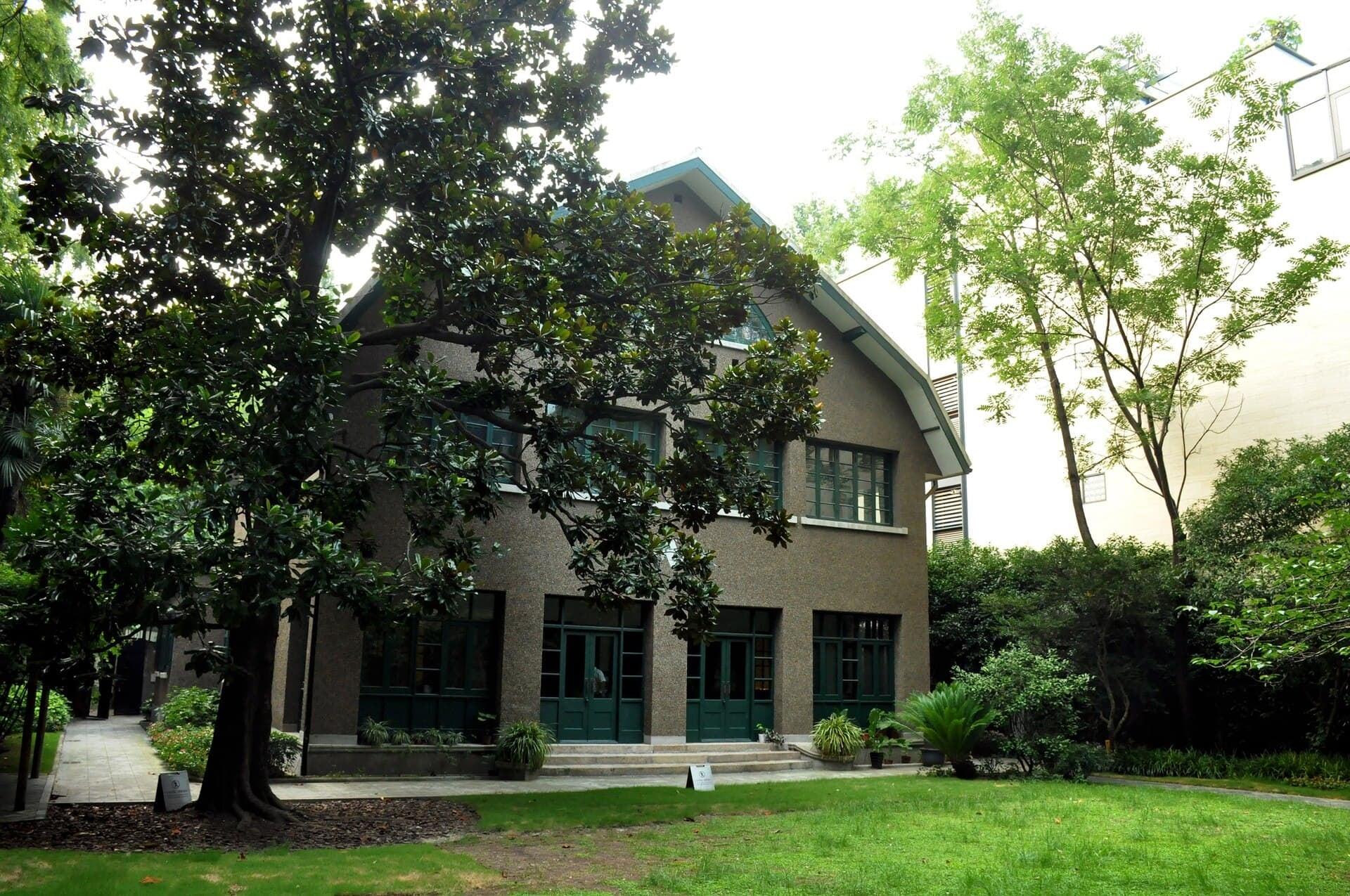
Ba Jin's Former Residence (巴金故居)
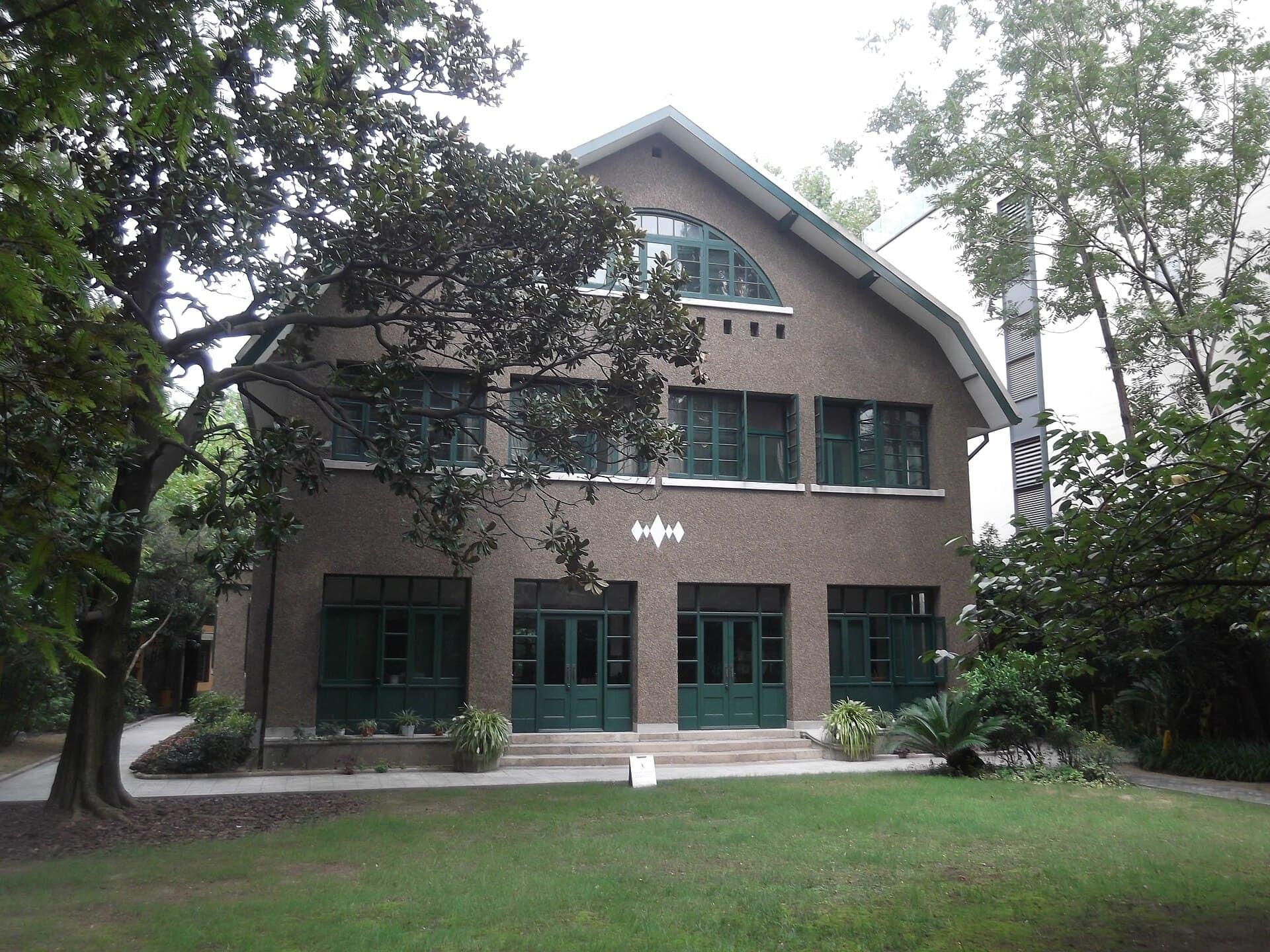
A writer's house in its garden. The garden villa where the novelist Ba Jin lived and wrote, red-tiled behind its wall, now a museum told here from the street.
- 5
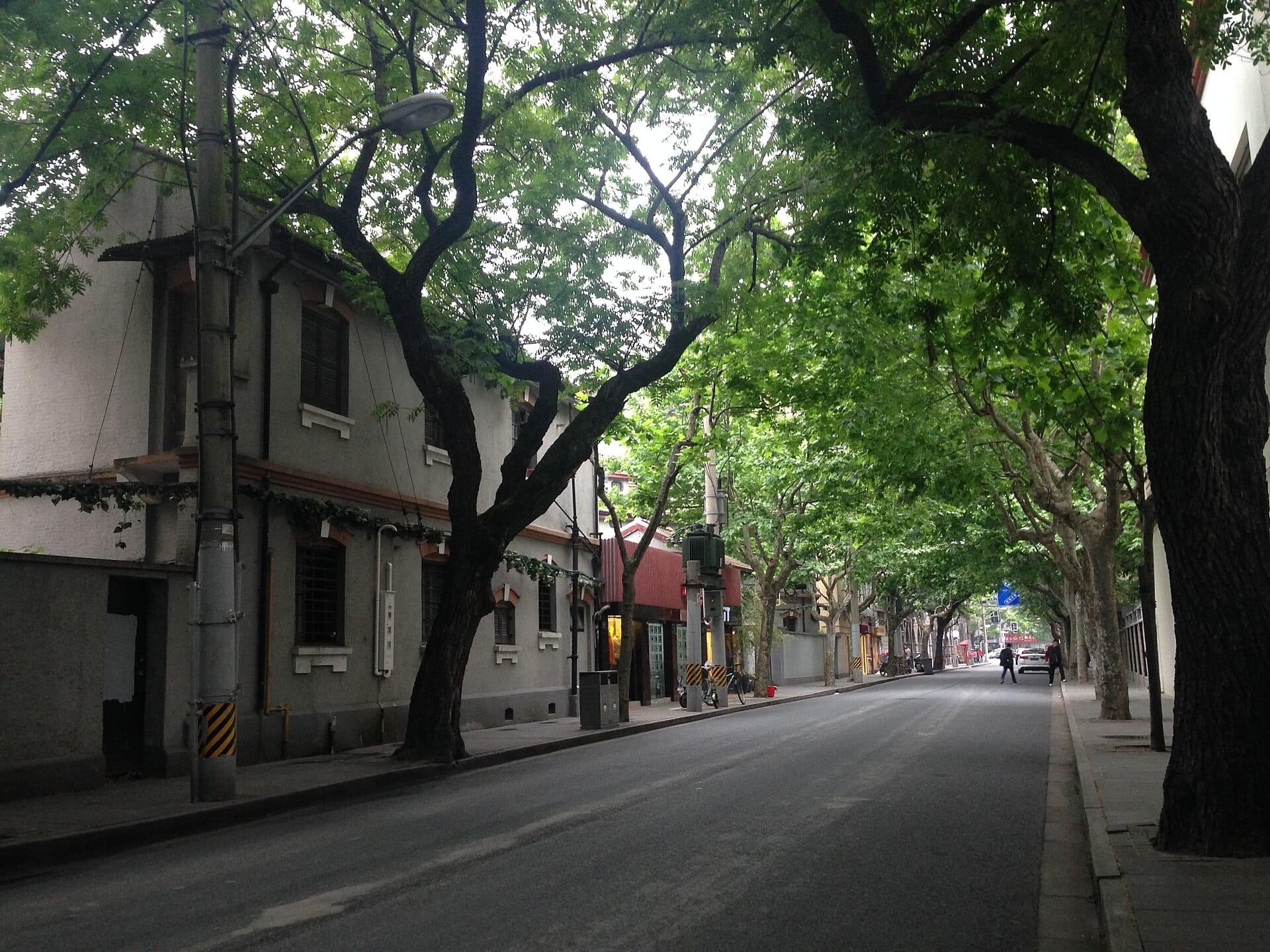
Wukang Road (武康路)
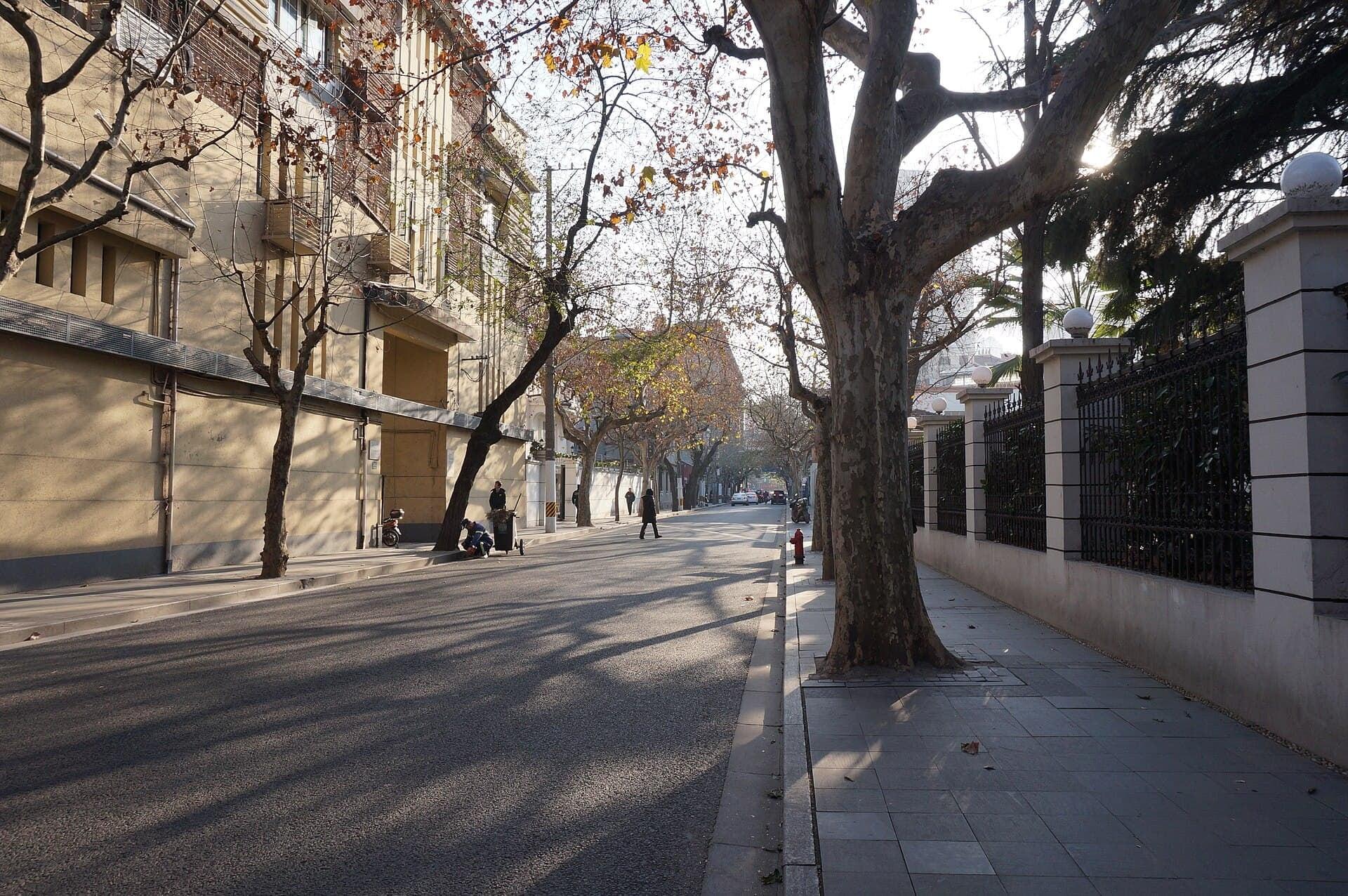
Trees planted by the rulebook. The plane trees of Wukang Road, grown in the French council's own nursery from 1905 and set 1.5 m from the road and 10 m apart, over walls hiding Spanish, English and Art Deco villas.
- 6
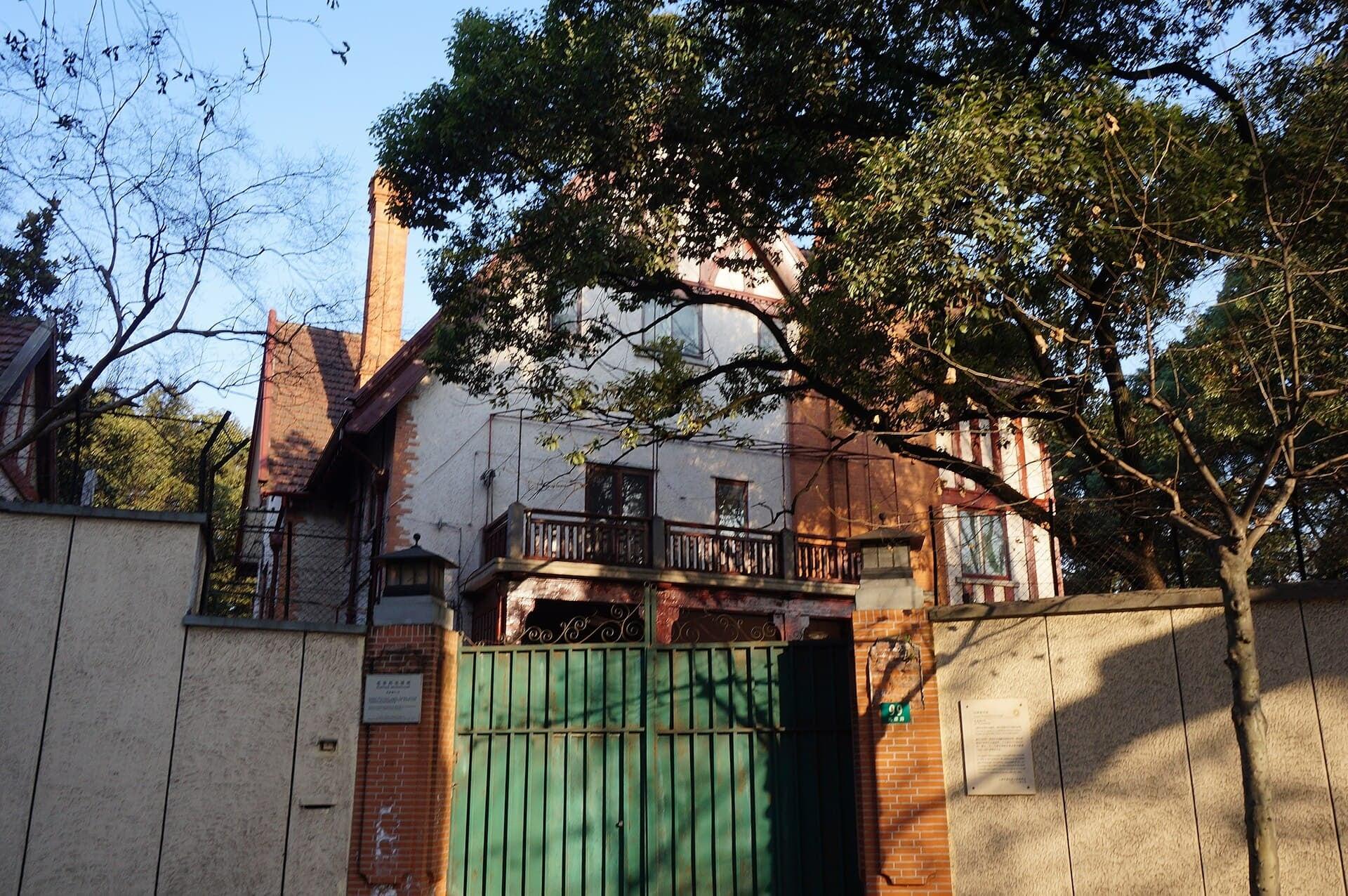
No. 99 Wukang Road (武康路99号)
An English house in a French district. No. 99, a private garden house of 1928 in the English country style, across from Lane 100's pair of 1918 garden houses.
- 7
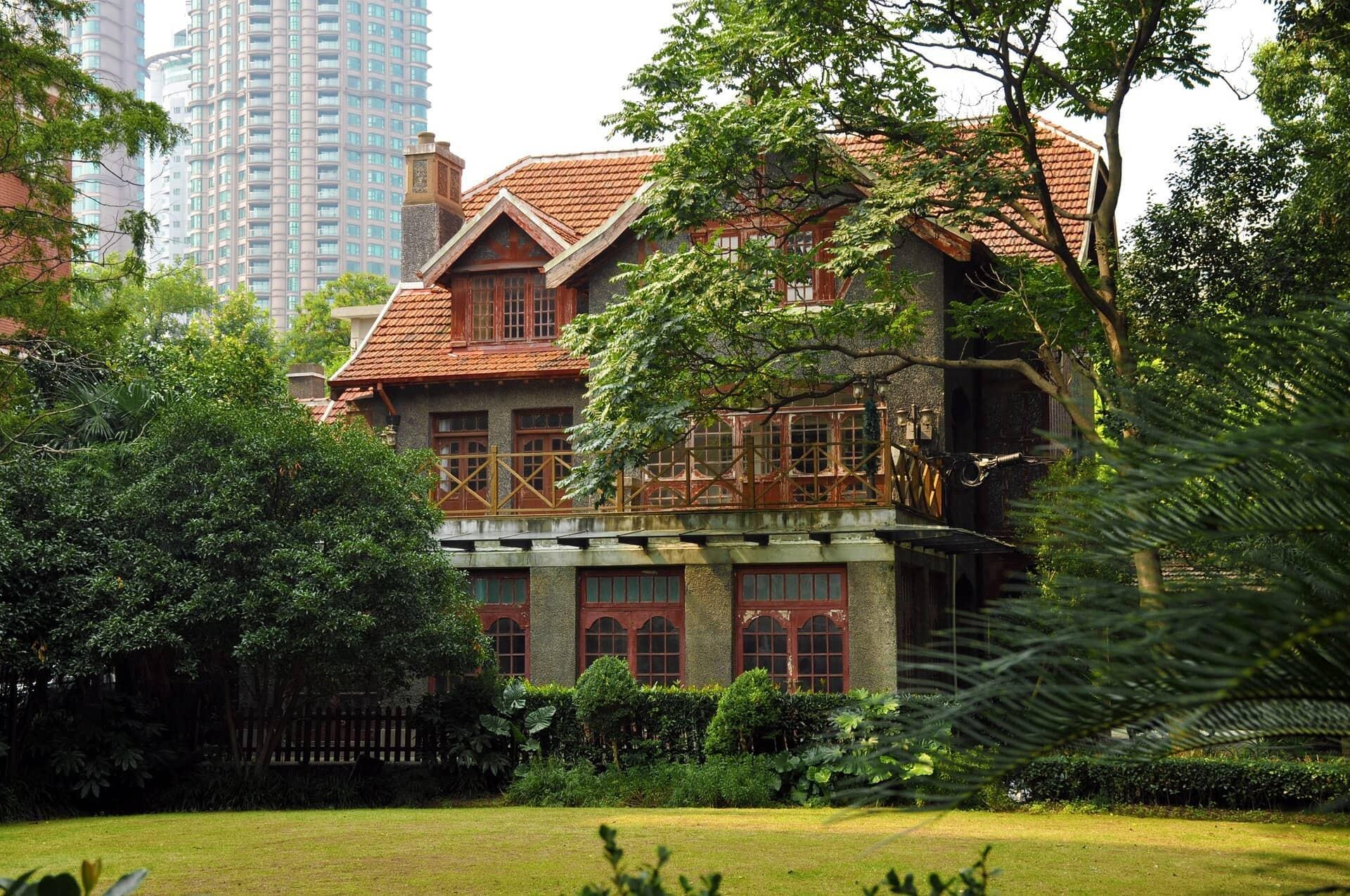
Anfu Road (安福路)
Where Ferguson's road runs out. Wukang Road meets Anfu Road after about 1,180 m from the mansion; the Shanghai Dramatic Arts Centre stands a short way along Anfu Road.
- 8
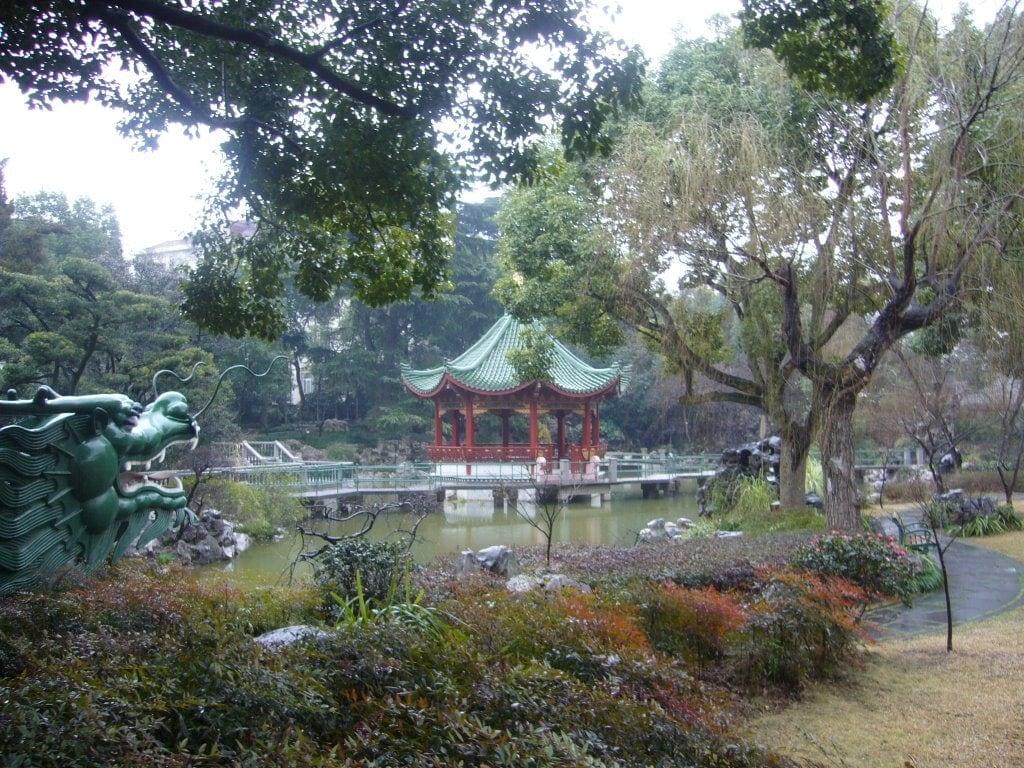
Ding Xiang Garden (丁香花园)
An English house with a Chinese dragon. Ding Xiang Garden, the Lilac Garden, built at the end of the 19th century for a son of a Qing statesman: an English country house with a dragon wall and phoenix pavilion inside.
- 9
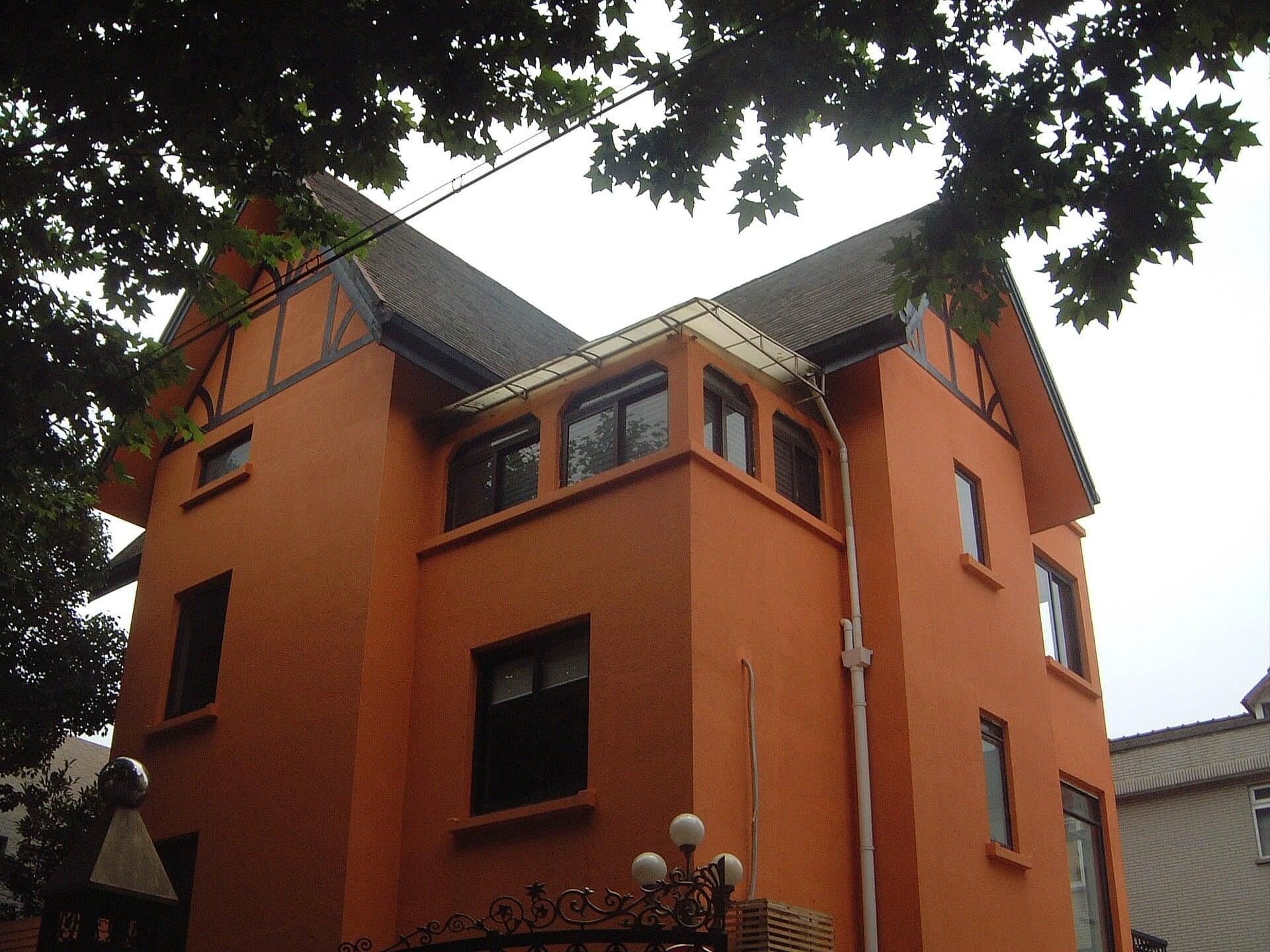
Huashan Road (华山路)
A boundary you can stand on. In 1914 the French council pushed the concession west to Huashan Road; part of the city's protected historic area still stops at the same road.
- 10
Gaoyou Apartments (高邮公寓)
The corner formula, a decade on. Gaoyou Apartments, five floors of Art Deco from about 1935, first called the Cordier Apartments, on the corner where Gaoyou Road meets West Fuxing Road.
- 11
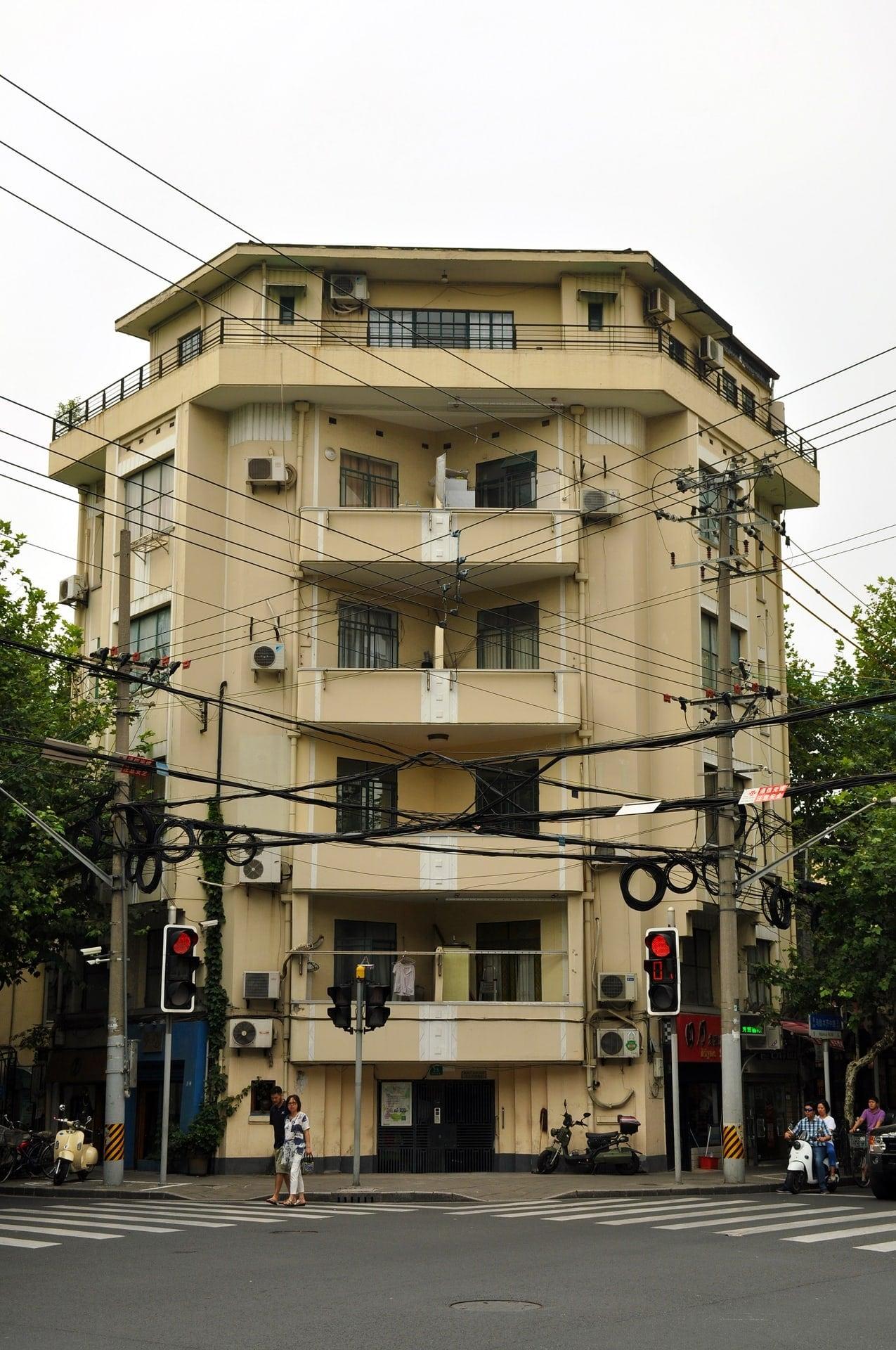
West Fuxing Road (复兴西路)
Why this tree shades Shanghai. The densest plane canopy of the walk, and the reasons the London plane, called French in Chinese, was planted along the city's streets.
- 12
Hengfu Exhibition Hall (衡复风貌馆)
Where the district explains itself. The Spanish-style Cloister Apartments of 1930 by Palmer and Turner, now the free exhibition hall of the Hengshan Road and Fuxing Road historic area.
Details
Best Time to Visit
Daylight, any day; about 75 minutes. The plane trees are in leaf from about April to November and bare from about December to March, when the walk is sunnier and the villas show more clearly. Sunset is about 16:50 in early December and 17:00 at the end of the month. The Wukang Mansion junction is crowded at weekends and on public holidays, above all during Chinese New Year (holiday 5 to 13 February 2027) and National Day (1 to 7 October): go early on a weekday for a clear view. The streets are quiet residential lanes after dark and the villas are unlit behind their walls, so walk in daylight. Check the opening days of Ba Jin's Former Residence and the Hengfu exhibition hall before you plan to go in. Summer is hot and humid, with the plum rains in June. Checked 25 November 2026.
Pro Tips
- •Getting to the start: Shanghai Metro lines 10 and 11 to Jiaotong University station, then about 300 m east along Middle Huaihai Road to the six-way junction where Wukang Mansion stands; follow the station signs for Huaihai Road. Checked 25 November 2026.
- •For a clear view and photo of Wukang Mansion, stay on the wedge of sidewalk across Middle Huaihai Road from its rounded corner: the corner itself fills with photographers.
- •Ba Jin's Former Residence (stop 4) and the Hengfu Historic Area Exhibition Hall (stop 12) are small museums. When the district last published its hours, in 2019, the hall was free, Tuesday to Thursday 09:00 to 16:30, with advance booking; the residence's current days and booking could not be confirmed. Check both before you plan to go in. The walk is told from the street and works when both are shut.
- •The Wukang Road Tourist Information Centre at No. 393, across the road from stop 2, is free to walk into (open daily 9:00 to 17:00 when the district last published its hours, in 2019).
- •Paying for a coffee on the way: set up Alipay or Weixin Pay with your own card before you travel, and carry some cash. Ferguson Lane's courtyard and the streets around Anfu Road have cafes.
- •The walk ends at 62 West Fuxing Road. Changshu Road station (lines 1 and 7) is about 10 minutes on foot to the north-east; Jiaotong University station is about 20 minutes back along West Fuxing Road and down Wukang Road.
Safety & Precautions
- •Mainland China drives on the right: at a crossing without lights, look left first. Wukang Road is one-way southbound, so crossing it, cars come only from the north. Hunan Road's arm west of Wukang Road is one-way out of the crossroads: crossing it (between stops 3 and 4), cars come from your right. Tai'an Road, the Lane 280 mouth and West Fuxing Road are two-way: look left first.
- •Electric scooters and bikes are almost silent, ride both ways on every street here regardless of one-way signs, and sometimes use the sidewalk. Look both ways at every crossing and every gate or lane mouth.
- •At the lights, right-turning cars do not stop for walkers: check before you step out, even on green.
- •The villas are private homes: do not go through gates or into courtyards, and keep voices down on the residential stretches.
- •Carry your passport: it is expected anywhere in mainland China.
- •Pavements are narrow in places and lifted by tree roots; summer days are hot and humid, with heavy rain in June. Checked 25 November 2026.
Gallery
Read the walk
The full story of Former French Concession: The Garden Suburb Built by Rule, in words. Prefer to listen? Play it narrated, from home or on location.
Introduction
Under the plane trees of Shanghai's former French Concession, the streets were laid out by rule. The French municipal council paved the roads, grew its own street trees and fixed where each one stood, and private builders filled the plots behind the walls with whatever style Europe was selling. Where two roads met at a sharp angle, the plot became a wedge, and the wedge became a building type of its own: the corner apartment. This walk follows Wukang Road, the old boundary on Huashan Road, and West Fuxing Road.
There are twelve stops over about two point two kilometers, about one point four miles, and it takes about seventy five minutes. The ground is flat, with no steps.
Traffic in mainland China drives on the right, so at a crossing without lights, look left first. Wukang Road itself is one way, with cars coming only from the north, and each crossing that matters is described as you reach it. Electric scooters and bikes are almost silent, ride both ways and use the sidewalk: look both ways every time.
The villas are private homes, seen from the street. Two stops are small museums, a writer's house and the district's exhibition hall; going in is optional and not part of this walk, so check their opening days and booking before you plan to. Carry your passport, as you should anywhere in mainland China.
December days reach about eleven degrees Celsius, fifty two Fahrenheit, January's less, and the trees are bare all winter; in summer the canopy closes overhead and the air is hot and humid.
Have mobile data that works in mainland China, and download this tour before you set out.
To reach the start, take Metro line ten or eleven to Jiaotong University station and walk about three hundred meters east along Middle Huaihai Road to the six-way junction. When you arrive at Wukang Mansion, begin with stop one.
1. Wukang Mansion (武康大楼)
Across the junction stands Wukang Mansion: eight stories of reinforced concrete on a plot shaped like a wedge, with its rounded corner pointing at you like the bow of a ship.
It was built in nineteen twenty four as the Normandie Apartments, for the International Savings Society, a company founded in Shanghai in nineteen twelve by French merchants. The architect was Laszlo Hudec, who worked in Shanghai from nineteen eighteen to nineteen forty seven and left more than a hundred buildings in the city, among them the Park Hotel and the Grand Theatre. This was his signature work in his years with an American firm.
Look at how the building fills its ground. Two roads meet here at a sharp angle, Wukang Road on the left and Middle Huaihai Road on the right, and Hudec built right out to both of them, then rounded off the point. At street level an arcade runs along the front, so the sidewalk passes under the upper floors. The style is French Renaissance, and the two lowest floors are faced in artificial stone. It is known as the first building in Shanghai with balconies, though other accounts say one of the first. Either way, it set a pattern you will meet again on this walk: where two roads left an awkward corner, someone built an apartment block to fit it.
The road beside it was renamed Wukang Road in nineteen forty three, and the building took the same name in nineteen fifty three. The street was restored in two thousand nine, and in two thousand eleven Wukang Road was named a national historic street.
The corner by the bow is often packed with people taking photographs, above all at weekends and on holidays. You do not need to stand in it: the whole building is in view from here.
Follow the route across Middle Huaihai Road at the lights to the mansion's corner, then across Wukang Road at the same lights to its far sidewalk, and walk up Wukang Road with the mansion's long side across the road on your right. Where Tai'an Road joins on your left there are no lights: look left first, and watch for e-bikes. Next is Ferguson Lane.
2. Ferguson Lane (武康庭)
On your left, through the courtyard entrance, is Ferguson Lane, a cluster of buildings around one courtyard, and the road you are walking was once named for the man who made it.
Before it was Wukang Road, this was Route Ferguson. John Calvin Ferguson was an American, hired by Nanyang Public School, the forerunner of Jiao Tong University, whose name is on the metro station near the start. To make it easier for the school's teachers and students to get to and from the campus, Ferguson paid for a road out of his own money, and it was named Ferguson Road after him. Shanghai's Xuhui district place name records date the road to nineteen oh seven. The road came first, and the houses followed it. In nineteen forty three it was renamed Wukang Road.
Its best known building, number three seventy six, is a garden house of nineteen twenty eight in a neoclassical style, on the city's fifth list of protected historic buildings. Today it is half homes and half shops, with cafes around its courtyard, which is how much of this street lives now.
Across the road and a little behind you, number three ninety three holds the Wukang Road Tourist Information Centre, free to walk into. The older of its two blocks went up between nineteen twelve and nineteen fifteen.
Follow the route north under the plane trees. Where a lane opens on your left, look left for scooters coming out. Next is the Hunan Road crossroads.
3. Hunan Road Corner (武康路湖南路口)
Ahead, where Hunan Road crosses, apartment blocks hold the corners, and they show the corner formula twice, five years apart.
Across Wukang Road at the crossroads stands Midan Apartments, number one fifteen, built in nineteen thirty one. It is Art Deco, five floors and partly six, on a plan with four uneven sides, because that is the shape the two crossing roads left. Its early residents were mostly foreigners, and it was put on the city's list of protected buildings in nineteen ninety four.
On this side of the road at the crossroads are the Guofumen Apartments, numbers two thirty and two thirty two, from nineteen thirty six, in the same modern Art Deco manner. They were built four floors high and raised to five later. The city listed them in two thousand fifteen.
Nearby on this side, number two forty is the Cape Town Apartments of nineteen forty, in a later, streamlined modern style.
Each of these fills the awkward plot that two meeting streets leave behind, the same move Hudec made at the mansion seven years before Midan. On a street of walled garden houses, the corners went to apartments.
Follow the route across the end of Hunan Road. There are no lights, and this arm of Hunan Road is one way: cars turn into it from the crossroads on your right, and e-bikes come from both sides. Next is Ba Jin's former residence, across the road.
4. Ba Jin's Former Residence (巴金故居)
Across the road, behind its wall and gate, stands a three-story garden house with a red-tiled, pitched roof. This was the home of the novelist Ba Jin, who lived and wrote here, and it is now a museum to him: Ba Jin's former residence.
By the People's Daily's account, this detached garden house was his home for half a century, and he wrote at his desk on a sunny open veranda along one side.
Look at it as a type, because it is the type this whole road was built for: one household, one house set back from the street in its own garden, behind a wall, with a gate onto the sidewalk. That is the garden suburb the concession laid out along Ferguson's road. The corner apartments you have just seen are the exception; houses like this are the rule.
Check the museum's opening days and booking before you plan to go in. This stop is told from the street, and it works whether the house is open or not.
Follow the route north on this side, past the walled gardens. Next, the plane trees themselves.
5. Wukang Road (武康路)
Look up. The plane trees on both sides of Wukang Road reach over the middle of the street, and they stand where a rule told them to stand. In nineteen oh five the French municipal council set up a nursery in this district to grow its own saplings. Then it created an office for…
Full narration for this stop unlocks with the tour.
6. No. 99 Wukang Road (武康路99号)
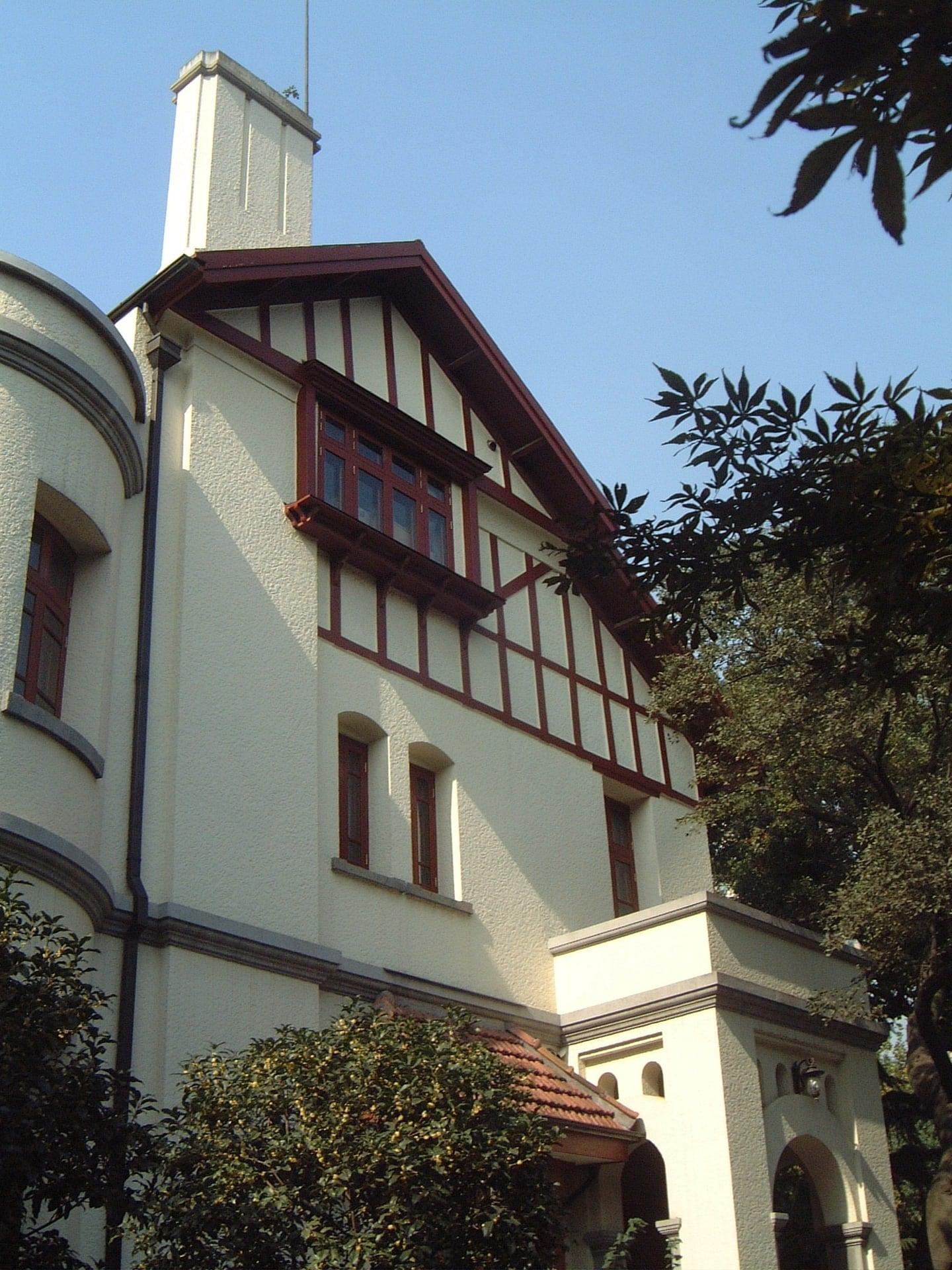
Across the road, about where Wuyuan Road turns off, number ninety nine is a garden house of nineteen twenty eight in the English country style. This stop is told from the street: look for the steep red-tiled roof, the tall red-brick chimneys and the red timber framing over the…
Full narration for this stop unlocks with the tour.
7. Anfu Road (安福路)
Here Wukang Road meets Anfu Road. From the mansion to this corner it runs about one thousand one hundred eighty meters, and you have now walked the length of it. Anfu Road runs off behind you, to the right. About a hundred meters along it stands the building of the Shanghai…
Full narration for this stop unlocks with the tour.
8. Ding Xiang Garden (丁香花园)
On your left, behind the wall and the gate, is Ding Xiang Garden, the Lilac Garden, one of Shanghai's early garden houses. It was here before the concession's boundary reached this road. It was built at the end of the nineteenth century as the home of a son of a leading…
Full narration for this stop unlocks with the tour.
9. Huashan Road (华山路)
This busy road with its buses is Huashan Road, and in nineteen fourteen it became a line on the map. That year the French municipal council extended its concession westward to this road. Notice the order of events. Ferguson's road was built in nineteen oh seven, and only in…
Full narration for this stop unlocks with the tour.
10. Gaoyou Apartments (高邮公寓)
Across the road, on the corner where Gaoyou Road comes in, stands Gaoyou Apartments: five floors of Art Deco from about nineteen thirty five. It was designed by the Realty Investment Company and first called the Cordier Apartments, after the old name of Gaoyou Road. The district…
Full narration for this stop unlocks with the tour.
11. West Fuxing Road (复兴西路)
This stretch of West Fuxing Road has the thickest shade on the walk, and it raises a question: why this tree? In Chinese it is called the French wutong, but it is the London plane. The name stuck because the French were the first to bring it to China and plant it, in their…
Full narration for this stop unlocks with the tour.
12. Hengfu Exhibition Hall (衡复风貌馆)
The Spanish-style building on your left, number sixty two, is where this district explains itself. It was built in nineteen thirty as the Cloister Apartments, designed by the architects Palmer and Turner. After about two years of repair it opened as the Hengfu Historic Area…
Full narration for this stop unlocks with the tour.
- File:武康路376号住宅.jpg | 武康路376号住宅是上海市第五批优秀历史建筑 — Antigng, CC BY-SA 4.0 · source
- File:武康路376 - panoramio.jpg | 武康路376 — Weixi Zeng, CC BY-SA 3.0 · source
- File:Midget Apartments.JPG | 武康路密丹公寓 — Livelikerw, CC BY-SA 3.0 · source
- File:国富门公寓.jpg | 国富门公寓是上海市第五批优秀历史建筑 — Antigng, CC BY-SA 4.0 · source
- File:Bajin Jiuju.JPG | 巴金旧居 武康路113号 — Fayhoo, CC BY-SA 3.0 · source
- File:Ba Jin house, Shanghai.JPG | Garden view at the Former Residence of Ba Jin, Shanghai, China. — Jpbowen, CC BY-SA 4.0 · source
- File:Wukang Road, Shanghai, May 2016.JPG | Street view of Wukang Road, Shanghai, in summer — SSYoung, CC BY-SA 4.0 · source
- File:Street View of Wukang Road.JPG | 武康路街景 — Livelikerw, CC BY-SA 3.0 · source
- File:Former Residence of the manager of Calbeck Macgregor.JPG | 上海市第二批优秀历史建筑——武康路99号正广和大班住宅 — Livelikerw, CC BY-SA 3.0 · source
- File:Shanghai Dramatic Arts Center.JPG | 花园住宅 上海话剧艺术中心 安福路284号 — Fayhoo, CC BY-SA 3.0 · source
- File:Ding Xiang Garden.JPG | Ding Xiang Garden, located on Huashan Rd., Shanghai — chiale.chou, CC BY-SA 3.0 · source
- File:Former residence of Li Hongzhang's Son (Dingxiang Garden) 李鸿章儿子的家 - panoramio.jpg | Former residence of Li Hongzhang's Son (Dingxiang G — CyberCop, CC BY 3.0 · source
- File:905 Huashan Rd - panoramio.jpg | 905 Huashan Rd — CyberCop, CC BY 3.0 · source
- File:华山路831号住宅.jpg | 华山路831号住宅 — Antigng, CC BY-SA 4.0 · source
- File:Baisaizhong Gongyu.JPG | 白赛仲公寓 复兴西路26号 — Fayhoo, CC BY-SA 3.0 · source
- File:Keling Jiuju.jpg | 柯灵旧居 复兴西路147号 — Fayhoo, CC BY-SA 3.0 · source
Images may be cropped or resized. Other photos via Unsplash and Pexels.