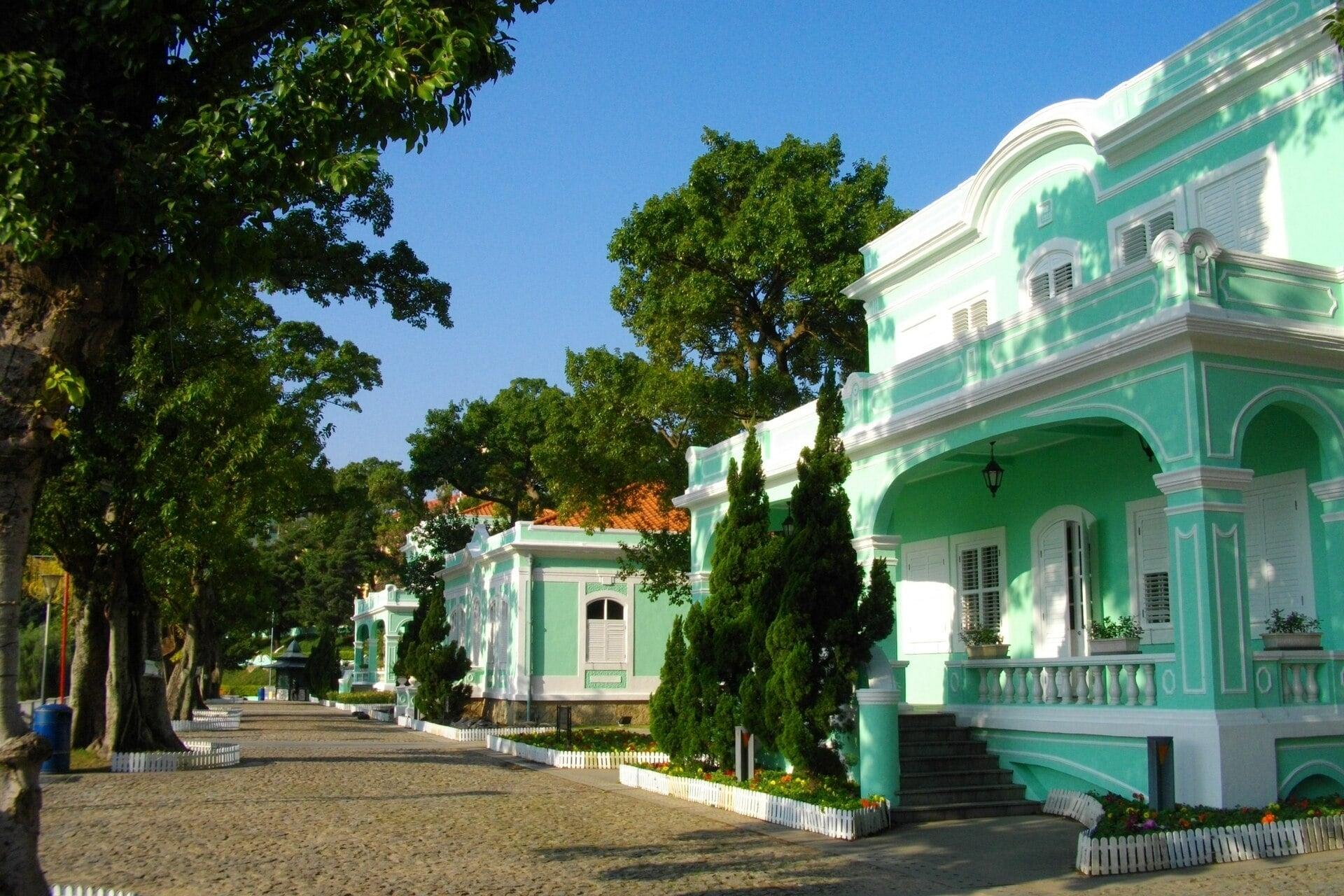
Taipa Village on foot, from its market down to the old shore: Rua do Cunha, the Pak Tai Temple, Merchants' Street, the Carmo Fair pavilion, the former Iec Long Firecracker Factory, the Sam Po Temple on its rock, Our Lady of Carmel and the five Taipa Houses of 1921, ending over the wetland.
Start · Largo dos Bombeiros (消防局前地)
DirectionsStops
- 1
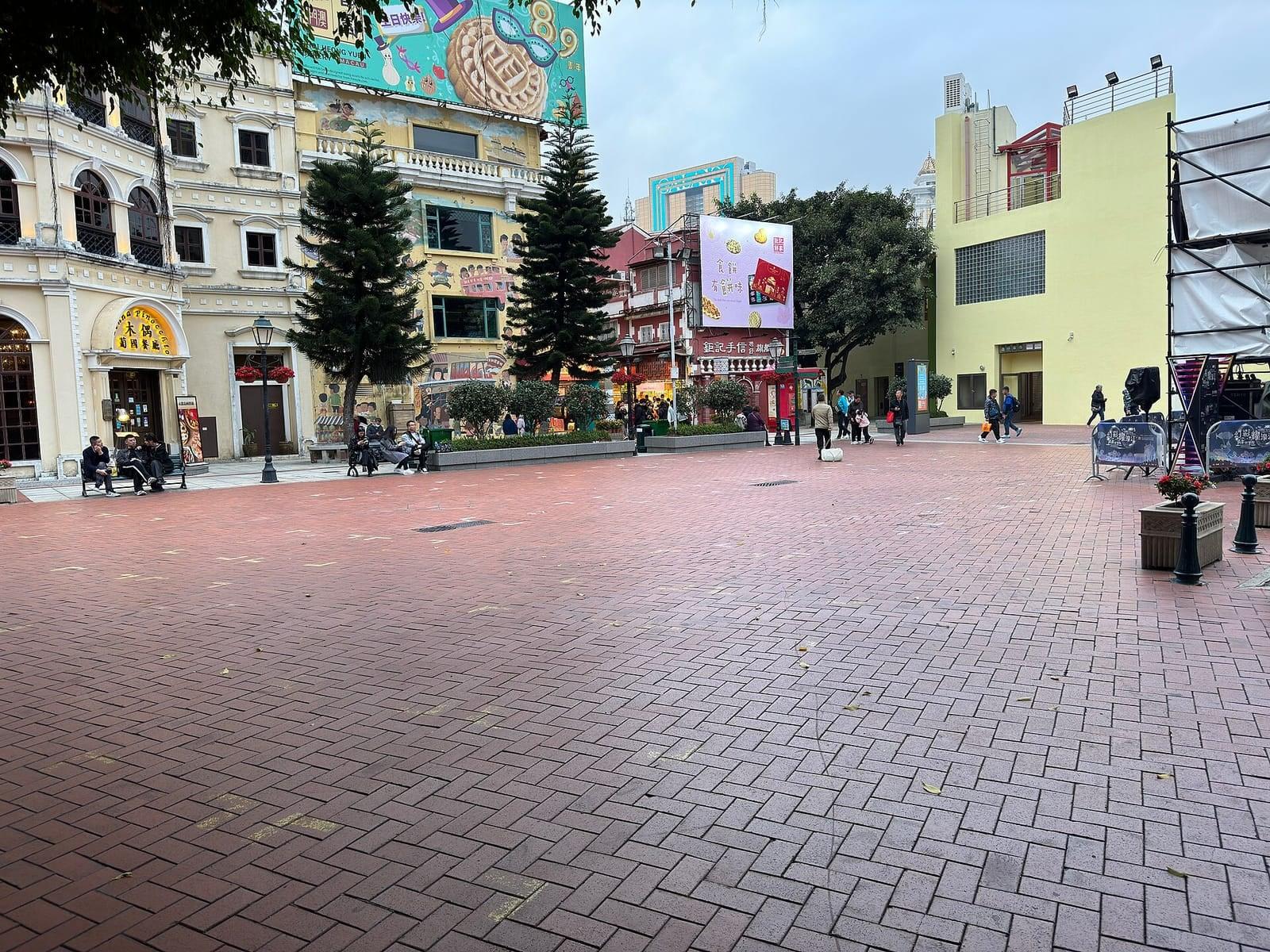
Largo dos Bombeiros (消防局前地)
Where the village does its shopping. The square at the top of Rua do Cunha, beside the Taipa Municipal Market of 1983, recently refurbished.
- 2
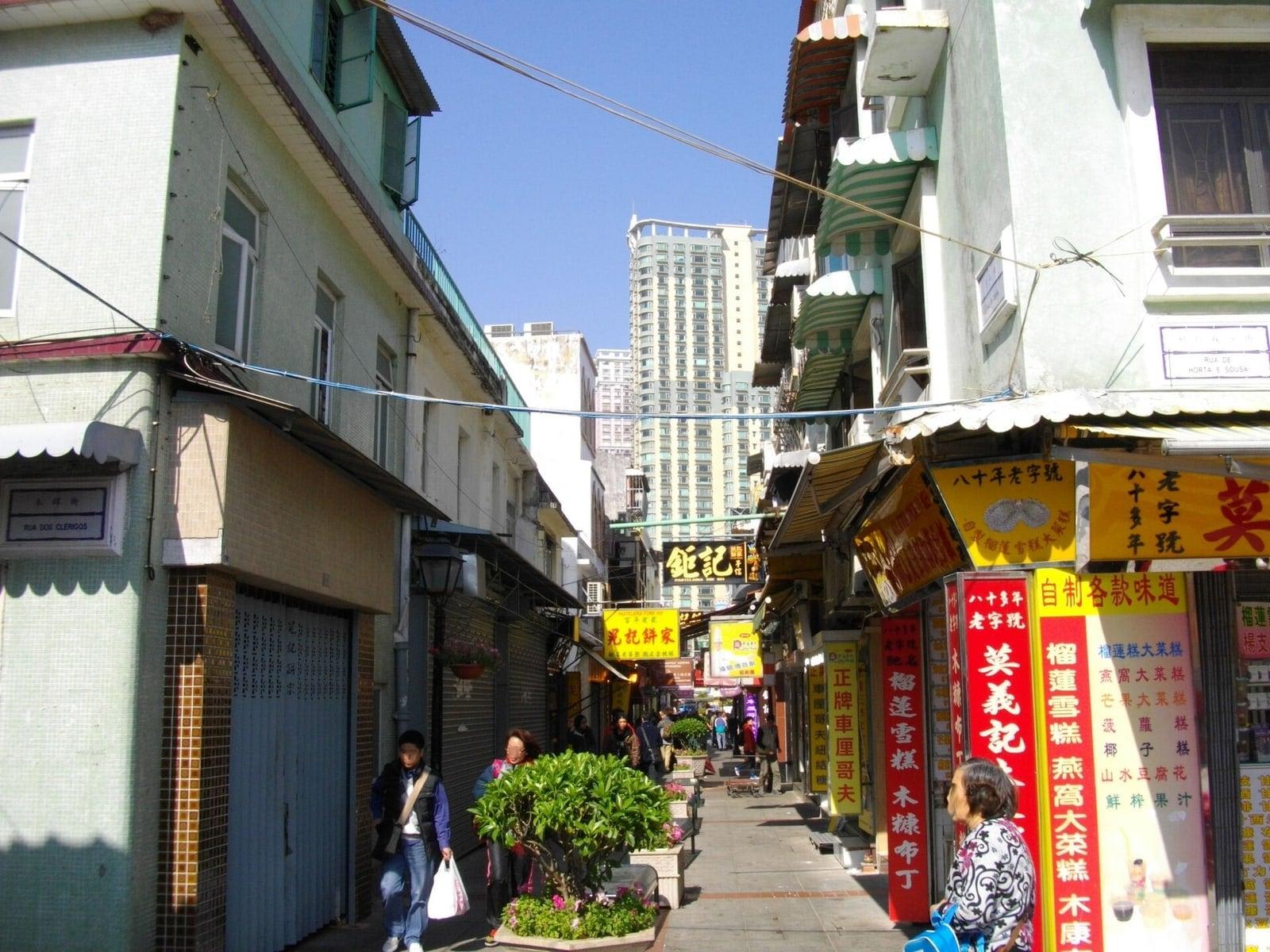
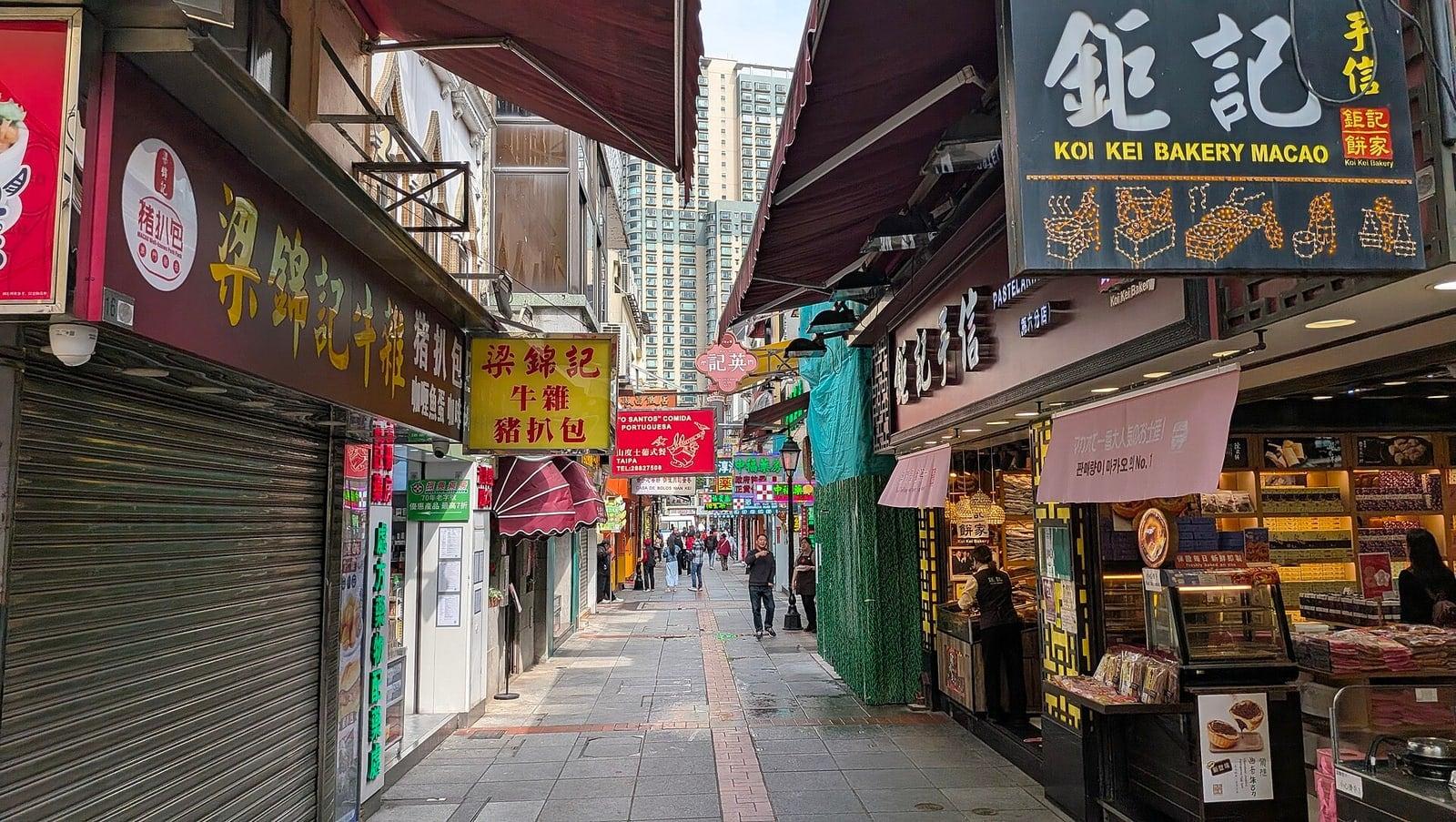
Rua do Cunha (官也街)
The village's food street, end to end. Rua do Cunha, a pedestrian lane about three meters wide between two markets, seen from the small square on its west side.
- 3
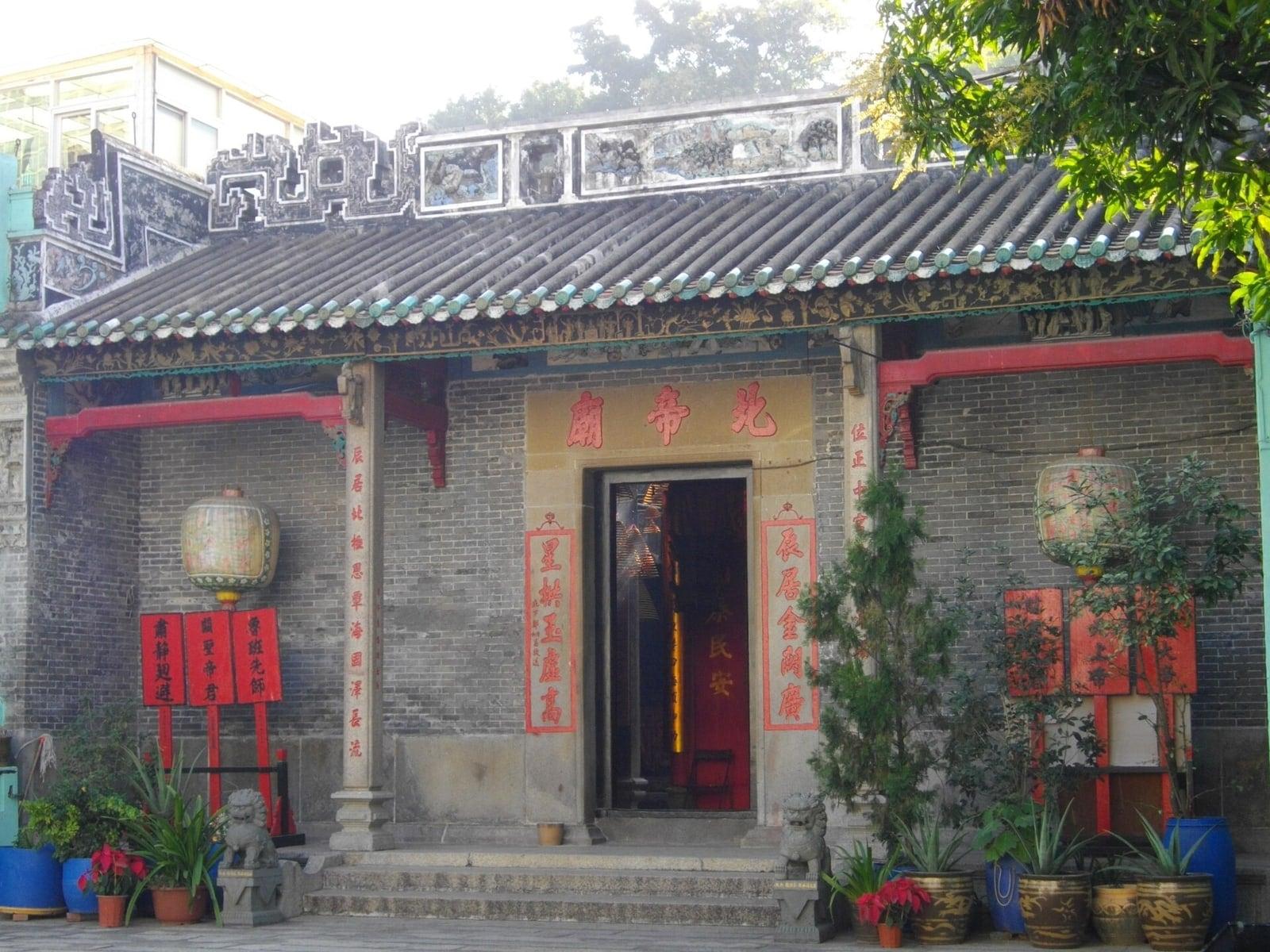
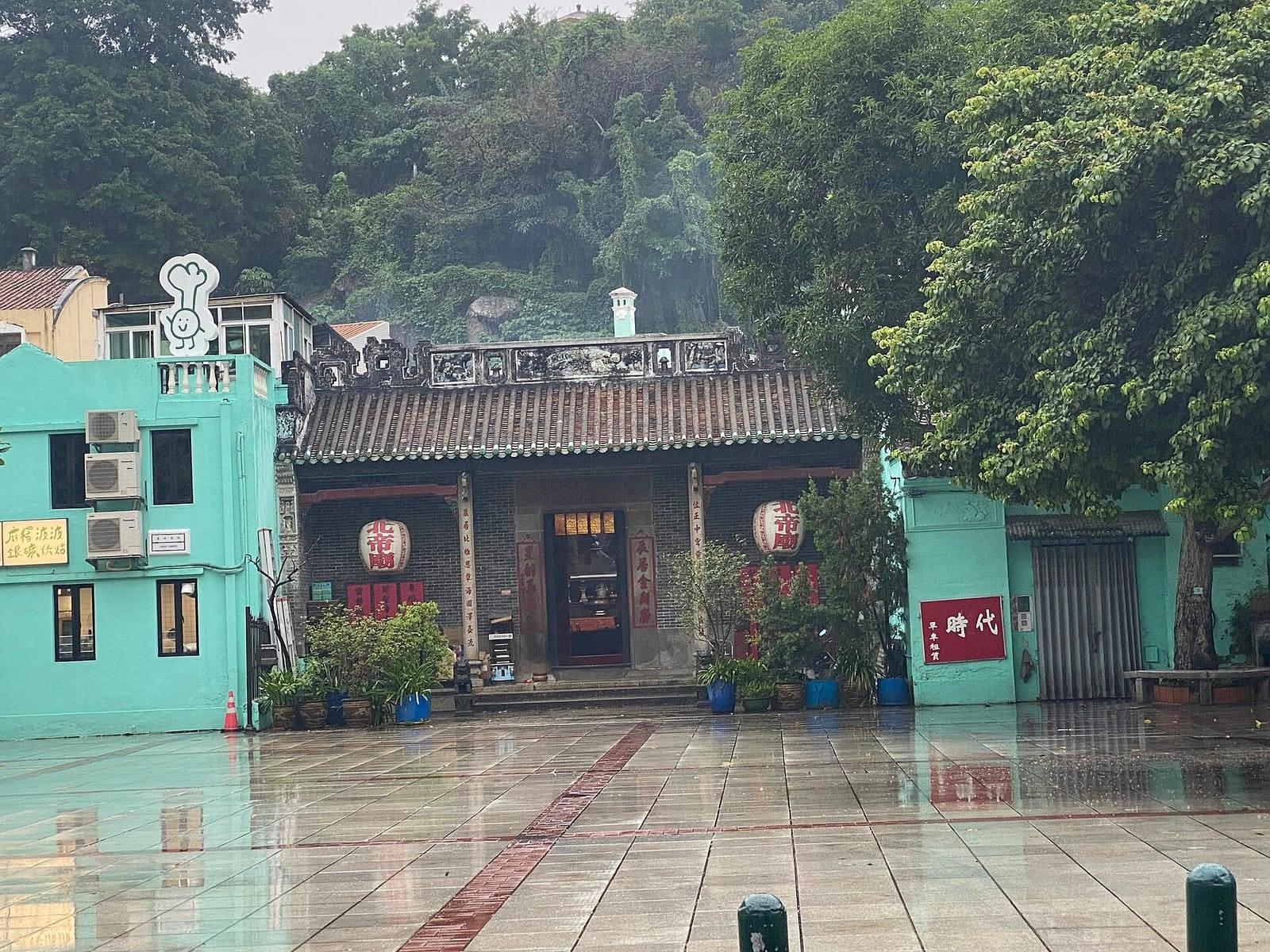
Pak Tai Temple (北帝廟)
The island's old name on an altar. A temple of about 1844 to Pak Tai, god of the north, whose bell and altar carry the old names of Taipa, on the village's opera square.
- 4
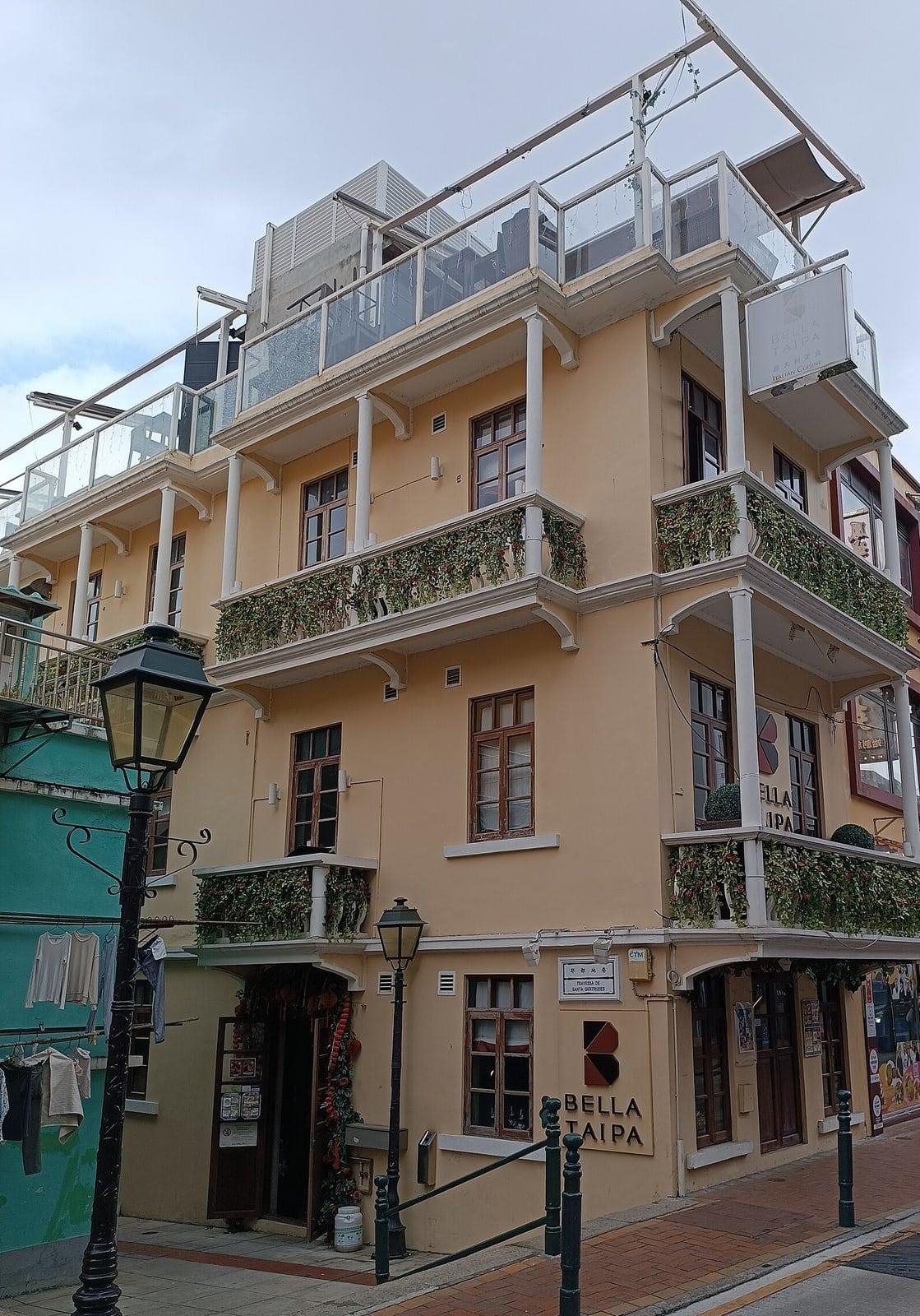
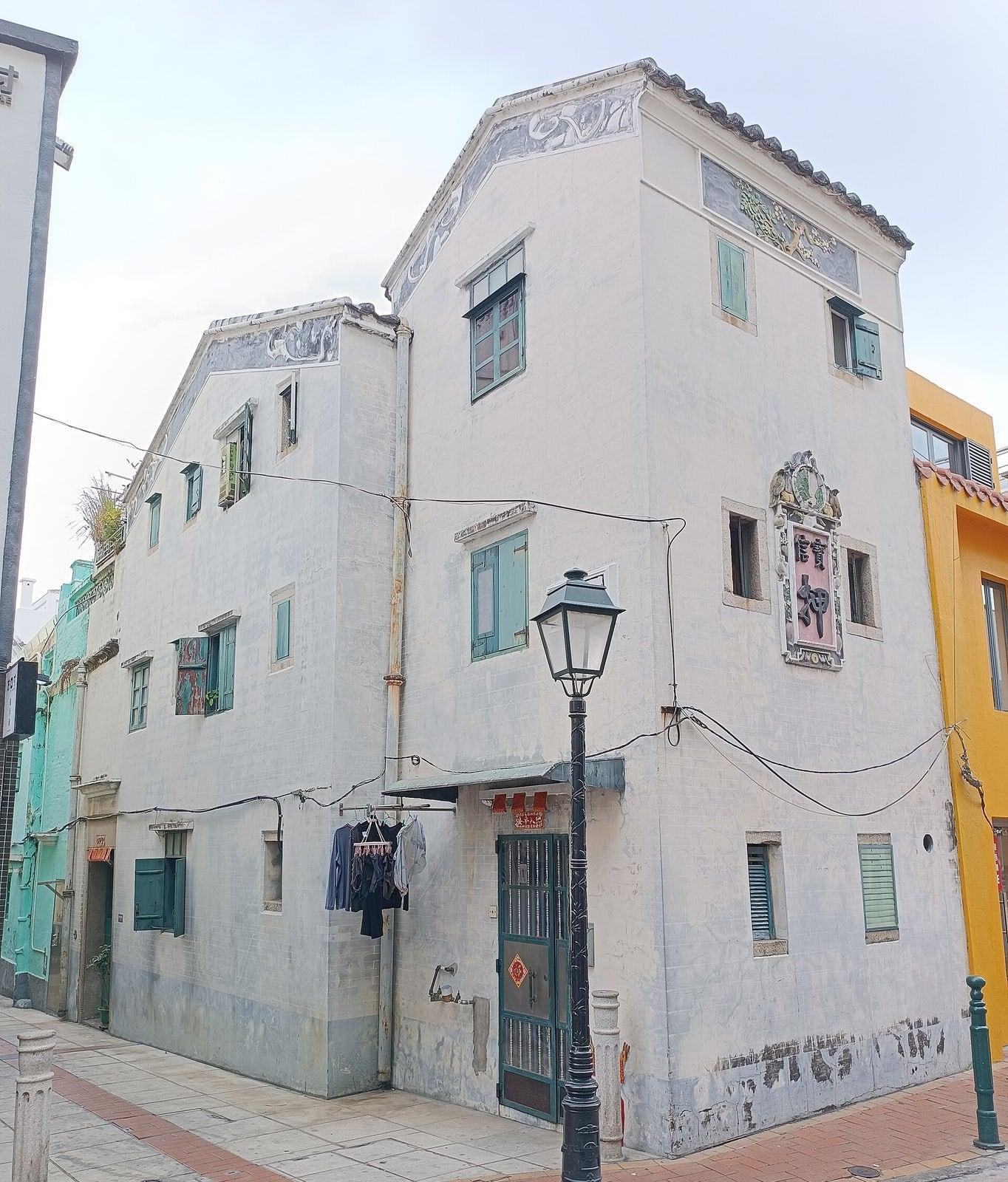
Rua dos Mercadores (買賣街)
The shop street before the food street. Rua dos Mercadores, a lane of low traditional shophouses from the late nineteenth and early twentieth centuries.
- 5
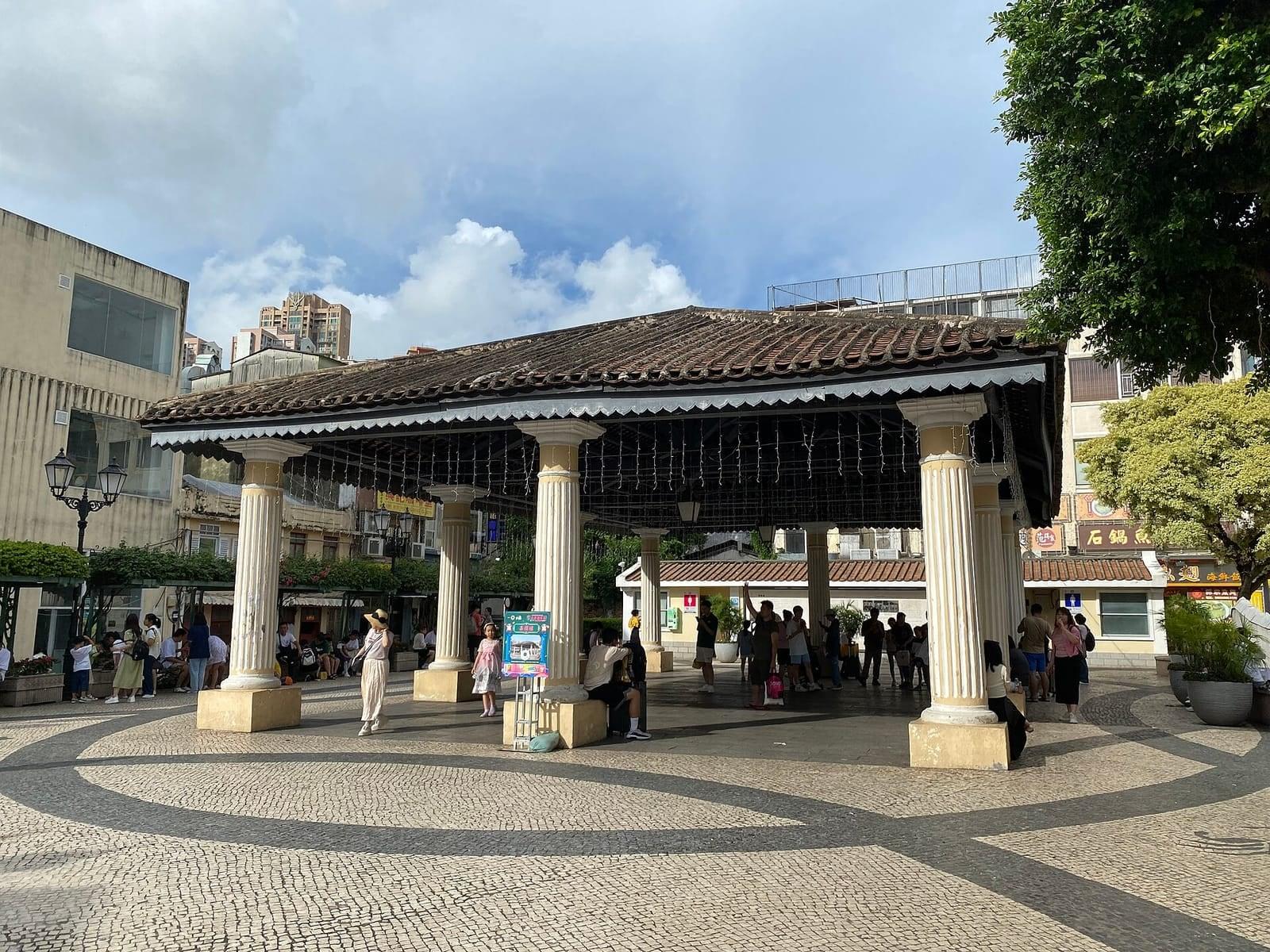
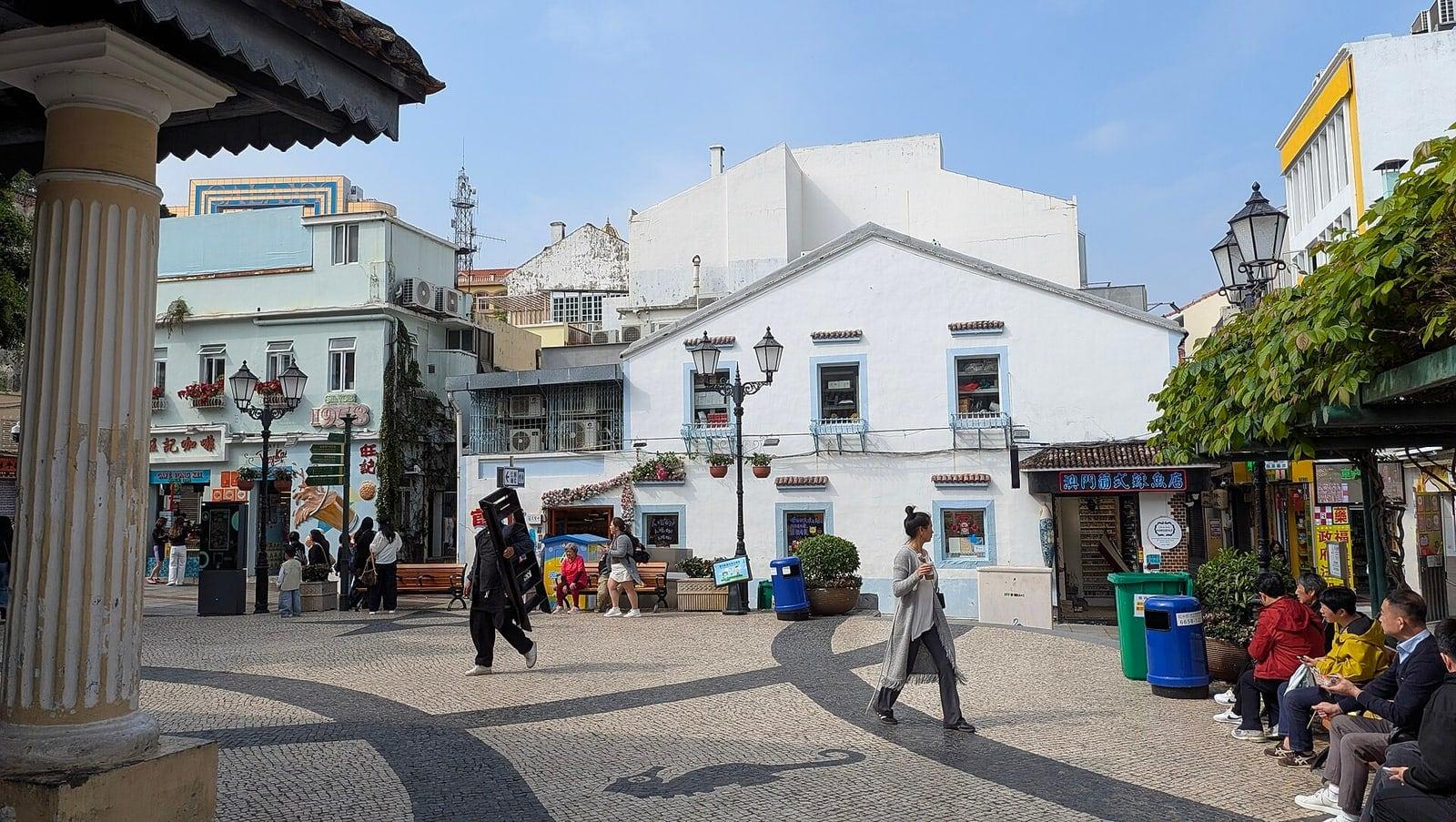
Carmo Fair (嘉模墟)
A Western market under a Cantonese roof. The open pavilion of Taipa's old municipal market, first built in 1879 and rebuilt in 1886, now a public square.
- 6
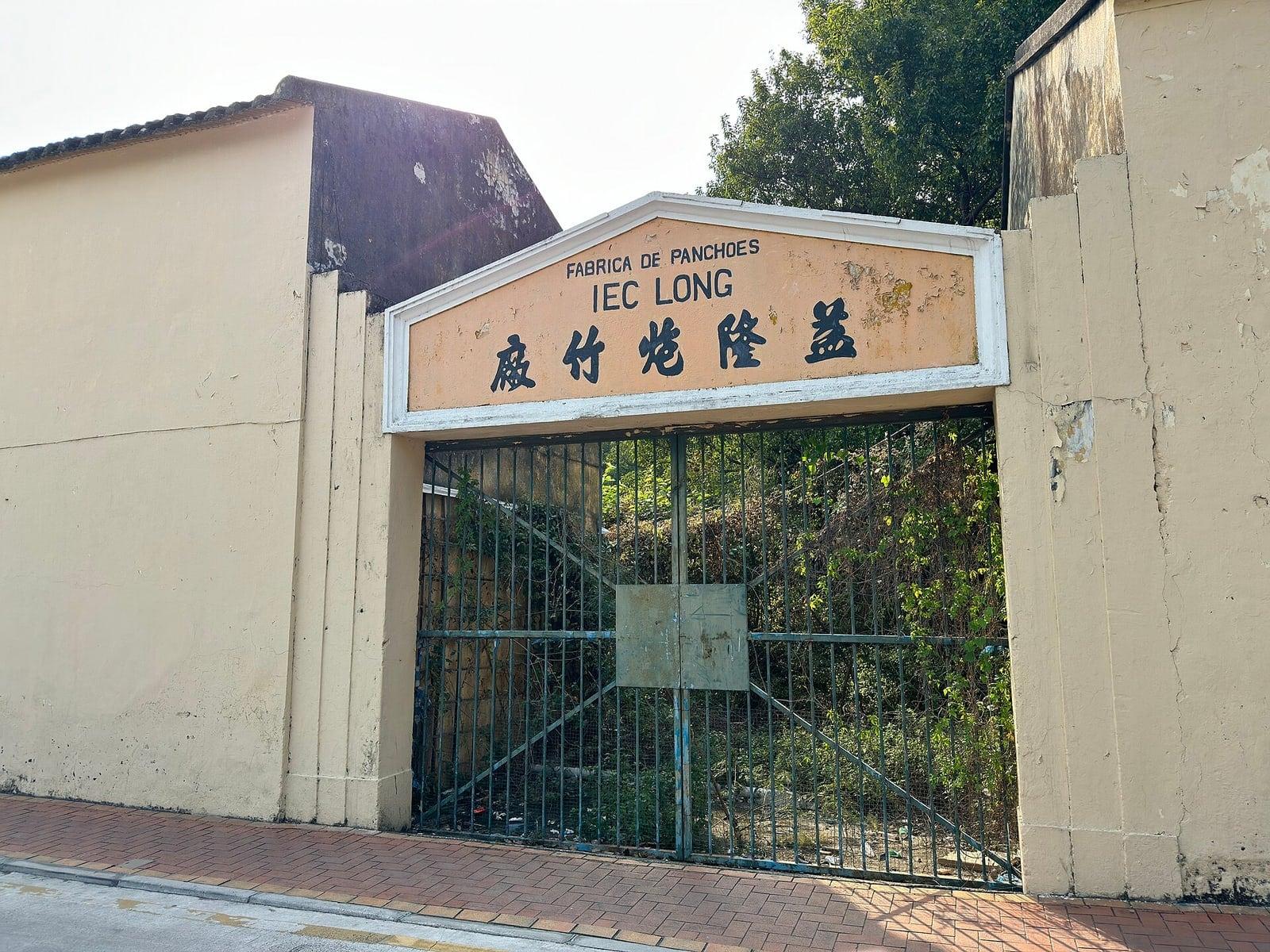
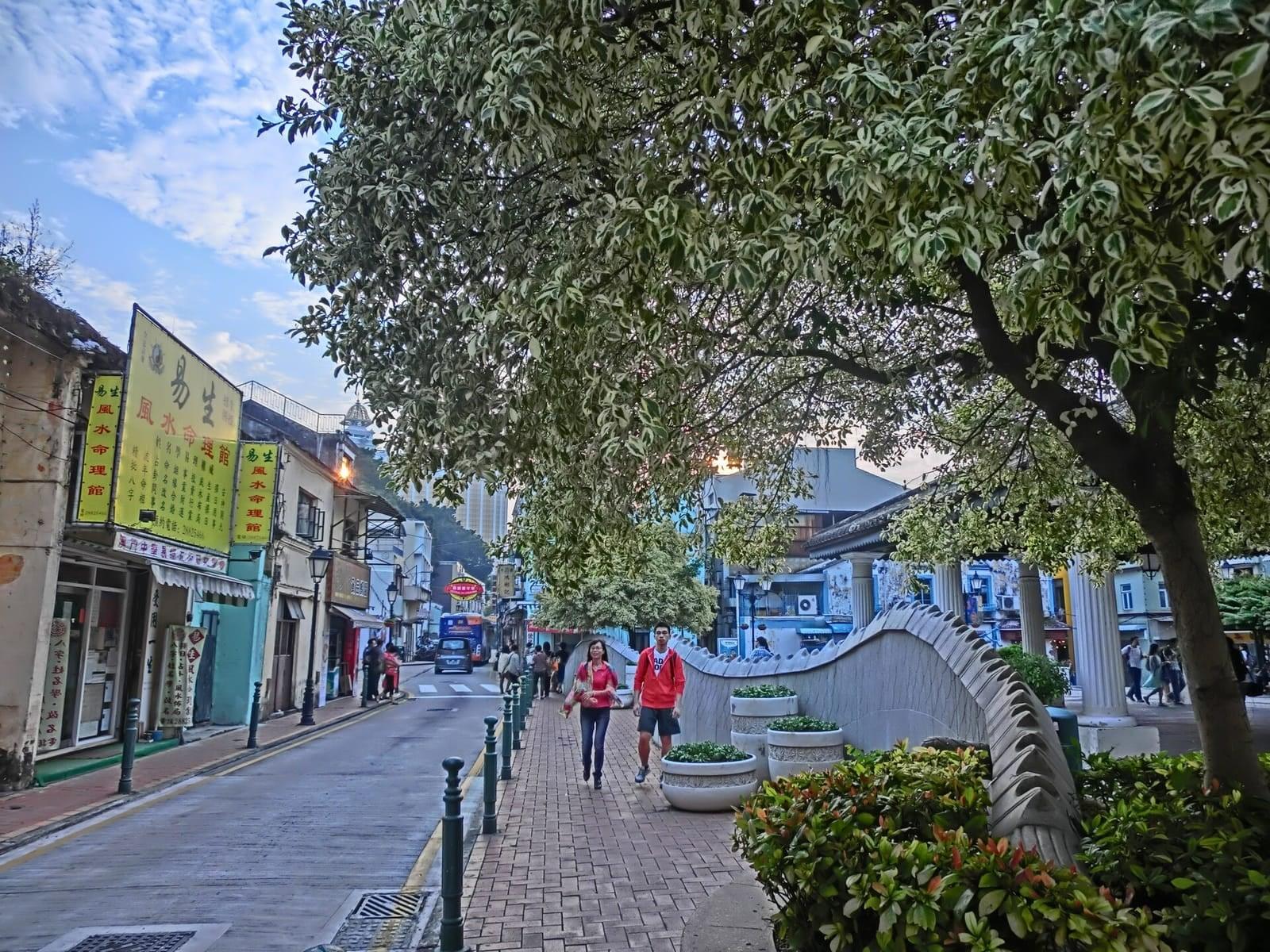
Rua Direita Carlos Eugénio (施督憲正街)
The island's old trade behind a fence. The top of Taipa's main lane, beside the former Iec Long Firecracker Factory, with temples to medicine and mercy on the way up.
- 7
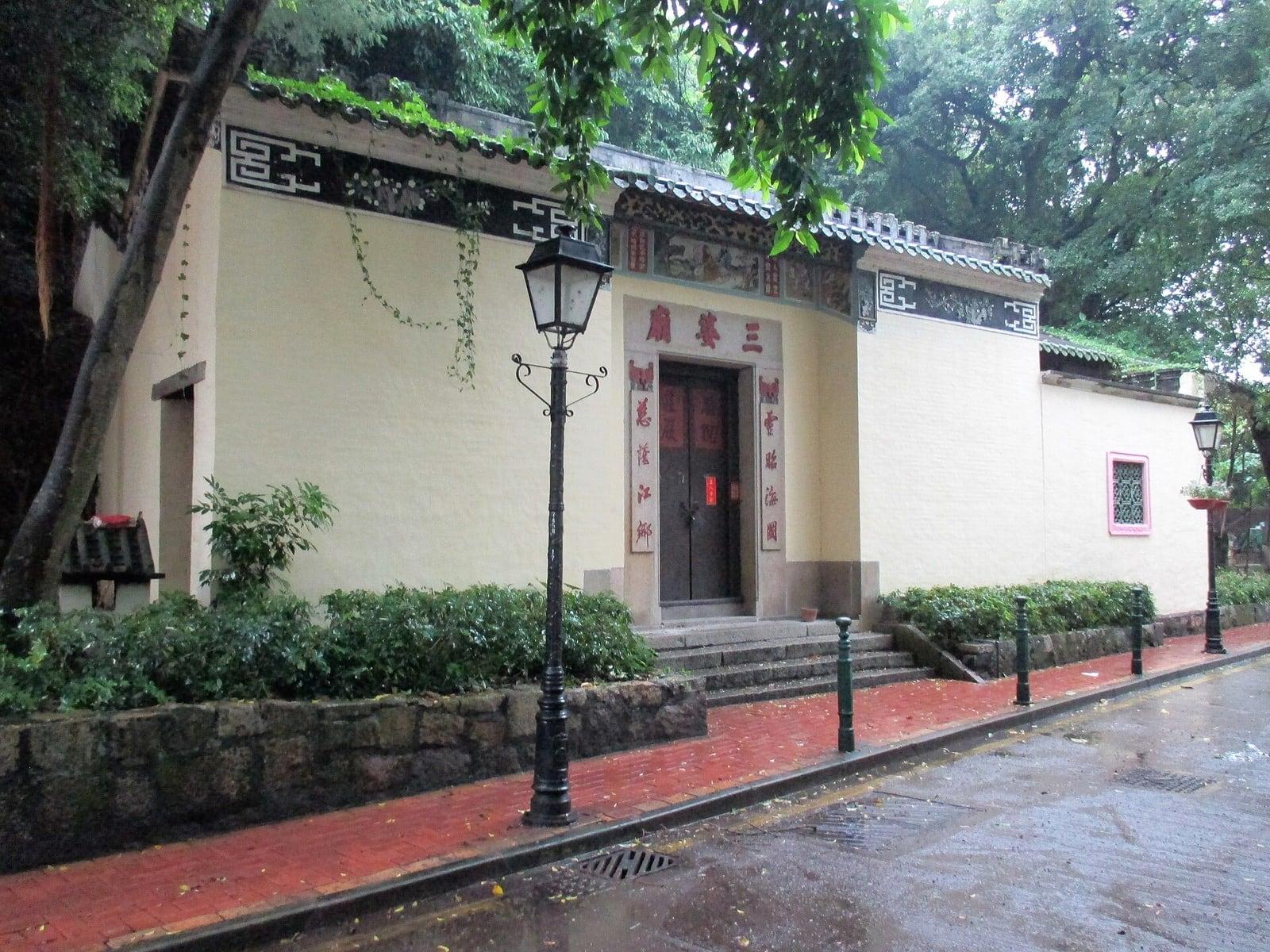
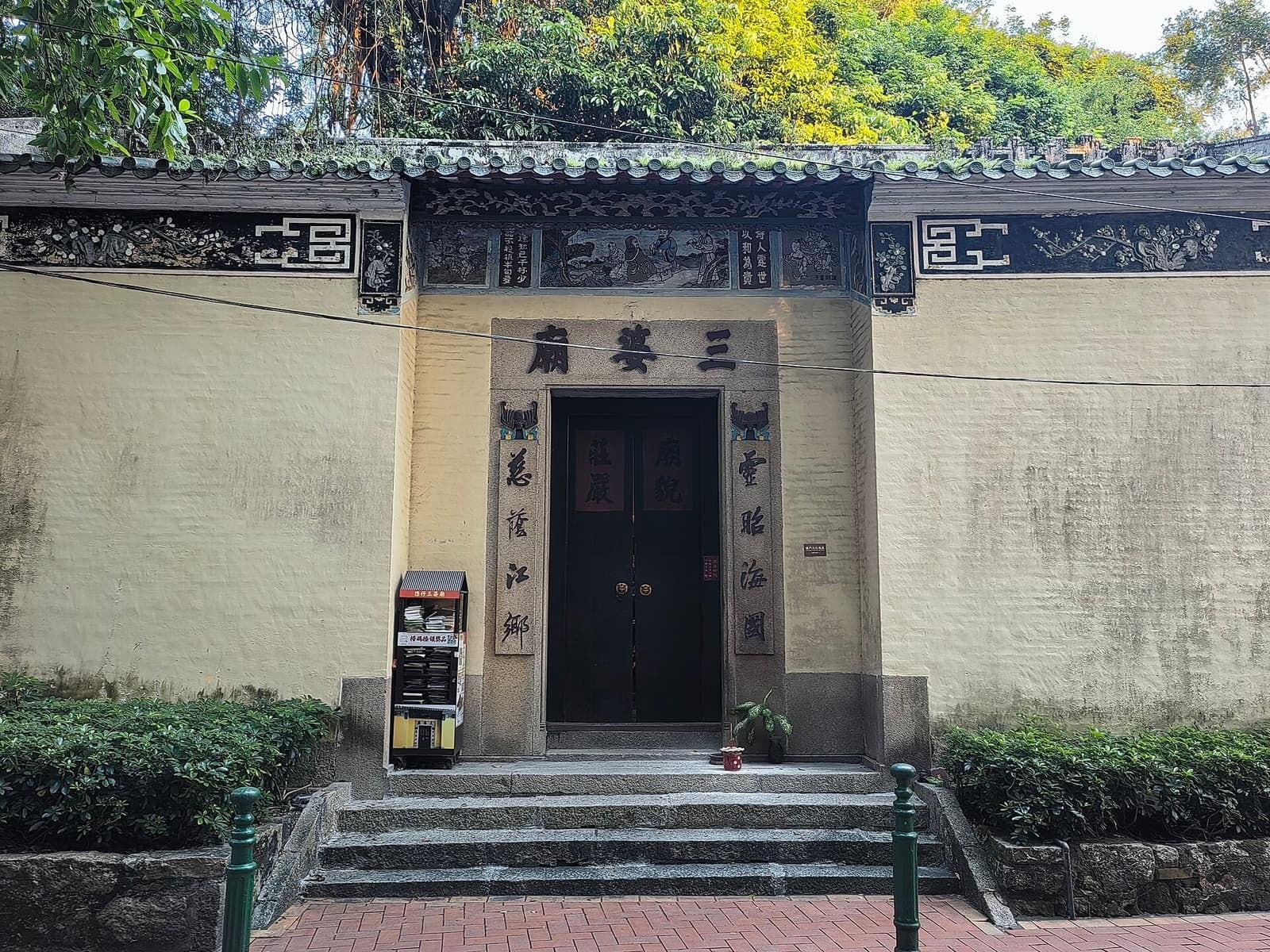
Sam Po Temple (三婆廟)
A fishermen's temple around a boulder. The Sam Po Temple of 1845, shaped on a natural cave and wrapped around a huge rock, under the trees.
- 8
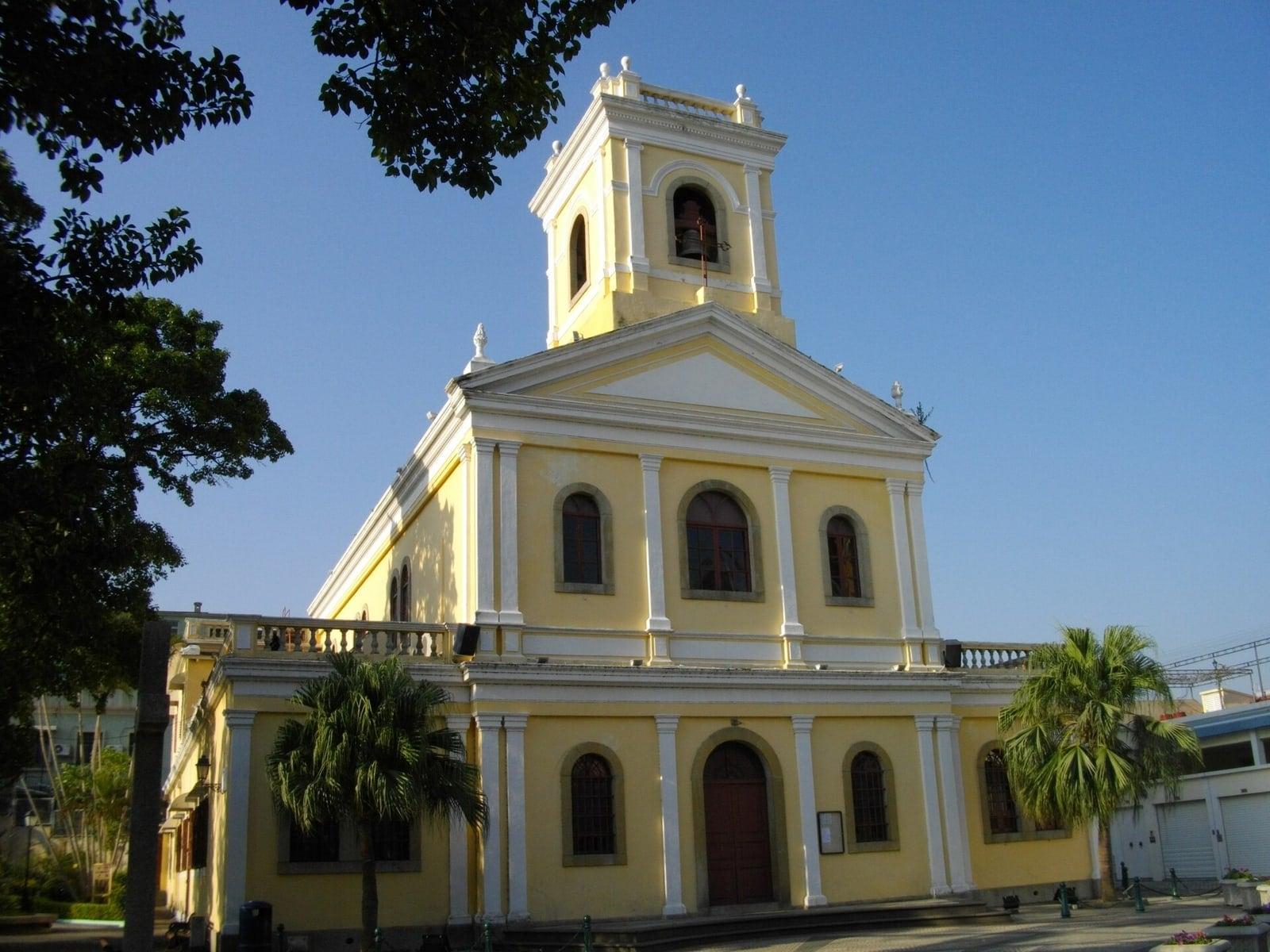
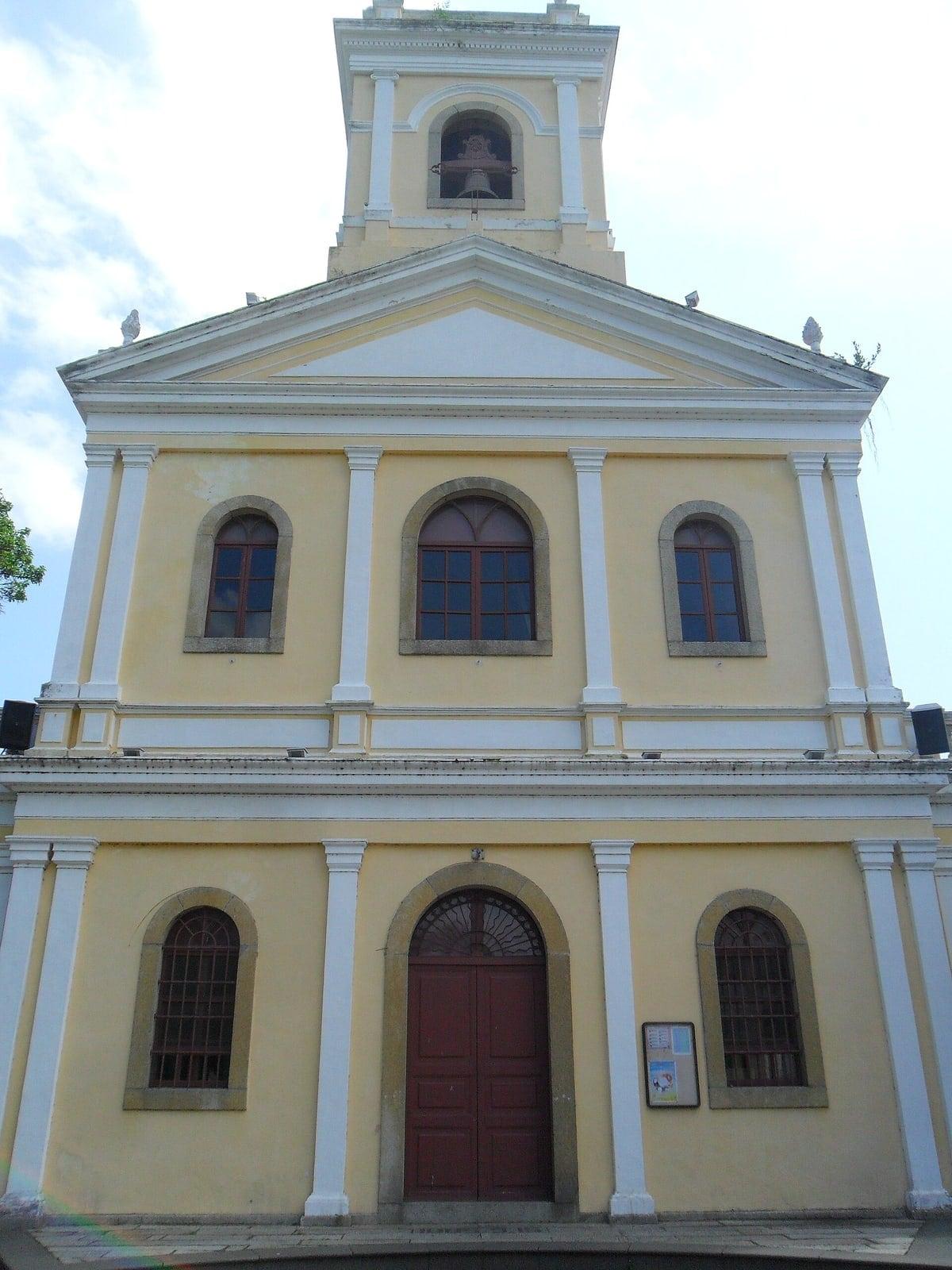
Our Lady of Carmel Church (嘉模聖母堂)
The island's only Catholic church. Our Lady of Carmel, built in 1885 on its rise above the old shore, popular for weddings.
- 9
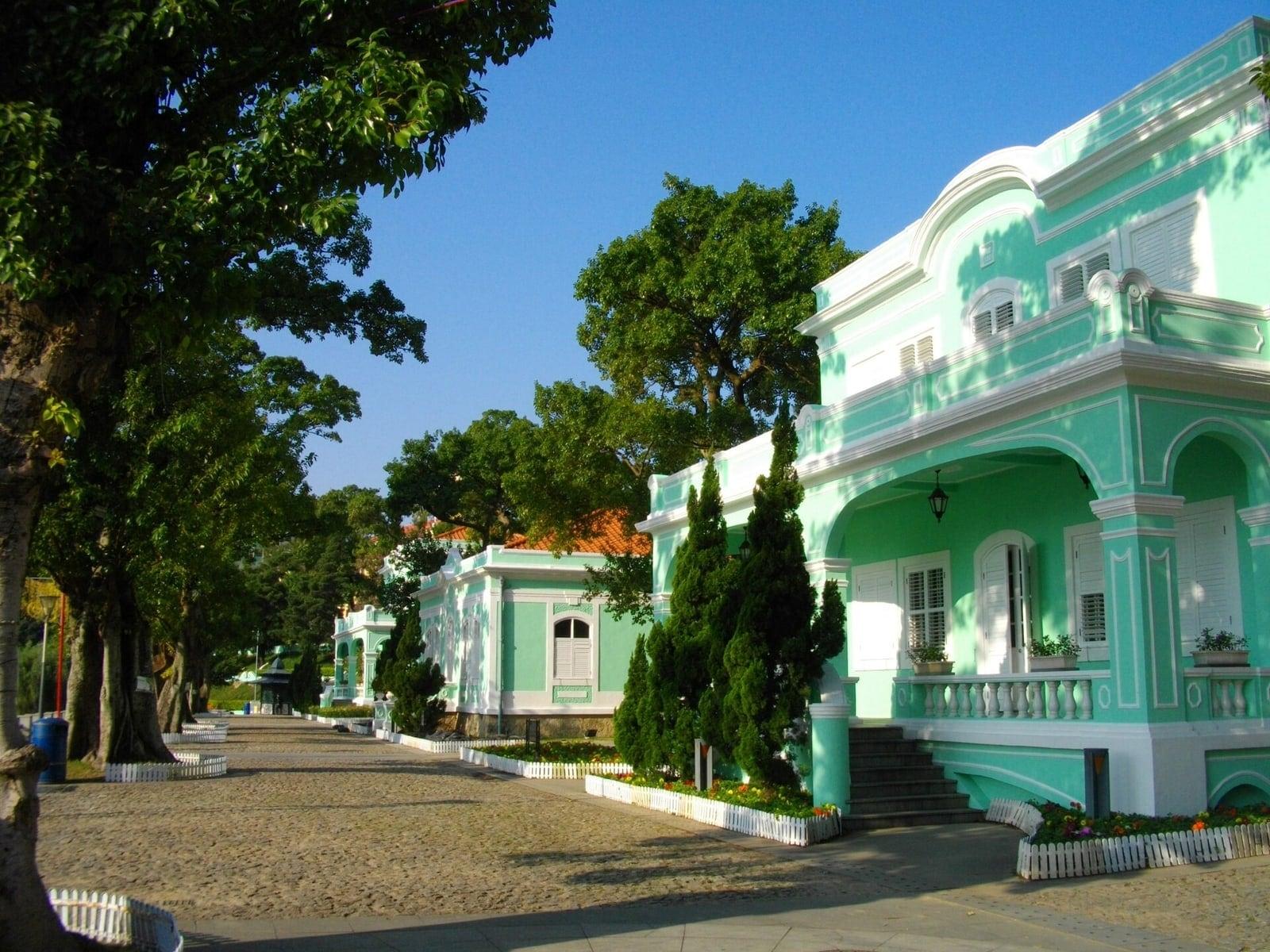
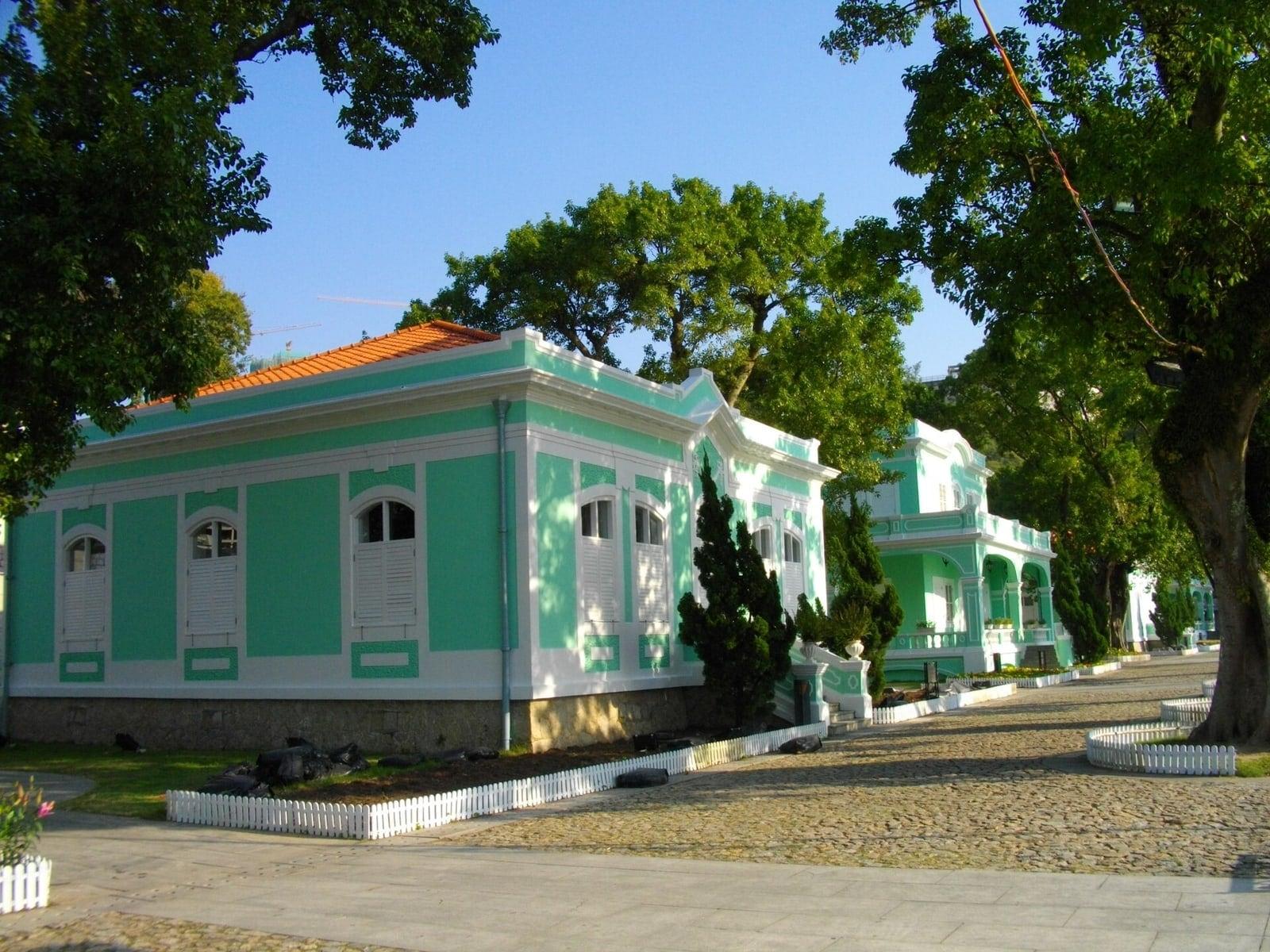
Taipa Houses (龍環葡韻)
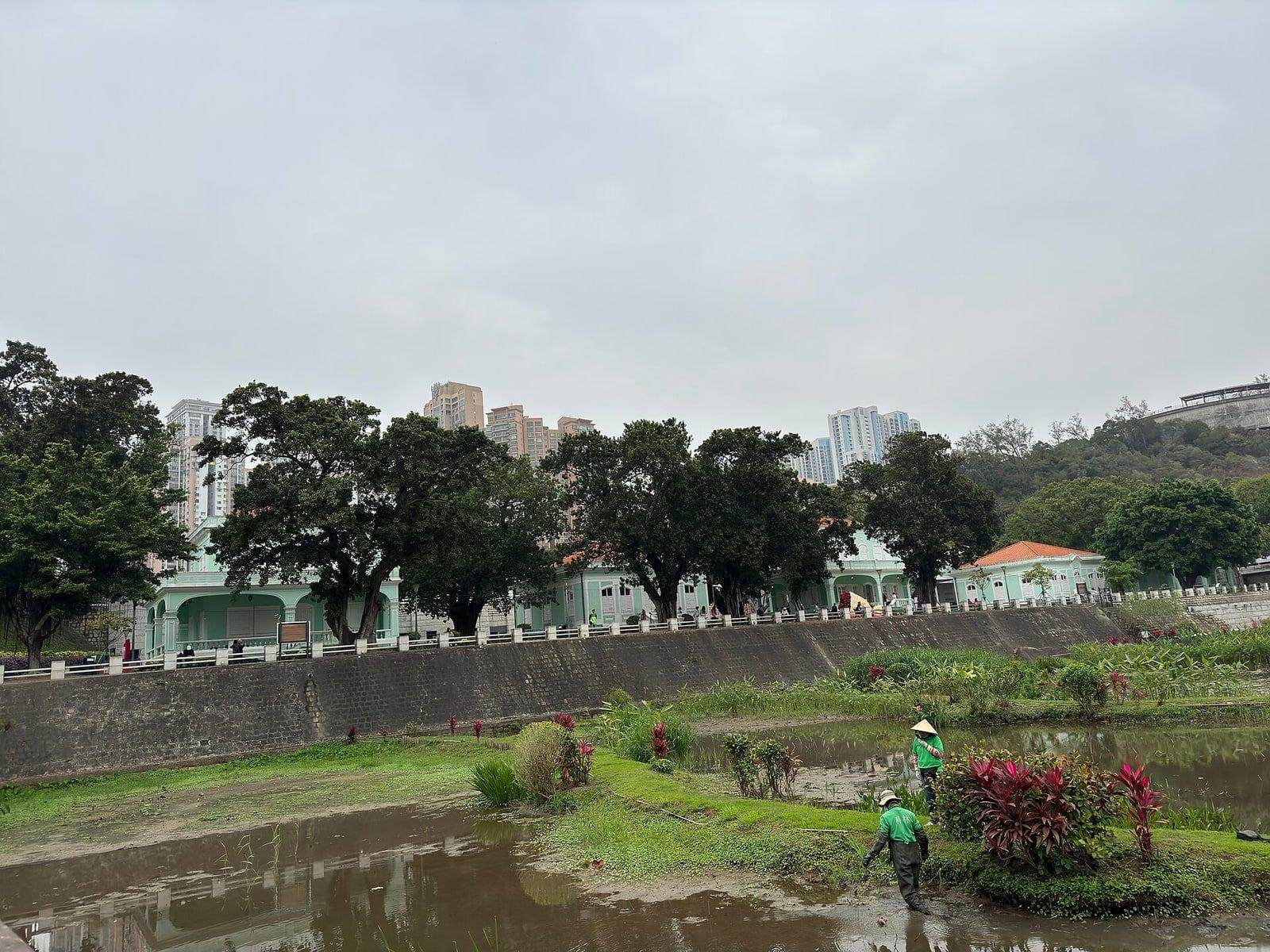
Five green houses on the old shore. Built in 1921 for Macanese families and senior civil servants, a museum since 1999, named for the island's old name.
- 10
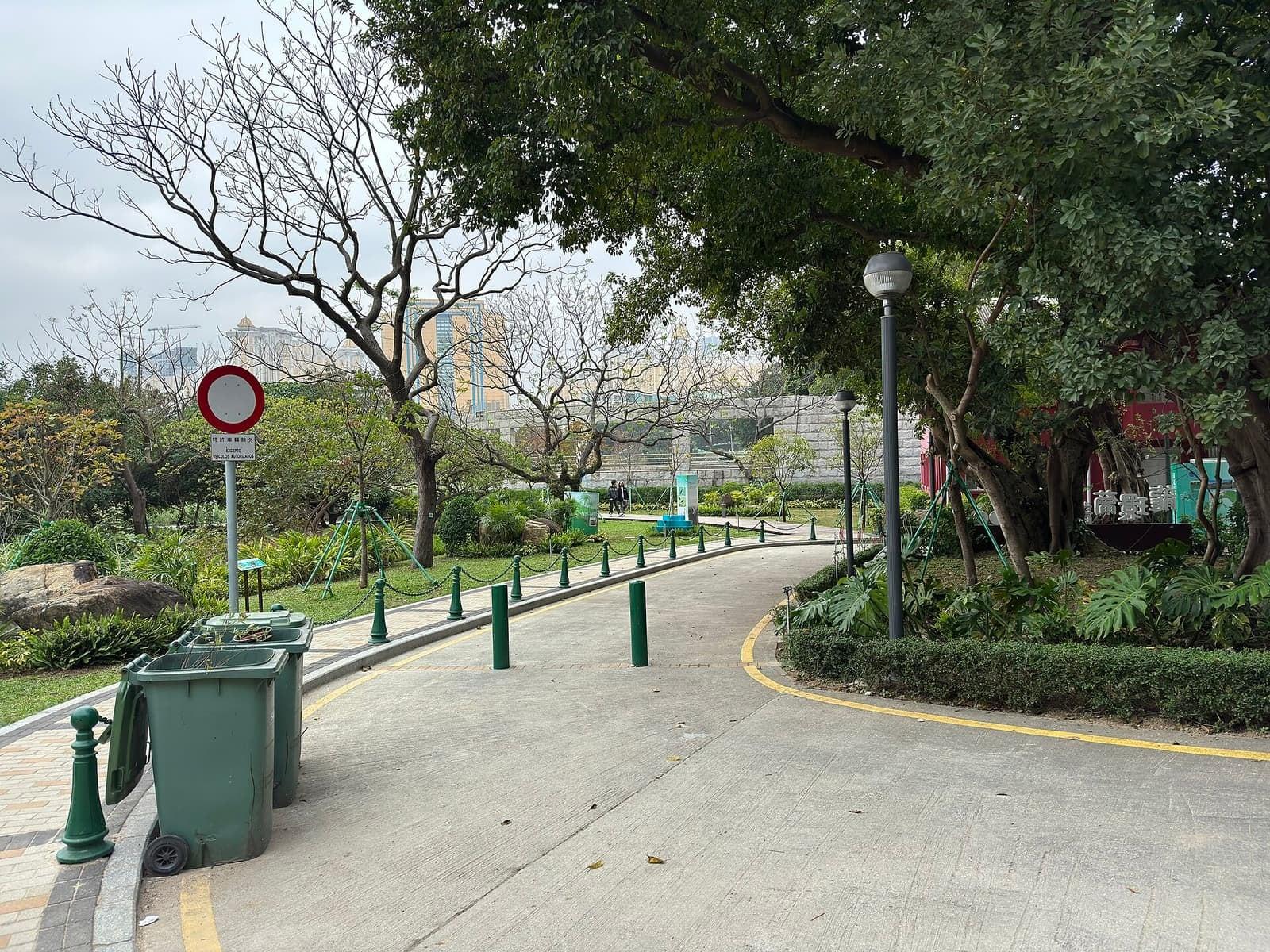
Avenida da Praia (海邊馬路)
Where the old shore road ends. The end of Avenida da Praia, looking over a wetland to towers built on reclaimed land between Taipa and Coloane.
Details
Best Time to Visit
Weekday mornings are best, when Rua do Cunha is quiet and the temples and the church are open; from late morning to the evening, and all weekend, the food street is crowded. Every stop is on public ground open at all hours. The Taipa Houses are closed on Mondays; the church closes from 12:30 to 14:00; the former Iec Long Firecracker Factory closes at 15:00 on Wednesdays. Avoid Lunar New Year (6 February 2027), Christmas Eve, New Year's Eve, May Day and 1 to 7 October, when Macau is packed; 20 December is a public holiday. The feast of Pak Tai, on the third day of the third lunar month (Friday 9 April 2027), usually brings Chinese opera to the temple square. From May to November check typhoon and rainstorm signals before you set out. Checked 25 November 2026.
Pro Tips
- •Getting to the start: the bus stop Ponte Negra / R. do Regedor, about 40 m from Largo dos Bombeiros, is served by routes 11, 15, 22, 28A, 30, 33 and 34. Route 28A runs there from the Outer Harbour Ferry Terminal, route 33 from Almeida Ribeiro / Rua Camilo Pessanha near Senado Square, and route 11 from the Barra interchange by the A-Ma Temple. Checked 25 November 2026.
- •The walk ends on Avenida da Praia. The bus stop Carmo Swimming Pools, about 120 m north of the church, is served by routes 11, 15, 22, 28A, 30, 33 and 34; route 33 goes on from it to Almeida Ribeiro / OCBC beside Senado Square. Checked 25 November 2026.
- •The pataca is linked to the Hong Kong dollar, and Hong Kong dollars are widely accepted in Macau; change usually comes back in patacas.
- •Interiors on the way, if you want to go in: Taipa Houses free, 10:00 to 19:00, last entry 18:30, closed Mondays; Our Lady of Carmel Church 10:00 to 12:30 and 14:00 to 18:00; former Iec Long Firecracker Factory 06:00 to 19:00 (closed from 15:00 on Wednesdays except public holidays), free, entrance at the Chun Su Mei car park, off the route. Checked 25 November 2026.
- •Rua do Cunha is two minutes from the start and a few minutes from the end: eat before you set out or come back afterward.
- •GPS can wander in the narrow lane at stop 4 and under the trees at stop 7: if a stop has not started, tap it on the map.
Safety & Precautions
- •Traffic keeps left, but the village's car lanes are mostly one-way with no sidewalk. On the short stretch of Rua das Virtudes (to the Pak Tai Temple), on Rua Direita Carlos Eugénio and Rua de Fernão Mendes Pinto (up to the Sam Po Temple) and on Rua do Supico (down toward the church), cars come toward you; a short slip road joins Rua do Supico from your left. At the top of the steps below the church, cars come from your right. Walk in single file at the edge and look both ways.
- •Scooters use every lane without a sidewalk: keep to the edge and let them pass.
- •Steps: one short flight from the church square down to the promenade. Without steps, follow the square's footway down to the corner where Rua da Restauração begins, cross it and take the sidewalk to the foot of the steps.
- •Paving and stone steps are slippery when wet, and the village's low lanes can flood in very heavy rain.
- •Four temples and a church on the way are working places of worship: keep clear of the incense and of anyone praying, and keep out of wedding photographs at the church.
- •Rua do Cunha is packed from late morning to evening: keep bags closed and step out of the flow to listen.
- •Do not walk under a high typhoon signal or a black rainstorm warning.
Gallery
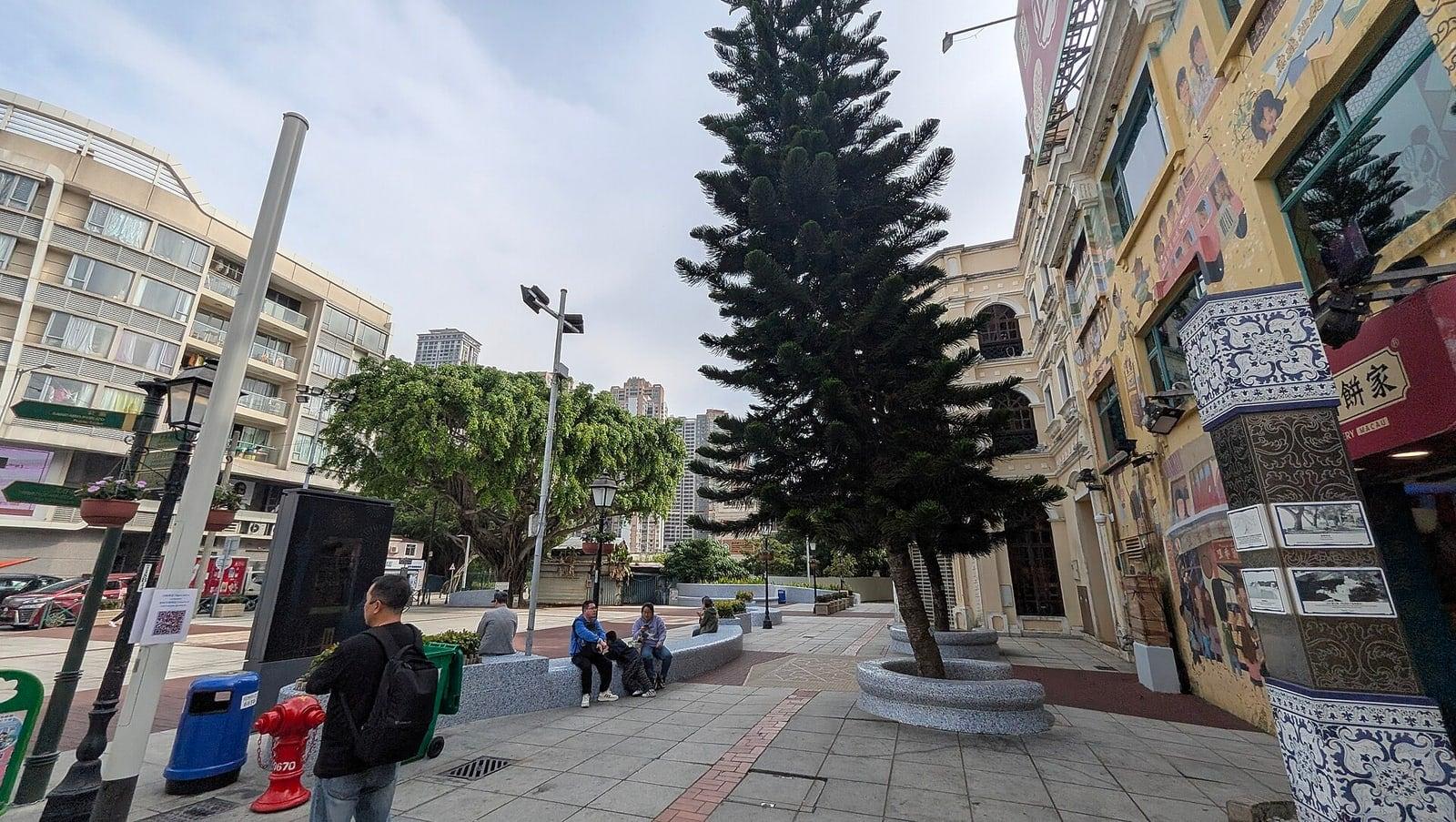
Read the walk
The full story of Taipa Village: From Rua do Cunha to the Taipa Houses, in words. Prefer to listen? Play it narrated, from home or on location.
Introduction
Taipa Village is what is left of an island town of fishermen and firecracker makers, on Taipa, across the bridges from the old city of Macau. Its temples served people who lived off the water, and the street along its shore was called the beach road. Then most of the sea in front of it was filled in. This walk goes from the village market through the lanes and temples, past an old firecracker factory and a church on its rise, down to five green houses on that shore road, which now look across a wetland at towers built on reclaimed land.
There are ten stops over about one point three kilometers, a little under a mile, and it takes about sixty minutes. There is a gentle climb in the middle and one short flight of steps near the end, with a way around it.
Traffic in Macau keeps to the left, but most of the village's car lanes are one-way and have no sidewalk. Keep to the edge, in single file, and look both ways; each crossing that matters is described as you reach it. Scooters come quickly and quietly.
Nothing on this walk needs a ticket. The temples and the church keep their own hours, and the Taipa Houses are closed on Mondays; every stop is told from the street.
From May to November, typhoon and rainstorm signals are part of life here, so check the weather bureau before you set out.
Buses eleven, twenty eight A and thirty three, among others, stop at Ponte Negra, about forty meters from the start. When you arrive at Largo dos Bombeiros, begin with stop one.
1. Largo dos Bombeiros (消防局前地)
You are standing in Largo dos Bombeiros, the square at the top of Rua do Cunha. The market building is at the corner of the square, and the narrow lane of shop signs leading away from it is Rua do Cunha, the village's food street.
This market went up in nineteen eighty three, at the crossroads of Rua do Cunha and the street beside it, and it has recently been refurbished. Before it, the village shopped at an open market at the other end of Rua do Cunha, first built in eighteen seventy nine. You will reach that old market at stop five, and you will see that it was built in a way no market here is built today.
Taipa was an island of fishermen, and later of firecracker makers. Its temples served people who lived off the water, and the road along its shore was called the beach road. This walk goes from this square through the old lanes, past the temples, an old firecracker factory and a church on its rise, down to that shore road. When you get there, look at what the shore faces now.
Follow the route down Rua do Cunha. Next is the food street itself, from a small square halfway down.
2. Rua do Cunha (官也街)
You have stepped out of Rua do Cunha into a small paved square. The lane behind you, with its shop signs and its crowd, is the street that most visitors come to Taipa for.
Rua do Cunha is the village's food street. It is closed to cars, and between the shopfronts it is only about three meters wide, which is why it feels full even when it is not. It runs for a little over a hundred meters, from the market of nineteen eighty three at the top to the old market pavilion at the bottom. Most of what is sold along it today is food and souvenirs for visitors.
It is busiest from late morning to the evening, and on weekends and holidays it can be shoulder to shoulder. If you want to eat, you can do it now, or come back at the end of the walk: the lane is a few minutes from the last stop.
The walk now leaves the food street for the quieter lanes to the west, where the village kept its temple and its older shop streets, and comes back to the bottom of Rua do Cunha at stop five.
Follow the route out of the far side of the square, into the lanes. Next is the Pak Tai Temple.
3. Pak Tai Temple (北帝廟)
The temple on your left, filling that side of the square, is the Pak Tai Temple, built in about eighteen forty four. Look at the lintel over the main door for its carvings and painted panels.
Pak Tai is the God of the North. He is shown seated with his feet on a tortoise and a snake, and he was believed to have the power to hold back floods and fire. In the old days most people here earned their living by fishing, and they followed Pak Tai. The temple also honors other gods, among them a god of fire, a goddess who protects children, and Lu Ban, the patron of carpenters. It has three parallel halls, larger than most temples on Taipa and Coloane, and it has a worship pavilion in front, which the tourism office calls rare on the island.
Now the detail that runs through this walk. On the temple's bell, its tripod and its altar are carved several old names for this island, and one of them is Lung Wan. Hold on to that name: it comes back near the end of the walk.
This square is the village's stage. Every year on the third day of the third month of the lunar calendar, the feast of Pak Tai, Chinese opera is usually performed in a mat shed put up in front of the temple. In twenty twenty seven that day falls on Friday the ninth of April.
This is a living temple. Keep clear of the incense and of anyone praying, and ask before photographing people.
Follow the route back the way you came for a few steps, then right into the first short lane, and left at its end. Next is Merchants' Street.
4. Rua dos Mercadores (買賣街)
You have turned into Rua dos Mercadores, Merchants' Street, and you are standing where it widens a little, with low shophouses on both sides. This was the village's shop street long before Rua do Cunha became the food street. Its Chinese name says it even more plainly: it means…
Full narration for this stop unlocks with the tour.
5. Carmo Fair (嘉模墟)
Ahead of you and to your right is an open pavilion on columns, with a tiled roof: the Carmo Fair, Taipa's old municipal market. This is where the village shopped before the market at the top of Rua do Cunha was built. It was first put up in eighteen seventy nine, and its…
Full narration for this stop unlocks with the tour.
6. Rua Direita Carlos Eugénio (施督憲正街)
You are in the little garden at the top of the lane. Behind the fence that borders it lies the site of the former Iec Long Firecracker Factory. For half a century, Taipa's living was gunpowder wrapped in paper. Macau's firecracker industry grew quickly in the nineteen twenties,…
Full narration for this stop unlocks with the tour.
7. Sam Po Temple (三婆廟)
Step to the side of the lane and let any traffic pass. The temple just ahead of you and to your right, under the trees, is the Sam Po Temple. It began in eighteen forty five as a shrine shaped on a natural cave. In eighteen fifty nine local fishermen and traders raised the…
Full narration for this stop unlocks with the tour.
8. Our Lady of Carmel Church (嘉模聖母堂)
The church ahead of you on its square is Our Lady of Carmel, built in eighteen eighty five for the Catholics who lived on Taipa at the time. It is still the only Catholic church on the island. It was restored in nineteen eighty five, a century after it was built. The church and…
Full narration for this stop unlocks with the tour.
9. Taipa Houses (龍環葡韻)
On your left, along the promenade, stand the five green Taipa Houses, facing the old shore. They were built in nineteen twenty one as homes for senior civil servants, Macanese families among them. Macanese is the name for the community whose Portuguese ancestors married…
Full narration for this stop unlocks with the tour.
10. Avenida da Praia (海邊馬路)
Face the open view, across the water in front of you. You are at the end of Avenida da Praia. Praia is Portuguese for the beach or the shore, and the road's Chinese name means seaside road. This was the island's waterfront. Until nineteen seventy four, when the first bridge…
Full narration for this stop unlocks with the tour.
- File:Largo dos Bombeiros Taipa 26-02-2024.jpg | 這張照片在氹仔拍攝。 — LN9267, CC BY-SA 4.0 · source
- File:Pak Tai Temple in Taipa 18-10-2023.jpg | 這張照片在氹仔拍攝。 — LN9267, CC BY-SA 4.0 · source
- File:Carmo's Fair 22-08-2023.jpg | 這張照片在氹仔拍攝。 — LN9267, CC BY-SA 4.0 · source
- File:Fábrica de Panchões Iec Long 21-03-2024(2).jpg | 這張照片在氹仔拍攝。 — LN9267, CC BY-SA 4.0 · source
- File:MC 澳門 Macau Tour 官也街 Rua do Cunha Oct-2013 ZR2 Rua Direita Carlos Eugenio tree.JPG | Rua do Cunha & Rua Direita Carlos Eugenio, Taipa, — Yuknchingchamrn, CC BY-SA 4.0 · source
- File:Sam Po Temple 01.jpg | Sam Po Temple — Underwaterbuffalo, CC BY-SA 4.0 · source
- File:20251024 Templo de Sam Po.jpg | Sam Po Temple — Yumeto, CC BY-SA 4.0 · source
- File:Avenida Da Praia Taipa 26-02-2024(2).jpg | 這張照片在氹仔拍攝。 — LN9267, CC BY-SA 4.0 · source
- File:Wetland in Taipa 26-02-2024(10).jpg | 這張照片在氹仔拍攝。 — LN9267, CC BY-SA 4.0 · source
Images may be cropped or resized. Other photos via Unsplash and Pexels.