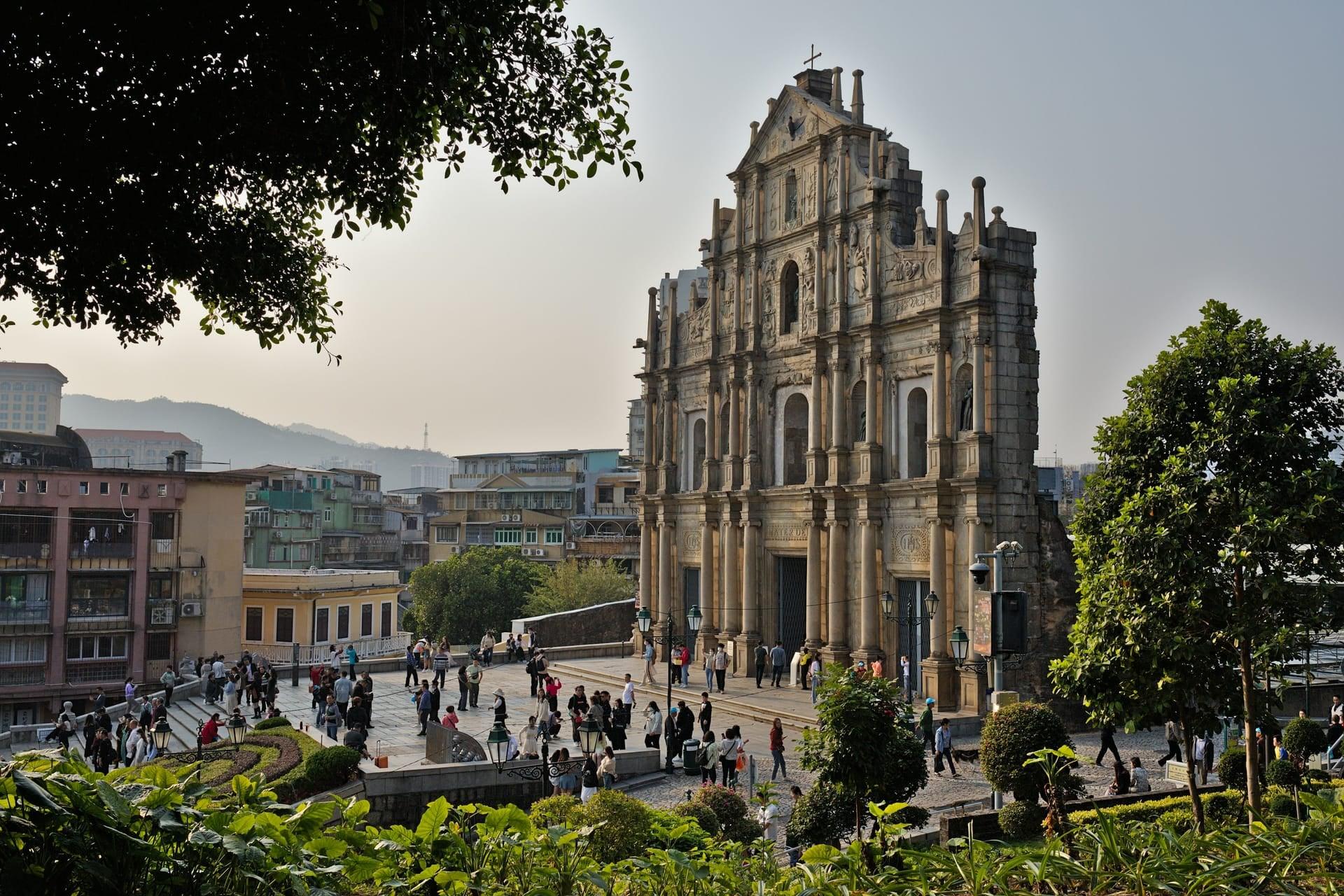
Macau's UNESCO old center from free ground: the 1784 Leal Senado, the Chinese merchants' hall in the bazaar lane, Senado Square's wave paving and the Holy House of Mercy, St. Dominic's, the Cathedral, Lou Kau's courtyard house, the shop street and the façade of St. Paul's, the Na Tcha Temple on the old wall, St. Anthony's, Casa Garden and the Camões Grotto.
Start · Leal Senado Building (市政署大樓)
DirectionsStops
- 1
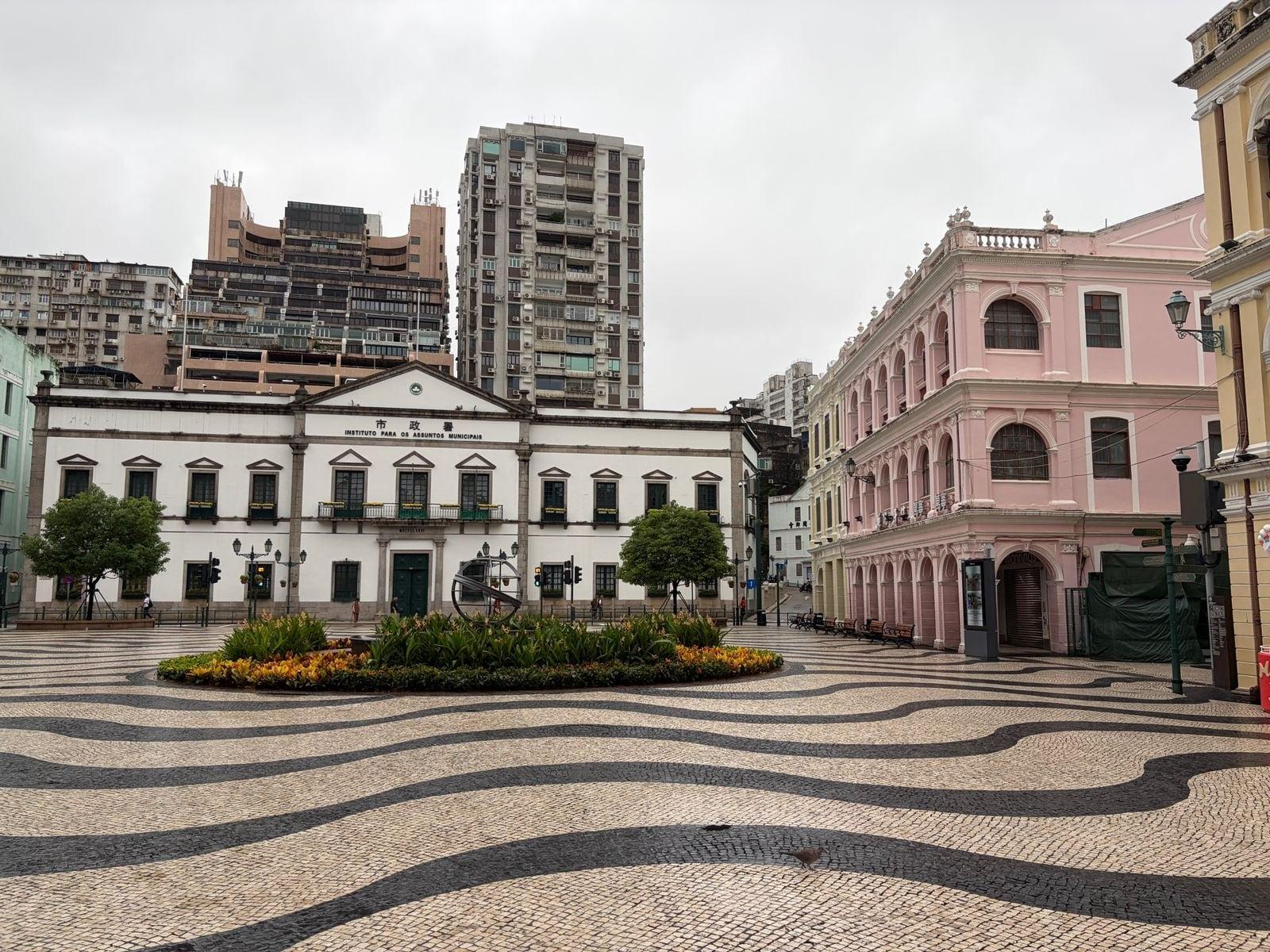
Leal Senado Building (市政署大樓)
The city's municipal chamber since 1784. Senado Square's south tip, looking across Avenida de Almeida Ribeiro at the long white front of the municipal chamber built in 1784.
- 2
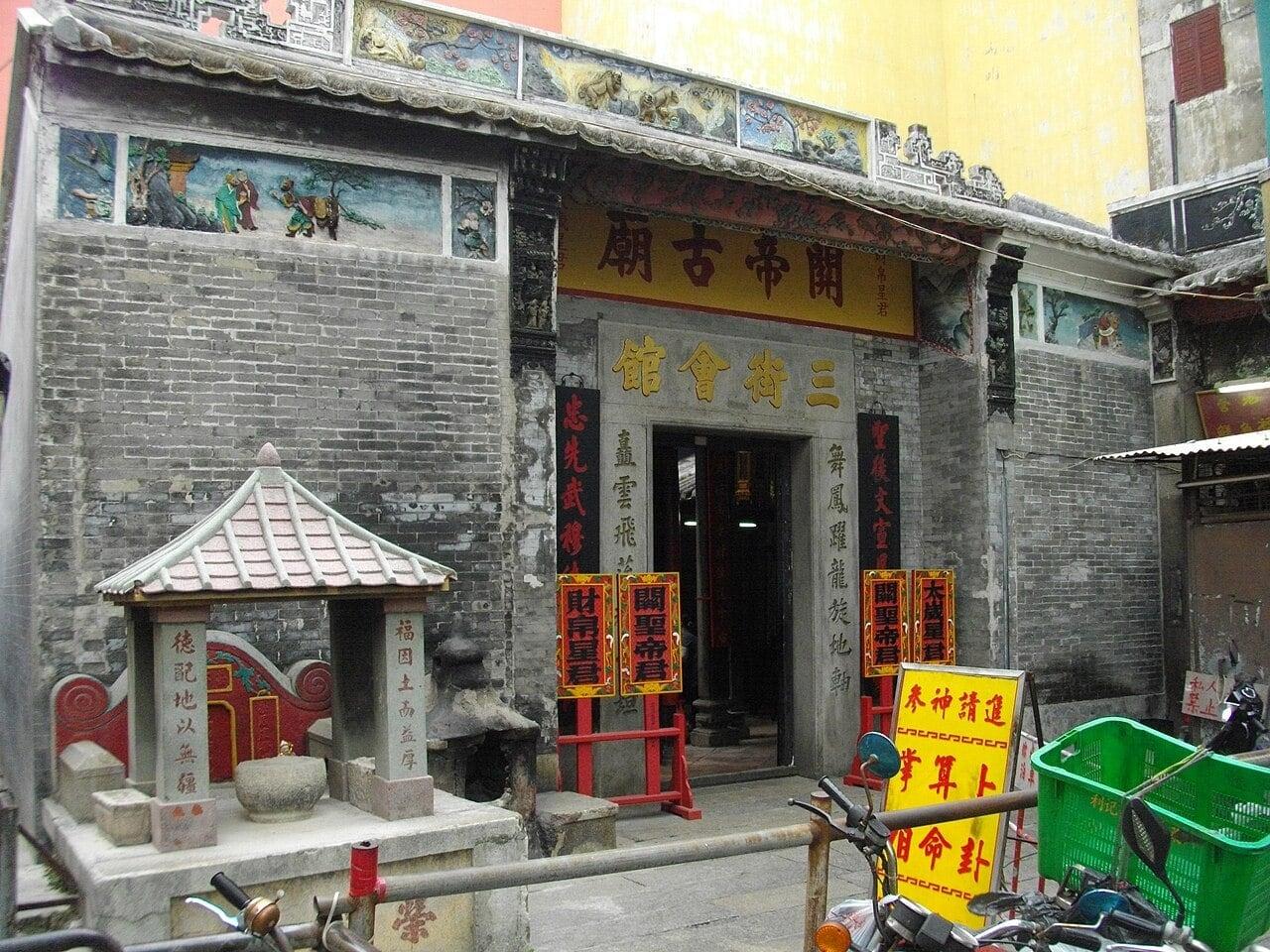
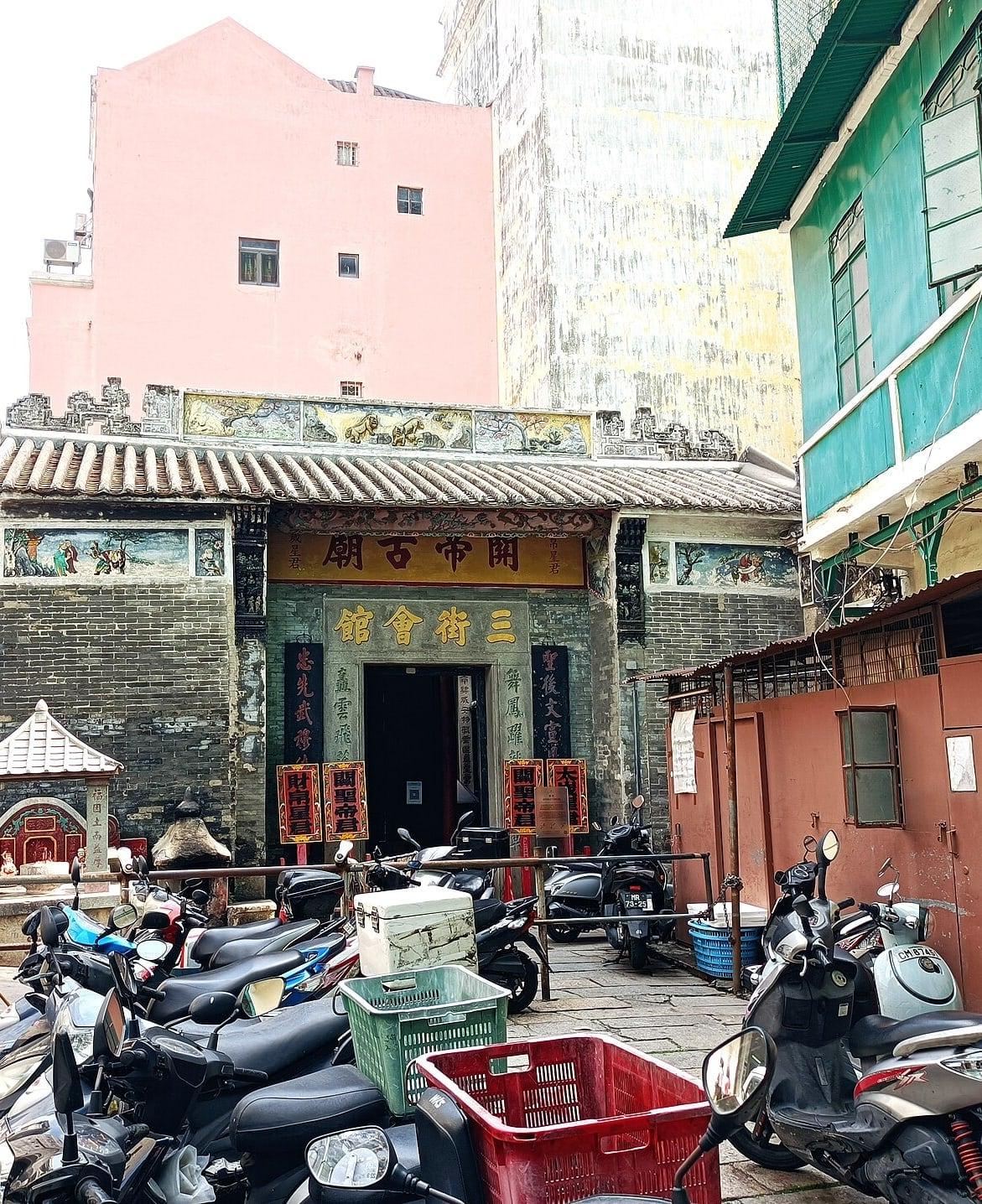
Sam Kai Vui Kun (三街會館)
The merchants' hall in the bazaar lane. A small grey brick temple with green glazed tiles at the edge of the old Chinese bazaar, beside St. Dominic's Market.
- 3
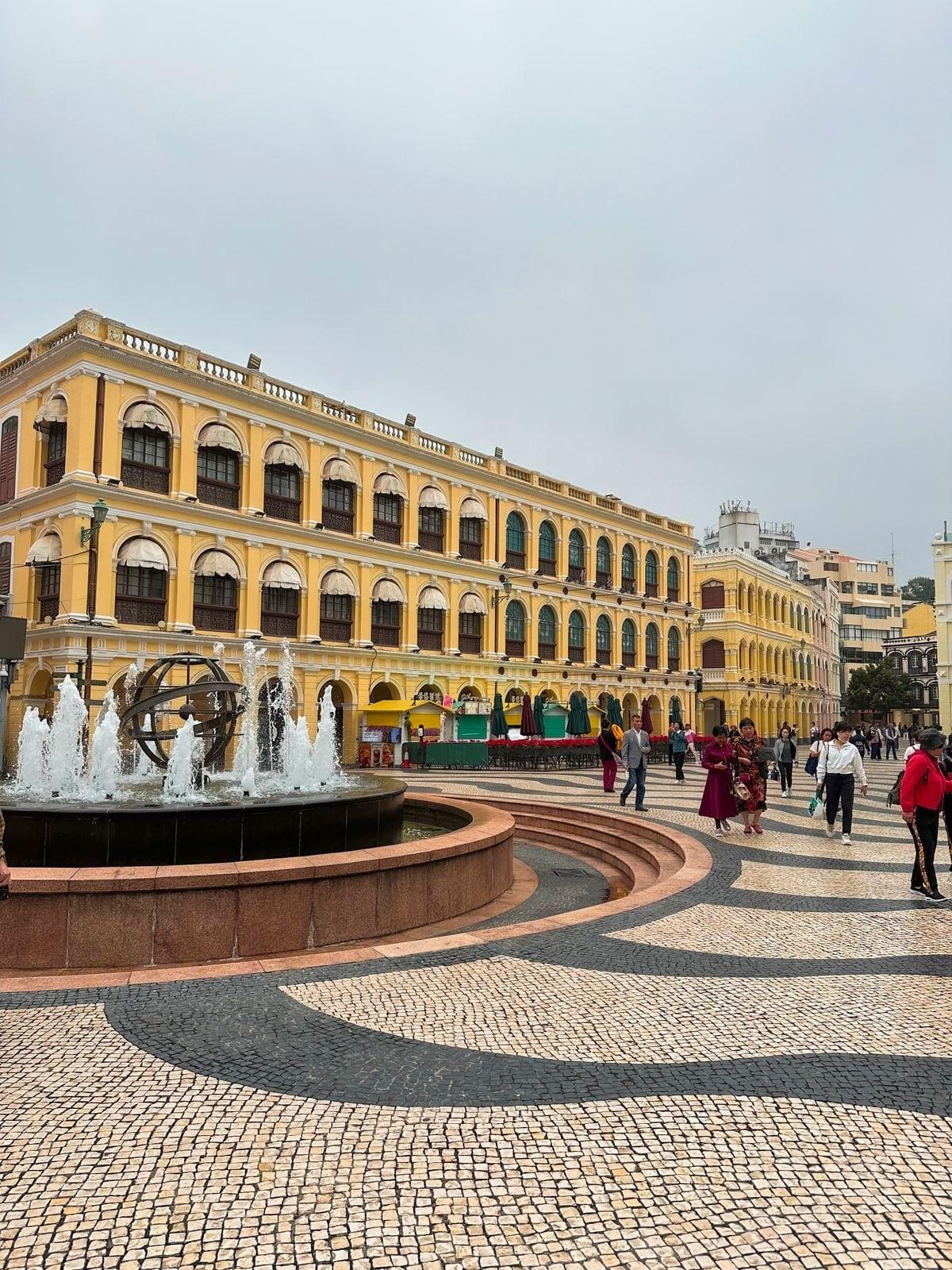
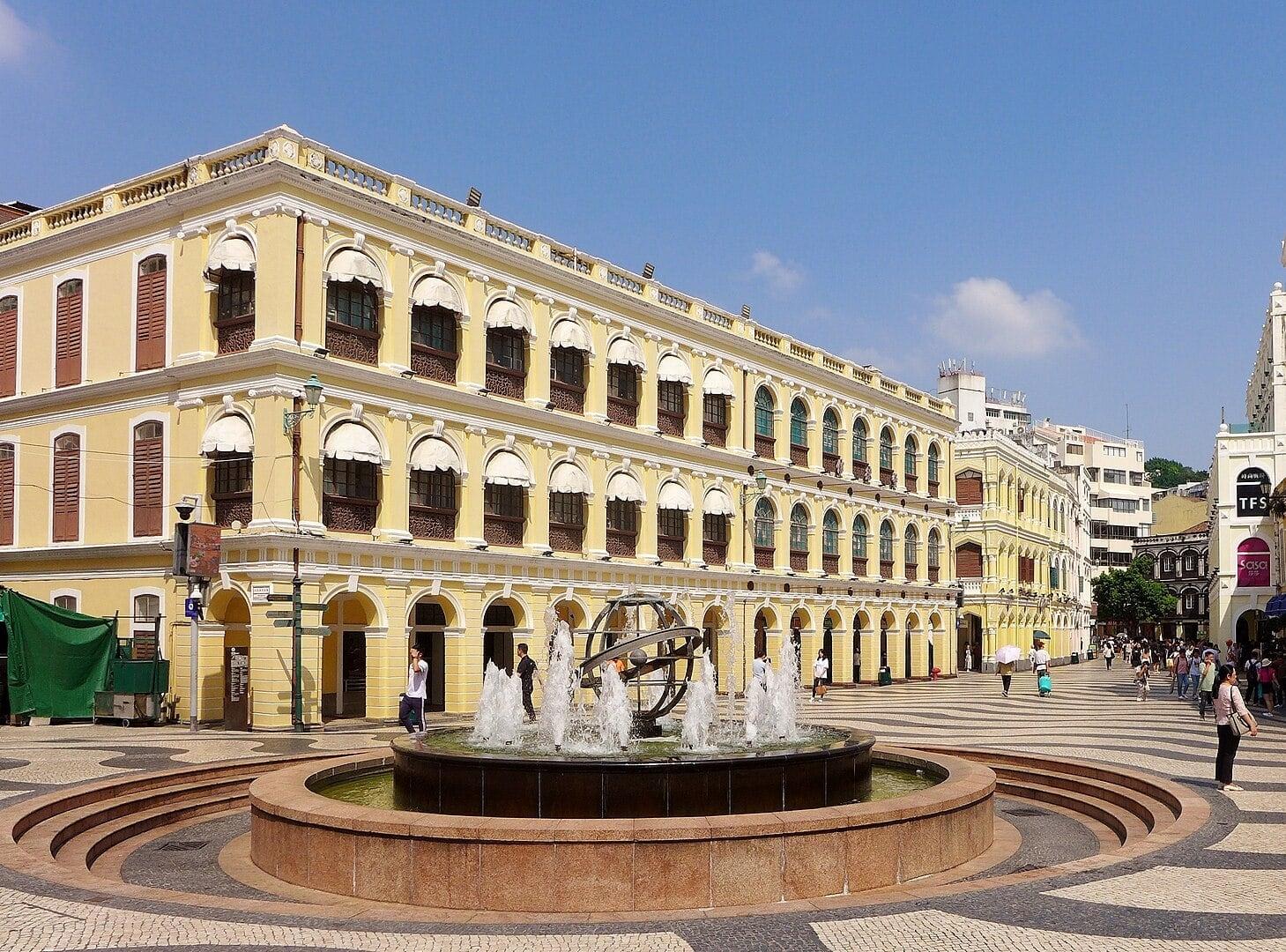
Senado Square (議事亭前地)
A square that is younger than it looks. The top of Senado Square, with its black and white wave paving running down to the fountain and the Holy House of Mercy's white arcade.
- 4
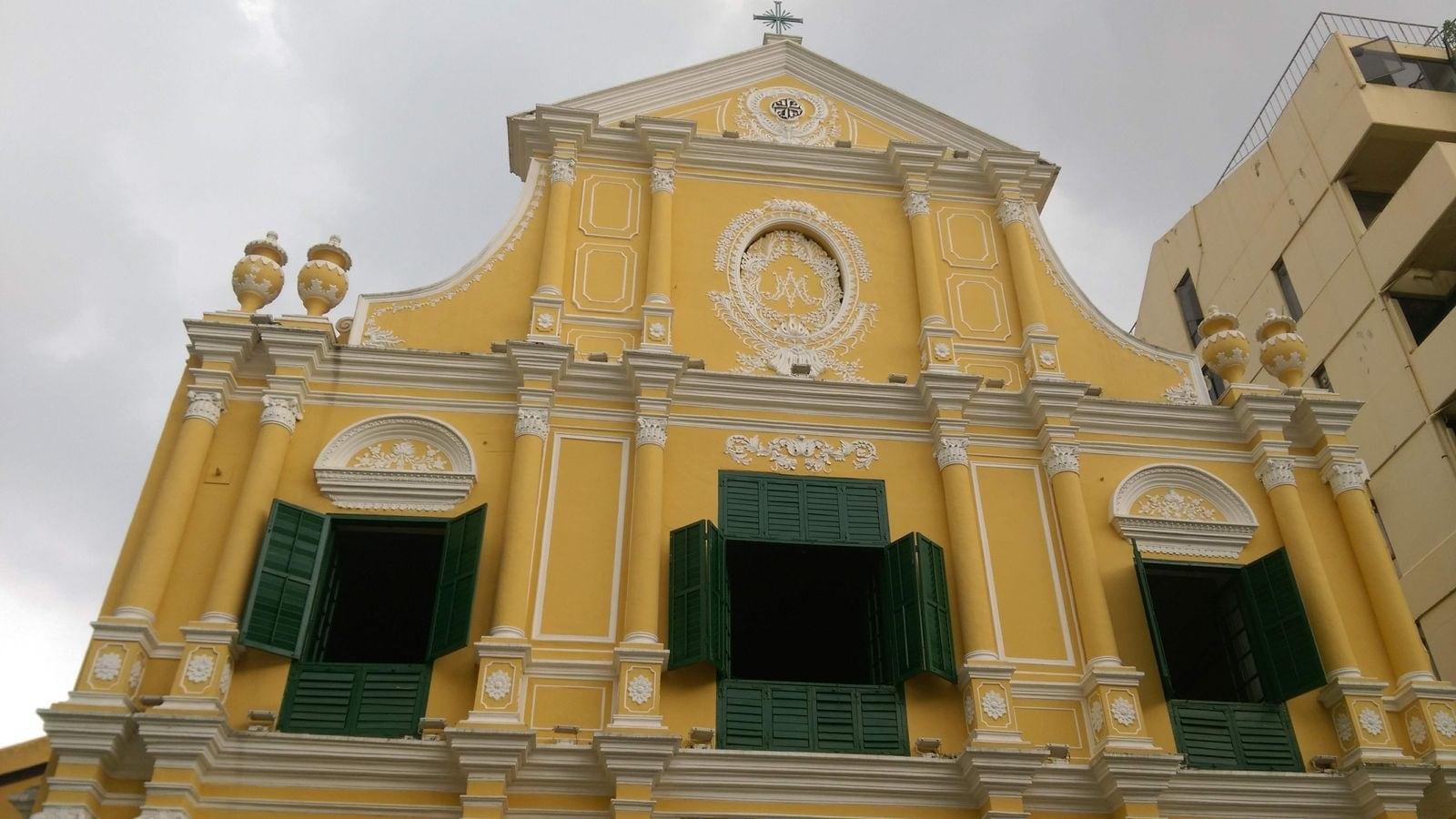
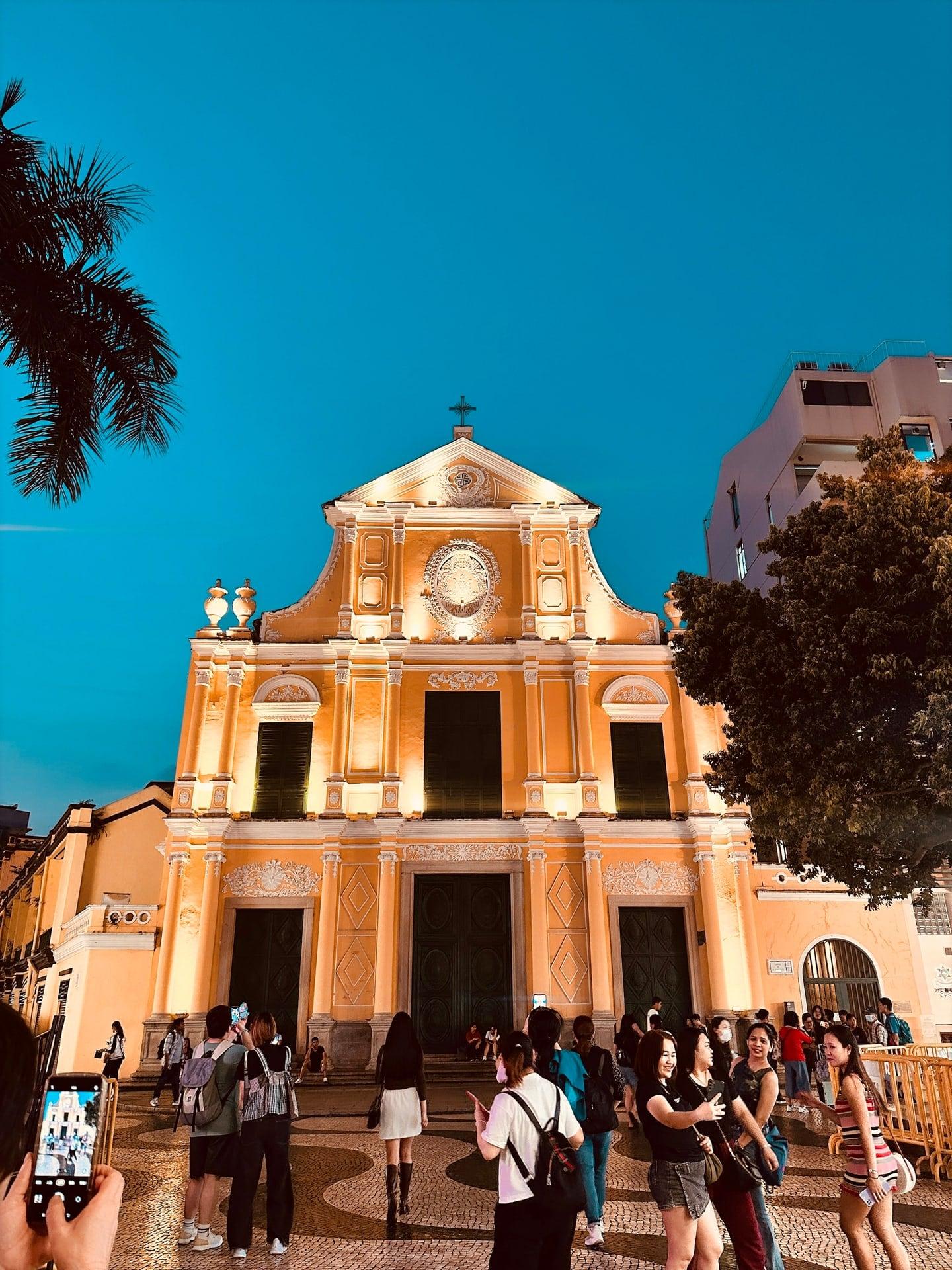
St. Dominic's Church (玫瑰聖母堂)
From Acapulco to the Pearl River. The yellow and white front of St. Dominic's Church, founded in 1587, across its small arcaded square.
- 5
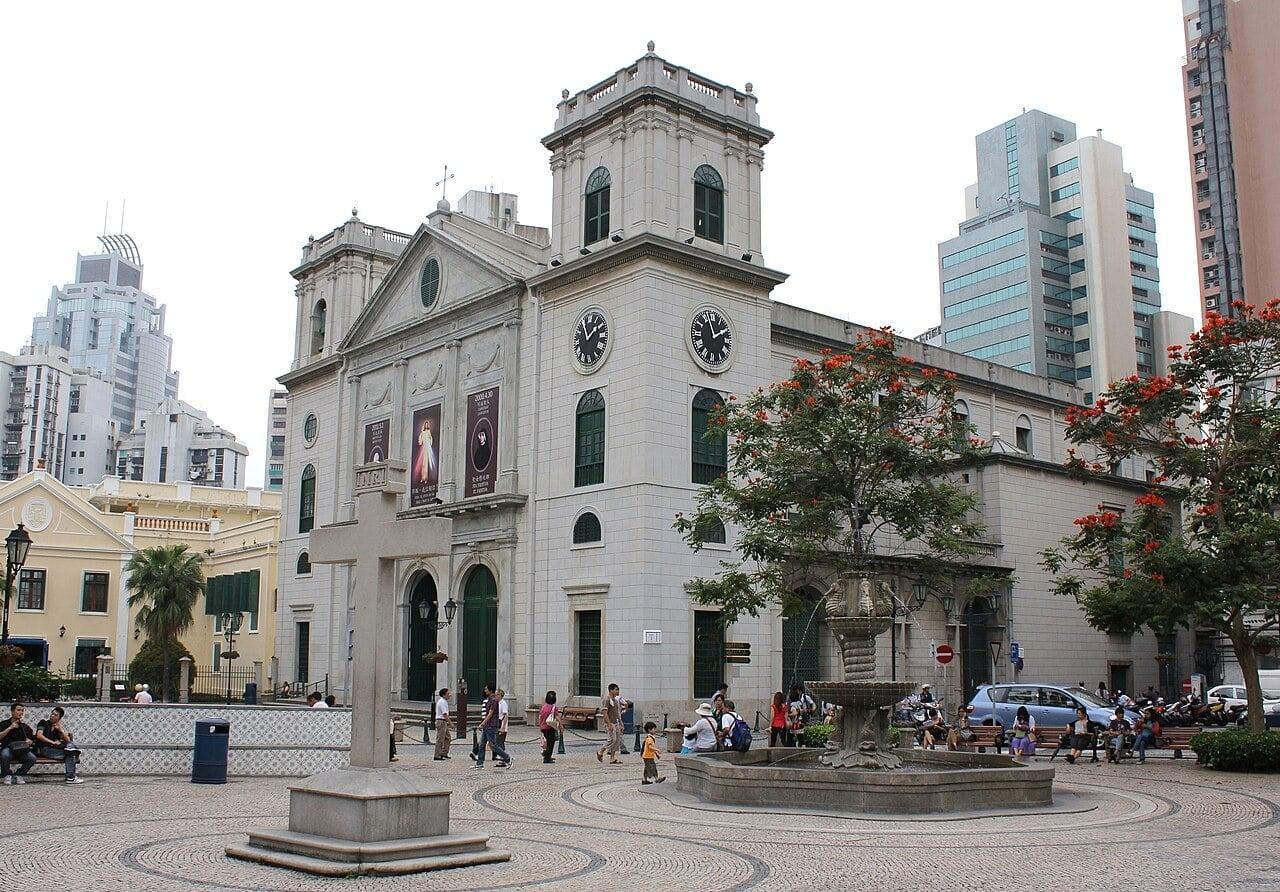
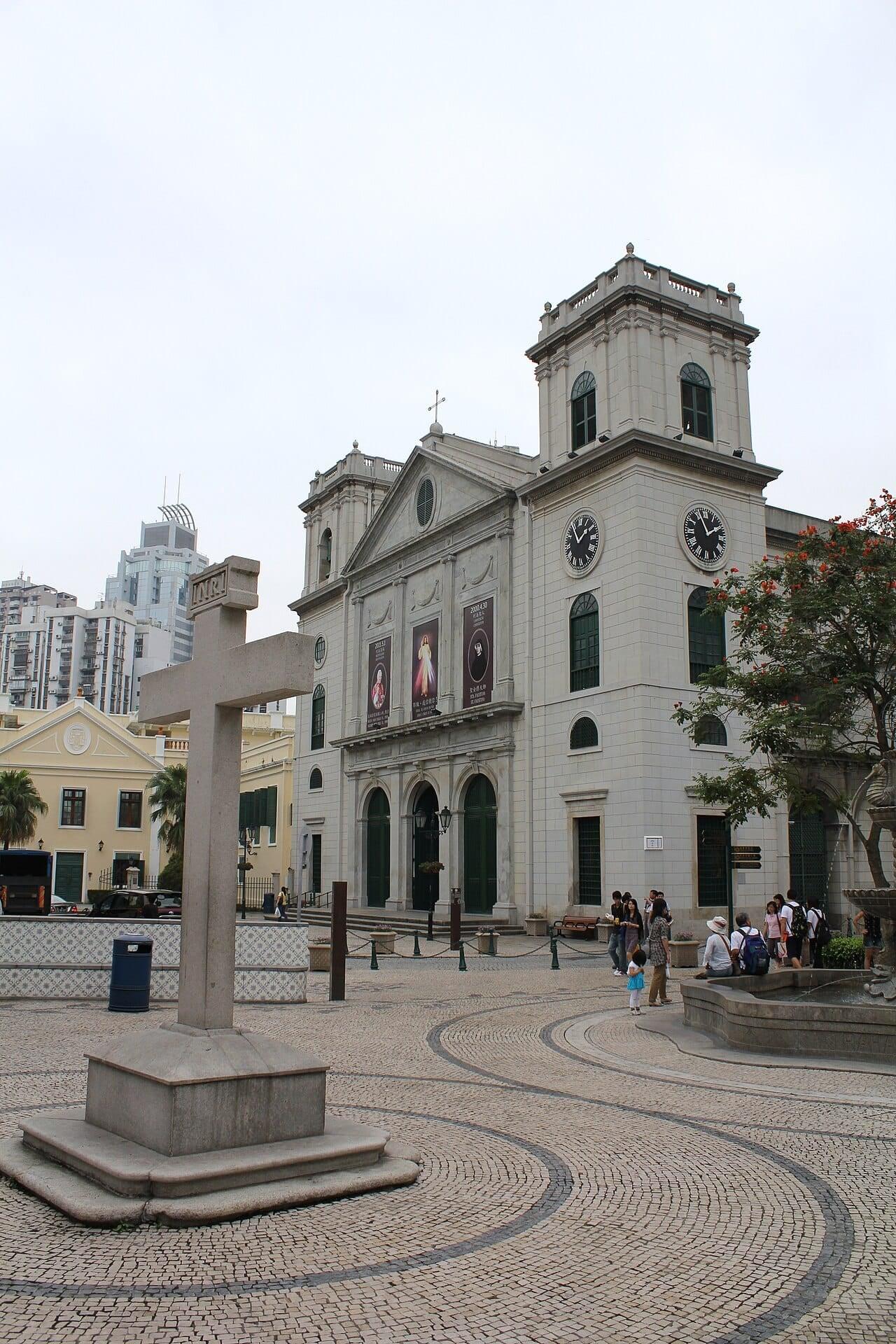
Cathedral (主教座堂)
A cathedral first built of earth. Cathedral Square on its quiet high ground, facing the grey twin-towered front rebuilt in 1850.
- 6
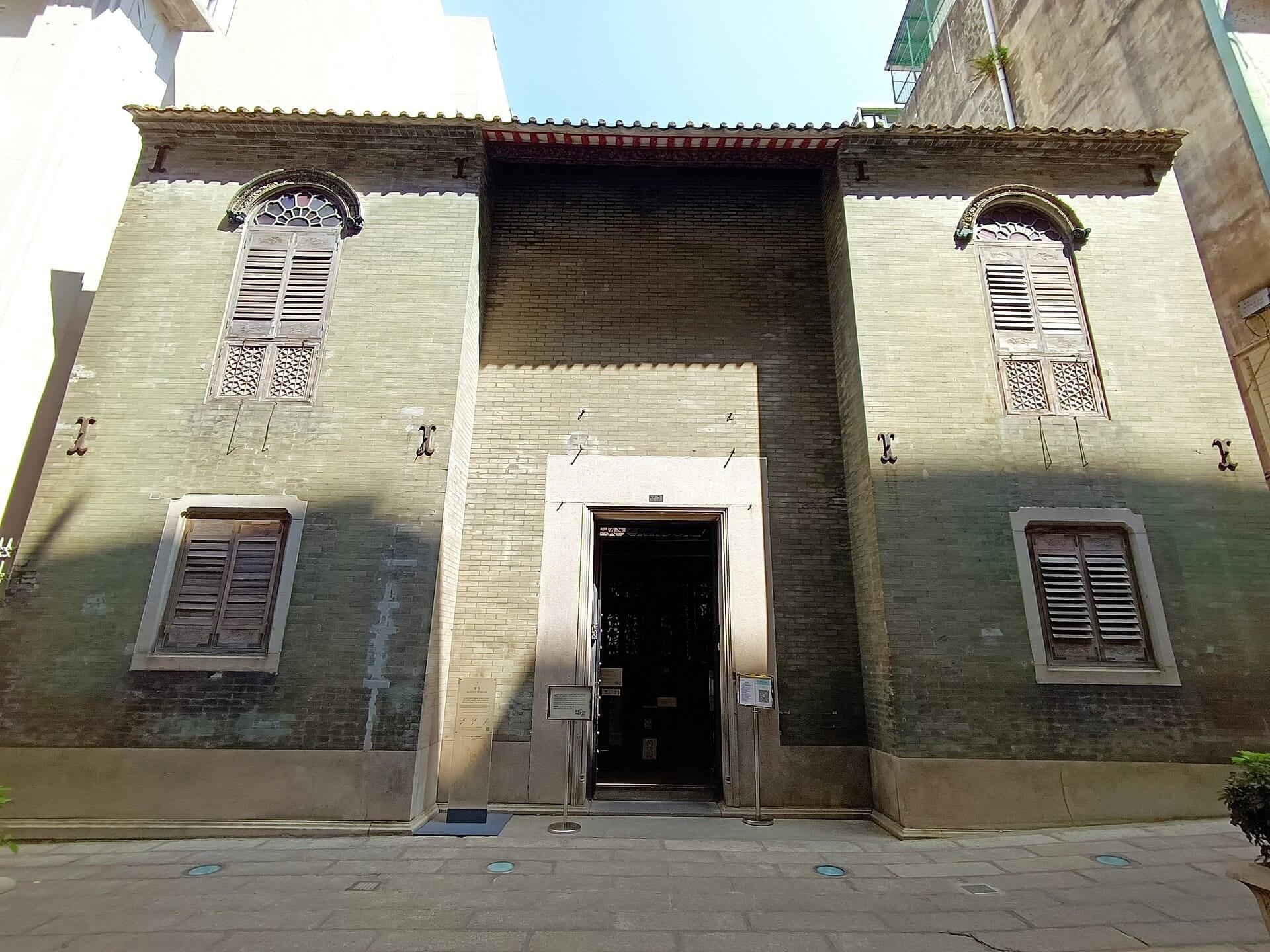
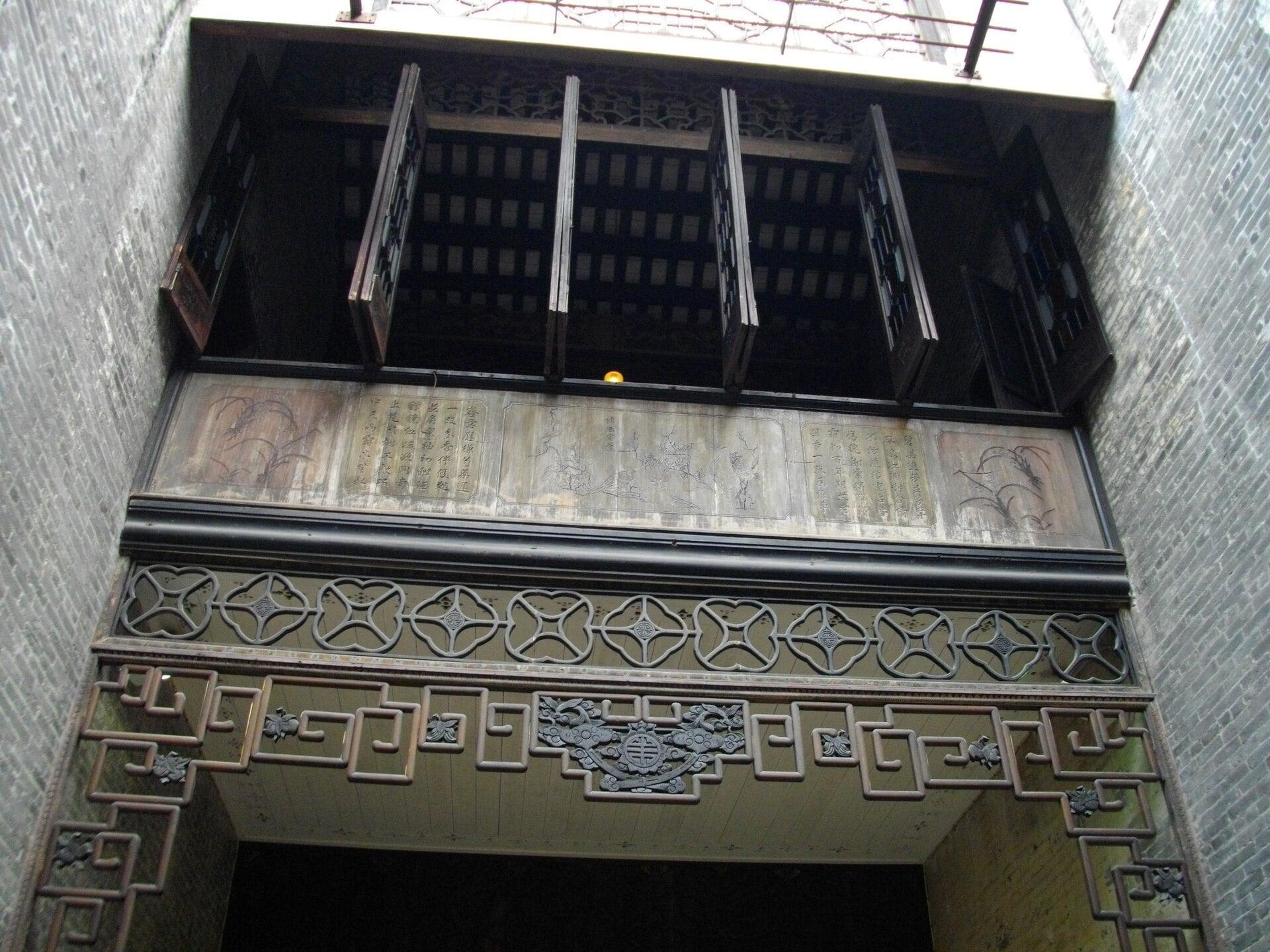
Lou Kau Mansion (盧家大屋)
A money changer's house by the Cathedral. The grey brick front of Lou Kau Mansion, a Chinese courtyard house of about 1889, in the narrow Travessa da Sé.
- 7
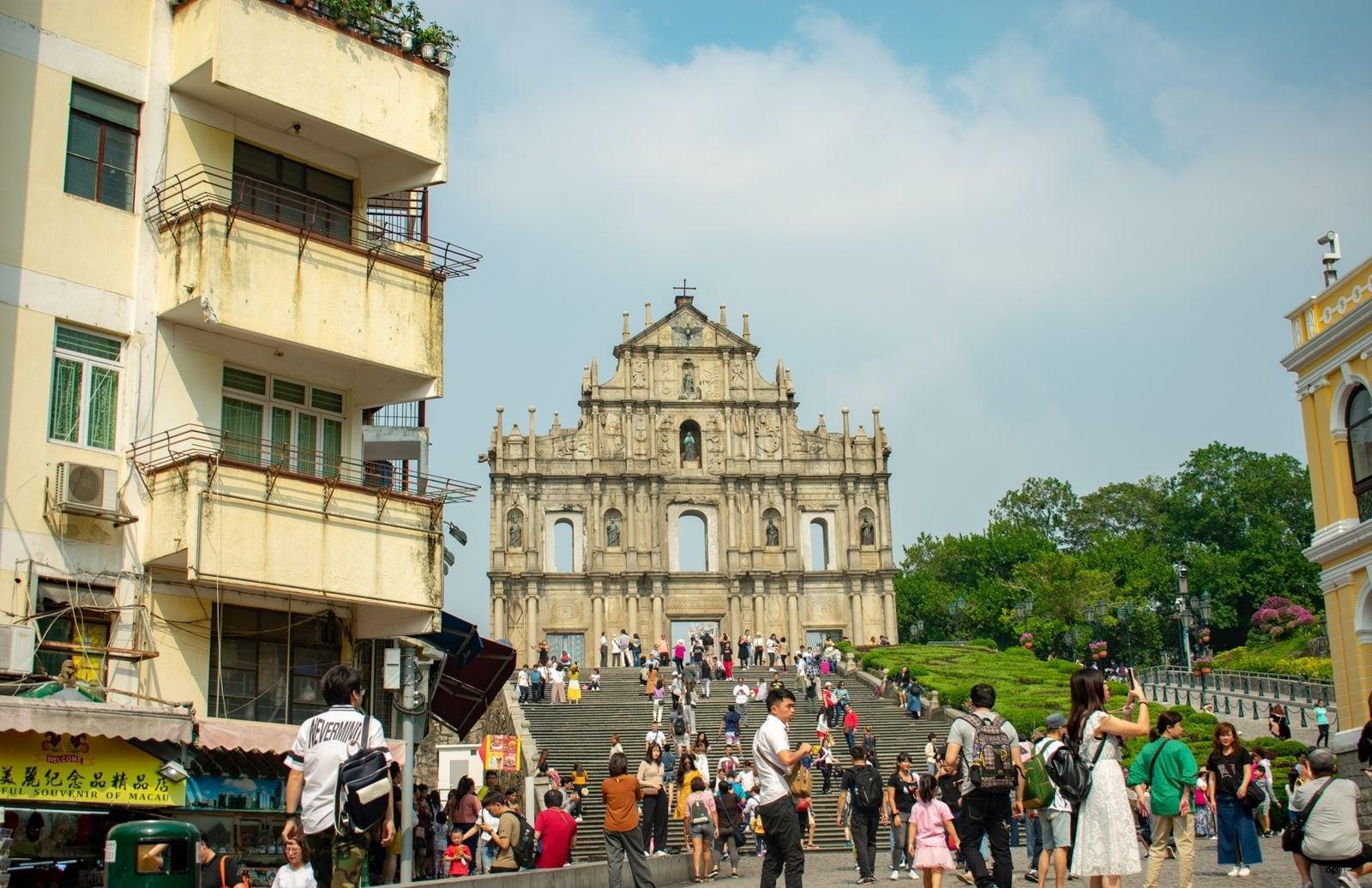
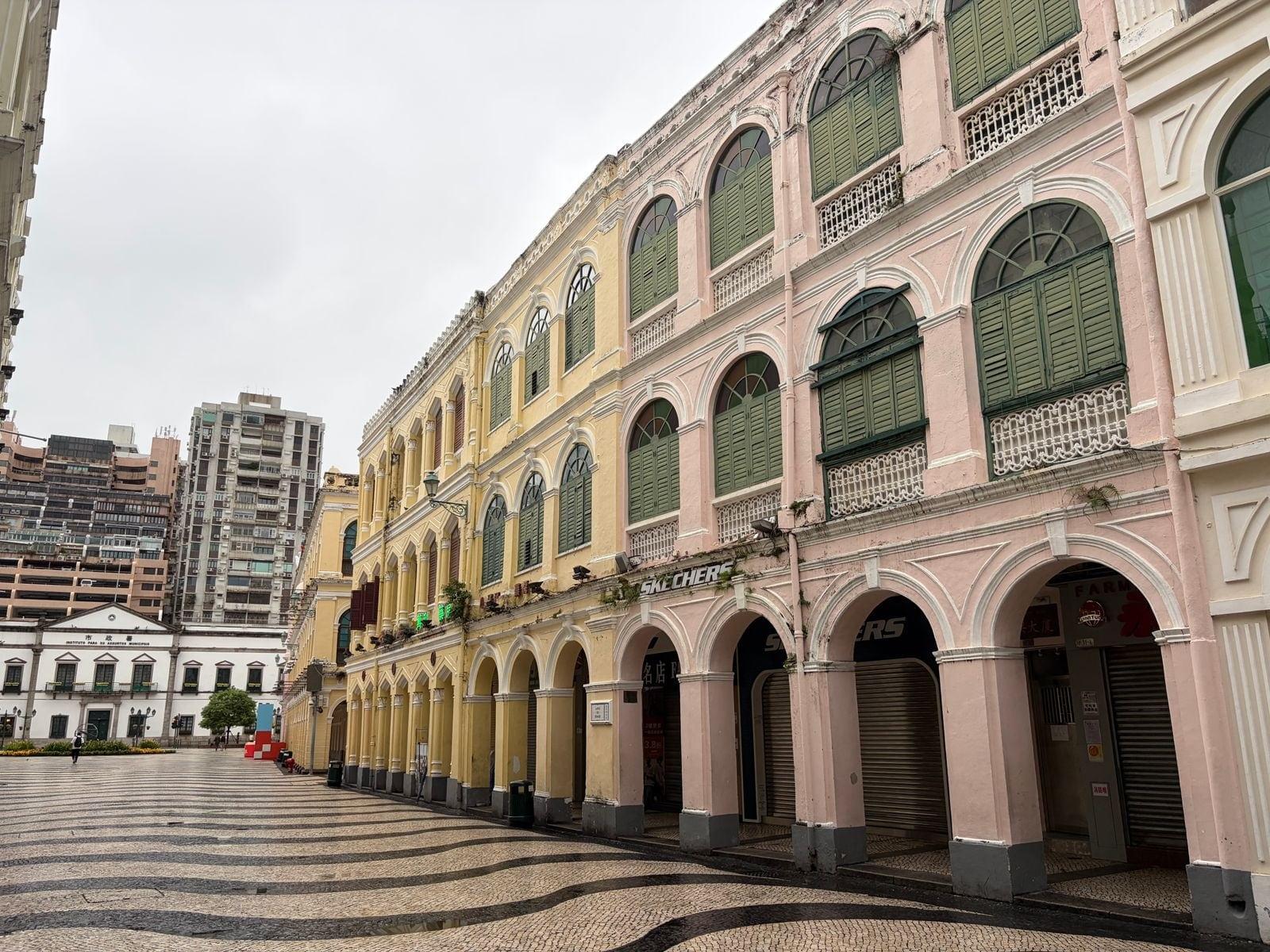
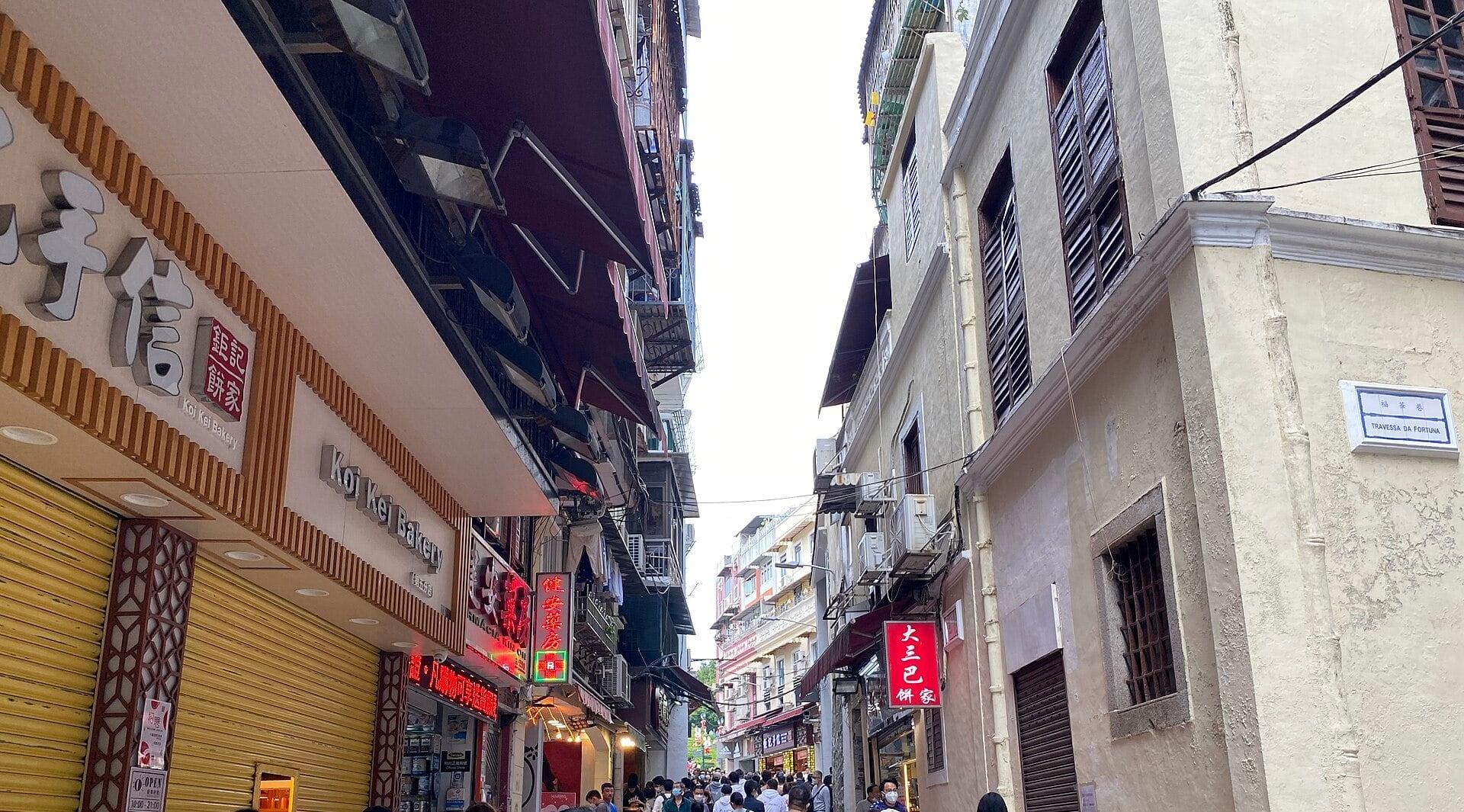
Rua de São Paulo (大三巴街)
Almond biscuits on the way up. The pedestrian shop street climbing from Rua da Palha toward the Ruins of St. Paul's, with samples handed out at the doors.
- 8
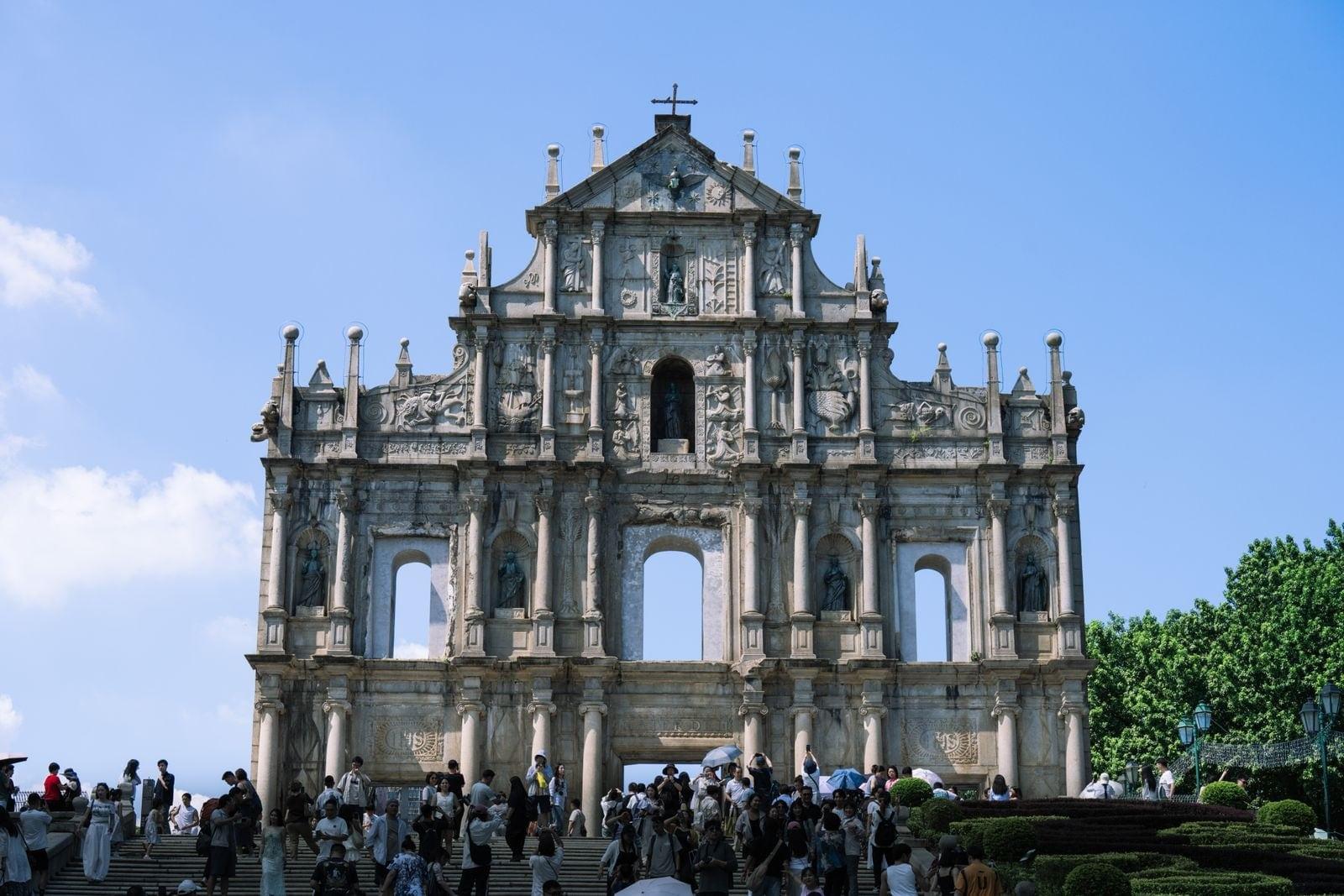
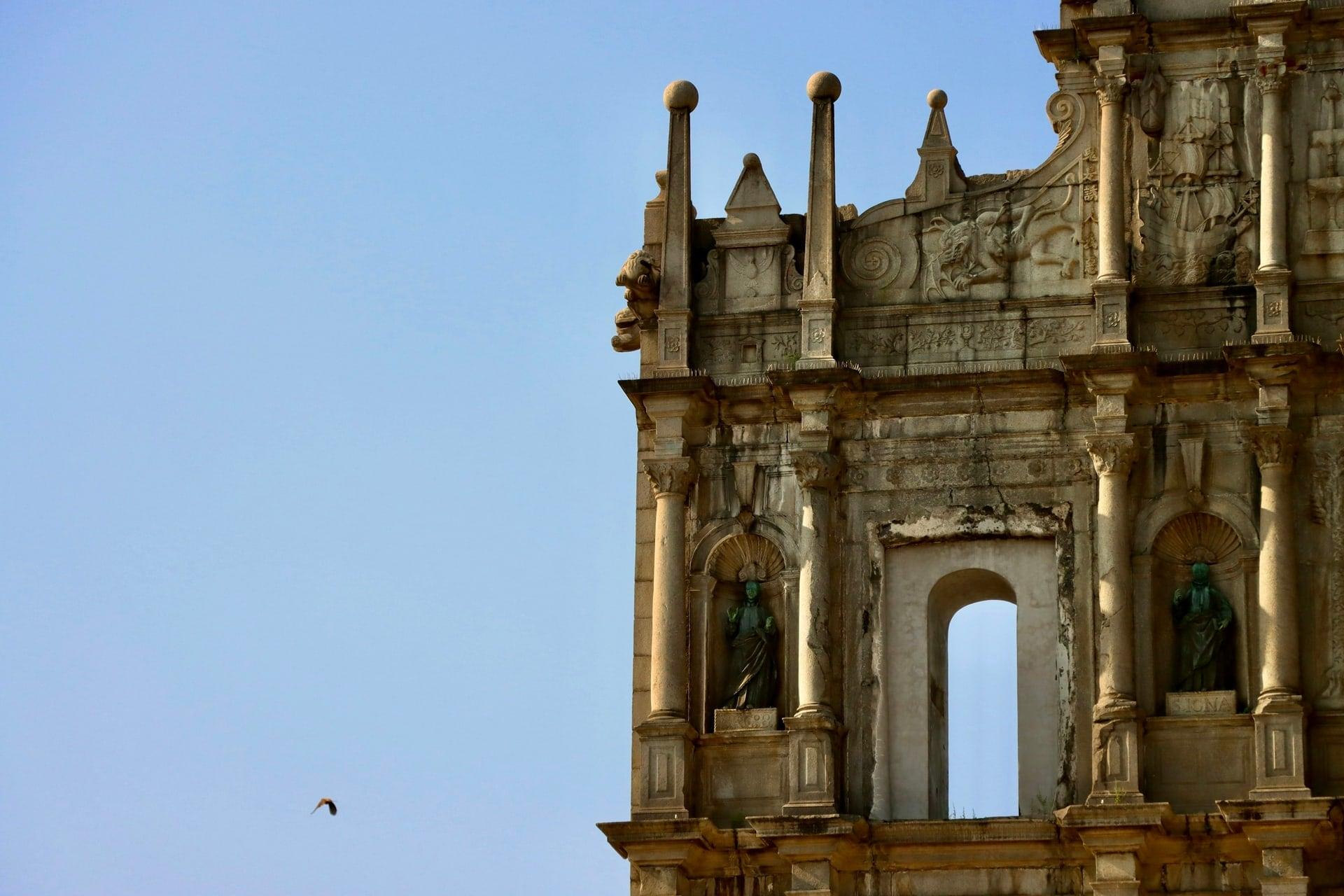
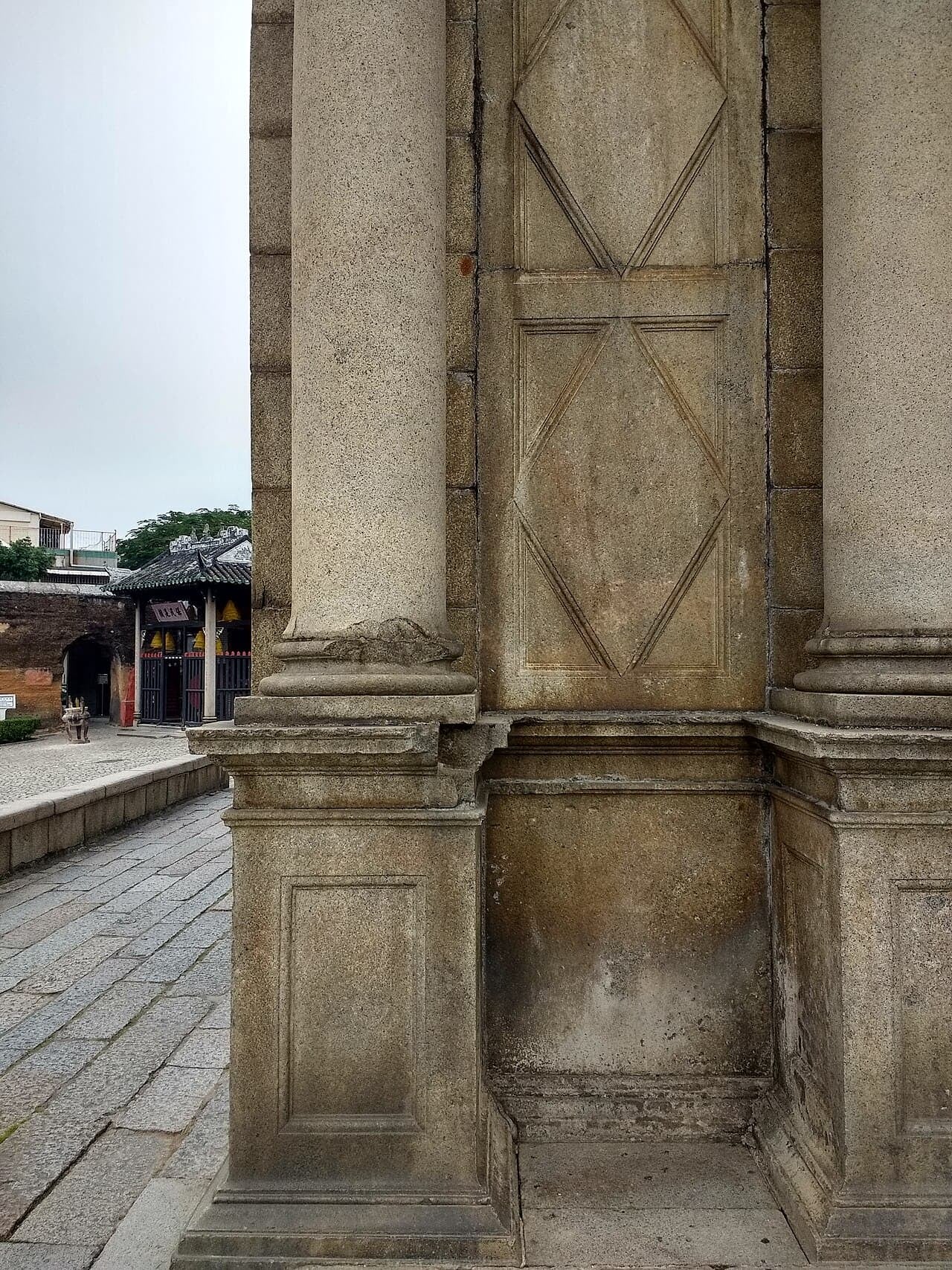
Ruins of St. Paul's (大三巴牌坊)
A church front read like a sermon. The foot of the granite staircase in Company of Jesus Square, looking up at the 1640 façade that survived the fire of 1835.
- 9
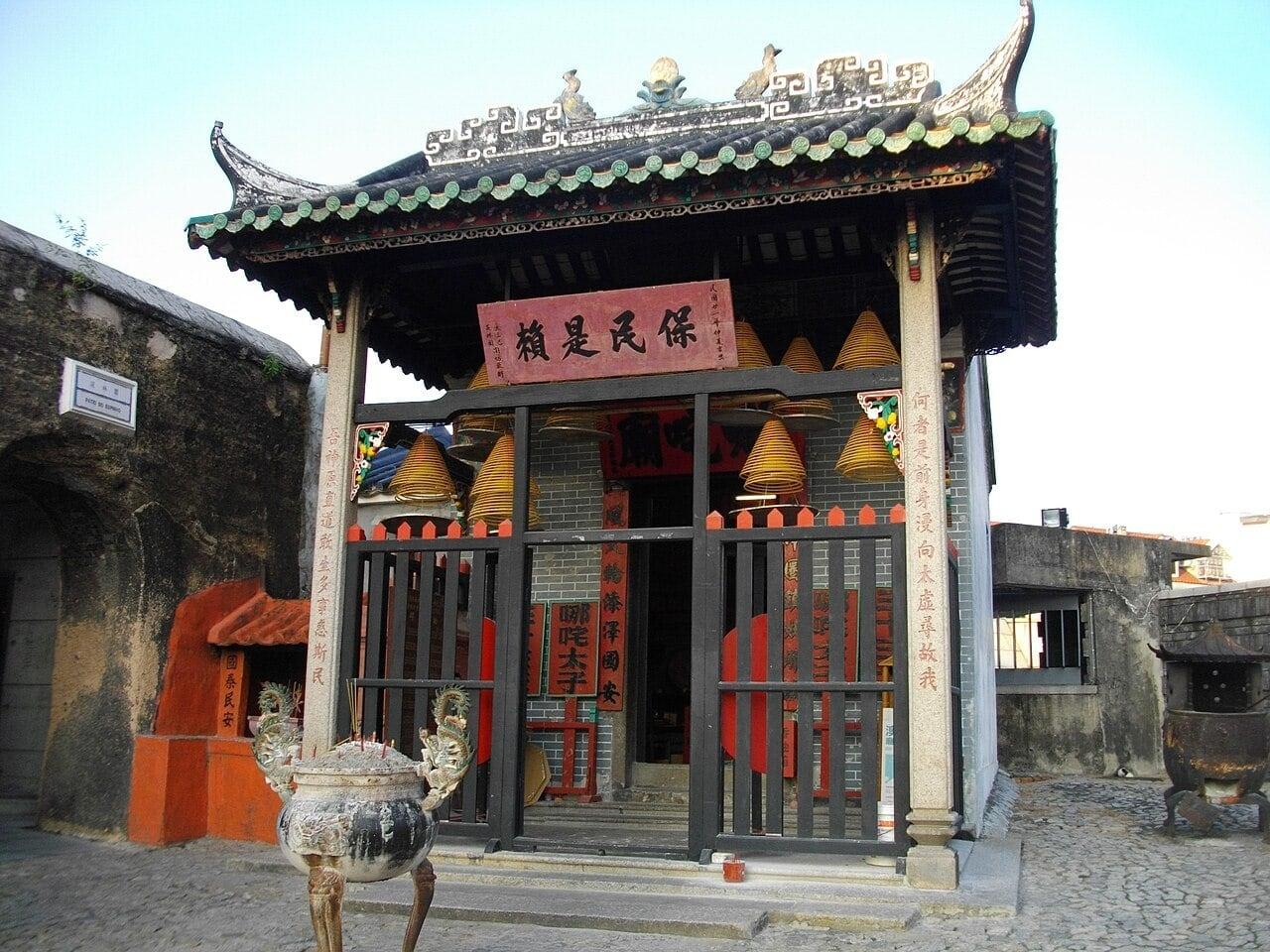
Na Tcha Temple and Old City Walls (哪咤廟)
Two cities in thirty meters. A surviving stretch of the old city wall and the small Na Tcha Temple built against it, just behind the façade of St. Paul's.
- 10
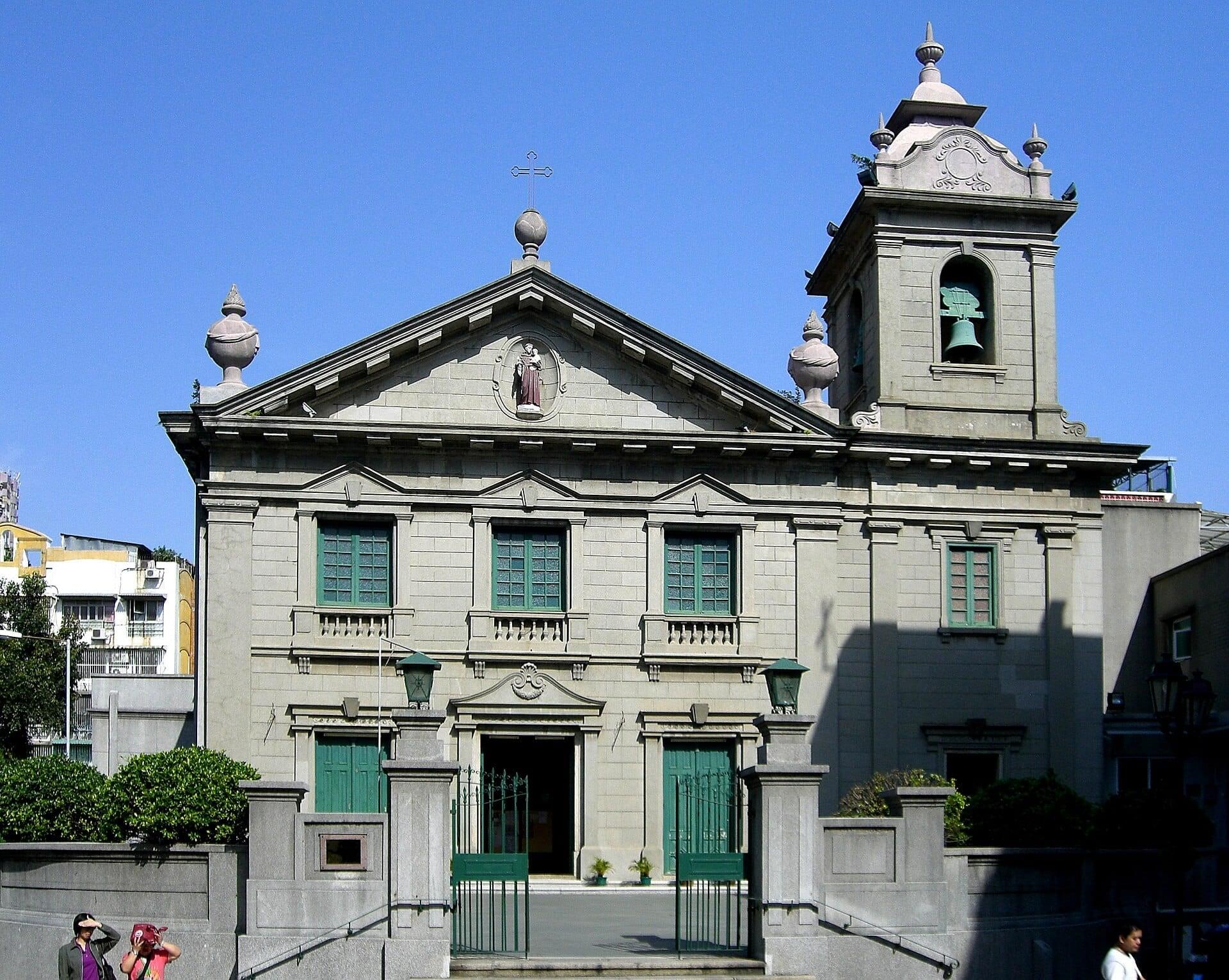
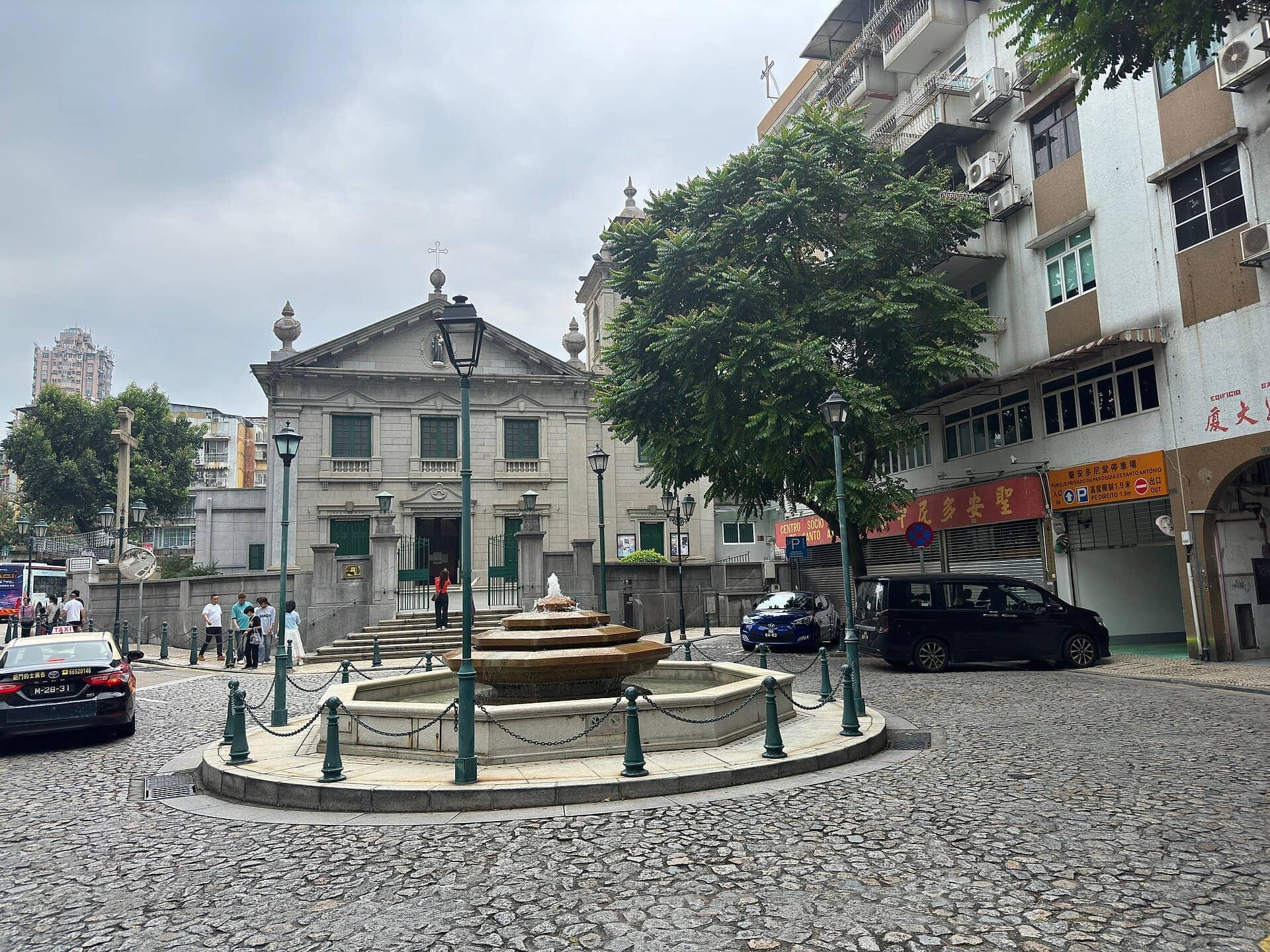
St. Anthony's Church (花王堂)
Where the Jesuits first settled here. St. Anthony's Church across its little cobbled roundabout, on a site used before 1560.
- 11
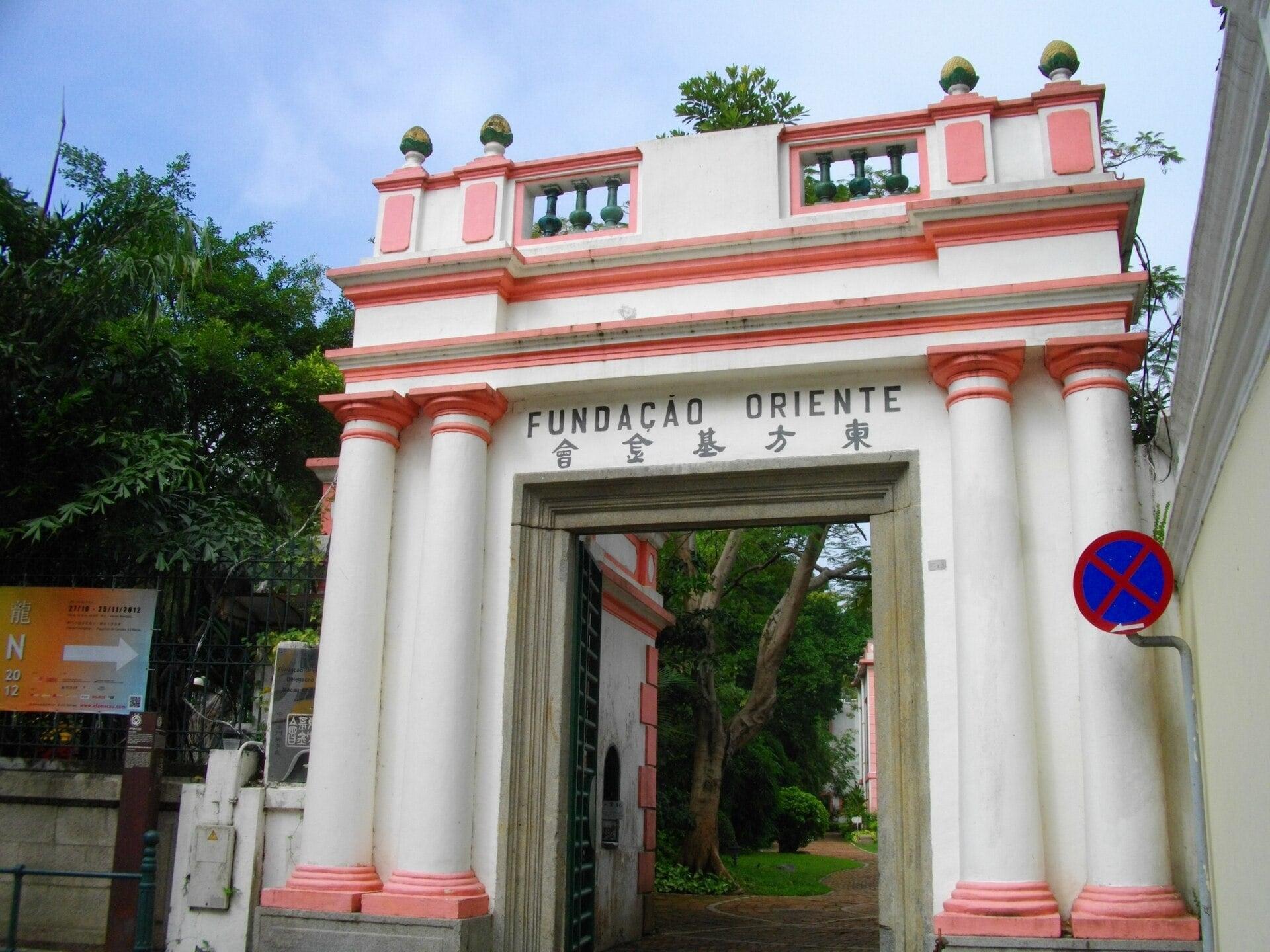
Camões Square (白鴿巢前地)
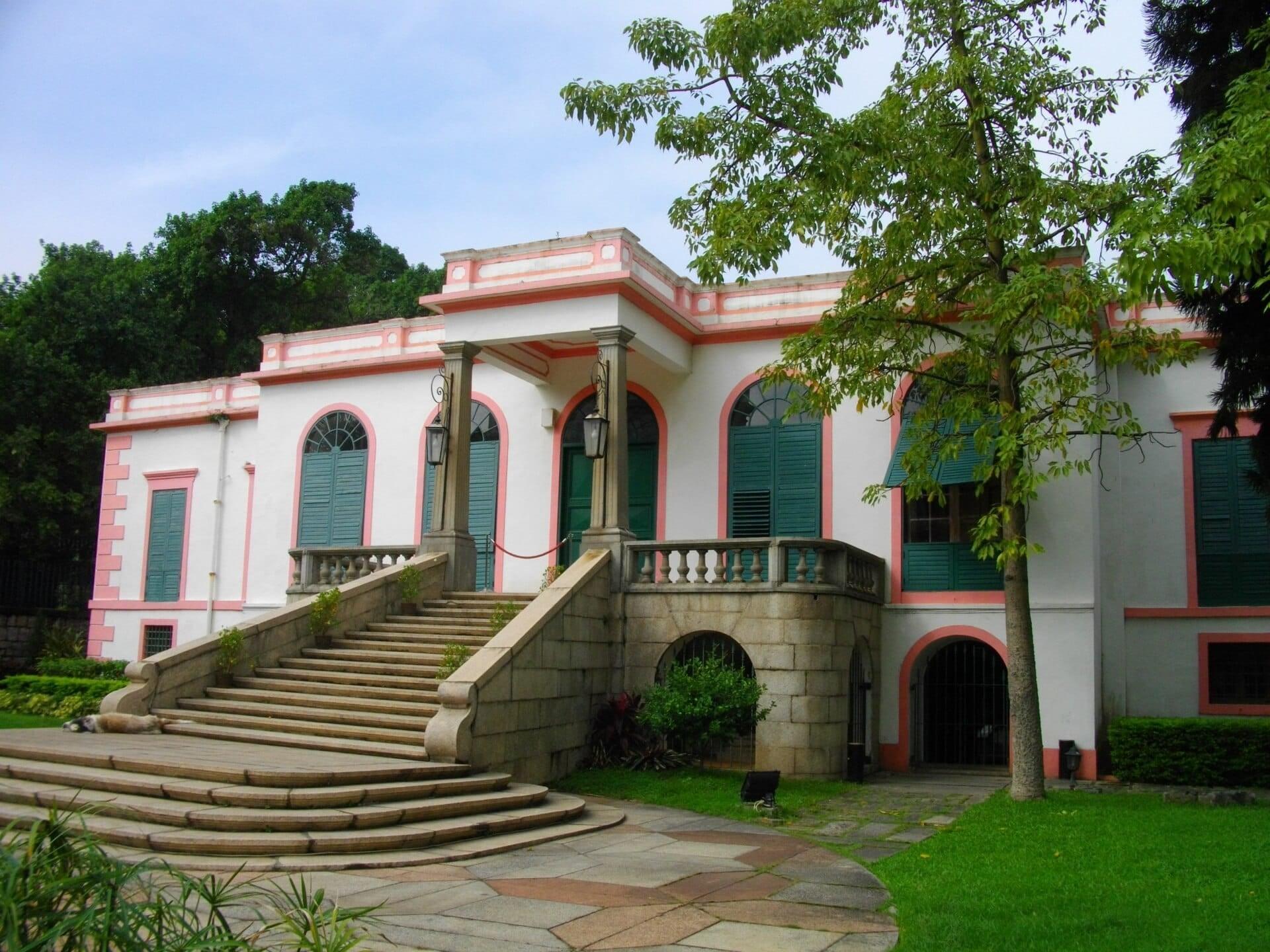
Where the traders kept their villas. Camões Square with Casa Garden's white villa of 1770 and the gate of the Old Protestant Cemetery beyond it.
- 12
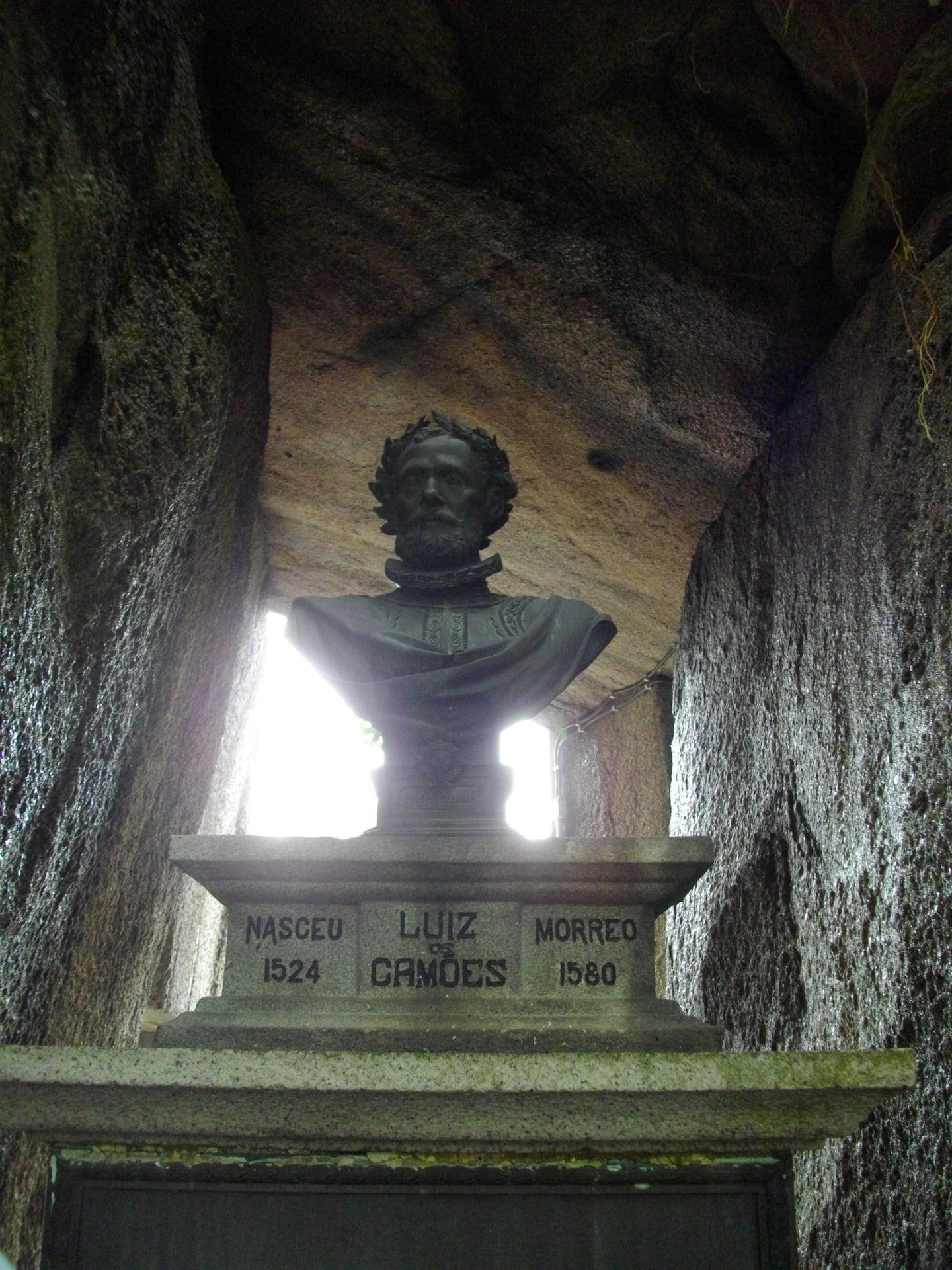
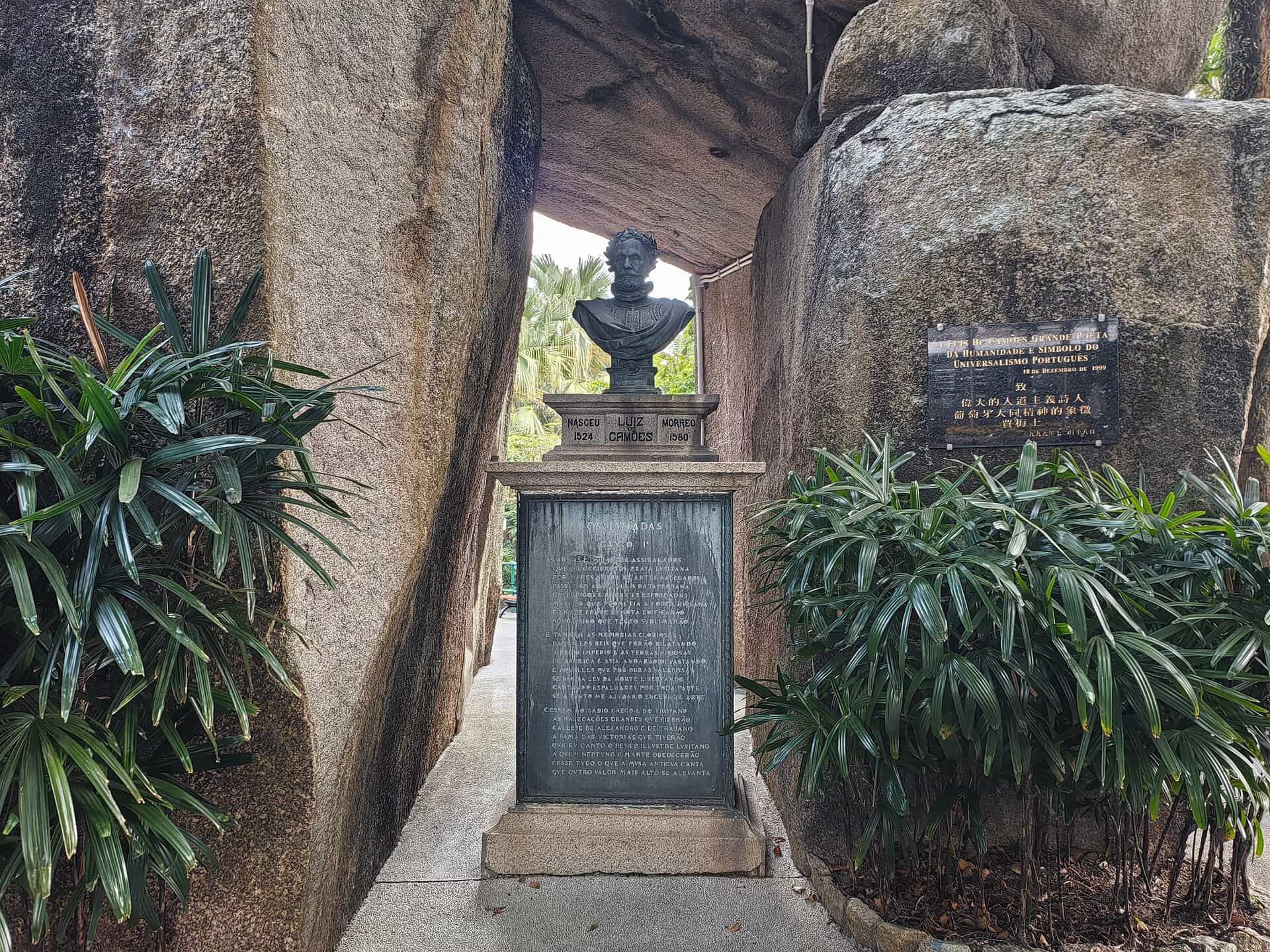
Camões Grotto (賈梅士洞)
A poet's legend among the rocks. The granite grotto in Luís de Camões Garden, under big trees, with a bronze bust of the poet set here in the 1800s.
Details
Best Time to Visit
Any day; early morning is the quietest, when Senado Square, Rua de São Paulo and the Ruins of St. Paul's are not yet shoulder to shoulder. Every stop but the last is on public ground open at all hours; the last is inside Luís de Camões Garden, so finish while the garden is open (if it is shut, end at Camões Square). Most interiors on the way close by 18:00, Lou Kau Mansion and Casa Garden on Mondays. Avoid Lunar New Year (6 to 8 February 2027), Christmas Eve, New Year's Eve, May Day and 1 to 7 October, when the center is packed; on peak nights Rua de São Paulo can be made one-way toward the Ruins. 20 December is a public holiday. Light Up Macao is reported for 5 December 2026 to 10 January 2027, with evening crowds. From May to November check typhoon and rainstorm signals before you set out. Checked 25 November 2026.
Pro Tips
- •Getting to the start: bus 3 runs from the Outer Harbour Ferry Terminal to the stop Almeida Ribeiro / OCBC beside Senado Square (seventh stop); routes 3X, 4, 6A, 8A, 18A, 19, 26A and 33 also stop there, and the Almeida Ribeiro / Tai Fung stop is close by. If you arrive on the Leal Senado's side of the avenue, cross at the lights in front of it. Checked 25 November 2026.
- •The walk ends in Camões Garden; the bus stop Praça Luís Camões beside the square is served by routes 8A, 18, 18A, 19 and 26. Checked 25 November 2026.
- •The pataca is linked to the Hong Kong dollar, and Hong Kong dollars are widely accepted in Macau; change usually comes back in patacas.
- •Interiors on the way, if you want to go in later: Leal Senado 09:00 to 21:00; Sam Kai Vui Kun 09:00 to 18:00; St. Dominic's 10:00 to 18:00; Cathedral 07:30 to 20:00; Lou Kau Mansion 10:00 to 18:00, closed Mondays; Na Tcha Temple 08:00 to 17:00; St. Anthony's 06:30 to 18:00; Casa Garden 10:00 to 19:00, closed Mondays; Protestant Cemetery 08:30 to 17:30. Checked 25 November 2026.
- •For a view over the old city, Mount Fortress above the Ruins of St. Paul's is open 07:00 to 19:00; it is not part of the route.
- •GPS can wander in the tall narrow lanes (stops 2, 6 and 7) and under the garden's trees (stop 12): if a stop has not started, tap it on the map.
Safety & Precautions
- •Traffic keeps left, but several lanes on this walk are one-way and have no sidewalk. On Travessa do Bispo (to the Cathedral) and at the Largo de Santo António roundabout, cars come toward you; where Travessa de São Paulo meets the top of Rua de São Paulo, cars come out from your right; at the top of Largo de Santo António, cars come down Calçada do Botelho from your left and both ways along Praça de Luís de Camões. Look both ways every time.
- •Scooters use every lane without a sidewalk (legs to the Cathedral, St. Anthony's and Camões Square): keep to the edge and let them pass.
- •Steps: the long granite staircase up to the Ruins of St. Paul's (or Rua da Ressurreição, the lane without steps on its left as you face the façade), a short flight in Pátio do Espinho, two short flights and a short covered stair at the foot of Largo da Companhia, and a short flight in Camões Garden.
- •The black and white stone paving is slippery when wet.
- •Two Chinese temples and three churches on the way are working places of worship: keep clear of the incense and of anyone praying, keep your voice low, and no flash during services.
- •Senado Square, Rua de São Paulo and the Ruins are crowded at most hours: keep bags closed and step out of the flow to listen.
- •Do not walk under a high typhoon signal or a black rainstorm warning.
Gallery
Read the walk
The full story of Historic Center: Senado Square to St. Paul's, in words. Prefer to listen? Play it narrated, from home or on location.
Introduction
Macau's old center is two cities laid through each other. A Portuguese trading port built its senate, its churches and its Jesuit college here, and a Chinese merchant town grew up in the same lanes, with its guild hall, its temples and its courtyard houses. This walk follows one street plan from the Senate to a poet's garden, and from almost every stop you can point at both cities. All of it is part of the Historic Centre of Macao, a World Heritage Site since two thousand five.
There are twelve stops over about one point four kilometers, just under a mile, and it takes about seventy minutes. It climbs gently from Senado Square to the Ruins of Saint Paul's, up one long granite staircase, with a lane beside it that has no steps. Then it goes down through old lanes to a garden on a small hill, with a few short flights of steps near the end.
Traffic in Macau keeps to the left, but several lanes on this walk are one-way and have no sidewalk, and scooters use all of them. Keep to the edge and look both ways; each crossing that matters is described as you reach it. There are no trams.
Every stop is told from public ground. The churches, the temples and the mansion on the way keep their own opening hours, and the walk does not depend on going in. The last stop is inside Camoes Garden: if its gate is shut, the walk ends at the square outside.
From May to November, typhoon and rainstorm signals are part of life here, so check the weather bureau before you set out.
Bus number three from the Outer Harbour Ferry Terminal stops at Almeida Ribeiro, beside the square. When you arrive at the Leal Senado Building, begin with stop one.
1. Leal Senado Building (市政署大樓)
Look across the avenue at the long white front with granite columns beside its door. That is the Leal Senado Building, and it has been the city's municipal chamber since it was built in seventeen eighty four. It still is: today it houses the Municipal Affairs Bureau.
The name means the Loyal Senate, and it comes from a title. Between fifteen eighty and sixteen forty, the kings of Spain also ruled Portugal. Macau stayed loyal to the Portuguese crown through those sixty years, and in sixteen fifty four the king of Portugal rewarded it with a title: City of Our Name of God, Macau, there is none more loyal. The council carried the word loyal into its own name.
The front is forty four meters wide and about fourteen and a half meters high, divided into three sections by upright bands of granite, with granite Doric columns at the main door. Upstairs, out of sight, a ceremonial meeting room opens into a carved library modeled on the library of the Mafra convent in Portugal, and there is a small chapel. A courtyard garden lies behind. The building is open from nine in the morning to nine at night if you want to step in later; for now, stay on this side of the avenue.
Keep the Senate in mind as the Portuguese city's hall. The next stop, one lane away, belongs to the Chinese city.
Follow the route up the left side of the square and into the first lane on the left. Next is Sam Kai Vui Kun.
2. Sam Kai Vui Kun (三街會館)
The small temple beside you, with grey brick walls and a roof of green glazed tiles, is Sam Kai Vui Kun, which means the guild hall of the three streets. Nobody knows exactly when it was built. Plaques found on the site record a restoration in seventeen ninety two.
This lane was the edge of the old Chinese bazaar, and the big market hall just to the north still stands on it as Saint Dominic's Market. The temple belonged to the bazaar's traders. Local Chinese tradesmen built it, and it was tied to their business associations, the forerunners of the city's Chinese Chamber of Commerce. Official edicts from the Chinese authorities were read out in public in front of it.
So within a minute's walk there are two meeting halls: the Senate on the avenue for the Portuguese city, and this hall in the market lane, where the Chinese traders met and did their business and did its business.
Look up at the eaves. The friezes under them are crowded with colorful figures from legendary tales, and the entrance is set back in the manner of the Lingnan region of southern China. The temple is also known as the Kuan Tai Temple, after the god worshipped in it. It is a working temple, open from nine to six: if you step in, keep clear of anyone praying and of the incense.
Follow the route around the market block by its lanes and back into the square at its top end. Next is Senado Square itself.
3. Senado Square (議事亭前地)
Now look down the square. The black and white stone waves under your feet run downhill toward the fountain and the Senate at the far end, and the square narrows behind you like a funnel, wide at the front and narrow at the back.
It looks old, but the paving is not. The wave pattern of black and white stone chips was laid from nineteen ninety three. The fountain went in during the nineteen seventies, and people here still call the whole square simply the fountain. The pastel buildings around it, with arcades to walk under, date from the late eighteen hundreds and the early nineteen hundreds. This has been the city's center for centuries, and it is still where public celebrations happen.
The white building with two tiers of arches, on your left as you face the fountain, is the Holy House of Mercy. The institution is far older than the building. It was founded in fifteen sixty nine by Macau's first bishop, Dom Belchior Carneiro, on the model of one of Portugal's oldest charities, and it opened the first Western style medical clinic in the city. One of its main tasks was to support the widows and orphans of sailors lost at sea. In a port that lived by ships, that was a safety net against the ocean. The present building dates from the middle of the seventeen hundreds and took its present front in nineteen oh five. Keep the bishop's name in mind: it turns up on a street sign later in the walk.
Follow the route up the narrowing square to the yellow church at its top. Next is Saint Dominic's Church.
4. St. Dominic's Church (玫瑰聖母堂)
The yellow and white front ahead of you belongs to Saint Dominic's Church, and its story begins across the Pacific. It was founded in fifteen eighty seven by three Spanish Dominican priests who had come from Acapulco, in Mexico.
Read the front from the bottom up. It is divided into four levels and three sections, and the central section ends in a pediment with an oval relief carrying the emblem of the Dominican order. The bell tower, three stories high, stands at the back. Around you, the little square keeps its arcades, which is why it feels so Mediterranean.
The church has a first of another kind. On the twelfth of September eighteen twenty two, the first Portuguese newspaper on Chinese soil was published here: A Abelha da China, the China Bee. And when a typhoon damaged the Cathedral in eighteen thirty six, the Cathedral's services moved here until eighteen fifty.
The church is open from ten in the morning to six in the evening. It is a working church: if you go in, keep your voice low and do not use flash during a service.
Follow the route right along Rua de Sao Domingos, then right down a narrow lane with no sidewalk. It is one-way, and the cars and scooters on it come toward you, so keep to the side. Next is the Cathedral.
5. Cathedral (主教座堂)
You have come out at the foot of Cathedral Square. Find the grey front with twin bell towers across the square: that is the Cathedral, on a quieter square than the one you left. The first Cathedral here was built around sixteen twenty two, and it was built of taipa, a building…
Full narration for this stop unlocks with the tour.
6. Lou Kau Mansion (盧家大屋)
The grey brick front across the lane, with a carved frieze over its recessed door, is Lou Kau Mansion, number seven Travessa da Se. It is believed to have been built in eighteen eighty nine, a year read from a poem inscribed under the eaves of one of its courtyards. Lou Kau was…
Full narration for this stop unlocks with the tour.
7. Rua de São Paulo (大三巴街)
You are on Rua de Sao Paulo, the street of Saint Paul's, and it climbs toward the most famous front in Macau. Look up the street: the top of it may already show above the crowd. This stop is short and practical. The shops along here sell almond biscuits and sheets of sweet…
Full narration for this stop unlocks with the tour.
8. Ruins of St. Paul's (大三巴牌坊)
Stand back from the crowd at the foot of the steps and look up. At the top of the staircase stands a stone front with nothing behind it: the Ruins of Saint Paul's. It was the front of the Church of Mater Dei, the Mother of God. Building began in sixteen oh two, and the front…
Full narration for this stop unlocks with the tour.
9. Na Tcha Temple and Old City Walls (哪咤廟)
Here, just behind the great front, two small things make the whole point of this walk in about thirty meters. The long, worn wall beside you is a surviving piece of Macau's old city walls, built from as early as fifteen sixty nine. The Portuguese walled their port settlements…
Full narration for this stop unlocks with the tour.
10. St. Anthony's Church (花王堂)
Across the little cobbled roundabout is Saint Anthony's Church, with its belfry set to one side of an uneven front. This is where the Jesuits began in Macau. Before fifteen sixty a first church of bamboo and wood stood here, and the site was the Jesuits' earliest headquarters…
Full narration for this stop unlocks with the tour.
11. Camões Square (白鴿巢前地)
You are in Camoes Square, a small square where people from the neighborhood have long come to sit and meet. Find the white villa ahead and to your right: that is Casa Garden. It was built in seventeen seventy as the home of a wealthy Portuguese merchant. Later it was rented to…
Full narration for this stop unlocks with the tour.
12. Camões Grotto (賈梅士洞)
Among the trees at the top of the path, big granite boulders lean together to make a grotto, and in it stands a bronze bust of the poet Luis de Camoes, set here in the nineteenth century. Camoes wrote The Lusiads, the great epic poem of Portugal's sea voyages. The story told in…
Full narration for this stop unlocks with the tour.
- File:三街會館(關帝廟).jpg | Sam Kai Vui Kun (Templo de Kuan Tai) — K.Y.K.Z.K., CC BY-SA 4.0 · source
- File:Largo do Senado, 2023 (01).jpg | View of the Senado Square, Macau, with the fountain in the foreground, Shun Tak House in the backgroun — Bahnfrend, CC BY-SA 4.0 · source
- File:盧家大屋正門.jpg | Entrada da Casa de Lou Kau — K.Y.K.Z.K., CC BY-SA 4.0 · source
- File:Rua de São Paulo 09-02-2023.jpg | This photo was taken in Senado Square area. — LN9267, CC BY-SA 4.0 · source
- File:Igreja de Santo António 27-10-2024(1).jpg | 這張照片在澳門半島拍攝。 — LN9267, CC BY-SA 4.0 · source
- File:20260221 Gruta de Camões.jpg | Camões Grotto — Yumeto, CC BY-SA 4.0 · source
Images may be cropped or resized. Other photos via Unsplash and Pexels.