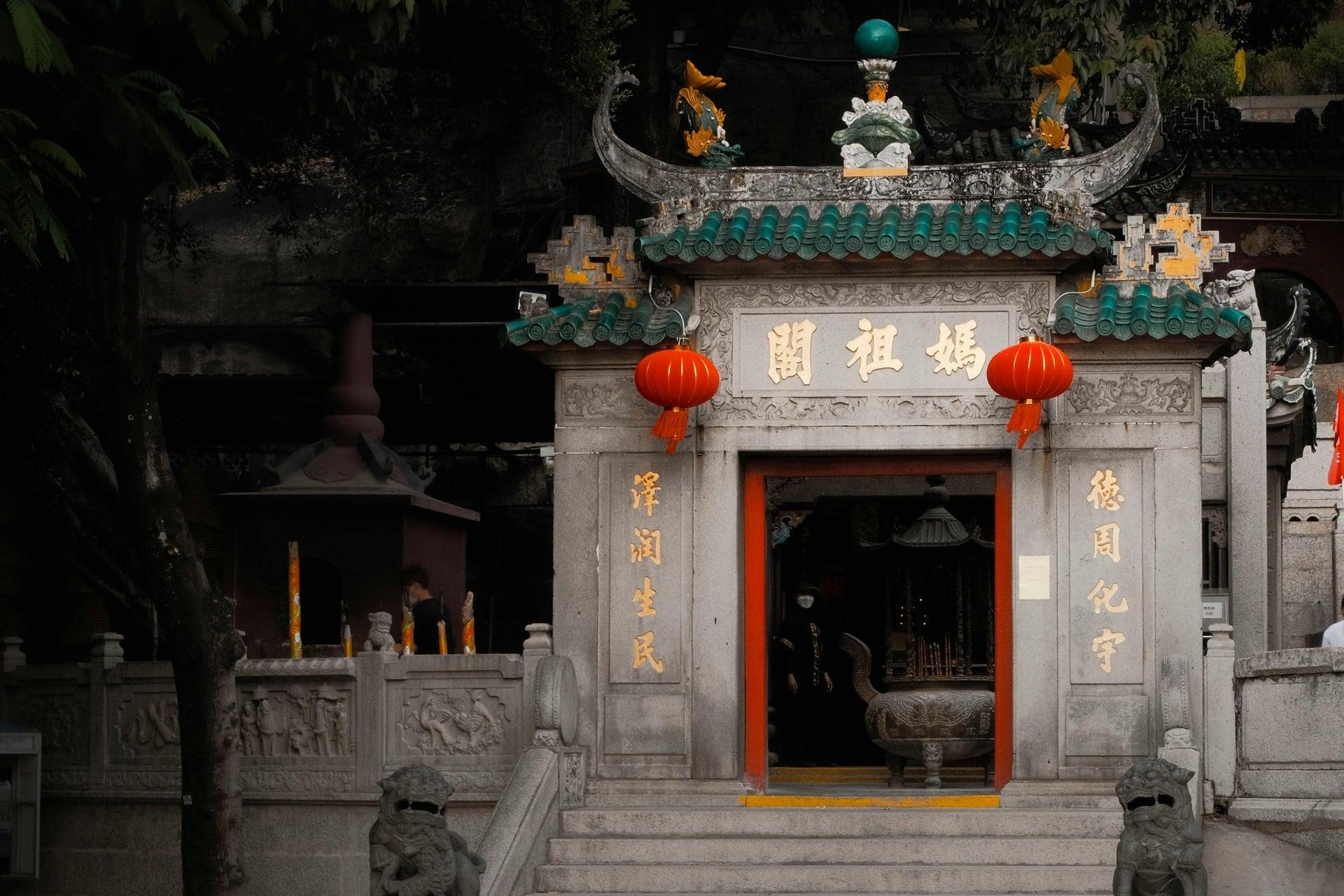
Macau's waterside half from free ground: St Augustine's Square and the 1860 Dom Pedro V Theatre, the baroque St Joseph's, St Lawrence's Hall of the Soothing Winds, the Mandarin's House, the Lilau spring, the 1874 Moorish Barracks, and the A-Ma Temple, where Macau's name is said to begin.
Start · St Augustine's Square (崗頂前地)
DirectionsStops
- 1
St Augustine's Square (崗頂前地)
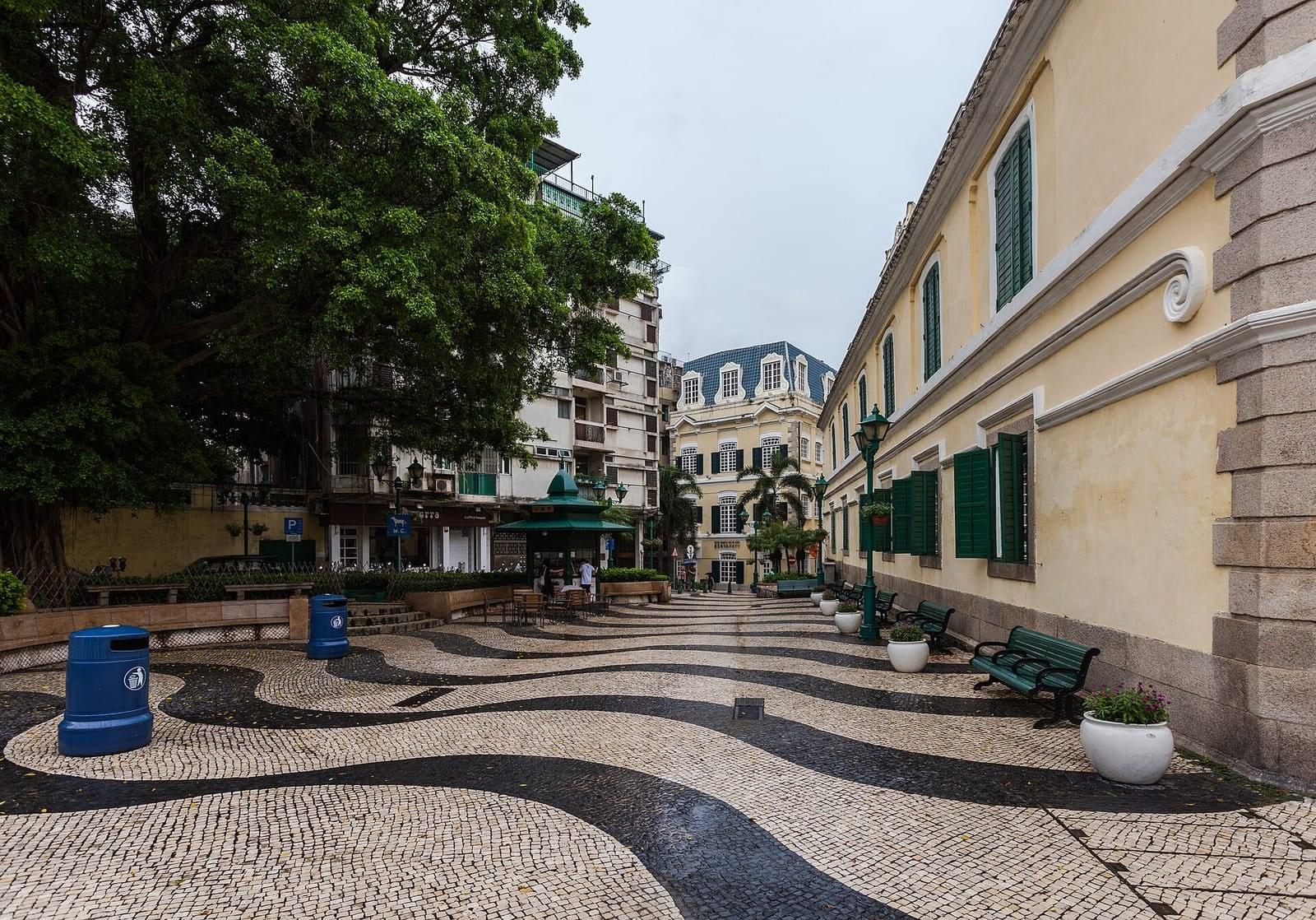
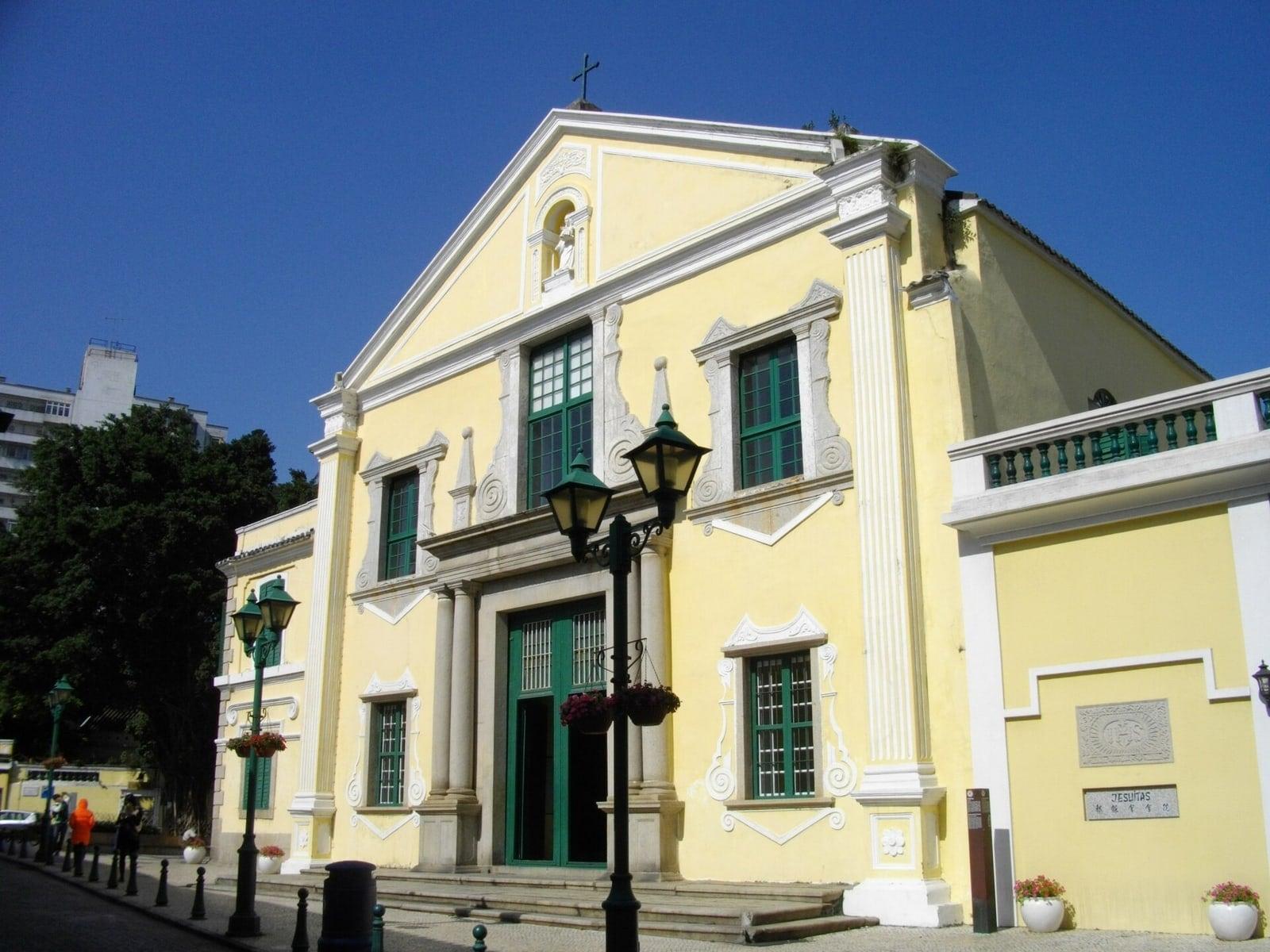
Three buildings share one cobbled square. St Augustine's Church of 1591, the Dom Pedro V Theatre of 1860 and the Sir Robert Ho Tung Library stand around the Portuguese paving of Largo de Santo Agostinho, on the hilltop where the walk begins.
- 2
St Joseph's Seminary Church (聖若瑟修院教堂)
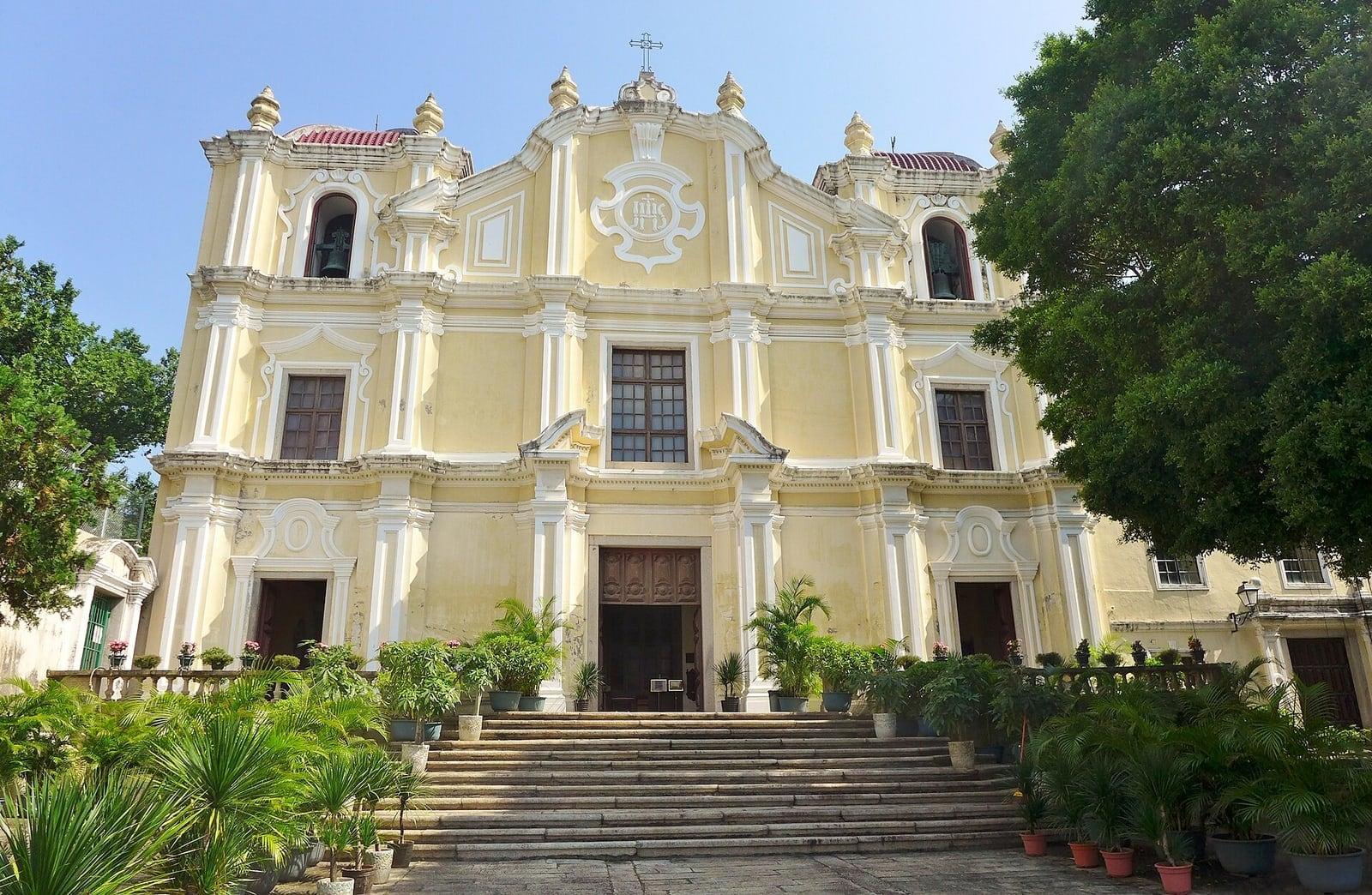
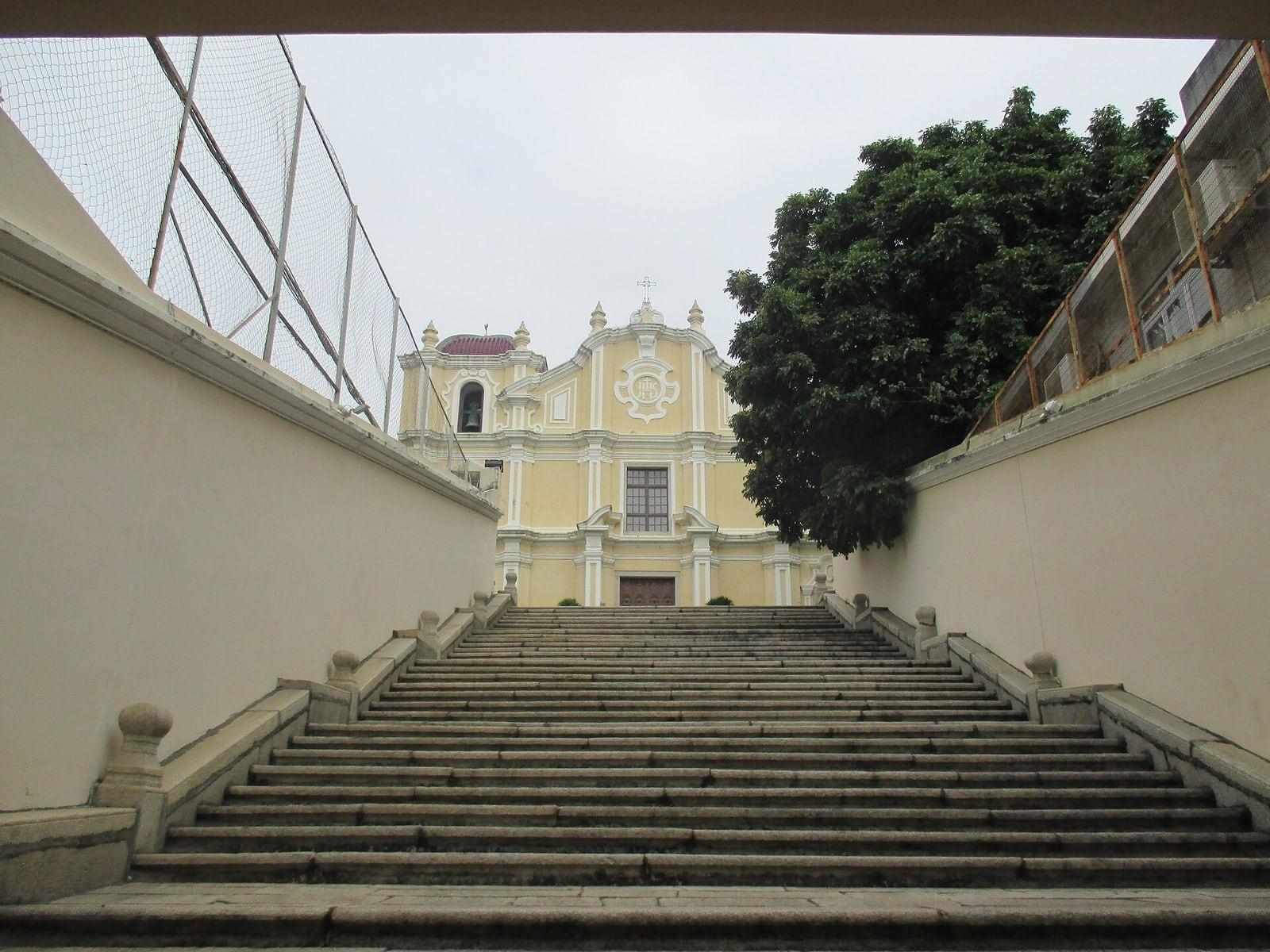
The baroque church that survived whole. St Joseph's, begun in 1746 and finished in 1758, rises above its granite staircase on Rua do Seminário, with a broken arch over the door and a dome nineteen meters high.
- 3
St Lawrence's Church (聖老楞佐堂)
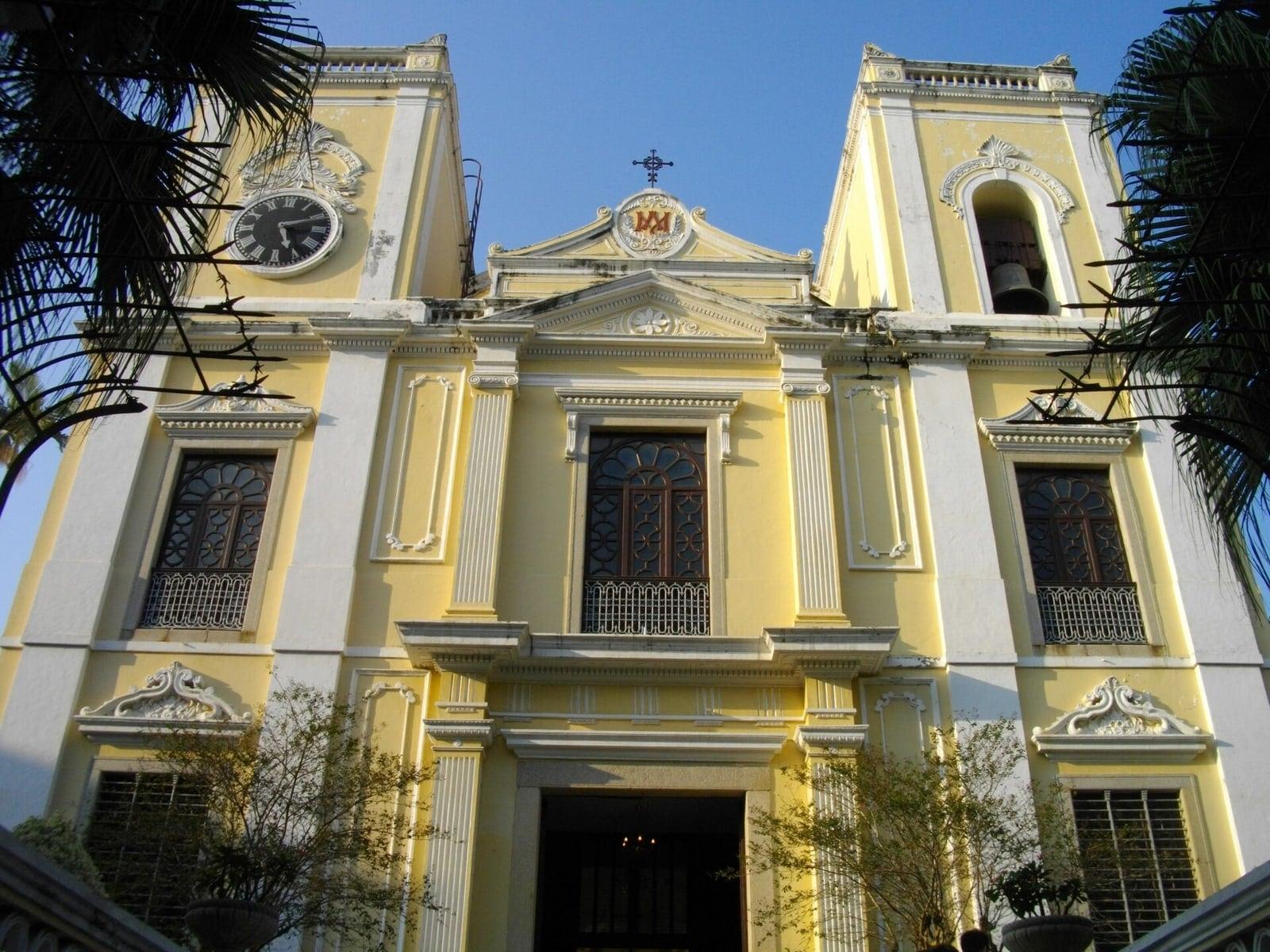
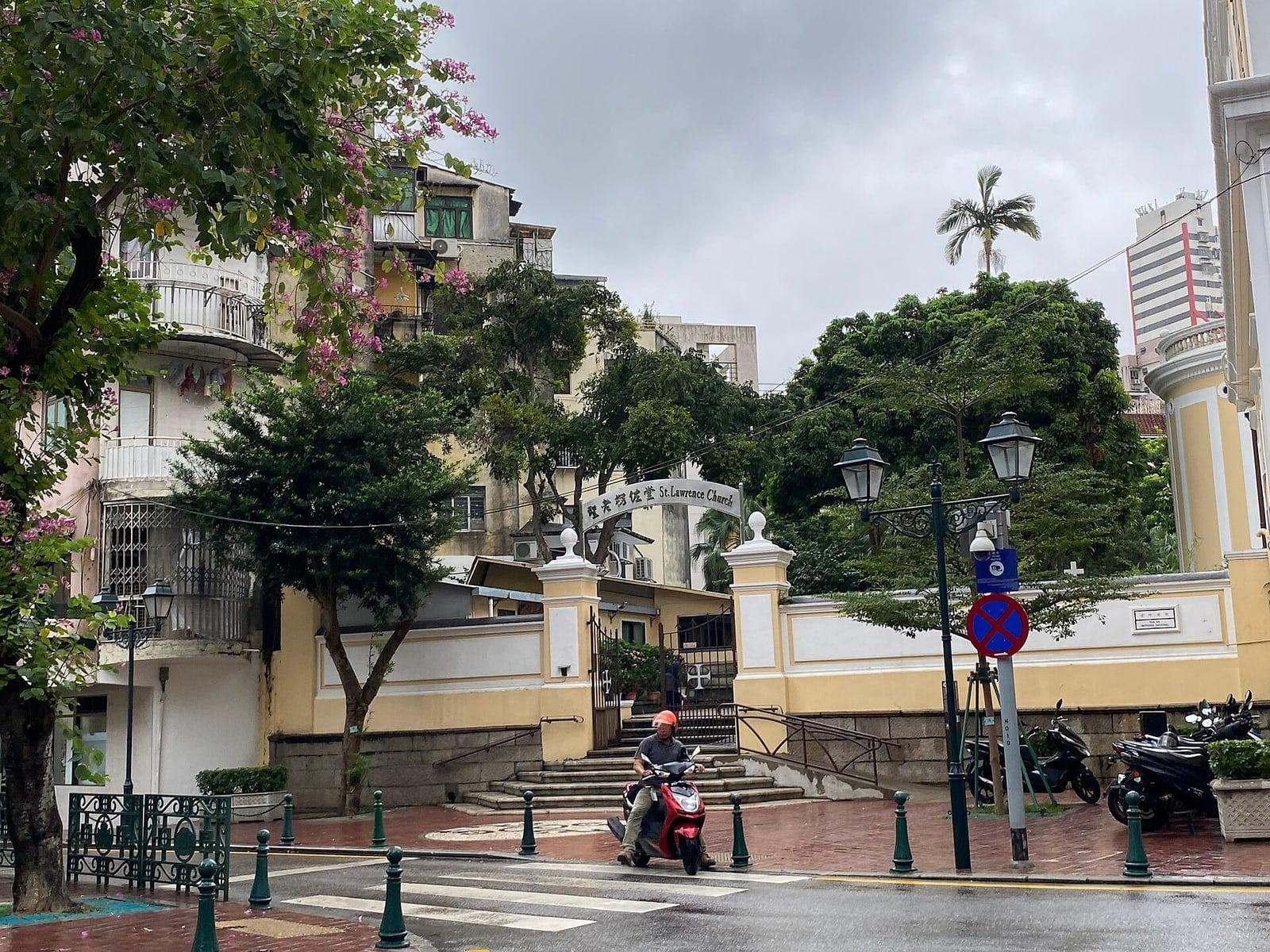
Where families prayed for the wind. St Lawrence's, rebuilt in 1846 on a Jesuit foundation of the mid-1500s, is Feng Shun Tang, the Hall of the Soothing Winds, named for the sailors' families who waited on its steps.
- 4
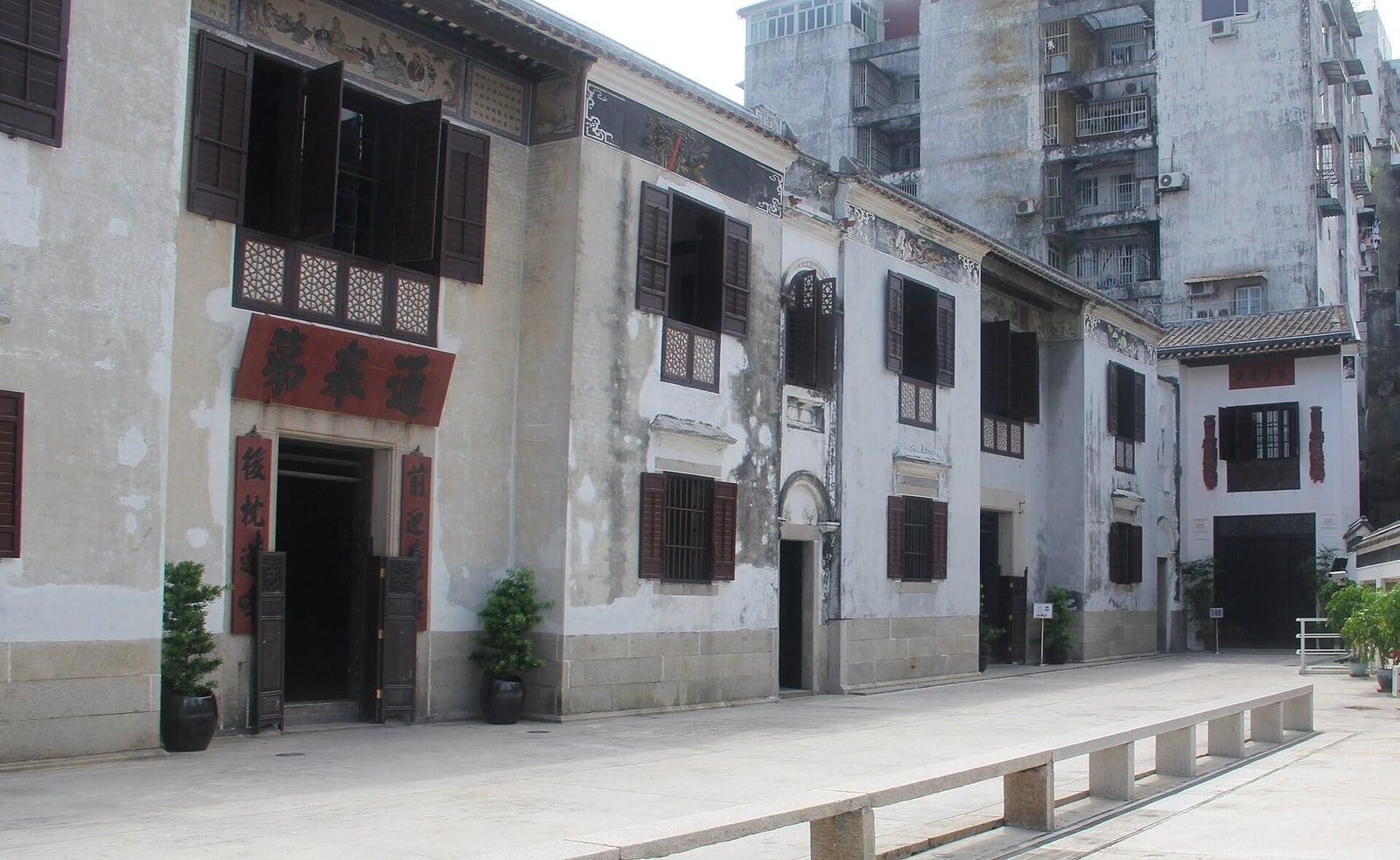
Mandarin's House (鄭家大屋)
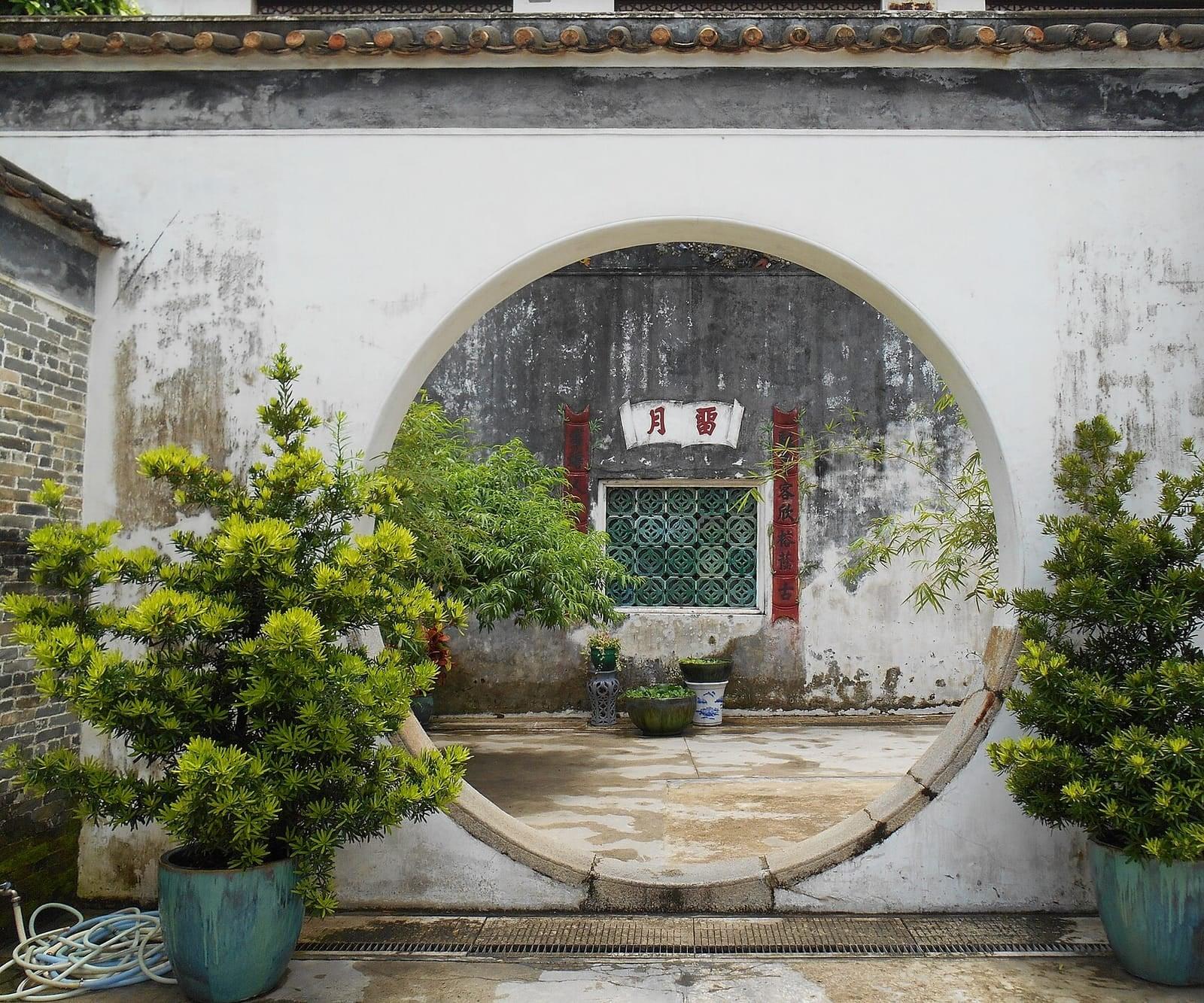
A Chinese mansion with Western details. Built before 1869, the Mandarin's House is a gray-brick compound of courtyard houses; free to enter, closed Wednesdays.
- 5
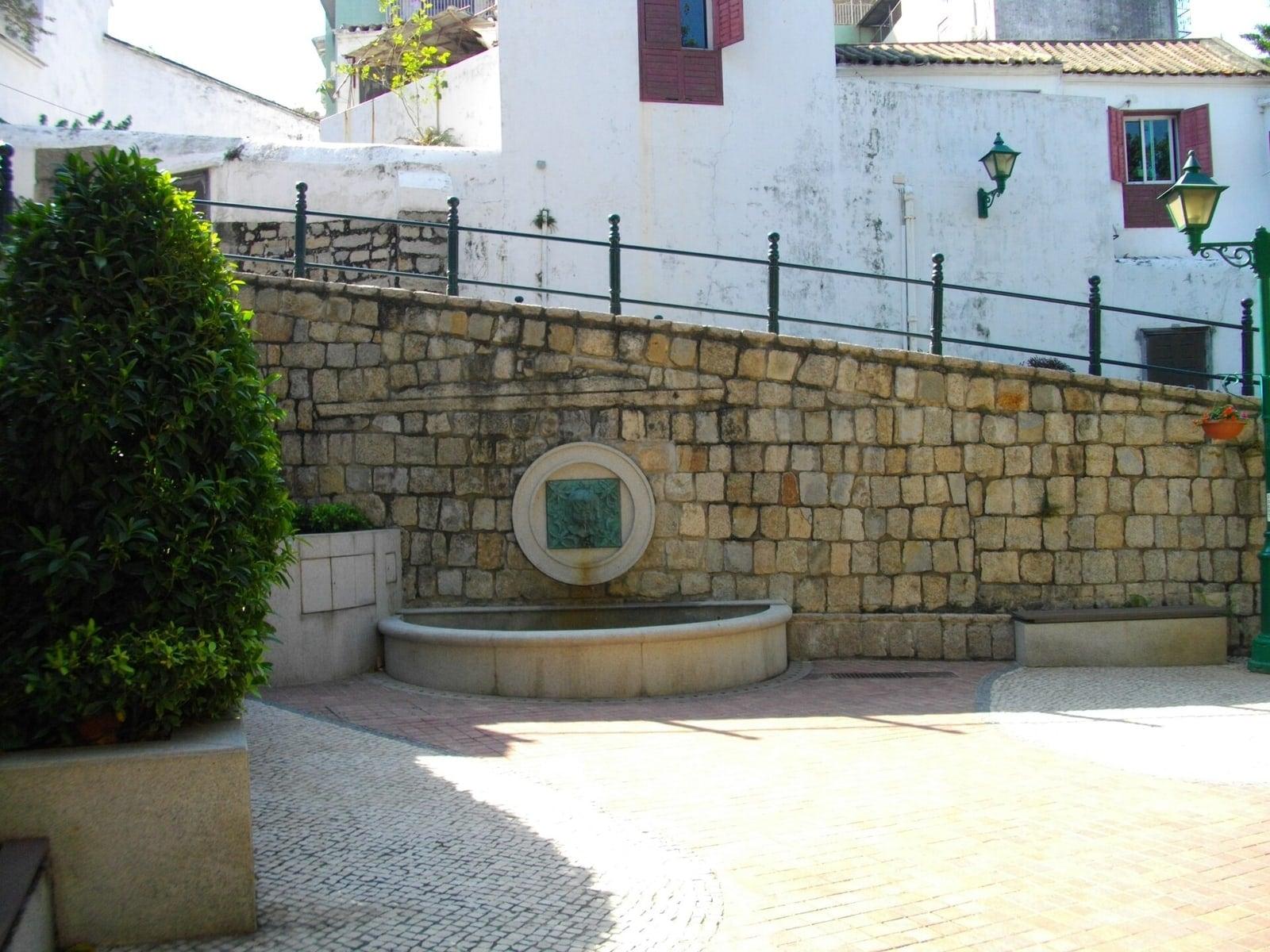
Lilau Square (亞婆井前地)
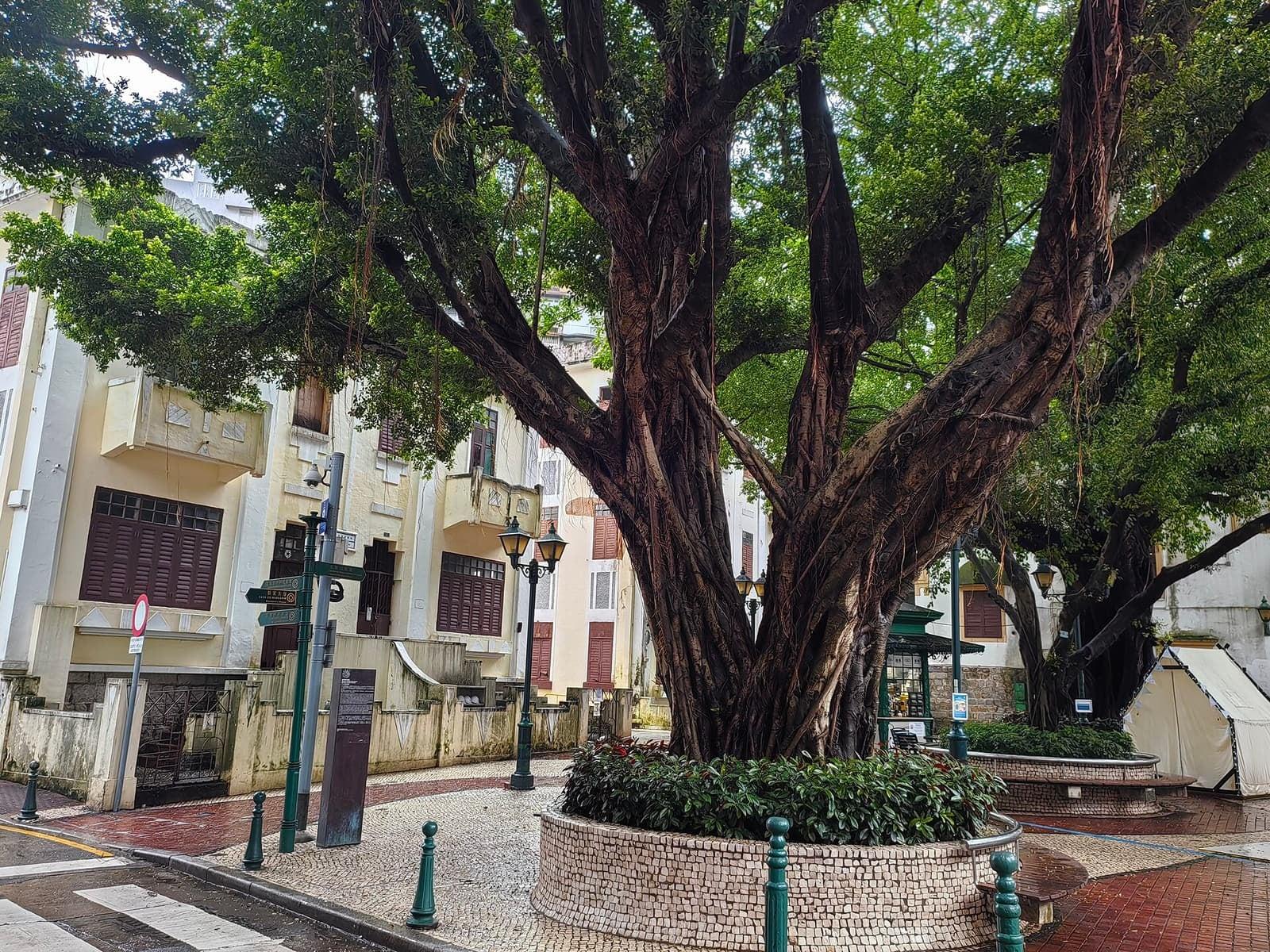
You can stand where the city drank. Lilau Square, a shaded garden square by the old Lilau spring, was one of the first Portuguese quarters in Macau, ringed by Portuguese houses and Art Deco apartment blocks.
- 6
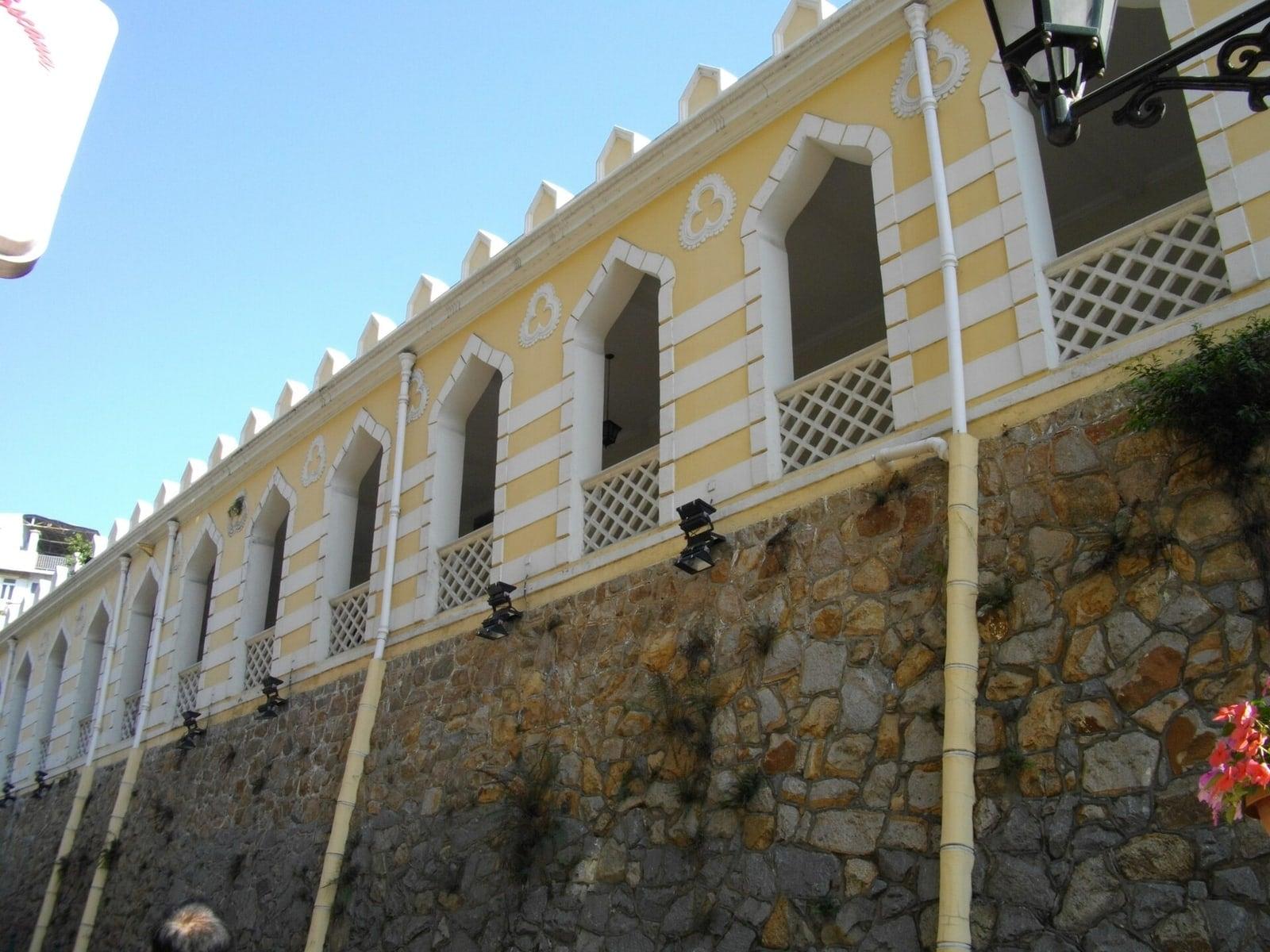
Moorish Barracks (摩爾兵營)
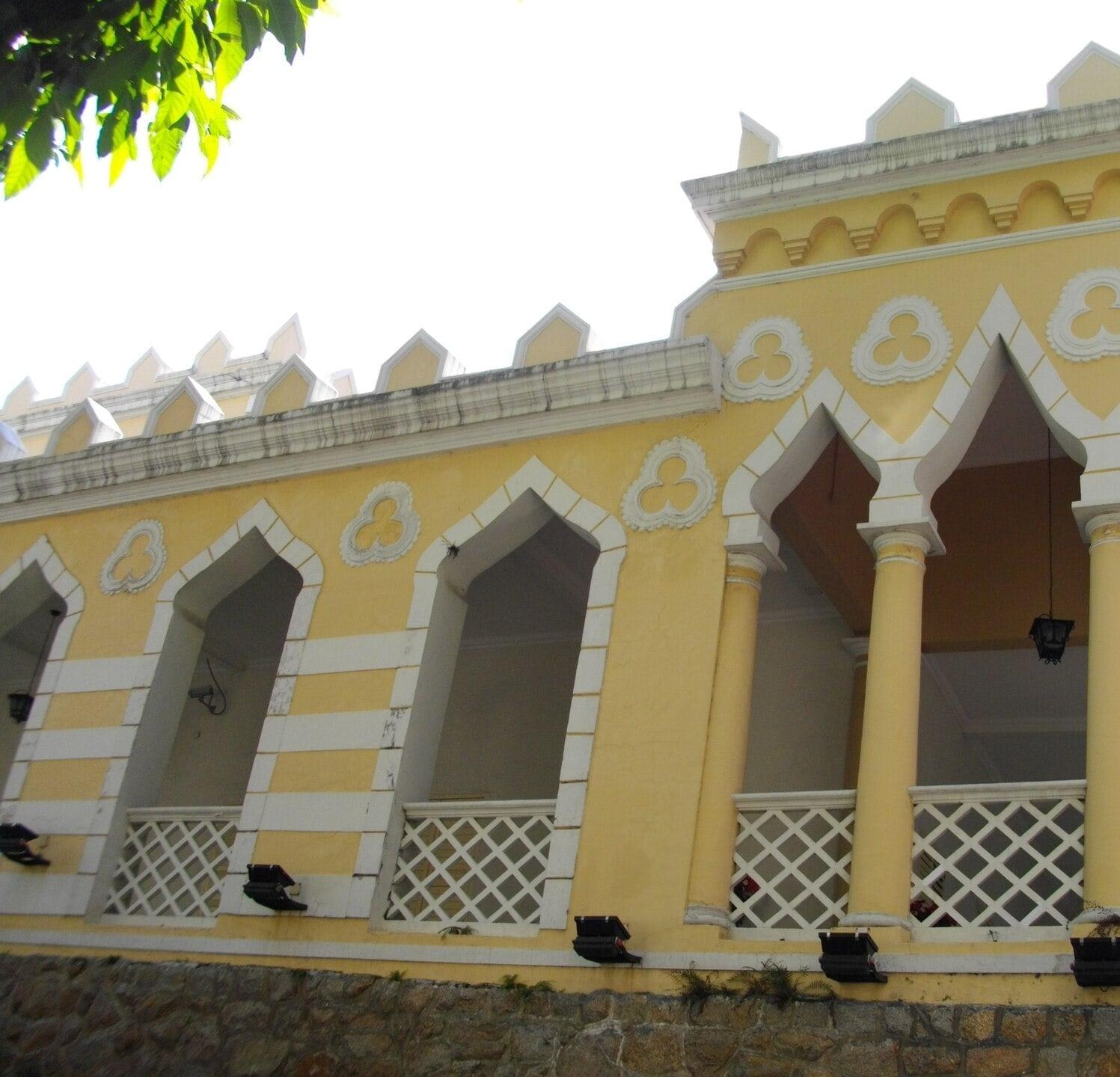
Goa in Macau, in one building. The Moorish Barracks of 1874, built for an Indian regiment from Goa, stand on a raised granite platform with pointed-arch verandahs four meters deep; closed for works, told from the street.
- 7
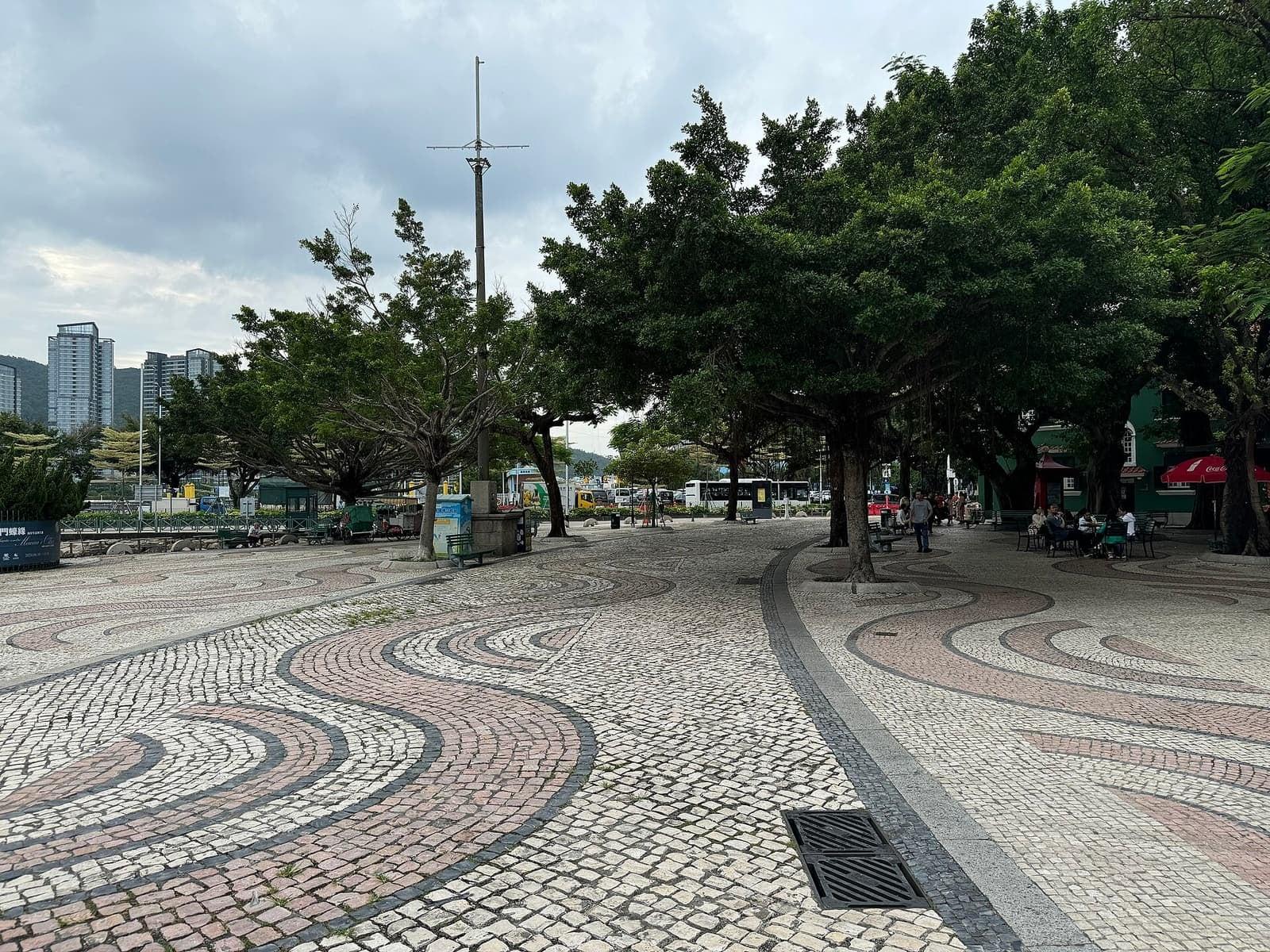
Barra Square (媽閣廟前地)
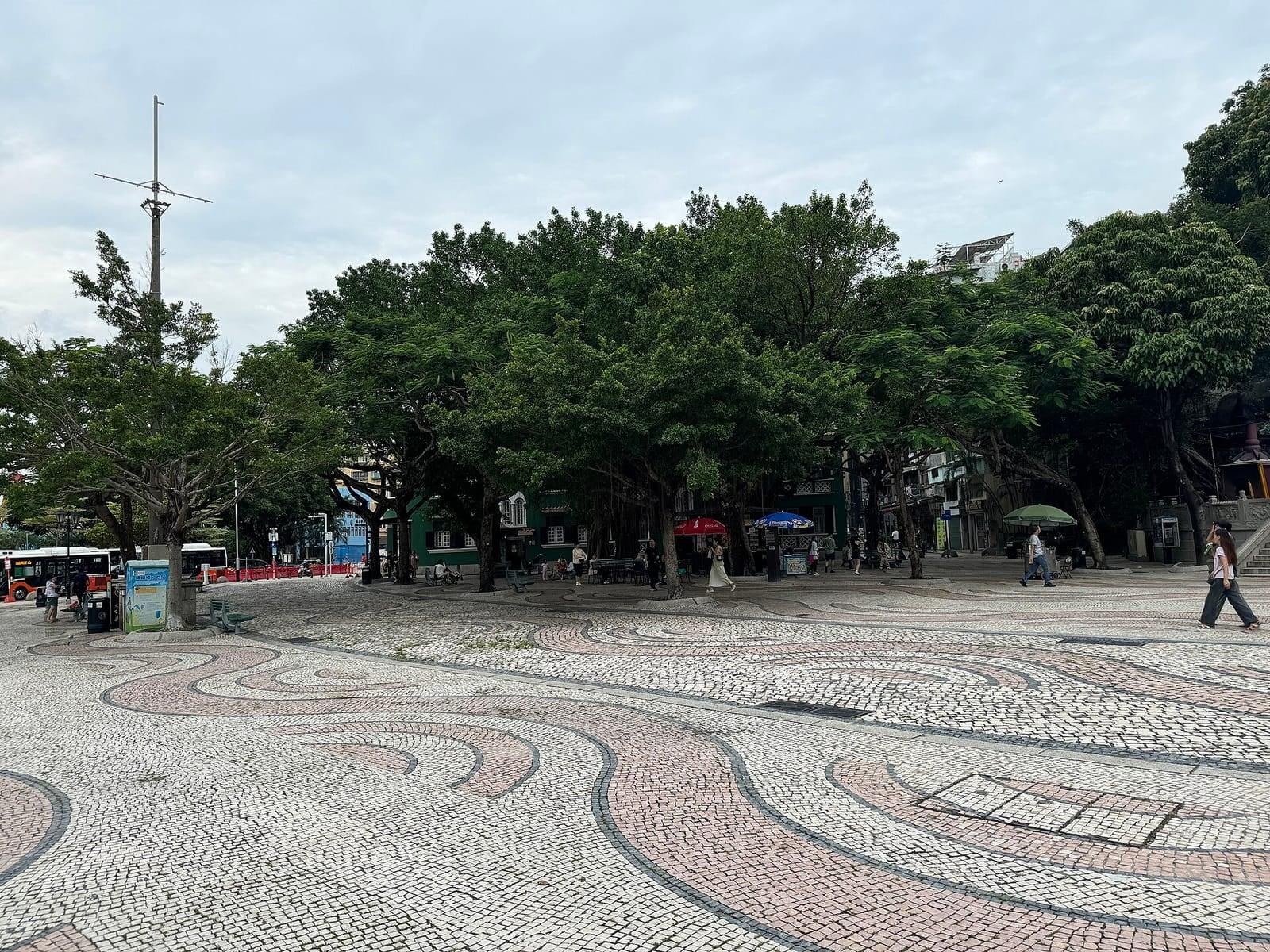
The temple's old setting at the water. Barra Square, the paved riverside square in front of the A-Ma Temple, faces the Inner Harbour and a ferry pier, beside the Maritime Museum and its pond.
- 8
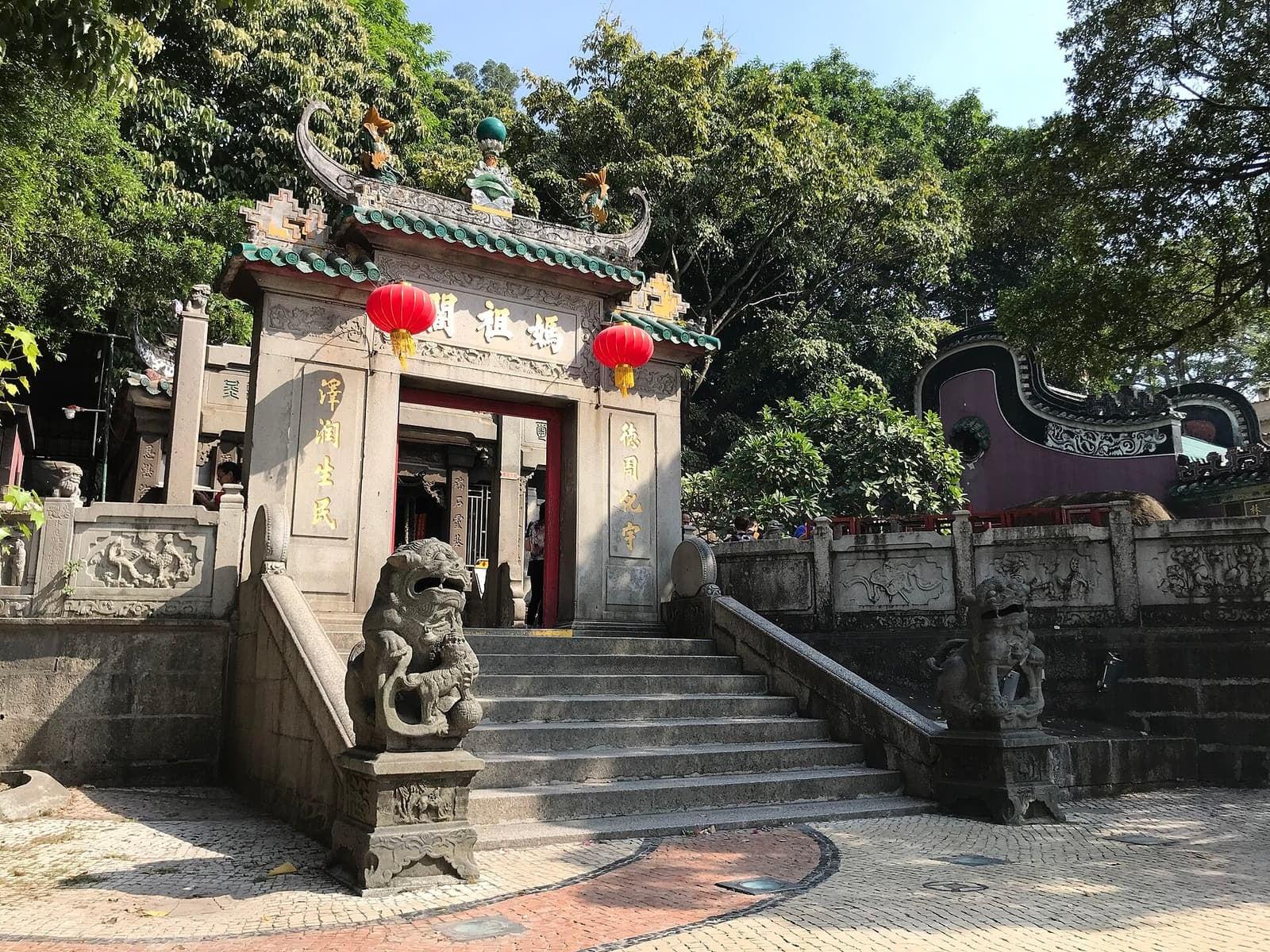
A-Ma Temple (媽閣廟)
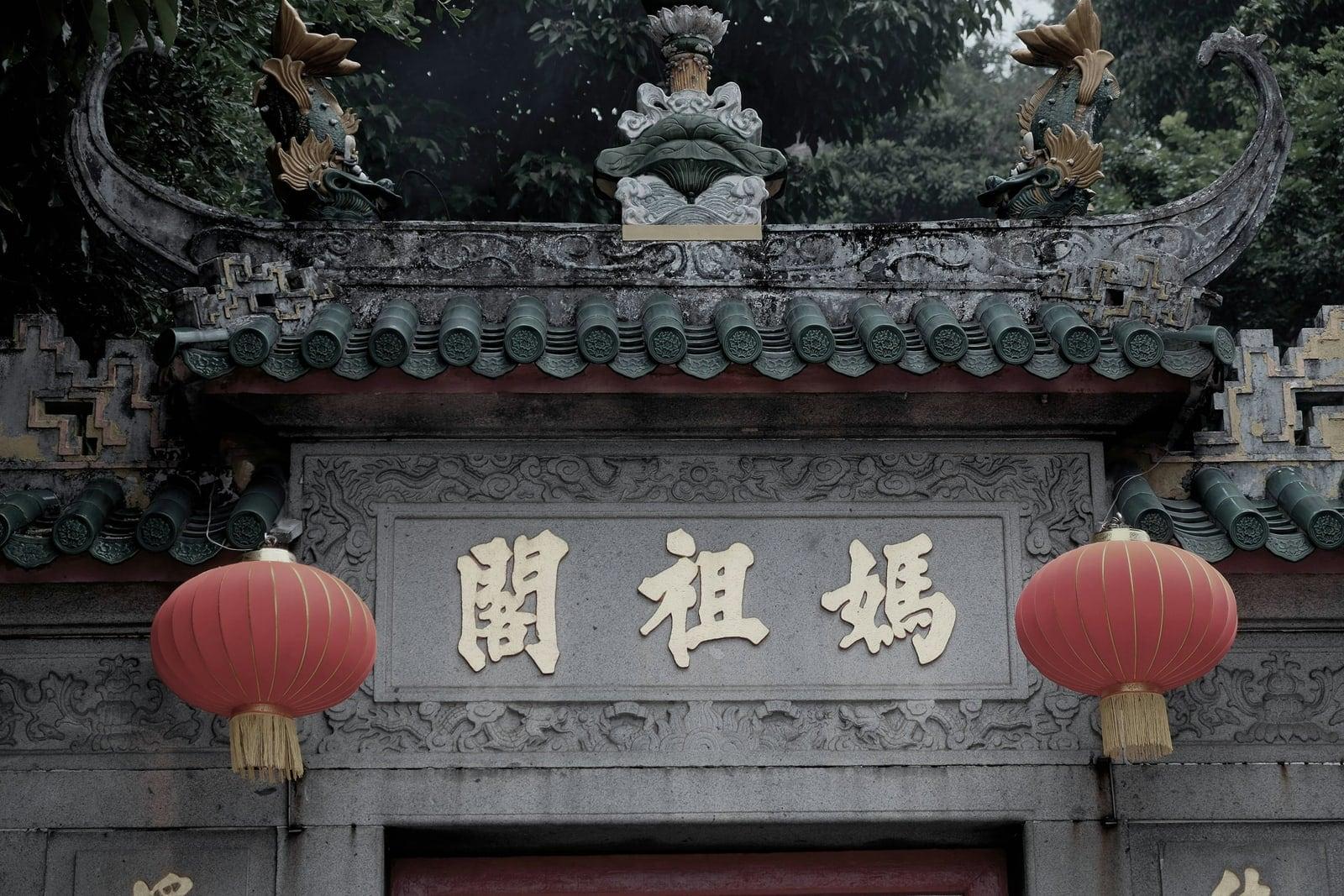
Older than the city, and maybe its name. The A-Ma Temple, a temple to the goddess of seafarers, has a hall dated by tradition to 1488 and stones dated 1605, and Macau's name is believed to come from it.
Details
Best Time to Visit
By daylight. The A-Ma Temple is open 07:00 to 18:00, so in winter start by about 15:00; the Mandarin's House (10:00 to 18:00, last admission 17:30) is closed on Wednesdays except public holidays. Early morning is quietest. The A-Ma Temple is at its busiest at Lunar New Year (Lunar New Year's Day is 6 February 2027), and St Augustine's Easter procession fills the first square at Easter. Avoid the holiday crowds of Lunar New Year, Christmas Eve, New Year's Eve, May Day and 1 to 7 October. Typhoon season runs from May to November: do not walk under a typhoon signal or a rainstorm warning, and check the Meteorological and Geophysical Bureau (SMG) before you set out. Checked 25 November 2026.
Pro Tips
- •Getting to the start: St Augustine's Square is about five minutes on foot from Senado Square. From the south end of Senado Square take Rua Central and climb Calçada do Tronco Velho into the square.
- •The walk ends at the A-Ma Temple. Barra station on the Light Rapid Transit, open since 8 December 2023, is about 300 m along the street past the temple; trains run from there to Taipa, the first at 6:30 am. Checked 25 November 2026.
- •Nothing on the route is ticketed. The Mandarin's House (stop 4) is free; up to 200 visitors are allowed at a time, and its Cantonese guided tours at weekends need an online reservation.
- •The Maritime Museum at Barra Square (stop 7) is free, 10:00 to 18:00 with admission until 17:30, closed on Tuesdays.
- •GPS can wander in the narrow lanes at St Joseph's (stop 2) and the Mandarin's House (stop 4); if a stop has not started, tap it on the map.
Safety & Precautions
- •Traffic keeps left, but almost every lane on this walk is one-way, and on most of them the cars come from behind you. Crossing the end of Rua de São Lourenço at the foot of Rua da Prata (on the way to stop 2) and the mouth of Rua do Padre António as you leave Lilau Square, the cars come from your right; crossing into Pátio da Casa Forte (on the way to stop 4), from your left. Walking back down Rua da Prata after stop 2 you face the one-way cars. Look both ways every time.
- •Most lanes have no sidewalk, and Rua de São Lourenço carries buses: walk single file at the edge. Scooters are fast and quiet.
- •Steps: only two, at the bend of Calçada da Barra, between the barracks and Barra Square. Cobbles and stone are slippery in rain.
- •St Augustine's, St Joseph's and St Lawrence's are working churches: if a service is on, look in quietly from the door.
- •The A-Ma Temple is a living temple: do not stand in front of anyone praying, mind the burning incense, and ask before photographing people.
- •Lilau Square and the lanes around it are homes: keep your voice down.
- •At Barra Square the harbor road is busy: stay on the square's paving; the route never needs to cross it.
- •Do not walk under a typhoon signal or a rainstorm warning.
Gallery
Read the walk
The full story of A-Ma Temple and the Old Port: Where Macau Faced the Sea, in words. Prefer to listen? Play it narrated, from home or on location.
Introduction
Macau's old town has two halves, and this walk follows the one that faces the sea, from a hilltop church square down to the harbor. Every stop answers the water: a church named for the winds that sailors' families prayed for, a spring that watered the first Portuguese houses, barracks built for a regiment shipped in from Goa, and, at the water's edge, the temple to the goddess of seafarers that stood here before the city and may have given Macau its name.
There are eight stops over about one point six kilometers, about one mile, and it takes about fifty-five minutes. The lanes are cobbled and sloping, with two steps near the end, and the walk runs mostly downhill to the harbor.
Traffic in Macau keeps to the left, but most lanes in the old quarter are one-way and few have a sidewalk, so walk at the edge and look both ways at every corner; scooters come quietly.
Nothing on this walk needs a ticket. Everything is free when open; the Mandarin's House is closed on Wednesdays, and the temple closes at six in the evening. The Dom Pedro the Fifth Theatre was closed for works from August twenty twenty-six, and the Moorish Barracks are closed for works: both are told from the street.
Typhoon season runs from May to November, and wet cobbles are slippery. If a typhoon or rainstorm signal is up, check the Meteorological and Geophysical Bureau before you set out.
The walk starts on Saint Augustine's Square, about five minutes uphill from Senado Square, and ends at the A-Ma Temple, near Barra station on the Light Rapid Transit. When you arrive at Saint Augustine's Square, begin with stop one.
1. St Augustine's Square (崗頂前地)
This small cobbled square sits at the top of a hill, and three buildings stand around it. The church with the paired granite columns and the statue of the Virgin in its niche is Saint Augustine's. The long green and white building with dark green shutters is the Dom Pedro the Fifth Theatre. And the ochre house with the arched front and the blue glazed balustrades is the Sir Robert Ho Tung Library. Macau's World Heritage office says the cobbles are what tie them together: one Portuguese streetscape, laid in stone.
Spanish Augustinian friars founded the church in fifteen ninety-one. The tourism office tells a story about its roof. In heavy rain the priests weighed it down with fan palm leaves, and from a distance the fronds looked like a dragon's whiskers blowing in the wind. So the Chinese neighbors called it Long Song Miu, the Temple of the Long-whiskered Dragon. Its Easter procession still draws thousands, many of them from Macau's Filipino community.
The theater opened in eighteen sixty, the first Western-style theater in China, the heritage office says, and it was a club as much as a stage, with a ballroom, a reading room and a billiard room. It has about three hundred seats. It was closed for internal works from August twenty twenty-six, so check before you plan to go in.
The library began as a private house, built before eighteen ninety-four. Sir Robert Ho Tung, a Hong Kong businessman, bought it in nineteen eighteen as a retreat, and lived in Macau during the Second World War. He died in nineteen fifty-five, and under his will the house became a public library.
This hilltop is the city of churches, seminaries and ballrooms. From here the walk goes down, lane by lane, toward the water. The church is a working parish: if Mass is on, look in quietly from the door.
Follow the route past the theater and down the slope beside it. Next is Saint Joseph's Seminary Church.
2. St Joseph's Seminary Church (聖若瑟修院教堂)
The granite staircase on your right climbs to the front of Saint Joseph's Seminary Church: yellow walls picked out in white, a broken arch over the door, and a dome behind.
The seminary beside it was founded in seventeen twenty-eight. Together with the Jesuits' college at Saint Paul's, it was the main base for missionary work in China, Japan and the region around. The church was begun in seventeen forty-six and finished in seventeen fifty-eight. It was second in size only to the Jesuits' great church of Saint Paul, and so people here call it little Saint Paul's. Older Macanese had another nickname for the seminary: the Shaolin Temple of Macau's Catholics, the school where the masters were trained.
Here is why it matters. In eighteen thirty-five a fire left Saint Paul's as the stone front that stands at the top of the old town. This church came through whole. Macau's heritage office points to a world atlas of baroque architecture, published by UNESCO in two thousand one, which names this church and the Ruins of Saint Paul's as the only baroque architecture in China. So climb the steps and you see a whole baroque church: a front twenty-seven meters wide, and a dome twelve and a half meters across that rises nineteen meters.
Inside, the church keeps a relic: a piece of bone from the arm of Saint Francis Xavier. The seminary is not open to visitors; the church is, in the daytime, entered from this lane. It is a place of worship: keep your voice down inside.
Follow the route back down the lane you came up and around to the next church. Next is Saint Lawrence's Church.
3. St Lawrence's Church (聖老楞佐堂)
Up the steps and behind the railings, on your left, stands Saint Lawrence's Church, its front divided in three, with two square towers about twenty-one meters high.
The Jesuits founded a church here in the mid fifteen hundreds, and it is one of the oldest in Macau; the building you see is the result of works carried out in eighteen forty-six. It stood on the city's southern shore, looking out to sea, and that view gave it its Chinese name.
When the ships sailed, the families of Portuguese sailors gathered on these steps to pray and to wait for them to come home. A Chinese account of Macau written in seventeen fifty-one puts it like this: once the foreign ships have sailed, their households wait every day on tiptoe for their return, and pray here for the winds. So the church became Feng Shun Tang, the Hall of the Soothing Winds. In Cantonese the name also echoes an old wish for winds and rain that come at the right time.
The tourism office adds that this was a wealthy neighborhood, which is why the church is so large. In its side garden a stone cross carries two dates, sixteen twenty-seven and eighteen eleven.
The walk began among churches on a hilltop. This is the first one that faces the sea, and it is about the sea: about waiting for a wind.
The church and its forecourt open at seven every morning. It is a working parish: if a service is on, look in quietly.
Follow the route along the street and into the old lanes of the waterside quarter. Next is the Mandarin's House.
4. Mandarin's House (鄭家大屋)
The long gray brick wall beside you belongs to the Mandarin's House, and the lane follows it all the way to the gatehouse at number ten. Behind the wall is a whole compound of courtyard houses. It was built before eighteen sixty-nine, planned by the father of the writer Zheng…
Full narration for this stop unlocks with the tour.
5. Lilau Square (亞婆井前地)
Lilau Square is small and shaded, with a fountain under the trees. Lilau, the heritage office explains, means a mountain spring, and the ground water here was once the main source of natural spring water in Macau. Water decides where a port town settles. Close to the Inner…
Full narration for this stop unlocks with the tour.
6. Moorish Barracks (摩爾兵營)
The long building on your left, raised on a granite platform above the lane, is the Moorish Barracks: light yellow, picked out in white, with a row of pointed arches along a deep verandah. It was built in eighteen seventy-four on the slope of Barra Hill, to house an Indian…
Full narration for this stop unlocks with the tour.
7. Barra Square (媽閣廟前地)
You have reached the water. On your right, across the harbor road, are a ferry pier and the Inner Harbour; ahead and to the right, beside a pond, is the Maritime Museum; and ahead and to the left is the stone gate of the A-Ma Temple. Macau's heritage office describes this…
Full narration for this stop unlocks with the tour.
8. A-Ma Temple (媽閣廟)
Ahead and to your left is the granite Gate Pavilion of the A-Ma Temple, four and a half meters wide, guarded by a pair of stone lions, with ceramic animals riding its upturned roof ridges. Behind it, halls and pavilions climb the slope of Barra Hill. The temple was here before…
Full narration for this stop unlocks with the tour.
- File:Calles de Macao, 2013-08-08, DD 05.jpg | Church of Saint Augustin, Macau — Diego Delso, CC BY-SA 3.0 · source
- File:Exterior of Igreja e Seminário de São José (Macau), 2023 (02).jpg | View of the exterior of Igreja e Seminário de São José (Macau) — Bahnfrend, CC BY-SA 4.0 · source
- File:Igreja de São José Macau 03.jpg | St. Joseph's Church, Macau. — Underwaterbuffalo, CC BY-SA 4.0 · source
- File:Igreja de São Lourenço (Macau) 20-10-2023(1).jpg | 這張照片在風順堂區拍攝。 — LN9267, CC BY-SA 4.0 · source
- File:MacaoMandarinsHouse.jpg | Mandarins House, Macau — Niels Elgaard Larsen - User: (WT-shared) Elgaard at wts wikivoyage, CC BY-SA 4.0 · source
- File:Macau 18 (14504166830).jpg | The Mandarin's House is a multi-room complex which is still in the process of being renovated and preserve — Mike W. from Vancouver, Canada, CC BY-SA 2.0 · source
- File:20250806 Largo do Lilau.jpg | Lilau Square — Yumeto, CC BY-SA 4.0 · source
- File:Largo do Pagode da Barra 24-07-2024(1).jpg | 這張照片在媽閣拍攝。 — LN9267, CC BY-SA 4.0 · source
- File:Largo do Pagode da Barra 24-07-2024(2).jpg | 這張照片在媽閣拍攝。 — LN9267, CC BY-SA 4.0 · source
- File:Sanmon of A-Ma Temple.jpg | 澳門媽祖閣的山門 — No1lovesu, CC BY-SA 4.0 · source
Images may be cropped or resized. Other photos via Unsplash and Pexels.