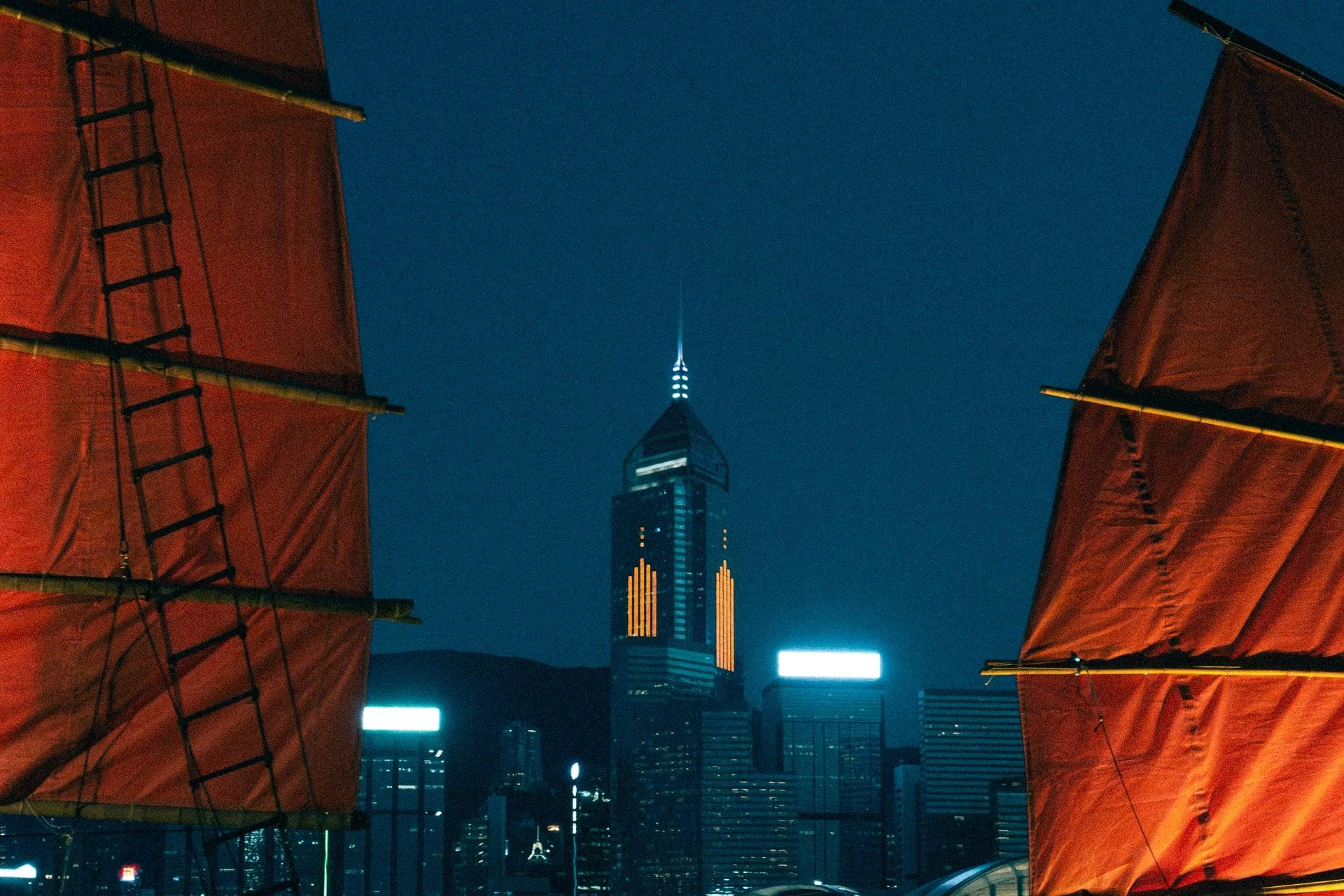
Kowloon's waterfront from free ground: the Star Ferry, the 1915 Clock Tower of the old railway terminus, the 1884 Marine Police compound and its time ball, a street renamed in 1909, the Whitfield Barracks and their 1878 battery in Kowloon Park, the garrison's mosque, Nathan Road and the Peninsula, ending on Victoria Harbour and the Avenue of Stars.
Start · Star Ferry Pier (尖沙咀天星碼頭)
DirectionsStops
- 1
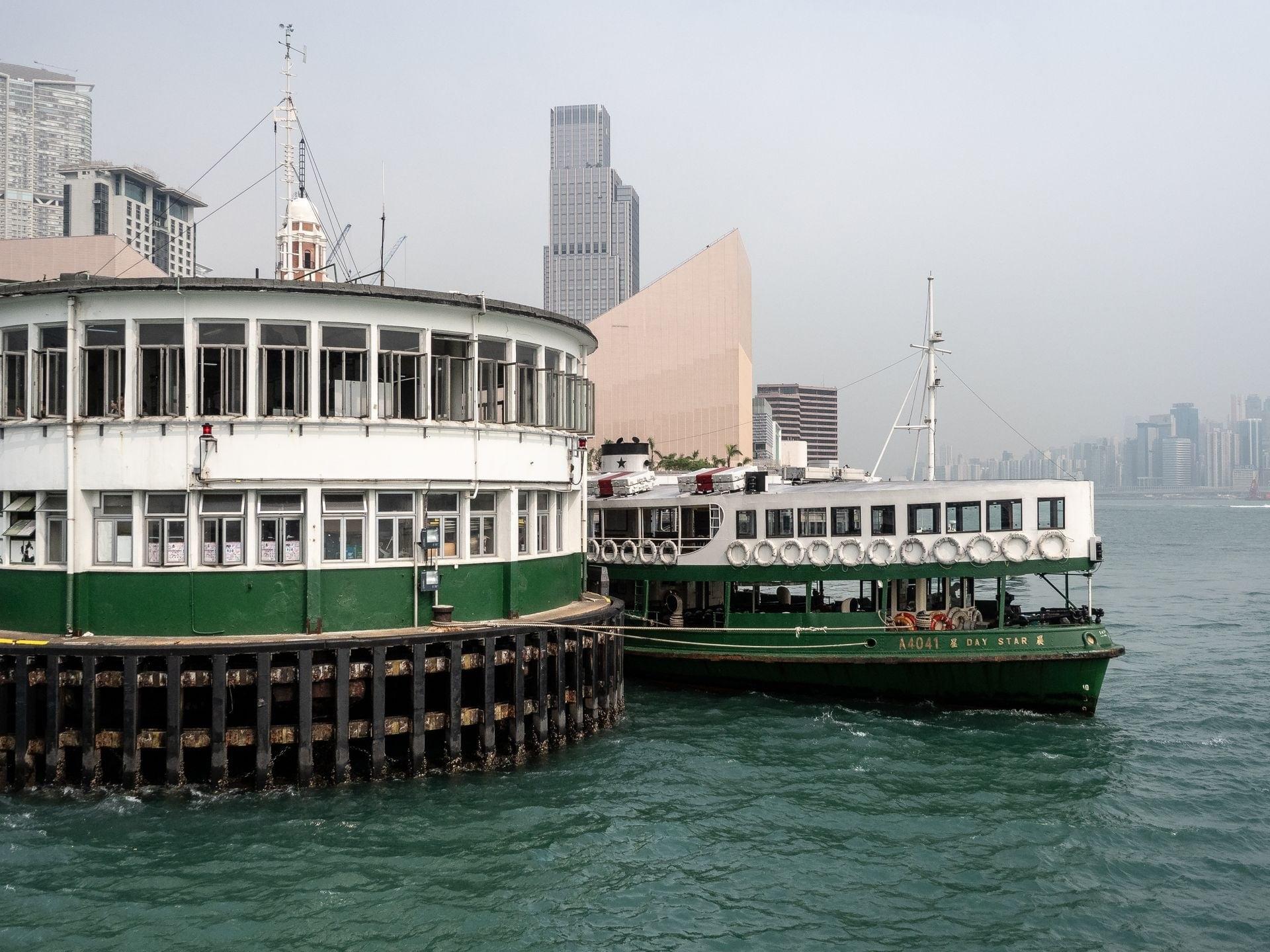
Star Ferry Pier (尖沙咀天星碼頭)
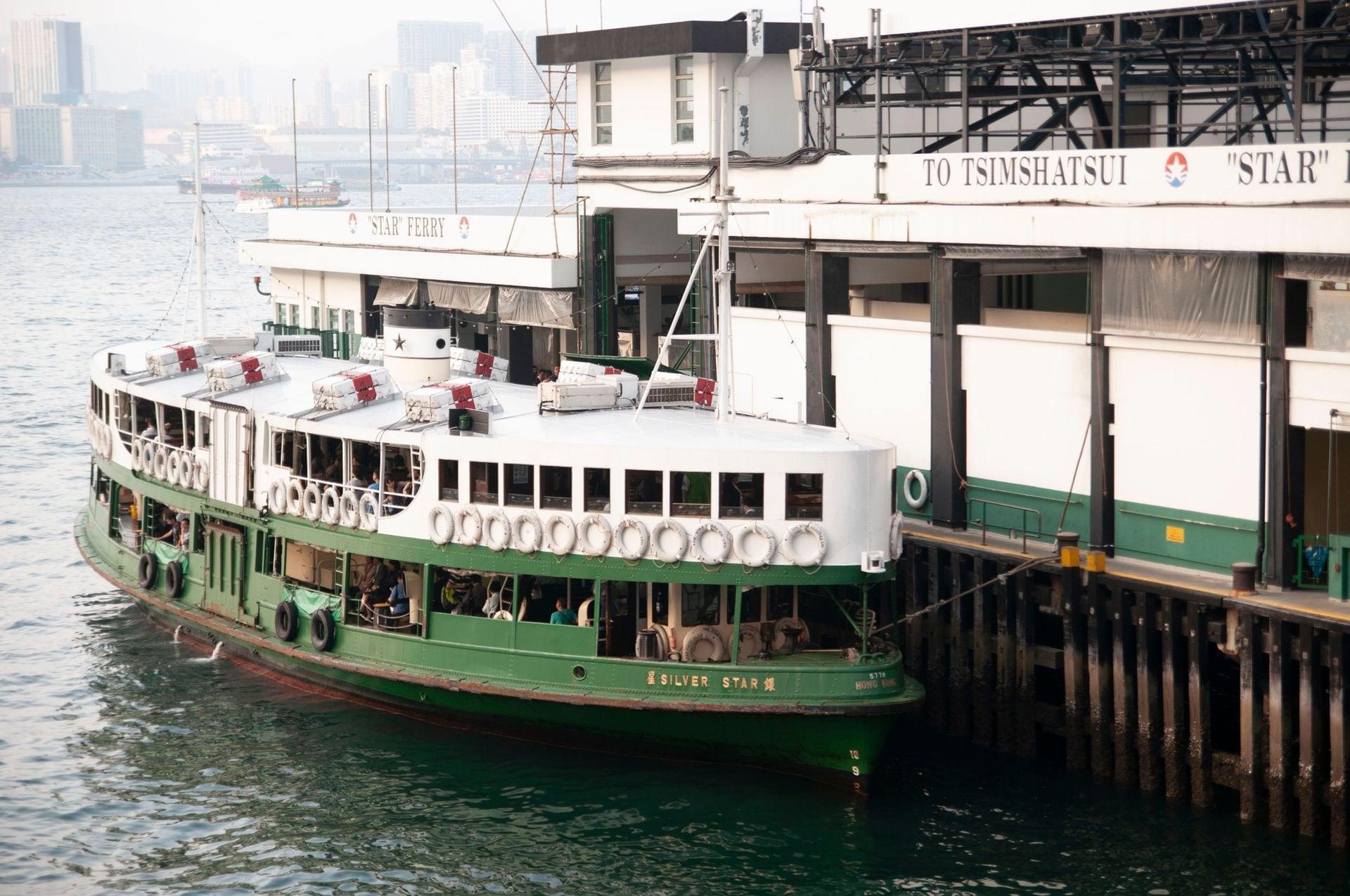
Where a cook's steamboat began it all. The landward pavement outside the Tsim Sha Tsui Star Ferry Pier, with the green and white ferries behind the doors and Hong Kong Island across the harbor.
- 2
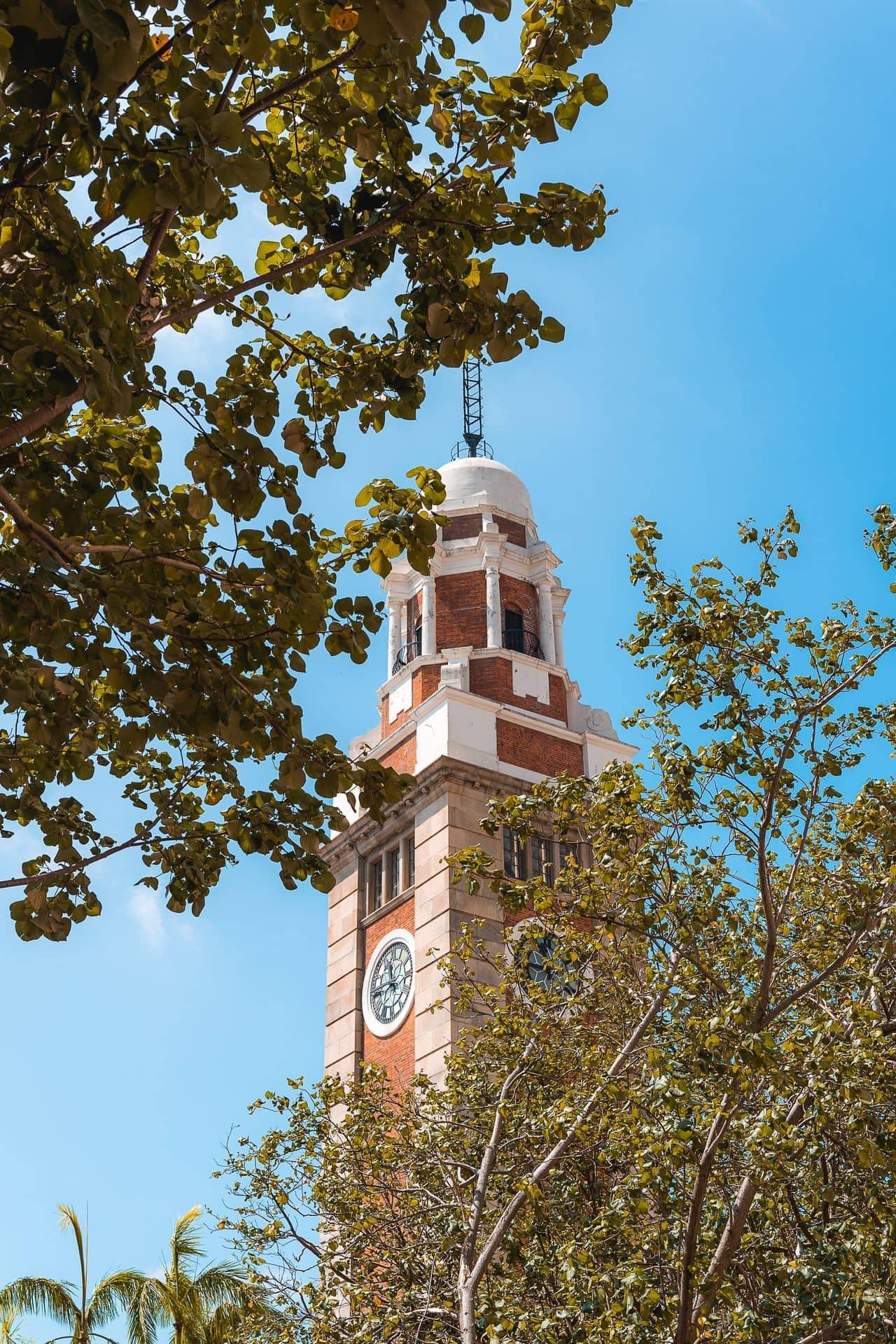
Clock Tower (尖沙咀鐘樓)
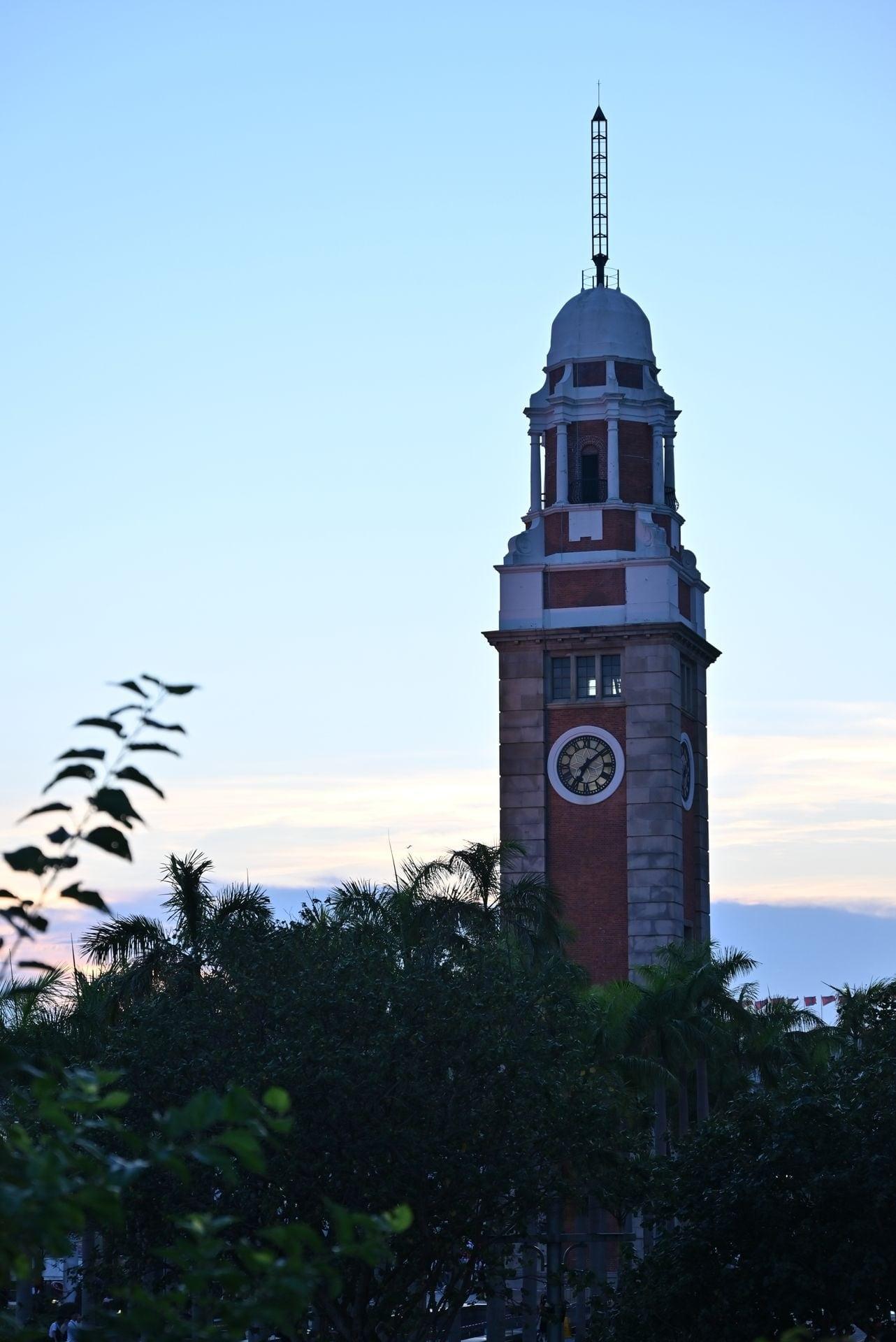
A clock tower with no station. The 44 m red brick tower of 1915, all that is left of the Kowloon-Canton Railway's terminus, beside the Hong Kong Cultural Centre's curving wall.
- 3
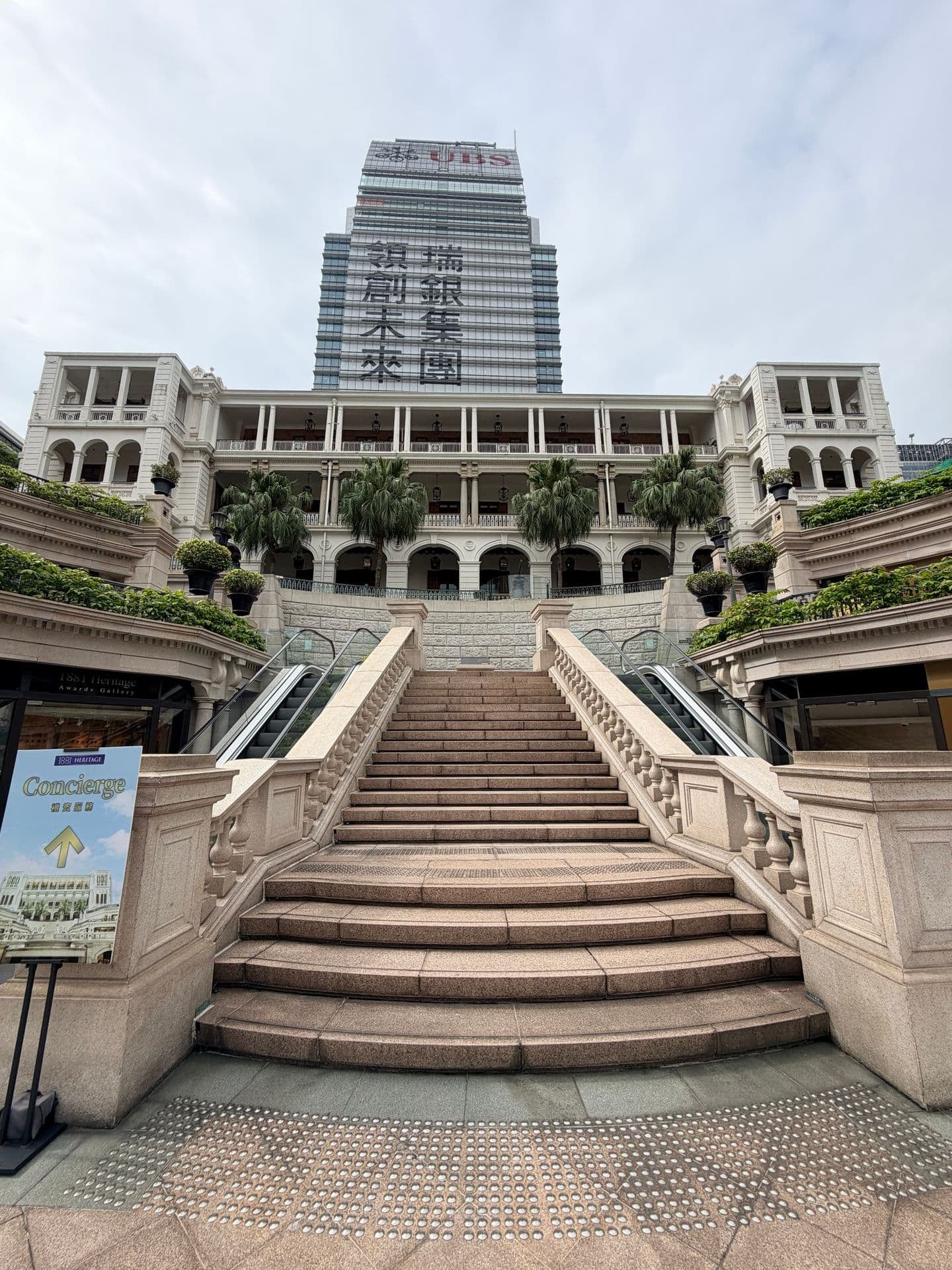
Former Marine Police Headquarters (前水警總部)
Ships set their clocks by this hill. The Kowloon Park Drive pavement at the foot of the former Marine Police compound of 1884, now the 1881 Heritage hotel and shopping site.
- 4
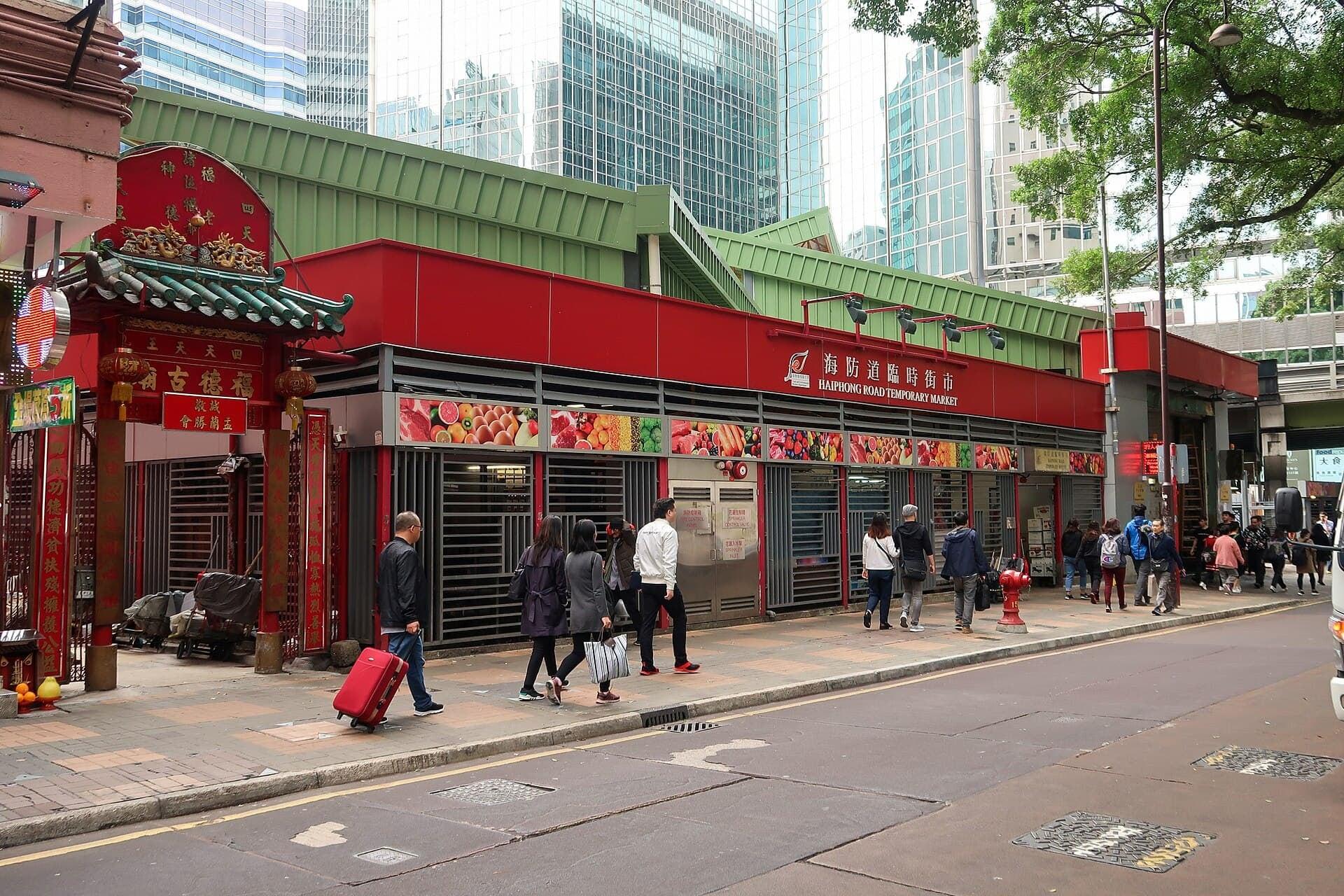
Haiphong Road (海防道)
A street renamed to help newcomers. Haiphong Road's south pavement beside a small Earth God temple and the market under the flyover, with Kowloon Park's wall across the road.
- 5
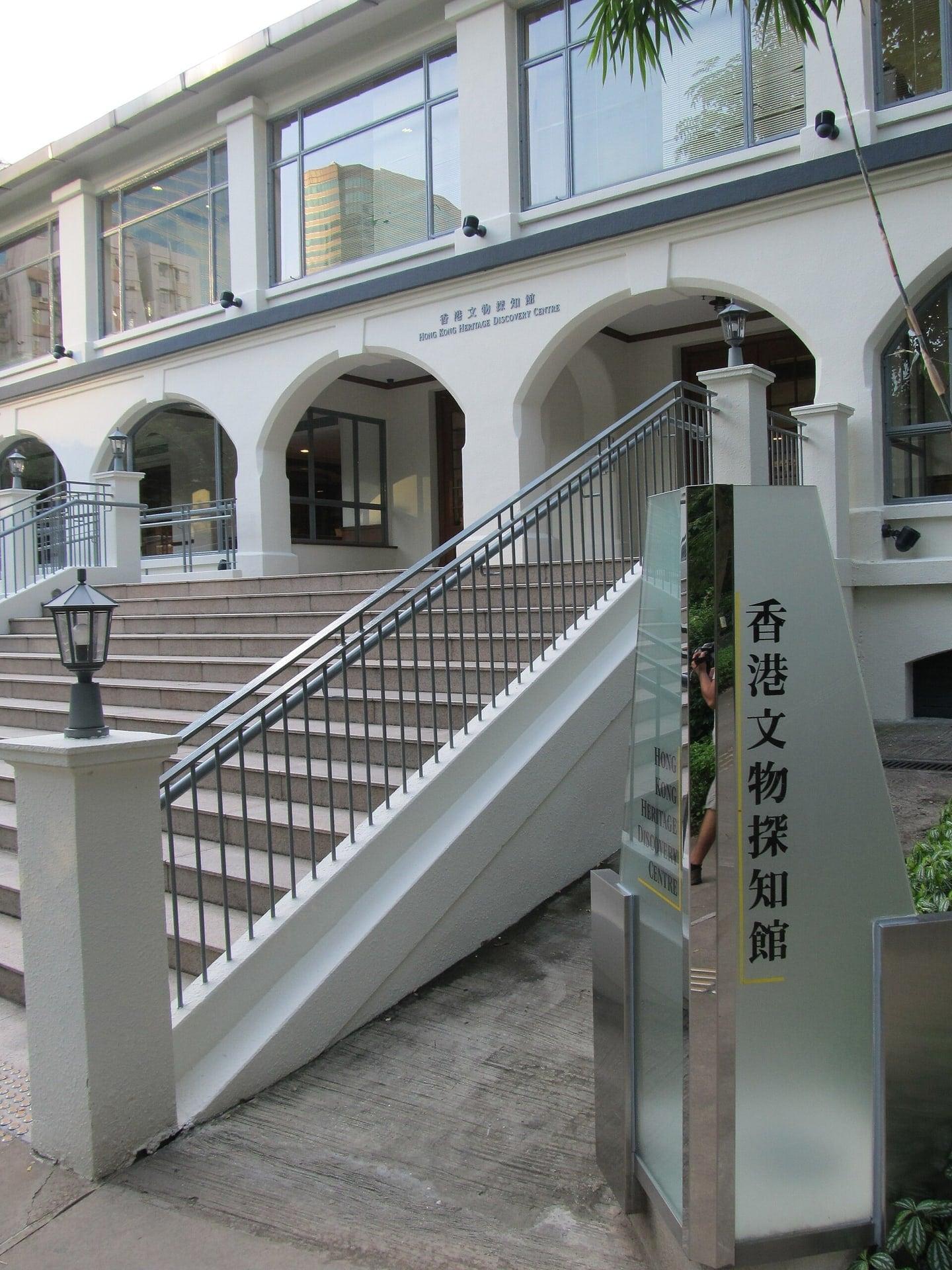
Whitfield Barracks (前威菲路軍營)
The park you are in was an army camp. Two long barrack blocks of the late 1890s, with deep verandas, now the Hong Kong Heritage Discovery Centre inside Kowloon Park.
- 6
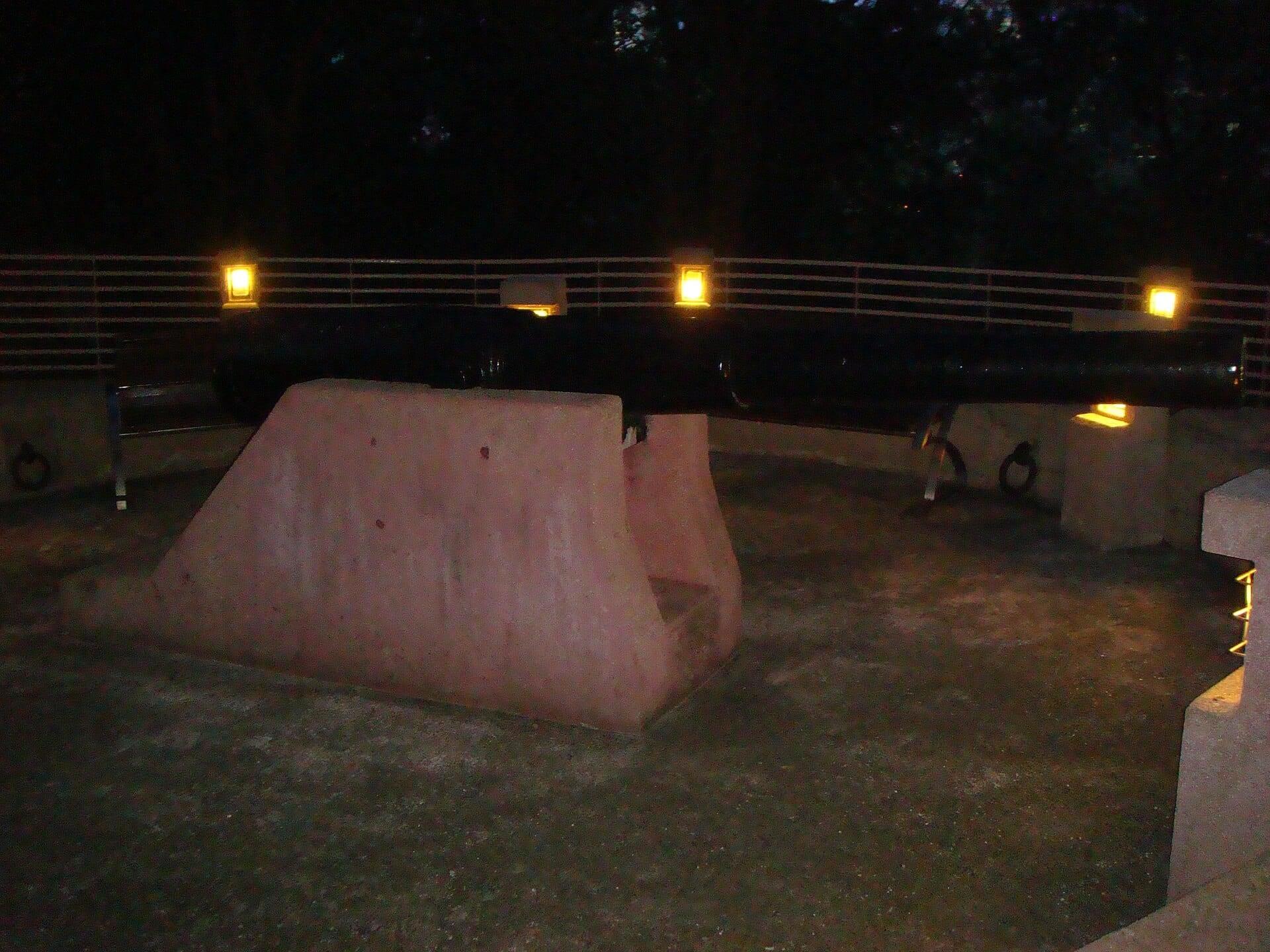
Kowloon West II Battery (九龍西第二號炮台)
Guns stood here before the barracks. A children's playground on the hill's western edge, where the Kowloon West II Battery was built between 1878 and 1880.
- 7
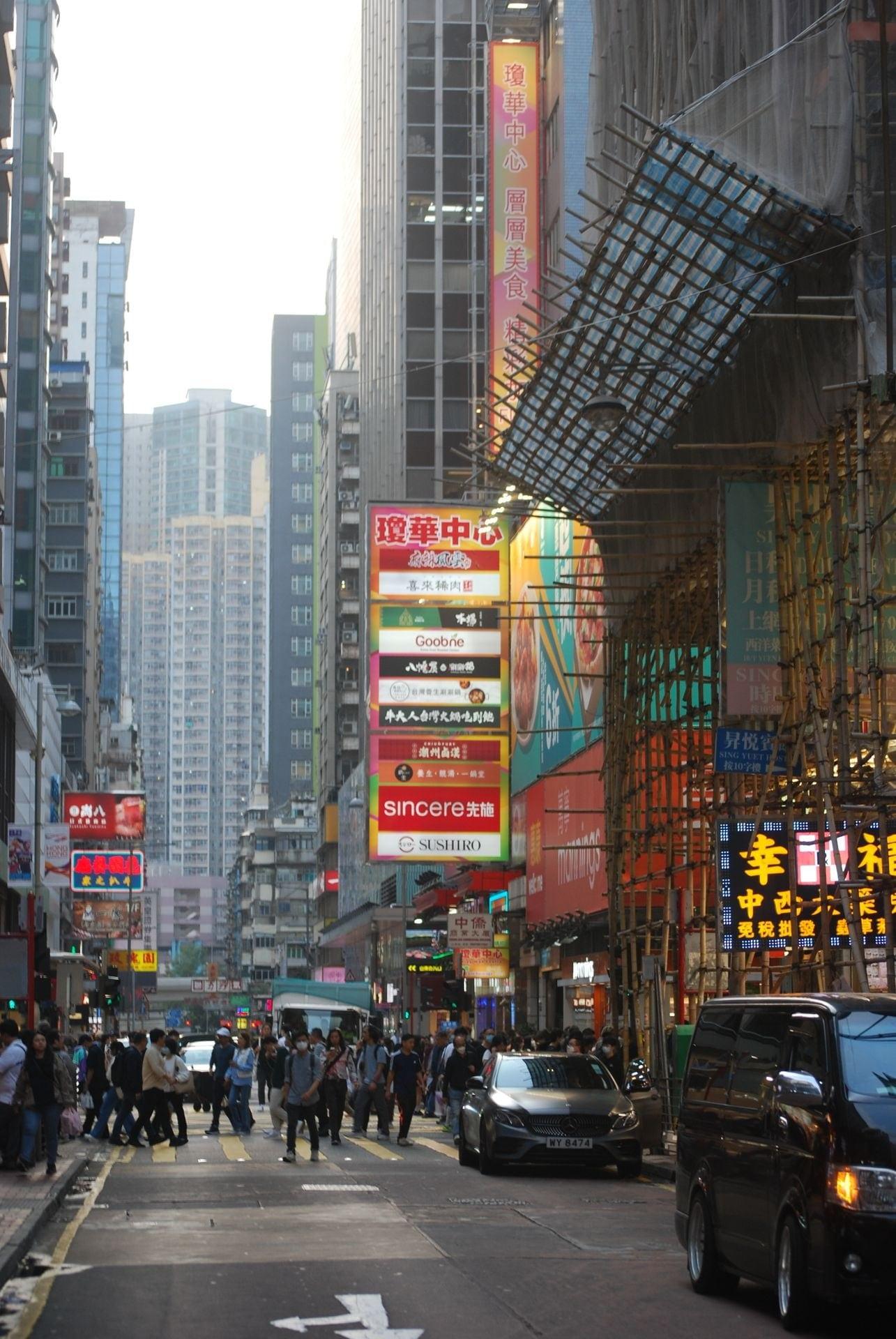
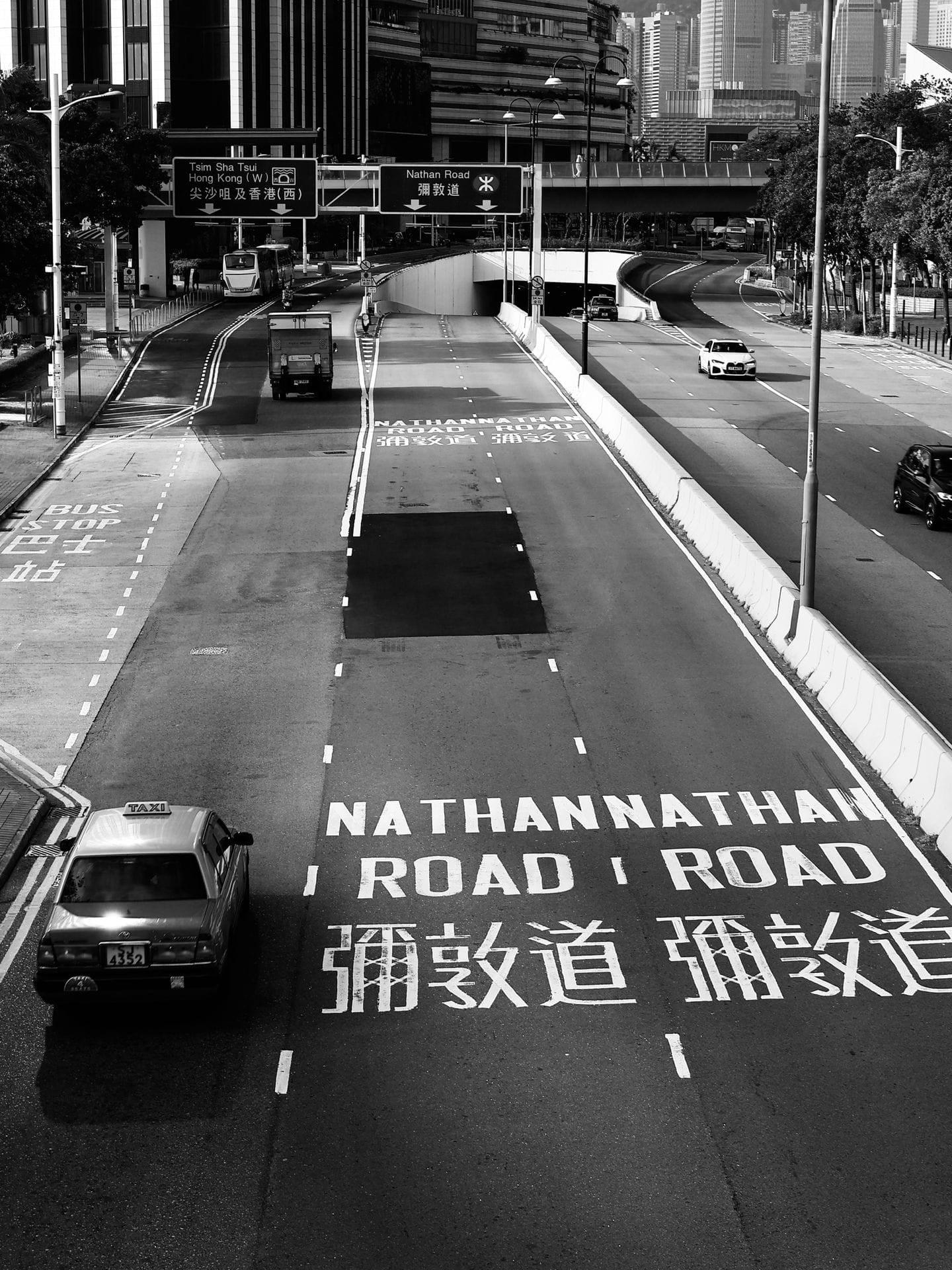
Nathan Road (彌敦道)
Kowloon's main street, from the hill. The park terrace above Nathan Road, the road renamed after a governor in 1909, at the foot of the old barracks hill.
- 8
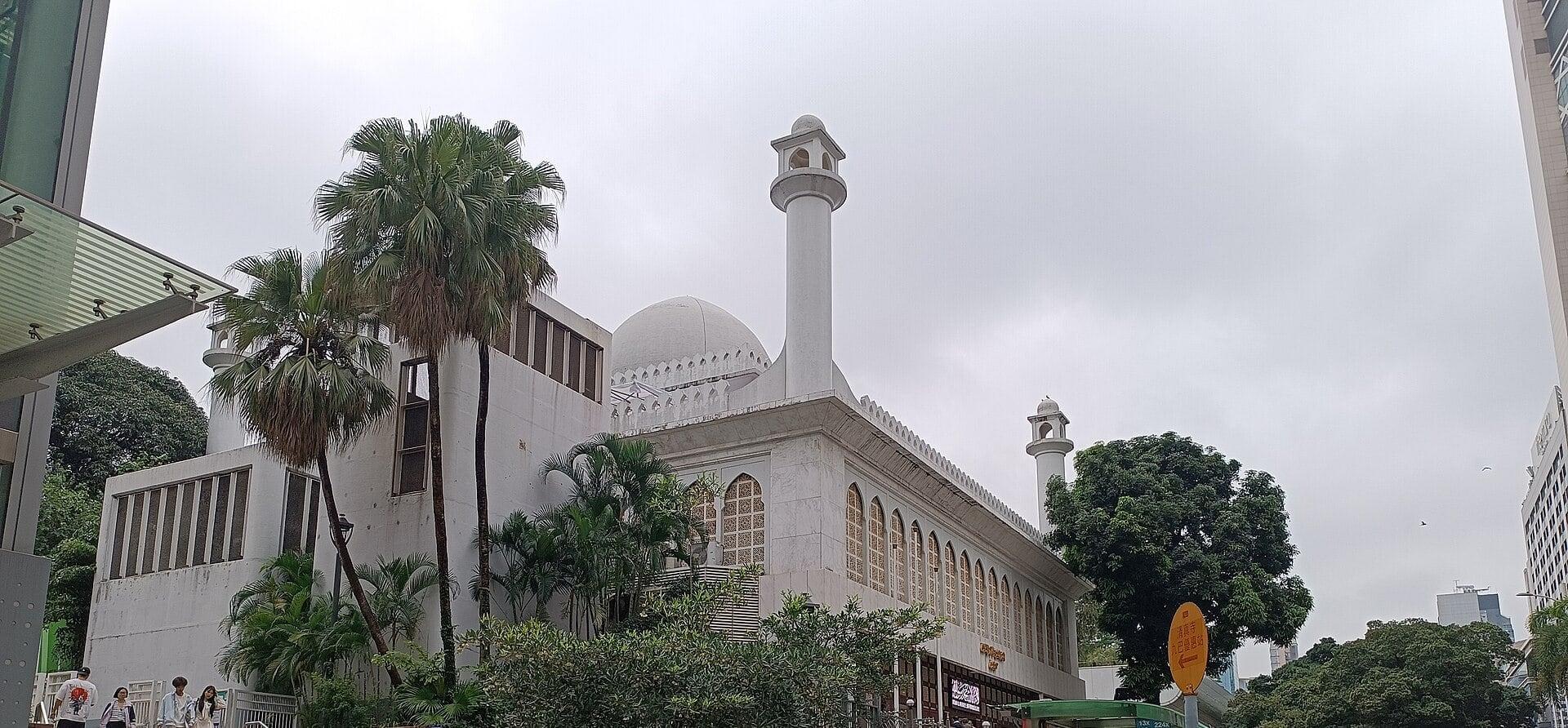
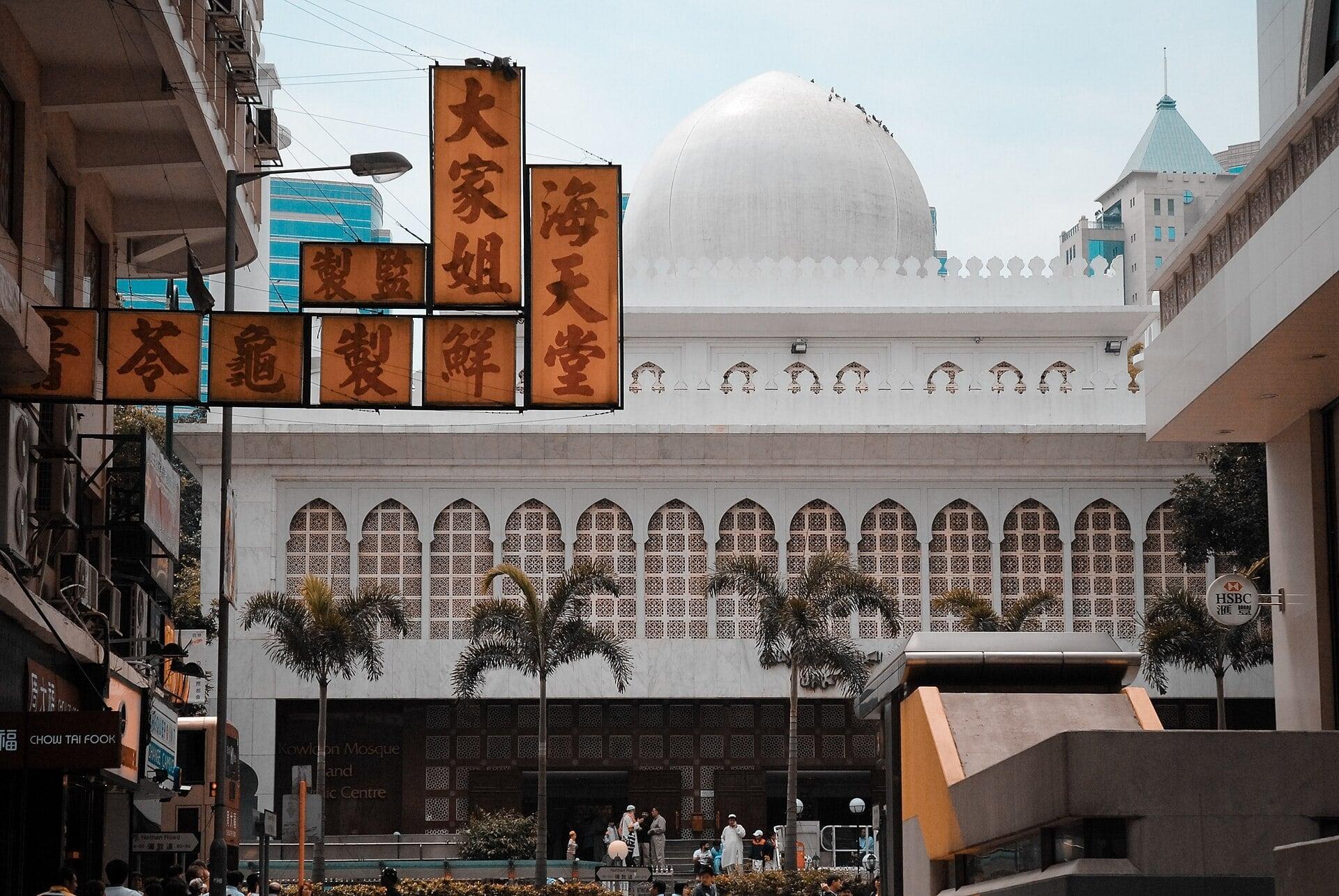
Kowloon Mosque (九龍清真寺)
The barracks' mosque outlived the camp. The white marble Kowloon Mosque and Islamic Centre, seen whole from across Nathan Road at the Cameron Road corner.
- 9
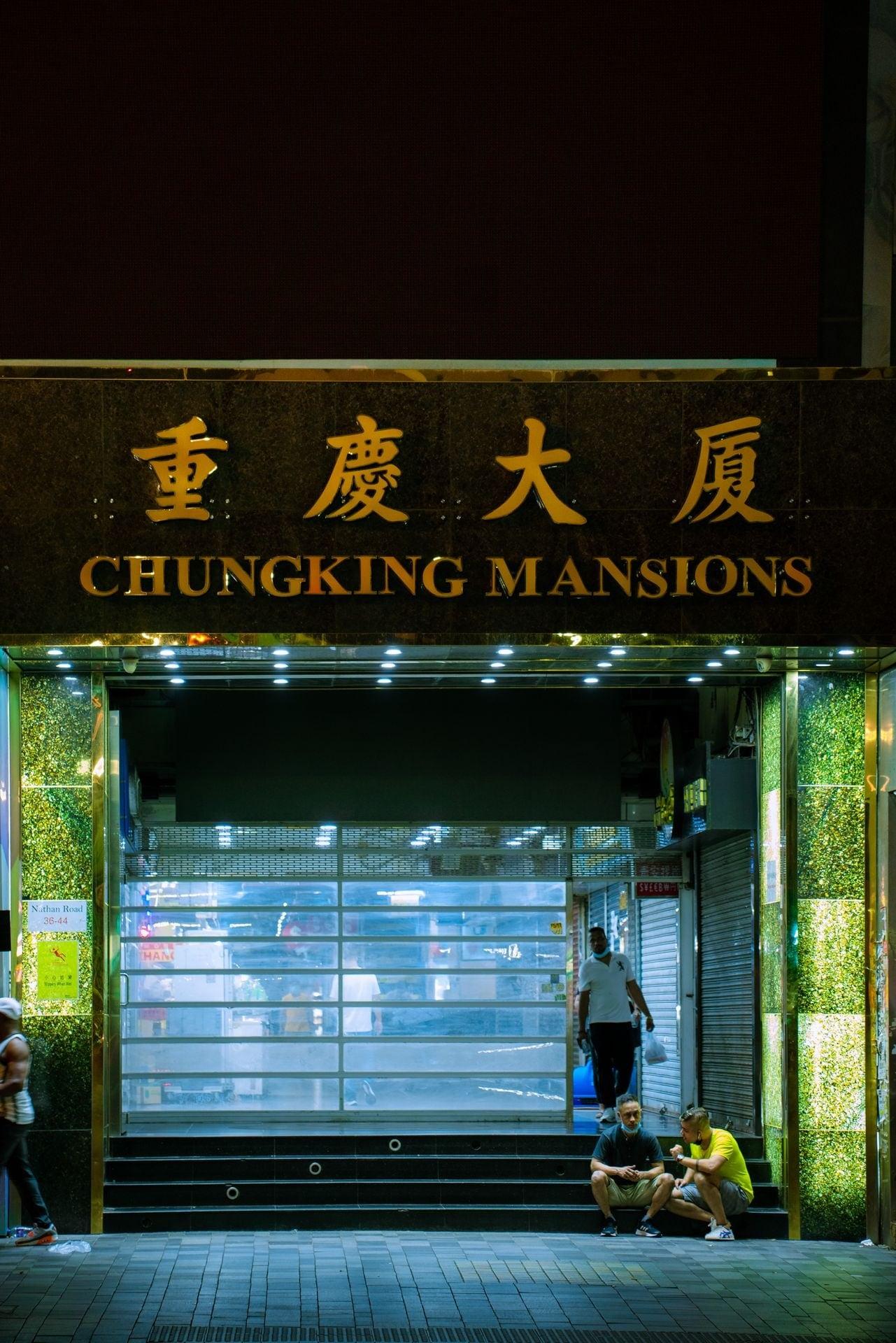
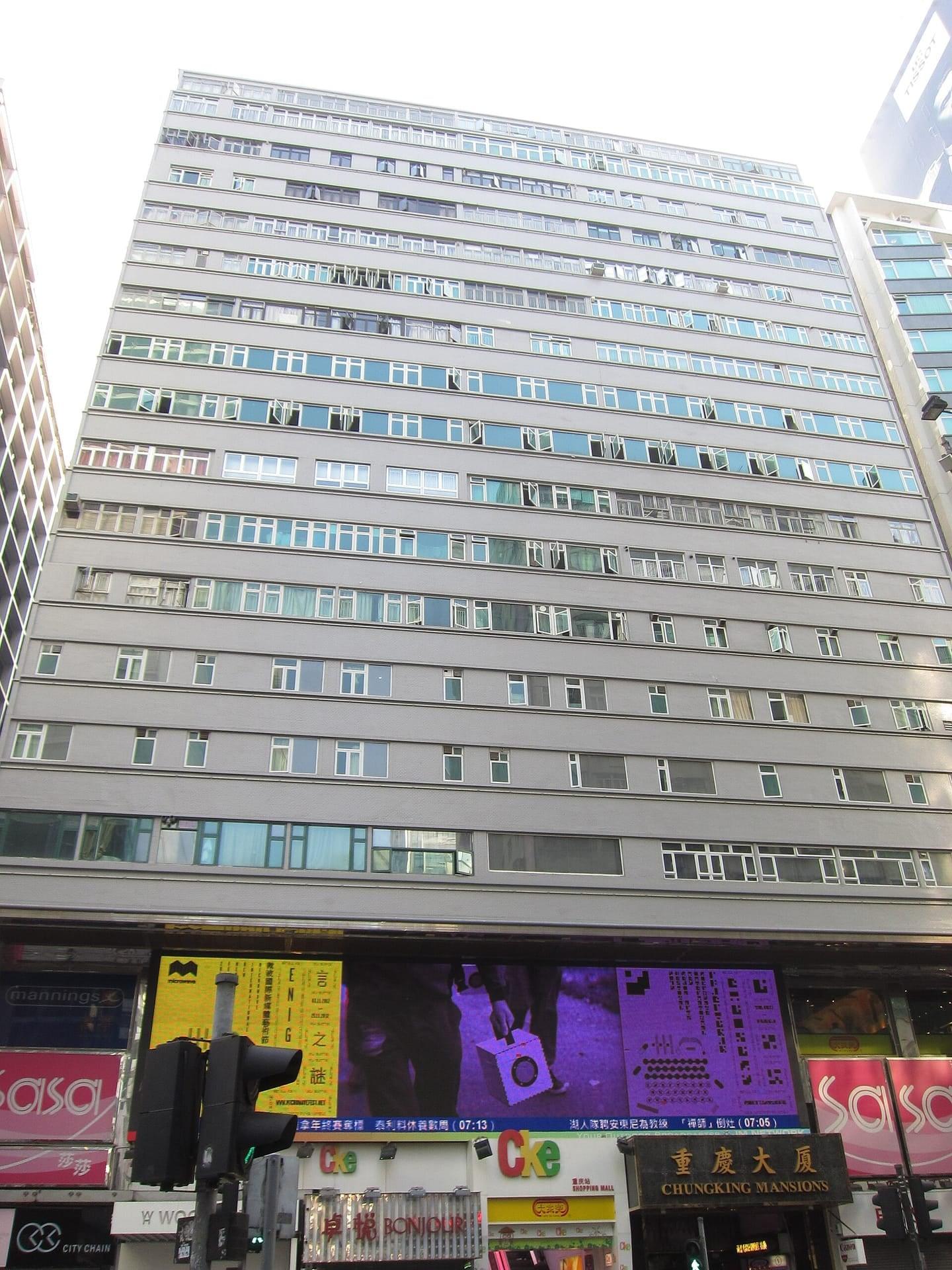
Chungking Mansions (重慶大廈)
Budget beds above a busy arcade. The Nathan Road entrance of Chungking Mansions, a block of small guesthouses, money changers and food stalls.
- 10
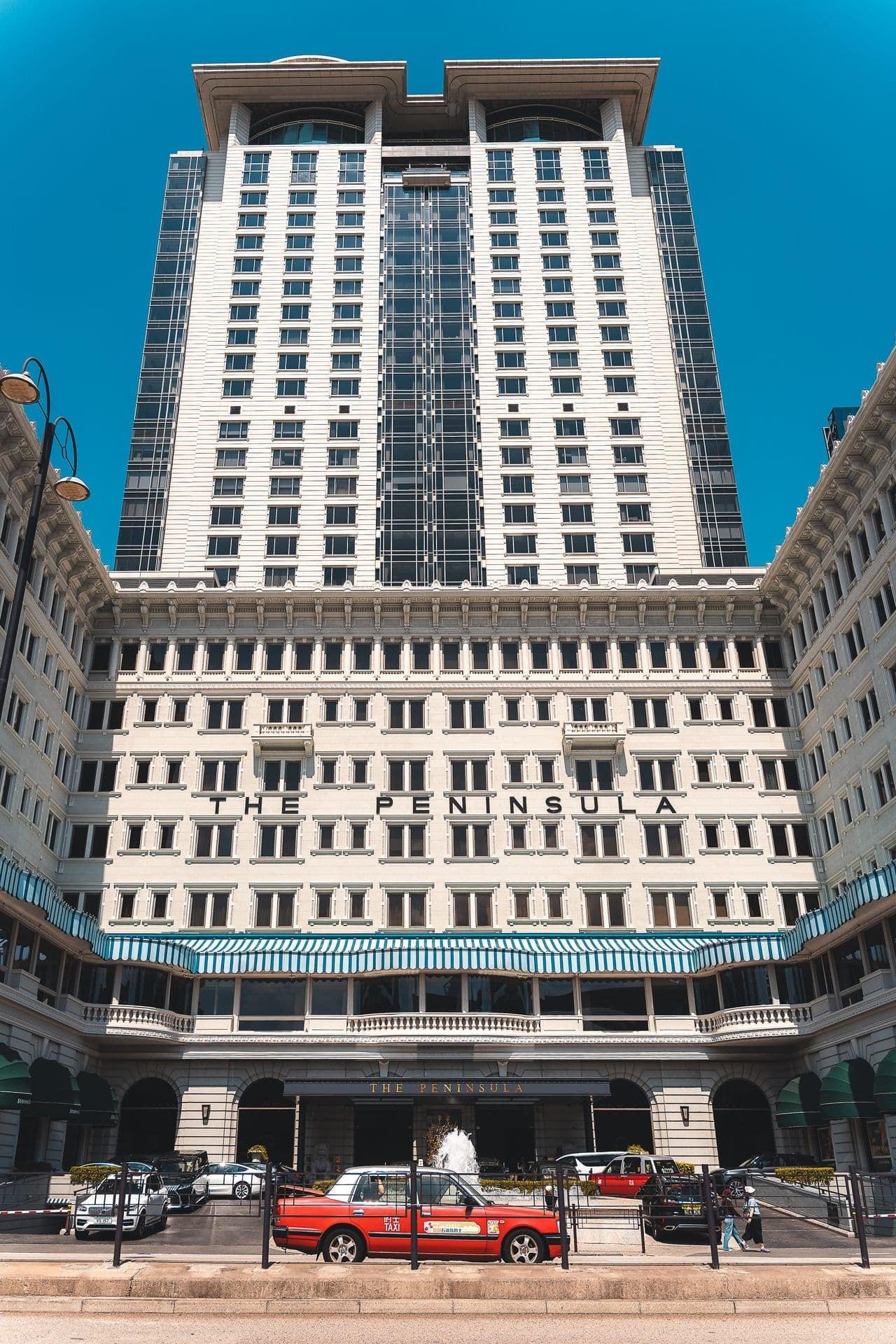
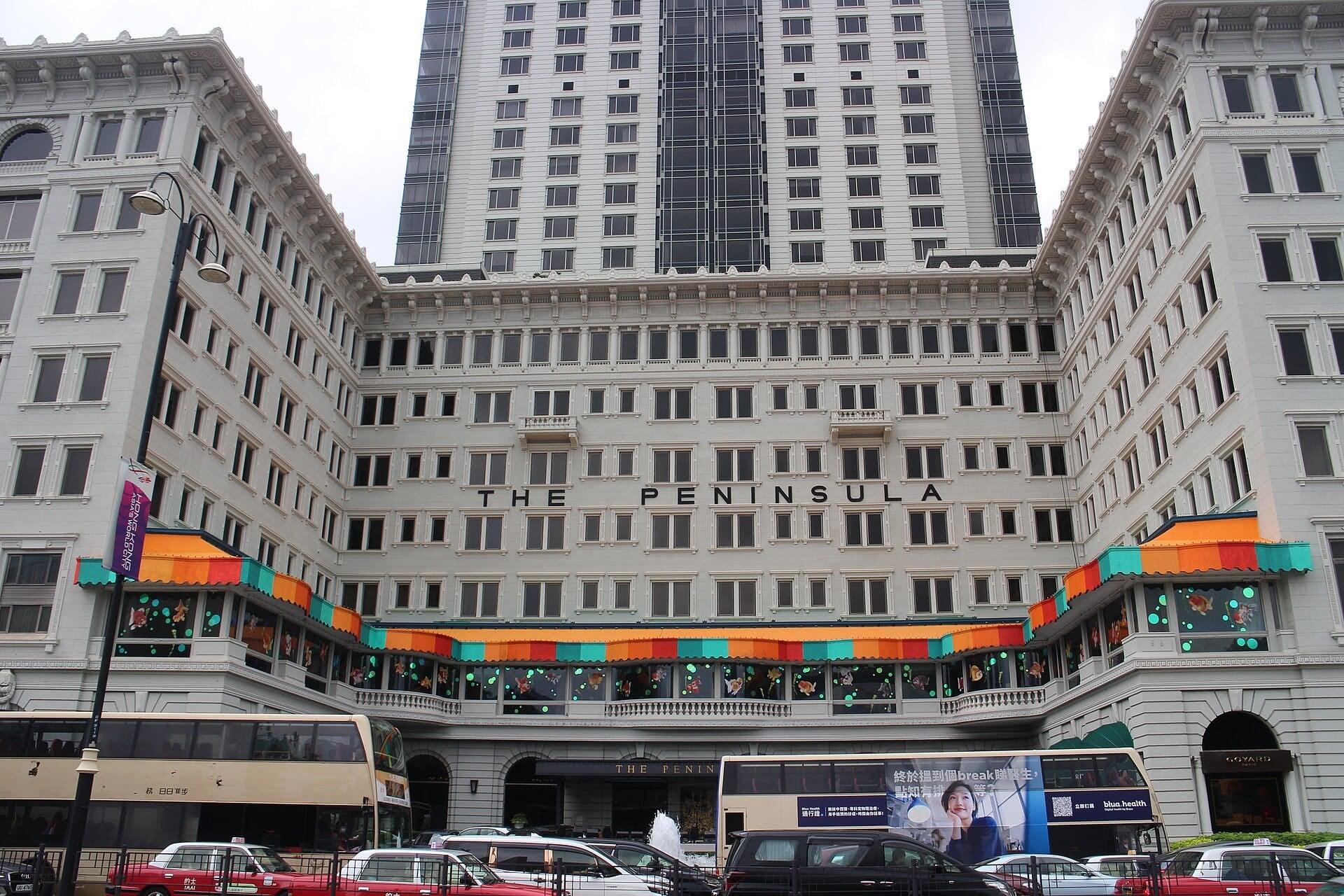
Peninsula Hotel (半島酒店)
The grand hotel that faced the station. The Peninsula across Nathan Road, built 1924 to 1927 and opened in 1928, across Salisbury Road from the old terminus.
- 11
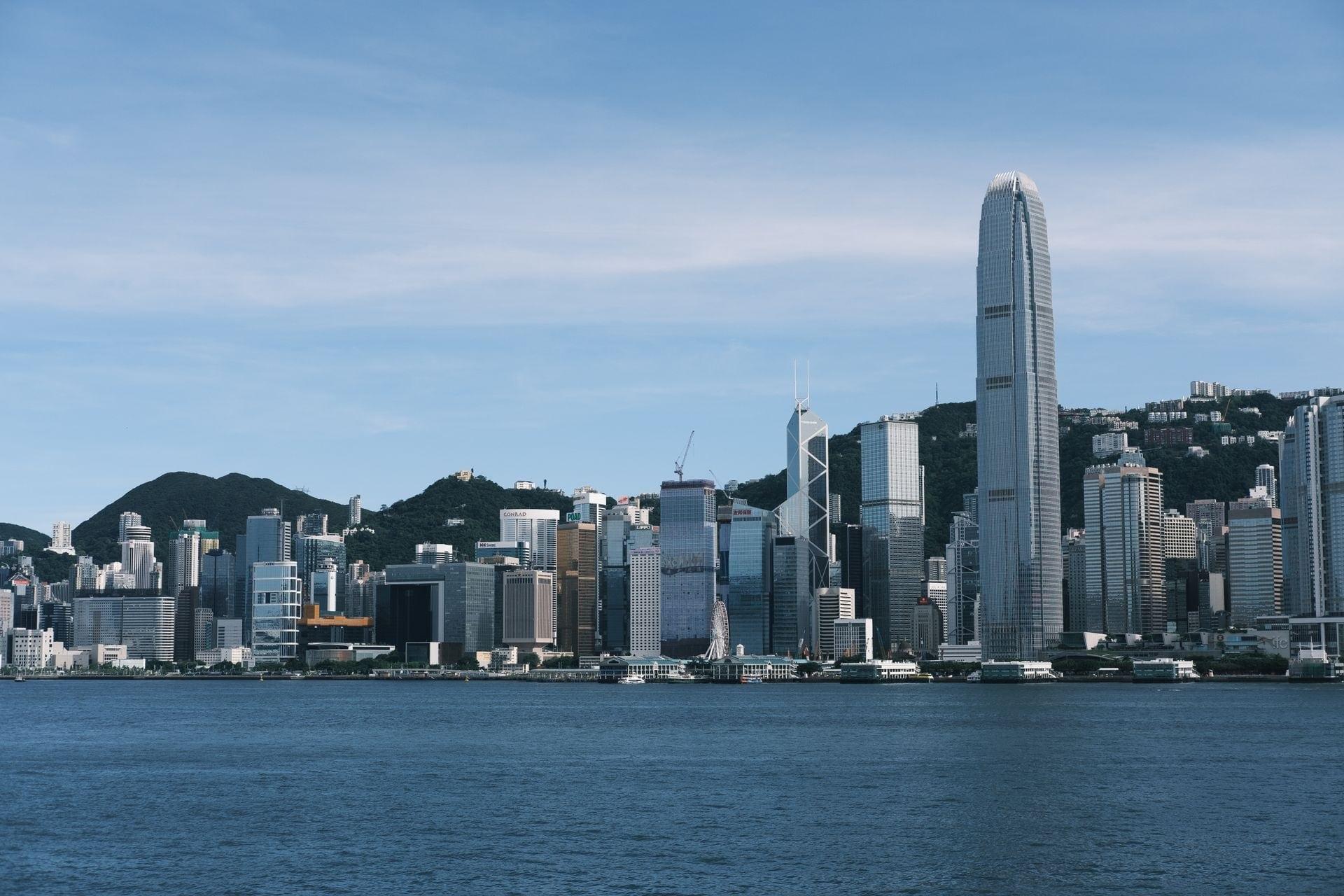
Salisbury Garden (梳士巴利花園)
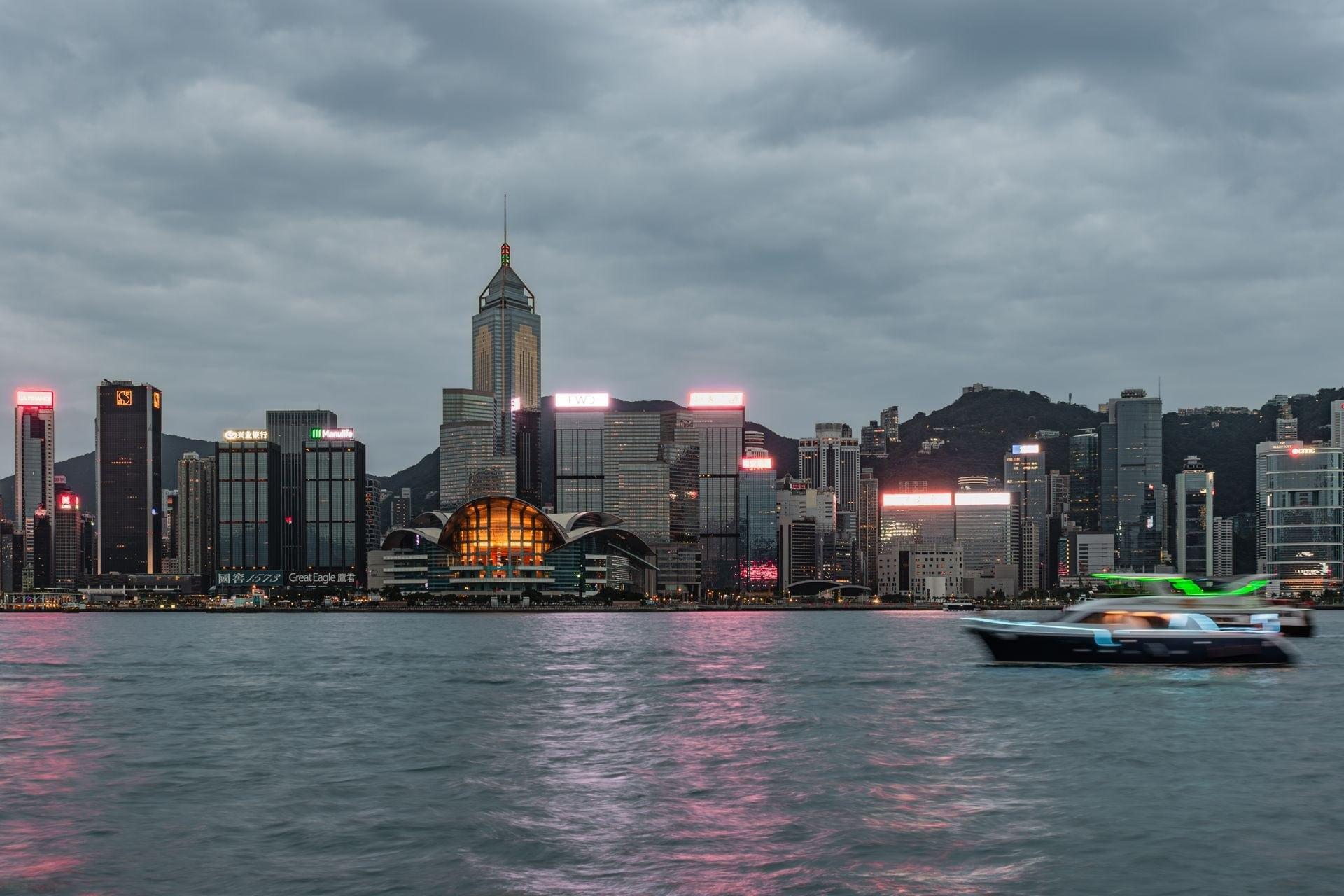
The harbor the whole walk faced. The waterfront rail of Salisbury Garden by the Museum of Art, with Victoria Harbour and the Island skyline ahead.
- 12
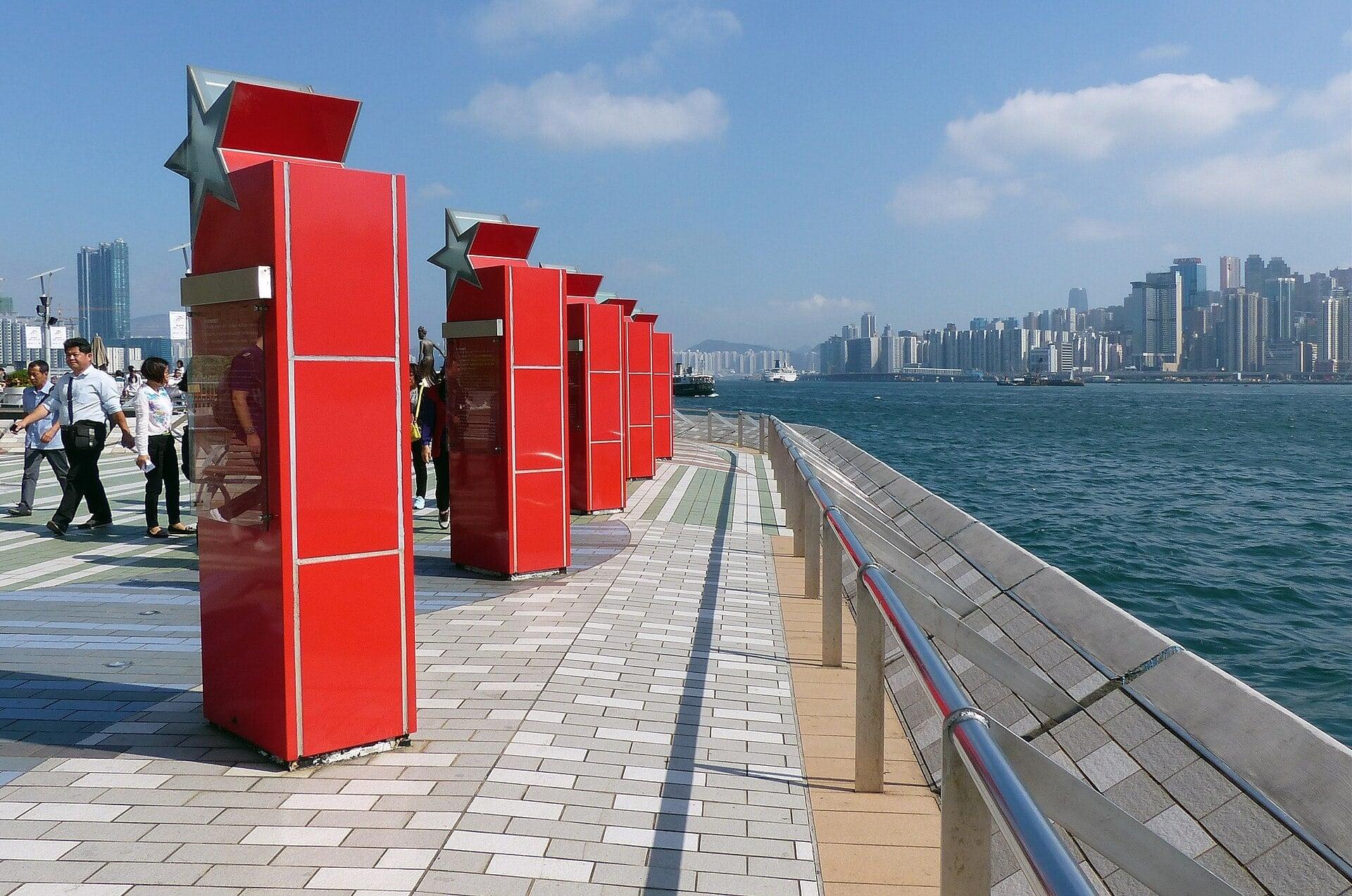
Avenue of Stars (星光大道)
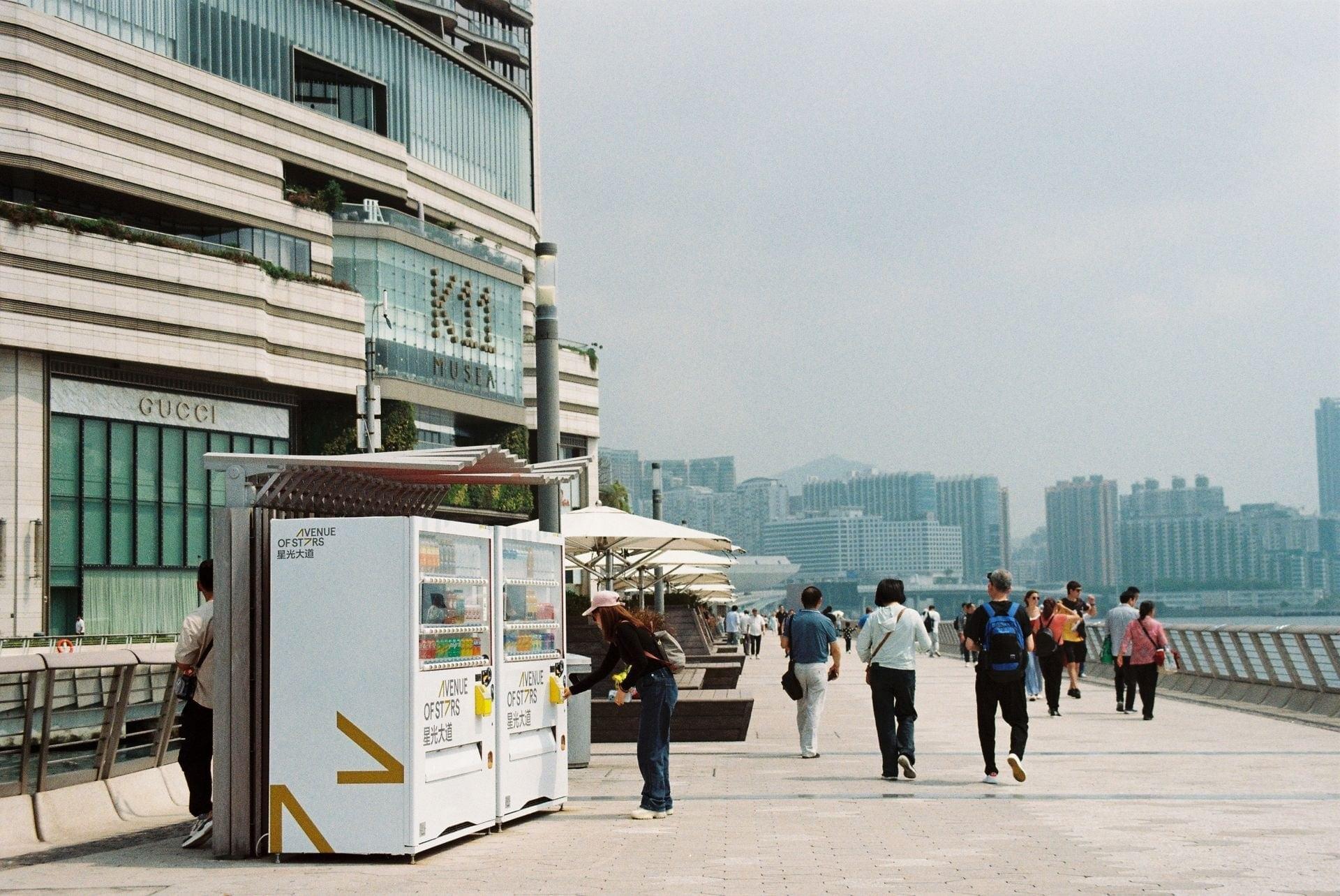
Stars' handprints set into the rail. The Avenue of Stars promenade, redesigned and reopened in 2019, with more than a hundred handprints in its wooden handrails.
- 13
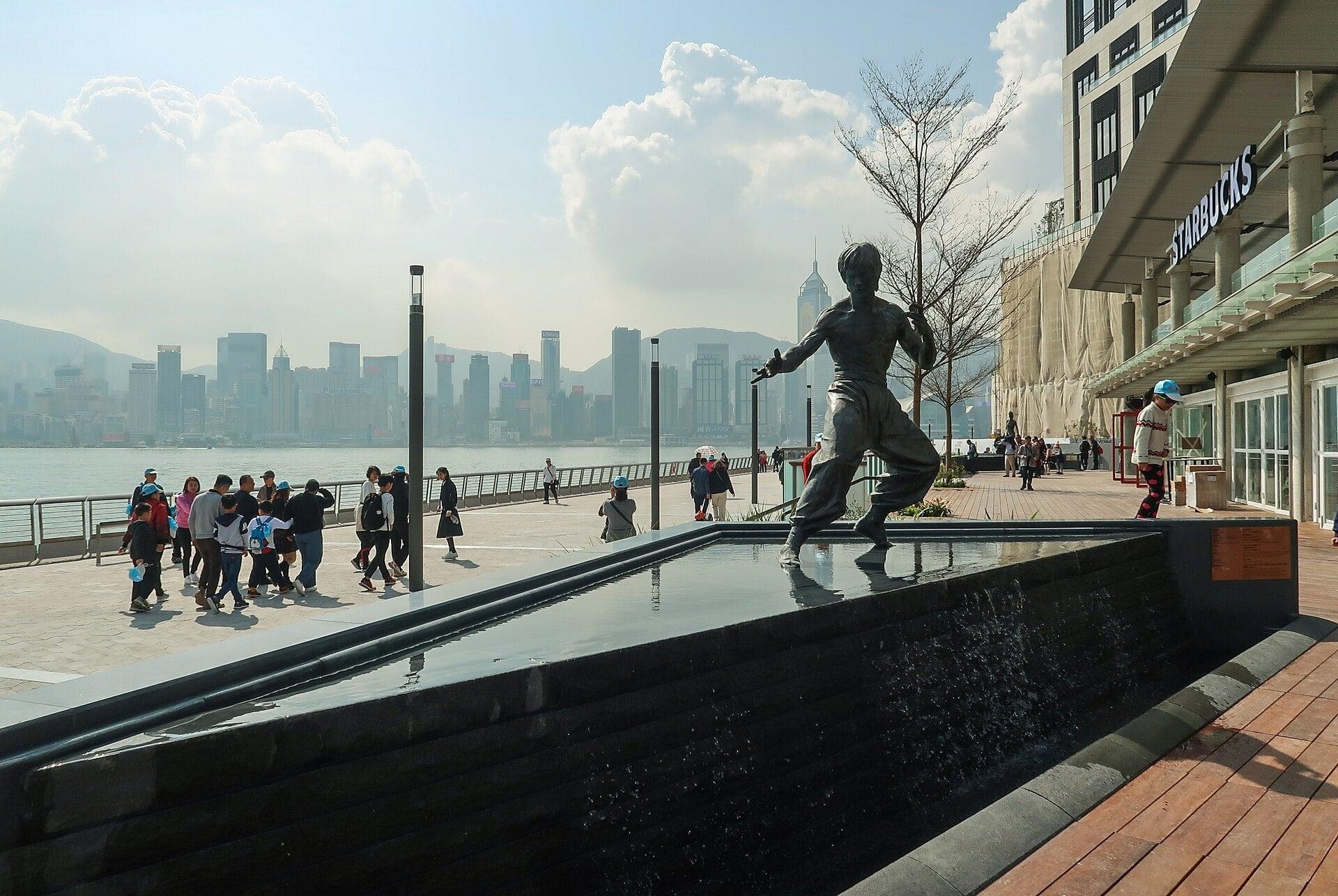
Bruce Lee Statue (李小龍銅像)
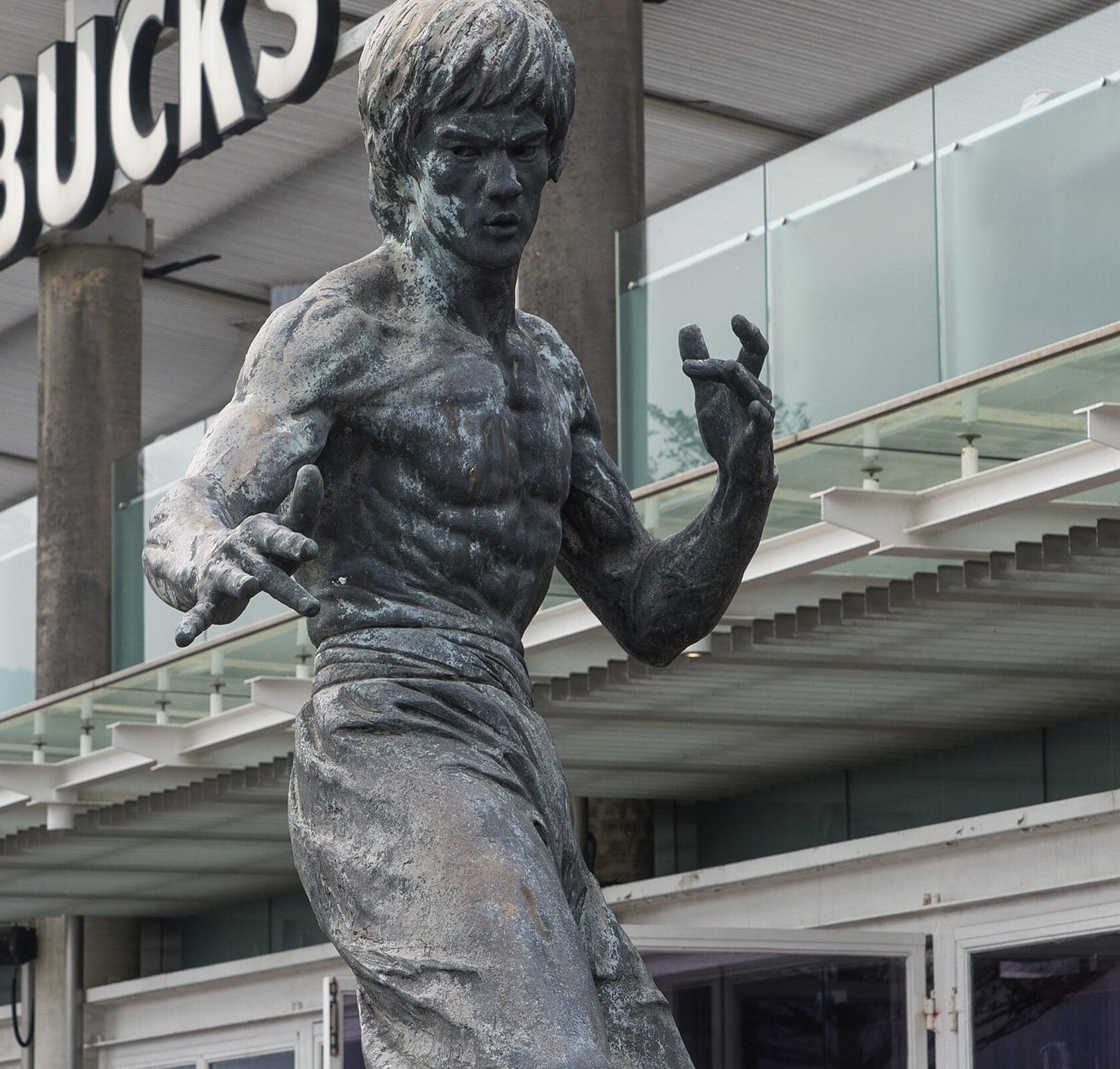
Be like water, at the harbor's edge. The far end of the Avenue of Stars, where the Bruce Lee statue stands among water features, near MTR East Tsim Sha Tsui exit J.
Details
Best Time to Visit
Any day, by daylight for the park and the harbor at dusk. Kowloon Park (stops 5 to 7) is free, 05:00 to midnight; its Discovery Playground 06:30 to 21:00 (stop 6 is told from outside the fence); the park's south-west corner is closed for works until about 2028 (LCSD). Sunset is about 17:38 on 1 December and 17:50 on 31 December (Hong Kong Observatory), so in winter start by about 15:00 to reach the harbor at sunset. A Symphony of Lights ended on 18 November 2026: there is no nightly 20:00 show. WinterFest's light installation around the Cultural Centre is reported for 18 November 2026 to 5 January 2027 (stops 2 and 11 crowded in the evening). On New Year's Eve and on Lunar New Year fireworks nights (Lunar New Year's Day is 6 February 2027) the Tsim Sha Tsui waterfront has road closures and crowd control: check before you go. Friday midday prayers crowd the mosque's front (stop 8). December afternoons average about 20 °C (68 °F). Do not walk under a No. 8 typhoon signal or a black rainstorm warning. Checked 25 November 2026.
Pro Tips
- •Getting to the start: the Star Ferry from Central Pier No. 7 lands at the start, 06:30 to 23:30, every 6 to 12 minutes; adult upper deck HK$5.0 (lower HK$4.0) Monday to Friday, HK$6.5 (HK$5.6) on weekends and public holidays; a Four-Day Tourist Pass is HK$50 (starferry.com.hk). By MTR: East Tsim Sha Tsui station; the Avenue of Stars' own guide gives exit L6 for the Cultural Centre, then walk west past the Clock Tower to the pier. Checked 25 November 2026.
- •The walk ends at the Avenue of Stars' far end: MTR East Tsim Sha Tsui exit J is a few minutes away (Avenue of Stars), and the Star Ferry is about 750 m back west along the promenade.
- •No ticket is needed for any stop. The Heritage Discovery Centre in the barrack blocks (stop 5) is free if you want to go in; check its hours first.
- •Step-free way around the subway on leg 2-3: walk along Salisbury Road to the signals at Nathan Road, cross, and come back west along the far side past the Peninsula to Kowloon Park Drive, about 600 m.
- •To see the Marine Police main building and the Round House close up (stop 3), the 1881 Heritage forecourt steps from the Canton Road and Salisbury Road corner lead up to them; it is privately run shopping ground and not part of the route.
- •If Kowloon Park is shut (midnight to 05:00), walk from stop 4 east along Haiphong Road to Nathan Road and north on its west pavement to the Granville Road crossing, about 370 m, and play stops 5, 6 and 7 by hand.
- •GPS can wander under the park's trees (stops 5 to 7) and between Nathan Road's tall buildings (stop 9); if a stop has not started, tap it on the map.
Safety & Precautions
- •Traffic keeps left, but almost every side street on this walk is one-way. Crossing Haiphong Road at its Nathan Road end (leg 4-5, a marked crossing without lights), the cars come from your LEFT. At the Hankow Road mouth cars come out from your right; at Cameron Road and Mody Road they turn in off Nathan Road from behind your right shoulder; at Lock Road they turn in from behind your left shoulder; at Carnarvon Road and Middle Road they come out from your left. Look both ways every time.
- •Salisbury Road, Kowloon Park Drive and Nathan Road are crossed only at signals or by the subway: never between the lights.
- •Steps: two short flights down into the subway (leg 2-3), a short stair under the flyover (leg 3-4), and several flights in Kowloon Park (legs 4-5, 5-6 and 7-8), the longest about 30 m of steps. Stone and tiles are slippery in rain.
- •Tailors', watch and guesthouse touts work Nathan Road (stops 8 to 10): a smile and a no thank you is enough. Keep bags closed in the crowds.
- •The Kowloon Mosque is a place of worship: give worshippers room at Friday prayers and in Ramadan, ask before photographing anyone, and dress modestly if you go in (the Islamic Trust's website has a visit form). The Fuk Tak temple on Haiphong Road is a working shrine: keep clear of its door.
- •The Avenue of Stars is a railed deck over the harbor edge: no bicycles, skateboards, drones or climbing, and no smoking.
- •Do not walk under a No. 8 typhoon signal or a black rainstorm warning; the waterfront is exposed to wind.
Gallery
Read the walk
The full story of Tsim Sha Tsui: Star Ferry to the Avenue of Stars, in words. Prefer to listen? Play it narrated, from home or on location.
Introduction
Tsim Sha Tsui is the tip of Kowloon, the peninsula that faces Hong Kong Island across Victoria Harbour, and almost everything here was built for people arriving. A ferry started crossing the water in eighteen eighty. A police station on a hill dropped a time signal for the ships. Guns and barracks covered the harbor. A railway from Canton ended at the water's edge, a grand hotel rose across the road, and soldiers of the garrison built a mosque. This walk reads that machinery of arrival and ends on the harbor it all faced.
There are thirteen stops over about three point one kilometers, about two miles, and it takes about ninety minutes. It is flat apart from Kowloon Park, which sits on a hill, so expect several flights of steps there, and stairs down into a pedestrian subway early on.
Traffic in Hong Kong keeps to the left, but most side streets here are one-way, so look both ways at every corner; each crossing that matters is described as you reach it. There are no trams here, and big roads are crossed only at lights or underground.
No ticket is needed for any stop. Kowloon Park is free and open from five in the morning until midnight; part of it is closed for building works until about twenty twenty-eight, and the route goes around. The old police compound, the mosque and the hotel are told from the street. The nightly harbor light show has ended, so no evening show is promised.
Winter afternoons are mild, about twenty degrees Celsius, sixty-eight Fahrenheit. If a number eight typhoon signal or a black rainstorm warning is up, do not walk: wait until it is lowered.
It starts where the ferry from Central lands and ends on the Avenue of Stars, by East Tsim Sha Tsui station. When you arrive at the Star Ferry Pier, begin with stop one.
1. Star Ferry Pier (尖沙咀天星碼頭)
The doors behind you lead into the Star Ferry's pier, and beyond them the green and white boats cross to Hong Kong Island every few minutes. The walk begins here because this is where Tsim Sha Tsui began to matter.
The company tells its own story this way. In eighteen eighty a Parsee cook, Dorabjee Naorojee Mithaiwala, took up a new trade. He started a ferry across Victoria Harbour with his steamboat, the Morning Star, and the service was known as the Kowloon Ferry Company. In eighteen eighty-eight a local newspaper reported that the ferry ran at all hours between Pedder's Wharf on the Island and Tsim Sha Tsui, a trip of forty minutes to an hour, and that on Mondays and Fridays it stopped while the boat took on coal. By eighteen ninety there were four single-deck boats. Then a businessman bought every one of them, and in May eighteen ninety-eight the Star Ferry Company became a public company. The name comes from the boats: every one of them was called a Star.
You may see the slogan "serving Victoria Harbour since eighteen eighty-eight". Eighteen eighty-eight is the year of that newspaper report; the company's own history traces its start to eighteen eighty.
Today nine ferries run two routes from this pier, to Central and to Wan Chai, and in twenty twenty-five they carried more than sixteen million passengers.
Keep that picture in mind: a boat that brought the far shore close. Everything on this walk grew up around a landing like this one, built for people arriving.
Follow the route across the forecourt toward the red brick tower. The buses turn here, so keep to the paved walkway. Next is the Clock Tower.
2. Clock Tower (尖沙咀鐘樓)
The red brick tower you have just walked past stands on the harbor side: brick and granite, forty-four meters tall, with an eight-sided belfry under a dome and a lightning rod another seven meters on top. It is a clock tower with no station.
The Kowloon-Canton Railway, the line north to the city of Canton, now called Guangzhou, opened on the first of October nineteen ten, but work on its terminus here at Tsim Sha Tsui began only in nineteen thirteen. This tower, one part of that terminus, went up in nineteen fifteen, and the terminus opened on the twenty-eighth of March nineteen sixteen. Trains from the north ended here, and the ferry pier was a short walk away. That was the whole idea: rail and water met at this corner.
The clocks came late. The tower began giving the time only in nineteen twenty-one, when its clocks and bell were installed. They stopped during the Japanese occupation, from nineteen forty-one to nineteen forty-five. In nineteen fifty the bell was silenced, because the clocks and the chime had fallen out of step.
In nineteen seventy-five the terminus moved east to Hung Hom, and in nineteen seventy-eight the old station was pulled down. The tower was left standing, and in nineteen ninety it was declared a monument. The bell came back in twenty ten, to be displayed.
The long curving wall beside you, with no windows, belongs to the Hong Kong Cultural Centre, built from nineteen eighty-six to nineteen eighty-nine on the station's ground.
Follow the route north along the Cultural Centre toward Salisbury Road. You take the stairs down into a pedestrian subway, two short flights, and come up on the far side at the foot of a wooded hill. Next is the old Marine Police compound.
3. Former Marine Police Headquarters (前水警總部)
You come up from the subway at the foot of a wooded hill. The slope on the side away from the traffic is the old Marine Police compound, and its main building stands on top, behind the trees; you may catch its pale walls through the branches.
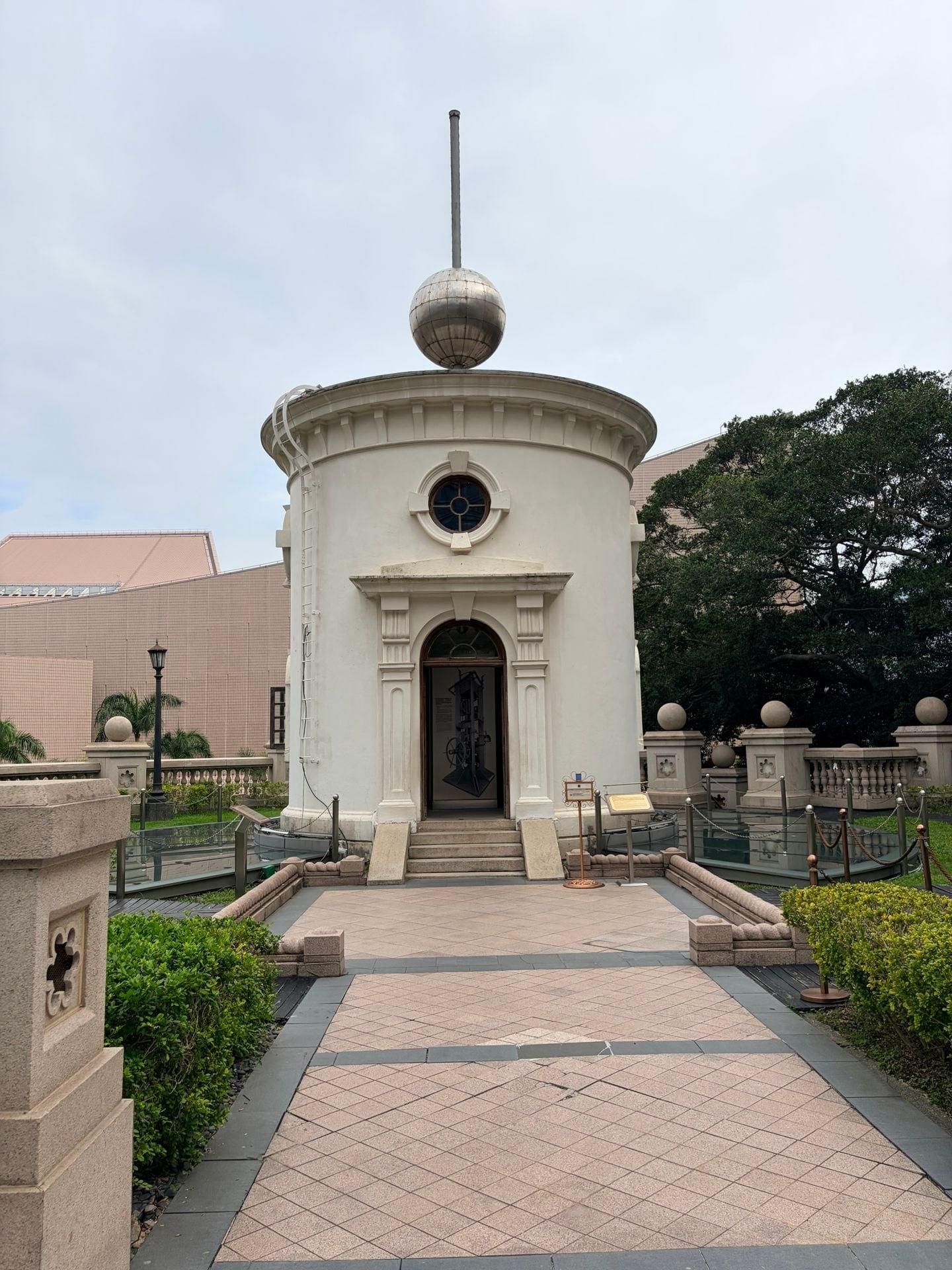
Hong Kong's monuments office calls it one of the oldest surviving government buildings in Hong Kong. It was finished in eighteen eighty-four: a main building, a stable block, and a round signal tower that people called the Round House. The main building had two stories at first; a third was added in the nineteen twenties. The Marine Police, who worked the harbor, used the compound from the start until nineteen ninety-six, except for the Japanese occupation, from nineteen forty-one to nineteen forty-five, when the Japanese navy used it as a base.
The Round House had one job, and it is the best story on this hill. It gave the ships in the harbor the time. The signal was a ball, dropped at a fixed hour, and the masters of the ships watching it set their chronometers by it. In nineteen oh seven the time ball moved to a new tower on Signal Hill, a little east of here, and the Round House fell silent.
After the police left, the government made the compound a heritage tourism project, finished in two thousand nine and renamed eighteen eighty-one Heritage. Today it is a privately run hotel and shopping site.
Follow the route north along Kowloon Park Drive, across the driveway and then Peking Road at the lights, and down a short stair through a passage under the flyover to Haiphong Road. Next is a street that changed its name.
4. Haiphong Road (海防道)
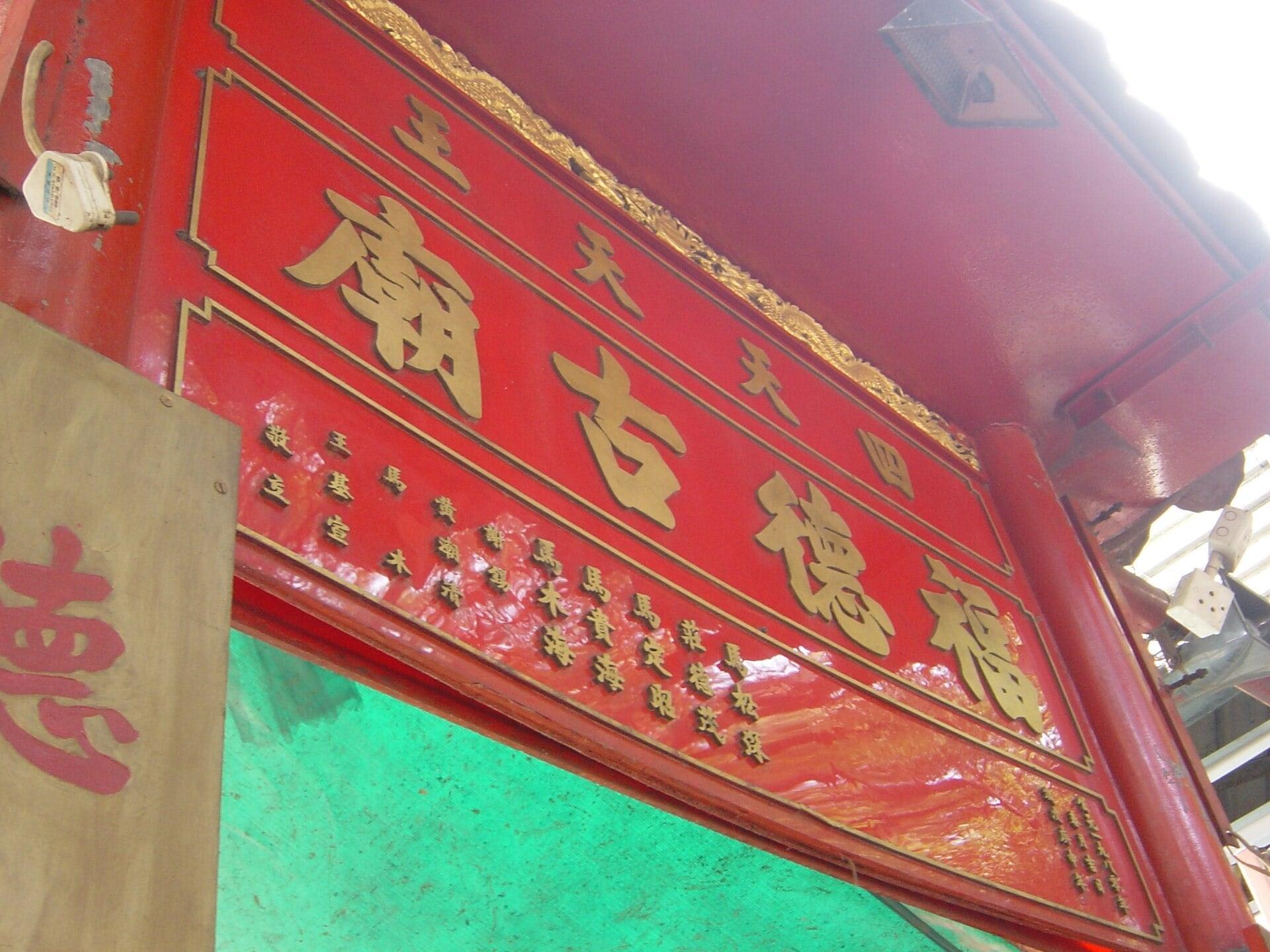
Under the flyover the street becomes Haiphong Road. A few steps to your left along this pavement, at the end of the market stalls, is a very small temple, often with incense burning at its door. It is a Fuk Tak temple, for the Earth God: the god of one particular place, who looks after his own corner of streets and the people who work there. It is a working temple, so stand back from the door and let worshippers through.
Now look at the street sign. In March nineteen oh nine the government published a notice, signed by the Colonial Secretary, to end the confusion caused by streets in Kowloon that had the same names as streets on Hong Kong Island. So this road, until then Elgin Road, became Haiphong Road. Robinson Road became Nathan Road. Macdonnell Road became Canton Road, Chater Street became Peking Road, Garden Road became Hankow Road, and East Road became Hanoi Road. Many of the new names came from ports and cities; Haiphong is a port in Vietnam.
Think of who that helped: a newcomer holding an address, or a letter on its way across the harbor. It is the same story as the ferry and the time ball, a city sorting itself out for people arriving.
Follow the route east along this pavement, away from the temple. Two side streets cross your path, and both are one-way: at Hankow Road cars come out from your right, and at Lock Road they turn in from behind your left shoulder. At the far end you cross Haiphong Road itself at a marked crossing with no lights. It is one-way too, and the cars come from your left. Then climb the steps into the park beside the white mosque. Next is an old army camp.
5. Whitfield Barracks (前威菲路軍營)
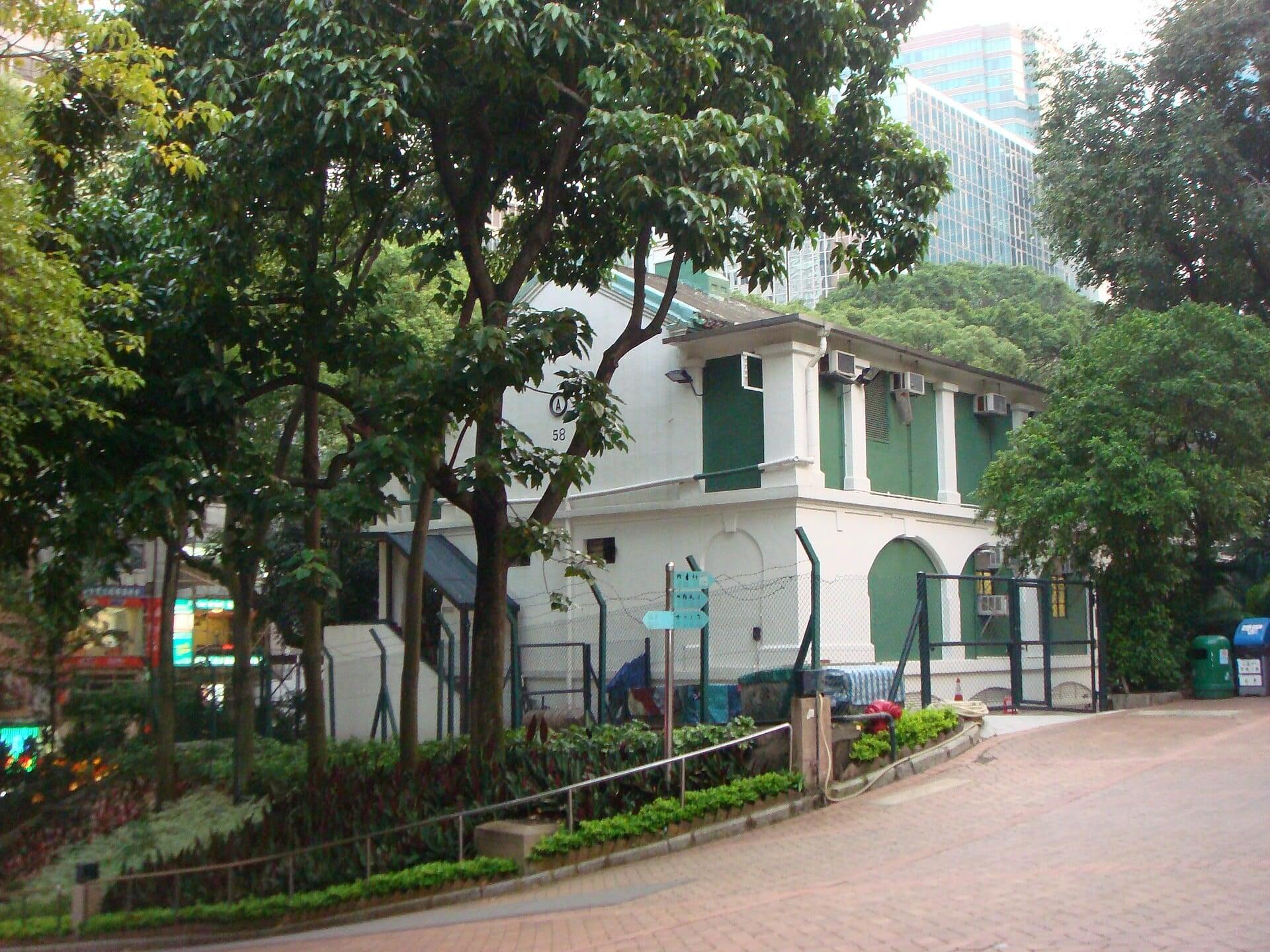
At the top of the steps, the two long, low buildings off to your left, under pitched roofs, are barrack blocks. Their deep verandas kept the sun off the rooms inside. You are standing in an army camp. The park's own history says that in eighteen sixty-one the British took this…
Full narration for this stop unlocks with the tour.
6. Kowloon West II Battery (九龍西第二號炮台)
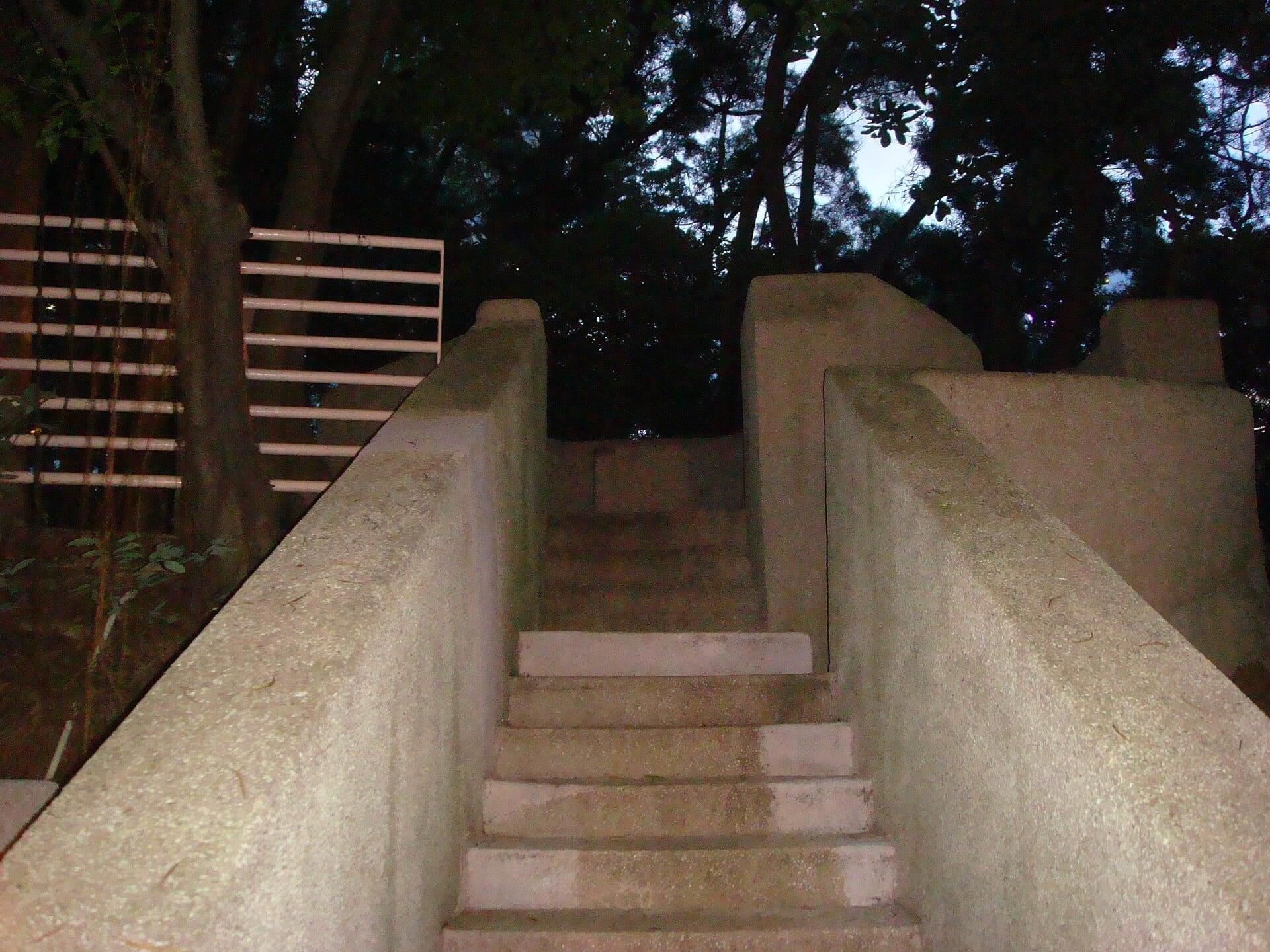
Through the fence beside you is a children's playground, laid over a low rise on the western edge of the hill. Before the barrack blocks you just passed, there were guns here. This was the Kowloon West Two Battery. Hong Kong's official list of historic buildings records it as…
Full narration for this stop unlocks with the tour.
7. Nathan Road (彌敦道)
Below this terrace runs Nathan Road, the long straight street that carries Kowloon north from the harbor. From up here you can see why the park feels like a hilltop: the barracks stood on high ground, and the road runs along its foot. Until nineteen oh nine this was Robinson…
Full narration for this stop unlocks with the tour.
8. Kowloon Mosque (九龍清真寺)
Across the road stands the Kowloon Mosque and Islamic Centre, in white marble, with its dome rising behind the front. Its story starts in the barracks you walked through. According to the Islamic Trust that looks after it, Muslim soldiers of the Hong Kong Regiment, men from…
Full narration for this stop unlocks with the tour.
9. Chungking Mansions (重慶大廈)
The arcade entrance beside you is the way into Chungking Mansions: a ground floor of money changers and food stalls, and above it, in the blocks of flats, floor after floor of small guesthouses. On a street of grand hotels, this is where many travelers on a tight budget find a…
Full narration for this stop unlocks with the tour.
10. Peninsula Hotel (半島酒店)
Across Nathan Road is the Peninsula hotel, its original block facing the harbor along Salisbury Road, with a taller tower rising behind it. Hong Kong's list of historic buildings dates it plainly: built from nineteen twenty-four to nineteen twenty-seven and opened in nineteen…
Full narration for this stop unlocks with the tour.
11. Salisbury Garden (梳士巴利花園)
Here is the harbor. Victoria Harbour lies in front of you, and across it the towers of Hong Kong Island climb toward the hills. Everything you have seen faced this water. The ferry crossed it. The compound on its hill watched it and gave the ships their time. The guns on the…
Full narration for this stop unlocks with the tour.
12. Avenue of Stars (星光大道)
You are on the Avenue of Stars, a promenade built out along the harbor's edge. Look at the wooden handrail beside you: set into it are handprints, more than a hundred of them, belonging to the stars of Hong Kong film. The Avenue's own pages say it was redesigned by a well-known…
Full narration for this stop unlocks with the tour.
13. Bruce Lee Statue (李小龍銅像)
At the far end of the Avenue stands a bronze of Bruce Lee, and near him statues of another star and of McDull, a cartoon character. Notice the water. The Avenue's designers gave these statues flowing water features, and the Avenue's own pages explain why: to echo Bruce Lee's…
Full narration for this stop unlocks with the tour.
- File:Hai Phong Road Temporary Market 201811.jpg | Haiphong Road Temporary Market — Wpcpey, CC BY-SA 4.0 · source
- File:Fuk Tak Temple in TST (1).JPG | 香港尖沙咀福德古廟。A temple of Tu Di Gong in Hong Kong. — Stewart~惡龍, CC BY-SA 2.5 · source
- File:Hong Kong Heritage Discovery Centre 2013-08.JPG | Whitfield Barracks, Blocks S61 & S62 — Warko, CC BY-SA 3.0 · source
- File:Block 58 Kowloon Park.JPG | Block 58 of the former Whitfield Barracks, in Kowloon Park, Hong Kong, now a Grade III historic building — Millevache, CC BY-SA 3.0 · source
- File:Kowloon Park Battery4.JPG | Remains of Kowloon West II Battery within Kowloon Park, Hong Kong. — Millevache, CC BY-SA 3.0 · source
- File:Kowloon Park Battery2.JPG | Remains of Kowloon West II Battery within Kowloon Park, Hong Kong. — Millevache, CC BY-SA 3.0 · source
- File:Kowloon Mosque (Masjid) and Islamic Centre, Kowloon Tsim Sha Tsui, corner of Nathan Road and Haiphong Road. Hong Kong, China, East Asia — Mstyslav Chernov, CC BY-SA 3.0 · source
- File:Avenue of Stars Bruce Lee sculpture 201901.jpg | Avenue of Stars Bruce Lee sculpture — Wpcpey, CC BY-SA 4.0 · source
- File:2024-12-27 Statue of Bruce Lee at Avenue of Stars, Hong Kong.jpg | Statue of Bruce Lee at Avenue of Stars, Hong Kong — Alexkom000, CC BY 4.0 · source
Images may be cropped or resized. Other photos via Unsplash and Pexels.