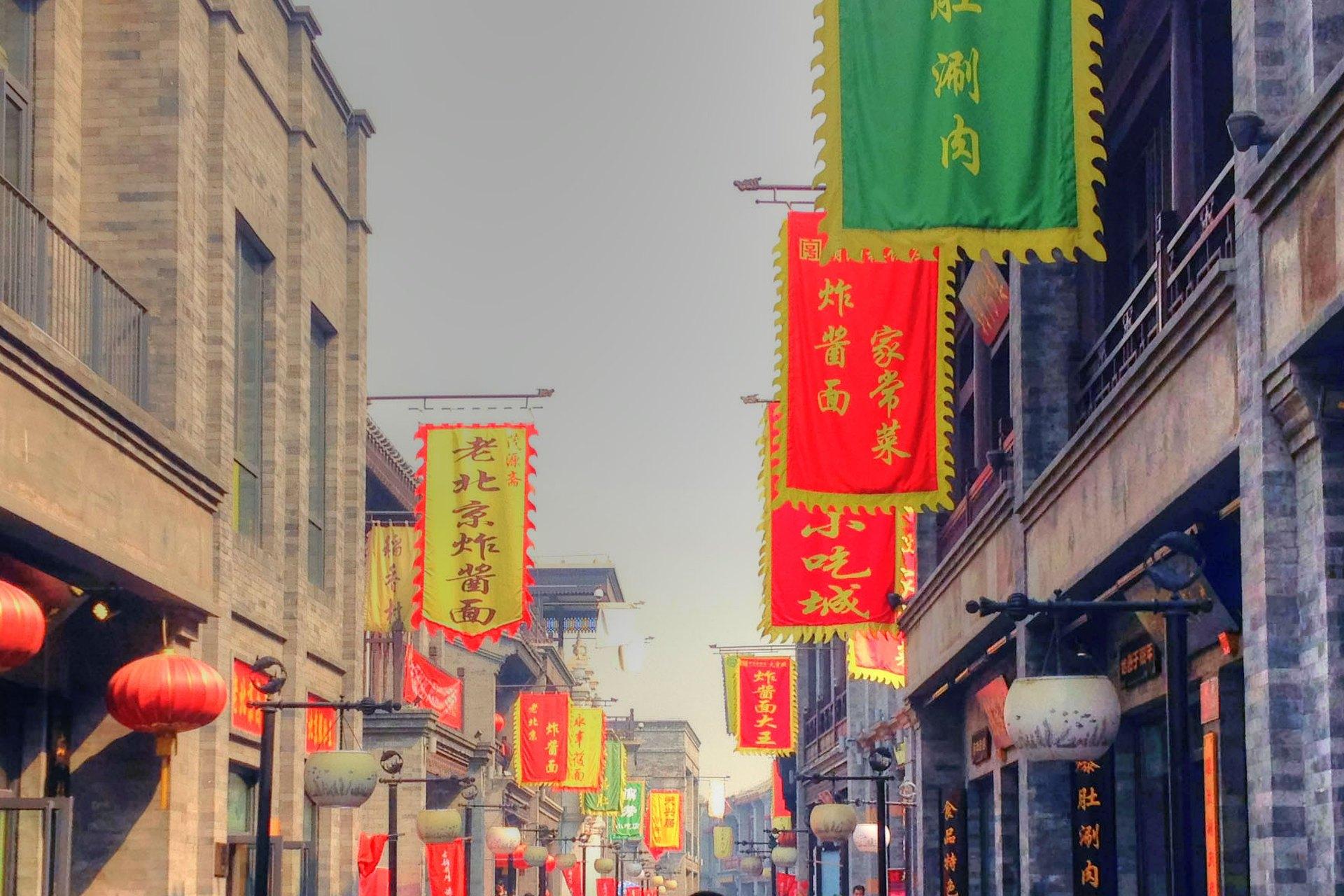
In Beijing's old commercial quarter the street names are still a list of trades: the fish lane of Xianyukou, the barrier street of Dashilar, silver furnaces and a lane a shoulder wide, a 1905 showroom, old brand shops, the cinema where the first film made by Chinese people was shown, a travelers' slanting short cut, and Liulichang, the tile works that became the street of books and paper.
Start · Xianyukou (鲜鱼口)
DirectionsStops
- 1
Xianyukou (鲜鱼口)
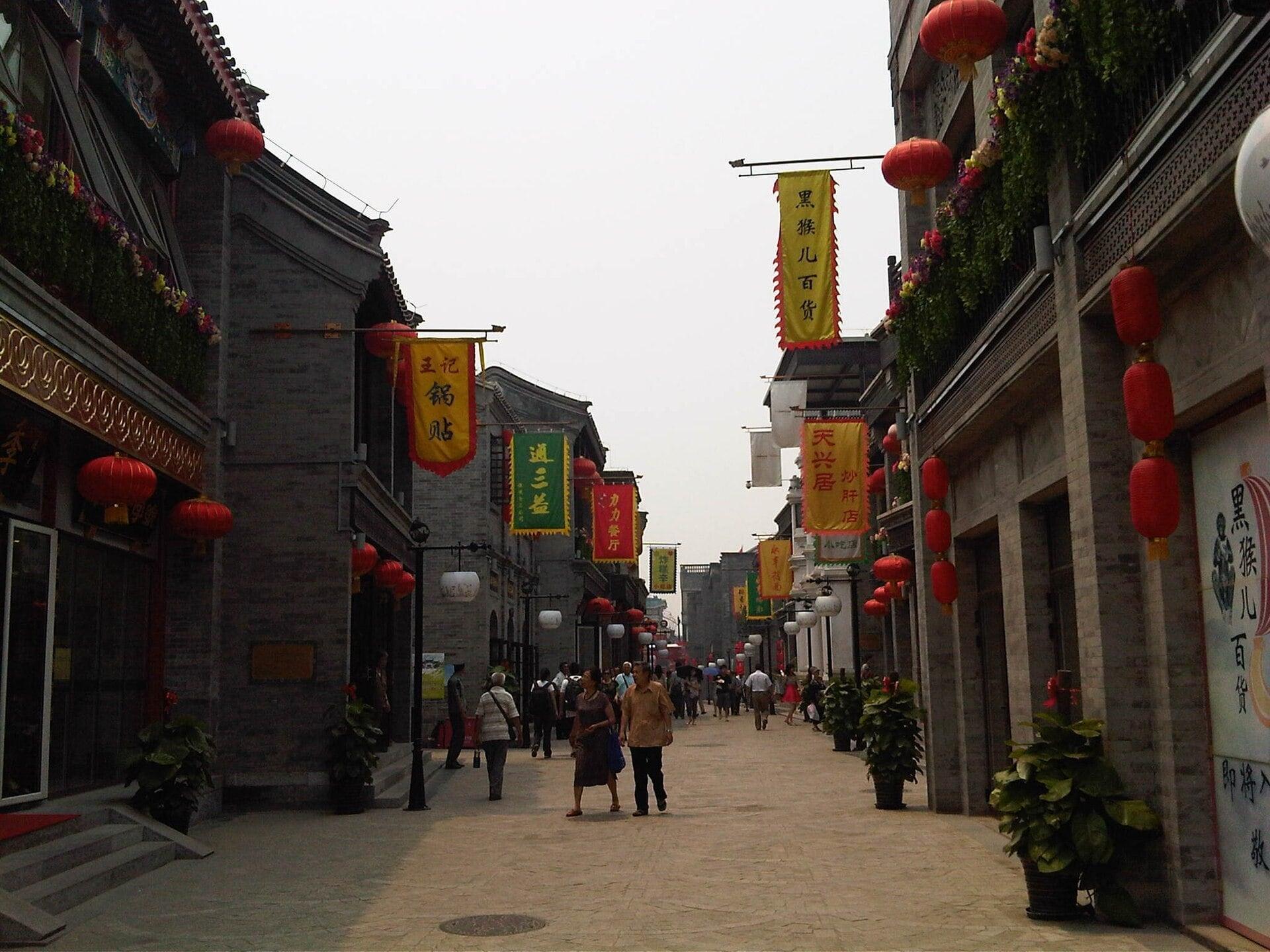
A lane named for fresh fish. Xianyukou has been a market lane since the middle of the Ming dynasty, and its name still says what was sold in it.
- 2
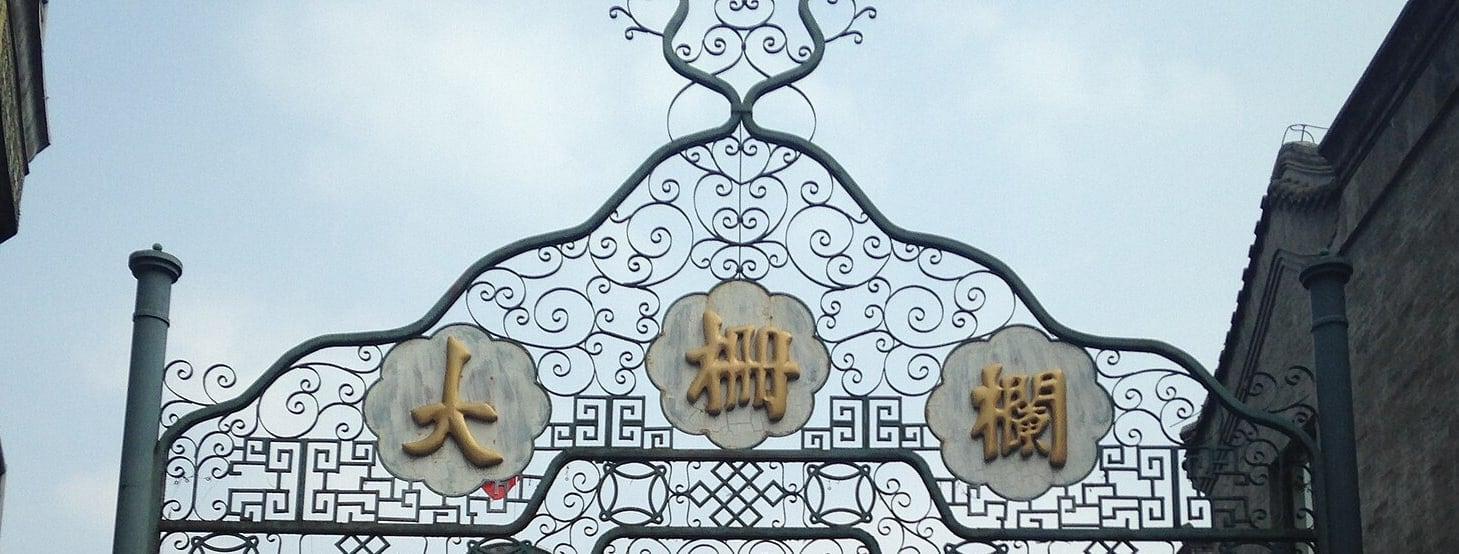
Dashilar Gateway (大栅栏)
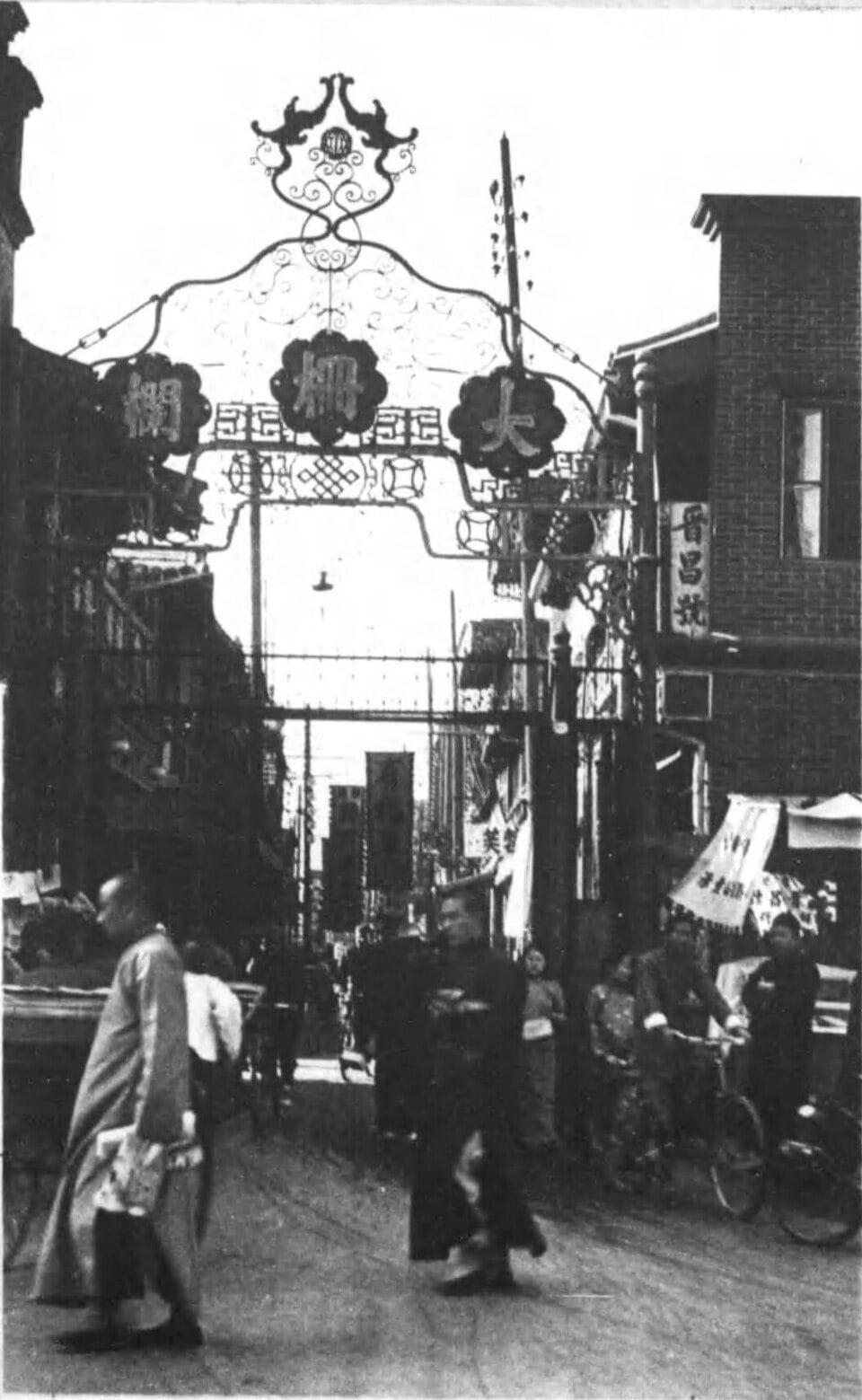
A street named for its barrier. Dashilar's real name was a row number; a guard barrier at its mouth gave it the name it still carries.
- 3
Zhubaoshi Street (珠宝市街)
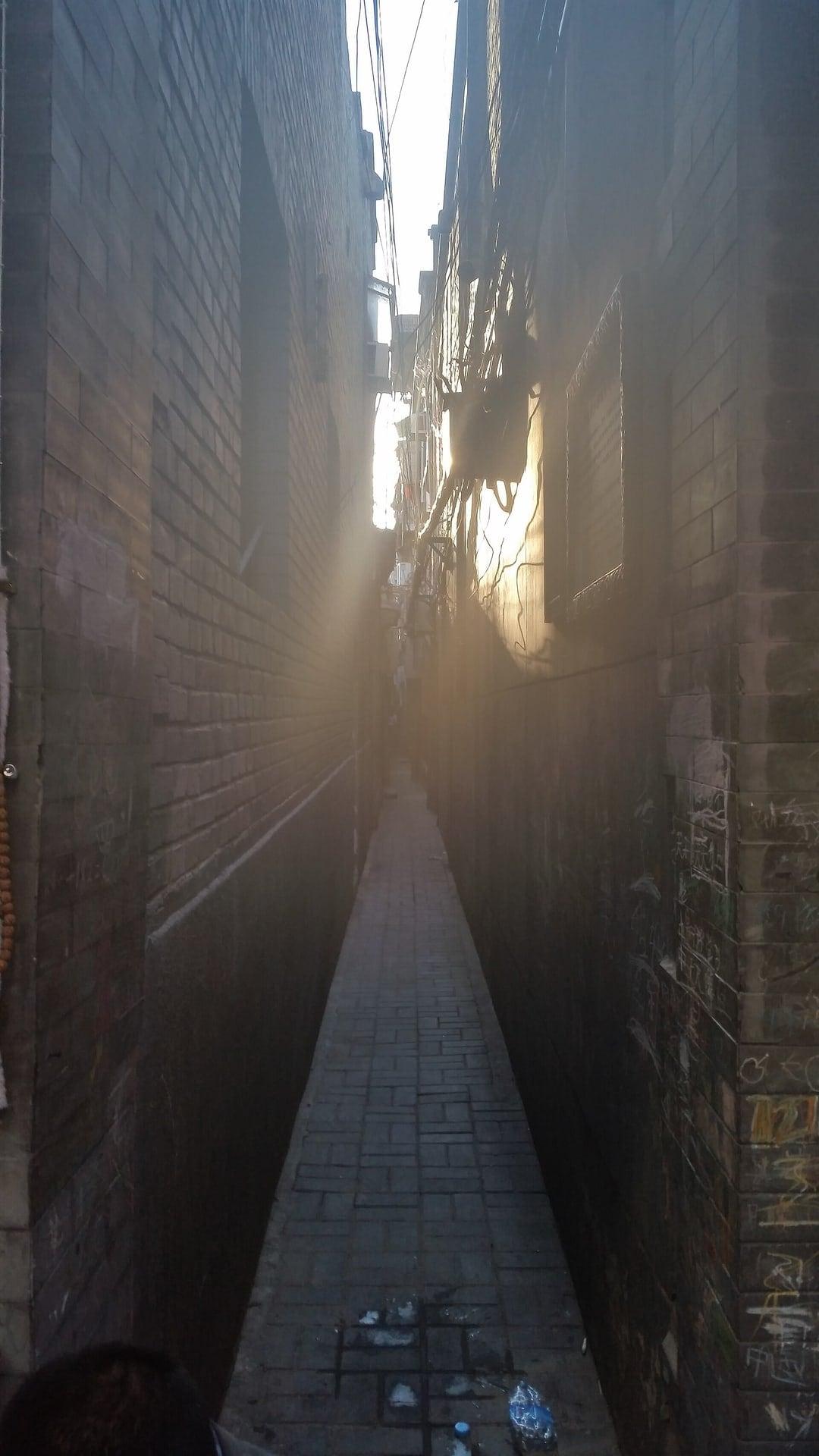
Where loose silver became money. Late Qing furnaces on this lane cast loose silver into ingots, and a lane barely a shoulder wide was the exchange.
- 4
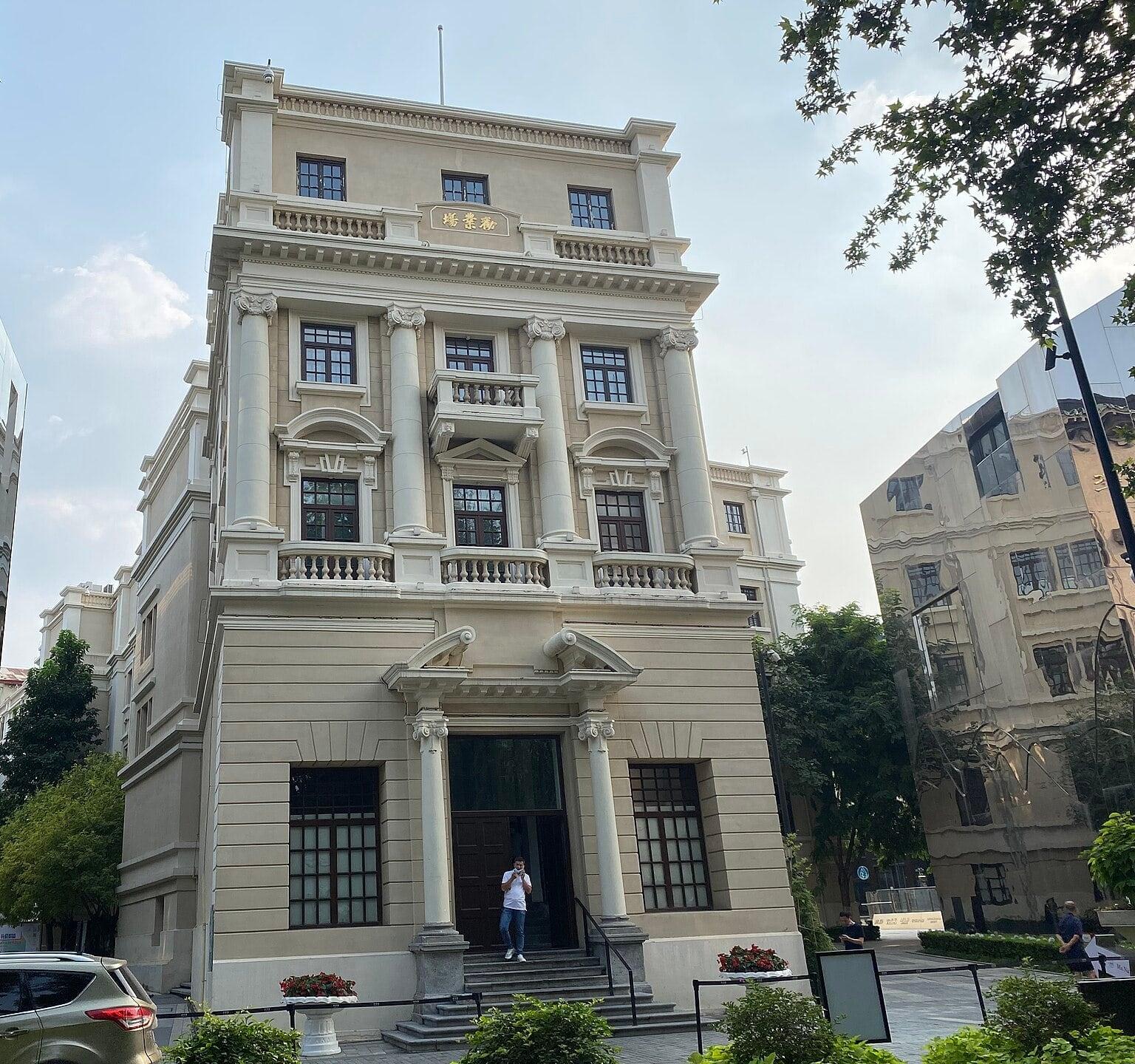
Langfang Toutiao (廊房头条)
A showroom that became an arcade. The Quanyechang began in 1905 as a hall for Chinese-made goods and was rebuilt in 1923 with a Baroque face.
- 5
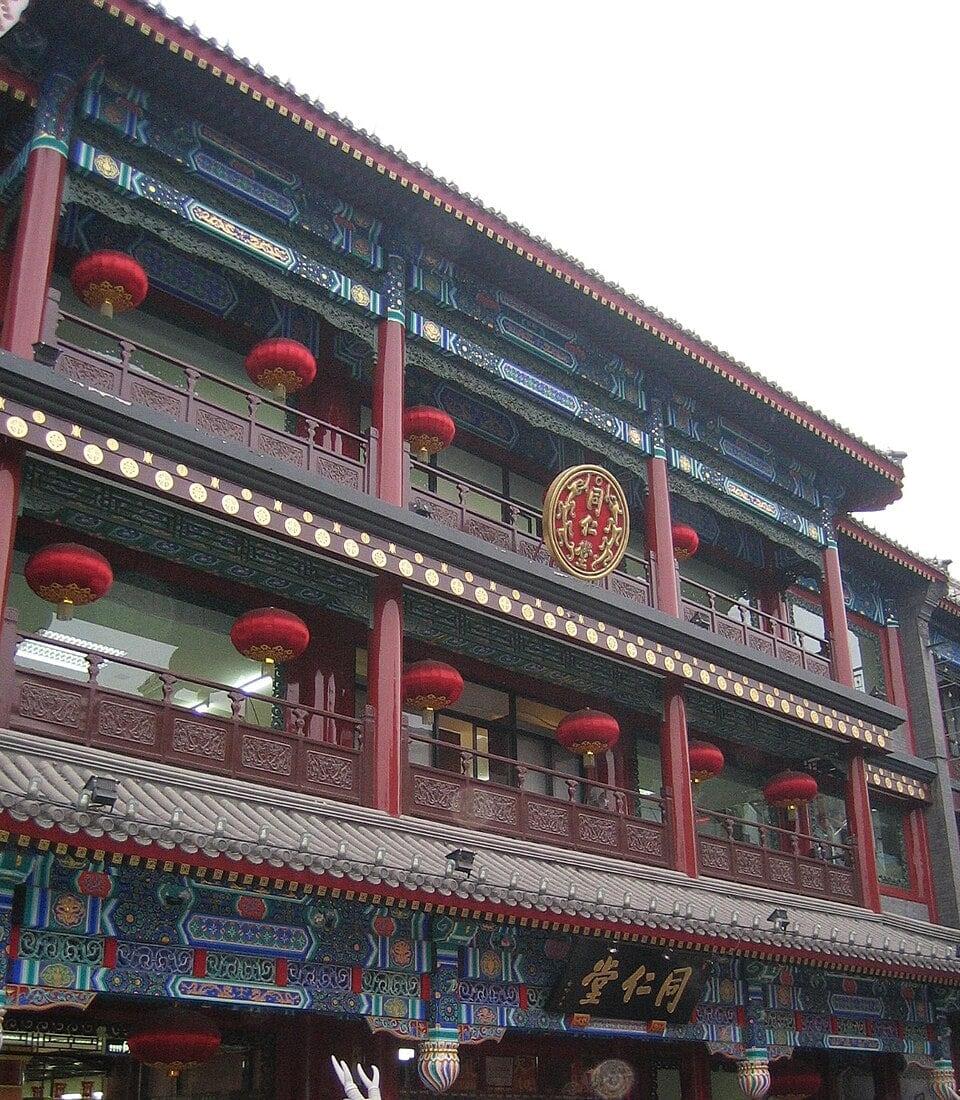
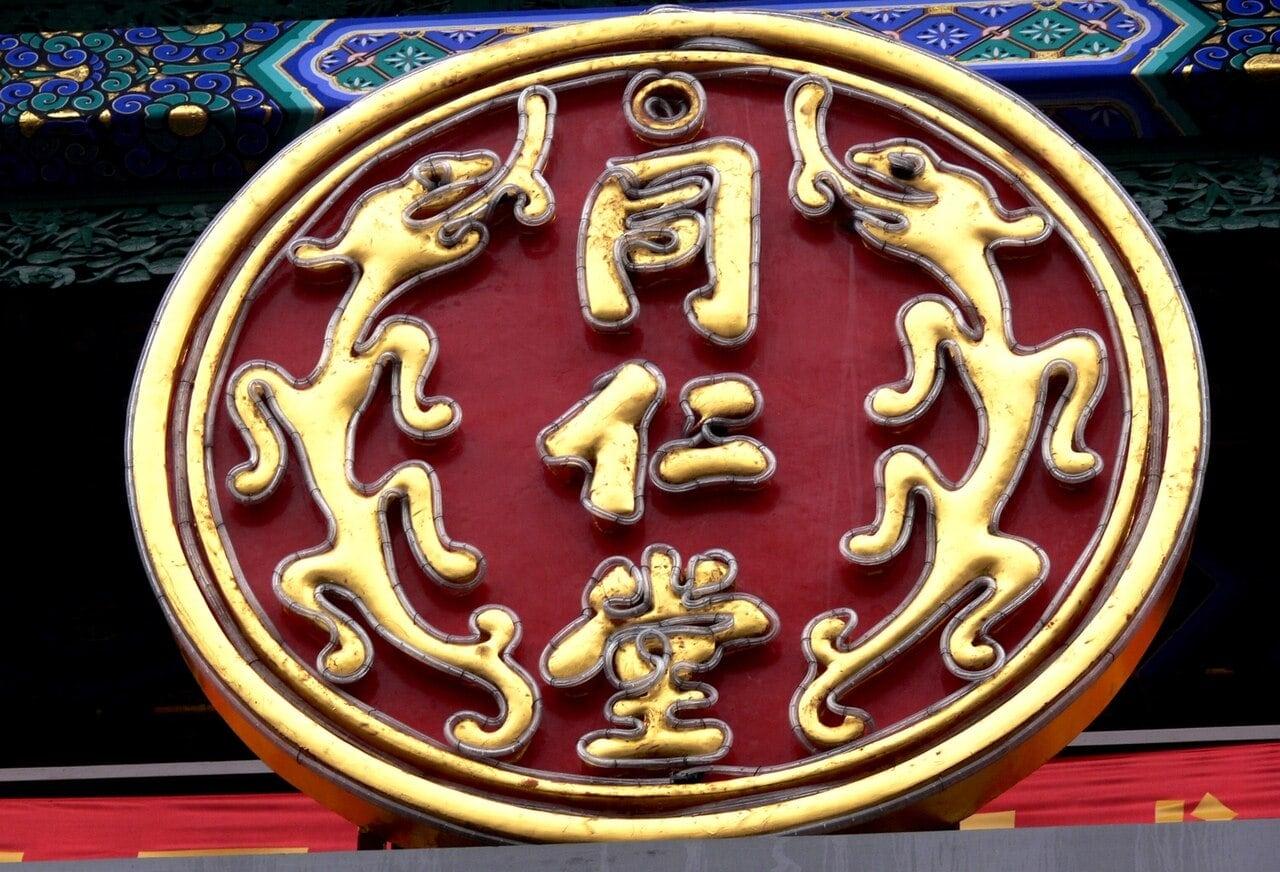
Tongrentang (同仁堂)
Medicine, silk and opera on one block. Tongrentang has kept shop here since 1702; the theater troupes of 1790 stayed on this street.
- 6
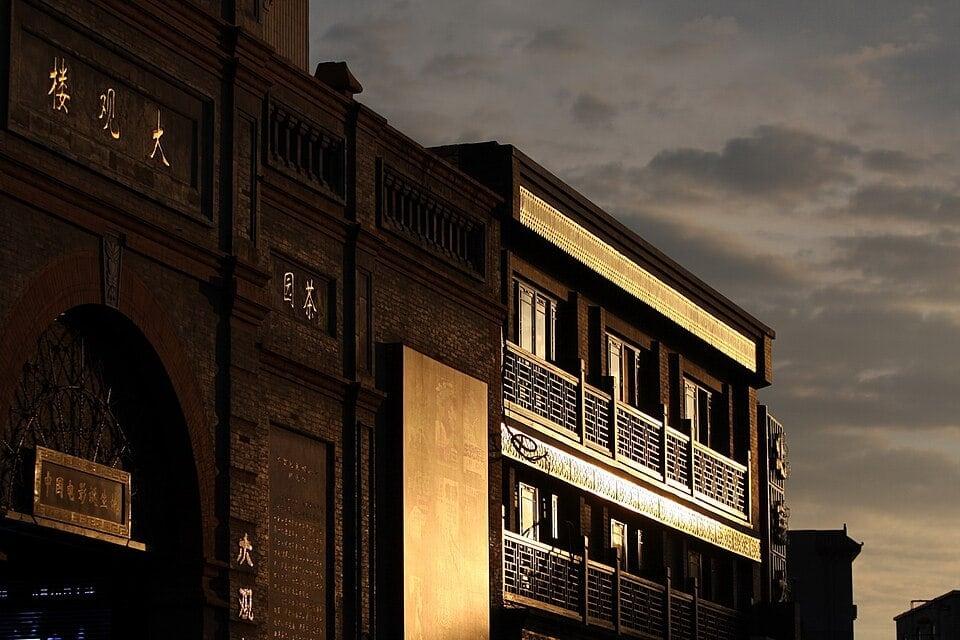
Daguanlou (大观楼)
Where a 1905 opera film was first shown. Scenes of an opera star, filmed in Beijing, were shown in this cinema.
- 7
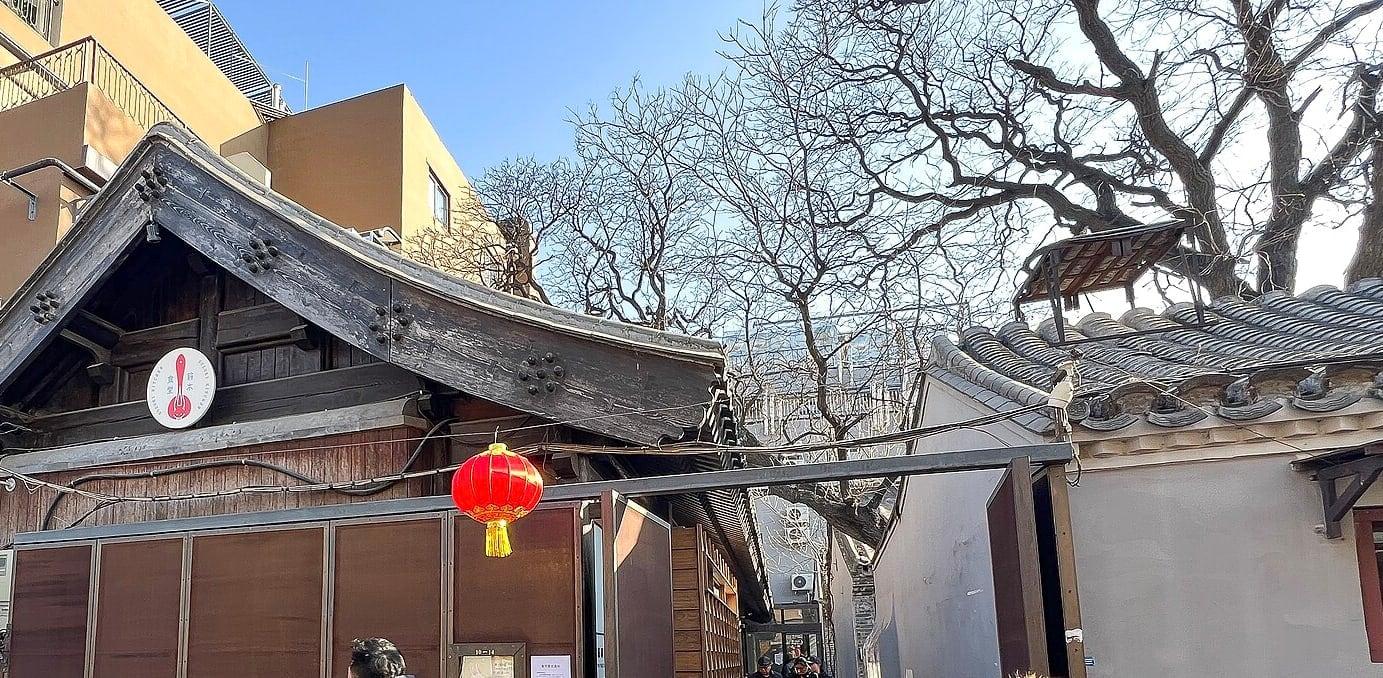
Qingyun Ge (青云阁)
An arcade threaded through a block. Qingyun Ge joined two streets with a covered passage and held a tea house in the Republican era.
- 8
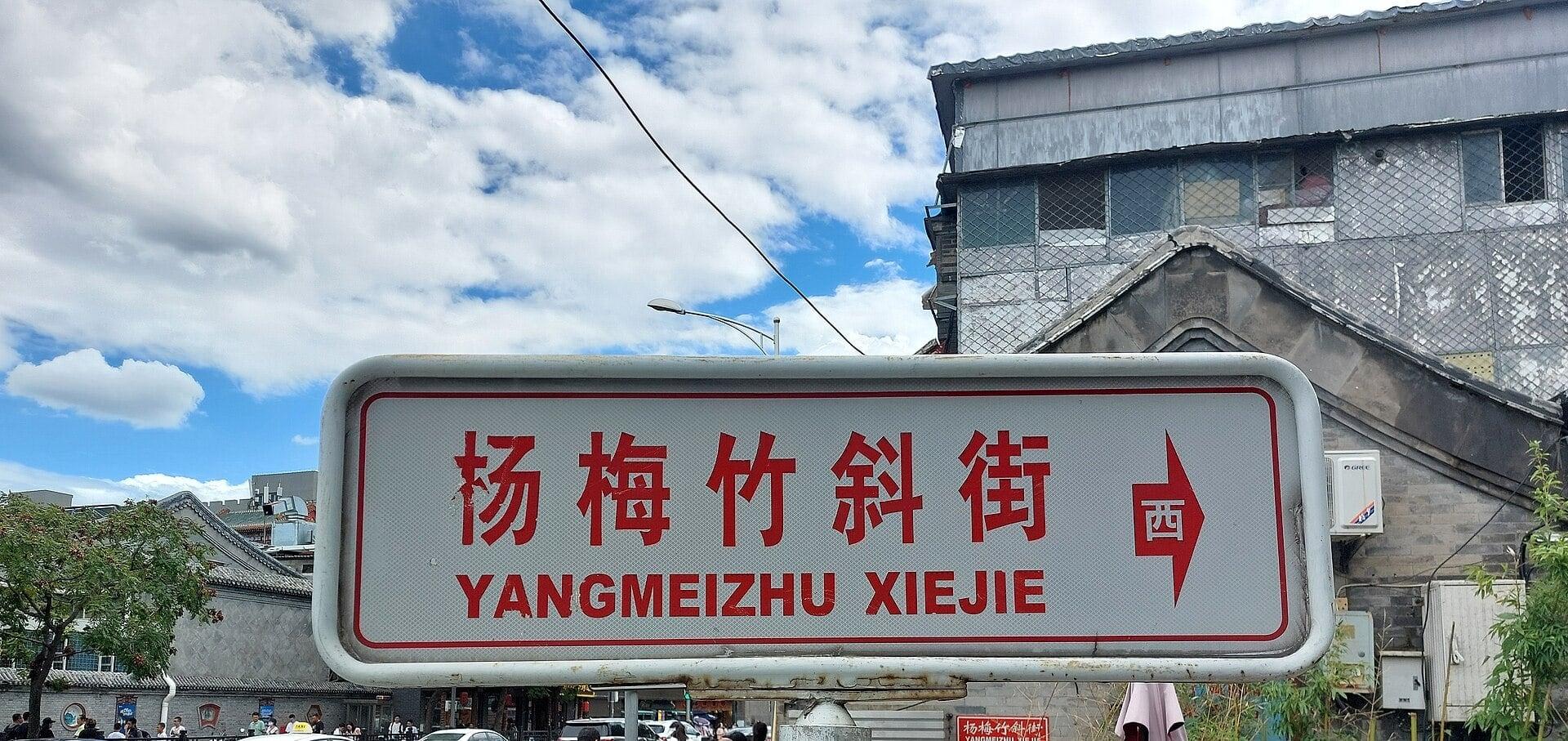
Yangmeizhu Xiejie (杨梅竹斜街)
A street drawn by feet, not by a planner. Travelers' short cut on the slant became a lane, then a publishers' row.
- 9
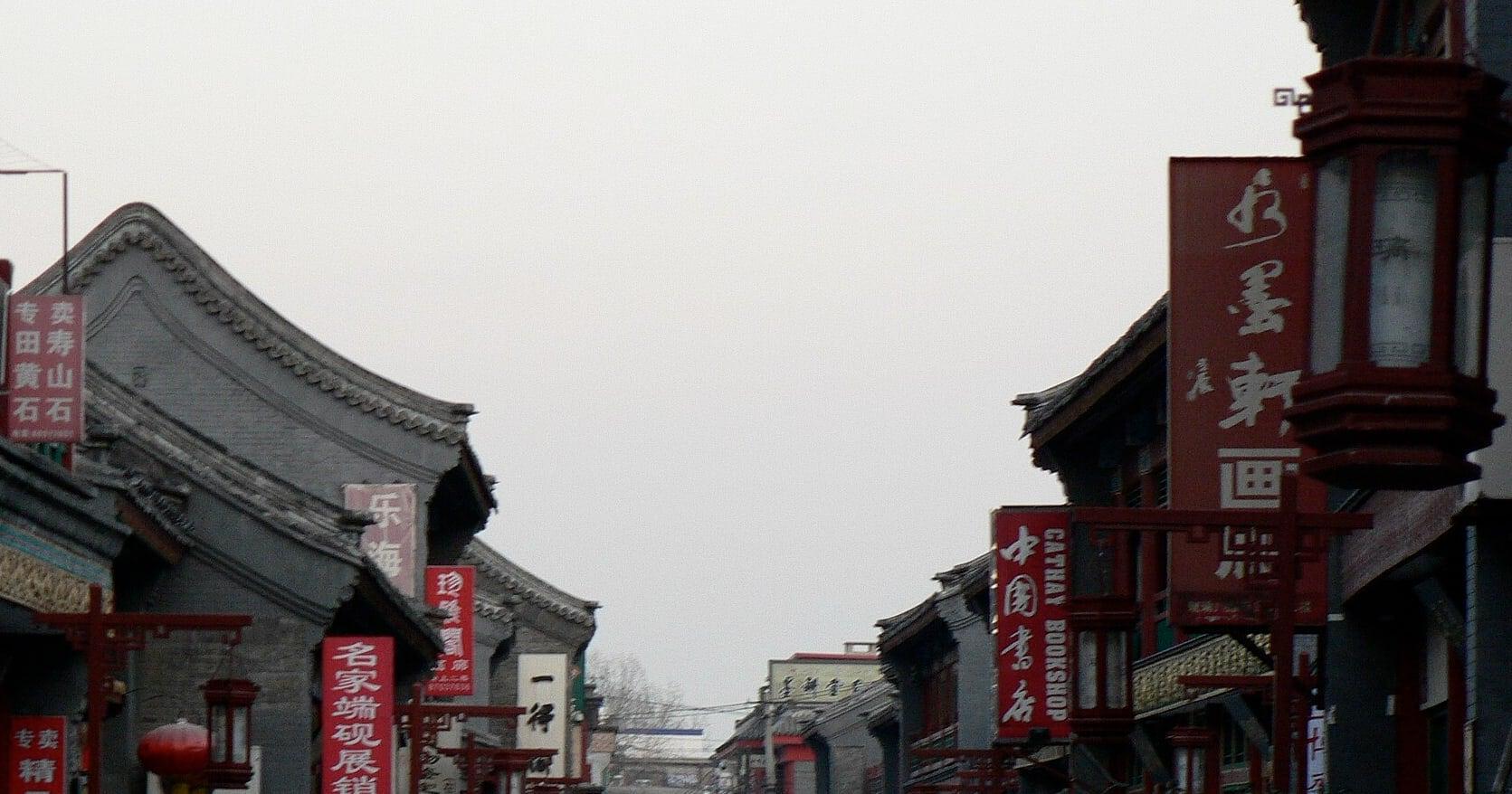
Liulichang (琉璃厂)
A street named for a vanished tile works. Glazed palace tiles were fired here until the kilns moved out after 1553.
- 10
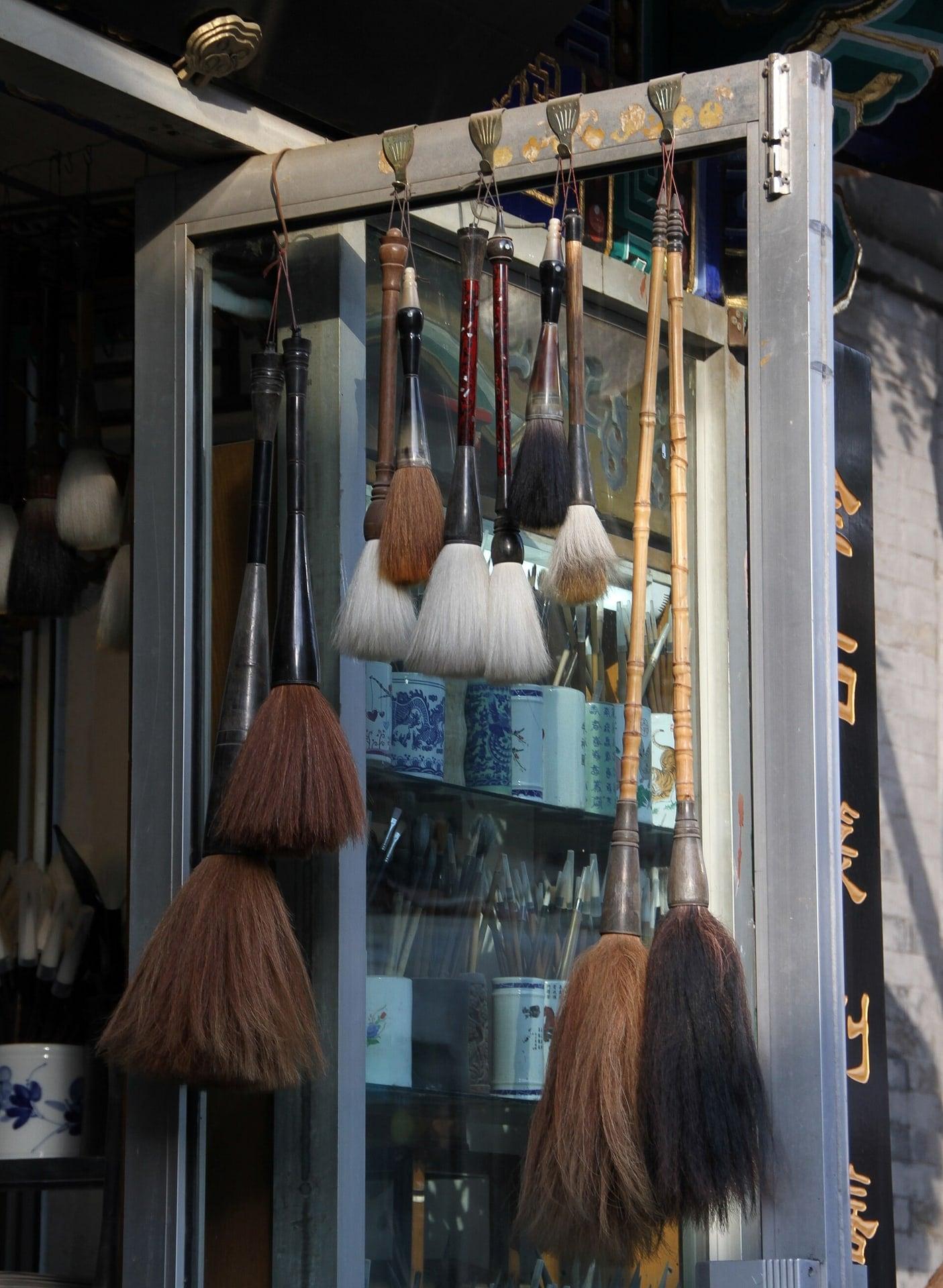
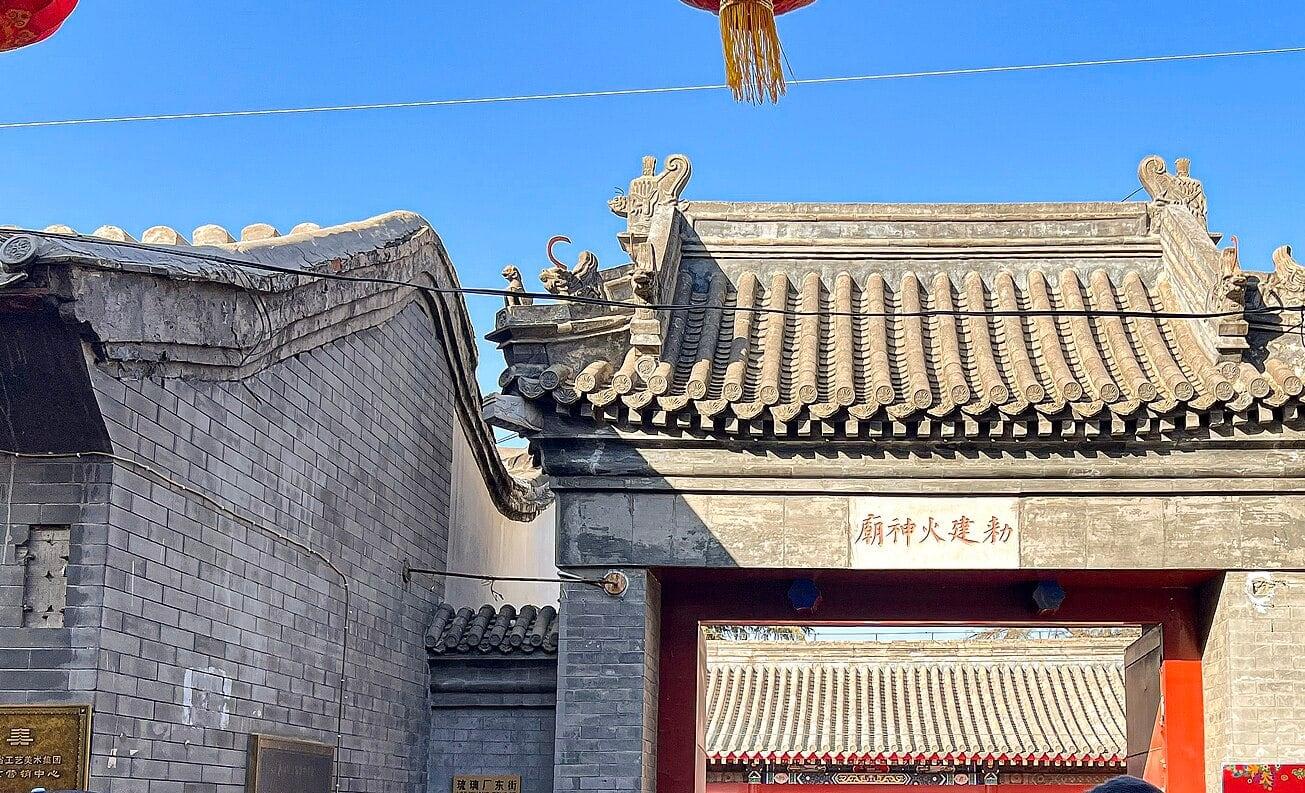
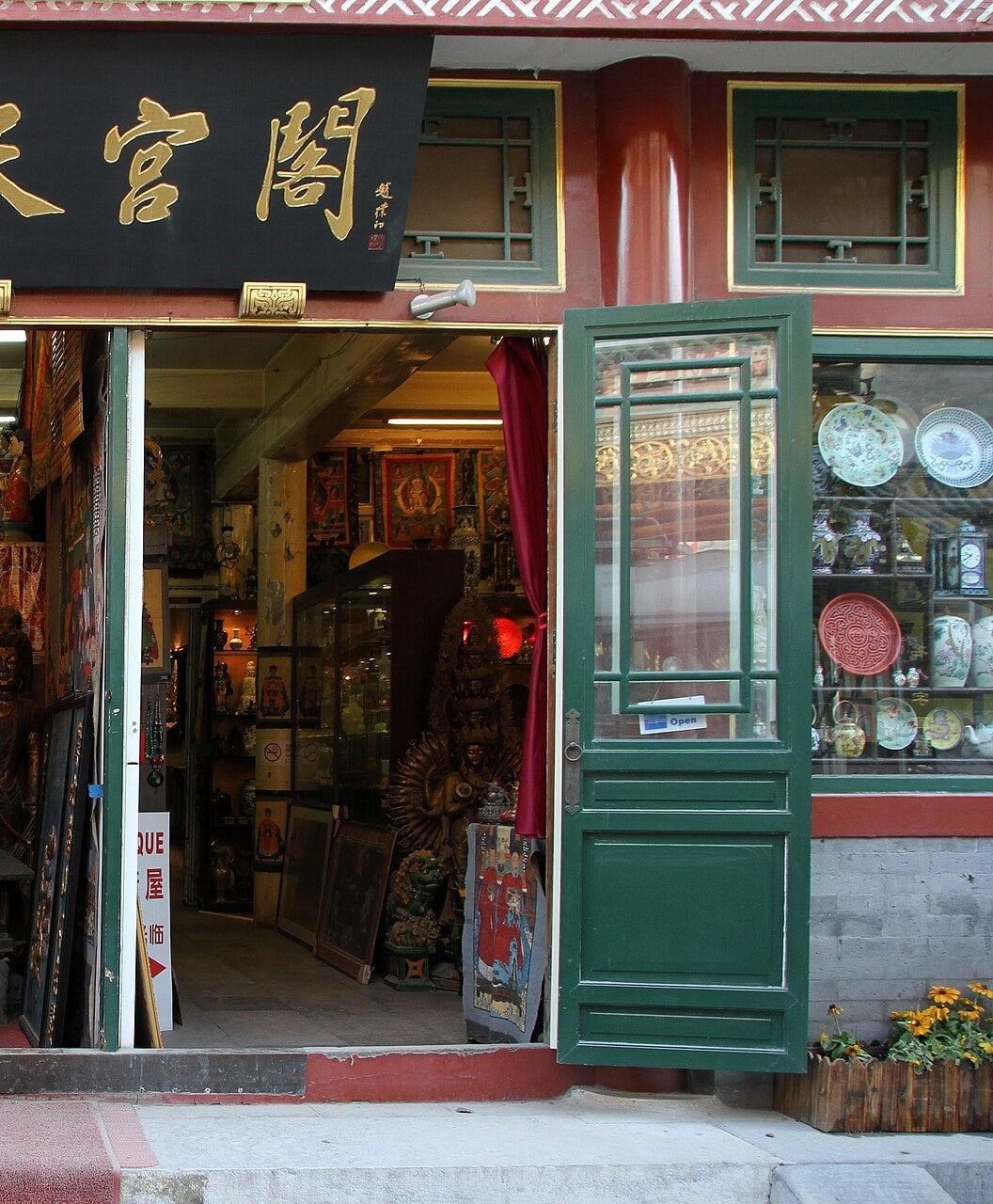
Liulichang East Street (琉璃厂东街)
The exam system made a shopping street. Candidates for the imperial exams lodged here, and the book and brush shops followed.
- 11
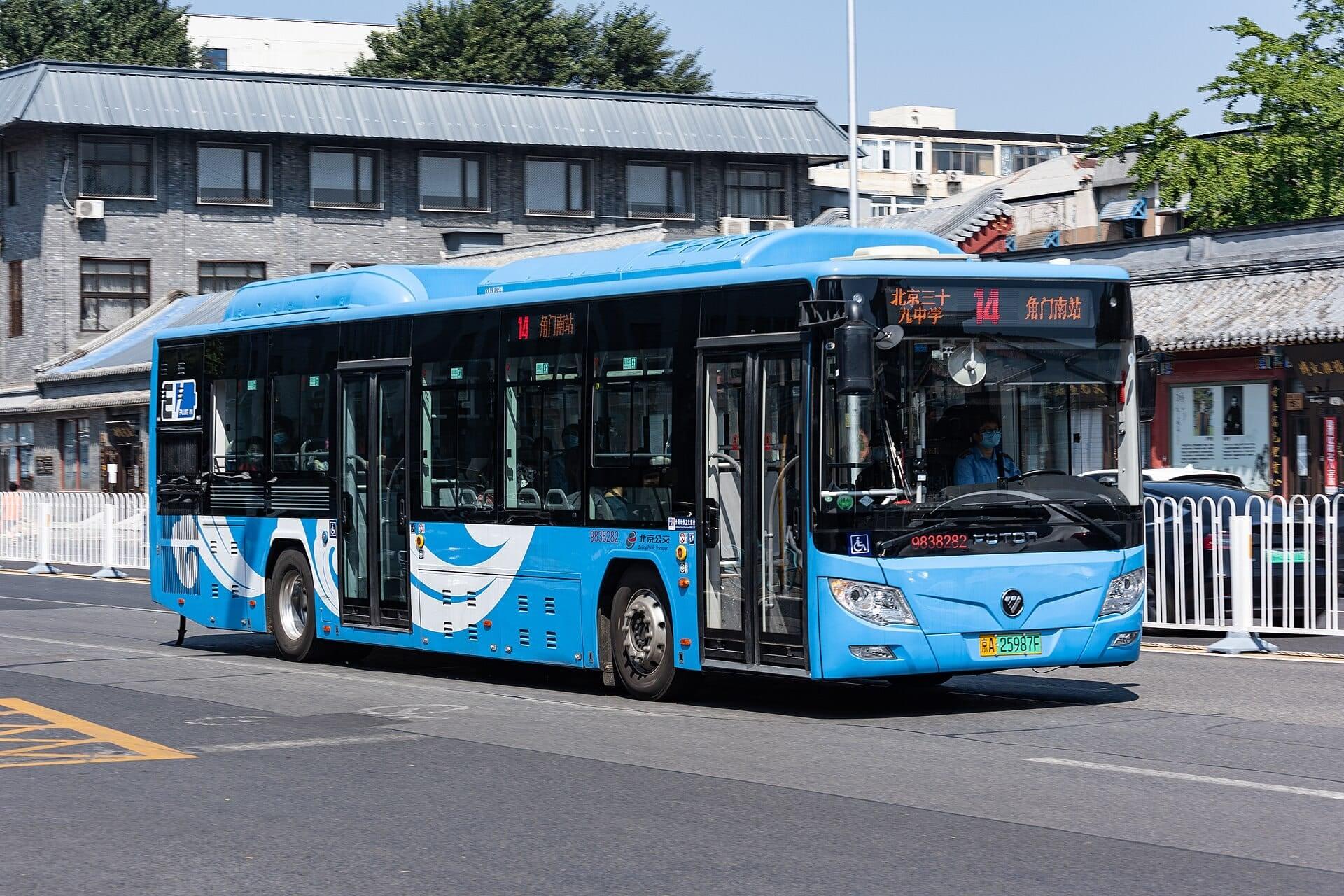
Nanxinhua Street (南新华街)
The road that split the street in two. A 1927 road cut Liulichang in half; a stone footbridge has joined the halves since 1980.
- 12
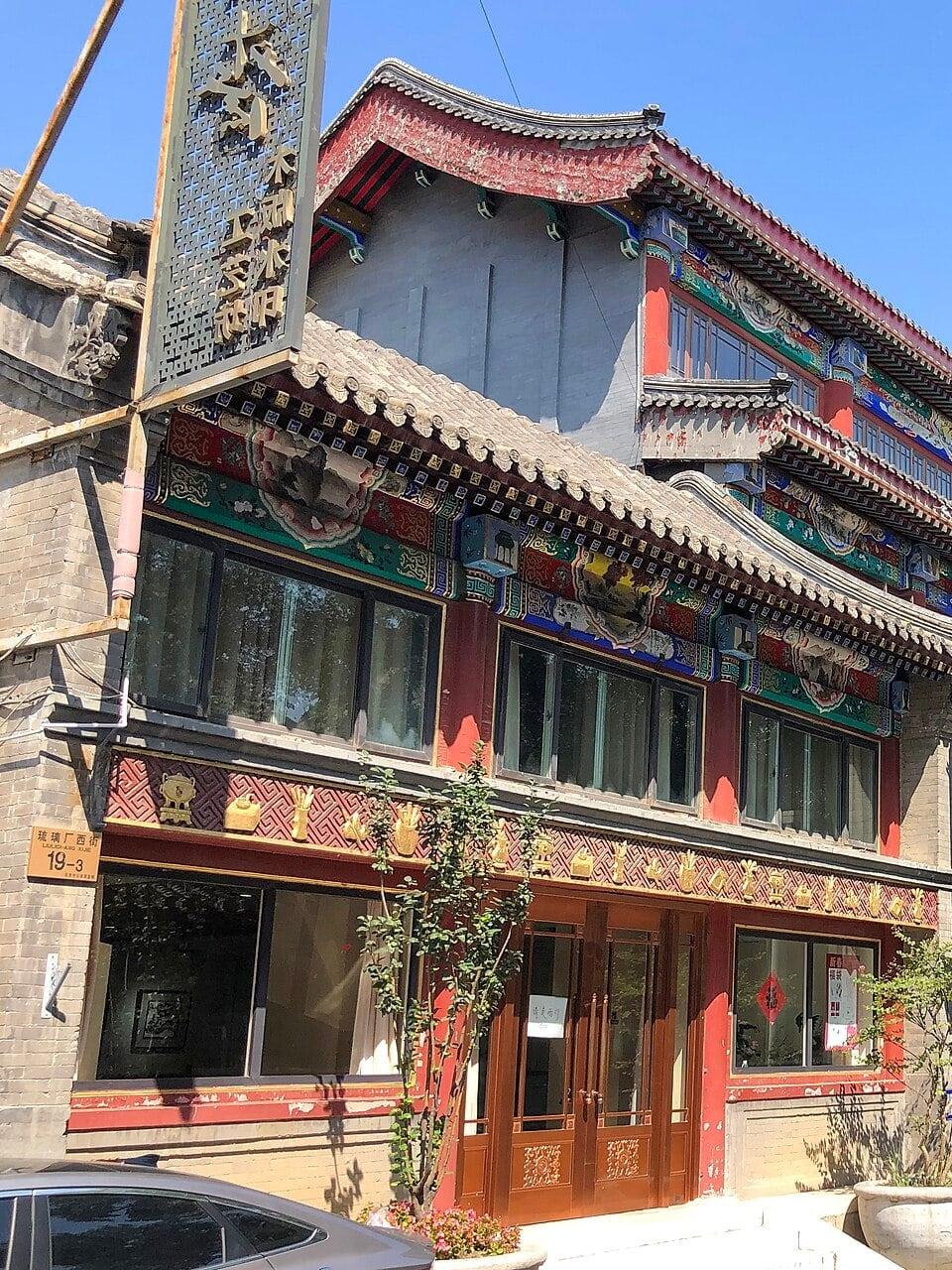
Rongbaozhai (荣宝斋)
Paintings printed by hand from blocks. Rongbaozhai began as a paper shop in 1672 and still prints by woodblock.
Details
Best Time to Visit
By day, about 75 minutes; start by about 14:00 in winter. Sunset is 16:50 on 1 and 15 December and 16:58 on 31 December. December afternoons reach about 3 °C and nights about minus 7 °C. Qianmen Street, Dashilar and Menkuang Hutong are crowded at midday and in the evening, and hung with lanterns around Chinese New Year. Avoid the national holiday weeks: 1 to 3 January, 5 to 13 February 2027 (Chinese New Year), 1 to 5 May and 1 to 7 October. The city center can close streets at short notice for major events: check the day before. Checked 25 November 2026.
Pro Tips
- •Getting to the start: subway Lines 7 and 8 to Zhushikou station, then about 690 m (9 minutes) up Qianmen Street's pedestrian paving and right into the lanes to Xianyukou. Checked 25 November 2026.
- •Getting back: Hepingmen station (Line 2) is about 550 m from the last stop, up Nanxinhua Street, the road under the footbridge.
- •Read the street lamps on Qianmen Street: bird-cage lamps mark the old buildings that were kept, rattle-drum lamps the buildings that mix old details with new, candied-haw lamps the new ones.
- •Paying: WeChat Pay and Alipay are the most widely accepted and can be linked to a foreign card; merchants are required to accept yuan in cash, so carry some for small shops. Checked 25 November 2026.
- •Rongbaozhai's shop and gallery keep ordinary shop hours: check on the day if you want to go in.
Safety & Precautions
- •Mainland China drives on the right: at a crossing without lights, look left first. The one street crossed without lights is Meishi Street, at the zebra between stops 6 and 7; after it, walk about 60 m along the road's west edge, facing the cars.
- •Electric scooters and bikes are almost silent and ride both ways in every lane here, including the pedestrian streets. Look both ways at every lane mouth.
- •Look both ways at the sightseeing tram's rails on Qianmen Street between stops 1 and 2, whether or not the tram is running.
- •Between stops 11 and 12 the route climbs a flight of steps over Nanxinhua Street on a footbridge and comes down another; no step-free crossing is mapped there. If steps are a problem, play stop 12 from the east side of the road.
- •Yangmeizhu Xiejie and the lanes off Zhubaoshi Street are homes: keep your voice low, do not enter courtyards, and do not go into Qianshi Hutong, a residents' dead end.
- •If a friendly stranger invites you to a tea house, a bar or for a massage, decline: the bill can be very large.
- •Carry your passport. Subway stations have routine security checks: allow time. Do not photograph security staff or checkpoints.
Gallery
Read the walk
The full story of Qianmen and Dashilar: Streets Named for What They Sold, in words. Prefer to listen? Play it narrated, from home or on location.
Introduction
South of old Beijing's inner city, a grid of narrow lanes grew into a district of shops, workshops and theaters, and its street names are still a list of what was sold here: fresh fish, jewels and silver, medicine, silk, glazed tiles, books and paper. Beijing calls the whole quarter Qianmen, a name that means front gate. This walk reads it one street sign at a time, from the fish lane of Xianyukou to the paper shops of Liulichang.
There are twelve stops over about two kilometers, about one and a quarter miles, and it takes about seventy five minutes. The ground is flat, apart from one footbridge with steps near the end.
Traffic in mainland China drives on the right, so at a crossing without lights, look left first. Most of the walk is on car free streets and narrow lanes, but electric scooters and bikes are almost silent and come from both directions: look both ways every time. Near the start you cross the rails of a little sightseeing tram.
Nothing on this walk needs a ticket. Every stop is a public street; the shops and theaters are told from outside. It is best by day, while the shops are open: in December the sun sets before five.
December afternoons reach about three degrees Celsius, thirty eight Fahrenheit, and nights fall well below freezing. Carry your passport, as you should anywhere in mainland China. The city center can close streets at short notice for major events, so check the day before. Have mobile data that works in mainland China, and download this tour before you set out.
To reach the start, take the subway to Zhushikou station, on Lines seven and eight, walk about five hundred meters up Qianmen Street's pedestrian paving, and turn right into the lanes for Xianyukou. When you arrive at Xianyukou, begin with stop one.
1. Xianyukou (鲜鱼口)
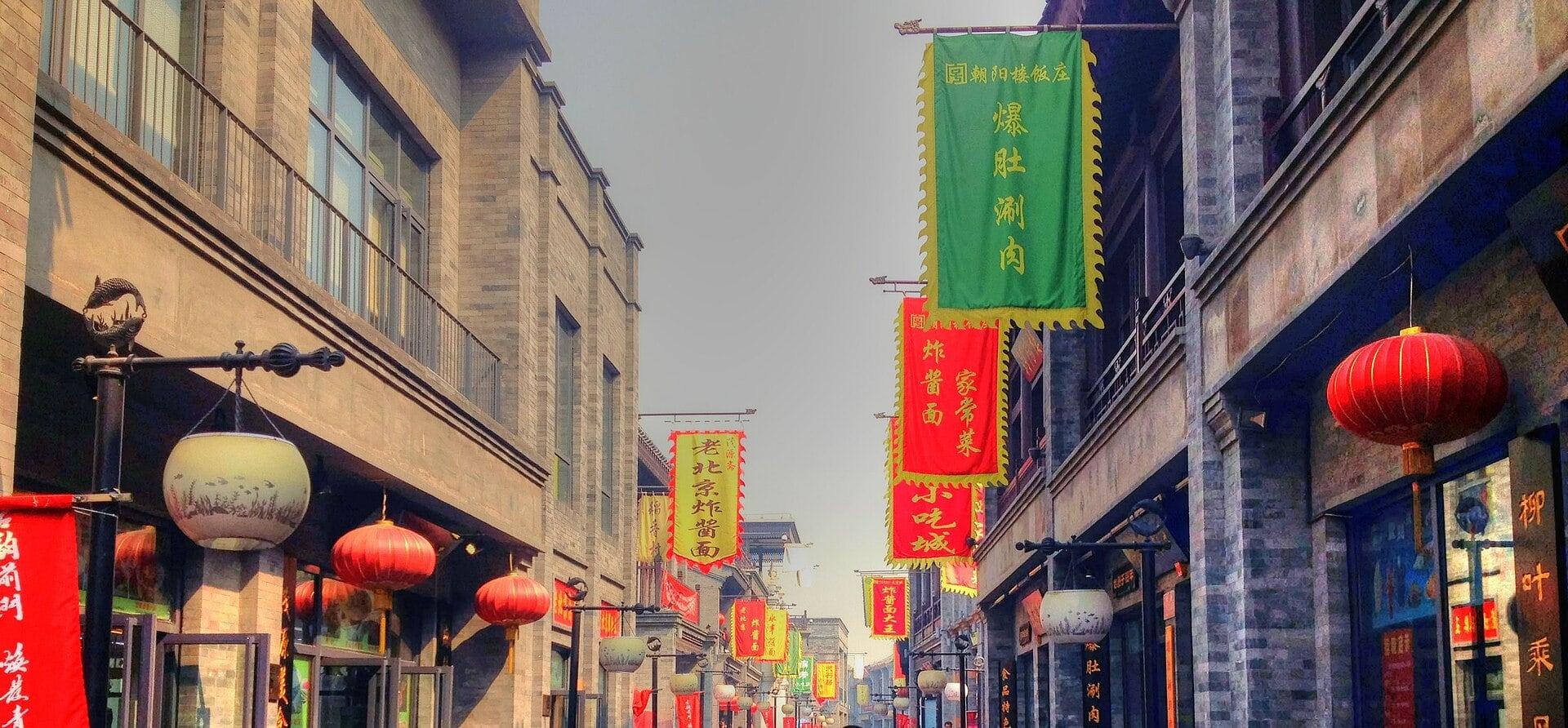
Look along the lane ahead: two story shop fronts, carved signboards and restaurant doors, curving gently toward a broad pedestrian street at the far end. The name of this lane is the first receipt on this walk. Xianyukou means, roughly, the mouth of the fresh fish lane, and the name says what was sold here. This was a market lane by the middle of the Ming dynasty, just outside the wall of the old inner city, where food and goods came in to feed the capital.
Water ran close by. A channel called the Sanlihe flowed just east of this lane, and it is recorded as far back as the fourteen thirties and forties. Over the centuries it disappeared under houses and streets. In twenty sixteen work began to dig it out again along its old course, and in April twenty seventeen water flowed there once more, as a landscaped stream about nine hundred meters long. It lies a few minutes east of here, off this route, if you want a quiet wander afterward.
In two thousand two, this lane and the blocks around it became one of twenty five protected historic districts in the old city. Some of the names over the doors are old ones too. Bianyifang, the roast duck restaurant a few steps behind you, says it was founded in fourteen sixteen.
At holidays the lane may be hung with big lantern displays. Keep to the open middle and watch for delivery scooters, which use the lane too.
Follow the route along Xianyukou to the broad pedestrian street, and straight across it under the gateway on the far side.
2. Dashilar Gateway (大栅栏)
Just above you is the gateway over the mouth of Dashilar, and ahead the street narrows between old shop fronts. Behind you is Qianmen Street, with the rails of its little tram set in the paving.
This street is named after a gate barrier. In fourteen eighty eight, the Ming emperor ordered barriers built across the streets and lanes of the capital and its suburbs, opened in the morning and shut at night. Qing emperors renewed the order: in sixteen seventy beyond the walls, with a curfew after the evening watch, and in seventeen thirty six again at the lane mouths of the outer city. This street's real name was a number, Langfang Sitiao, the fourth of the Langfang shop rows. The story goes that its merchants paid for an especially tall, handsome barrier at the lane mouth to guard their goods, and the barrier became the name. A Qing map of the seventeen hundreds already labels the street Dashilar, the big barrier. Beijing people still say it their own way: Dashilanr.
Now look at the nearest street lamps on Qianmen Street behind you. They are a code. Qianmen Street was rebuilt and reopened in August two thousand eight, and its lamps tell you what you are looking at. Lamps shaped like bird cages stand where old buildings were kept; nine buildings from the nineteen twenties and thirties survive whole. Rattle drum lamps mark buildings that mix historic details with new design. Lamps shaped like sticks of candied haws mark the new ones.
Across Qianmen Street is Duyichu, known for its steamed shumai dumplings, a craft on the national intangible heritage list since two thousand eight. The story goes that an emperor found it the only shop open on New Year's Eve, and named it for that.
Follow the route a few steps into Dashilar and take the first lane on the right, Zhubaoshi Street.
3. Zhubaoshi Street (珠宝市街)
This narrow street is Zhubaoshi Street, the jewel market street, and at the end of the Qing dynasty it was a place where money was physically made.
Along this street stood official silver furnaces, twenty six of them by the late Qing. They were licensed by the government's Board of Revenue, and the work was exacting. Loose silver, in pieces of every size and purity, was melted down in crucibles and cast into standard ingots that traders could trust. In a lane a little to the south, Shijia Hutong, many native banks did business.
Off the west side of this street runs a dead end called Qianshi Hutong, the money market lane. This was where silver and cash changed hands, and it is one of the narrowest lanes in Beijing: just over fifty meters long, under eight tenths of a meter at its widest and only four tenths of a meter at its narrowest. That is narrower than most people's shoulders. Its doors belong to residents, so the lane is told from here, not walked into.
Think of it as a factory floor for money: raw metal in, trusted ingots out, and the trading done in a lane so tight that two people can barely pass.
Follow the route a few steps to the first corner and turn left along Langfang Toutiao.
4. Langfang Toutiao (廊房头条)
On the north side of this lane, on your right, rises a tall Western style front. This is the Quanyechang, and it has been showing off goods since the last years of the Qing dynasty.
First, the lane. Langfang Toutiao means the first row of the shop sheds. Four such rows once ran side by side here: the first, the second, the third, and the fourth, which is Dashilar, the barrier street you passed at stop two.
In nineteen oh five an exhibition hall for goods made in China opened on this site, a showroom meant to encourage industry, which is roughly what the name Quanyechang says. In nineteen twenty three it was rebuilt as a shopping arcade by a noted architect of the day, drawing on Europe's Art Nouveau and wearing a strongly Baroque face. It is described as the first large, all in one commercial building in Beijing of its time, the years when the Qing dynasty gave way to the Republican era. Look at the ornament on that front, and imagine it among the one and two story shop sheds that gave this lane its name.
Today the building sits at the heart of a new shopping quarter called Beijing Fun, and its inside is a commercial venue. The front is the part this walk is for, and it is best seen from right here in the lane.
Follow the route along Langfang Toutiao and then down a very narrow food lane, Menkuang Hutong, back to Dashilar. It is busy at mealtimes: go with the flow.
5. Tongrentang (同仁堂)
Coming out of the narrow food lane, look across Dashilar to the shop just ahead and a little to your left. This is Tongrentang, a name in traditional Chinese medicine that has traded on this street for more than three hundred years. Tongrentang dates itself to sixteen sixty…
Full narration for this stop unlocks with the tour.
6. Daguanlou (大观楼)
On your left, on the south side of the street, is the Daguanlou cinema. Across from it, on your right, is the Guangdelou, another old theater name and still a working stage. In the autumn of nineteen oh five, a Beijing businessman named Ren Qingtai teamed up with the opera star…
Full narration for this stop unlocks with the tour.
7. Qingyun Ge (青云阁)
Just ahead, on the left side of the lane, stands an old arched gateway front. This is Qingyun Ge, the Blue Cloud Pavilion, an arcade built in nineteen eighteen, in the Republican era. Qingyun Ge was built as a passage right through the block, joining this slanting lane to…
Full narration for this stop unlocks with the tour.
8. Yangmeizhu Xiejie (杨梅竹斜街)
Look both ways along this lane and notice what it does: it runs on the slant. Most lanes in this quarter run straight, in rows like the Langfang rows you passed. Yangmeizhu Xiejie, the Bayberry and Bamboo Slanting Street, cuts across them at an angle. No planner drew it that…
Full narration for this stop unlocks with the tour.
9. Liulichang (琉璃厂)
This is Liulichang. The shop fronts ahead, with their carved signboards and lanterns, are dressed in an old Beijing style, and you will hear how that happened two stops from now. First, the name, which has nothing to do with books. Liulichang means the glazed tile works. In the…
Full narration for this stop unlocks with the tour.
10. Liulichang East Street (琉璃厂东街)
All along this street, windows show brushes hanging in rows, stacks of paper, ink sticks, carved seals, paintings and rubbings. Nearly a hundred shops trade in them. Why here? Because of the imperial examinations. Under the Qing, candidates came to the capital from every…
Full narration for this stop unlocks with the tour.
11. Nanxinhua Street (南新华街)
Ahead, a busy road cuts straight across the old street, and a white stone footbridge in the old style arches over it. In nineteen twenty seven, a new gate called Hepingmen was opened in the old city wall, and a new road, Xinhua Street, was laid through to it, straight across…
Full narration for this stop unlocks with the tour.
12. Rongbaozhai (荣宝斋)
On the right hand side of the street stands Rongbaozhai, behind its tall carved shop front. It is the last word of the paper street. It began in sixteen seventy two as Songzhuzhai, the Pine and Bamboo Studio, a paper shop opened by a man from Zhejiang. In eighteen ninety four…
Full narration for this stop unlocks with the tour.
- File:鮮魚口 Xianyu Traditional Restaurant Street From East 선어구 - panoramio.jpg | 鮮魚口 Xianyu Traditional Restaurant Street From East 선어구 — Bohao Zhao, CC BY 3.0 · source
- File:Gate of Dazhalan Area on Qianmen Street 2.JPG | 前門大街にある大柵欄の門 — そらみみ (Soramimi), CC BY-SA 4.0 · source
- File:Qianshi Hutong, Beijing, 2015.jpg | Qianshi Hutong, Beijing, 2015 — Bangabandhu, CC BY-SA 4.0 · source
- File:北京劝业场旧址 2021-09-03.jpg | 北京劝业场旧址 — StefanTsingtauer, CC BY-SA 4.0 · source
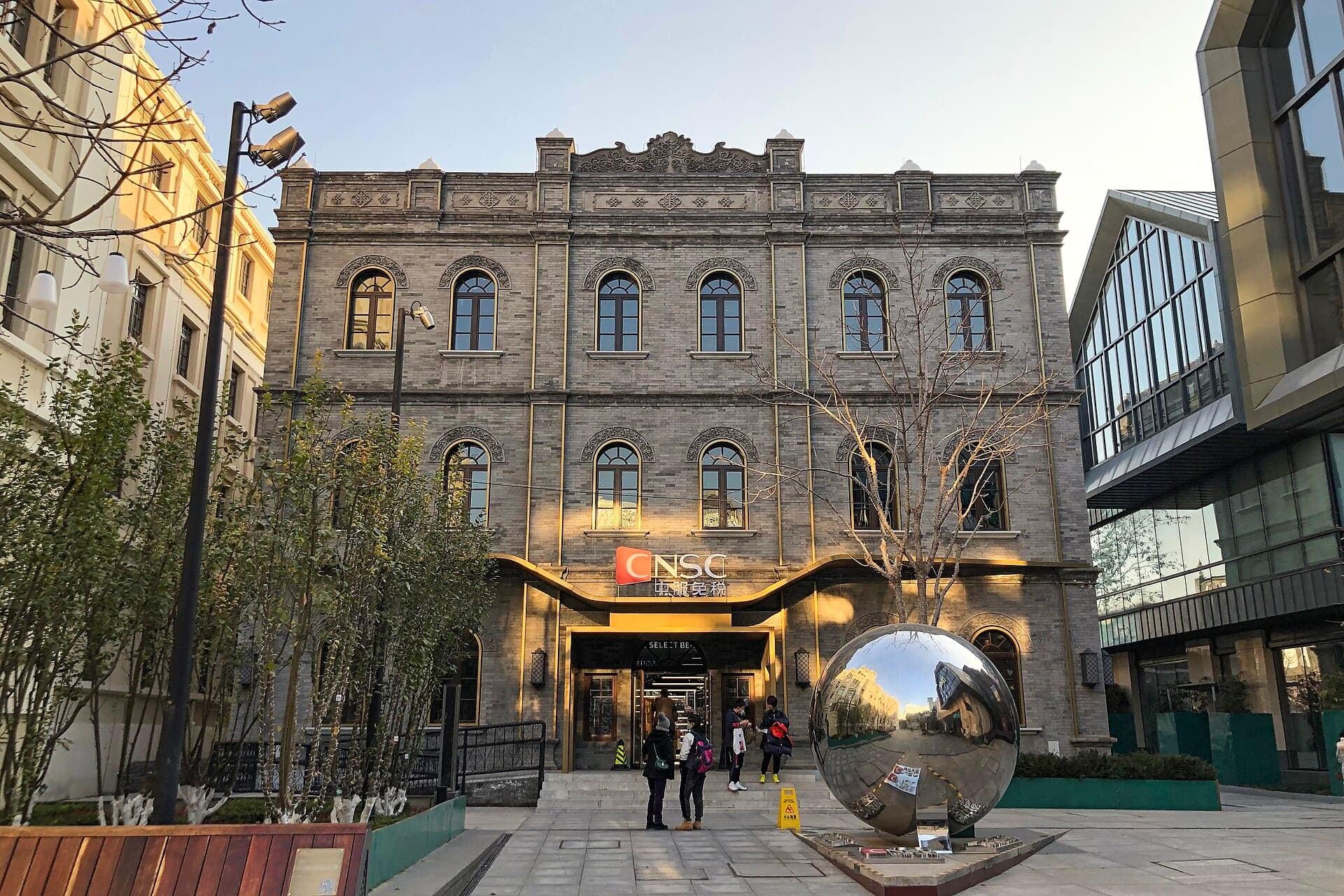
- File:CNSC Duty Free Shop at Qianmen (20201211152432).jpg | China National Service Corporation opened an in-town duty free shop here recently — N509FZ, CC BY-SA 4.0 · source
- File:Beijing TongRenTang at DaShiLar.JPG | Beijing TongRenTang at DaShiLar — Nikopoley, CC BY-SA 3.0 · source
- File:Tongrentang herbal store.JPG | Beijing Dashala Tongrentang herbal medicine store — Gisling, CC BY 3.0 · source
- File:大栅栏 - panoramio.jpg | 大栅栏 — wuqiang_beijing, CC BY 3.0 · source
- File:Suzuki Kitchen at Yangmeizhu Xiejie, Beijing (20240210151713).jpg | West of Dashilanr. — N509FZ, CC BY-SA 4.0 · source
- File:20240811 135647 Beijing.jpg | Peking — J. Patrick Fischer, CC BY-SA 4.0 · source
- File:Liulichang1.jpg | The Liulichang quarter in Beijing — Shazari, CC BY 2.0 · source
- File:Liulichang Fire God Temple (20240210145645).jpg | Rarely noticed before! — N509FZ, CC BY-SA 4.0 · source
- File:Beijing-Liulichang Dongjie-08-Pinsel-gje.jpg | Beijing - Liulichang district — Gerd Eichmann, CC BY-SA 4.0 · source
- File:Beijing-Liulichang Dongjie-12-gje.jpg | Beijing - Liulichang district — Gerd Eichmann, CC BY-SA 4.0 · source
- File:9838282 at Liulichang (20200902131541).jpg | 38282 "City of Heze". — N509FZ, CC BY-SA 4.0 · source
- File:Rongbaozhai Building (20200902132457).jpg | The core of Liulichang. — N509FZ, CC BY-SA 4.0 · source
Images may be cropped or resized. Other photos via Unsplash and Pexels.