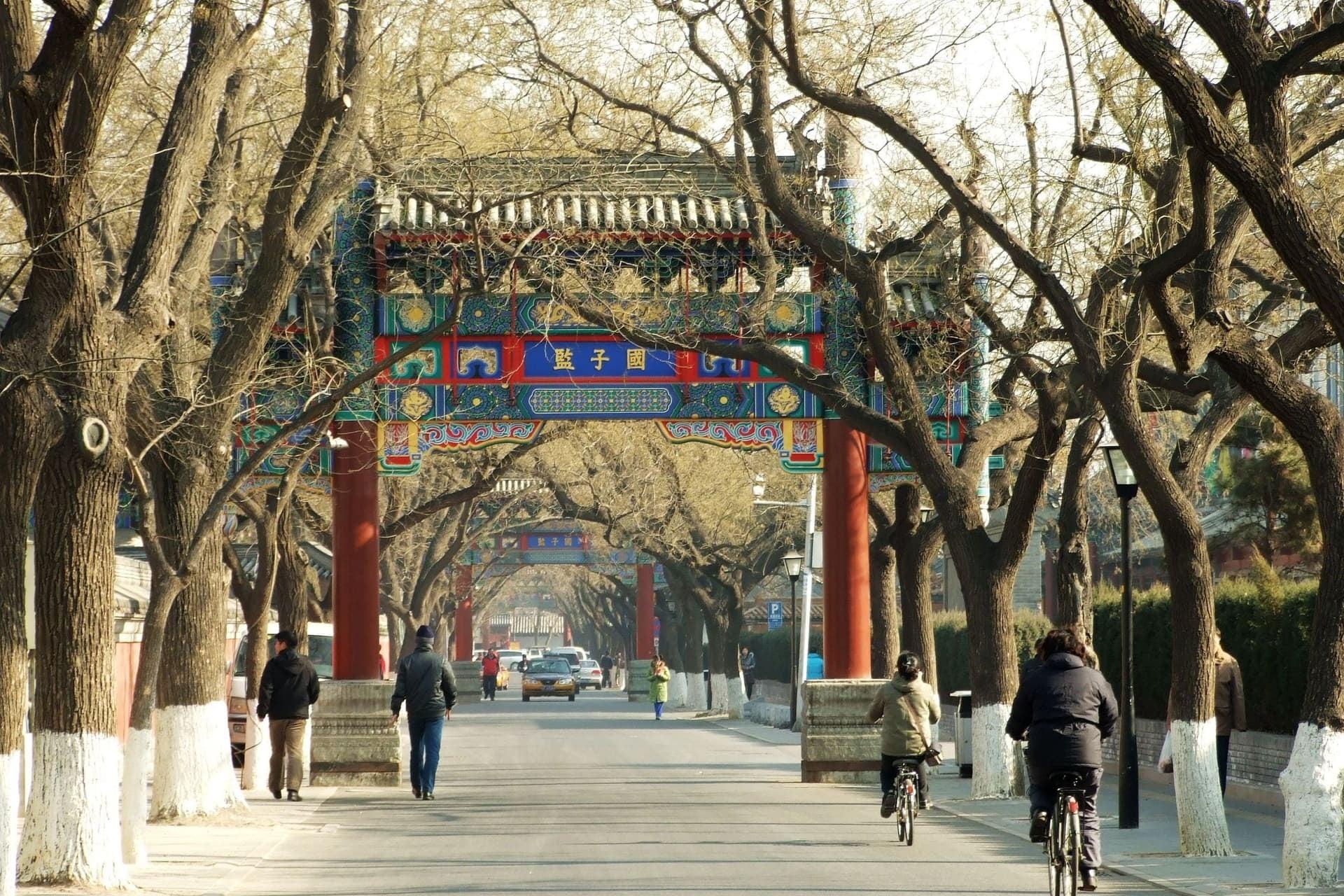
One block of old Beijing holds a prince's palace turned monastery, the state temple to Confucius and the empire's college. Walk around three sides of it, from Wudaoying Hutong down Yonghegong Street to the painted archways of Guozijian Street, and read it from the street.
Start · Wudaoying Hutong (五道营胡同)
DirectionsStops
- 1
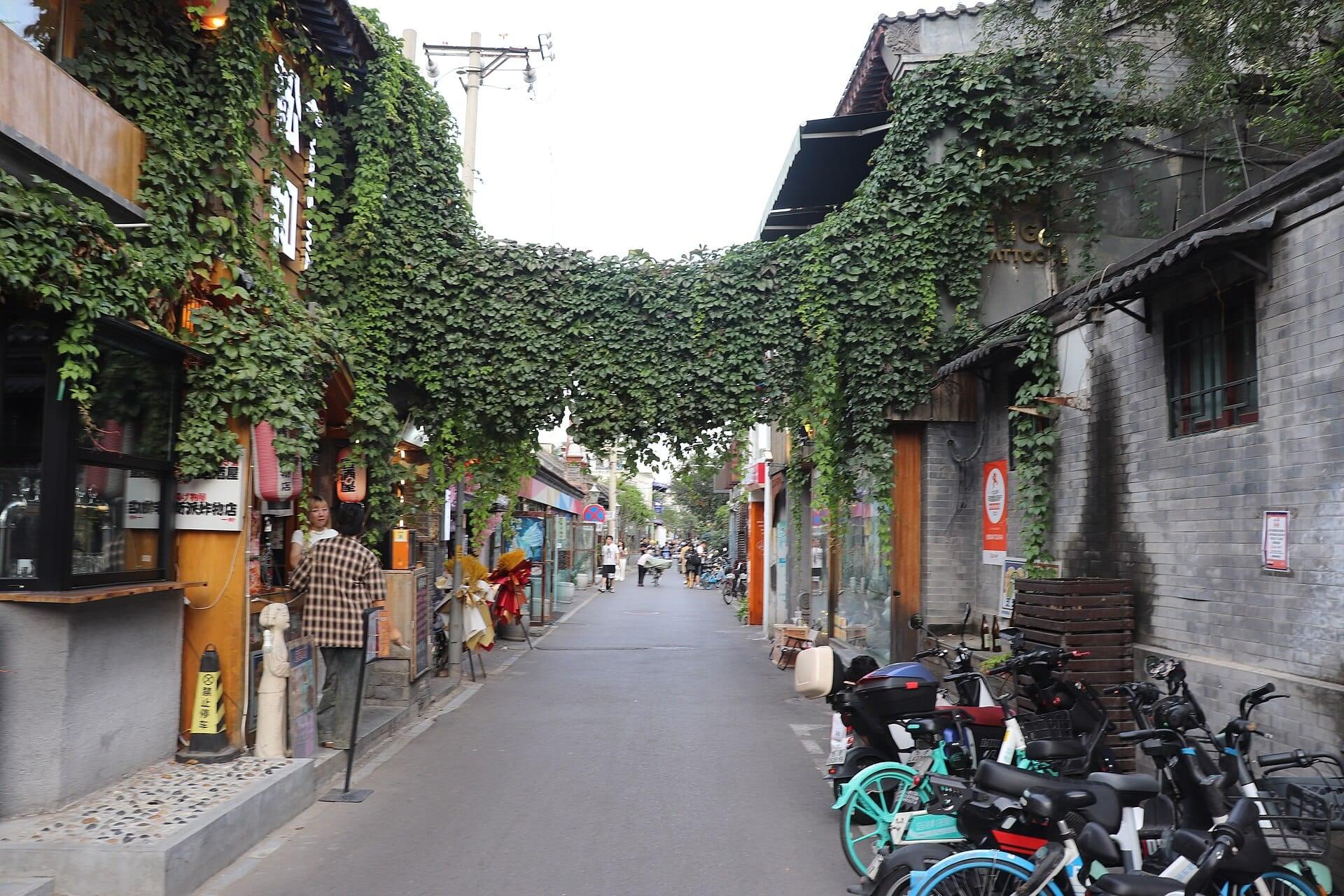
Wudaoying Hutong (五道营胡同)
A guards' camp became a lane. Wudaoying Hutong keeps a name that, by tradition, remembers a Ming garrison camped here.
- 2
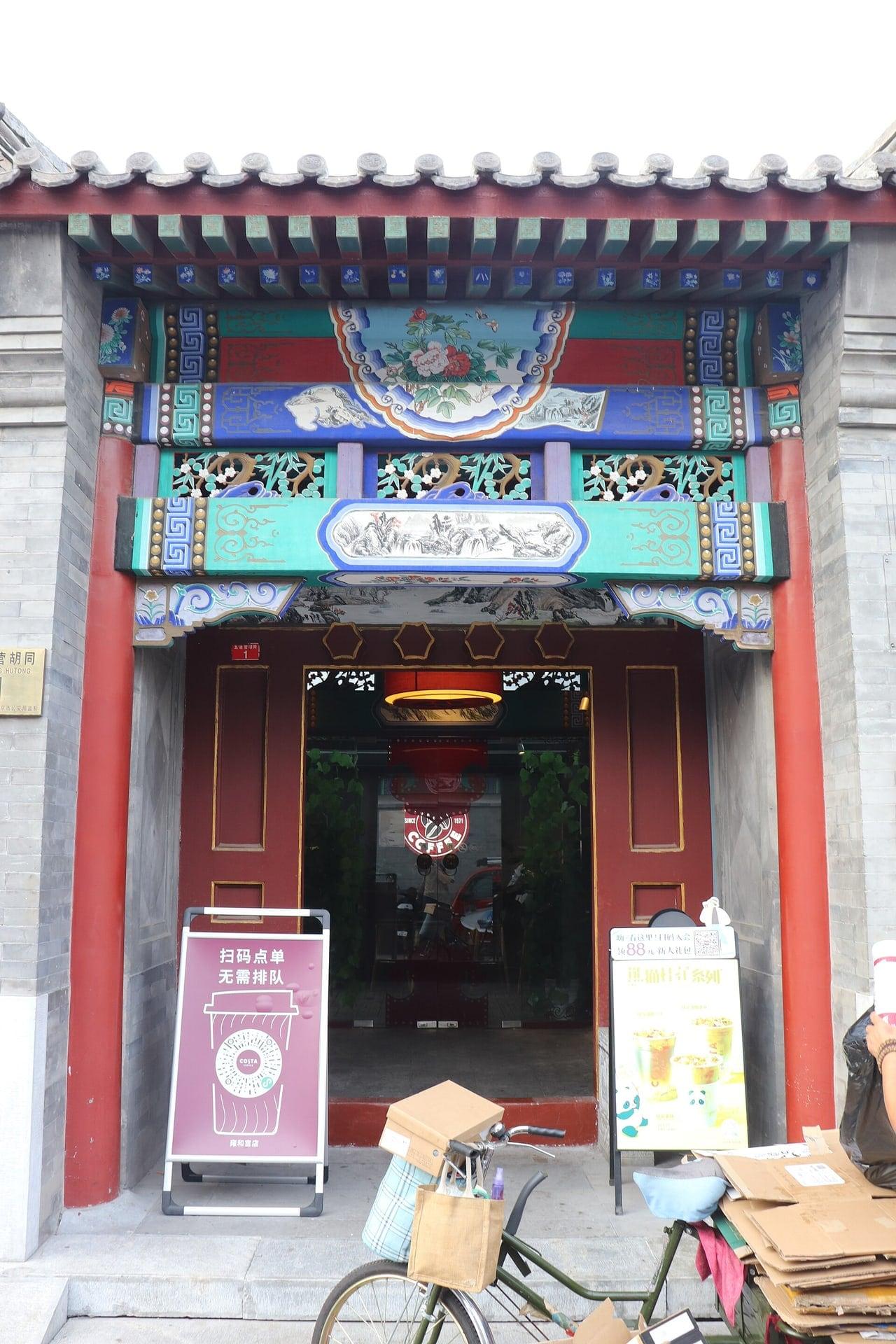
Courtyard Gatehouses (门楼)
The small stones are protected. Along Wudaoying, the city protects not just houses but gatehouses, mounting stones, screen walls and guardian stones.
- 3
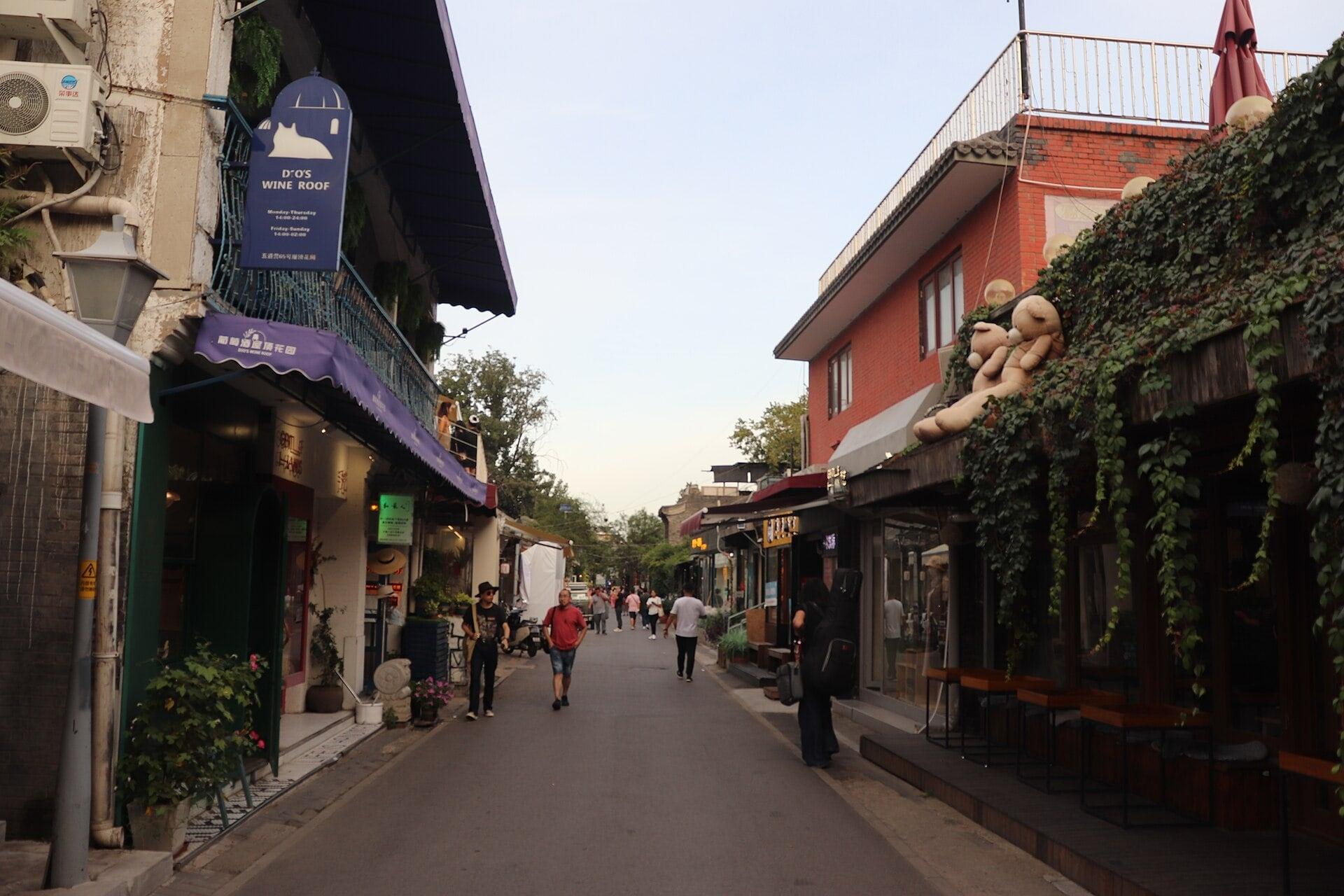
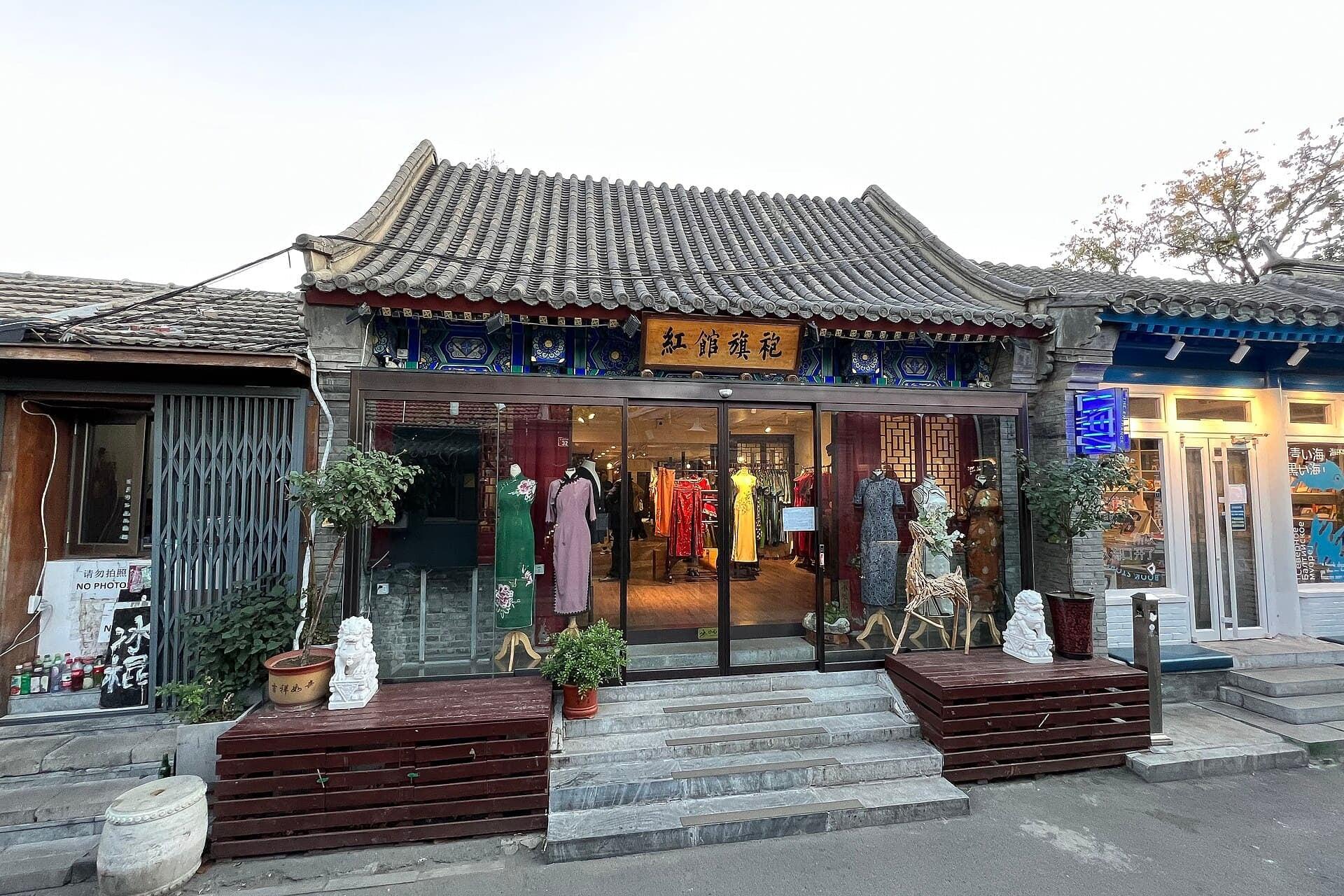
Wudaoying Cafe Street (五道营)
A garrison lane turned coffee lane. The first cafe here opened in 2006; within fifteen years the city named Wudaoying a characteristic shopping street.
- 4
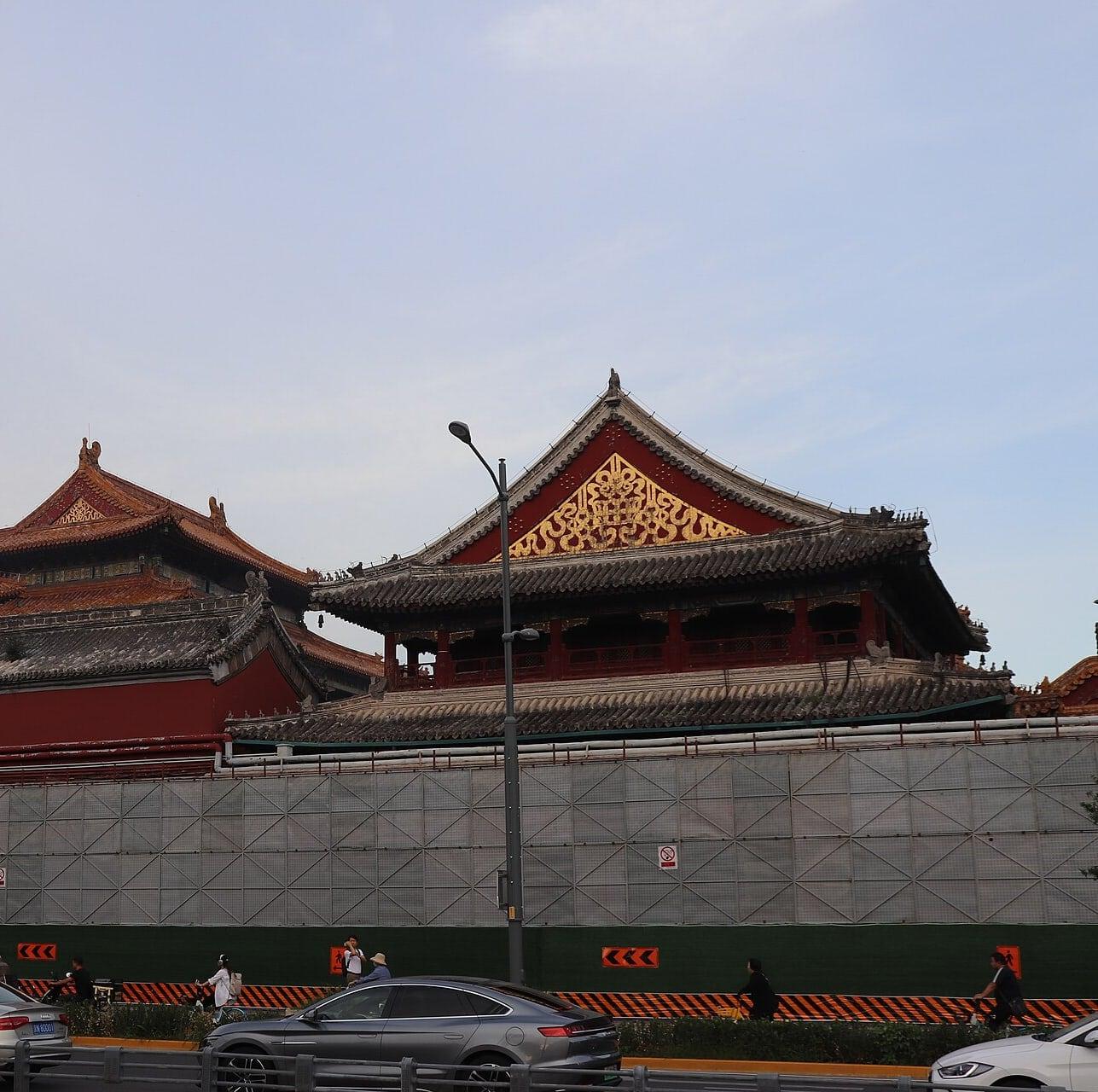
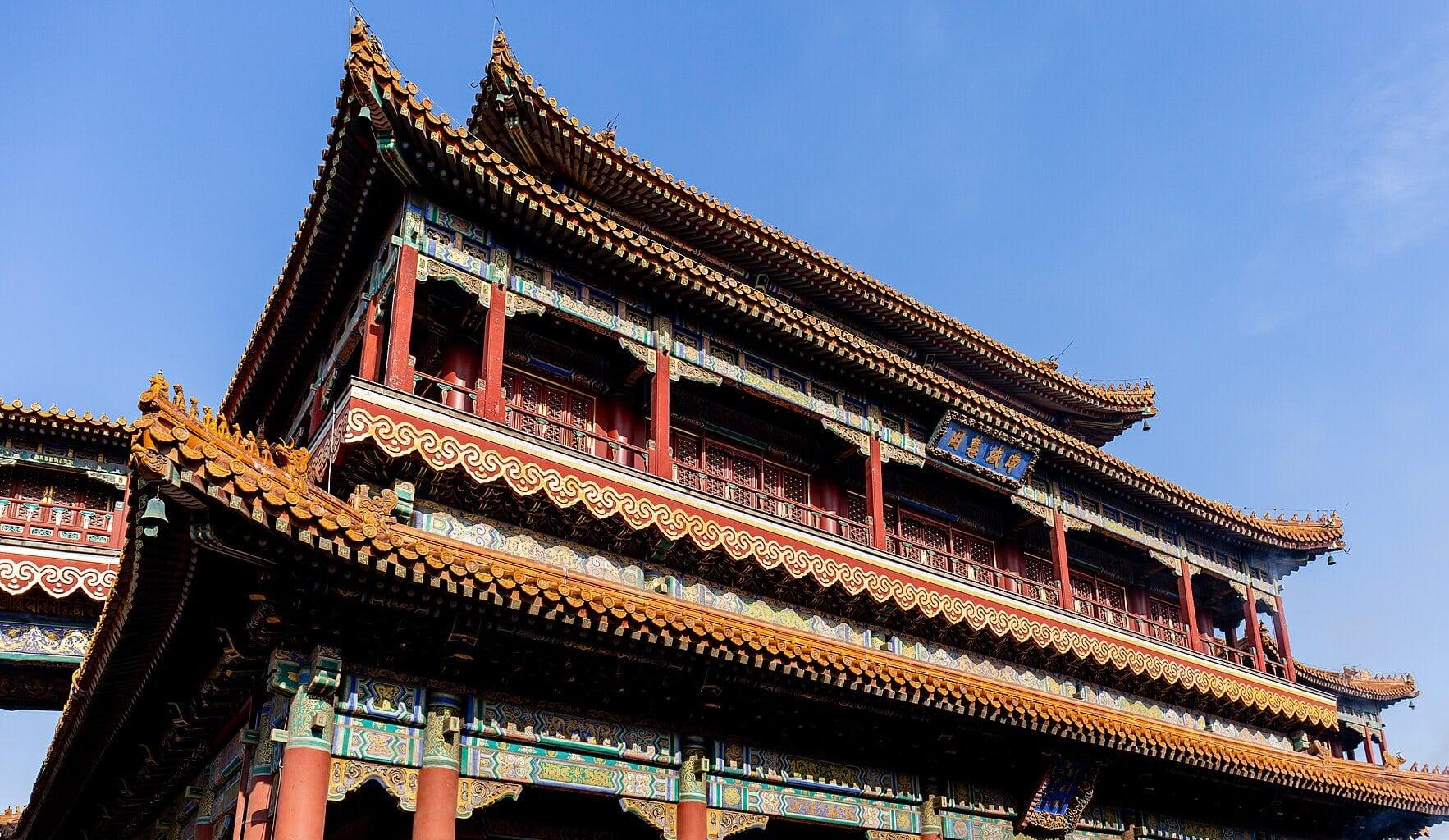
Pavilion of Ten Thousand Happinesses (万福阁)
A monastery built as a climb. Across the avenue, Yonghegong's halls rise step by step to its tallest building, which holds a giant standing Buddha.
- 5
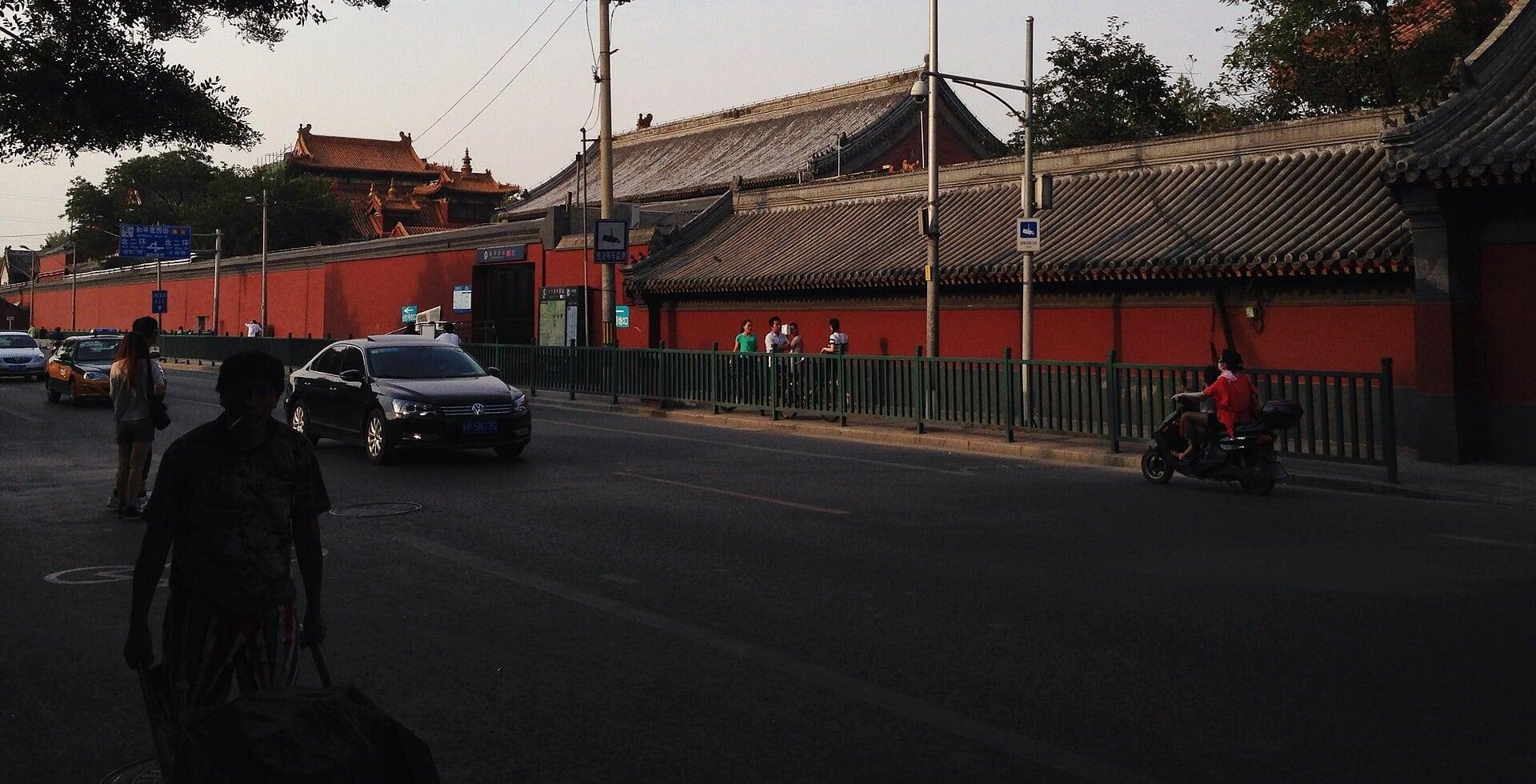
Yonghegong Lama Temple (雍和宫)
One compound lived three lives. Built in 1694 as a prince's home, where an emperor was born, raised to a palace in 1725 and made a monastery in 1744.
- 6
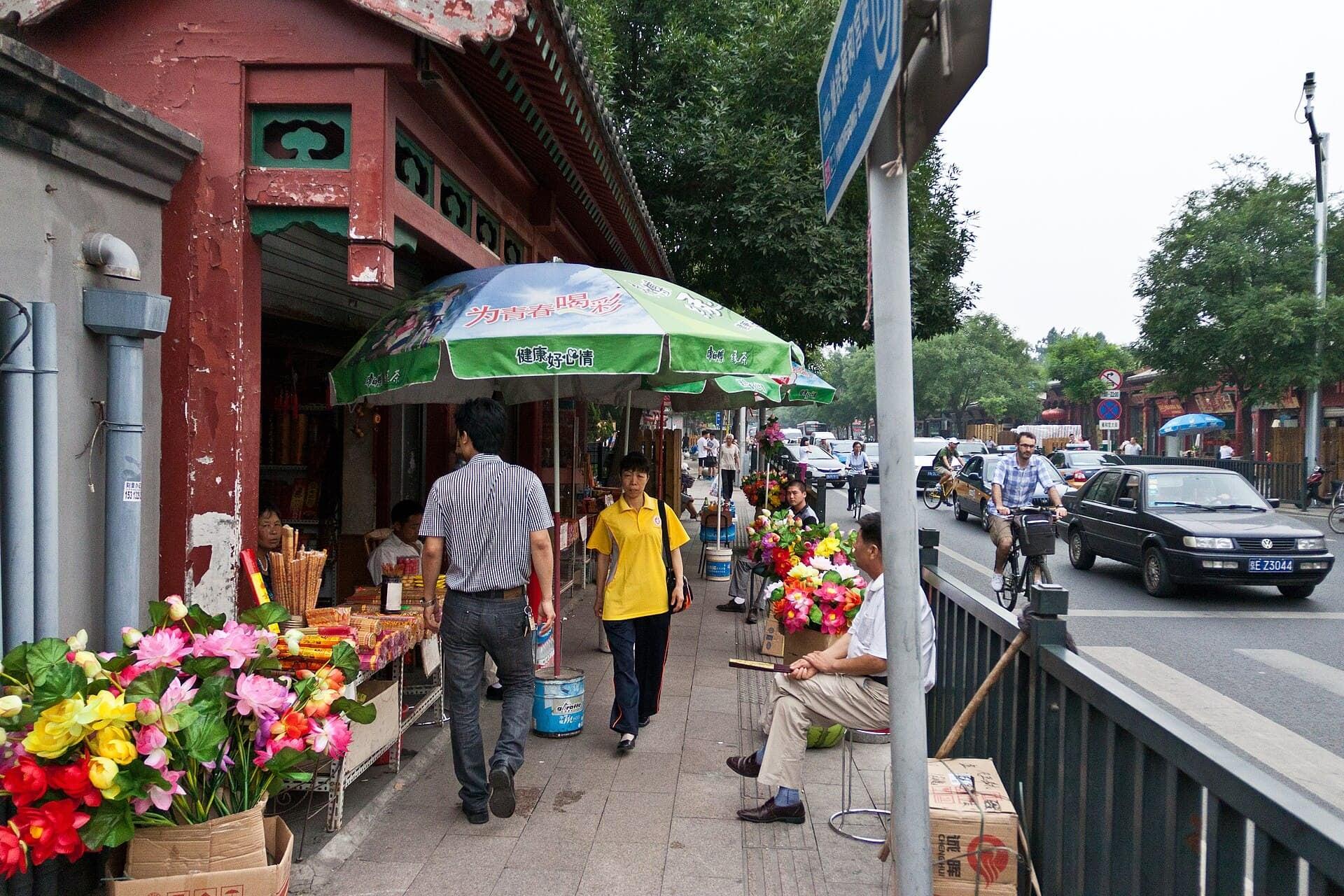
Yonghegong Street (雍和宫大街)
Why every second shop sells incense. The temple's own rule, three sticks of incense, never inside a hall, explains the trade along its street.
- 7
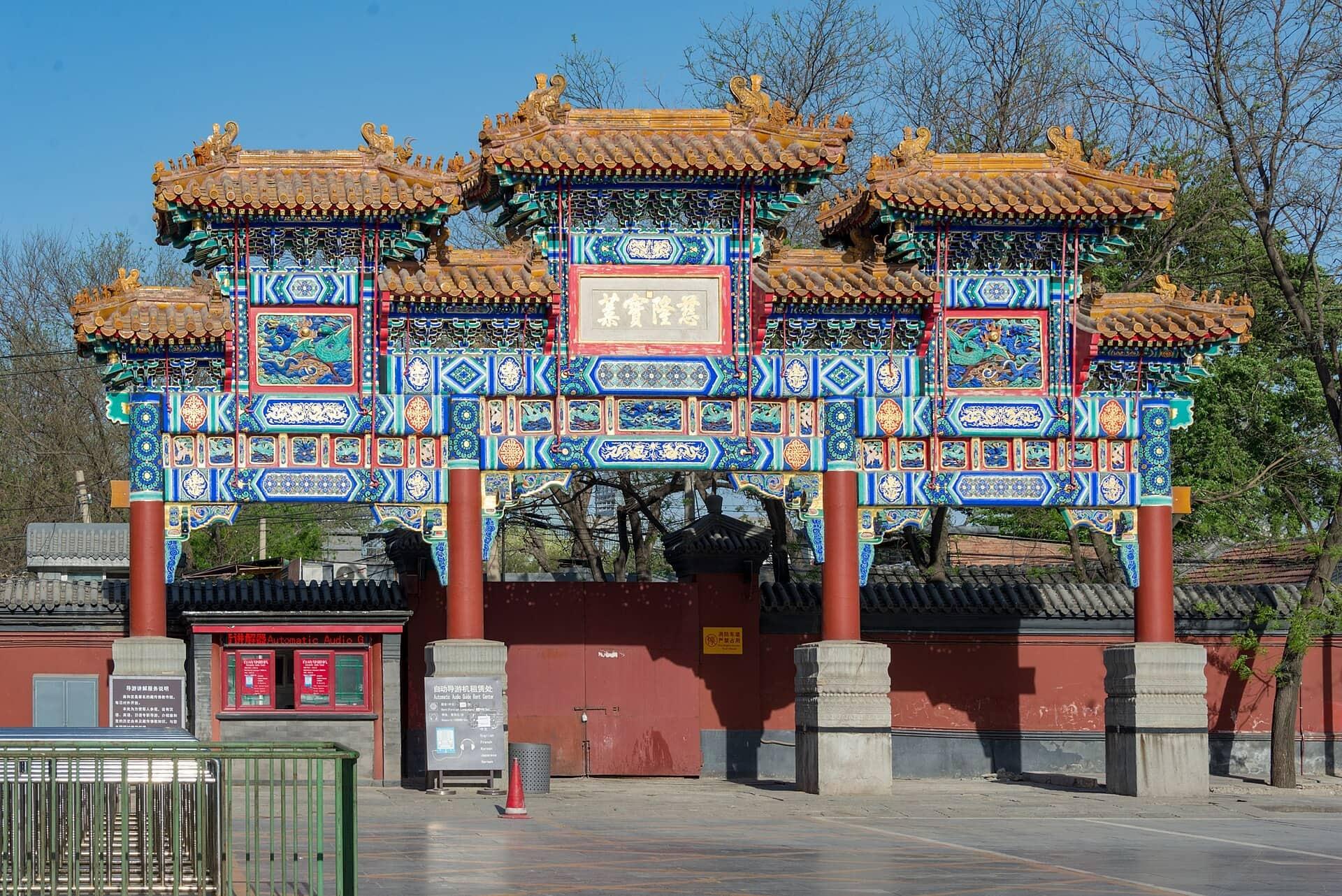
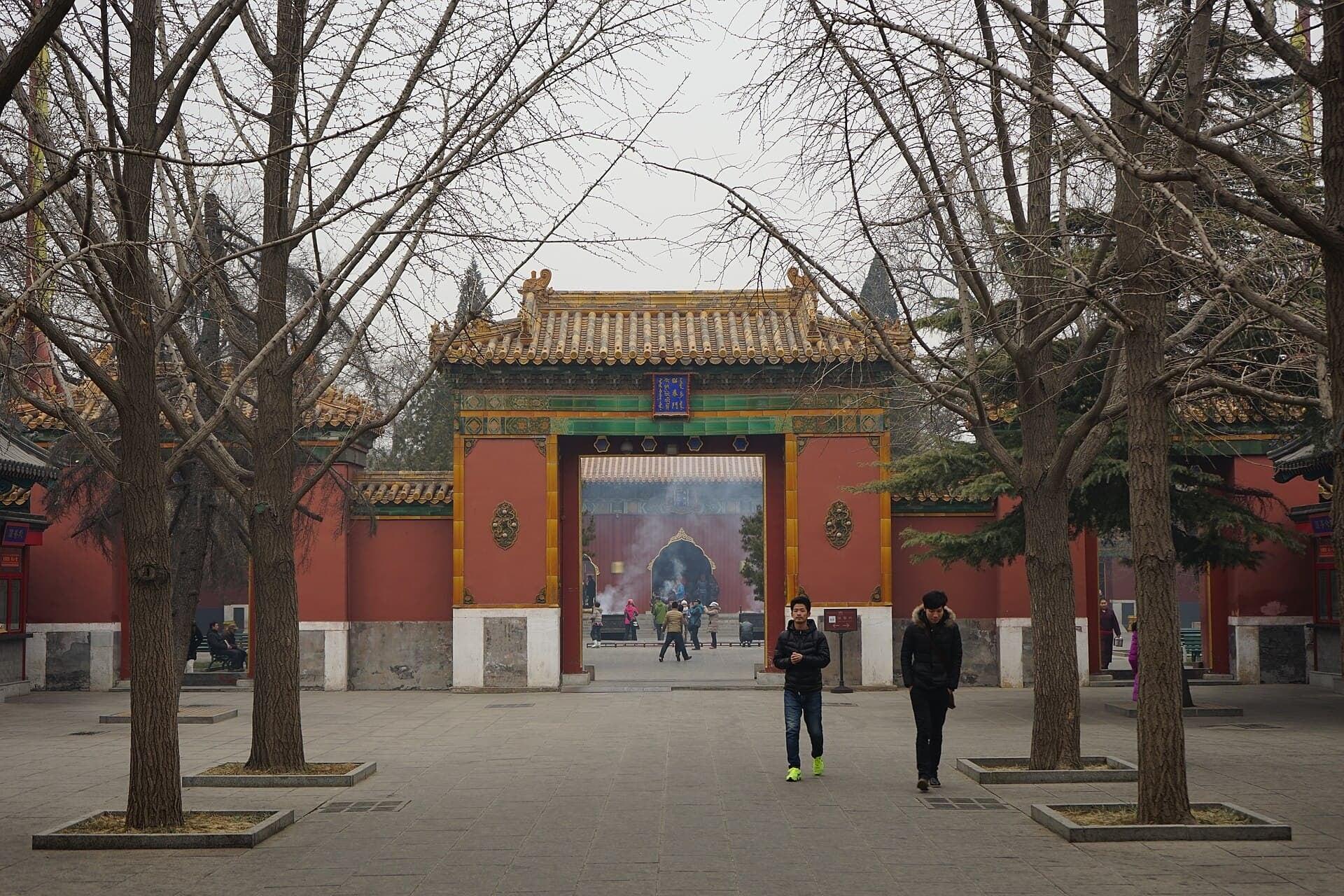
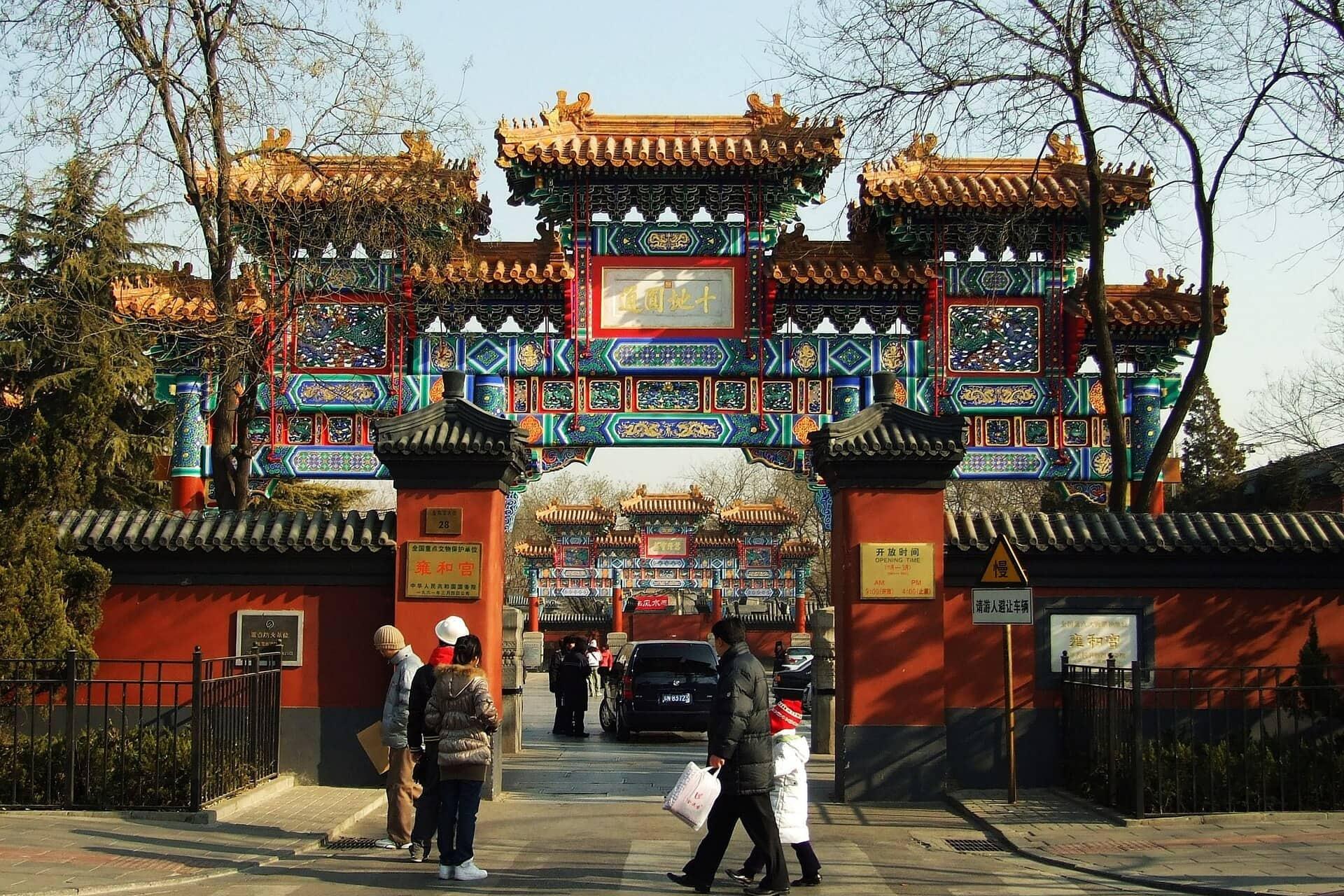
Yonghegong Front Archways (牌楼)
This was a palace's front door. Across the road, Yonghegong's front courtyard is framed by archways and a screen wall, then a carriage path leads to its first gate.
- 8
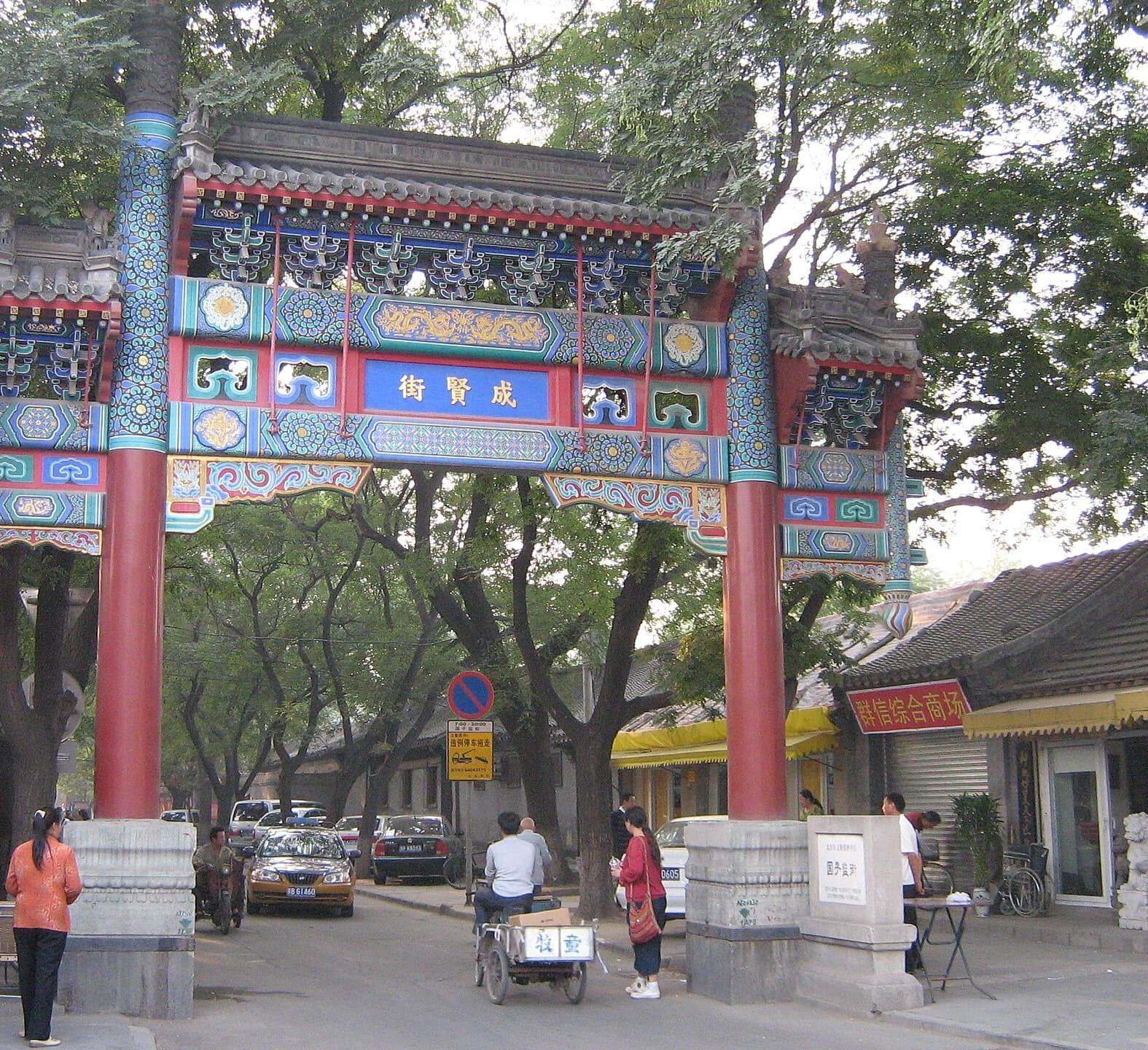
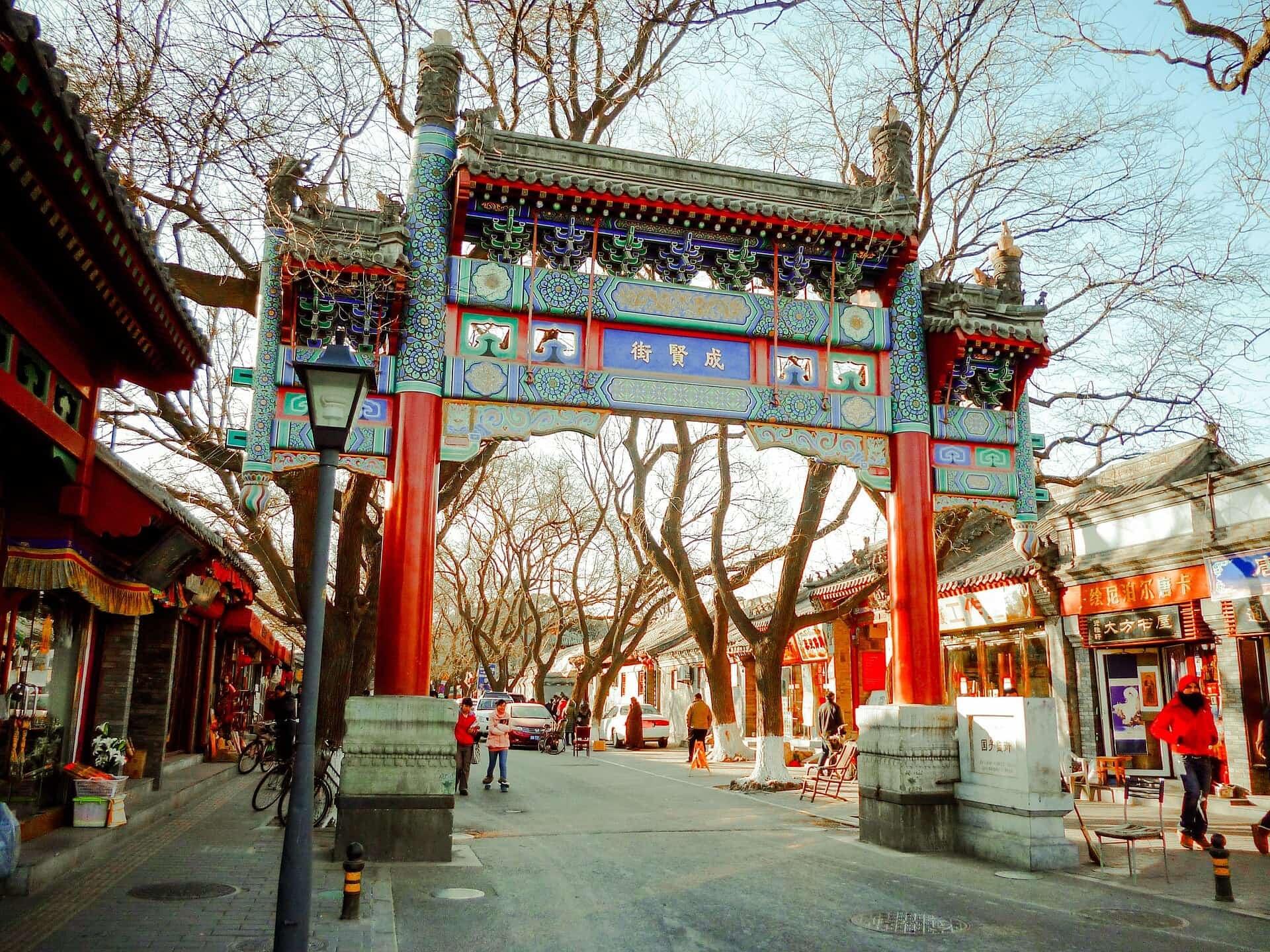
Chengxian Street East Archway (成贤街牌楼)
A gate into the street of learning. You walked under one of four painted archways that mark Guozijian Street, the old Chengxian Street.
- 9
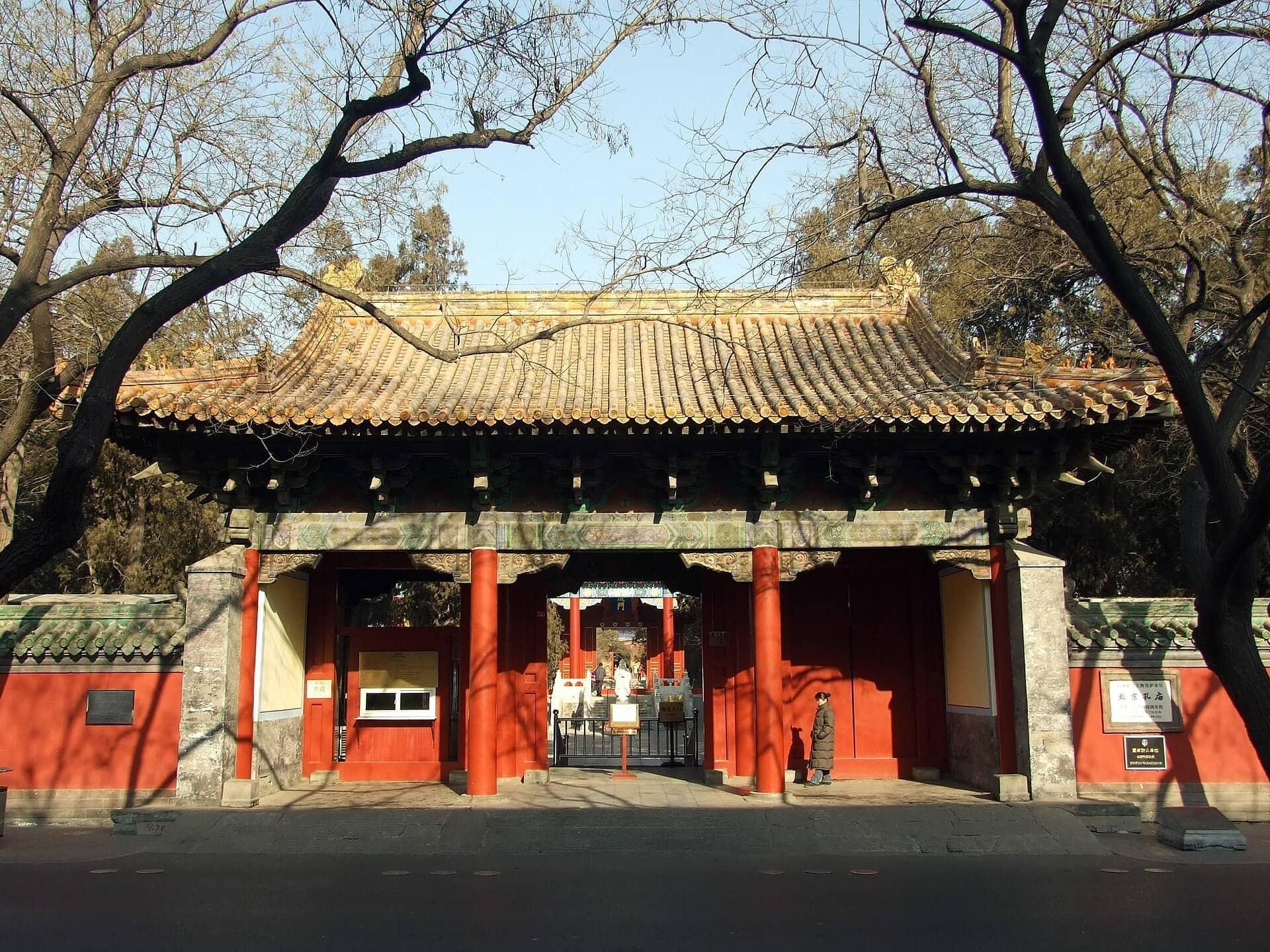
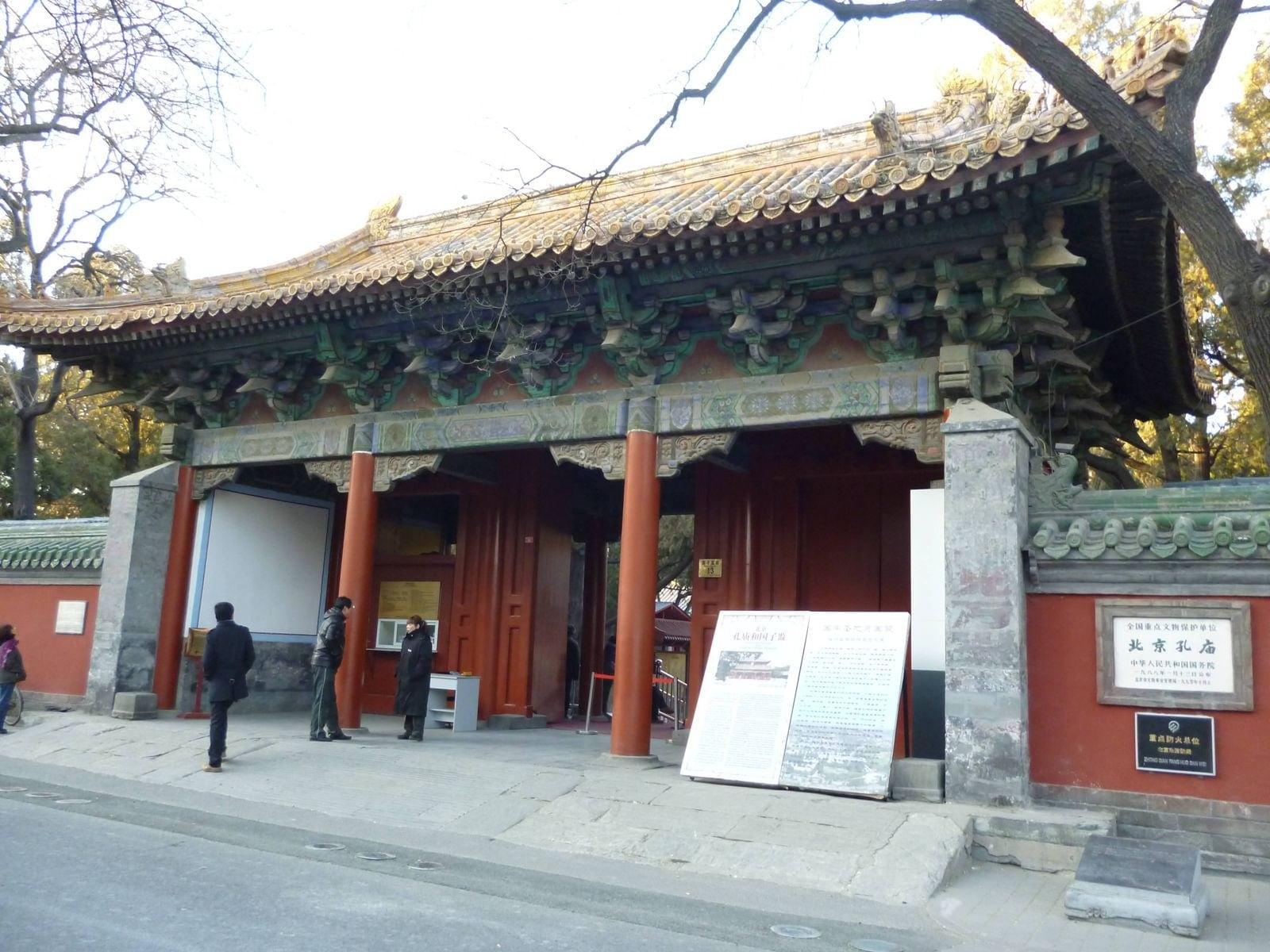
Confucius Temple (孔庙)
The exam system's honor roll. Behind the gate of this temple, begun 1302, stand 198 stone steles carved with the names of 51,624 top graduates.
- 10
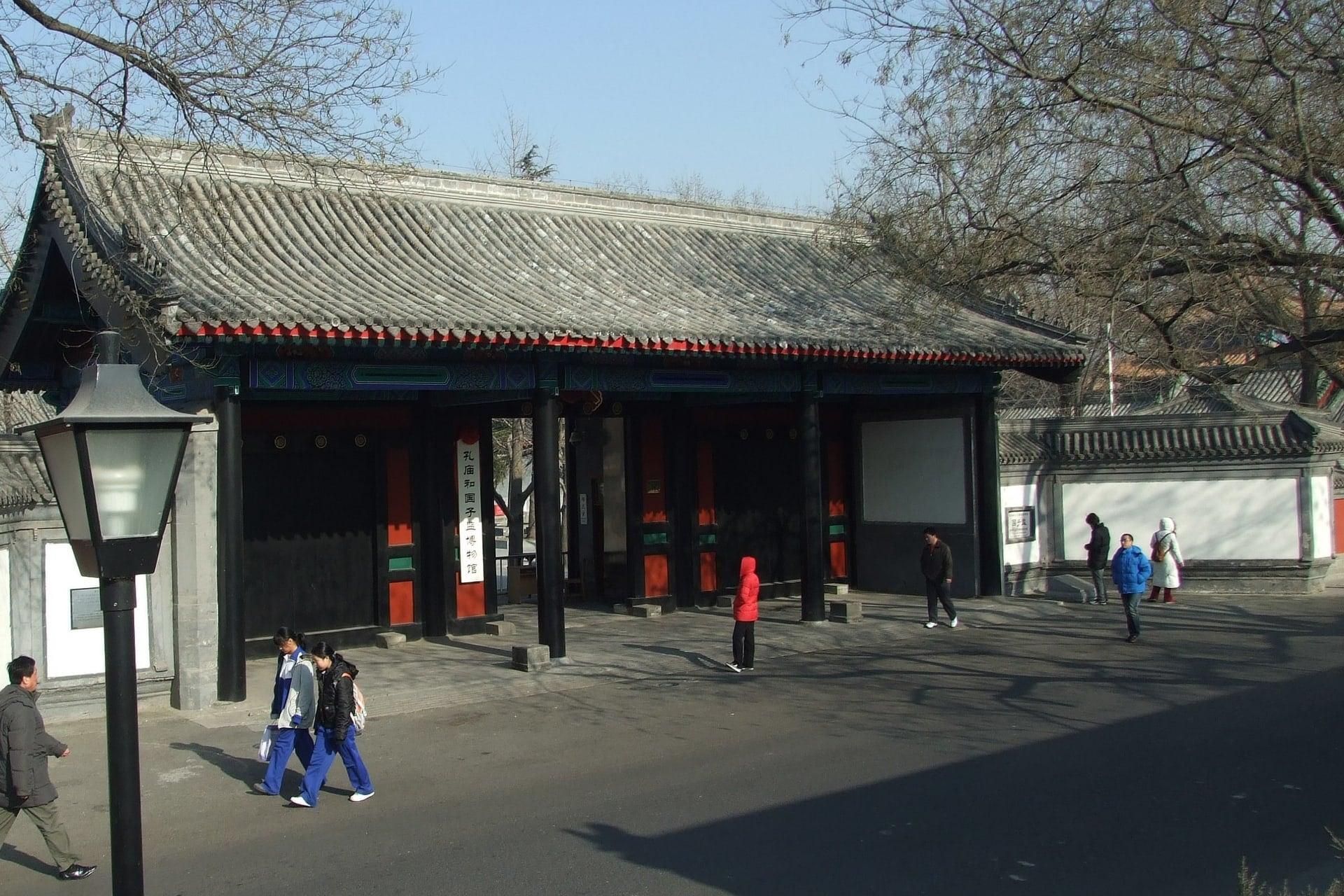
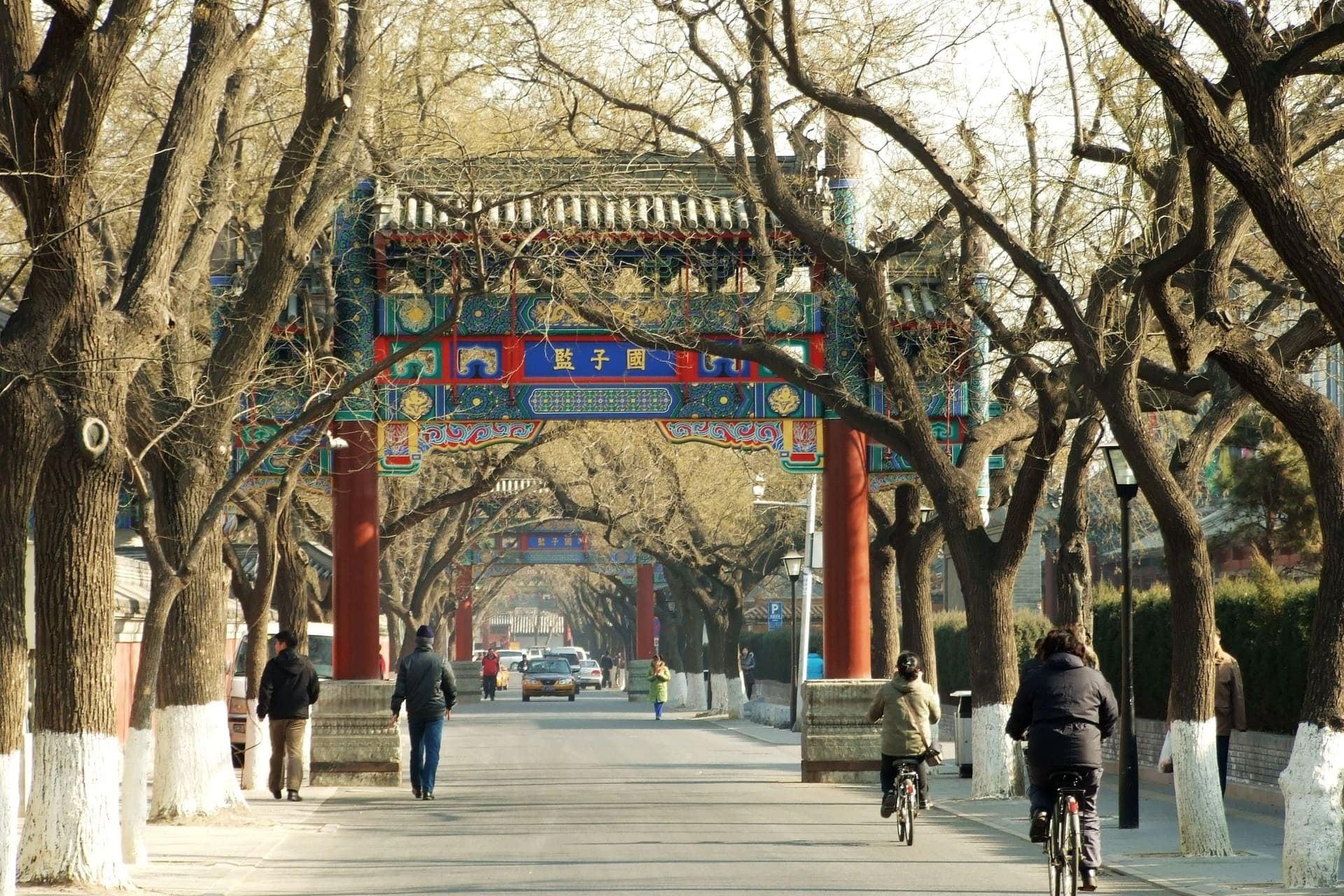
Imperial College (国子监)
The empire's university, founded 1287. Behind this gate stands the Biyong, a square lecture hall in a round pool built for the emperor.
- 11
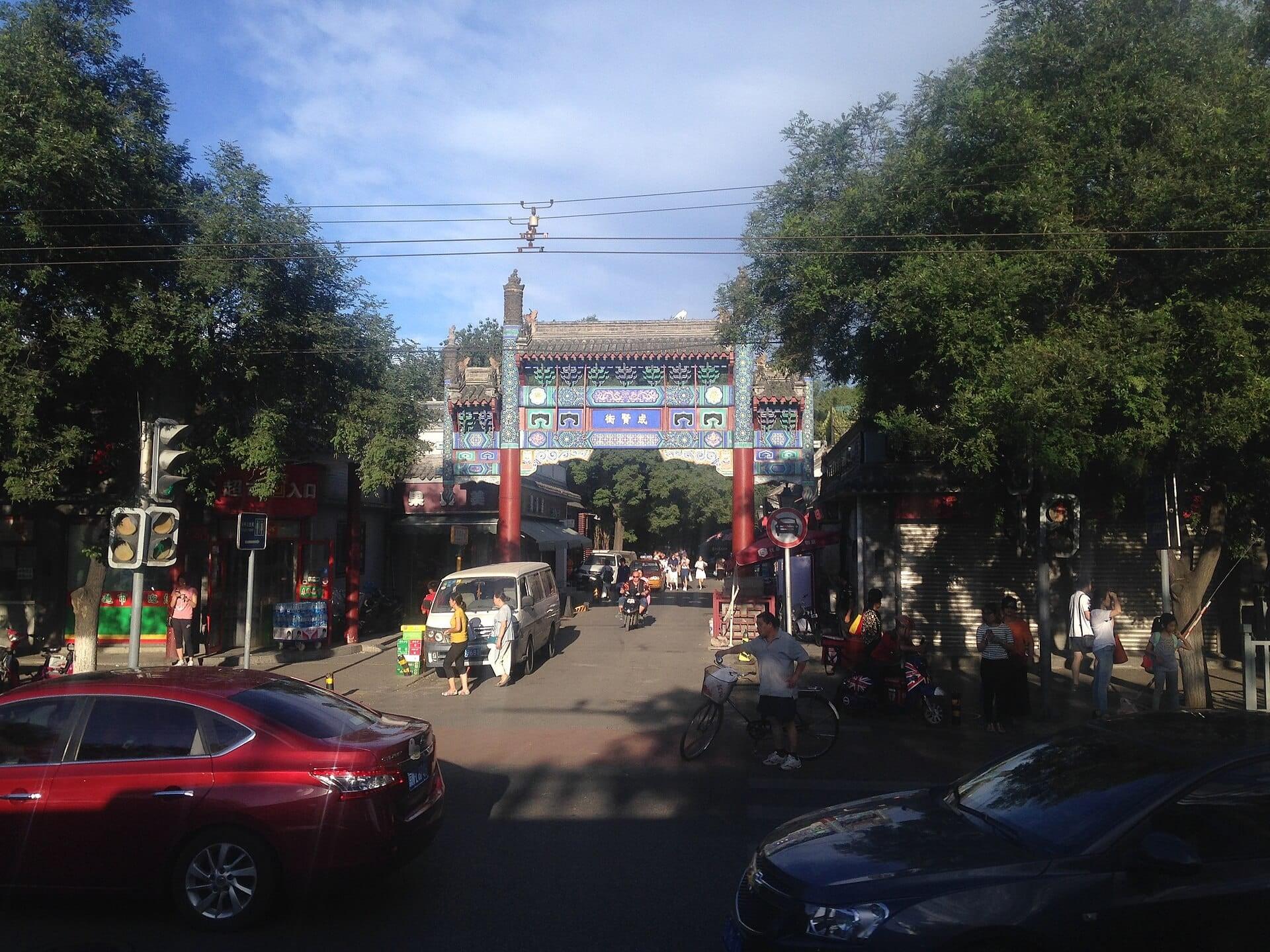
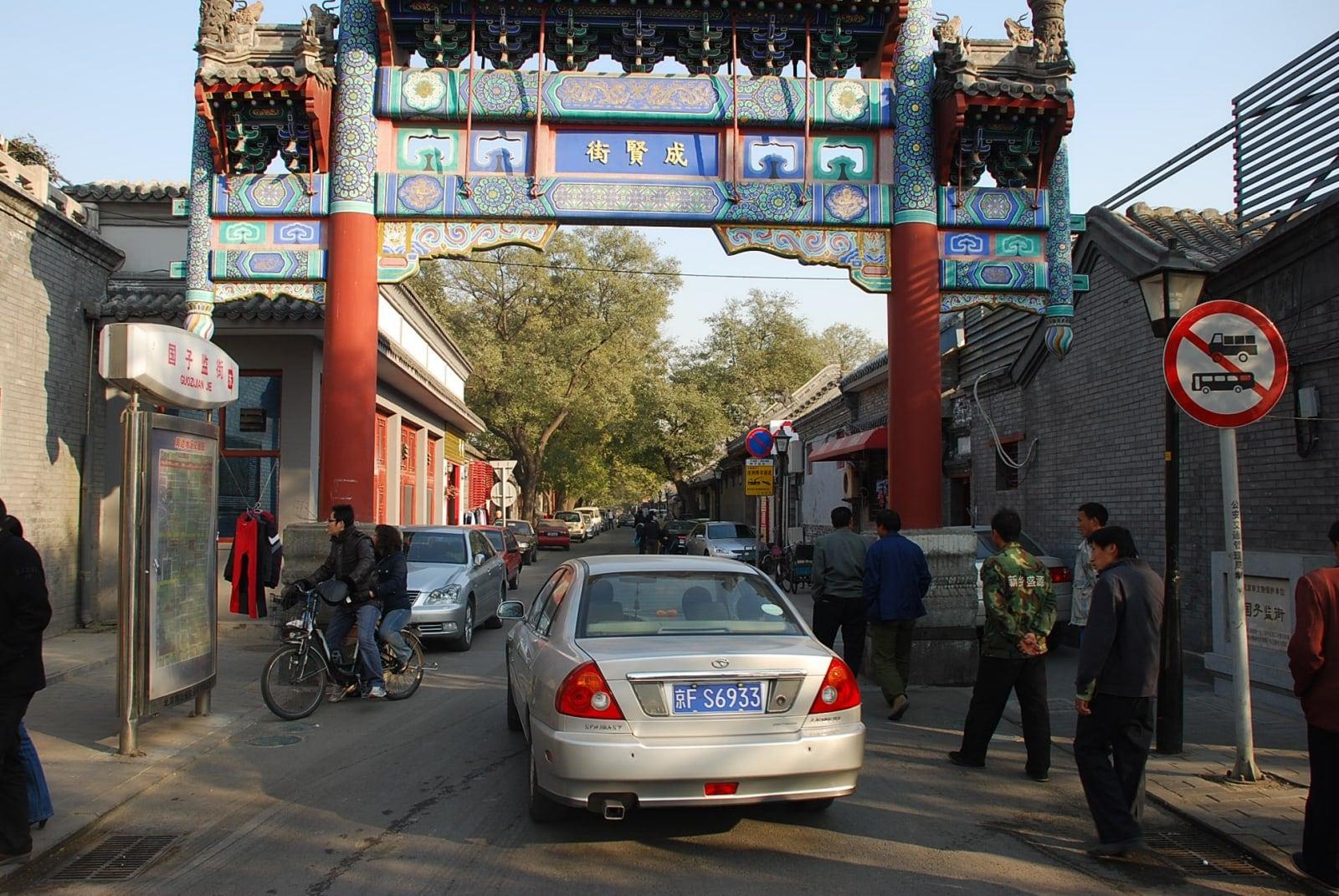
Chengxian Street West Archway (成贤街牌楼)
The whole street is the monument. Guozijian Street is protected as a monument of the city in its own right, ending at its west archway.
Details
Best Time to Visit
By day, Tuesday to Sunday if you want to go inside: in winter start by about 13:30 so you reach Yonghegong's ticket window before its last tickets at 16:00 (1 November to 31 March; 16:30 in summer). The Confucius Temple and Imperial College open 9:00 to 17:00, last entry 16:30, closed Mondays except public holidays. The street walk itself works any day and at any hour, but the roofs, gates and archways need daylight: sunset is 16:50 in early December and 16:58 on 31 December. Avoid the national holiday weeks, when Yonghegong is crowded: 1 to 3 January, 5 to 13 February (Chinese New Year is 6 February 2027), 3 to 5 April, 1 to 5 May and 1 to 7 October 2027. Wudaoying's cafes are busiest in the evening and at weekends. About 60 minutes. Checked 25 November 2026.
Pro Tips
- •Getting to the start: subway line 2 to Andingmen station. Wudaoying Hutong opens on the east side of Andingmen Inner Street, just south of the Second Ring Road; if your exit comes up north of the ring road or west of the avenue, cross at the junction's traffic lights. Checked 25 November 2026.
- •Joining halfway: Yonghegong station (lines 2 and 5) is about a minute's walk from stop 4, at the east end of Wudaoying Hutong.
- •Going inside: Yonghegong (25 yuan) sells tickets at its ticket center's windows and through its official WeChat account; passport holders buying online pay full price and enter with a QR code, half-price tickets are sold only at the window with the original document, and the temple says it has authorized no third-party sellers. The Confucius Temple and Imperial College share one 30-yuan ticket, sold through the museum's WeChat account or on site. Checked 25 November 2026.
- •Inside Yonghegong, the temple's own rules: three sticks of incense, lit only in the courtyards; no photos or filming inside the halls; no smoking.
- •Paying for a coffee on Wudaoying: WeChat Pay and Alipay are the most widely accepted, and both can be linked to a foreign card; carry some cash too, which every merchant must accept.
- •The walk ends at Andingmen Inner Street: Andingmen station (line 2) is about 5 minutes north, and buses stop at Andingmen Nei. For our other Beijing walks, ride line 2 one stop west to Gulou Dajie and change to line 8.
Safety & Precautions
- •Mainland China drives on the right: at a crossing without lights, look left first, then right. Wudaoying Hutong and Guozijian Street are two-way lanes with no sidewalk: keep to the edge. On Yonghegong Street the cars on the near side come from behind you, and some turn right into the alleys and into Guozijian Street across your path.
- •Silent electric scooters and delivery tricycles ride in the hutongs and on Yonghegong Street's sidewalk, often from both directions. Look as well as listen.
- •Do not cross Yonghegong Street: every stop on it is told from the west sidewalk.
- •The hutongs are homes: keep your voice down, stay in the lane, do not enter courtyards and do not photograph into them. Yonghegong is a working monastery: be respectful around people praying, and do not photograph monks or worshippers.
- •Decline invitations from friendly strangers to a tea house or a bar, which can end in a very large bill. You do not need to buy incense or a fortune on Yonghegong Street.
- •December days stay near freezing and nights fall to about minus seven degrees Celsius: dress warmly. Carry your passport. Do not photograph security staff or checkpoints. The city center can close streets or sites at short notice for major events: check the day before. Checked 25 November 2026.
Gallery
Read the walk
The full story of Lama Temple and Guozijian: The Scholars' Quarter, in words. Prefer to listen? Play it narrated, from home or on location.
Introduction
In one block of Beijing's old north city, a prince's palace that became a monastery stands around the corner from the state temple to Confucius and the empire's college. This walk goes around three sides of that block and reads it from the street: along a hutong whose name remembers a Ming guards' camp, down the avenue facing the Yonghegong Lama Temple, and west along Guozijian Street, the scholars' street, under its painted archways.
There are eleven stops over about one point six kilometers, about one mile, and it takes about an hour. It is flat, with no steps and no big road to cross.
In mainland China traffic keeps to the right, so at a crossing without lights, look left first. The lanes have no sidewalks, and silent electric scooters ride in them and on the avenue's sidewalk from both directions: look as well as listen. The hutongs are homes, so keep your voice down and stay in the lane.
Every stop is told from outside. The Lama Temple, and the Confucius Temple with the Imperial College, charge for entry, and neither is included. In winter the Lama Temple sells its last tickets at four in the afternoon, and the Confucius Temple and college are closed on Mondays, so if you want to go in, start by early afternoon. The college's middle courtyard has been closed for repair since April twenty twenty six.
December afternoons reach only about three degrees Celsius, thirty eight Fahrenheit, and it gets dark before five. Carry your passport. Have mobile data that works in mainland China, and download this tour before you set out.
To reach the start, take subway line two to Andingmen station. Wudaoying Hutong opens on the east side of Andingmen Inner Street, just south of the ring road. When you arrive at Wudaoying Hutong, begin with stop one.
1. Wudaoying Hutong (五道营胡同)
You are standing at the west end of Wudaoying Hutong. Face east, down the lane. Behind you are Andingmen Inner Street and the ring road, which runs along the line of the old city's northern wall. This quarter sits just inside its north east corner.
The lane is about six meters wide and more than six hundred meters long, with sixty nine courtyards along it. Its name is older than the cafes. In the Ming dynasty this place was known as the camp of the Wude Guard, and by tradition it was the barracks of soldiers who guarded the city. In the Qing dynasty the name was worn down to Wudaoying, and in nineteen sixty five, when Beijing's street names were standardized, it became Wudaoying Hutong.
This walk goes around three sides of one block of the old city. Along the top, this lane. Down the east side, a prince's palace that became a monastery. Along the bottom, the state temple to Confucius and the empire's own college, side by side. Every stop is told from the street.
The hutongs are homes. Keep your voice down, stay in the lane, and do not step into a courtyard.
Follow the route east along the lane. Next, the gates.
2. Courtyard Gatehouses (门楼)
Look along the lane at the courtyard gates on both sides. Each gate is the front of a house built around a courtyard, and from the lane the gate is almost all you see.
This whole quarter is one of Beijing's first group of protected historic districts. Its conservation plan protects more than whole buildings. It lists gatehouses worth keeping, and six kinds of small historic structures: screen walls, mounting stones, rockeries, guardian stones, the hanging flower gates inside a courtyard, and screen doors.
So look for them. A mounting stone is a low stepped block beside a door, from the days when visitors arrived on horseback. A screen wall stands just inside a gate, so that nobody in the lane can see straight in. A guardian stone is a small carved stone set at a corner, by tradition to turn away bad luck. Not every gate here has them, and some may be hidden by bikes and flowerpots, but where you find one, it is protected history.
Our Hutongs walk, around the Drum Tower and Houhai, shows how to read a gate in detail. Here, simply notice how many small pieces survive.
Look from the lane, and do not photograph into an open courtyard.
Follow the route on east. Next, what the lane became.
3. Wudaoying Cafe Street (五道营)
Here the lane changes character. Look at the fronts on both sides: cafes, small shops and restaurants, set into the gates and walls of courtyard houses.
This is recent. The first cafe in Wudaoying, the Vineyard Cafe, opened in two thousand six, started by a British man and his wife. Other cafes and restaurants followed, foreign and local, and by twenty twenty Beijing listed Wudaoying as one of its city level characteristic consumption streets: a lane the city promotes for its shops and cafes.
So in less than twenty years, a lane whose name remembers a Ming guards' camp became a place to sit with a coffee. The houses did not change shape. The gates and walls are the same kind you have just been reading. What changed is what happens behind the first door.
Keep that in mind for the end of the walk. The street you finish on, Guozijian Street, is the opposite case: the whole street is protected as a monument, and it is a quiet lane.
The lane is busiest in the evening and at weekends. People live above and behind the shops, so keep your voice down here too.
Follow the route to the end of the lane. Do not cross the big street there: the next stop is on this side.
4. Pavilion of Ten Thousand Happinesses (万福阁)
Stay on this side of Yonghegong Street, and look across it, a little to your left, to the north end of the Yonghegong Lama Temple. Traffic and street trees are in the way, so take your time.
Above the wall, look for the roofs. The temple is laid out from south to north, and its halls rise step by step toward the back. The tallest building stands at this north end: the Pavilion of Ten Thousand Happinesses, in Chinese the Wanfu Pavilion. Inside it, out of sight from here, stands a giant statue of the Maitreya Buddha. You are seeing the top of the climb before you see the front door.
The front of the temple follows the standard plan of a Chinese Buddhist monastery, a fixed sequence of gates and halls one behind the other. Then, toward the back, the buildings grow taller until they reach this pavilion.
Yonghegong is a working monastery and a museum at once. The next three stops look at it from this sidewalk: what it was before it was a monastery, the street that serves its visitors, and its front door.
If you are joining the walk here, Yonghegong station is a minute's walk south west.
Follow the route south along this sidewalk. Do not cross the avenue: the temple wall stays across the road on your left.
5. Yonghegong Lama Temple (雍和宫)
Across the road on your left is the long west wall of Yonghegong, with the roofs of its main courtyards showing above it. In English it is the Lama Temple. It began as a house. In sixteen ninety four, building began on a residence here for a son of the emperor, Prince Yinzhen.…
Full narration for this stop unlocks with the tour.
6. Yonghegong Street (雍和宫大街)
Look at the shops along Yonghegong Street. Incense in bundles and boxes, prayer beads, small statues and devotional goods, and here and there a shop offering to choose a name or tell a fortune. The temple explains the trade. Its published visitor rules ask for respect to the…
Full narration for this stop unlocks with the tour.
7. Yonghegong Front Archways (牌楼)
Look left, across the avenue and a little ahead, to the front of the temple. On this side of its front courtyard stands a tall painted archway, one of three that frame the courtyard on the east, west and north, with a screen wall closing it to the south. This is the front door…
Full narration for this stop unlocks with the tour.
8. Chengxian Street East Archway (成贤街牌楼)
Turn and look back at the painted archway you have just walked under, at the mouth of the street. Then face west, along the lane under the scholar trees. This is Guozijian Street. Its proper name is Chengxian Street, roughly the street of becoming worthy, though Beijingers call…
Full narration for this stop unlocks with the tour.
9. Confucius Temple (孔庙)
Across the lane, on your right, is the front gate of the Confucius Temple, set in a long red wall. Look a little way to either side of the gate for two upright stone tablets. They are the dismount steles. Each one says, in six scripts, that officials and everyone else must…
Full narration for this stop unlocks with the tour.
10. Imperial College (国子监)
Across the lane is the street gate of the Imperial College, Guozijian in Chinese. Near the gate, look for the other two painted archways, the pair that carry the college's name. The college was founded in twelve eighty seven, and for the Yuan, Ming and Qing dynasties it was the…
Full narration for this stop unlocks with the tour.
11. Chengxian Street West Archway (成贤街牌楼)
Ahead of you, at the mouth of the street, stands the west archway, the pair to the one you walked under at the other end, with the same name: Chengxian Street. Turn for a moment and look back along the lane you have just walked: the gates, the gray walls and the scholar trees…
Full narration for this stop unlocks with the tour.
- File:Beijing hutong Wudaoying 1.jpg | Beijing - Wudaoying Hutong — Andrzej Otrębski, CC BY-SA 4.0 · source
- File:Beijing hutong Wudaoying 3.jpg | Beijing - Wudaoying Hutong — Andrzej Otrębski, CC BY-SA 4.0 · source
- File:Beijing hutong Wudaoying 2.jpg | Beijing - Wudaoying Hutong — Andrzej Otrębski, CC BY-SA 4.0 · source
- File:Hongguan Qipao at Wudaoying (20221009172811).jpg | Wudaoying is a lane between Andingmen and Yonghegong. — N509FZ, CC BY-SA 4.0 · source
- File:Beijing Swiatynia Harmonii i Pokoju 04.jpg | Beijing - Temple of Harmony and Peace — Andrzej Otrębski, CC BY-SA 4.0 · source
- File:北京雍和宫的外景.jpg | 雍和宫位于北京市东城区雍和宫大街,是中国汉族地区最大的藏传佛教寺院之一。康熙三十三年(1694年),清康熙帝在内城东北为皇四子胤禛修建了府邸。1961年雍和宫被列入中华人民共和国国务院批准的全国重点文物保护单位。1983年,雍和宫被定为汉族 — xuejc1988, CC BY-SA 3.0 · source
- File:2015-01-14 entrance of the Yonghe Temple.jpg | Yonghe Temple — Jan Bockaert, CC BY-SA 2.0 · source
- File:雍和宫大街 - Yong He Gong Avenue (7982556243).jpg | 雍和宫大街 - Yong He Gong Avenue — Nikolaj Potanin from Russia, CC BY-SA 2.0 · source
- File:65600-Beijing-Lama-Temple (28429747730).jpg | Lama Temple — xiquinhosilva, CC BY 2.0 · source
- File:Guozijian Street East Entrance.jpg | Guozijian Street (国子监街) East Entrance, Beijing, China — PENG, Yanan (Neo-Jay), CC BY-SA 3.0 · source
- File:国子监街成贤街牌楼.jpg | This is a photo of a (or part of a) Major National Historical and Cultural Site in China identified by the ID CNBJ-010- — 徐然宽, CC BY-SA 3.0 · source
- File:北京孔庙大门.JPG | This is a photo of a (or part of a) Major National Historical and Cultural Site in China identified by the ID CNBJ-010-032 — 徐然宽, CC BY-SA 3.0 · source
- File:West entrance of Guozijianjie Street.jpg | 国子監街西口 — そらみみ, CC BY-SA 4.0 · source
Images may be cropped or resized. Other photos via Unsplash and Pexels.