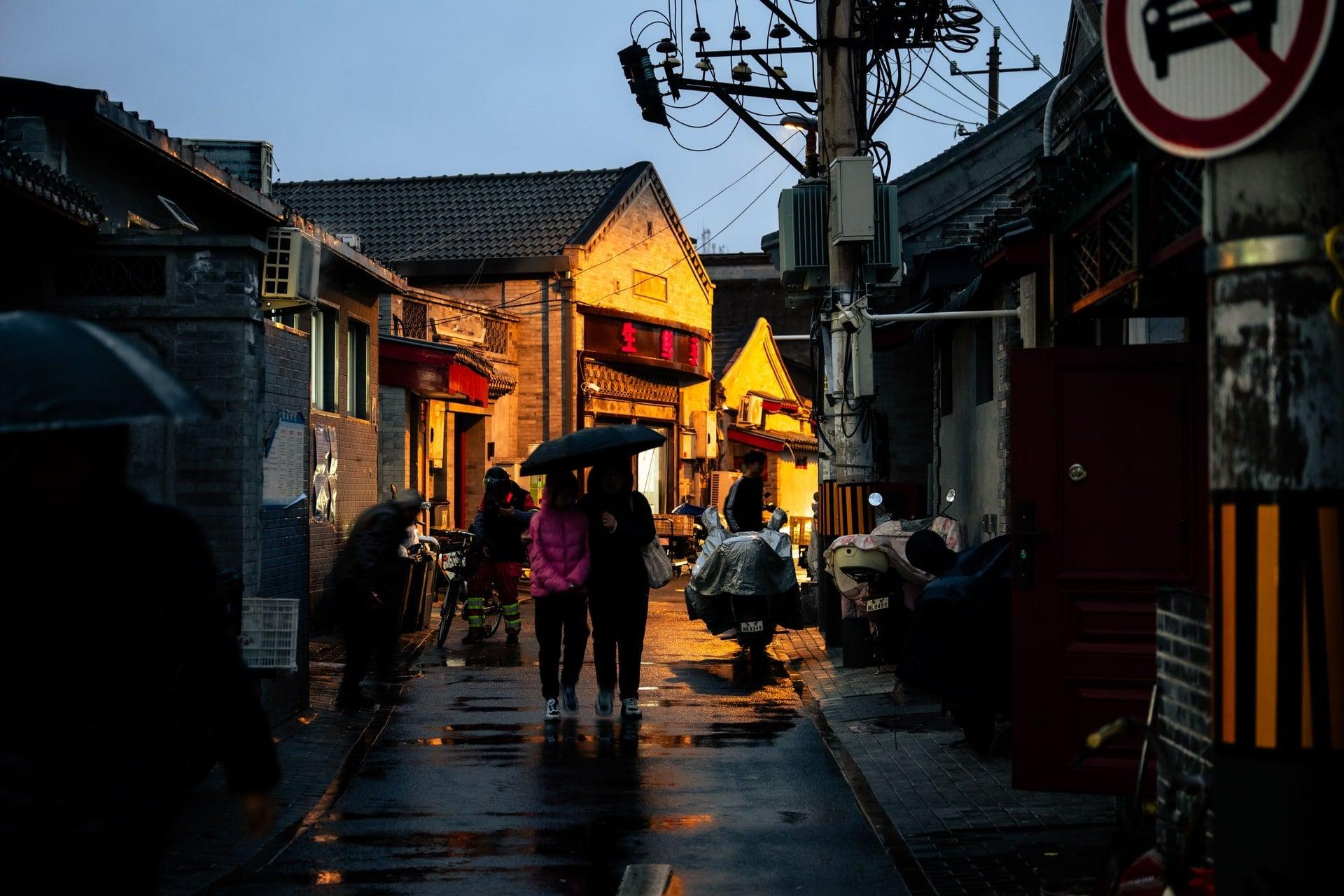
Beijing's old north city read through its water: the Yuan canal dug back out of the hutongs, courtyard gates in Mao'er and Fangzhuanchang hutongs, the Drum and Bell Towers that kept the city's time, Yandai Xiejie, the view from Yinding Bridge, the old harbor of Qianhai, the Fire God Temple and Wanning Bridge, where the boats came in.
Start · Jade River (玉河)
DirectionsStops
- 1
Jade River (玉河)
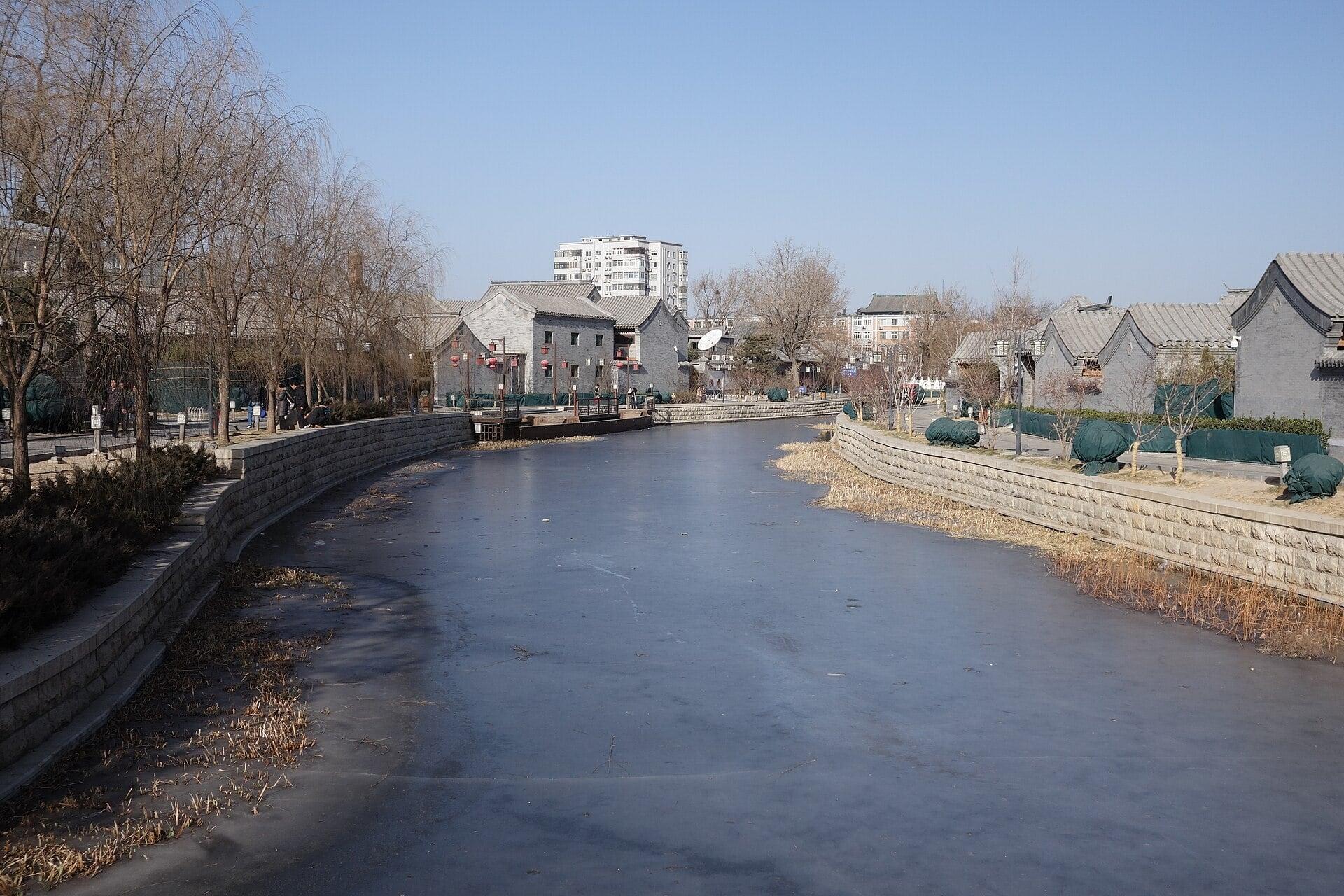
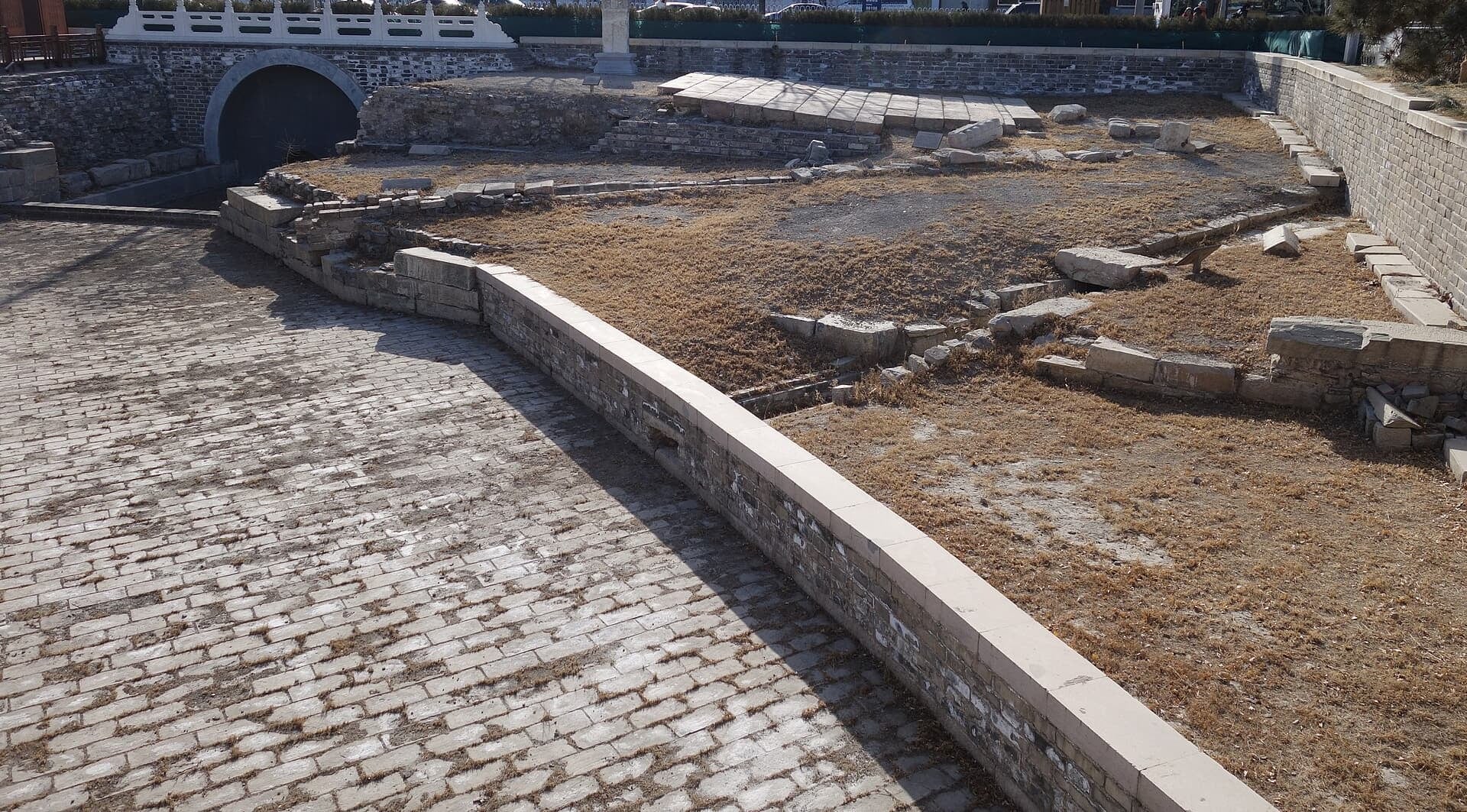
A buried canal dug back out. The stone-lined Yuhe follows the line of the Yuan canal of 1293, covered over after 1912 and reopened from 2007; beside it, the little Yuhe'an shrine sits crooked on the abutment of a lost bridge.
- 2
Dongbuyaqiao Hutong (东不压桥胡同)
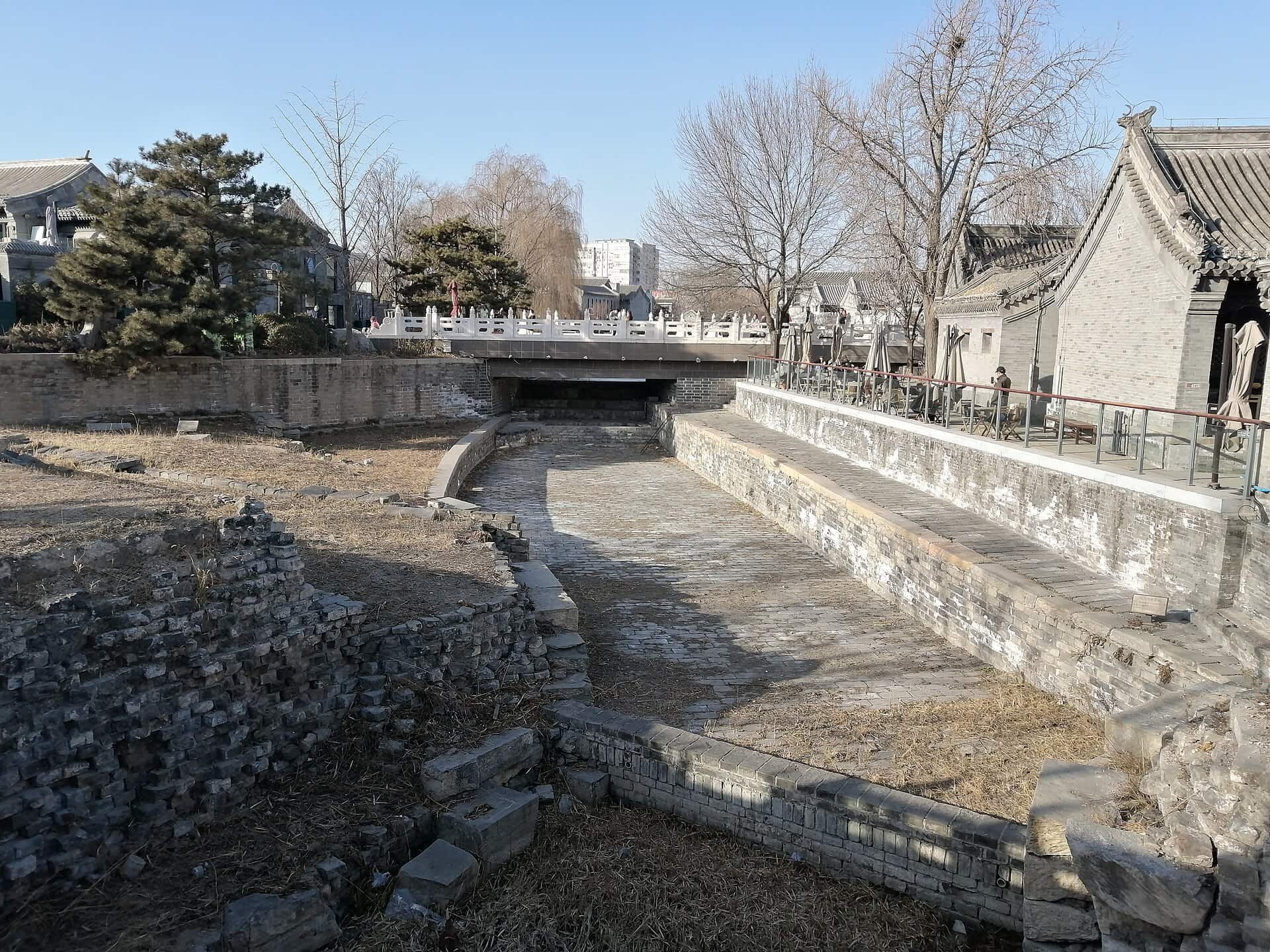
Where the boats stopped coming. The lane follows the Ming line of the canal, which a wall moved in 1432 cut off from the boats: from then on the grain fleet could no longer reach the lakes.
- 3
Mao'er Hutong (帽儿胡同)
A grand house behind a plain gate. Mao'er Hutong, 585 m long and 7 m wide, was a Ming temple street before it became a lane of Qing households; No. 37 is a Qing courtyard house, with No. 35 once its garden.
- 4
Fangzhuanchang Hutong (方砖厂胡同)
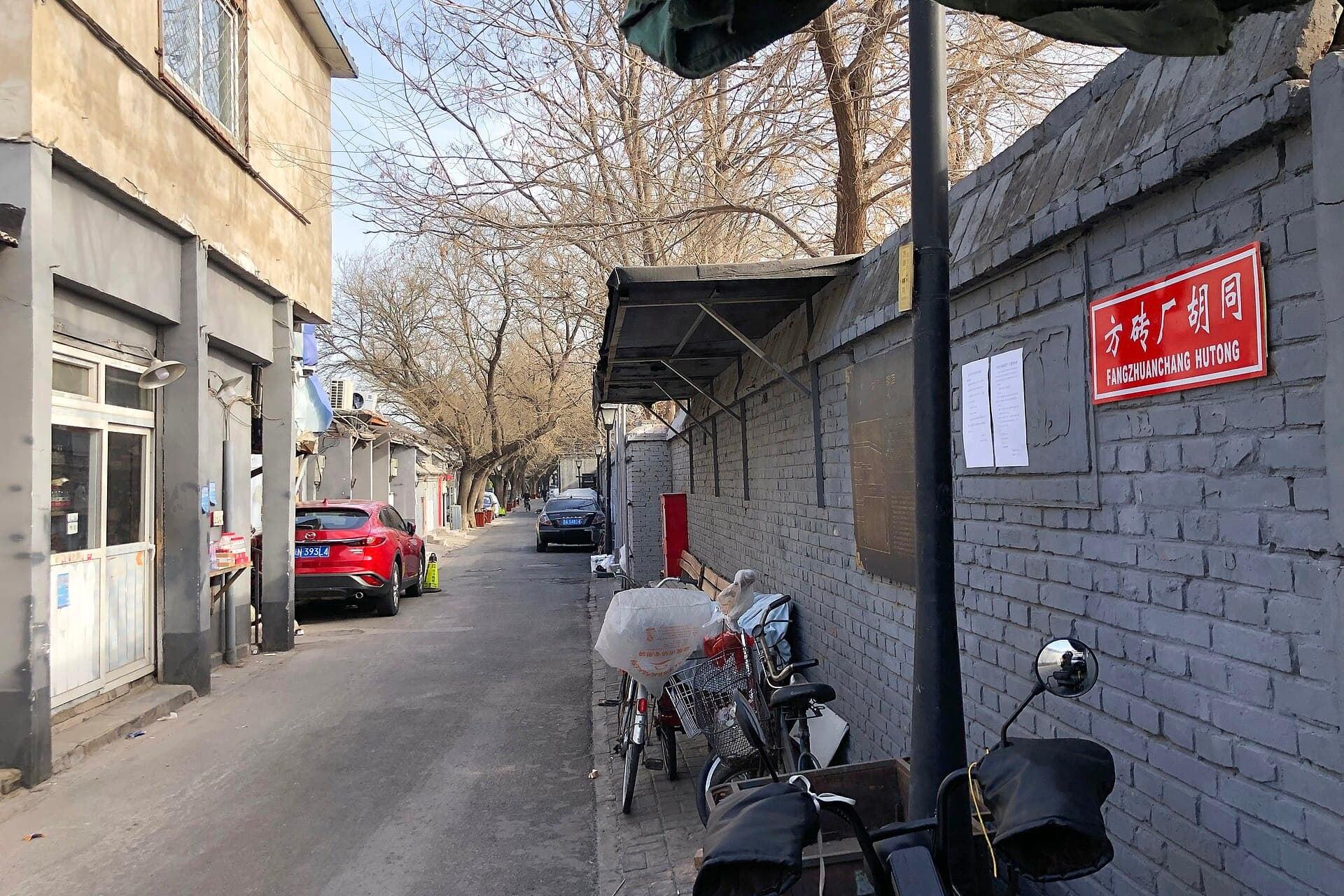
Read a gate in thirty seconds. The drum-shaped door stones beside Beijing's courtyard gates are decoration in front and the door's bearing stone behind; how far back the doors are set is read, by tradition, as rank.
- 5
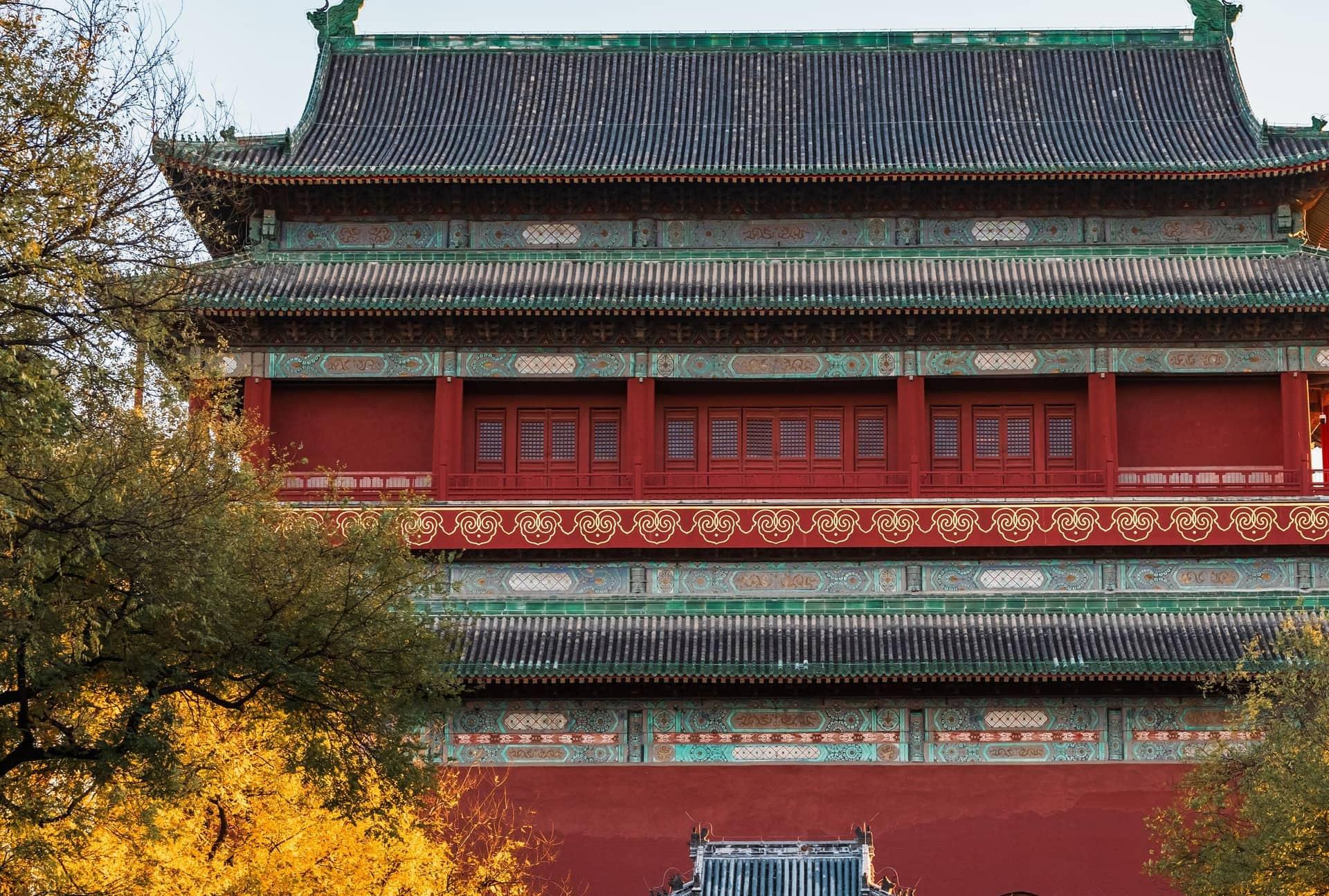
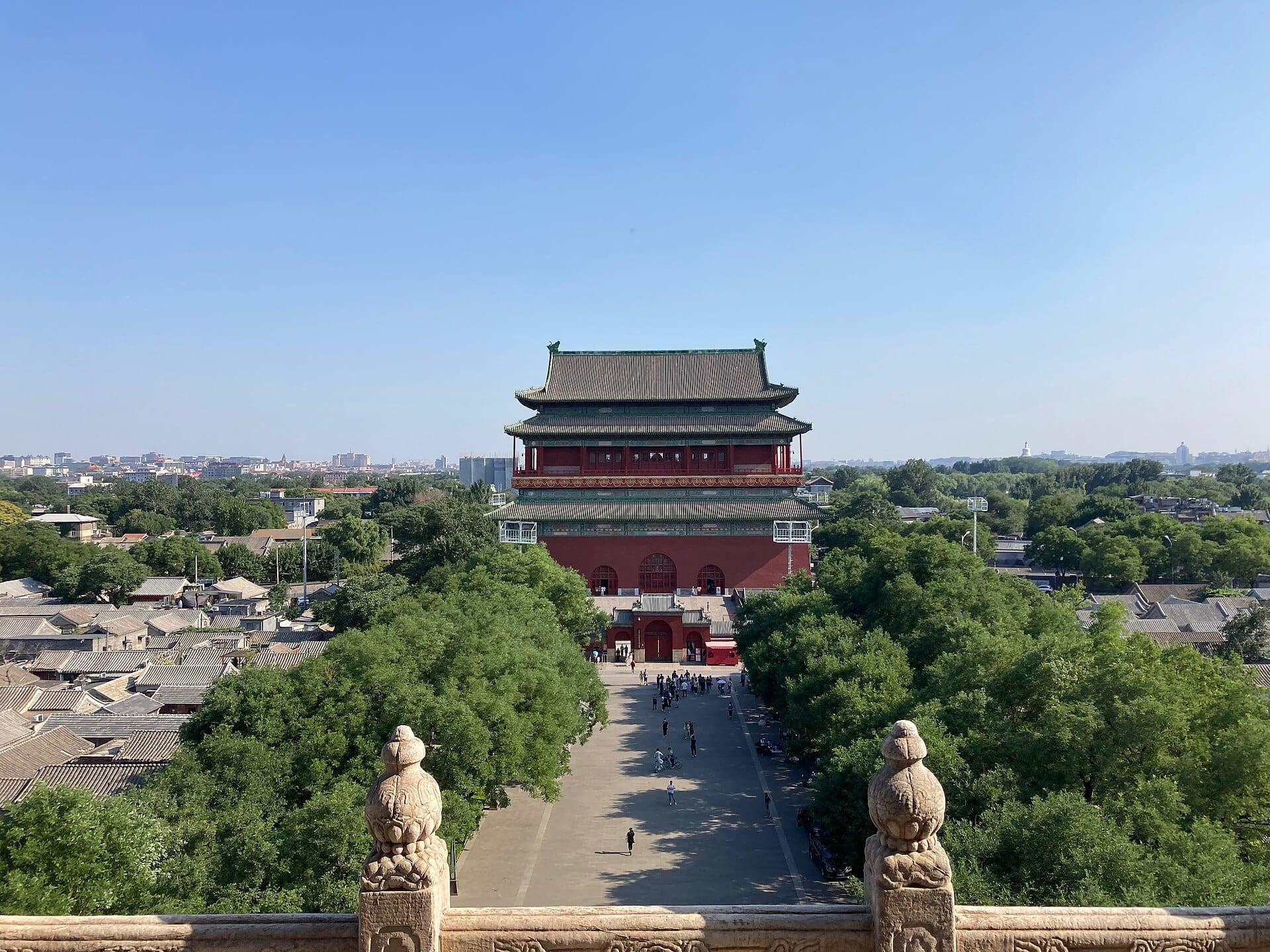
Drum Tower (鼓楼)
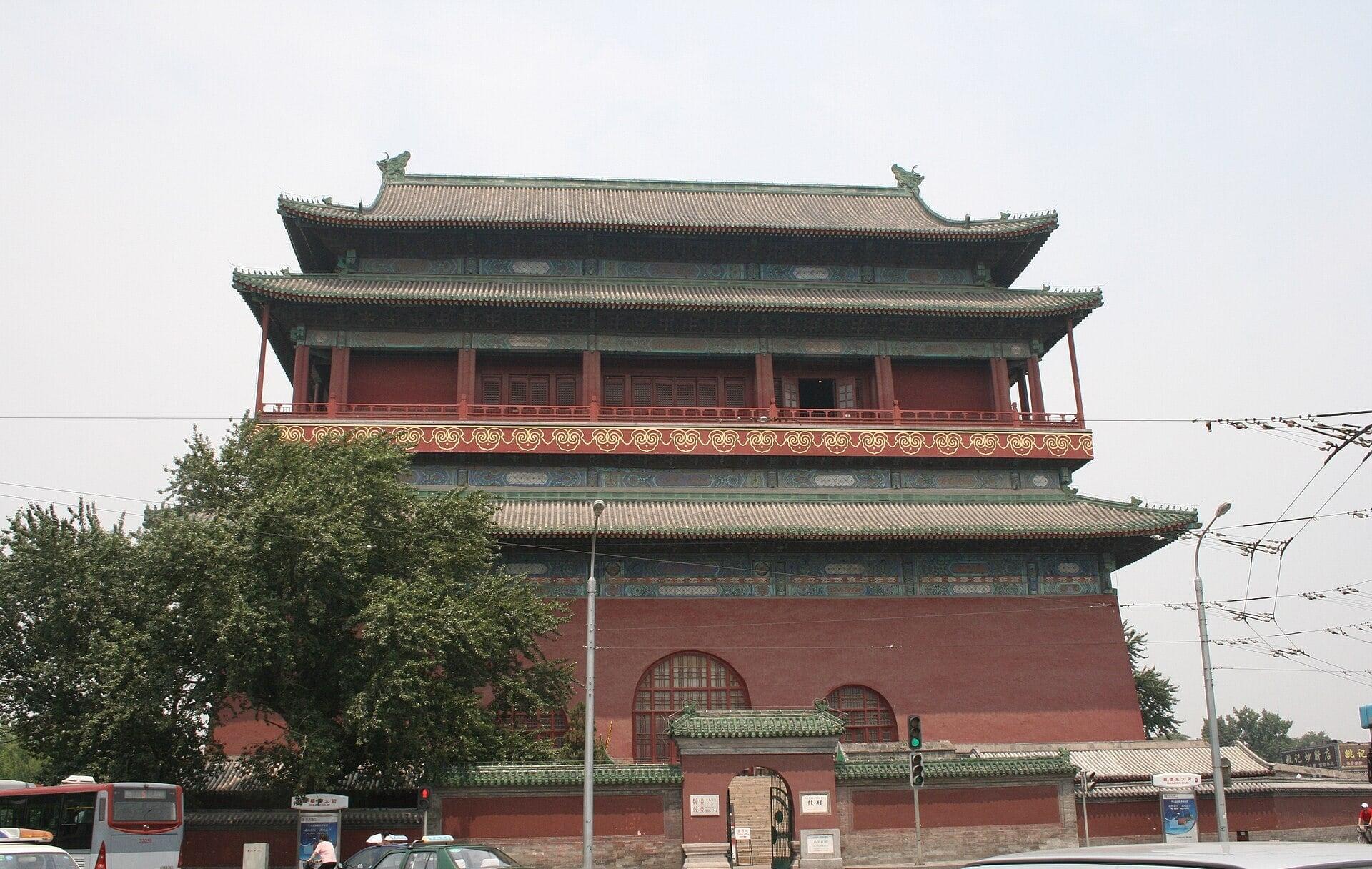
A city drawn from one line. Outer Di'anmen Street points straight at the Drum Tower on the line the Yuan planner Liu Bingzhong fixed at the lake's edge; the present tower is Ming, on a site first built on in 1272.
- 6
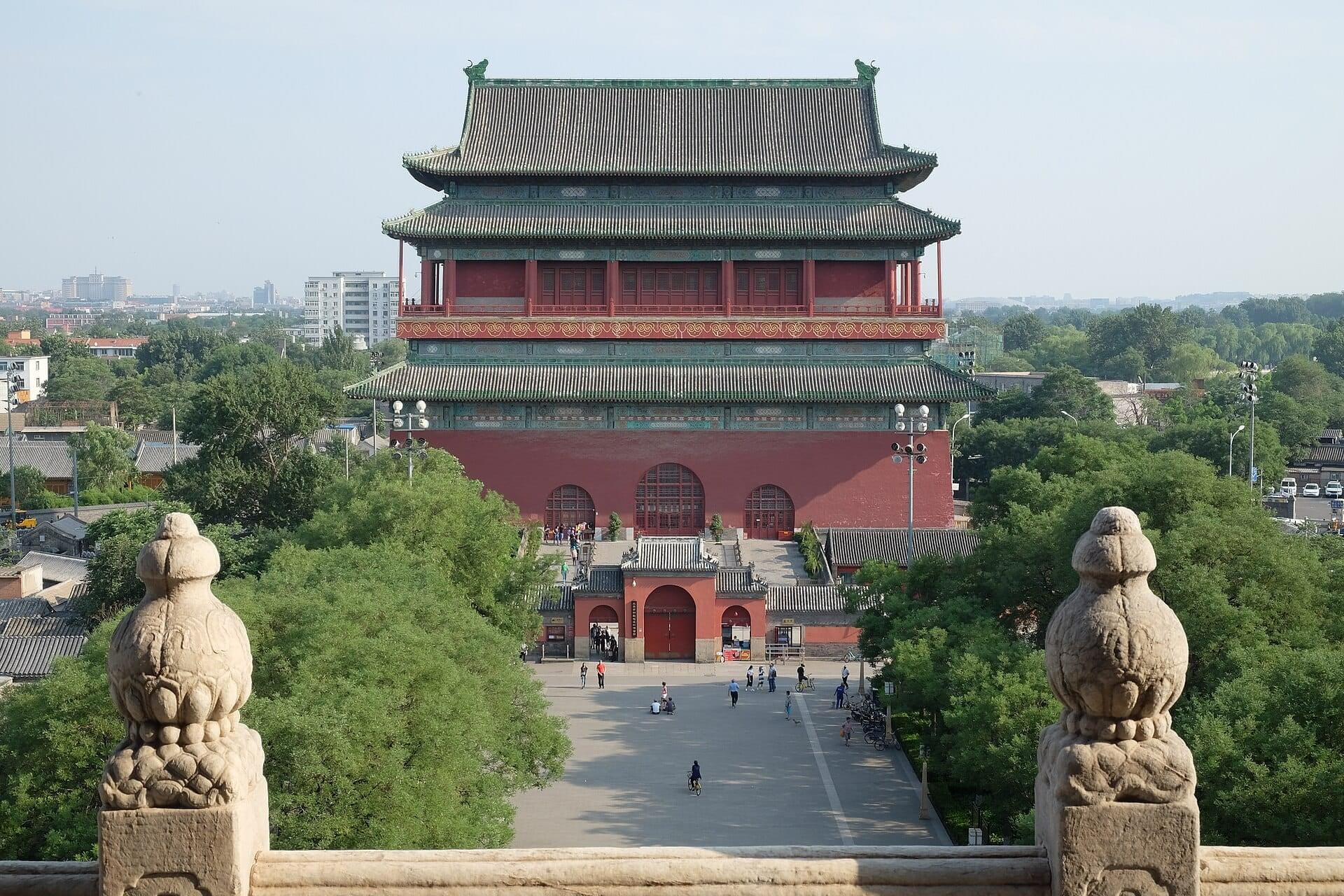
Bell and Drum Square (钟鼓楼文化广场)
Two towers that ran the clock. The drum kept the night watches and the bell carried the hour: a fast and slow beat of 108 strokes, and 25 drums for the year and its 24 solar terms.
- 7
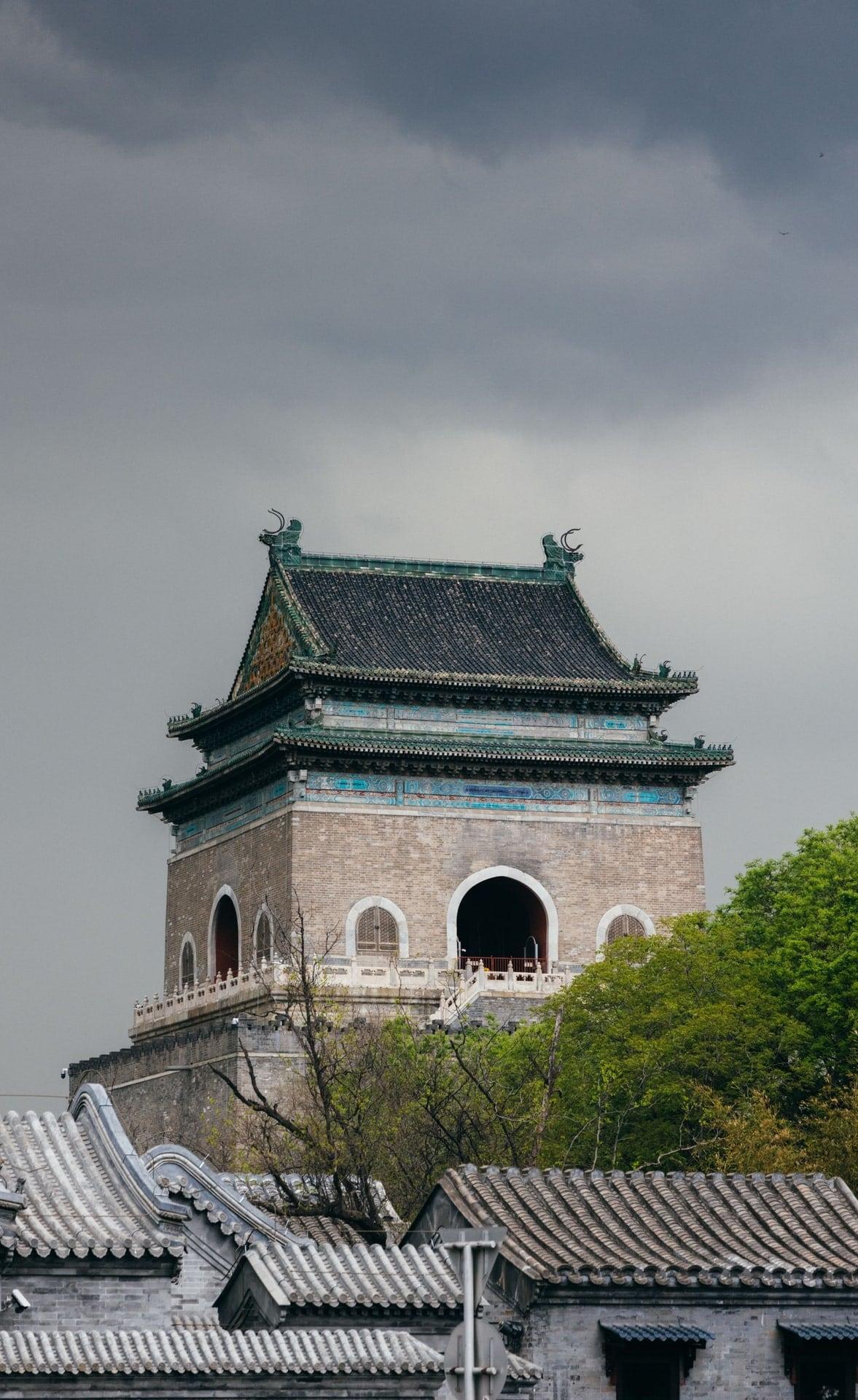
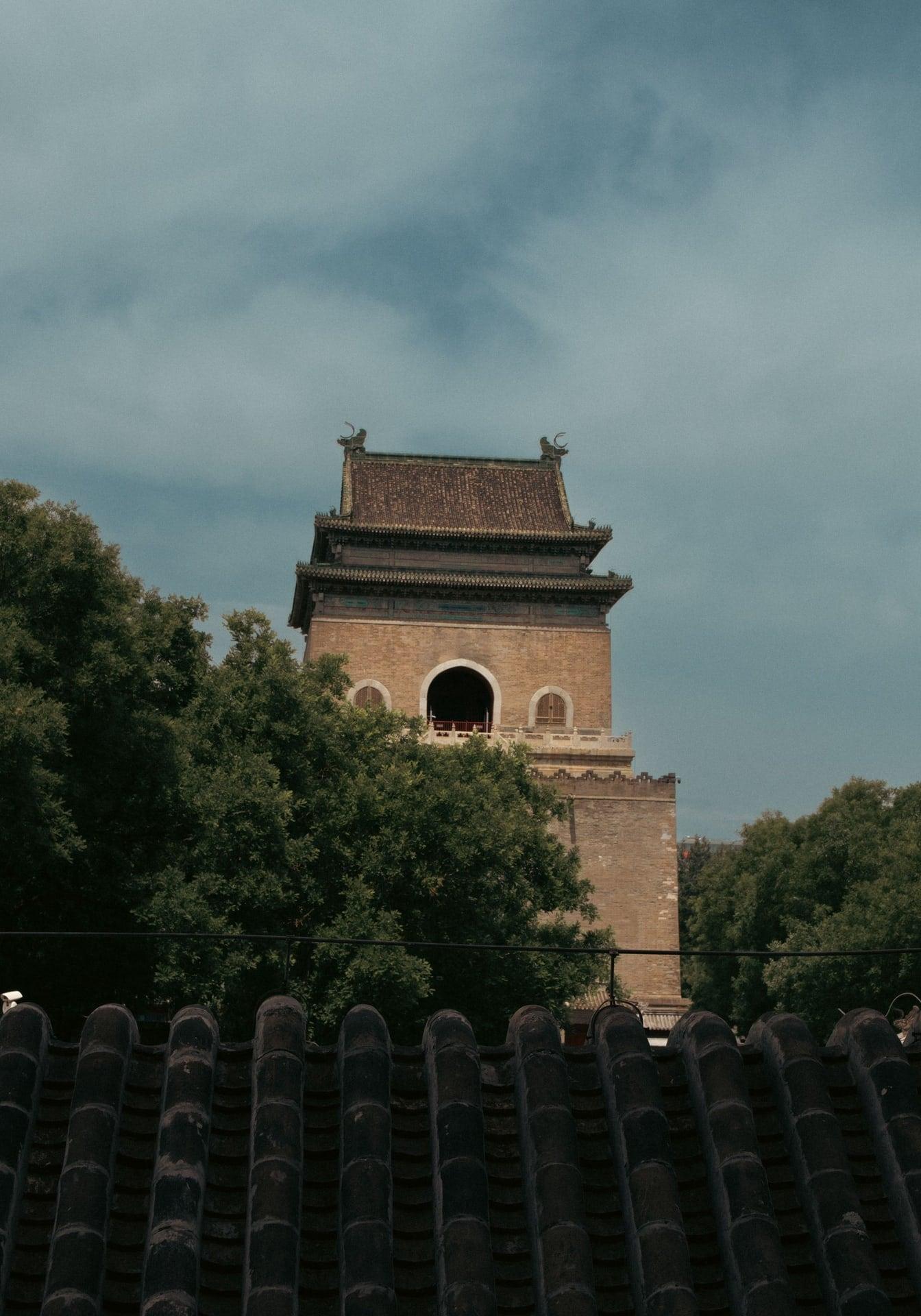
Bell Tower (钟楼)
Built in stone to beat fire. The Bell Tower was rebuilt in the 1740s entirely in masonry, eaves and brackets carved in stone, to hold a Yongle-era bronze bell 7.02 m high and 63 tons in weight.
- 8
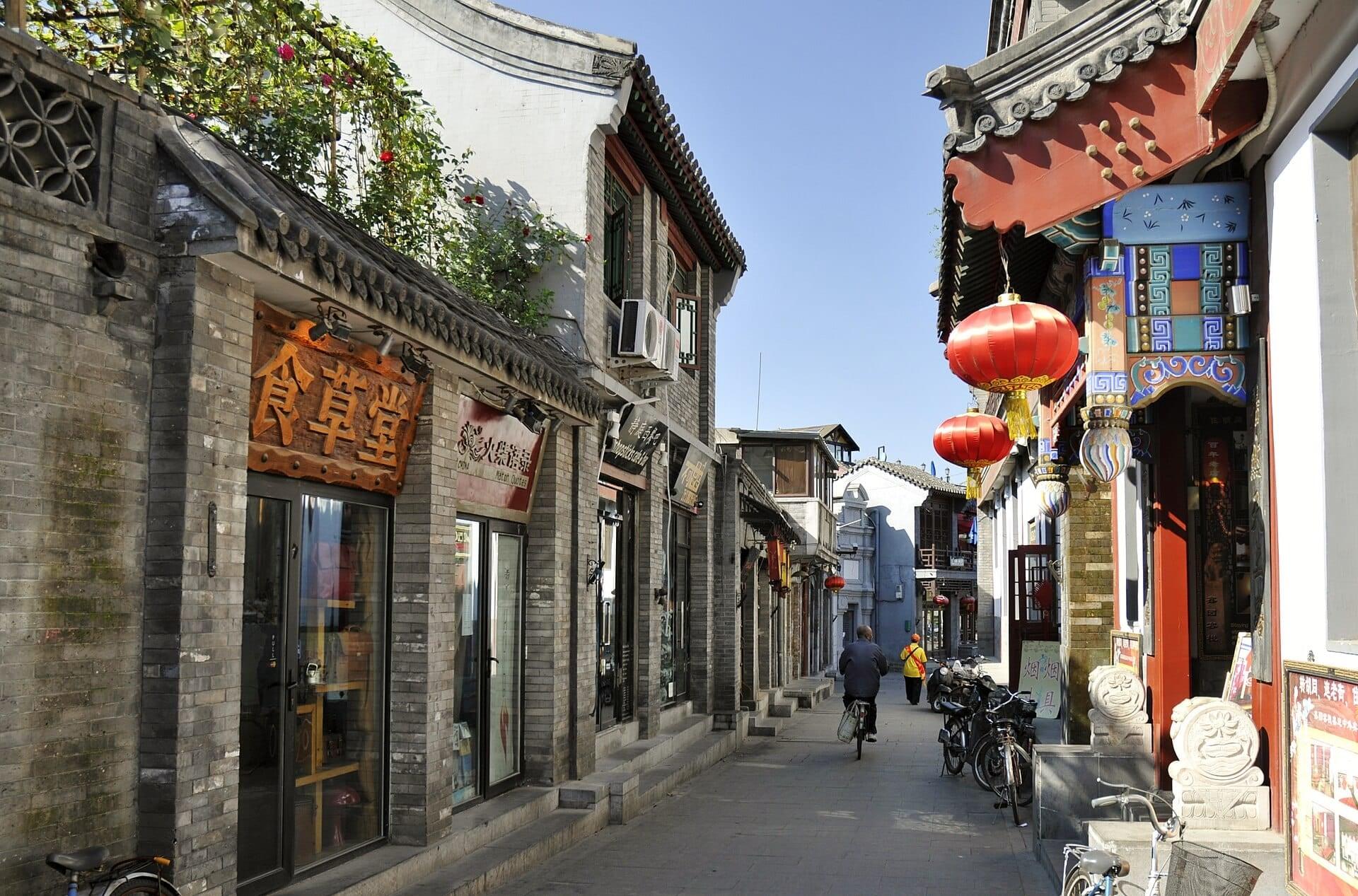
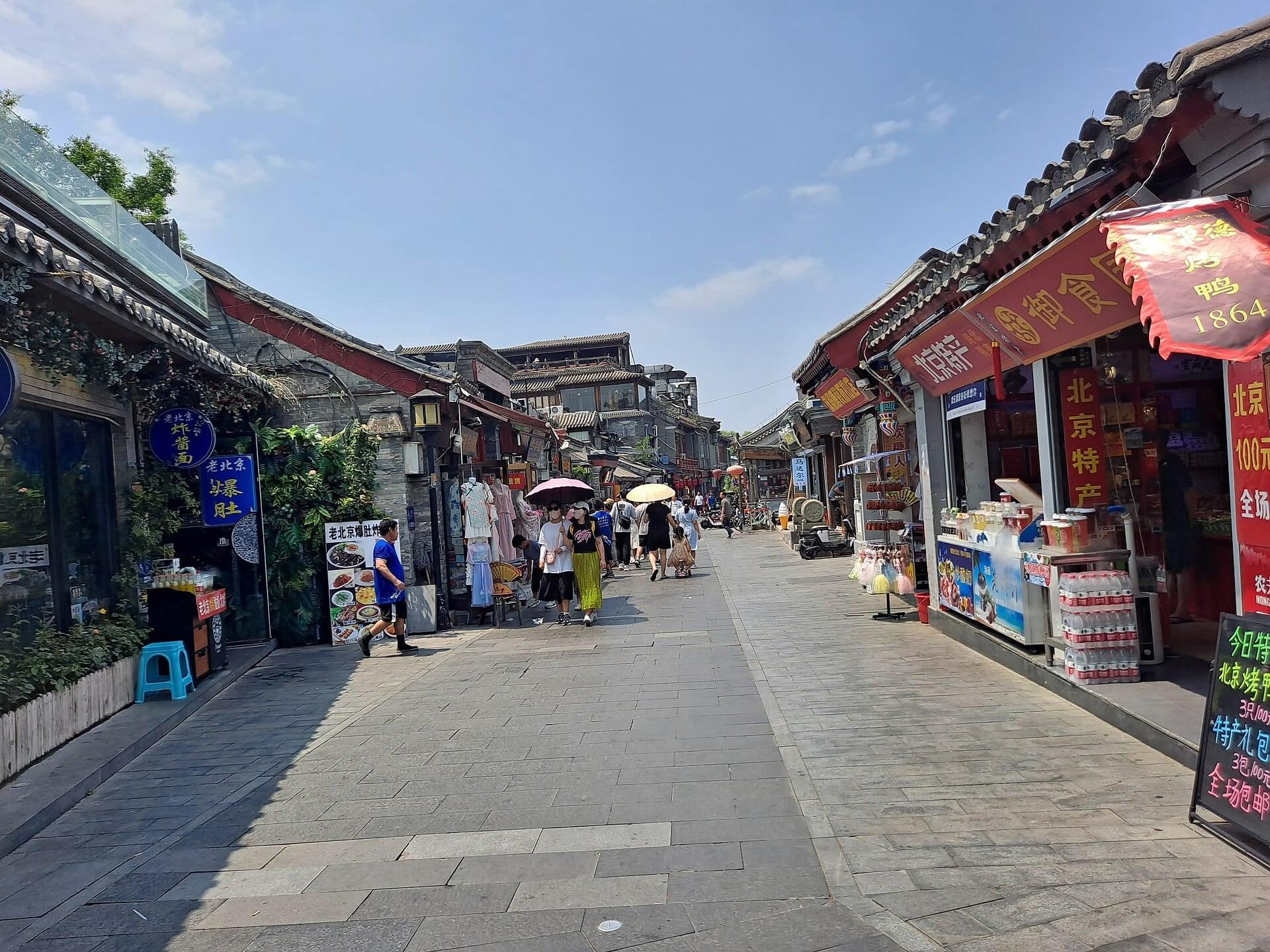
Yandai Xiejie (烟袋斜街)
The one street that slants. Yandai Xiejie, 232 m long, cuts across Beijing's grid from the Drum Tower toward the lake: the shortcut from the wharf to the market, named for its pipe shops and its pipe shape.
- 9
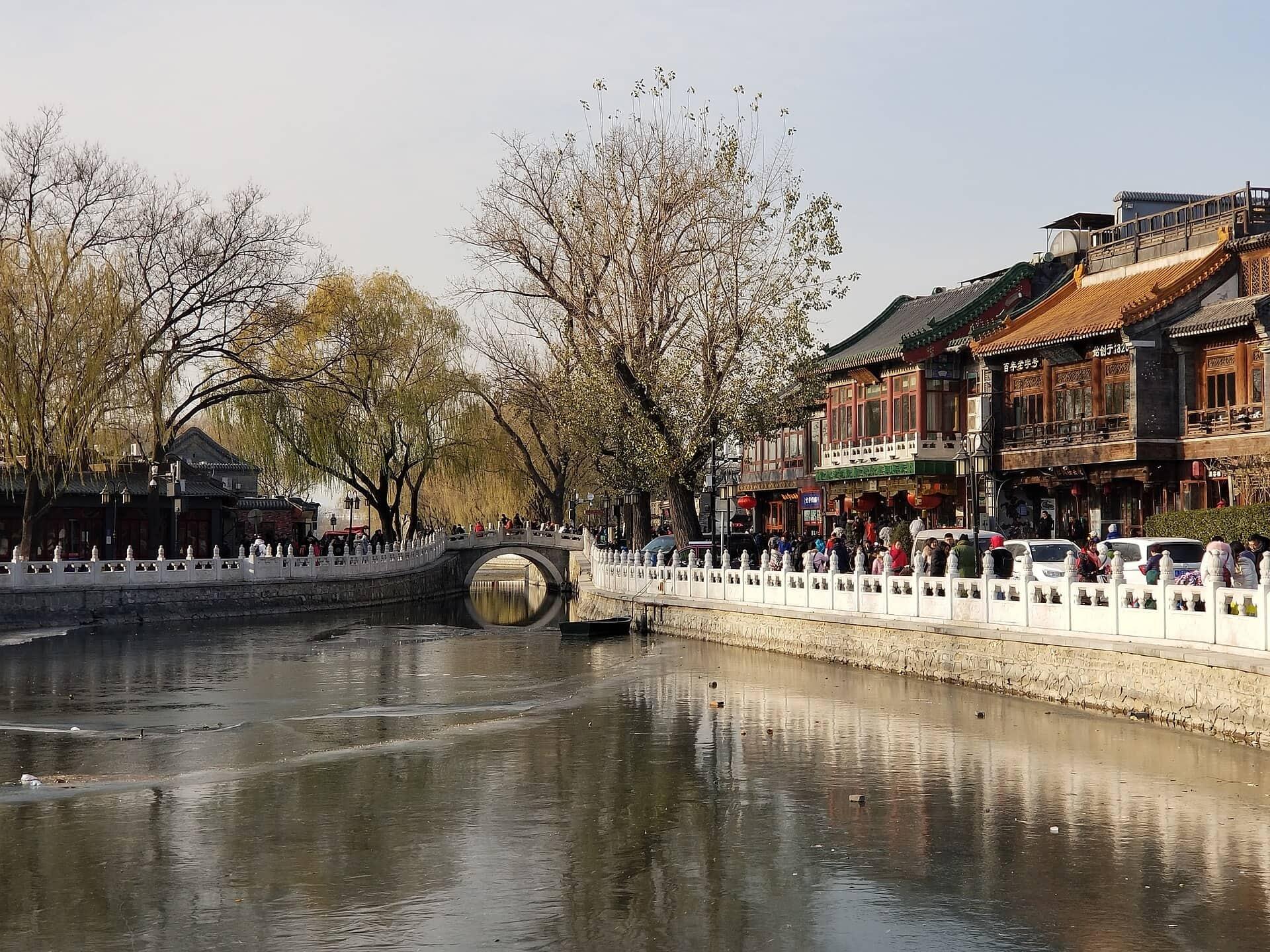
Yinding Bridge (银锭桥)
The one place the mountains show. A Ming guide called Yinding Bridge the finest place in the city to see the Western Hills from the water's edge; step off the bridge and the view closes.
- 10
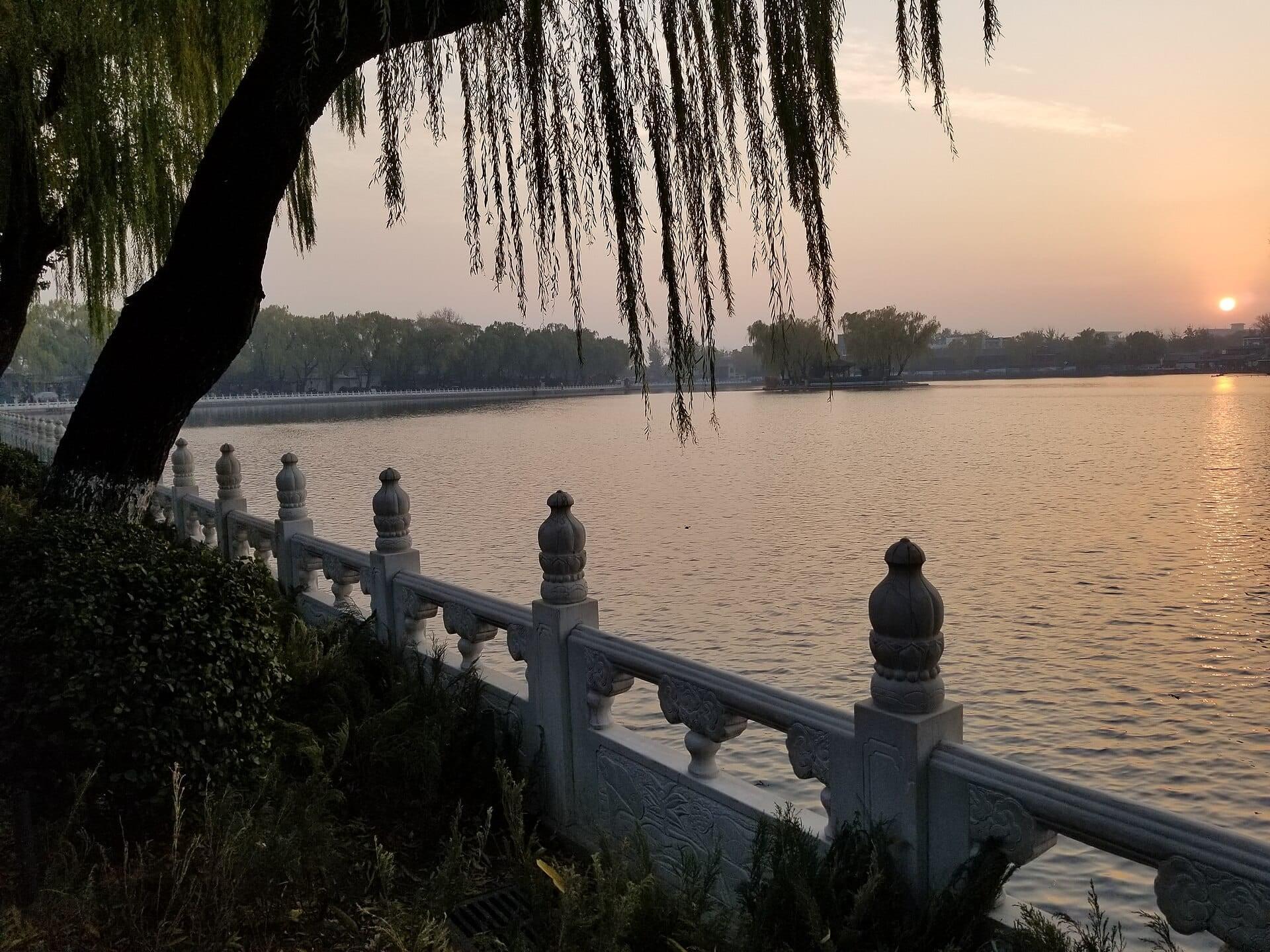
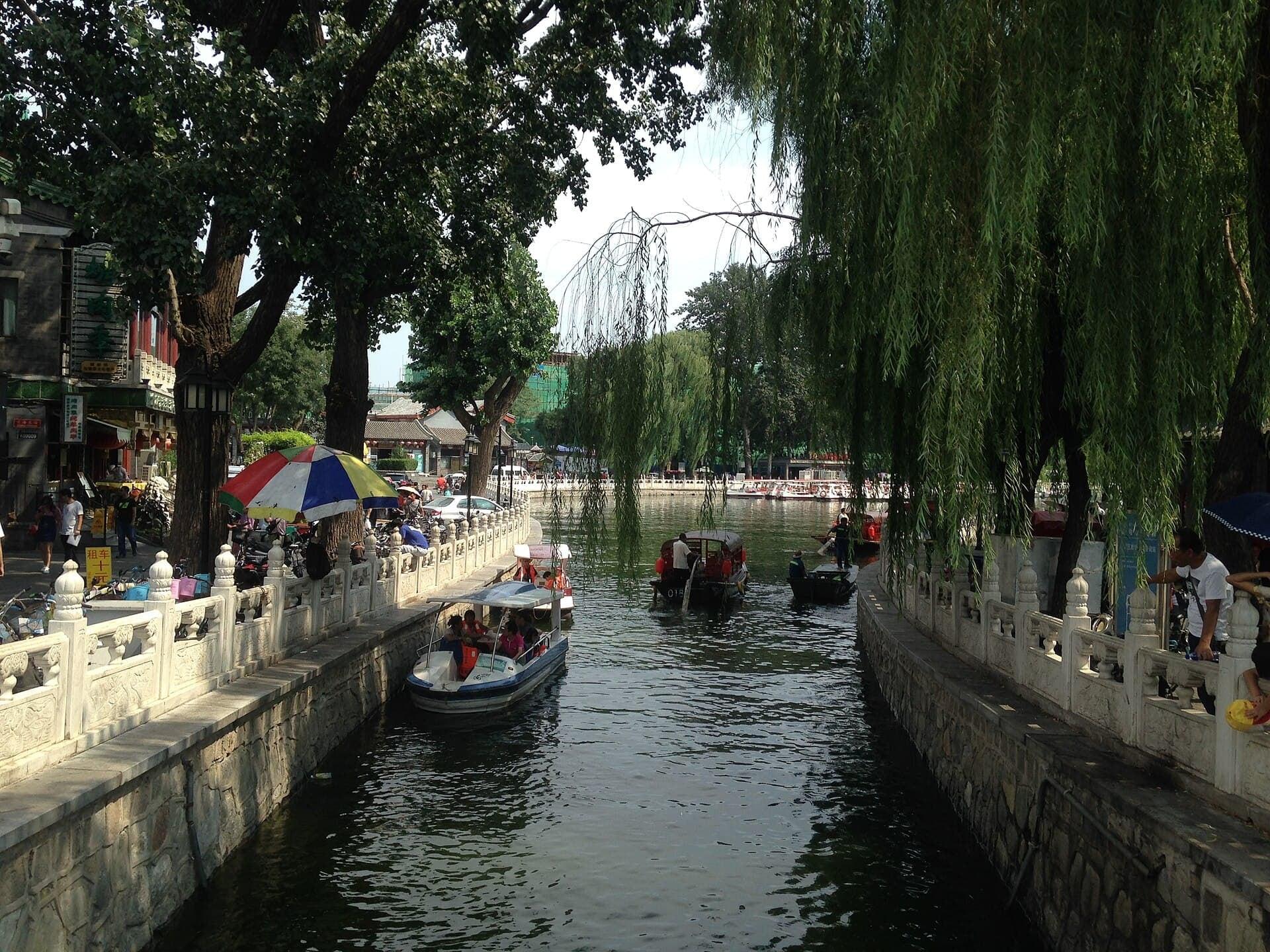
Qianhai (前海)
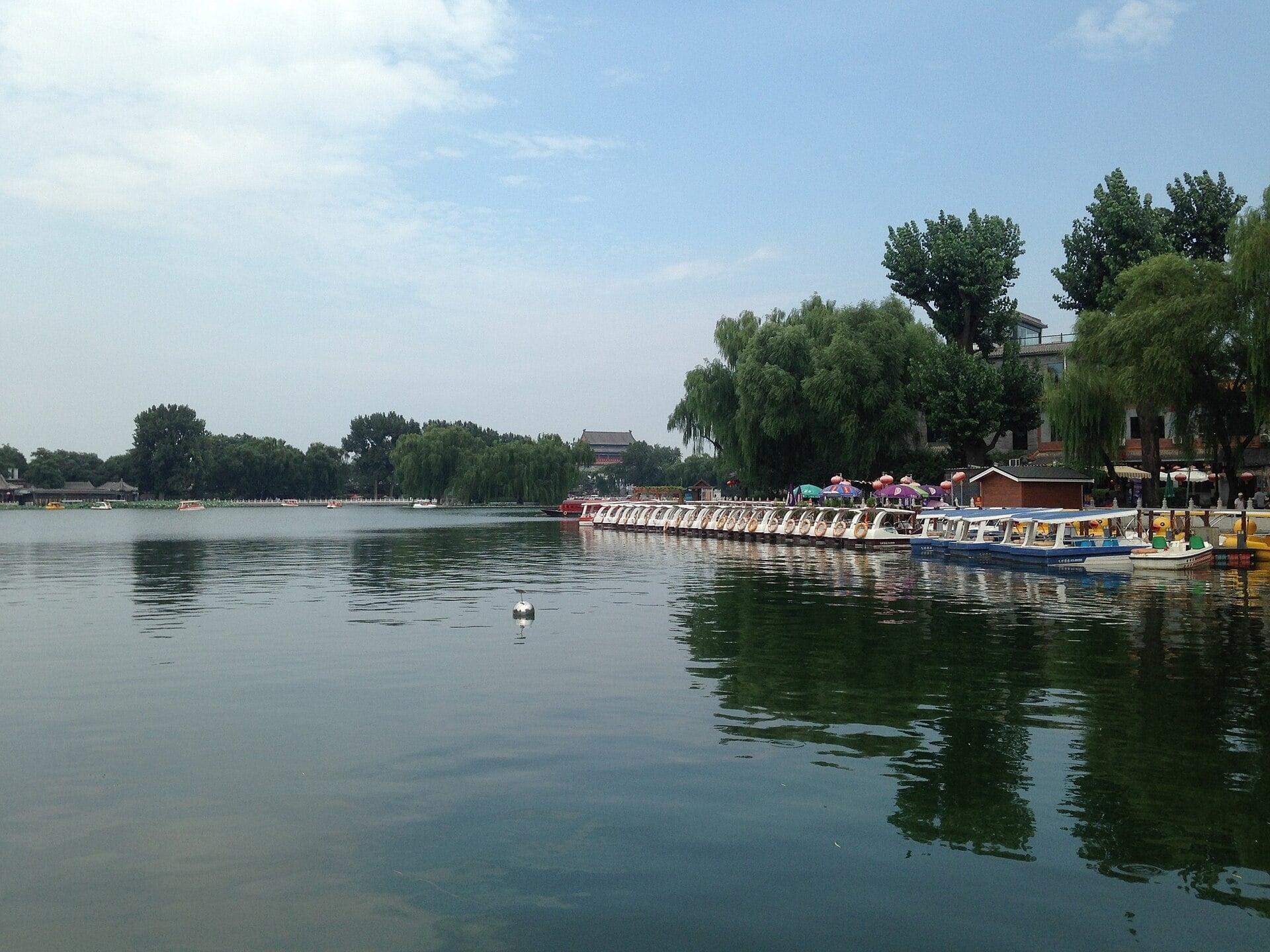
A harbor in the middle of a capital. Under the Yuan the Grand Canal's boats moored in these lakes, with masts thicker than bamboo shoots and markets for rice, silk and pearls on the shore.
- 11
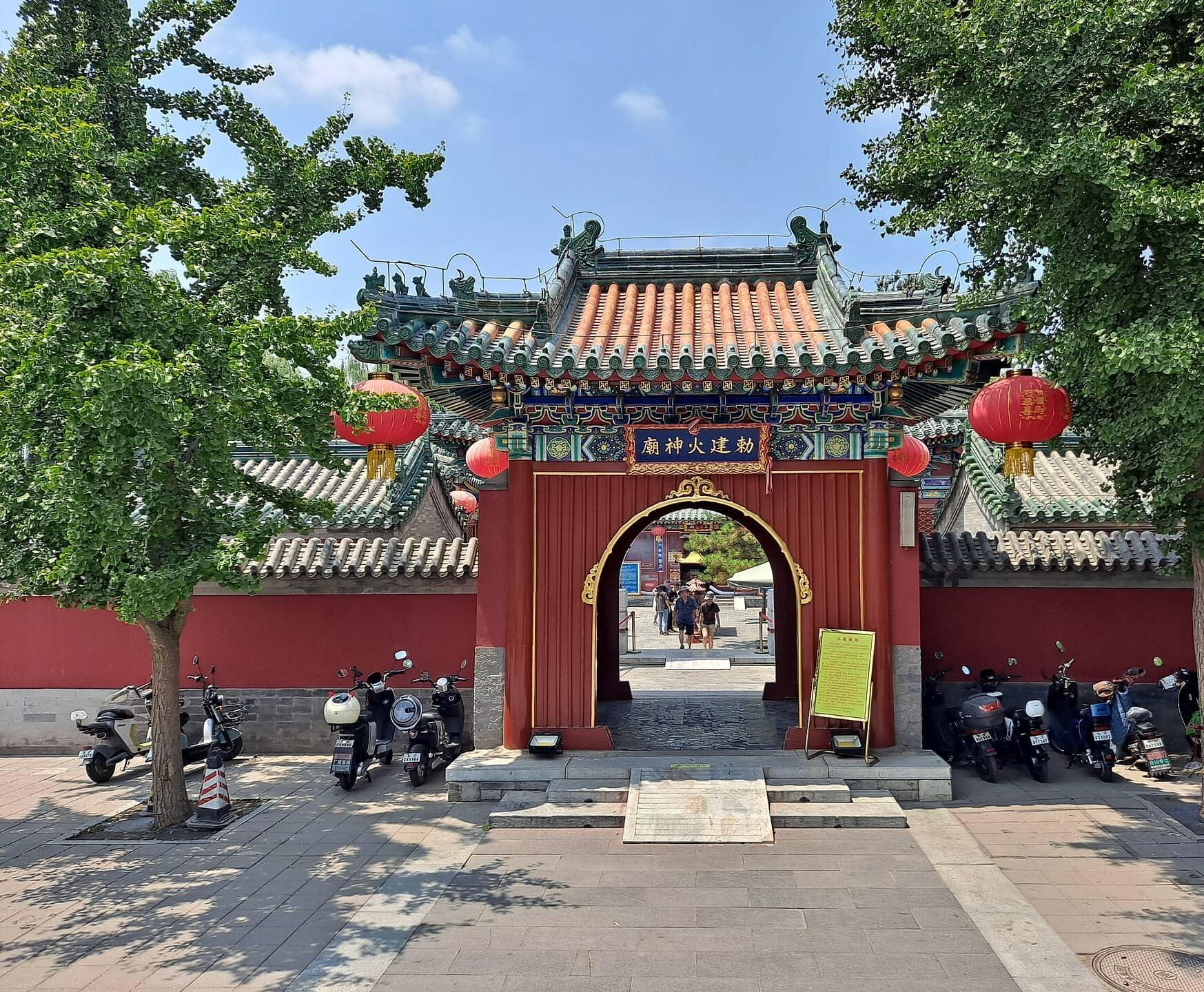
Fire God Temple (火德真君庙)
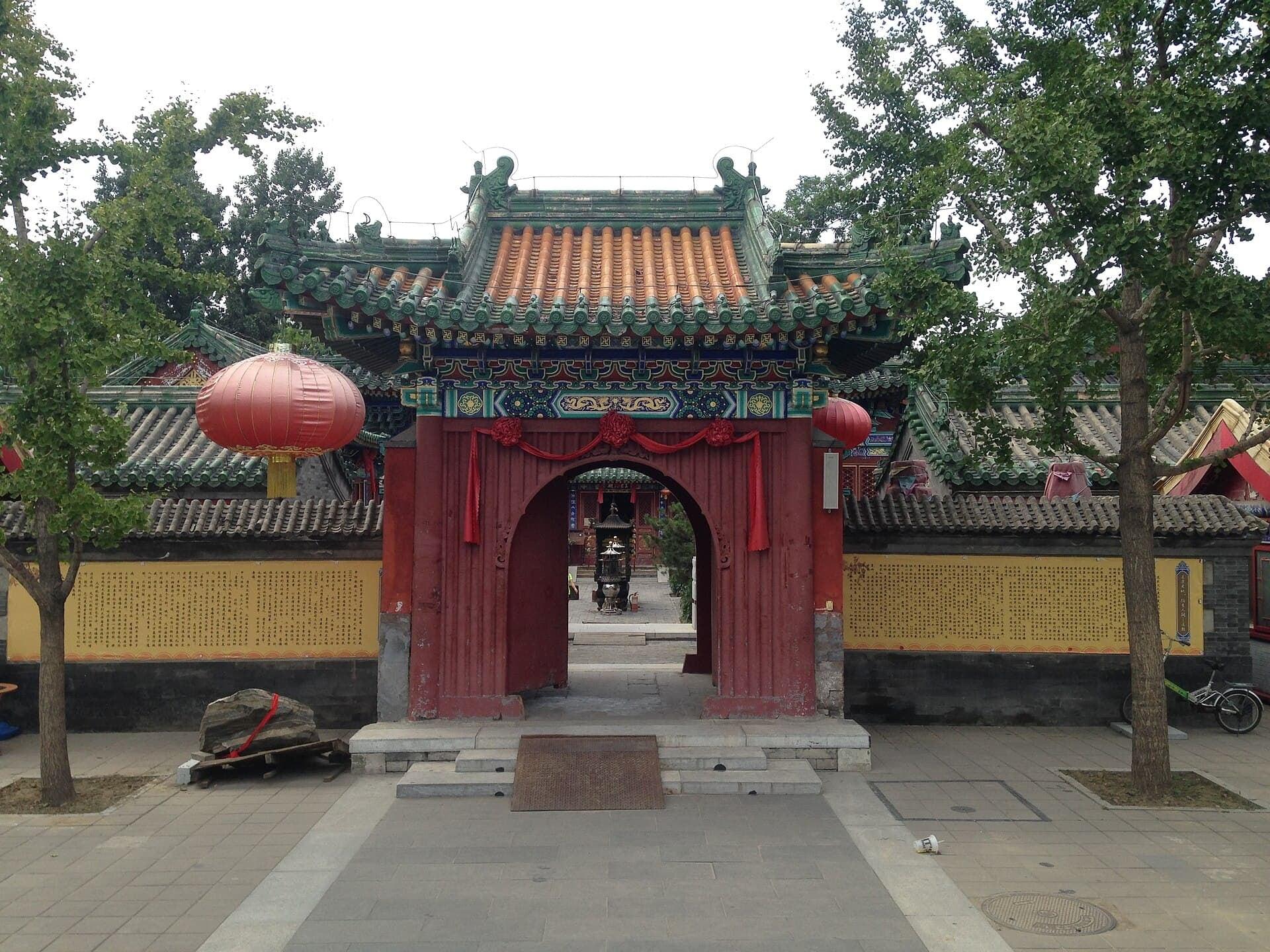
A god against fire by the harbor. The Huode Zhenjun Temple, founded by tradition in the Tang dynasty, keeps its Ming plan and Qing look: Ming bones, Qing clothes. It reopened in 2010.
- 12
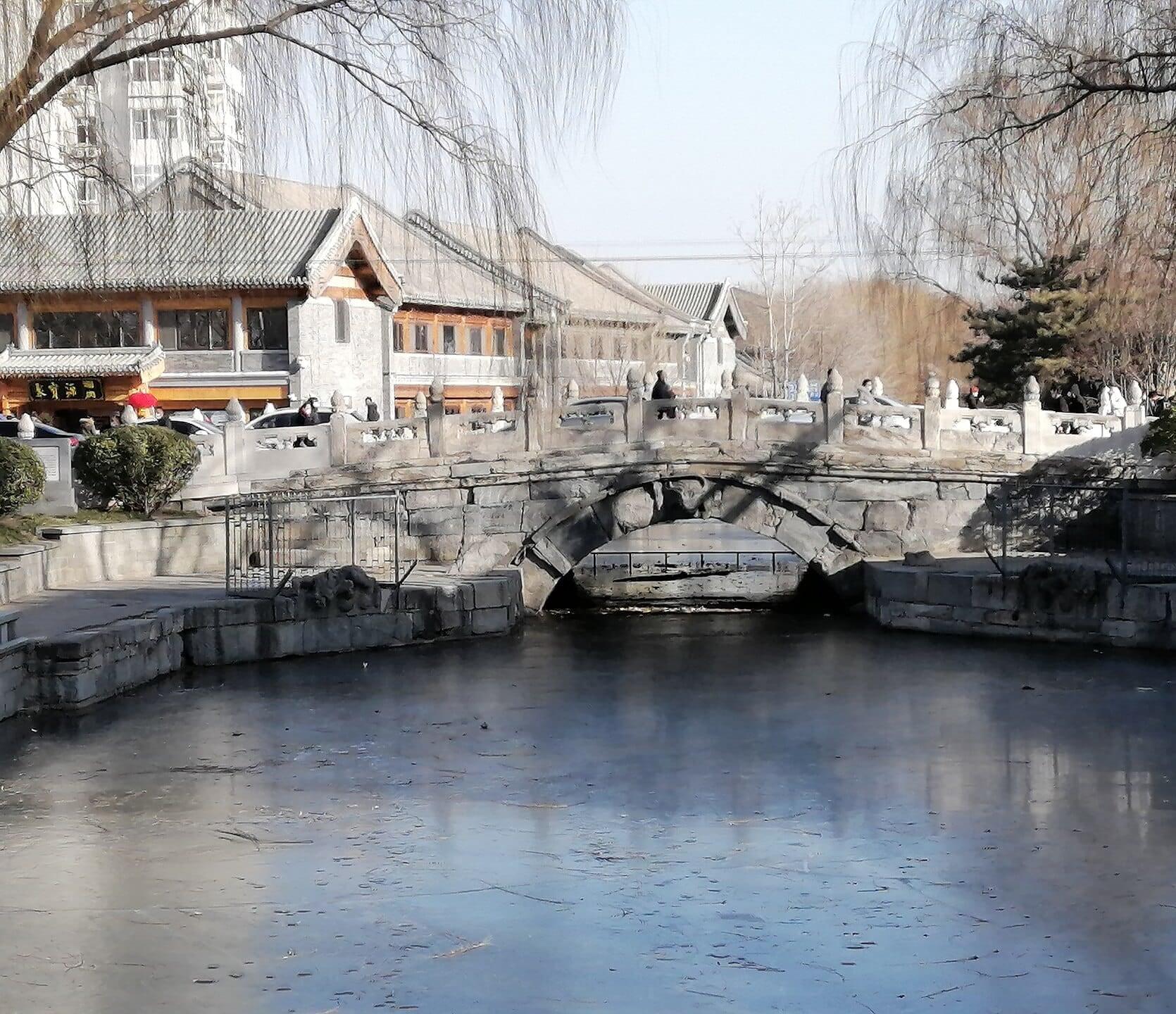
Wanning Bridge (万宁桥)
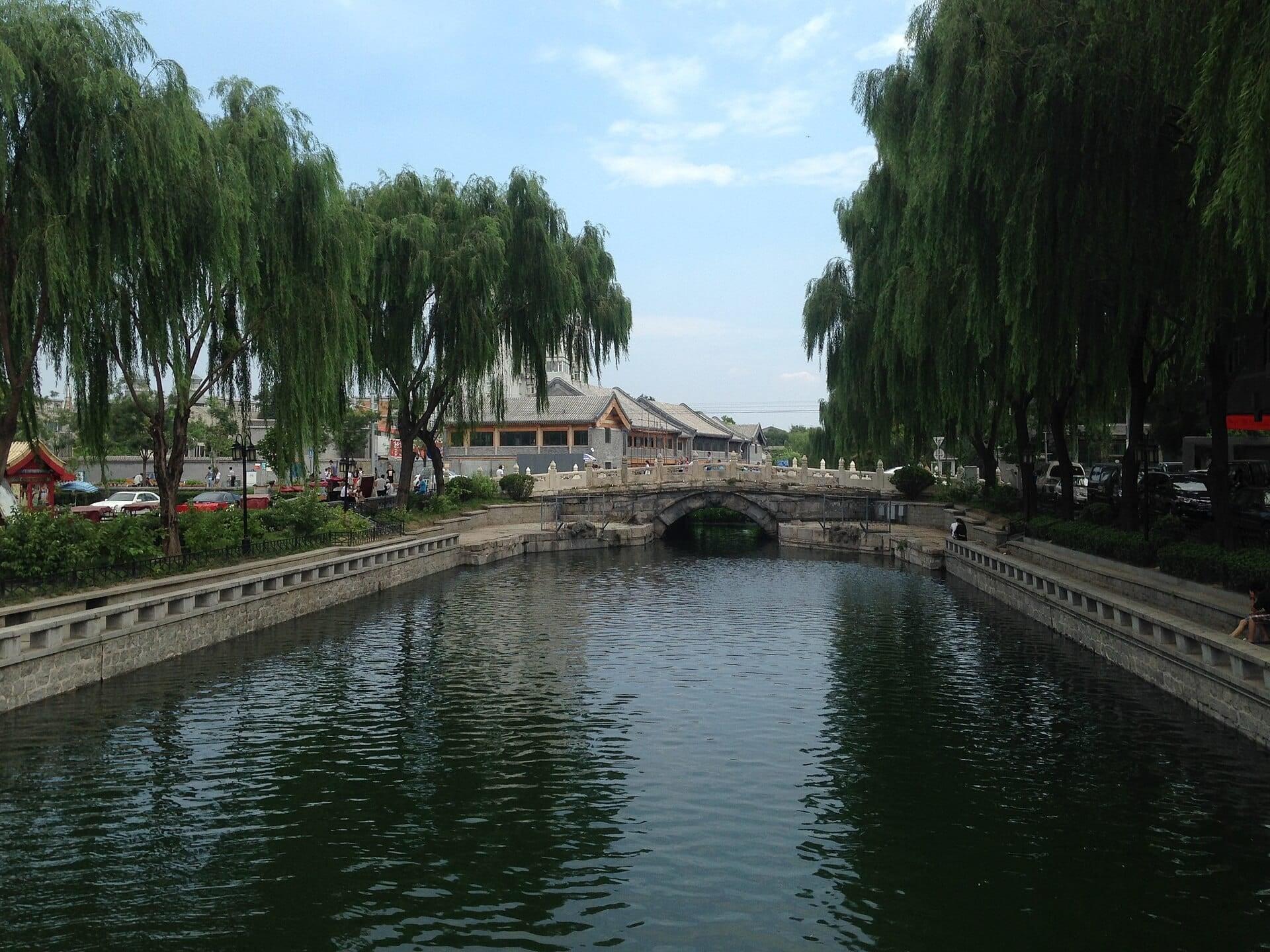
Where the boats came in. Wanning Bridge, a Yuan stone arch and lock on the city's center line, with stone water beasts that read the water level; part of the Grand Canal and the Central Axis World Heritage sites.
Details
Best Time to Visit
Any day; about 90 minutes. Mornings are quietest in the hutongs and on Yandai Xiejie; the lake shore is busiest in the evening. The towers' winter hours run from late October, 9:30 to 16:30 (last entry 16:20); December sunset is about 16:50. December to February is dry and cold: December averages about 3 °C (38 °F) by day and about minus 7 °C (20 °F) at night; spring brings wind and dust. In a cold January Qianhai becomes an ice rink. Avoid the holiday weeks of the Spring Festival (5 to 13 February 2027; Chinese New Year's Day is 6 February) and National Day (1 to 7 October), when Shichahai and the towers are packed. The city center can close streets or sites at short notice for major events: check the day before. Checked 25 November 2026.
Pro Tips
- •Getting to the start: Nanluoguxiang station (Lines 6 and 8), exit E, on the north side of East Di'anmen Street. Walk west along that side for about 230 m, three minutes, and turn right into Dongbuyaqiao Hutong where the stone-lined channel begins. Metro stations have security checks: allow time. Checked 25 November 2026.
- •Most places take Alipay or WeChat Pay, which accept foreign cards; carry some cash as well, which every merchant must accept.
- •The Drum and Bell Towers (stops 5 to 7) are optional: joint ticket 30 yuan, booked ahead by real name with your passport through the towers' WeChat account 北京钟鼓楼. Ask at the gate for the drumming times. The Drum Tower's first-floor hall is closed on Mondays except public holidays. Checked 25 November 2026.
- •Guangfu Guan on Yandai Xiejie (stop 8, No. 37) is a free cultural display center, no booking, 9:30 to 18:30, closed Mondays. Optional. Checked 25 November 2026.
- •The walk ends at Wanning Bridge. Shichahai station (Line 8), exits A1 and A2, is about 180 m north on the lake side of Outer Di'anmen Street, over the bridge on its sidewalk.
Safety & Precautions
- •Mainland China drives on the right. At crossings without lights look left first, then right. At the two signalled crossings (Gulou East Street after stop 5, Gulou West Street after stop 7), cars turning right may cross while you have the green: look left before stepping off.
- •Silent electric scooters and bikes ride in the hutongs, on the sidewalks and along the lake lane, often from both directions. Look as well as listen.
- •The hutongs are homes: keep your voice down, stay in the lane, do not enter courtyards and do not photograph into them.
- •Keep to the lane side along the Jade River and the lake, away from the water's edge, and stay off the ice in winter except through the ice rink's own gates.
- •Rickshaw drivers solicit on Yandai Xiejie and around the lakes: agree the price and the currency before you ride, or decline. If a friendly stranger invites you to a tea house or a bar, decline politely: these invitations can end in a very large bill.
- •Carry your passport. Do not photograph security staff or checkpoints. The city center can close streets or sites at short notice for major events: check the day before.
Gallery
Read the walk
The full story of Hutongs, Drum Tower and Houhai: The Canal and the Clock, in words. Prefer to listen? Play it narrated, from home or on location.
Introduction
Beijing's old north city was built around water. Seven hundred years ago a canal brought grain boats from the south into a chain of lakes in the middle of the new capital, and the city's planner fixed its center line at the lake's edge and raised a drum tower on it. This walk follows that story: along the canal dug back out of the hutongs, past courtyard gates, to the Drum and Bell Towers that kept the city's time, then down a slanting street to the lakes and the bridge where the boats came in. The canal built the city's clock.
There are twelve stops over about two point seven kilometers, about one point seven miles, and it takes about ninety minutes. It is flat, with one short flight of steps by the lake. It starts by Nanluoguxiang station, on lines six and eight.
In mainland China traffic keeps to the right, so at a crossing without lights look left first, and watch for cars turning right, which do not always stop for walkers. Silent electric scooters ride in the hutongs and on the sidewalks, often from both directions: look as well as listen. The walk crosses two streets of any size, both at traffic lights.
The hutongs are homes. Keep your voice down, stay in the lane, and do not step into courtyards.
No ticket is needed for any stop. The Drum and Bell Towers are told from outside; going in needs a ticket booked ahead by real name, and is not part of the walk. Carry your passport. Have mobile data that works in mainland China, and download this tour before you set out.
December to February is dry and cold, often below freezing, so dress for it; spring brings wind and dust.
When you arrive at the Jade River, begin with stop one.
1. Jade River (玉河)
This stone lined channel is the Jade River, the Yuhe, and the water in it follows the line of a canal dug more than seven hundred years ago. In the spring of twelve ninety two the engineer Guo Shoujing was ordered to build a canal for the new Yuan capital, called Dadu. By the autumn of twelve ninety three it was finished, and the emperor named it the Tonghui River. Grain boats from the south could now sail right into the lakes in the middle of the city. That chain of lakes, Shichahai, is still called the last wharf of the Grand Canal, and this walk follows the water to it.
The river did not stay open. After nineteen twelve it was turned into covered drains, stretch by stretch, and for decades it was out of sight. Work approved in two thousand seven dug it out again, and this north stretch was finished in twenty thirteen.
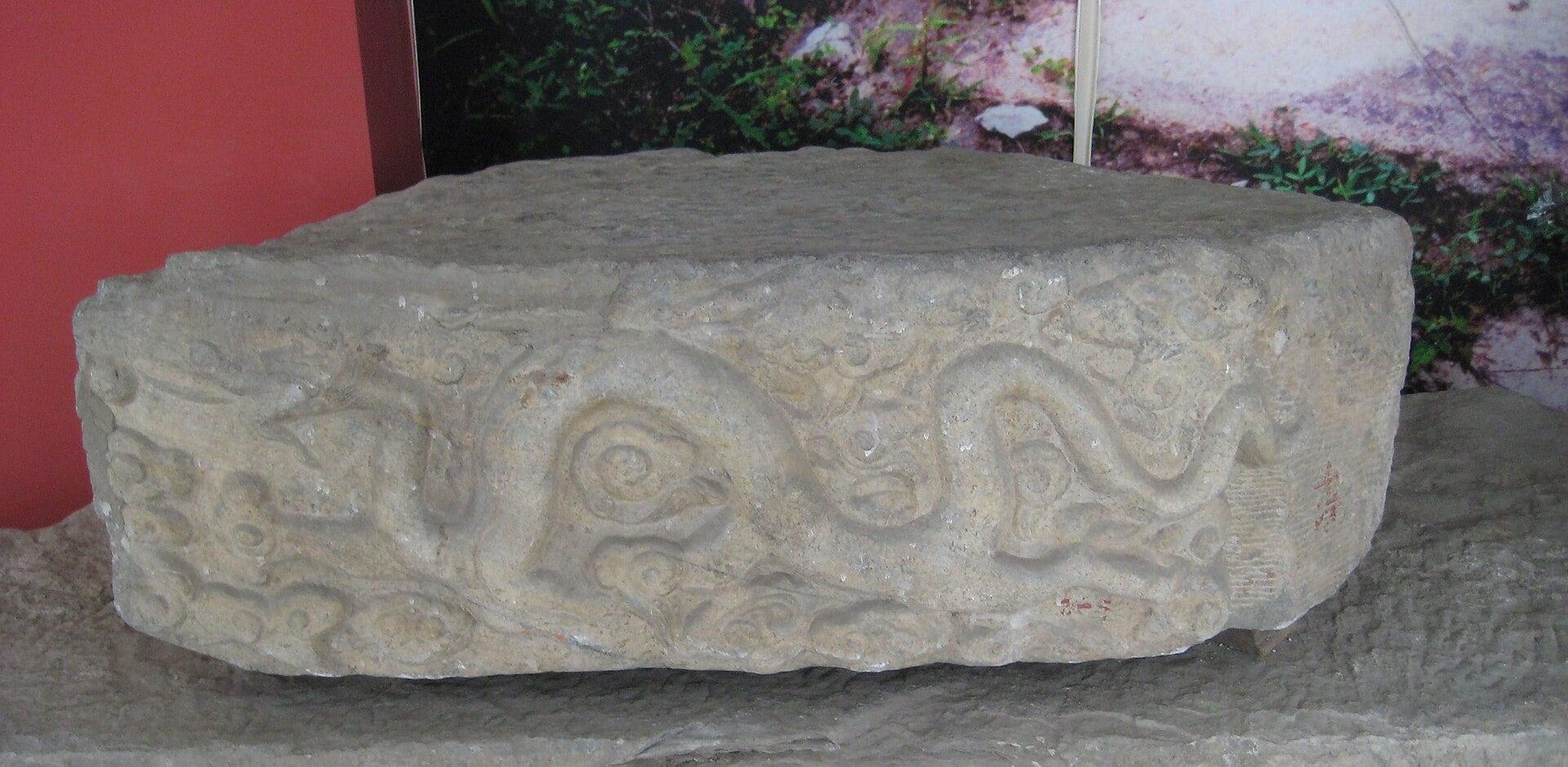
Now look at the small courtyard beside the lane. This is Yuhe'an, a little shrine named for the river, and it sits crooked, turned by nearly forty five degrees from everything around it. The reason is underneath. The shrine was built at the head of an old bridge over the canal, the Dongbuya Bridge, and the bridge's stone wing walls run into it. When the excavation reached this corner in two thousand seven, the archaeologists also found a stone tablet recording the shrine's rebuilding, put up in eighteen oh eight. The shrine is now a protected site of the district.
So the city covered its own river and then dug it back out, and a crooked shrine showed where the bridge had been.
Follow the route up the lane beside the water. Keep to the lane, not the edge, and watch for silent scooters from both directions. Next, the lane that carries the bridge's name.
2. Dongbuyaqiao Hutong (东不压桥胡同)
You are walking Dongbuyaqiao Hutong, and qiao means bridge: the lane carries the name of the old bridge at its south end. Hutong is simply the Beijing word for a lane like this one, and this one runs beside the canal's own line. In the Ming dynasty the water ran out of the lakes, under Wanning Bridge, where this walk ends, and down through this lane and the lanes beyond it.
For more than a century, boats came up this water to the lakes. Here is why they stopped. In fourteen thirty two the east wall of the imperial city was pushed outward, and this stretch of the canal ended up inside it. From then on the grain boats could no longer pass. The harbor in the lakes lost its trade, and the canal's working end moved out of the city. One wall did it.
So the channel beside you is not a garden pond. It is the line of a working canal, dug out of the ground where it had been covered, and the lane is the path that ran beside it. People here call it the north section of the Yuhe.
Look along the water to where the channel curves away ahead: that is the way the boats went up to the lakes, and the way this walk will go, by lanes and towers, to reach the lake shore and the old bridge.
Follow the route up the lane, and keep to the lane side, away from the water's edge. At each lane mouth, look left first for scooters, then right. Next, a lane of courtyard houses.
3. Mao'er Hutong (帽儿胡同)
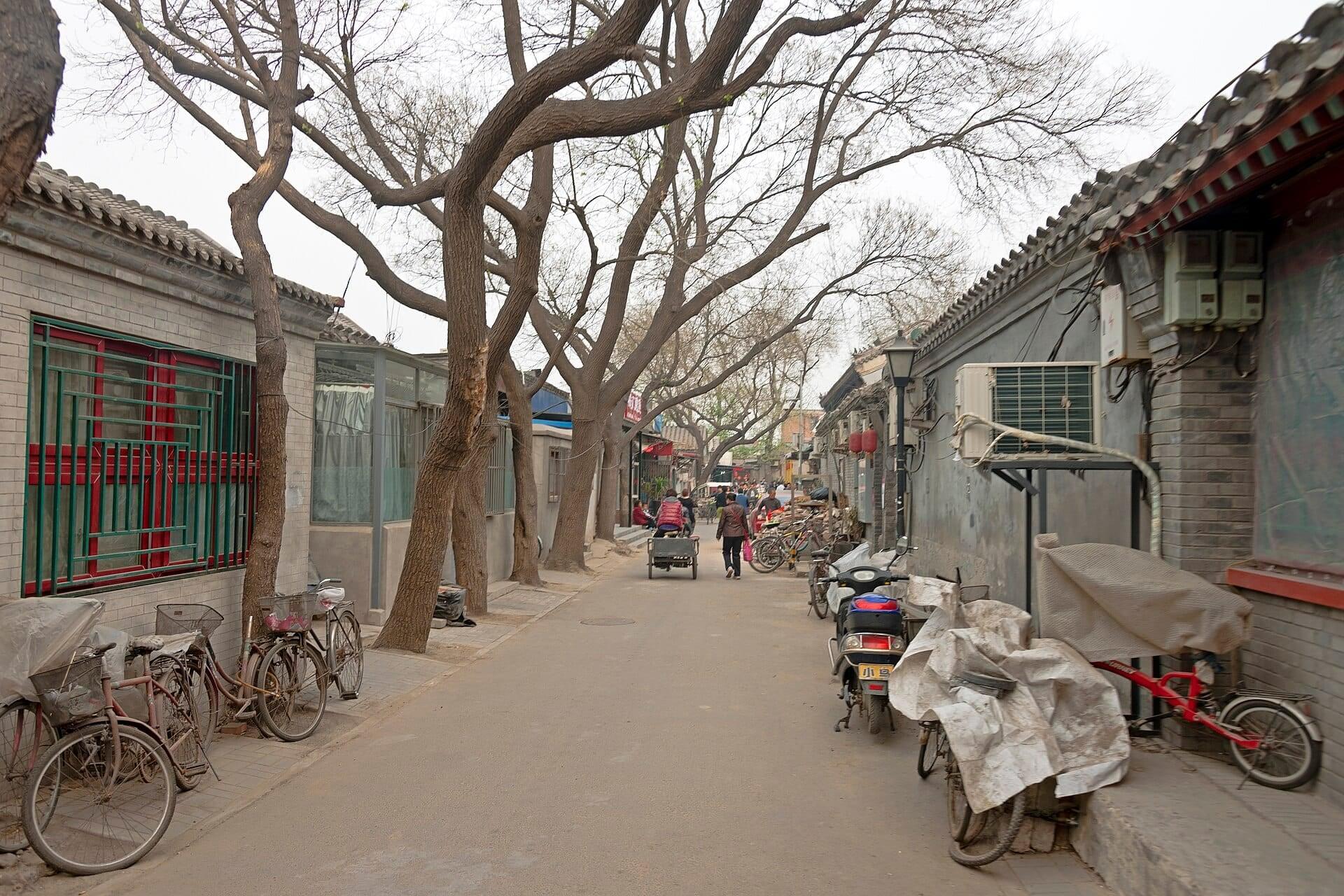
This is Mao'er Hutong, about five hundred and eighty five meters long and seven meters wide, running from Outer Di'anmen Street to Nanluoguxiang. In the Ming dynasty it was a temple street, home to the Wenchang Palace and another temple beside it. Later it filled with the houses of Qing families, and it still looks the way those households built it: low gray walls, gates, and roofs just showing above.
Look at the gates along here and notice how little they give away. A Beijing courtyard house turns its back to the lane. From outside you see a gate and a blank wall. Behind them, rooms are set around a courtyard on every side, and in a large house one courtyard opens onto the next, and the next. A family's rank was not in the size of its door. It was behind the walls: in how deep the courtyards went, and in whether there was a garden beside them.
On the north side of the lane, to your right, number thirty seven is a Qing courtyard house of exactly this kind, and number thirty five beside it was its garden. Number thirty seven was the family home of Wanrong, who left from here in nineteen twenty two to marry the last emperor.
Every house in this lane is a home today. Please keep your voice down, stay in the lane, and do not step into a courtyard or point a camera through an open gate.
Follow the route to the end of this stretch and up the short lane to the next corner. Next, how to read a gate.
4. Fangzhuanchang Hutong (方砖厂胡同)
Stop where the lanes meet and look at the nearest courtyard gate. Every gate in these lanes is a small lesson, and here is how to read one in thirty seconds.
Start at the bottom. On each side of many gates sits a block of stone, either round like a small drum or squared off like a box, often with an animal mask carved on top. It looks like decoration, and it is. But it is also a working part. The stone runs right through under the door frame: its back half, inside, is the bearing stone that holds the door's pivot, and its front half, outside, is the part everyone sees. One stone is the hinge and the display at once.
Then look at the doors themselves. Traditionally, people say that the further back from the lane the doors are set, the higher the household's standing. The Ruyi gate, often called the commonest in Beijing, puts its door in a wall built right at the front. Above the doors, look for the short round pegs set in the beam over the opening, the door studs. By tradition, people read their number as a sign of rank too.
None of this needs you to enter anything. The whole lesson is on the lane side of the wall, and this is where it stays: these are homes, so look from the lane, and do not photograph into a courtyard.
As you walk on, try it on every gate you pass: the stones, how deep the doors sit, the pegs above them.
Follow the route along the lane and into a narrow alley, about one car wide; give way to residents and scooters. Next, the street that points at the Drum Tower.
5. Drum Tower (鼓楼)
Step to the edge of the sidewalk, clear of the traffic, turn to your right and look up the street. The Drum Tower stands at its end, squarely across it, as if the street had been drawn to meet it. It was. When the Yuan dynasty built its capital, Dadu, here, the plan began with…
Full narration for this stop unlocks with the tour.
6. Bell and Drum Square (钟鼓楼文化广场)
You are standing between the city's two clocks. Behind you is the Drum Tower; ahead, at the far end of the square, is the Bell Tower. The two did different jobs: the drum kept the time, and the bell told it. The night was divided into five watches. The first watch, at eight in…
Full narration for this stop unlocks with the tour.
7. Bell Tower (钟楼)
The gray tower on your right, behind its low wall, is the Bell Tower. Look closely at its eaves. On most Chinese buildings the brackets under the roof, the rafters and the beams are wood. Here every one of them is shaped from stone. The Bell Tower was rebuilt in the seventeen…
Full narration for this stop unlocks with the tour.
8. Yandai Xiejie (烟袋斜街)
Look along Yandai Xiejie, the street you have just joined, and notice that it does not run straight. In a city of lanes laid out square to one another, this one cuts across on a slant. There are two explanations. One is that it follows the old shore of the lake. The other is…
Full narration for this stop unlocks with the tour.
9. Yinding Bridge (银锭桥)
Step a few paces onto the bridge, keeping to its edge, because this is the view. Cars, bikes and rickshaws use the bridge too, so stay out of their way. This is Yinding Bridge, the Silver Ingot Bridge, named for its shape, like an upturned silver ingot. It crosses the narrow…
Full narration for this stop unlocks with the tour.
10. Qianhai (前海)
This is Qianhai, the front lake, the southern of the three lakes of Shichahai: Qianhai, Houhai and Xihai, together about thirty four hectares of water. The name Shichahai comes from the ten Buddhist temples that once stood around them. Seven hundred years ago this water was a…
Full narration for this stop unlocks with the tour.
11. Fire God Temple (火德真君庙)
The gray walls and curved roofs beside the lane belong to the Huode Zhenjun Temple, the temple of the Fire God. Its front faces the water you are about to cross, and its halls run back from there, one behind the other. Beijing was a city of wood, and fire was its great fear. So…
Full narration for this stop unlocks with the tour.
12. Wanning Bridge (万宁桥)
Look along the channel to the low stone arch that carries the main street. This is Wanning Bridge, and this is where the boats came in. It is a single stone arch, built under the Yuan in the late twelve hundreds, and it was more than a bridge. On its west side, the side facing…
Full narration for this stop unlocks with the tour.
- File:Yuhe on the north of Di'anmen Dongdajie.JPG | 地安门东大街北侧的玉河 — Siyuwj, CC BY-SA 3.0 · source
- File:Relics of middle Chengqing sluice gate.JPG | 澄清中闸和东不压桥遗址 — Siyuwj, CC BY-SA 3.0 · source
- File:20220101 Site of the Dongbuya Bridge.jpg | Site of the Dongbuya Bridge — Yumeto, CC BY-SA 4.0 · source
- File:Dongbuya bridge stonework.jpg | Stone riverbank of Dongbuya Bridge, Beijing. Yuan Dynasty (1206-1368). Unearthed at Dongbuya Bridge, Do — BabelStone, CC BY-SA 3.0 · source
- File:Fangzhuanchang Hutong (20210115130214).jpg | It's the western start, near Shichahai Station (Exit C). — N509FZ, CC BY-SA 4.0 · source
- File:Parked bicycles on Fangzhuanchang Hutong, Beijing.jpg | Parked bicycles on Fangzhuanchang Hutong, Beijing — Daniel Case, CC BY-SA 3.0 · source
- File:View from Bell to Drum Tower (36206746225).jpg | Drum and Bell Tower (Gulou and Zhonglou), Beijing, China — Florian G. from Berlin, Deutschland, CC BY 2.0 · source
- File:Beijing Drum Tower.jpg | The rear of the Beijing Drum Tower, as seen from the Bell Tower — Toadspike, CC BY-SA 4.0 · source
- File:烟袋斜街 - panoramio (2).jpg | 烟袋斜街 — mayanming, CC BY-SA 3.0 · source
- File:Yandai Xiejie 3.jpg | Yandai Xiejie — EditQ, CC BY-SA 4.0 · source
- File:YindingBridge20181209142049.jpg | Yinding bridge 2018 12 09 — MarcBogonovich, CC BY-SA 4.0 · source
- File:Qianhai Lake from Yindingqiao Bridge.jpg | 銀錠橋より望む前海 — そらみみ, CC BY-SA 4.0 · source
- File:SunsetOverQianhaiBeijing 20181124 163249.jpg | This is an image taken from the east shore of Qianhai looking southwest on the setting s — MarcBogonovich, CC BY-SA 4.0 · source
- File:Qianhai Lake 20160822-1.jpg | 什刹海・前海 — そらみみ, CC BY-SA 4.0 · source
- File:Di'anmen Fire God Temple, Beijing.jpg | Di'anmen Fire God Temple, Beijing — EditQ, CC BY-SA 4.0 · source
- File:Shanmen Gate of Huode-Zhenjunmiao Temple.jpg | 火徳真君廟の山門 — そらみみ, CC BY-SA 4.0 · source
- File:20220101 Wanning Qiao.jpg | Wanning Bridge — Yumeto, CC BY-SA 4.0 · source
- File:Wanningqiao Bridge from Jindingqiao Bridge.jpg | 金錠橋より望む万寧橋 — そらみみ, CC BY-SA 4.0 · source
Images may be cropped or resized. Other photos via Unsplash and Pexels.