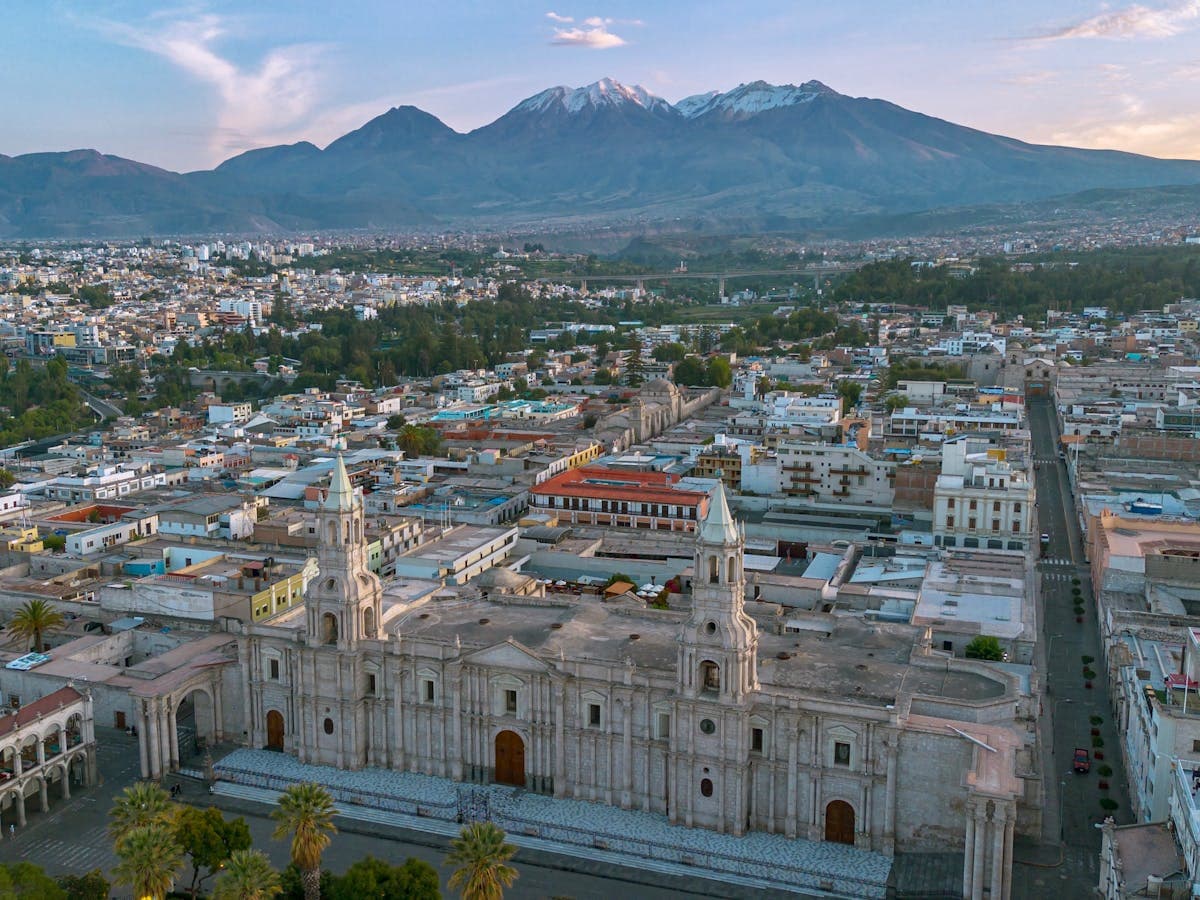
A loop from the Plaza de Armas round the sillar cathedral, out to the carved church doors of Santo Domingo and La Compañía, past the Casa Goyeneche and Juanita's museum, to San Agustín.
Start · Plaza de Armas: Arcades Younger Than They Look
DirectionsStops
- 1
Plaza de Armas: Arcades Younger Than They Look
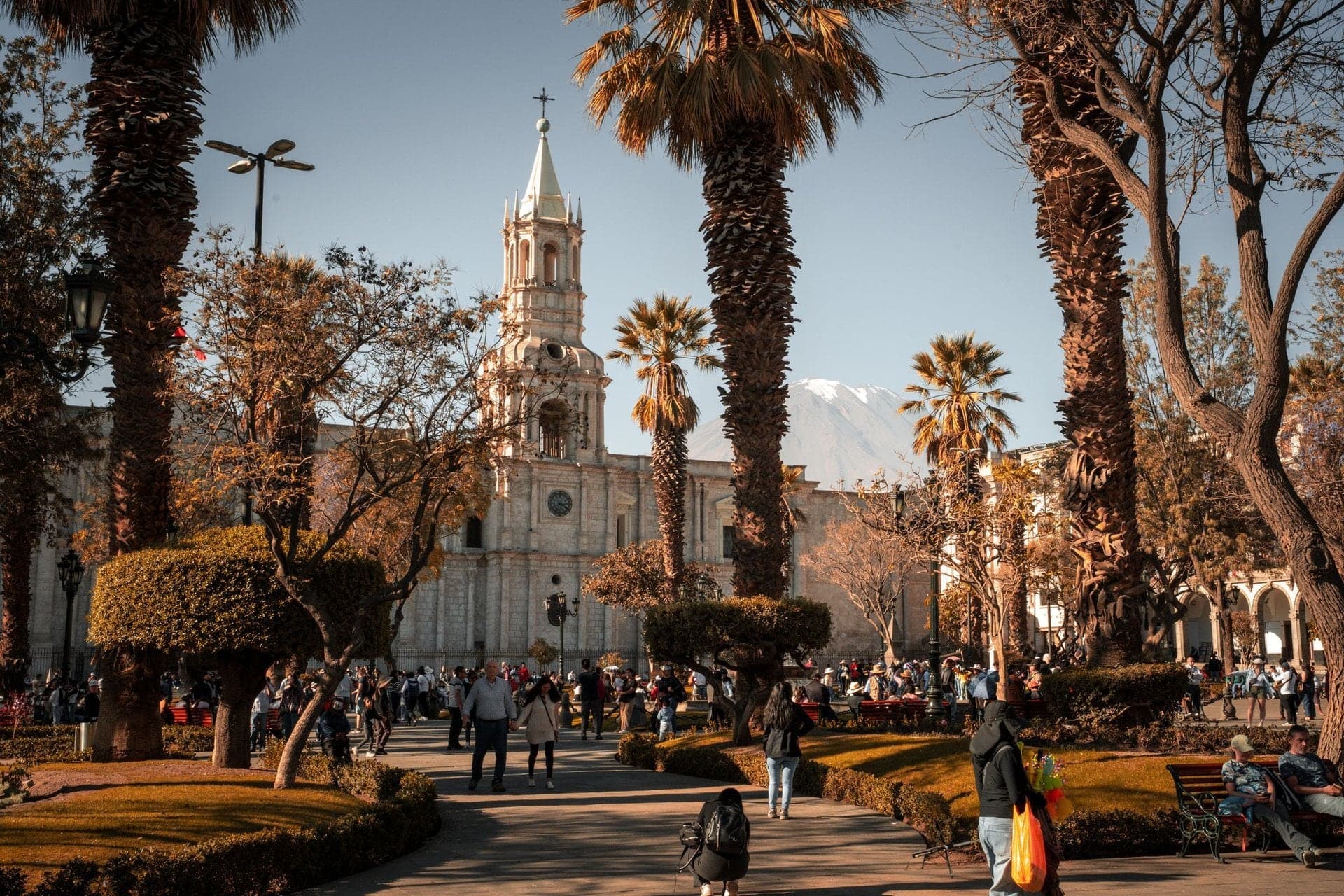
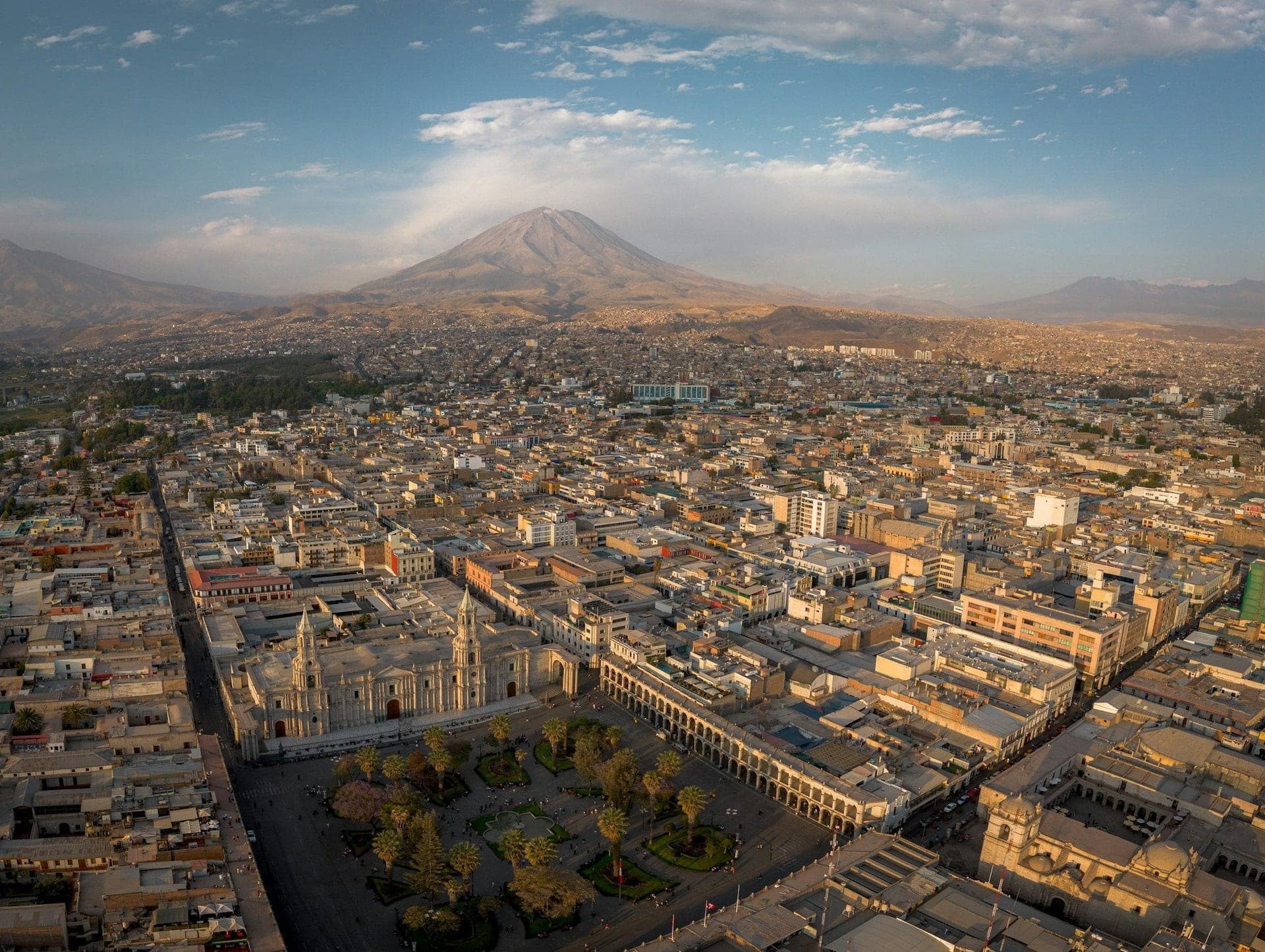
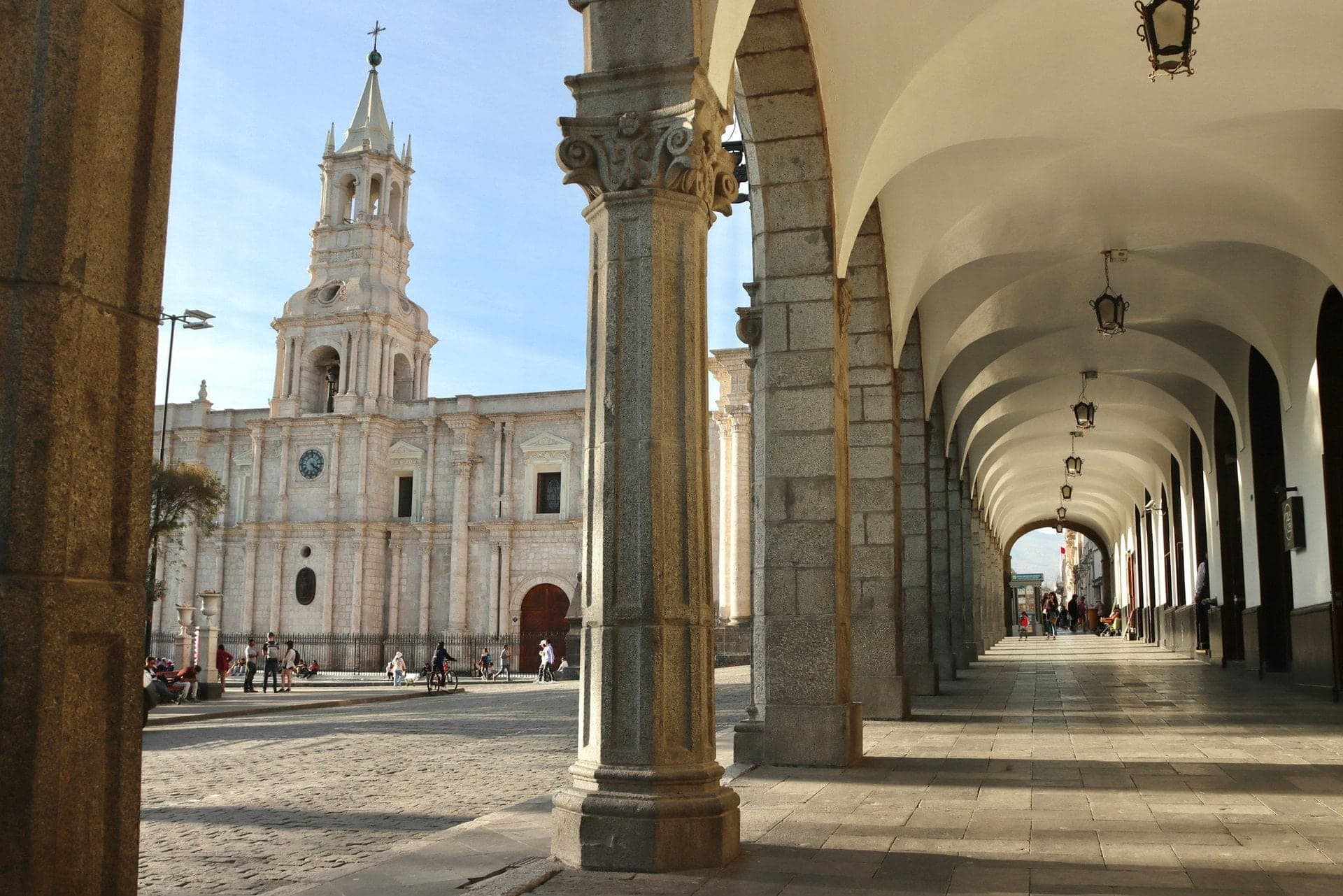
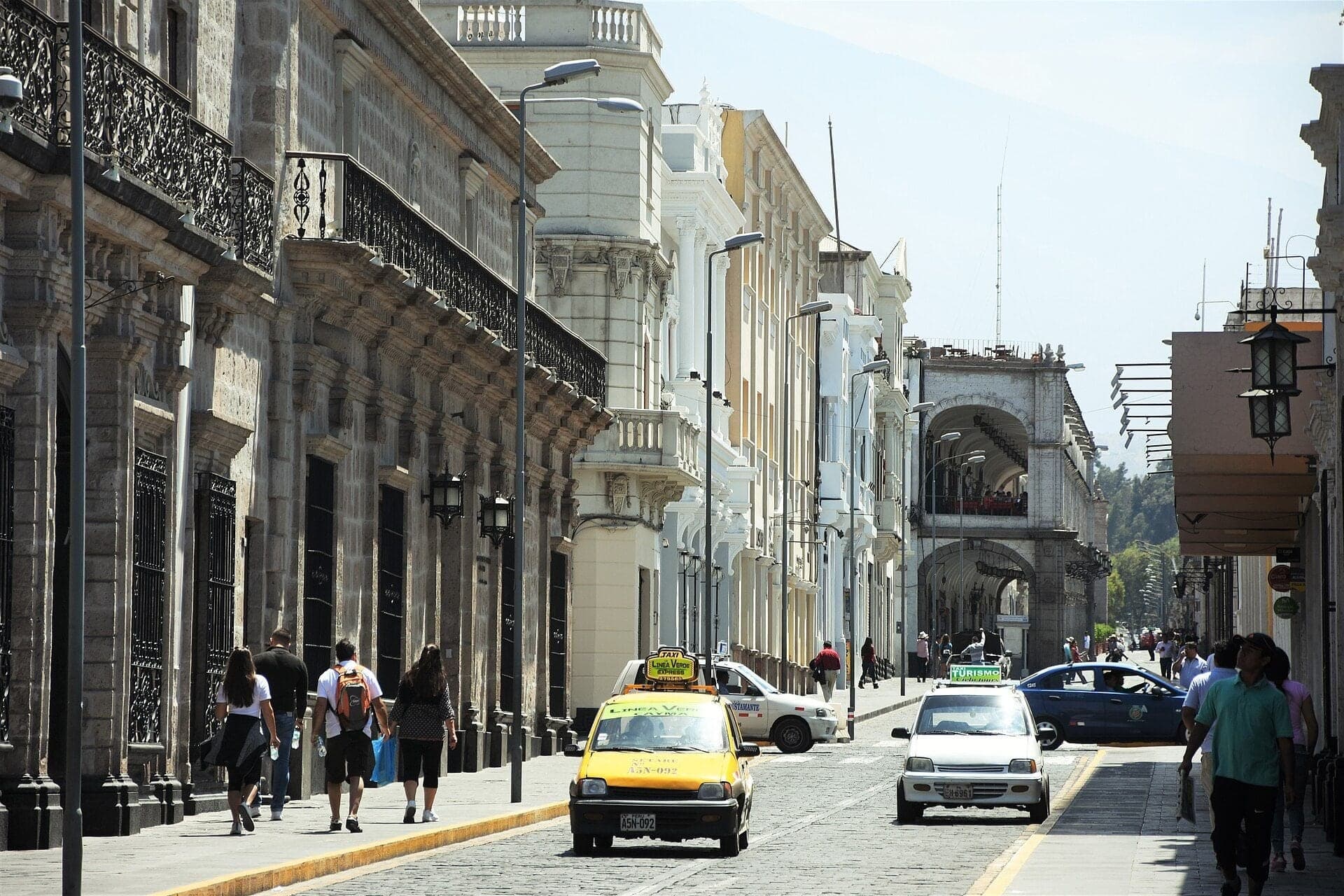
The square the White City was laid out from. The cathedral fills one side, arcades rebuilt after earthquakes line the other three, and a bronze trumpeter stands on the fountain.
- 2
Basílica Catedral: Rebuilt on the Same Spot
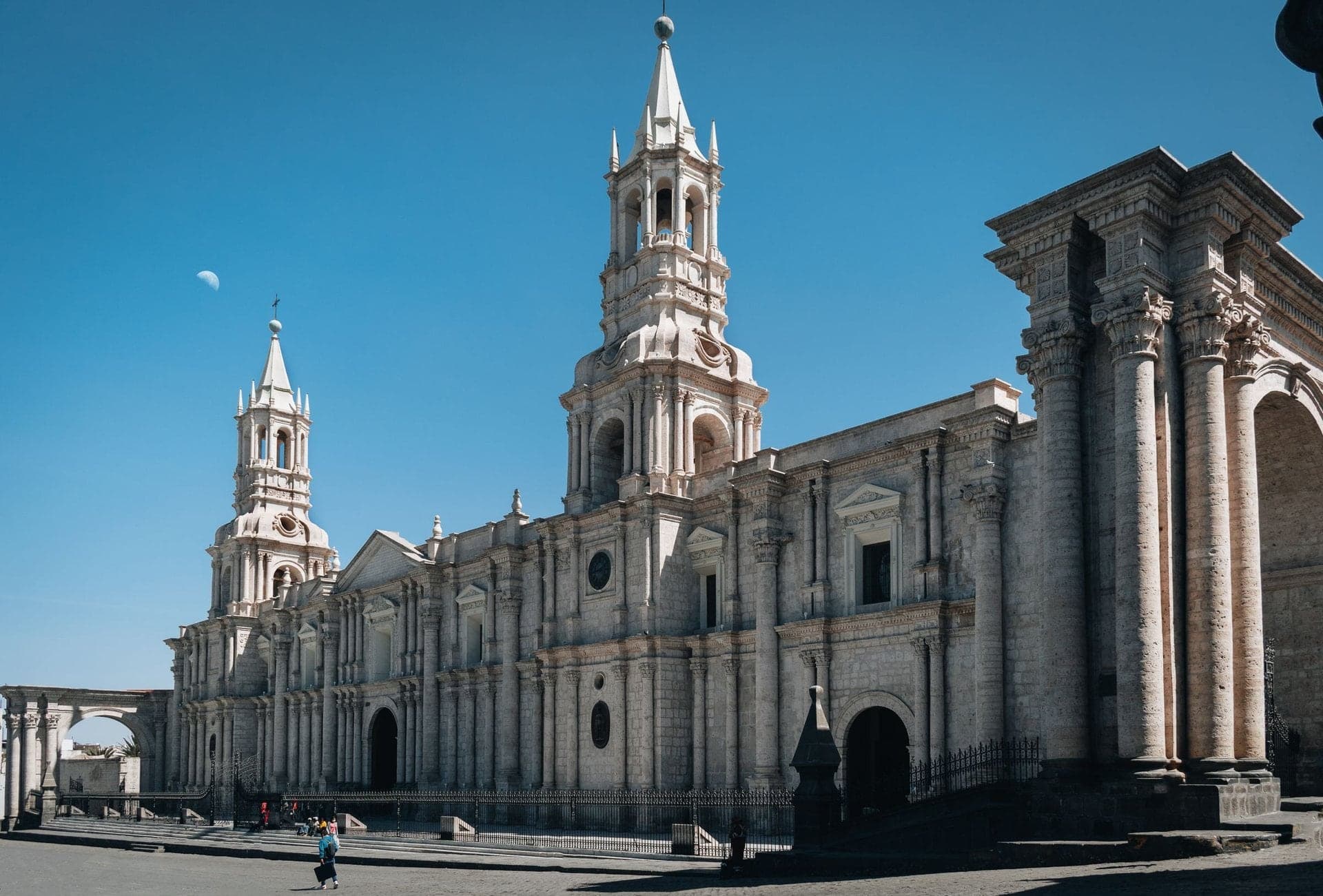
A cathedral rebuilt after quakes and fire. Lucas Poblete's white sillar front fills a whole side of the plaza, and its two towers were repaired in two different ways after 2001.
- 3
Pasaje de la Catedral: The Stone Undressed
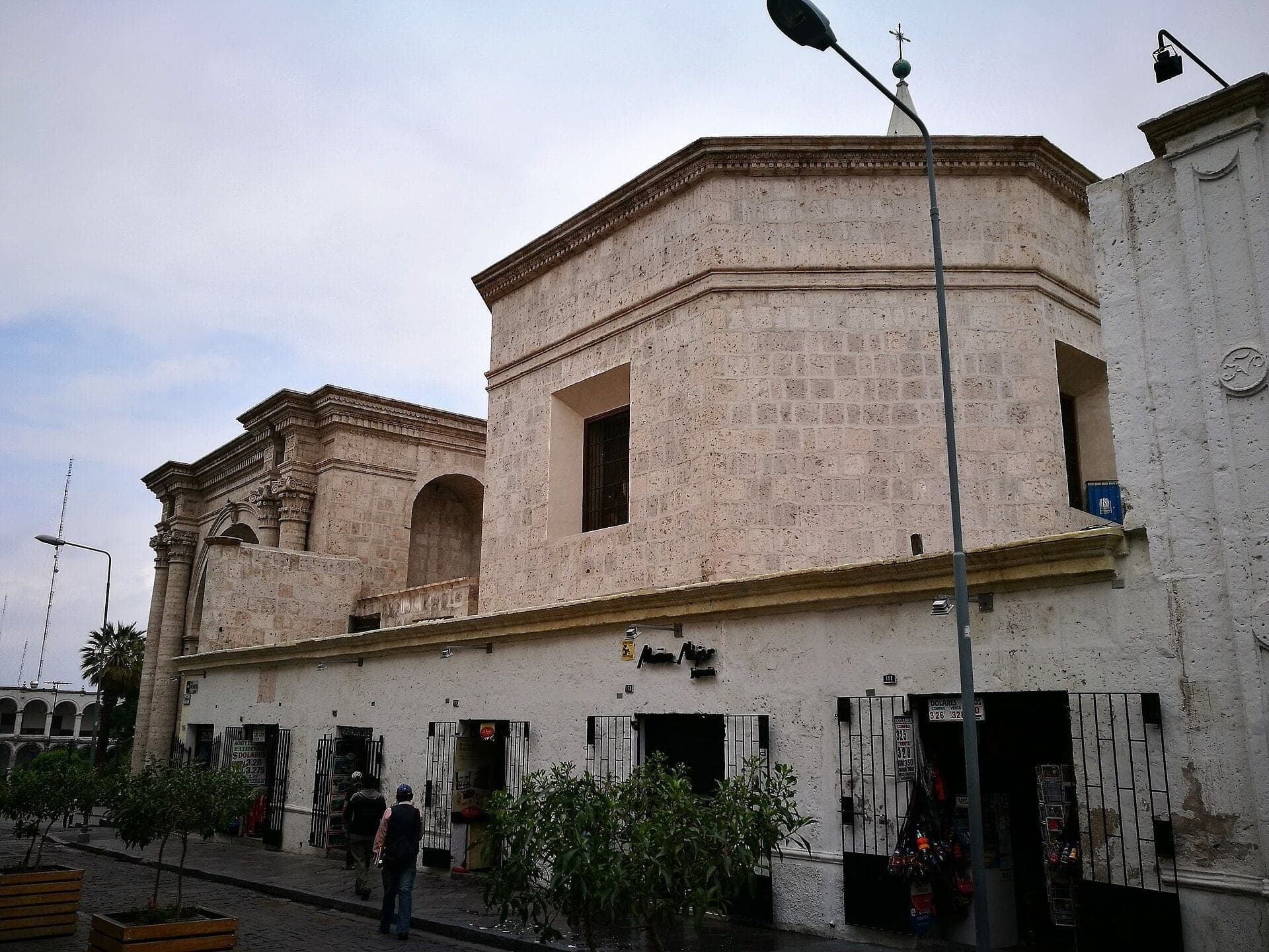
A lane of plain stone behind the cathedral. Here sillar is bare: no carving, just coursed blocks of the light volcanic rock the whole city is built from.
- 4
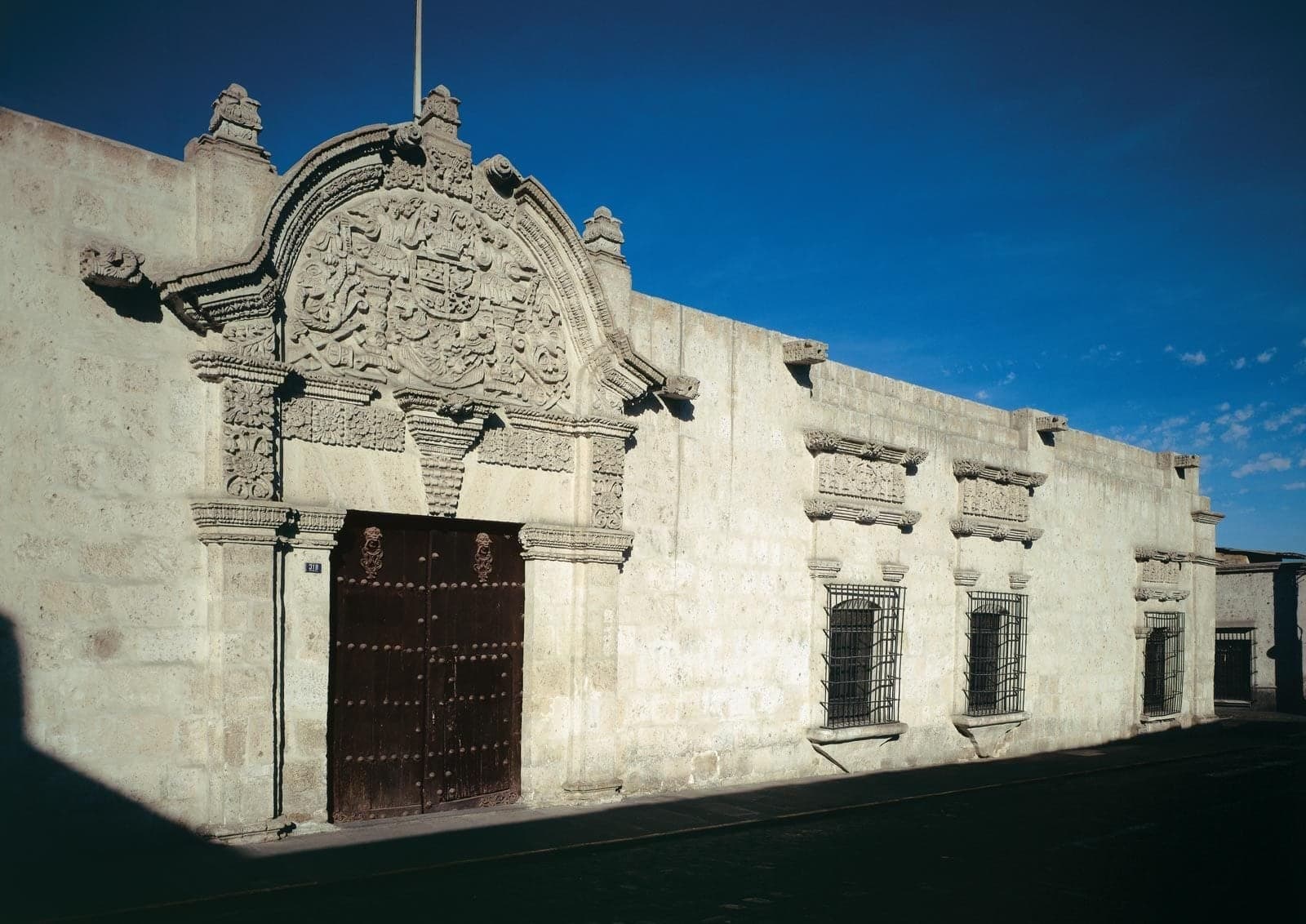
Casa Tristán del Pozo: Faith over the Windows
A house front carved in 1738. Three windows with double lintels carry carved monograms of the Virgin Mary; today it is a bank with a free gallery.
- 5
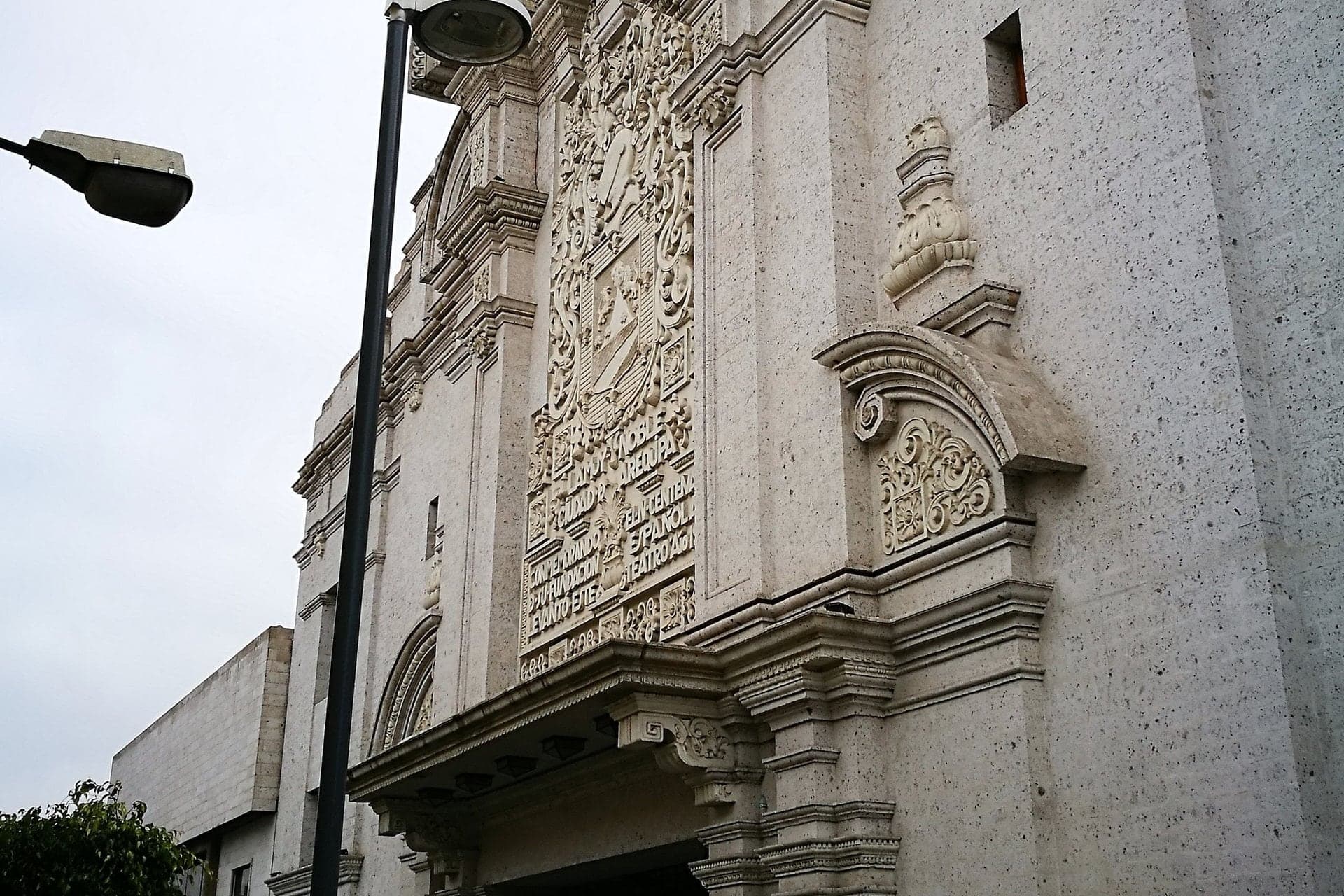
Calle Mercaderes: A Theater Carved in 1940
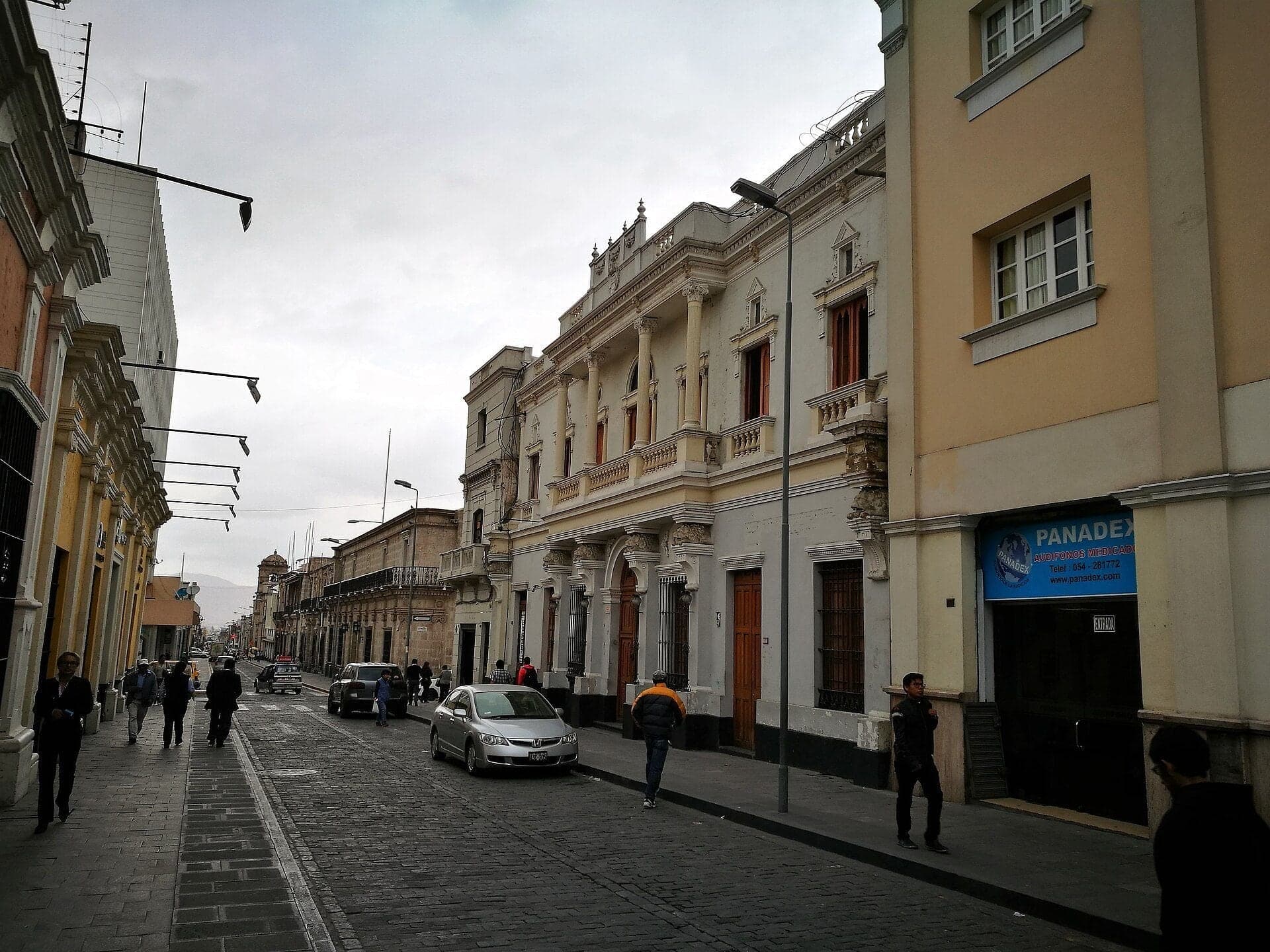
A shopping street where carving never stopped. The Teatro Municipal, with its sillar front, was built in 1940, the city's four-hundredth year, and reopened in 2024.
- 6
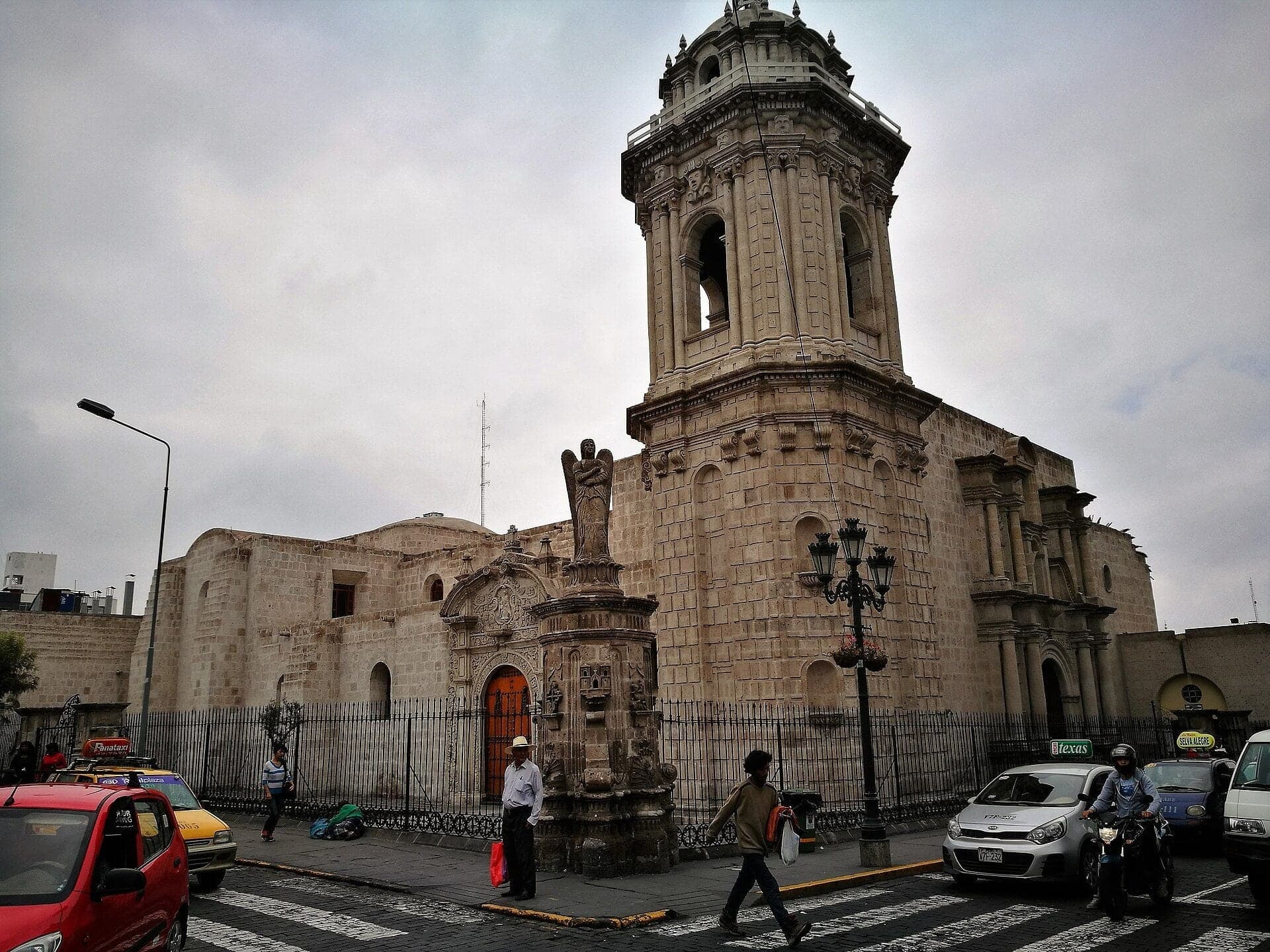
Santo Domingo: The Door That Outlived the Church
A Dominican church rebuilt after earthquakes. Its eight-sided tower stands at the corner, and a side door carved in the 1600s is among the oldest in Arequipa.
- 7
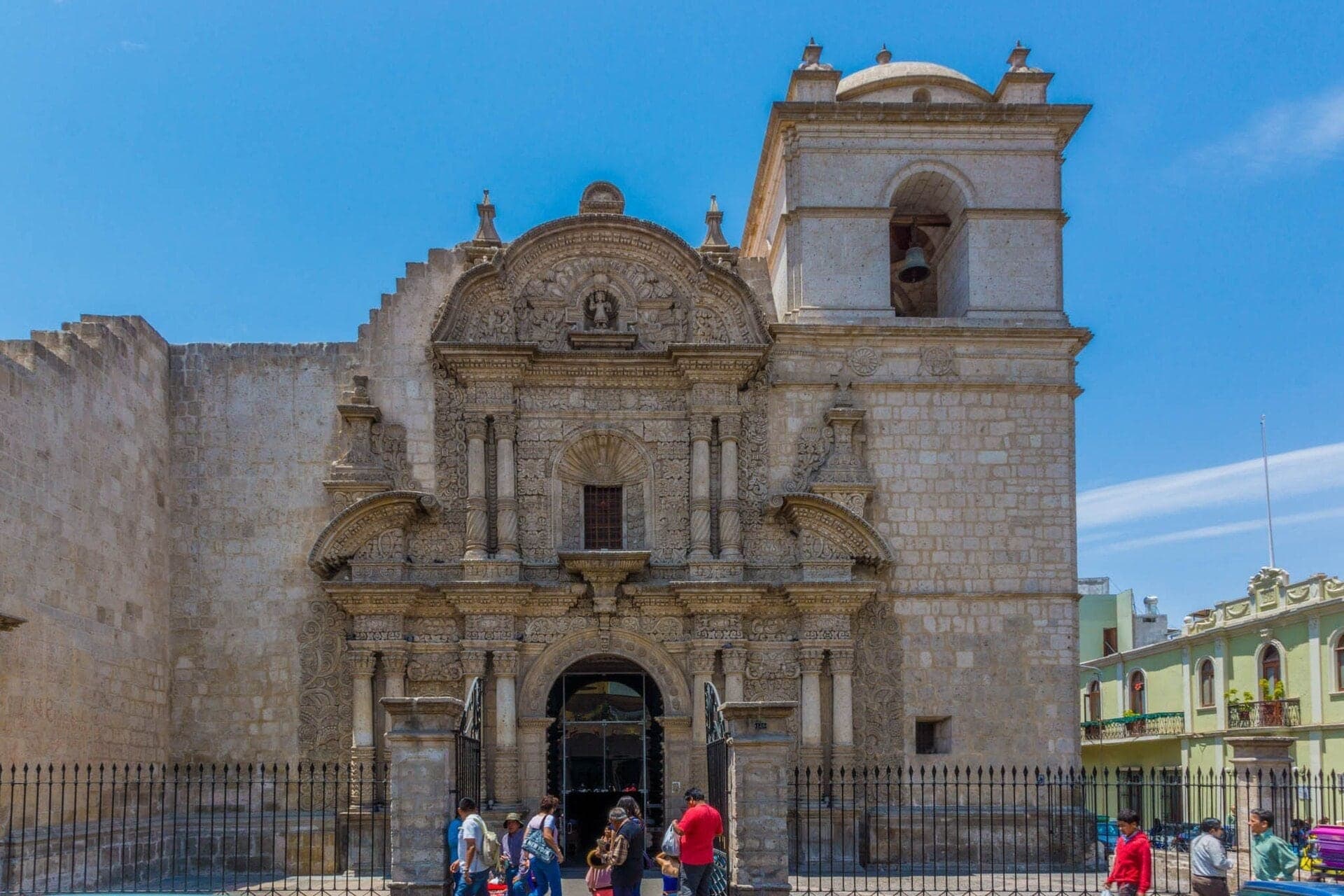
La Compañía: A Tapestry in Stone
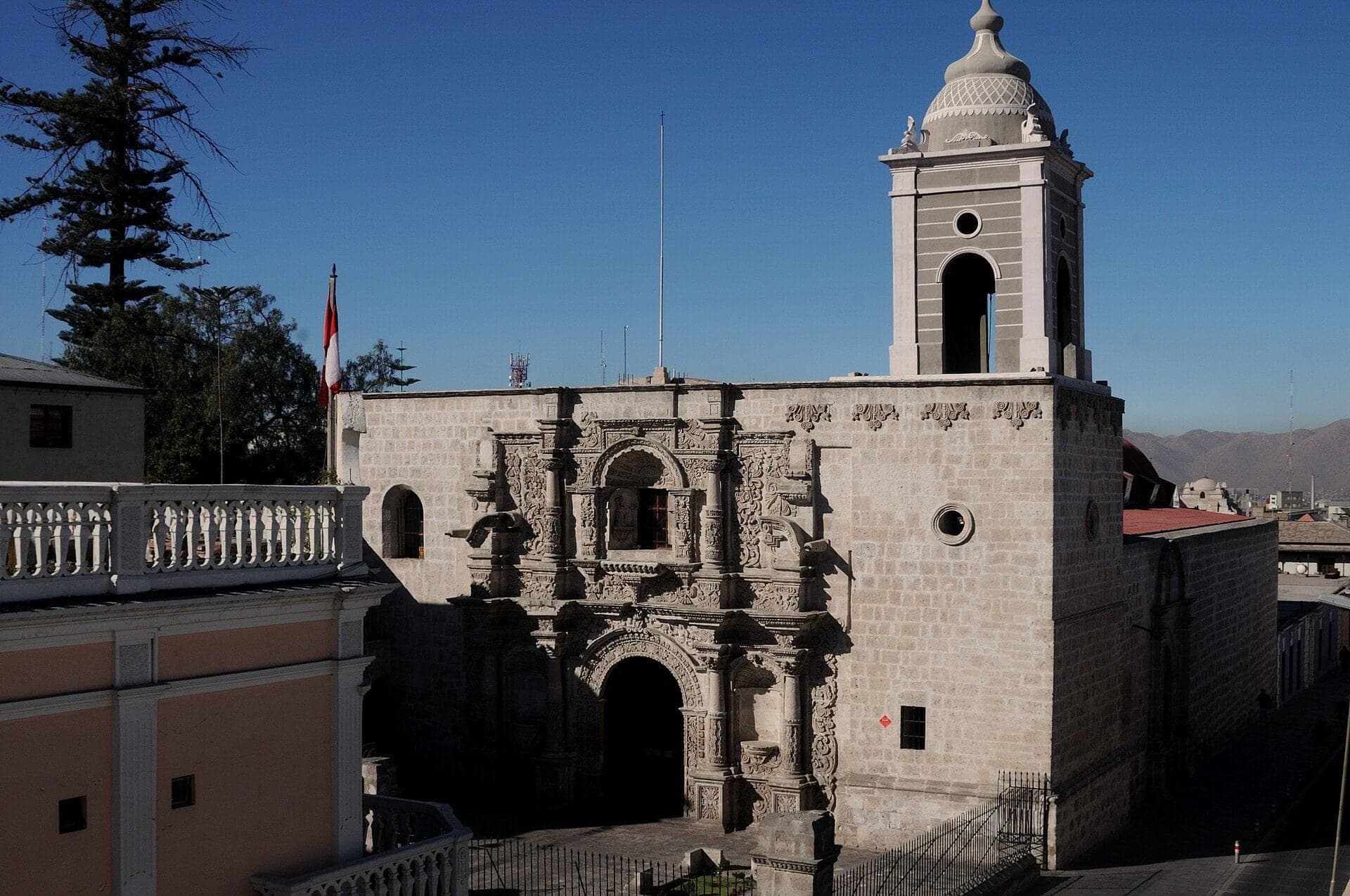
The Jesuit front of 1698 that became a model. Cactus, grapes, masks and a two-headed eagle are carved flat across it, and round the corner is a side door of 1654.
- 8
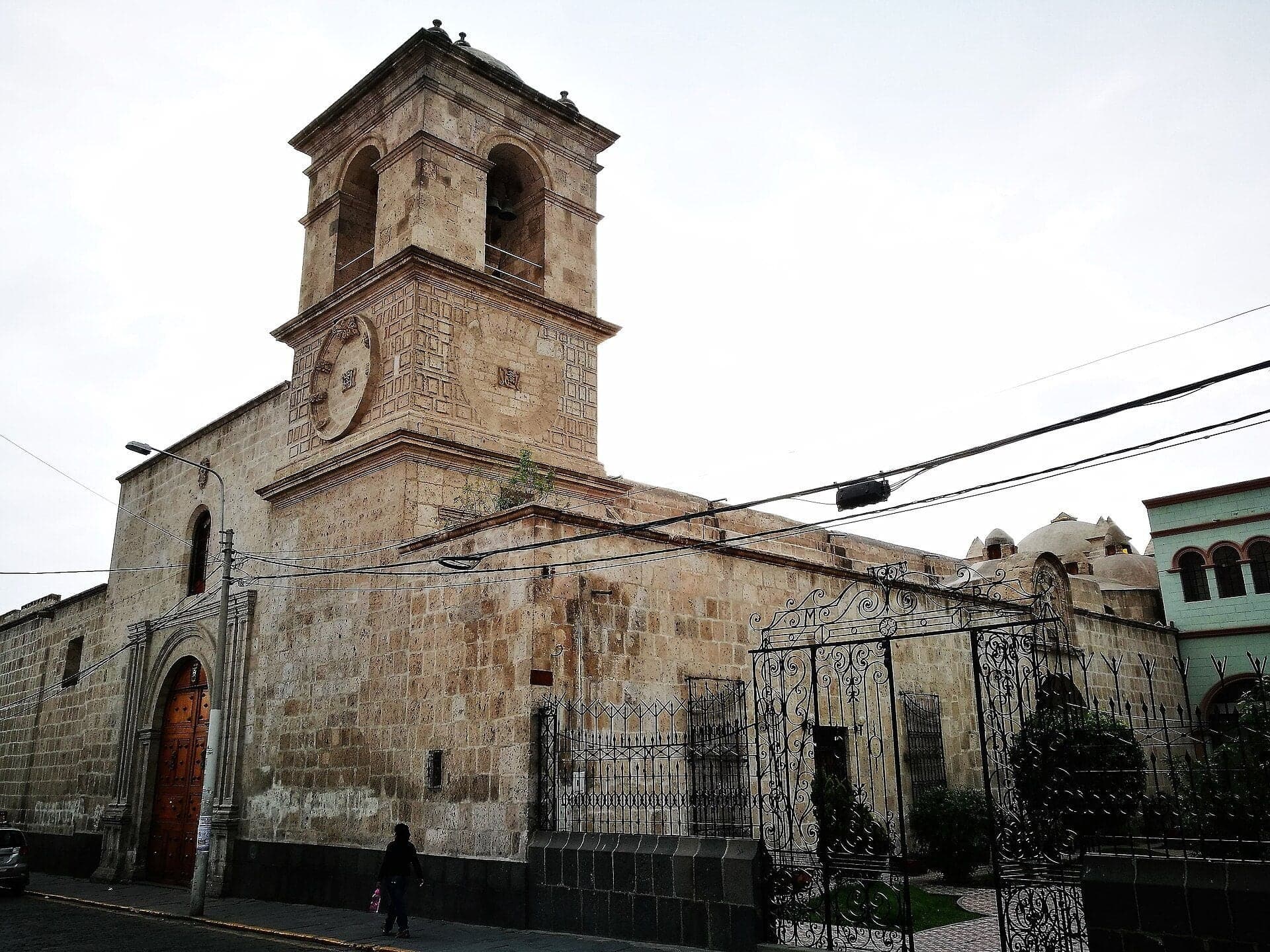
La Merced: Plain by Earthquake
A church worn plain by repeated rebuilding. The Mercedarians came eight years after the founding, and so many repairs left their church with little carving.
- 9
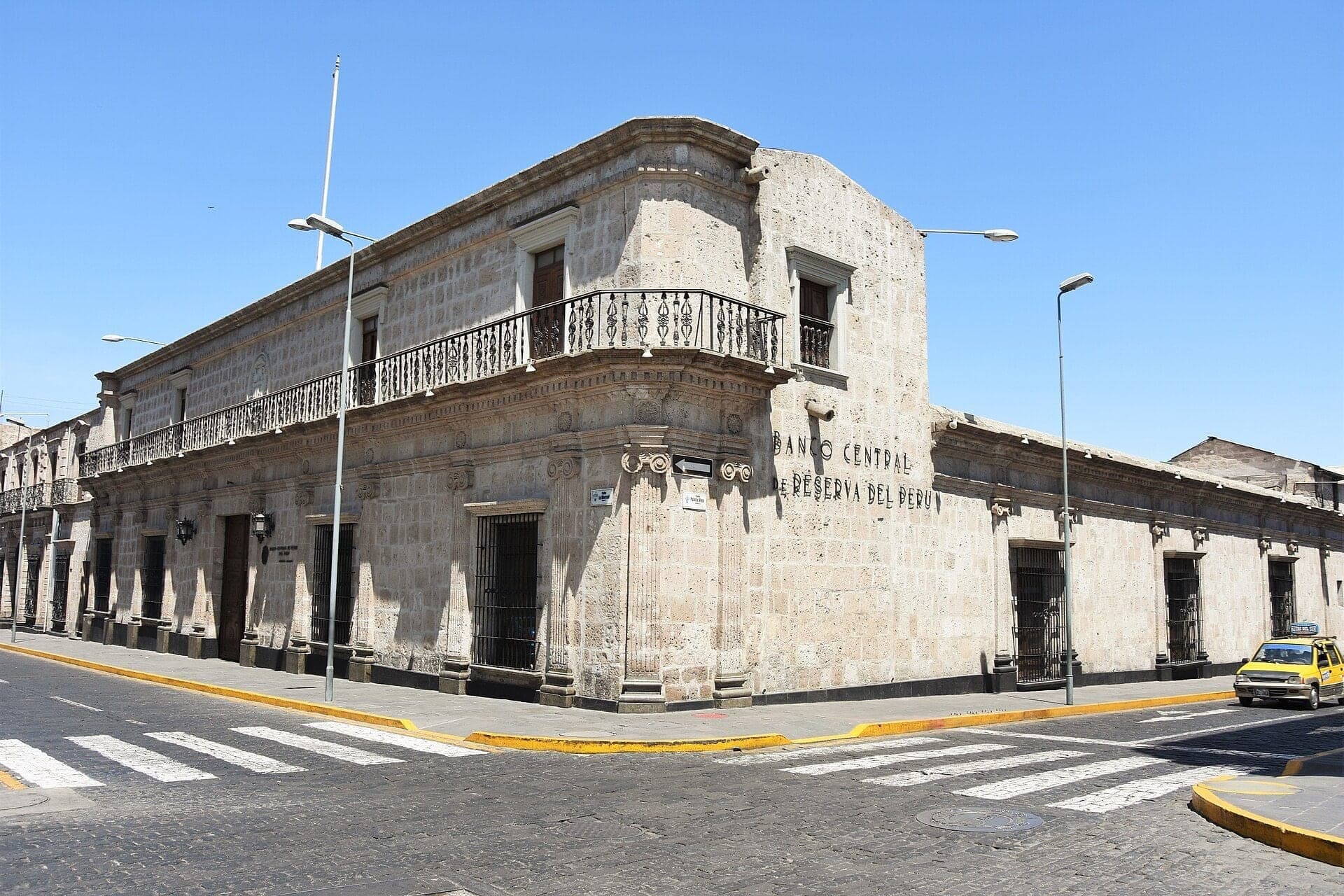
Casa Goyeneche: The Whole City in One House
A house rebuilt many times since about 1558. Its white front with flat pilasters and a full-width iron balcony is now the central bank's free museum.
- 10
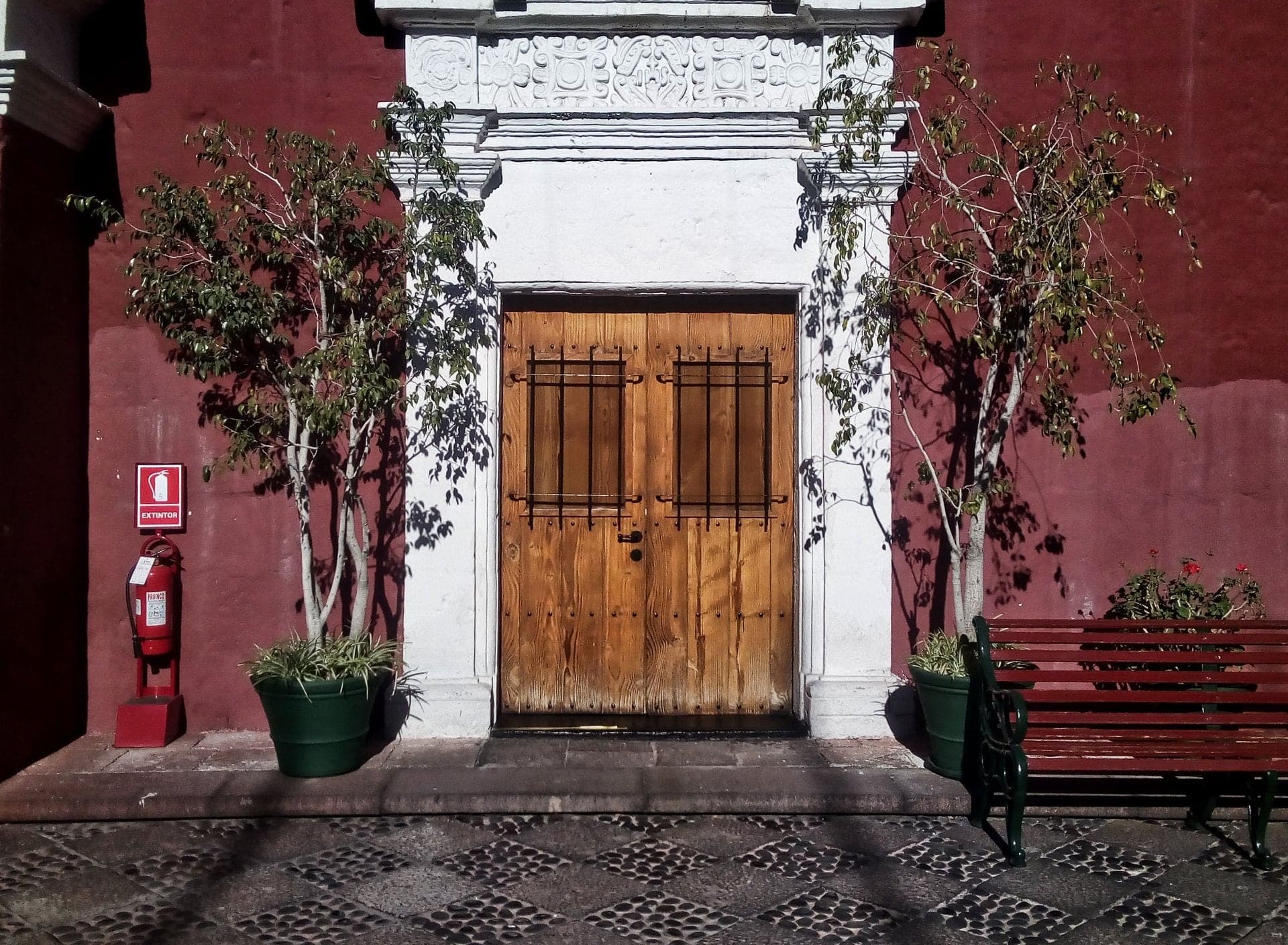
Museo Santuarios Andinos: The Girl from Ampato
A museum of an Inca volcano offering. Juanita, a girl in her early teens, was found near the summit of Ampato in September 1995; visits are guided.
- 11
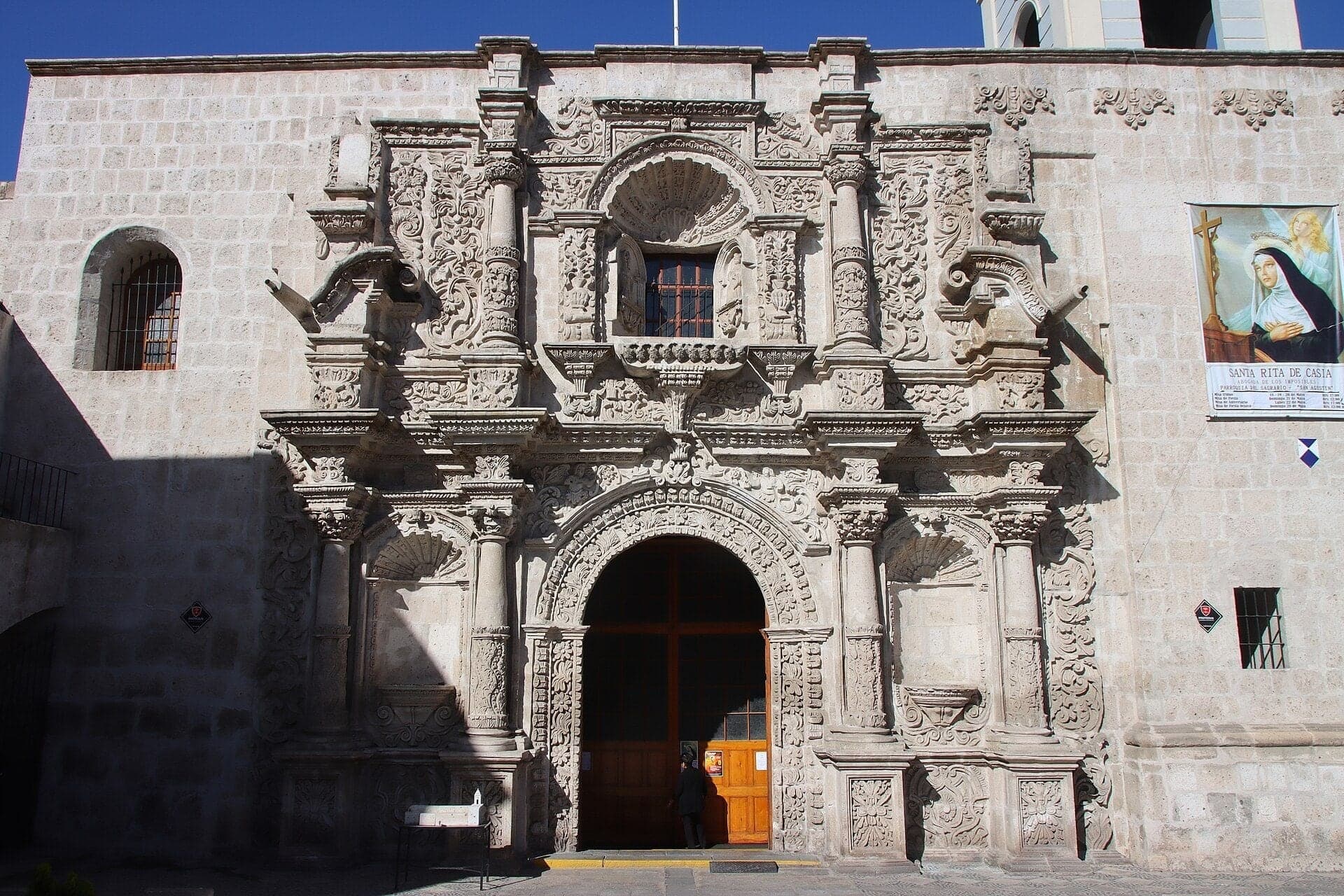
San Agustín: The Front That Stood
A carved front that survived the 1868 quake. Behind it, the cloister where the city's public university began; today the sanctuary of the Lord of Miracles.
Details
Best Time to Visit
Monday to Saturday, from mid-morning: the cathedral museum opens at 10:00 and the free central-bank museum in the Casa Goyeneche at 09:15, and both are closed on Sundays. The sun is strong at midday; the plaza's arcades and the Pasaje de la Catedral are the only shade. In October, San Agustín's Señor de los Milagros processions can fill the street at the end of the walk on procession days.
Pro Tips
- •Getting to the start: take a taxi to the Plaza de Armas and get out at one of its corners (the plaza itself is car-free). From the airport it is about 9 km, 20 to 30 minutes; from the Terrapuerto bus terminal about 4 km, 10 to 15 minutes.
- •Cathedral museum and bell tower: entrance by the side door on Calle Santa Catalina, Monday to Saturday 10:00 to 16:15, closed on Sundays, about 40 minutes. The official site gives no price; about 10 soles has been reported, so bring cash. Checked 6 October 2026.
- •Casa Goyeneche (MUCEN Arequipa, Banco Central de Reserva): free, Monday to Saturday 09:15 to 17:00, closed on Sundays, free lockers. In October 2026 its exhibition is "NACIÓN, imaginar el Perú desde el MUCEN", with mediated tours "Fiestas y rituales del Perú" on 17, 24 and 31 October. Checked 6 October 2026.
- •Museo Santuarios Andinos (Juanita): visits are guided by museum staff only, bags go to lockers and photos are not allowed in Juanita's room. Its official page could not be reached on 6 October 2026; the last capture (April 2025) gave about 25 soles for foreign adults. Confirm hours at the door.
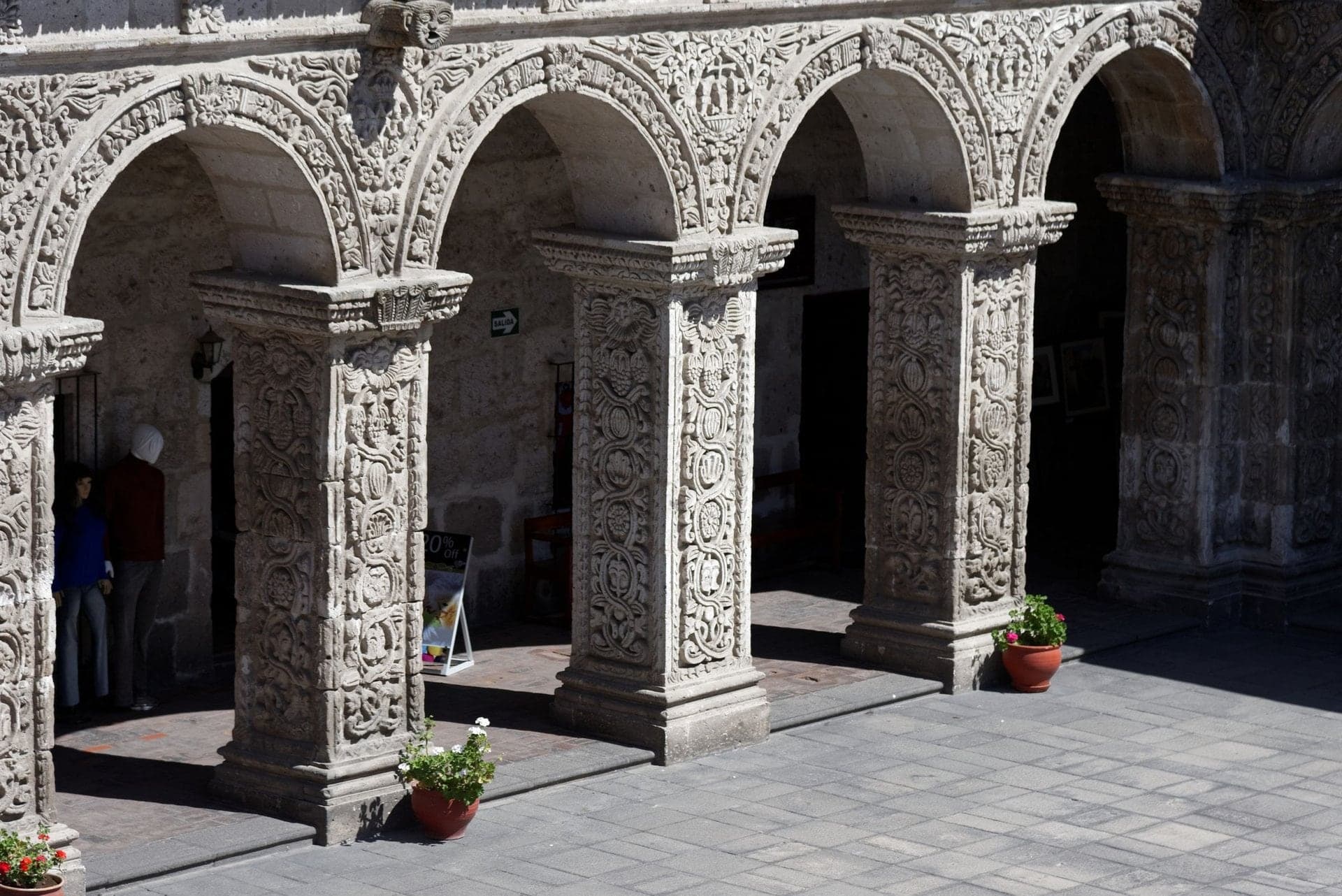
- •The Claustros de la Compañía, the Jesuit cloister beside stop 7 with its entrance on General Morán, is a free courtyard of shops and cafes, open Monday to Saturday (Diario Correo, 2023).
- •The Casa Tristán del Pozo at stop 4 is a working bank office with a free art gallery inside (BBVA, 2018); step in if the door is open.
- •To see sillar cut from the rock, the Añashuayco quarries are about 30 minutes by car from the plaza.
Safety & Precautions
- •Arequipa sits at about 2,335 m. Most visitors feel little, but drink water and go easy on your first day.
- •The sun is strong all year at this altitude: bring a hat and sunscreen.
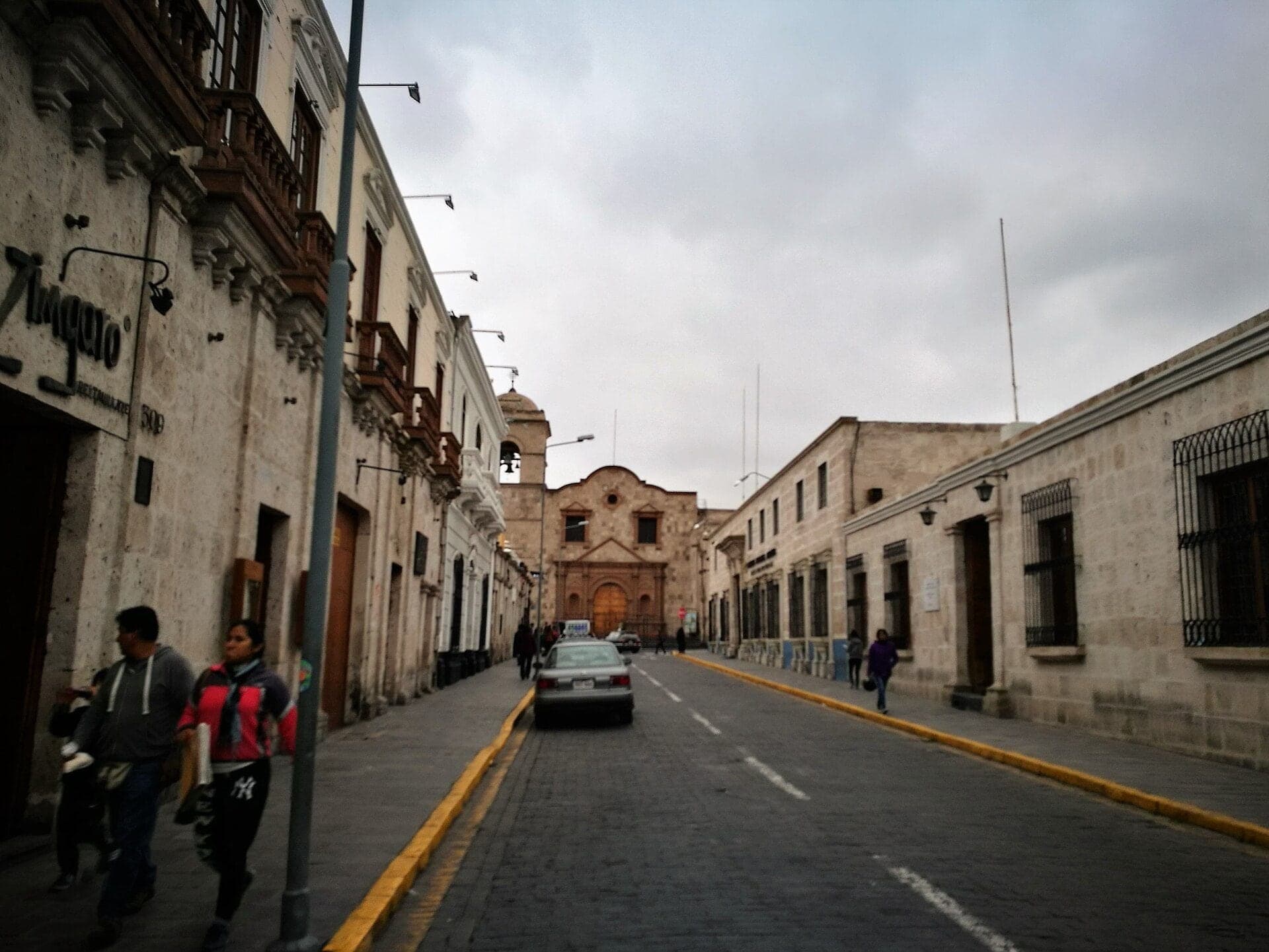
- •Pavements on Calle La Merced and General Morán are about a meter wide, and the side streets are narrow one-ways with fast taxis. Two crossings have no lights: Calle San Juan de Dios (city buses) after stop 6 and Calle Palacio Viejo after stop 7.
- •Not step-free inside the churches and the cathedral forecourt; the route itself is at street level.
- •Repairs to the pedestrian streets (Mercaderes, San Francisco, Santa Catalina, Álvarez Thomas) were announced in December 2025; whether they are under way was not known on 6 October 2026. Follow any marked detour.
- •In October, masses and processions of the Señor de los Milagros at San Agustín can fill or close Calle San Agustín; the 2026 dates were not published by 6 October 2026.
- •Churches open around mass times and close for part of the day; do not walk in during a service.
- •The plaza hosts ceremonies, events and protests. After dark, keep to the busier streets around the plaza; the stretch south of La Compañía to La Merced is the quietest part of the walk.
Travel advisory: Exercise Increased Caution (Level 2).
Gallery
Related Reading
Go deeper on what you'll see, hear, and walk through.
Read the walk
The full story of Historic Center: The White Stone and the Earthquakes, in words. Prefer to listen? Play it narrated, from home or on location.
Introduction
Arequipa, in the south of Peru, is a city of white stone at the foot of a volcano. The stone is sillar, a light volcanic rock cemented together from the ash of an eruption far older than El Misti, the volcano on the skyline. It is soft enough to carve and strong enough to vault, and it is why Arequipa is called the White City.
The ground here moves. UNESCO, which listed the historic center in two thousand, divides the city's architecture into periods, and the lines between them fall on earthquake years: fifteen eighty-two, seventeen eighty-four, eighteen sixty-eight. Almost every front on this walk carries the date of a disaster it came through, or of the rebuilding that followed.
Two builders' names come back along the way: Gaspar Báez, a master stonemason of the late fifteen hundreds, and Lucas Poblete, the local master builder who rebuilt the cathedral in the eighteen hundreds.
The walk is eleven stops and about two kilometers, a mile and a quarter, and takes about eighty-five minutes. It starts in the Plaza de Armas, circles the cathedral, goes out to the Dominican and Jesuit churches, loops south to La Merced and back past a great house and a museum of mountain-top offerings, and ends at the carved front of San Agustín. The city sits at two thousand three hundred and thirty-five meters, so take the gentle climbs slowly if you have just arrived.
1. Plaza de Armas: Arcades Younger Than They Look
Welcome to the Plaza de Armas of Arequipa, the square the city was laid out from. The Spanish founded the town on the fifteenth of August, fifteen forty, the Feast of the Assumption, and drew a grid of blocks around this square. Forty-nine of those original blocks lie at the heart of the protected center today.
The long white front filling one side is the cathedral, our next stop. That pale stone is sillar, the stone of this walk, and it gave Arequipa its name: the White City.
The arcades on the other three sides look colonial, and they are not. The arcade of the town hall, the Portal de la Municipalidad, was redesigned in eighteen seventy-seven, got its upper floor in nineteen thirteen and fourteen, and was rebuilt after earthquake damage in nineteen sixty. The arcades stand on granite pillars, under brick vaults. The town council has sat on this square since the founding. Under its arcade, a plaque carries the farewell letter of a president who was shot on this square in eighteen thirty-six.
In the middle, the bronze fountain is older than the town hall's arcade: it dates from the seventeen thirties or forties. The little figure on top is a trumpeter in a helmet. People call him the Tuturutu, and a legend makes him an Inca messenger, but the figure is a soldier with his trumpet.
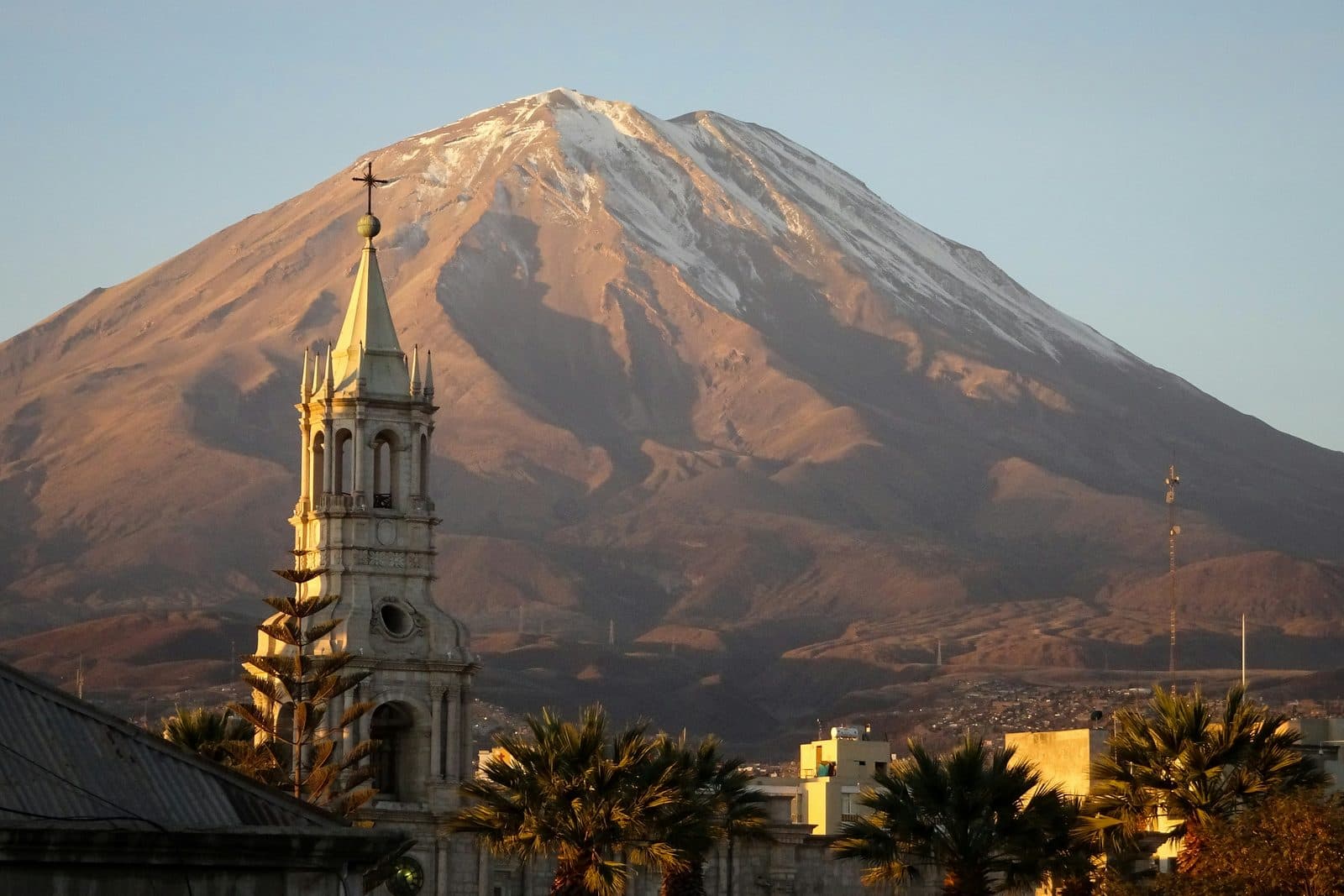
On a clear day, look over the cathedral roof, just left of its right-hand tower, for El Misti, a volcano five thousand eight hundred and twenty-two meters high and about seventeen kilometers away. It is active: Peru's geophysical institute records twenty to thirty small tremors under it every day, and its last eruptions, in Inca times, left up to ten centimeters of black ash on this valley. But the white stone around you did not come from El Misti. It is far older.
Follow the route across the garden to the cathedral.
2. Basílica Catedral: Rebuilt on the Same Spot
Walk on across the garden toward the cathedral and stop at the garden's edge, where both towers are in view. The cathedral's museum, which ends with a climb up a bell tower, is ticketed and worth it. It is closed on Sundays, and the details are on this stop's card.
On founding day in fifteen forty, a cross marked this spot. Building began in fifteen forty-four. The earthquake of fifteen eighty-two brought the first church down. Rebuilding started in fifteen ninety. In sixteen hundred, the eruption of Huaynaputina, the largest explosive eruption in the Andes in recorded history, shook the city from seventy-five kilometers away and broke the church again, and an earthquake in sixteen oh four finished it off. The church that followed went up between sixteen twenty-one and sixteen fifty-six.
Then, in December eighteen forty-four, it burned. The local master builder Lucas Poblete rebuilt it in sillar, in a neo-Renaissance style, with brick vaults. Most of the front you see is his. In eighteen sixty-eight an earthquake brought down its pediment, its arches and its towers, and Poblete rebuilt those too.
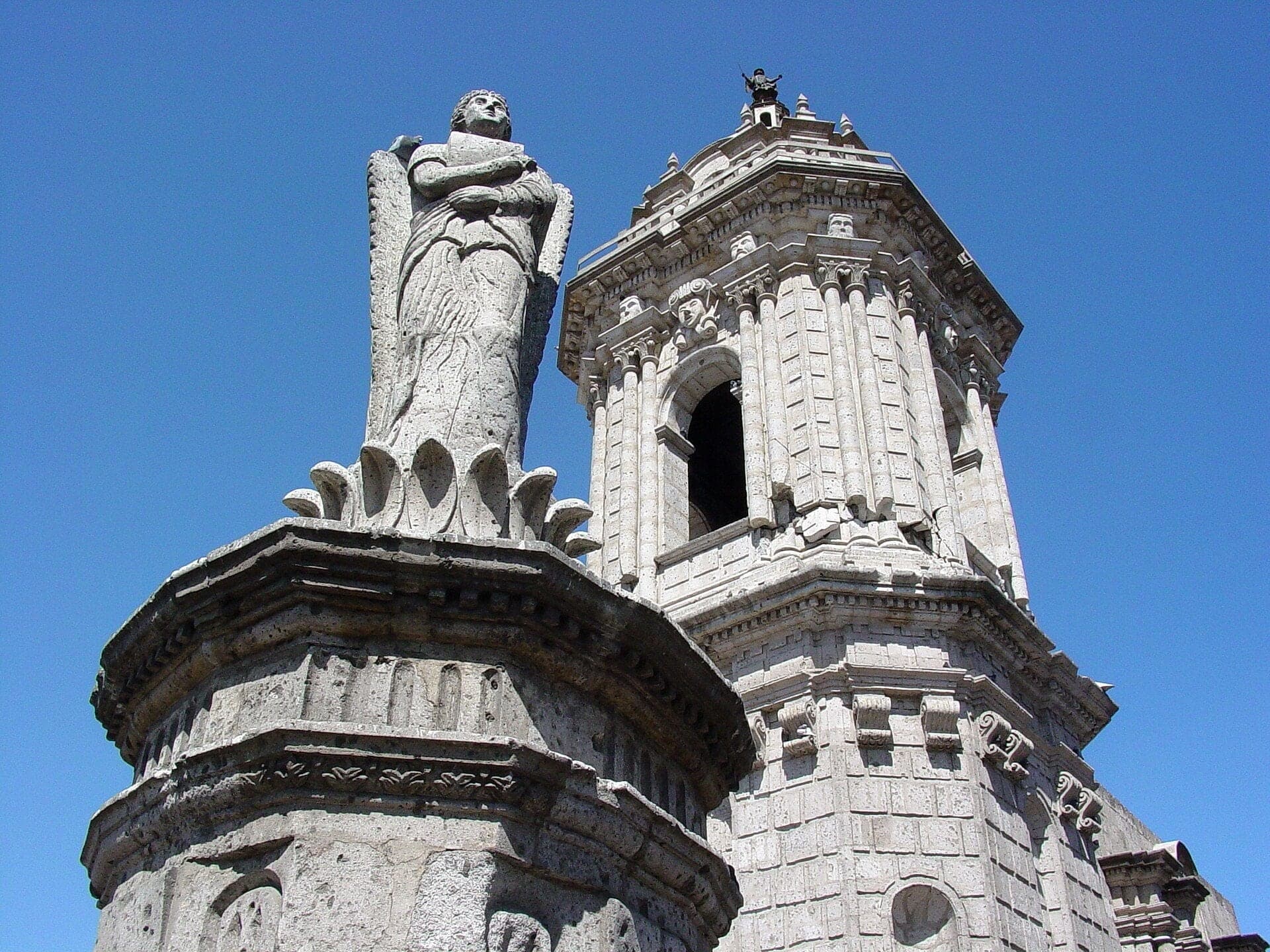
Now the towers. On the twenty-third of June, two thousand one, an earthquake of magnitude eight point four struck off the coast. The top of the left-hand tower, as you face the front, fell and pierced the vault. The right-hand tower stood. The repairs answered in two different ways. The fallen tower was rebuilt around an inner frame of reinforced concrete. The standing one was strengthened with carbon fiber, and its carved stones were set back over it.
If the doors are open at mass times, you can step inside for free, to see a carved wooden pulpit by a French maker, installed in eighteen seventy-nine, with a devil in its carving, and an organ brought from Belgium.
Follow the route round the side of the cathedral and into the lane behind it.
3. Pasaje de la Catedral: The Stone Undressed
Walk on into the narrow lane behind the cathedral and stop a little way along it. This is the Pasaje de la Catedral, a pedestrian lane of small shops and cafes.
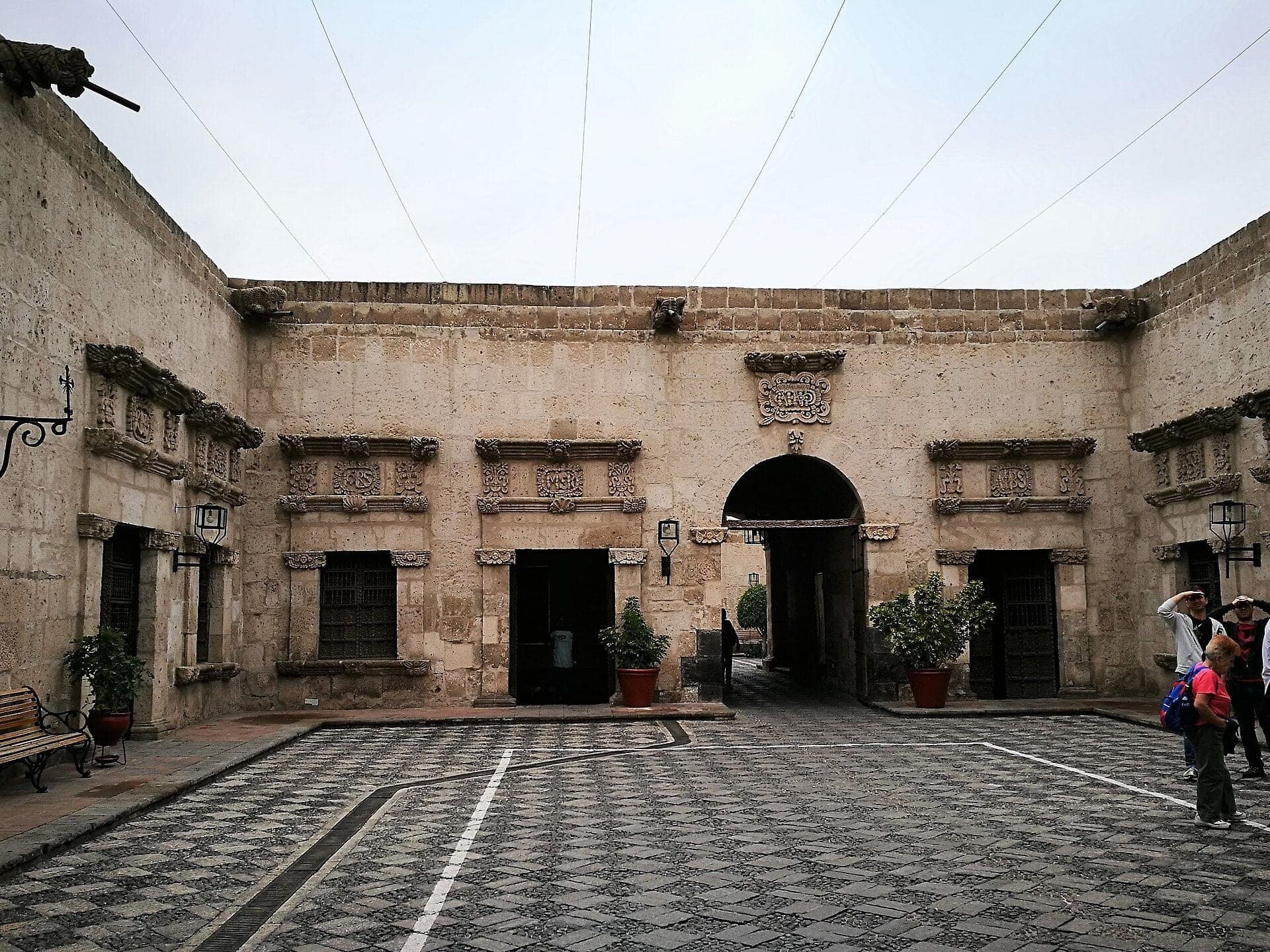
On one side rises the back of the cathedral's block, with shops set into it: no carving, just stone laid in courses. This is the place to look closely at sillar before anyone has decorated it. The Ministry of Culture describes it as porous and absorbent, a stone that holds its temperature.
It is not lava, and it did not come from El Misti. About one point six five million years ago, long before El Misti grew, a huge eruption spread a flow of hot ash and pumice across this area, and hot gases cemented it into rock. Geologists think the volcano that produced it now lies buried under Chachani, the volcano beside El Misti. The deposit has a white layer and a pink one above it, and the white is the building stone.
Sillar is lighter than brick, yet it resists crushing better, which made it right for thick walls and vaults. After the earthquake of fifteen eighty-two, Arequipa turned to it systematically. Before that, UNESCO's evaluators note, it had been used only in the doorways of the main church and in a handful of houses.
One more thing: the white was not always bare. Because the stone is porous, builders protected it with limewash, sometimes colored. UNESCO's evaluators record that in the nineteen sixties and seventies many fronts were stripped of their plaster and paint, and the argument over it has never quite ended. Some of the white you see today was once painted.
Follow the route to the end of the lane, where it meets a pedestrian street.
4. Casa Tristán del Pozo: Faith over the Windows
Walk on to the end of the lane, where it opens onto the pedestrian Calle San Francisco, and stop there. Across the street from the lane's end stands the Casa Tristán del Pozo. Today it belongs to a bank, which shows art inside, free. If the door is open, you are welcome to step in.
The cathedral is the city's public face in sillar. This is a private one. The house was built in seventeen thirty-eight for Domingo Carlos Tristán del Pozo and his wife.
Look at the front: a carved stone doorway, and three windows, each crowned by a double lintel, one band of stone set over another. Above them, carved monograms honor the Virgin Mary. A family put its faith over its windows, in the same white stone as the cathedral.
Seventeen thirty-eight puts this house in the middle of what UNESCO calls the city's age of baroque splendor, the long stretch between the earthquake of fifteen eighty-two and the one of seventeen eighty-four. The walk's great carved church doors, all still ahead, belong to it too.
The house passed through several families before the bank bought it in nineteen seventy-four. Today it is a working bank office and a gallery, showing works by artists born in the shadow of El Misti.
Follow the route along Calle San Francisco and into Calle Mercaderes, Merchants' Street.
5. Calle Mercaderes: A Theater Carved in 1940
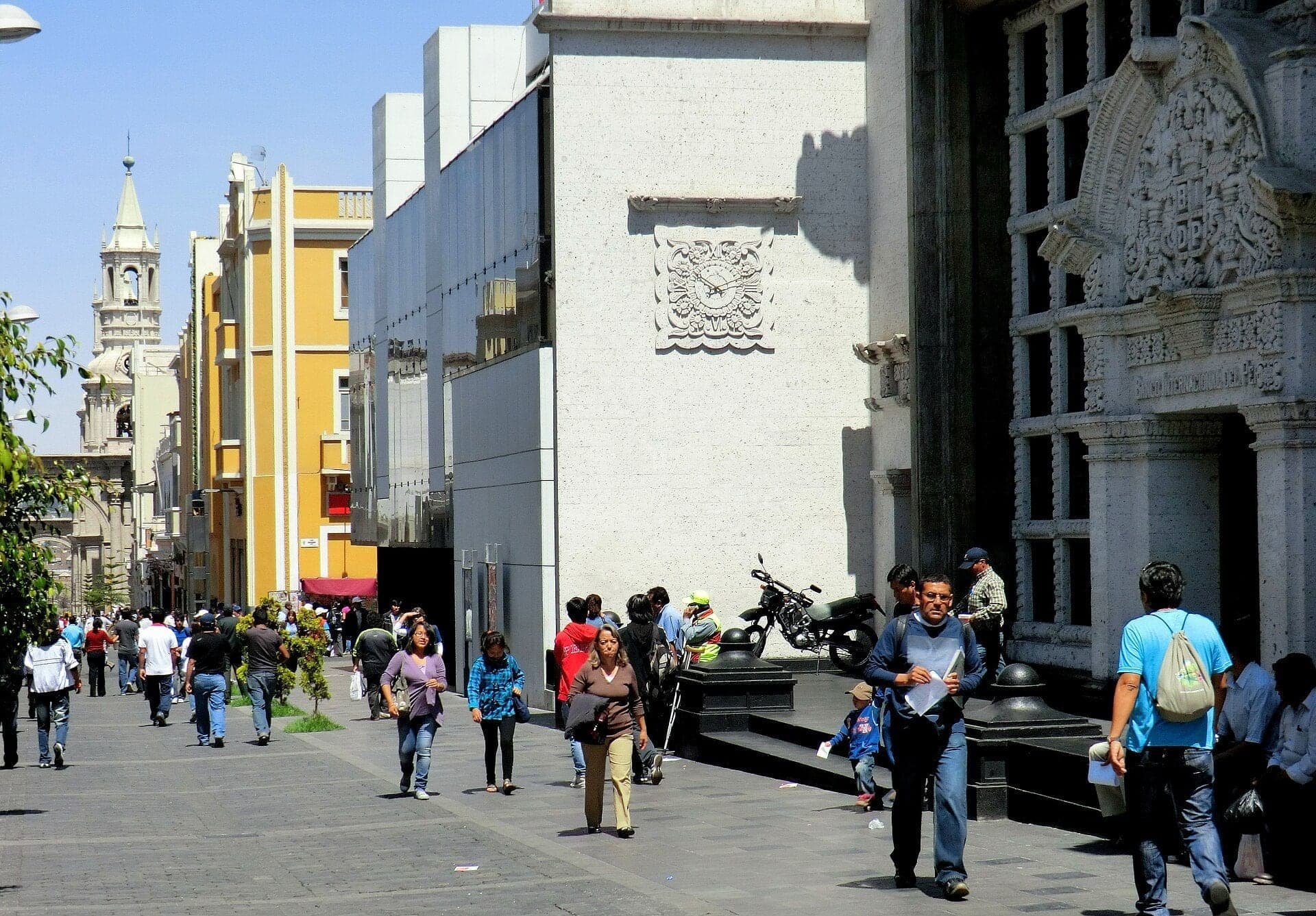
Walk on along Calle Mercaderes and stop across from the Teatro Municipal, the theater with the carved white front among the shop signs. This is a busy shopping street, closed to traffic. The theater was built in nineteen forty, the year Arequipa turned four hundred, and its…
Full narration for this stop unlocks with the tour.
6. Santo Domingo: The Door That Outlived the Church
Walk on to the corner with the traffic lights and stop there. Across the junction rises the tower of Santo Domingo, eight-sided, its walls cut in raised, cushioned blocks. The church is free; if the door is open, you can step in. The Dominicans were here early. In fifteen…
Full narration for this stop unlocks with the tour.
7. La Compañía: A Tapestry in Stone
Walk on along General Morán until the carved front of La Compañía, the Jesuits' church, is straight across the street behind its railings, and stop there. The church is free when it is open. Inside, a painted chapel that the city calls its Sistine Chapel can be seen for a small…
Full narration for this stop unlocks with the tour.
8. La Merced: Plain by Earthquake
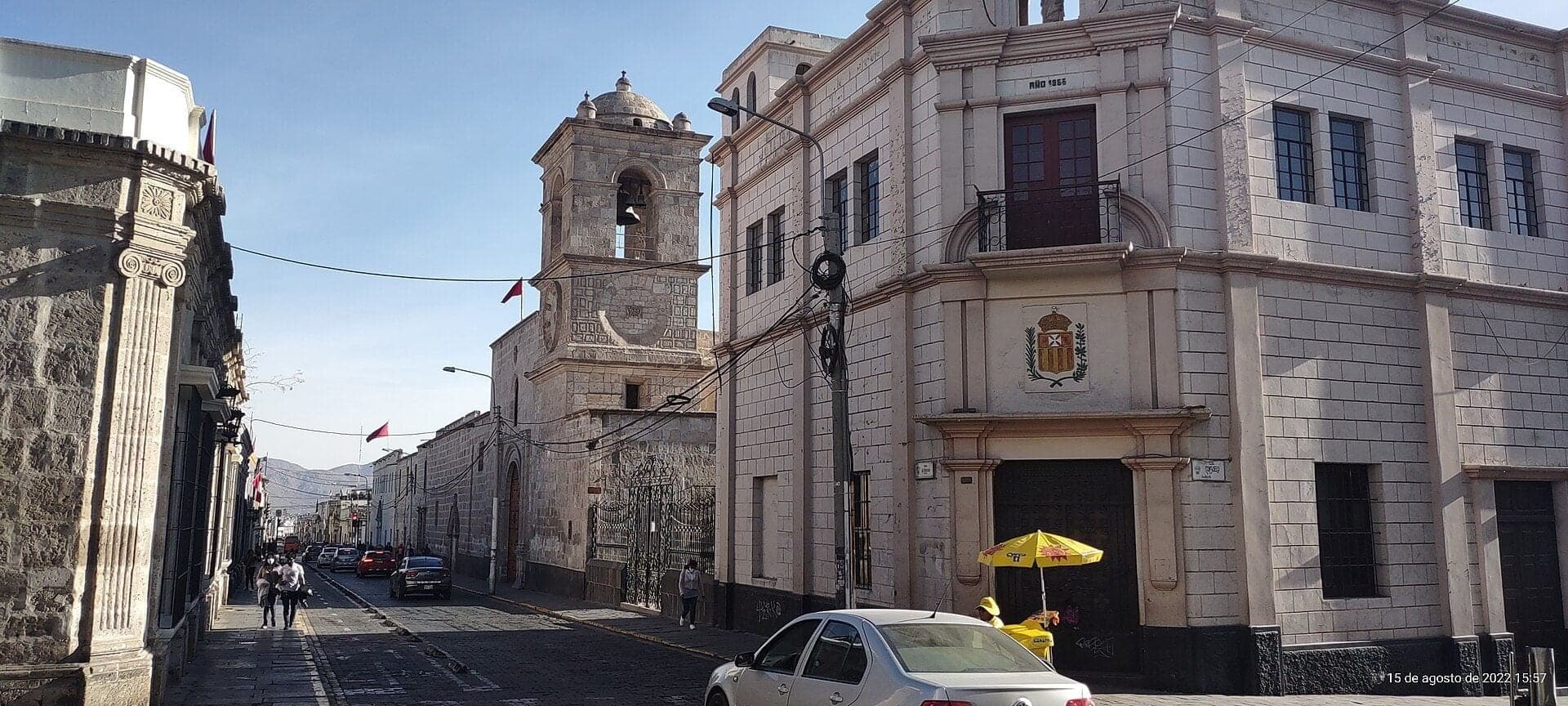
Walk on to the corner where Calle Consuelo meets Calle La Merced, and stop there. Look down Calle La Merced to the church of La Merced, its plain stone side behind a fence. The pavements on this street are narrow, so keep in to the side. The church is free; if the door is open,…
Full narration for this stop unlocks with the tour.
9. Casa Goyeneche: The Whole City in One House
Walk on up Calle La Merced and stop across the street from the Casa Goyeneche, the two-story white front with a wrought-iron balcony running its whole width. It is now a museum of Peru's central bank, free to enter, open Monday to Saturday and closed on Sundays. The details are…
Full narration for this stop unlocks with the tour.
10. Museo Santuarios Andinos: The Girl from Ampato
Walk on along Calle La Merced and stop across the street from the Museo Santuarios Andinos, the museum of the Andean sanctuaries. It is ticketed, visits are guided, and it is worth it; the details are on this stop's card. The street works just as well for her story. The museum…
Full narration for this stop unlocks with the tour.
11. San Agustín: The Front That Stood
Walk on along the pedestrian Calle San Agustín and stop where the carved front of San Agustín is straight across from you. You will need to look up. The church is free; if the door is open and no mass is under way, you can step in quietly. This front was carved in sillar in the…
Full narration for this stop unlocks with the tour.
- Lateral de la Catedral d'Arequipa des del carrer San Francisco — Pitxiquin, CC BY-SA 4.0 · source
- Pati de la Casona Tristán del Pozo des del Pasaje de la Catedral d'Arequipa — Pitxiquin, CC BY-SA 4.0 · source
- Casa Tristán del Pozo de Arequipa — Patriciolog, CC BY-SA 4.0 · source
- Carrer de San Francisco amb l'església de San Francisco al fons — Pitxiquin, CC BY-SA 4.0 · source
- Teatro Municipal d' Arequipa — Pitxiquin, CC BY-SA 4.0 · source
- Paseo Mercaderes, Arequipa — Cmonzonc, CC BY-SA 3.0 · source
- Església de Santo Domingo d'Arequipa — Pitxiquin, CC BY-SA 4.0 · source
- Church - Arequipa - Peru 01 — Adam Jones from Kelowna, BC, Canada, CC BY-SA 2.0 · source
- 477 Arequipa — DocSlyper, CC BY-SA 2.0 · source
- Església de la Merced d'Arequipa — Pitxiquin, CC BY-SA 4.0 · source
- Iglesia y Convento de La Merced — Coquisv, CC BY-SA 4.0 · source
- This is a photo of a monument in Peru, identified by ID — Liv0017, CC BY-SA 4.0 · source
- This is a photo of a monument in Peru, identified by ID — Liv0017, CC BY-SA 4.0 · source
- Portada del museo de Santuarios andinos, Arequipa. — Estuardo02, CC BY-SA 4.0 · source
- Carrer de la Merced d'Arequipa — Pitxiquin, CC BY-SA 4.0 · source
- Church of St. Augustine, Arequipa — Draceane, CC BY-SA 4.0 · source
- Facade of San Agustin Church in the historic centre of Arequipa. — Josep M. Gracia, CC BY-SA 4.0 · source
Images may be cropped or resized. Other photos via Unsplash and Pexels.