The City Without a Name
The largest city in the ancient Americas — whose builders we cannot name, in a language we cannot read, abandoned for reasons we still debate. And yet its grid, its gods, and its blueprint shaped every Mesoamerican civilization that followed.
Start
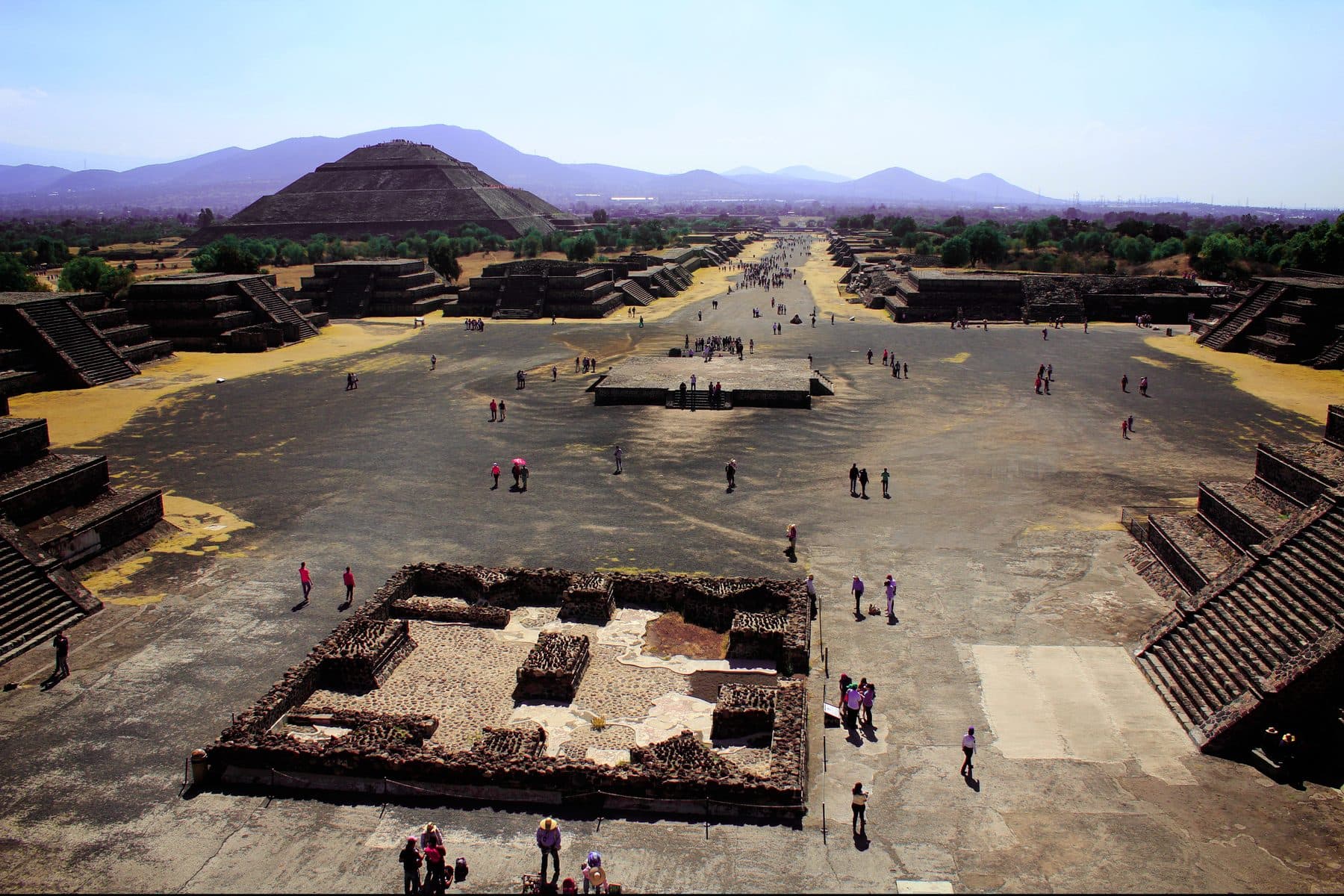
The Avenue of the Dead
The Avenue of the Dead
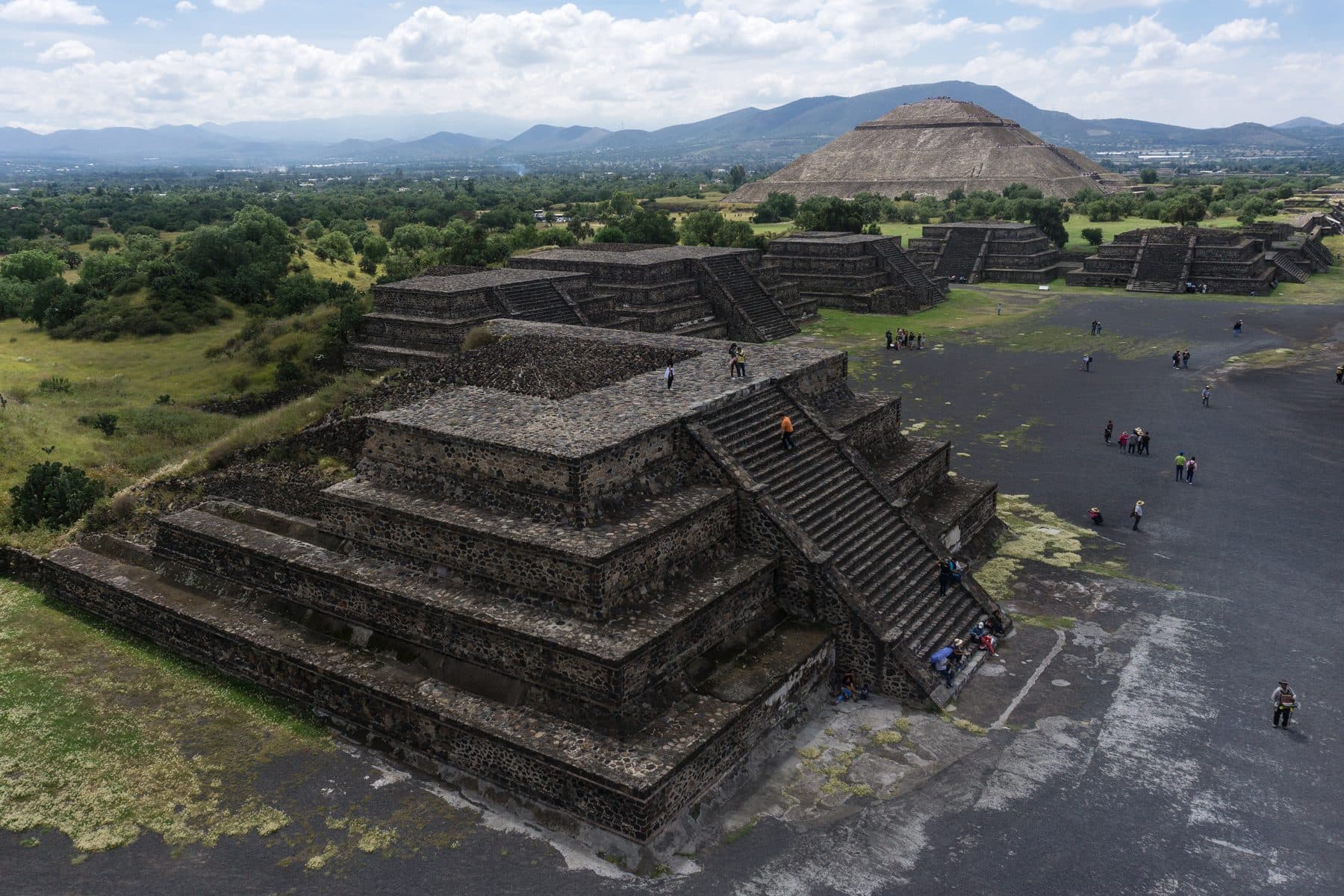
A 2.4-kilometre grand avenue oriented 15.5° east of true north — pointing directly at the mountain on the horizon. You are at the southern entrance, looking up the spine of a city that was already a thousand years dead when the Aztecs named it.
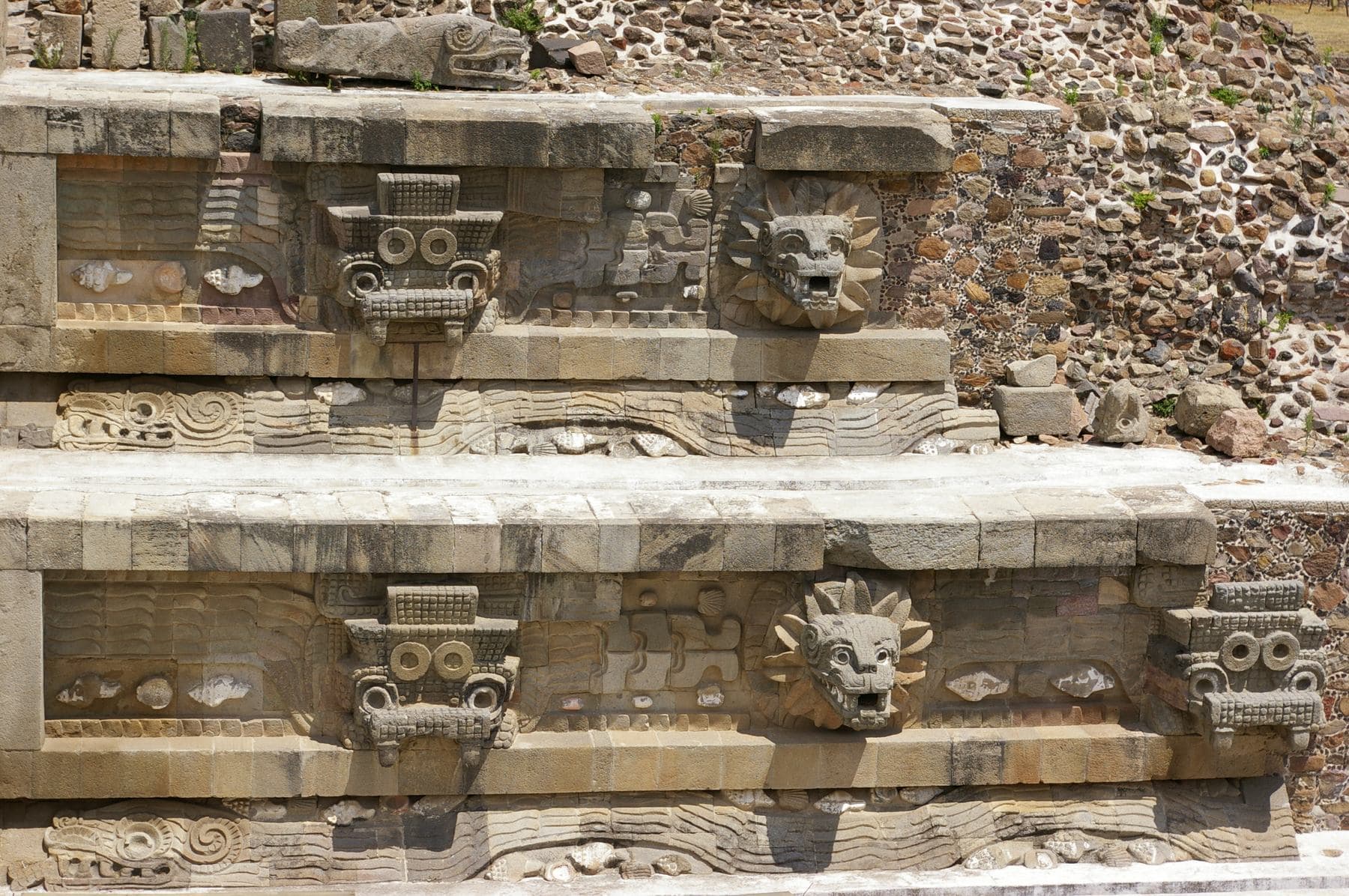
The Temple of the Feathered Serpent
A six-tiered pyramid inside a plaza that could hold 100,000 people. Beneath it: 200 sacrificial victims, and a sealed tunnel with pools of liquid mercury.
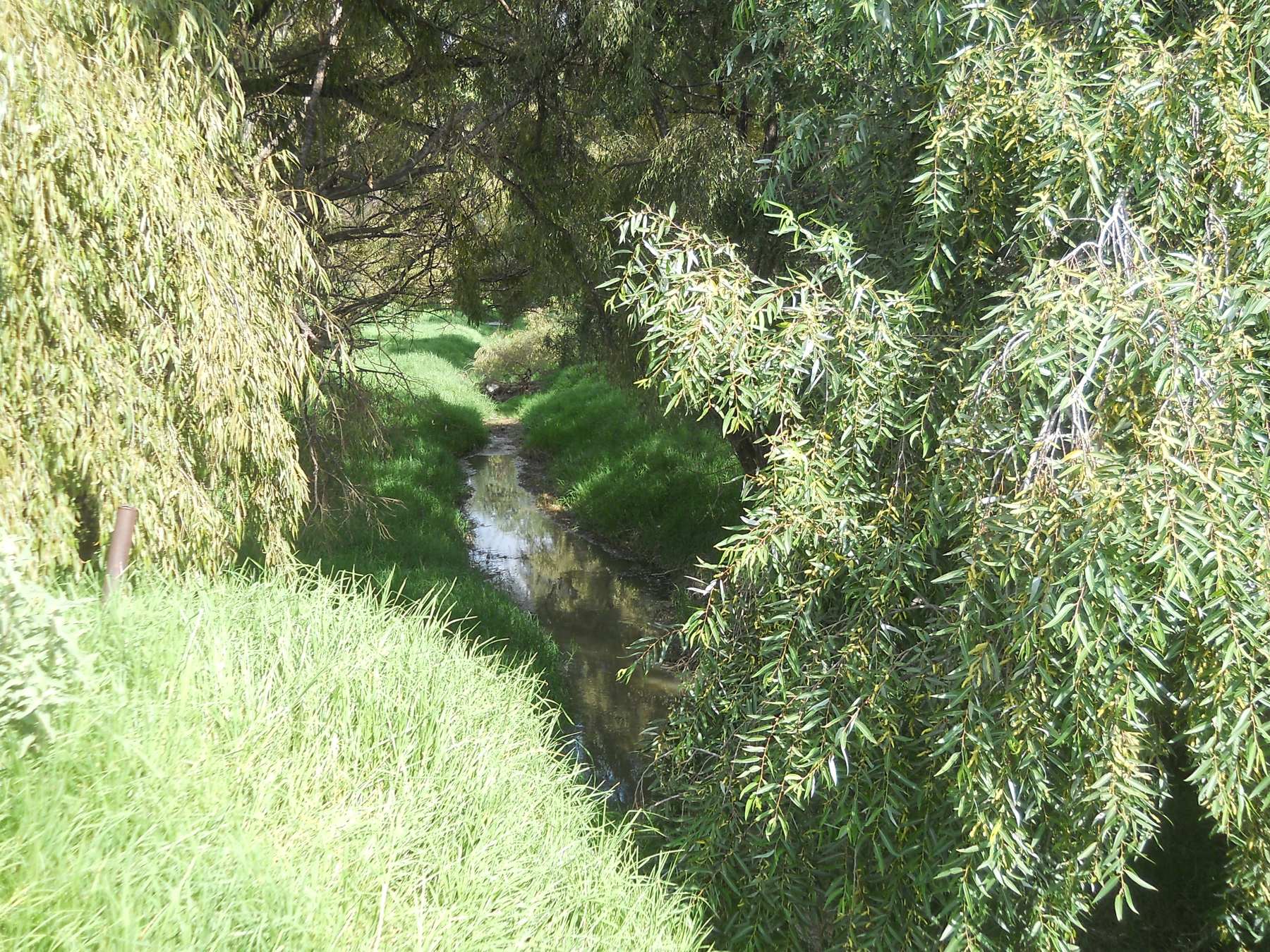
The Río San Juan Crossing
The Teotihuacanos rerouted an entire river so it would cross the Avenue of the Dead at exactly 90°. Urban engineering a thousand years before any European city was planned at this scale.
The Pyramid of the Sun
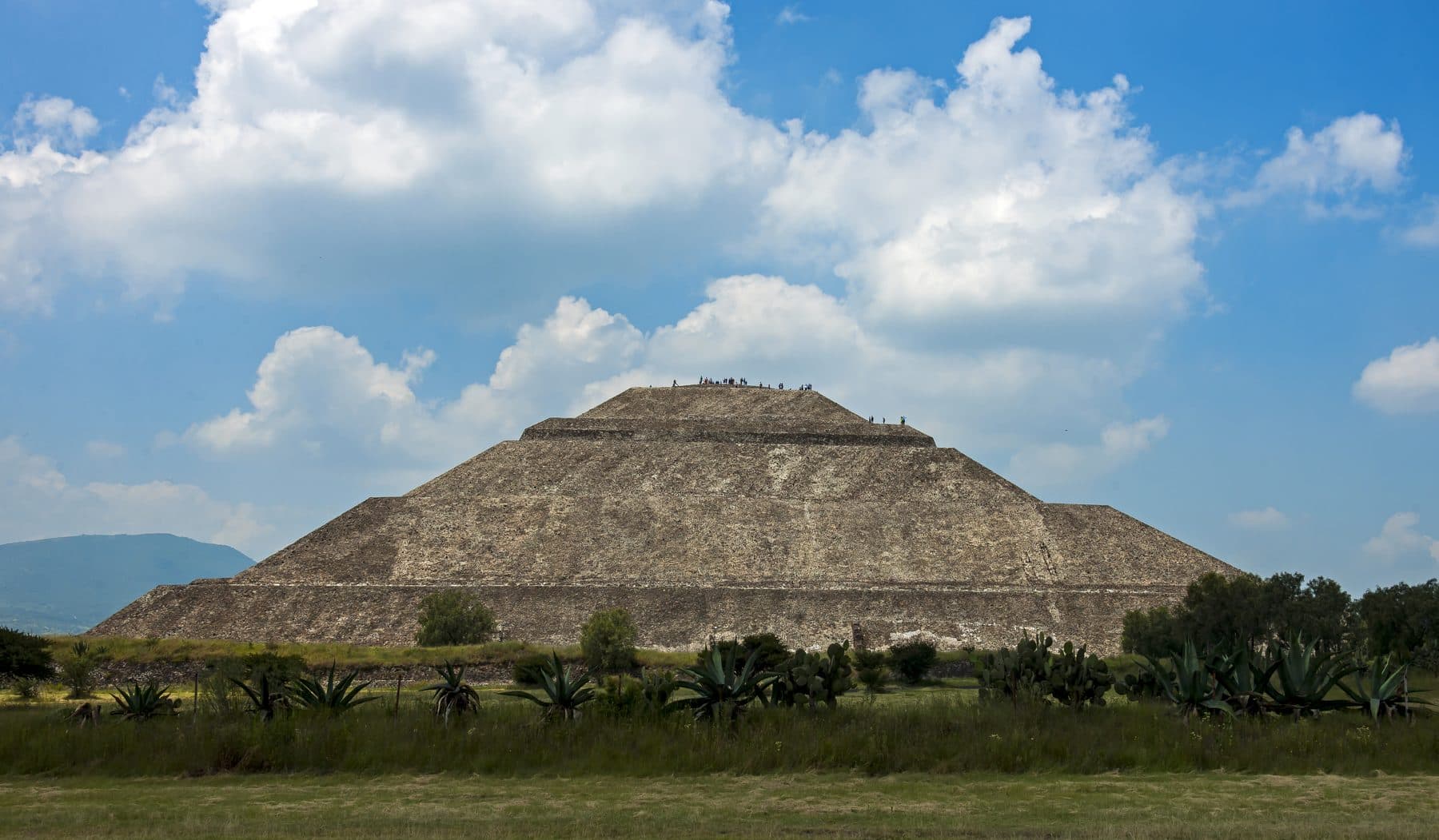
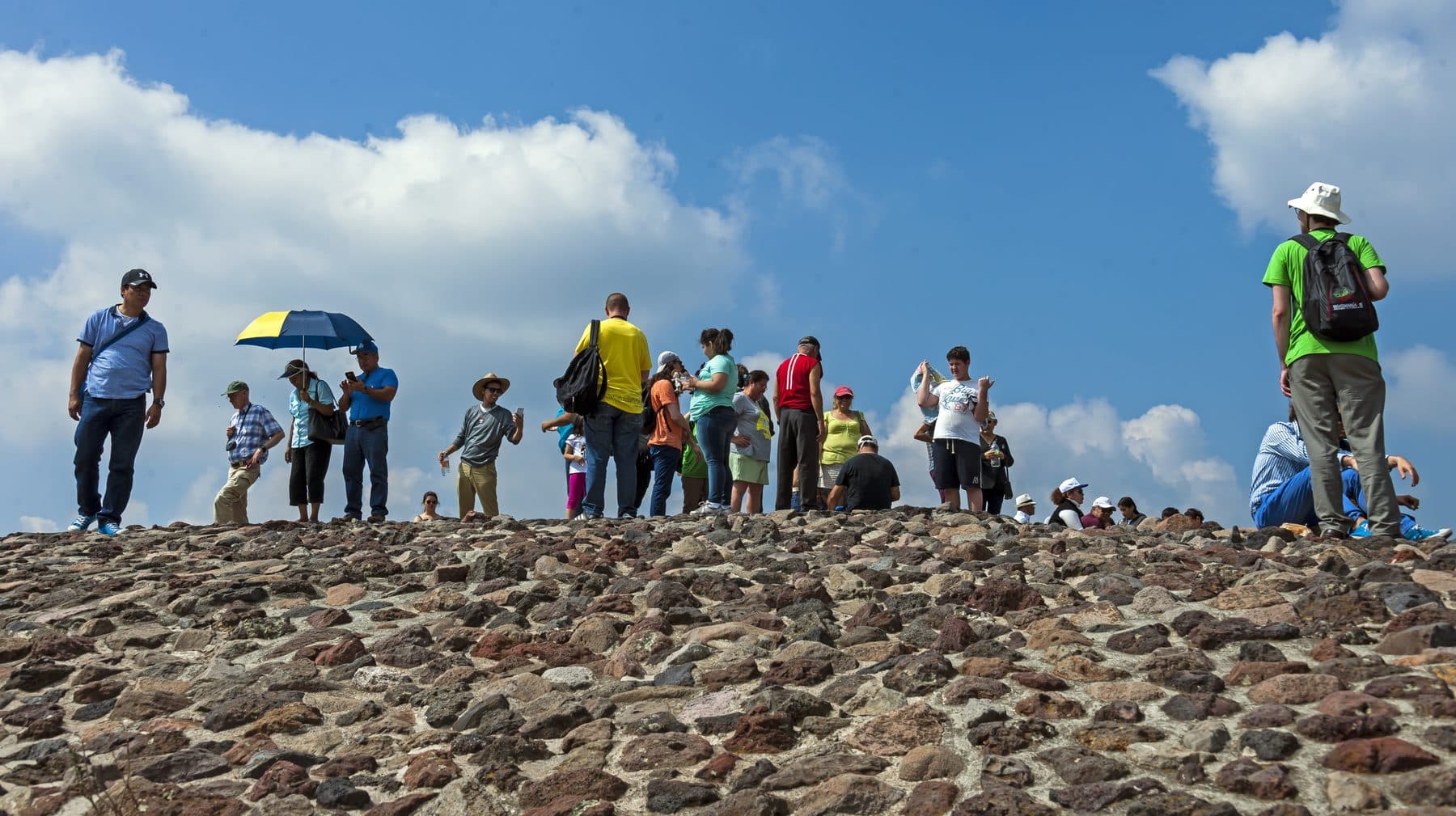
The third-largest pyramid on Earth by volume. 65 metres tall, 220 metres at its base, originally painted blood red. Beneath it: a man-made tunnel ending in a four-chambered cave.
The Calendar in Stone
From here, the pyramid's western face is aligned to the sun on four specific dates. The intervals between them equal the 260-day Mesoamerican ritual calendar.
The Palace of Quetzalpapálotl
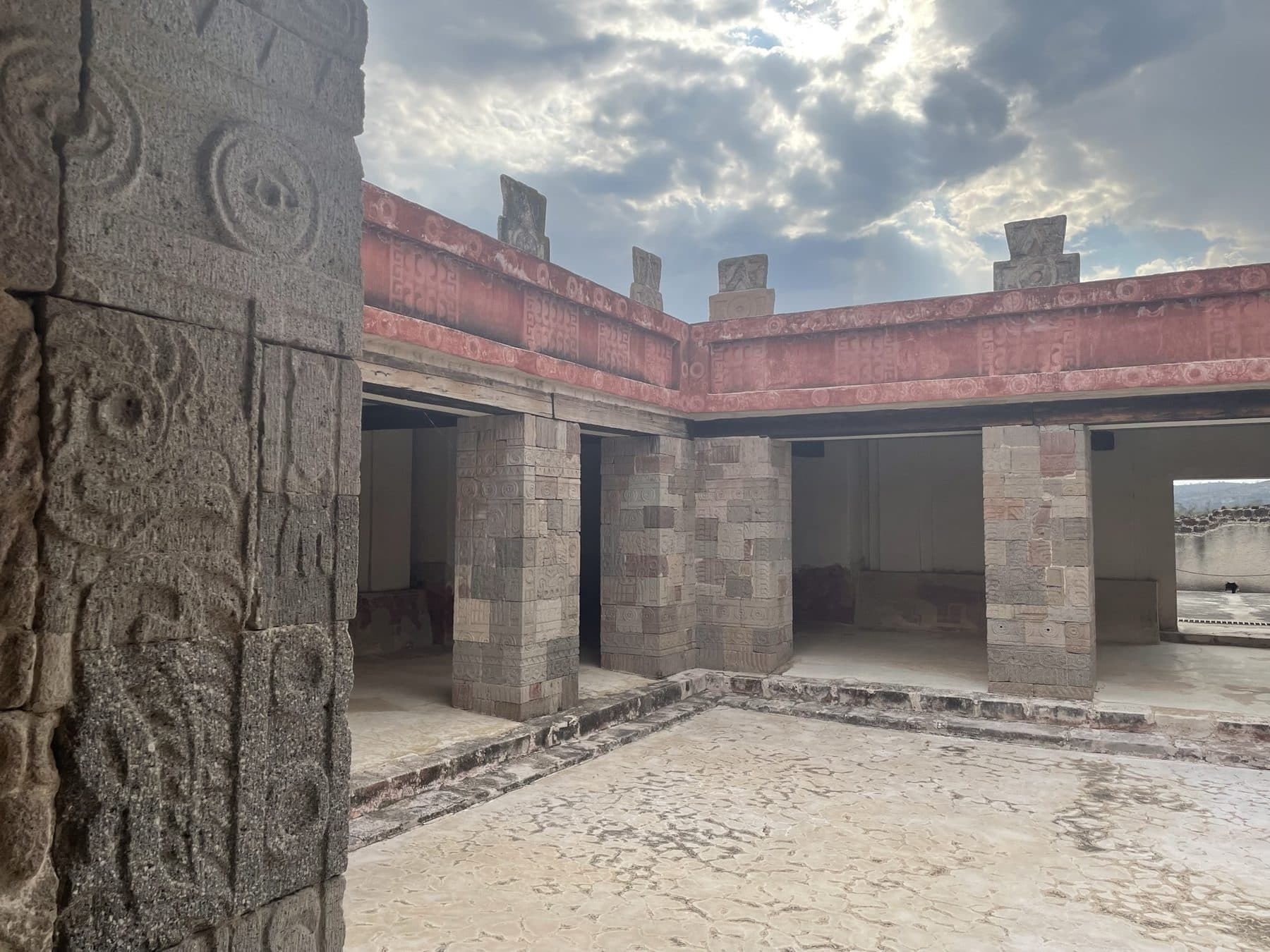
The closest we can get to the elite who ruled this city. Carved columns of quetzal-butterflies with obsidian-inlay eyes. Adjacent: murals of jaguars blowing conch shells.
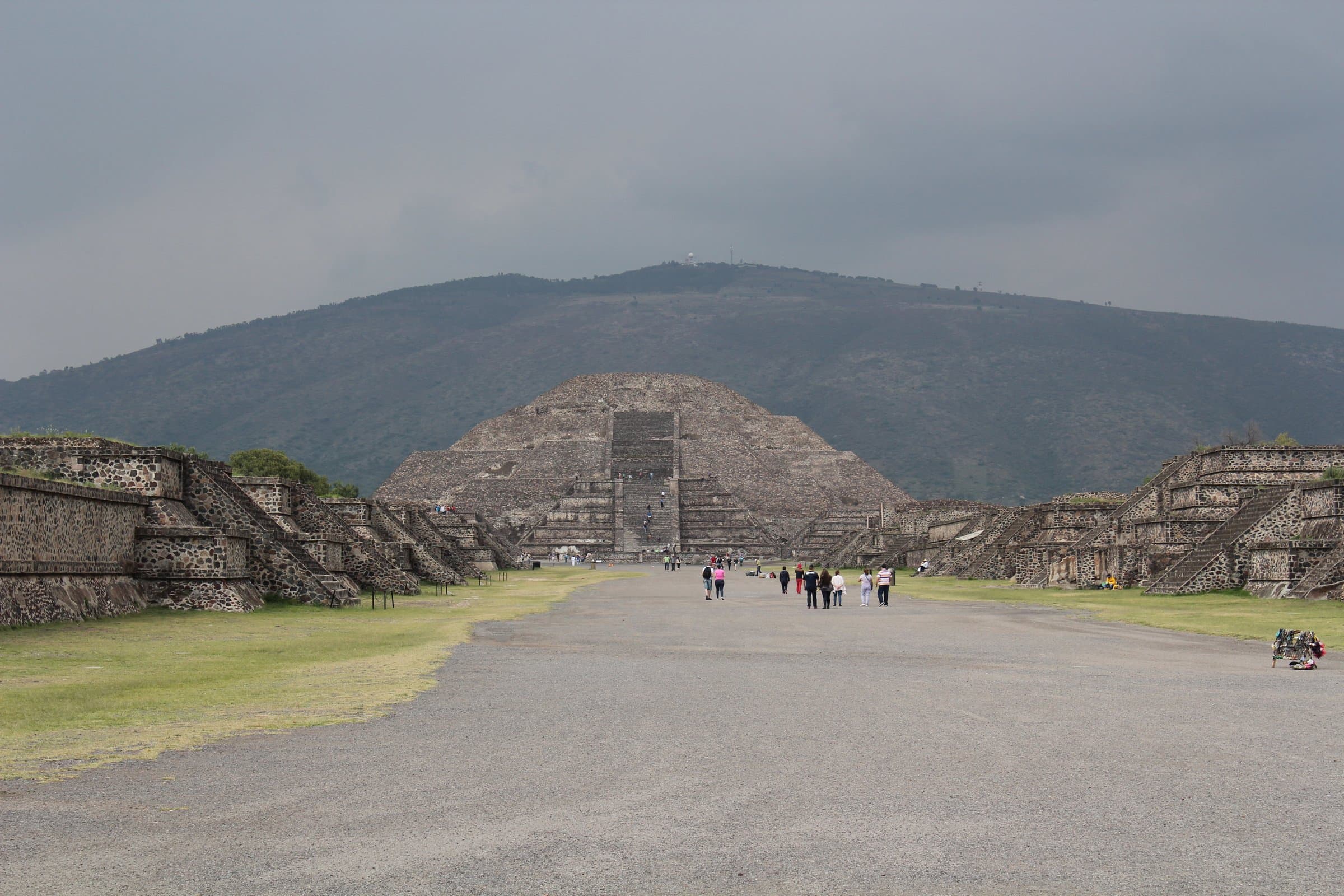
The Pyramid of the Moon
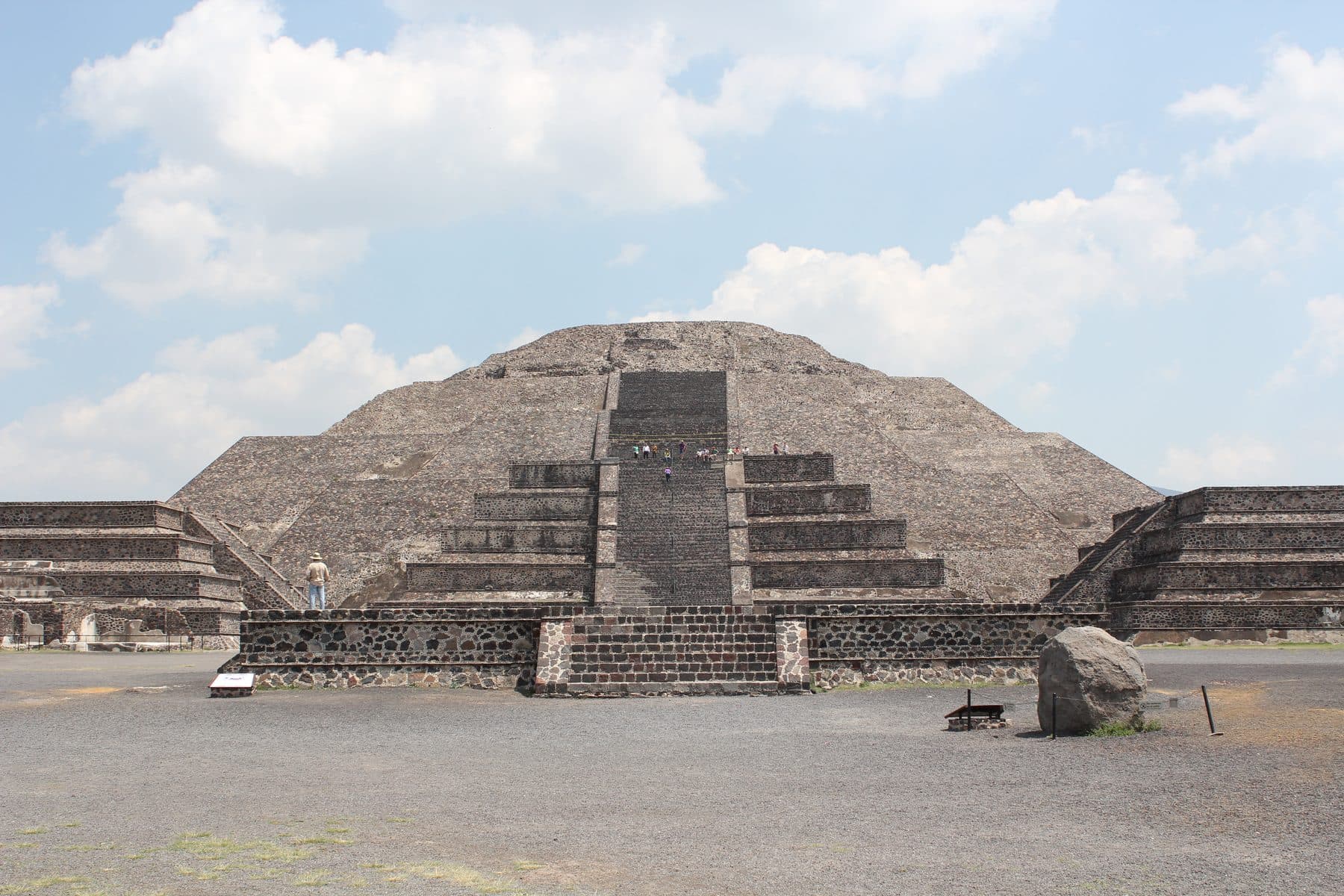
The northern terminus. A pyramid built in seven phases, its silhouette deliberately mimicking the mountain behind it. Beneath each phase: sacrificial burials.
Tepantitla: The Only Faces
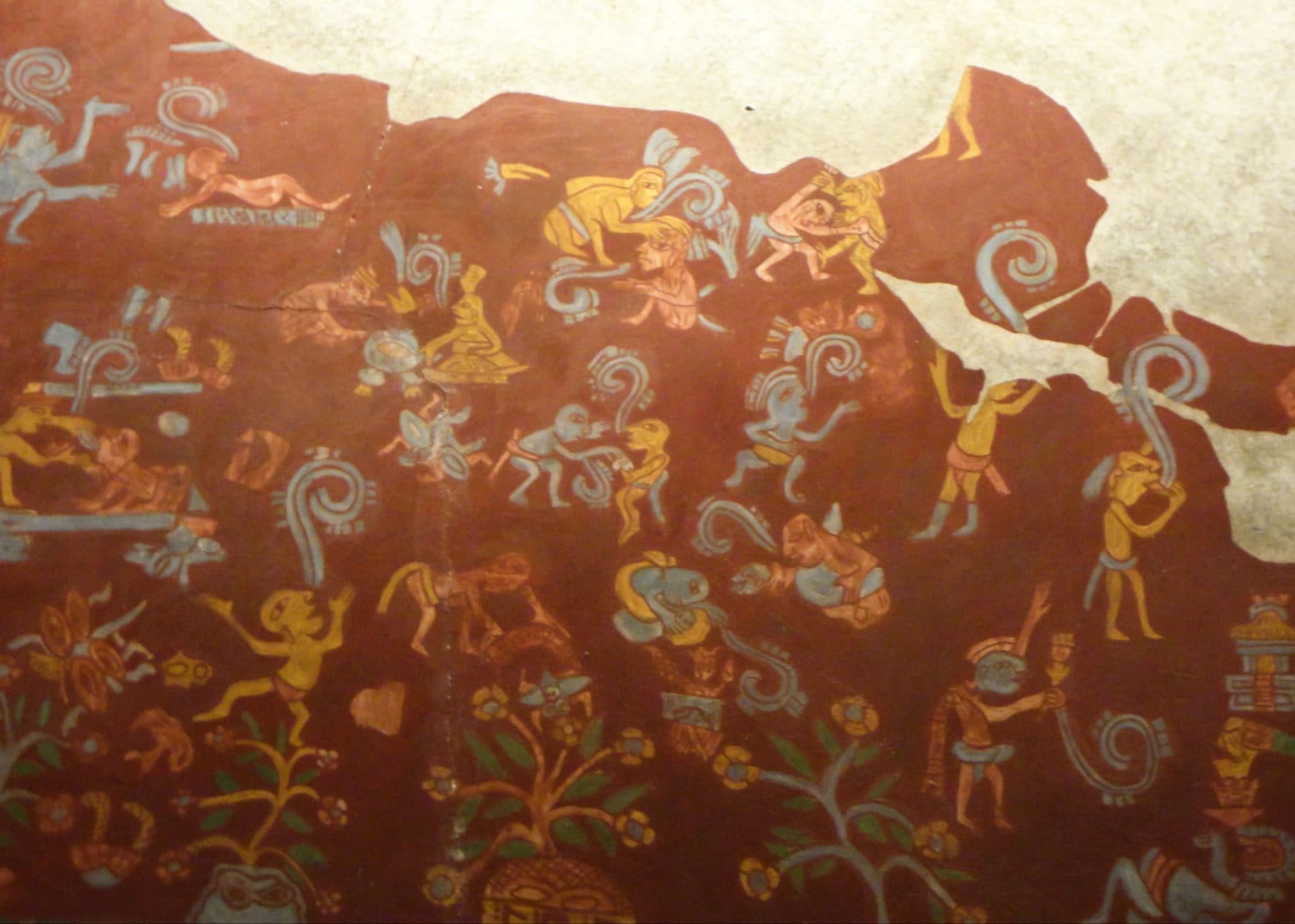
The most famous murals in Mesoamerica. Tiny human figures playing ball games, singing, swimming in a watery paradise. The only place in Teotihuacán where you can see ordinary people.
Looking Back
Turn 180°. Look back down the 2.4 kilometres you just walked. The city collapsed by 550 CE. The Aztecs found it empty 600 years later and believed gods had built it.
Best Time to Visit
Early morning, weekday, dry season. December through April mornings between site opening and ten are coolest, clearest, and least crowded. The Avenue of the Dead and the Pyramid of the Sun are almost entirely shadeless; by midday the surface temperature on the Avenue rises sharply and the photographs flatten. Summer afternoons through the wet season bring sudden thunderstorms; if you must walk in summer, start at opening. The full 2.4 kilometres of the Avenue of the Dead from the southern entrance to the Pyramid of the Moon, plus the Tepantitla detour, runs about three hours including stops. Plan to be off the Avenue before the midday sun lands.
Pro Tips
- •Buy your site ticket at the visitor center before starting the audio. The ticket is separate from any audio guidance. The tour anchors on the Avenue of the Dead at Stop 1 just inside the southern gate; have your entry sorted before that point.
- •Stop 7 climbing access at the Pyramid of the Moon, and climbing rules at the Pyramid of the Sun, change year to year. The Stop 7 audio explicitly notes climbing has been restricted as of April 2026 at the Moon. Follow the on-site signage and the audio at each stop; do not climb past a closed barrier.
- •Stop 8 at Tepantitla is a separate compound about a kilometre east of the main Avenue. The Tlalocan or Paradise of Tlaloc mural is the only place in Teotihuacán where ordinary people appear in figural form, discovered by Alfonso Caso in 1942 per the audio. The walk out and back adds roughly thirty minutes; budget for it.
- •Stop 5 (The Calendar in Stone) and Stop 4 (The Pyramid of the Sun) are the same physical area read from two different vantage points. The audio asks you to stand once at the western face for the calendrical alignment, and once at the base for scale. Do not rush from one to the next.
- •The Avenue is a 2.4-kilometre processional and roughly twice that long at the city's peak. The audio walks it south to north, ending at the Pyramid of the Moon and looking back. Carry water for the full distance; the few vendor stands inside the site are concentrated near the entrances, not along the Avenue.
- •Linda Manzanilla's argument that the elite ritual structures were systematically torched in an internal revolt around 550 CE is the closing thesis at Stop 9. Her 2015 PNAS paper is the source the audio cites. If the collapse story holds you, that is the next read.
Safety & Precautions
- The site sits at roughly 2300 metres elevation and the midday sun is intense. Heat-stroke risk on the Avenue is real because there is almost no shade. Bring water, sun protection, and a hat; reapply sunscreen partway through the walk.
- The stone surfaces on the Avenue and the pyramid bases are uneven, sometimes loose, and steep where steps remain. Wear closed shoes with grip; do not climb where signage or barriers indicate the route is closed.
- Afternoon thunderstorms are sudden in the wet season (May through October) and the Avenue offers no shelter. Start at opening, watch the sky, and leave the open Avenue before a storm builds.
- This is an active archaeological site of national significance. Do not touch the murals at Tepantitla or the Palace of Quetzalpapálotl, do not climb past barriers, and do not remove any stone fragments. Photography is generally permitted; flash near the murals is not.
Gallery
Related Reading
Go deeper on what you'll see, hear, and walk through.