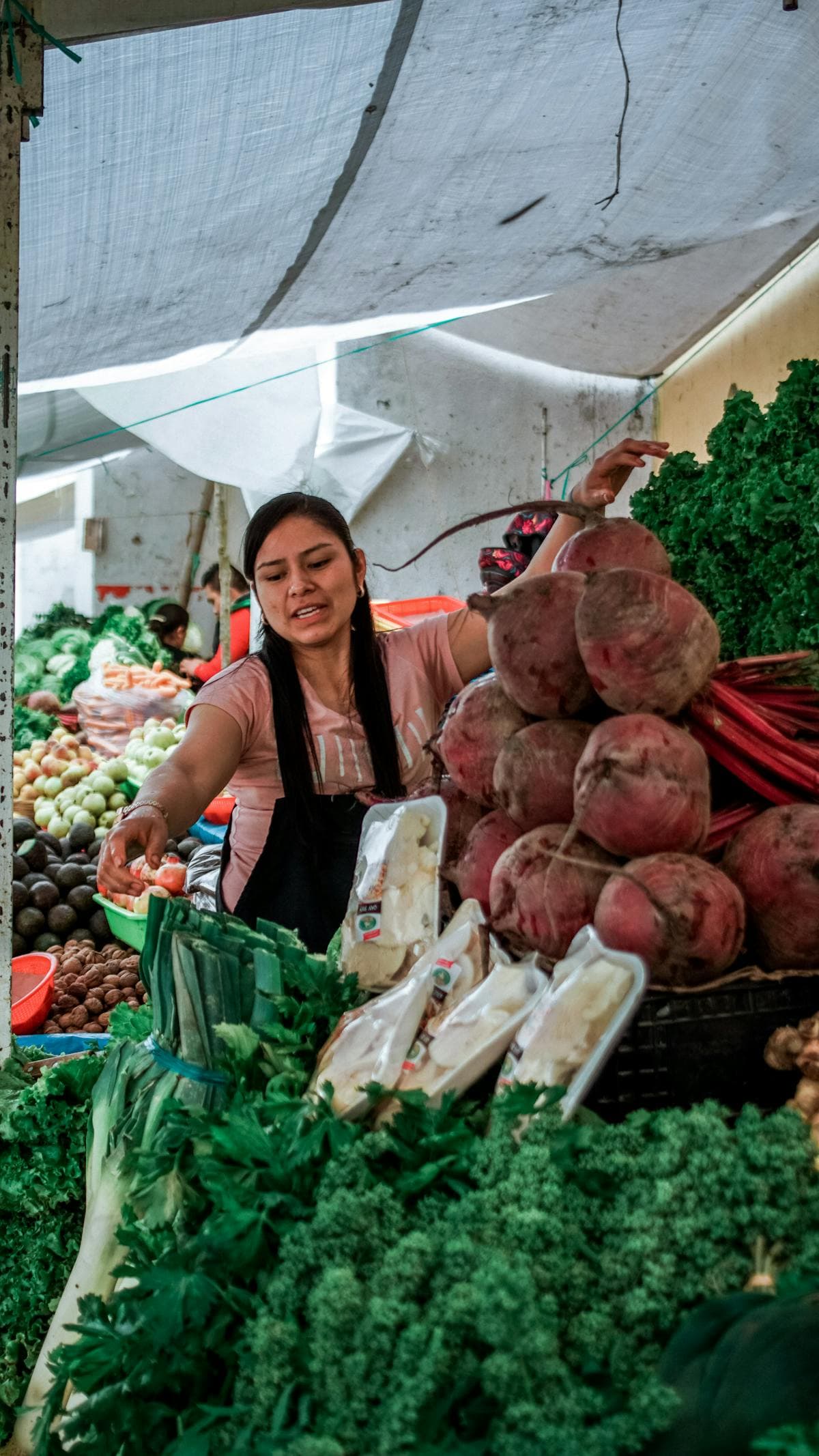
From the birthplace of mole poblano to the oldest Talavera workshop in Mexico — taste, touch, and discover the living crafts that made Puebla the cultural capital of central Mexico.
Start · Zocalo — Puebla's Culinary Capital
DirectionsStops
- 1
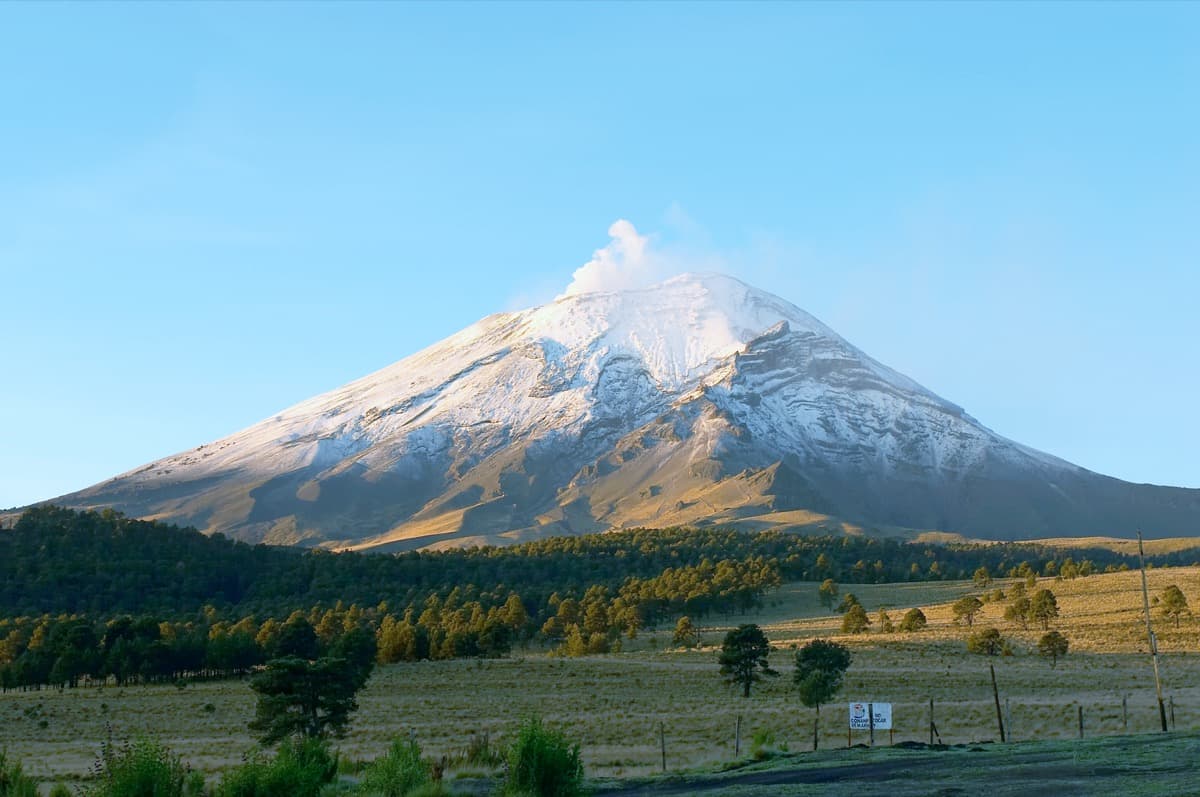
Zocalo — Puebla's Culinary Capital
The main square, reframed as the starting point for understanding why Puebla is considered the birthplace of Mexican cuisine.
- 2
Calle de los Dulces — Avenida 6 Oriente
A street of over forty sweet shops selling camotes, borrachitos, and confections using recipes that predate Mexican independence.
- 3
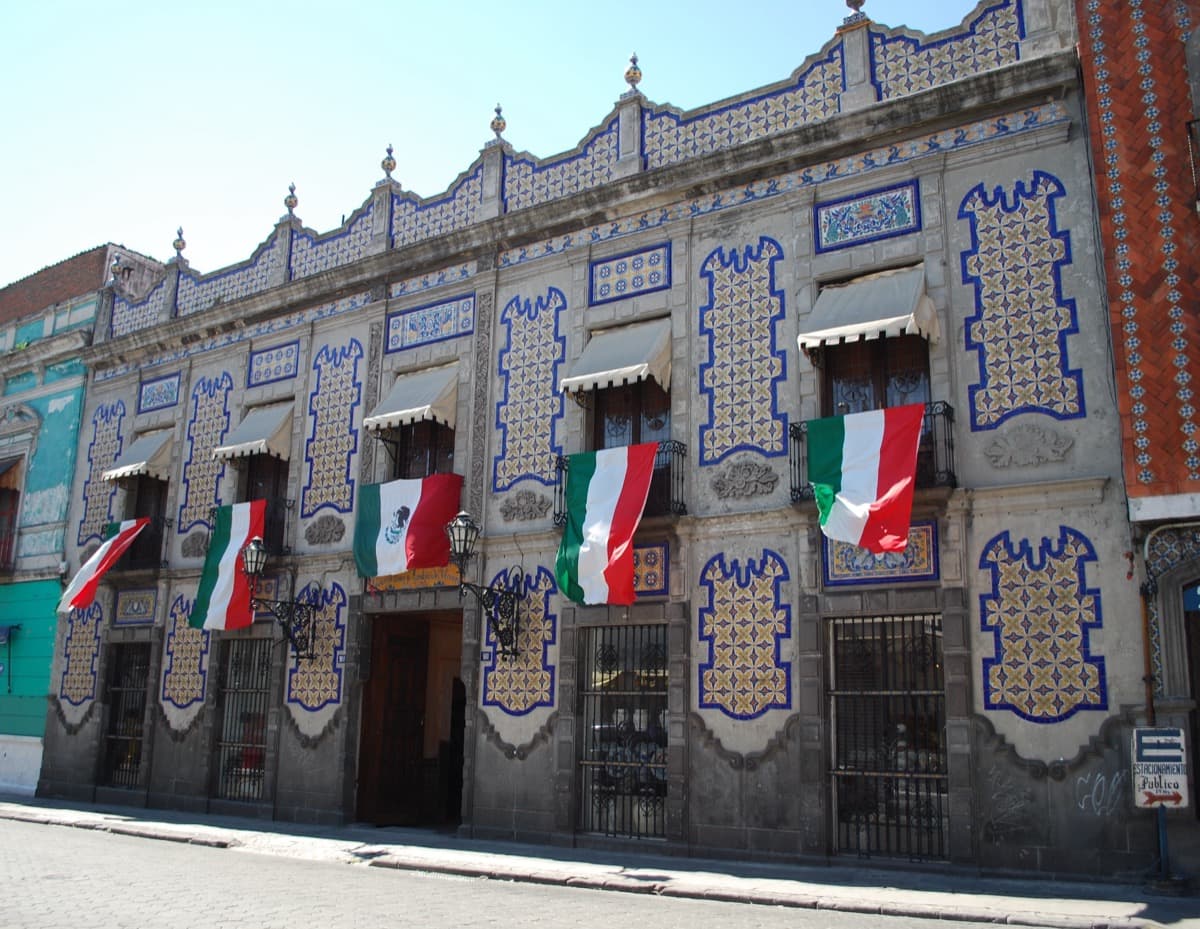
Templo de Santo Domingo Exterior — Talavera Introduction
The Talavera-tiled facade of Santo Domingo church, serving as an introduction to Puebla's five-century pottery tradition.
- 4
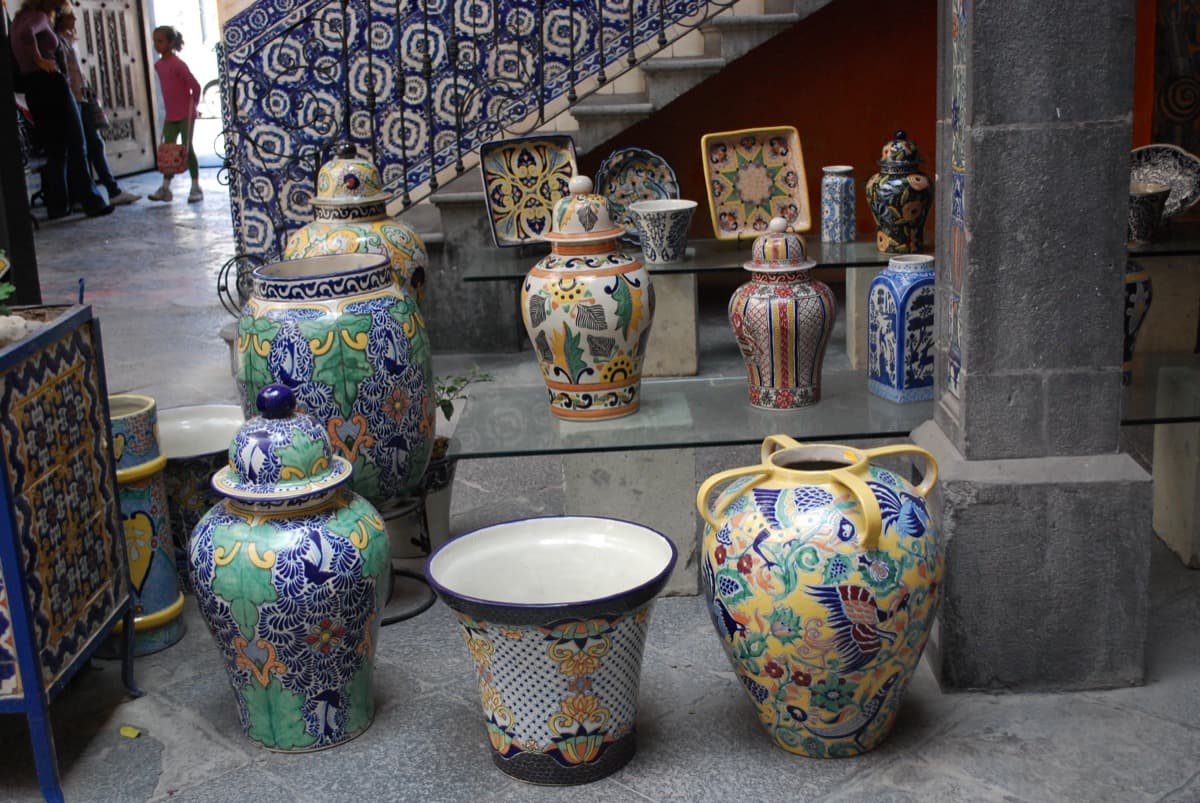
Uriarte Talavera Workshop
The oldest certified Talavera workshop in Mexico, operating since 1824 with over sixty artisans preserving UNESCO-recognized techniques.
- 5
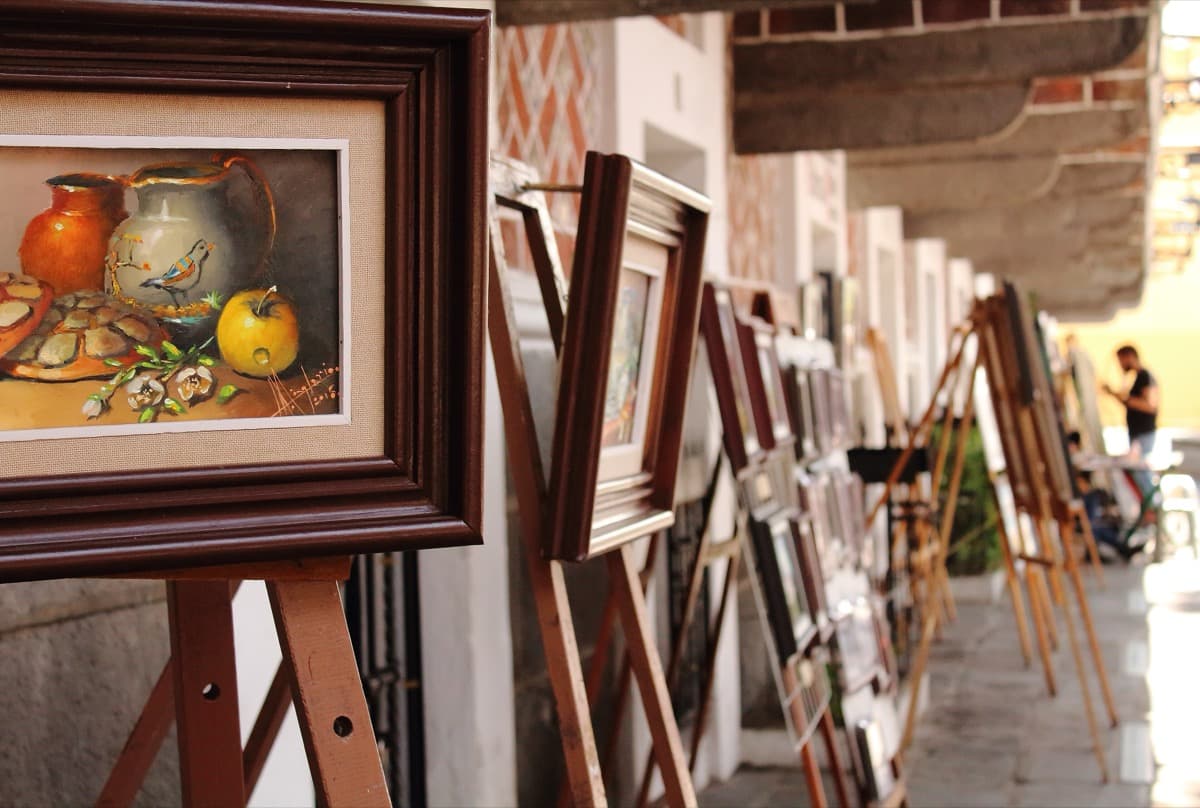
Mercado El Parian
A covered artisan market with over 100 stalls selling Talavera, textiles, onyx crafts, and folk art since 1961.
- 6
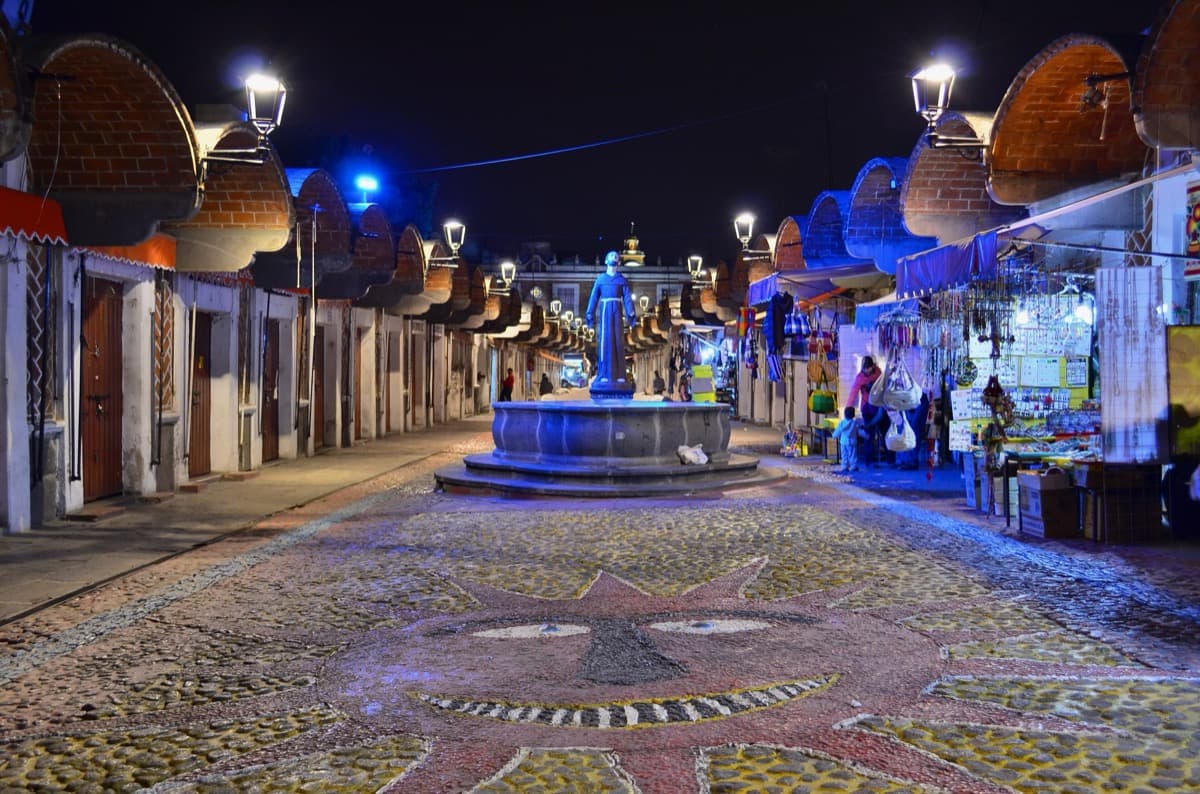
Barrio del Artista
An open-air artists' colony established in 1941, where painters work in public studios surrounded by galleries and murals.
- 7
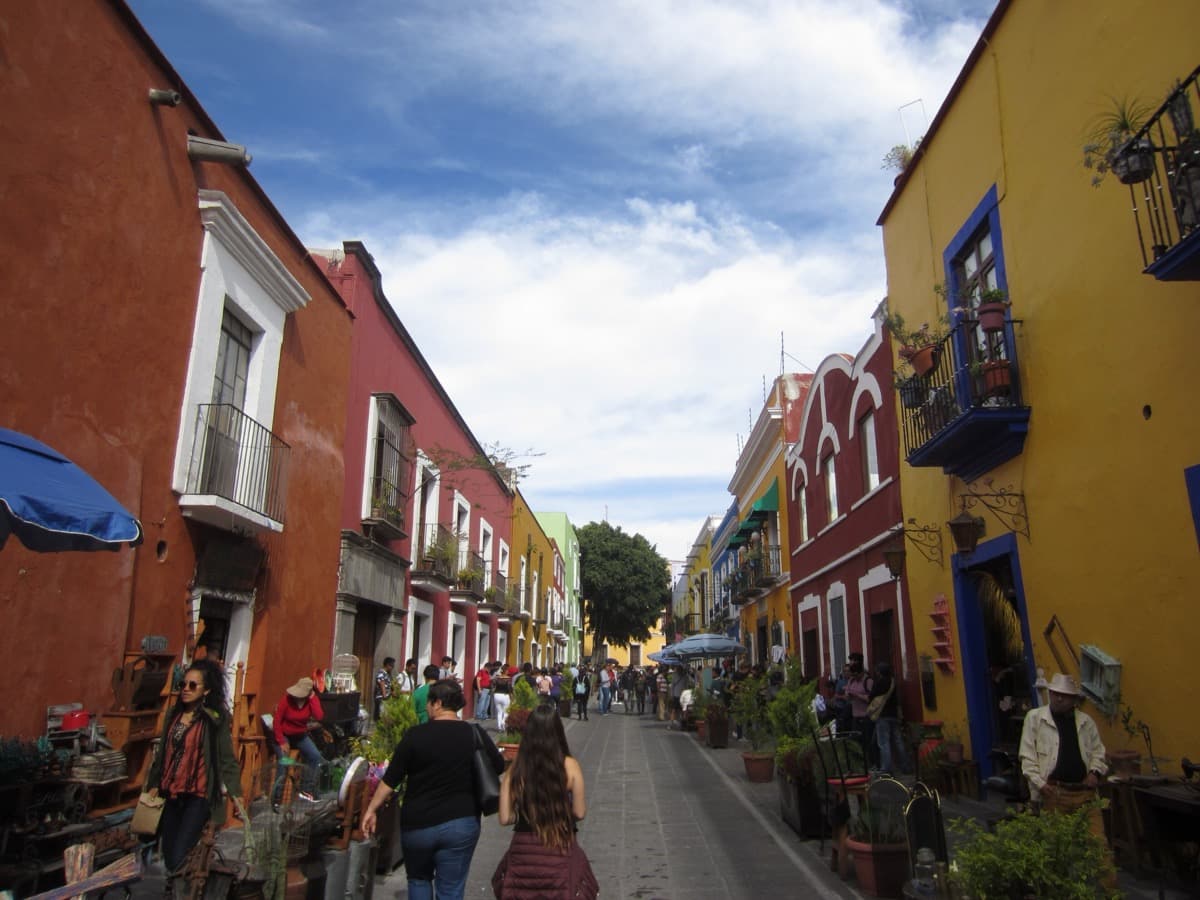
Callejon de los Sapos
A colorful antique alley filled with frog motifs, vintage finds, a legendary Sunday flea market, and mezcal bars.
- 8
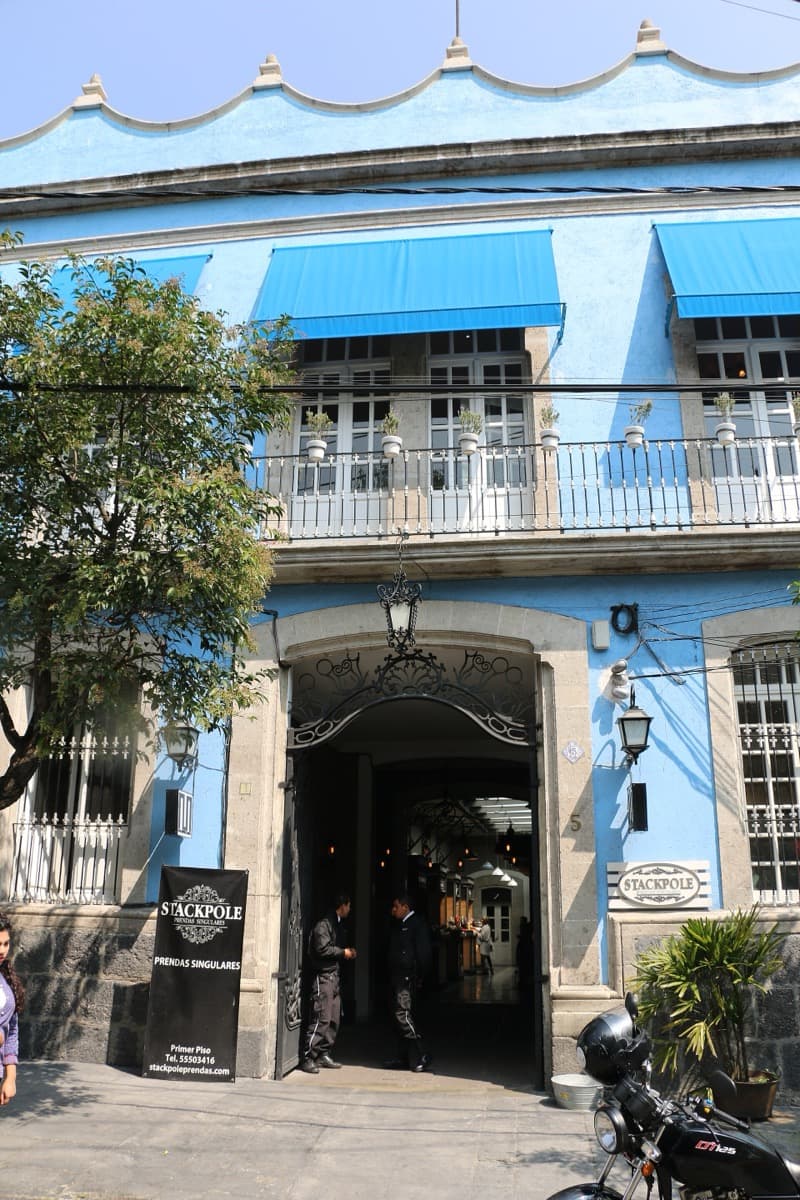
Mercado El Carmen
The locals' market — over 130 food vendors serving cemitas, tacos arabes, mole, and pulque to generations of working Puebla.
Details
Best Time to Visit
Late morning between 10:00 AM and noon is ideal for the full experience — the sweet shops and workshops are open, the Barrio del Artista is active, and Mercado El Carmen is in full lunch swing. Visit on a Sunday to catch the Callejon de los Sapos flea market (starts around 10:00 AM). Avoid Monday mornings when some workshops and galleries are closed.
Pro Tips
- •Bring cash in small bills — many market vendors and small artisan shops don't accept cards, and haggling at El Parian is expected for purchases over 200 pesos.
- •The Uriarte workshop offers free guided tours in Spanish and English — arrive before 11:00 AM to avoid group bottlenecks.
- •At Mercado El Carmen, follow the crowds. The stalls with the longest lines invariably serve the best food — locals know.
- •Buy Talavera at El Parian for everyday pieces and at Uriarte for certified heirloom pieces — the quality difference is real but so is the price difference.
- •Try a camote from Calle de los Dulces before lunch — they're filling enough to count as a snack but light enough that you'll still have room for cemitas later.
- •The Callejon de los Sapos mezcal bars open around noon — perfect for a post-market drink if you time the tour right.
Safety & Precautions
- •Mercado El Carmen is a working market, not a tourist venue. Watch your belongings, move with the flow, and be respectful of vendors during rush hour.
- •If you have food allergies, ask before eating. Many Puebla dishes contain nuts, sesame, and dairy that may not be immediately obvious.
- •Pulque is mildly alcoholic and can upset sensitive stomachs. Start with a small cup and wait fifteen minutes before having more.
- •The sun is strong in Puebla's open plazas. Wear sunscreen and carry water, especially between the Barrio del Artista and Mercado El Carmen where shade is limited.
Travel advisory: Exercise Increased Caution (Level 2).
Gallery
Related Reading
Go deeper on what you'll see, hear, and walk through.
Read the walk
The full story of Puebla: Mole as a Paradox, in words. Prefer to listen? Play it narrated, from home or on location.
Introduction
Mole poblano was invented as a sin offering. The traditional story is this. In the seventeenth century, the nuns of the Santa Rosa convent in Puebla learned that an unannounced bishop was arriving for dinner. They had nothing prepared. They scraped together what was in the kitchen, chiles, chocolate, almonds, plantains, garlic, day-old bread, twenty-something other ingredients, and ground them all together into a sauce thick enough to coat a turkey. Whether or not that exact story is literally true, the dish is a paradox: a thrown-together monastic improvisation that became Mexico's most baroque culinary expression.
Mole holds the same paradox you will see in everything Puebla makes. Sweet meets bitter. Indigenous meets Spanish. Sin meets atonement. The Talavera tiles that decorate the city are the same paradox in clay: Spanish technique, indigenous decoration, baroque excess from convent austerity. Puebla cooks every paradox into the same pot, and then paints the pot.
Over eight stops the route walks the central plaza, the famous Sweet Street where convent recipes are still made by hand, the Talavera workshop tradition (Uriarte has been operating since eighteen twenty-four), the central market where you taste mole and buy Talavera in the same building, the artist neighborhood and antique row, and ends at a local market where the everyday paradox continues.
The route is about three kilometres on flat ground at two thousand one hundred and thirty-five metres altitude, roughly one hundred and five minutes of walking. Markets are free to walk. Mole tasting and Talavera purchases are at your own pace. Roughly fifteen to thirty US dollars covers food sampling across the tour. When you arrive at the Zócalo, Puebla's culinary capital, begin with stop one.
1. Zocalo — Puebla's Culinary Capital
Welcome to the Zócalo, your first stop on this tour. Forget the churches and the politics. Today, look at the food. Under the portales, the covered arcades that ring the plaza, Puebla's culinary identity has been simmering for nearly five hundred years.
Puebla's claim as Mexico's culinary capital rests on three pillars. First, geography. The city sits in a fertile valley surrounded by volcanic farmland, with access to ingredients from the coast, the mountains, and the tropics. The variety of chilies alone, ancho, mulato, pasilla, chipotle, serrano, provided a spice palette that no other Mexican city could match.
Second, the convents. During the colonial period, Puebla's dozens of convents became laboratories of culinary innovation. Nuns had access to ingredients from both the Old World and the New, Spanish almonds and Mexican cacao, Mediterranean olive oil and local avocados, European wheat and indigenous corn. Behind convent walls, they experimented obsessively, creating dishes that fused two continents of culinary knowledge. Mole poblano, according to legend, was invented in the kitchen of the Convent of Santa Rosa in the seventeenth century.
Third, the Manila Galleon. Puebla sat on the trade route between Acapulco and Veracruz, the land bridge connecting the Pacific trade with the Atlantic. Spices from Asia passed through the city, adding cinnamon, cloves, and black pepper to an already rich culinary vocabulary.
The result is a cuisine of extraordinary complexity. A single serving of mole poblano can contain over twenty ingredients, prepared over three days. That's not cooking, that's alchemy. And it all started here, in this plaza, in this city.
2. Calle de los Dulces — Avenida 6 Oriente
Welcome to the Calle de los Dulces, Avenida 6 Oriente. Calle de los Dulces, the Street of Sweets, runs along Avenida 6 Oriente, and for over a century this single block has been the epicenter of Puebla's legendary confectionery tradition. There are more than forty dulcerias here, their glass cases overflowing with candied fruits, marzipan figures, coconut bars, and dozens of sweets you won't find anywhere else in the world.
The star of the show is the camote, a sweet potato candy that has become Puebla's edible calling card. Camotes are made by boiling sweet potatoes, mashing them with sugar and fruit essences, rolling the mixture into small cylinders, and wrapping them in wax paper. They come in every flavor imaginable, strawberry, pineapple, guava, lime, vanilla. The technique dates to the colonial convents, where nuns perfected the art of candying fruits and vegetables brought from both hemispheres.
Look for La Gran Fama, which has been operating on this street since 1892. Step inside and you'll find borrachitos, small, pillow-shaped candies soaked in liquor that literally translates as 'little drunk ones.' You'll find mueganos, fried dough pieces bound together with caramelized sugar. You'll find tortitas de Santa Clara, thin cookies topped with colored sugar paste that were invented at the Convent of Santa Clara in the seventeenth century.
What makes this street remarkable isn't just the variety, it's the continuity. Many of these shops have been family-owned for three, four, even five generations. The recipes haven't changed because the customers won't allow it. A Puebla grandmother who ate tortitas de Santa Clara as a child expects her granddaughter to taste exactly the same ones. That's not conservatism, that's quality control enforced by memory.
3. Templo de Santo Domingo Exterior — Talavera Introduction
Welcome to the Templo de Santo Domingo. This church houses one of Puebla's most spectacular baroque interiors, but today we're staying outside to look at something different, the tiles. Look at the facade and the dome of the Templo de Santo Domingo. Those blue-and-white ceramic tiles covering the surfaces aren't paint, they're Talavera, hand-crafted ceramic pieces that have been Puebla's most recognizable art form for five centuries.
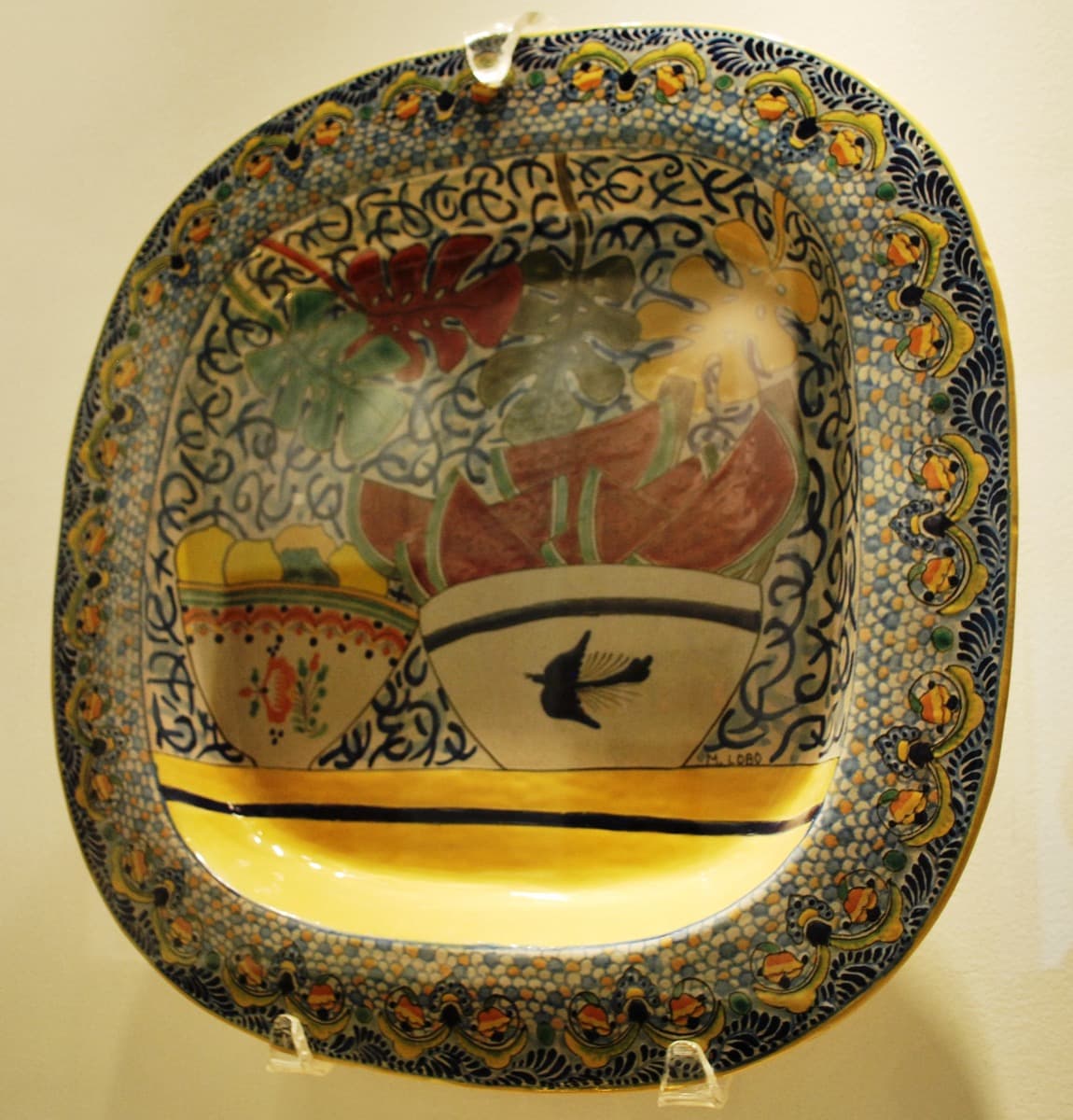
Talavera gets its name from Talavera de la Reina, a city in Spain that was itself a center of ceramic production influenced by centuries of Moorish rule. When Spanish potters arrived in Puebla in the sixteenth century, they found excellent local clay and a workforce of indigenous artisans already skilled in ceramic traditions. The fusion produced something new, Mexican Talavera, which incorporated local motifs and colors while maintaining the technical standards of Spanish majolica.
The process is extraordinarily labor-intensive. Authentic Talavera uses only six permitted colors, blue, yellow, orange, green, mauve, and black, all derived from natural mineral pigments. Each piece is shaped by hand, dried for months, coated in a tin-based glaze, hand-painted, and fired twice in a kiln at over a thousand degrees. A single plate can take weeks to complete.
In 2019, UNESCO recognized the Talavera pottery-making process of Puebla and Tlaxcala as Intangible Cultural Heritage of Humanity. The designation protects not just the objects but the knowledge system behind them, the families, the workshops, the apprenticeships, and the centuries of accumulated skill that make authentic Talavera possible.
Look around as you walk through Puebla's historic center. Talavera is everywhere, on church domes, building facades, house numbers, restaurant interiors, even street signs. It's not decoration. It's identity. At the Uriarte Talavera workshop nearby, you can see exactly how it's made.
4. Uriarte Talavera Workshop
Welcome to the Uriarte Talavera Workshop. You're standing outside the Uriarte Talavera Workshop, and this building has been producing handmade ceramics continuously since 1824, making it the oldest certified Talavera workshop still operating in Mexico. Step inside and you're…
Full narration for this stop unlocks with the tour.
5. Mercado El Parian
Welcome to Mercado El Parián. Welcome to Mercado El Parian, Puebla's dedicated artisan market and the best single place in the city to see the full range of local craftsmanship under one roof. The market has been operating on this site since 1961, though artisan commerce has…
Full narration for this stop unlocks with the tour.
6. Barrio del Artista
Welcome to the Barrio del Artista. You've arrived at the Barrio del Artista, the Artist Quarter, and this is one of the most charming corners of Puebla's historic center. Established in 1941 in what was then a neglected plaza called the Plazuela del Torno, this open-air colony…
Full narration for this stop unlocks with the tour.
7. Callejon de los Sapos
Welcome to the Callejón de los Sapos. Welcome to the Callejon de los Sapos, the Alley of the Frogs, and yes, you're going to see frogs everywhere. Ceramic frogs, stone frogs, painted frogs on walls and doorways, frog-shaped planters hanging from balconies. The name comes from…
Full narration for this stop unlocks with the tour.
8. Mercado El Carmen
Welcome to Mercado El Carmen, your final stop on this tour. You've arrived at the final stop, and it's the one that might matter most. Mercado El Carmen is where Puebla eats. Not the Puebla of tourist restaurants and Instagram-friendly cafes, the Puebla of construction workers…
Full narration for this stop unlocks with the tour.