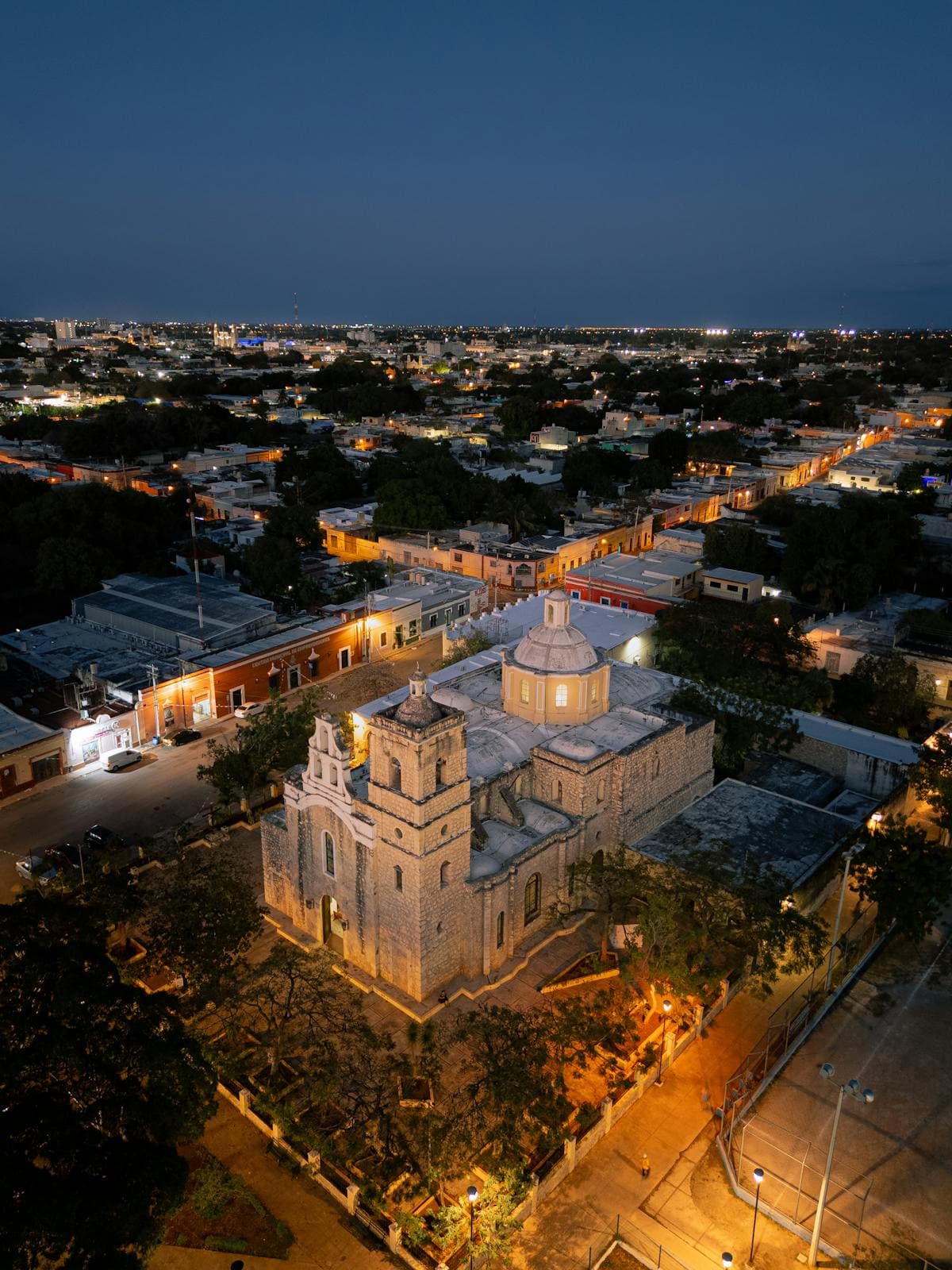
Walk the streets of a city built literally on top of an ancient Maya capital — where cathedral stones were quarried from pyramids and every facade tells a story of conquest, resistance, and reinvention.
Start · Plaza Grande
DirectionsStops
- 1
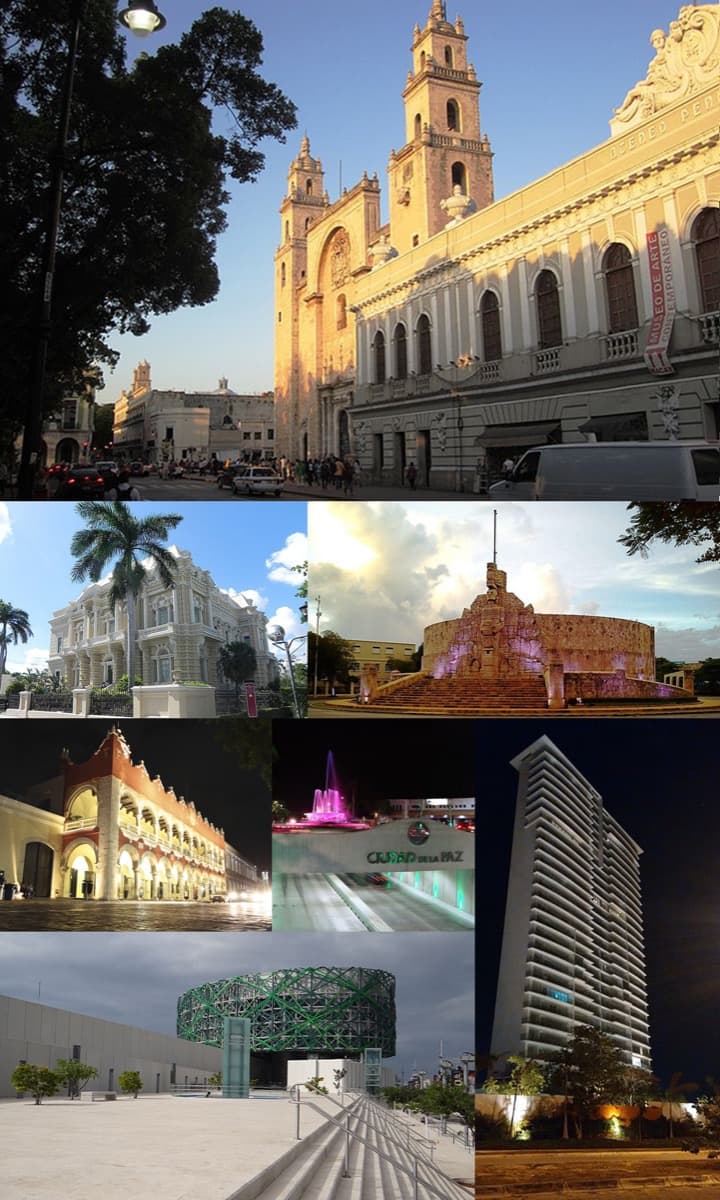
Plaza Grande
The main square of Mérida, built directly atop the Maya ceremonial center of T'ho — where two civilizations meet in a single public space.
- 2
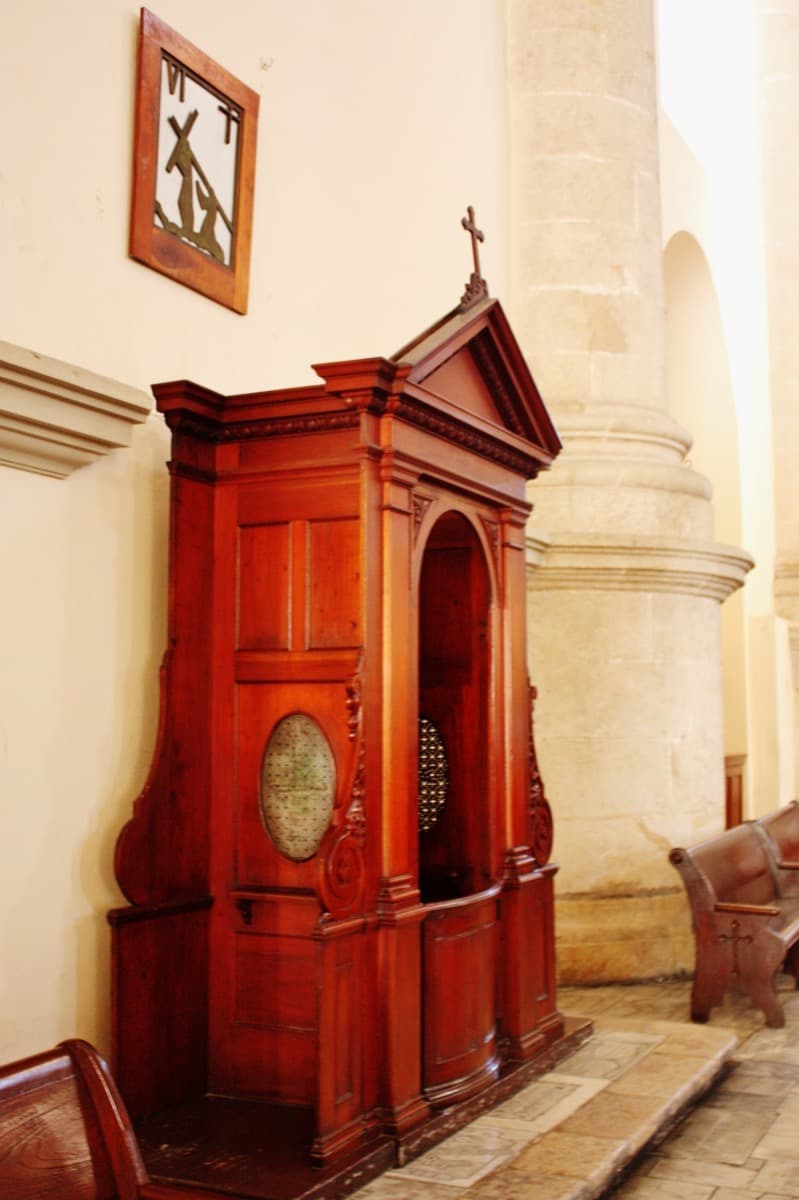
Cathedral of San Ildefonso
Completed in 1598, the oldest cathedral on mainland Americas — built with stones quarried directly from Maya pyramids.
- 3
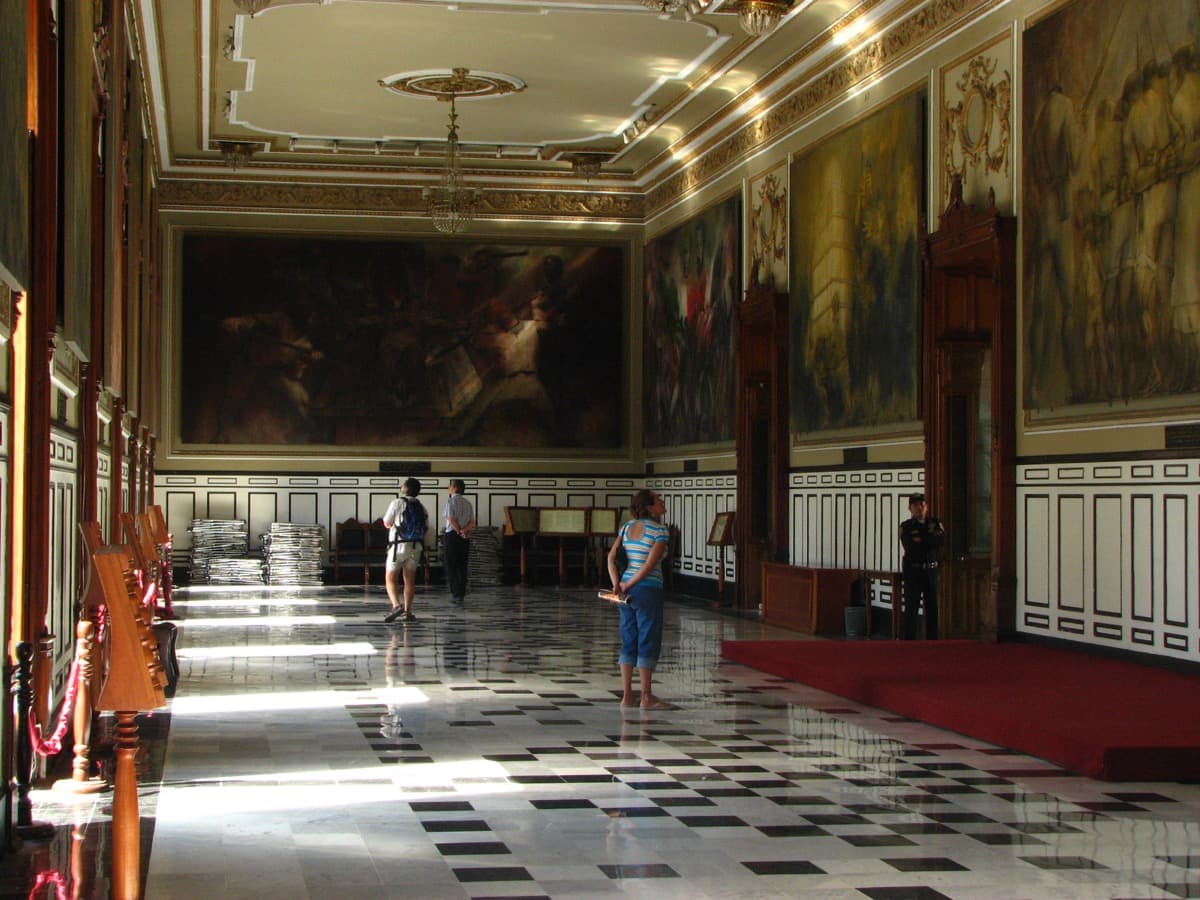
Palacio de Gobierno
The seat of Yucatán's state government, famous for Fernando Castro Pacheco's monumental murals depicting Maya civilization and the Spanish conquest.
- 4
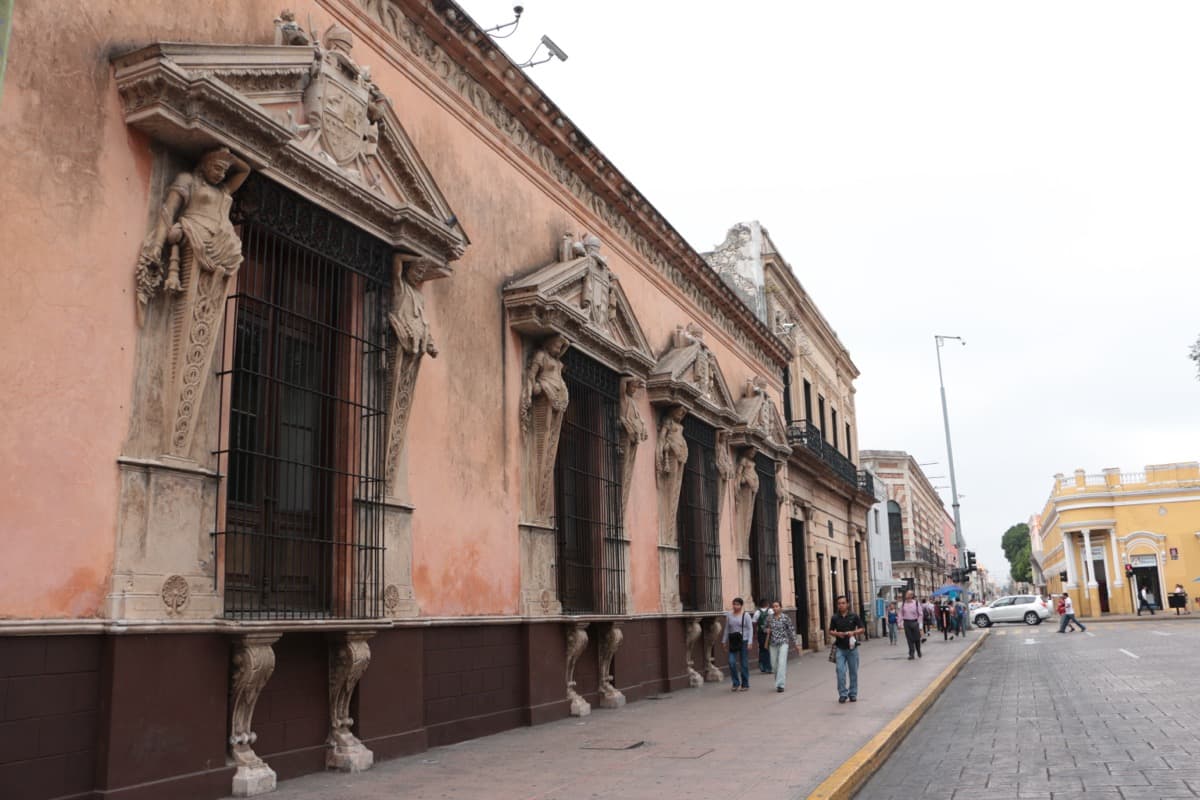
Casa de Montejo
The 1549 mansion of the conquistador dynasty, with a Plateresque facade showing Spanish soldiers standing on the heads of the defeated.
- 5
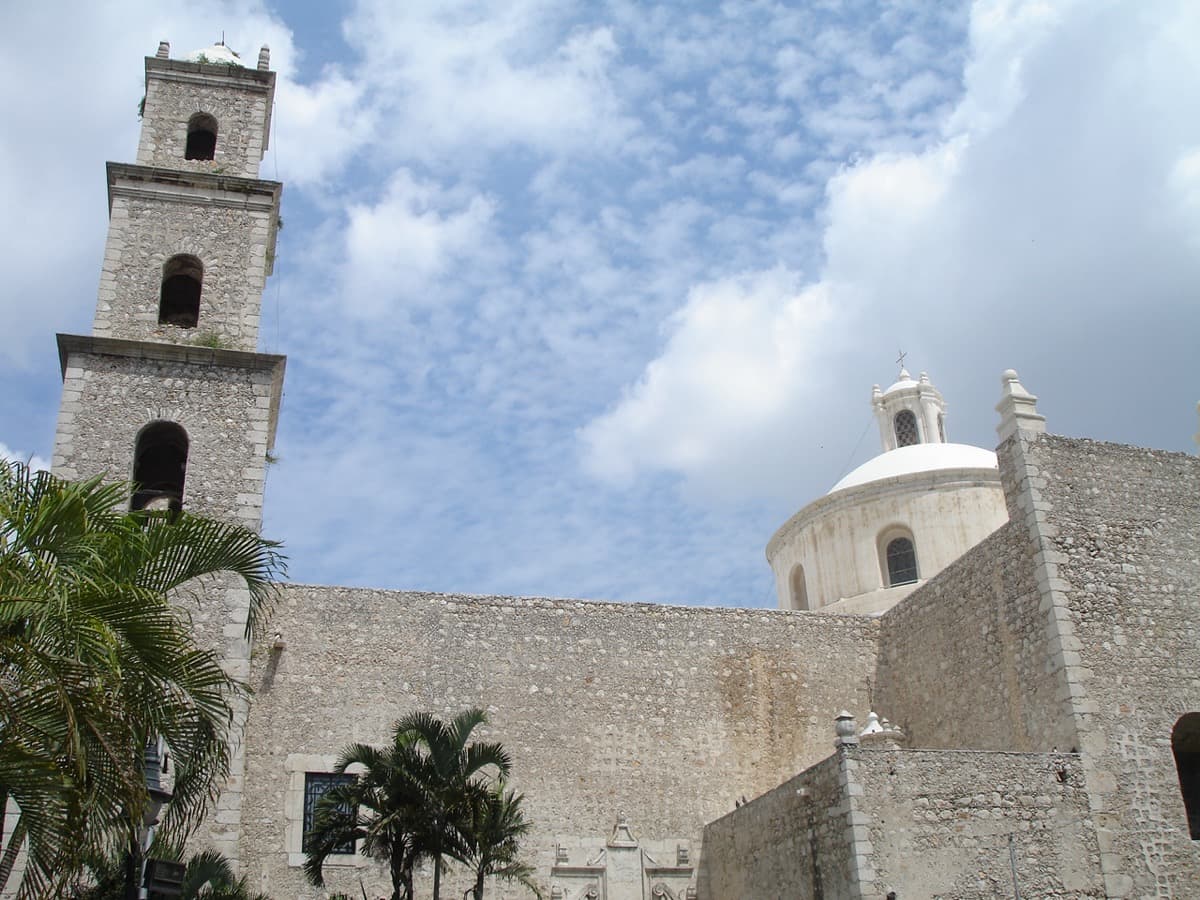
Iglesia de Jesús Tercera Orden
A 1618 Jesuit church built with stones from a Maya temple, blending baroque grandeur with indigenous building material.
- 6
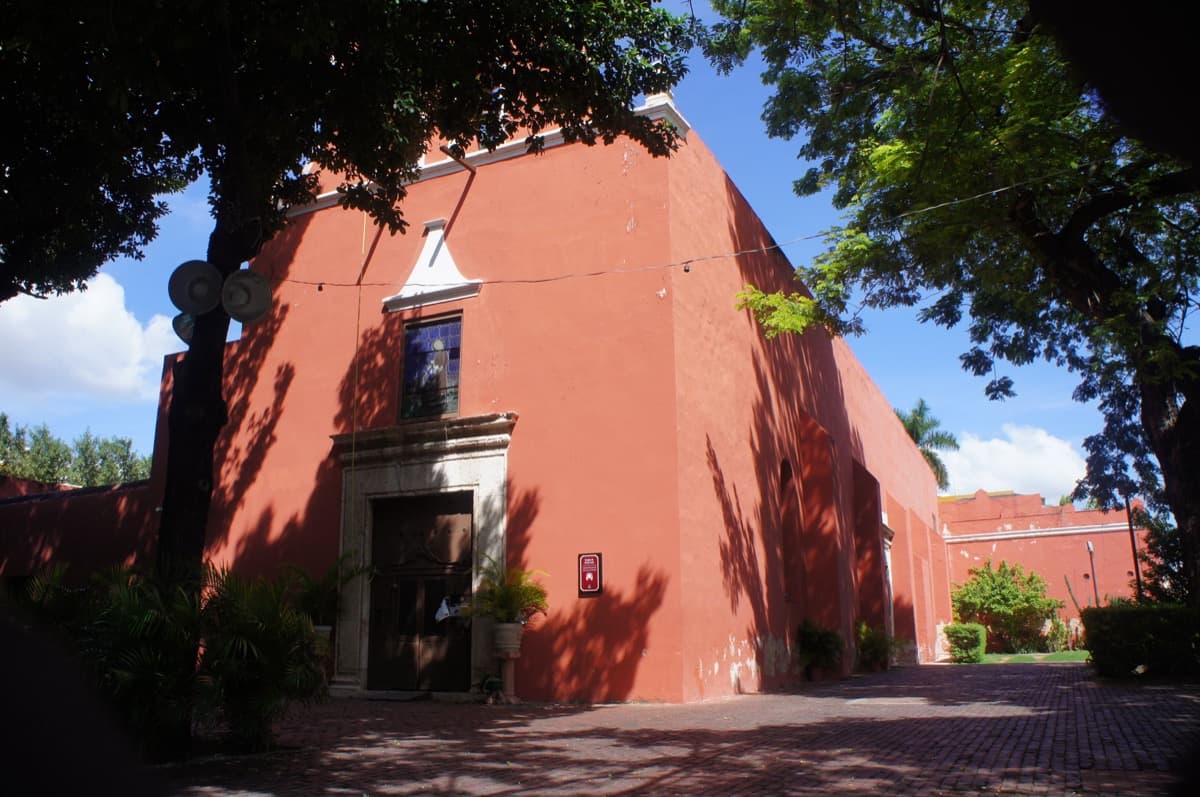
Parque Santa Lucía & Iglesia
A 1575 Franciscan chapel and park where colonial Mérida's racial hierarchies were carved into sacred space — separate worship for Maya and Black communities.
- 7
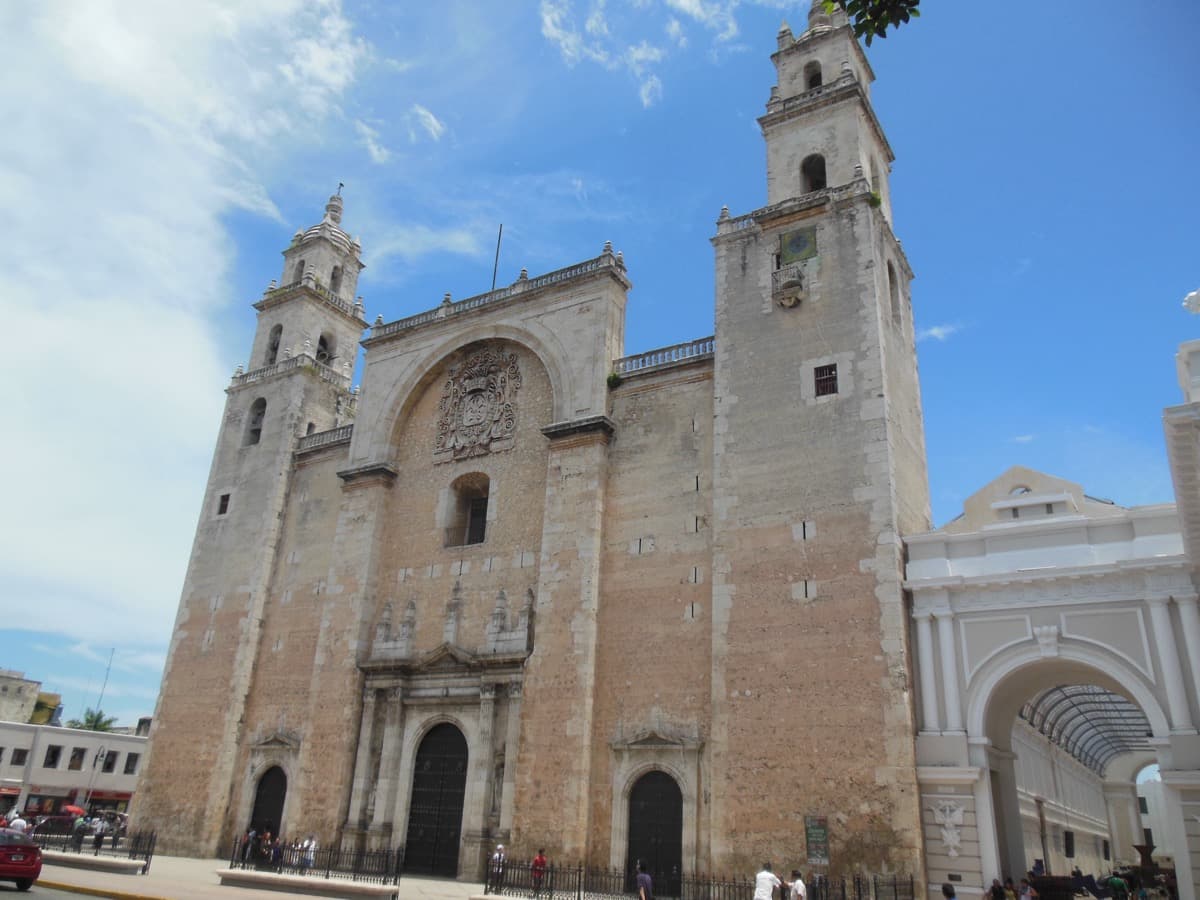
Museo de Arte Popular de Yucatán
A celebration of indigenous craftsmanship in the Mejorada barrio — huipiles, hammocks, pottery, and the living traditions of Maya artisans.
- 8
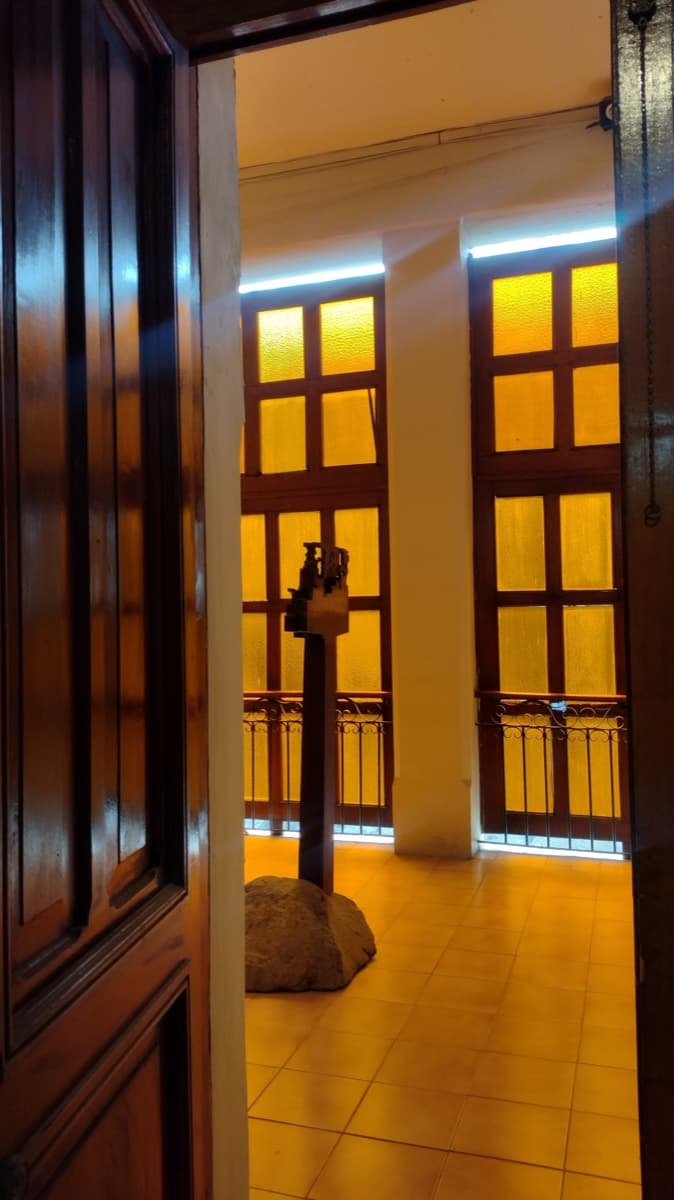
MACAY — Museo de Arte Contemporáneo Ateneo de Yucatán
Modern Yucatecan artists interpreting Maya and colonial identity — contemporary art in a building that faces the Plaza Grande where it all began.
Details
Best Time to Visit
Early morning between 8:00 and 10:00 AM, before the midday heat sets in. Mérida is one of the hottest cities in Mexico — temperatures regularly exceed 35°C (95°F) by noon. Alternatively, late afternoon around 4:00 to 6:00 PM when the heat begins to ease. Sundays are magical — the streets around the Plaza Grande close to traffic for an all-day cultural festival.
Pro Tips
- •Start early. Mérida's heat builds fast — by noon it can be punishing. The Plaza Grande has shade under its laurel trees, but the walks between stops do not.
- •Carry a reusable water bottle. Street vendors sell cold agua fresca — try chaya con limón, made from a local green leaf that is packed with nutrients.
- •Visit the Palacio de Gobierno murals first when it opens — they are free, the hall is cool, and you will have them almost to yourself.
- •On Sundays, the streets around the Plaza Grande close for 'Mérida en Domingo' — a massive cultural event with dancing, food stalls, and artisan markets.
- •If you visit Santa Lucía on Thursday evening, stay for the Serenata Yucateca concert starting at 9:00 PM — it is free and unforgettable.
- •Wear a hat and sunscreen. The Yucatán sun is intense even in the cooler months. Light, loose clothing in natural fabrics works best.
Safety & Precautions
- •The heat is serious. Mérida regularly hits 38°C (100°F) in the afternoon. Take breaks in shaded areas or air-conditioned shops. Carry water and drink frequently.
- •The limestone streets and sidewalks can be uneven. Wear comfortable shoes with good grip, especially around the older churches and parks.
- •Keep valuables secure in crowded areas around the Plaza Grande, especially during Sunday markets and festival events.
- •Some church interiors restrict photography, especially during services. Check for signs before using your camera inside the Cathedral or Tercera Orden.
Travel advisory: Exercise Increased Caution (Level 2).
Gallery
Related Reading
Go deeper on what you'll see, hear, and walk through.
Read the walk
The full story of Mérida: A Maya City the Spanish Broke Apart and Rebuilt, in words. Prefer to listen? Play it narrated, from home or on location.
Introduction
You think you are walking through a Spanish colonial city. You are walking through a Maya city the Spanish broke up and reassembled.
In fifteen forty-two, the Montejo family destroyed the Maya city of T'ho, which had stood here for centuries, and built Mérida from its stones. Every limestone block in the Cathedral was quarried from the Maya temples. Casa de Montejo, the conquistador house on the central plaza, has Maya warriors carved into its facade as decorative trophies. The older buildings on this tour sometimes reveal Maya glyphs on individual stones, the carvings facing inward, walled into the Spanish replacement city.
This is not metaphor. This is architecture. Mérida is a Spanish colonial city physically constructed out of the temples it replaced. The two worlds are not next to each other. They are inside each other.
Over the next eight stops, the walk threads through the central plaza, the Cathedral built from temple stones, the colonial governor's palace, the Casa de Montejo with its trophy carvings, a third church where Maya glyphs are visible to careful eyes, the cultural square at Santa Lucía, and two museums (one of Yucatecan popular art, one of contemporary art) that display indigenous and modern Mexican work in colonial-era rooms.
The route is about two and a half kilometres on flat colonial-grid streets, roughly ninety-five minutes of walking. Mérida is hot. Most stops are free; the museums charge small entry fees. When you arrive at Plaza Grande, the colonial square built where T'ho's central plaza once stood, begin with stop one.
1. Plaza Grande
Welcome to Plaza Grande, your first stop on this tour. You are standing in the Plaza Grande, and this is ground zero for the collision of two worlds. Before 1542, this was the ceremonial heart of T'ho, one of the largest Maya cities in the northern Yucatán. There were pyramids here, temples, raised platforms where priests performed rituals connected to the cycles of the Maya calendar. All of it was demolished. The stones were carted a few meters and reassembled into the buildings that now surround you.
Look around. The Cathedral of San Ildefonso dominates the east side. The Palacio de Gobierno sits to the north. The Casa de Montejo anchors the south. And the Palacio Municipal fills the west. Four institutions of colonial power arranged around a square that was once the spiritual center of an entirely different civilization.
The plaza today is the living room of Mérida. On Sunday mornings, the streets around it close to traffic and thousands of meridanos come out to dance, eat, browse artisan markets, and listen to live music. Look for the confidenciales, those S-shaped chairs that locals call sillas tu y yo, meaning 'you and me chairs.' They are designed so two people can sit facing each other and have a conversation at close range. The design dates to the nineteenth century, when courtship rituals required a chaperone, the chair let young couples talk intimately while remaining in full public view.
This plaza has been Mérida's center of gravity for nearly five hundred years. But it was a center of gravity for over a thousand years before that. The Maya knew how to pick a spot.
2. Cathedral of San Ildefonso
Welcome to the Cathedral of San Ildefonso. This is the Cathedral of San Ildefonso, and the stones in its walls have lived two lives. The first life was as part of a Maya pyramid, shaped and placed by hands that worshipped Chaac, the rain god, and Kukulkán, the feathered serpent. The second life began in the 1560s, when Spanish masons took those same stones and stacked them into this cathedral. Construction started around 1561 and finished in 1598, making this the oldest cathedral on the American mainland.
Step inside. The interior is deliberately austere compared to the baroque riot you find in Mexican churches further south. That austerity tells a story. The Franciscan order that oversaw construction believed in simplicity, they wanted the building to project authority without the distraction of excessive ornamentation. The result is a vast, echoing space dominated by a single massive crucifix behind the altar. That crucifix is the Cristo de las Ampollas, the Christ of the Blisters, and it is the most venerated religious image in Yucatán.
The legend says the original wooden figure was carved from a tree in the town of Ichmul that burned for an entire night without being consumed. The statue survived a church fire in 1645 but emerged covered in blisters, as if the wood itself had suffered burns. Believers consider it miraculous. Every September, the Feast of the Cristo de las Ampollas draws thousands of pilgrims to this cathedral.
Look at the facade before you walk away. Those thick walls, those modest towers, this cathedral was built like a fortress. In a land where Maya resistance continued for decades after the conquest, that was not just an aesthetic choice. It was a survival strategy.
3. Palacio de Gobierno
Welcome to the Palacio de Gobierno. Cross to the north side of the plaza and you will find the Palacio de Gobierno, the seat of the Yucatán state government. The building itself dates to 1892, replacing earlier colonial structures, but what draws people inside are the murals. These are the life's work of Fernando Castro Pacheco, a Yucatecan artist who spent twenty-five years painting them, finishing in 1978.
Step into the main hall and look up. The murals wrap around the walls and climb to the ceiling, telling the story of the Yucatán from the Maya golden age through the Spanish conquest and into the modern era. Castro Pacheco's style is monumental, huge figures rendered in bold colors, somewhere between Diego Rivera's social realism and something more personal, more Yucatecan.
The most striking panels depict the conquest itself. You will see Maya warriors in battle against armored Spaniards. You will see the forced conversion of indigenous people, priests smashing idols while Maya elders watch in anguish. These are not comfortable images. They are not meant to be. Castro Pacheco painted the conquest from the perspective of the conquered, which was a radical act in a building that houses the government of the state that the conquerors built.
One panel shows the ceremony of Maní in 1562, Bishop Diego de Landa ordering the burning of Maya codices. Thousands of years of accumulated knowledge, astronomical observations, and historical records turned to ash in a single afternoon. Only four Maya codices survive today in the entire world. Castro Pacheco painted that scene so that no one walking through this building could forget what was lost.
4. Casa de Montejo
Welcome to Casa de Montejo. Now walk to the south side of the plaza and look at the facade of the Casa de Montejo. This is the house that the Montejo family built in 1549, just seven years after the founding of Mérida, and the carved stone above the entrance is one of the most…
Full narration for this stop unlocks with the tour.
5. Iglesia de Jesús Tercera Orden
Welcome to the Iglesia de Jesús Tercera Orden. Walk north along Calle 60 and you will reach the Iglesia de Jesús, known formally as the Tercera Orden, the Third Order. This Jesuit church was completed in 1618, and like the cathedral, its walls contain Maya stonework. But where…
Full narration for this stop unlocks with the tour.
6. Parque Santa Lucía & Iglesia
Welcome to Parque Santa Lucía. Continue north on Calle 60 and you will arrive at Parque Santa Lucía, one of the most charming small plazas in Mérida. The park is anchored by the Iglesia de Santa Lucía, a Franciscan chapel that dates to 1575. Today it looks quaint, whitewashed…
Full narration for this stop unlocks with the tour.
7. Museo de Arte Popular de Yucatán
Welcome to the Museo de Arte Popular de Yucatán. Head east to the barrio of La Mejorada, and you will find the Museo de Arte Popular, the Museum of Popular Art. This museum is housed in Casa Molina, a handsome early twentieth-century mansion, and its collection is dedicated to…
Full narration for this stop unlocks with the tour.
8. MACAY — Museo de Arte Contemporáneo Ateneo de Yucatán
Welcome to MACAY, your final stop on this tour. Our final stop brings us full circle, back to the Plaza Grande, but this time to the MACAY, the Museo de Arte Contemporáneo Ateneo de Yucatán. This museum occupies the upper floors of the former Ateneo Peninsular building, right on…
Full narration for this stop unlocks with the tour.