Before the Inca
Long before the Inca Empire reached Ecuador, the northern highlands were home to a confederation of chiefdoms collectively known as the Caranqui (also spelled Karanki). These were not a single unified state but a network of allied communities, including the Otavalo, Cayambe, and Caranqui proper, who shared cultural practices, traded freely, and, when necessary, fought together.
The Caranqui left their mark on the landscape in a way that is still visible today. Across Imbabura province, earthen mounds called tolas dot the terrain, some circular, some elongated, some rising up to fifteen meters above the surrounding fields. These were ceremonial platforms, burial sites, and elite residences. Hundreds survive, and they tell the story of a sophisticated society that thrived for centuries before the Inca arrived.
The Tolas: Pyramids of the North
Hear a stop from this walk
Santo Domingo: The Gothic Comeback
The tolas are the most tangible legacy of Caranqui civilization. Unlike the stone architecture of Andean cultures further south, the Caranqui built with earth, packed, layered, and shaped into flat-topped pyramids that served as platforms for temples and chiefly residences.
The largest tolas reach impressive dimensions. At Zuleta, Cochasqui, and sites around Ibarra, mounds extend 80 meters or more in length. Many feature ramps, long earthen inclines leading to the summit platform, oriented toward significant landscape features like volcanoes or solstice sunrise points.
What They Tell Us
Archaeological work on the tolas has revealed complex societies with specialized labor, long-distance trade networks, and elaborate burial practices. Excavations at Cochasqui (south of Ibarra, near the equator) uncovered astronomical observation platforms, suggesting the Caranqui tracked solar and lunar cycles with precision.
The tolas also reveal something about Caranqui political organization. Each chiefdom had its own cluster of mounds, suggesting a decentralized system of allied but independent polities, a structure that made them formidable opponents but also complicated their response to the Inca invasion.
The Inca Invasion
The Inca Empire began expanding into what is now Ecuador in the later fifteenth century, under the emperor Tupac Inca Yupanqui. The southern highlands fell relatively quickly. The Canari people of present-day Cuenca were conquered and partially assimilated within a generation. But when the Inca pushed north into Caranqui territory, they met resistance unlike anything they had encountered.
A Prolonged War
The war between the Inca and the Caranqui confederation dragged on for well over a decade, an extraordinarily long campaign for an empire accustomed to rapid conquest. The Caranqui exploited their knowledge of local terrain, using the steep ravines and volcanic ridges of Imbabura province to negate the Inca army's numerical advantage.
The conflict escalated through the reign of Tupac Inca Yupanqui and into that of his son, Huayna Capac, who personally led the final campaigns. The Caranqui repeatedly inflicted defeats on Inca forces, including at least one battle where they forced the emperor himself to retreat.
The Battle of Yahuarcocha
The war's climax came at Yahuarcocha, the lake just north of present-day Ibarra. According to both Inca and Spanish colonial sources, Huayna Capac won a decisive victory here around the turn of the sixteenth century, and the aftermath was catastrophic.
The name Yahuarcocha translates from Kichwa as "Lake of Blood." According to colonial chroniclers, Huayna Capac ordered the execution of much of the captured Caranqui male population, and their bodies were thrown into the lake, turning the water red. The exact numbers are debated, and colonial figures of 20,000 to 50,000 dead are likely exaggerated, but the event was devastating enough to enter both Inca and Caranqui oral history as a defining atrocity.
The Aftermath
The massacre at Yahuarcocha broke organized Caranqui resistance. Huayna Capac consolidated control over the northern highlands and, in a move that revealed both his strategic thinking and his connection to the region, made the northern city of Tomebamba (present-day Cuenca) a major seat of his rule and spent much of his remaining life in Ecuador rather than Cusco.
His son Atahualpa would become the last Inca emperor. By a strong Ecuadorian tradition, Atahualpa was born in the north to a mother of the region, and his claim to the throne was contested by his half-brother Huascar, based in Cusco. The resulting civil war weakened the empire just as Francisco Pizarro arrived on the coast, setting the stage for the Spanish conquest.
Caranqui Today
The Caranqui neighborhood of Ibarra sits on the southern edge of the city, on the site of a pre-Columbian settlement that Huayna Capac developed into an Inca administrative center. Archaeological excavations have revealed the remains of an Inca-era sun temple, baths, and agricultural terraces, evidence that the Inca invested heavily in the territory they had fought so hard to conquer.
The Living Heritage
The Karanki people, descendants of the Caranqui, remain a distinct indigenous community in Imbabura province. They maintain their own variant of Kichwa, traditional textile arts, and agricultural practices. The annual Inti Raymi (Sun Festival) celebrations in June, held at archaeological sites and community gathering places, connect contemporary Karanki identity to pre-Columbian roots.
The tolas remain important cultural sites. Some have been excavated and opened to visitors. Others sit in agricultural fields, their shapes visible but unexcavated, mute witnesses to a civilization that held off the largest empire in the Americas for well over a decade.
Walking the Landscape
Understanding Caranqui history changes how you see the terrain around Ibarra. The gentle mounds in farm fields become archaeological sites. Yahuarcocha becomes more than a pretty lake. The volcanic ridges that frame the valley become the defensive terrain that a confederation of chiefdoms used to resist an empire.
The story is not only about defeat. It's about resistance so fierce that it reshaped the Inca Empire itself, tied to the emperor whose civil war opened the door to Spanish conquest and changed the course of South American history.
Ready to experience it?
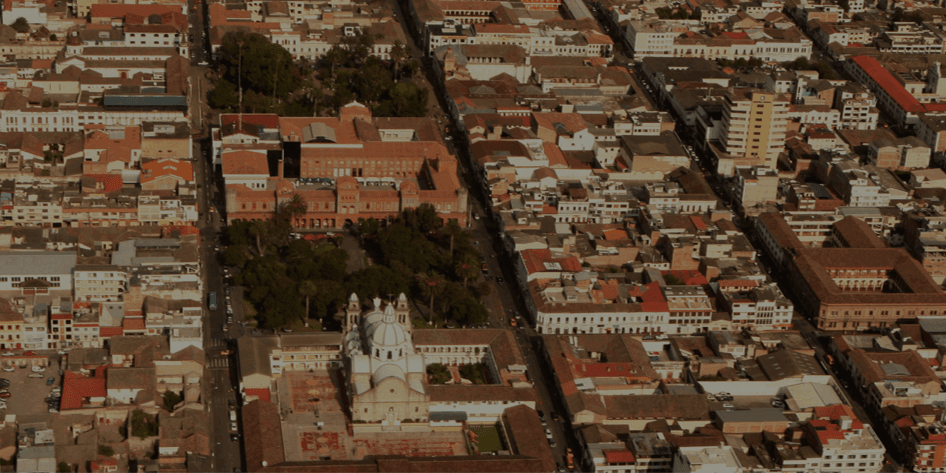
White City: The Town That Came Back
75 min · 1.8 km · easy
More from Ibarra
Explore more at your own pace.
Ibarra Travel Guide: How Many Days, Getting There, When to Go (2026)
One Day in Ibarra: A Walkable White-City Itinerary (2026)
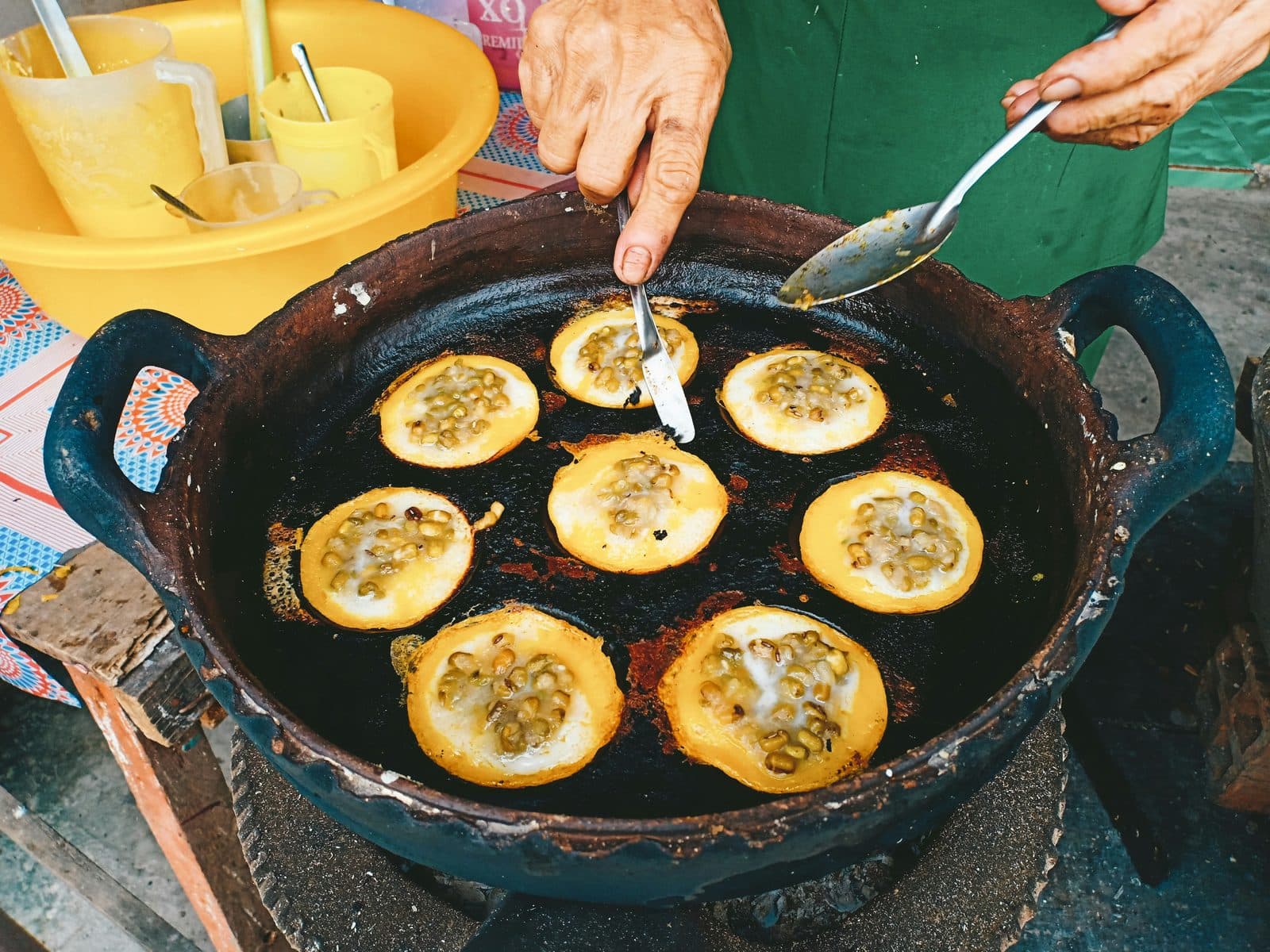
What to Eat in Ibarra: A Food Guide (2026)
Paila, Nogadas and Arrope: The Sweet Side of Ibarra's White City Walk
Rosalía Suárez and the Copper Bowl: How Paila Helado Became a Business