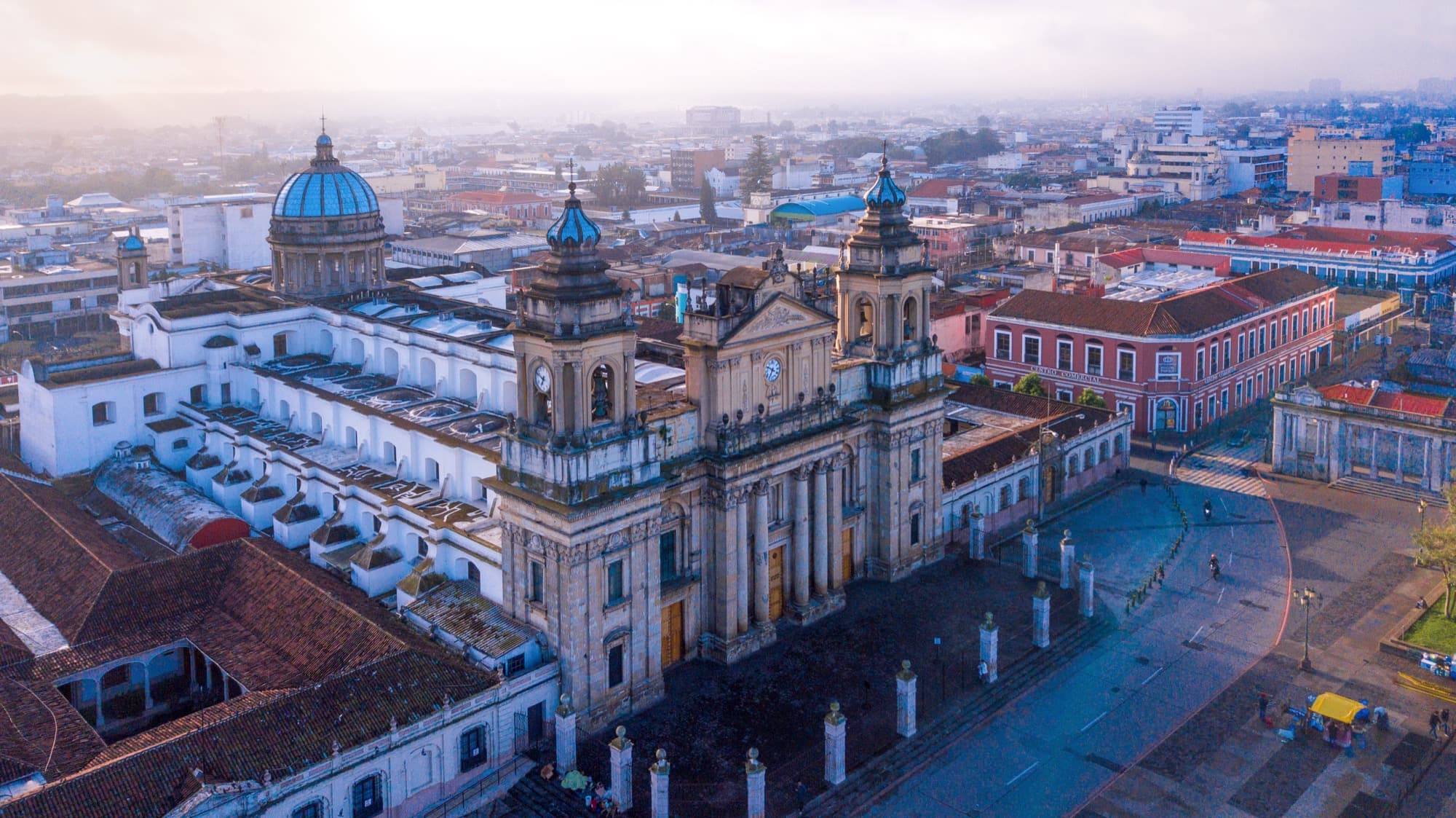
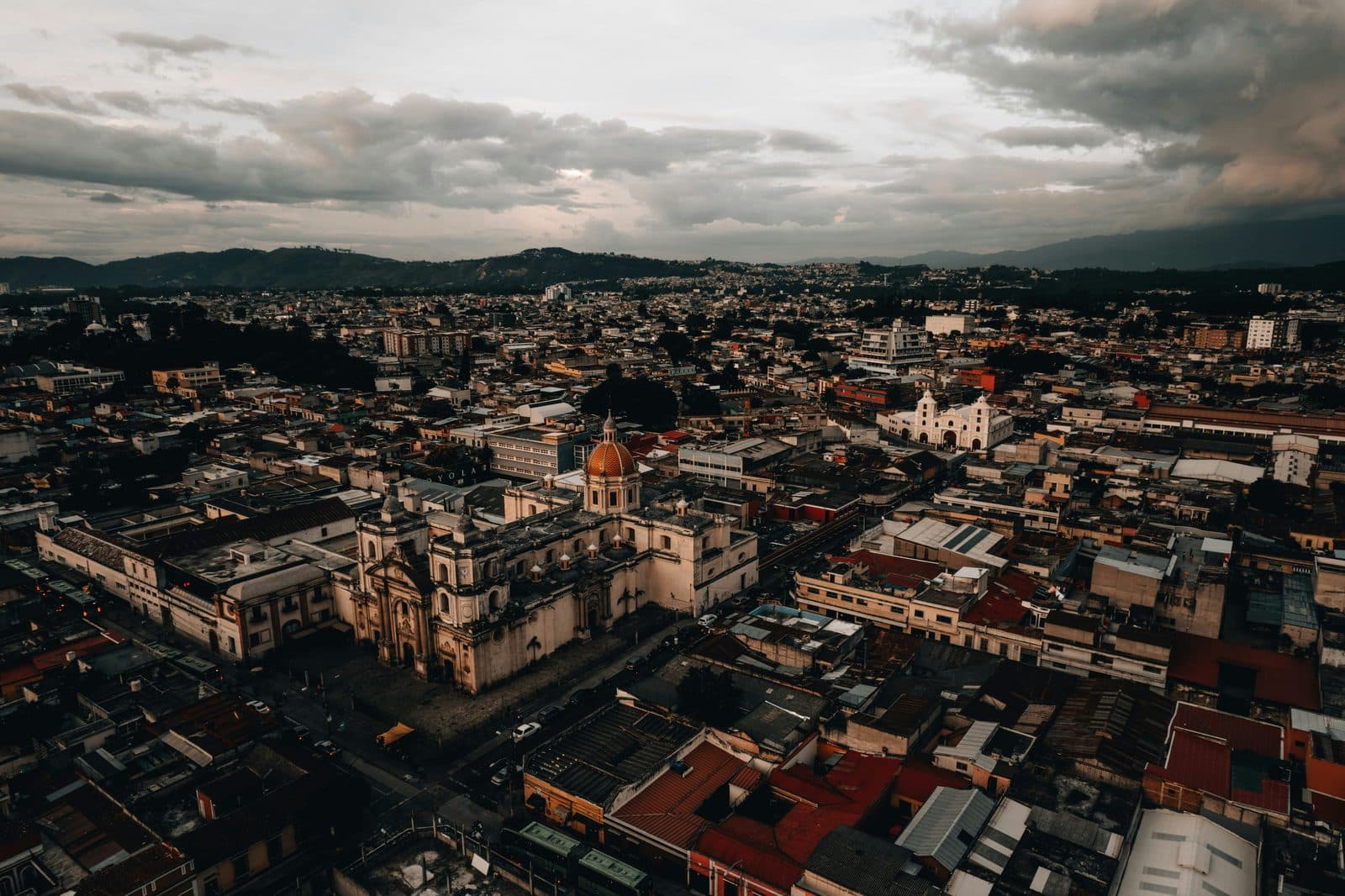
Walk seven stops from a bishop's murder site to a church rebuilt by its own people. Every wall in this square mile is an argument about who this city belongs to.
Start · San Sebastián: The Truth-Teller
DirectionsStops
- 1
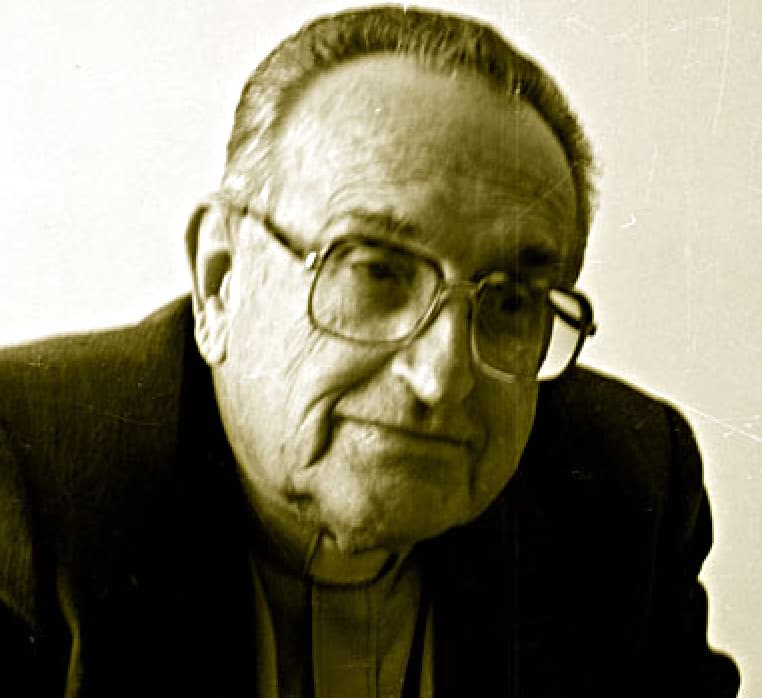
San Sebastián: The Truth-Teller
The parish house where Bishop Gerardi was murdered two days after presenting Guatemala's truth commission report.
- 2
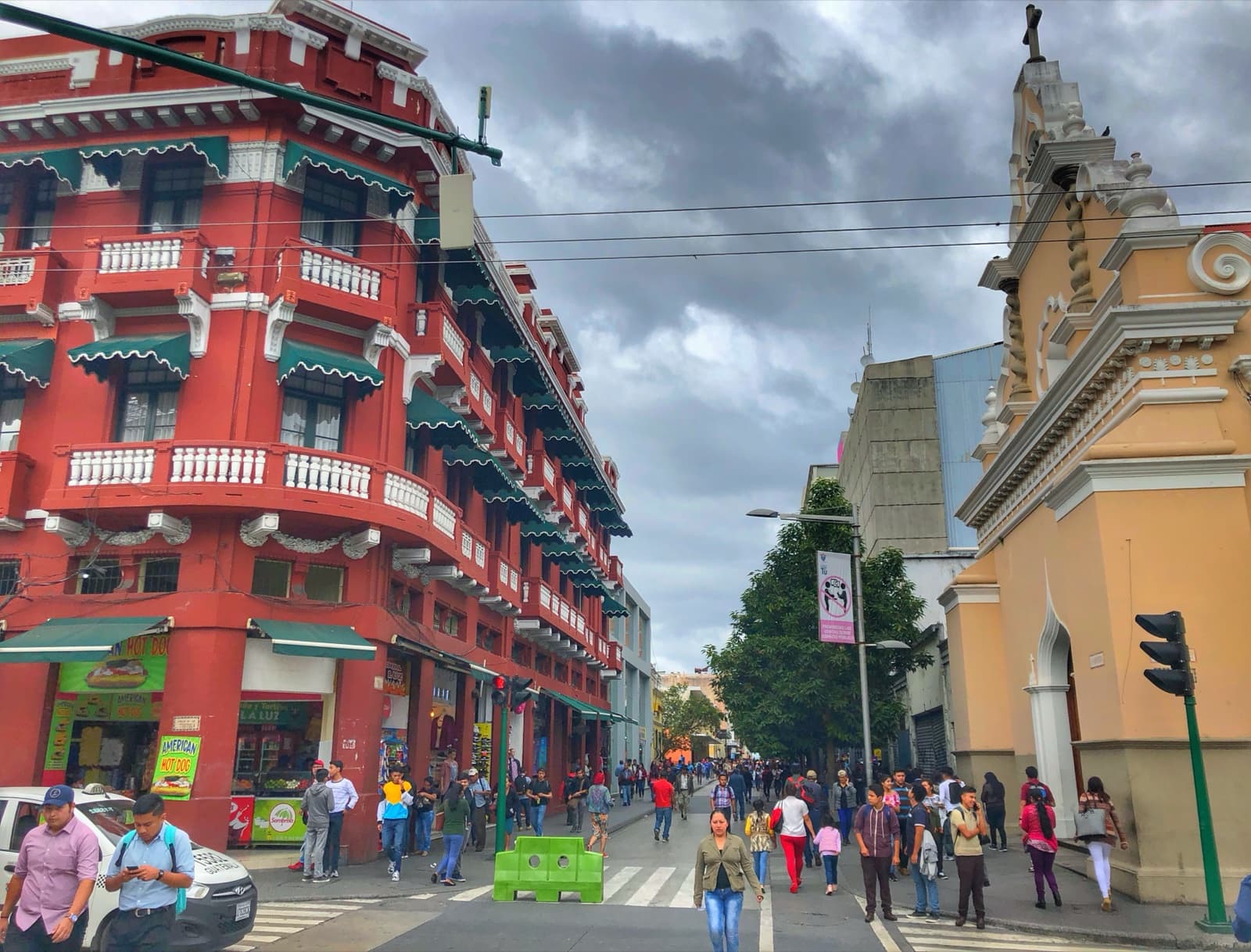
Paseo de la Sexta: The Oligarch's Street
The most renamed avenue in Guatemala. Pedestrianised by the mayor who signed peace, at the cost of 680 displaced vendors.
- 3
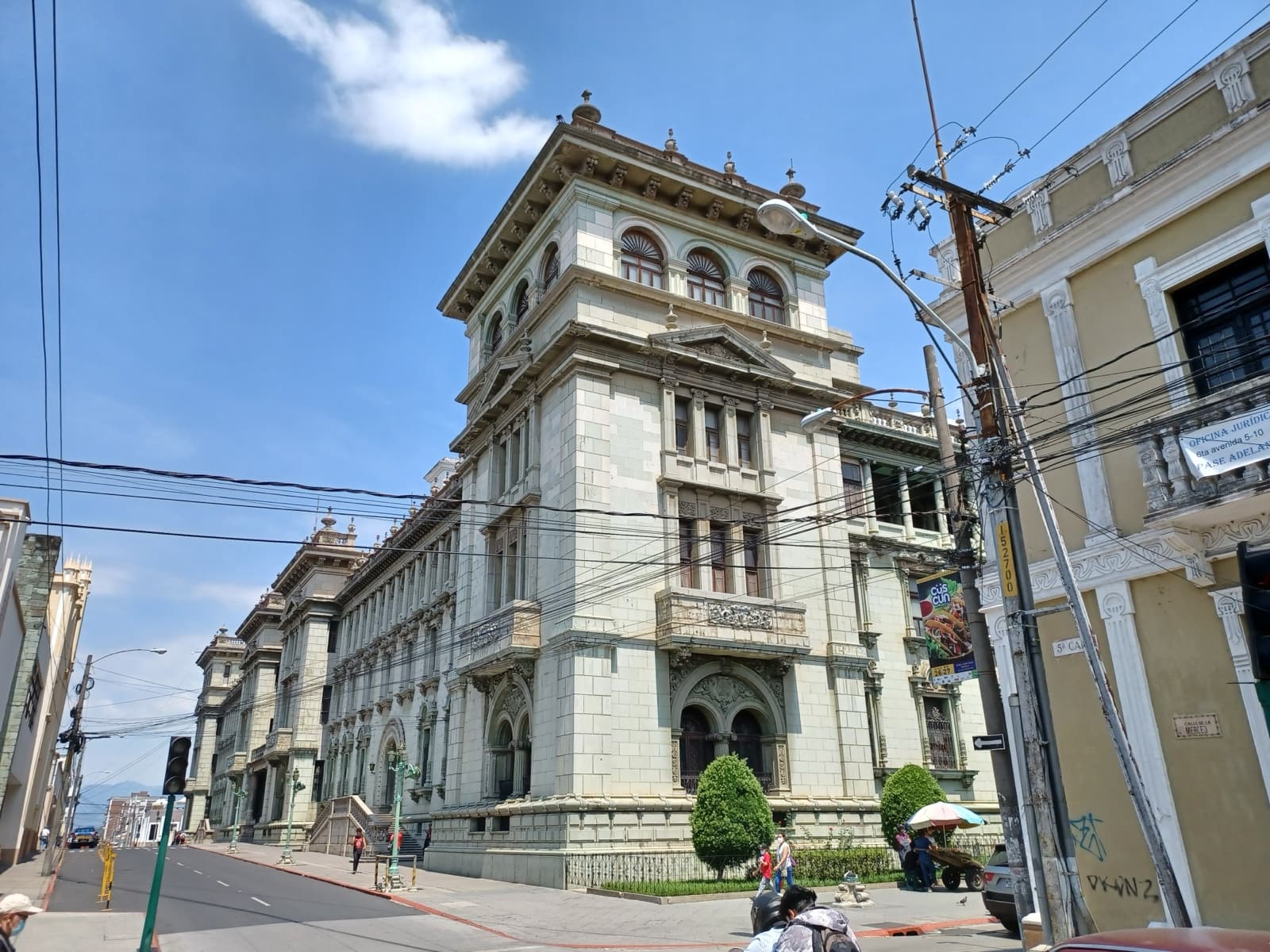
Plaza de la Constitución: The Dictator's Monument
This plaza marks Kilometre Zero of Guatemala. A dictator's palace built with prison labour, seized by fifty thousand people, bombed, then used to sign peace.
- 4
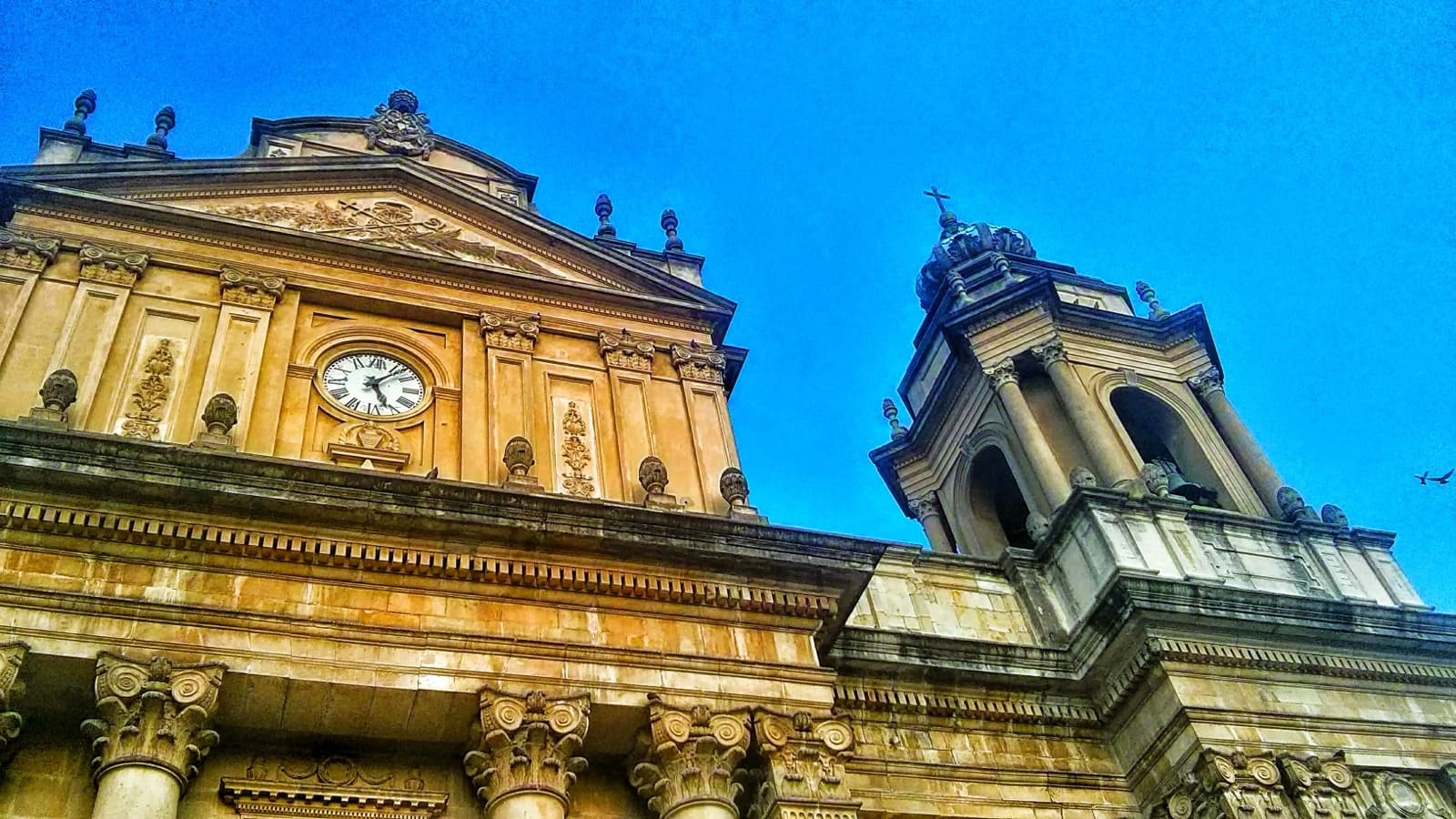
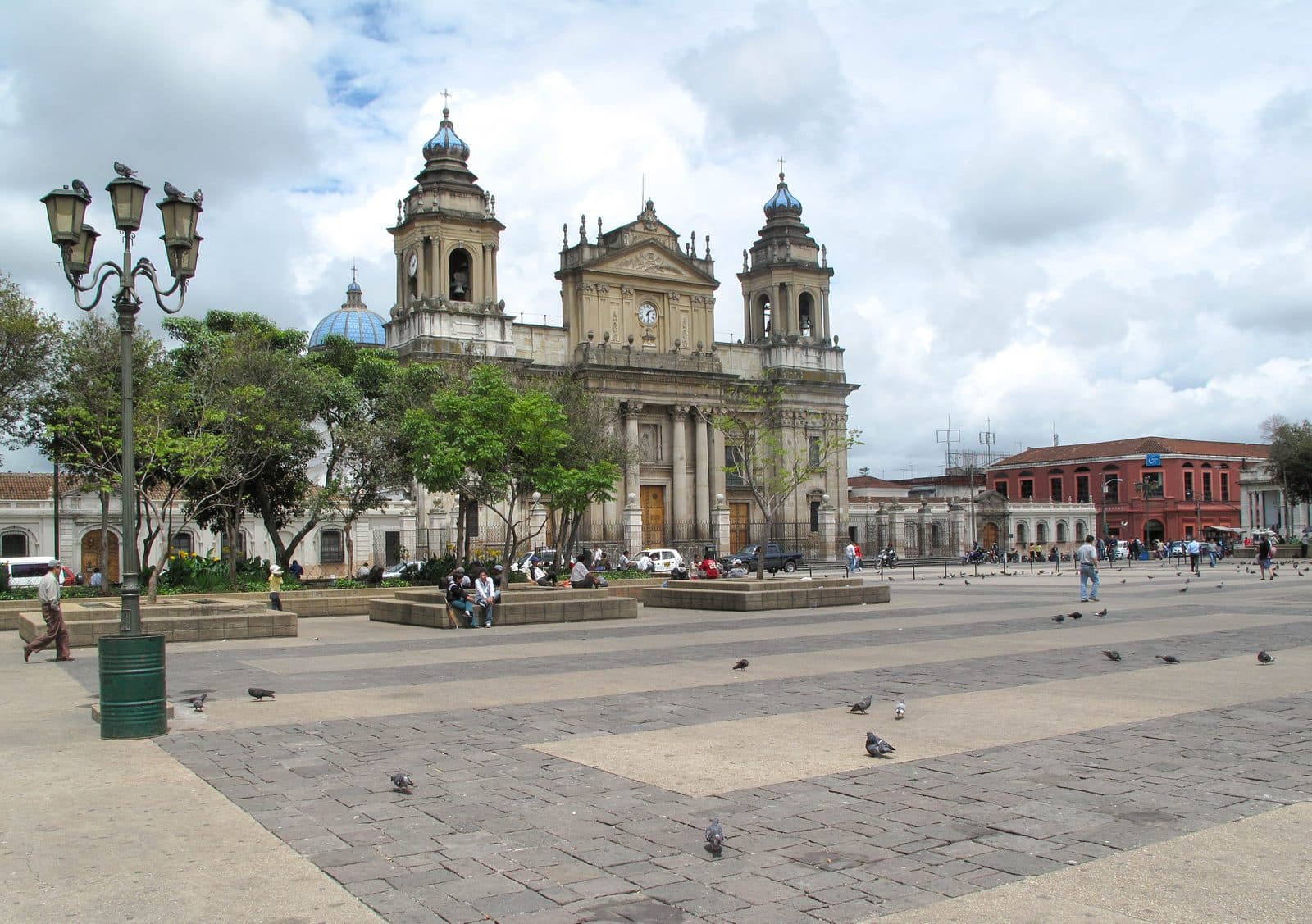
Catedral Metropolitana: The Institution Rebuilds
The cathedral took eighty-five years to build. It was destroyed and rebuilt through three earthquakes, and now bears the names of the disappeared on its entrance pillars.
- 5
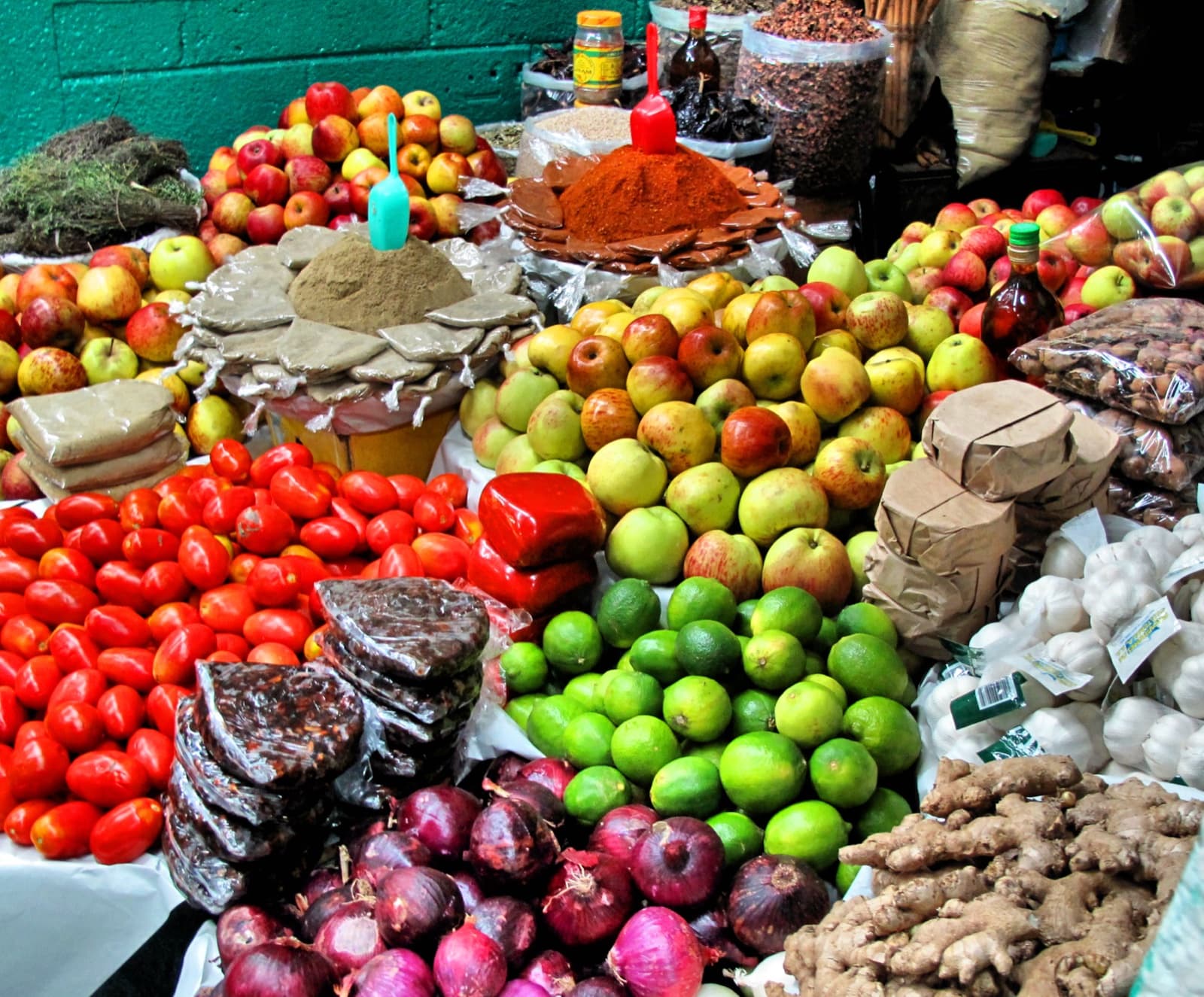
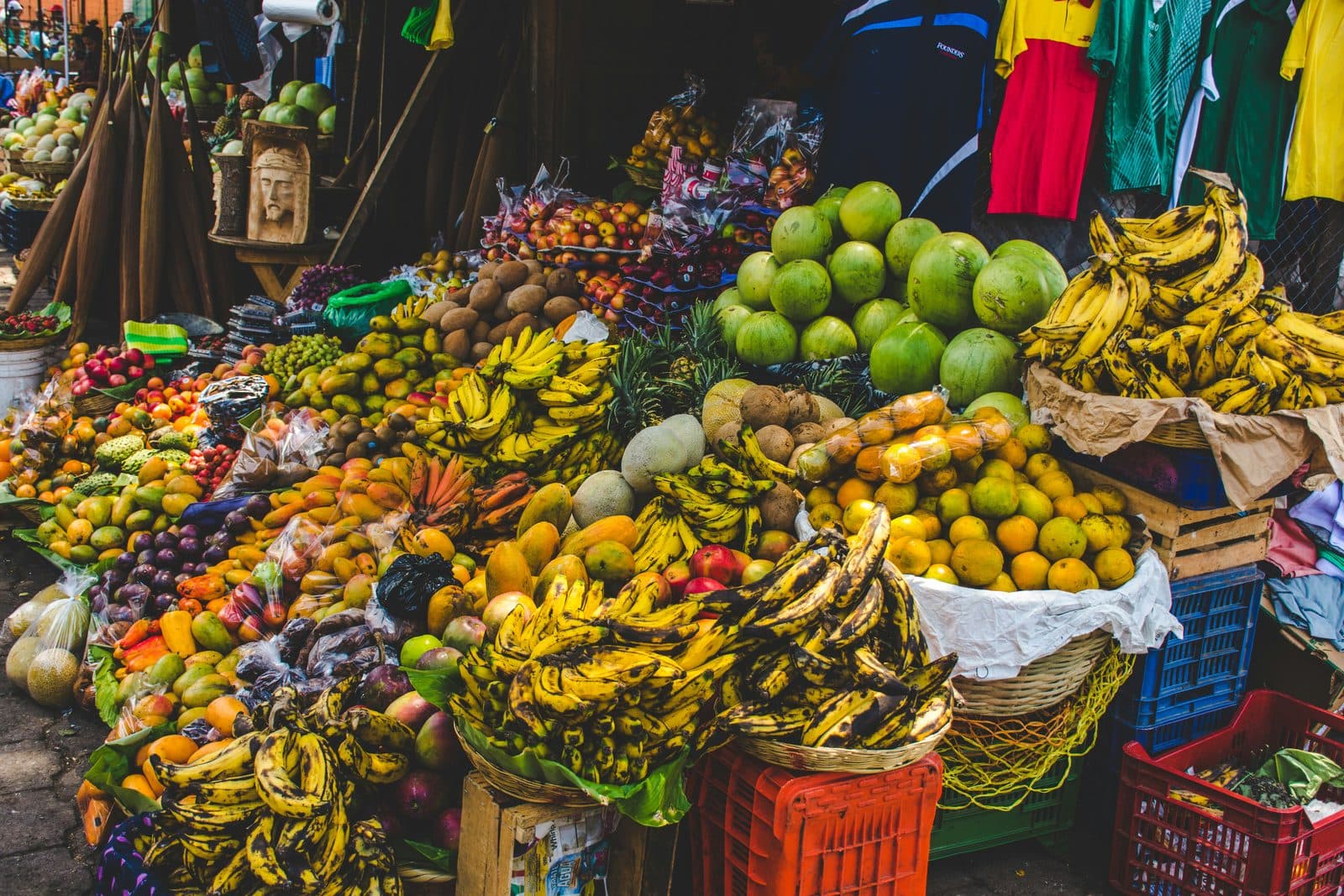
Mercado Central: The Invisible Economy
An underground market serving forty thousand people daily, built on a cemetery, built on the ruins of a Maya trading city, invisible from the street by design.
- 6
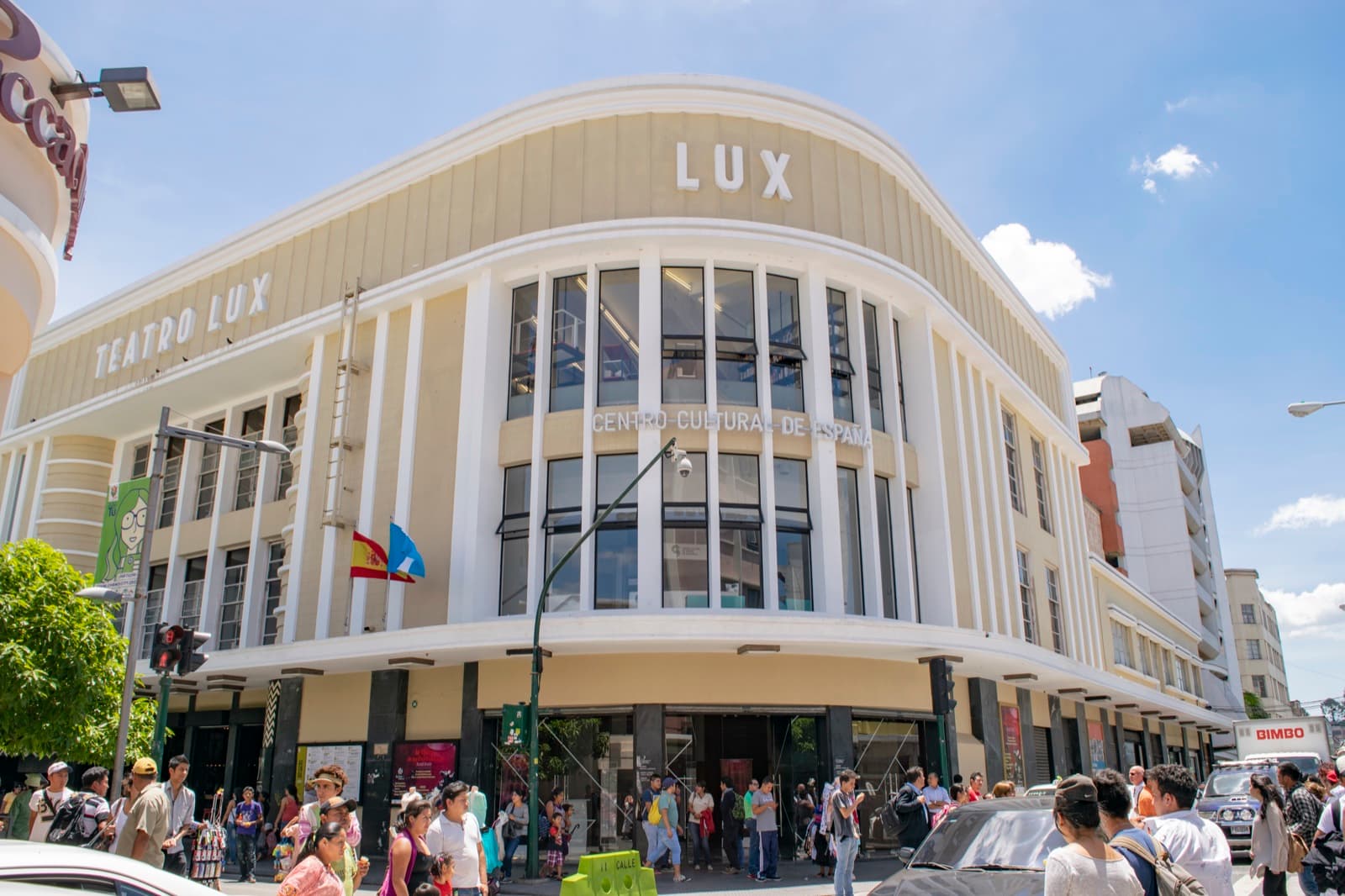
Teatro Lux: The Palace Given Away
An Art Deco picture palace built for private profit, reclaimed as a free public cultural center.
- 7
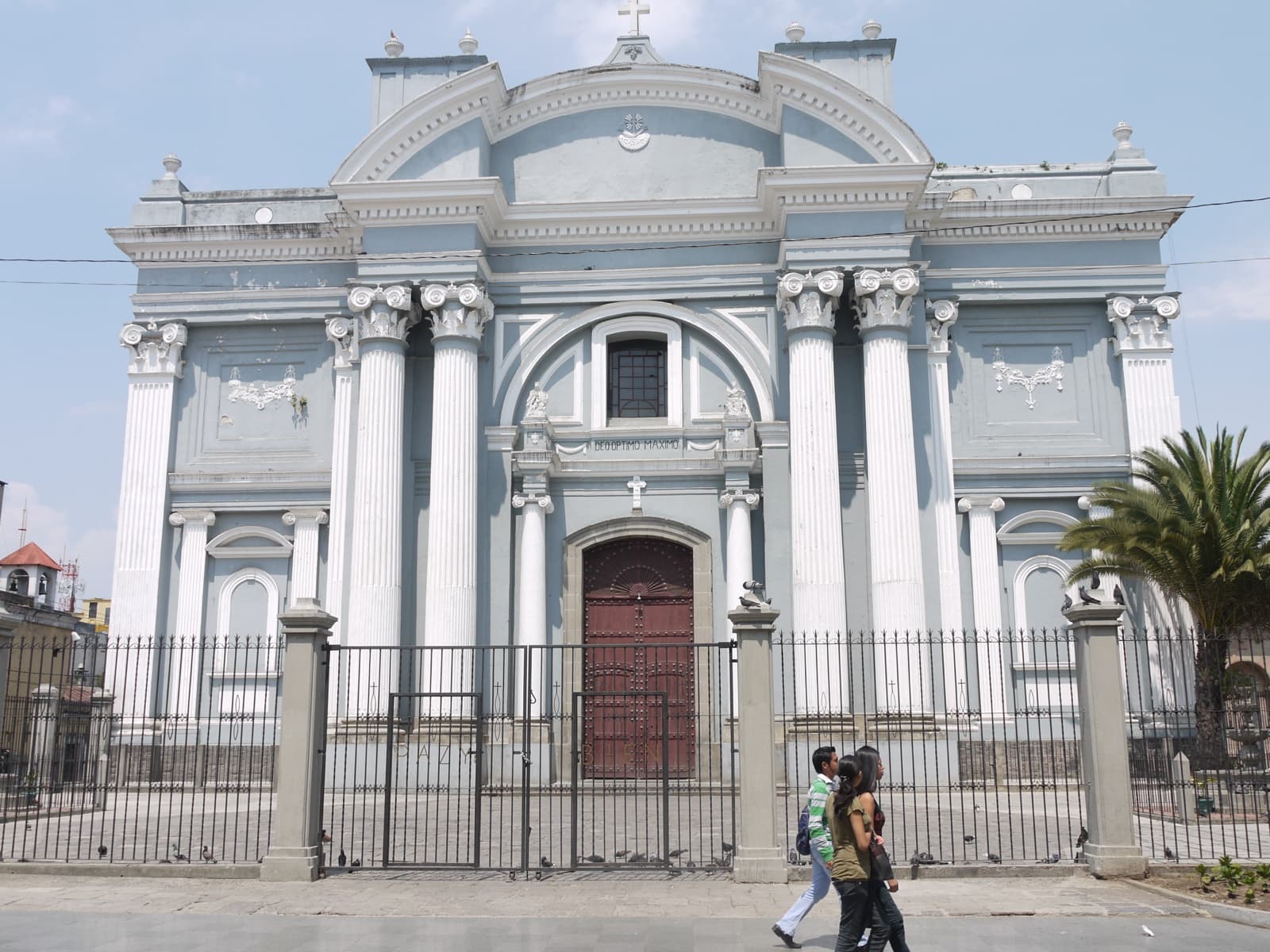
Iglesia de San Francisco: The People Rebuild
A church rebuilt by its own congregation after every earthquake, preserving a tradition the institutional church tried to abolish, now UNESCO-protected.
Details
Best Time to Visit
Weekday mornings for quieter streets and open markets. Avoid Sundays when the Mercado Central is closed. Holy Week (March/April) transforms the route with processions but expect massive crowds.
Pro Tips
- •Start at San Sebastián early. The Mercado Central food stalls are best before noon when stock is freshest
- •Bring small bills for the market. Vendors rarely break large notes
- •The Palacio Nacional museum is open Tuesday through Saturday. Check hours before planning your visit
- •Wear comfortable shoes. The route is 2.3 km on uneven colonial-era pavement and market stairs
Safety & Precautions
- •Keep valuables secure in Zona 1, especially around the market entrances and Sexta Avenida
- •Avoid walking this route after dark. The historic centre empties quickly after business hours
- •Stay hydrated. Guatemala City sits at 1,500 metres elevation and the sun is deceptively strong
- •The Mercado Central stairs can be slippery. Watch your step descending the three underground levels
Travel advisory: Reconsider Travel (Level 3).
Gallery
Related Reading
Go deeper on what you'll see, hear, and walk through.
Overview
Best Self-Guided Walking Tours in Guatemala City (2026)
3 min
Overview
Guatemala City Travel Guide: How Many Days, Getting Around, Is It Safe (2026)
5 min
Overview
One Day in Guatemala City: A Walkable Itinerary (2026)
5 min
Overview
The Capital After Catastrophe: How to See Guatemala City
9 min
Thematic
Best History Walking Tours in Guatemala City (2026)
2 min
Thematic
What to Eat in Guatemala City: A Food Guide (2026)
4 min
Companion
The Story Behind Guatemala City's Street Art Movement
7 min
Companion
Walking Paseo de la Sexta: Guatemala City's Urban Revival
6 min
Companion
Who Rebuilt the Centre: A Companion to the Historic Center Walk
11 min
Deep dive
The Palacio Nacional: A Dictator's Palace That Outlasted the Dictator
9 min
Read
A First-Timer's Guide to Guatemala
6 min
Read
Guatemala City Beyond the Headlines: A Walking Guide
5 min
Read the walk
The full story of Historic Center: Who Rebuilt This City, in words. Prefer to listen? Play it narrated, from home or on location.
Introduction
You are standing in front of a parish house where a bishop was murdered. In two minutes, I will tell you why. But first, a wider frame.
Guatemala City was not supposed to exist. The capital was in Antigua, a colonial jewel in a mountain valley, until an earthquake shattered it in 1773. The Spanish Crown ordered a new city built here, in the Valle de la Ermita. The richest family in Central America, the Aycinenas, paid for the move and claimed the best land around the new plaza. Seventeen indigenous settlements were forcibly relocated to provide labour. This city was born as an argument about power. It has not stopped arguing since.
Since 1776, this square mile has been levelled by major earthquakes in 1902, 1917, and 1976. After each one, someone rebuilt. But who rebuilt, and for whom, changed every time. A dictator built a palace with prison labour and was driven out by tens of thousands of people. An oligarch-mayor signed a peace accord, then removed six hundred street vendors from the main avenue. Vendors rebuilt an underground market with no government help. Parishioners rebuilt a church the hierarchy tried to abandon.
Seven stops. About two and a half kilometres, walked north to south. At every stop, the same question: who rebuilt this, and what does that tell you about who this city belongs to? By the last stop, you may find that the most enduring things in this square mile are the ones no powerful person built.
The research draws on the REMHI and CEH truth commission reports, USGS seismological records, and Duke University Press scholarship on urban displacement.
Let us start with the murder.
1. San Sebastián: The Truth-Teller
Welcome to San Sebastián, your first stop on this tour and the parish house from the intro.
On April 24th, 1998, Bishop Juan José Gerardi Conedera stood inside the Metropolitan Cathedral, the building you will see in fifteen minutes, and presented a truth commission report. The title translates to Guatemala, Never Again. The report documented fifty-five thousand human rights violations committed during Guatemala's thirty-six-year civil war. It attributed eighty percent of those violations to the Guatemalan Army. The work had taken three years. Thousands of people had given testimony. The Catholic Church's own human rights office had compiled the evidence.
Just two days later, Gerardi was bludgeoned to death with a concrete slab in the garage of this parish house. His face was destroyed beyond recognition. He was identified by his episcopal ring. Francisco Goldman's book, The Art of Political Murder, reads like a thriller except that it happened.
Three military officers and a priest were convicted in 2001. None served a full sentence.
Here is what matters for this tour. Gerardi did not discover the truth. The truth was known. What Gerardi did was write it down, source it, and present it in the most powerful room in the country. He rebuilt the historical record. And the institution that had destroyed that record destroyed the man who rebuilt it, in his own garage, two days later.
The report survived. It is archived at the University of Texas. The names of the dead are on paper now, and paper is harder to kill than a bishop.
Walk south. The street ahead of you was rebuilt too, but not for everyone.
2. Paseo de la Sexta: The Oligarch's Street
Welcome to the Paseo de la Sexta. The avenue you are walking down has had five names in two hundred and fifty years.
The Spanish called it Calle Real, the Royal Street, because it led from the Plaza Mayor to the Royal Palace. After the Liberal Revolution of 1871, it became 30 de Junio. In 1877, the city numbered its streets, and this one became Sexta Avenida, Sixth Avenue. Guatemalans shortened that to a verb: "sextear," to walk and be seen on Sexta. The street became an action.
Look up the avenue. For a hundred years, whatever was modern in Guatemala happened here first. Public lighting in 1841. Gas lamps in 1879. A tramway in 1882. Electric lights in 1885. By the 1990s, the wealthy had left for Zona 10, and Sexta was choked with traffic and cheap clothing stalls. The street that had invented itself as Guatemala's cultural spine was dying.
And then Álvaro Arzú arrived.
In 1996, as president of Guatemala, Arzú signed the Peace Accords that ended thirty-six years of civil war. The signing happened in the green palace you will see at Stop 3. Then Arzú returned to Guatemala City as mayor.
In 2010, his administration pedestrianised Sexta. Trees, benches, sculptures, no cars. Beautiful. But first, roughly six hundred informal vendors, fruit sellers, shoe shiners, DVD hawkers, were relocated to a purpose-built market called Plaza El Amate. Critics called it the criminalisation of subsistence work. The people whose living depended on that pavement were the ones cleared away to beautify it.
The man who signed peace came back as mayor and decided whose work belonged on this street. His family is among the wealthiest in Guatemala. The Paseo is beautiful. The question is whose beauty, and at whose cost.
Keep walking south. The plaza ahead has been rebuilt more than anything else in this city.
3. Plaza de la Constitución: The Dictator's Monument
Welcome to the Plaza de la Constitución. This plaza marks Kilometre Zero. Every road in Guatemala is measured from this point.
The grid was laid out in 1776 by architect Marcos Ibáñez, the same man who designed the cathedral behind you. The richest man in Central America, Fermín de Aycinena, financed the new capital and administered its move. His family was awarded the prime lots along the south side of this square. The man who paid for the city got the best real estate. That pattern has not changed in two hundred and fifty years.
Look at the building that dominates this plaza. The green one.
The Palacio Nacional de la Cultura was built between 1939 and 1943 by the dictator Jorge Ubico, using prisoners from the Central Penitentiary paid a quarter of a cent a day. The green is not paint. Students at the University of San Carlos nicknamed it El Guacamolón, the Big Guacamole. Guides here will tell you the colour was his wife's favourite, that the palace is built in fives, floors and arches and balcony doors, that hundreds of its bronze door handles carry Ubico's own thumbprint. Some of that is legend. What is certain is that he inaugurated the palace on November 10th, 1943, his own birthday, and occupied it for just seven months.
On June 25th, 1944, a schoolteacher named María Chinchilla Recinos was killed by cavalry during a women's silent march against his regime. The next day, tens of thousands filled this plaza. On July 1st, Ubico resigned. He died of lung cancer in 1946, in exile, in a city that was not his.
And then the building outlived every builder.
The same palace hosted the October Revolution of 1944. Its stained-glass windows, depicting civic virtues, were shattered by a guerrilla car bomb on September 5th, 1980, killing six adults and a child. And on December 29th, 1996, in the same rooms, the Accord for a Firm and Lasting Peace was signed, ending the thirty-six-year civil war. Those accords are now a UNESCO Memory of the World document. The murals inside were painted by Alfredo Gálvez Suárez, who worked in the orbit of Diego Rivera, Siqueiros, and Orozco. He painted indigenous culture on the walls of a palace built by a dictator who was suppressing it.
A dictator built this place with prison labour. Then the crowds took it from him. Then a guerrilla bomb shattered his virtues in glass. Then peace was signed in his dining room. The building outlasted every claim made on it. The question is not just who rebuilds. It is: who does the rebuilding outlast?
Now cross the square toward the cathedral. That building has been destroyed and rebuilt more times than anything else you will see today.
4. Catedral Metropolitana: The Institution Rebuilds
Welcome to the Catedral Metropolitana. Turn and face it. This building has been destroyed and repaired so many times that no single version of it remains. What you see is a composite: an eighteenth-century stone body, reinforced with twentieth-century concrete, wearing the names…
Full narration for this stop unlocks with the tour.
5. Mercado Central: The Invisible Economy
Welcome to the Mercado Central. You are about to descend into an underground market that serves forty thousand people a day, and you cannot see it from the street. There is no grand entrance. No sign worth noting. You walk behind the Metropolitan Cathedral, past a parking lot,…
Full narration for this stop unlocks with the tour.
6. Teatro Lux: The Palace Given Away
Welcome to the Teatro Lux. Look up at the curved white facade, the word LUX across the top. You are standing at 6a Avenida and 11 Calle, halfway down the Sexta. When this opened on April the thirtieth, 1936, it did not look like anything else in Guatemala City. This was a city…
Full narration for this stop unlocks with the tour.
7. Iglesia de San Francisco: The People Rebuild
Welcome to the Iglesia de San Francisco, at the southern foot of the Sexta. This is where the tour ends, and it is not an accident that it ends here. Most of what you walked through was about institutional power. The state, the military, the oligarchy, building and rebuilding…
Full narration for this stop unlocks with the tour.