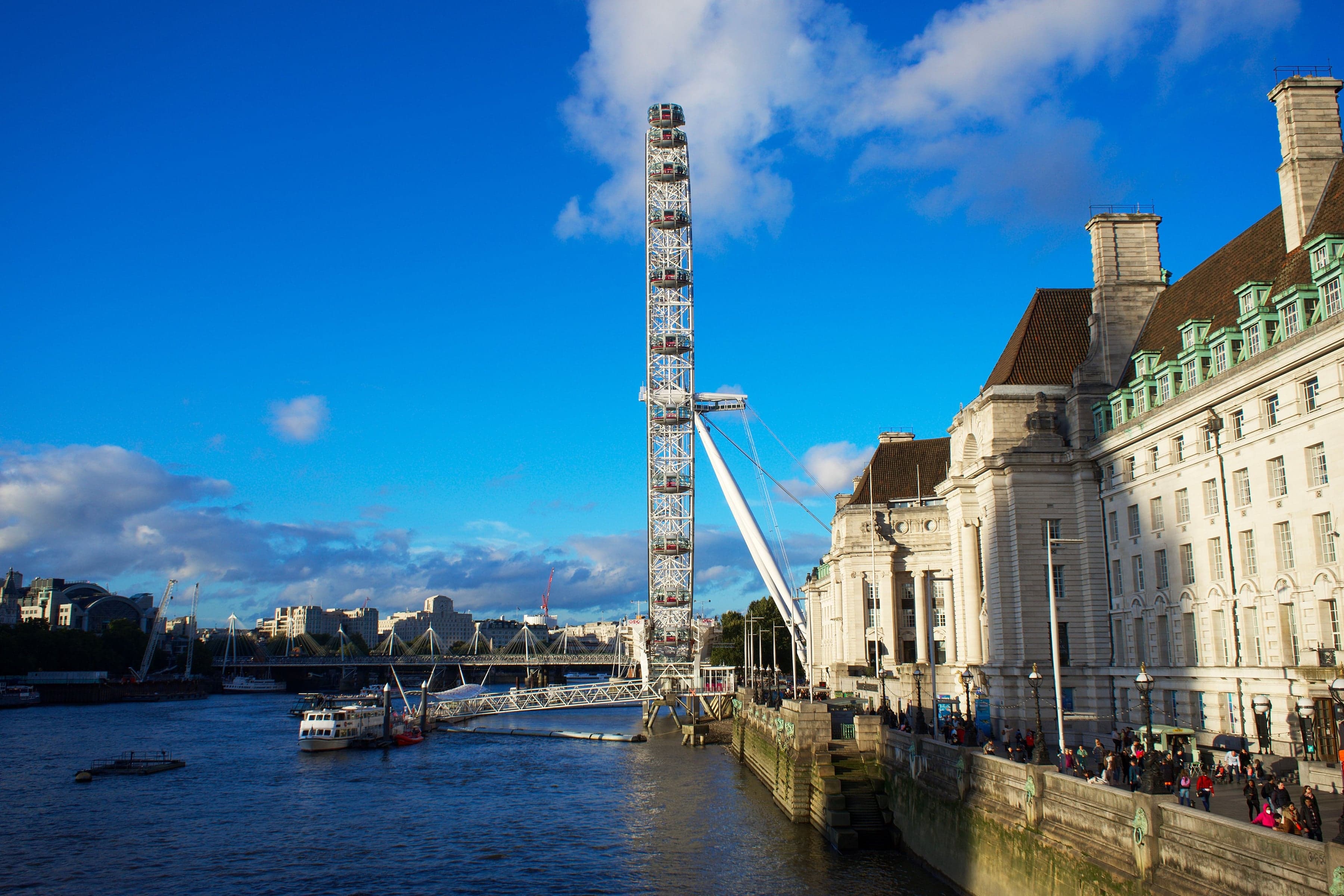
Walk the south bank of the Thames from County Hall and the London Eye past the Southbank Centre, Tate Modern and the Globe to a bishop's ruined palace, Southwark Cathedral and London's last galleried inn.
Start · County Hall and the London Eye: Stone Palace, Temporary Wheel
DirectionsStops
- 1
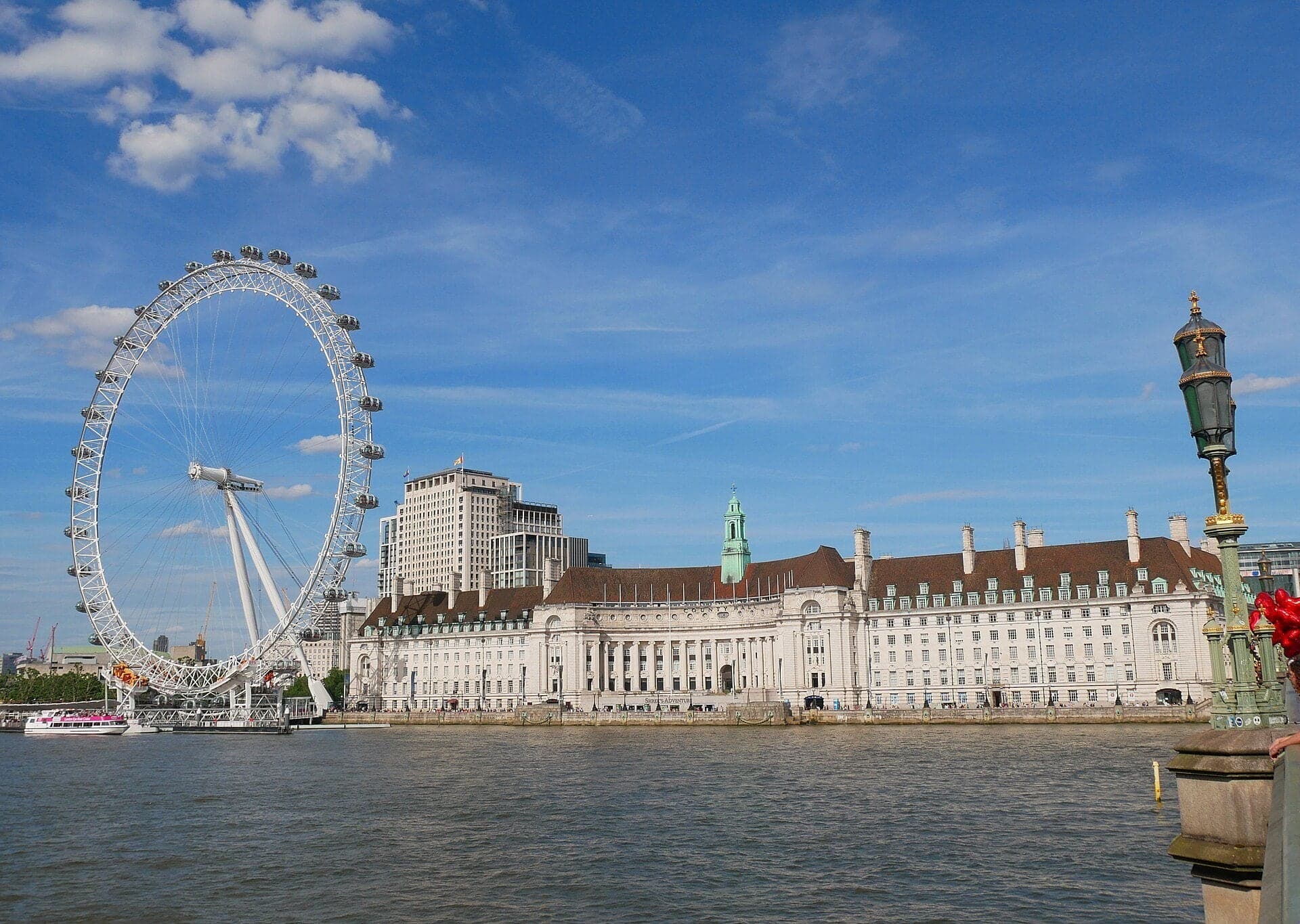
County Hall and the London Eye: Stone Palace, Temporary Wheel
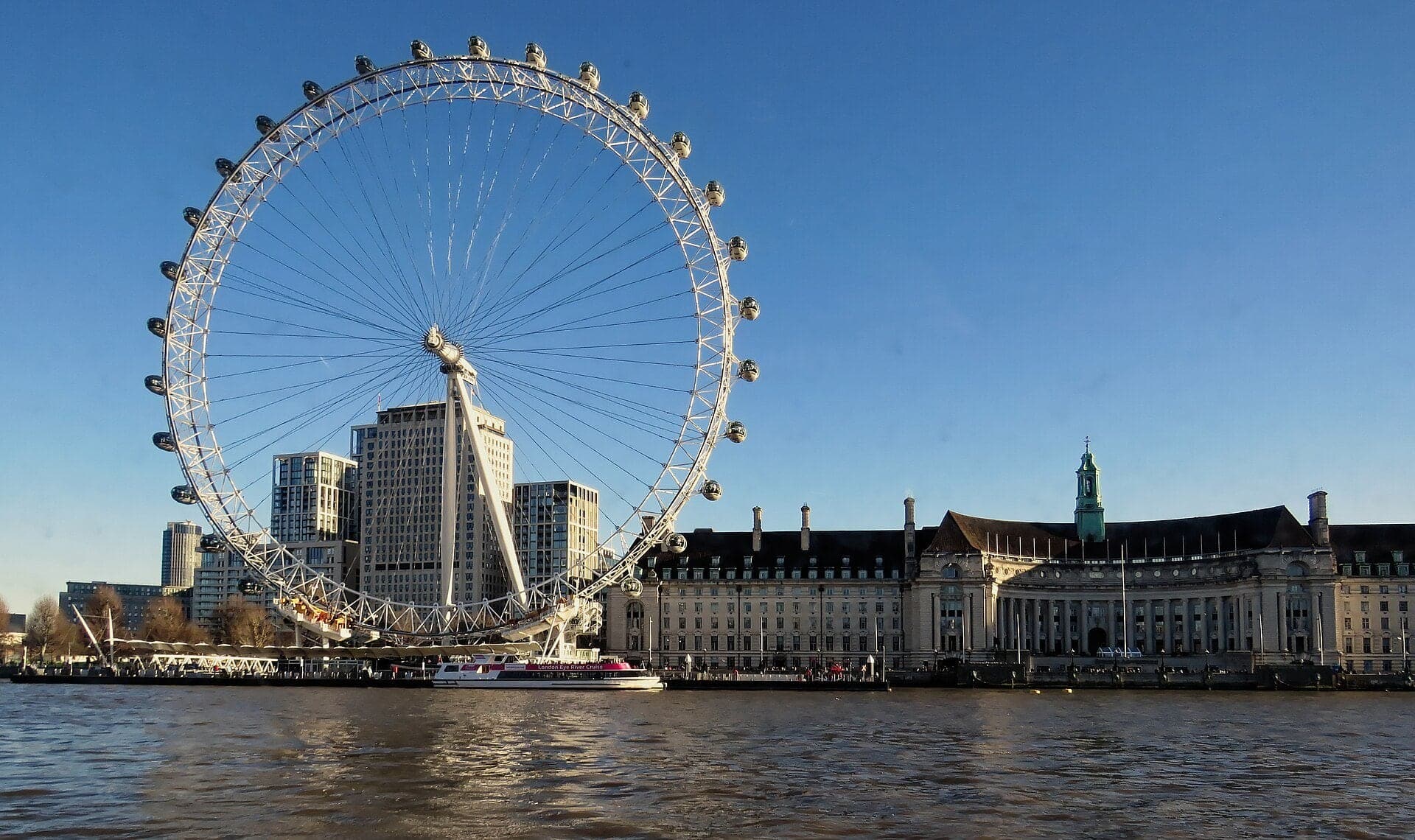
A town hall beside a wheel. County Hall's curved Portland stone front faces the river beside the London Eye, built lying flat on the water and then raised.
- 2
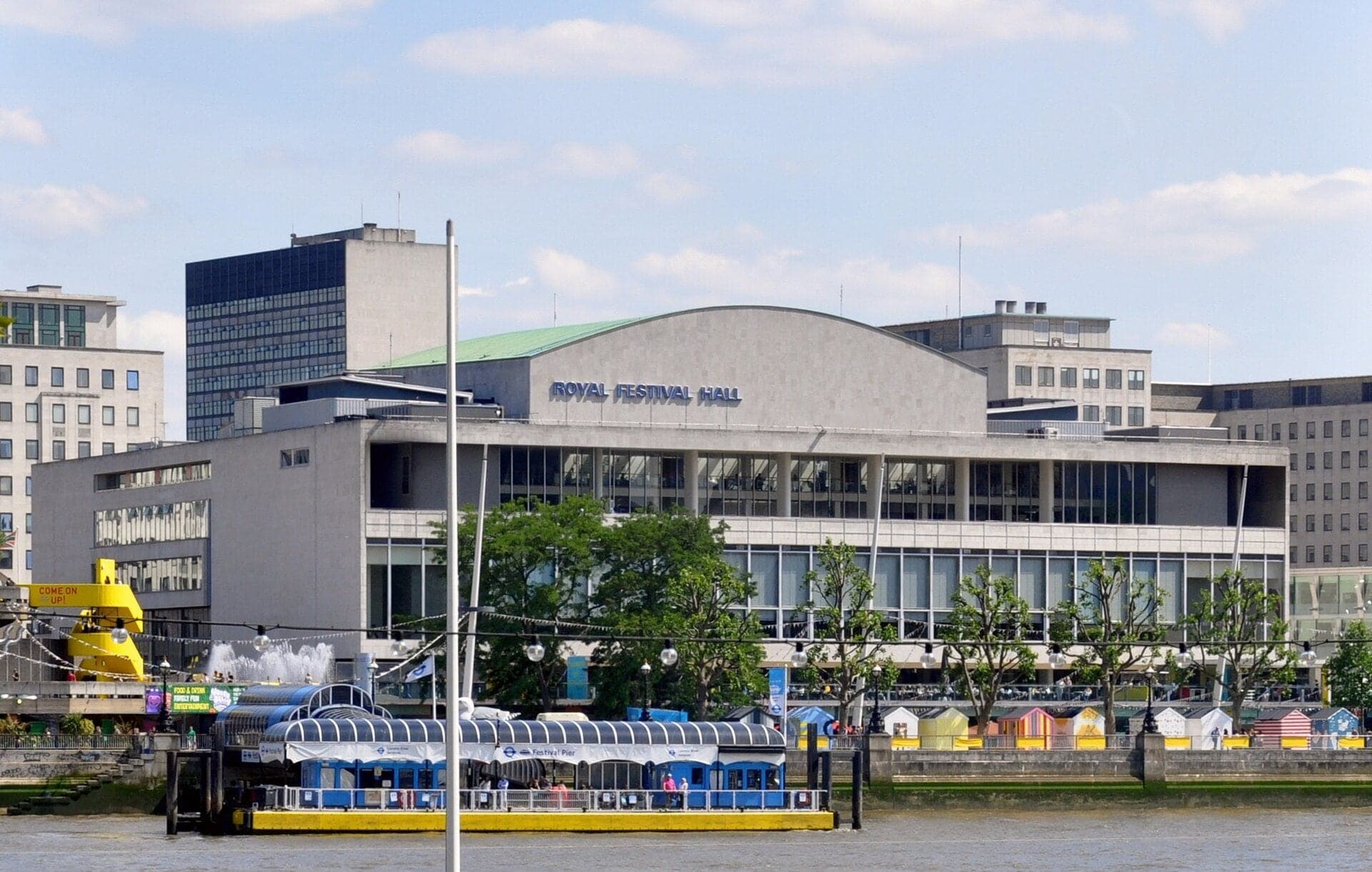
Royal Festival Hall: The Festival's One Survivor
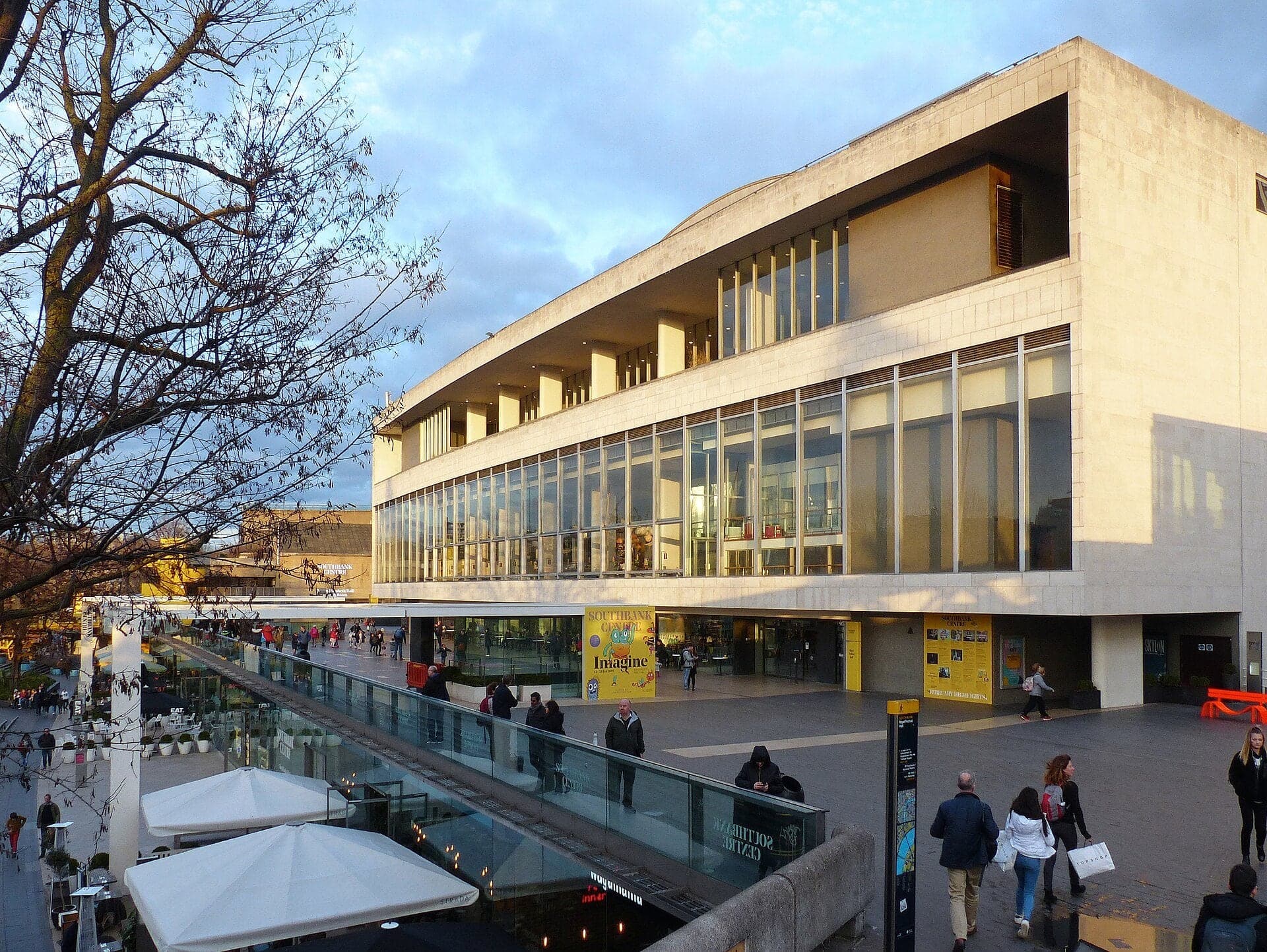
The 1951 festival's lone survivor. The Royal Festival Hall's river front is a 1960s skin of Portland stone and mosaic around a 1951 concert hall.
- 3
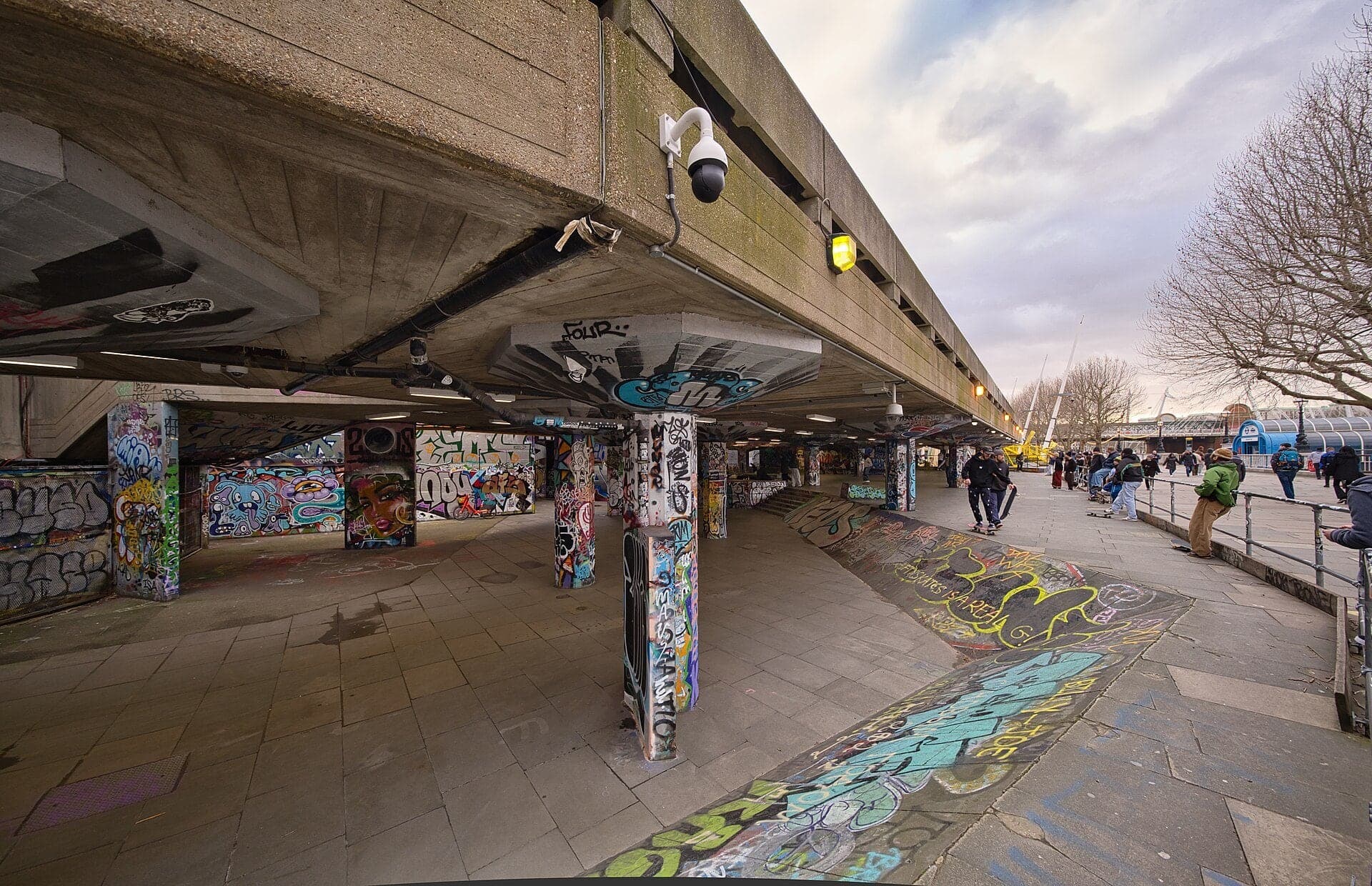
The Undercroft: The Concrete the Skaters Kept
A concrete space the skaters kept. The Southbank Centre's skate space and the brutalist halls above it were listed in February 2026.
- 4
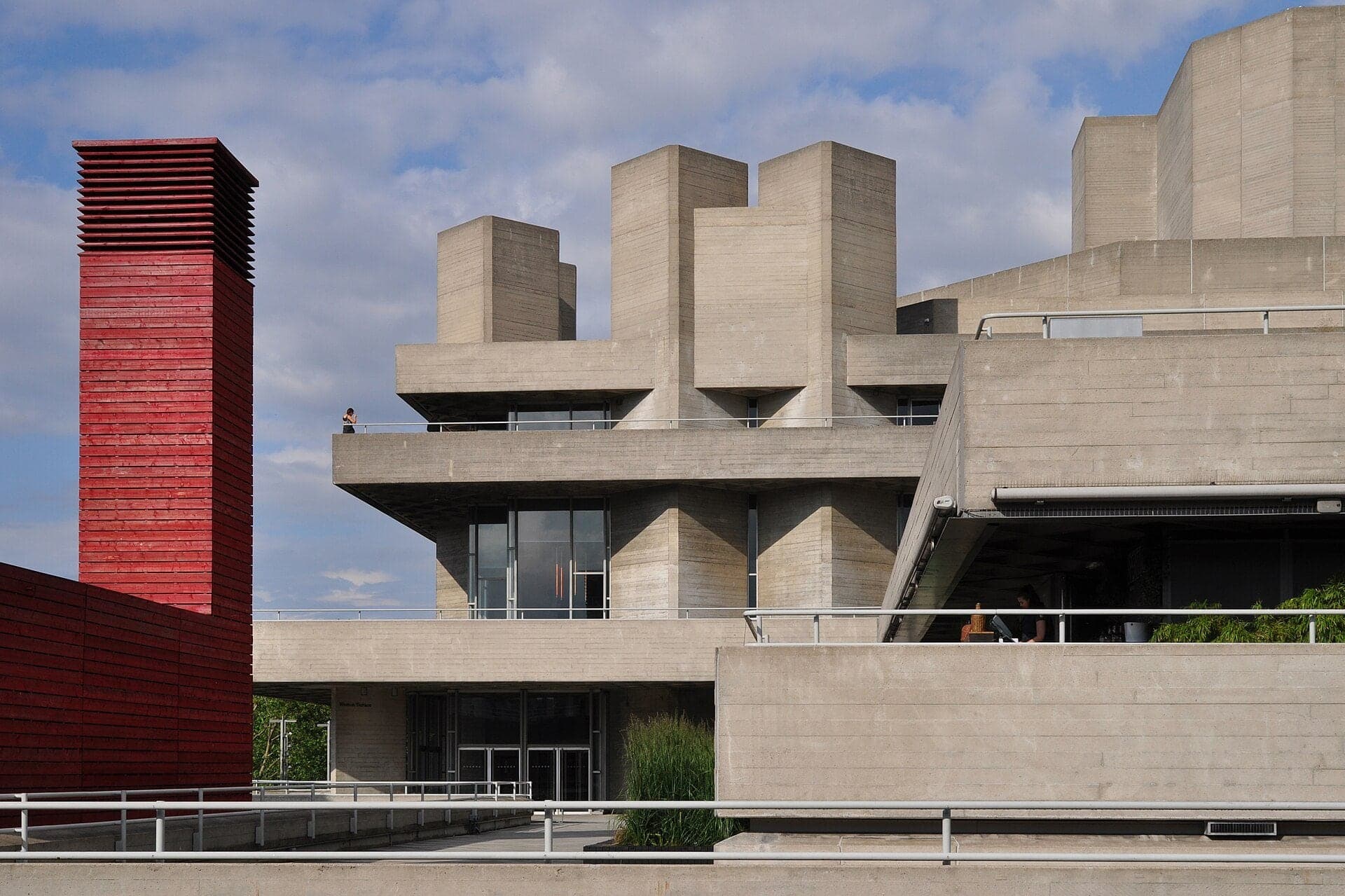
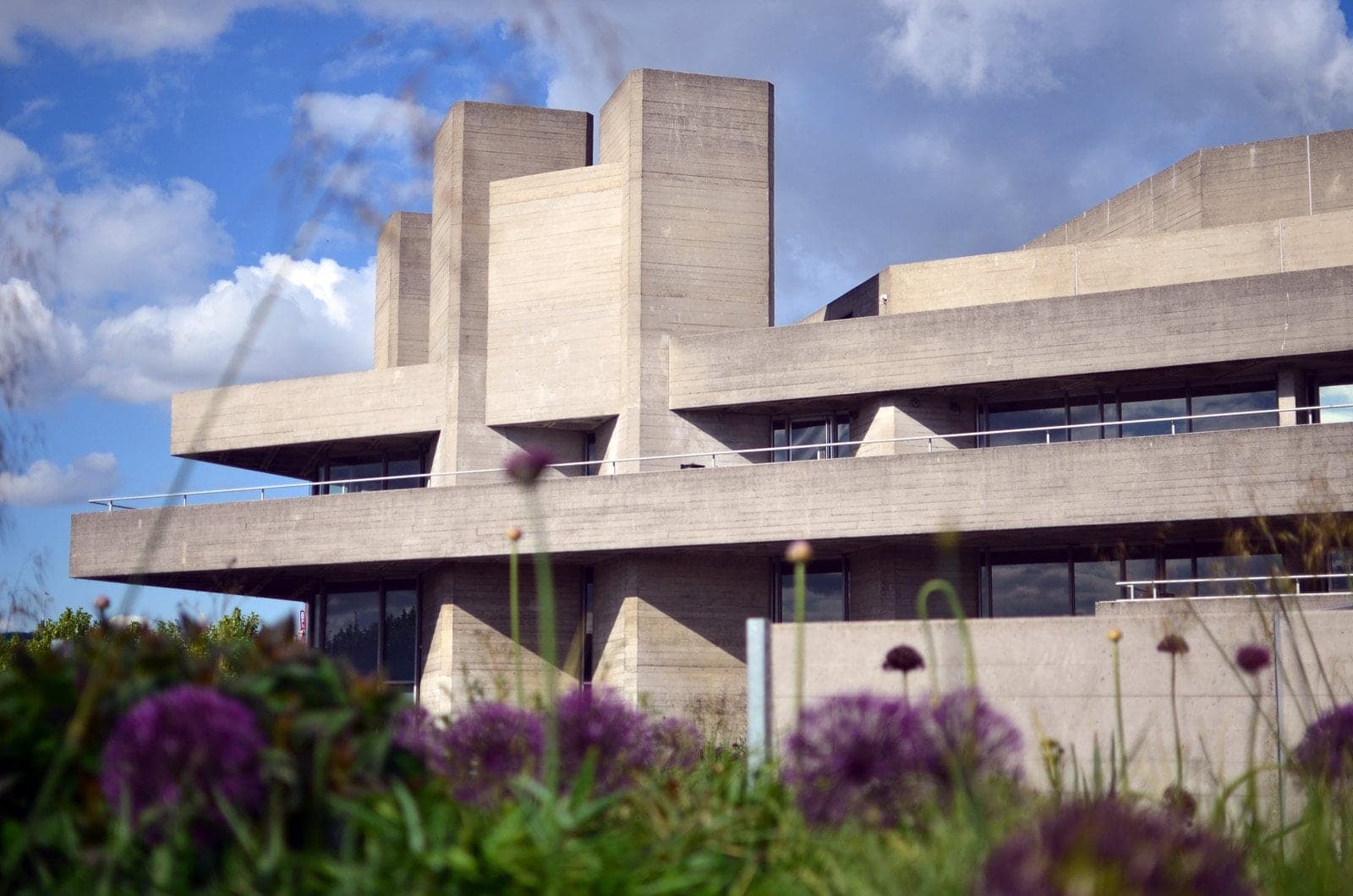
National Theatre: Concrete in Layers
Layered concrete terraces by Lasdun. Horizontal terraces broken by fly towers, and an official viewing place for London's protected views at its feet.
- 5
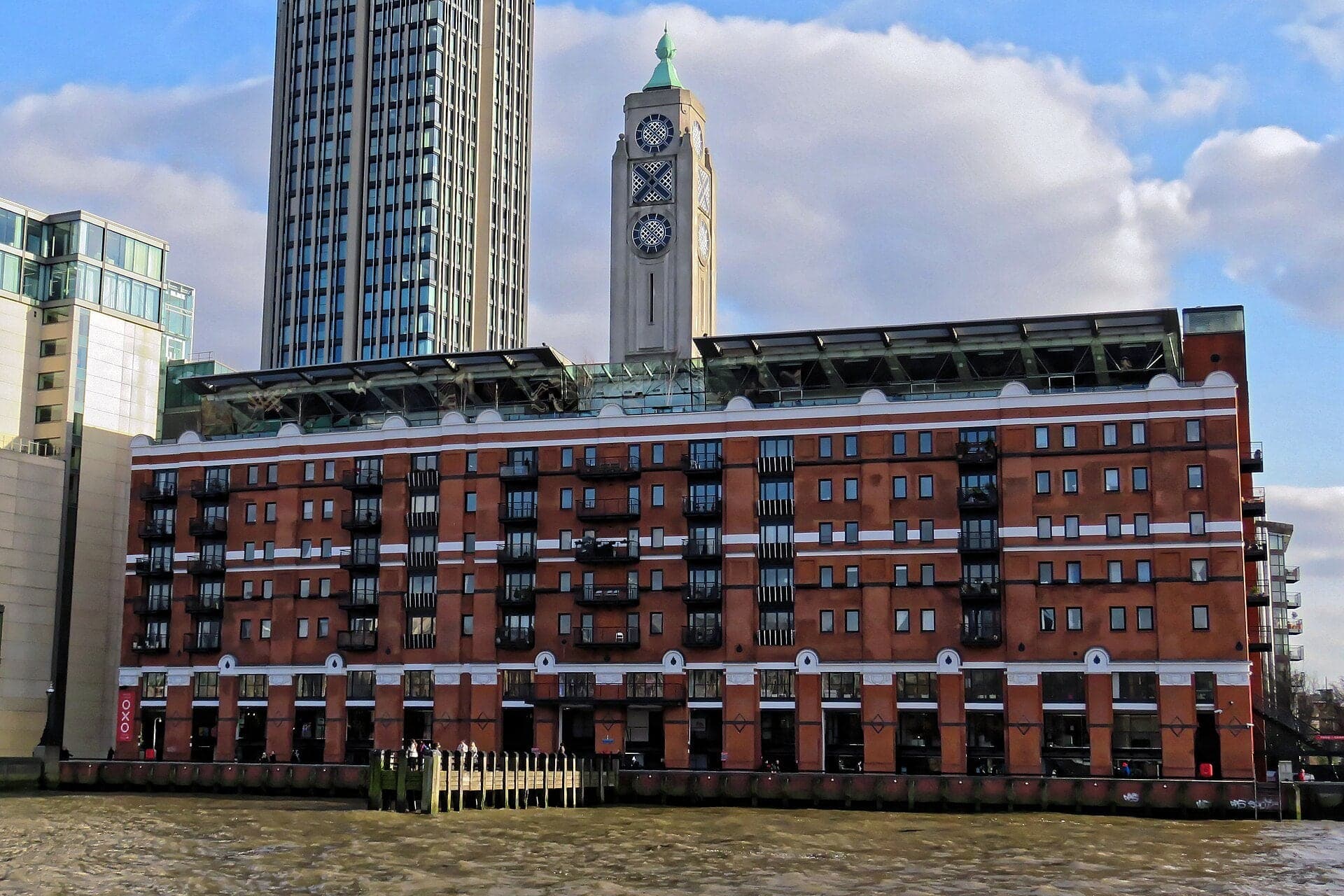
OXO Tower: A Word Spelled in Windows
Windows that spell a brand. The OXO Tower's windows spell a brand name, and the riverside walk beneath it was won by a 1970s community campaign.
- 6
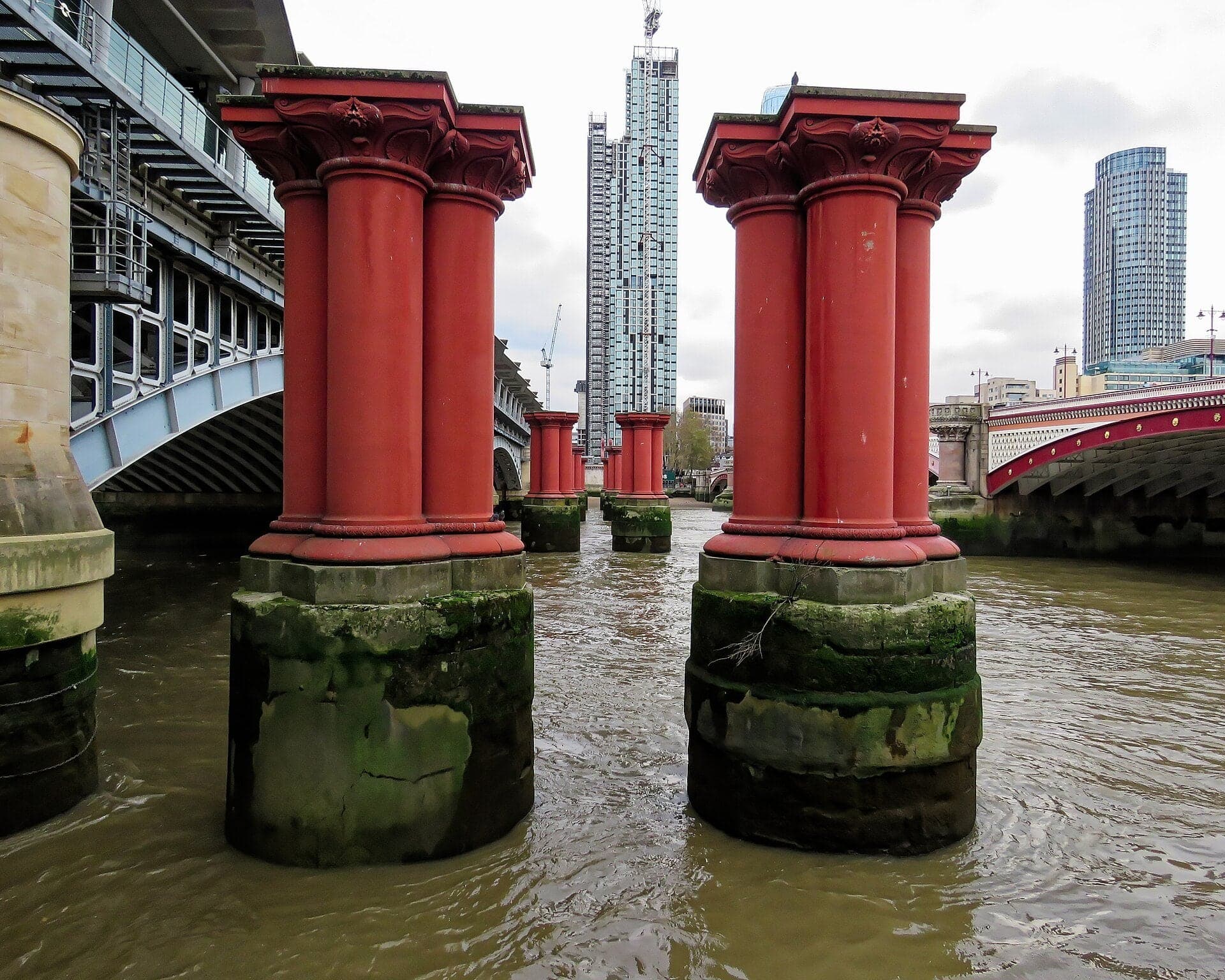
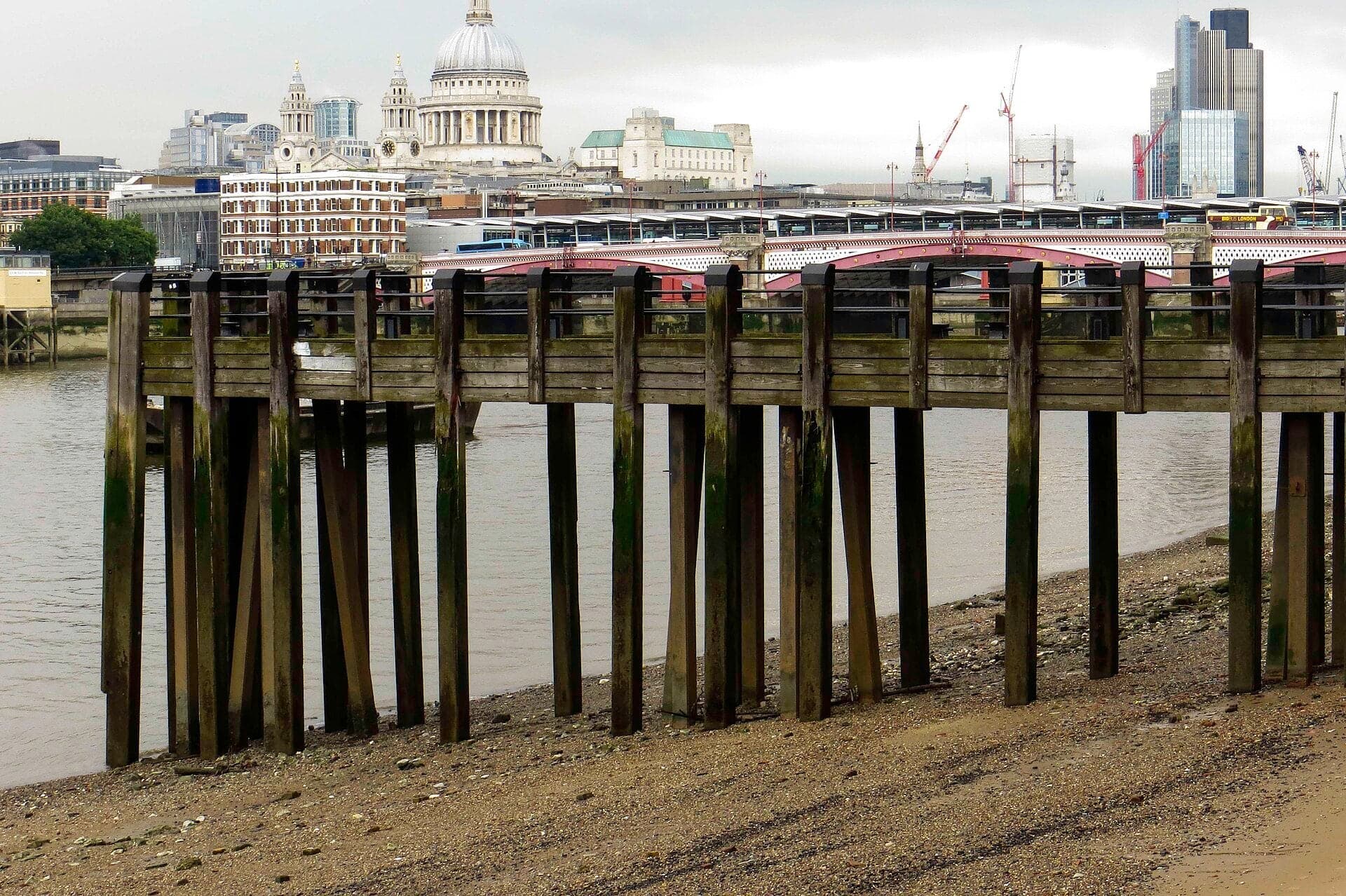
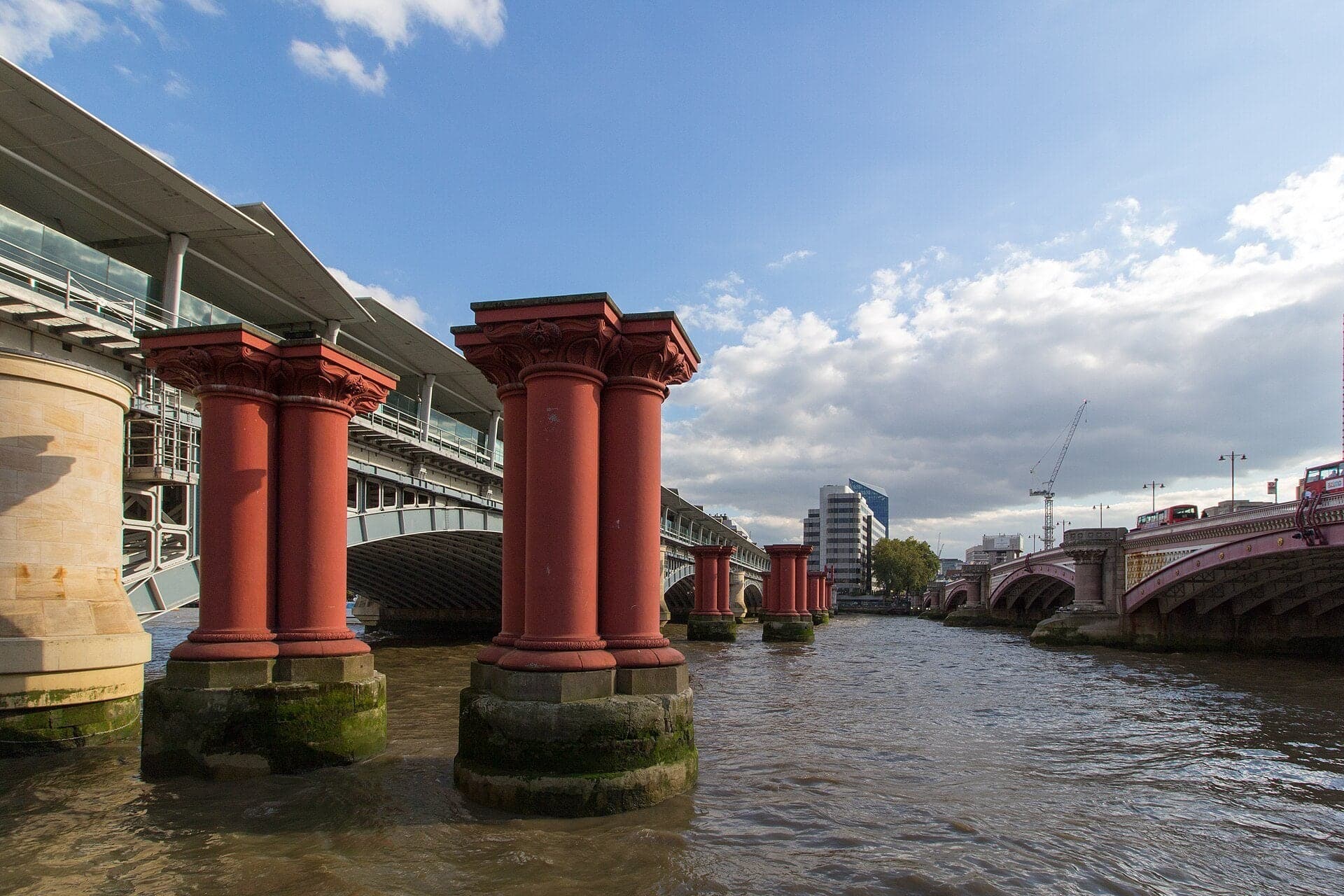
Blackfriars Bridge: Stone from Westminster
Old railway piers in the river. Its abutment beside the path is faced with Portland stone from the first Westminster Bridge.
- 7
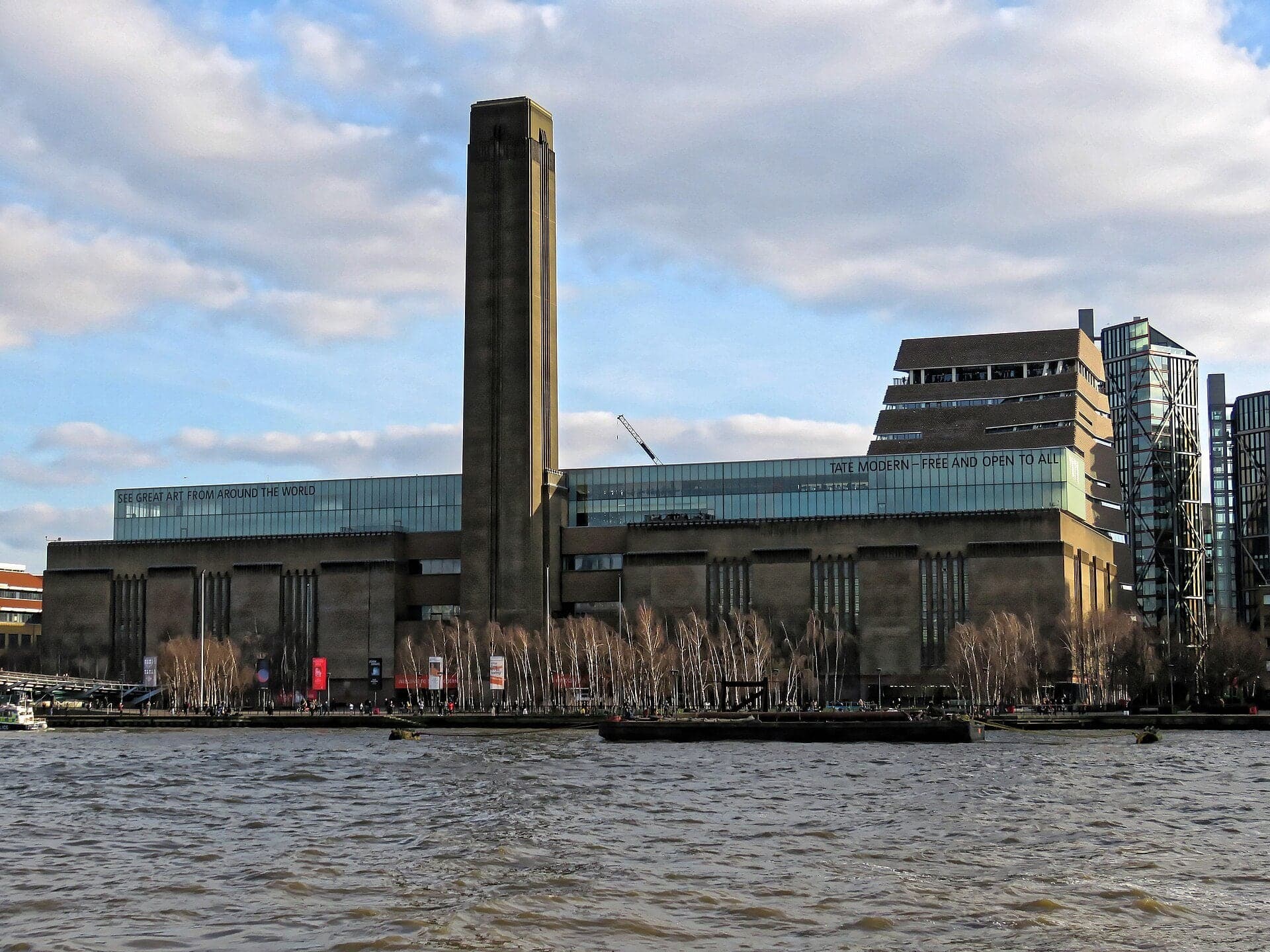
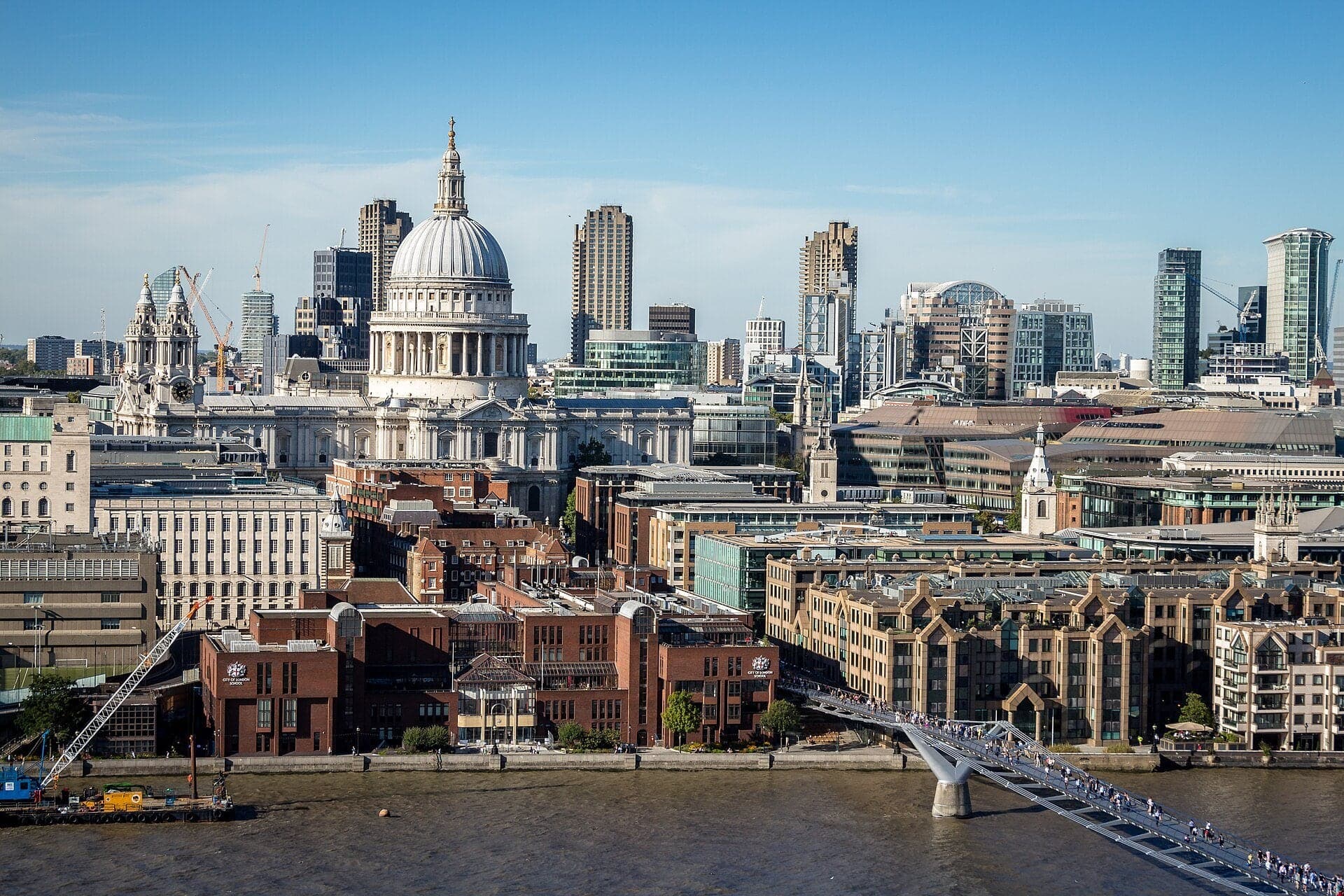
Tate Modern and St Paul's: A Chimney Below the Dome
A chimney lower than the dome. Tate Modern faces the cathedral across the river on one of London's protected views, beside the Millennium Bridge.
- 8
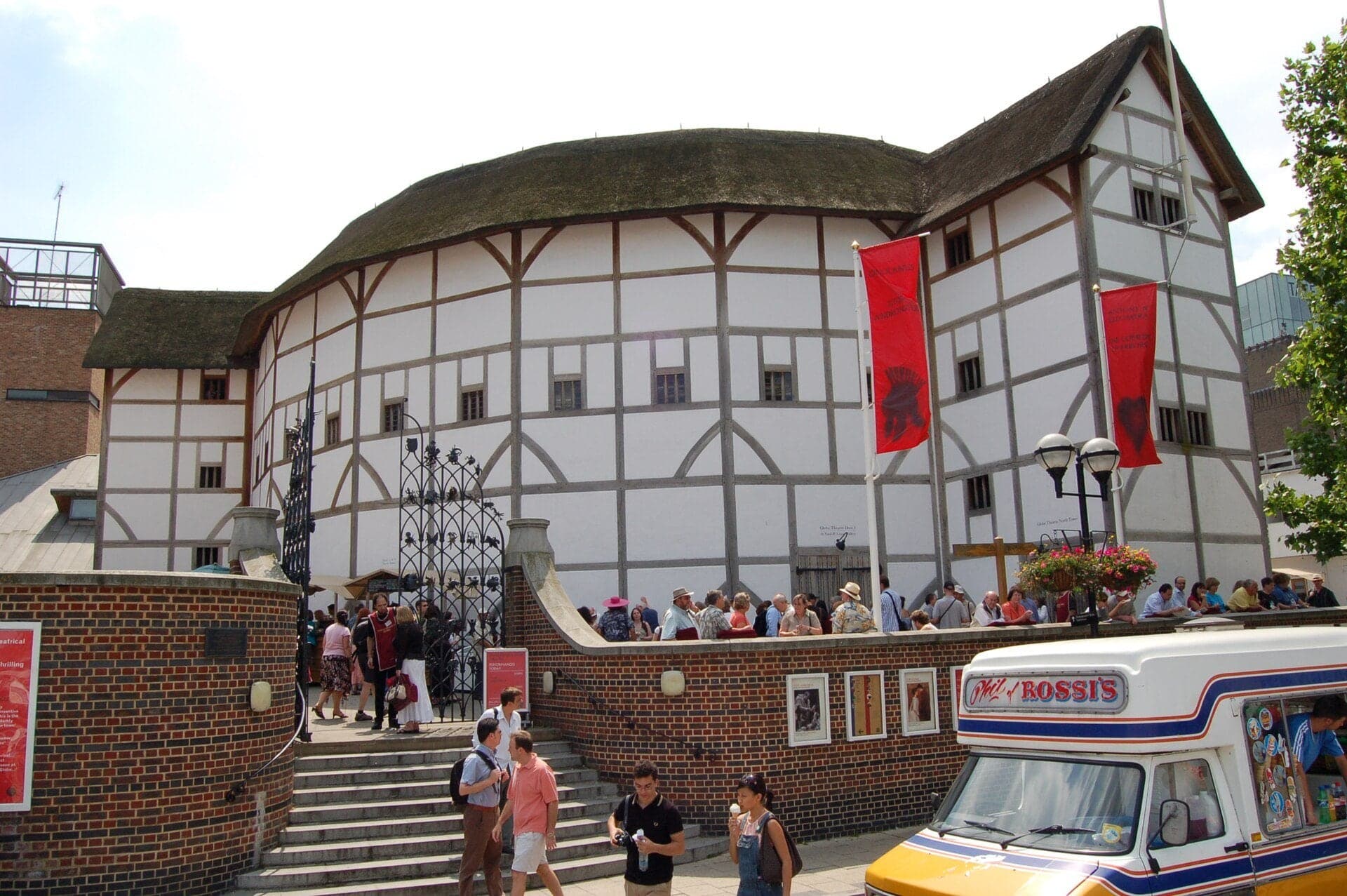
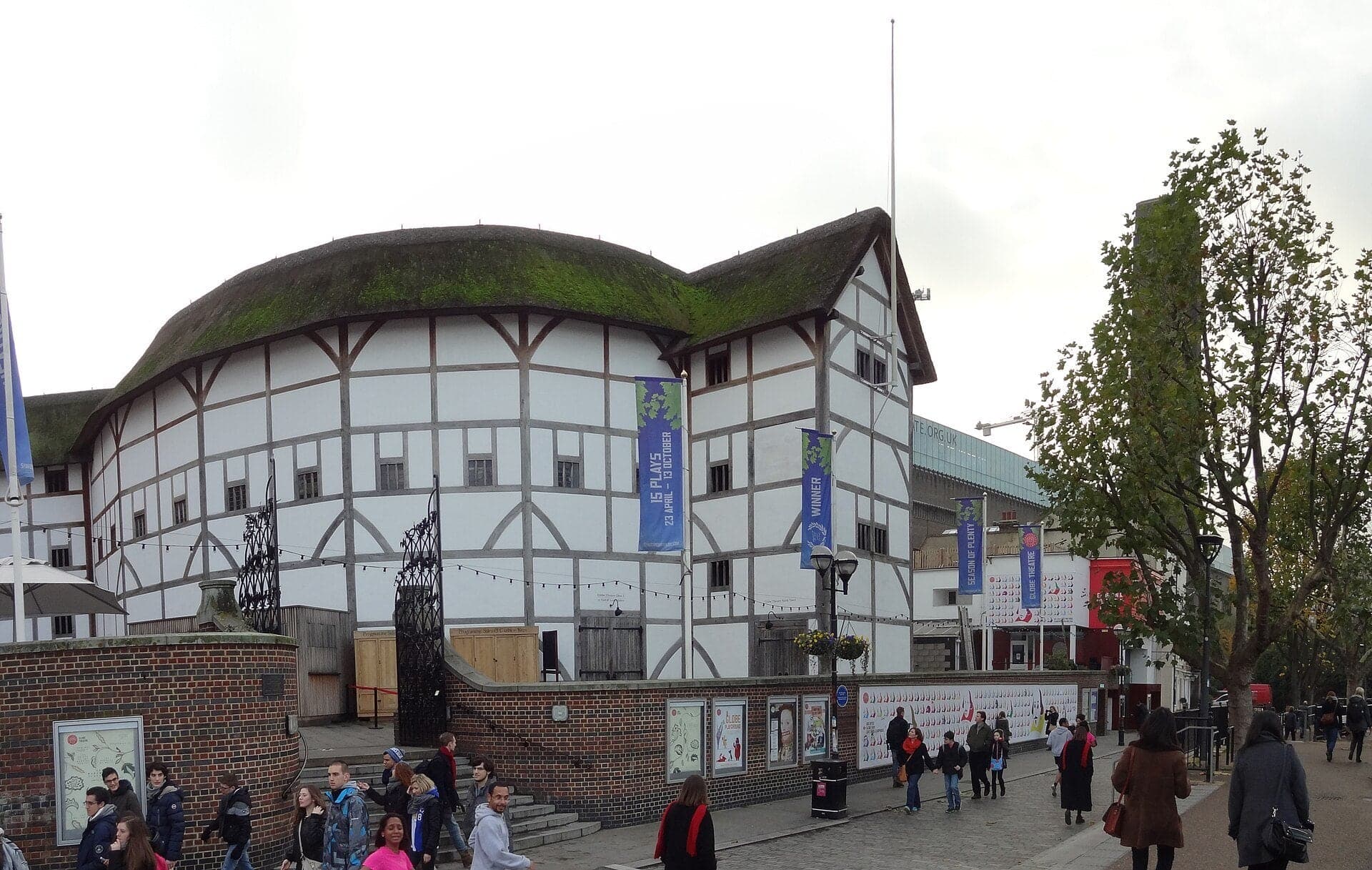
Shakespeare's Globe: The Thatch That Needed Permission
A thatched Elizabethan playhouse rebuilt. Built of oak, lime plaster and water reed, the third Globe opened in 1997, one street nearer the river than Shakespeare's own.
- 9
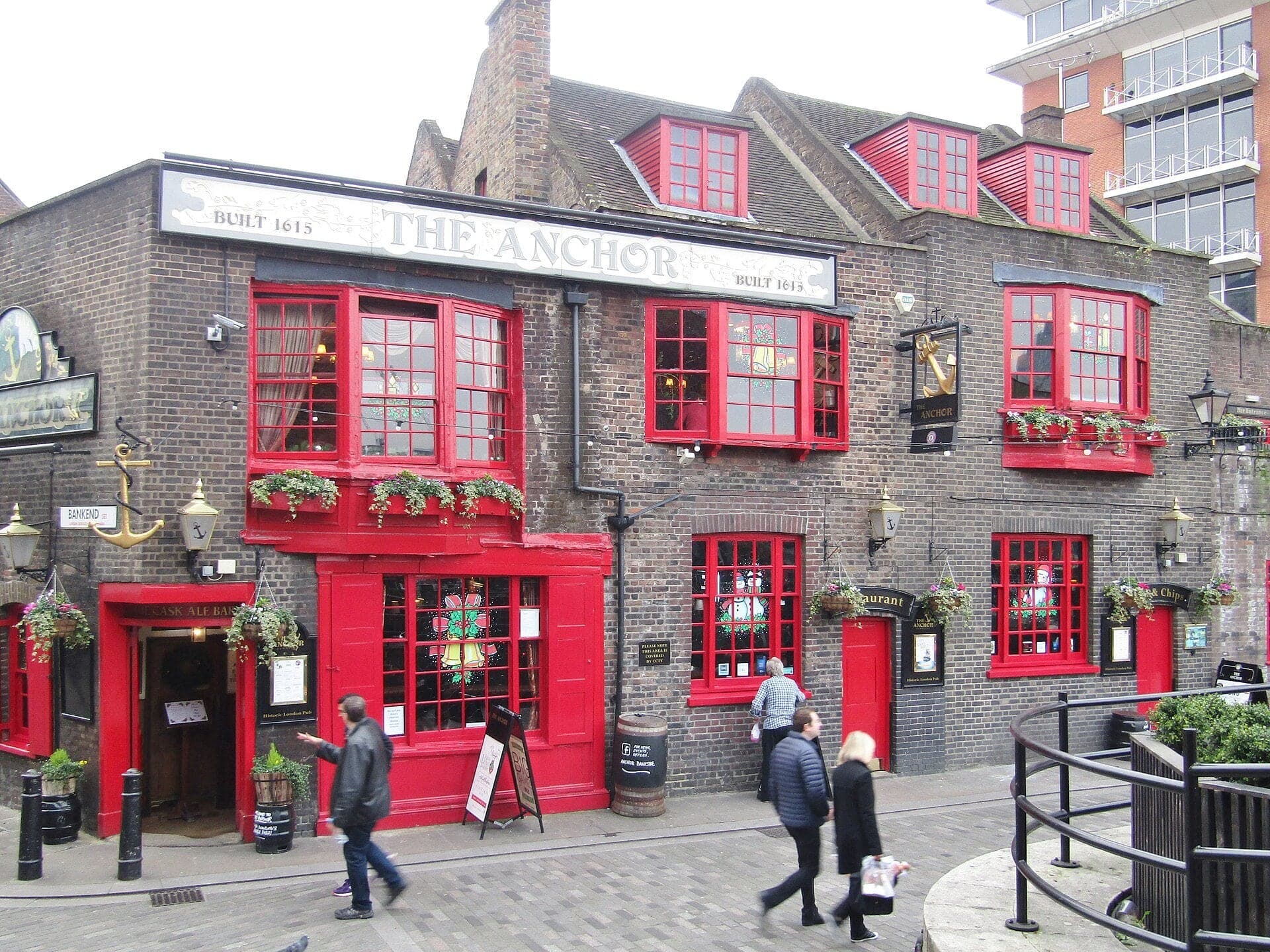
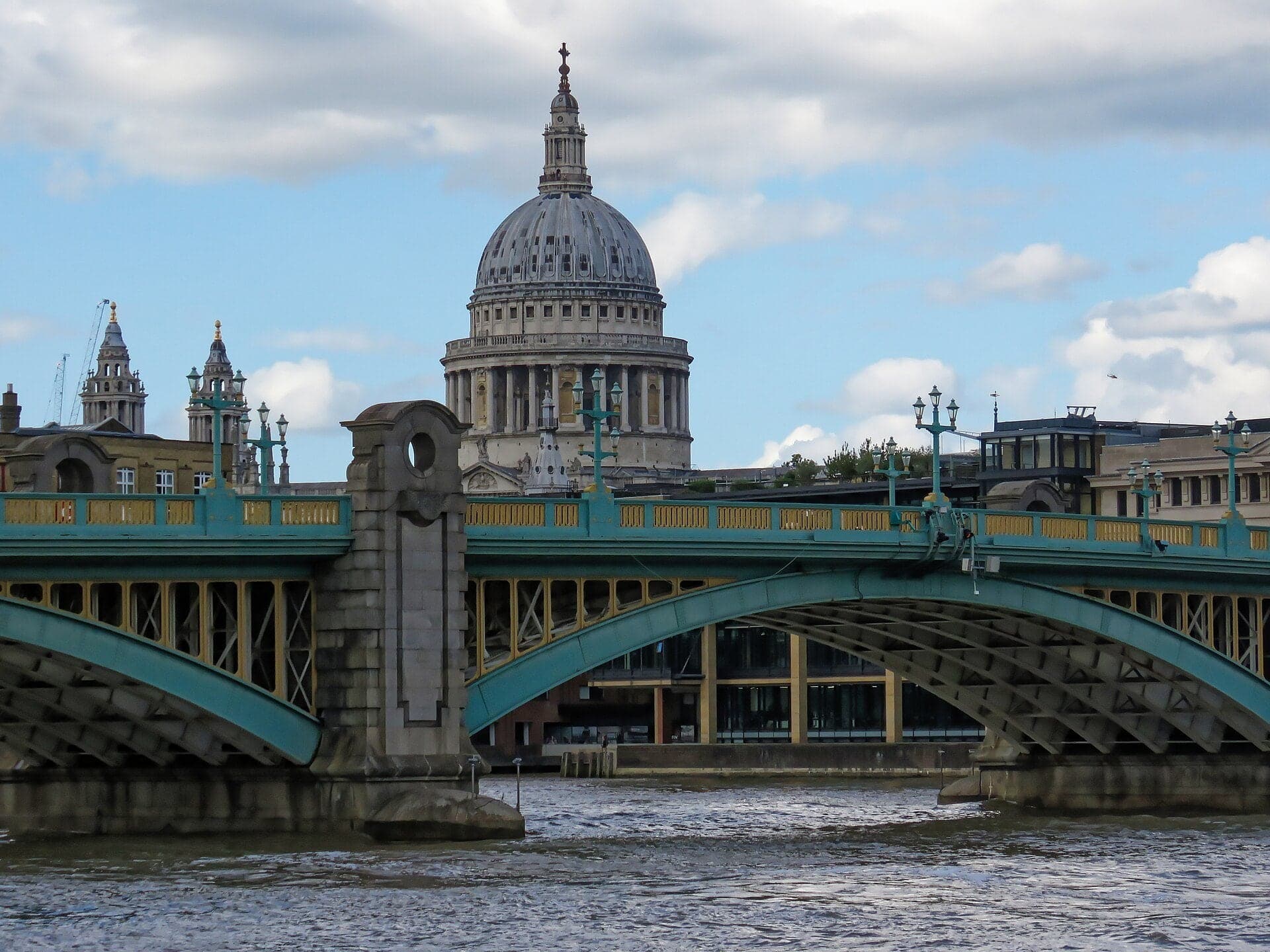
Southwark Bridge: Watching the Great Fire
Where Pepys watched the Great Fire. In September 1666 he sat in a little alehouse on Bankside, opposite the burning City.
- 10
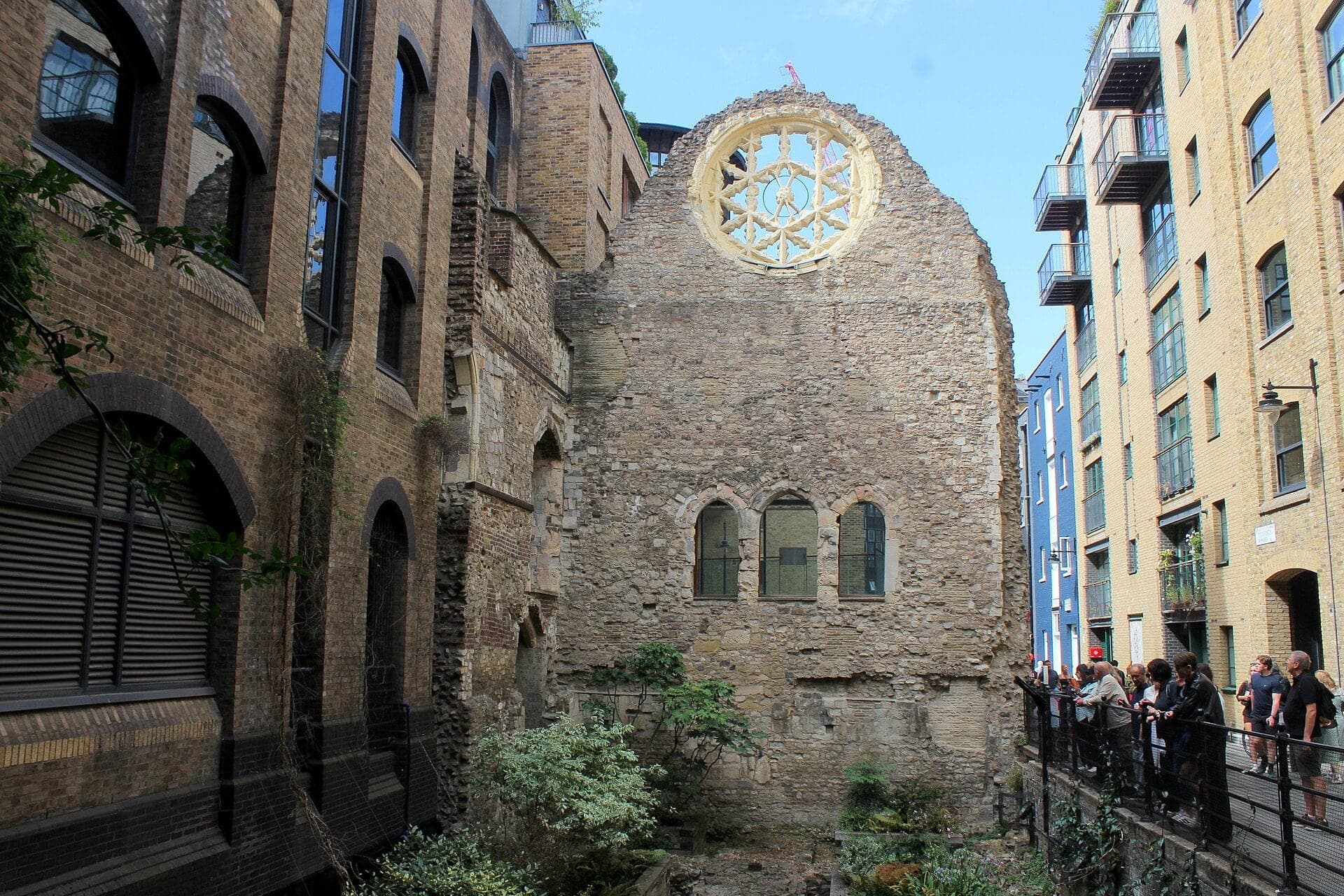
Winchester Palace and Clink Street: The Bishop's Liberty
The Bishop's ruined great hall. A flint wall with a rose window marks the manor that lay beyond the City's law.
- 11
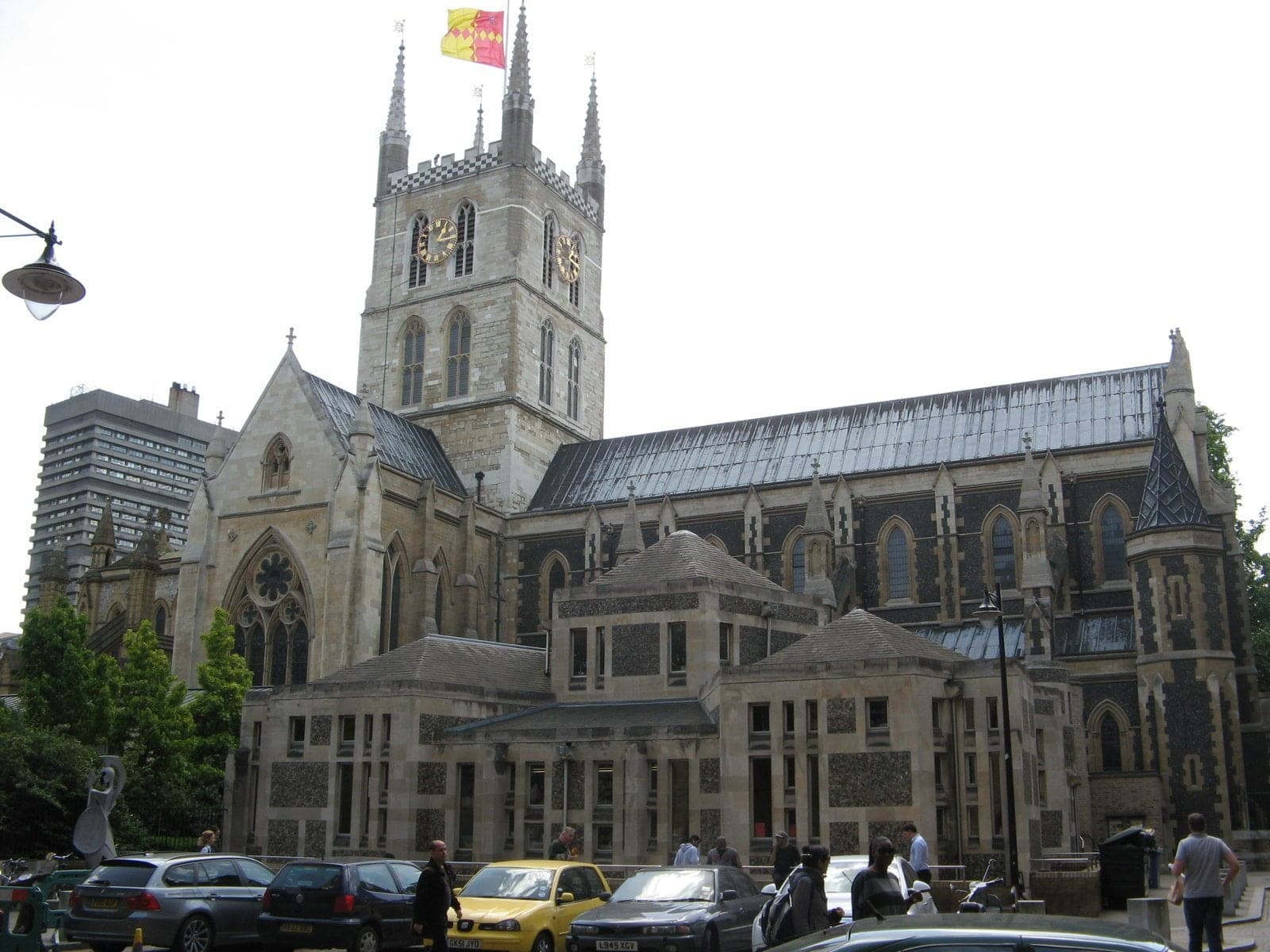
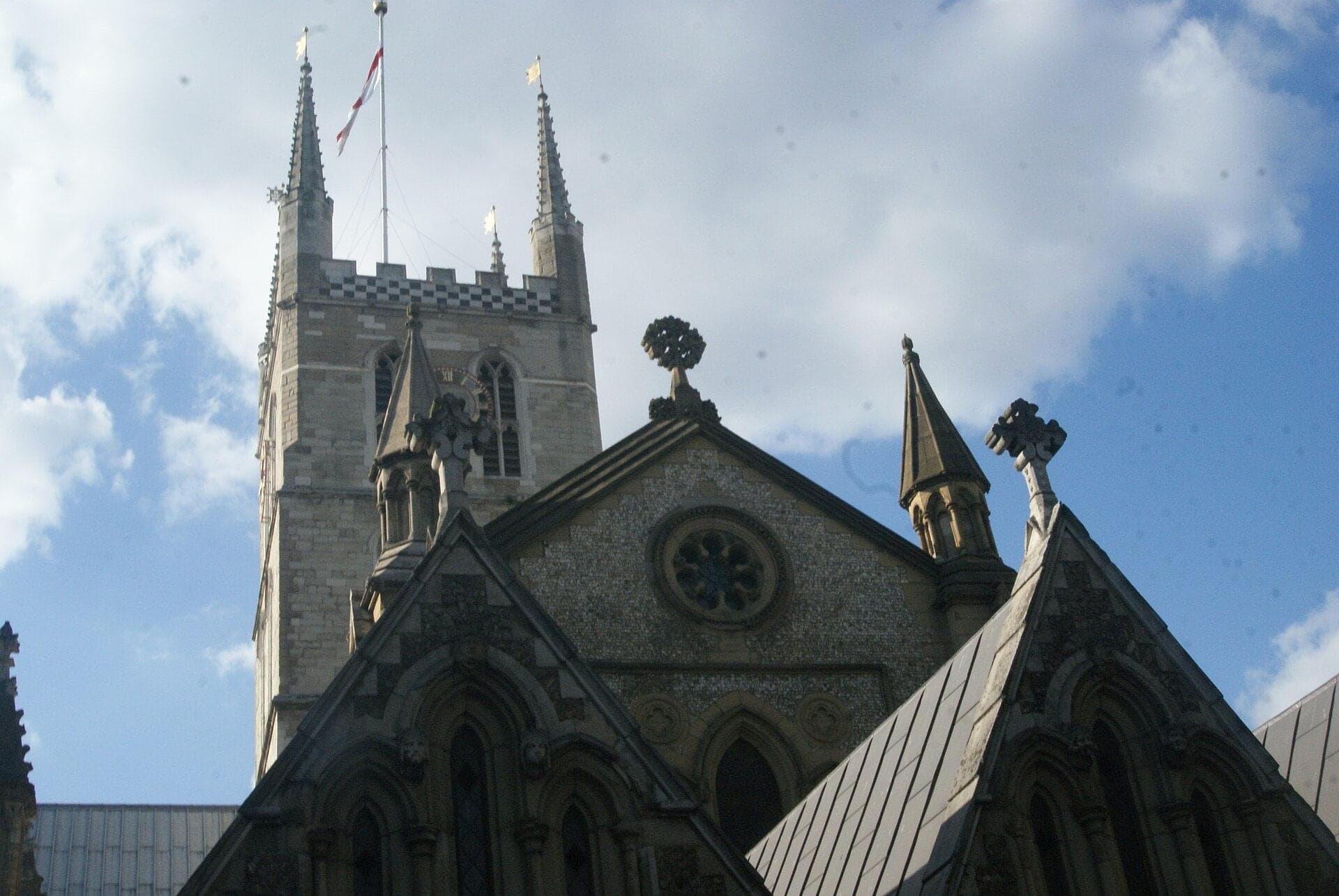
Southwark Cathedral: A Priory by the Old Crossing
A priory church at the crossing. Southwark Cathedral's thirteenth-century choir, crossing tower and Victorian nave became a cathedral only in 1905.
- 12
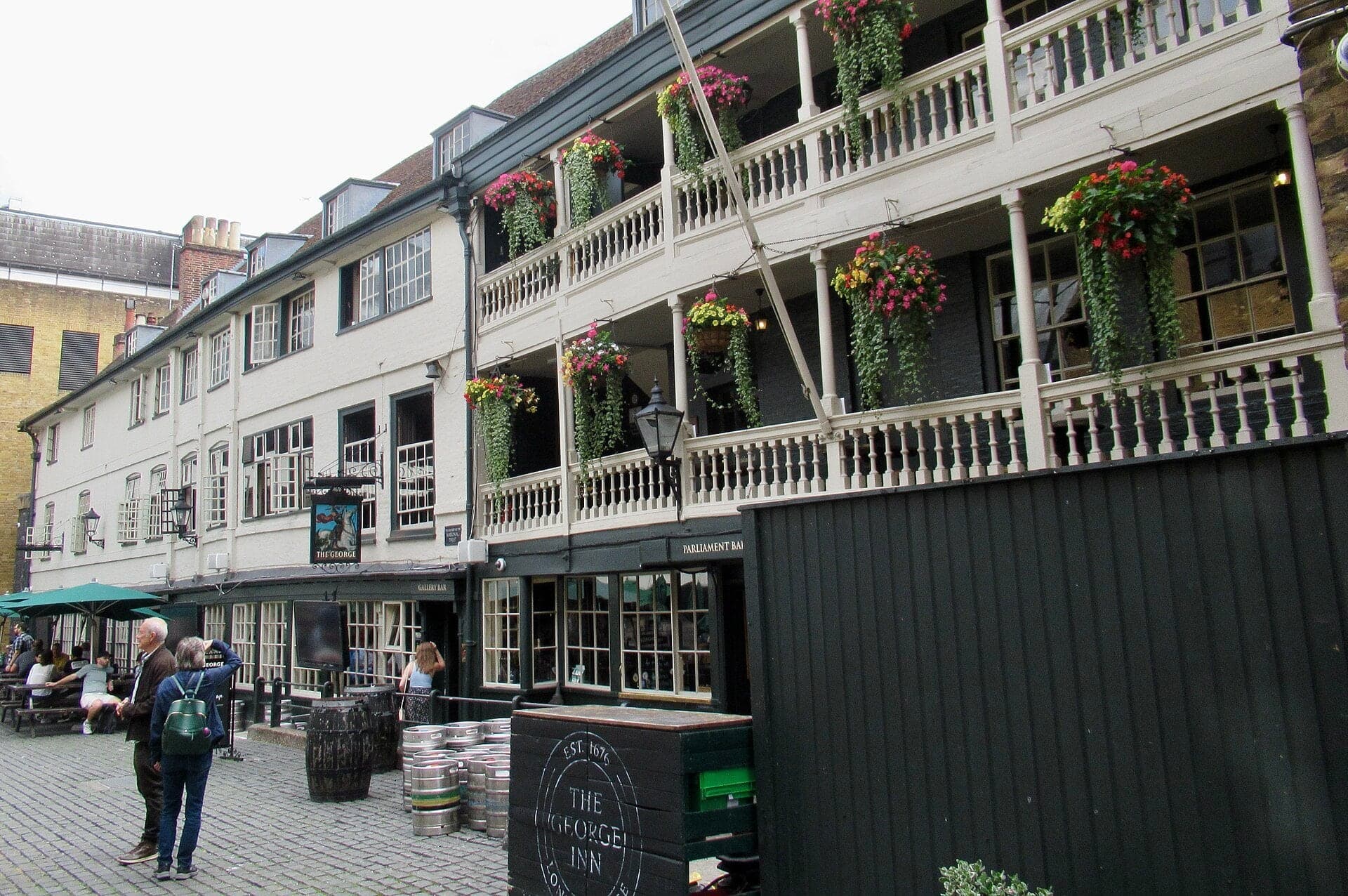
The George Inn: London's Last Galleried Inn
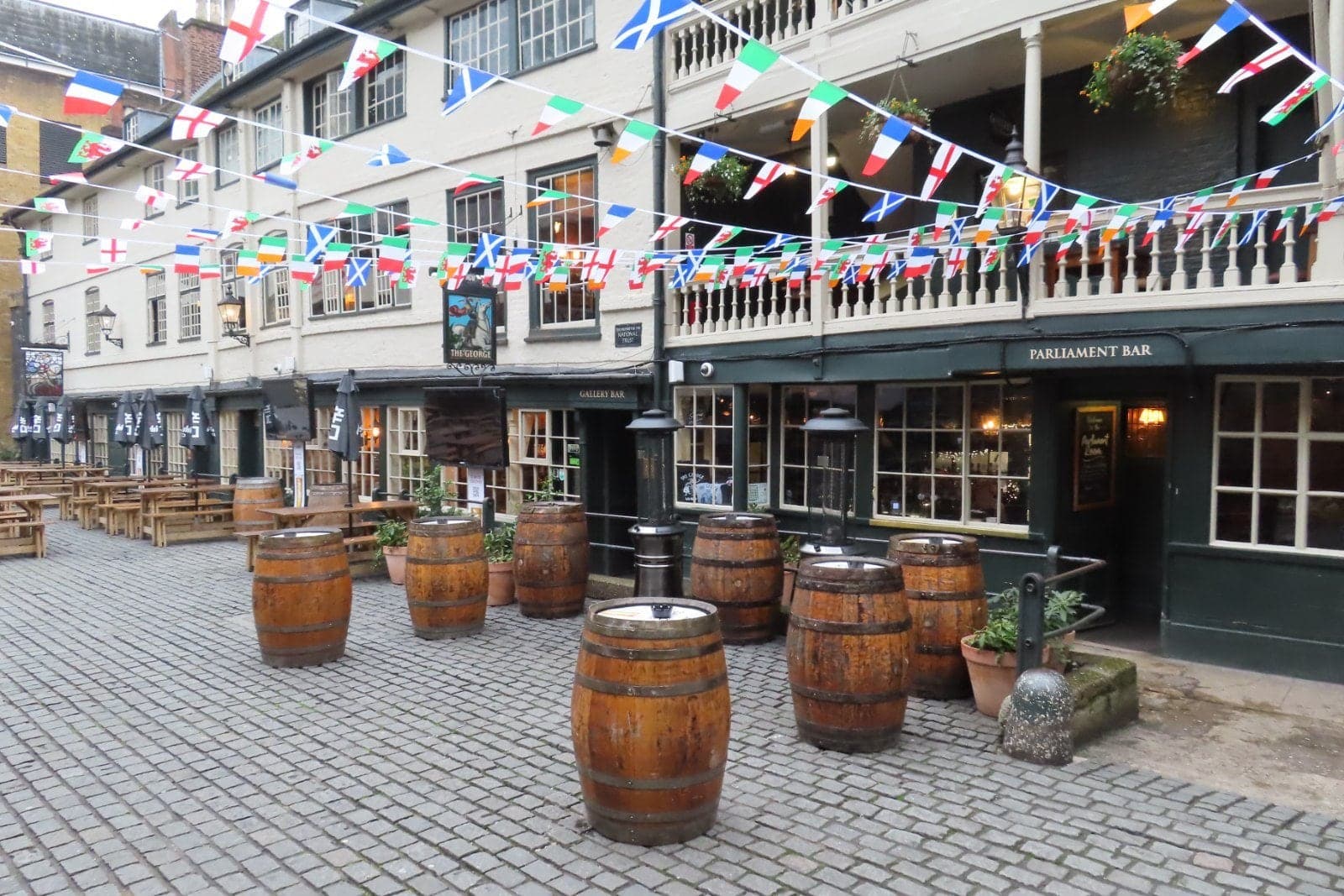
London's last galleried coaching inn. The National Trust calls the George London's last remaining galleried inn; Borough Market lies just behind.
Details
Best Time to Visit
A dry day from Tuesday to Saturday, starting by about 14:00, so you reach Borough Market before it closes at 17:00 (16:00 on Sunday, closed on Monday) and finish in daylight. Weekday mornings are quietest on the riverside; dry weekends crowd the Eye, the Millennium Bridge landing and Clink Street. Avoid the Globe's front around show times if you want room to stop. Checked 7 October 2026.
Pro Tips
- •Getting to the start: Waterloo station is about five minutes' walk (follow the signs for the South Bank), and Westminster station is just across Westminster Bridge. From Embankment or Charing Cross, cross the Golden Jubilee footbridges, about 10 to 15 minutes. The London Eye's ticket office is inside County Hall. Checked 7 October 2026.
- •Getting home: London Bridge station (Jubilee and Northern lines, National Rail) is a few minutes from the George Inn, and Borough station (Northern line) is a little farther south. Southwark station is about ten minutes inland from Tate Modern if you want to stop halfway.
- •Free stops along the way: the Royal Festival Hall foyers (open Tuesday to Sunday 10:00 to 23:00 and closed on Mondays, per the Southbank Centre's page as last archived; check before you go), the National Theatre's terraces and foyers outside show times, the OXO Tower Wharf's rooftop viewing gallery (free, daily; check hours), Tate Modern's collection and Southwark Cathedral. Checked 7 October 2026.
- •Hayward Gallery (stop 3): ticketed exhibitions; open Tuesday to Friday 10:00 to 18:00, Saturday 10:00 to 20:00, Sunday 10:00 to 18:00, closed Monday, with late opening to 21:00 every day from 23 September to 18 October 2026. Checked 7 October 2026 (Southbank Centre page as archived on 2 October 2026).
- •Golden Hinde, the full-size replica galleon in the dock between stops 10 and 11: adults 6 GBP; April to October 10:00 to 18:00, November to March 10:00 to 17:00. Restoration work is under way and limits access aboard. Checked 7 October 2026.
- •Borough Market, just off the route at the end: free to enter; Tuesday to Friday 10:00 to 17:00, Saturday 09:00 to 17:00, Sunday 10:00 to 16:00, closed Monday; hours change on bank holidays. Busiest Thursday to Saturday at lunch. Checked 7 October 2026.
- •The George Inn's yard is free to enter while the pub is open; the National Trust says the pub's operator recommends booking ahead if you want to eat. Checked 7 October 2026.
- •Not on the route but close: the Clink Prison Museum on Clink Street (ticketed) and the London Eye flight at the start (from 29 GBP; see stop 1's card).
Safety & Precautions
- •Southwark Cathedral closures: Thursday 8 October 13:00 to 16:00, Saturday 10 October until 12:00, Monday 19 October from 16:00; building works at Minerva House opposite the cathedral change the route to its north entrance from time to time, and hoarding may narrow Montague Close. Checked 7 October 2026.
- •Gabriel's Wharf (just before stop 5) closed in September 2026 and its yard may be fenced or empty; the riverside walk is not affected. Checked 7 October 2026.
- •Building works around Blackfriars and Sea Containers House may put up hoarding on the riverside near stop 6, and can screen the railway shields on the abutment.
- •The riverside walk in front of County Hall is private land with public access and can close for events or filming.
- •The Undercroft (stop 3) is a working skate space: skaters have right of way in it, so watch from the edge.
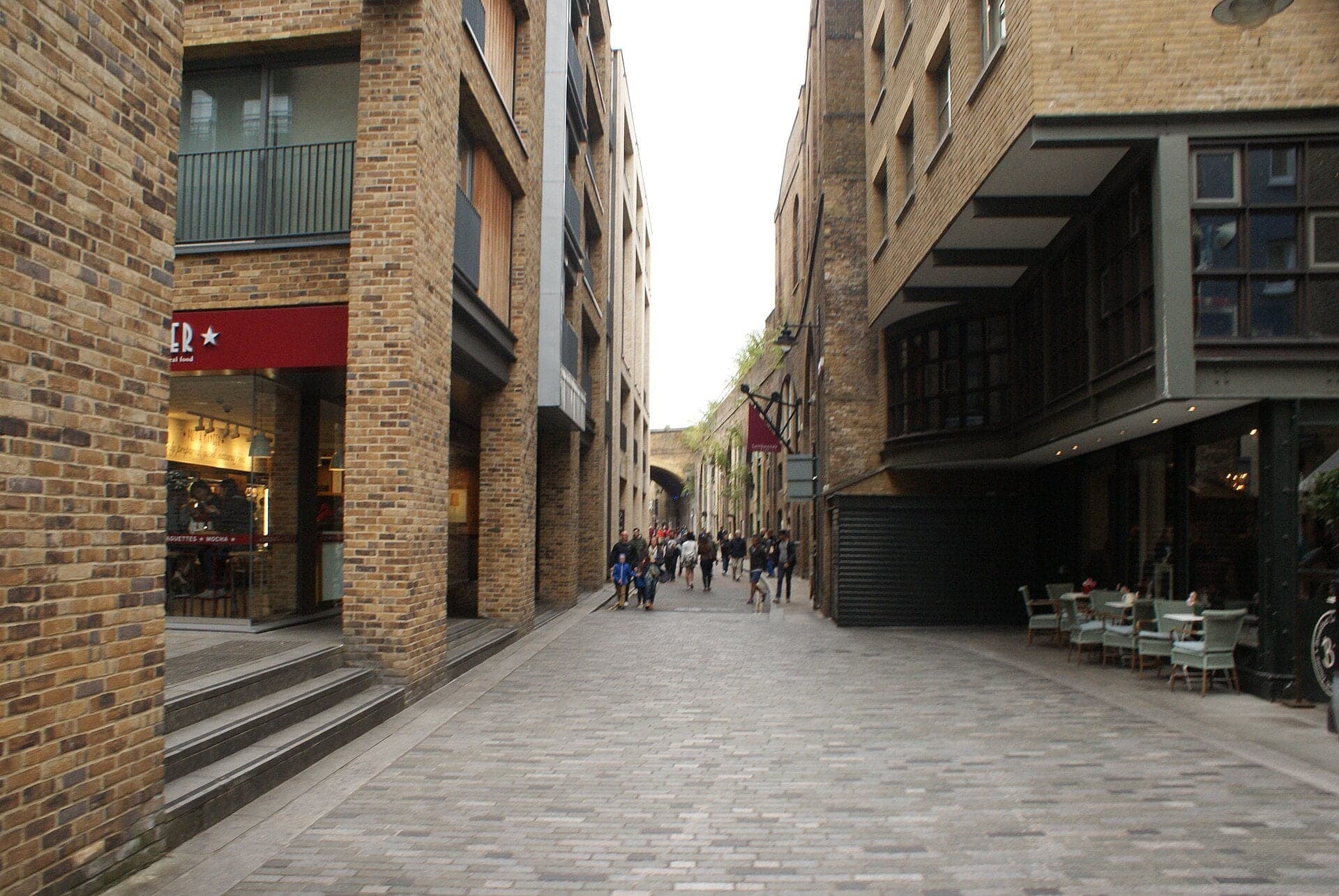
- •Clink Street is narrow and shared with delivery vans and bicycles, and it is crowded on summer afternoons. Clink Street, Winchester Square and Montague Close are quiet and dimly lit after dark, and the market lanes are shuttered after closing.
- •There is one main-road crossing, Borough High Street, at the traffic lights before the last stop. The lane between stops 9 and 10 has no lights; look both ways.
- •The riverside paths are level, with a ramp beside the one short step by the Globe, and the route avoids the steps at Green Dragon Court. Expect slow crowds at the London Eye queue, the foot of the Millennium Bridge and the Globe at show times.
Travel advisory: Exercise Increased Caution (Level 2).
Gallery
Related Reading
Go deeper on what you'll see, hear, and walk through.
Overview
A Pub's Age Is a Claim: Three London Pubs and What the Records Say
4 min
Overview
London Travel Guide: How Many Days, Getting Around, When to Go (2026)
5 min
Overview
One Day in London: A Walkable Central Itinerary (2026)
7 min
Overview
Reading London's Layers: How to See a City That Refuses to Erase Itself
8 min
Thematic
What to Eat in London: A Food Guide (2026)
5 min
Companion
How the South Bank Became a Cultural Mile, One Building at a Time
6 min
Deep dive
Shakespeare's Globe: The Rebuild That Needed Permission for Its Thatch
4 min
Deep dive
The George Inn: The Last Galleried Coaching Yard in London
4 min
Read the walk
The full story of South Bank and Bankside: London's Other Side, in words. Prefer to listen? Play it narrated, from home or on location.
Introduction
London, the capital of England and the United Kingdom, grew up on the north bank of the Thames, inside the City. For centuries the south bank was the outside. A long strip of it was a bishop's manor, beyond the City's law, and medieval London let its brothels trade there. It also held playhouses, a prison and, much later, power stations.
This walk reads that bank by what it is built of. Pale Portland stone and raw concrete, red brick, oak and thatch, flint, and the timber galleries of an old coaching inn. Twice along the way, Londoners took the riverside back for the public. And along much of it, the planners keep the view across the water to the dome of Saint Paul's.
Two people will keep you company. Samuel Pepys, the diarist, who watched the Great Fire of sixteen sixty-six from this bank. And Sam Wanamaker, an American actor who came looking for Shakespeare's theater and found only a plaque on a brewery wall.
The walk is twelve stops and about three kilometres, just under two miles, all on the flat, and takes about a hundred minutes. It runs downriver from County Hall and the London Eye, past Tate Modern and the Globe, to Southwark Cathedral and the George Inn. It begins on the riverside walk in front of County Hall, a few minutes from Waterloo and Westminster stations.
1. County Hall and the London Eye: Stone Palace, Temporary Wheel
Welcome to the South Bank, and to the first stop of this walk. The giant wheel along the river is the London Eye. A ride is ticketed, and the details are on this stop's card; this walk stays on the riverside.
The long building curving along the river here is County Hall. Look at its face: pale Portland stone, nineteen bays bent into a deep curve, giant columns and a steep roof of dark tiles with two rows of windows in it. Hold on to that pale stone. You will meet it again beyond the bridges.
This was London's own town hall. Its design was chosen by competition in nineteen oh eight, building began in nineteen eleven, the King opened it in nineteen twenty-two, and work went on until nineteen thirty-three. The London County Council governed the capital from here, and then its successor, the Greater London Council. By Act of Parliament, the Greater London Council ceased to exist on the first of April, nineteen eighty-six. Today it holds hotels and attractions. Remember that council: in its last years it helped hand this riverbank to the public.
Now the wheel. The London Eye is a hundred and thirty-five metres tall, with thirty-two capsules, and it was never meant to stay. Its architects said a nineteen ninety-three competition for a millennium landmark found no winner, so they pressed on alone and put their own house on the line. The wheel was built lying flat on the river, on eight temporary islands, and then raised. The first lift, in nineteen ninety-nine, failed when a cable came loose in front of the world's press. The wheel opened to passengers in the spring of two thousand, with planning permission for only five years. It is still turning.
Follow the route along the river, past the wheel and on under the railway bridge and the footbridges. Next, the one building a festival left behind.
2. Royal Festival Hall: The Festival's One Survivor
Walk on along the river, past the gardens and the foot of the wheel, and under the railway bridge and the two footbridges beside it. Stop just beyond them. On your right stands the Royal Festival Hall, its long pale river front pierced by a broad band of tall windows.
In the summer of nineteen fifty-one the Festival of Britain filled this bank with pavilions, cafes and sculptures, and more than eight million people paid to visit. The King opened it on the third of May. Then almost all of it was cleared away. The Skylon, a slender tower that soared nearly ninety metres over the site, was taken away in nineteen fifty-two and, it later emerged, melted down by a scrap metal company. This hall was the festival's one permanent building, and it is the only one left.
But what you are looking at is not from nineteen fifty-one. The river front was rebuilt in nineteen sixty-three and sixty-four, faced in Portland stone, the same pale stone as County Hall, with passages of blue-gray mosaic. The nineteen fifty-one hall is inside it. Historic England's listing calls the idea an egg in a box: the auditorium is a separate concrete shell, held within the outer building. The hall is listed at Grade One, the highest grade.
And it was opened up. In nineteen eighty-three the Greater London Council, from County Hall back along the river, brought in an open foyer policy, and the foyers have been free to walk into ever since, on most days. The concerts are ticketed.
Behind you now, the railway bridge is from eighteen sixty-three, and the two footbridges on either side of it opened in two thousand and three.
Follow the river on. Next, the concrete the skaters kept.
3. The Undercroft: The Concrete the Skaters Kept
Walk on and stop beside the short flight of steps by the river walk. Beneath the concrete halls ahead, under their overhang, are sloping banks and ledges covered in paint. This is the Undercroft.
The Southbank Centre says it is widely considered the birthplace of British skateboarding. It was designed as public space, and its concrete slopes, banks and ledges have drawn skaters since the sport first reached Britain in the nineteen seventies. The Centre dates the first skaters here to nineteen seventy-three.
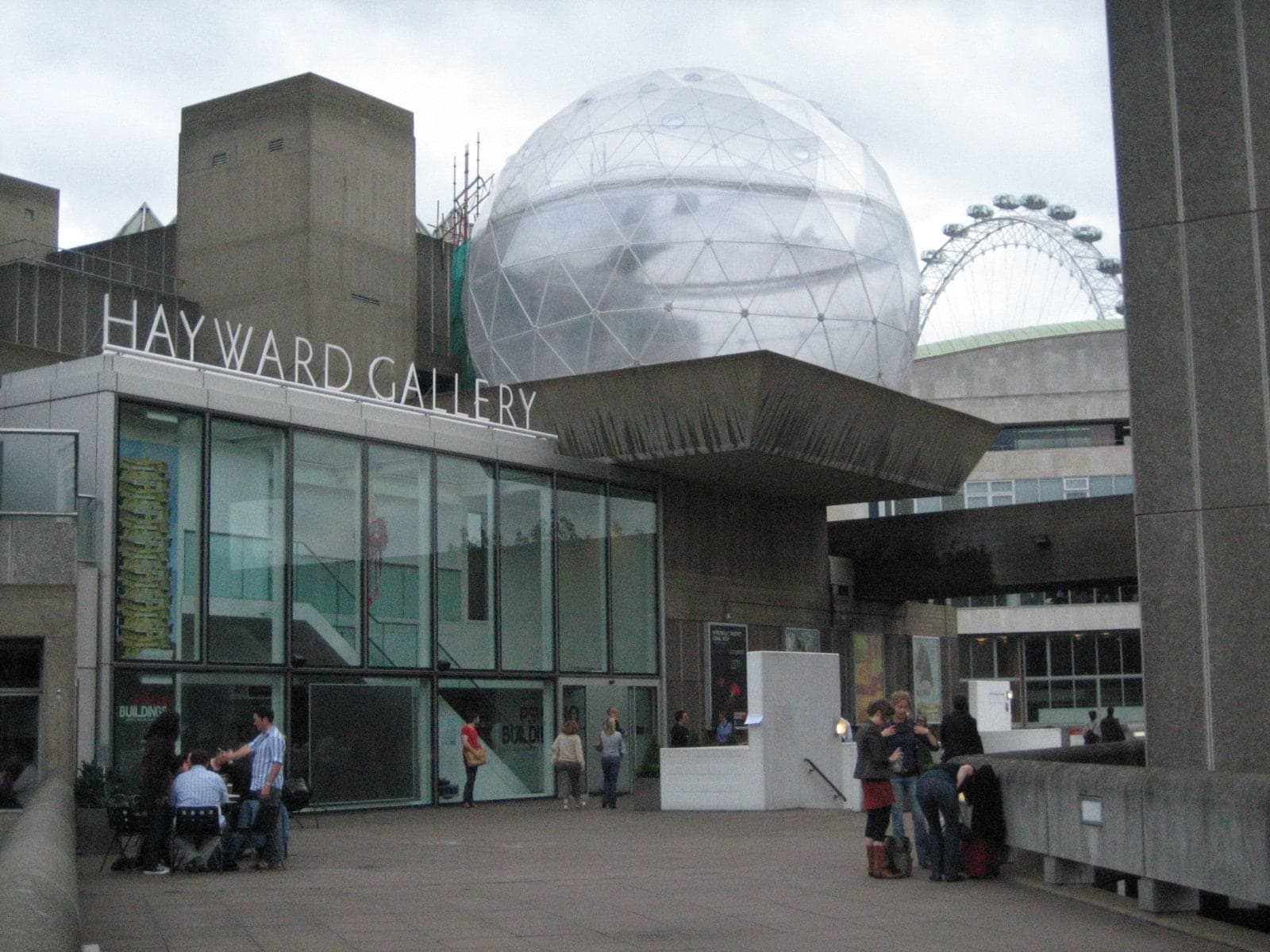
Above it stands the rest of the late nineteen sixties complex: the Queen Elizabeth Hall, the Purcell Room and, behind them, the Hayward Gallery, with pyramid roof lights on top. Raw concrete, heavy slabs, walkways and stairs in the air. Daily Mail readers once voted it Britain's ugliest building.
In twenty thirteen a redevelopment plan proposed moving the skaters about a hundred and twenty metres upriver, under the railway bridge you just passed. They campaigned, and Lambeth Council received more than twenty-seven thousand objections. In twenty fourteen the Centre and the skaters reached an agreement, made binding through a planning agreement with the council, to keep the Undercroft open without charge for skating, bikes, street art and other urban activities. A crowdfunding campaign later restored some of the original banks.
Then, in February twenty twenty-six, the whole group was listed at Grade Two: the Hayward, the Queen Elizabeth Hall, the Purcell Room, the walkways and stairs, and the skate space itself. The director of the Twentieth Century Society called it one of the best brutalist buildings in the world.
So a space nobody built for skating is now protected twice: once for its use, and once for its concrete. If you stop to watch, keep to the edge; in their space, skaters have right of way. The Hayward's exhibitions are ticketed.
Follow the route on under Waterloo Bridge. Next, a theater built in layers.
4. National Theatre: Concrete in Layers
Walk on along the river and stop where the concrete terraces of the National Theatre rise beside the walk.
This is the National Theatre, by the architect Denys Lasdun, built between nineteen sixty-nine and nineteen seventy-six. Look at how it is put together. Long horizontal terraces, stacked one above another, and rising through them, tall blank towers. Those are the fly towers of the big stages, where scenery is lifted out of sight. Historic England's listing describes exactly that: horizontal forms, interrupted by projecting fly towers.
Now look closely at the concrete itself. You can see the grain of the timber boards it was poured against, printed into the surface. The building wears the mark of its own molds.
Inside are three theaters. The largest, the Olivier, is set at forty-five degrees to the rest of the building. The theater's foyers rise the full height of the building and lead out onto the terraces and walkways, so the public spaces spill outside. The terraces and foyers are usually open to anyone outside show times; the plays are ticketed. It was listed at Grade Two star in nineteen ninety-four.
This spot has another job. The Mayor's guidance on London's views, from twenty twelve, names the river walk outside the National Theatre as an official viewing place, looking across the water to Somerset House on the far bank. It calls this the wide and pleasantly shaded stretch of the river walk, and the National the most significant public building on it. That same guidance protects the views across this river to Saint Paul's, and it will shape what you see at the next few stops.
Follow the route along the river. Next, a tower that spells a word in its windows.
5. OXO Tower: A Word Spelled in Windows
Walk on and stop in the open paved square beside the river walk. Ahead, a tower rises from a red brick riverside building, with a word in its windows. Look up at the top of the tower. On each side, three windows stand one above another: a circle, a cross and a circle: O, X, O.…
Full narration for this stop unlocks with the tour.
6. Blackfriars Bridge: Stone from Westminster
Walk on a few steps past the underpass and stop on the open path. Behind you is the road bridge you just walked under: Blackfriars Bridge, opened in eighteen sixty-nine. Look at its granite abutments, its piers of squat columns capped in carved Portland stone, and its Gothic…
Full narration for this stop unlocks with the tour.
7. Tate Modern and St Paul's: A Chimney Below the Dome
Walk on along the riverside and stop with the great brick power station beside you. Two buildings face each other here, and one was built to stay below the other. On this side stands Bankside Power Station, cased in brick by the architect Giles Gilbert Scott and built in two…
Full narration for this stop unlocks with the tour.
8. Shakespeare's Globe: The Thatch That Needed Permission
Walk on and stop in front of the round, white building with the thatched roof. This is Shakespeare's Globe. Plays and guided tours are ticketed, and the tour is worth it; the details are on this stop's card. Look at what it is made of: oak beams, white lime plaster and a roof…
Full narration for this stop unlocks with the tour.
9. Southwark Bridge: Watching the Great Fire
Walk on and stop beside the brick pub by the bridge, the Anchor. Then turn round to face the river and the City across it. On the second of September, sixteen sixty-six, that far bank was burning. Samuel Pepys, the diarist, had been out on the river watching the Great Fire…
Full narration for this stop unlocks with the tour.
10. Winchester Palace and Clink Street: The Bishop's Liberty
Walk on along Clink Street and stop at the railings, where a tall ruined wall with a round window stands beside the lane. This is what is left of the great hall of the Bishop of Winchester's London palace. Look at it: rough stone and flint, three doorways, two pointed windows,…
Full narration for this stop unlocks with the tour.
11. Southwark Cathedral: A Priory by the Old Crossing
Walk on along Montague Close and stop where the cathedral's flint walls rise just ahead, with its square tower above. Southwark Cathedral is free to enter, with donations welcome, outside service times; the details are on this stop's card. Look at the walls: knapped flint, with…
Full narration for this stop unlocks with the tour.
12. The George Inn: London's Last Galleried Inn
Walk on along the high street and stop at the opening into a yard. Through it, along one side of the yard, stands a long, low building with two tiers of open wooden galleries along its front. This is the George. The lower gallery rests on beams that jut out from the wall, the…
Full narration for this stop unlocks with the tour.
- The west face of the London Eye and County Hall in London, as seen from Westminster Bridge. — Doyle of London, CC BY-SA 4.0 · source
- London Eye, London Eye Pier, and County Hall on the River Thames in Lambeth, London, England.Wikimedia (2026) makes it difficult to immediat — Acabashi, CC BY-SA 4.0 · source
- London, Royal Festival Hall, exterior, southwest view from north bank — Andreas Praefcke, edited by MenkinAlRire, CC BY 3.0 · source
- London, Royal Festival Hall, exterior, southeast view of sligthly curved south facadefacing the Themse — Geograph project user: Ruth Sharville, edited by MenkinAlRire, CC BY 2.0 · source
- In London, United Kingdom — chris.rycroft, CC BY 2.0 · source
- Exterior of the Hayward Gallery on the South Bank in London. — Sheila Thomson, CC BY 2.0 · source
- Royal National Theatre — Stevekeiretsu, CC BY-SA 4.0 · source
- Architect: Sir Denys Lasdun in the Brutalist style. The National Theatre opened in 1976 and is grade II* listed. At the South Bank by Waterl — Images George Rex from London, England, CC BY-SA 2.0 · source
- The OXO Tower from the River Thames at the north.Camera: Canon PowerShot SX60 HS.Software: file lens-corrected and optimized with DxO PhotoL — Acabashi, CC BY-SA 4.0 · source
- The OXO Tower Wharf Pier by the River Thames — Steve Daniels, CC BY-SA 2.0 · source
- Bridge piers of the former 1864 Blackfriars Railway Bridge over the River Thames from the north bank in the City of London, England.Wikimedi — Acabashi, CC BY-SA 4.0 · source
- Pillars of the old Blackfriars Railway Bridge, looking from the north bank of the river. The new railway bridge (and station) is to the left — The wub, CC BY-SA 4.0 · source
- Tate Modern from close to Blackfriars Bridge on the River Thames at the northwest.Camera: Canon PowerShot SX60 HS.Software: file lens-correc — Acabashi, CC BY-SA 4.0 · source
- Tate Modern listed building 1079157 — Rafa Esteve, CC BY-SA 4.0 · source
- Exterior of Shakespeare's Globe theatre in London in June 2006 — Thomas Roessler, CC BY-SA 3.0 · source
- Es una panorámica exterior del teatro de Shakespeateare, The Globe, en Londres. Es una foto formada mediante la unión de dos fotografías par — Juara66, CC BY-SA 3.0 · source
- Southwark - The Anchor — Colin Smith, CC BY-SA 2.0 · source
- Southwark Bridge over the River Thames with St Paul's Cathedral behind, taken from Bankside towards the City of London, England.This image i — Acabashi, CC BY-SA 4.0 · source
- Ruins of Winchester Palace — Chris Heaton, CC BY-SA 2.0 · source
- View along Clink Street — Robert Lamb, CC BY-SA 2.0 · source
- Southwark Cathedral — Stephen Armstrong, CC BY-SA 2.0 · source
- View of Southwark Cathedral from Borough High Street — Robert Lamb, CC BY-SA 2.0 · source
- George Inn, Southwark — Philip Halling, CC BY-SA 2.0 · source
Images may be cropped or resized. Other photos via Unsplash and Pexels.