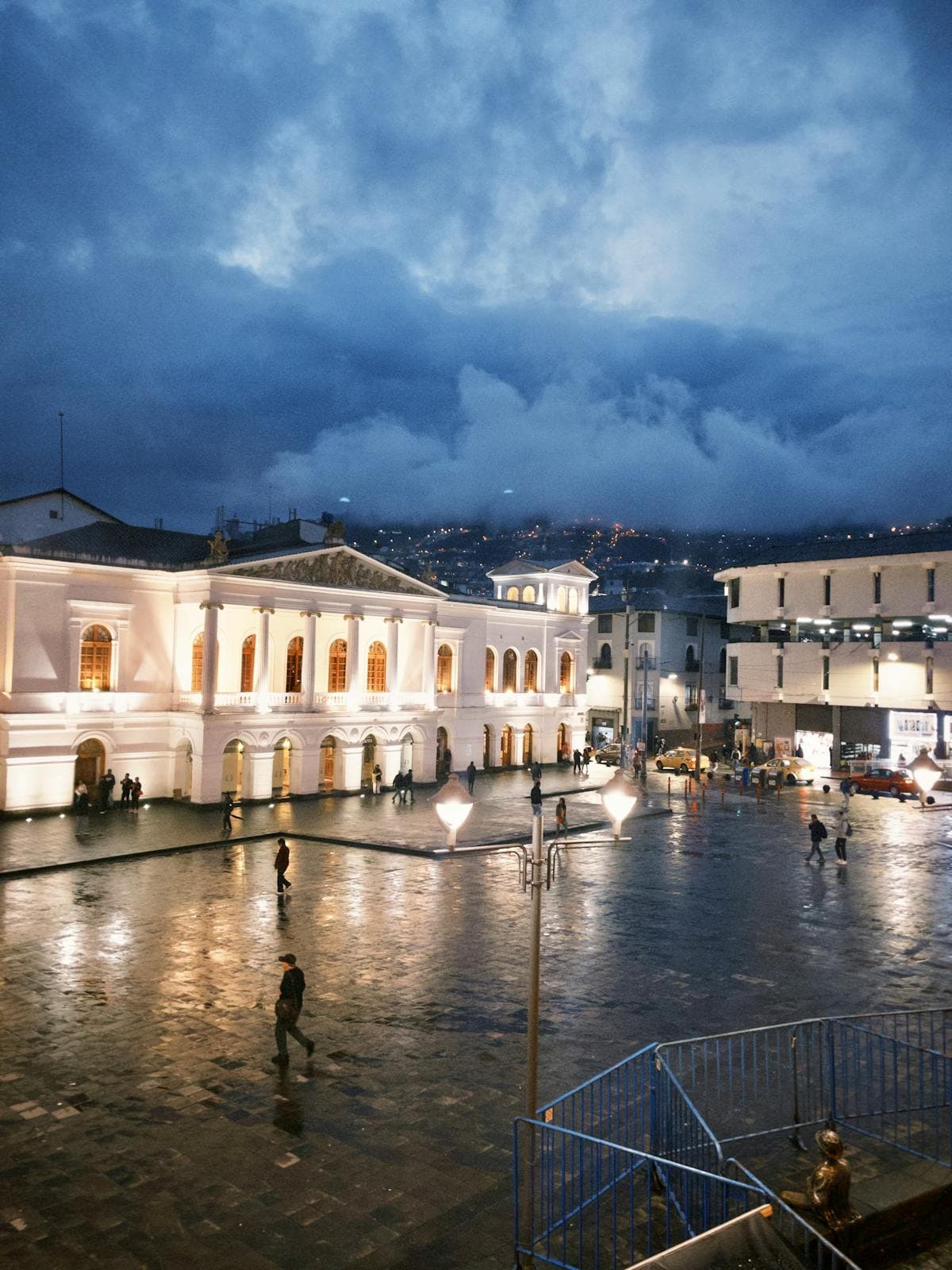
Walk from the Casa de la Cultura and El Ejido's carved arch through La Mariscal's villas, Rubén Vinci's domes and a castle at the foot of a modern tower, to La Floresta's independent cinema and heritage square.
Start · Casa de la Cultura: A Nation's House of Culture
DirectionsStops
- 1
Casa de la Cultura: A Nation's House of Culture
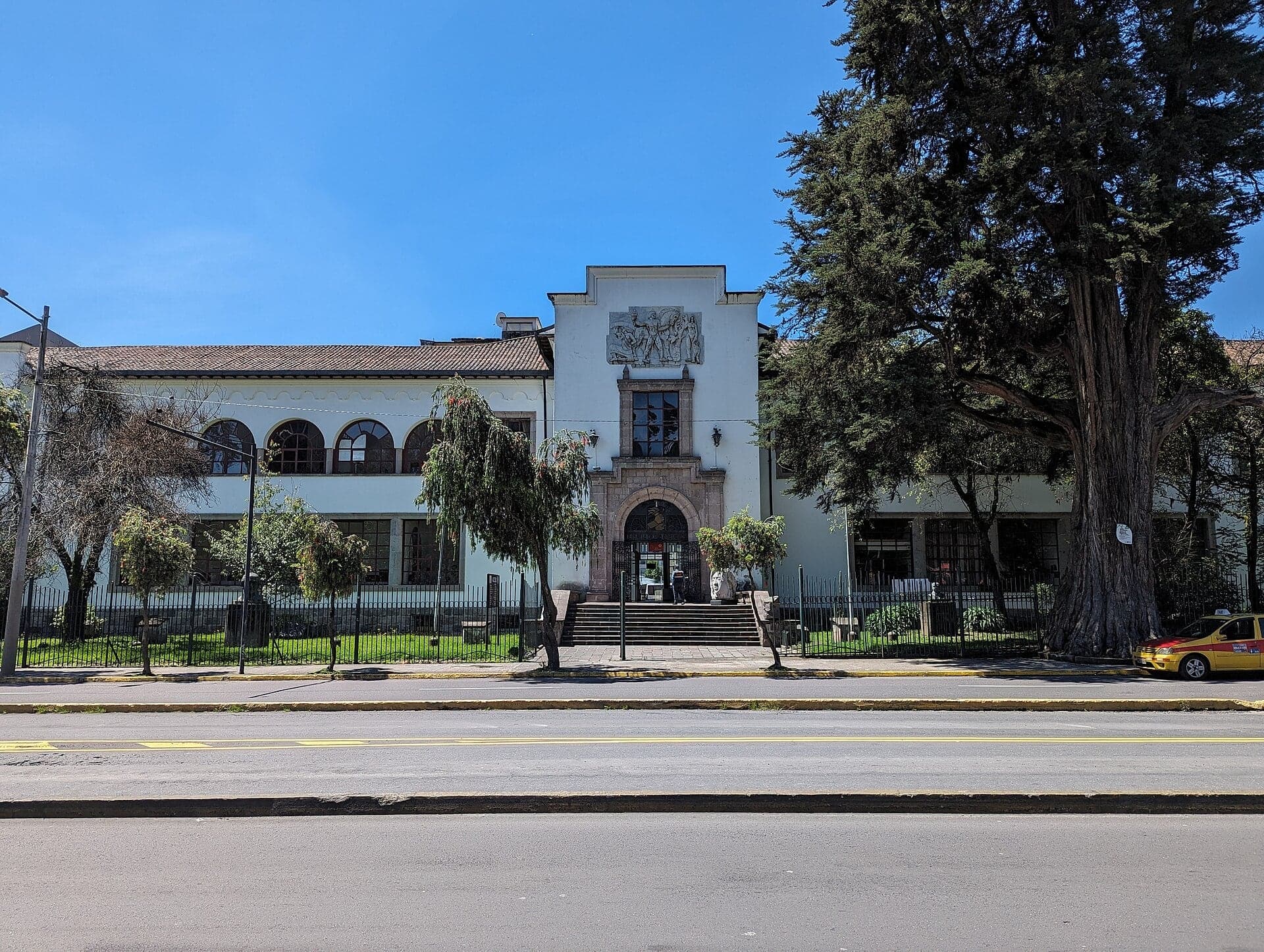
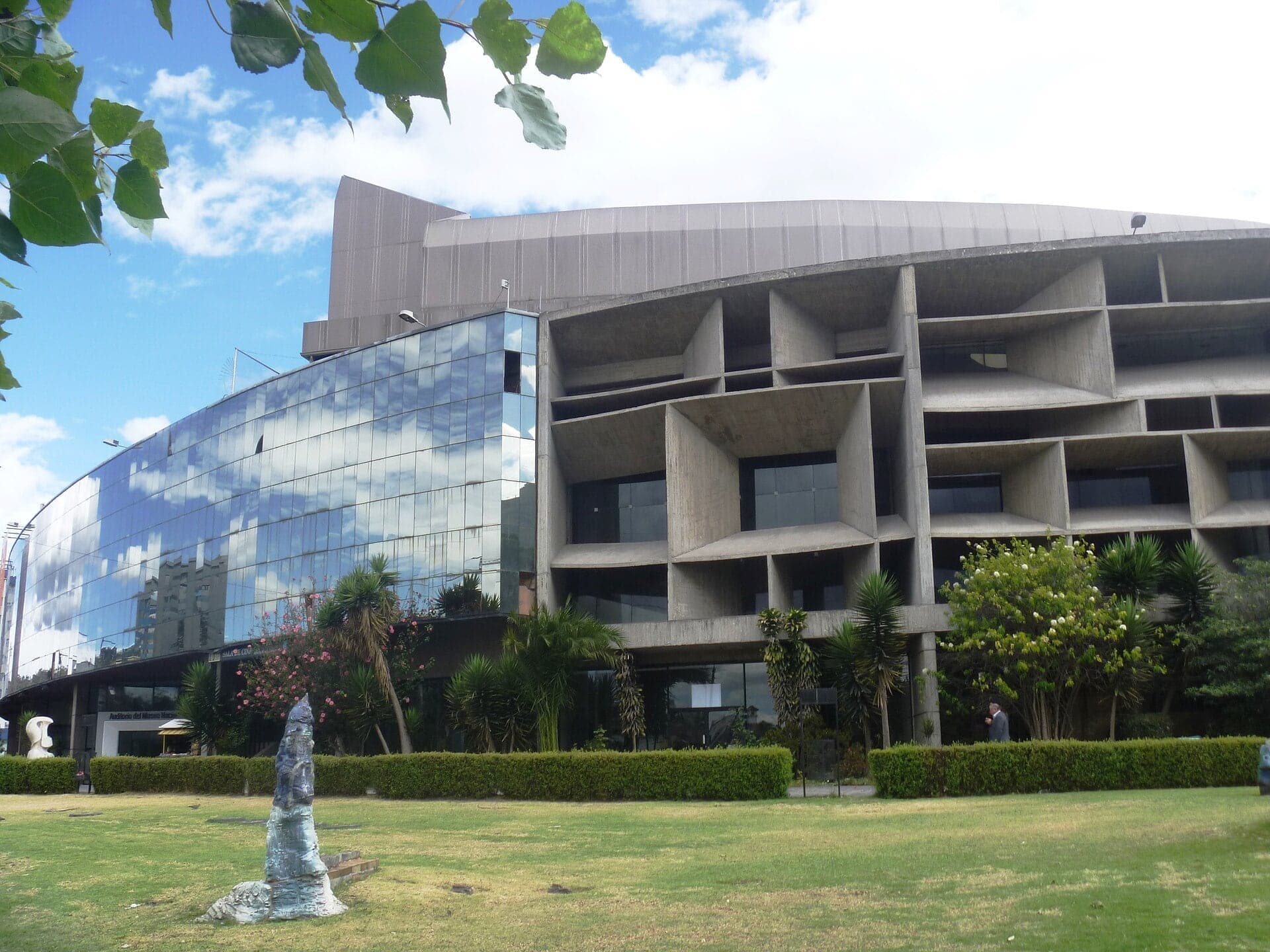
A national house of culture. Ecuador created the Casa de la Cultura by decree in 1944; its first building, from 1945 and 1946, stands behind the railings, the great main block behind it.
- 2
El Ejido: A Garden Gate Turned Arch
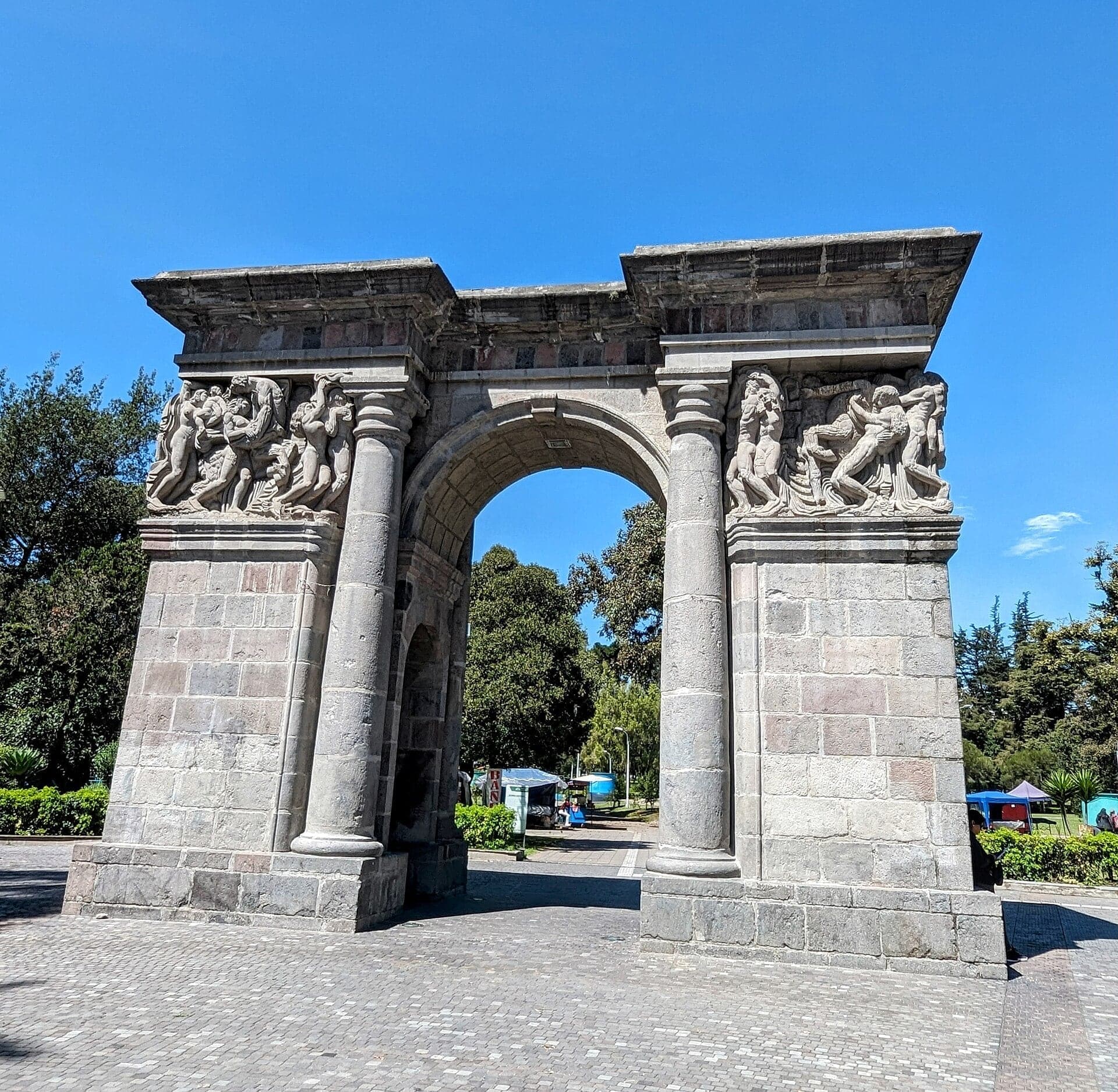
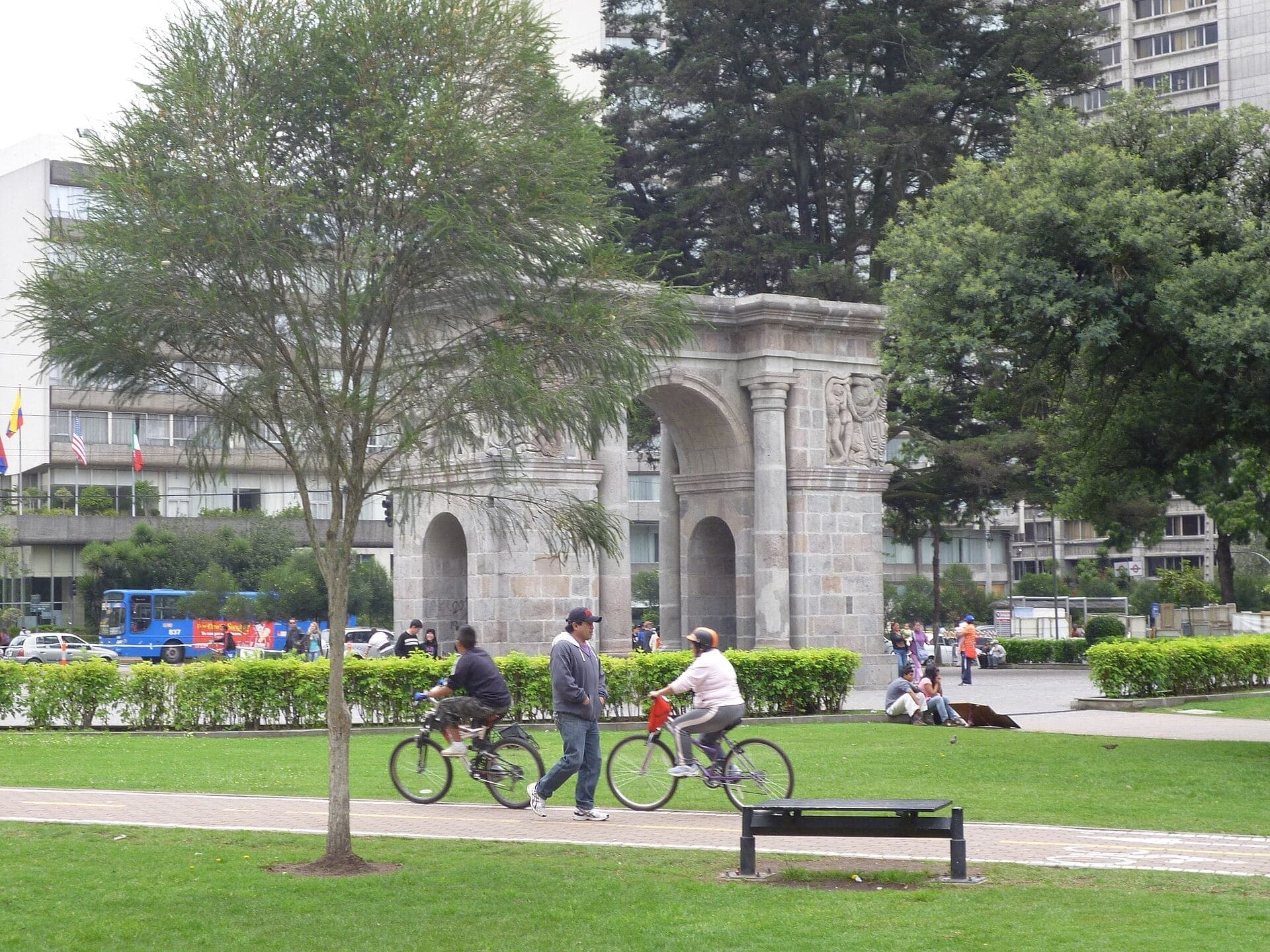
A carved stone arch in El Ejido. It was the garden gate of a private palace, rebuilt here in a park that began as the colonial city's common land.
- 3
Mercado Artesanal: From Pavement to Market Hall
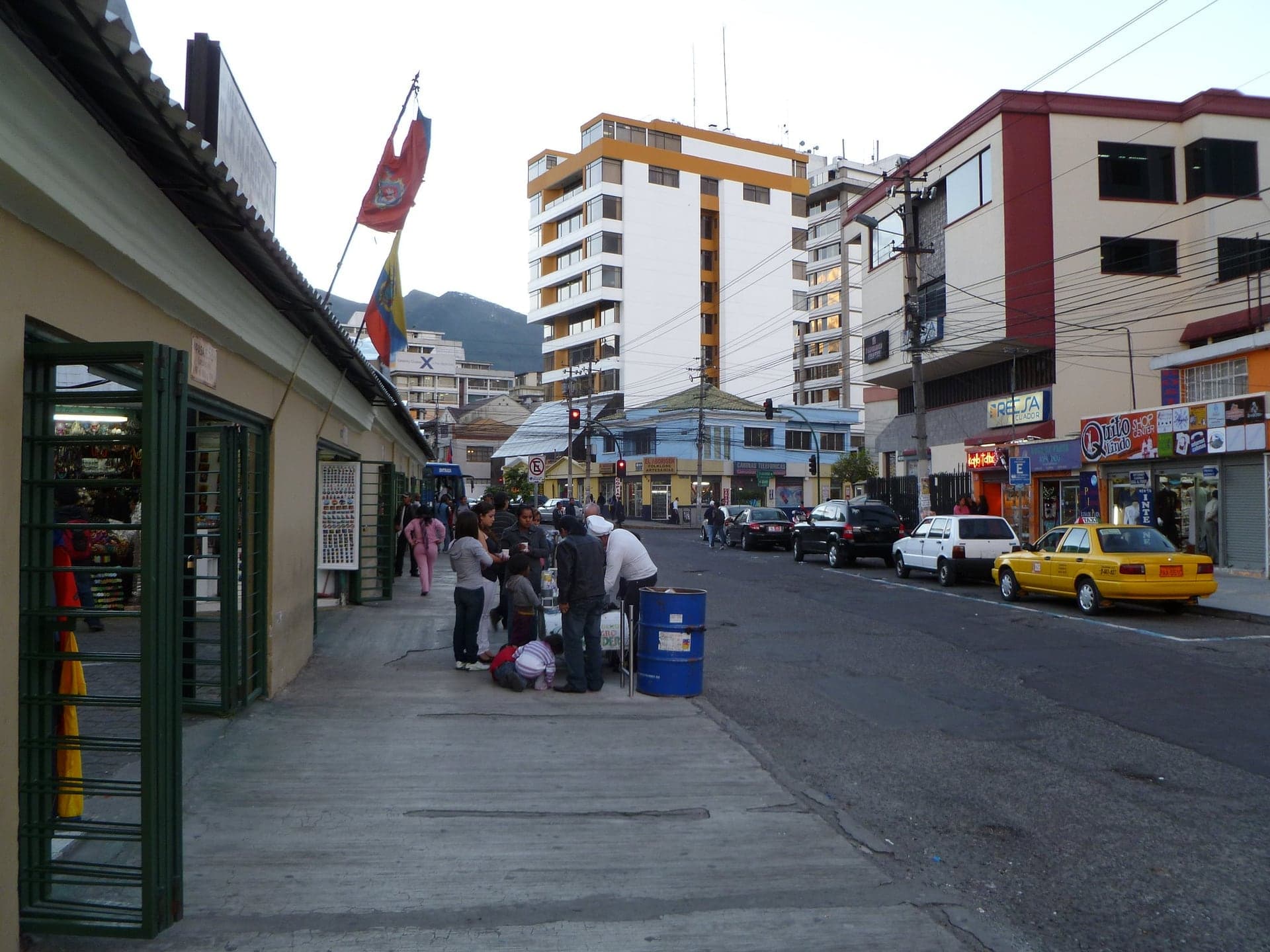
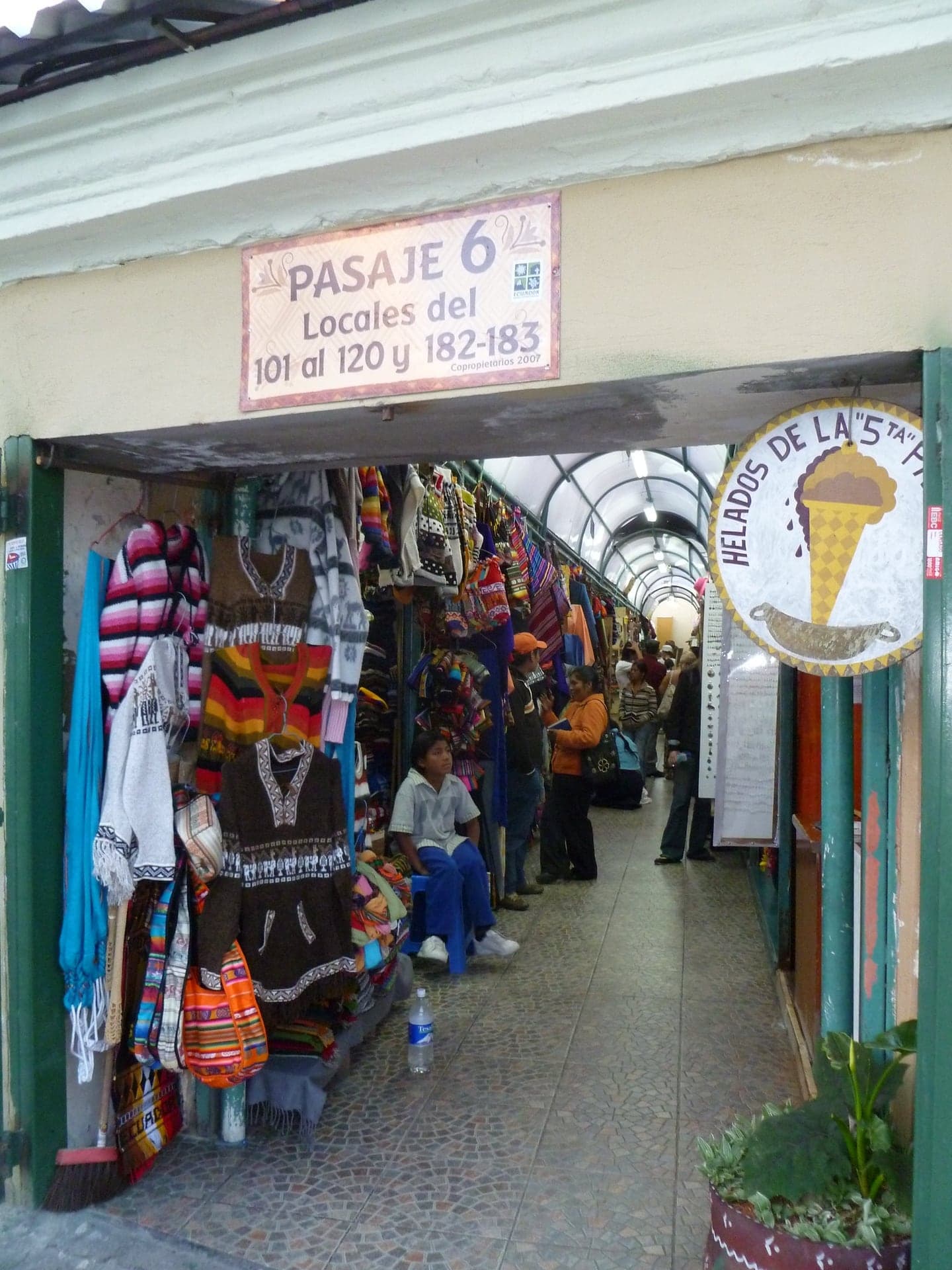
A craft market off Amazonas. In 2000 the city gave the traders, many of them from Otavalo, this site in La Mariscal, the garden suburb laid out from the 1920s.
- 4
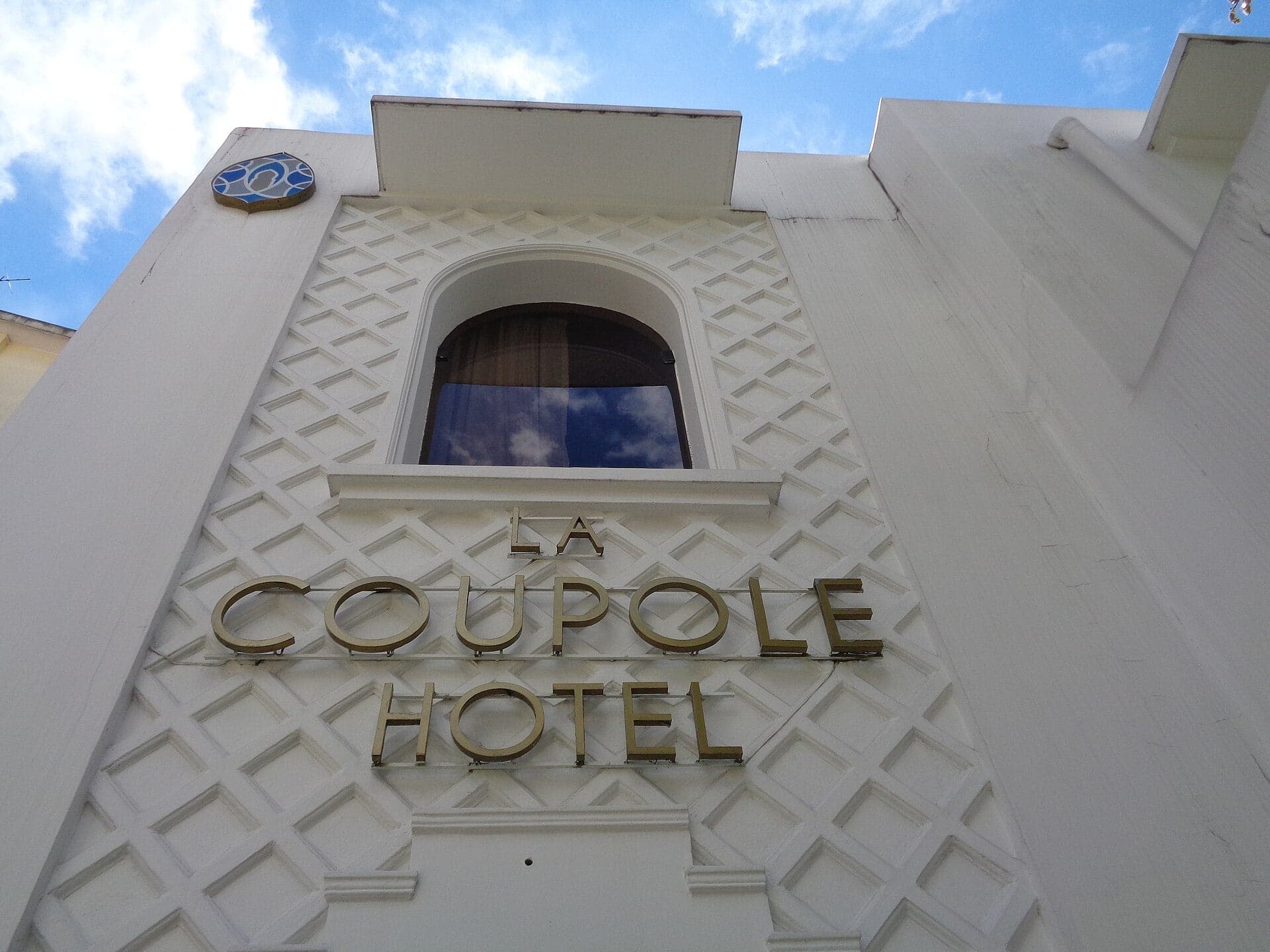
Calle Roca: Rubén Vinci's Domes
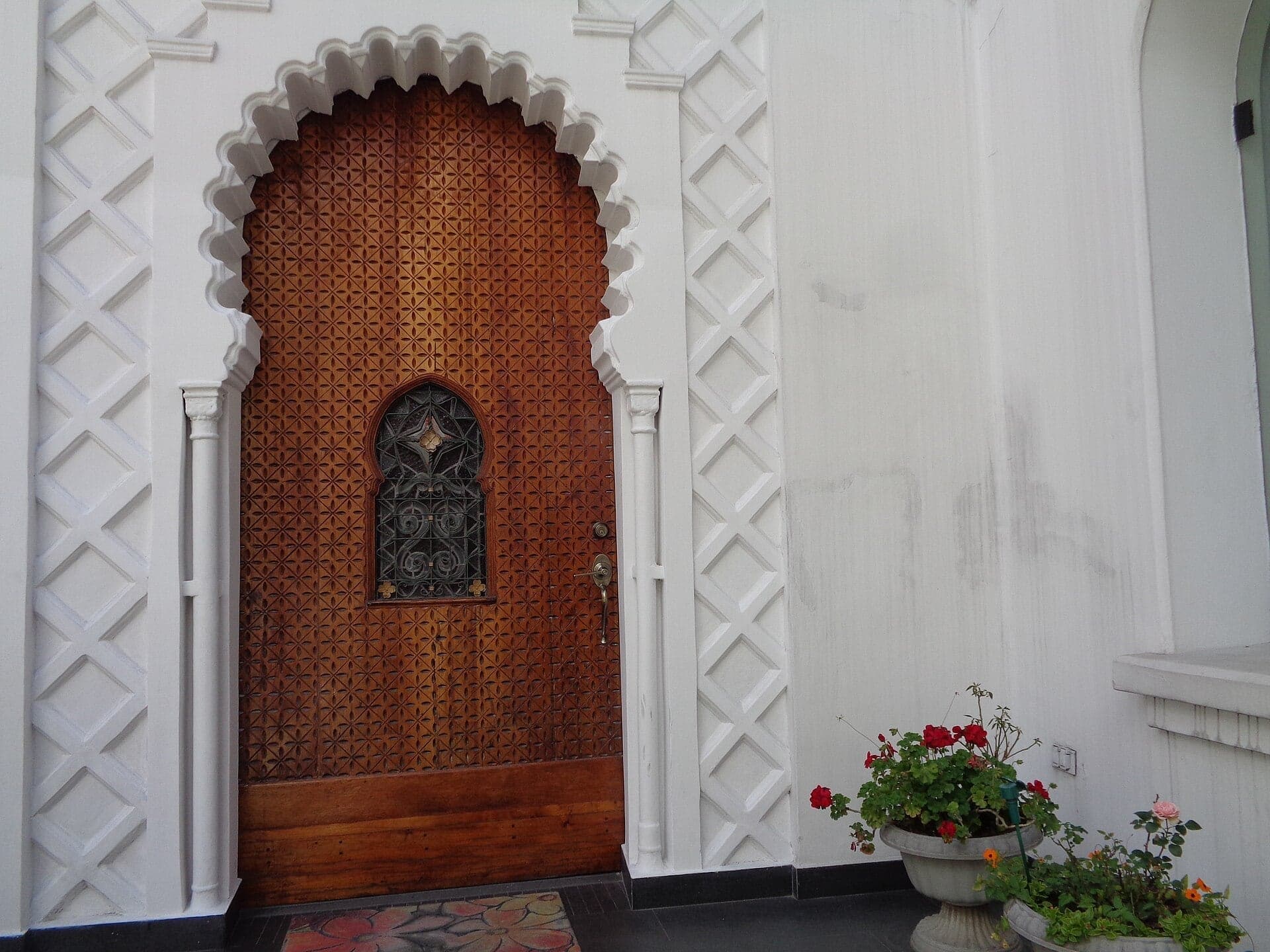
Domed 1930s houses by Rubén Vinci. Across the street rises La Coupole, with its domes and minarets, the garden suburb at its most fanciful.
- 5
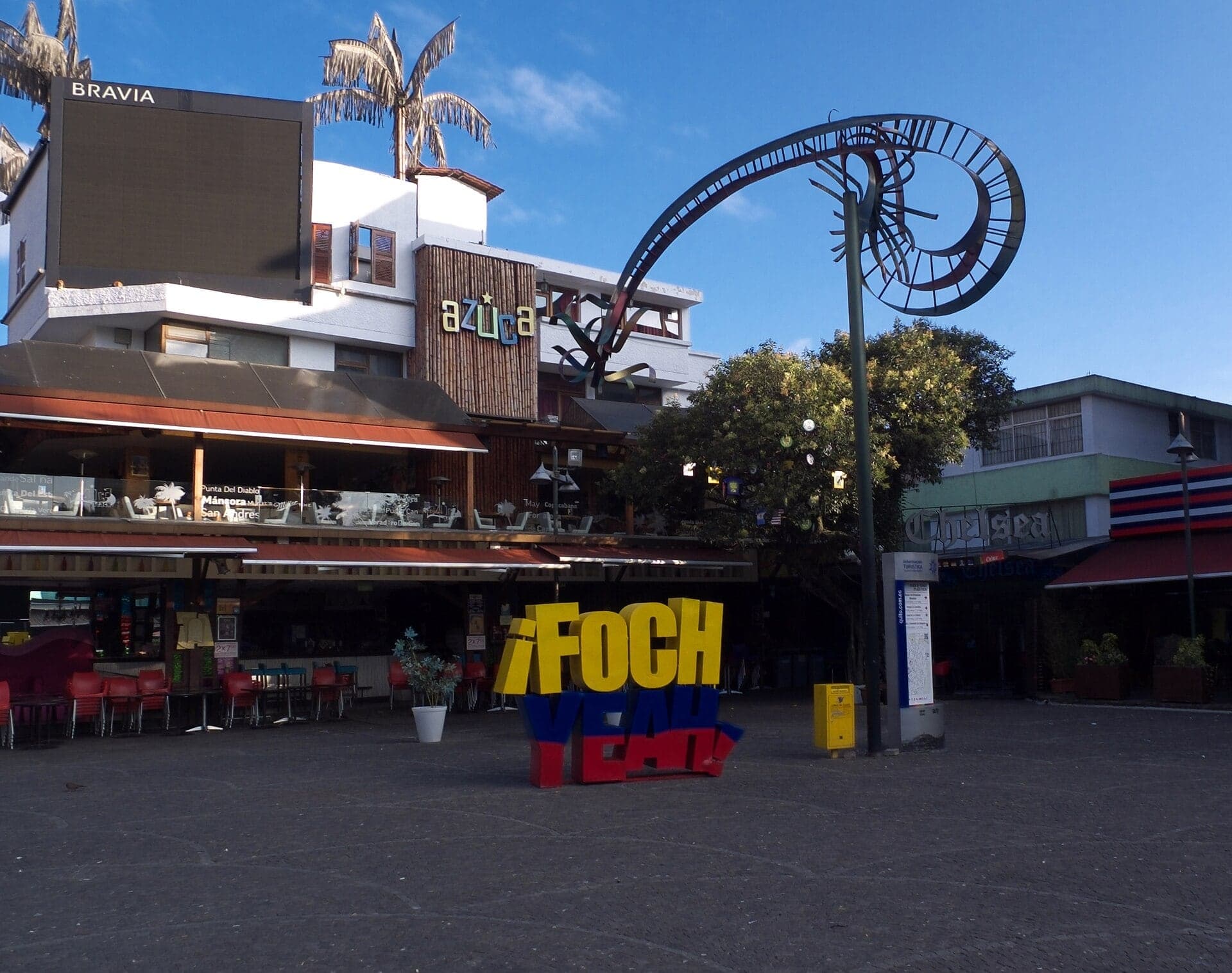
Plaza Foch: Villas Turned Bars
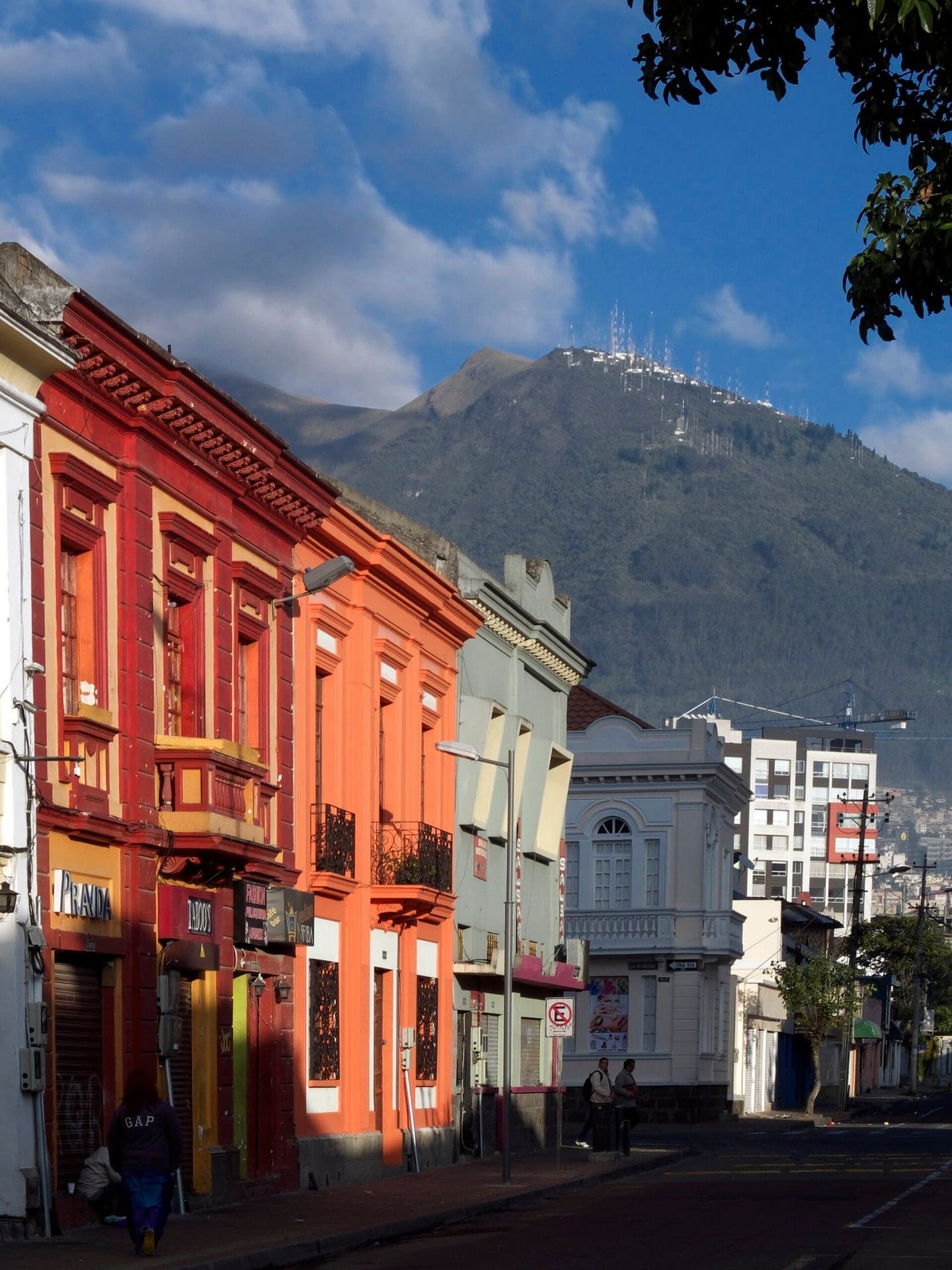
The square at La Mariscal's heart. Its villas became bars, hostels and agencies, and the 1970s oil boom brought the towers.
- 6
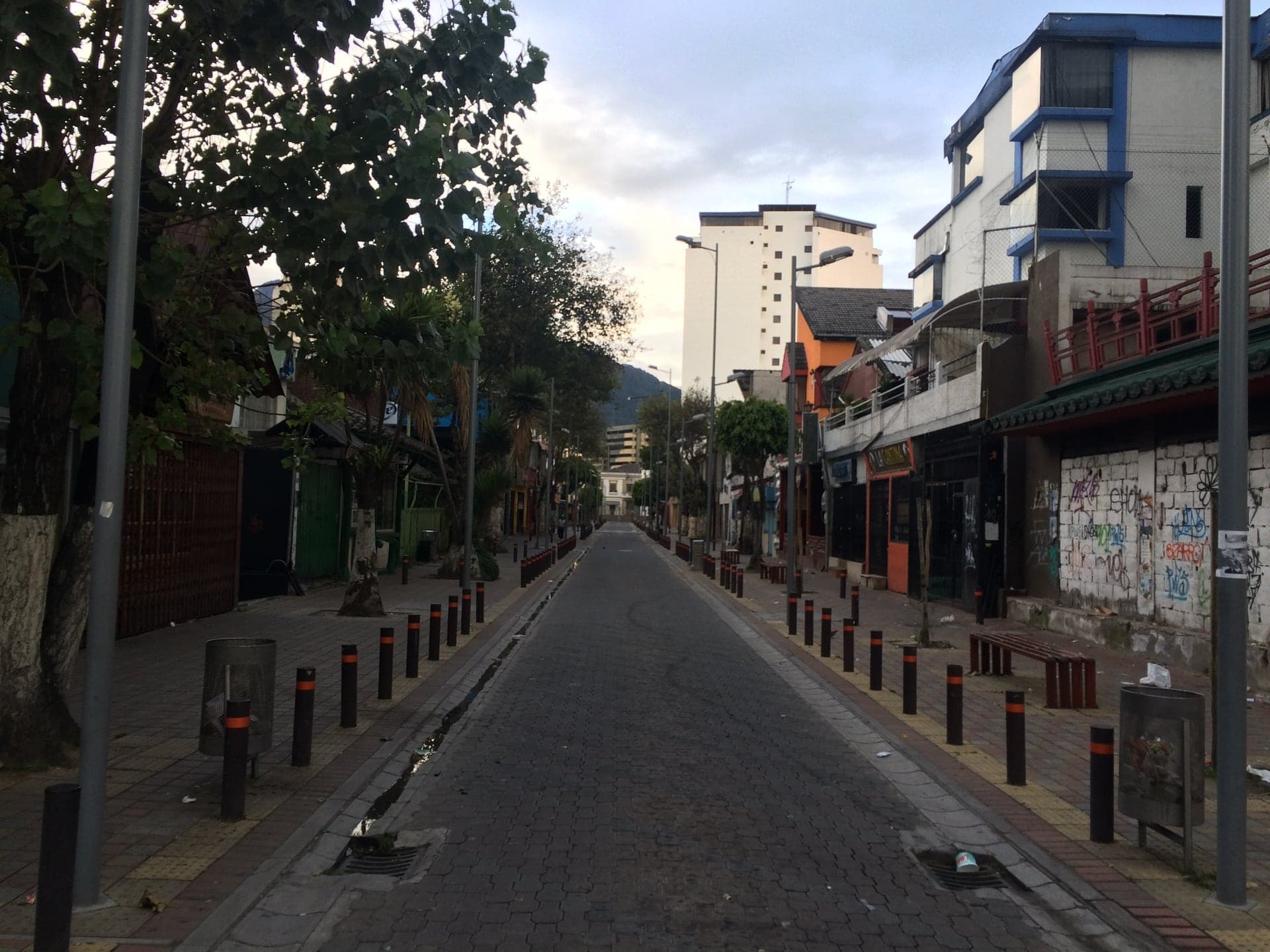
Calle Juan Rodríguez: Houses for the Pension Fund
Matching houses under plane trees. The engineer Luis Egüez designed them in 1937 for members of the state pension fund, the middle-class side of La Mariscal.
- 7
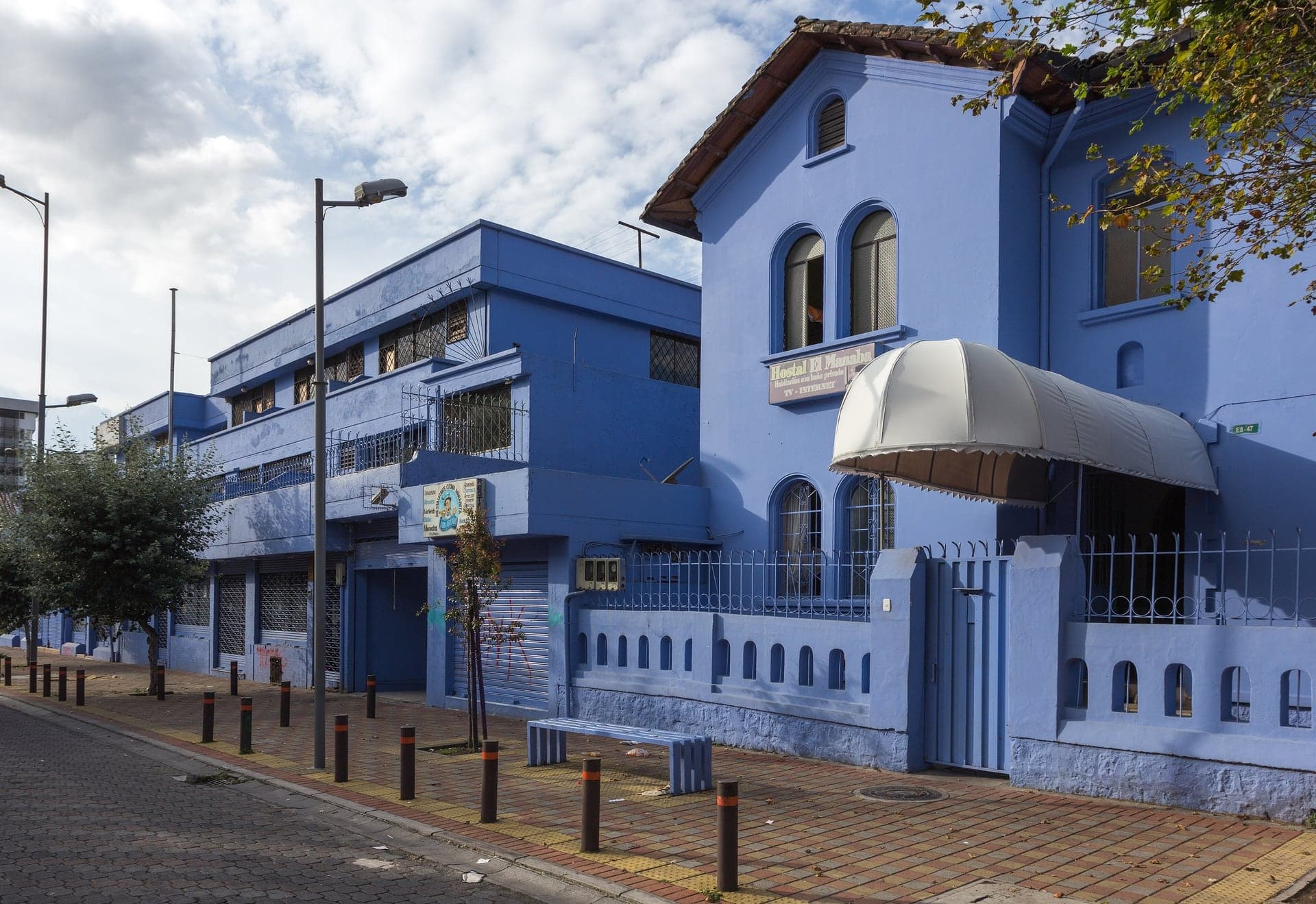
Castillo Larrea: The Castle Under the Tower
A 1930s castle beneath a tower. Built for a diplomat who studied the Middle Ages, it lost its garden and drawbridge to a tower in the 2010s.
- 8
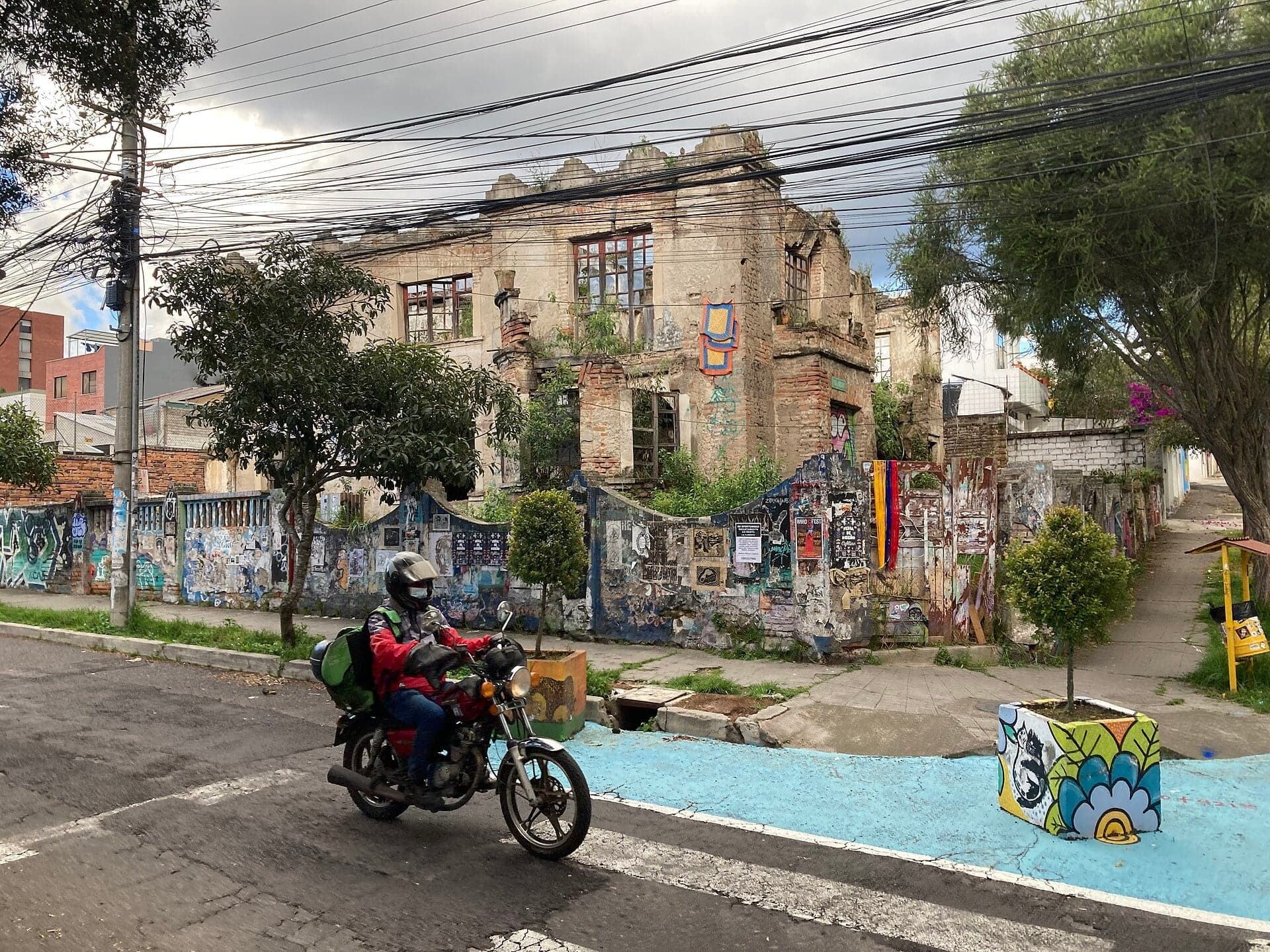
Ocho y Medio: The Cinema Beyond the Mall
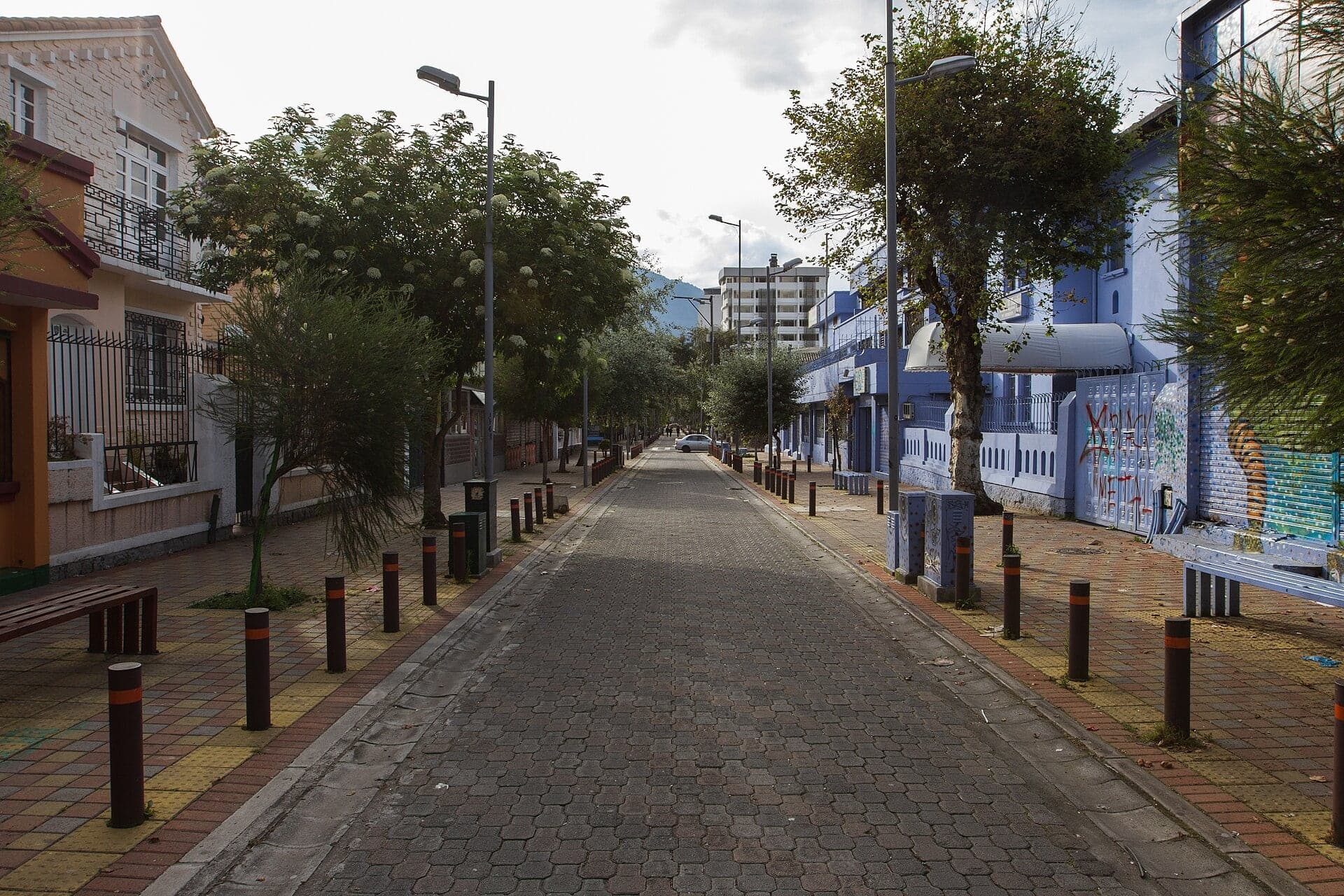
An independent cinema named for Fellini. Ocho y Medio opened in 2001 on the corner of Valladolid and Vizcaya, in La Floresta, where the streets are named after Spain.
- 9
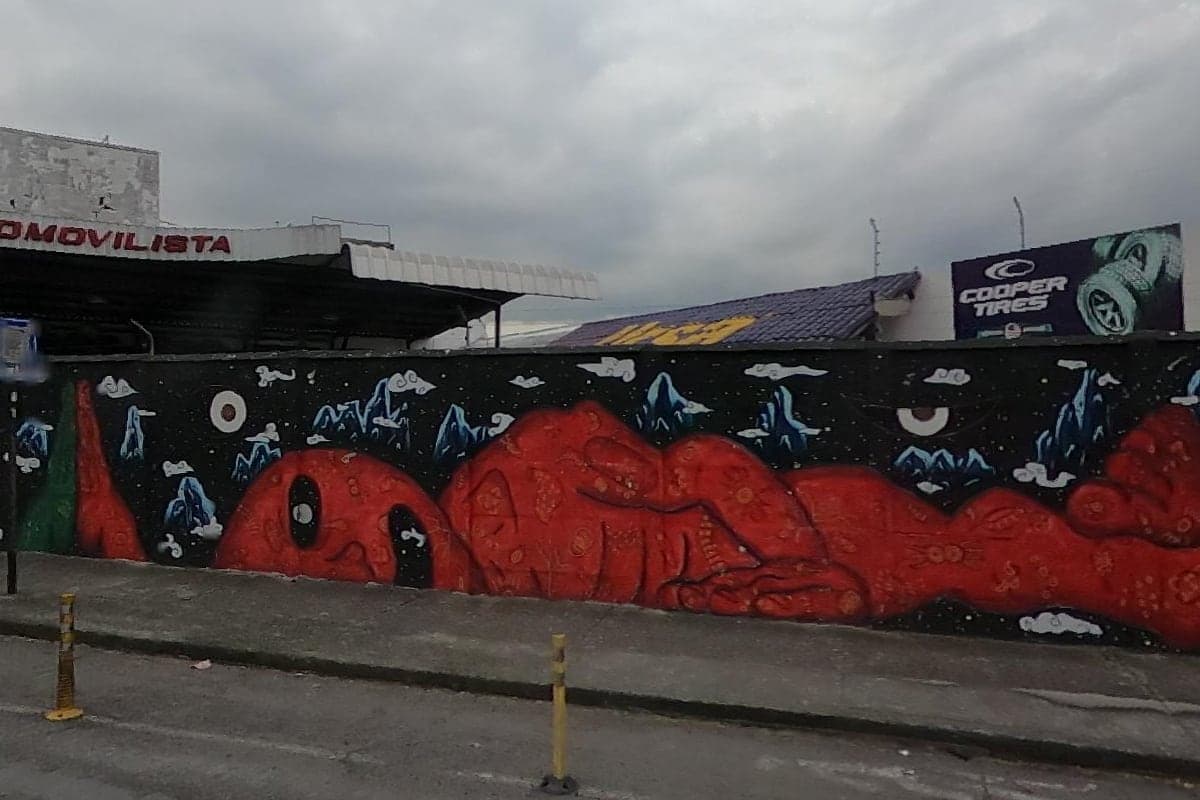
Parque Vizcaya: A Park Made from a Street
A small park made with neighbors, shown at Habitat III in 2016. Quito planned it for the part of the city with the least green space per person.
- 10
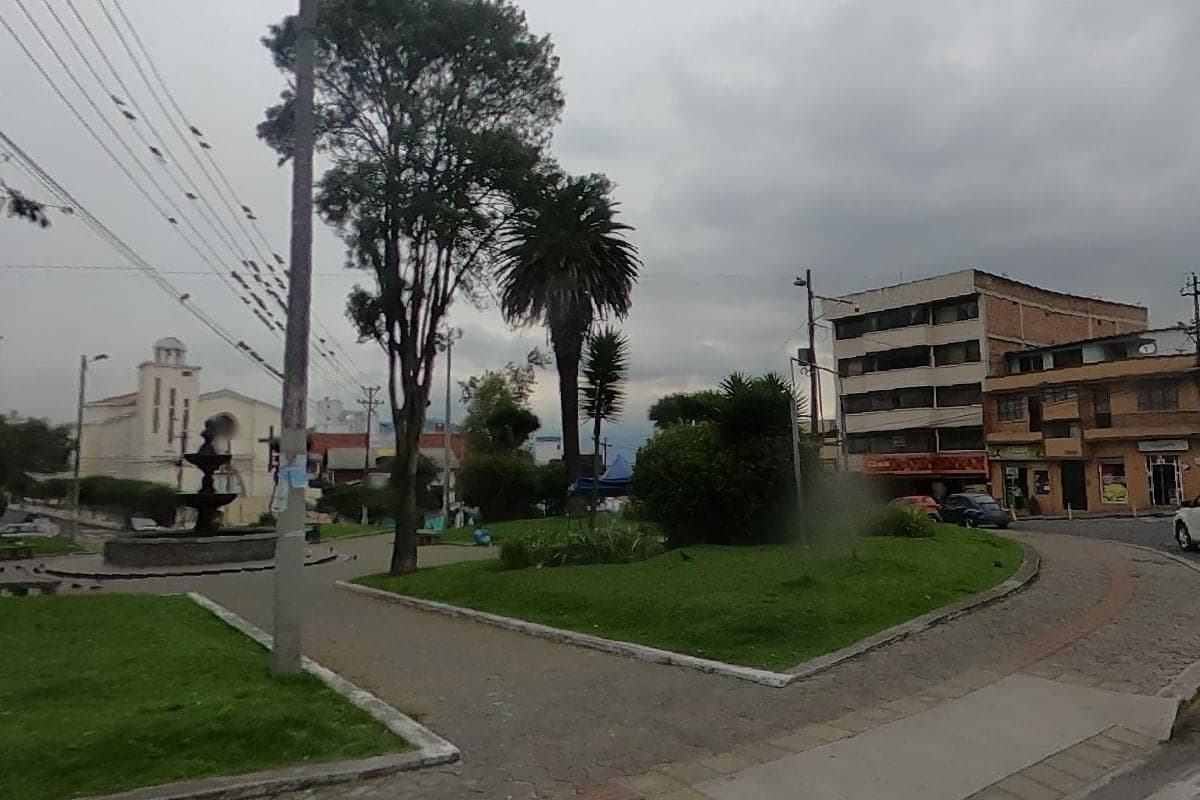
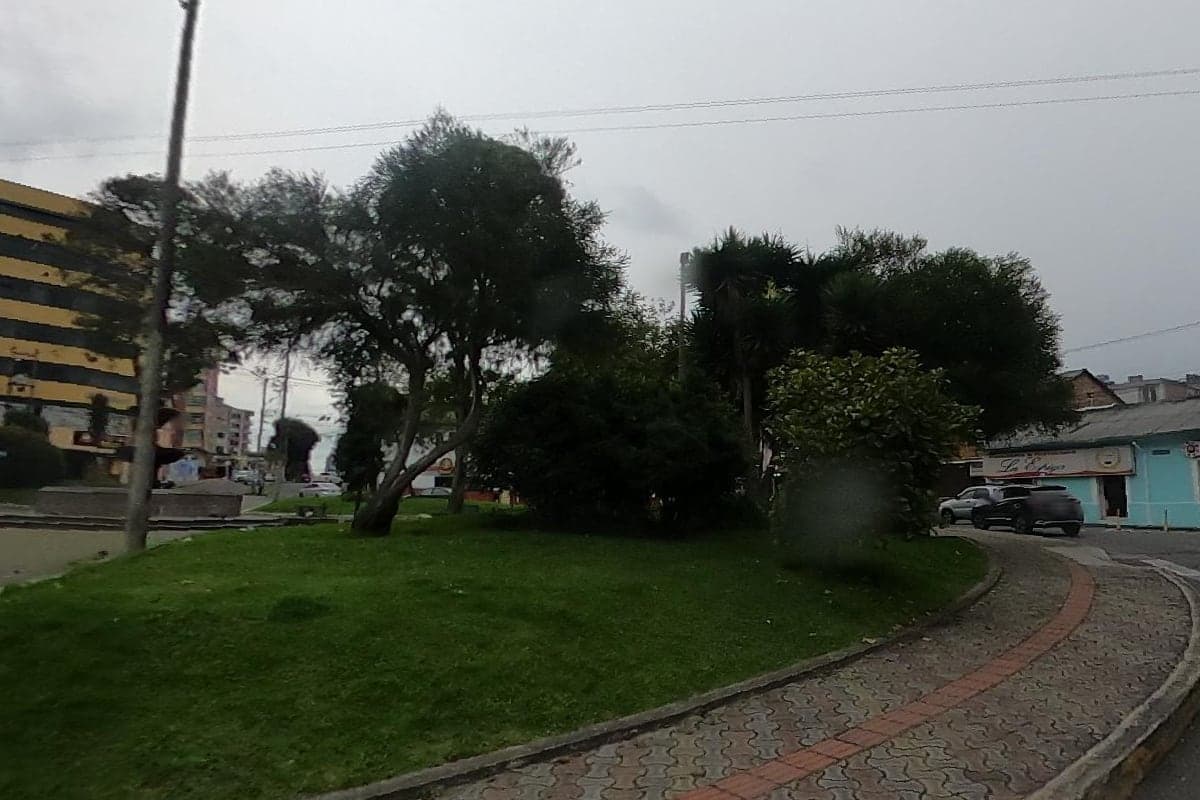
Plaza de la Floresta: The Suburb That Kept Its Scale
The round green of La Floresta. The suburb laid out from 1917 kept its houses, and in 2021 the state declared 141 of its properties national heritage.
Details
Best Time to Visit
By day, from about 9:00 to 16:30. La Mariscal and the edge of Parque El Ejido are best walked in daylight. At weekends the painters show their work along the park's Avenida Patria edge. Plaza Foch is quietest in the morning and busiest at night.
Pro Tips
- •Getting to the start: the Metro de Quito's El Ejido station has an entrance about 80 m from stop 1; the Ecovia's Casa de la Cultura stop on Avenida 6 de Diciembre is about 70 m away; the Trolebus El Ejido stop on Avenida 10 de Agosto is across the park, about 400 m. By taxi, ask for 'Casa de la Cultura, 6 de Diciembre y Patria'.
- •The Museo Nacional (MuNa) is still housed in the Casa de la Cultura complex at stop 1; a new building opposite Parque La Carolina is due to start in 2027 and open at the end of 2028. The Casa de la Cultura does not publish its hours online, so check at the door. Checked 5 October 2026.
- •Ocho y Medio (stop 8) is open with a published program: Sala 1 USD 7 and Sala 2 USD 5 general admission. Checked 5 October 2026.
- •The painter Oswaldo Guayasamín's foundation and the Capilla del Hombre are uphill from La Floresta, too far to walk on this route: take a taxi from the end, and check hours and prices on their own site before you go.
- •Karl Kohn's house (passed before stop 7) and the Castillo Larrea are private: both are seen from the street only.
- •The walk ends at the Plaza de la Floresta, with buses on Ladrón de Guevara and La Coruña and taxis passing the square.
Safety & Precautions
- •Walk it by day. La Mariscal has a reputation for petty theft and bag snatching on its busy commercial streets (Amazonas, Juan León Mera, Reina Victoria) and around Plaza Foch, and for drunk crowds after dark. Keep bags in front of you.
- •Parque El Ejido empties at night; the route uses only the paths near its busy north-east edge, between the Casa de la Cultura and the arch.
- •Crossings: the first crossing of Avenida 6 de Diciembre, in front of the Casa de la Cultura, is a wide zebra over busy lanes: cross with care. The second, at Lizardo García, and the crossing of 12 de Octubre at Luis Cordero are at traffic lights. Isabel la Católica, Toledo and La Coruña have zebras only, and Isabel la Católica and La Coruña carry buses: wait for a gap.
- •The Plaza de la Floresta is a roundabout: reach the green only by the zebra crossings.
- •La Floresta's streets were under municipal rehabilitation from 30 April 2026 (Vizcaya for about 55 days with sectional closures; Madrid for about 155 days; Mallorca, which the route crosses, from June to August). Works should be finished, but expect detours. Checked 5 October 2026.
- •Quito sits about 2,800 m above sea level. The climb up Lizardo García and on into La Floresta is gentle but long: take it slowly, and carry water and sun protection.
Travel advisory: Exercise Increased Caution (Level 2).
Gallery
Read the walk
The full story of La Mariscal and La Floresta: Quito Walks Out of Its Old Town, in words. Prefer to listen? Play it narrated, from home or on location.
Introduction
Quito, the capital of Ecuador, lived for centuries inside its colonial old town. In the twentieth century, it walked out. Families with money crossed the old common land north of the center and built a garden suburb of villas, castles and domed houses. Then came the modern buildings of the middle of the century, and from the nineteen seventies, oil money and the towers that replaced many of the villas.
This walk follows that move in one line. Over ten stops and about three and a half kilometres, a little over two miles, it runs from the Casa de la Cultura past the park of El Ejido, through La Mariscal, and on into La Floresta, a smaller suburb that kept its scale. Allow about an hour and three quarters. The city sits about two thousand eight hundred metres up, so take the gentle climb from La Mariscal up into La Floresta slowly.
Three builders come back along the way. Rubén Vinci built castles and domed houses for the rich. Luis Egüez, an engineer, drew a street of matching houses for the state pension fund. And Karl Kohn, an architect who left Prague for Quito in nineteen thirty-nine, built in straight lines.
One habit is worth keeping as you go: count the floors. They tell you which Quito you are looking at.
1. Casa de la Cultura: A Nation's House of Culture
Welcome to the Casa de la Cultura, the House of Ecuadorian Culture, on the Avenida Seis de Diciembre. Walk on along the sidewalk and stop where you can see through the railings to the white building in its garden.
Ecuador founded this institution by decree in August nineteen forty-four, three years after losing a war and much of its territory to Peru. The idea came from the writer Benjamín Carrión. In letters to his country, printed in a newspaper and later collected as a book, he argued that a small nation could still be great in culture. The whole complex now carries his name.
Look at the building behind the railings: the arcade along its front, and the stone tower over the door, with a relief carved on it. It went up in nineteen forty-five and nineteen forty-six, as the institution's first home.
Behind it, hidden from here, stands the great curved main building. Its first design dates from nineteen fifty-six, and it was not built until the late nineteen seventies, finished in nineteen eighty. Two buildings, a generation apart, share one site.
They are part of a bigger change. Between the middle of the nineteen forties and the middle of the nineteen seventies, modern buildings rose all round the edges of the park across the avenue: cultural centers, schools, homes and government offices. The old town lay to the south. The city was building its new face here, on its way out.
Keep this low building in mind. A modest height, a garden in front: that was the scale of the new city at first.
Follow the route across the avenue into the park. It is a wide zebra crossing over busy traffic lanes and the Ecovía bus lanes, so cross with care. Next, a garden gate that became an arch.
2. El Ejido: A Garden Gate Turned Arch
Walk on along the park path and stop where the stone arch stands before you, with the avenue running away beyond it.
This park is El Ejido, which means the common. It is what survived of the colonial city's common land, on the edge of town. In nineteen twenty-two it was laid out as a park, for the hundredth anniversary of the Battle of Pichincha, fought in eighteen twenty-two. Its official name is still Parque Veinticuatro de Mayo.
Now the arch. It was never meant to be a monument. It was the garden gate of a private palace, La Circasiana, the villa of the wealthy Jijón family, which still stands about a kilometre north of here. The family later gave the gate to the city, and it was rebuilt on this spot, at the head of Avenida Amazonas.
Look at the two piers. Both faces of the gate carry carved stone panels in relief. A rich family's garden gate has become the city's doorway to its new north. Look through it, and you can see where that leads: Avenida Amazonas, and the towers of La Mariscal.
The palace the gate came from belongs to the city now, and it houses the national institute for cultural heritage.
At weekends, painters hang their canvases along the park's edge on Avenida Patria, as they have for decades.
Follow the route out of the park and across Avenida Patria at the lights. Next, a market that began on the sidewalk.
3. Mercado Artesanal: From Pavement to Market Hall
Walk on along Juan León Mera and stop across the street from the low market hall.
You are now in La Mariscal. Quito's council drew up a plan for a garden city here in nineteen eighteen, building began in the early nineteen twenties, and in nineteen twenty-four, for the same battle centenary as the park, the new suburb was named Ciudadela Mariscal Sucre. Everyone shortens it to La Mariscal. It was meant for houses, one family to a garden.
The market across the street belongs to a much later chapter. For years, craft sellers, many of them from Otavalo, set out their goods on the sidewalks of Avenida Amazonas and the streets around it. They pressed the mayor for a place of their own, and in May two thousand they got this site. At first they had only tents. The hall came later.
Look at how it sits: a low hall given over to stalls, in a district built for private houses. The traders moved off the street, but they stayed close to the visitors who come through La Mariscal.
If you want to browse, it is an easy place to come back to after the walk. And if you go north, our Otavalo walk explores the market town many of these traders come from.
Follow the route on into the streets of La Mariscal. Next, a street of domes.
4. Calle Roca: Rubén Vinci's Domes
Walk on along Calle Roca and stop on the sidewalk opposite the house with the domes. From the nineteen twenties, Quito's wealthy families moved out of the old town into this garden suburb, and they built in whatever style took their fancy: castles, Moorish domes, Bavarian…
Full narration for this stop unlocks with the tour.
5. Plaza Foch: Villas Turned Bars
Walk on into Plaza Foch, the paved square where the streets meet, and stop at its edge. On the long walk up Reina Victoria you passed both halves of La Mariscal's story: low villas behind garden walls, and taller blocks where other villas once stood. Embassies and the first…
Full narration for this stop unlocks with the tour.
6. Calle Juan Rodríguez: Houses for the Pension Fund
Walk on along Juan Rodríguez and stop under the plane trees, across from the low houses. This street is the other side of La Mariscal. Not castles for the rich: matching houses for the middle class. Between nineteen thirty-eight and nineteen forty-five, the state pension fund,…
Full narration for this stop unlocks with the tour.
7. Castillo Larrea: The Castle Under the Tower
Walk on along Doce de Octubre and stop where a white castle appears across the paved forecourt, a tall tower rising behind it. First, a look back. At the corner where Lizardo García meets this avenue stands a high garden wall, with a flat cornice just showing above it. Behind…
Full narration for this stop unlocks with the tour.
8. Ocho y Medio: The Cinema Beyond the Mall
Walk on along Valladolid and stop at the corner of Vizcaya, across from the cinema and its cafe. When you crossed Doce de Octubre, you left La Mariscal for La Floresta, and the scale dropped. This suburb was designed from nineteen seventeen, on land that had been a hacienda,…
Full narration for this stop unlocks with the tour.
9. Parque Vizcaya: A Park Made from a Street
Walk on along Vizcaya and stop at the corner of Lugo, on the edge of the little park. This park began as a design shown to the world in twenty sixteen. That October, Quito hosted Habitat Three, the United Nations conference on housing and cities, and part of its public program…
Full narration for this stop unlocks with the tour.
10. Plaza de la Floresta: The Suburb That Kept Its Scale
Walk on to the round green in the middle of the Plaza de la Floresta and stop there, with the church in view. This is the heart of La Floresta: a green island inside a roundabout, and on its edge, the parish church of Santa Mariana de Jesús, run by Franciscans. Look at what…
Full narration for this stop unlocks with the tour.
- Edificio de la Casa de la Cultura Ecuatoriana en Quito. — Freddy eduardo, CC BY-SA 4.0 · source
- Edificio de los Espejos, parte del complejo Casa de la Cultura Ecuatoriana de la ciudad de Quito. — H3kt0r, CC BY-SA 3.0 · source
- Puerta de La Circasiana (monument in Quito, Ecuador) — Freddy eduardo, CC BY-SA 4.0 · source
- Parque El Ejido Quito Ecuador — Quitolabicicleta, CC BY-SA 3.0 · source
- Mercado Artesanal - Quito, Ecuador - South America (Flickr title; tags ecuador, quito, southamerica) — David Berkowitz, CC BY 2.0 · source
- Mercado Artesanal - Quito, Ecuador - South America (Flickr title; tags ecuador, quito, southamerica) — David Berkowitz, CC BY 2.0 · source
- La Coupole Hotel, Quito Quito, Ecuador) was constructed on what was once a 16th century Inca city at 2,850 meters above sea level in the A — David Adam Kess, CC BY-SA 4.0 · source
- (main entrance, hand carved wooden door) La Coupole Hotel, Quito Hand Carved Exterior Door (La Coupole Hotel, Quito) Wooden doors in Qui — David Adam Kess, CC BY-SA 4.0 · source
- Plaza Quinde (La Mariscal), al amanecer. Esta plaza es conocida popularmente como Foch y se encuentra ubicada en el cruce de las calles Mari — Pedro M. Martínez Corada - www.martinezcorada.es, CC BY-SA 4.0 · source
- La calle Mariscal Foch (Quito, Ecuador), al amanecer; al fondo se puede observar una de las cumbres del volcán Pichincha — Pedro M. Martínez Corada (www.martinezcorada.es), CC BY-SA 4.0 · source
- a motorcyclist drives down Valladolid Street in La Floresta, Quito — Theodore.shouse, CC BY 4.0 · source
- Calle de Mariscal, Quito - Equador; geotag -0.202617, -78.490578 — Paulo JC Nogueira, CC BY-SA 3.0 · source
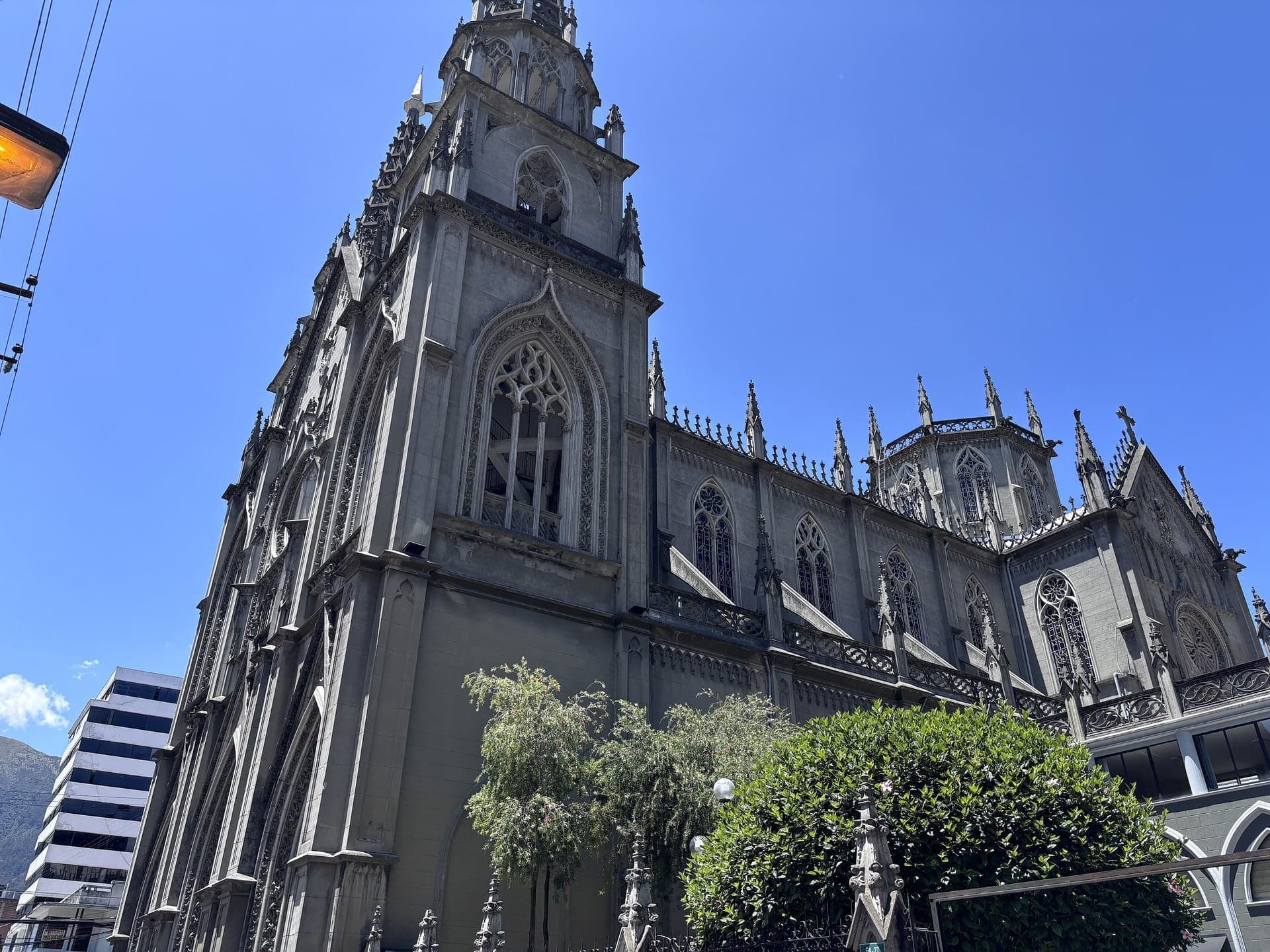
- Iglesia de Santa Teresita, vista lateral oriental desde la Calle General Francisco Robles. Barrio de La Mariscal, Quito. — Ranoutofusername, CC BY-SA 4.0 · source
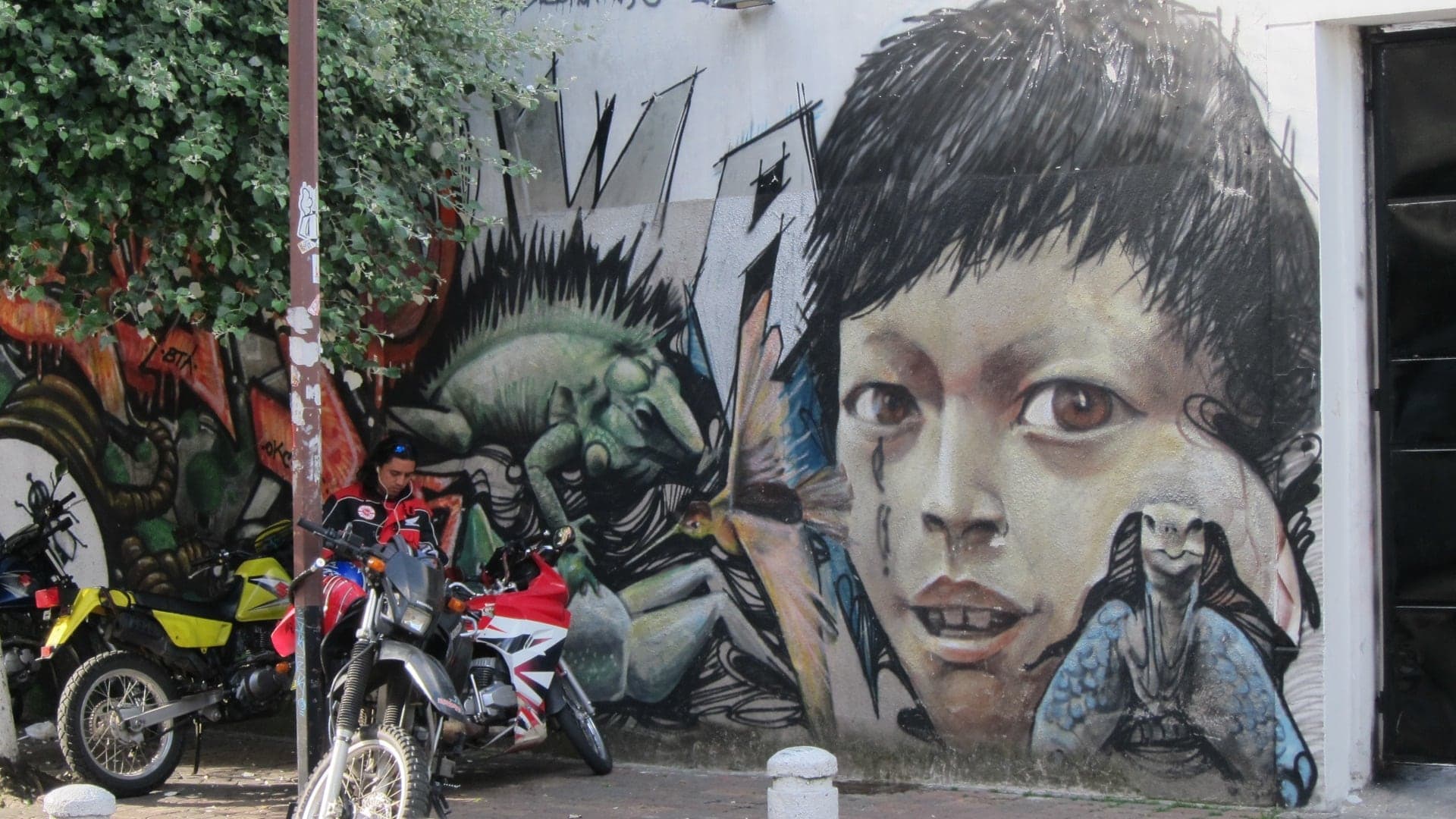
- title "Quito graffiti"; no geotag, no street named — Colleen Taugher, CC BY 2.0 · source
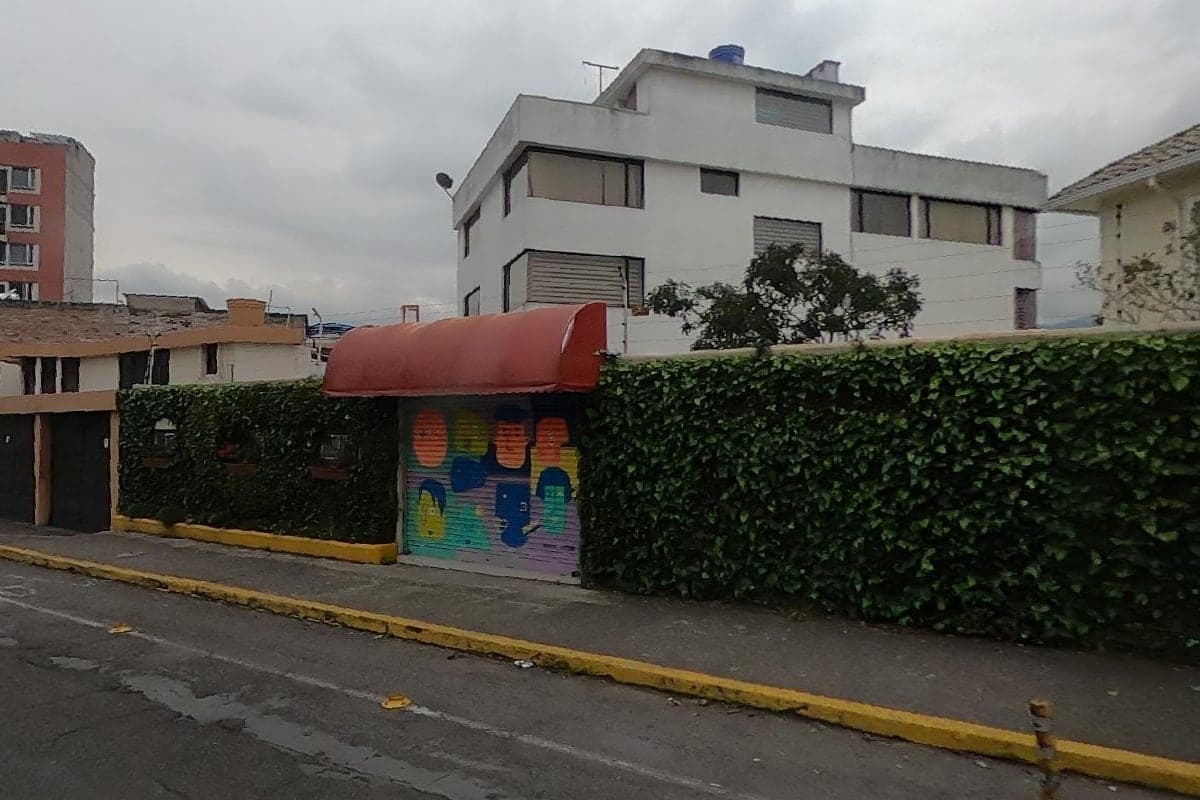
- Photo from Mapillary; geotag -0.207739, -78.482099 (about 95 m north of the pin, La Floresta) — kaart_2 (Mapillary), CC BY-SA 4.0 · source
- Photo from Mapillary; geotag -0.208537, -78.482203 (about 60 m from the pin) — kaart_2 (Mapillary), CC BY-SA 4.0 · source
- Photo from Mapillary; geotag -0.210879, -78.482487 (about 40 m from the pin) — kaart_2 (Mapillary), CC BY-SA 4.0 · source
- Photo from Mapillary; geotag -0.211390, -78.482415 (about 20 m from the pin) — kaart_2 (Mapillary), CC BY-SA 4.0 · source
Images may be cropped or resized. Other photos via Unsplash and Pexels.