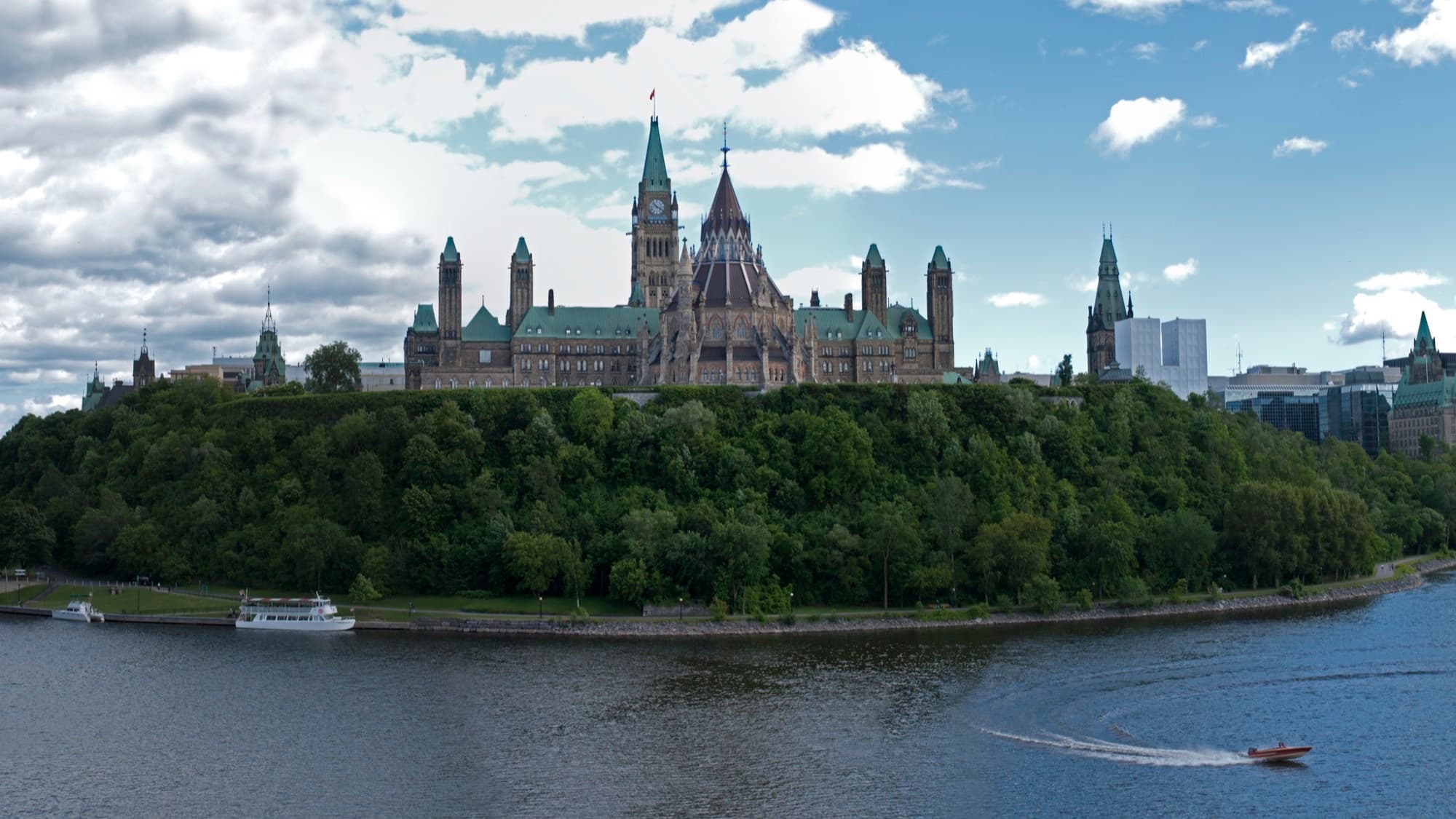
The Parliament that visitors photograph is not the Parliament of Confederation. It is a nineteen-sixteen-to-nineteen-twenty-seven reconstruction designed by John A. Pearson and Jean-Omer Marchand for a country that had just discovered, on the battlefields of the First World War, that it was a country. Eight stops, about one kilometre, end at the Major's Hill Park overlook.
Start · Wellington at Metcalfe: The Gate
DirectionsStops
- 1
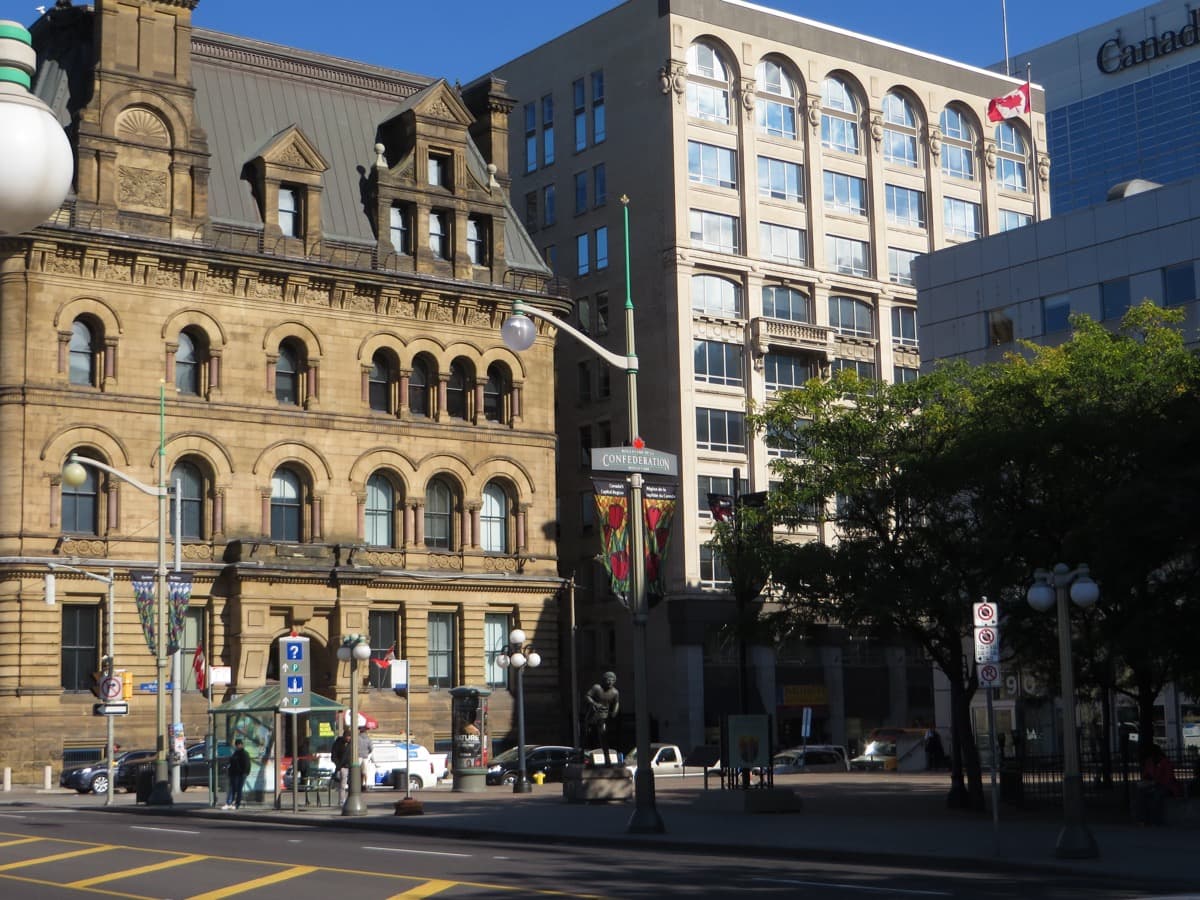
Wellington at Metcalfe: The Gate
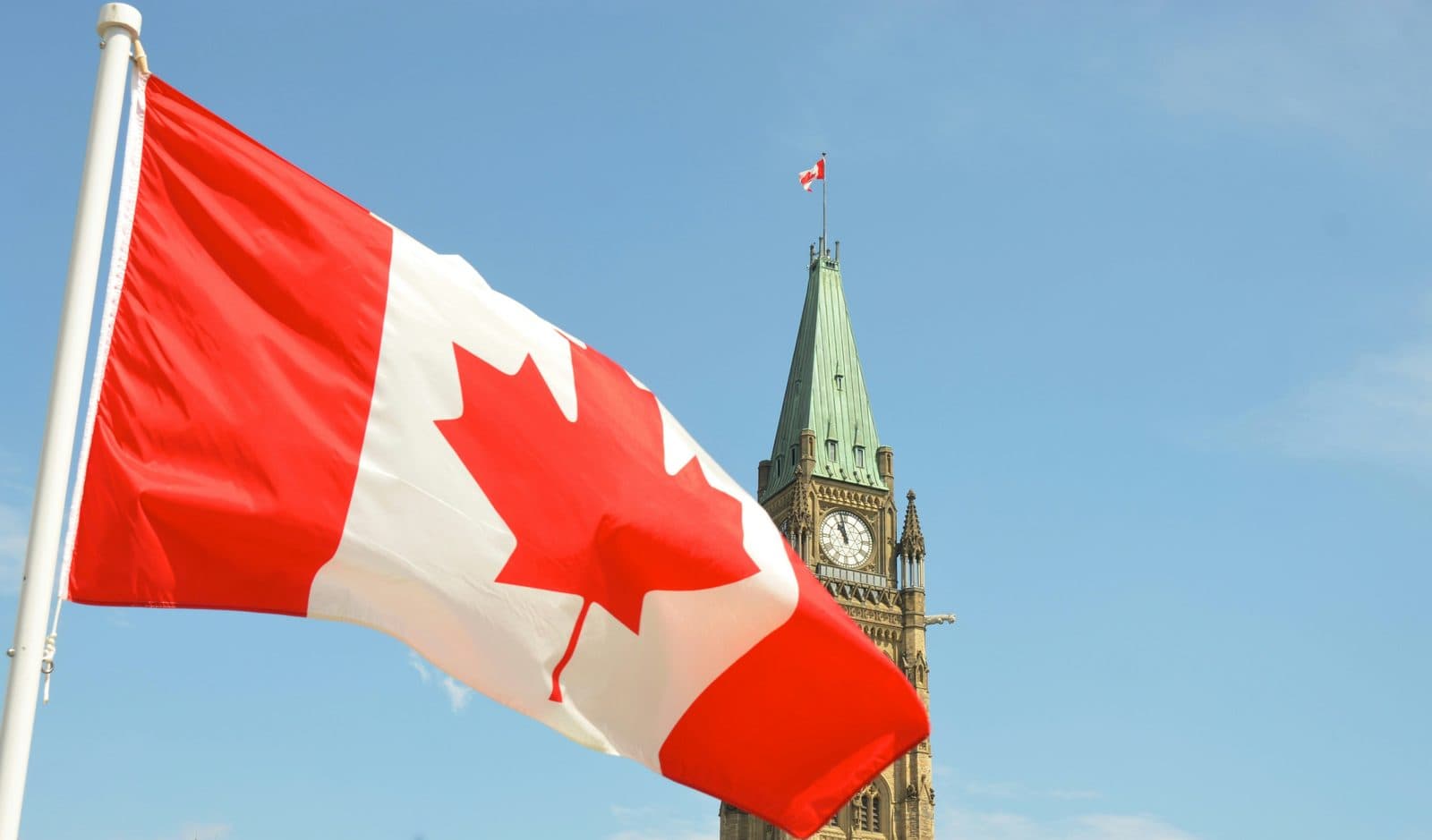
The wide view of the central parliamentary lawn. West Block, Centre Block with Peace Tower, East Block. Two architectural eras layered in one frame.
- 2
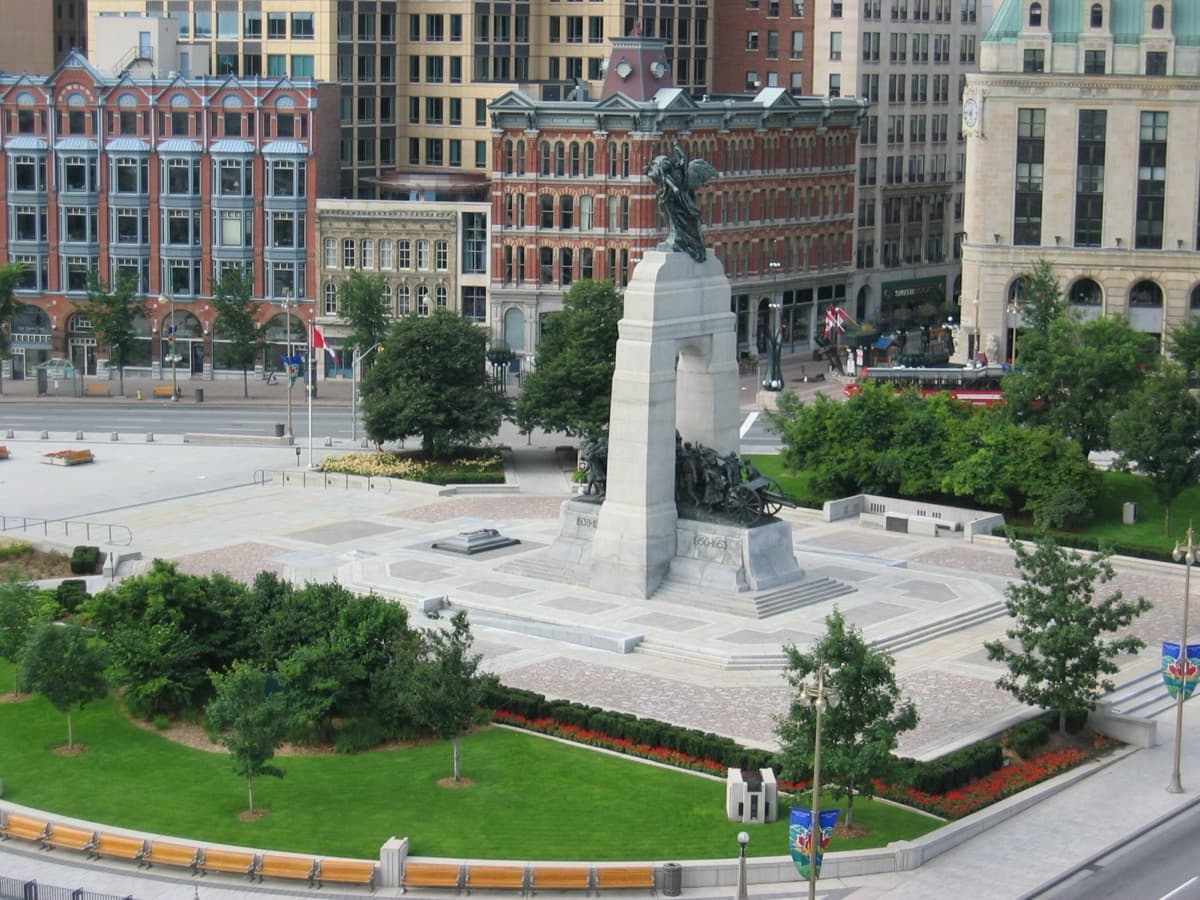
Confederation Square: The 1939 Unveiling
Vernon March's National War Memorial, unveiled 21 May 1939 by King George VI. The Tomb of the Unknown Soldier added in 2000. Three war eras layered on one base.
- 3
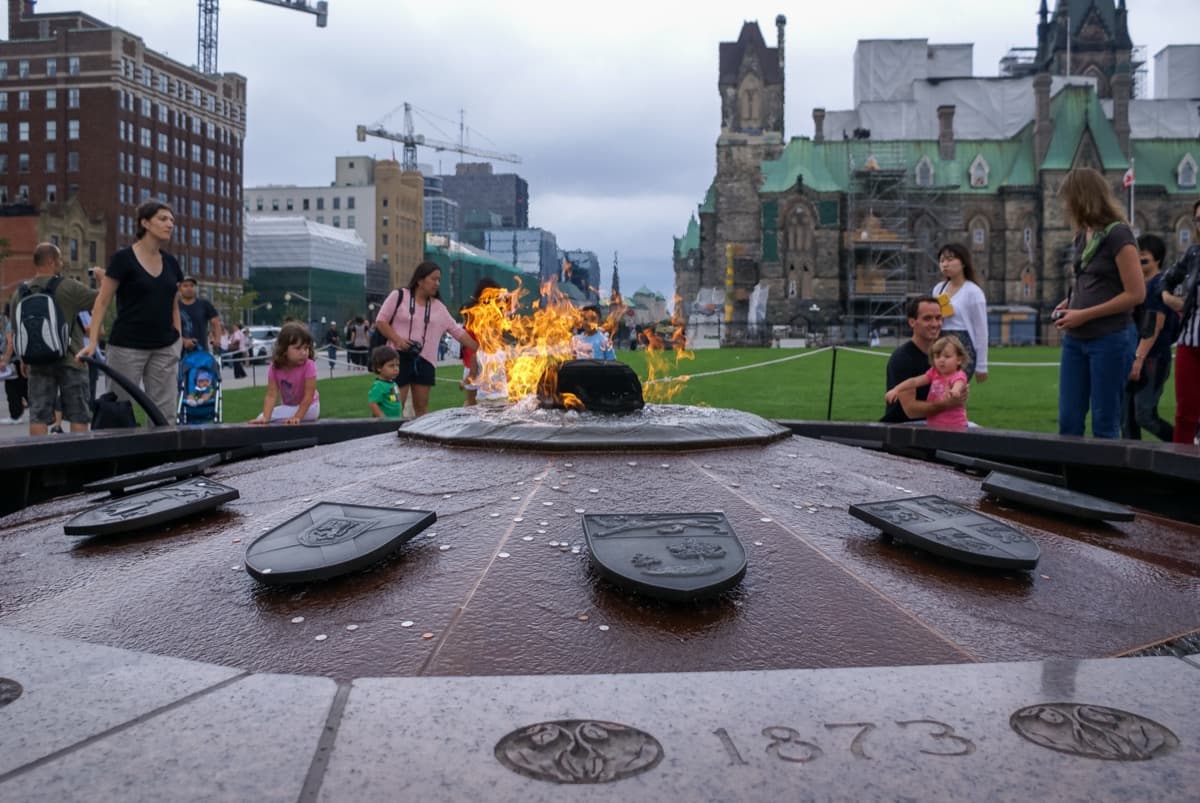
Centennial Flame: The 1967 Light
Lit by Prime Minister Lester B. Pearson on 1 January 1967, with Diefenbaker and LaMarsh present. Thirteen provincial and territorial shields, including the 2017 Nunavut addition.
- 4
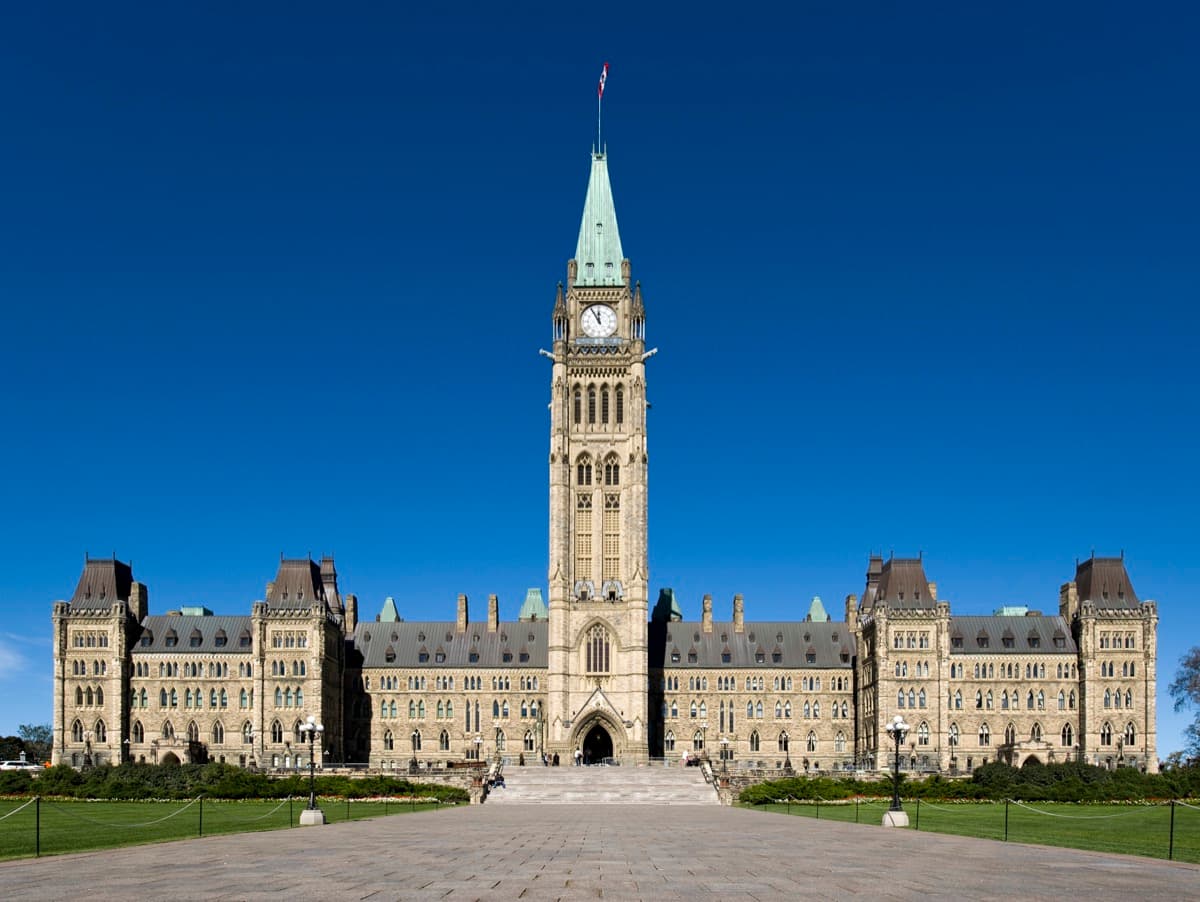
Centre Block: The Reconstruction
The 1916-to-1927 Pearson and Marchand Centre Block at its full reach. A Beaux-Arts plan inside a Gothic Revival skin. Closed since 2018 for the largest heritage restoration in Canadian history.
- 5
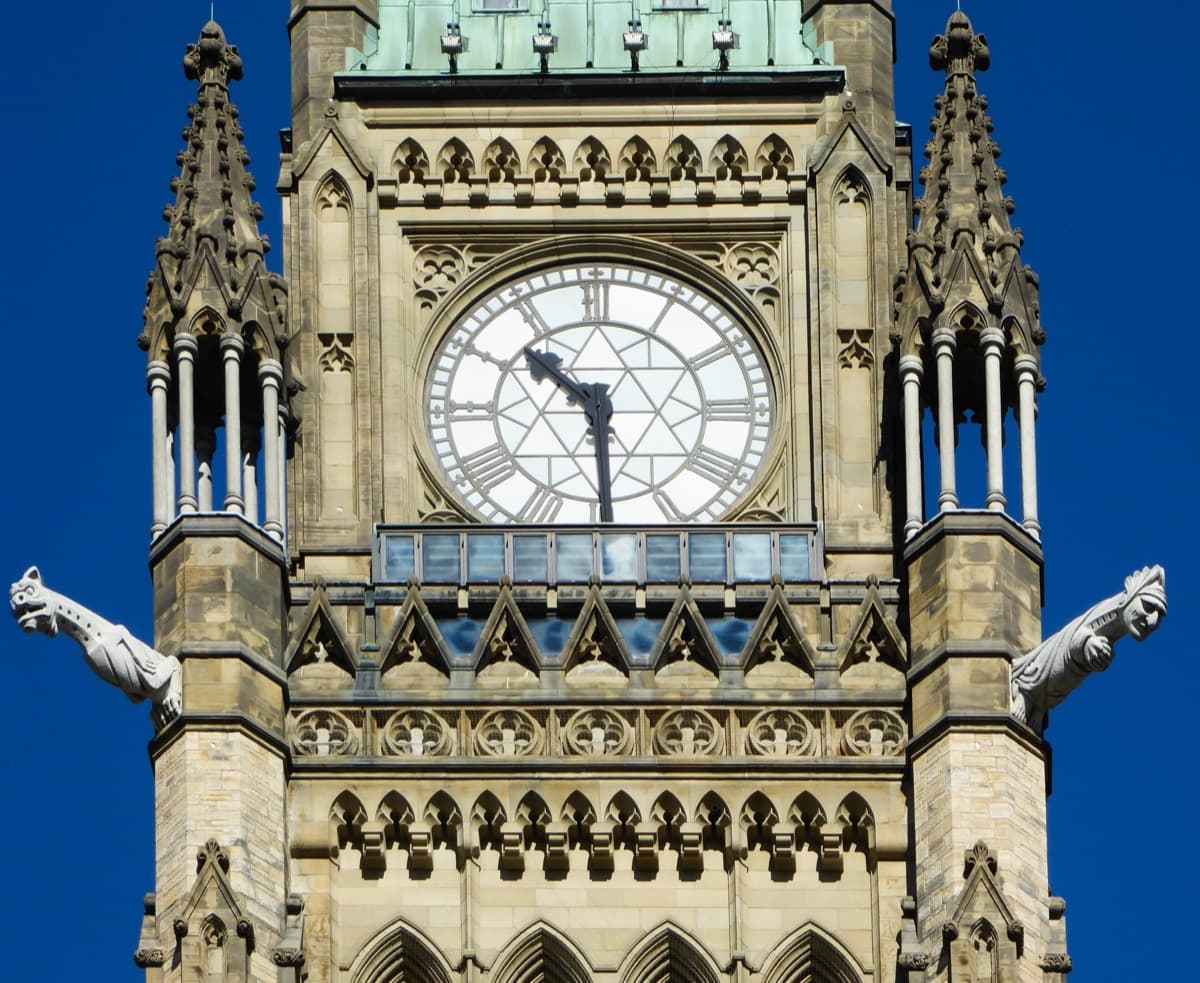
Peace Tower: The Memorial
Borden's 1 July 1917 site dedication, the 1919 cornerstone by Edward, Prince of Wales, the 1 July 1927 inauguration on the 60th anniversary of Confederation. The Memorial Chamber holds the Books of Remembrance.
- 6
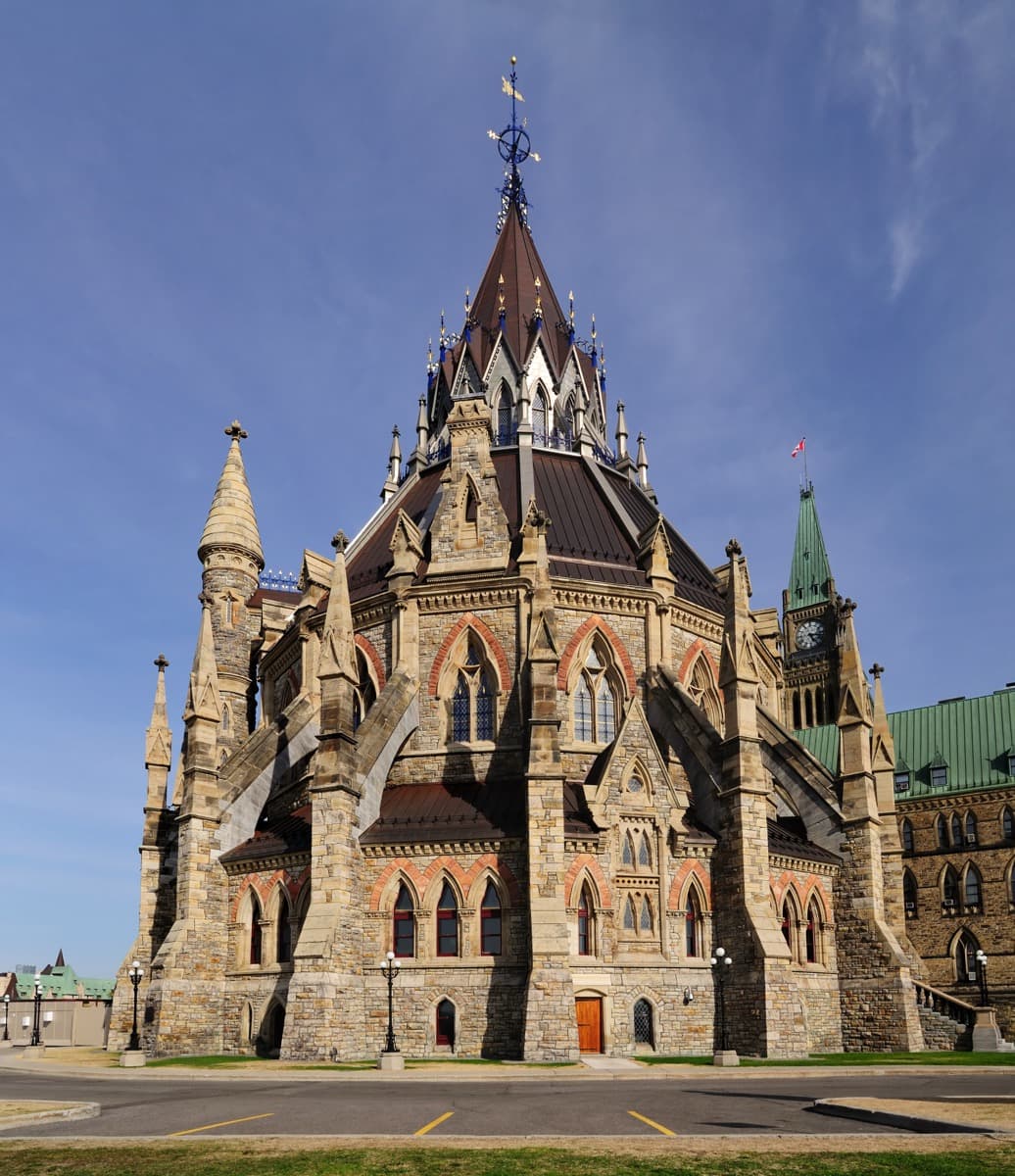
Library of Parliament: The First Survivor
Thomas Fuller and Chilion Jones, 1859 to 1876. Alpheus Todd's iron doors. Michael MacCormac, library clerk, who closed them seconds before the fire on 3 February 1916.
- 7
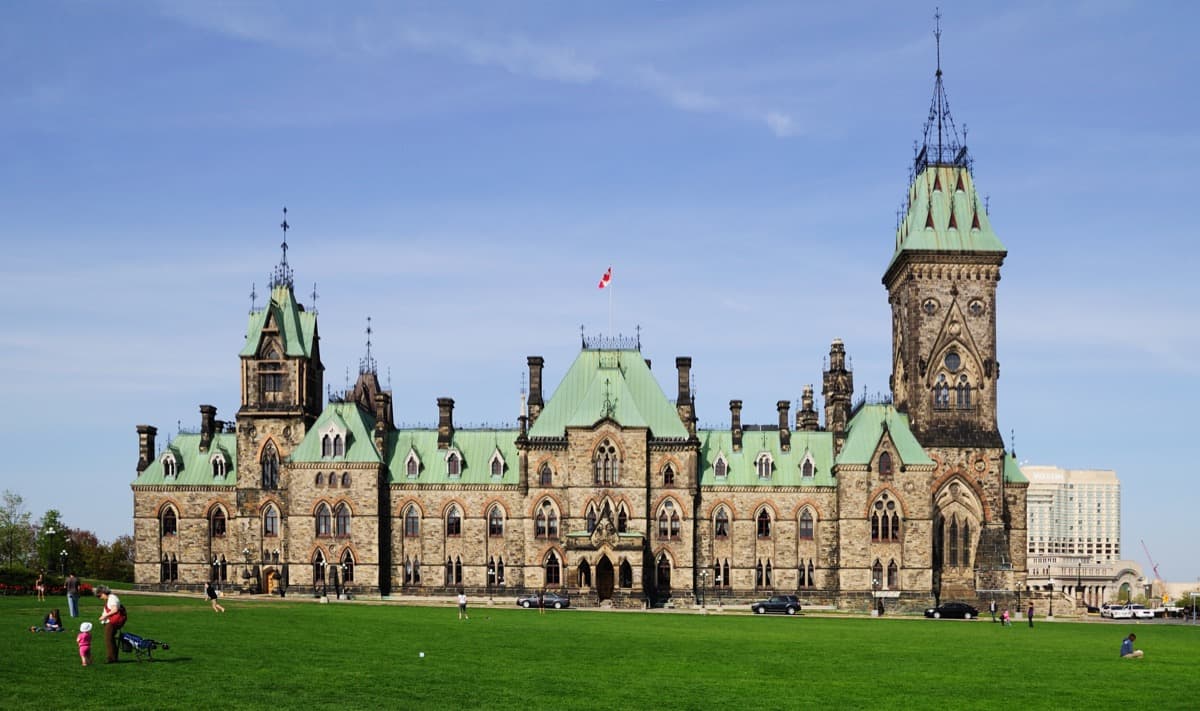
East Block: The Second Survivor
Stent and Laver, 1859 to 1866. Victorian High Gothic, walls 0.9 metres thick at ground level. Expanded 1910 to 1913. Untouched by the 1916 fire because geographically separated.
- 8

Major's Hill Park: The Closer
Ottawa's first park, used as such since Colonel John By's 1826 military reserve. The overlook above the Rideau Canal. The Hill seen from the east, with the Library at the river edge.
Details
Best Time to Visit
Weekday mid-morning, Tuesday through Thursday, between nine and noon. Wellington Street and the Centennial Flame fill with bus-tour and school-group visitors from late morning through afternoon between June and early September; the gate stop reads more cleanly outside of peak. The corridor is quietest on shoulder-season weekday mornings (mid-May, early June, late September, October), and on cold-but-clear winter mornings when the Hill is largely empty. The Centre Block is closed for restoration through approximately twenty thirty to twenty thirty-one; the tour works from the exterior throughout. The Peace Tower carillon plays a short recital weekdays at noon; if you can time Stop 5 around then, the auditory backdrop is the building speaking.
Pro Tips
- •OC Transpo O-Train Parliament Station exits directly onto Bank Street; walk south to Wellington Street and east one block to Metcalfe for the Stop 1 anchor
- •Sightlines from Wellington Street at Metcalfe are best in clear weather; on overcast days the central lawn reads flat and the Pattern-break reveal carries less of the picture
- •The Centennial Flame fountain ledge is at standing height and easy to circle; the Nunavut shield, the most recent addition, is on the north-east side of the ledge
- •The Centre Block lawn has construction hoarding from the ongoing restoration; the Peace Tower above the hoarding is preserved, and Stop 4 and Stop 5 work as written from the standard public vantages
- •The Library of Parliament interior reopens for guided public tours periodically during the restoration; book in advance through Parliamentary Tours if you want the interior, otherwise the Stop 6 audio anchors on the exterior
- •The Major's Hill Park overlook has a low parapet at the western edge; the Ottawa Locks of the Rideau Canal descending below the overlook are themselves worth a downward look before the final beat of Stop 8
- •The Books of Remembrance pages in the Peace Tower Memorial Chamber are turned at eleven a.m. daily; the chamber is currently closed for the Centre Block restoration but the daily ritual continues inside
Safety & Precautions
- •Wellington Street is the main east-west avenue south of Parliament Hill and carries bus and vehicle traffic; cross only at marked corners (Metcalfe, Elgin, the Queen's Gates)
- •Confederation Square is on a slight slope above the Plaza Bridge; the cenotaph approach has shallow steps with a ramped path on the east side for accessibility
- •The central walk on Parliament Hill is paved and level but exposed; in summer the lawn is open sun, in winter the central walk can be icy near the Queen's Gates
- •The Library of Parliament exterior path on the north side of Centre Block can be partially closed during restoration works; if the path is blocked, the Stop 6 audio works from the east-side approach with the dome visible
- •Major's Hill Park's western overlook has a low parapet; keep children within arm's reach at the edge above the canal locks
Travel advisory: Exercise Normal Precautions (Level 1).
Gallery
Related Reading
Go deeper on what you'll see, hear, and walk through.
Read the walk
The full story of Parliament Hill: The Country That Rebuilt Itself, in words. Prefer to listen? Play it narrated, from home or on location.
Introduction
Four capitals, four fires, four reconstructions. Three are visible. One disappears.
Westminster Palace burned in eighteen thirty-four and was rebuilt by Charles Barry and Augustus Pugin in the Gothic Revival. The United States Capitol was burned by British troops in eighteen fourteen and rebuilt across the nineteenth century. The Reichstag burned in nineteen thirty-three, was restored in nineteen sixty-one, and reopened with Norman Foster's glass dome in nineteen ninety-nine, a dome performing the rupture between the old building and the new.
The Canadian Parliament in Ottawa, Canada, burned on the third of February nineteen sixteen. The fire began in the Reading Room of the House of Commons. Seven people died. The Centre Block visitors photograph today was rebuilt between nineteen sixteen and nineteen twenty-seven by John A. Pearson and Jean-Omer Marchand, a Gothic Revival exterior continuous enough with the surviving Library of Parliament and the East Block that the central lawn reads as one nineteenth-century object. It is not. The Parliament you photograph is a nineteen-twenty-seven reconstruction performing an eighteen-sixty-six memory.
The Peace Tower at its centre was dedicated by Prime Minister Robert Borden on the first of July nineteen seventeen, not as a Confederation monument but as a memorial to the Canadians killed in the First World War. The country rebuilt itself, on the same hill, in the same style, for a country that had just discovered on the battlefields of that war that it was a country.
Eight stops, about two and a half kilometres, ninety minutes on level ground. The Centre Block has been closed for restoration since twenty eighteen. The corridor starts on Wellington Street at Metcalfe and ends at the Major's Hill Park overlook. When you arrive at Wellington and Metcalfe, begin with stop one.
1. Wellington at Metcalfe: The Gate
Welcome to Wellington Street at Metcalfe. Stand on the south side of the street, facing north. You are looking at the long view of the central parliamentary lawn.
Name what is in front of you. Three stone buildings in the same Gothic Revival idiom. To the left, the West Block. In the centre, behind a long forecourt and the lawn, the Centre Block, with the Peace Tower rising vertically at its centre. To the right, the East Block. From this distance, the three buildings read as one parliamentary group, designed together, completed together, weathered together. That reading is wrong, and the wrongness is the tour.
The original group was designed between eighteen fifty-nine and eighteen sixty-six by two pairs of architects. Thomas Fuller and Chilion Jones won the eighteen fifty-nine competition for the Centre Block and the Library of Parliament. Thomas Stent and Augustus Laver won the same competition for the East and West Blocks. The Prince of Wales, the future King Edward the Seventh, laid the original Centre Block cornerstone on the first of September eighteen sixty. The buildings were occupied by Parliament from eighteen sixty-six.
The Centre Block you are looking at right now is not that building.
On the evening of the third of February nineteen sixteen, the original Centre Block burned to the ground in less than twelve hours. The Library of Parliament, attached to the rear of the Centre Block by a single corridor, survived. The East Block, about one hundred metres east, was untouched. The West Block, with later expansions in eighteen seventy-five to seventy-nine and nineteen oh six to nineteen oh nine, came through with damage but stood. Everything between the Library and the East Block, including the entire central building you are now looking at, is the nineteen-sixteen-to-nineteen-twenty-seven reconstruction by John A. Pearson and Jean-Omer Marchand.
The Chronicler date for this gate. The thirty-first of December eighteen fifty-seven. Colonial Secretary Henry Labouchere writes from London to the Governor General of the Province of Canada, communicating Queen Victoria's selection of Ottawa as the capital. Toronto, Hamilton, Quebec City, Montreal, Kingston, and Ottawa had all submitted cases. The Legislative Assembly had passed a resolution the year before asking the Queen to choose because they could not. Ottawa won not by acclamation but as the candidate nobody opposed. Two years later, in eighteen fifty-nine, the architectural competition for these buildings was held.
One more piece of the gate. Look across Wellington Street to your north-east, to the building at one hundred Wellington. On the fifth of June twenty twenty-four, a traditional signing ceremony marked the commitment of the Government of Canada to establish a dedicated Algonquin space inside the Parliamentary Precinct at that address, directly across from Centre Block. Grand Chief Savanna McGregor of the Algonquin Anishinabeg Nation signed the agreement, along with Chiefs Lisa Robinson, Dylan Whiteduck, and Greg Sarazin. The federal signatory was Gary Anandasangaree, Minister of Crown-Indigenous Relations. Parliament Hill sits on unceded territory of the Algonquin Anishinabeg Nation. The dated agreement at one hundred Wellington is the Algonquin presence the tour names at its gate, not at its closer.
Now walk east on Wellington Street about two hundred metres to Elgin Street. Cross Elgin south to the cenotaph plaza. The next stop is the first war memorial of the corridor.
2. Confederation Square: The 1939 Unveiling
You have arrived at Confederation Square. Stand on the south side of the cenotaph, facing north, with the Peace Tower visible above the parliamentary lawn beyond.
The tall granite arch in front of you, with bronze figures passing through it, is the National War Memorial of Canada. The sculptor was Vernon March, of Farnborough, England. March died in nineteen thirty, before the work was finished. His siblings completed it.
The Chronicler timeline for this object. Parliament approved ten thousand dollars to begin the project in nineteen twenty-three. The design competition was formally opened on the twelfth of February nineteen twenty-five. The memorial was unveiled on the twenty-first of May nineteen thirty-nine, by King George the Sixth, in the presence of Queen Elizabeth, Governor General the Lord Tweedsmuir, and Prime Minister William Lyon Mackenzie King. The unveiling by a reigning monarch is the load-bearing detail. The country built this object, and the King came in person to dedicate it, four months before the Second World War began.
The inscribed dates on the base now span six conflicts. Nineteen fourteen to eighteen on the north and south faces. Nineteen thirty-nine to forty-five and nineteen fifty to fifty-three on the east and west flanks. Eighteen ninety-nine to nineteen oh two and two thousand and one to two thousand and fourteen on the arch pier footings. The South African War, the First World War, the Second World War, the Korean War, and the war in Afghanistan are all on the same stone.
In the front of the memorial, between the cenotaph and the steps, is a low tomb of dark stone. That is the Tomb of the Unknown Soldier. It was added on the twenty-eighth of May two thousand, and dedicated by Governor General Adrienne Clarkson.
The square itself is dated too. Confederation Square was designated a National Historic Site of Canada in nineteen eighty-four. Before the square existed in this form, the Sappers' Bridge, built in eighteen twenty-seven by the Royal Sappers and Miners, and the Dufferin Bridge crossed the Rideau Canal below this point. The two bridges were replaced by the Plaza Bridge in nineteen twelve. The Central Post Office, completed eighteen seventy-six, was demolished between May and June of nineteen thirty-eight to clear the square for the new memorial. Confederation Square was built in stages between eighteen ninety-nine and nineteen thirty-nine.
The corridor's logic begins to show here. The war-memorial register at the foot of the Hill is not one date but a layered set of decisions. The cenotaph itself, nineteen thirty-nine. The Tomb of the Unknown Soldier, two thousand. The conflict dates carved later, including the Afghanistan dates added after twenty fourteen. The country kept ranking what to memorialise and where to put it.
Now walk north across the Plaza Bridge, then west on Wellington Street about one hundred and fifty metres to the Queen's Gates of Parliament Hill. The Centennial Flame is immediately inside the gates.
3. Centennial Flame: The 1967 Light
You have arrived at the Centennial Flame. Stand on the central walk facing north, with the fountain ledge and the flame in front of you, and the Centre Block and Peace Tower dead ahead beyond.
This is not the eternal flame. Its formal name is the Centennial Flame.
It was lit on the first of January nineteen sixty-seven, by Prime Minister Lester B. Pearson, with Opposition Leader John Diefenbaker and Secretary of State Judy LaMarsh present. The lighting marked the centennial of Confederation. The original Centre Block, the one that burned in nineteen sixteen, had been built to house the very Confederation this flame was lit, a century later, to celebrate.
A disambiguation, because the corridor will require it. The Prime Minister who lit this flame in nineteen sixty-seven was Lester B. Pearson. He is not the same person as John A. Pearson, the architect of the nineteen-sixteen-to-nineteen-twenty-seven Centre Block reconstruction. Two unrelated Pearsons, two different roles, one Hill. The tour will name both at full first reference each time they appear.
Now read the fountain ledge. Around the flame are the shields of the thirteen provinces and territories of Canada. Each shield carries the date the province or territory entered Confederation, or the date of its creation. The list runs from Ontario, Quebec, Nova Scotia, and New Brunswick in eighteen sixty-seven, through to Newfoundland in nineteen forty-nine, and to Nunavut, the most recent.
The Nunavut shield was added on the thirteenth of December twenty seventeen, eighteen years after Nunavut was created on the first of April nineteen ninety-nine. The wait between the territory's creation and the shield's installation is itself a chronicle of how slowly national-symbolic objects update. The flame, originally fuelled by natural gas, has run on biogas since twenty twenty-one.
The pattern-break beat at this stop. The Centennial Flame celebrates the centennial of Confederation. The Centre Block above it had already been rebuilt fifty years before the centennial it celebrates. The country was lighting a hundred-year flame at the foot of a fifty-year reconstruction.
Now continue north on the central walk approximately one hundred metres past the flame. Stand south of the Queen Victoria statue at the centre of the lawn, facing the Centre Block. The next stop is the reconstruction itself.
4. Centre Block: The Reconstruction
You have arrived at the Centre Block lawn. Stand south of the Queen Victoria statue, facing the building. This is the reveal of the tour. What you see is a unified Gothic Revival building, symmetrical, central tower, ornament restrained for the period. Centre Block looks like…
Full narration for this stop unlocks with the tour.
5. Peace Tower: The Memorial
You have arrived at the Peace Tower forecourt. Stop on the path approximately fifty metres south of the tower itself, looking up. This is the climax of the tour. The Peace Tower is ninety-two point two metres high. The clock faces are four point eight metres in diameter. Inside…
Full narration for this stop unlocks with the tour.
6. Library of Parliament: The First Survivor
You have arrived at the Library of Parliament. Stand on the path about thirty metres back from the building, looking at the round stone form and the copper-clad dome. This is the first of two pre-nineteen-sixteen survivors. The Library was designed by Thomas Fuller and Chilion…
Full narration for this stop unlocks with the tour.
7. East Block: The Second Survivor
You have arrived at the East Block. Stand on the lawn south of the building, facing the south face. This is the second pre-nineteen-sixteen survivor on the parliamentary lawn. Note the brief is corrected here. The Library is not the only original eighteen-sixties survivor on…
Full narration for this stop unlocks with the tour.
8. Major's Hill Park: The Closer
You have arrived at Major's Hill Park. Walk to the overlook at the western edge of the park, above the Ottawa Locks of the Rideau Canal. Face west across to Parliament Hill. The corridor's resolution is the view from here. First, the ground you are standing on. Major's Hill…
Full narration for this stop unlocks with the tour.