Museum guide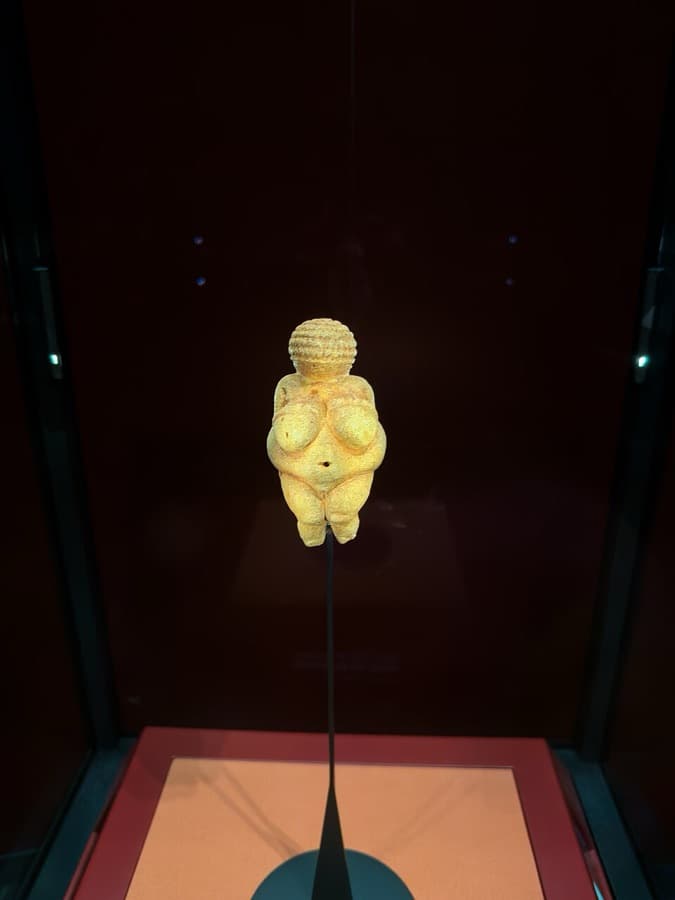 60 minThe Naturhistorisches Museum in an HourMaria Theresa's gemstone bouquet, the iron that started the meteorite collection, rocks from Mars, the Diplodocus and Allosaurus, the Venus of Willendorf, Steller's sea cow and the Tasmanian tiger.8 pieces · 2 floors
 120 minThe Great Collection in Two HoursDownstairs: giant crystals, the gem bouquet, meteorites from Mars and the Moon, the dinosaurs, both Venus figurines and Hallstatt's salt miners. Upstairs: glass sea creatures, the coelacanth, gharials, penguins and the rare and vanished animals of the mammal halls.24 pieces · 2 floors
 60 minFrom an Emperor's Cabinet to a MuseumHow a Habsburg collection became a museum: Franz Stephan's iron from the sky and his planetary machine, Maria Theresa's bouquet, an emperor's fossil fish, Carnegie's Diplodocus, a rhino meant for Schönbrunn and a bison calf from its zoo.10 pieces · 2 floors
 75 minA Family Trail: Giants, Teeth and Ice Age ChildrenFor families: a giant crystal, a piece of the Moon, dinosaurs and a turtle as long as a car, the Venus of Willendorf, a cave lion, a giant spider crab, a shark, penguins, the aye-aye and a lost sea giant.14 pieces · 2 floors45 minA Palace for Nature: Darwin, Canon and HeliosSixteen million bricks, a ceiling whose painter died before it arrived, a director who planned his family flat and never lived in it, and Darwin hidden in plain sight under the dome.8 pieces · 2 floors
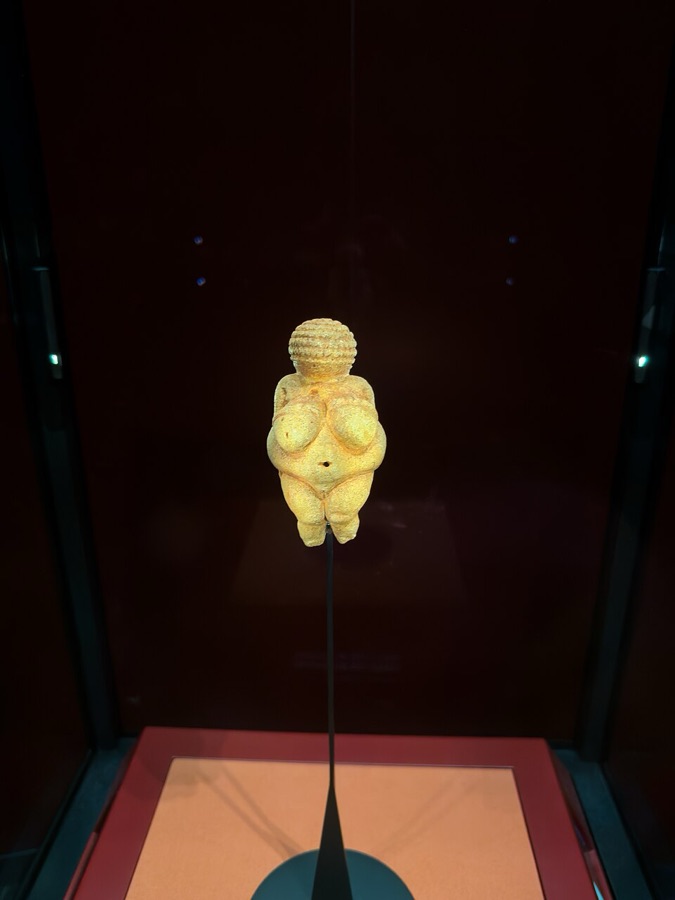 Venus of WillendorfLevel 1
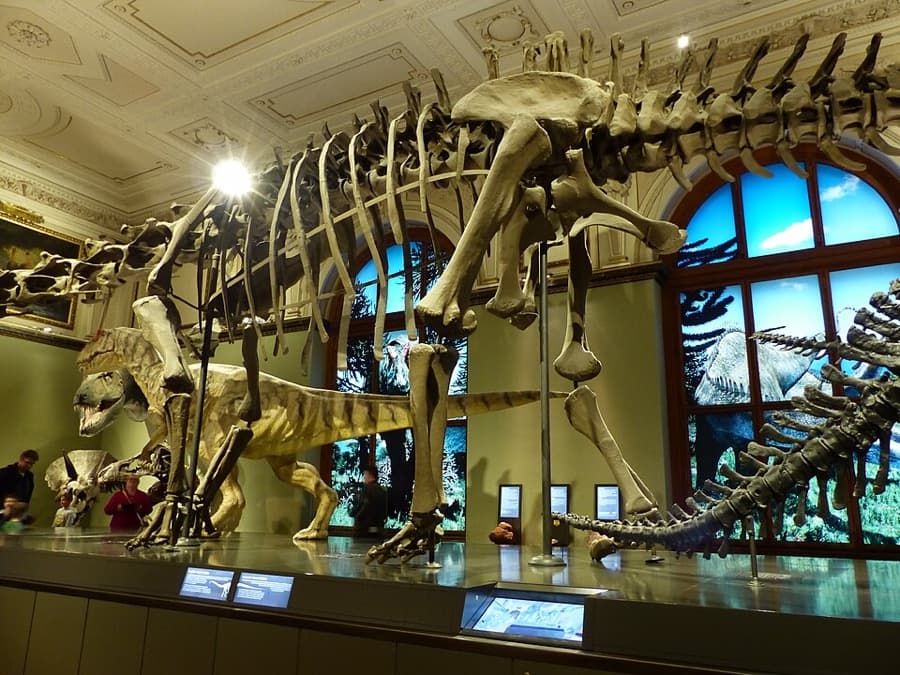
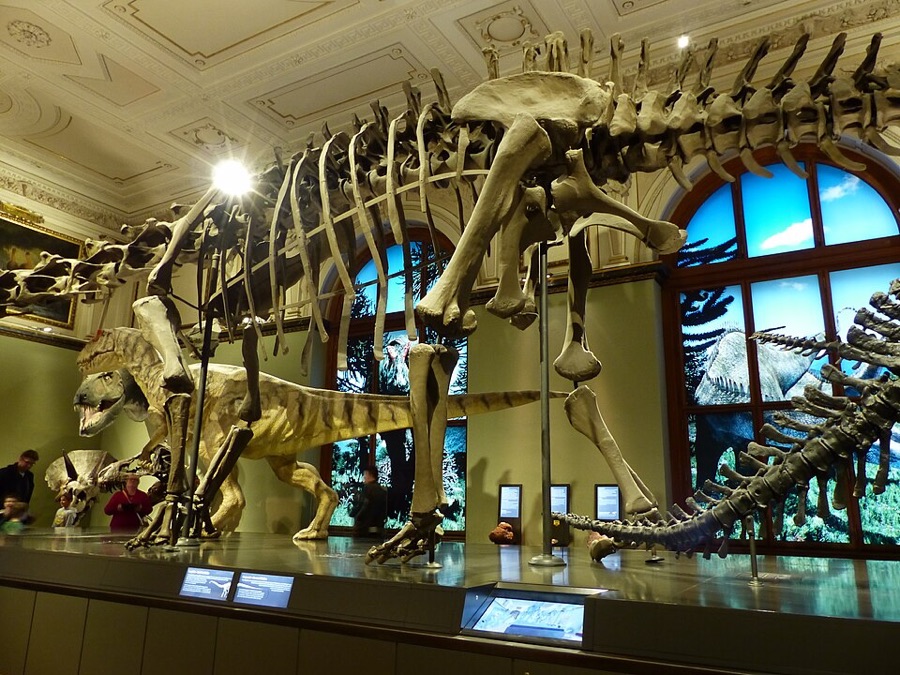 DiplodocusLevel 1
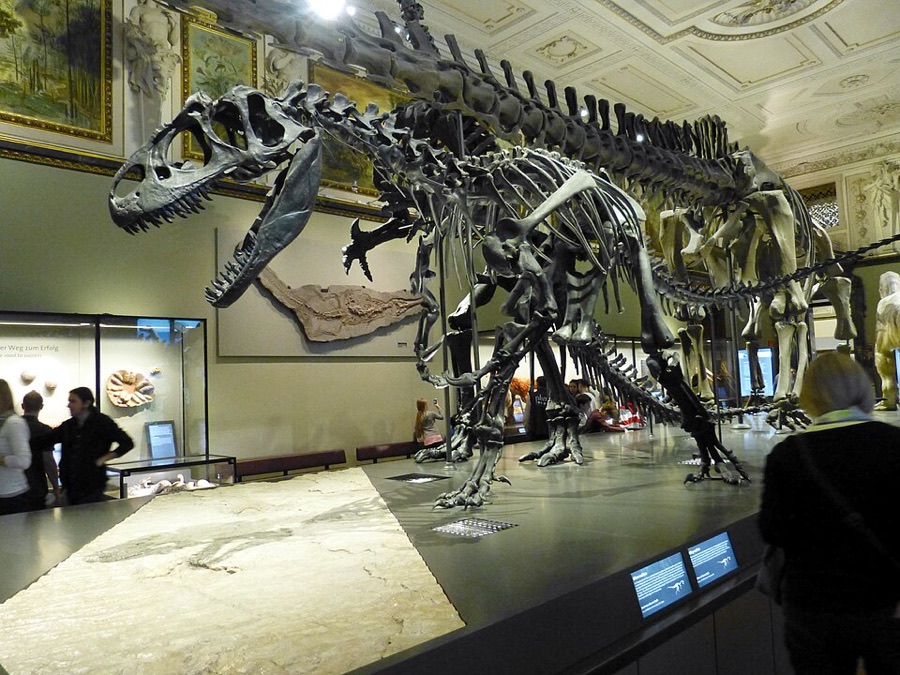 AllosaurusLevel 1
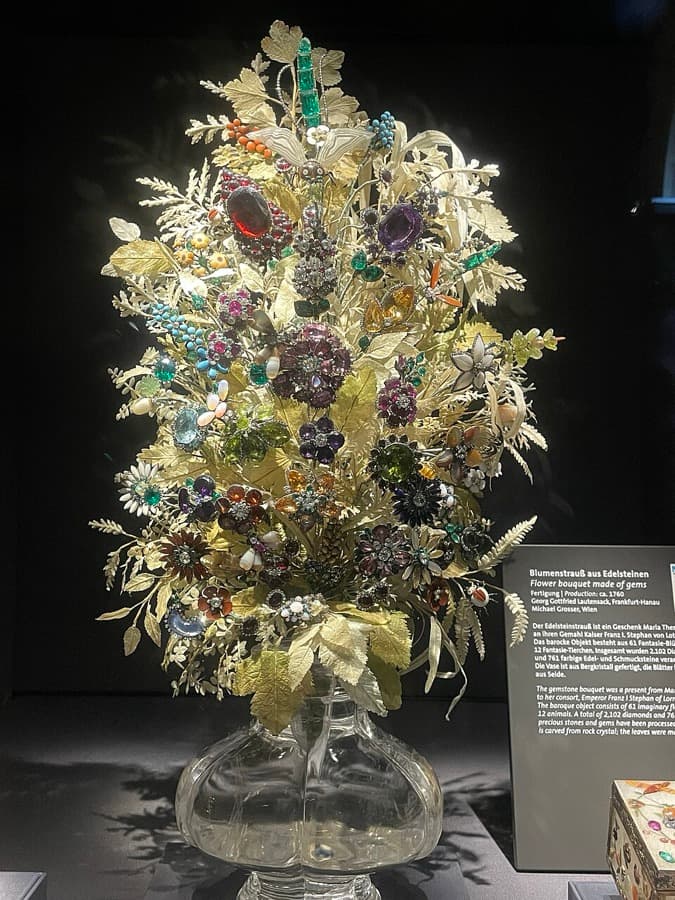
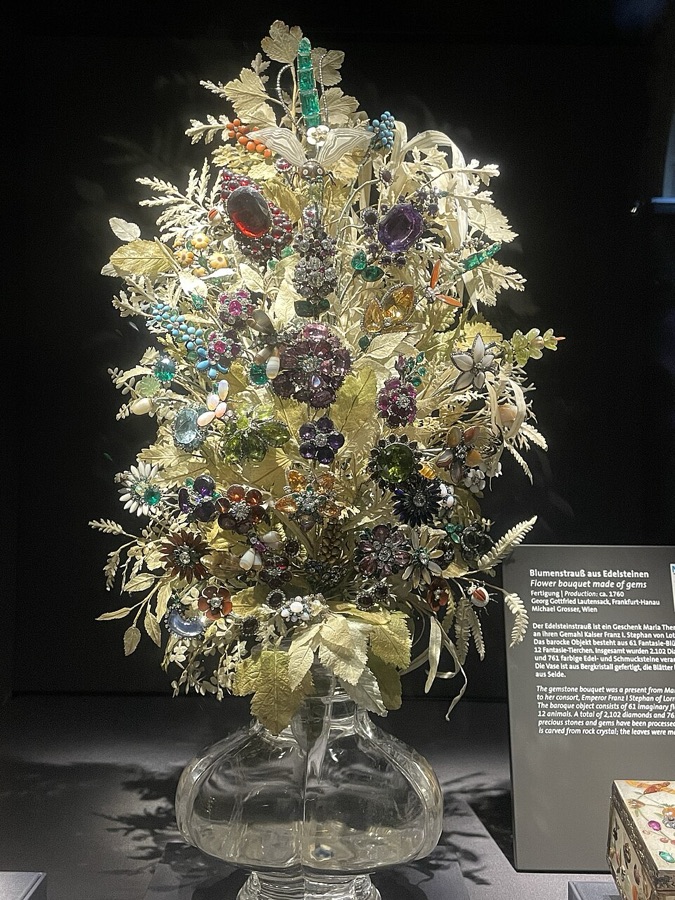 Maria Theresa's gemstone bouquetLevel 1
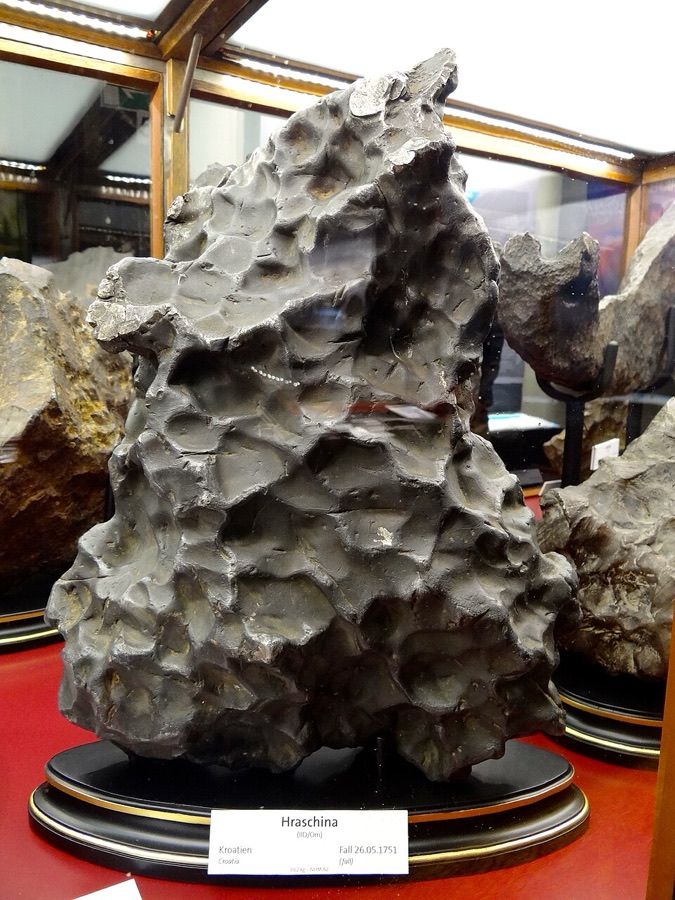 Hraschina, the iron that began the meteorite collectionLevel 1
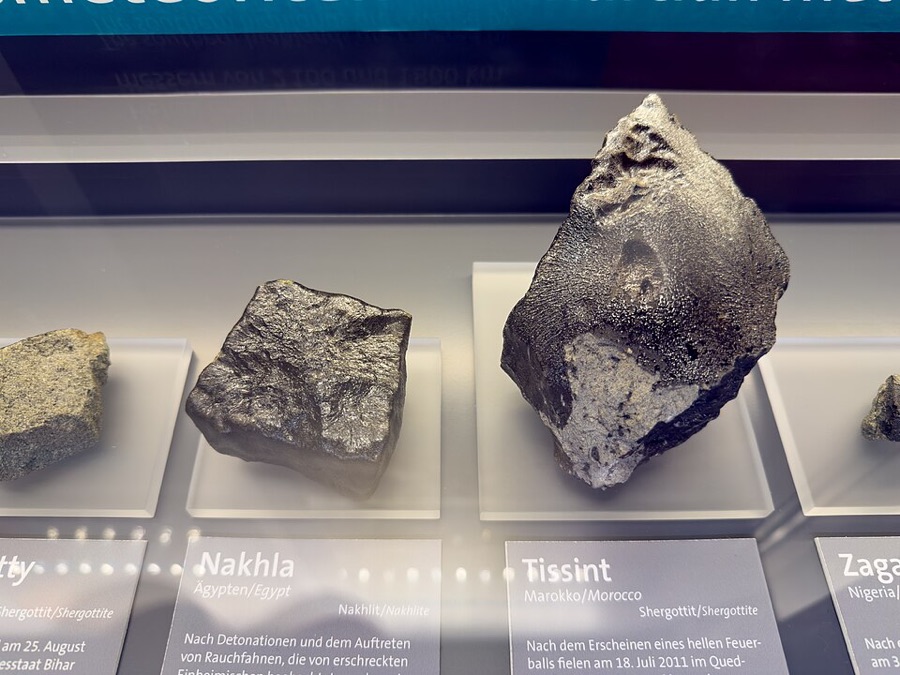 Rocks from MarsLevel 1
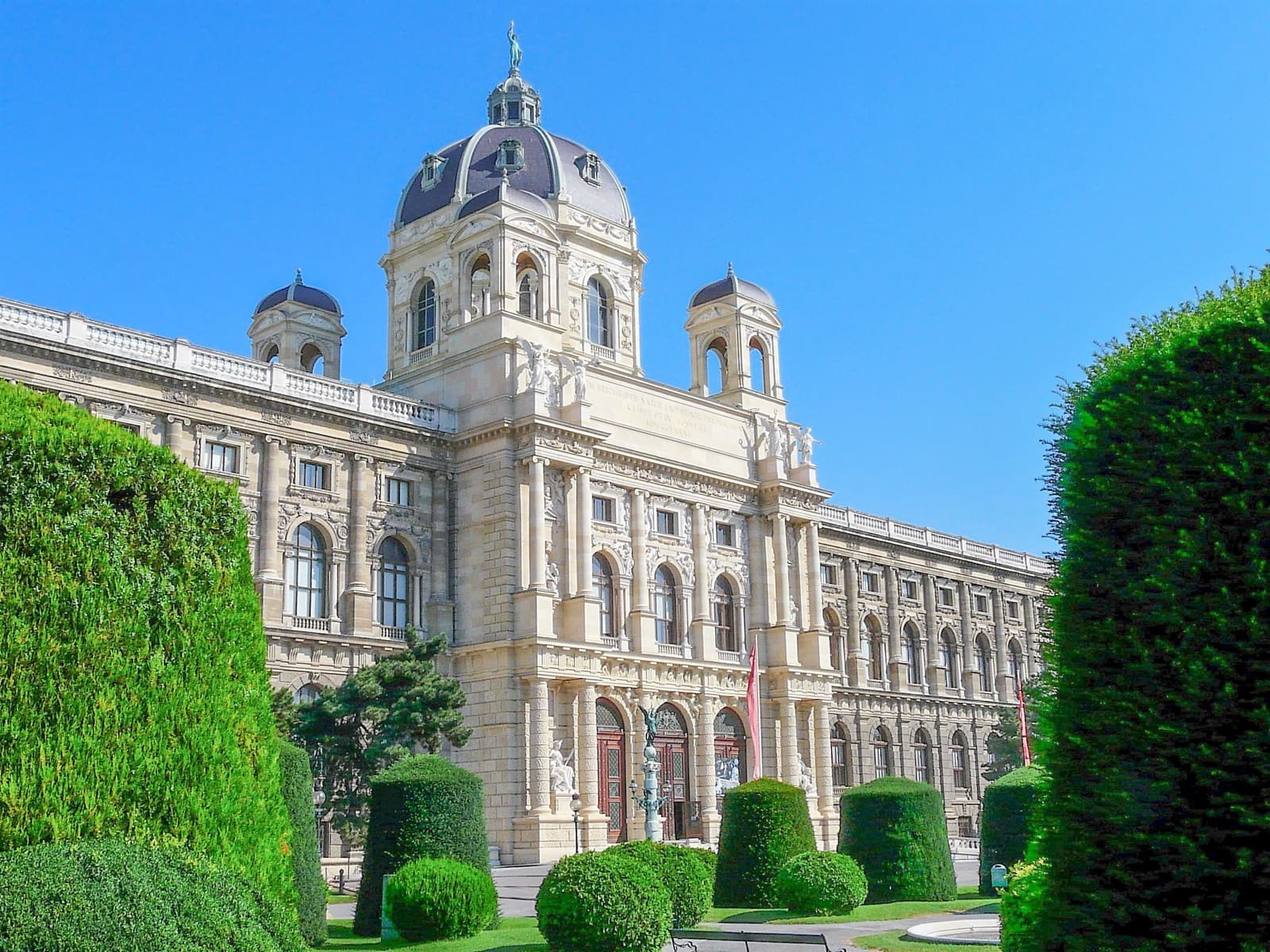
the front and the dome across the clipped hedges of Maria-Theresien-Platz 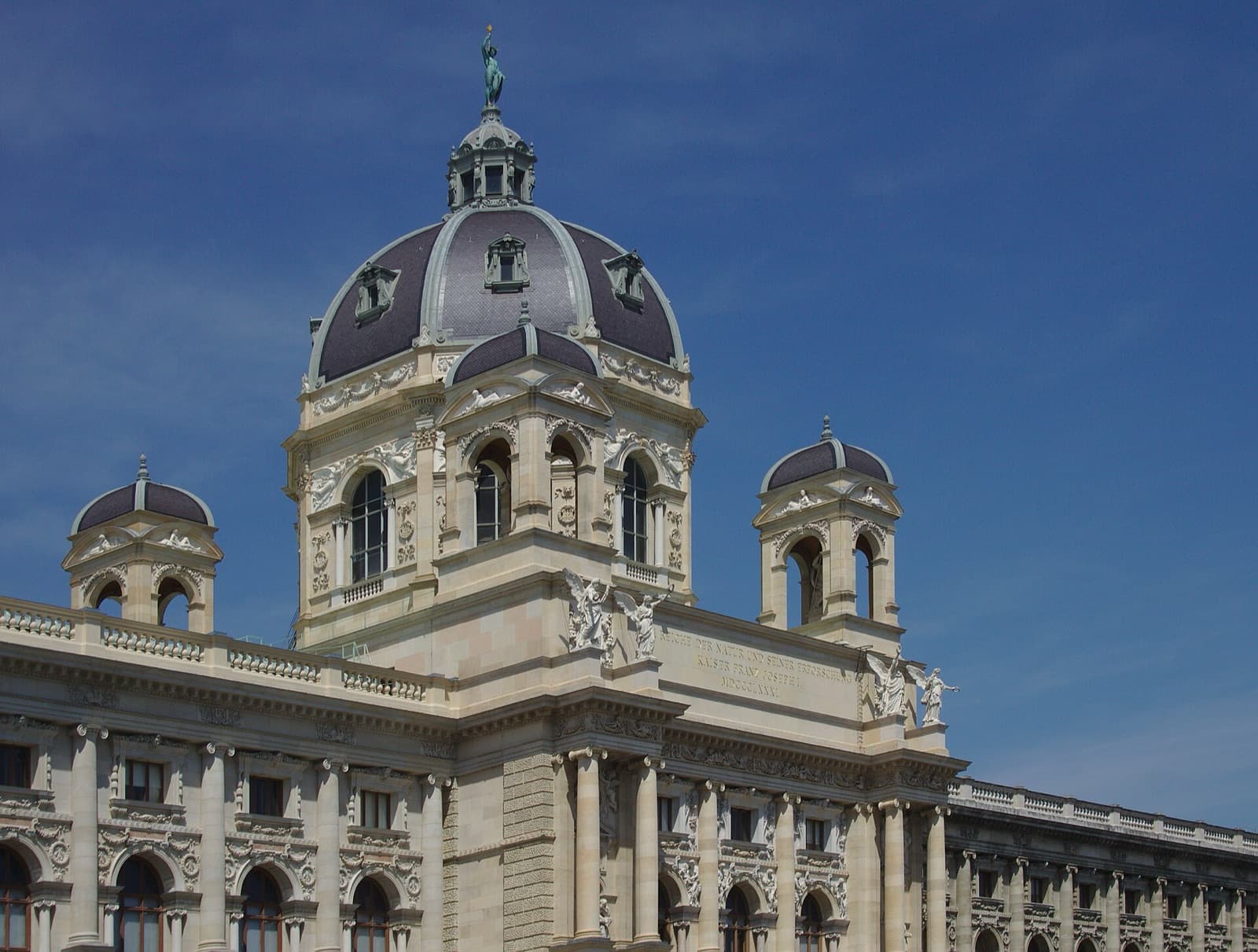
the dome and its corner towers in full sun, Helios on the top 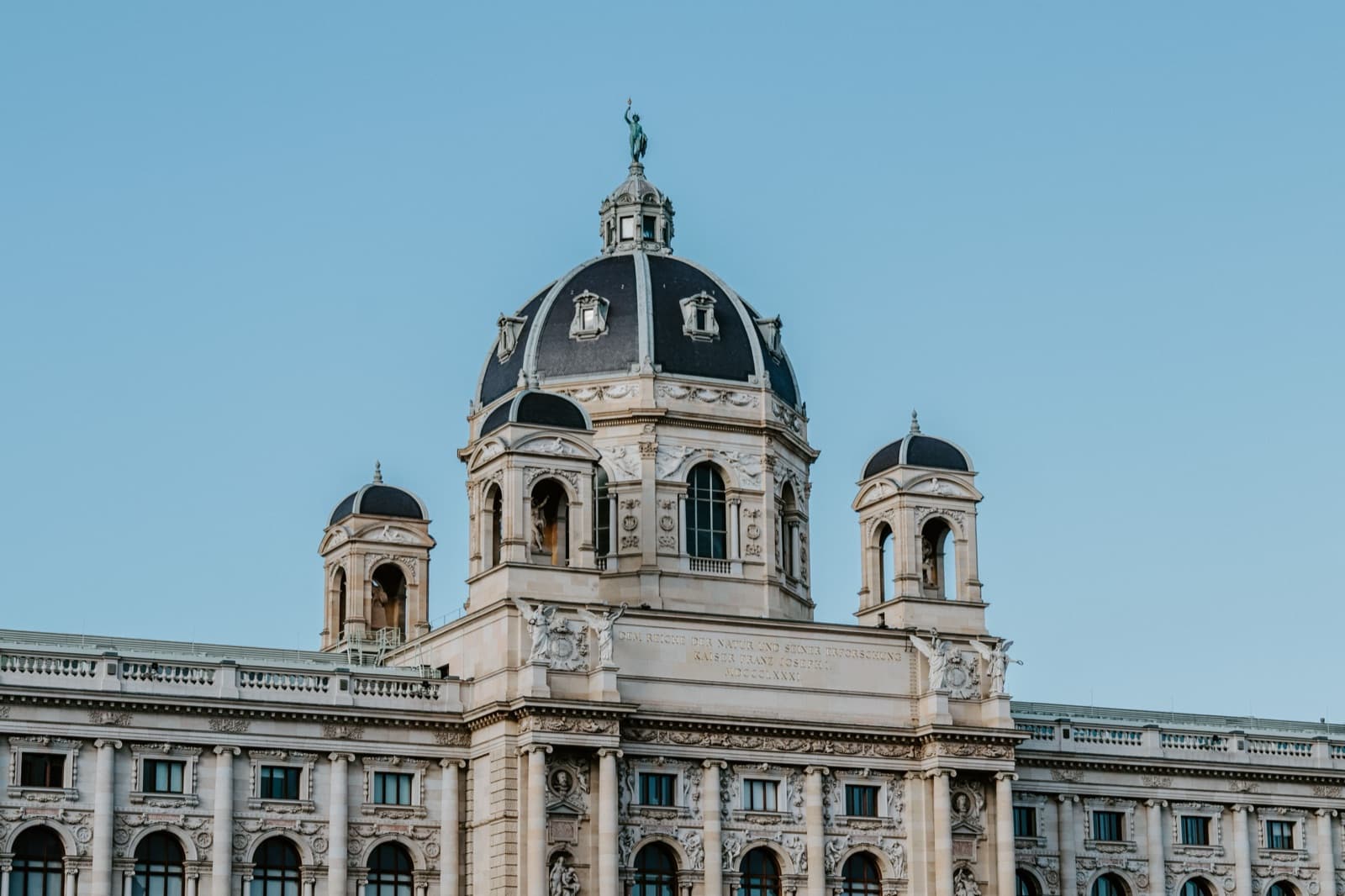
the dome and the front in the evening light 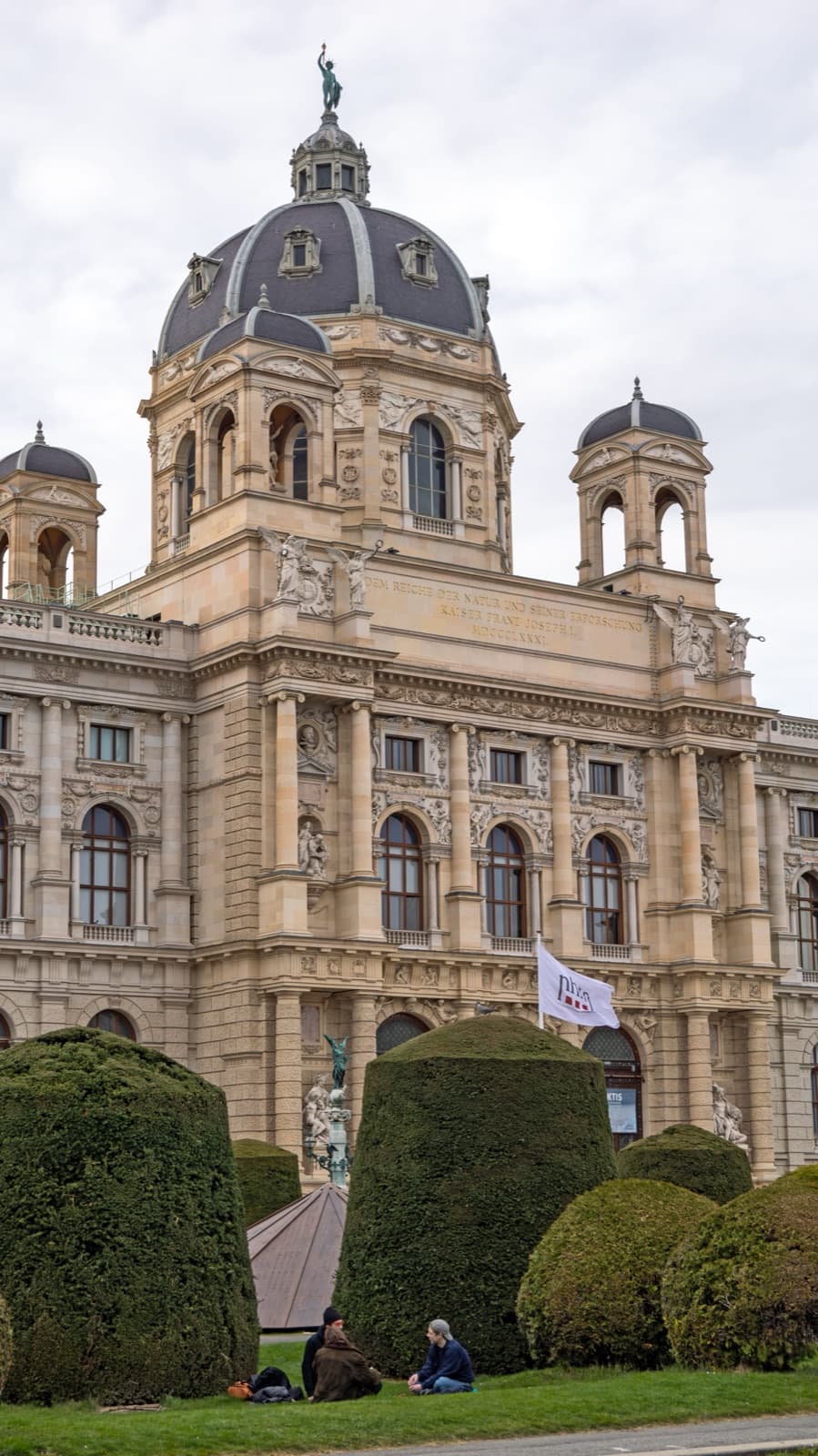
the front from the gardens of Maria-Theresien-Platz 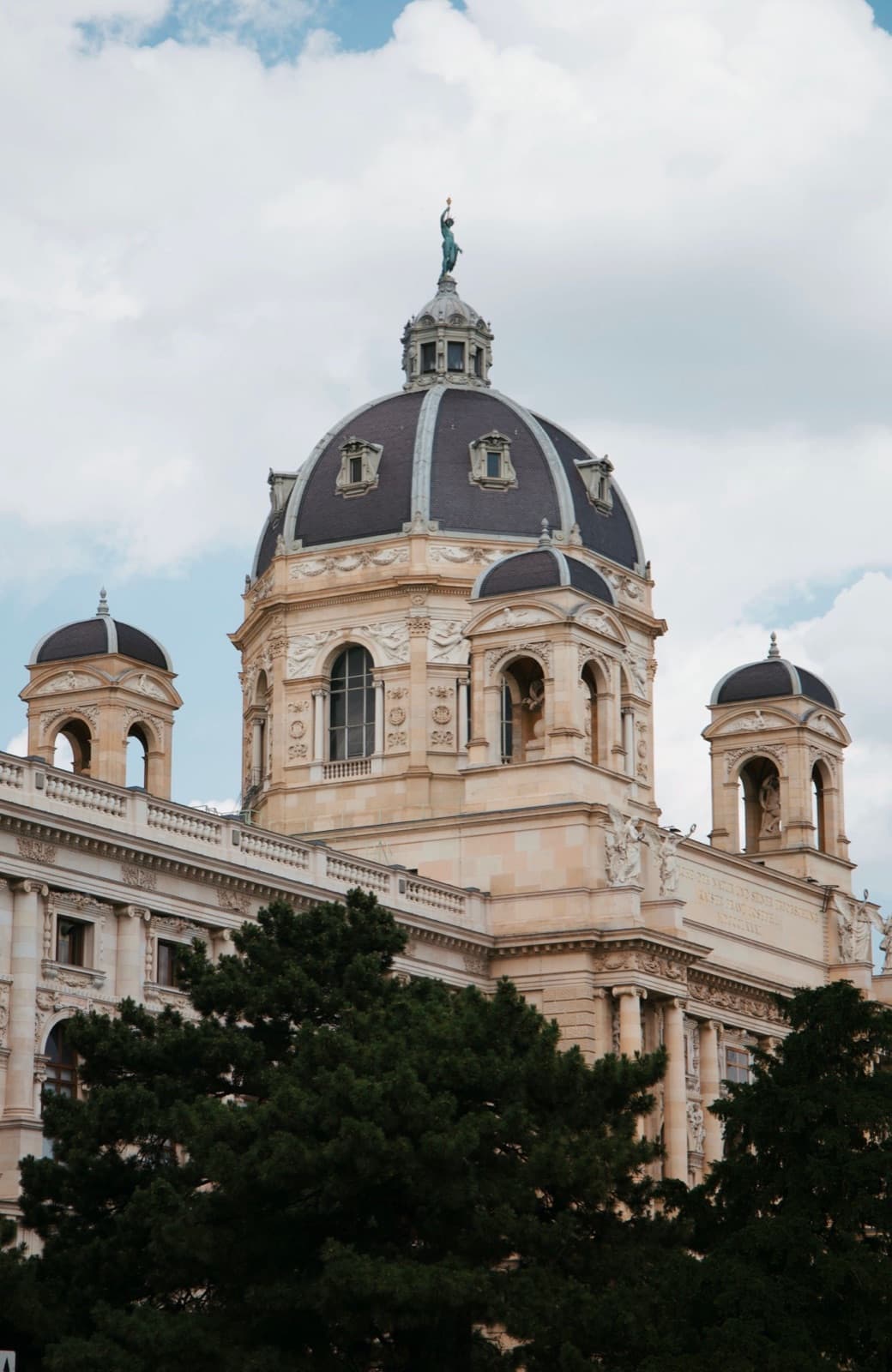
the dome and towers behind the pines of the square 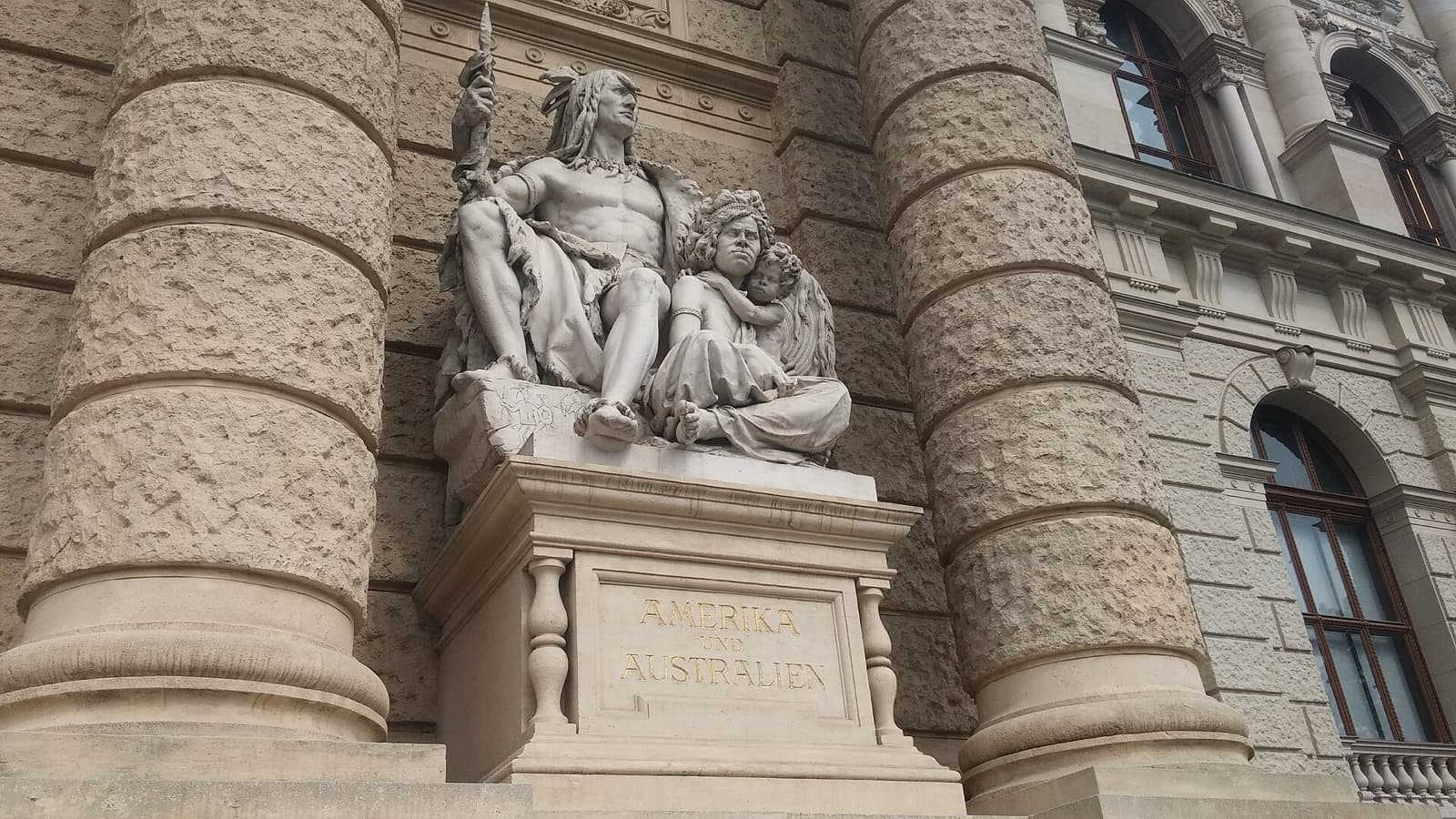
the sculpture group of America and Australia on the front
Naturhistorisches Museum Wien
The Venus of Willendorf, a twenty-seven-metre Diplodocus, Maria Theresa's gemstone bouquet and a hall of meteorites: the emperors' natural history collections, hall by hall, at your own pace.
Tap the building to step inside
Threads
Optional paths through the museum.
60 minThe Naturhistorisches Museum in an HourMaria Theresa's gemstone bouquet, the iron that started the meteorite collection, rocks from Mars, the Diplodocus and Allosaurus, the Venus of Willendorf, Steller's sea cow and the Tasmanian tiger.8 pieces · 2 floors120 minThe Great Collection in Two HoursDownstairs: giant crystals, the gem bouquet, meteorites from Mars and the Moon, the dinosaurs, both Venus figurines and Hallstatt's salt miners. Upstairs: glass sea creatures, the coelacanth, gharials, penguins and the rare and vanished animals of the mammal halls.24 pieces · 2 floors60 minFrom an Emperor's Cabinet to a MuseumHow a Habsburg collection became a museum: Franz Stephan's iron from the sky and his planetary machine, Maria Theresa's bouquet, an emperor's fossil fish, Carnegie's Diplodocus, a rhino meant for Schönbrunn and a bison calf from its zoo.10 pieces · 2 floors75 minA Family Trail: Giants, Teeth and Ice Age ChildrenFor families: a giant crystal, a piece of the Moon, dinosaurs and a turtle as long as a car, the Venus of Willendorf, a cave lion, a giant spider crab, a shark, penguins, the aye-aye and a lost sea giant.14 pieces · 2 floors45 minA Palace for Nature: Darwin, Canon and HeliosSixteen million bricks, a ceiling whose painter died before it arrived, a director who planned his family flat and never lived in it, and Darwin hidden in plain sight under the dome.8 pieces · 2 floorsDon't miss
Venus of WillendorfLevel 1DiplodocusLevel 1AllosaurusLevel 1Maria Theresa's gemstone bouquetLevel 1Hraschina, the iron that began the meteorite collectionLevel 1Rocks from MarsLevel 1From the outside
The building
3Deck 50Deck 50: Experiment Space
2Animals, from corals to mammalsHall 21: special exhibitionsHall 22: Single-celled life, corals and sea creaturesHall 23: MolluscsHall 24: Crustaceans, spiders and insectsHall 25: Sharks, rays and chimaerasHall 26: Bony fishHall 27: Amphibians and reptilesHall 28: Turtles and crocodilesHall 29: Birds of Central EuropeHall 30: Birds of the World's HabitatsHall 31Hall 32Hall 33: Egg-layers, Marsupials and Small MammalsHall 34: Giant Mammalsand 5 more rooms
1Minerals, meteorites, dinosaurs and prehistoryHall 1: Crystals and the Evolution of MineralsHall 2: Minerals of the World and of AustriaHall 3: Minerals and the Giant Salt CrystalHall 4: Gemstones and RocksHall 5: MeteoritesHall 6: The Earth, a Dynamic PlanetHall 7: Precambrian and PalaeozoicHall 8: The MesozoicHall 9: The Age of Mammals and Flowering PlantsHall 10: DinosaursHall 11: Prehistory, Old Stone Age to early Bronze AgeVenus Cabinet (off Hall 11): the Ice Age figurinesGold Cabinet (off Hall 11): prehistoric goldHall 12: Hallstatt, the salt mountainand 6 more rooms
Photo credits (76)
- Naturhistorisches Museum Wien: Emilio Sánchez Hernández, Pexels License
- Naturhistorisches Museum Wien, the dome and its corner towers in full sun, Helios on the top: Tokfo, Wikimedia Commons, CC0
- Naturhistorisches Museum Wien, the dome and the front in the evening light: Ejov Igor, Pexels License
- Naturhistorisches Museum Wien, the front from the gardens of Maria-Theresien-Platz: Eleonora Vokueva, Pexels License
- Naturhistorisches Museum Wien, the dome and towers behind the pines of the square: Roselène de Koning, Pexels License
- Naturhistorisches Museum Wien, the sculpture group of America and Australia on the front: Syd Storm, Wikimedia Commons, CC0
- Hall 4: Gemstones and Rocks: Ricardalovesmonuments, CC BY-SA 3.0
- Hall 5: Meteorites: Jawei, CC BY 4.0
- Hall 10: Dinosaurs: Henry Kellner, CC BY-SA 3.0 at
- Hall 11: Prehistory, Old Stone Age to early Bronze Age: Wolfgang Sauber, CC BY-SA 4.0
- Venus Cabinet (off Hall 11): the Ice Age figurines: Mike Peel (www.mikepeel.net), CC BY-SA 4.0
- Gold Cabinet (off Hall 11): prehistoric gold: Tyssil, CC BY-SA 3.0
- Hall 13: Late Bronze Age, Iron Age and early Middle Ages: Wolfgang Sauber, CC BY-SA 4.0
- Hall 15: Human evolution: Wolfgang Sauber, CC BY-SA 4.0
- Hall 26: Bony fish: Sandstein, CC BY 3.0
- Hall 28: Turtles and crocodiles: Gerhard Mauracher, CC BY-SA 4.0
- Hall 33: Egg-layers, Marsupials and Small Mammals: VasuVR, CC BY 4.0
- Hall 34: Giant Mammals: VasuVR, CC BY 4.0
- Hall 35: Hoofed Mammals: VasuVR, CC BY 4.0
- Hall 36: Wild Sheep, Goats, Antelopes and Bison: VasuVR, CC BY 4.0
- Diplodocus: Dr. Bernd Gross, CC BY-SA 4.0
- Allosaurus: Wolfgang Sauber, CC BY-SA 3.0
- Maria Theresa's gemstone bouquet: 0Lucky Luke, CC BY-SA 4.0
- Hraschina, the iron that began the meteorite collection: HeMei, CC BY-SA 3.0
- Rocks from Mars: Mike Peel (www.mikepeel.net), CC BY-SA 4.0
- Pieces of the Moon: Jawei, CC BY 4.0
- Steller's sea cow: Sharon Hahn Darlin, CC BY 4.0
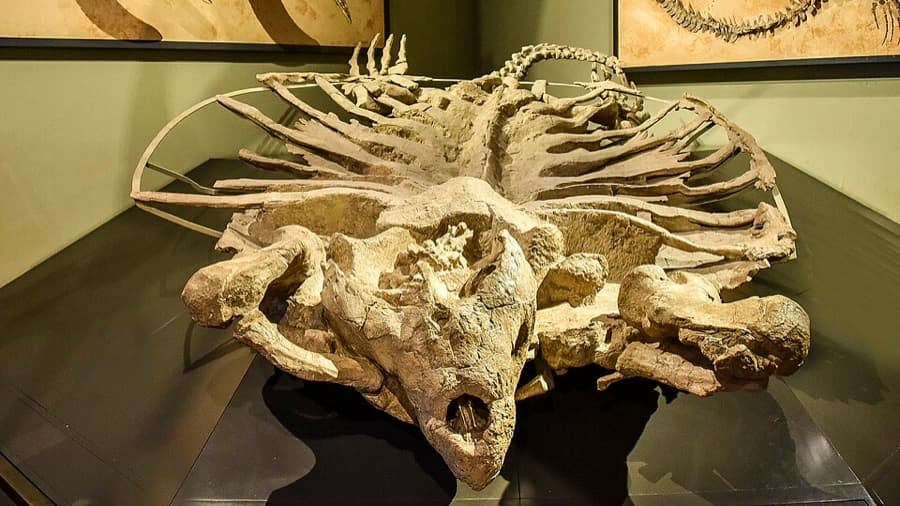
- Archelon, the giant sea turtle: Paul Hermans, CC BY-SA 4.0
- Thylacine (Tasmanian tiger): 0Lucky Luke, CC BY-SA 4.0
- Venus of Galgenberg ('Fanny'): Mike Peel (www.mikepeel.net), CC BY-SA 4.0
- The 117-kilogram topaz: Captmondo, CC BY-SA 3.0
- Canyon Diablo, the iron that made Meteor Crater: Mike Peel (www.mikepeel.net), CC BY-SA 4.0
- Coelacanth: Jakub Hałun, CC BY-SA 4.0
- Blaschka glass sea creatures: Gunther Tschuch, CC BY-SA 4.0
- Javan rhinoceros: 0Lucky Luke, CC BY-SA 4.0
- Giant smoky quartz from the Tiefengletscher: Dr. Bernd Gross, CC BY-SA 4.0
- Iceland spar, the crystal that sees double: Dr. Bernd Gross, CC BY-SA 4.0
- Iron flower from the Erzberg: Dr. Bernd Gross, CC BY-SA 4.0
- The Weinberger amethyst: Mike Peel (www.mikepeel.net), CC BY-SA 4.0
- The 6.2-kilogram platinum nugget: Captmondo, CC BY-SA 3.0
- Tabor, the other founding stone: Jawei, CC BY 4.0
- Knyahinya, the giant stone: Mike Peel (www.mikepeel.net), CC BY-SA 4.0
- Stannern, a piece of lava from space: Jawei, CC BY 4.0
- Allende and Murchison, the stones of 1969: Mike Peel (www.mikepeel.net), CC BY-SA 4.0
- Haag, the stone that hit a roof: Jawei, CC BY-SA 4.0
- Gabonionta from Franceville: Photograph by Mike Peel (www.mikepeel.net)., CC BY-SA 4.0
- Dunkleosteus: Paul Hermans, CC BY-SA 4.0
- Trilobites: Paul Hermans, CC BY-SA 4.0
- Stromatolite from South China: Paul Hermans, CC BY-SA 4.0
- Mesosaurus: Paul Hermans, CC BY-SA 4.0
- Confuciusornis: Tommy from Arad, CC BY 2.0
- Giant ammonite from Gosau: Photograph by Mike Peel (www.mikepeel.net)., CC BY-SA 4.0
- Plateosaurus: Paul Hermans, CC BY-SA 4.0
- Struthiosaurus, Austria's armoured dinosaur: Gyik Toma (Tommy the paleobear) from Romania, CC BY 2.0
- Fossil plants from Lunz: Photograph by Mike Peel (www.mikepeel.net)., CC BY-SA 4.0
- Prodeinotherium, the hoe tusker: Photograph by Mike Peel (www.mikepeel.net)., CC BY-SA 4.0
- Fish from Monte Bolca: Gyik Toma (Tommy the paleobear) from Romania, CC BY 2.0
- Primeval horse from Messel: Tommy from Arad, CC BY 2.0
- Pachyophis, an early sea snake: Dr. Bernd Gross, CC BY-SA 4.0
- Iguanodon: Domser, CC BY-SA 3.0 de
- Tyrannosaurus and Triceratops skulls: Zachi Evenor from Israel, CC BY 2.0
- Ice Age jewellery from Grub-Kranawetberg: Wolfgang Sauber, CC BY-SA 4.0
- Horse harness from the 'princess grave' of Hauskirchen: James Steakley, CC BY-SA 3.0
- Laetoli footprints (casts): Wolfgang Sauber, CC BY-SA 4.0
- Sabre-toothed cat: Tommy from Arad (Flickr), uploaded by FunkMonk, CC BY 2.0
- Japanese spider crabs: VasuVR, CC BY 4.0
- Giant clam: Karl Gruber, CC BY-SA 4.0
- Precious wentletrap: Dr. Zachi Evenor, CC BY 2.0
- Coconut crab: Gryffindor, CC BY 2.5
- Giant oarfish: Sandstein, CC BY 3.0
- Ocean sunfish: Sandstein, CC BY 3.0
- Arapaima: Paul Hermans, CC BY-SA 4.0
- Gharials: Rəcəb Yaxşı, CC BY-SA 4.0
- African and Asian elephants: Rəcəb Yaxşı, CC BY-SA 4.0
- Southern elephant seal: VasuVR, CC BY 4.0
- Aye-aye: Bradypus (de.wikipedia), Public domain
An independent audio guide by Roamer, not affiliated with or endorsed by the Naturhistorisches Museum Wien. Museum admission is separate. Photos from Wikimedia Commons, Flickr and Pexels contributors under open licences; credits on each piece.